Nuremberg
Nuremberg, Germany
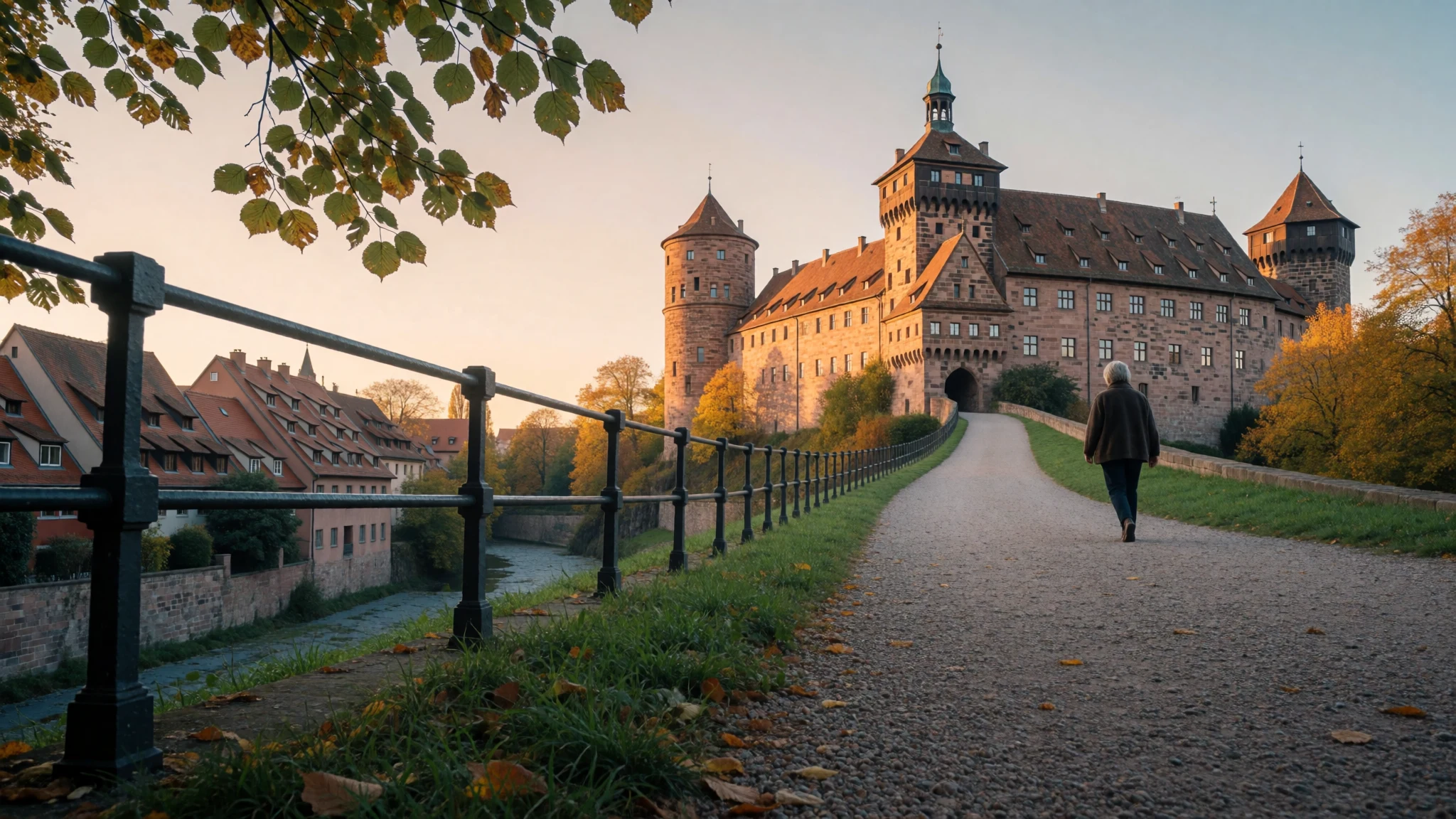
Nuremberg pairs a sandstone imperial castle, Dürer's home and Franconian sausages with a frank, well-kept record of the darker chapters of Germany's modern history.
The place
Nuremberg sits on the Pegnitz river in northern Bavaria, about 209 m above sea level, and is the main city of Franconia, a region with its own dialect, beer and cooking that locals are quick to distinguish from the Munich-style Bavaria of postcards. Just over half a million people live in the city proper (531,159 in the facts), and its suburbs run without a break into Fürth, Erlangen and Schwabach, so the wider urban area is several times larger. The old town is compact and easy to cross on foot. A sandstone wall and a moat ring it, and the imperial castle stands on a rock at its northern edge. Below the castle, lanes of stone and half-timbered houses drop to the river, which is crossed by small bridges and footbridges. Much of what looks medieval was rebuilt after wartime bombing, and that is worth knowing before expecting an unbroken survival. The rebuilding was careful, and the street pattern and many church interiors follow the old plan. Beyond the walls Nuremberg is a working city of rail yards, universities, a trade-fair ground and tall nineteenth-century apartment districts. The centre is calm in the early morning, crowded around the castle and main square at midday in summer, and busiest of all in the weeks before Christmas, when the market draws visitors from across Germany and beyond. The climate is oceanic with a continental touch: cold, sometimes snowy winters, hot summers, and rain spread fairly evenly through the year.
Its story
Nuremberg enters the written record in 1050 as the site of an imperial castle on the border between eastern Franconia and the Bavarian Nordgau. The rock made a sound stronghold, and the roads and rivers around it made the settlement a natural stop for traders. Merchants gathered under the castle's protection, and the town grew into a self-governing community answering directly to the emperor rather than to a local lord. Control of the castle was split. A burgrave held the title, passing in 1193 to Frederick of the Hohenzollern family, while an imperial official took over courts and city administration, and the citizens gradually gained a say of their own. From 1424 the Imperial Regalia were kept in the city, and emperors convened assemblies there often. Trade income paid for churches, workshops and a dense community of metalworkers, instrument makers, printers and painters. Albrecht Dürer, the poet Hans Sachs, the globe-maker Martin Behaim and the composer Johann Pachelbel are all tied to the city. The modern chapter is darker. The Nazi party staged its mass rallies on ground at the south-eastern edge of the city, and after the war the main trial of its leaders was held in the city's law courts. Bombing destroyed most of the old centre, and the patient rebuilding that followed explains why the castle, churches and lanes look as they do now. A single day's walk takes in both the medieval and the modern halves of that story.
What to see
- Nuremberg Castle — Old town, northern edge
The castle looks like one fortress but is really three, built by rivals: the emperor, the Hohenzollern burgraves and the city itself. Walking the ramparts gives a good sense of that tension, and the view back over the red roofs explains why the site mattered. Check the official site before visiting.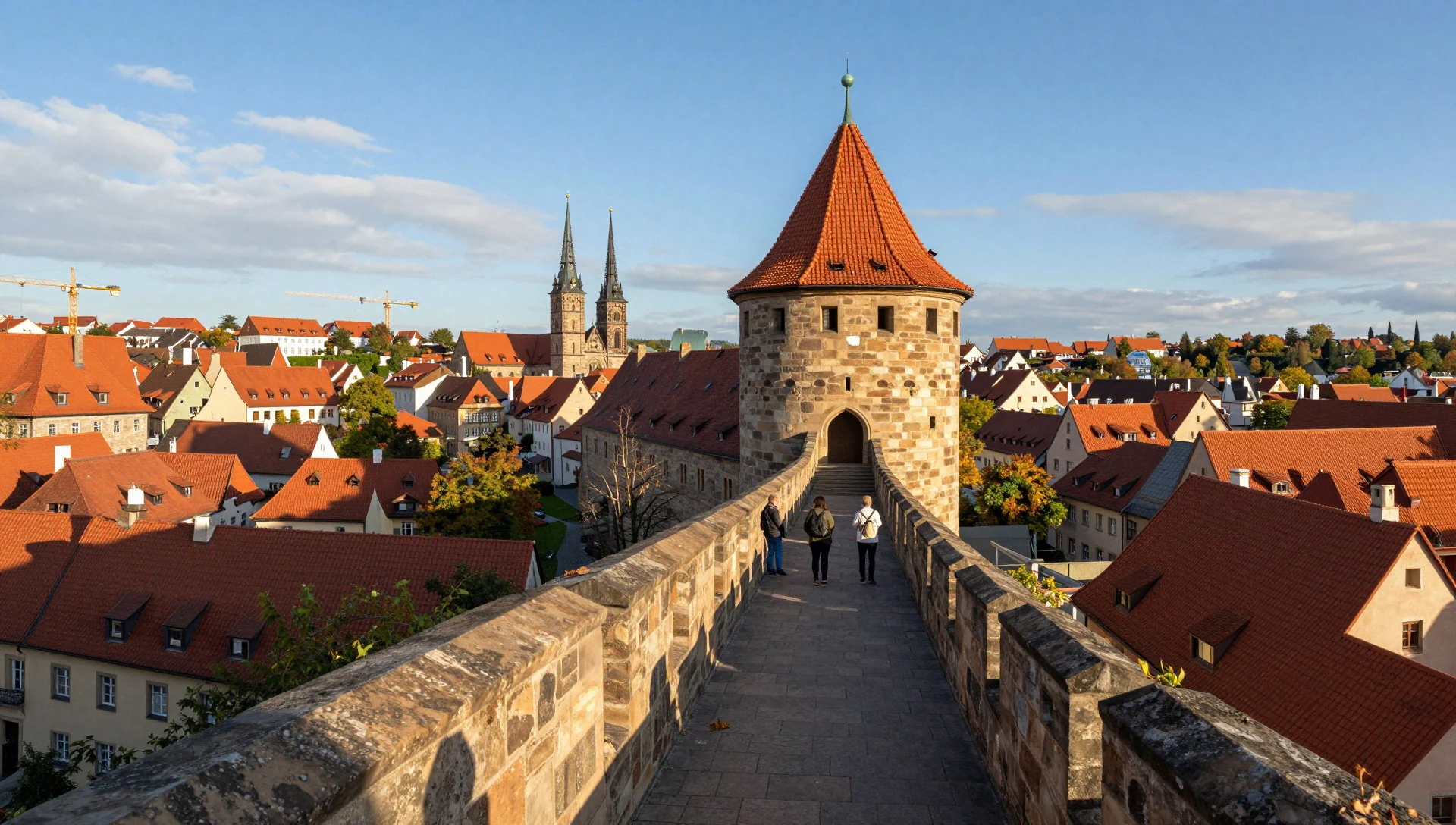
- Imperial Castle courtyard — Western part of the castle
This is the prestigious western wing, grouped around an inner courtyard, where Holy Roman emperors stayed during visits. It is the part to spend time in for a feel of court life. Rooms and chapel opening times change by season, so confirm them on the official site.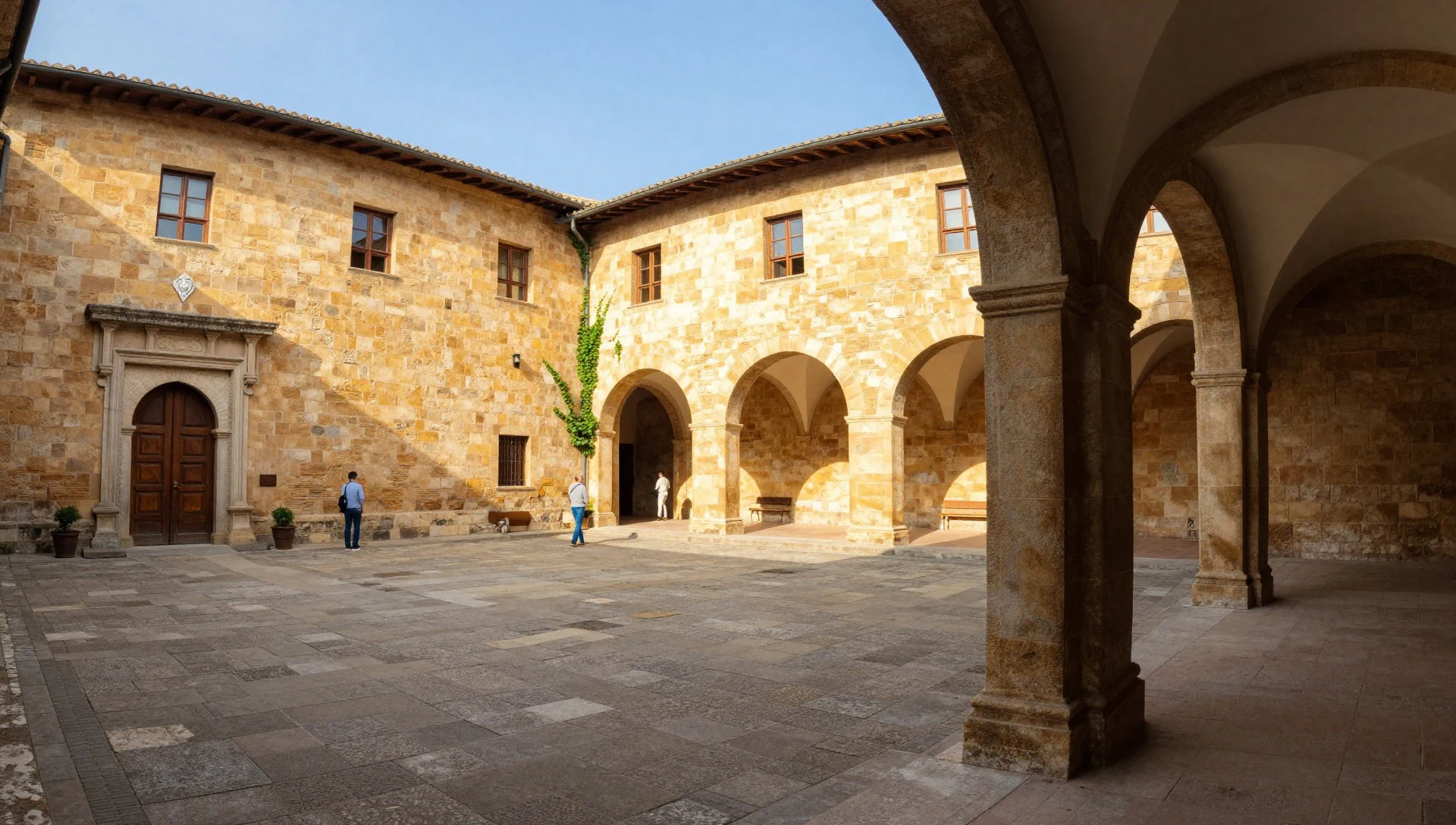
- Albrecht Dürer's House — Below the castle, old town
Dürer lived and worked here from 1509 until 1528, in the kind of tall, well-appointed house a prosperous master could afford. Rooms are laid out to show how a workshop household functioned, including printing and painting. It is popular, so a weekday morning is the calmer choice.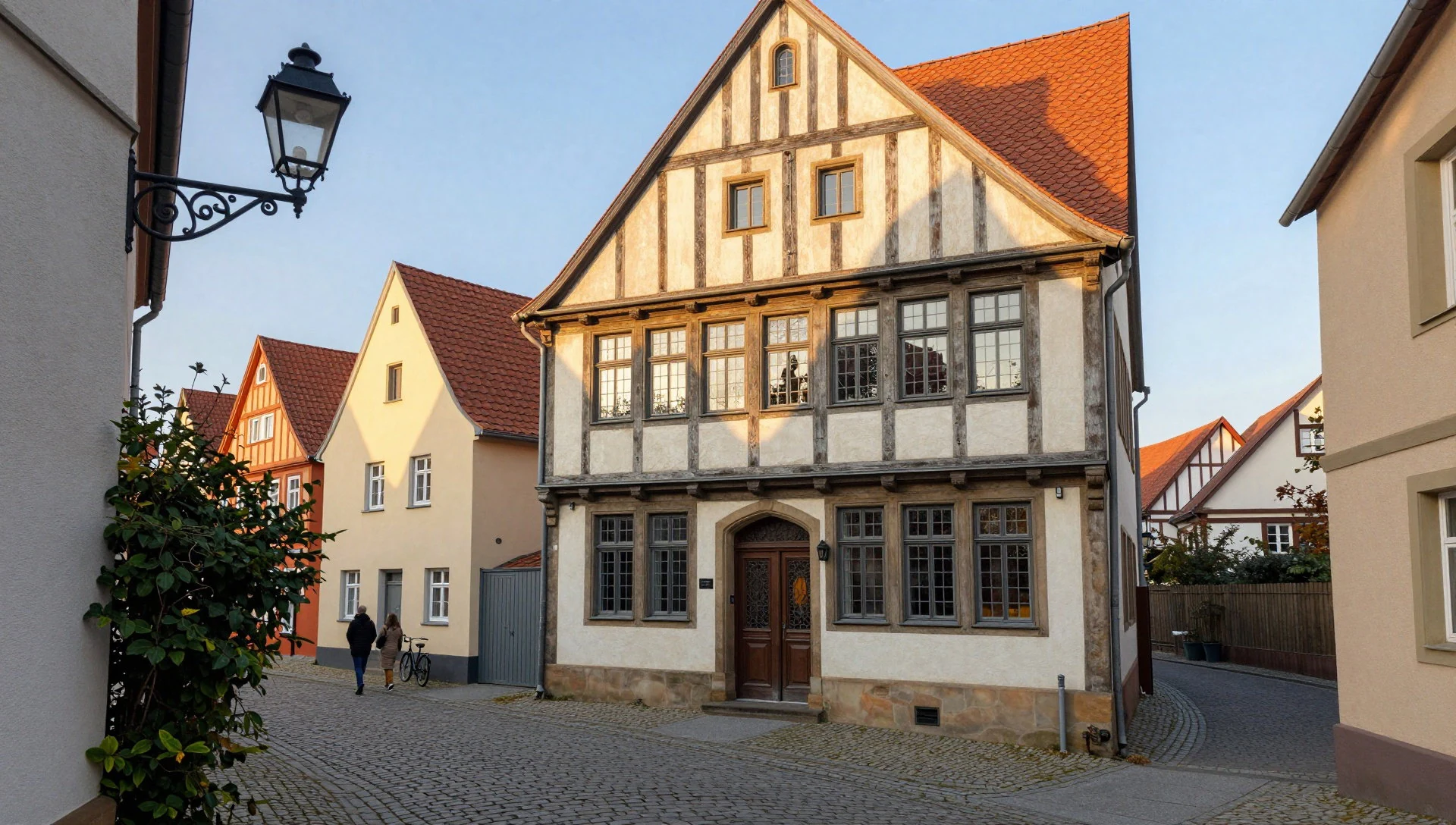
- St Sebald Church — Old town, north of the main square
One of the two great parish churches of the old town, with twin western towers in the local sandstone. Inside, the soaring Gothic interior was rebuilt after wartime damage. It is a good quiet stop between the castle and the river, and worth a few minutes for the carved details.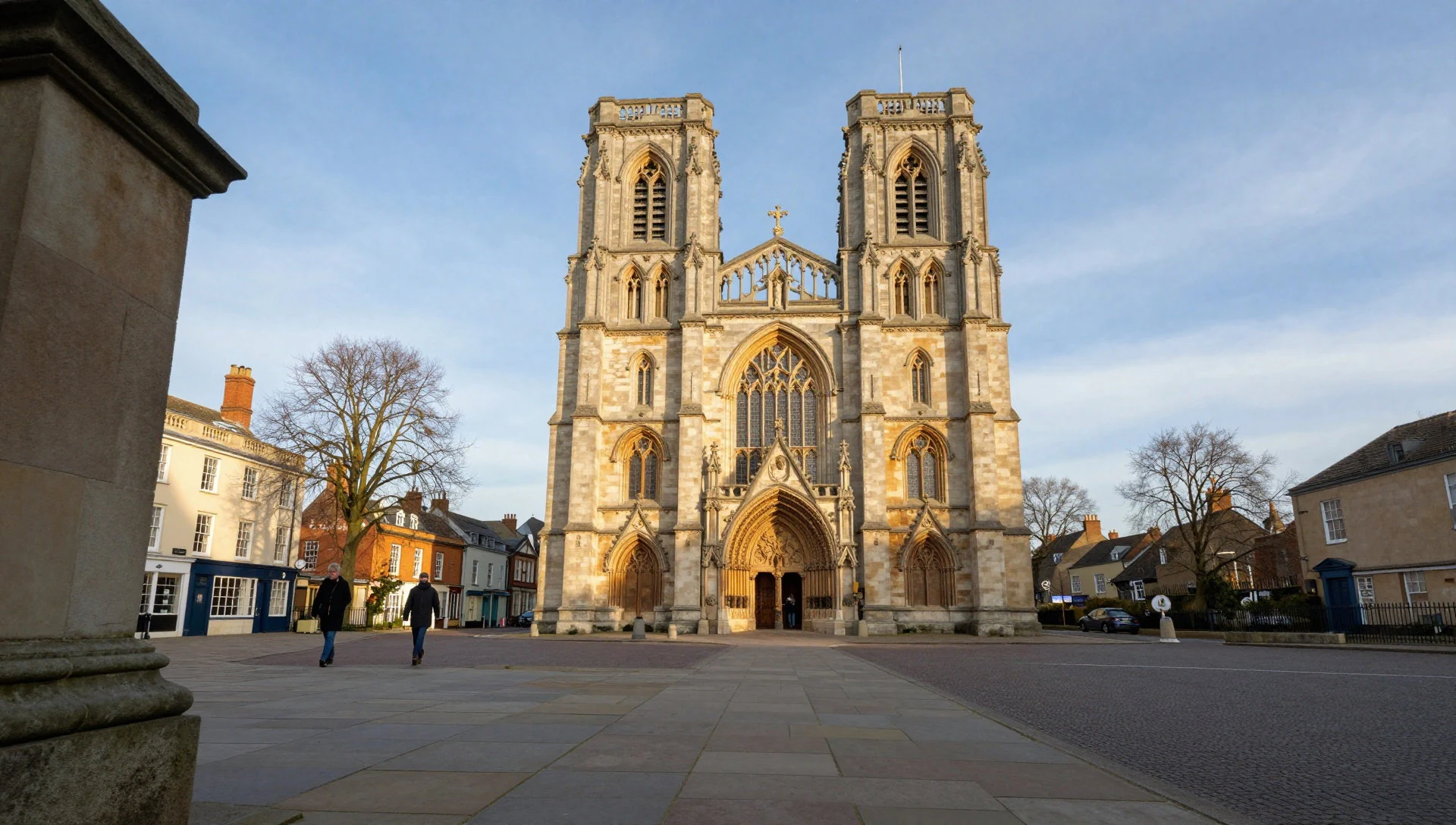
- City walls and moat — Around the old town
The medieval defensive wall still encloses most of the old town, with towers and bastions at intervals. Sections can be walked, and the moat is now a green strip used by joggers and dog-walkers. A loop along the northern stretch, near the castle gardens, makes a pleasant free hour.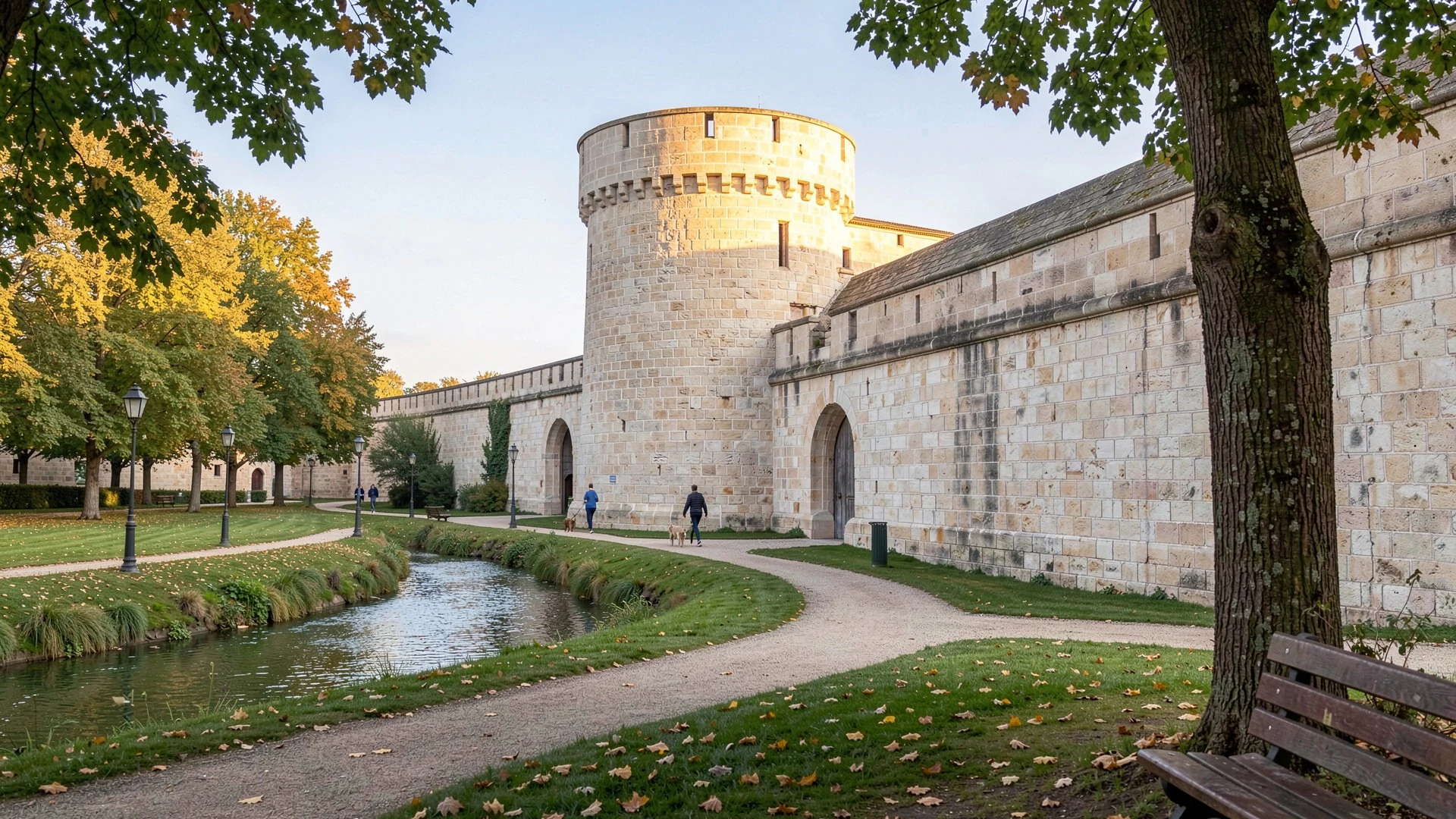
Culture
Nuremberg built its name on making things and passing on ideas. In the late Middle Ages and Renaissance, mathematicians, instrument makers, mapmakers and printers all found work here. Regiomontanus set up an observatory and published star charts, Dürer produced printed maps of the heavens, and Anton Koberger ran a print shop that turned out books as handsome objects. Hans Sachs, a shoemaker and poet, later became the model for a character in Wagner's opera about the mastersingers. Franconian identity matters locally. People take pride in their dialect, their beer and their sausages, and they will gently correct the idea that Nuremberg is simply a Bavarian city. Christmas is a major cultural moment, with a market that opens each year with a speech from a young woman playing the Christkind, and with gingerbread (Lebkuchen) sold in tins that people post around the world. The city is also open about its recent past. The former rally grounds hold a documentation centre, and the courtroom where the post-war trials were held is now a museum. Germans treat these as places of study and reflection rather than curiosity. At the former rally grounds and the trial courtroom, keep your voice low, do not pose for jokey photographs, and never make a Nazi salute, which is a criminal offence in Germany.
What to wear
Nuremberg's traditional dress belongs to Franconia rather than to the Alpine dirndl-and-lederhosen look associated with Munich. Regional Tracht uses wool, linen and heavy felt, with embroidered bodices, aprons and silver buttons for women and waistcoats and dark jackets for men. It is worn mainly at festivals, folk-music events and church occasions in the surrounding villages, rather than in the city on an ordinary day. One exception is the Christkind at the Christmas market, who wears a gold-and-white robe and crown. Everyday dress in the city is practical and understated: dark jeans, plain jackets, trainers or leather boots, and a rain shell in a bag. People dress up a little for the opera house and for dinner, but rarely very formally. A visitor should plan for layers. Winters are cold, so bring a proper coat, hat and gloves, and in summer light cotton or linen with a sun hat for the open castle ramparts. Shoes matter more than clothes, because the old town is paved in cobbles and slopes steeply near the castle, so choose comfortable soles with a grip. Churches do not enforce strict dress, but covered shoulders and a hat taken off inside are appreciated.
What to eat
- Nürnberger Rostbratwürstchen — Any traditional Franconian tavern or sausage kitchen in the old town
Nuremberg's small grilled sausages are the signature dish, seasoned with marjoram and served in a set, usually with sauerkraut or potato salad and mustard. Eating them at a wooden table in a traditional tavern, with a local beer, is the standard way.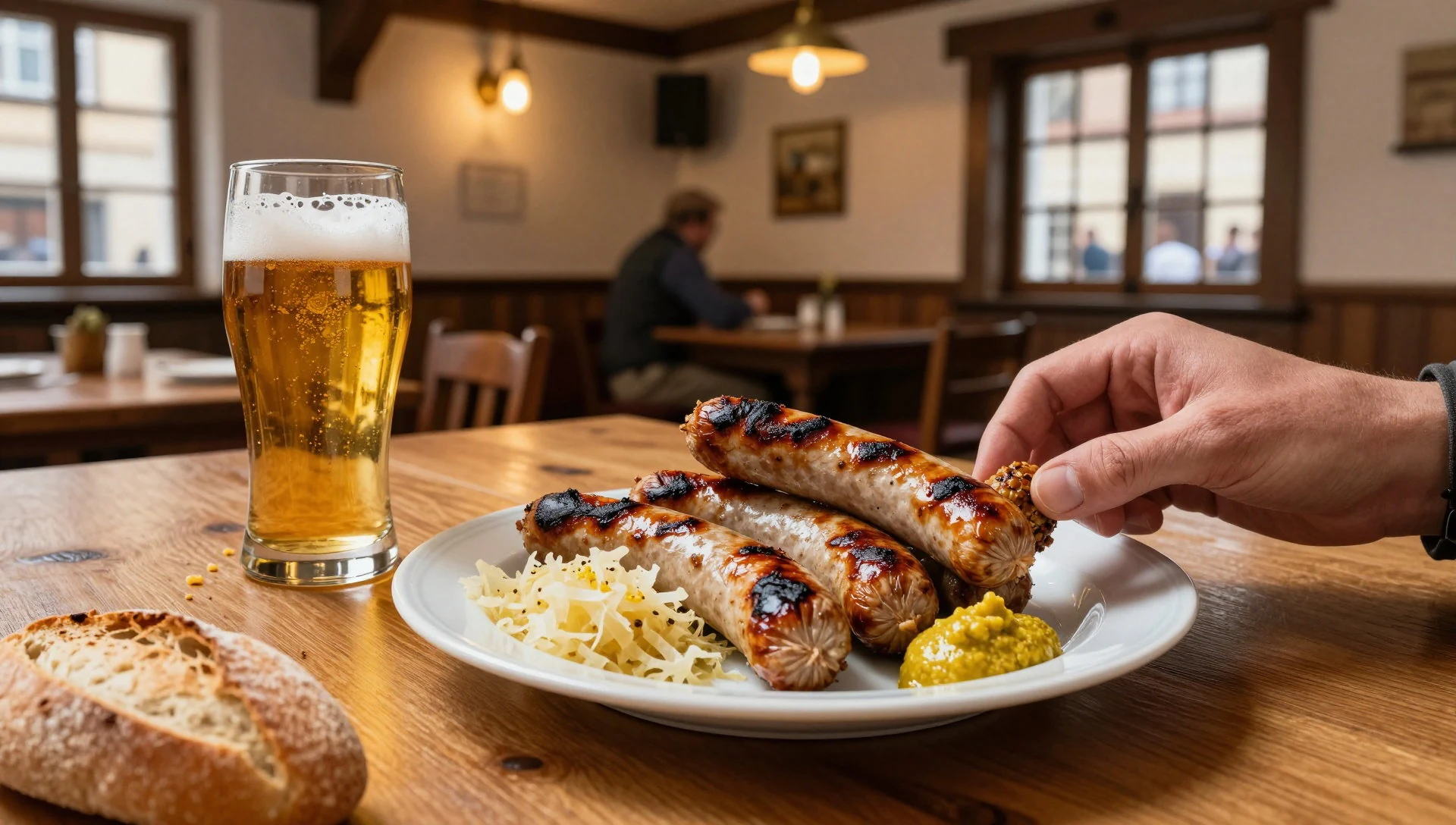
- Brezen (pretzel) — Bakeries across the old town, especially around the main squares
A Franconian pretzel is chewy outside and soft within, sold fresh through the morning. Locals eat it plain, with butter and chives, or alongside a beer. A bakery stop is the cheapest and quickest breakfast in the centre.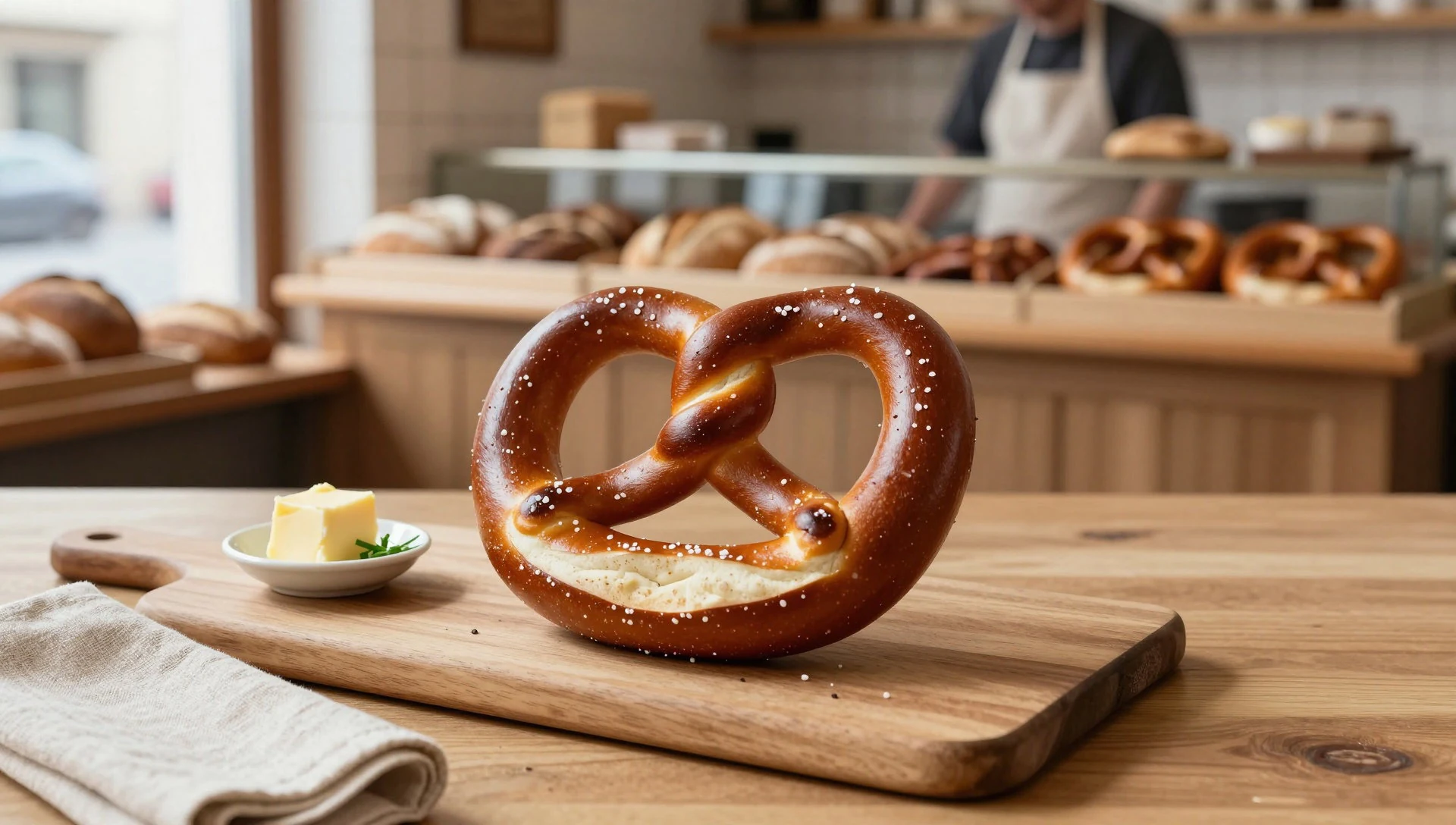
- Currywurst — Snack counters and street kiosks near the station and main squares
A sliced sausage under a sweet-spicy tomato curry sauce, usually served with chips or a bread roll. It is quick, filling and cheap, and a decent lunch while sightseeing. Locals have their favourite kiosks, so ask for a nearby recommendation. - Lebkuchen — Christmas market stalls and specialist bakeries, mostly from autumn to December
Soft, spiced gingerbread made with honey, nuts and candied fruit, often finished with chocolate or a sugar glaze. The tins make easy gifts. Sold in smaller quantities outside the Christmas season, but the best choice is in December. - Soups and hotpots with fresh bread — Lunch counters and small cafés around the centre
Several small eateries in the centre serve changing soups and hotpots with fresh bread. They are a good break on a cold day, especially for vegetarians, since the menu is short and a meat-free option is usually available.
Plan it
Best time. May and September–October, when days are mild, the light is long and the castle and walls are pleasant to walk. December is cold but the Christmas market is a draw; July and August can be very hot, with daytime highs of 37–38 °C, and busy.
How long. 2–3
Getting there. Fly to Nuremberg Airport, which has links to German hubs such as Frankfurt and Munich, and to London and other European cities, then take the underground to the main station. Nuremberg is also a major rail junction, with long-distance trains from across Germany.
Budget. mid
Tips
- Start at the castle in the morning, before tour groups arrive
- Book accommodation early for the Christmas market weeks
- Wear shoes with grip, because the old town is cobbled and steep near the castle
- Cards are widely accepted, but carry a little cash for kiosks and markets
- Check opening times for museums and the castle on the official sites, as they change by season
Etiquette
- Keep your voice down at the former rally grounds and the courtroom museum
- Do not make Nazi salutes or jokey poses, which are offences or deeply offensive in Germany
- Greet shop staff with a short hello when you enter
Nearby
Sources
- Wikidata Q2090 (CC0)
- Wikipedia: Nuremberg (CC BY-SA 4.0)
- Wikivoyage: Nuremberg (CC BY-SA 4.0)
- Nuremberg, view from Sinwell Tower 2012.06.16 — YuTrofimov (CC BY 3.0)
- Nuremberg Castle as seen from southwest — DALIBRI (CC BY 3.0)
- Nassauer Haus Nürnberg — Martina Nolte (CC BY-SA 3.0 de)
- Nürnberg, St. Sebald, von Westen — Tilman2007 (CC BY-SA 4.0)
- Opera house, Nuremberg, Germany — Diego Delso (CC BY 3.0)
- Bavière, Nuremberg — Calips (CC BY 3.0)
- Defensive Wall, Nuremberg, north part — Keichwa (CC BY 1.0)
- Nuremberg Castle, courtyard — AlterVista (German Wikipedia) (CC BY 3.0)


