Novosibirsk
Novosibirsk, Russia
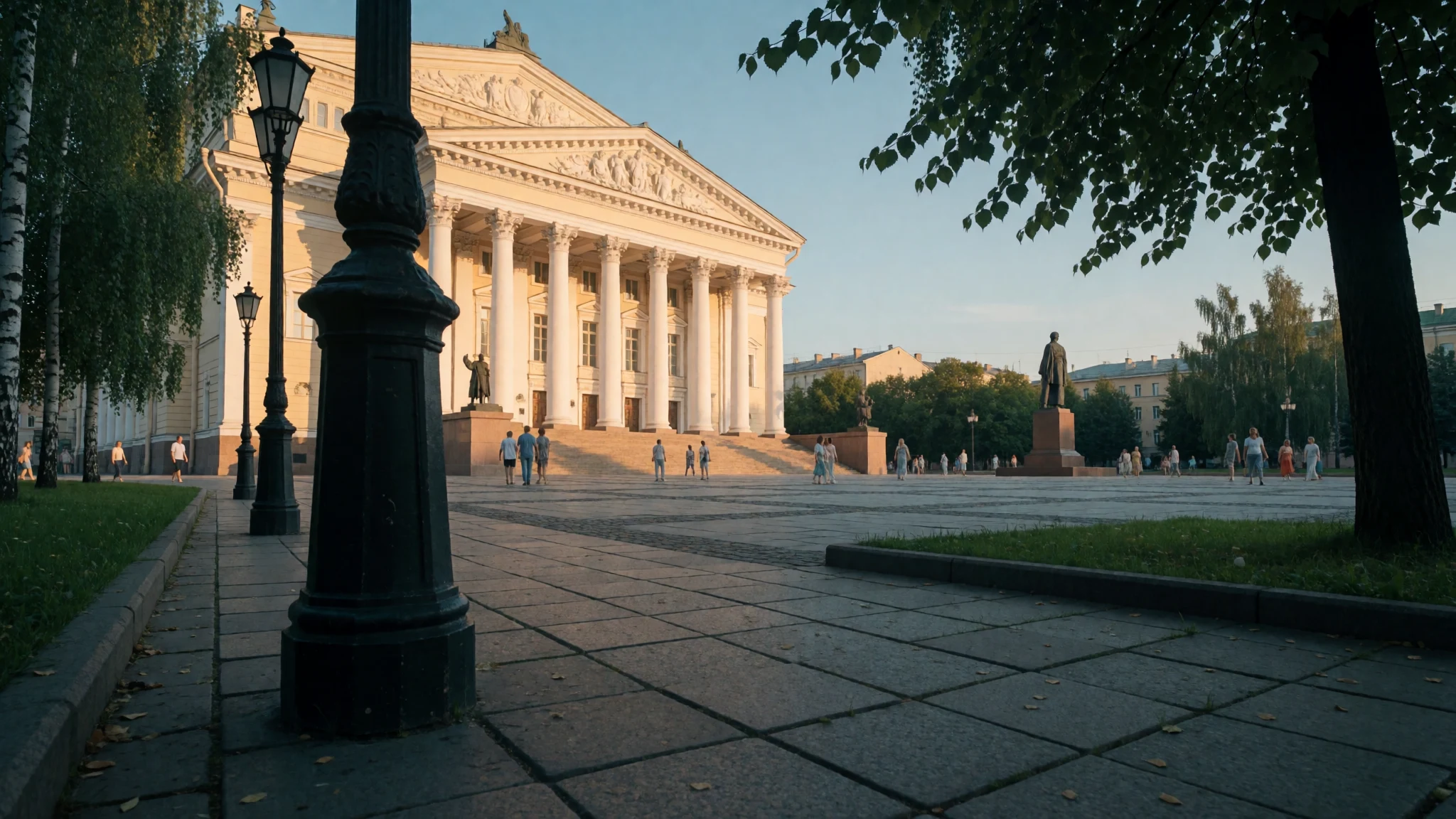
Novosibirsk is a railway-born Siberian city of theatres, museums and river views, best for travellers curious about how Russia's east was built.
The place
Novosibirsk stands on the Ob River in south-western Siberia, about 153 m above sea level, with a population of roughly 1.6 million. It is the administrative centre of Novosibirsk Oblast and of the Siberian Federal District, and it counts as the largest city in North Asia. That scale surprises visitors who expect something ancient. The city was founded in 1893, so it reads as a place built for railways, factories and research rather than for medieval churches: broad avenues, Soviet-era apartment blocks, large civic squares and a handful of grand public buildings. The Ob organises everything. The railway crosses it on the bridge that gave the city its reason to exist, other bridges and embankments define the skyline, and in summer the banks fill with people walking, cycling and sitting by the water. The centre is compact enough to cover on foot and by metro, though distances across the river are long. Landmarks include the neo-Byzantine Alexander Nevsky Cathedral, the Opera and Ballet Theatre and a large zoo. Further south, the research institutes of the Russian Academy of Sciences give the city a scientific streak that turns up in unexpected places, including a bronze statue of a laboratory mouse. Winters here are properly Siberian and summers are warm and short, so the season chosen changes the trip completely. It is a working city, not a resort, and it rewards people who like museums, theatre and long river views.
Its story
Novosibirsk exists because of a bridge. In 1893 a settlement was begun on the right bank of the Ob, at the point where the planned Trans-Siberian Railway would cross the river. The older village of Bolshoye Krivoshchyokovo, on the opposite bank, was moved to make way for the works. The land nearby had long been used by the Chat Tatars, and a riverside spot called Chertovo gorodishche is linked to them. Once the rail bridge opened, the new town became a transport hub almost overnight, and a later line towards Central Asia and the Caspian Sea tied it into a much wider network. It was first called Novonikolayevsk, after Saint Nicholas and the reigning tsar, Nicholas II, and it quickly gained banks, trade and the right to govern itself. The Civil War hit it hard, but it recovered in the early Soviet period and was renamed Novosibirsk. Under Stalin it grew into a major industrial centre, and when the Second World War began, factories were moved here from western Russia, which fixed its industrial and scientific character. Arrival by rail shaped the population too, which grew from a small frontier settlement into the city of about 1.6 million that stands today. The bridge is still the simplest starting point for understanding why a large city sits in the middle of the Siberian plain.
What to see
- Novosibirsk Museum of Regional Studies — Central Novosibirsk
The Novosibirsk Museum of Regional Studies tells the story of Siberia from mammoth-hunting times through Russian colonisation, the arrival of the railway and the Soviet years. It is a useful first stop for understanding how a frontier settlement became a city. An audioguide is available through the izi.travel app, which helps if you do not read Russian.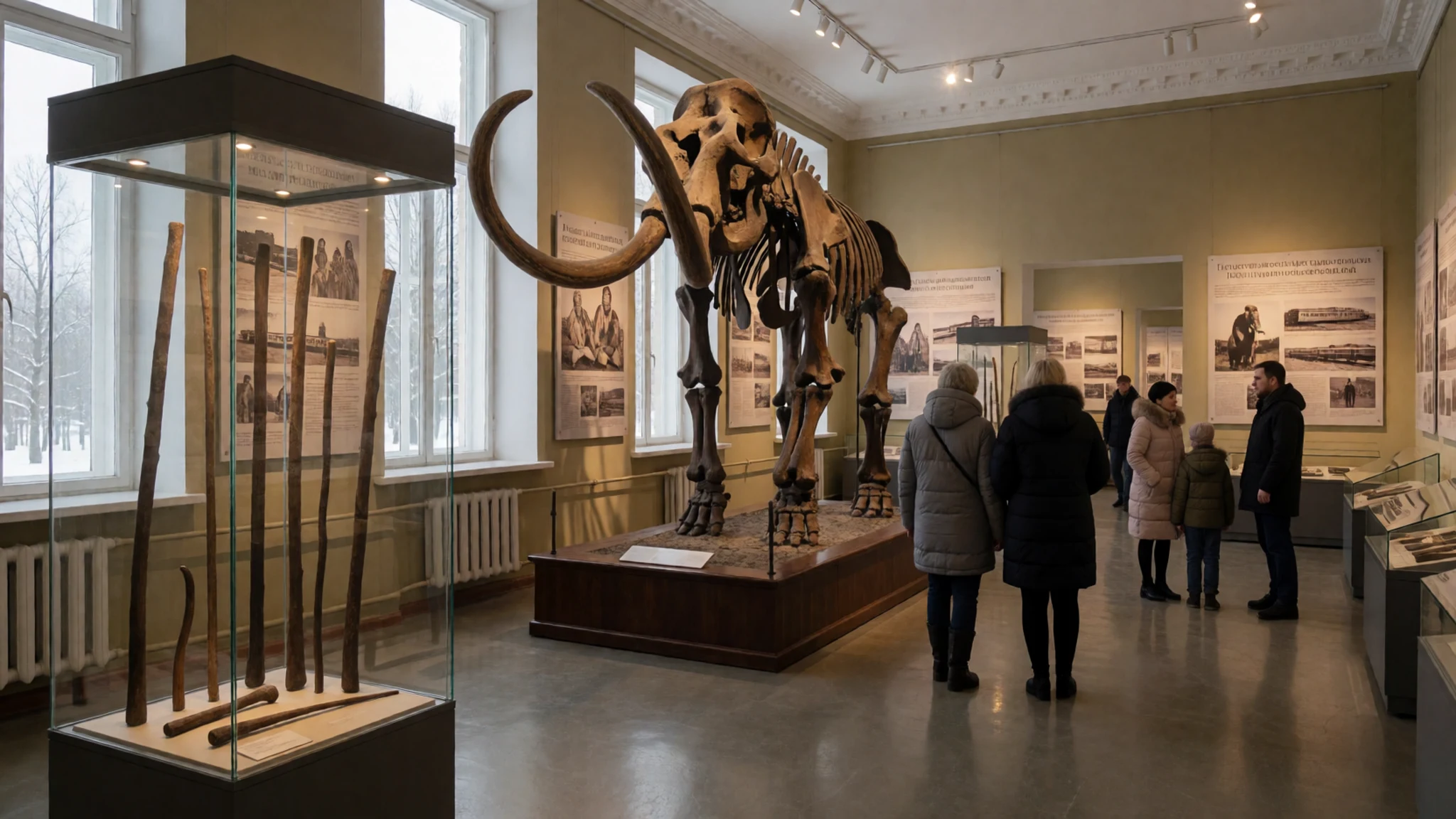
- Novosibirsk State Art Museum — Central Novosibirsk
The Novosibirsk State Art Museum holds a large permanent collection, and the paintings by the Roerichs are the part many visitors remember. Temporary exhibitions change, so check the museum's own listings before going. It is a good indoor choice on a winter afternoon, when walking along the river is hard work.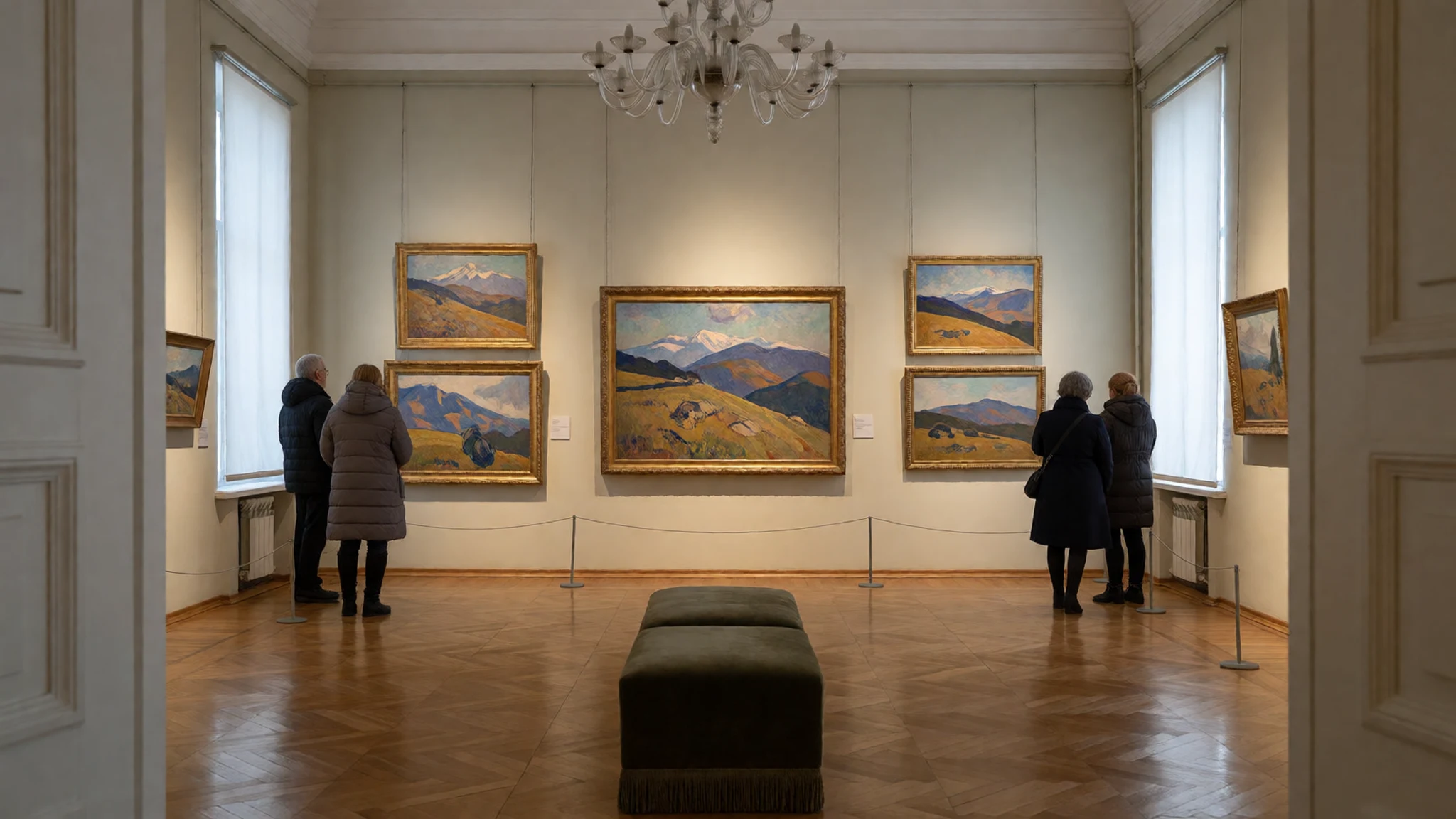
- Novosibirsk Opera and Ballet Theatre — City centre
The Novosibirsk Opera and Ballet Theatre is a landmark building in the centre, and an evening performance is one of the better ways to spend time in the city. Many programmes are familiar works, so it is interesting to see how a Siberian company interprets them. Check the theatre's official site for the season and book ahead for popular nights.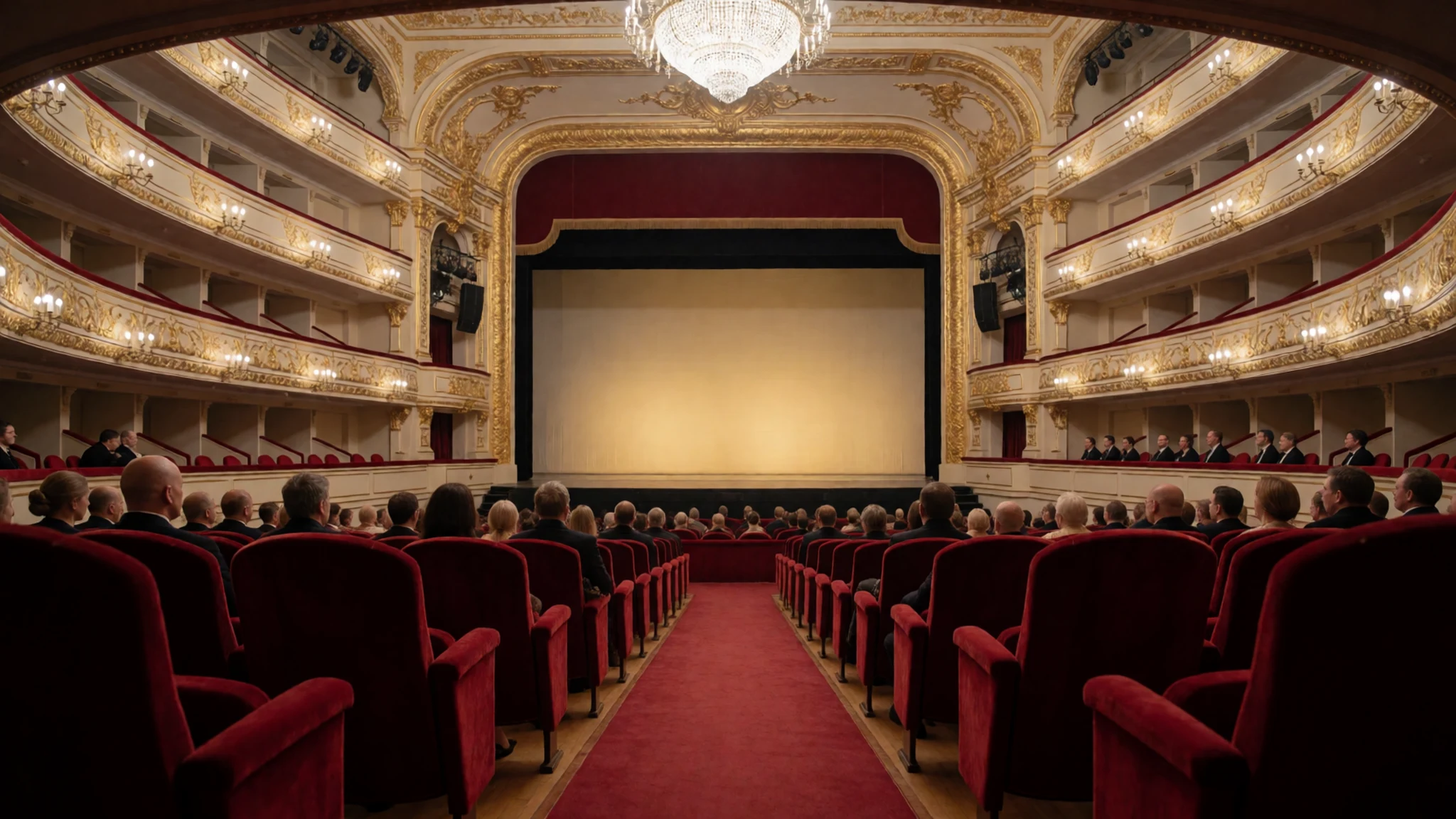
- Novosibirsk Zoo — North-west edge of the city
Novosibirsk Zoo is a large animal park on the edge of the city, with a collection running to thousands of animals. It suits families and anyone who enjoys seeing animals in a cold-climate setting. Enclosures are outdoors, so dress for the weather, and expect it to be busiest on summer weekends.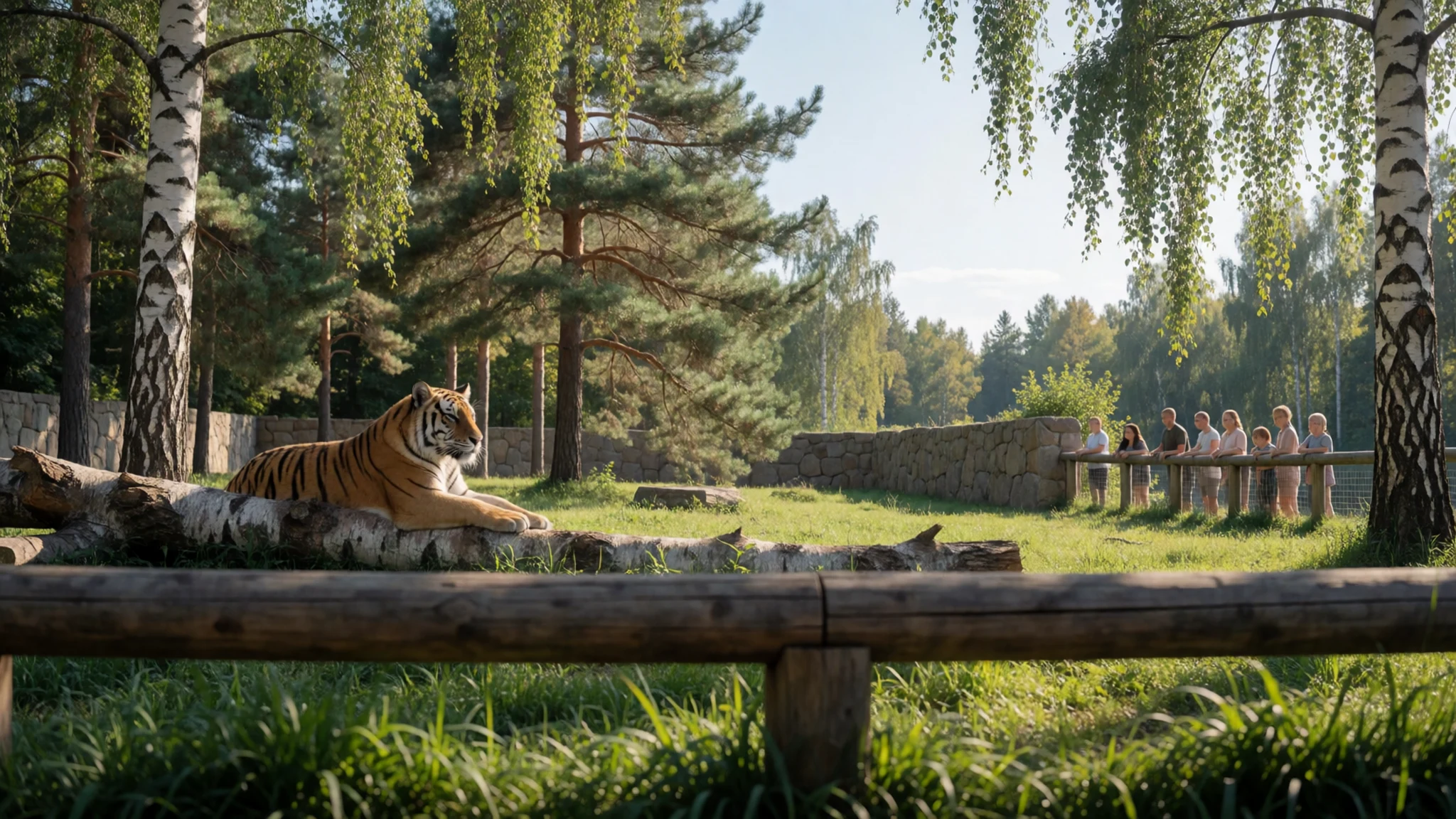
- Monument to the laboratory mouse — Research district, south of the centre
In the park outside the Institute of Cytology and Genetics, a bronze statue by local artist Andrey Kharkevich honours the laboratory mouse. It is a quirky, short stop that says a lot about the city's scientific side. Combine it with a wander around the surrounding research district rather than making a special trip.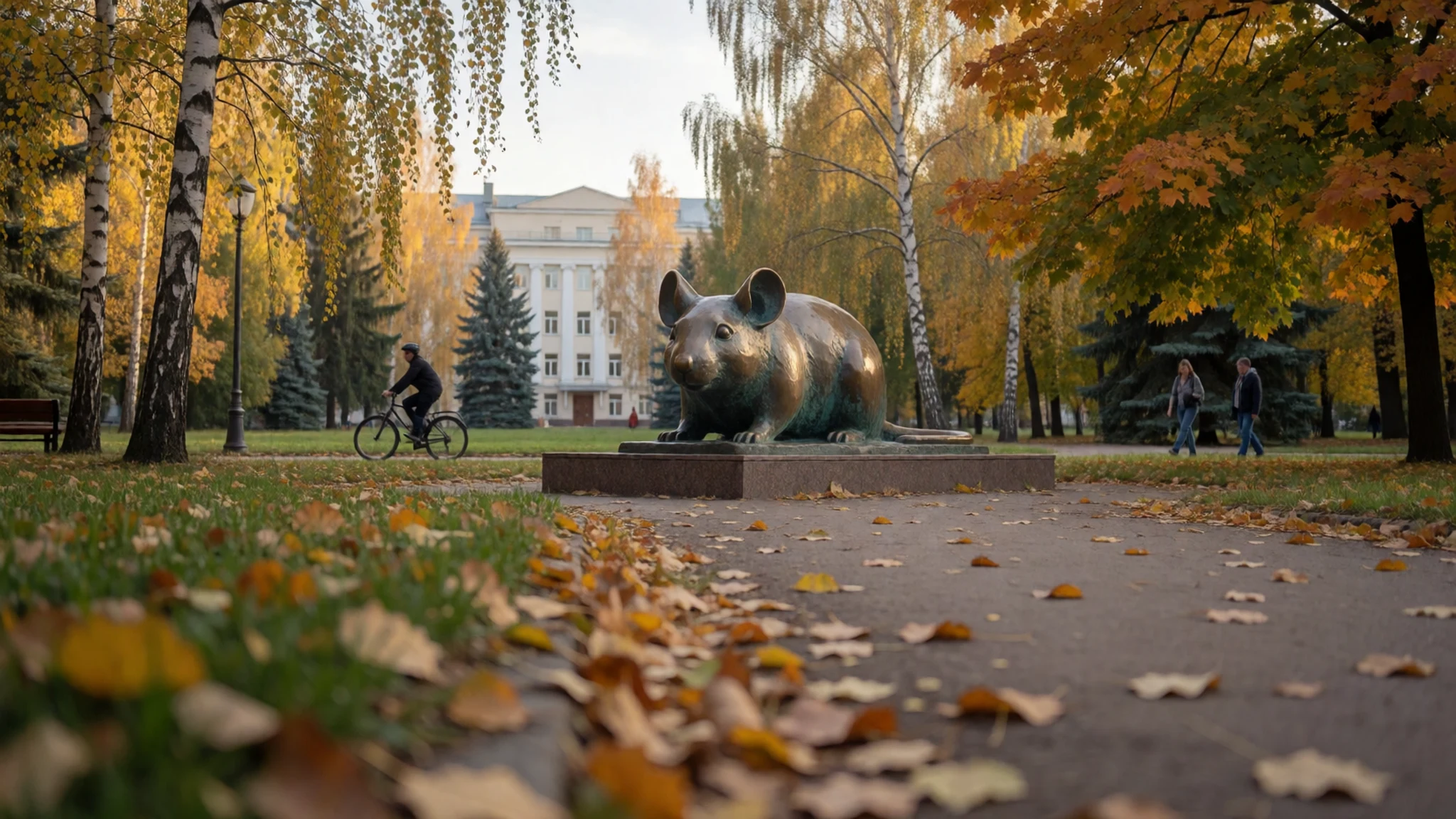
- West Siberian Rail Museum — South of the centre
The West Siberian Rail Museum is a natural fit for a city born from the railway. It is a good stop for anyone interested in the Trans-Siberian story beyond the station platform. It lies south of the centre, so allow travel time, check opening arrangements before setting out, and wear sturdy shoes.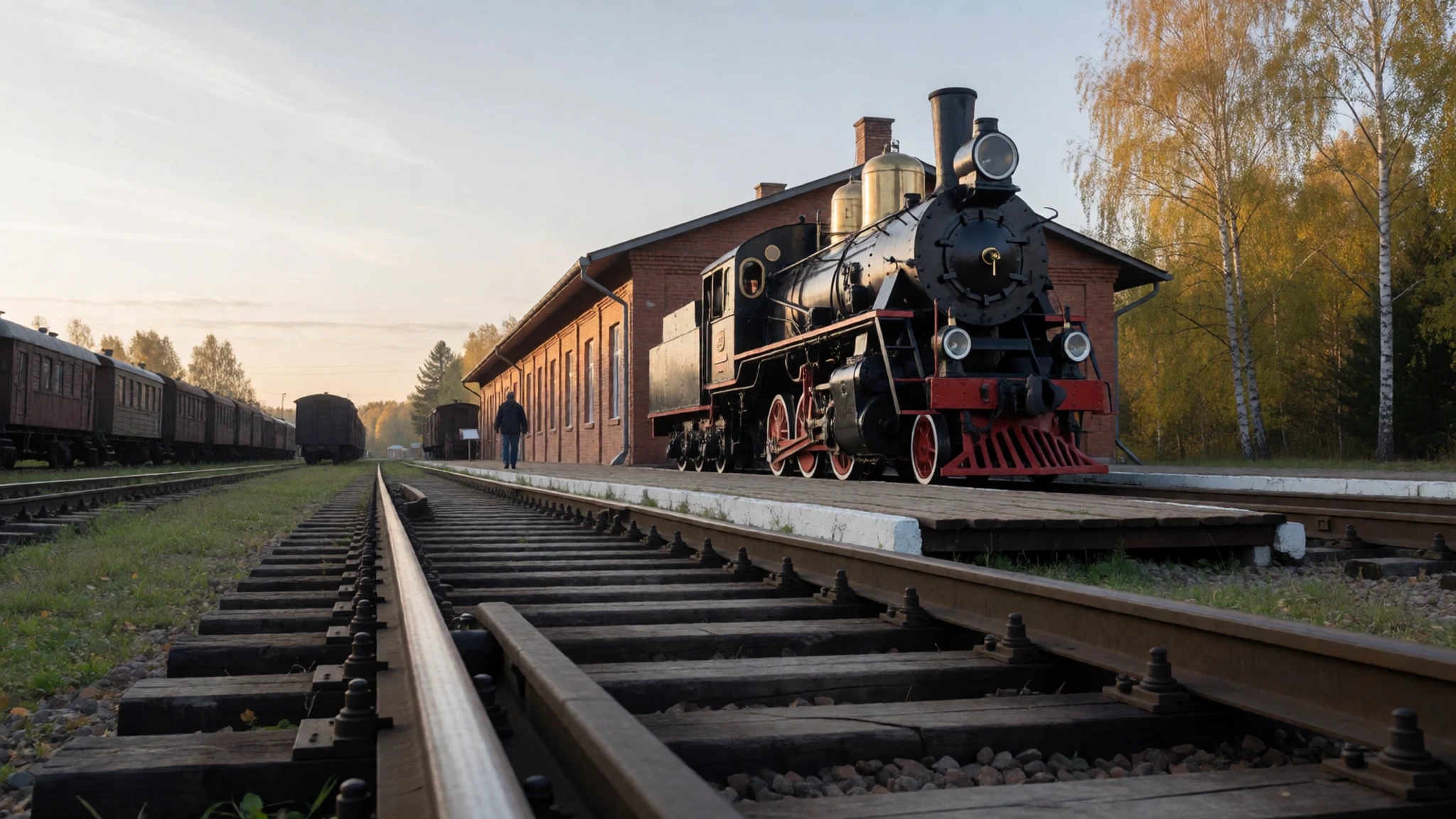
Culture
Novosibirsk's cultural life is built around theatre, music and libraries, which suits a city of scientists and railway workers. The opera and ballet house is the best known, but the city also supports a drama theatre called Old House, the Red Torch academic drama company, a youth theatre named Globe, a musical theatre, a puppet theatre and a small studio company called First Theatre. Several of these date from the early Soviet decades, when the city was investing in public culture as it industrialised. The State Philharmonic gives Novosibirsk a regular concert season, and the libraries, including a scientific and technological library and a regional library for blind and visually impaired readers, are used heavily by students and researchers. Alongside this sits a strong research tradition, which gives conversation in the city a practical, curious tone. Siberian hospitality is informal but direct, and people are generally helpful if a visitor tries a few words of Russian. English is more common among younger residents and in universities than in shops. Soviet history is part of daily life rather than a museum piece, so monuments, murals and old signage appear in ordinary streets and are treated as ordinary by locals. In theatres and museums, leave your coat and bags at the cloakroom rather than carrying them in, and keep your phone silent during performances.
What to wear
In Novosibirsk, traditional Russian dress survives mainly in folk ensembles, festivals and museum displays. Women's costume centres on the sarafan, a sleeveless dress worn over a linen blouse, with embroidered trims, woollen shawls and sometimes a kokoshnik headdress. Men wore long linen or cotton shirts with sashes. Winter clothing was always practical: sheepskin, fur hats and felted wool boots known as valenki. The Chat Tatars and other Siberian peoples have their own dress traditions, which you are most likely to meet in museum collections. Day to day, people dress for the climate. In winter that means long padded coats, fur or knitted hats, scarves and insulated boots, usually in dark colours. In summer it is light, casual clothing, and people dress up for the theatre, though smart casual is fine. A visitor should plan by season. From late autumn to early spring bring thermal layers, a windproof down coat, a warm hat, gloves and waterproof boots with real grip, since pavements ice over. In summer bring light layers, a rain jacket and insect repellent for the riverbanks. Where you visit an Orthodox church, cover shoulders and knees, and women may want a scarf for their hair. Comfortable walking shoes matter all year, as the city is spread out.
What to eat
- Pelmeni — Dumpling cafés and beer restaurants across the centre
Pelmeni are small meat dumplings boiled and served with sour cream, butter or vinegar. They are the everyday comfort food of Siberia and fill you up on a cold day. Several beer restaurants in the city centre make them a speciality.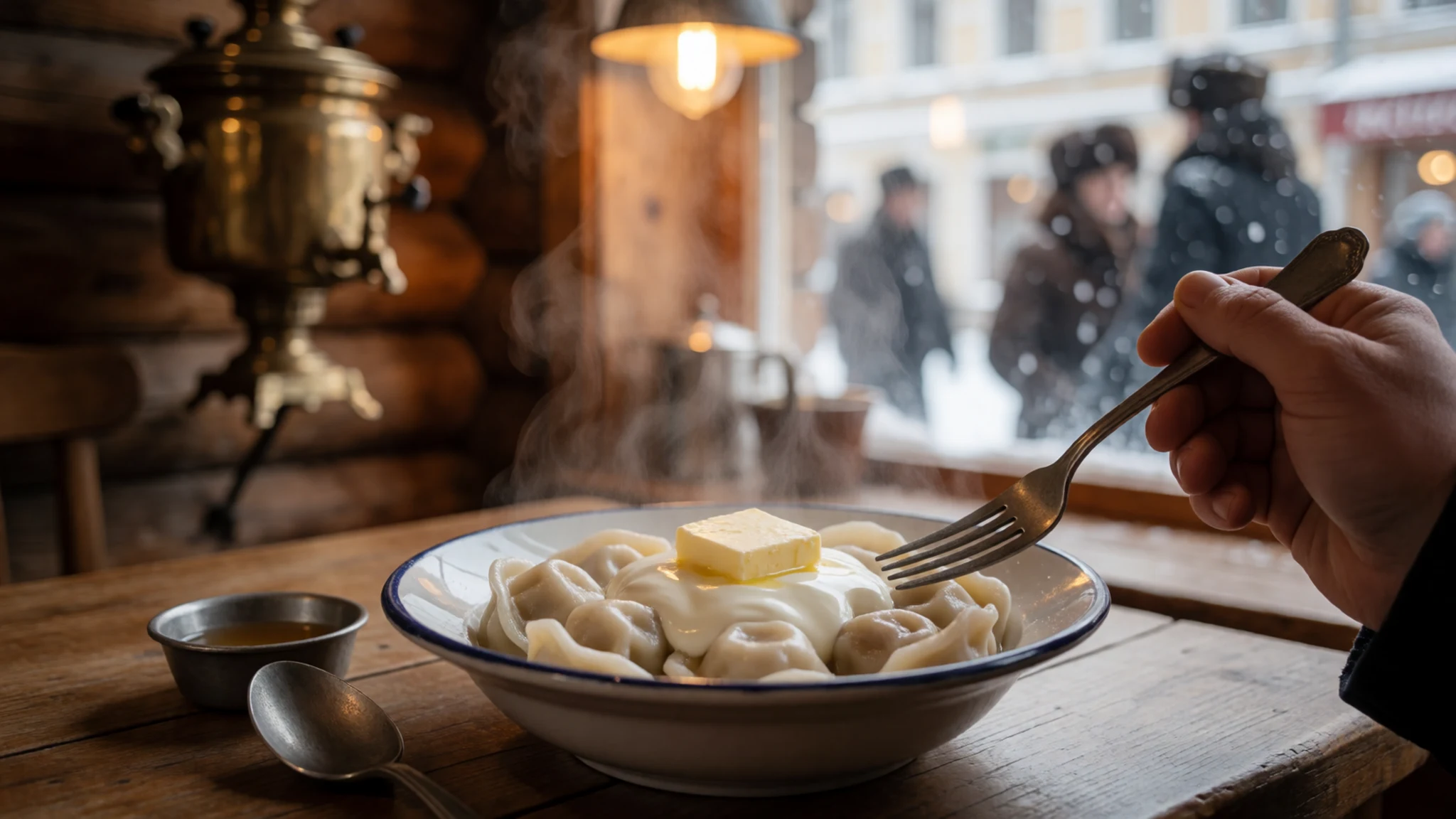
- Grilled and smoked meats — Rustic traktir-style restaurants
Traktir-style restaurants serve typical Russian fare built around grilled or smoked beef and pork, plus sausages. Portions are generous and suit groups sharing several plates. This is the place to try a hearty, meat-heavy Siberian meal.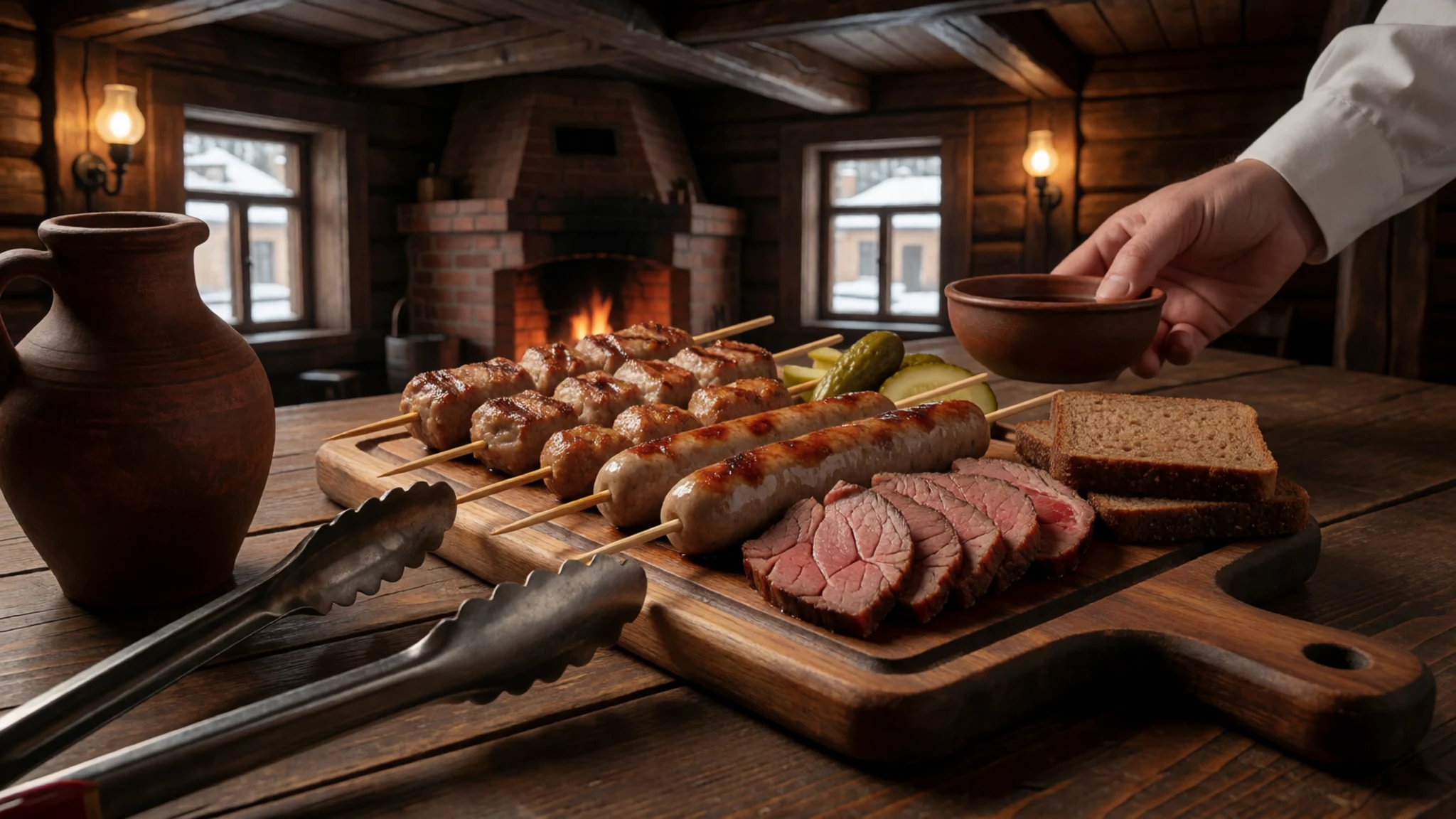
- River and lake fish — Traditional Russian restaurants and markets
Fish dishes appear on the menus of many Russian-style restaurants here, reflecting the rivers and lakes of the region. Ask what is local and in season, and expect it smoked, baked or served in soup. - Sushi and Japanese dishes — Japanese restaurants in the city centre
Sushi is a surprisingly popular choice in Novosibirsk, and Japanese restaurants sell rolls, kimchi and tea. It makes a lighter alternative after several heavy meals, and the restaurants are easy to find near the centre. - Tea, coffee and pastries — Coffee houses in the central streets
Coffee houses in the centre serve a good range of tea and coffee, and some provide English menus. They are useful for warming up in winter or for a break between museums, with cakes or pastries alongside.
Plan it
Best time. June to September is the easiest window: it is warm enough for river walks, parks and the zoo, while winter is very cold, snowy and suited to those who want a true Siberian experience with shorter days outdoors.
How long. 2–3
Getting there. Fly to Tolmachevo Airport, then take a bus or minibus to the main railway station, Novosibirsk-Glavny, in about half an hour; a taxi takes about the same if the price is agreed in advance. Trans-Siberian trains all stop at Novosibirsk-Glavny, and the Garina-Mikhailovskogo metro station is nearby. Check the RZD website for timetables and fares.
Budget. mid
Tips
- Book rail tickets through the RZD website well ahead in peak summer.
- Carry a card and some cash for small eateries and buses.
- Pack serious winter clothing from late autumn, including grip-soled boots.
- Check museum and theatre websites for current opening times and performances.
- Use the metro and taxis to cover the long distances across the river.
Etiquette
- Leave coats and bags at the cloakroom in theatres and museums.
- Cover shoulders and knees in Orthodox churches.
- Ask before photographing people.
Nearby
Sources
- Wikidata Q883 (CC0)
- Wikipedia: Novosibirsk (CC BY-SA 4.0)
- Wikivoyage: Novosibirsk (CC BY-SA 4.0)
- View of Novosibirsk, Russia — Alex Polezhaev (CC BY 2.5)
- Opera and Ballet Theatre Novosibirsk — Boris Sakic (CC BY-SA 4.0)
- Technopark Novosibirsk — De Arso (CC BY-SA 4.0)
- Sibir Arena Novosibirsk — Dvp777 (CC0 1.0)
- Novosibirsk 1895 — Anonymous (Public domain)
- Novosibirsk skyline in winter — Novosibirsk travel on Al-Ashraf (CC BY-SA 4.0)
- Бугринский мост Новосибирск — Muffi (CC BY-SA 4.0)
- Bugrinskiy bridge — De Arso (CC BY-SA 4.0)


