Nottingham
Nottingham, United Kingdom
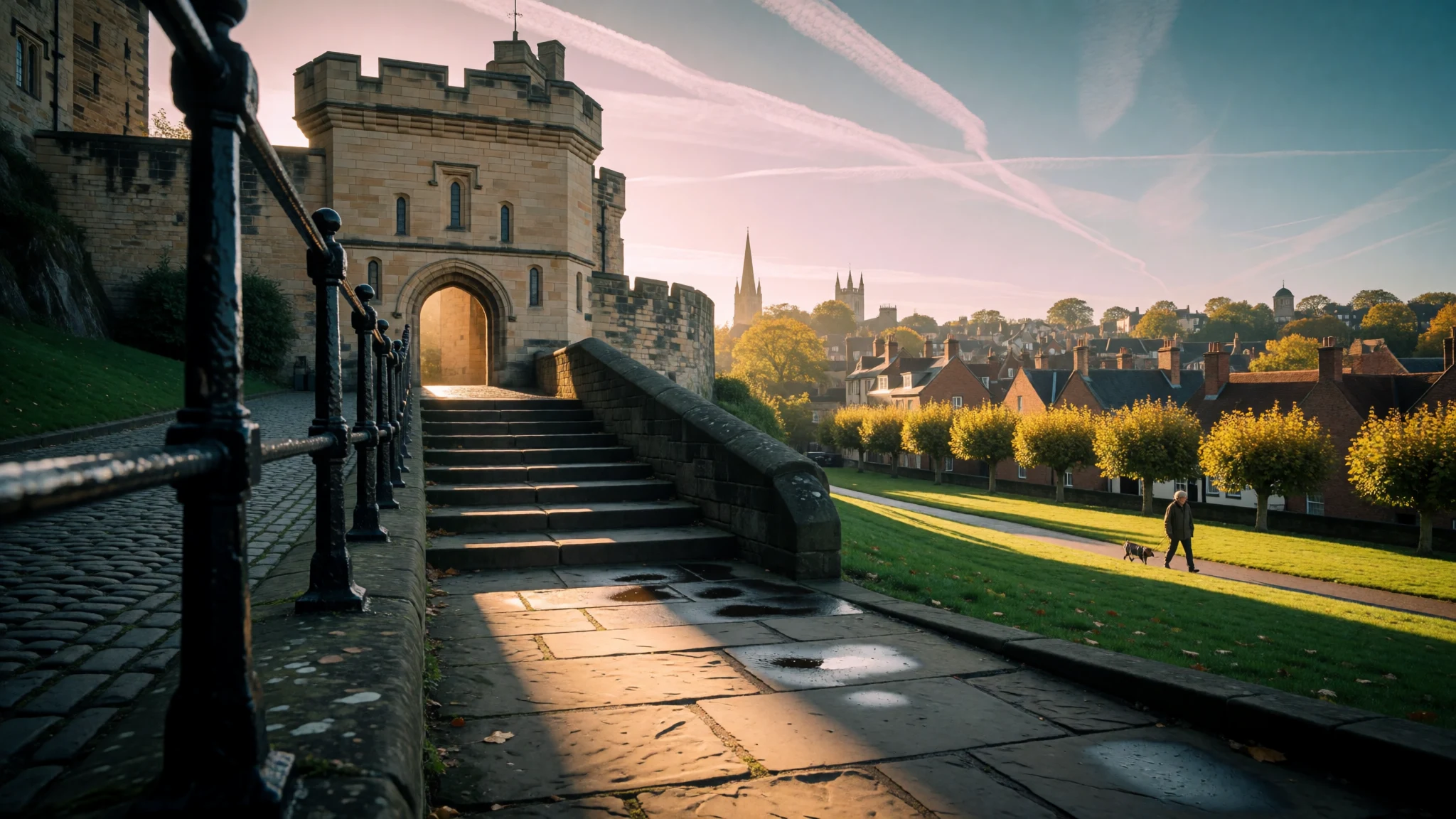
Nottingham trades on Robin Hood, but the real draw is its sandstone caves, old pubs, lace-making past and good parks, all within walking distance.
The place
Nottingham sits in the East Midlands of England, a city of 289,301 people on low ground about 61 metres above sea level, beside the River Trent. It is the county town of Nottinghamshire and a unitary authority, so the city council runs its own services separately from the surrounding county. Sheffield lies to the north-west and Birmingham to the south-west, which makes this a very middle-of-England kind of place, neither northern nor southern in temperament. The centre is compact and easy on foot. The Old Market Square anchors it, the red-brick warehouses of the Lace Market stand to the east, and the castle rock rises to the south-west. Trams cross the centre and the railway station is a short walk from the shops. Beyond the core are generous green spaces, including Wollaton Park with its Elizabethan hall and the Arboretum with its Victorian planting. The city built its fortunes on lace, bicycles and tobacco, and its fame on Robin Hood. Today it is a busy university town with a young crowd, a strong gallery and music scene, and a good supply of cheap eating. Anyone arriving with film expectations should adjust them: there is no great medieval fortress, and the legend is more a thread through street names, statues and souvenir shops than a theme park. The pleasure lies in the layers, from caves and ancient pubs to Victorian wealth and modern art.
Its story
Nottingham's written story starts in 919, when Edward the Elder seized the settlement and fortified the ground across the Trent. The facts block puts the place's origins around 600, and the first town was a small Anglo-Saxon one, ringed by a ditch and bank, on the hill now known as the Lace Market. After the Norman Conquest, William the Conqueror had a castle raised on the rocky height to the west and handed it to William Peverel. A second community, the French Borough, grew up around that castle, while the older English Borough stayed on its own hill. Over time the gap between them was built over, and the Old Market Square became the common heart of the town. Defences in the early medieval period were a ditch and bank, later replaced by a stone wall. A short stretch survives beside Maid Marian Way and is a protected monument. The legend of Robin Hood has its historical backdrop in 1194, when Richard the Lionheart came back from the Crusades and found the castle held by supporters of his brother Prince John, among them the sheriff. Centuries later, lace, bicycles and tobacco turned Nottingham into an industrial city, and in 1897 it received its city charter as part of Queen Victoria's Diamond Jubilee celebrations. That mix of outlaw tale, medieval garrison and factory wealth still shapes how the city sees itself.
What to see
- Nottingham Castle — Castle rock, south-west of the centre
Nottingham Castle is not the fortress of the films. What stands on the rock is a small stately home, with only the gatehouse surviving from the medieval castle. Go for the views over the city, the sandstone setting and the history of the site. Check the official site before visiting.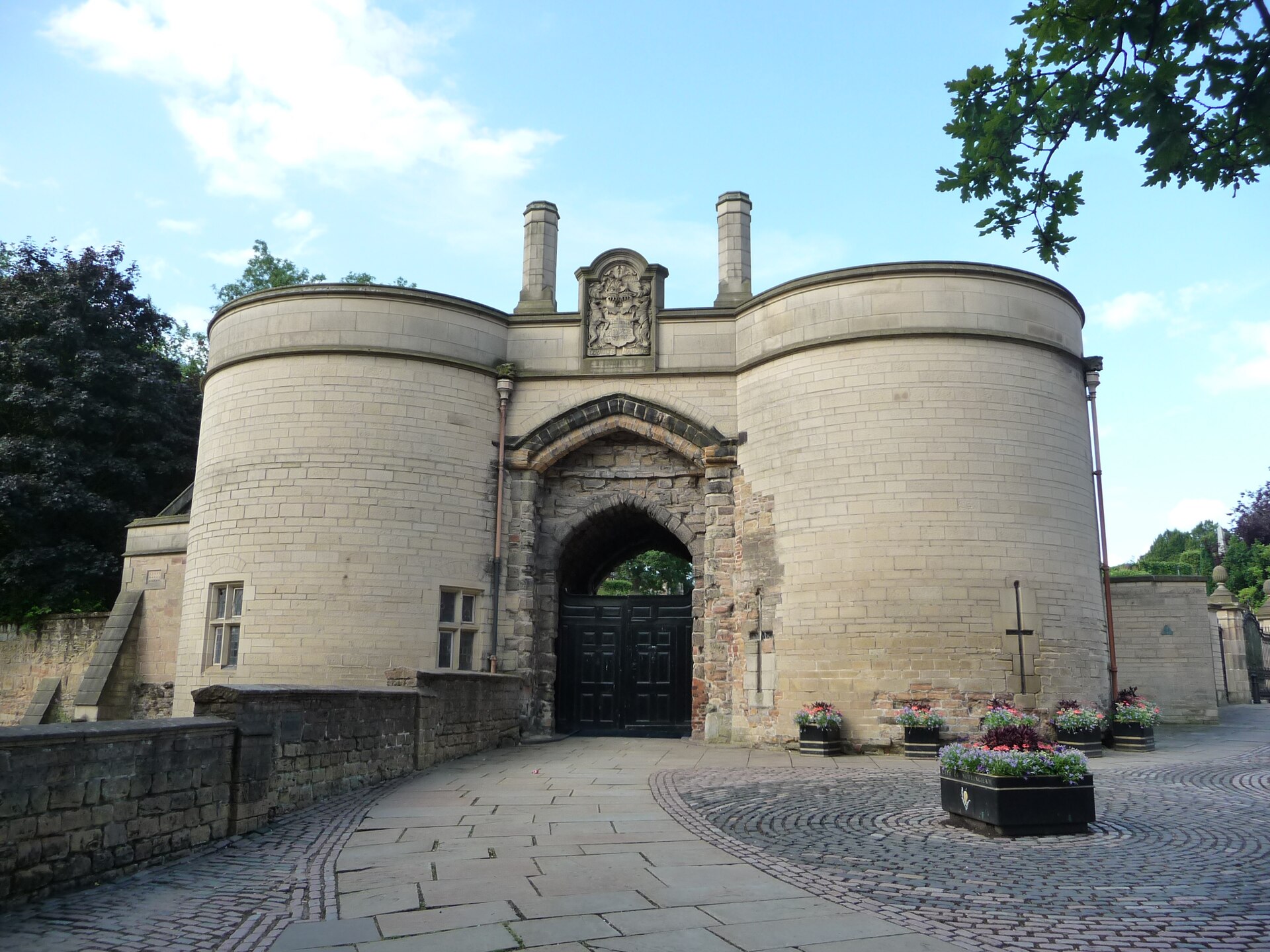
- Robin Hood statue — Outside the castle walls
A bronze of the city's best-known folk hero stands just outside the castle walls, bow in hand. It is a free stop and a fixture of every visitor's photos, so expect a few people lining up beside it. It makes a neat starting point before walking into the old streets nearby.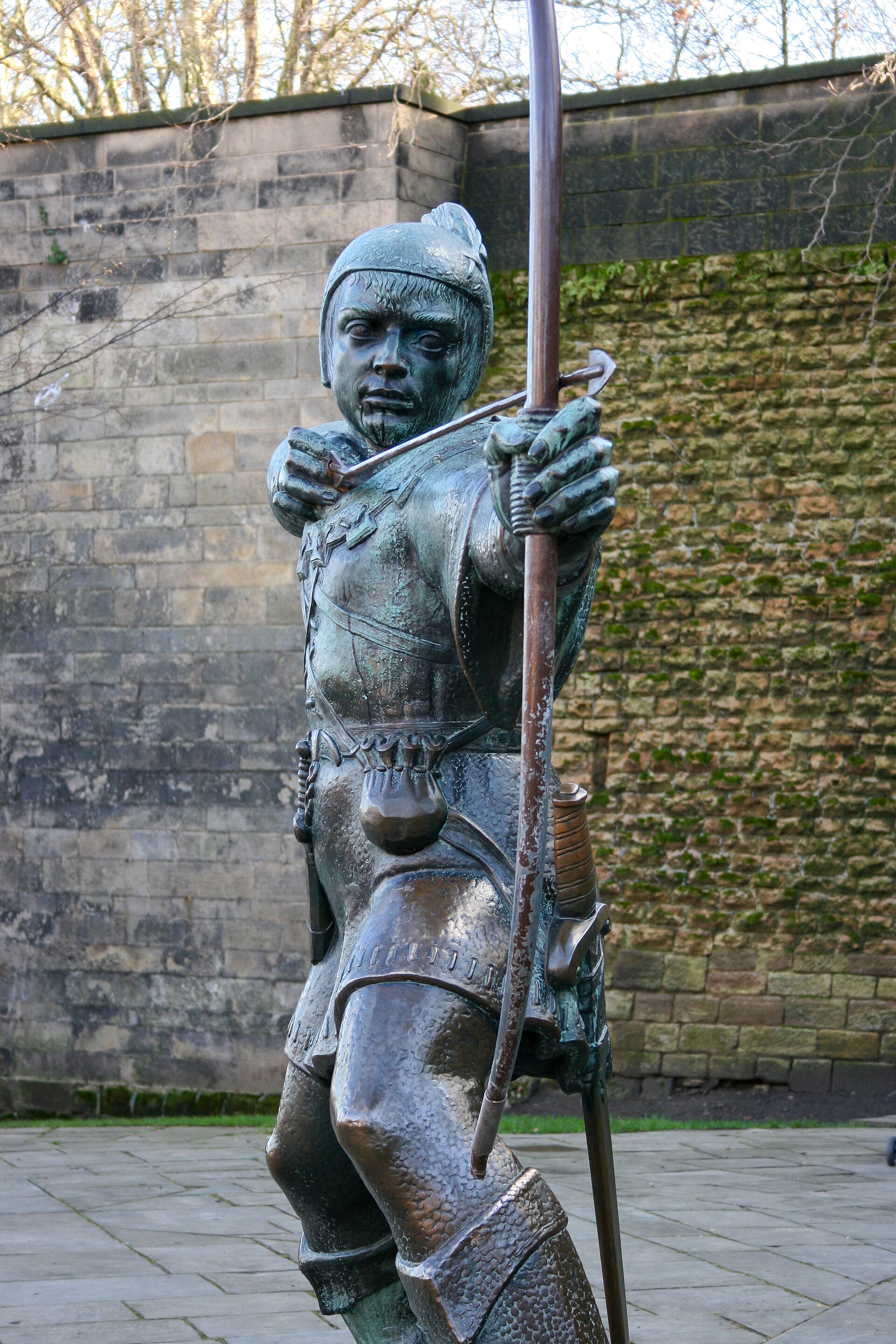
- Ye Olde Trip to Jerusalem Inn — Beneath the castle rock, off Maid Marian Way
Cut into the foot of the castle rock off Maid Marian Way, this pub is one of several in Britain claiming to be the oldest, with a history said to stretch back over eight centuries. Rooms run back into sandstone. Come outside peak hours if you want a seat. - City of Caves — Garner's Hill, south of the Old Market Square
Nottingham's soft sandstone has been dug into for centuries, leaving a maze of hand-cut caves beneath the streets. The tour entrance is reached from Garner's Hill, using a temporary door made from a former fire exit of the demolished Broadmarsh centre. It is cool and damp underground, so wear sensible shoes. - National Justice Museum — Lace Market area, east of the centre
This museum looks at crime and punishment as they were once handled in the city, often roughly. It suits a rainy afternoon and works well for families and anyone curious about how law and punishment have changed. Opening times and booking vary, so check the official site first.
Culture
Nottingham's culture is shaped by stories, both legendary and literary. Robin Hood is the obvious one, and the city plays up the outlaw and the sheriff with good humour rather than reverence. It also holds a title as a City of Literature, which fits a place with a strong university presence and a steady flow of readings and festivals. The new Central Library, opened in November 2023, is a busy public space. Art is easy to find. Nottingham Contemporary, in the Lace Market, opened in 2009, and the New Art Exchange, opened in 2008, shows work by a wide range of artists. Public sculpture is scattered across the centre: the traditional Robin Hood statue by James Woodford, Lee Johnson's statue of the football manager Brian Clough, Anish Kapoor's Sky Mirror outside the Playhouse, and Ken Shuttleworth's Aspire at the university. Football loyalties matter here, and the city is passionate about its two clubs on opposite banks of the Trent. Pubs are the social centre, and a quiet pint in a cave pub is a very local pleasure. The people are chatty, dry-humoured and unfussy. Conversation is easy to start at a bar or tram stop. Queue patiently at bars and counters, wait to be served in turn, and say thank you to tram and bus drivers as you step off.
What to wear
Nottingham's traditional textile is lace. Machine-made lace, much of it produced in factories around the Lace Market, was exported across the world and dressed brides, curtains and tablecloths alike. The workers' own clothes were plain and practical, while the Robin Hood tradition brought in Lincoln green, the cloth colour of the outlaw costume, still seen at festivals, pantomimes and in souvenir shops. There is no single regional costume worn on ordinary days. What people wear now is modern British casual: jeans, trainers, rain jackets, football shirts on match days and smart-casual outfits for evenings in the Lace Market and Hockley. Students give the city a young, relaxed style, and nights out can be dressy, though rarely formal. Visitors should plan for changeable weather. A light waterproof is useful in any season, and a warm layer helps in autumn and winter. Comfortable shoes matter more than anything: the centre is walkable but has cobbles, hills near the castle and uneven ground in the caves, where it is cool and damp. There are no strict dress rules for sights. Churches and the city's mosques, gurdwaras and temples welcome visitors who dress modestly, with shoulders and knees covered, and who remove shoes where asked. Pubs, galleries and restaurants take smart-casual and casual clothes without comment.
What to eat
- Cask ale and pub lunch — Any traditional pub near the castle or Lace Market
Nottingham's pubs are the natural place to try local cask ale alongside plain, filling food such as pies, sausages and a Sunday roast. Several old pubs sit under the castle rock, and the Lace Market area has good drinking streets. - Bramley apple pie — Cafés, bakeries and pubs around the centre
The Bramley cooking apple has its roots in Nottinghamshire, and its sharp flesh suits a pie served warm with custard or cream. Look for it at cafés and bakeries, and on pub dessert menus in autumn. - Pork pie with mustard — Delis and market stalls in the city centre
A cold, hand-raised pork pie with jelly is a classic Midlands snack. It is eaten with English mustard and pickles, or as part of a ploughman's lunch with bread and cheese. Delis and market stalls usually stock them. - Piri-piri chicken — Casual chicken restaurants near the Old Market Square
Charcoal-grilled chicken with a hot piri-piri sauce is a favourite cheap meal in the city centre, served with chips or rice. Spice levels range from mild to fiery, so ask before choosing. - Curry and street-style bites — Budget eateries along Mansfield Road and around the centre
The city has a long South Asian food tradition, and inexpensive curry houses, grills and snack counters serve rice, breads and vegetarian dishes. They suit budget meals and late-night eating, with plenty of options for vegetarians.
Plan it
Best time. May, June and September are the easiest months, with milder weather for walking the parks and castle grounds. Summer can be warm and crowded at events, while winter is cold, damp and short on daylight. Rain is possible in any month, so pack a waterproof.
How long. 2–3
Getting there. Fly to East Midlands Airport, then take the Skylink bus into the city centre, or fly to Birmingham Airport and change trains at Birmingham New Street. By rail, Nottingham station is a short walk from the centre, with the tram stop directly above it. Drivers can use the M1 and park at one of the Park and Ride sites around the city.
Budget. mid
Tips
- Book the City of Caves and the castle ahead in busy school holidays, and check the official site for current times
- Start at the castle in the morning, before the main crowds, then work down through the old streets
- Use the tram for longer hops, and carry a card as well as a little cash for markets and small cafés
- Pack a light waterproof and comfortable shoes, as the cave floors are damp and uneven
- Check the city website, https://nottinghamcity.gov.uk, for events and transport updates
Etiquette
- Queue for the bar and wait your turn to be served in pubs
- Be considerate of residents and keep noise down late at night in the Lace Market
- Ask before photographing people, especially in places of worship
Nearby
Sources
- Wikidata Q41262 (CC0)
- Wikipedia: Nottingham (rev 1383622338) (CC BY-SA 4.0)
- Wikivoyage: Nottingham (rev 5427304) (CC BY-SA 4.0)
- Nottingham skyline, Willednic at English Wikipedia (CC BY 3.0)
- Nottingham Council House on Coronation Day, John Sutton (CC BY-SA 2.0)
- Taken at Wollaton Park, Lee Haywood (CC BY-SA 2.0)
- Nottingham Castle gatehouse, Immanuel Giel (CC BY-SA 4.0)
- Nottingham Arboretum: the dahlia border, John Sutton (CC BY-SA 2.0)
- Robin Hood statue, Nottingham Castle, Mike Peel (CC BY-SA 4.0)
- St Mary's church, Nottingham, Jules & Jenny (CC BY 2.5)
- Prospect of Nottingham from the East, Johannes Kip (Public domain)


