Nosy Be
Nosy Be, Madagascar
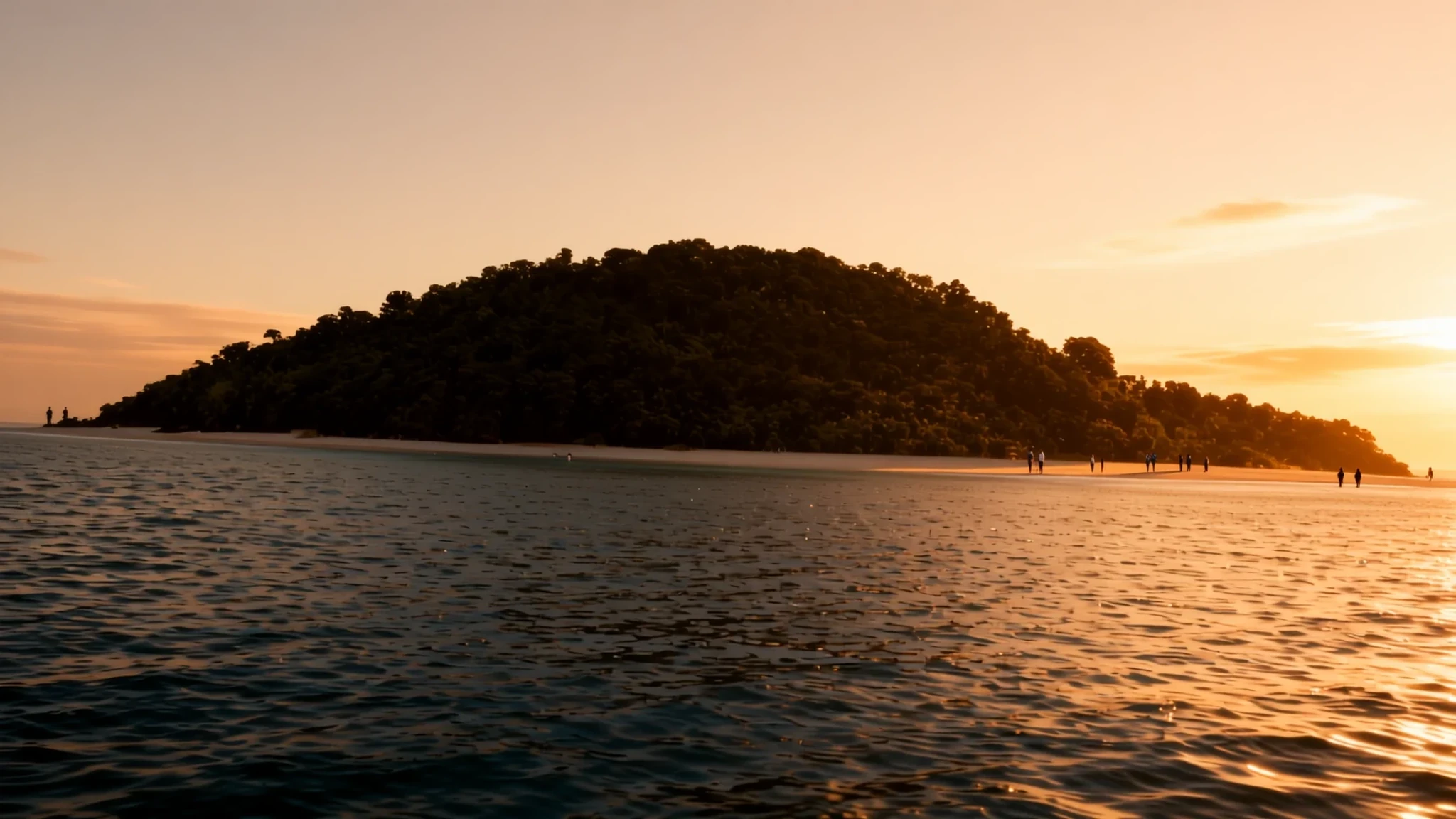
A volcanic island of forest, lemurs and reef-fringed beaches, Nosy Be pairs easy resort life with a rich Malagasy past.
The place
Nosy Be is a volcanic island a short way off the north-west coast of Madagascar, in the Mozambique Channel. Its name is Malagasy for 'big island', and older writers called it the scented island after the ylang-ylang trees that still fill its lowland fields. The volcano that built the island has been dormant for a very long time, and its highest point, Mont Lokobe, stands about 450 metres above the sea. Several crater lakes lie in the old volcanic hollows, and waterfalls and sacred trees are scattered through the interior. Around 109,000 people live here, most of them in and around the main town, Andoany, which many still know by its colonial name, Hell-Ville.
Tourism now sits beside farming as the island's main business. Large all-inclusive resorts operate here, which is unusual for Madagascar, and the main town has a busy harbour and a lively market. Roads carry motorbikes, small taxis and trucks, and there are no traffic lights anywhere on the island, only roundabouts. The island works well as a base for the smaller islands around it, with the reefs and wildlife of the nearby marine reserve within easy reach.
Its story
The first people on Nosy Be were small groups from the Antankarana and Zafinofotsy communities. Later the Sakalava arrived and grew into the largest population on the island, and Comorian, Indian and Antandroy families settled alongside them over time. The island entered wider Malagasy history when King Radama I announced his plan to conquer the whole west of the country. That aim was largely met in 1837, when the Sakalava kingdom of Boina passed to Ranavalona I after her army defeated the forces of Queen Tsiomeko.
European interest followed. The French began colonising the island in 1840 and founded an outpost they named Hell-Ville, after Admiral de Hell. When slavery was abolished in the French colonies in 1848, the Sakalava rose in revolt, having been deeply involved in the slave trade. Under French rule Nosy Be became an internal protectorate within the wider colony of Madagascar, and its harbour grew into an important trading point on the Mozambique Channel.
The colonial planters built their economy around sugar cane, bringing in indentured workers from East Africa, and sugar and rum were for a long time the island's most valuable products. In later decades ylang-ylang, distilled for essential oil, became the main crop, and tourism grew into the other pillar of the island's economy.
What to see
- Nosy Iranja — Off the coast, reached by boat from the main island
Nosy Iranja is a pair of sandy islands joined by a long spit that is roughly 750 metres of pale sand. At high tide it appears as two islands, and at low tide the spit widens so the two become one. Most boat trips anchor close to the beach, so bring water shoes and a waterproof bag. It is a full-day outing that rewards an early start, when the water is clearest and the beach is quiet.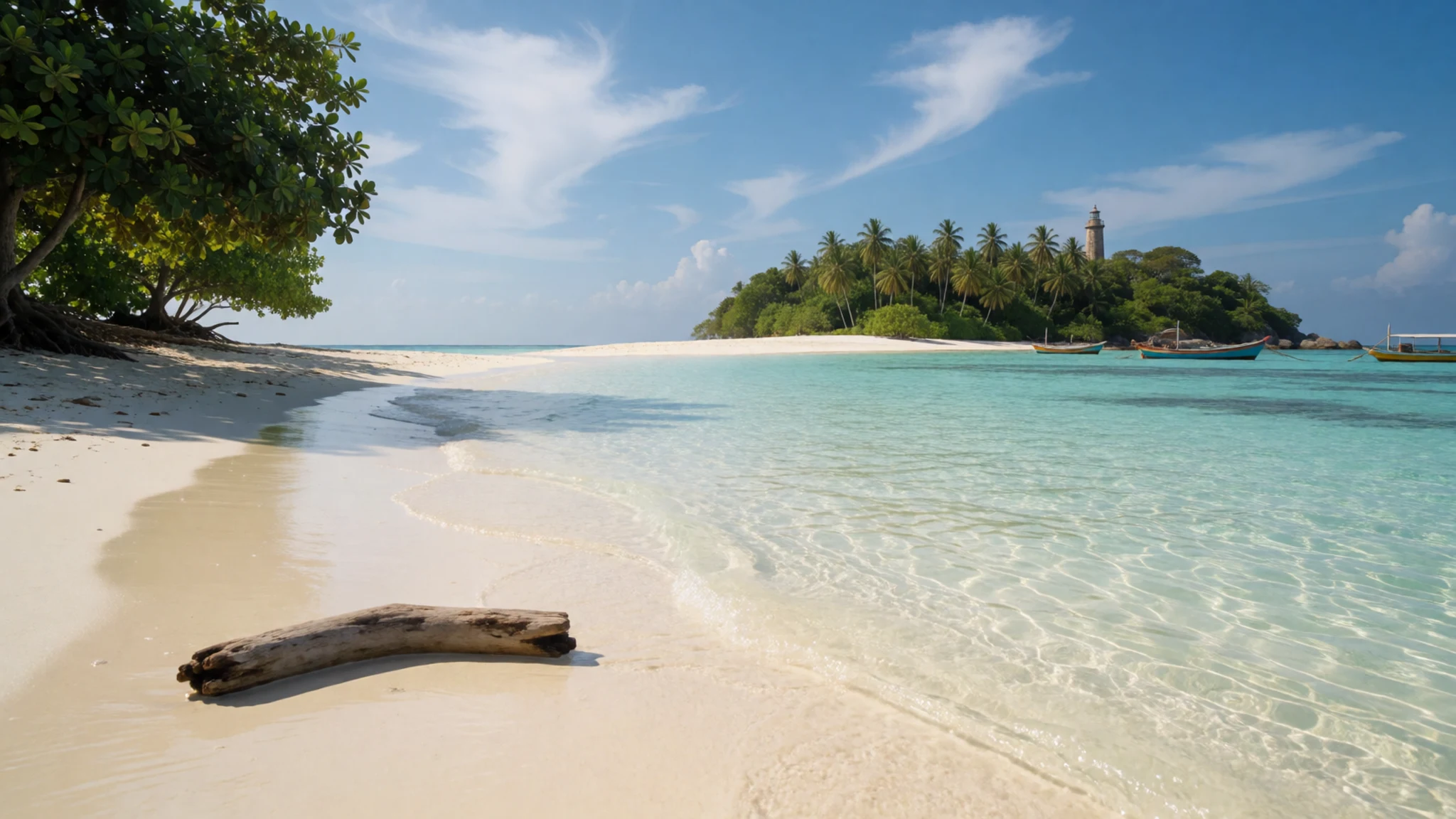
- Moraingy fight games — Moraingy, on the main island
Moraingy fight games are a traditional martial art, played as bare-fisted striking contests with set rules and a ring of spectators. The bouts sit somewhere between sport and display, and they carry local identity rather than being staged for tourists. Visitors can usually watch from the edge of the crowd. Go with a local guide who can explain the rules and check whether photographs are welcome.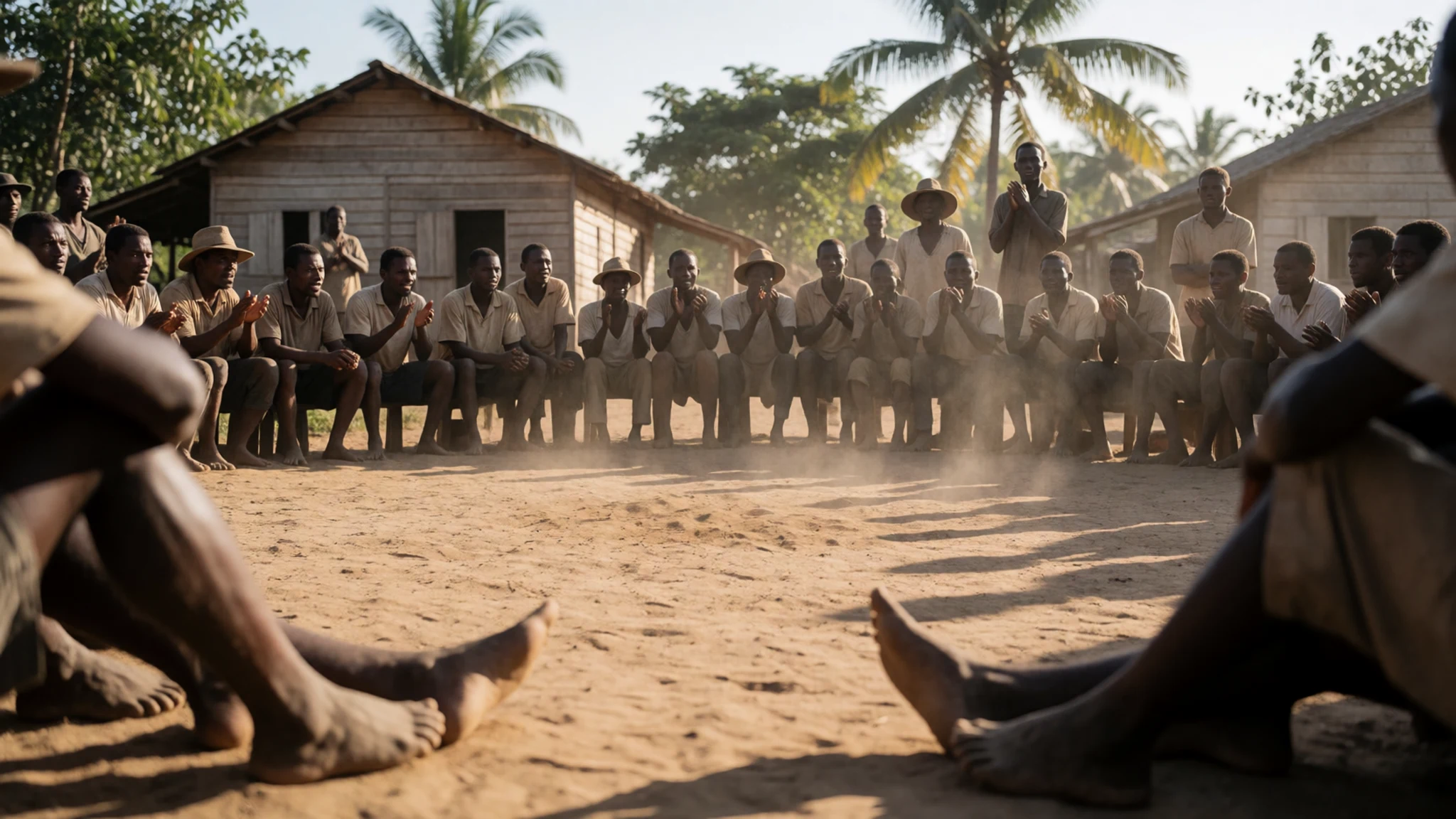
- Lokobe National Park — Forest reserve on the island's hills
Lokobe National Park protects a remnant of forest on the island's hills, and black lemurs are among the animals that live in its trees. Walk slowly on the forest paths and listen for calls before looking up. Local guides are useful for spotting animals, and the forest is cooler and shadier than the beaches, which helps on humid afternoons. Bring a light rain layer, since showers can arrive without warning.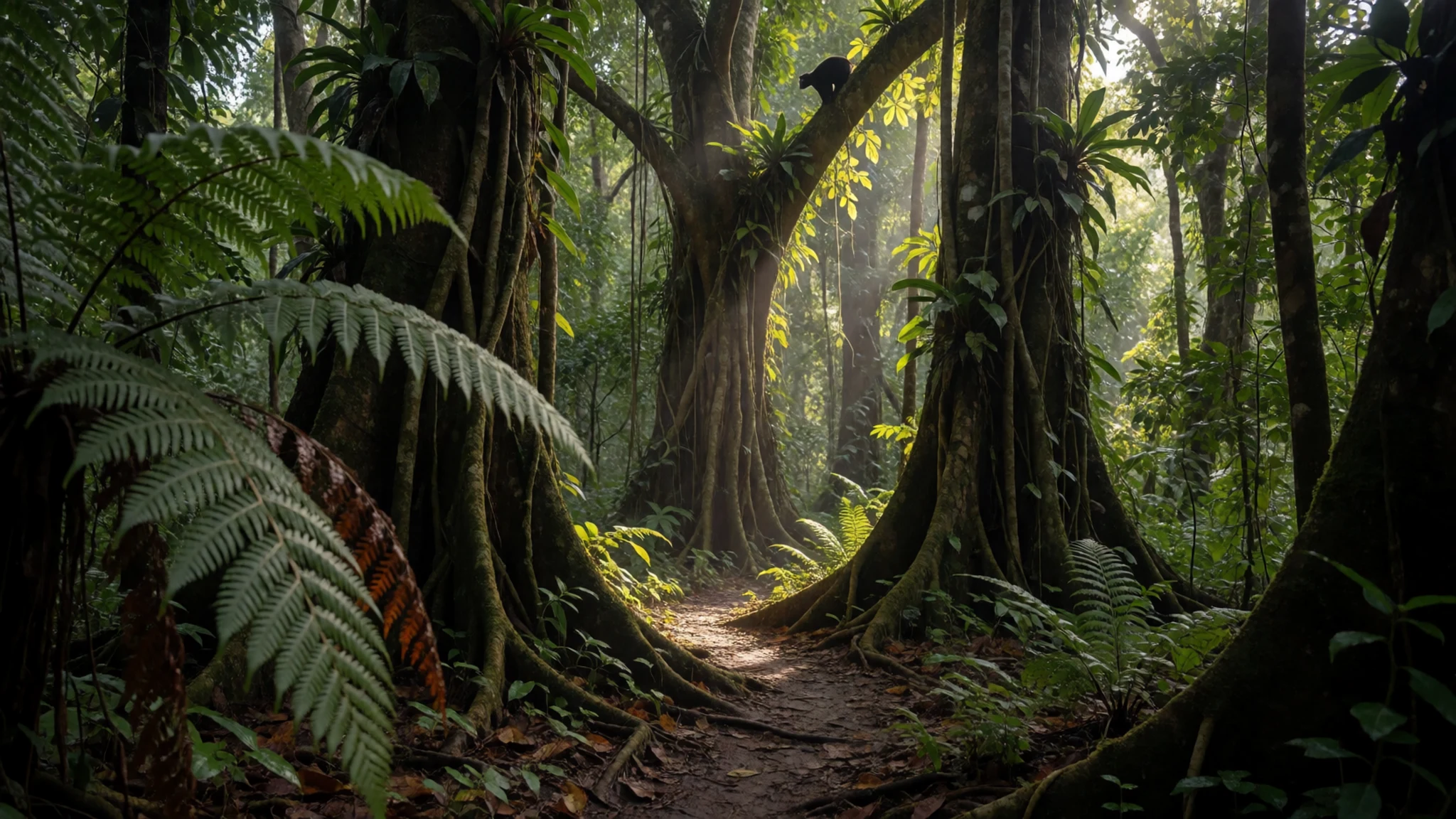
- Nosy Komba — A small island near Nosy Be, reached by boat
Nosy Komba is one of the small islands near Nosy Be and makes a good half-day trip for a change of scene. The village is quiet and the pace is slow, with houses set back from the shore and fishing boats drawn up on the sand. Lemurs are sometimes seen on the island as well. Spend time wandering the village paths without rushing, and ask before photographing people at home.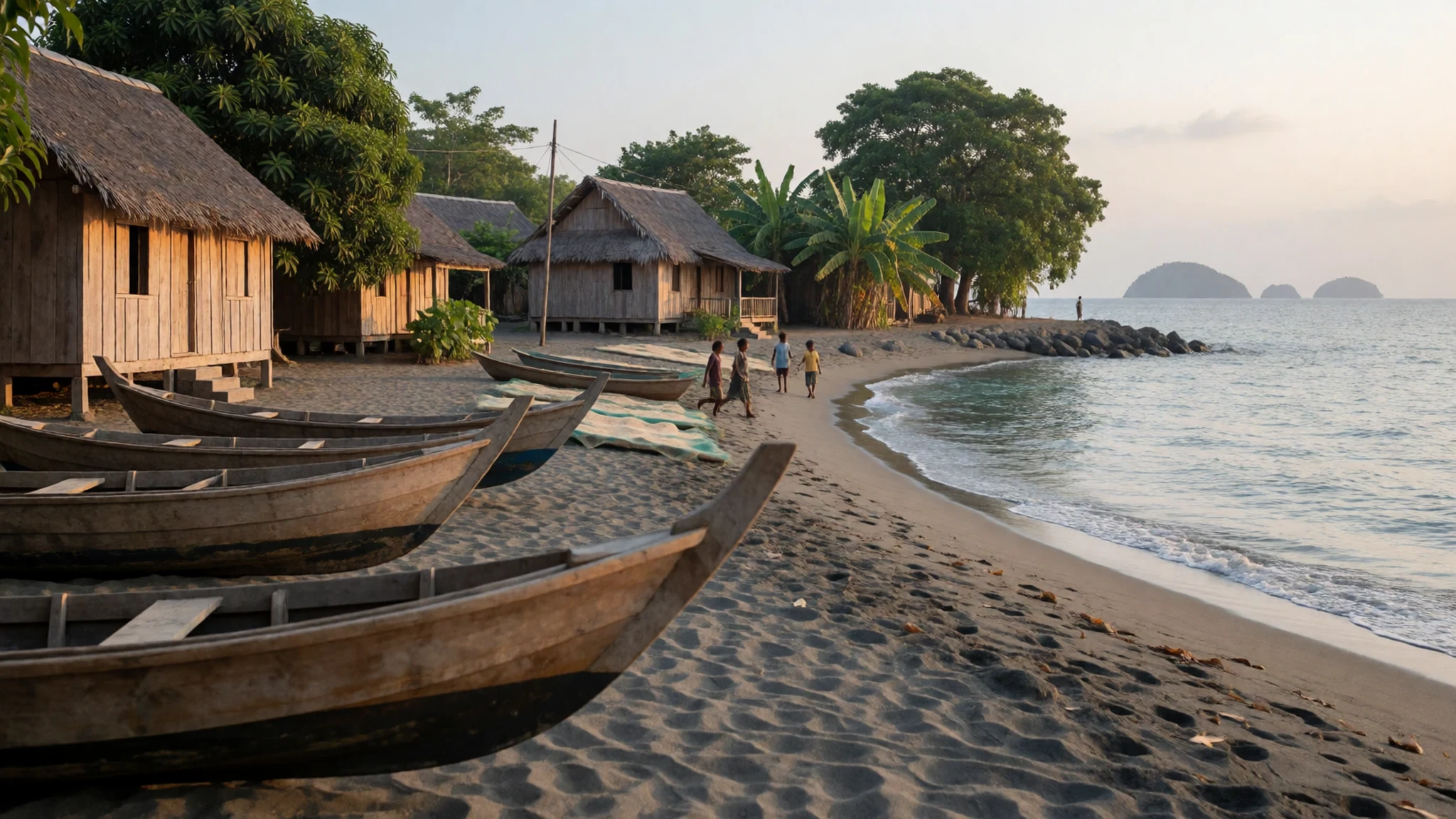
- Tanikely Marine Reserve — Marine reserve on the islands near Nosy Be, reached by boat
Tanikely Marine Reserve protects the reefs around a small island, and it is one of the best places near Nosy Be to snorkel among fish and coral close to the shore. Water is clearest on calm mornings, before wind and boat traffic stir up the sand. Choose an operator that respects reef protection, keep your distance from coral, and do not stand on the reef flats at low tide.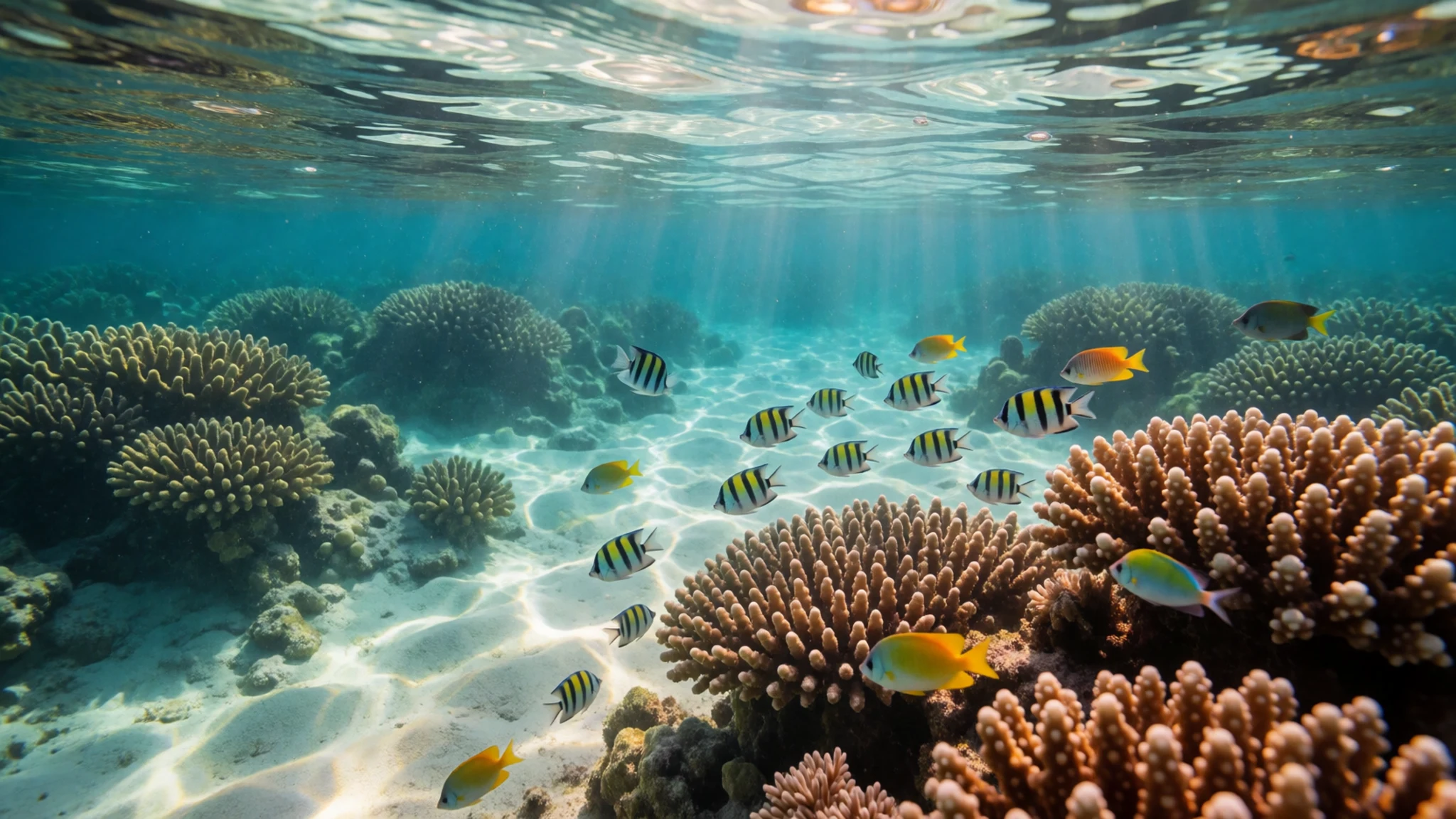
Culture
Nosy Be is a Malagasy island with strong local customs, and Sakalava traditions still shape how sacred places are treated. Many sites carry fady, or taboos, which can cover certain trees, lakes, tombs and days of the week. Local guides know which places are open and which are off limits, and their advice is worth following without question.
Tombs and ancestral sites matter deeply to Malagasy families. Burial places are not tourist sights, even when they are well known, so climbing on them, sitting on them or entering them without an invitation is considered disrespectful.
Everyday life is friendly and unhurried. Greetings matter, so a simple salama, meaning hello, and a smile go a long way. Many people speak French, and some speak English, especially in the resort areas. Bargaining is normal at markets, but it should stay good-natured.
Photography needs care. Fishermen, market sellers and children are often happy to be photographed, but asking first is expected. Some people will ask for a small payment, so settle that before you raise the camera. Cover your shoulders and knees in villages, and keep swimwear to beaches and resorts.
What to wear
Traditional dress on Nosy Be follows the wider Malagasy pattern of the lamba, a rectangular cloth worn wrapped over the shoulders or around the body. Lambas are woven from cotton or silk, and their stripes, checks and woven patterns can show where and how they were made. Silk lambas are lighter and more ornate and have traditionally marked special occasions, while cotton versions are worn for work and at market. Cloth was also used in ceremonies, where older pieces and particular colours might be chosen.
What people wear now is mostly Western clothing: T-shirts, jeans, football shirts and sandals in town. Many women still wrap a lamba or a printed cloth over a plain top, especially at markets and in villages, and the wrap is a practical item as much as a traditional one. Fishermen often work in shorts and sun-faded shirts.
For visitors, the heat and humidity call for light, loose cotton or linen in breathable colours, with long sleeves or a shawl for sun and mosquitoes at dusk. Cover shoulders and knees in villages and at tombs or sacred sites, and bring a lamba or sarong, which doubles as a beach cover and a sun shade. Closed sandals or trainers suit the forest paths, which can be muddy, and water shoes help on reefs and rocky shores.
What to eat
- Grilled fish and seafood — The harbour front in Hell-Ville and the beach grills along the coast
Fish and seafood come straight off the boats in the morning and are grilled over charcoal, often with a chilli-tomato sauce and rice on the side. Pick a stall where the catch is on display and the turnover is steady. Eat early, when the fish is freshest.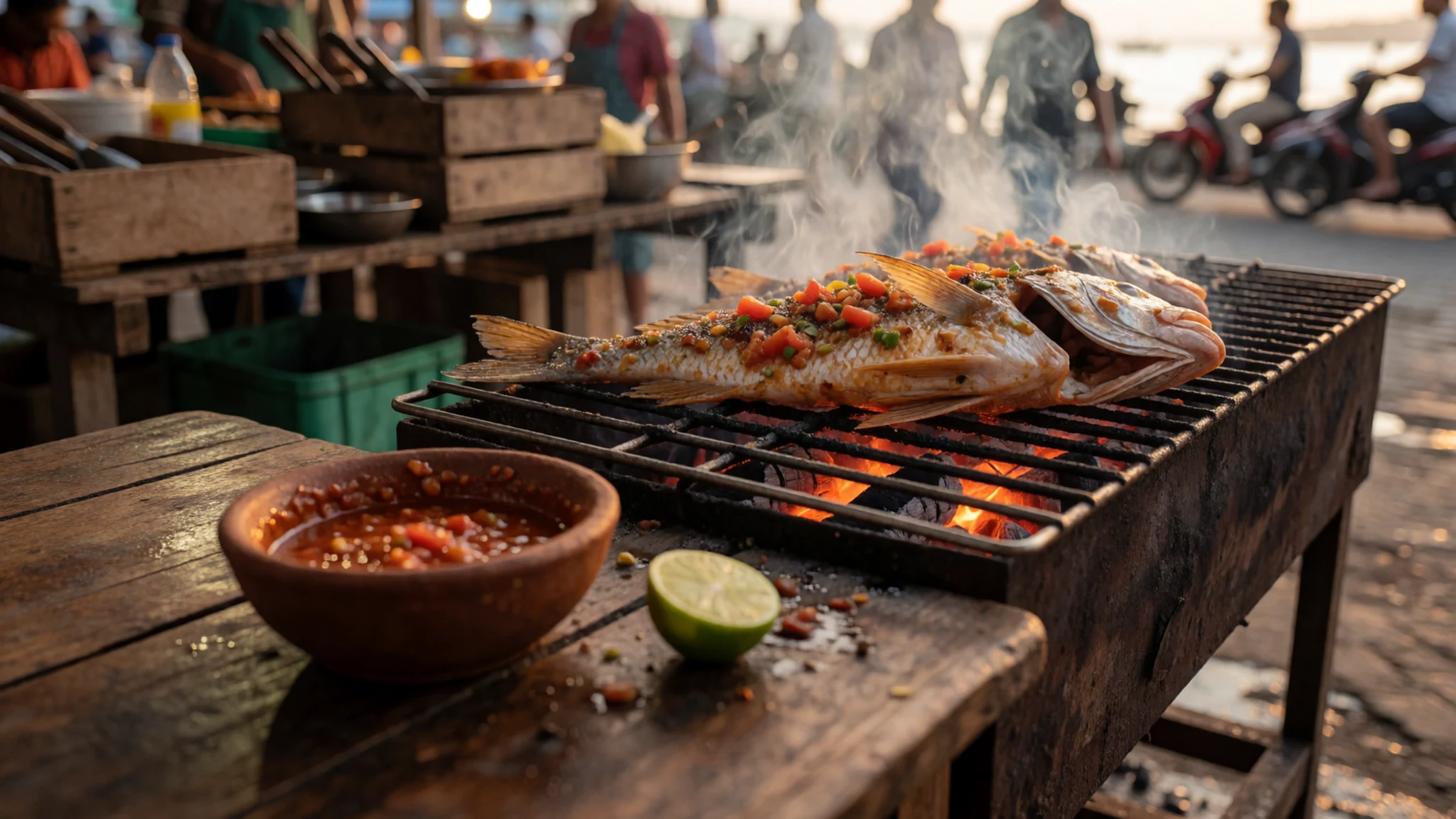
- Romazava — Small local eateries in Hell-Ville and the streets near the market
Romazava is a stew of leafy greens cooked with beef or zebu and flavoured with ginger and onion. It is served with rice at everyday eateries and gives a good taste of home cooking. Ask for it at lunchtime, when the pot has been simmering longest.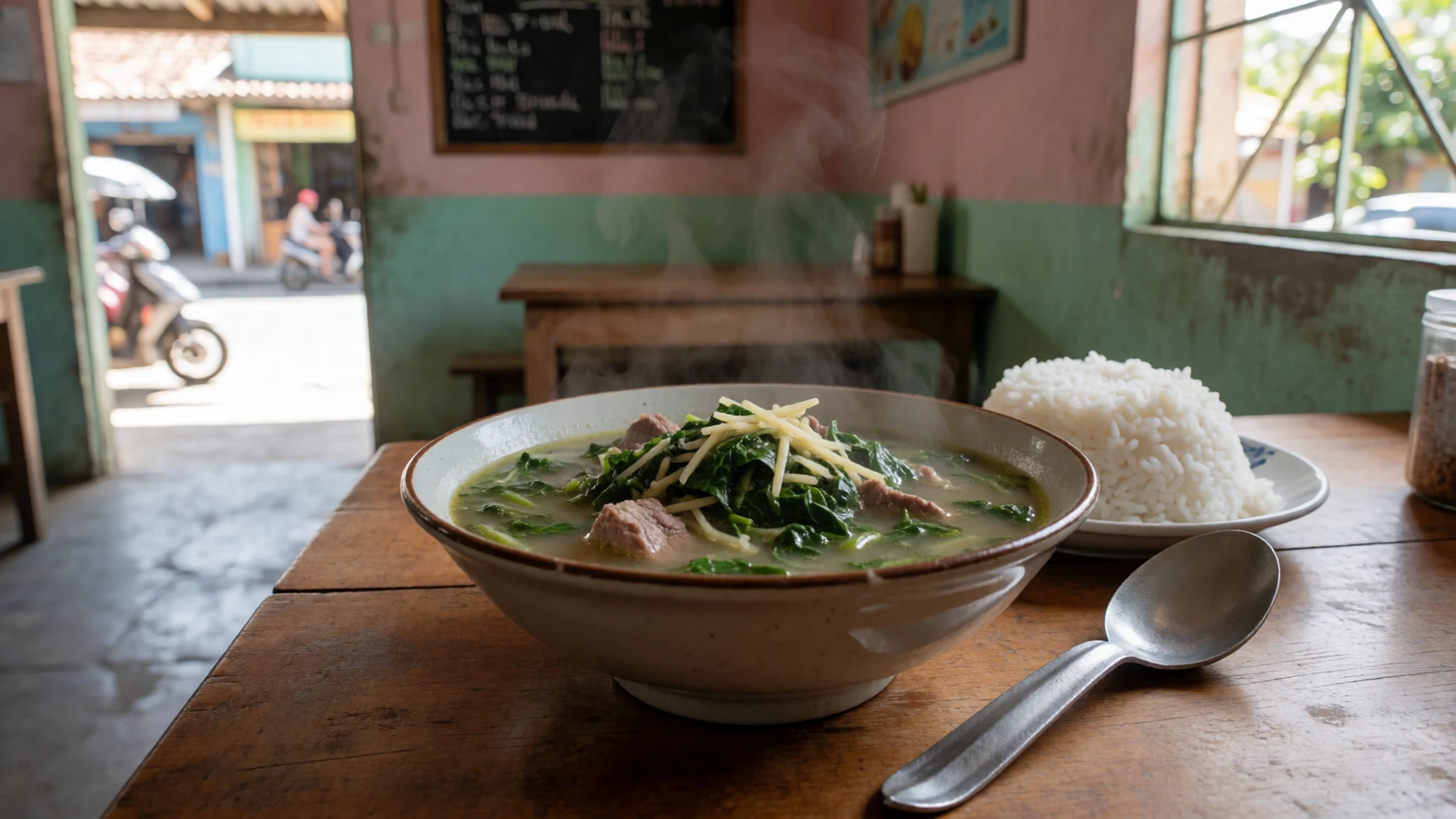
- Tropical fruit and vanilla — The morning market in Hell-Ville
Mangoes, lychees, pineapple and bananas fill the morning market, often sold by the bowl or heap. Dried vanilla pods, sold by weight, are a reminder of the island's wider spice trade. Buy only what you can eat that day. - Sunday evening party at Tatie Chris — The Sunday evening gathering at Tatie Chris, near Hell-Ville
The Sunday evening party at Tatie Chris draws locals and visitors in equal measure, with music and dancing. Arrive after dark, when the crowd builds, and expect the evening to run late. It is one of the easiest ways to see the island socialising together. - Coconut and sweet snacks — Street stalls and the edges of the market in Hell-Ville
Coconut features in many sweets and snacks, from grated coconut cakes to sticky rice wrapped in leaves. Vendors sell them from baskets at the edges of markets and along the road. Pick up a few in the morning, when they are freshest, and eat them for breakfast.
Plan it
Best time. June to September is the drier season, though August can bring strong north-east winds and the island still sees some rain. November to April is the wet season, and the most humid months fall around December to February, so expect heat and showers then. The shoulder months around May and October are workable but less predictable.
How long. 3–4
Getting there. Fly to the island via Addis Ababa, Johannesburg, Mauritius, Bangkok or Europe, or on Air Austral, which serves Chennai with connections through Réunion. The final leg is usually a speedboat from Ankify port on the mainland to Hell-Ville, with slower car ferries if you are bringing a vehicle.
Budget. mid
Tips
- Change ariary before check-in, as foreign exchange counters are unavailable after you have checked in
- Carry cash in small notes for markets, boats and village visits; cards are more widely used in the larger resorts
- Book boat excursions early in the day, when the water is calmer and the reefs are less crowded
- Drink plenty of water and use sun cream, reapplying after swimming, as the midday heat is strong
- Check your government's current travel advice before booking, given past violence against foreigners on the island
- Allow extra time for road journeys, since junctions use roundabouts rather than traffic lights
Etiquette
- Ask before photographing people, especially at markets, fishing villages and religious sites
- Respect fady and sacred places, and follow your guide's advice on where you may go
- Dress modestly in villages and keep swimwear to beaches and resorts
- Leave tombs and ancestral sites alone unless you are invited in
Nearby
Sources
- Wikidata Q1330558 (CC0)
- Wikipedia, Nosy Be (rev 1376166153) (CC BY-SA 4.0)
- Wikivoyage, Nosy Be (rev 5360355) (CC BY-SA 4.0)
- Nosy Be beach, SHERWOOD (CC BY-SA 2.0)
- Black Lemurs, Fox-Talbot (Public domain)
- Balaenoptera omurai, Madagascar, Royal Society Open Science (CC BY 4.0)
- A community in Nosey Be, Jokromberg (CC BY-SA 4.0)
- A lone fisherman in Nosey Be, Jokromberg (CC BY-SA 4.0)
- Madagascar Ground Boa, Lennart Hudel (CC BY 4.0)
- Aigrette dimorphe, Mendel264 (CC BY-SA 4.0)
- Ailsastra amezianeae, RECOLNAT (CC BY 4.0)


