Nizwa
Nizwa, Oman
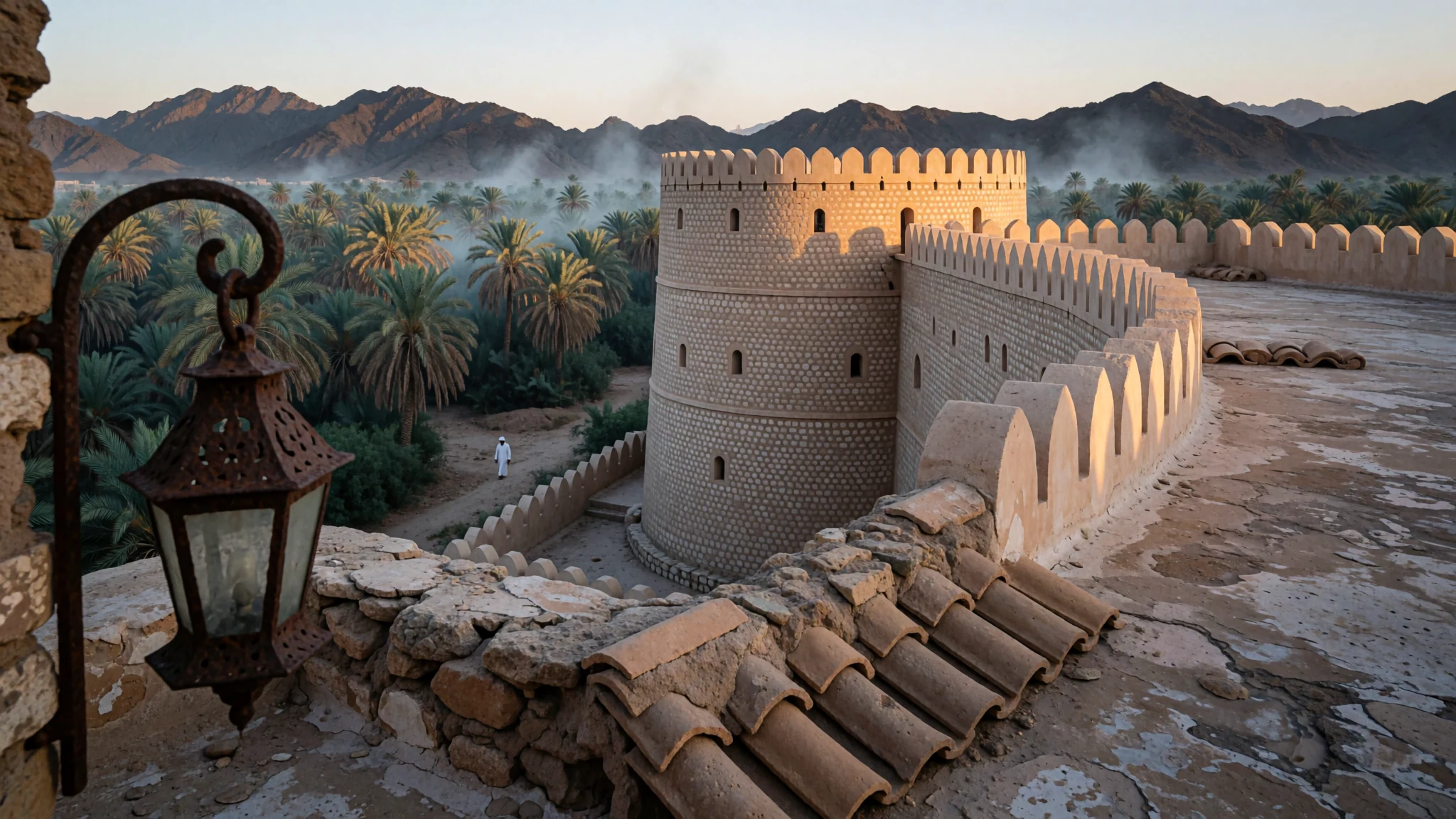
Framed by dark mountain peaks and date palm oases, Nizwa offers a window into Oman’s historic heartland, ancient canal networks and bustling livestock markets.
The place
Nizwa sits at the foot of the Western Hajar Mountains in interior Oman, nestled within an expansive oasis of green date palms. Rising to an elevation of 492 metres, the city has long served as a vital crossroads connecting northern coastal trade routes with the remote interior regions and southern desert paths. Surrounded on all sides by stark mountain ridges, the settlement remains deeply tied to its natural setting and agricultural heritage, with thousands of date trees fed by ancient irrigation channels.
With a population of around 83,544 people, modern Nizwa balances its heritage with civic growth. The town centre is dominated by its monumental circular fortress tower and sprawling shaded market corridors, where local merchants gather to trade spices, frankincense, silver jewellery, and sweet local dates. Beyond the historic core, residential neighbourhoods give way to regional colleges, modern roads, and tranquil palm plantations.
Visiting Nizwa offers a vivid encounter with inland Omani tradition. The surrounding landscape features dry riverbeds and steep limestone cliffs, while the town climate remains arid, bringing pleasant winter days alongside intensely hot summer months. Life here moves to an easy, respectful rhythm centred around early morning trading, afternoon calls to prayer, and quiet evening walks beneath the dates.
Its story
Nizwa has played a pivotal role in Omani history for over a millennium, serving as the nation's capital during the 6th and 7th centuries. Positioned strategically where trade paths met, the city became one of the earliest strongholds of Islam in the region. Local leaders accepted the faith in 630 following a written message sent by the Prophet Muhammad from Medina, solidifying the town's standing as a premier seat of religious scholarship and Islamic jurisprudence across the Arabian Peninsula.
Through the centuries, Nizwa grew into a fortified sanctuary famous for its grand mosques, vibrant market trade, and craft traditions like metalworking and palm-leaf weaving. When the Moroccan traveller Ibn Battuta visited during the 14th century, he recorded a bustling town set among fruit orchards and mountain streams, filled with fine bazaars and meticulous places of worship. The city maintained a fierce independence and a conservative outlook, remaining isolated from foreign influence well into the 20th century.
The 1950s marked a dramatic turning point in local history when regional leaders in the interior clashed with the Sultan of Muscat over territorial authority and emerging oil reserves. Armed conflict led to the heavy bombardment of the historic fort tower by British air forces supporting the Sultan. Following the conflict and subsequent national modernization efforts begun in 1970, Nizwa transformed into a well-connected regional hub while preserving its architectural monuments, ancient canal networks, and deep scholarly legacy.
What to see
- Nizwa Fort
Nizwa Fort features a massive 17th-century circular tower designed to withstand heavy siege weapons. Built above a labyrinth of stone chambers, storehouses, and secret escape shafts, the fort offers wide views across the palm oases and surrounding mountains from its upper battlements. Visitors can explore defensive pit traps, display rooms of traditional weapons, and leafy internal courtyards.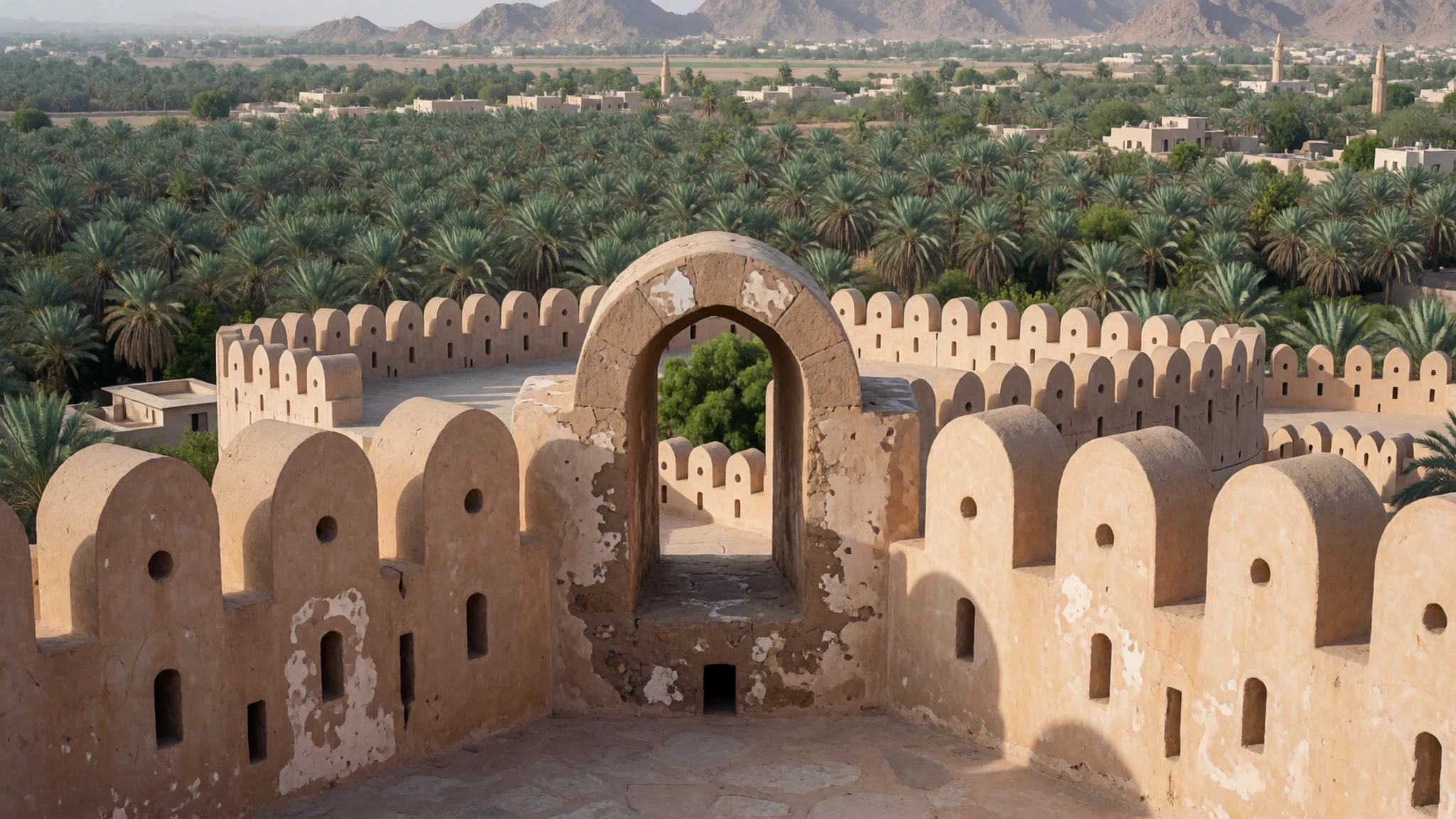
- Goat Souq
Nizwa Goat Souq comes alive every Friday morning as livestock handlers and buyers gather in an open circular arena. Farmers parade goats, sheep, and cattle around the ring while lively bidding, shouting, and traditional handclaps fill the air. Arriving around 7:30 am allows visitors to catch the energetic climax of this centuries-old trading ritual before the morning heat sets in.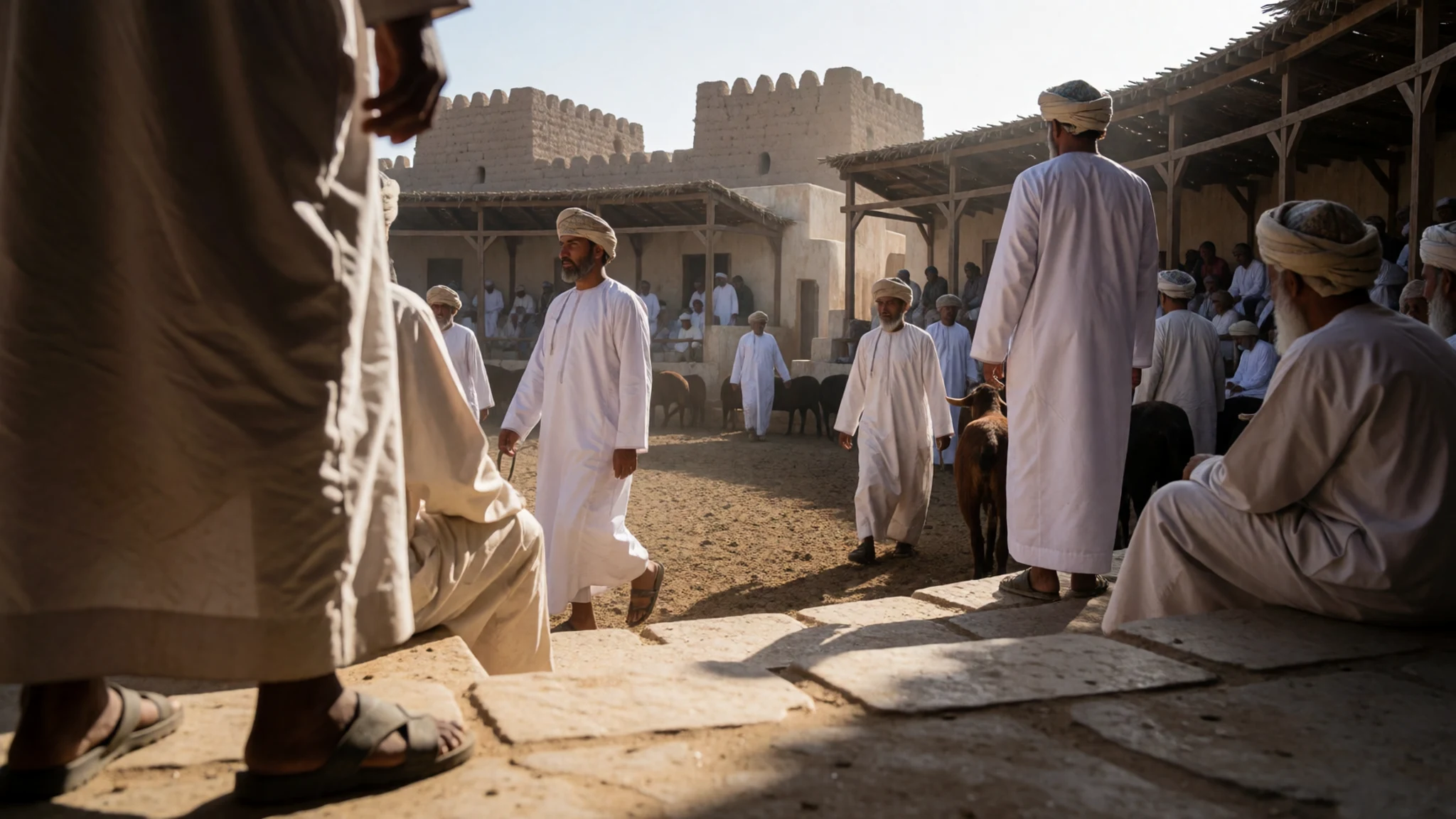
- Nizwa Souq
Nizwa Souq is a historic trading market divided into distinct quarters for pottery, spices, fresh meat, and traditional crafts. While modern arched halls house silver and dates, the older eastern avenues retain their traditional atmosphere with timber doors and earth-toned walls. It is an ideal spot to find hand-carved Omani daggers, aromatic frankincense, and fresh local produce.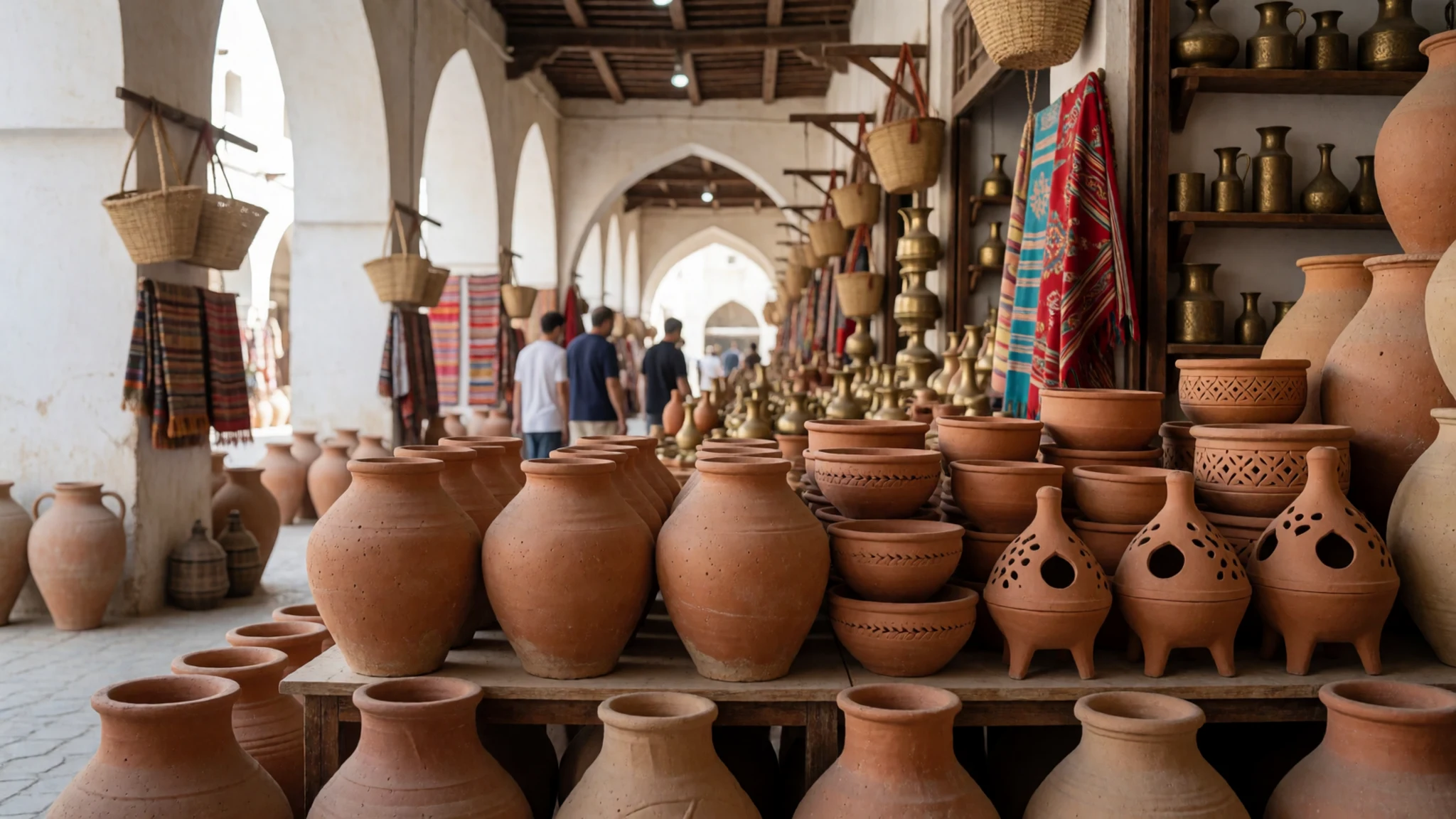
- Falaj Daris
Falaj Daris is an ancient subterranean water channel that channels fresh mountain runoff directly into Nizwa’s extensive date oases. Recognized as a UNESCO World Heritage site alongside four other Omani water systems, this gravity-fed channel has sustained local agriculture since ancient times. A shaded park area along the water channel offers a peaceful spot to view the flowing current.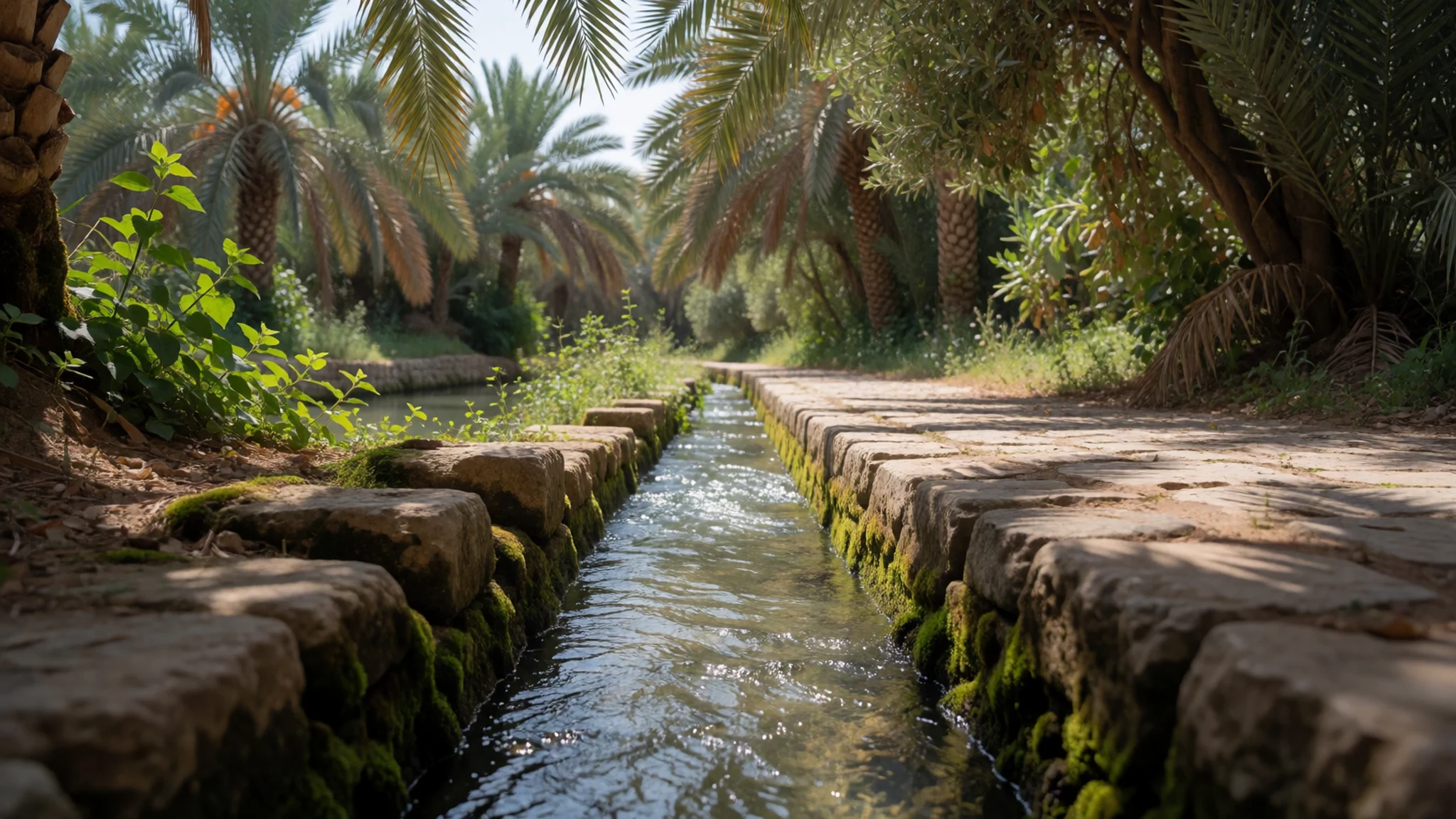
- Al Aqr Wall
Al Aqr Wall winds along the perimeter of one of Nizwa’s oldest quarters, offering a charming walking trail past restored mud-brick homes and dense palm groves. Recent restoration has introduced boutique cafes and tea houses into traditional mud buildings, blending historic defensive stonework with quiet outdoor seating and views of ancient minarets.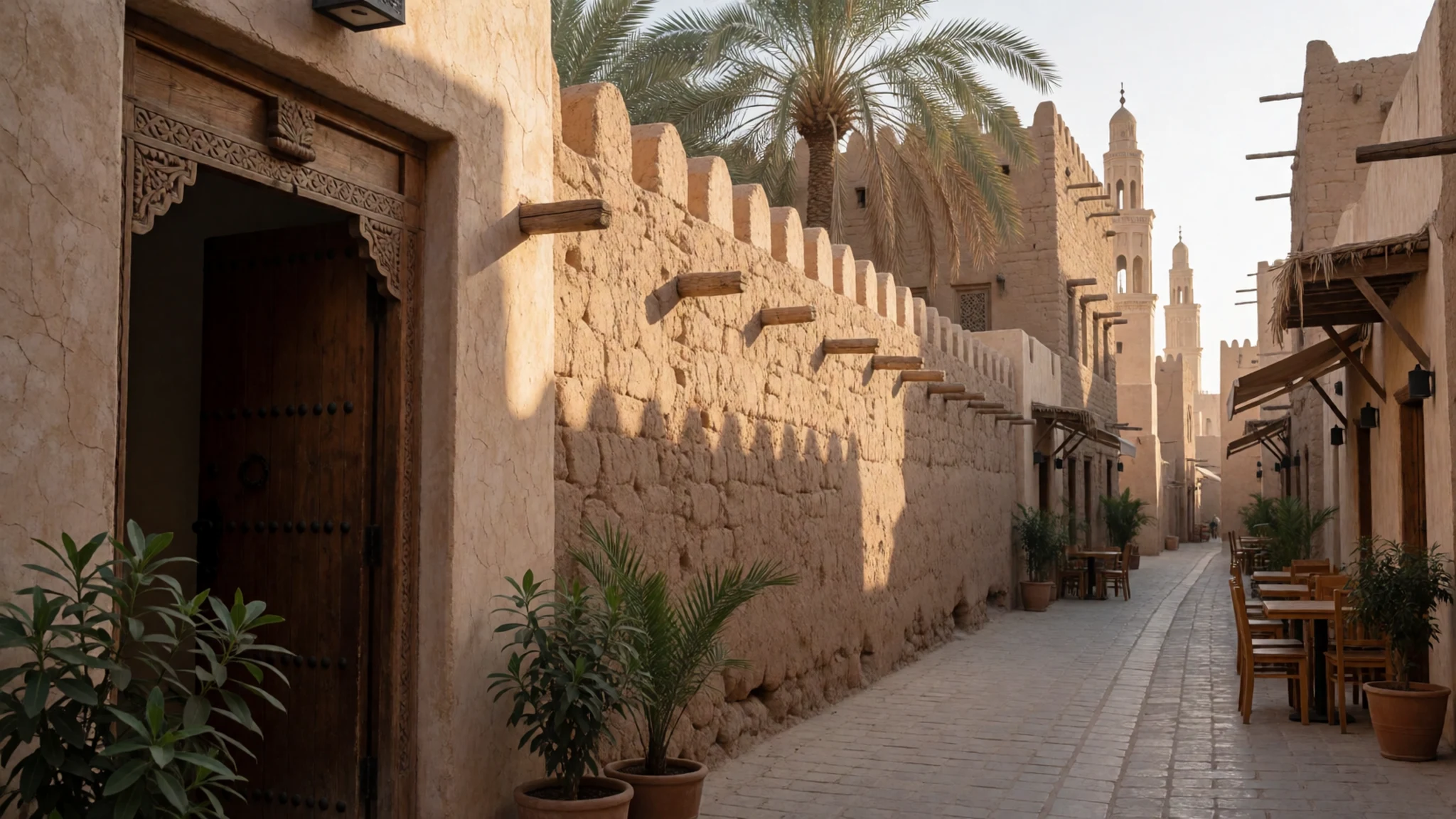
Culture
Nizwa holds a revered place in Omani identity as a historic bastion of Islamic learning and regional governance. The city's culture remains grounded in conservative traditions, hospitality, and communal gathering. Daily life revolves around prayer calls from historic minarets and early morning commerce at the central market, where generations of craftspeople continue traditional metalworking, leather crafting, and palm weaving.
Hospitality in Nizwa is warm yet structured around modest customs. Guests are frequently welcomed with strong cardamom-infused coffee (*kahwa*) and fresh local dates served in small bowls. Respect for elder family members and community leaders is paramount, and public conduct is characterized by soft-spoken courtesy and calm manners. Friday is the community’s focal point, bringing families together for prayer, livestock trading, and shared meals.
When visiting historic quarters or residential neighbourhoods, dress modestly covering shoulders and knees, and always ask permission before taking photographs of local residents.
What to wear
Nizwa maintains traditional Omani attire as an integral element of daily public life. Omani men wear the *dishdasha*, a full-length, collarless robe typically tailored from crisp white cotton, paired with an embroidered cap called a *kuma* or a wrapped turban known as a *mussar*. On festive occasions, men wear silver-adorned daggers (*khanjar*) on woven belts. Omani women wear elegant *abayas* over brightly coloured embroidered dresses (*gabdah*) made from fine silk or soft cotton, accompanied by black headscarves (*shayla*).
In contemporary Nizwa, traditional garments remain standard everyday wear for work, market trading, and religious gatherings, though younger residents sometimes opt for relaxed international clothing at home or when travelling. Lightweight, breathable natural fabrics like linen and cotton are universal choices due to the arid inland climate.
Visitors to Nizwa should choose lightweight, loose-fitting clothing that covers shoulders, upper arms, and knees to respect local religious standards. Men should avoid sleeveless tops and short trousers in public, while women should wear modest dresses, loose trousers, or long skirts. Sturdy, comfortable sandals or walking shoes are essential for exploring cobbled pathways, dusty market floors, and steep fort steps.
What to eat
- Omani Dates with Kahwa — date stalls throughout Nizwa Souq
Fresh local dates paired with unsweetened coffee infused with cardamom and rosewater form the core of Omani hospitality. Found at date stalls throughout Nizwa Souq and welcomed at every local guesthouse.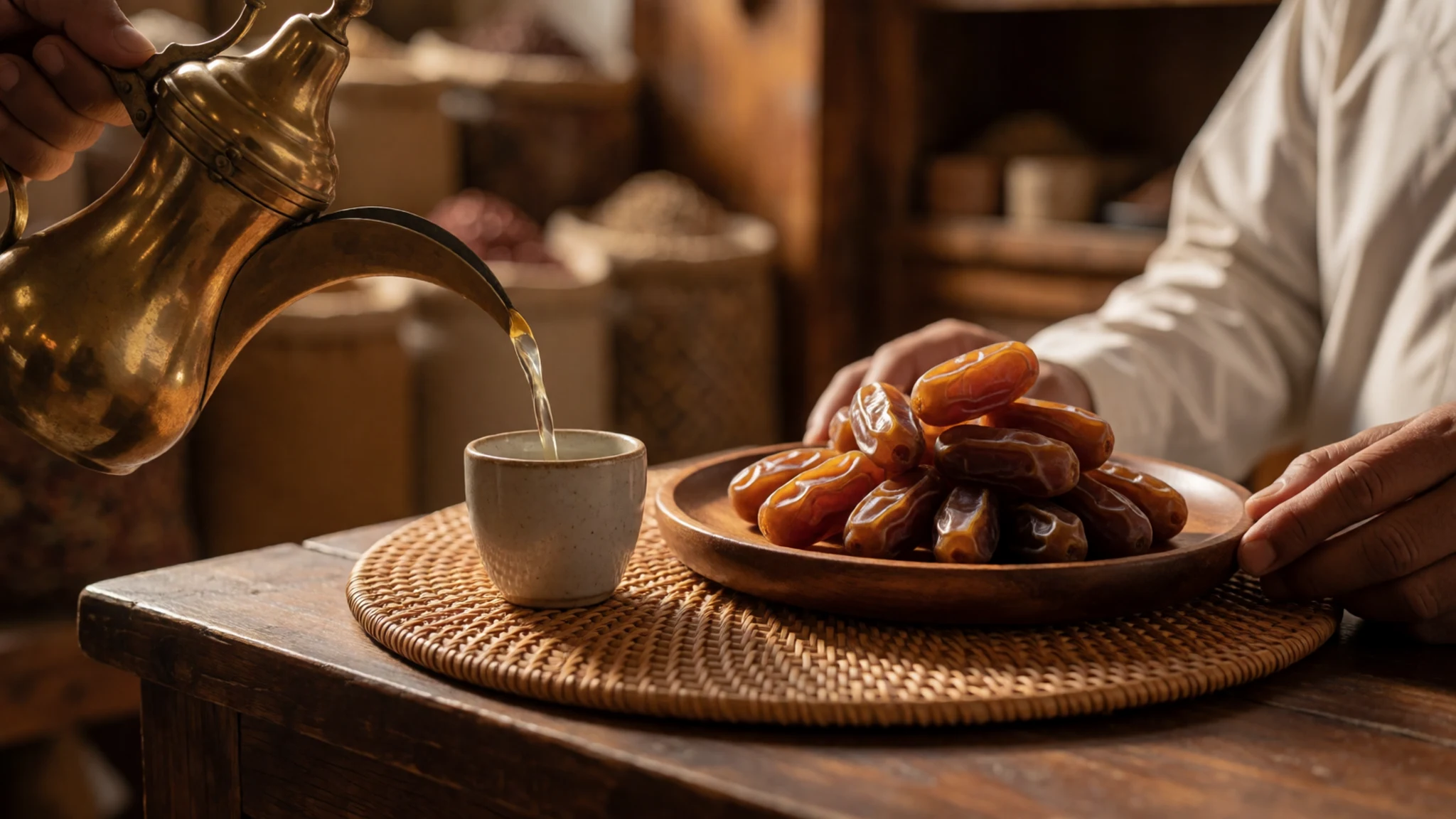
- Shuwa — traditional eateries around the city centre
Spiced marinated meat wrapped in banana leaves and slow-cooked in subterranean clay ovens for hours until tender. Commonly prepared for celebrations and served over spiced rice in traditional eateries around the city centre.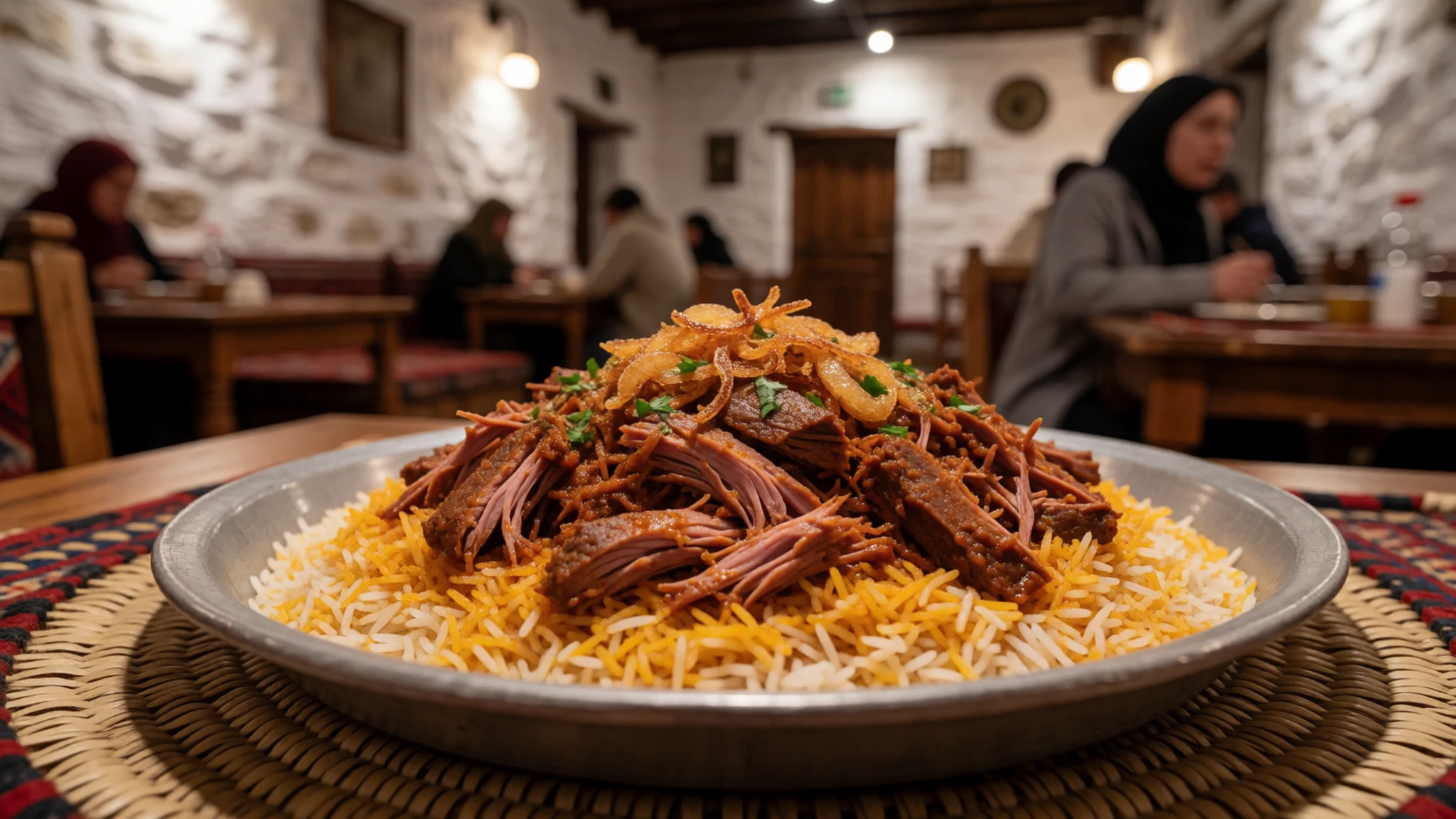
- Omani Halwa — sweet shops in the old market quarter
A sticky sweet confection made from starch, sugar, ghee, saffron, and cardamom, stirred continuously in large copper cauldrons. Best tasted fresh from sweet shops in the old market quarter. - Mishkak — evening street food stalls near the old town
Skewered marinated beef, chicken, or lamb grilled over hot charcoal and served with spicy chili or tamarind sauce. Available from evening street food carts along the main roads near the old town. - Harees — local family restaurants across Nizwa
A warm, comforting dish of boiled wheat blended with tender meat, ghee, and mild spices until smooth. Widely served at local family restaurants and traditional food halls across Nizwa.
Plan it
Best time. November to March when winter temperatures are mild and pleasant; summer months from May to August are dry and extremely hot, often exceeding 40°C.
How long. 2–3
Getting there. Fly to Muscat International Airport, then drive 140 km southwest along Highway 15 (about 1.5 hours); or drive just over 3 hours from Al Ain in the UAE via Highway 21.
Budget. mid
Tips
- Visit the Friday morning Goat Souq early, arriving before 7:30 am to see the trading at its peak
- Combine your trip with day excursions to nearby Bahla Fort or Jebel Shams
- Stock up on snacks and water at local hypermarkets before heading into mountain hikes
- Carry cash in local currency for small market stalls and entrance fees
Etiquette
- Dress modestly in loose-fitting clothing covering shoulders and knees
- Always ask for permission before taking photographs of local residents
- Accept dates and coffee with your right hand when welcomed by hosts
Nearby
Sources
- Wikidata Q1915327 (CC0)
- Wikipedia (rev 1382984912) (CC BY-SA 4.0)
- Wikivoyage (rev 5412654) (CC BY-SA 4.0)
- Photo photos/01-nizwa-7.jpg (CC BY-SA 2.0)
- Photo photos/02-nizwa8.jpg (CC BY 3.0)
- Photo photos/03-nizwa-2.jpg (CC BY-SA 2.0)
- Photo photos/04-to-the-farq-off-ramp-46039991182.jpg (CC BY 2.5)
- Photo photos/05-al-dakhiliyah-oman-banner.jpg (CC BY 3.0)
- Photo photos/06-nizwa-10.jpg (CC BY-SA 2.0)
- Photo photos/07-dopravn-zna-ka.jpg (CC BY 3.0)
- Photo photos/08-faladsch-daris-nizwa-2.jpg (CC BY-SA 4.0)


