Nicopolis
Nicopolis, Greece
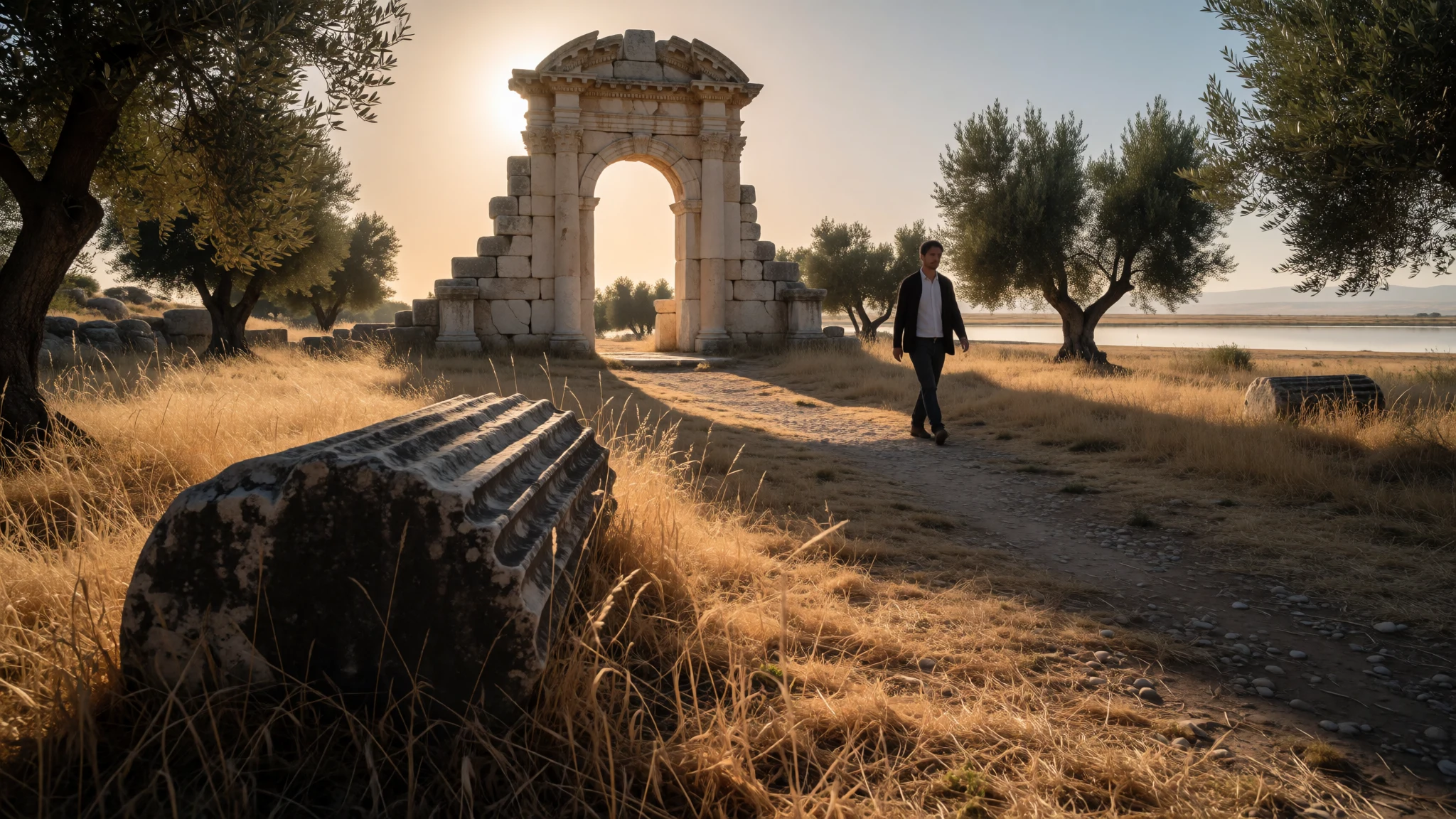
Nicopolis is a victory city founded by Octavian, now a quiet spread of Roman and early Christian ruins beside a lagoon in Epirus.
The place
Nicopolis lies on a low, flat promontory in Epirus, in north-western Greece, just north of the town of Preveza. The facts block puts the site only about a metre above sea level, and it feels it: a coastal plain of olive trees, scrub and fallen masonry, with lagoon and sea never far away. This is an archaeological site rather than a living town, and the ruins are scattered across open ground. A visit is a long, slow ramble between separate monuments, not one tidy circuit with a gate and a queue. Expect walls, a theatre-like odeon, baths, a fountain house and the footprints of early Christian basilicas, with the modern village of Smyrtoula nearby. Shade is scarce, signage is modest, and on most days the place is quiet enough that the loudest things are cicadas and goat bells. Behind the coast, Epirus is a mountain region that is among the poorer parts of Greece and has been slow to build tourism away from the beaches. That helps explain the calm. It also means that planning matters: food, water and a car are easier to arrange in Preveza than at the ruins. The monuments reward a patient half day, and the surrounding landscape of water, hills and sky is part of the reading, because the city was chosen for its position above a busy sea route.
Its story
Nicopolis exists because of one sea battle. In 31 BC Octavian defeated Antony and Cleopatra off Actium, and two years later, in 29 BCE, he founded a new city on the shore opposite, calling it the City of Victory. Naming a city after a triumph was an old habit, practised by Alexander and by Pompey, but here it served several purposes at once. It announced a unified empire under a single ruler, it gave Rome a port and communications hub between its eastern and western halves, and it revived a region still scarred by earlier Roman campaigns. On the hill where his tent had stood, Octavian also raised a sanctuary to Apollo, his patron god, with trophies for Neptune and Mars, decorated with the rams of captured warships. The city prospered on trade and imperial favour, and in the early second century Trajan made it capital of the new province of Epirus. It came through the upheavals of the third century and later served as capital of a smaller province under Diocletian. Bishops appear here from Constantine's time, and basilicas followed once Christianity took hold in the late fourth century. Repeated warfare then wore the city down, and it shrank behind new fortifications before fading out after the eighth century. Alexander Philadelpheus, a Greek archaeologist, was the first to excavate it.
What to see
- Octavian's victory monument — Hill north of the city, near Smyrtoula
At Nicopolis, the hill north of the city was where Octavian pitched his tent before Actium, and he later marked it with a monument. It carried a sanctuary to Apollo and trophies to Neptune and Mars, hung with captured ship rams. Only weathered stonework remains, but the sea outlook explains the choice.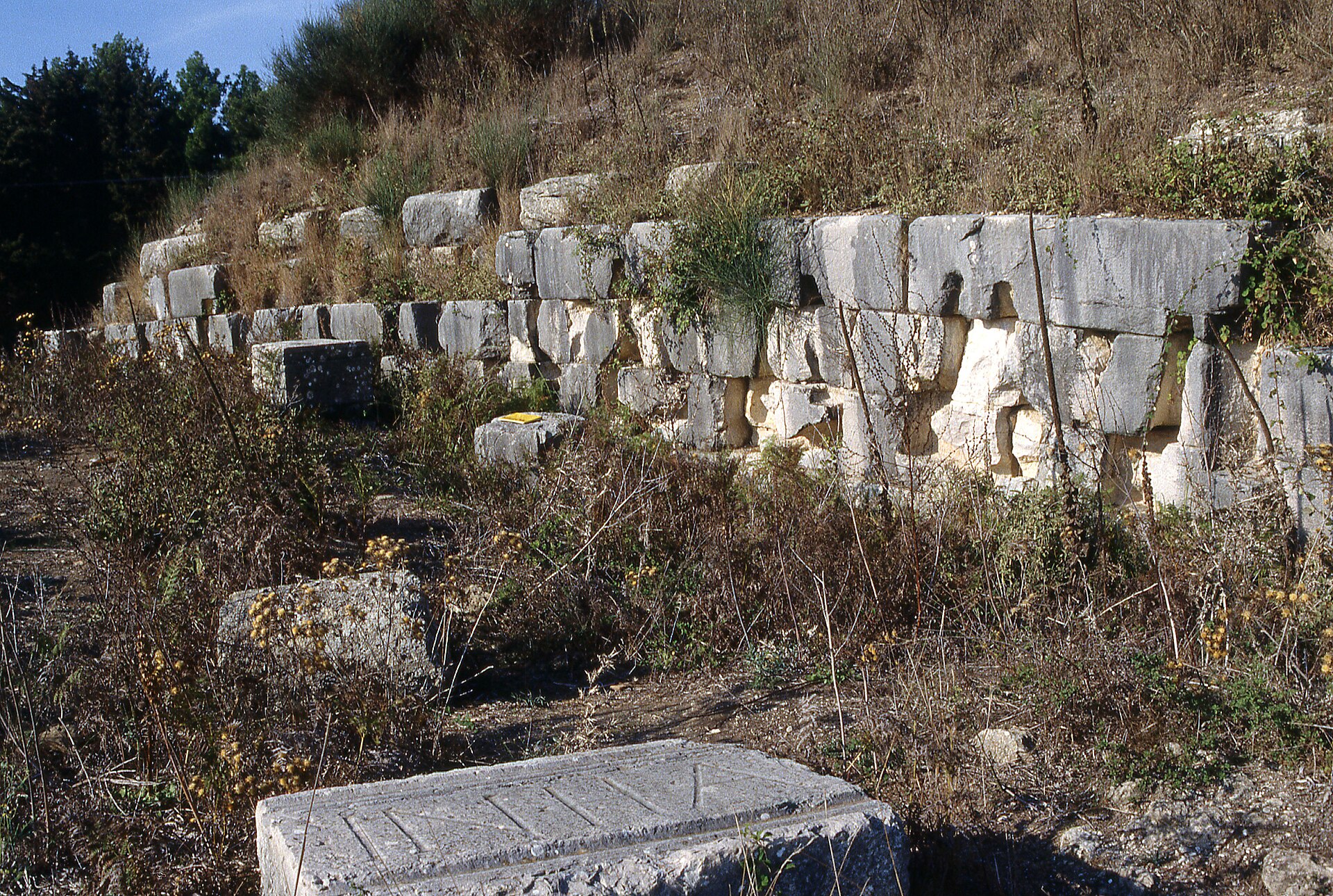
- The odeon — Central ruins of Nicopolis
The odeon at Nicopolis was a small hall for music and recitals rather than big public spectacle. Its curved seating and stage area are still easy to read, and sitting on the stone tiers with scrub and sky around is a good way to picture the city's civic life.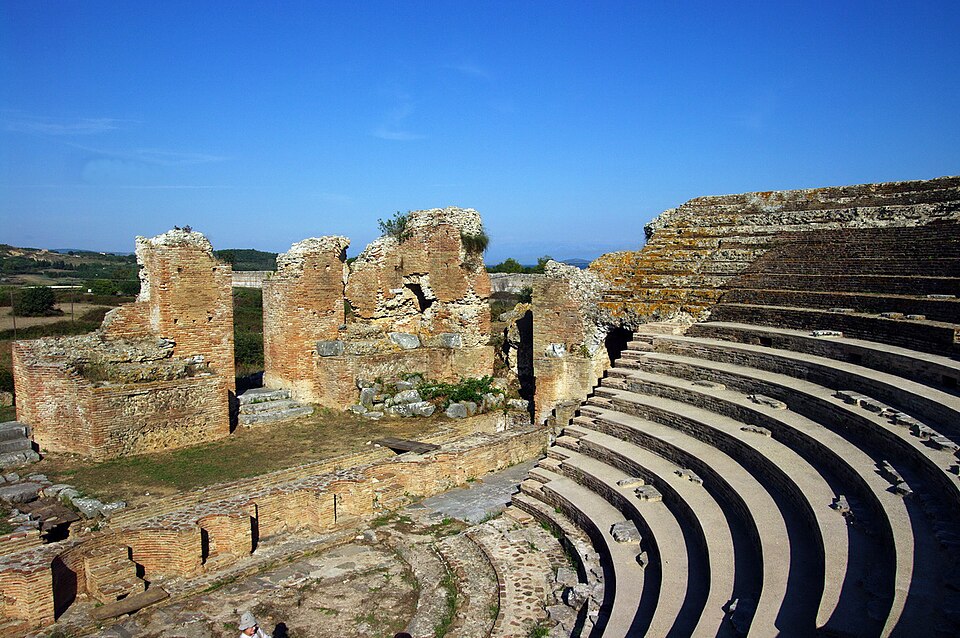
- The nymphaeum — Near the West gate
Near the western gate of Nicopolis stand the remains of a nymphaeum, a monumental fountain house. Roman cities liked to show off fresh water as a civic gift, and this one hints at how carefully the new capital was supplied and decorated.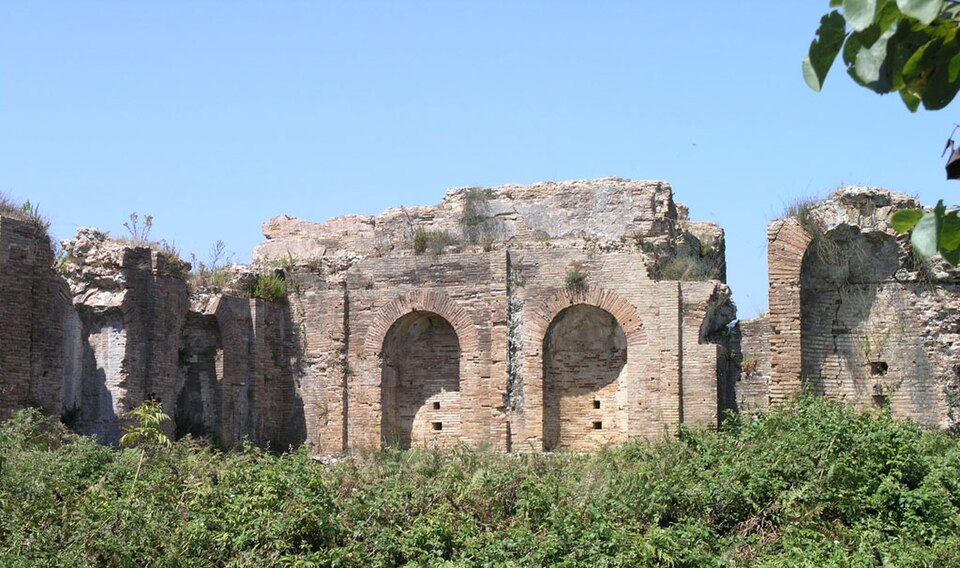
- The central baths and the lagoon — Centre of the site
The central baths of Nicopolis are among the more substantial ruins on the plain, and their scale suggests how much daily life revolved around bathing. From the south the view stretches to the Mazôma lagoon, which gives the site its watery, open character and is worth a slow look.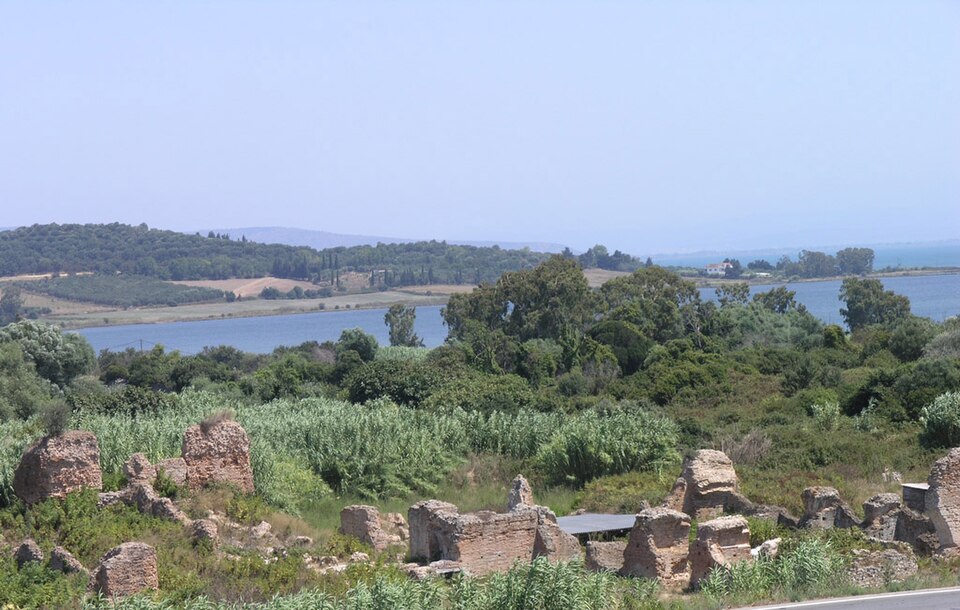
- The Roman aqueduct — St George's village, Preveza area
Part of the aqueduct that once carried water to Nicopolis survives at the village of St George, near Preveza. It lies away from the main ruins, so a car or taxi helps. Seen from the north, its line of arches shows how far the city reached for supplies.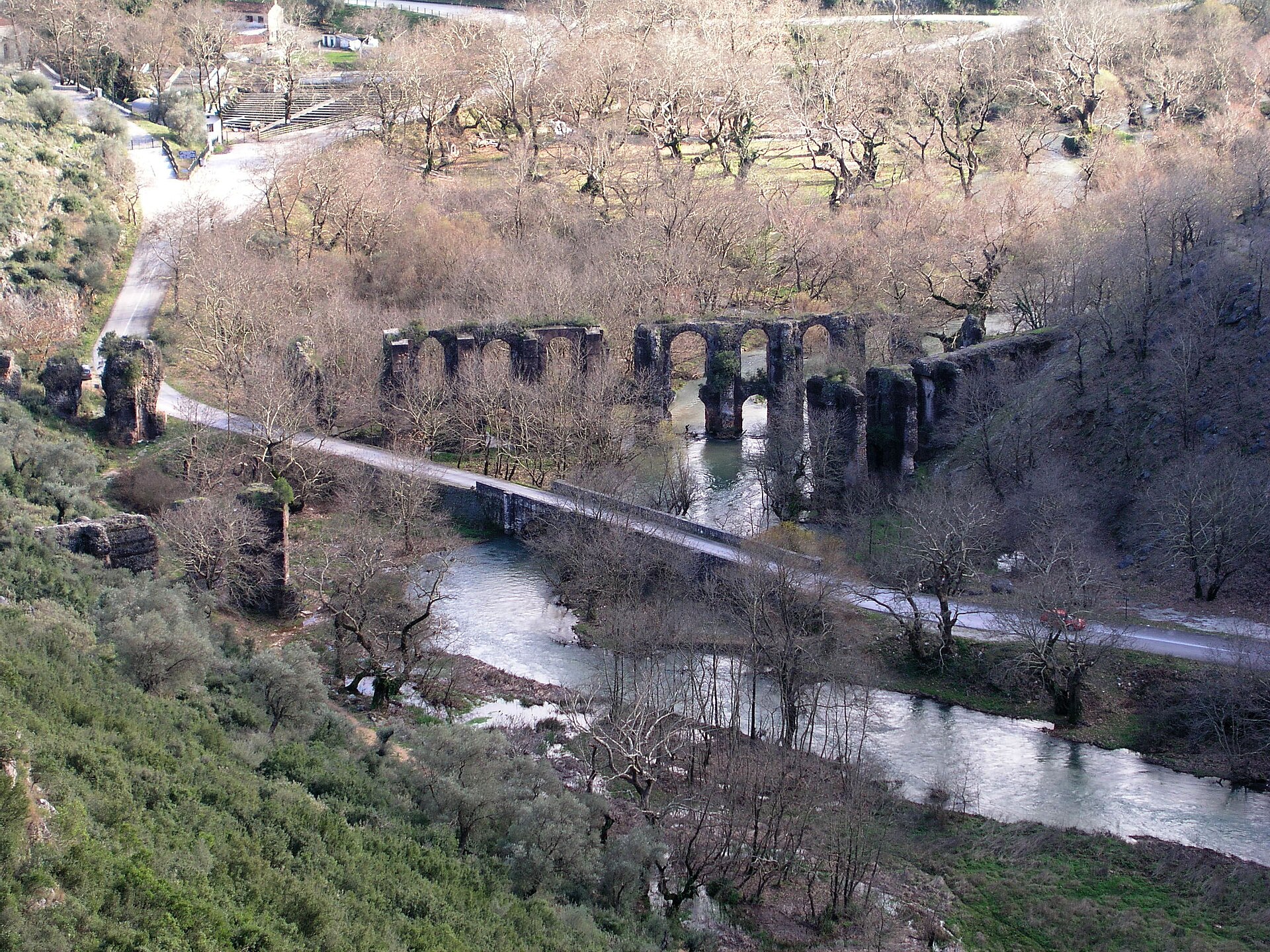
- Villa of Manius Antoninus — Nicopolis, Preveza
Nicopolis had private houses as well as civic buildings, and the villa associated with Manius Antoninus is known for its mosaic floor. It gives a domestic, human scale to a site otherwise dominated by walls and public works. Check the official site before going, as access can vary.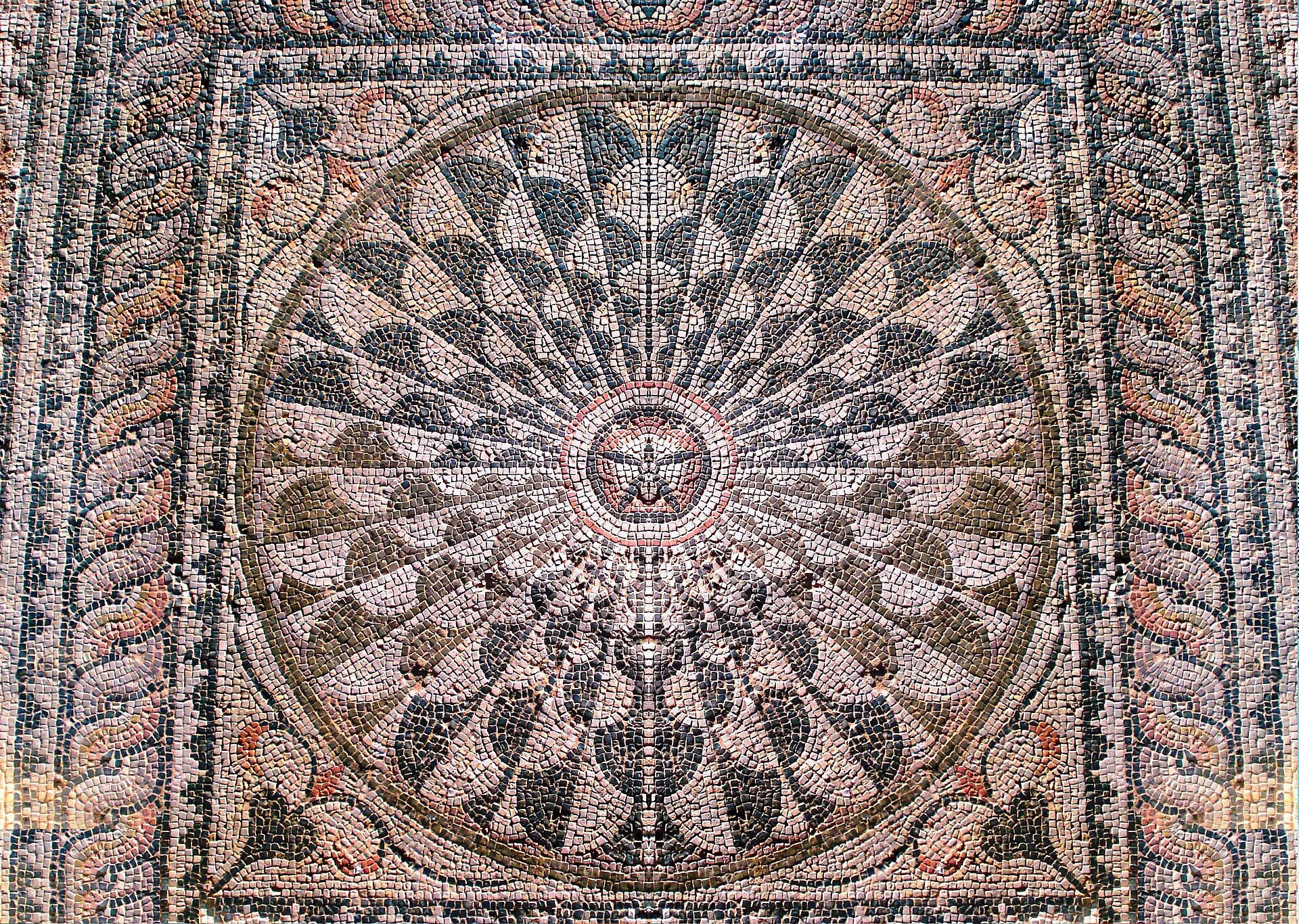
Culture
Culture around Nicopolis is layered rather than showy. The site was a Roman capital, then a Christian city of basilicas, and it now sits in a region whose everyday life is Greek Orthodox, rural and unhurried. Epirus stayed under Ottoman rule until 1912, and the inland villages, stone bridges and small monasteries carry that long, mixed history. Churches here are working places of worship, not museums, and the calendar of saints' days and village festivals shapes the year more than any tourist season does. Preveza, the nearby town, has the harbour-front café life that Greek coastal towns share, busiest in the evening, when families stroll and coffees stretch into hours. Outside the beach resorts, Epirus sees fewer visitors than much of Greece, so people often have time to chat, and even a few words of Greek, such as kalimera for good morning, are warmly received. Meals are social, built around pies, grilled meat and shared plates, and lingering is normal. The ruins themselves speak of a different kind of statement: a conqueror turning a victory into a city, and a province capital absorbing Greek, Roman and later Christian ways. Local people tend to be proud of this heritage without making a performance of it. Cover your shoulders and knees before entering any church or monastery in Epirus, and keep your voice low and your camera discreet while a service is under way.
What to wear
Nicopolis has no costume of its own to point to, but the dress of the wider region of Epirus is worth knowing about. Traditional mountain clothing was made for cold winters: heavy wool, felted cloaks, embroidered waistcoats and aprons, woven on village looms from local sheep's fleece and finished with hand stitching. Today these outfits mostly appear at festivals, weddings, saints' day gatherings and folk-dance performances rather than daily life. In Roman times, residents of a city like this wore tunics of wool or linen, with the toga kept for formal occasions, and sculpture such as the marble Athena found at the site shows how draped garments were rendered. What people wear now is ordinary and practical: light cotton in summer, jeans and jumpers in winter, and a slightly smarter look for an evening walk along the Preveza waterfront. Older villagers often dress modestly, especially for church. A visitor should plan for sun and uneven ground first. Bring a wide-brimmed hat, sunscreen, sunglasses and light long sleeves, because the ruins offer little shade. Wear closed, sturdy shoes with grip, since paths run over rough stones and dry grass. Carry a scarf or shawl and wear trousers or a long skirt for churches and monasteries, and pack a waterproof layer for the wetter months.
What to eat
- Tiropita — Bakeries in Preveza and village bakeries around the plain
Cheese pie is a staple of Epirus, made with layers of thin pastry around a salty cheese filling. Near Nicopolis it is an easy breakfast or snack, eaten warm and best bought fresh. - Spanakopita — Bakeries and family-run eateries in Preveza
Spinach pie, sometimes made with feta as tirospanakopita, is one of the region's best-known dishes. The filling is green, savoury and a little peppery, and a slice makes a good light lunch before or after the ruins. - Hortopita — Village tavernas and home-style eateries inland from the coast
This is a pie of wild greens, gathered from fields and hillsides, and it tastes more bitter and herbal than spinach. It reflects Epirus's country cooking, where foraged plants are valued, and it is best in spring. - Kolokothopita — Bakeries and pastry shops in Preveza and the mountain towns
Pumpkin pie comes in sweet or savoury versions around Epirus, so ask which one you are getting. The sweet kind, often with spices and sugar, suits an afternoon coffee, while the savoury one works as a simple lunch. - Goat and sheep meat — Tavernas in the mountain villages and grill restaurants in the larger towns
Epirus is known for goat and lamb or mutton from animals that graze freely on mixed grasses and herbs, which gives the meat a distinctive flavour. It is usually roasted or grilled and shared at the table with bread and salad.
Plan it
Best time. Nicopolis is best in April and May, when the plain is green and walking is comfortable, and again in September and October, when the heat has eased. July and August are hot with almost no shade on the open ruins, and winter brings rain and fewer seasonal flights.
How long. 1–2
Getting there. Aktion National Airport (PVK) near Preveza has seasonal flights from across Europe; the ruins are just north of Preveza, so a taxi or hire car covers the last leg. Ferries from Ancona, Bari, Brindisi and Venice reach Igoumenitsa, from where the A2 motorway and local roads lead south.
Budget. mid
Tips
- Go early in the morning or late afternoon, as the site has little shade and midday sun is strong
- Carry water, a hat and snacks, because there is little on the site itself
- Check the official site for opening times and ticket details before you set out: http://odysseus.culture.gr/h/3/eh351.jsp?obj_id=2575
- Hire a car or arrange a taxi, since the monuments, the aqueduct and the hilltop memorial are spread out
- Book flights early for summer, as services to Aktion are seasonal
Etiquette
- Do not climb on walls or mosaics; stay on the paths and follow the guards' instructions
- Dress modestly and keep quiet when visiting churches and monasteries in the area
- Take litter away with you, as bins are few at the ruins
Nearby
Sources
- Wikidata Q943637 (CC0)
- Wikipedia: Nicopolis (rev 1384957817) (CC BY-SA 4.0)
- Wikivoyage: Epirus (rev 5237196) (CC BY-SA 4.0)
- Photo: Nicopolis nymphaeum (Marsyas assumed) (CC BY 3.0)
- Photo: Octavian's campsite memorial at Actium (Mark Landon) (CC BY 4.0)
- Photo: Nikopolis, Odeon, Innenansicht (Bgabel) (CC BY-SA 2.5)
- Photo: Nicopolis thermae (Marsyas assumed) (CC BY 3.0)
- Photo: Statue of Athena from Nikopolis (Melissopetra) (CC BY-SA 4.0)
- Photo: View of Nicopolis in Epirus (Jean Housen) (CC BY 3.0)
- Photo: Roman Villa of Manius Antoninus, Mosaic (Harry Gouvas) (CC BY 3.0)
- Photo: St George Preveza Aqueduct (Nikos D. Karabelas) (CC BY 3.0)


