New Guinea
New Guinea, Indonesia
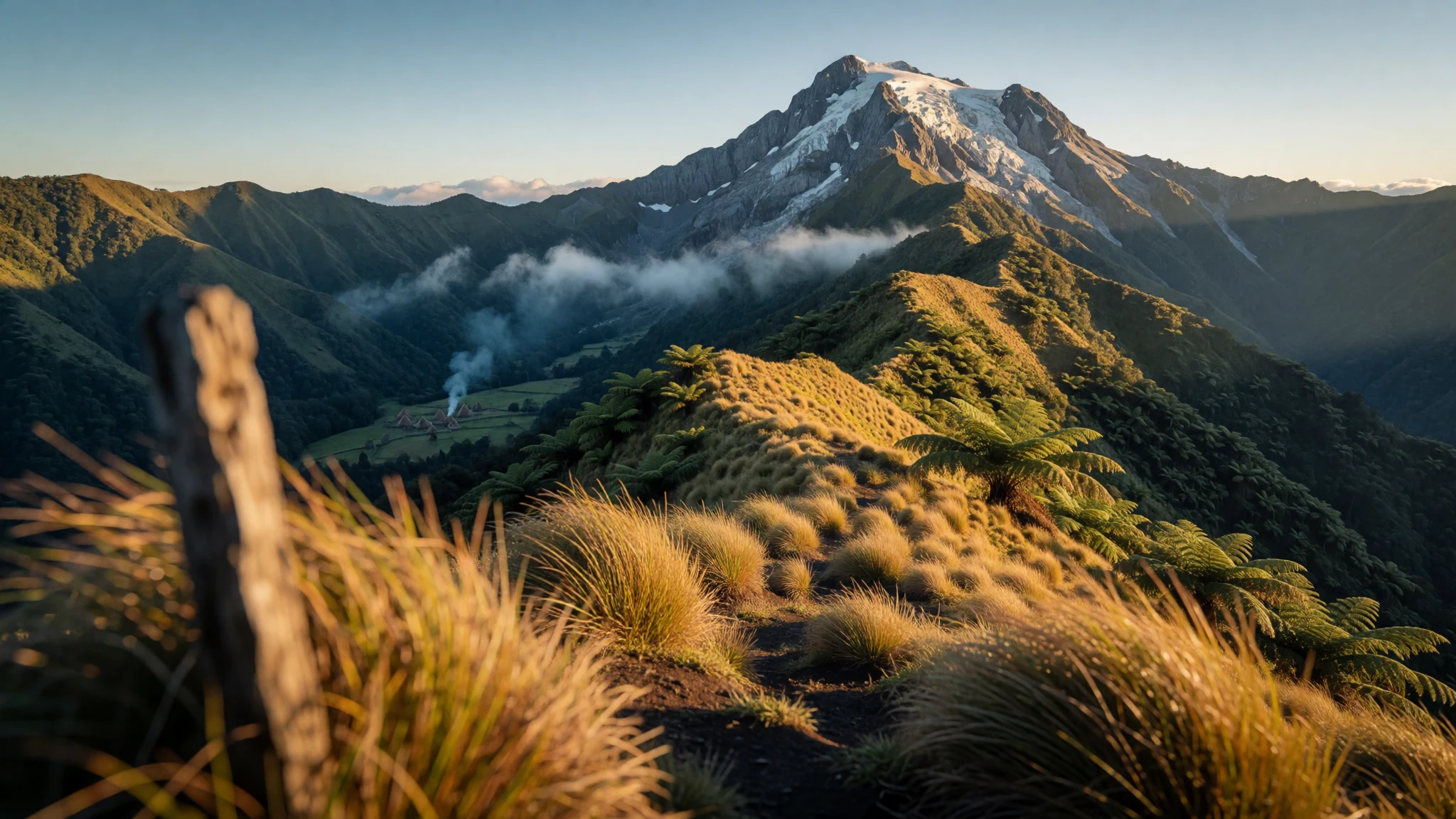
New Guinea offers jungle-covered mountains, coral coasts and living highland cultures on a vast island that few travellers ever reach.
The place
New Guinea is the world's second-largest island, lying just south of the equator in Melanesia and north of Australia, from which it is divided by the Torres Strait, about 150 km wide. Politically it is split in two. The western half belongs to Indonesia and is organised into six provinces, while the eastern half is the mainland of Papua New Guinea, a constitutional monarchy within the Commonwealth. Port Moresby and Jayapura are the two big cities, and both feel small against the land around them. About 11.3 million people live on the island, most of them in villages and valleys rather than towns. The outline is often compared to a bird-of-paradise, which gives the Bird's Head peninsula in the northwest and the Bird's Tail in the southeast. Between them runs the New Guinea Highlands, a mountain spine stretching more than 1,600 km from end to end, with many summits above 4,000 m. Rainforest covers much of the island and is reported to be the third-largest remaining in the world, with plant diversity higher than on any other island. Roads are few, so rivers, small aircraft and boats do the work that highways do elsewhere. Anyone planning a trip should expect heavy rain, heat on the coast, cool nights in the mountains, and travel that is slow, costly and often weather-dependent.
Its story
People reached New Guinea perhaps 60,000 years ago, though the date is debated. They probably came by sea from Southeast Asia when low ocean levels shortened the gaps between islands. Their descendants, the Papuan peoples, settled everything from swamp to alpine grassland. In the highlands they built irrigation and drainage systems, and evidence suggests farming there began independently at least 10,000 years ago. Sugarcane was being grown around 6000 BCE. Highland gardens remain remarkable: mulching, rotation and terracing cope with steep slopes, frost, earthquakes and rainfall that can reach 10,000 mm a year. Gardeners also planted casuarina trees, a tall native ironwood that gives timber and fuel while enriching the soil. Much later, Austronesian seafarers came down from Taiwan through the island chains of Southeast Asia. They settled much of the coast and nearby islands, bringing outrigger and ocean-voyaging skills, pigs and dogs. The island's name came in 1545, when the Spanish navigator Yñigo Ortiz de Retez sailed along the north coast and thought the people resembled those of Guinea in Africa. European maps and colonial claims followed, eventually fixing the line that now divides Indonesia from Papua New Guinea. Many Indigenous Papuans on the Indonesian side have campaigned for independence for decades, and this remains a sensitive subject.
What to see
- Baliem Valley — Wamena, Highland Papua
The Baliem Valley lies in the highlands of the Indonesian side, reached by air to the town of Wamena. Villages of thatched round houses sit among neat sweet-potato gardens, and walks of a few days link them. Go with a local guide, expect cold nights, and check current travel advice before booking.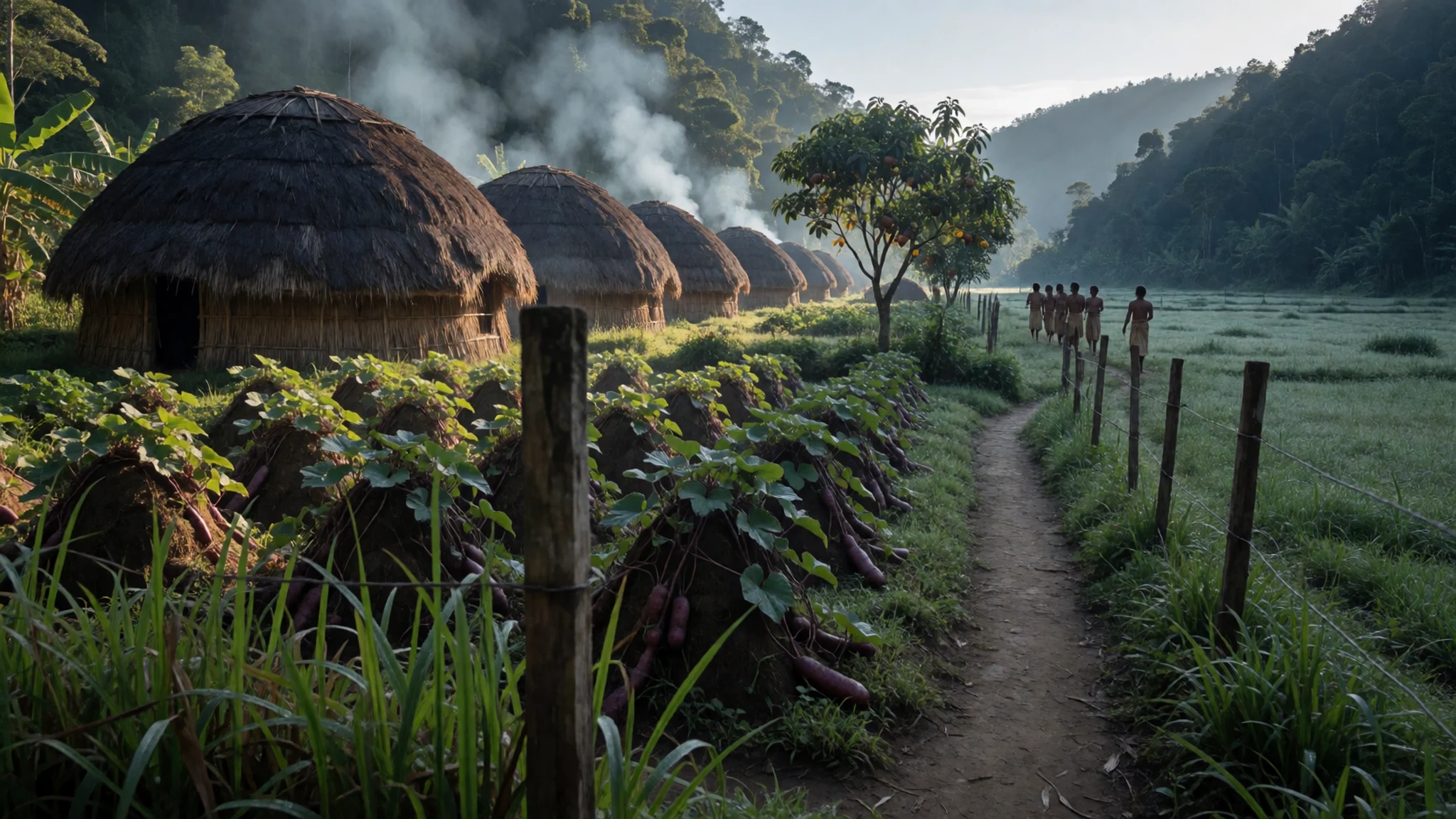
- Raja Ampat and the Bird's Head — Bird's Head, West Papua
Off the western tip of the Bird's Head peninsula, a scatter of forested islands and reefs draws divers and snorkellers. Most visitors stay in small homestays run by local families and move between islands by boat. Seas are usually calmest outside the windy months, so ask your host about conditions.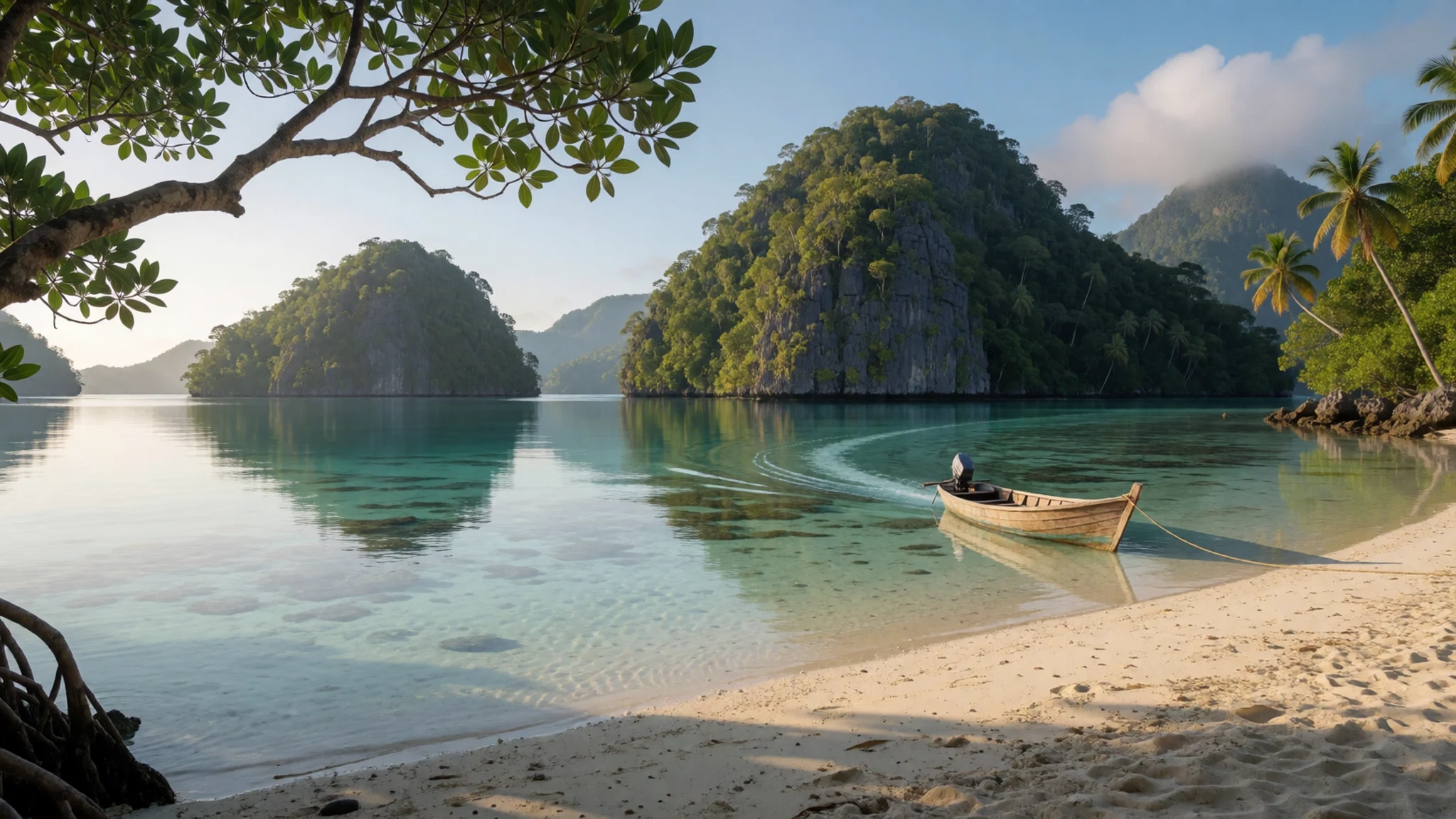
- Mount Bosavi crater — Southern Highlands, Papua New Guinea
Mount Bosavi is an extinct volcano in Papua New Guinea whose collapsed crater is wrapped in dense rainforest. Reaching it means a flight, a drive and a long trek with local landowners as guides. Wildlife is the draw, from birds to frogs, and the ground is wet and muddy throughout.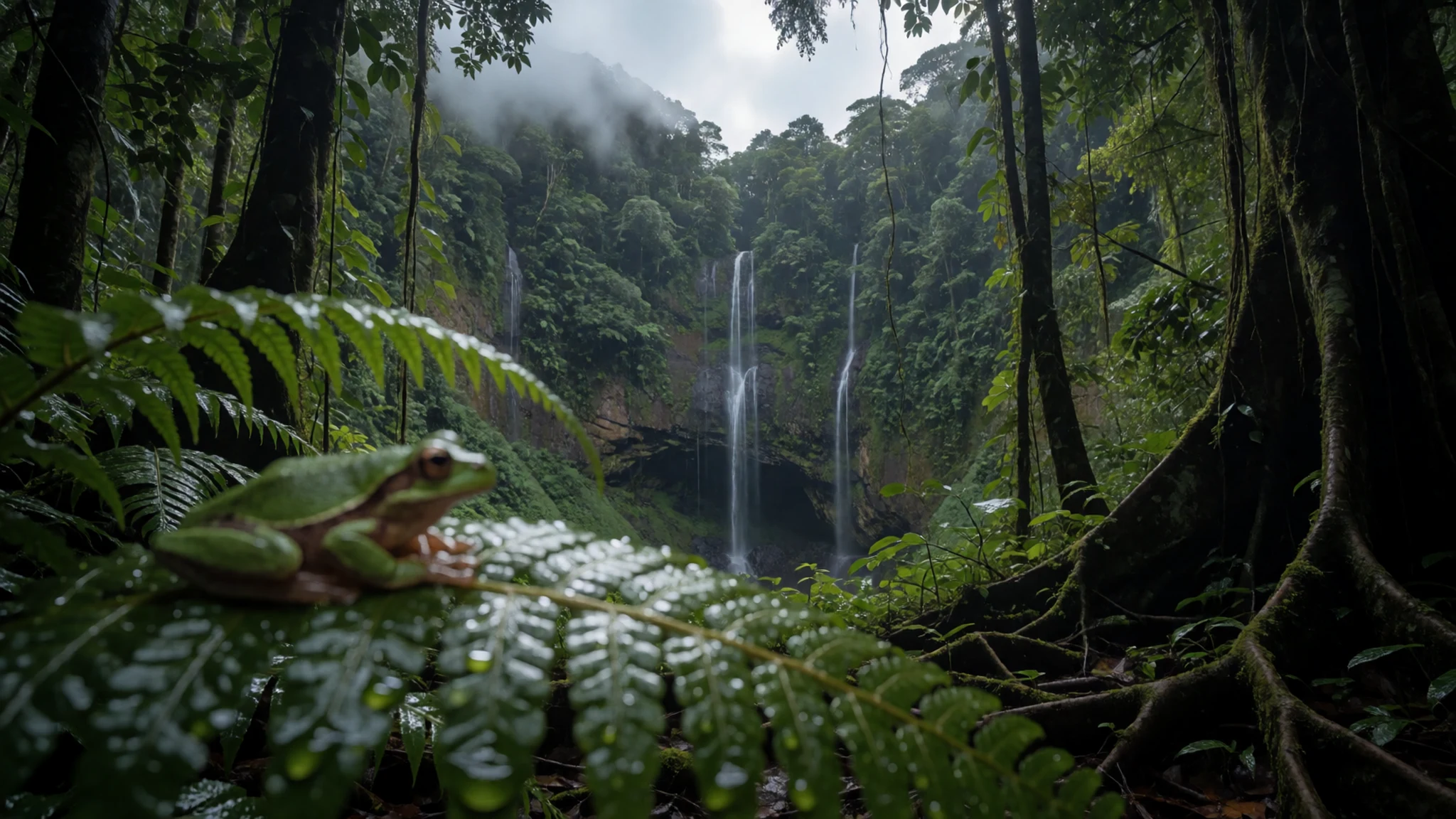
- Highland valleys around Mount Hagen — Western Highlands, Papua New Guinea
The highland valleys of Papua New Guinea hold farming communities, markets and, in some years, large cultural shows where clans gather in full decoration. The air is cooler than on the coast and the scenery is a patchwork of gardens and ridges. Arrange transport and guides ahead through a reputable local operator.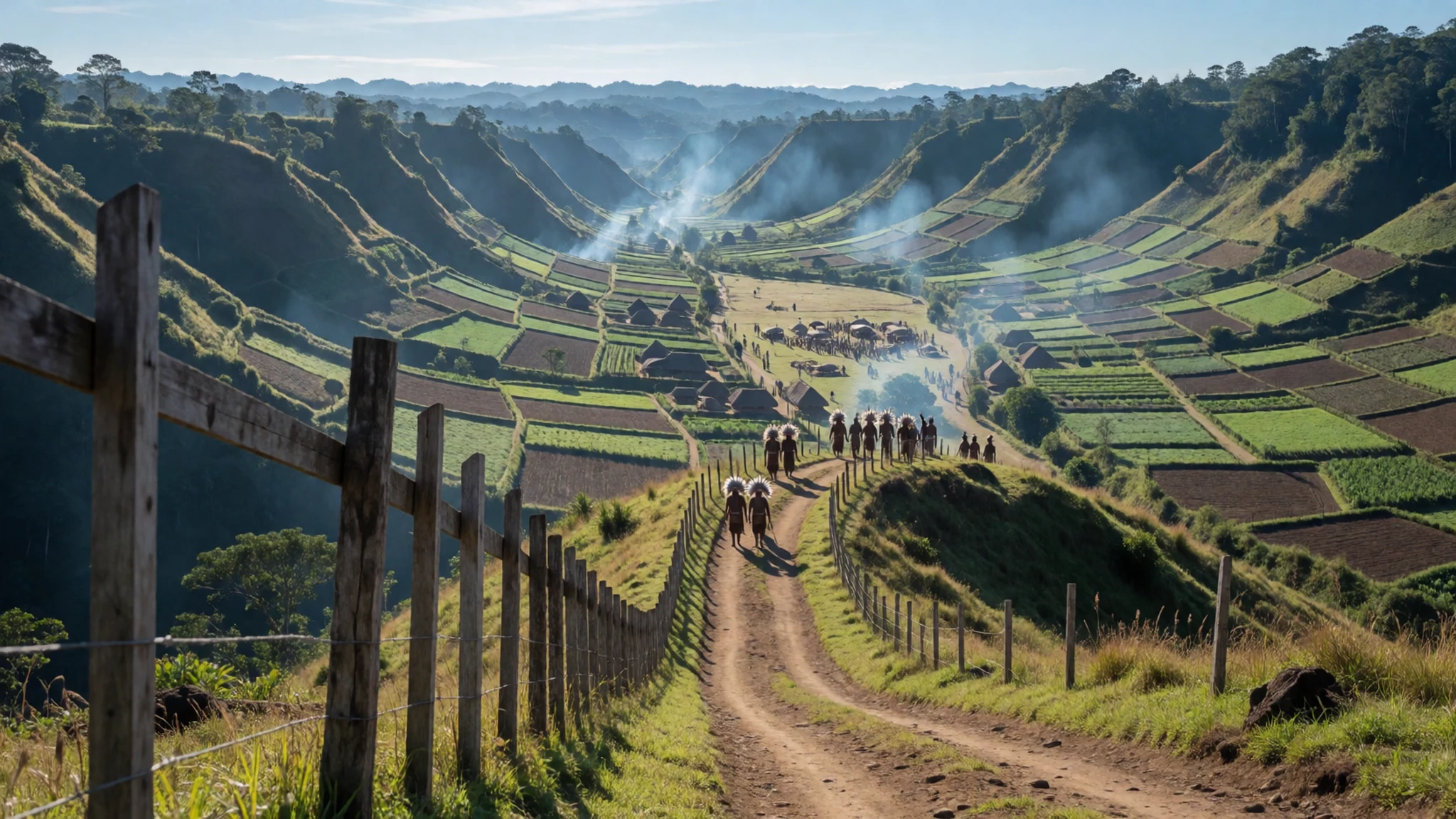
- Port Moresby — National Capital District, Papua New Guinea
Port Moresby, the capital of Papua New Guinea, is the usual gateway to the eastern half of the island. It is spread along a dry, hilly harbour coast, with a national museum, a parliament building and a waterfront. Most visitors pass through briefly, and local advice on safe movement after dark is essential.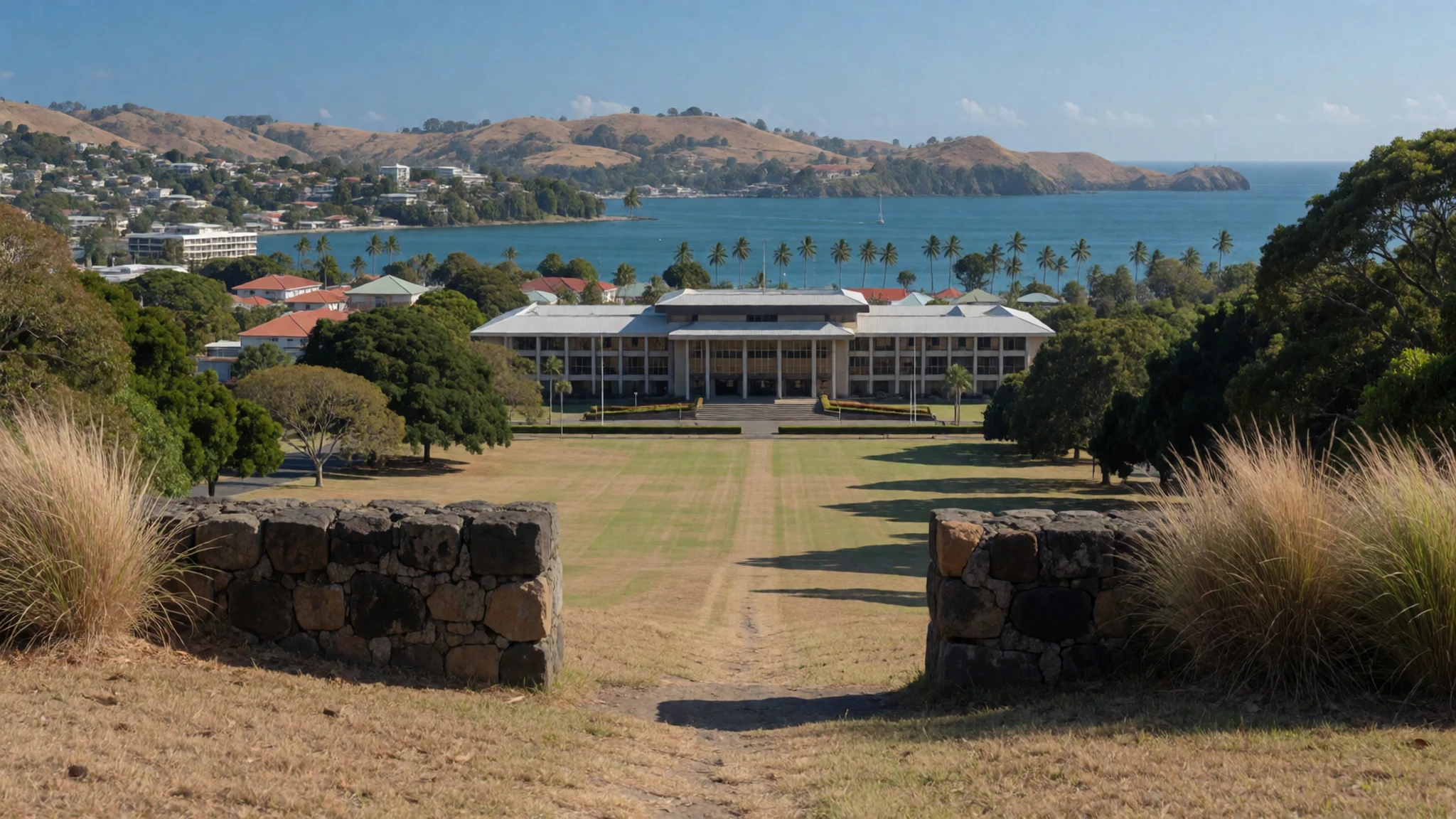
Culture
New Guinea is one of the most culturally varied places on Earth in practice, if not by any formal ranking: hundreds of languages are spoken across the island, and neighbouring valleys can differ in dress, music, building styles and customs. Identity is tied closely to clan, land and kin, so who owns a path, a beach or a reef matters, and permission is part of everyday life. Coastal communities speak Austronesian languages, while the highlands and interior are home to Papuan-language groups whose roots go back tens of thousands of years. Gardens, pigs, shell valuables and feasts are the currency of social life, and gatherings mark marriages, deaths and alliances. Many people are Christian, with church central to village weeks, and traditional beliefs often continue alongside. Carved wood, bark cloth, string bags, drums and masks carry meaning for specific families or villages, and some are not meant for outsiders to handle. On the Indonesian side, national language and government presence sit alongside local identity and a long-running political dispute, so conversation about politics should follow the lead of local hosts. Everywhere, visitors are guests in places where land is held communally and hospitality is real but expects respect in return. Always ask the village or clan before photographing people, ceremonies or sacred places, and be ready to be told no.
What to wear
Traditional dress in New Guinea varies enormously from place to place, and much of it is now worn only for ceremony. Highland groups use feathers, especially from birds-of-paradise, along with shell necklaces, boar tusks, painted faces and woven fibre skirts or aprons. Bark cloth, made by beating tree bark into sheets, and string bags called bilums or noken, looped from plant fibre or wool, are among the best-known textiles. Coastal communities use grass skirts, tapa, beads and carved ornaments, often at dances and festivals. Day to day, most people wear what is practical and cheap in a hot, wet climate: T-shirts, shorts, long skirts and wraps, rubber sandals, and a hat or umbrella against sun and rain. Women in villages and on the Indonesian side often dress modestly, covering knees and shoulders, and churchgoers dress smartly on Sundays. Visitors should pack light, quick-drying long sleeves and trousers, a waterproof jacket, and a warm layer for cold highland nights. Good walking shoes with grip matter more than anything for muddy trails, with sandals for boats and beaches. Cover shoulders and knees in villages and churches, and leave flashy jewellery at home.
What to eat
- Papeda with yellow fish soup — Warung and family eateries in Jayapura and other coastal towns
Papeda is a pale, sticky porridge made from sago starch, eaten with a sour-spiced fish broth coloured with turmeric. It is the signature meal of coastal Papua, and the texture takes a moment to get used to. It is usually eaten by twirling it on a fork or chopsticks.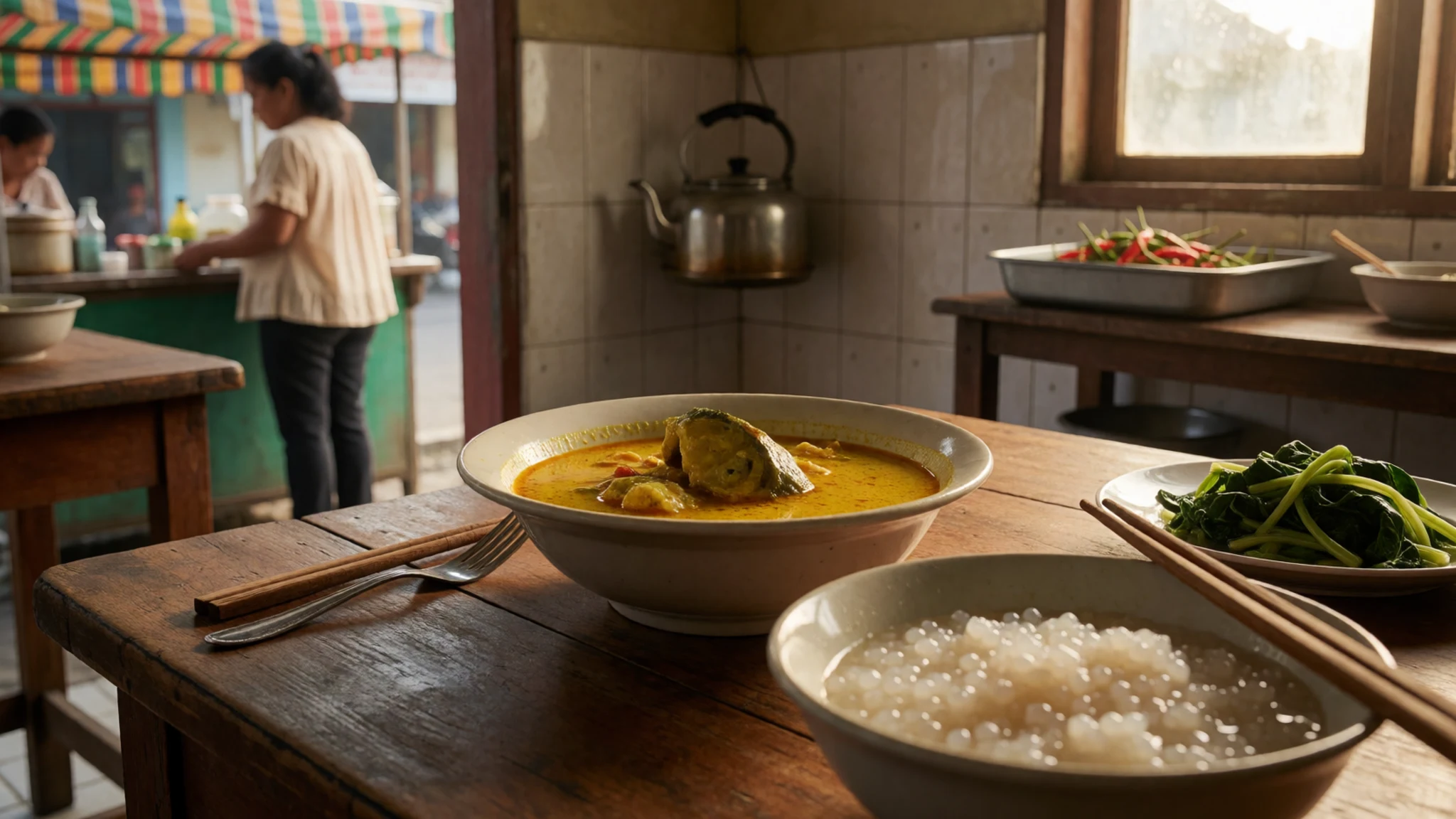
- Bakar batu — Highland villages around Wamena, by invitation
Bakar batu means 'burning stones'. Hot stones are layered with pork, sweet potato and greens in an earth pit, then covered to steam for hours. It is a communal feast for weddings, festivals and welcomes, not an everyday dish, so a visitor is usually invited by a host.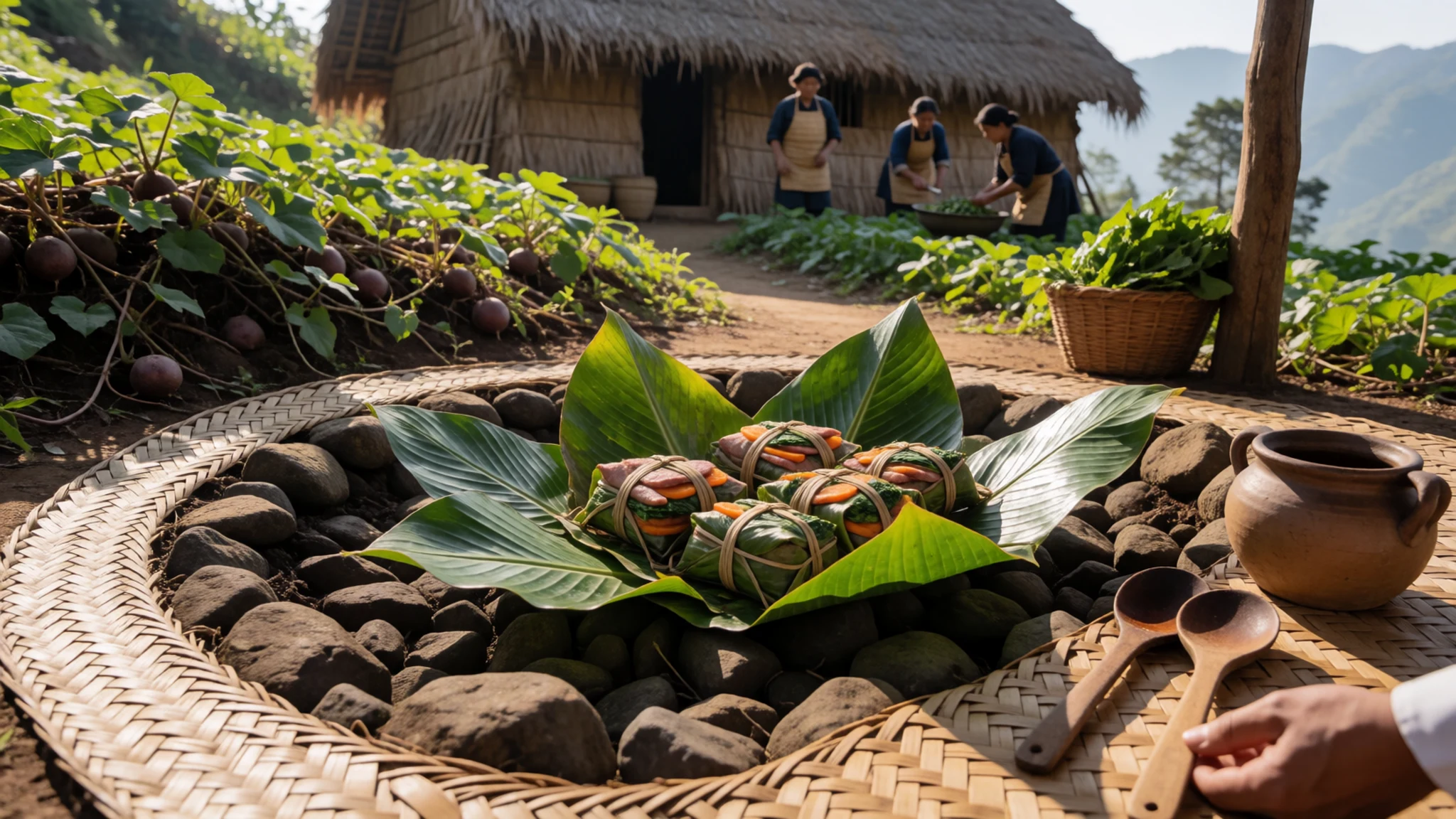
- Sweet potato — Highland village gardens and fresh produce markets
Sweet potato, called kaukau in Papua New Guinea, is the staple of the highlands and has been grown there for a very long time. It is roasted in embers, boiled or steamed, and is simple, filling and slightly sweet. Gardens can be seen on nearly every hillside. - Lap lap — Roadside stalls and village feasts in Papua New Guinea
Lap lap is a parcel of grated root or banana mixed with coconut cream, wrapped in leaves with fish, chicken or greens, then baked in an earth oven. It tastes smoky and rich. Food varies by village, but the leaf-wrapped form is easy to spot. - Grilled reef fish — Fish markets and beachside stalls along the coast
Fresh fish grilled over coconut husk or wood is among the simplest coastal meals, served with rice, sago or boiled cassava and a sharp chilli sambal. What is on the plate depends on the morning's catch, so ask what came in.
Plan it
Best time. May to October is generally the drier stretch for highland walking and for most travel, though New Guinea is wet in every month and rainfall in the mountains can be very high. Coastal air is hot and humid year-round, and the diving season in the west is best checked with local operators before booking.
How long. 7–10
Getting there. On the Indonesian side, fly to Sentani Airport near Jayapura, usually via Jakarta, Makassar or another Indonesian hub, then continue by small plane to places such as Wamena. For Papua New Guinea, fly to Jacksons International Airport in Port Moresby, then take a domestic flight onward. Check current government travel advice and any permit rules before booking.
Budget. high
Tips
- Book domestic flights and local guides well ahead, as services are limited and weather causes delays
- Allow spare days in the itinerary, because storms and low cloud often cancel small-aircraft flights
- Carry cash in small notes, as cards and cash machines are rare outside the main towns
- Bring a water filter or purification tablets, plus insect repellent and basic medicines
- Ask local advice on safety before moving around, especially in cities and after dark
Etiquette
- Ask permission from the village or landowner before entering land, fishing, or taking photographs
- Do not touch or remove carvings, masks or sacred objects
- Avoid starting conversations about politics and independence unless a local host does so first
Nearby
Sources
- Wikidata Q40285 (CC0)
- Wikipedia: New Guinea (rev 1384973688) (CC BY-SA 4.0)
- Wikivoyage: New Guinea (rev 4681504) (CC BY-SA 4.0)
- Photo: Satellite picture of New Guinea (NASA, cropped by User:Jklamo) (Public domain)
- Photo: Satellite map of New Guinea (SaltedSturgeon) (CC BY-SA 4.0)
- Photo: Topography of New Guinea (Zamonin) (CC BY-SA 4.0)
- Photo: Thévenot, Hollandia Nova detecta 1644 (Public domain)
- Photo: Mount Bosavi crater rim (panvorax) (CC BY 2.5)
- Photo: In the highlands of Papua New Guinea (eGuide Travel) (CC BY 2.5)
- Photo: New Guinea named (unknown author) (CC BY 3.0)
- Photo: Port Moresby downtown (Wikiedit.ray) (CC BY-SA 4.0)


