Nechisar National Park
Nechisar National Park, Ethiopia
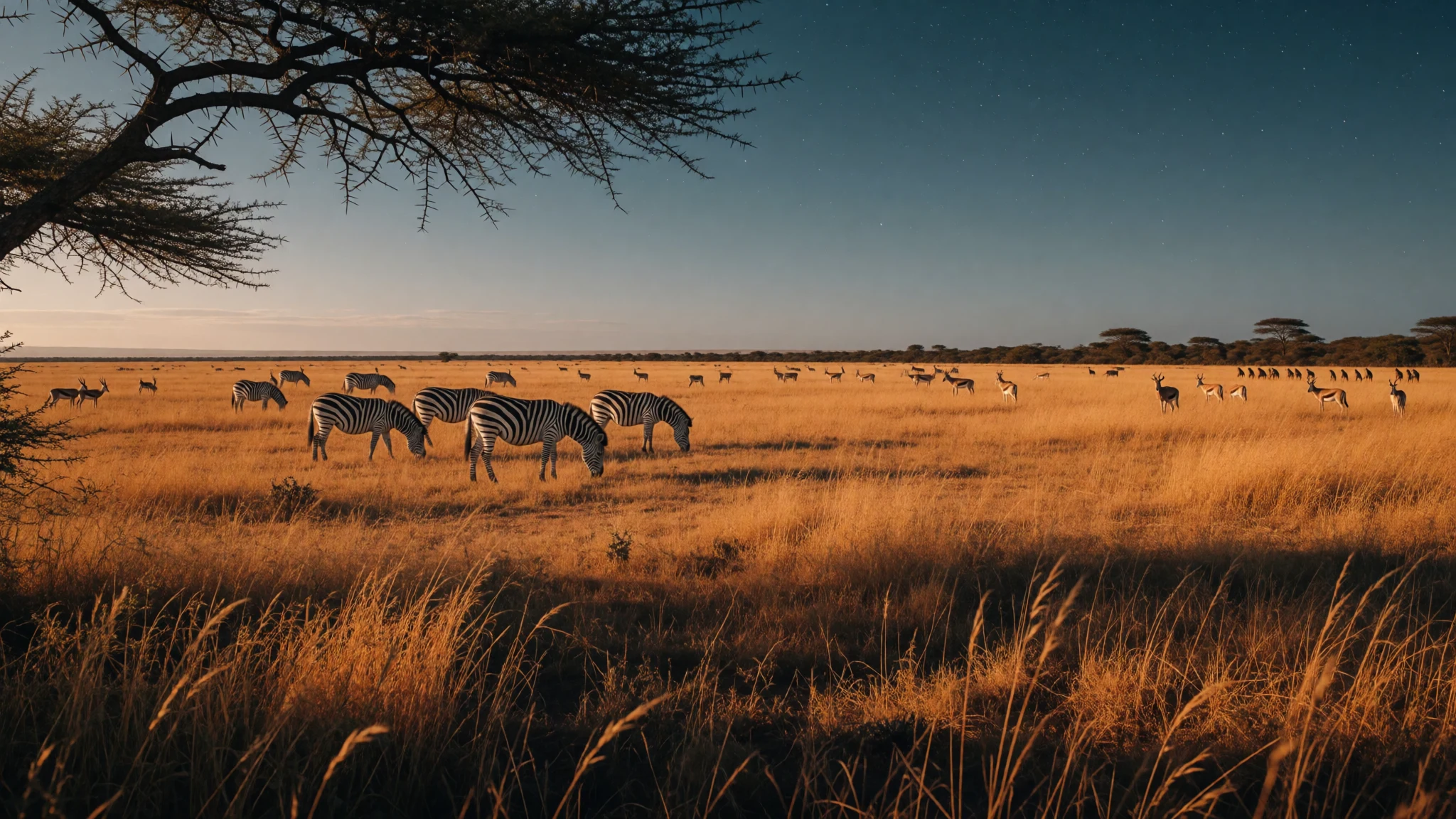
Nechisar National Park puts zebra plains, crocodile-lined Lake Chamo and a Rift Valley land bridge within a short drive of Arba Minch.
The place
Nechisar National Park sits in the Great Rift Valley, in the south-western Ethiopian Highlands, just east of the town of Arba Minch. Its defining feature is a narrow neck of land between two lakes, Abaya and Chamo, known locally as the Bridge of God. East of the lakes the ground opens into the plains that give the park its name. Nechisar comes from Amharic words meaning white grass, a reference to the pale grassland at the centre, where Burchell's zebra graze. Around the edges of the plain the grass gives way to light woodland. Ground levels run from about 1,108 m to 1,650 m, low enough to be properly warm, with none of the chill of the high Ethiopian plateau. Daily temperatures run from about 9 °C at night to 35 °C by day, hottest from January to March and coolest at night in January. Rain is heaviest from March to May, with further rain from June to November, adding up to about 1,170 mm a year. The inventory of life is large for a park of this size: 104 species of mammal, 351 of birds and around 1,000 of plants. Zebra, Grant's gazelle, greater kudu, hippos, crocodiles and baboons are the animals most visitors actually meet, while lions and leopards live here but are seldom seen. There is no lodging inside the park. Arba Minch, about 2 km away and roughly 510 km south of Addis Ababa, is the base, so the park works as a half-day or full-day outing from town rather than a long expedition.
Its story
Nechisar National Park was proposed in 1967 and officially established in 1974, though it was never formally gazetted and has operated ever since as a de facto park. Its history is as much about people as about animals. The Guji, pastoralists who grazed their herds on the lowlands beside Lake Abaya and Lake Chamo, were forced out in 1982 after advice from the agriculture ministry, reportedly at gunpoint. Then the Derg government lost its grip and order broke down. Park buildings far from the headquarters were looted and damaged, and the Guji went back to their old grazing grounds. One account says they were also running from raids by the Borena Oromo, who had themselves been pushed around by neighbouring groups. The returning herds put heavy pressure on the land, and that pressure is blamed for the local disappearance of several species. The Guji had also picked up firearms during the chaos, and they used them to resist being moved again once the park authorities regained control. In 2005 Refugees International publicly criticised the earlier eviction. The tension has never entirely gone away. Nechisar is a place where protecting wildlife and respecting the claims of herding communities pull against each other, and the empty-looking plains carry that argument with them. Visitors who understand this will read the landscape differently: the white grass is not untouched wilderness but the contested ground of a long-running negotiation.
What to see
- Crocodile Market, Lake Chamo — Lake Chamo shore, Arba Minch
A stretch of shore on Lake Chamo where crocodiles pile up in numbers, with hippos and big birds such as pelicans, marabou storks and ospreys nearby. Motor-boat trips take a couple of hours. Afternoon is the best time, when the crocodiles doze in the sun. At high water the hippos can stay hidden.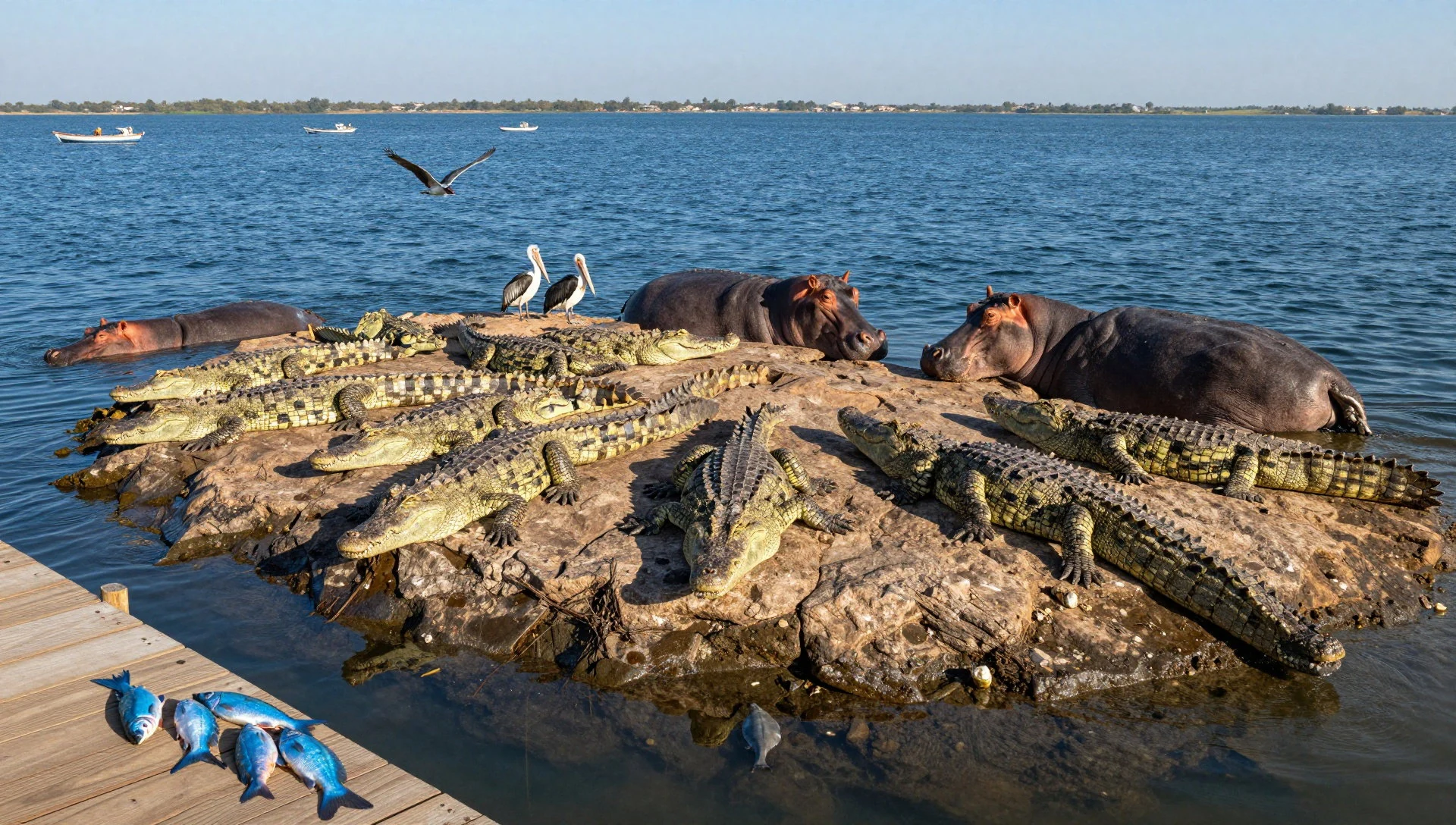
- The Bridge of God — Between Lake Abaya and Lake Chamo
The forested ridge of land that separates Lake Abaya from Lake Chamo is the park's signature view. Seen from the heights above Arba Minch, the two lakes sit side by side, one often tinted reddish-brown and the other bluer. Go early, when the haze is thin and the light is soft.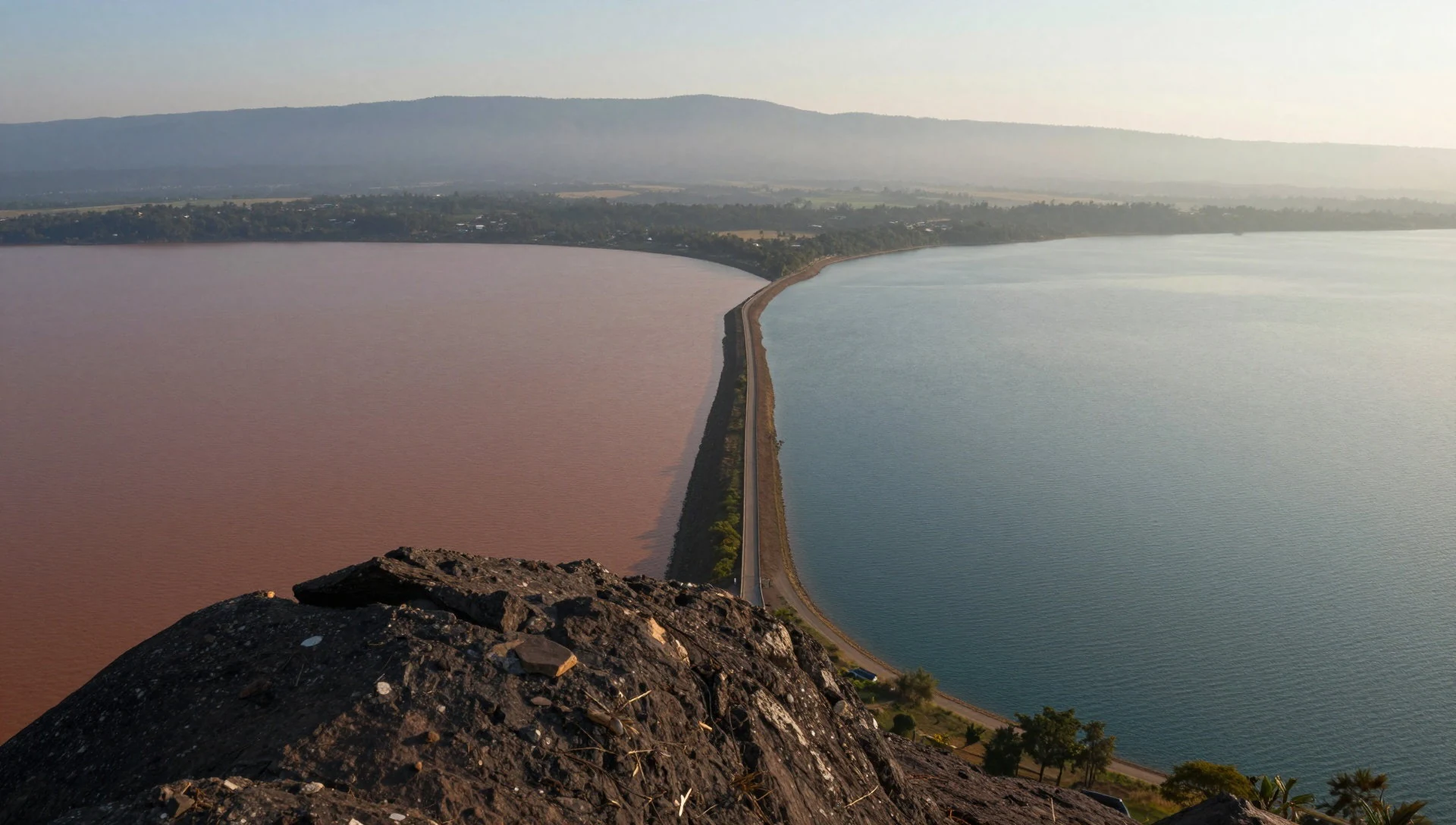
- The Nechisar plains — Central plains, east of the lakes
The open grassland at the heart of the park is where herds gather: Burchell's zebra and Grant's gazelle, while Swayne's hartebeest, last seen in 2017, is now almost certainly extinct in the park. The ground is flat and the views are long, so animals are easy to spot at a distance. Lions live here, but sightings are rare, so treat any as a bonus.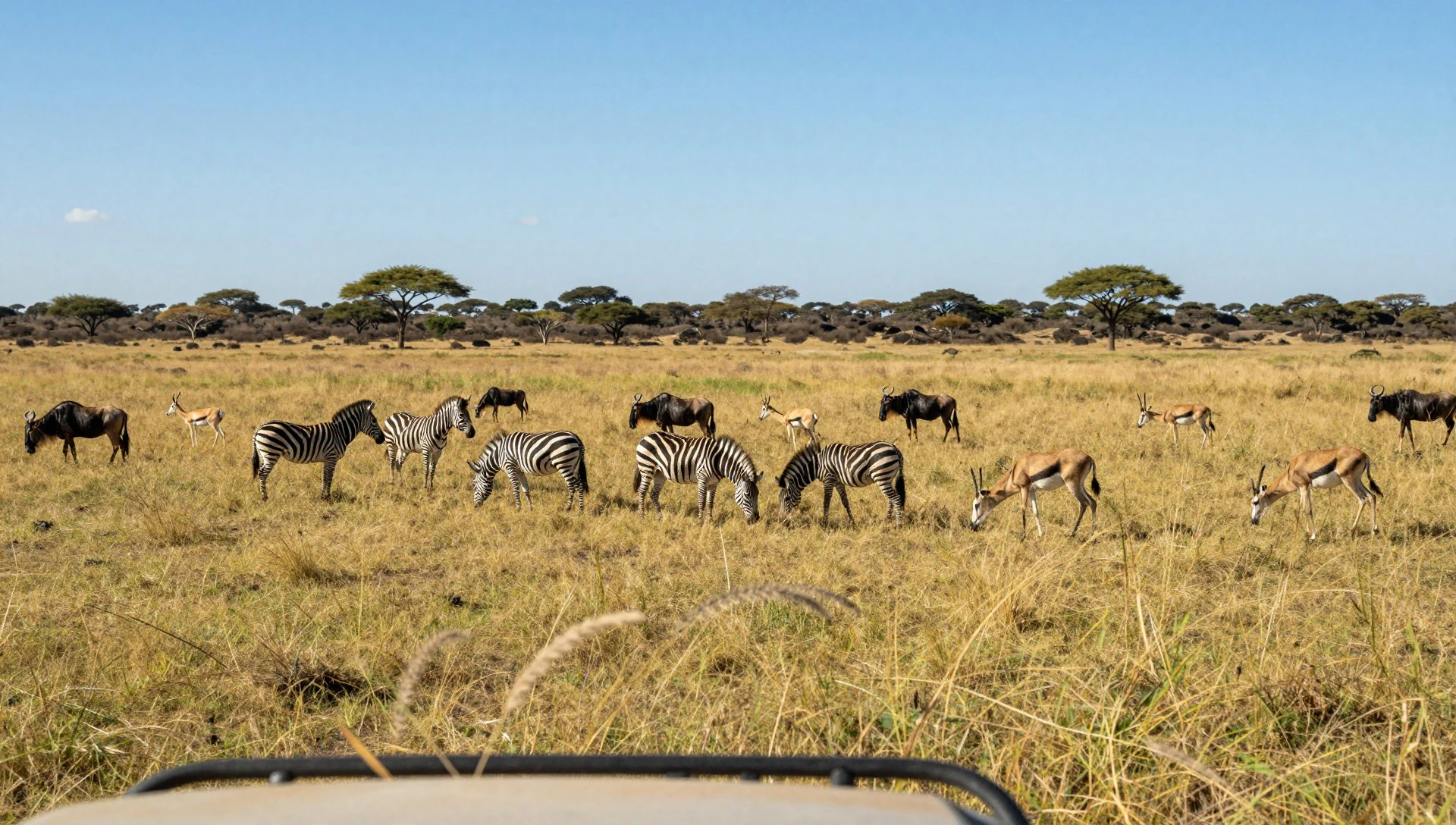
- Woodland edge: baboons and kudu — Woodland fringe of the plains
Where the grass meets the lighter woodland, olive baboons are common, peaceful and a little shy. With patience they let people come fairly close. Greater kudu, bushbuck, dik-dik and warthogs also turn up, and mantled monkeys sometimes appear in the trees. A slow walk or drive pays off.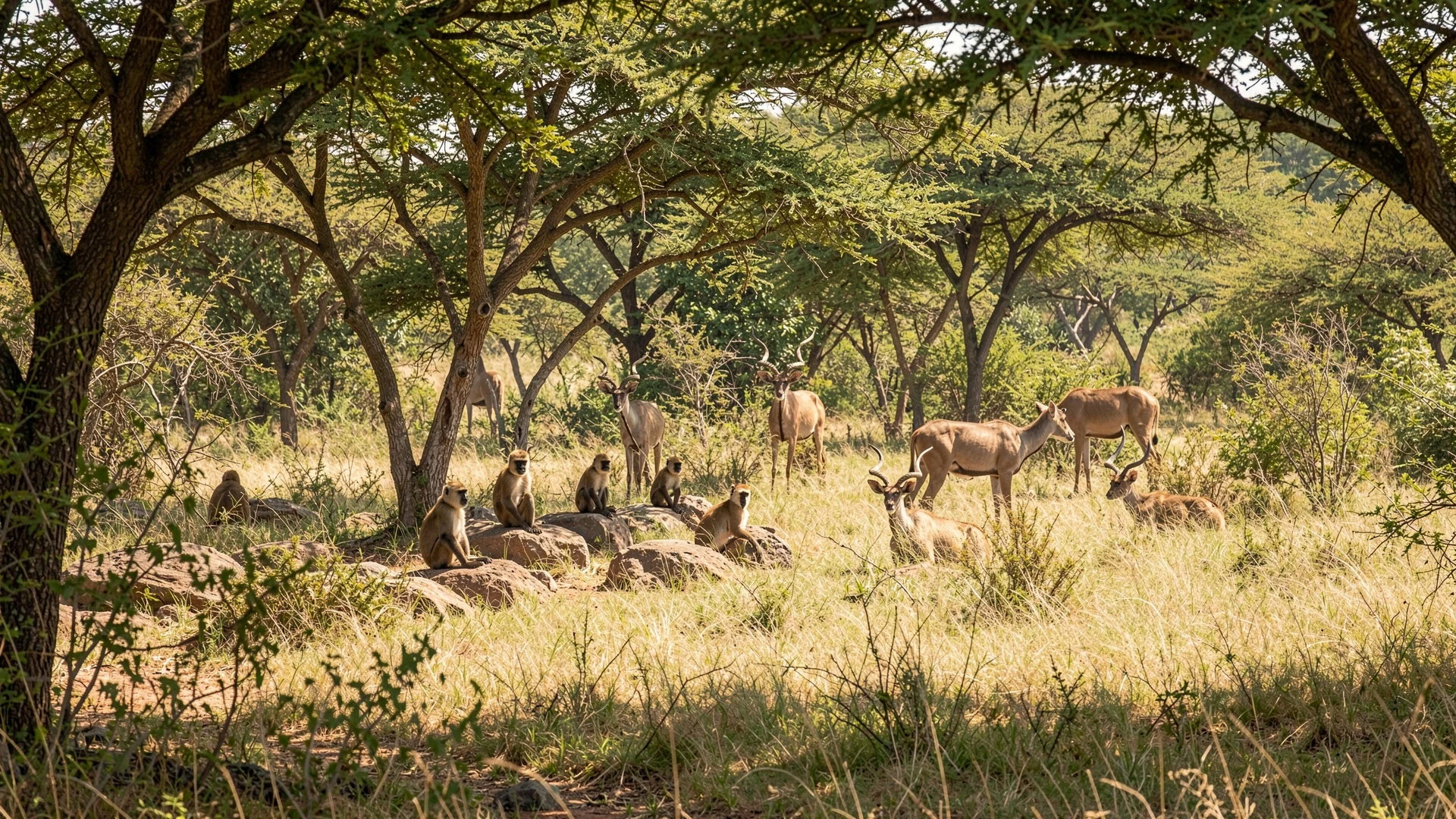
- Lake Abaya shore and ferry station — Lake Abaya shore
On the Abaya side, a landing point sits close to the crocodile farm. Visitors walk with a ranger rather than alone, and the reward is a mix of monkeys, hornbills, zebra, dik-dik and other antelope. It suits those who prefer a quiet on-foot outing to a boat trip.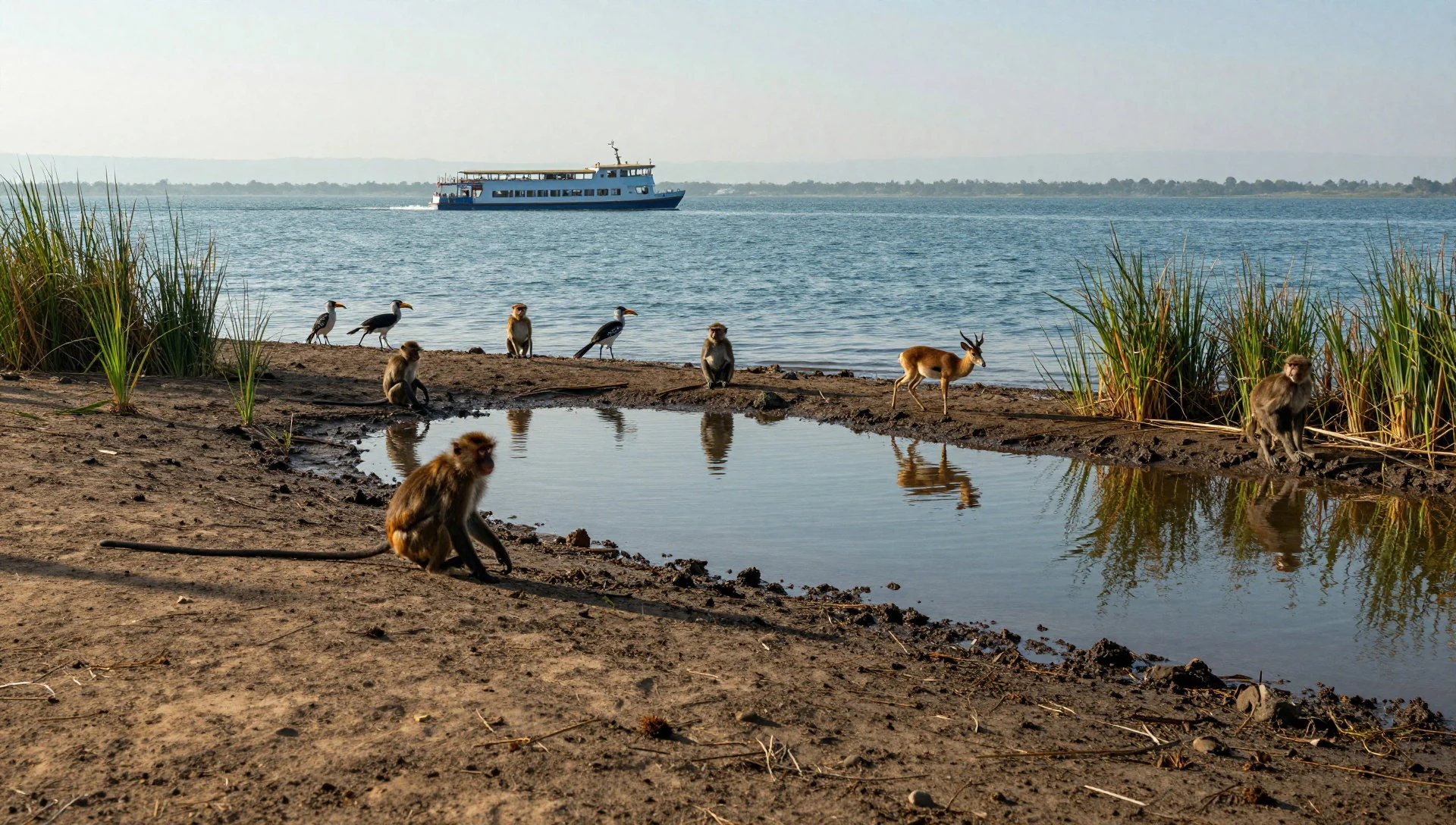
Culture
Nechisar National Park lies in a part of southern Ethiopia where many peoples live side by side, among them the Gamo, the Dorze and the Guji. Arba Minch itself is a mixed town. Highland farmers grow enset, the false banana whose starchy pulp is a staple here, and herders move cattle across lower ground. Most of the park's recent story is about this overlap, with pastoral communities and conservation claiming the same land, and visitors will sense that tension in conversation with rangers, guides and boatmen. Orthodox Christianity shapes the weekly rhythm in much of the country. Many people fast from animal products on Wednesdays and Fridays and in the long fasting seasons, which is why vegetarian dishes are easy to find and sometimes the only option at local eateries. Hospitality matters. Coffee is usually served in a small ceremony with roasting, grinding and three rounds of cups, and turning down the first cup can seem abrupt, so accept at least a sip. Greetings are unhurried, often with a handshake and a question about family, and the right hand, or both hands for something offered with respect, is the polite way to give and take. Prices for boats and guides are normally agreed in advance with the official guide association or the tourist office. Ask before photographing anyone, especially herders, women and children, and accept a refusal without argument.
What to wear
Around Nechisar National Park and Arba Minch, traditional dress is built on hand-woven cotton. The Gamo and Dorze highlands nearby are known for weaving, and the classic garments are white cotton shawls such as the gabi and the lighter netela, often with a coloured woven border. Women may wear a long cotton dress, sometimes embroidered, with a shawl over the shoulders. These are worn most visibly at church on Sundays and feast days, at weddings and at festivals. Herding communities in the lowlands add beads, leather and cloth wraps suited to heat and work. In daily life in town, people mostly wear practical modern clothes: jeans or trousers, shirts, dresses, football tops, and plastic or rubber sandals. Some older men still keep a shawl across the shoulders. Visitors should dress for warm, dusty conditions. Light, loose cotton or quick-drying trousers and long sleeves work better than shorts because they protect against sun, thorns and insects. Choose neutral greens, khaki and tan rather than bright colours or white. Bring a wide-brimmed hat, sunglasses and sunscreen. Closed shoes or light boots suit the plains and the tracks, while sandals do for the boat. In town and in villages, modest clothing covering shoulders and knees is polite, and the same applies if you step into a church.
What to eat
- Injera with wot — Local restaurants and eateries in Arba Minch
Sour, spongy flatbread served with spiced stews of lentils, chickpeas, beef or chicken. It is eaten by hand, using torn pieces of injera as the scoop. This is everyday food across Ethiopia, and Arba Minch's local eateries serve it all day.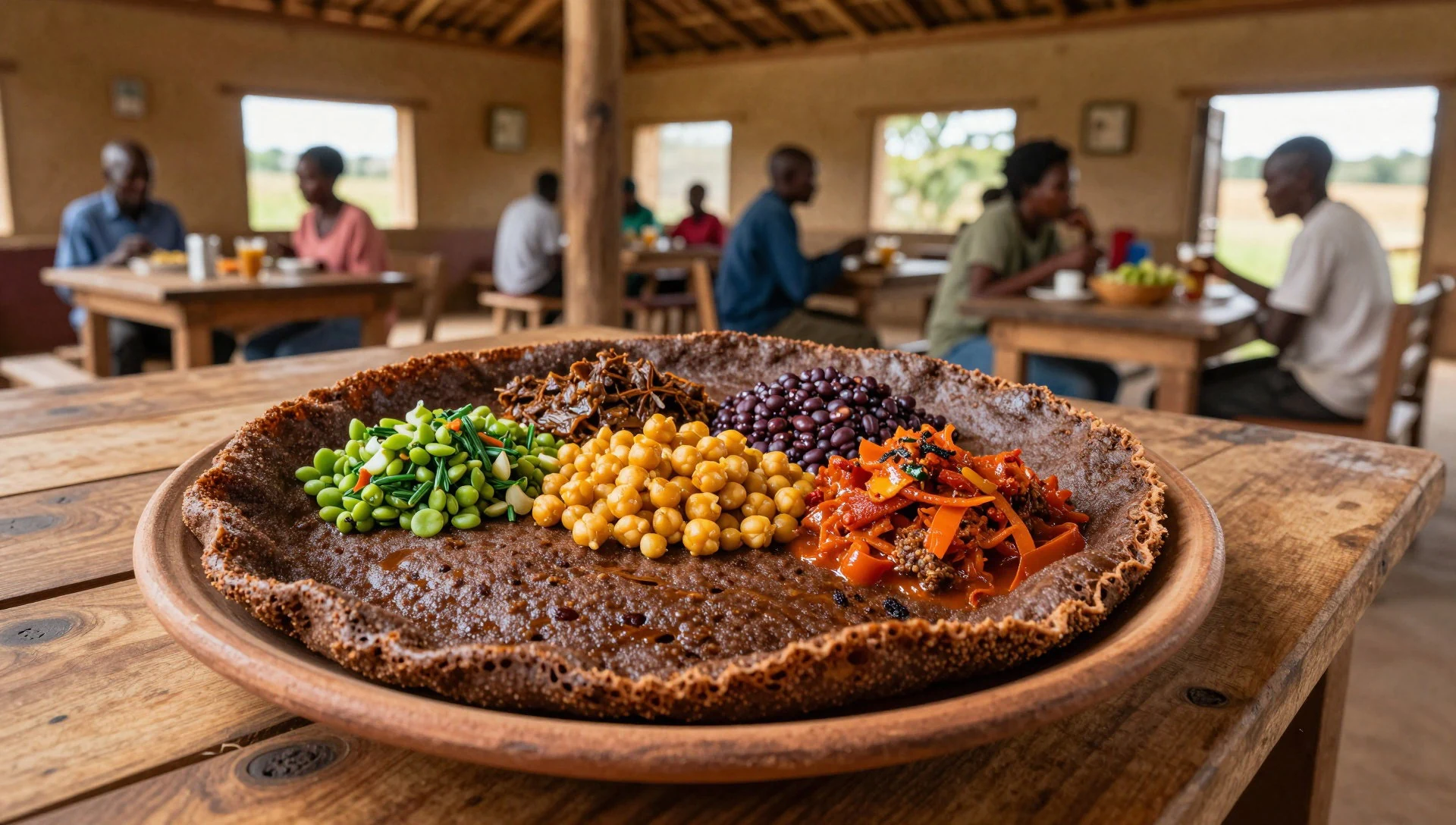
- Fried or grilled lake fish — Lakeside and market-side eateries around Arba Minch
Fish from the nearby lakes, usually Nile perch or tilapia, is a speciality of Arba Minch. It is served whole, fried or grilled, often with lemon and chilli, or cut into strips and fried. It is best eaten fresh and plain.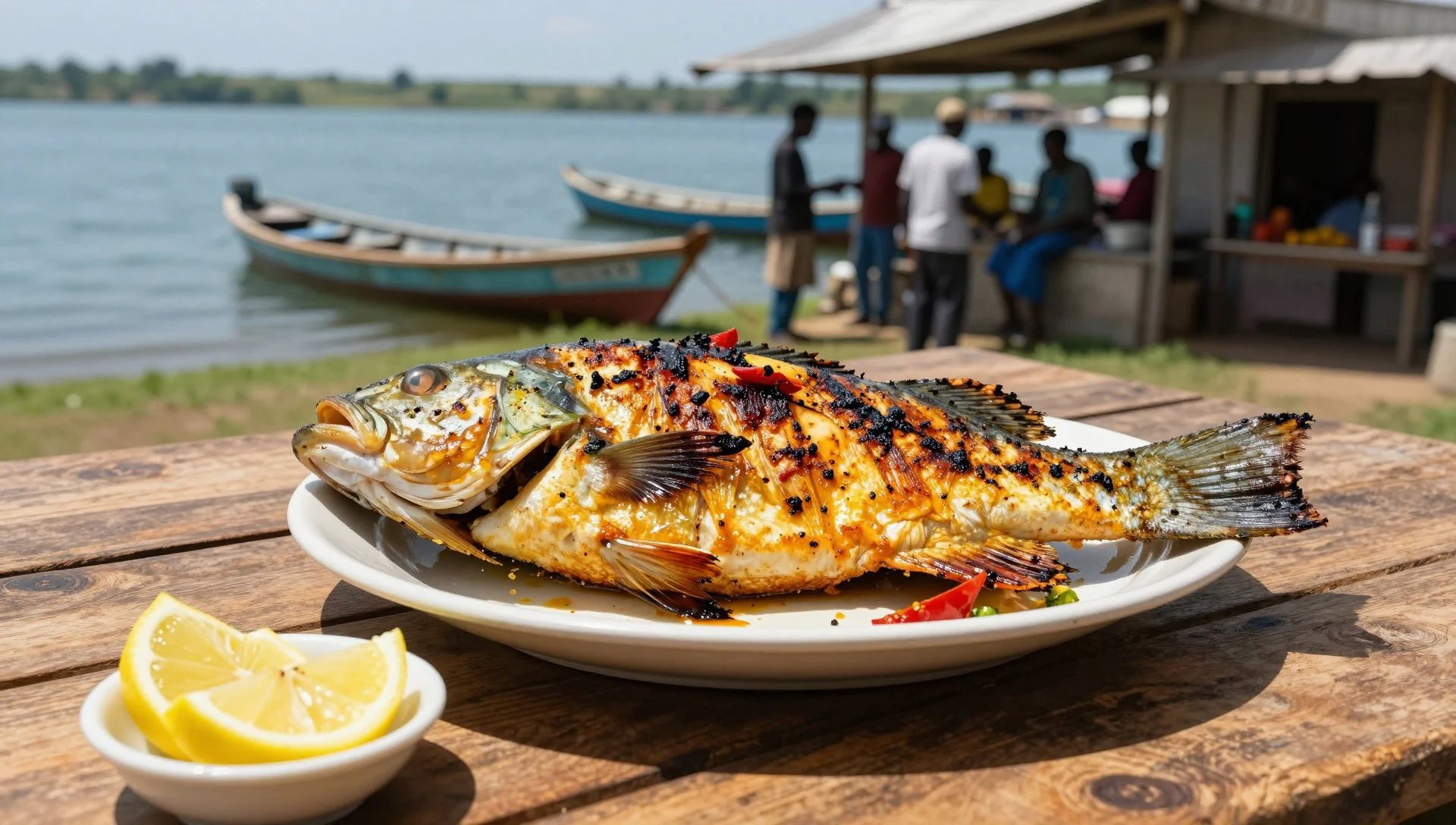
- Kocho and bula — Village homes and markets in the Gamo highlands near Arba Minch
Kocho is a dense, slightly sour bread made from fermented enset, the false banana of the southern highlands. Bula is a soft porridge made from the same plant. Both are traditional staples of the region and are often served with butter or spiced cheese. - Kitfo — Traditional restaurants in town
Minced beef warmed in spiced butter and chilli, served either lightly cooked or raw, with soft cheese and greens on the side. It is a celebration dish that has become widely loved. Ask for it cooked through if you prefer. - Ethiopian coffee — Cafés, homes and roadside stalls throughout Arba Minch
Beans are roasted on the spot, ground, and brewed in a clay pot, then poured into small cups in rounds. The smell of roasting and incense is part of the ritual. It is a good way to rest after a long day in the park.
Plan it
Best time. December to February is the best window: the park is driest then, though January to March is also the hottest stretch, with daytime highs of 33 to 35 °C. Rain falls from March to November, heaviest from March to May, when tracks can turn muddy and some animals are harder to spot. January is the coolest month at night.
How long. 1–2
Getting there. Fly or drive to Arba Minch, about 510 km south of Addis Ababa; check current flights and road conditions before travelling. The park entrance is about 2 km away, reached by driving north through town past the airport.
Budget. mid
Tips
- Book a boat trip on Lake Chamo through the tourist office or the local guide association rather than a random helper on the street
- Go in the afternoon for crocodiles basking on the shore, and in the early morning for the plains and the Bridge of God view
- Bring water, sun protection and insect repellent, since there is little shade on the plains
- Carry cash in small notes, as cards are rarely useful in town or at the park
- Stay in Arba Minch, since there is no hotel accommodation inside the park, although designated campsites exist; check the park office for current fees and rules
Etiquette
- Keep a safe distance from hippos and crocodiles and follow your boatman's or ranger's instructions
- Ask permission before photographing people, and respect a refusal
- Stay on marked tracks and do not feed baboons or other wildlife
Nearby
Sources
- Wikidata Q1270310 (CC0)
- Wikipedia: Nechisar National Park (rev 1372174529) (CC BY-SA 4.0)
- Wikivoyage: Nech Sar National Park (rev 5314630) (CC BY-SA 4.0)
- Photo: Crocodile and pelicans at Lake Chamo, MauritsV (CC BY-SA 2.0)
- Photo: Lake Abaya and Lake Chamo seen from Arba Minch, Bernard Gagnon (CC BY-SA 2.5)
- Photo: Dichrostachys cinerea flower, Marco Schmidt (CC BY-SA 2.5)
- Photo: Grant's gazelle, Stig Nygaard (CC BY 2.5)
- Photo: Greater kudus in Nechisar National Park, Kaffery (CC BY 3.0)
- Photo: Nechisar NP, Peter Wilton (CC BY 2.5)
- Photo: Nechisar, Petr Meissner (CC BY 2.5)
- Photo: Nechisar, Petr Meissner (CC BY 2.5)


