Naxos
Naxos, Greece
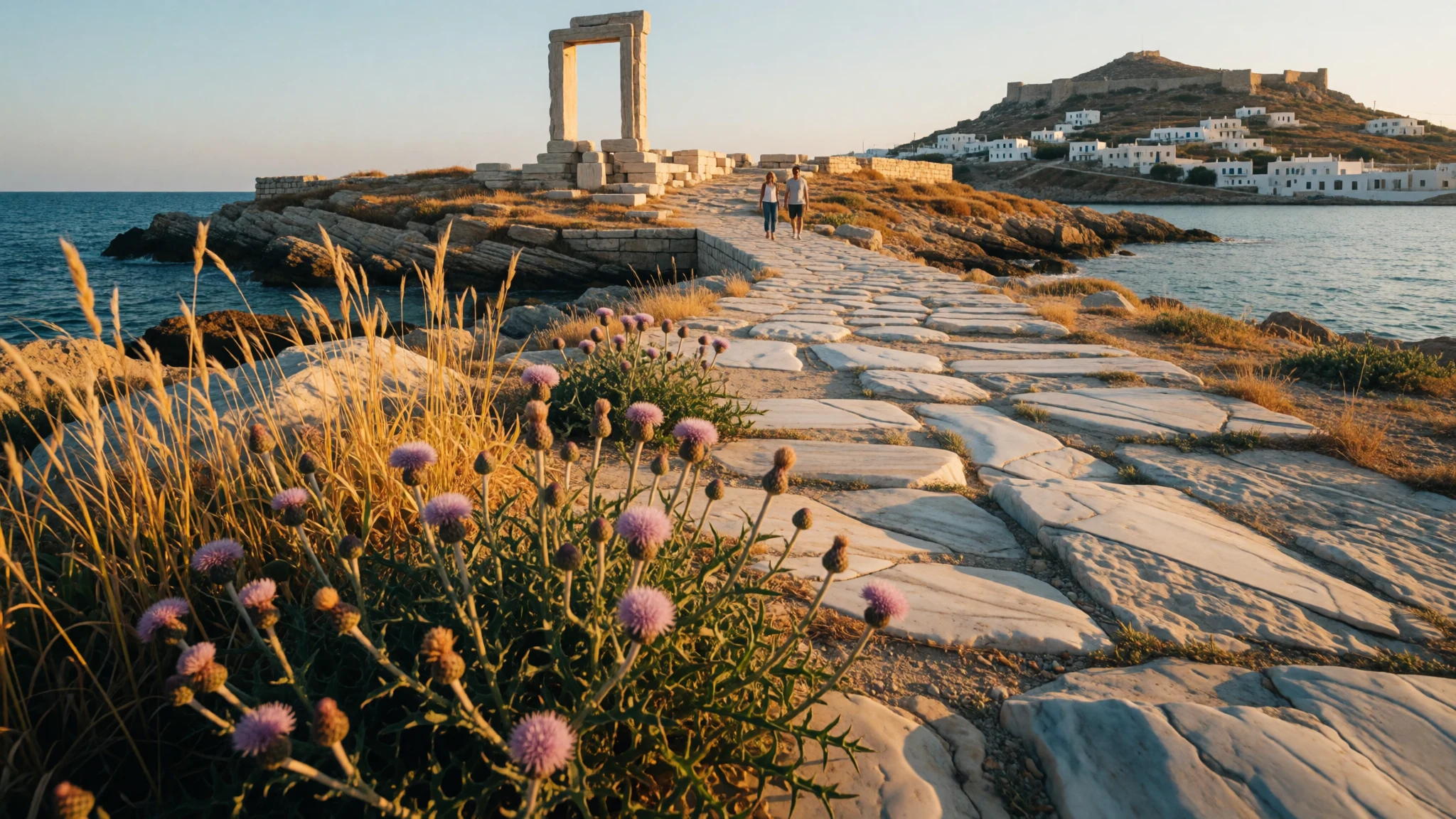
Naxos is a big, green Cycladic island where sandy beaches, a marble gateway, mountain villages and good potatoes make for slow, unshowy island days.
The place
Naxos is the largest island of the Cyclades, and it feels more like a working place than a postcard. About 17,930 people live here, mostly around the capital, Chora (also called Naxos Town), with farming villages such as Filoti, Apeiranthos, Halki and Koronos spread through the interior. The land is varied for the Aegean: a flat, sheltered west coast with long sandy beaches, fertile valleys that grow potatoes and support cattle and poultry, and a mountain spine rising to 1003 metres. Cooler air gathers in the highlands, so a drive inland in July can feel like a different island from the beach. Summers are hot and dry, with sea breezes making the coast bearable; winters are wetter, especially up in the hills. Cruise liners can't dock in Chora's harbour, and since Santorini grabs most of the tourists, Naxos remains much quieter. Most foreign visitors settle in a handful of beach towns beside Chora, and a short drive away the numbers thin quickly. Wealthy Athenians keep houses in old villages such as Halki and Filoti to escape the capital's summer heat, which says plenty about the interior. The island was also known for emery, a hard abrasive rock quarried here for centuries, and that stonework heritage shows in the towers and marble details.
Its story
Naxos has a long record, and the stories layered on top of it are part of the pleasure. Archaeology places the island at the centre of the Bronze Age Cycladic culture, when small island communities carved marble and traded across the Aegean, and it stayed influential in the Archaic period of ancient Greece. Myth fills in the rest. One tradition says the infant Zeus was raised in a cave on the mountain that still carries his name, Zas. Another says Naxos is where Dionysus, god of wine and festivity, met the princess Ariadne after Theseus left her here, following their escape from the Labyrinth and the Minotaur. Versions differ on what became of her: Athenian tellers had her die of grief, while older accounts have her rise to the heavens. Homer's sacred 'Dia' was often linked with Naxos, partly because of this wedding story. Later centuries brought Venetian builders, and the walled upper town they raised still shapes Chora's old quarter, with Catholic and Orthodox churches only minutes apart. A little reading before arrival makes the island easier to decode: the marble gateway by the harbour, the museum cases of slender Cycladic figures and the mountain villages all belong to the same long account.
What to see
- The Portara (Apollo's gateway) — Palatia islet, Chora harbour
The Portara is the surviving marble doorway of a temple to Apollo, standing alone on the small islet of Palatia beside the harbour. Set against sea and sky, it is the island's emblem. Sunset draws a crowd, so go early in the day for quiet and cooler walking on the exposed rock.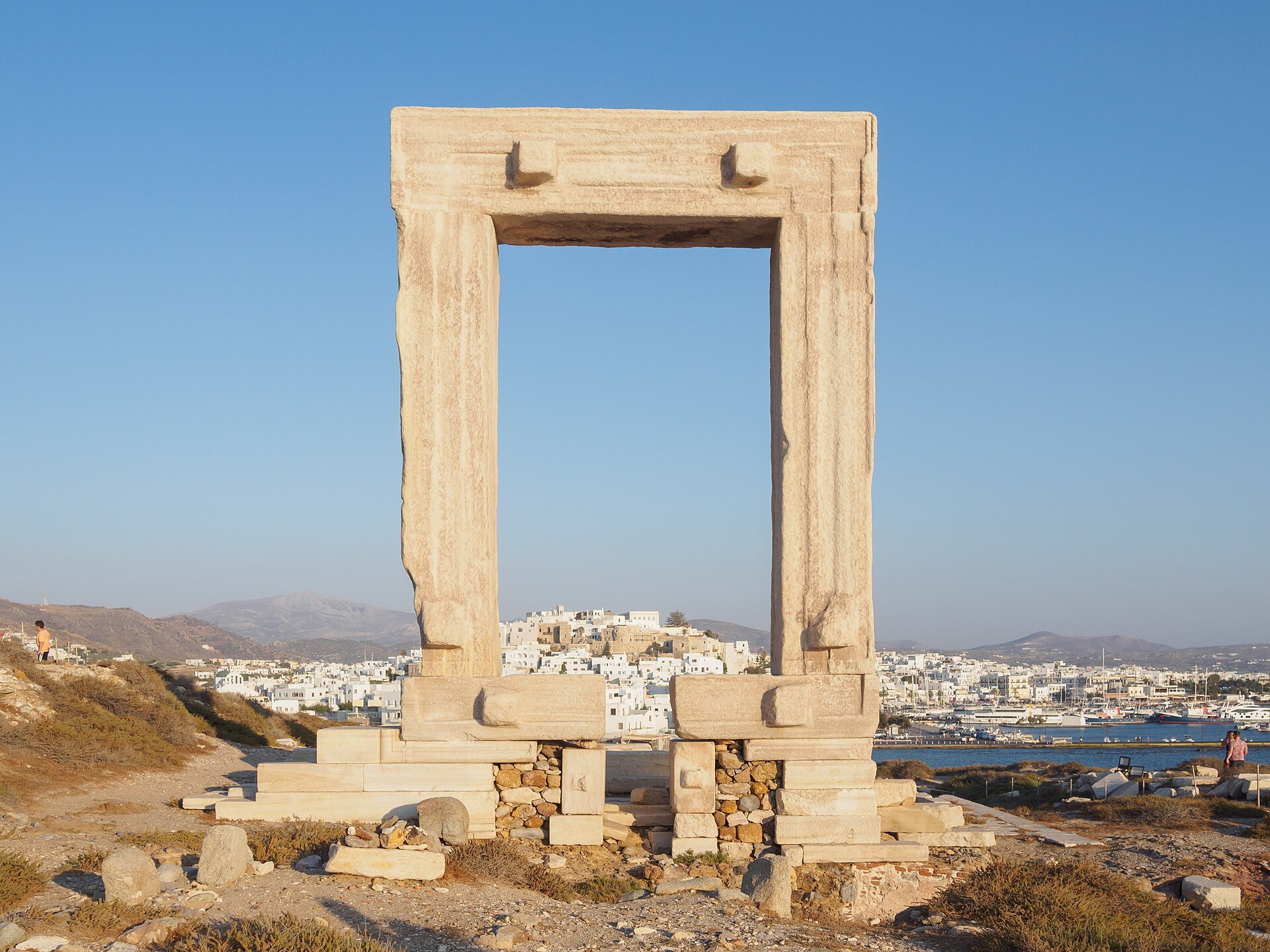
- The Castro — Old town, Chora
The Castro is the Venetian walled quarter on the hill above Chora's harbour. Its lanes twist, narrow and climb under arches and past old mansions, and it is among the quietest, most atmospheric parts of town. Wander without a plan, wear shoes with grip on the worn stone, and expect to get pleasantly lost.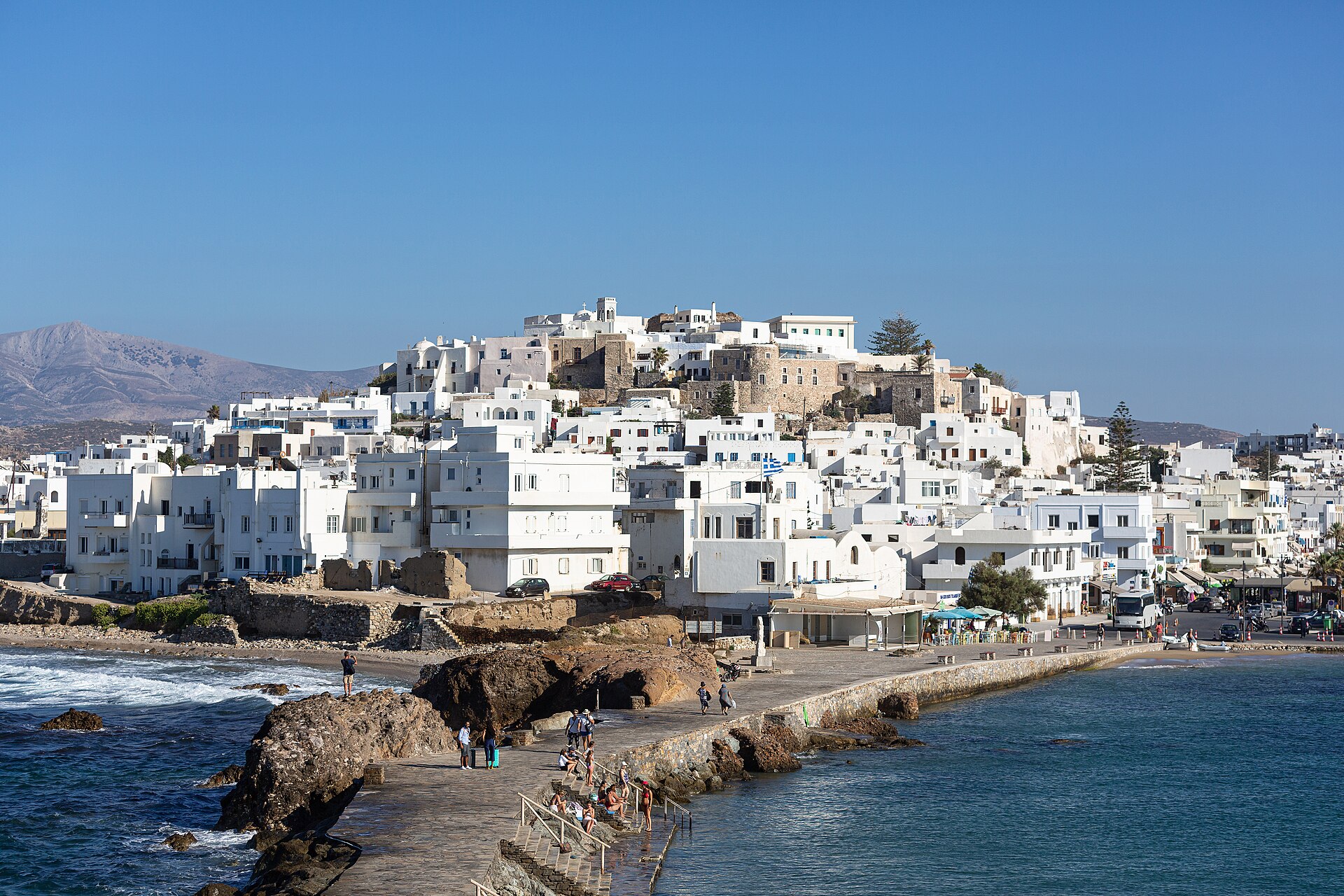
- Archaeological Museum — Castro, Chora
The Archaeological Museum, set inside the Castro, holds Cycladic artefacts from the Bronze Age alongside finds from the Neolithic to the early Christian period. It is a good midday refuge when the sun is fierce, and a sensible first stop, since it gives the island's earlier chapters some context before you head out. - Apeiranthos — Interior mountains
Apeiranthos is a mountain village of marble-paved lanes and stone houses on the slopes of the interior, noticeably cooler than the coast. Allow time to climb its steep alleys, look at the old tower houses and stop for coffee in a small square. Buses and drives from Chora make a half-day trip.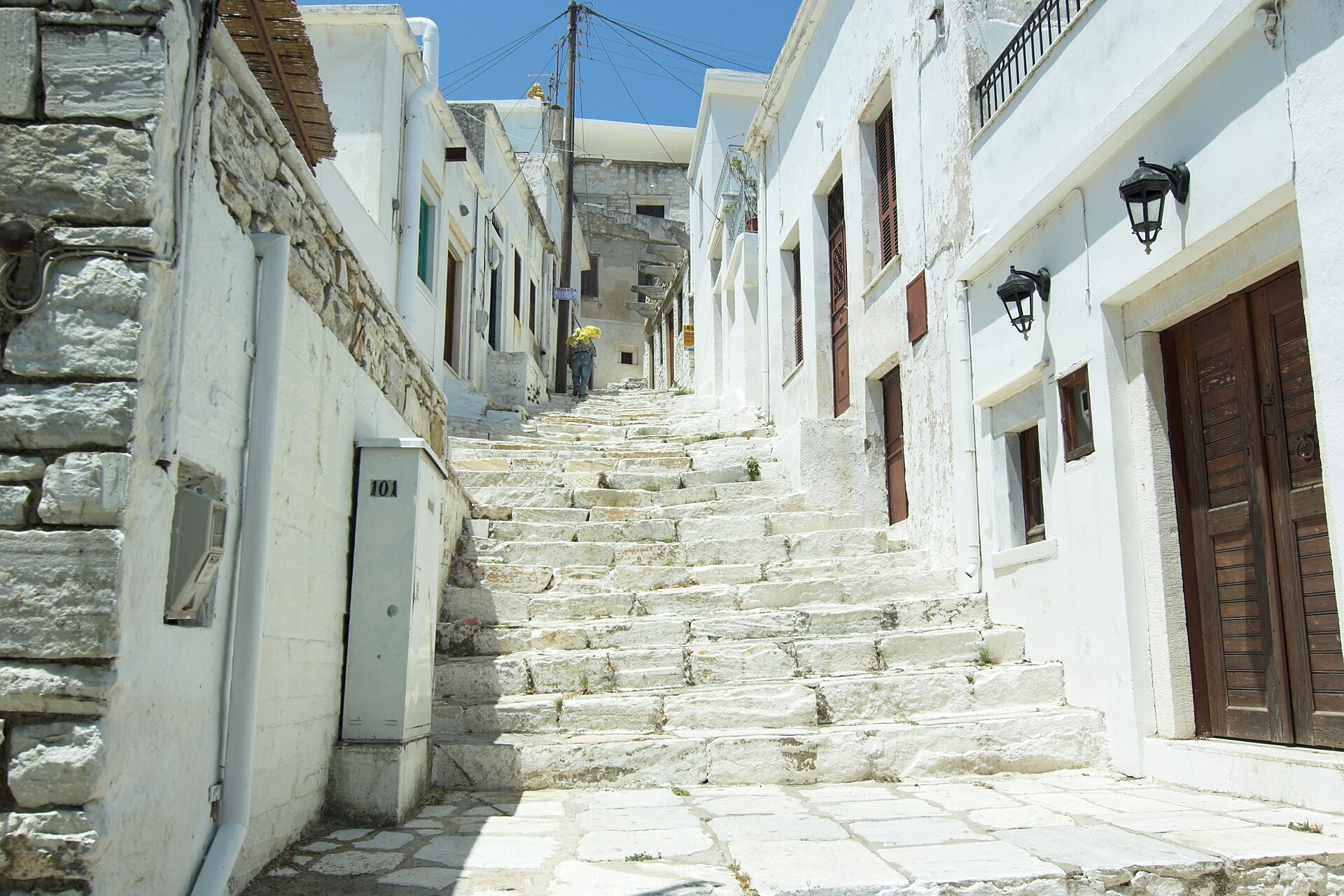
- Halki (Chalkio) — Central Naxos, Tragea valley
Halki is an old inland village of stone mansions, towers and churches, long favoured by Athenians escaping city summers. The pace is slow: come for a long lunch in the shade, a walk past the old stonework and a look at the surrounding olive groves and valley farmland before heading back to the coast.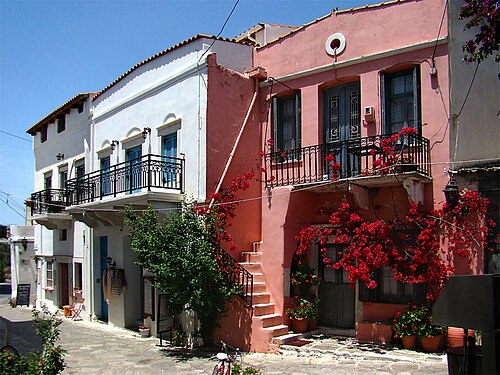
Culture
Naxos is a Greek island where Orthodox Christianity shapes the calendar, though the Venetian centuries left a Catholic minority and a few Catholic churches in Chora's old town. Village life revolves around the church, the kafeneio (coffee house) and the family table, and saints' day festivals bring music, dancing and long shared meals into the squares in summer. Hospitality matters: being offered a coffee, a spoon sweet or a glass of local spirit is normal, and a polite refusal with thanks is understood. Farming and quarrying history still colour the daily routine, so mornings start early and afternoons slow down, with some shops closing in the heat and reopening in the evening. The mythology is lived lightly rather than staged; people will happily tell you about Dionysus and Ariadne, but they are likelier to talk about the potato harvest. Greek is the everyday language, and a few words, kalimera for good morning and efharisto for thank you, earn warmth faster than any phrase book. Evening is the social hour, when families stroll the waterfront and tables spill onto the pavements. Cover your shoulders and knees before stepping into any church or chapel, and keep your voice low and your phone silent inside.
What to wear
Naxos has no single costume known to visitors, but older island dress broadly followed the wider Cycladic pattern: long embroidered skirts and aprons, headscarves, and cloth woven from cotton, linen and wool on home looms. Weaving was a household craft, and striped or patterned fabric was kept for bedding and festive wear. Today you are likeliest to see traditional dress at saints' day festivals, in dance performances, in the Folklore Museum and on some older women in the interior villages. Day to day, people wear what the climate asks for: linen shirts, light dresses, shorts and sandals on the coast, and sturdier trousers and boots for farm work in the hills. Evenings in Chora are relaxed but tidy, with smart casual more common than beachwear. A visitor should pack breathable cotton or linen, a sunhat, sunglasses and high-factor sunscreen. Bring trainers or walking shoes with good grip for the Castro's polished stone lanes and village paths, plus sandals for the beach. A light layer helps on windy ferry decks and in the cooler mountains. Carry a scarf or shawl and something that covers the knees for churches, and keep swimwear for the beach rather than the town.
What to eat
- Naxian potatoes — Village tavernas in the interior and Chora's backstreets
Naxos is known across Greece for its potatoes, grown in the fertile valleys. They turn up fried in thick golden chips, roasted with herbs or alongside grilled meat, and taste noticeably better than the usual side dish. Order them wherever the menu mentions local produce. - Graviera and local cheeses — Dairy shops and delis in Chora
Cattle farming on the island supports a strong dairy tradition, with firm, nutty graviera the best-known cheese. It is served in slices as a starter, grated over pasta, or fried until crisp. Buy a wedge to carry home from a local dairy shop. - Feta with a Greek salad — Any taverna, especially hillside village terraces
The feta here is pleasantly mild rather than sharp, and a village salad of tomato, cucumber, olives and a slab of it, with local olive oil and bread, makes a good lunch in the summer heat. - Moussaka — Family tavernas in villages such as Melanes and Sagri
Layers of aubergine, spiced mince and creamy béchamel, baked until just set. Family-run kitchens that cook from fresh local produce tend to do it best, and portions are generous, so share a plate if you plan to eat anything else. - Souvlaki — Grill shops along the Chora waterfront
Skewered grilled meat, wrapped in pitta with tomato, onion and yoghurt sauce or served on a plate with chips. It is quick, filling and inexpensive, and a good option after a beach day when you do not want a long sit-down meal.
Plan it
Best time. Late May–June and September–early October: warm sea, long sunny days and fewer people than in July–August, when the coast is hot and busy. Winters are wetter, especially in the hills, and some seasonal businesses close.
How long. 3–5
Getting there. Most visitors arrive by ferry from Piraeus, around five and a half hours by regular boat and under four hours by fast ferry, with seasonal links from Rafina and Lavrio; from Santorini it is about two hours by regular ferry. A small airport also has flights from Athens, so check current schedules. The last leg is a short walk or taxi from the harbour into Chora.
Budget. mid
Tips
- Book ferries ahead in July and August, and check departure times on the day, as sailings can change with weather.
- Hire a car or scooter to reach the interior villages, but use a reputable agency and photograph the vehicle before you drive away, as rental scams are reported.
- Do the Portara, the Castro and the museum early or late, away from the midday heat.
- Carry some cash for village cafés and small shops, and bring a refillable water bottle for hikes.
- For current local information, check the official island site at http://www.naxos.gr/.
Etiquette
- Cover shoulders and knees in churches and chapels.
- Ask before photographing people in village squares or at festivals.
- Take rubbish with you from beaches and trails, and keep to marked paths around ancient remains.
Nearby
Sources
- Wikidata Q188527 (CC0)
- Wikipedia: Naxos (rev 1381412864) (CC BY-SA 4.0)
- Wikivoyage: Naxos (rev 5412368) (CC BY-SA 4.0)
- Photo: Naxos port, Rol1000 (CC BY 3.0)
- Photo: Chora of Naxos with Grotta and Vinci beaches, Manfred Werner (Tsui) (CC BY-SA 4.0)
- Photo: Portara, C messier (CC BY-SA 4.0)
- Photo: Glezos Tower, C messier (CC BY 3.0)
- Photo: Chalkio, Naxos, Tango7174 (CC BY-SA 4.0)
- Photo: Tower in Kato Sagkri, C messier (CC BY-SA 4.0)
- Photo: Vigla Beach, En Agris LLC (CC BY-SA 4.0)
- Photo: Street in Apeiranthos, Zde (CC BY-SA 4.0)


