Naqsh-e Rustam
Naqsh-e Rustam, Iran
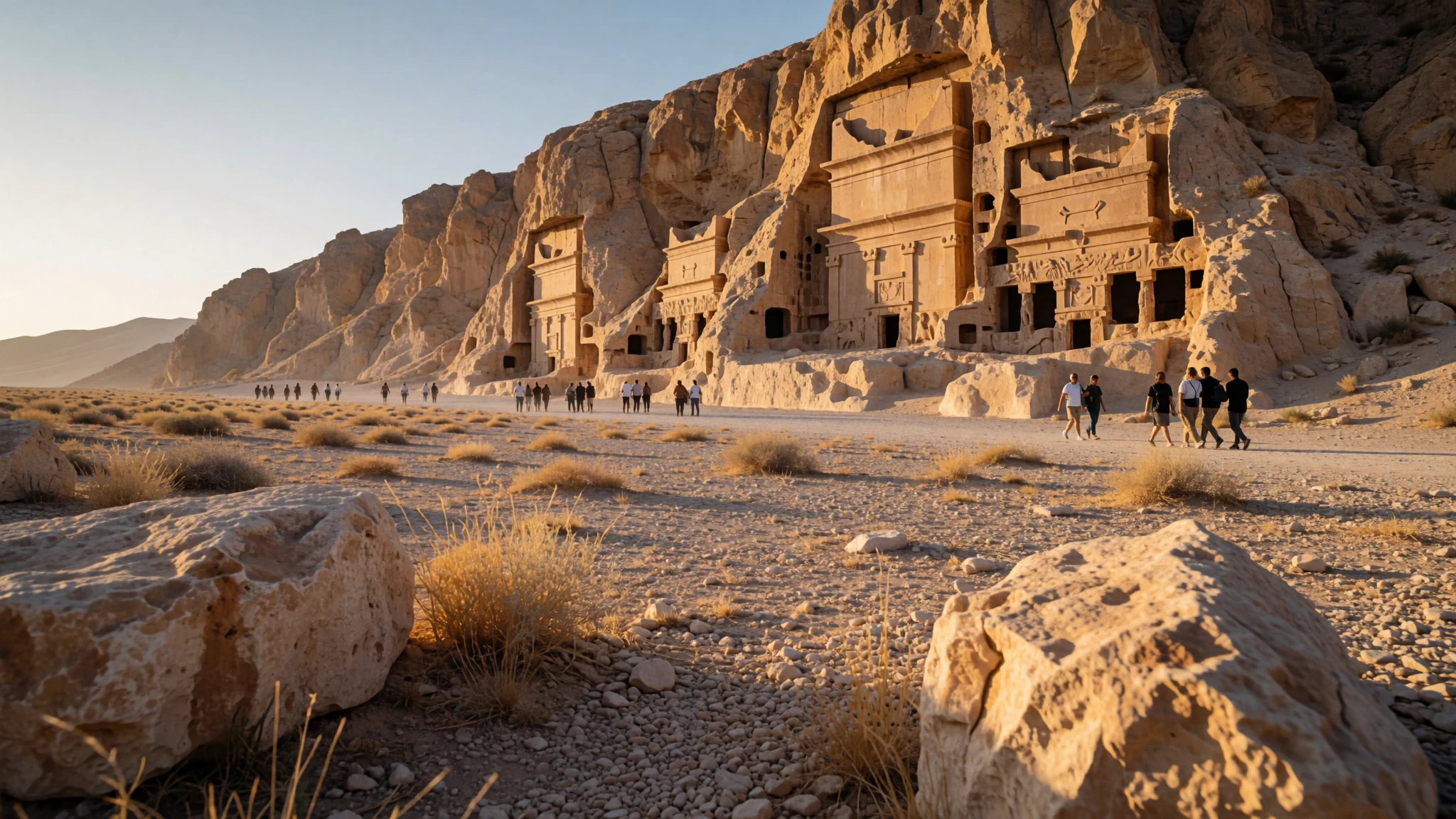
Come for four royal Achaemenid tombs carved high into a cliff, with Sasanian battle scenes just above the ground.
The place
Naqsh-e Rustam is an ancient necropolis in Fars province, about 13 km northwest of Persepolis. Its name, meaning something like 'the mural of Rostam', refers to the carvings that cover the face of a single mountain. Four large royal tombs of the Achaemenid dynasty, which ruled roughly from c. 550 to 330 BC, are cut high into the rock. Their facades are carved mainly with architecture, but above each doorway a panel shows a king being invested by a god. Beneath that, rows of smaller figures carry tribute, and soldiers and officials stand in line. The figures are sized to show rank, so the king stands far taller than everyone else. Lower down, near ground level, are later reliefs from the Sasanian period, with kings on horseback, figures meeting gods and scenes of combat. The site lies a few hundred metres from Naqsh-e Rajab, which has four more Sasanian carvings. Iranians regard the place as central to their history, because it holds layers of carving made over more than a thousand years. Expect an open site with the cliff dominating the view and very little shade at midday.
Its story
Naqsh-e Rustam holds more than a thousand years of carving, which is rare for a single rock face. The earliest work comes from the Elamites, who held this part of Fars before the Persians, but the site is best known for the Achaemenid kings. Four of them were buried in the cliff, and the two most often named are Darius the Great and his son Xerxes. Each royal tomb was cut so that its doorway sits at the centre of a cross-shaped facade. The carved panels above were meant to show the king's authority to anyone standing on the plain below. The rows of figures underneath show subject peoples bringing gifts, a way of picturing an empire as a gathering of many nations.
Centuries later the Sasanians carved their own scenes lower on the rock. Their most famous panel shows Shapur I on horseback. The Roman emperor Valerian kneels before him in submission, while Philip the Arab, an earlier emperor who had paid Shapur tribute, holds the king's horse. Beneath the hooves lies a figure usually taken to be Gordian III, killed in battle, though other readings have been proposed. The scene commemorates the Battle of Edessa in AD 260, when Valerian was captured, making him the only Roman emperor taken prisoner in war. For the Romans it was a lasting humiliation. For the Sasanians it was a triumph carved in stone where every passer-by could read it.
What to see
- Necropolis of the Achaemenid kings — Fars province, about 13 km northwest of Persepolis
The main reason to come. Four royal tombs are cut high into a sheer cliff, their cross-shaped facades dark against the pale rock. Stand back on the flat ground below to take in the full height, then walk along the lower reliefs to see the Sasanian scenes at eye level. Allow at least an hour, and longer if you want to study the carvings closely.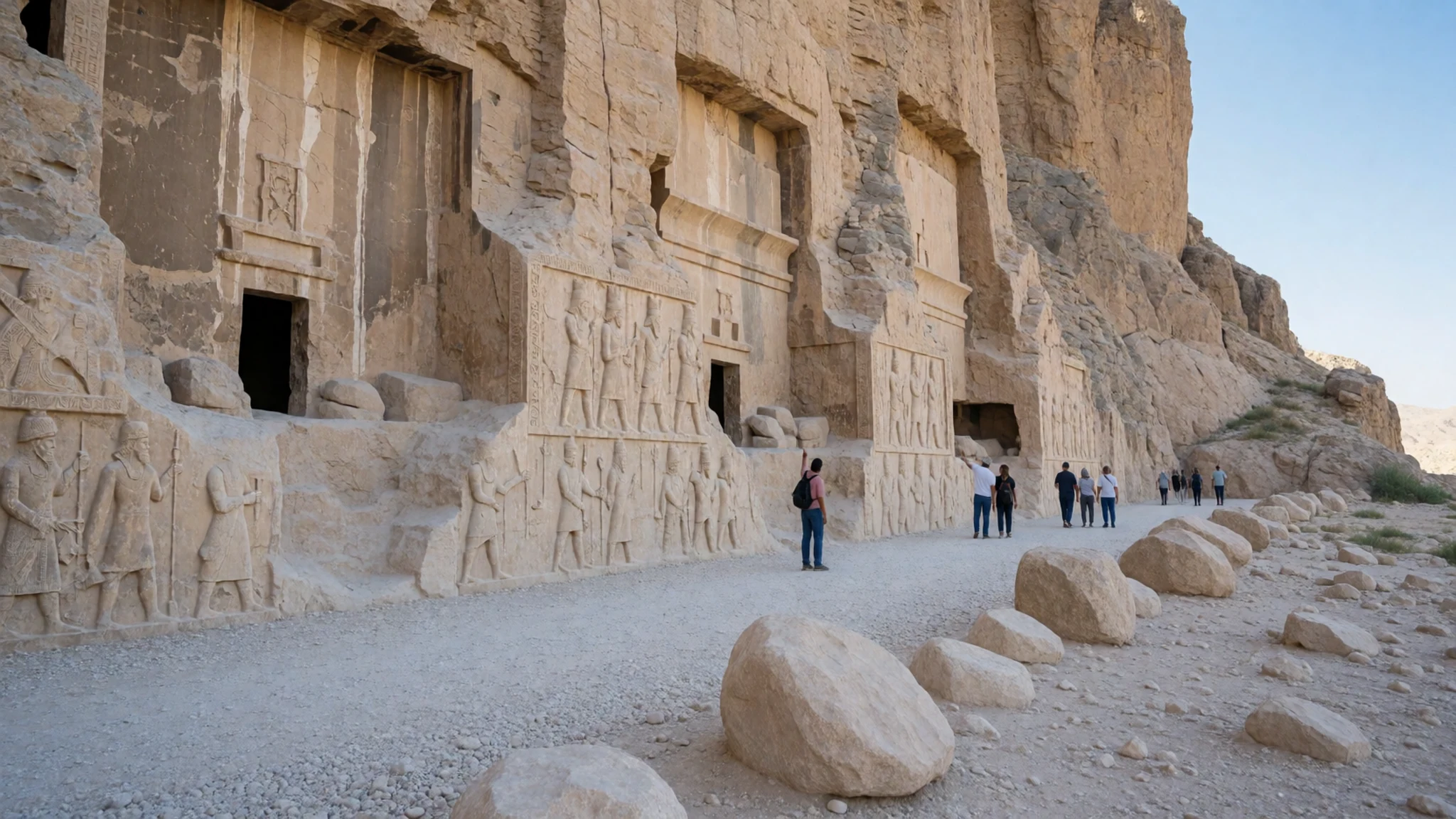
- Tomb attributed to Xerxes — The main cliff, upper register
The upper register of this tomb holds the royal panel, with the king raised before a god and rows of figures below him. The layout is close to that of the neighbouring tombs, so compare them side by side. Notice how the figures shrink in size according to rank. Binoculars help with the finer detail, which is hard to make out from the path.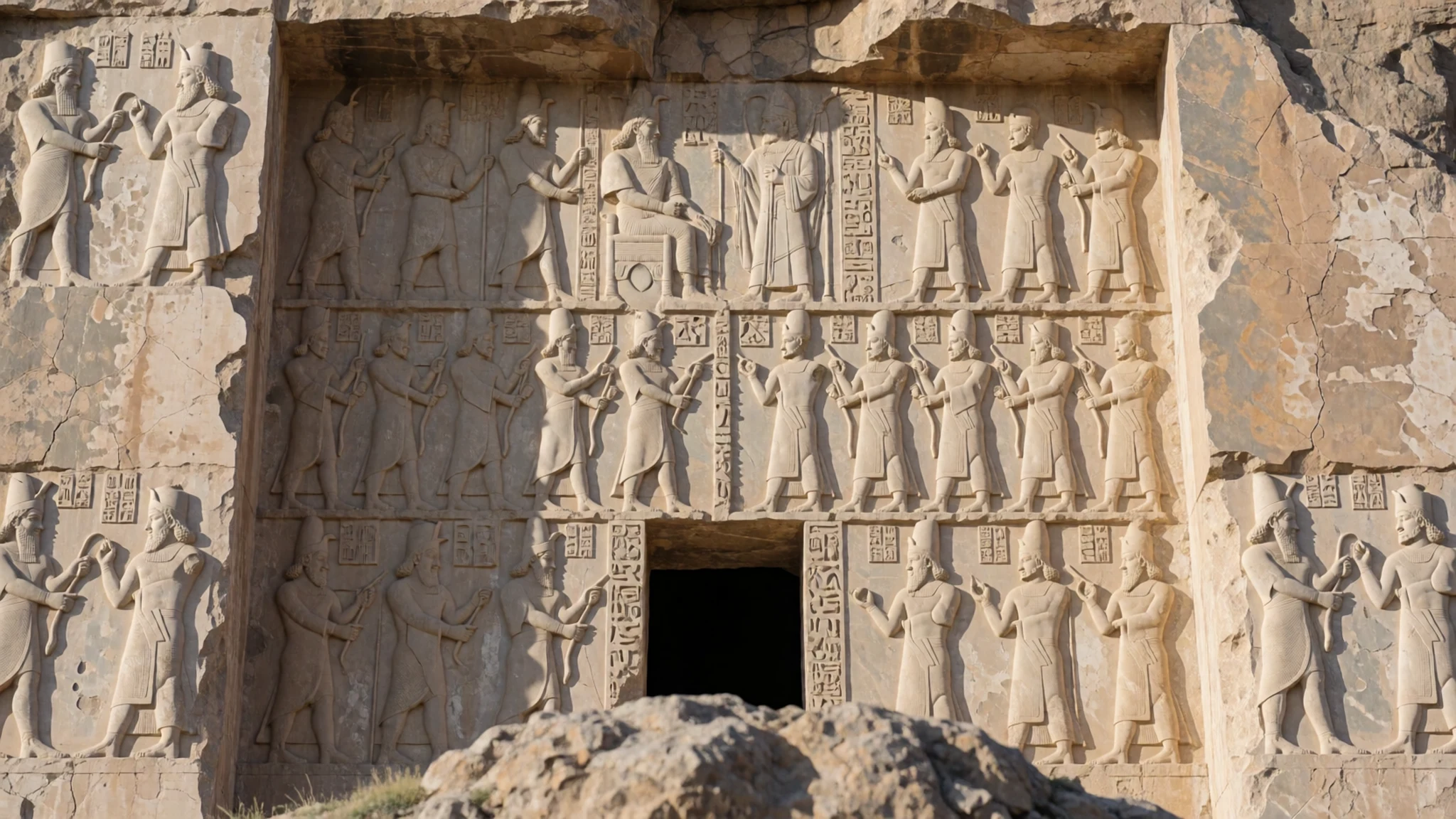
- Darius's cuneiform inscription — The main cliff, the Darius tomb facade
A carved inscription in cuneiform runs across the facade of the Darius tomb. The script is made of wedge-shaped marks, and the lines are easiest to pick out in low morning light. The text records the king's own account of his rule, so a guide who can read it will bring the carving to life. Take a photograph from the side to catch the depth of the carving.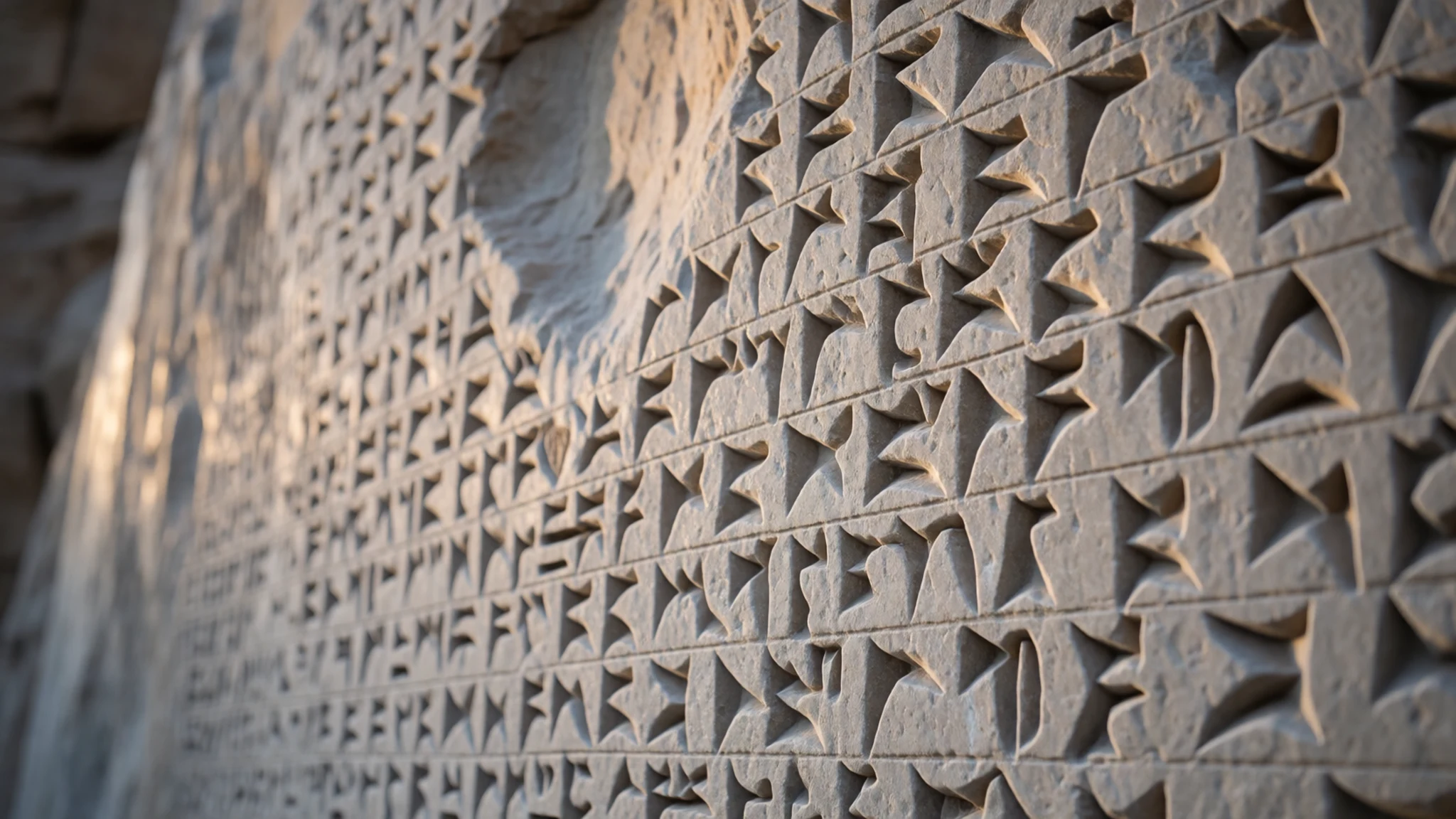
- Naqsh-e Rajab — A short walk from the main cliff
A few hundred metres from the main cliff, this smaller rock wall holds four Sasanian reliefs. Three celebrate kings and one shows a high priest. The panels get far fewer visitors than the tombs, so you may have them to yourself. It is a short walk and best combined with the main site on the same visit.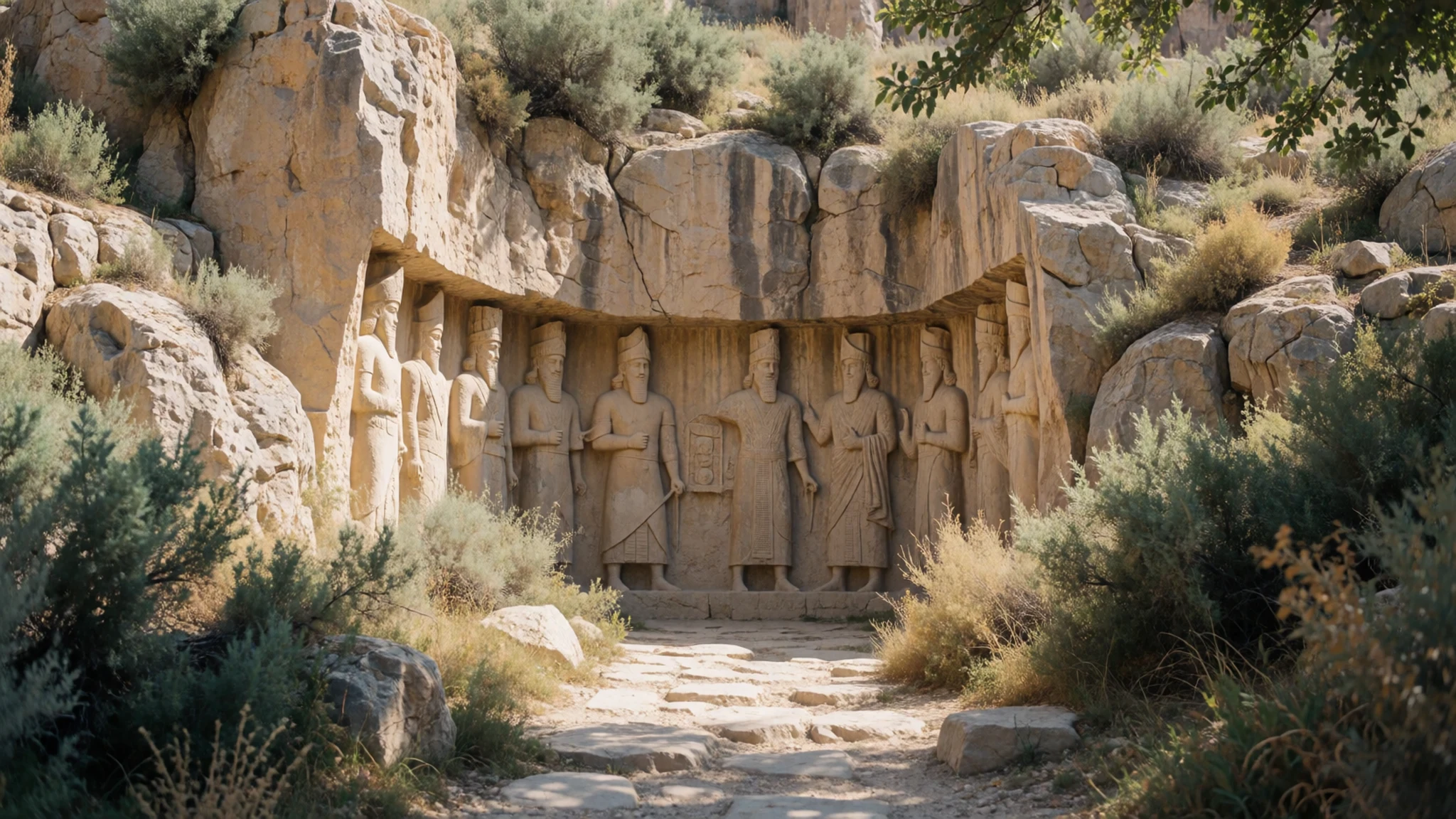
- Persepolis — About 50 km northeast of Shiraz
About 50 km northeast of Shiraz, the ruins of the Achaemenid palace complex still show stone stairways, gateways and columns. Visiting both sites in one day makes sense, because the tombs belong to the same dynasty that built Persepolis. Give the palace at least two hours, and go early before the heat builds.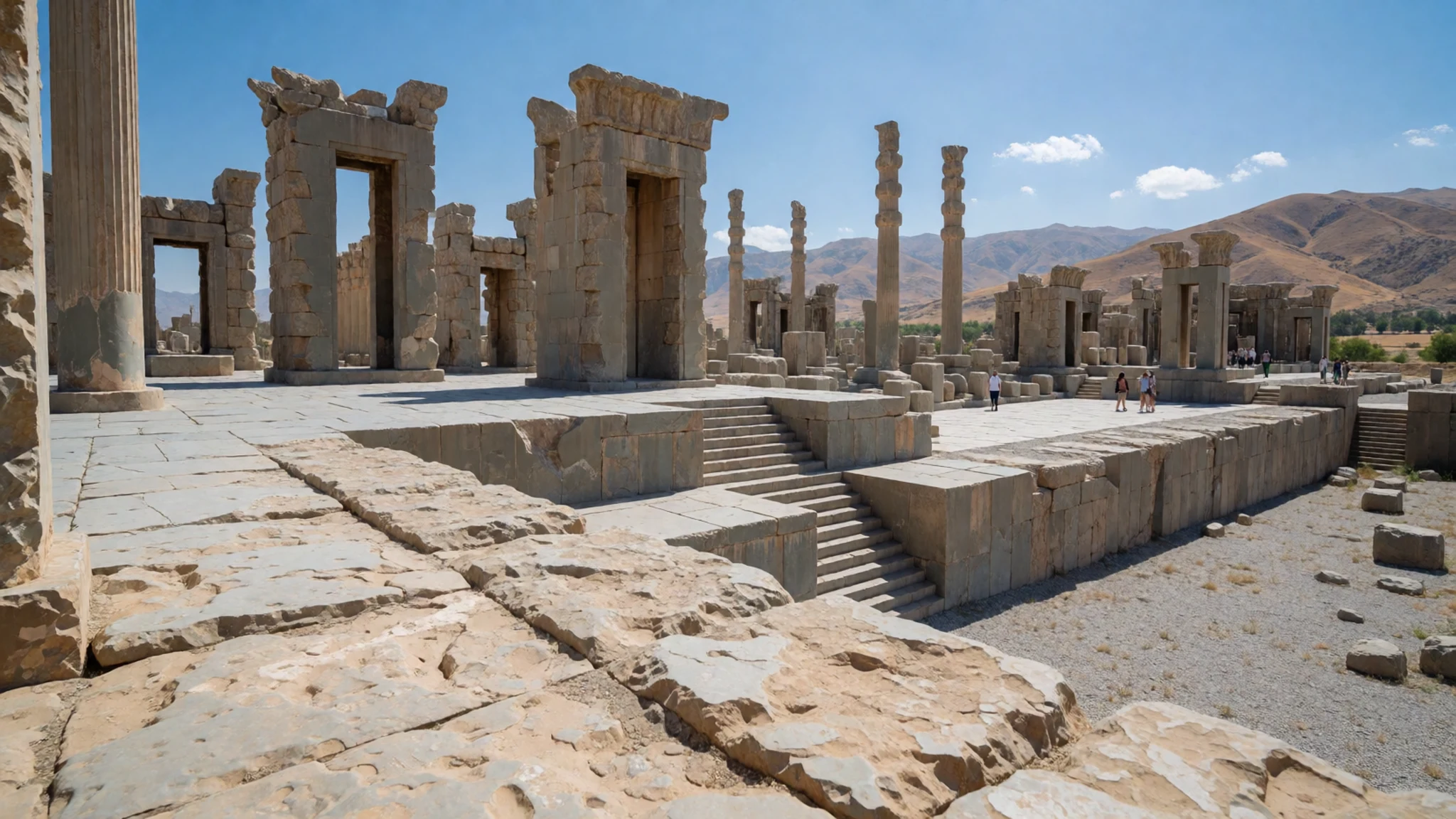
Culture
Naqsh-e Rustam is a royal burial site, and visitors treat it with the quiet respect that tombs deserve. The Achaemenid tombs sit high on the cliff, but the Sasanian reliefs are low enough that the urge to touch the carvings is strong. Iranian visitors are often curious and friendly, and families sometimes stop to ask where you are from, which is a good moment to answer warmly. Photographing the monuments is generally straightforward, but ask before photographing people, especially women and families, since many are more private than their friendliness suggests. Modest dress matters across Fars, and the tea houses near the site are social places where a polite greeting goes a long way. Do not climb on the carved panels or touch the reliefs, and always ask before you photograph anyone up close.
What to wear
Traditional dress in Fars is best understood through its textiles rather than one fixed costume. Women in the countryside have long worn patterned headcloths and loose, layered garments, and the region is known for woven wool rugs and kilims, often in plant-dyed colours. Many of these pieces are sold in Shiraz bazaars rather than worn every day. Today most people in and around Shiraz dress much as they do in other Iranian cities, in jeans, shirts, coats and trainers. Women usually wear a loose scarf, called a rusari, with a long, loose top or coat, and men wear long trousers and shirts. For a visit, pack clothes that cover shoulders, upper arms and knees, and carry a light scarf that you can use to cover your hair at religious sites and in tea houses. The ground at Naqsh-e Rustam is stony and uneven, so bring sturdy closed shoes with good grip. Spring and autumn can still bring a cold wind across the open plain, so take a warm layer for the early mornings and evenings.
What to eat
- Faloodeh shirazi — Ice cream shops and any chai khaneh (tea house) in Shiraz
A rose-water sorbet with thin pieces of cooked rice noodle, served with a wedge of lemon. The flavour is subtle and slightly sweet, with a hint of rose petal, and the lemon adds a sharp lift. It is a cooling way to finish a meal on a hot afternoon.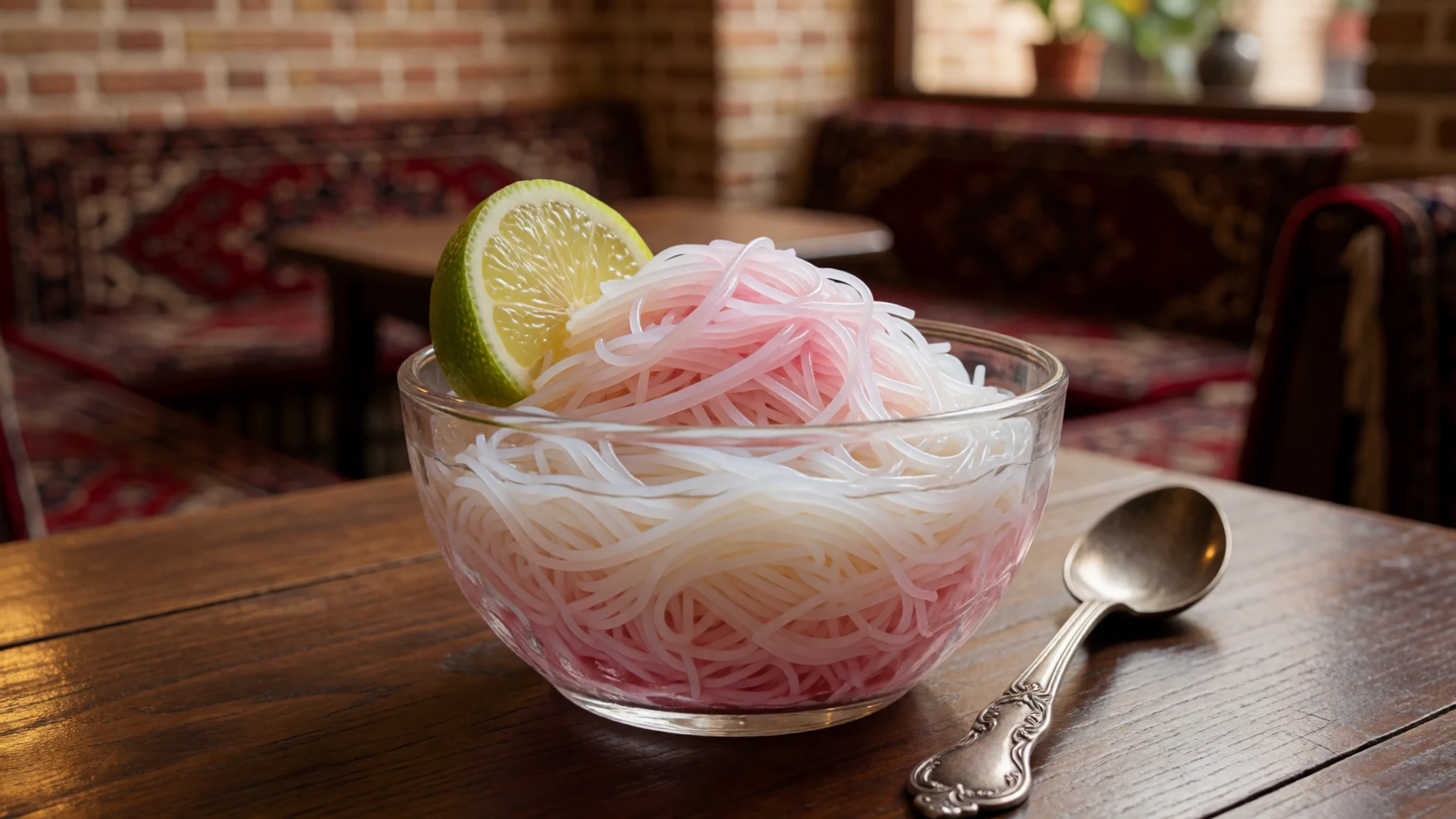
- Chai — Any chai khaneh (tea house), in Shiraz or on the road back from the site
Persian tea, served hot in small glasses, usually with sugar cubes on the side. Sit for a while over a glass in a tea house, where staff will bring it without being asked. It is one of the cheapest ways to rest in the shade after a morning on the rock.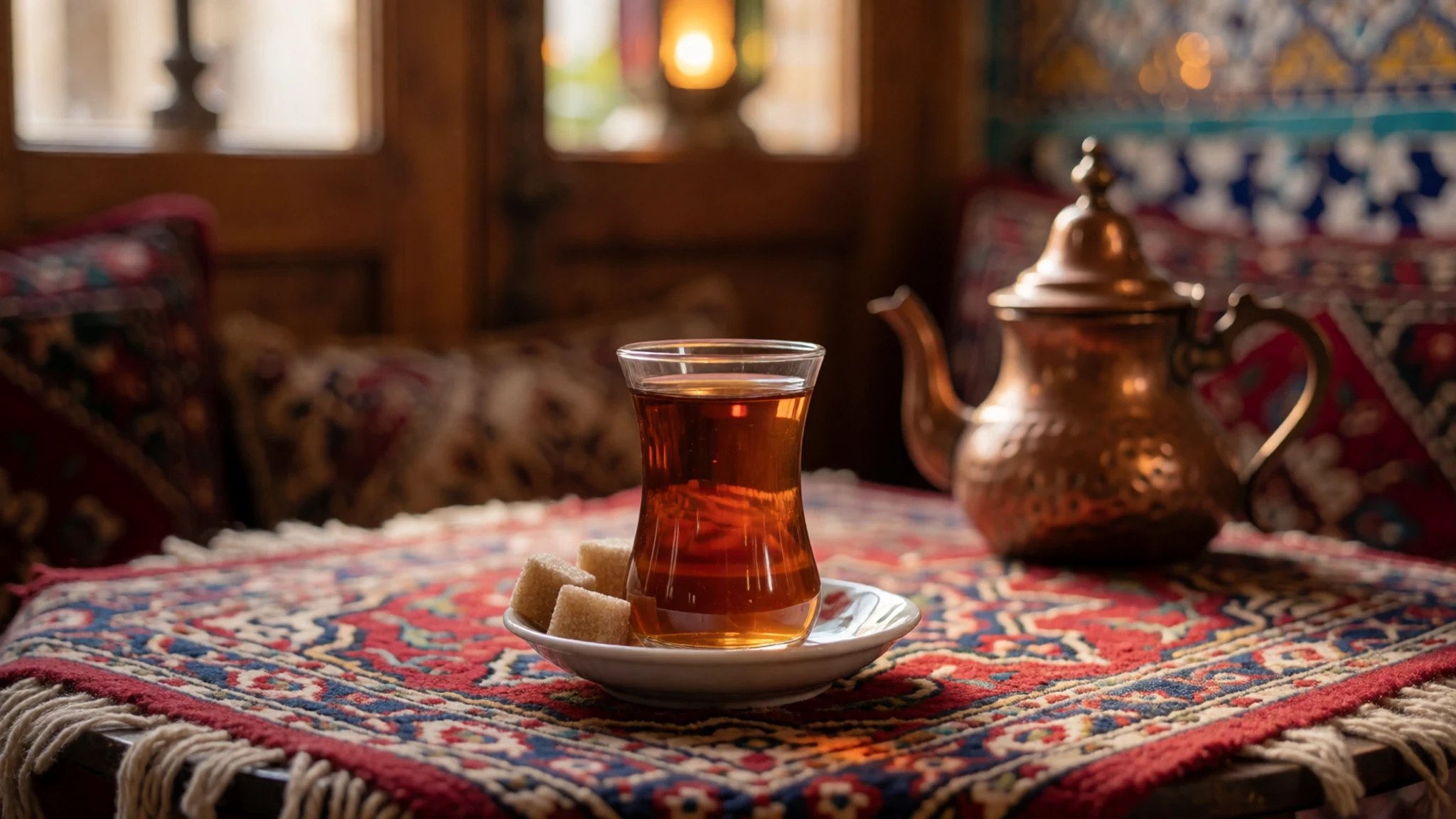
- Chelow kebab — A kebab house in Shiraz
Long-grain rice, often flecked with saffron, served with grilled lamb or chicken kebab. Grilled tomato and raw onion usually come alongside. It makes a filling lunch after a morning among the tombs.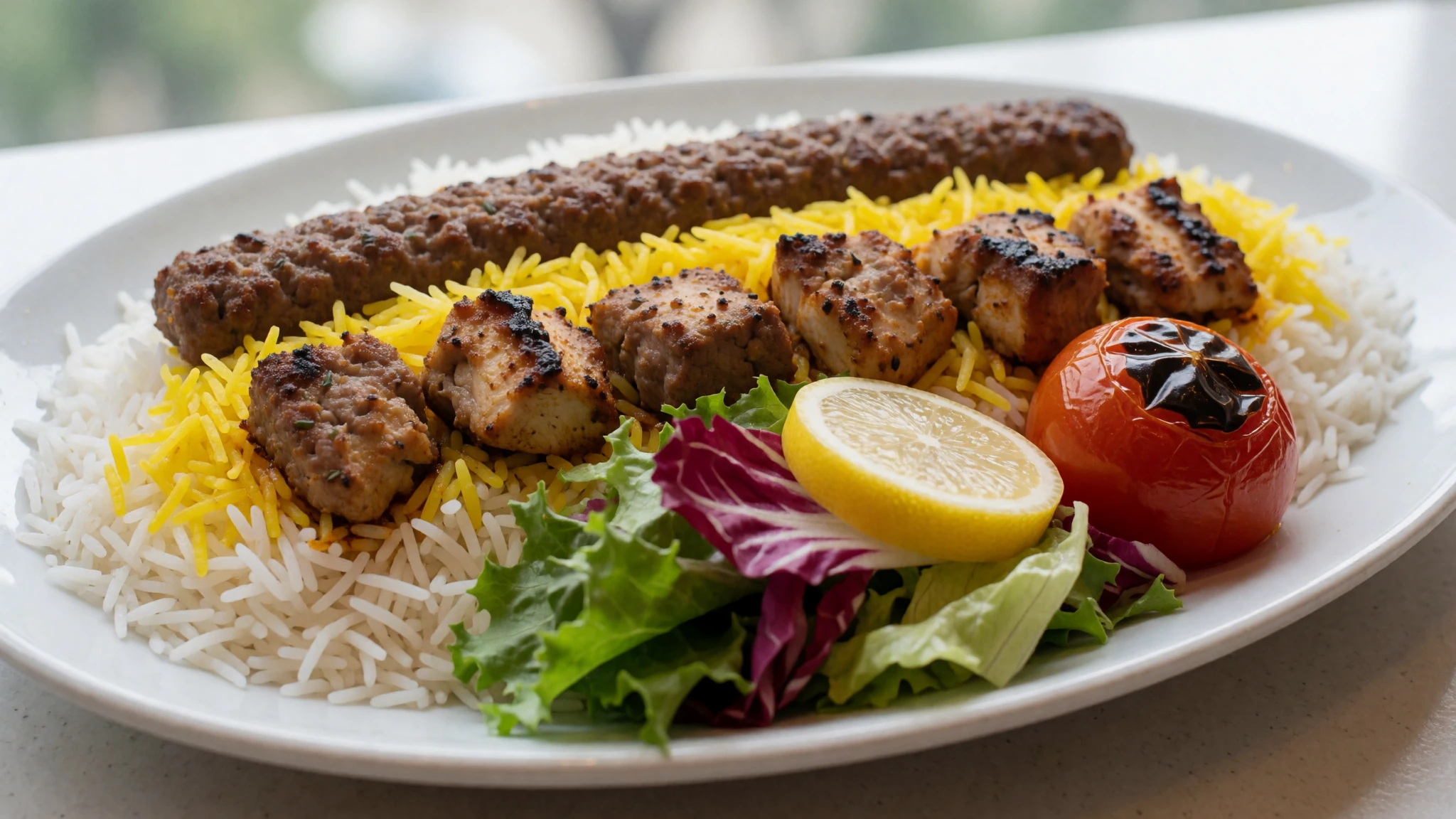
- Dugh — A roadside eatery or kebab house with shaded tables
A chilled, salty yogurt drink, often with dried mint, that cuts through the heat and the dust. Order it with kebab, as it balances the richness of the meat. It is widely served in simple restaurants. - Sangak bread — A neighbourhood bakery (nanvai) in Shiraz, early in the morning
A long, crisp flatbread baked on hot pebbles and sold warm. Tear it and eat it with cheese and fresh herbs, which makes a simple picnic in the shade. The bread is at its best in the morning, when the bakeries are busiest.
Plan it
Best time. Spring and autumn are the most comfortable seasons for an open-air site like this. Summer afternoons are hot, and the rock gives little shade, so plan midday hours for indoor stops or a tea house break.
How long. 2–3
Getting there. Fly into Shiraz International Airport, which handles domestic flights from Tehran, Isfahan and other cities, and some international routes including Dubai. Shiraz is also linked by road on the freeways from Isfahan and other cities, and by rail to Tehran and Isfahan. The last leg is by taxi or hired car from Shiraz, as Persepolis lies about 50 km northeast of the city and the necropolis is a short drive northwest of it.
Budget. low
Tips
- Visit in the morning or late afternoon, when the light falls on the carved facades and the heat is lower
- Combine the site with Persepolis in one day by hiring a driver from Shiraz, leaving early
- Drink bottled water, as the tap water in Fars is drinkable but very chalky
- Carry some cash for tea houses, kebab houses and small purchases
- Wear a hat and bring more water than you think you need, since there is little shade on the open ground
Etiquette
- Keep to the paths and keep off the carved panels
- Ask before photographing people, especially women
- Dress modestly, covering shoulders and knees, and carry a scarf for religious spaces
Nearby
Sources
- Wikidata Q648705 (CC0)
- Wikipedia: Naqsh-e Rostam (rev 1376057269) (CC BY-SA 4.0)
- Wikivoyage: Fars (rev 5315826) (CC BY-SA 4.0)
- Necropolis of Kings, Naqsh-e Rostam (Stefan Krasowski) (CC BY 2.5)
- Naqsh-e Rustam necropolis in Iran (Maasaak) (CC BY-SA 4.0)
- Naghsh-e Rostam, Iran, 2016 (Diego Delso, DD 20-24) (CC BY-SA 4.0)
- Xerxes tomb at Naqsh-e Rostam, upper register (dynamosquito) (CC BY-SA 2.0)
- Tomb of Darius I DNa inscription (Diego Delso) (CC BY-SA 4.0)
- Xerxes all ethnicities (A.Davey) (CC BY 2.5)
- Naghsh-e rostam, Iran, 2016 DD 14 (Diego Delso) (CC BY-SA 4.0)
- Irnp105 Grobowce Naqsh-e Rustam (Wojciech Kocot) (CC BY-SA 4.0)


