Napier, New Zealand
Napier, New Zealand, New Zealand
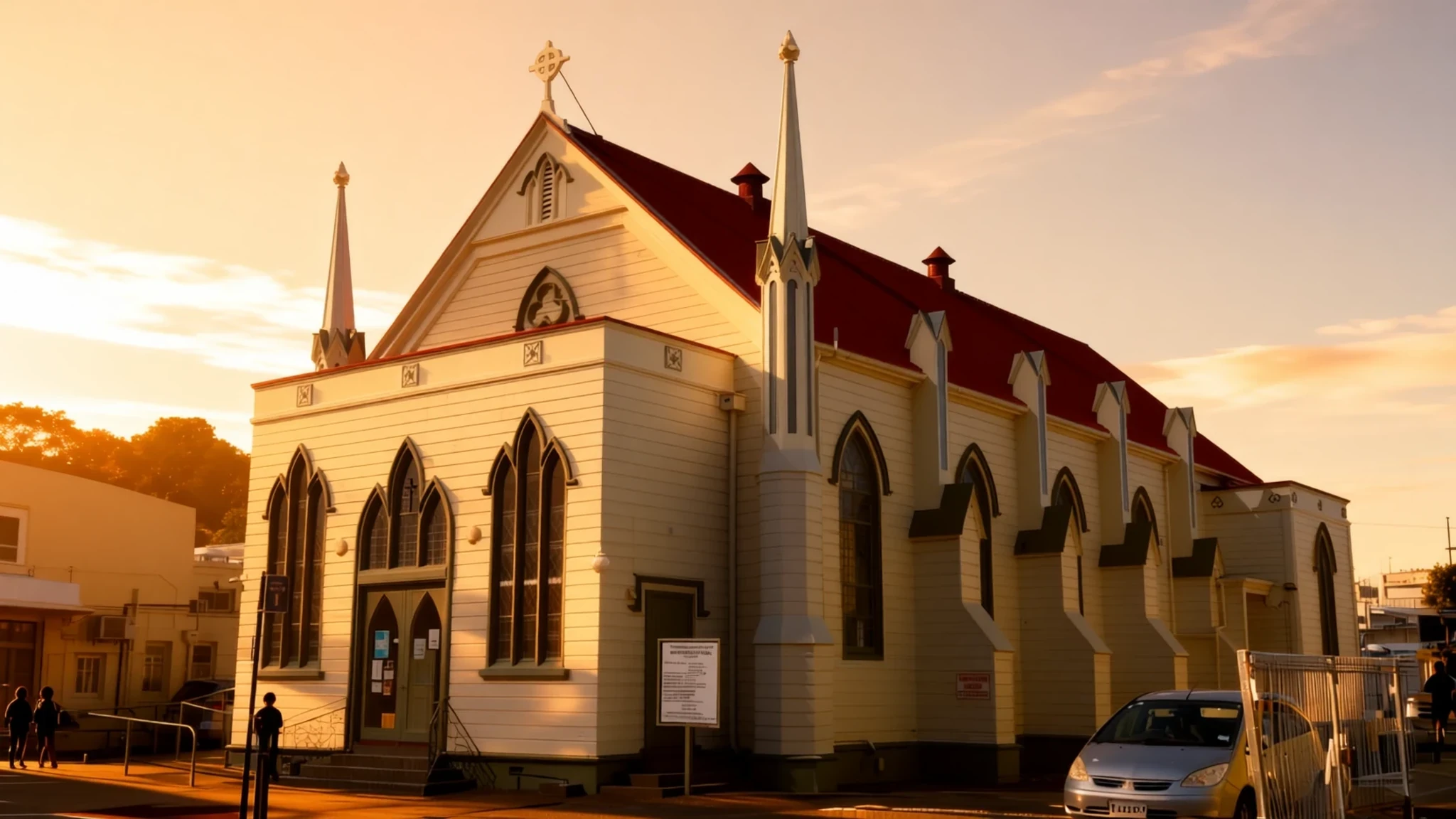
Napier draws visitors with its striking Art Deco architecture, sunny coastal esplanade, and proximity to the vineyards of Hawke's Bay.
The place
Napier sits gracefully on the eastern coast of New Zealand's North Island, within the Hawke's Bay region. Functioning as both a laid-back beachside destination and an active seaport, the city is defined by its bright coastal climate and a palm-fringed waterfront promenade lined with Norfolk pines. Visitors often note its distinctive visual character, shaped heavily by the architectural rebuilding that followed a major twentieth-century earthquake. As the urban hub of the local area, it shares a close geographical and economic relationship with its twin city just down the road, acting as an essential conduit for agricultural and forestry exports from the surrounding rural districts. The ocean air blends with the steady hum of maritime commerce at the port, while the inland horizon gives way to rolling hills packed with orchards and vineyards. Life here moves to a distinctly unhurried pace compared to the country's larger metropolitan centres, encouraging travellers to slow down, wander the orderly streets on foot, and enjoy the open views across the Pacific horizon.
Its story
Long before European vessels reached these shores, the coastal wetlands and lagoons of the district were home to numerous Māori communities. The area fell under the stewardship of Ngāti Kahungunu, one of the country's prominent iwi, who established fishing settlements and managed the complex waterways. Traditional accounts credit early leaders with engineering channels through the shifting sands to protect local food supplies and maintain access to the sea. The first recorded European sighting of the future settlement came from British explorers mapping the eastern coast, who noted the narrow sand barriers enclosing large bodies of salt water. By the early nineteenth century, itinerant traders, whalers, and missionaries began establishing permanent contacts with local chiefs. The geography of the district underwent a dramatic permanent transformation when a catastrophic earthquake struck the region, uplifting vast stretches of seabed and creating thousands of acres of new land where salt marshes and lagoons once sat. Seizing upon this sudden spatial reset, local civic leaders initiated a rapid rebuilding campaign, constructing an entire commercial core in the architectural styles popular during the interwar period, which has since become the defining heritage of the city.
What to see
- Art Deco Guided Tour — Central Napier
Join a structured walking excursion led by knowledgeable local guides to examine the fine details of the pastel facades, geometric mouldings, and decorative motifs that define the central district, or pick up a map from the information centre to explore independently.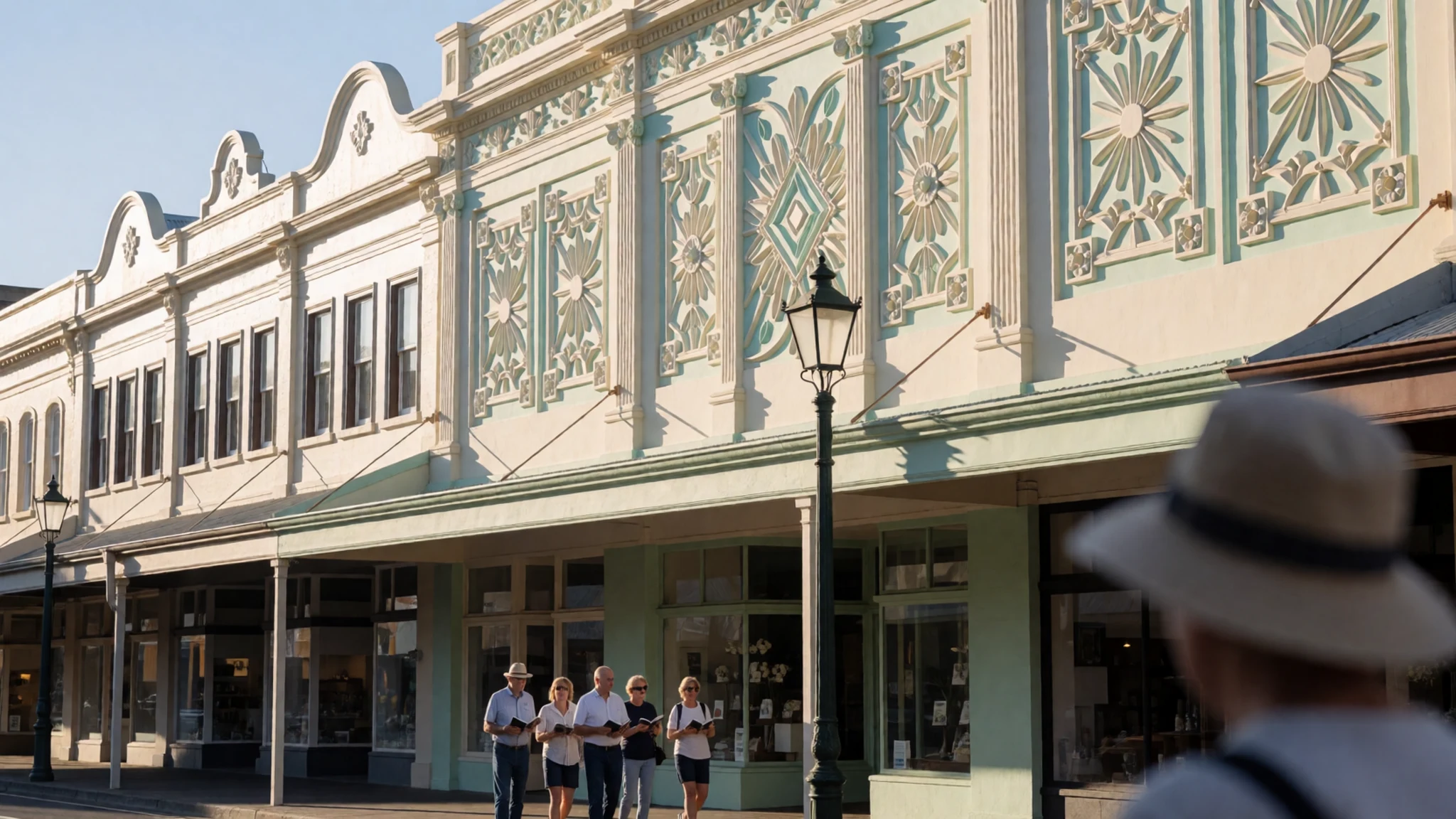
- Pania of the Reef — Marine Parade
Pause beside the municipal fountain to view this celebrated bronze sculpture depicting a figure from local indigenous mythology. The artwork has long served as a quiet emblem of the community, accompanied by a public water feature that lights up after dark.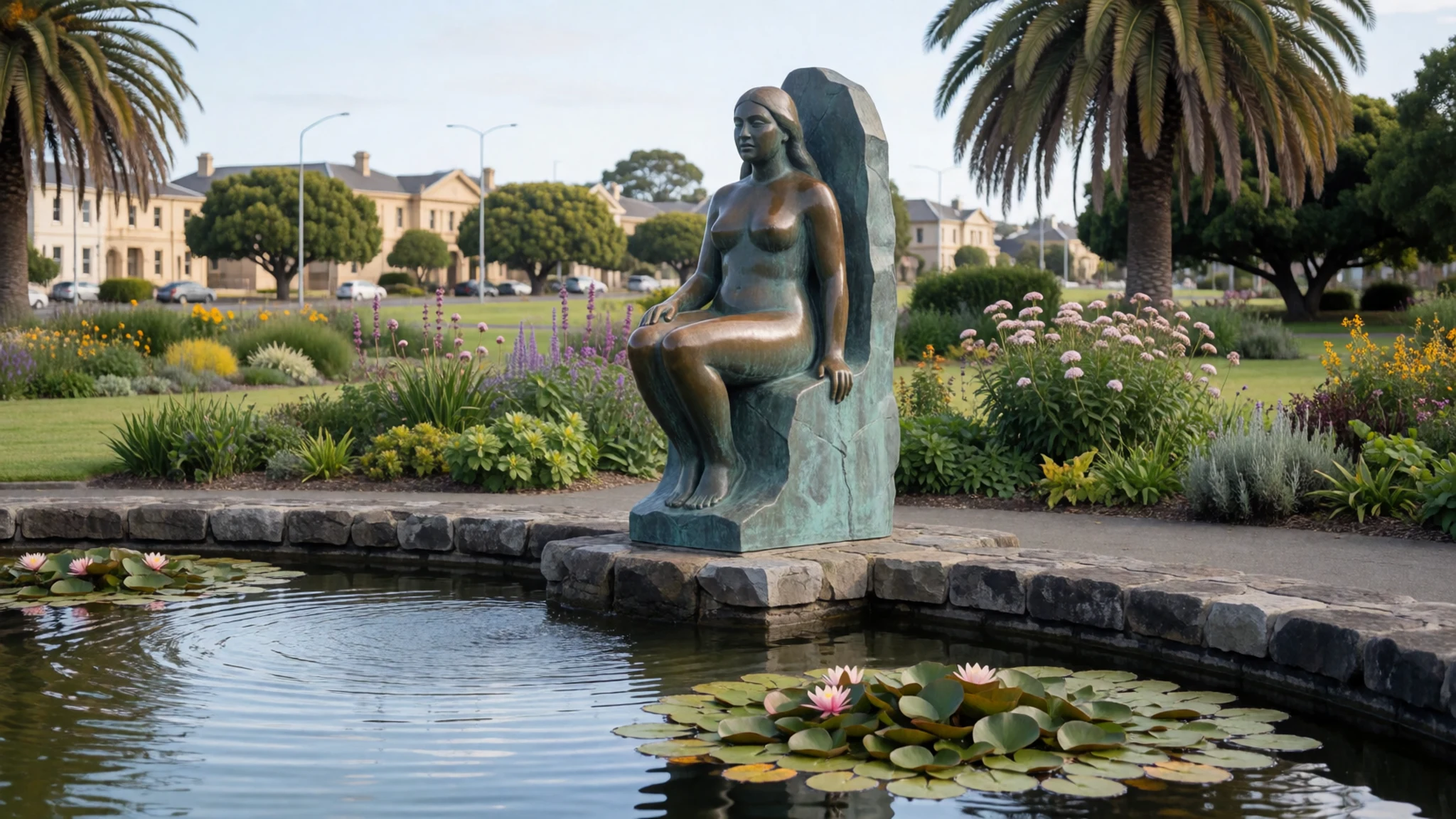
- Faraday Museum of Technology — Centennial Crescent area
Step inside a converted industrial powerhouse to examine preserved machinery, vintage household appliances, and heavy electrical generators that chronicle the practical evolution of domestic and commercial engineering through the past eras.
- National Aquarium of New Zealand — Southern Marine Parade
Walk along an acrylic tunnel that curves underneath a massive saltwater tank, offering close-up views of sharks, stingrays, and native marine life alongside exhibits dedicated to coastal conservation and indigenous freshwater species.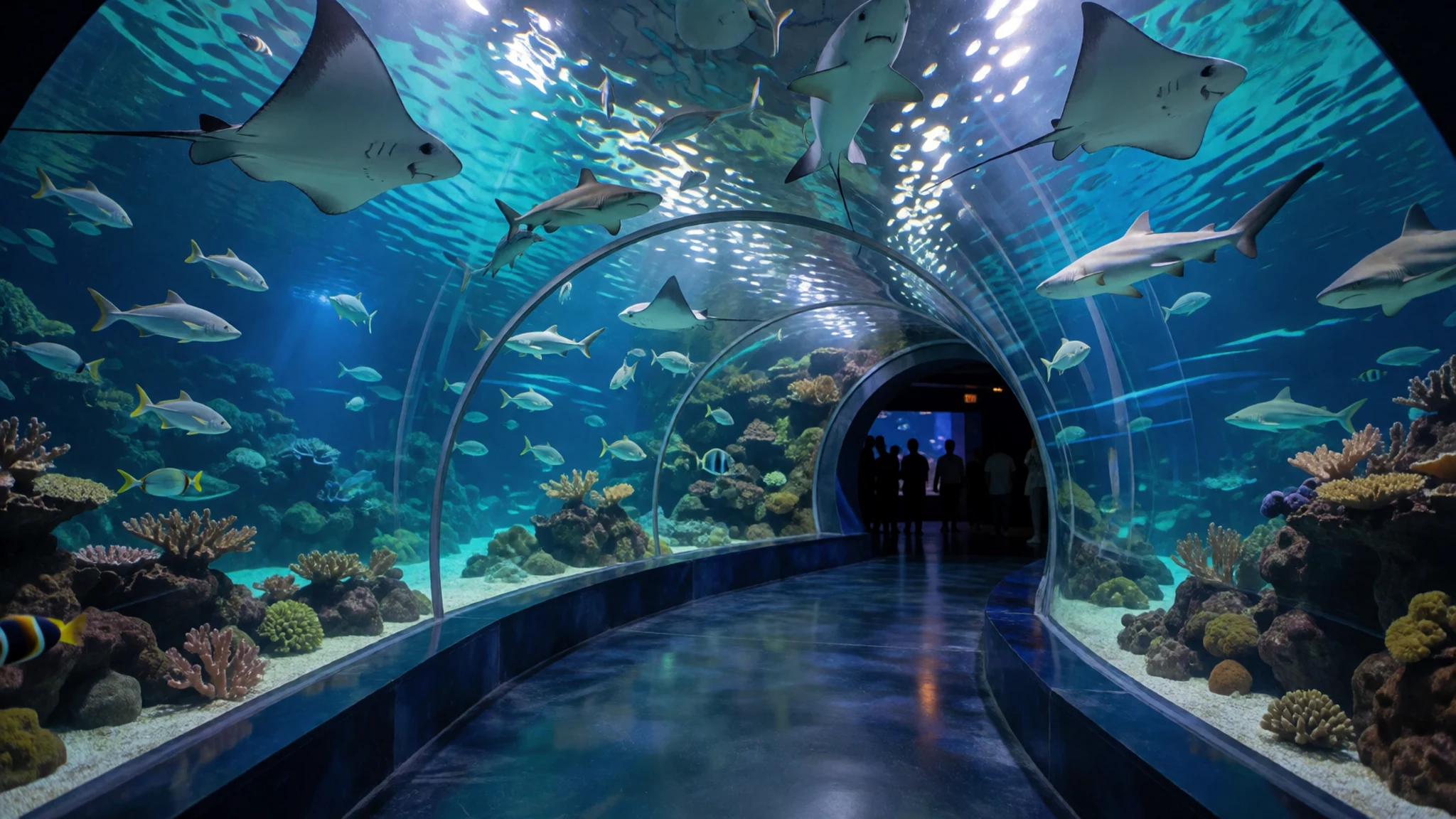
- The Soundshell — Marine Parade
Admire this curved outdoor performance stage featuring an iconic shell-like architectural roof structure, built during the post-earthquake reconstruction era to host public gatherings, concerts, and community celebrations along the open foreshore.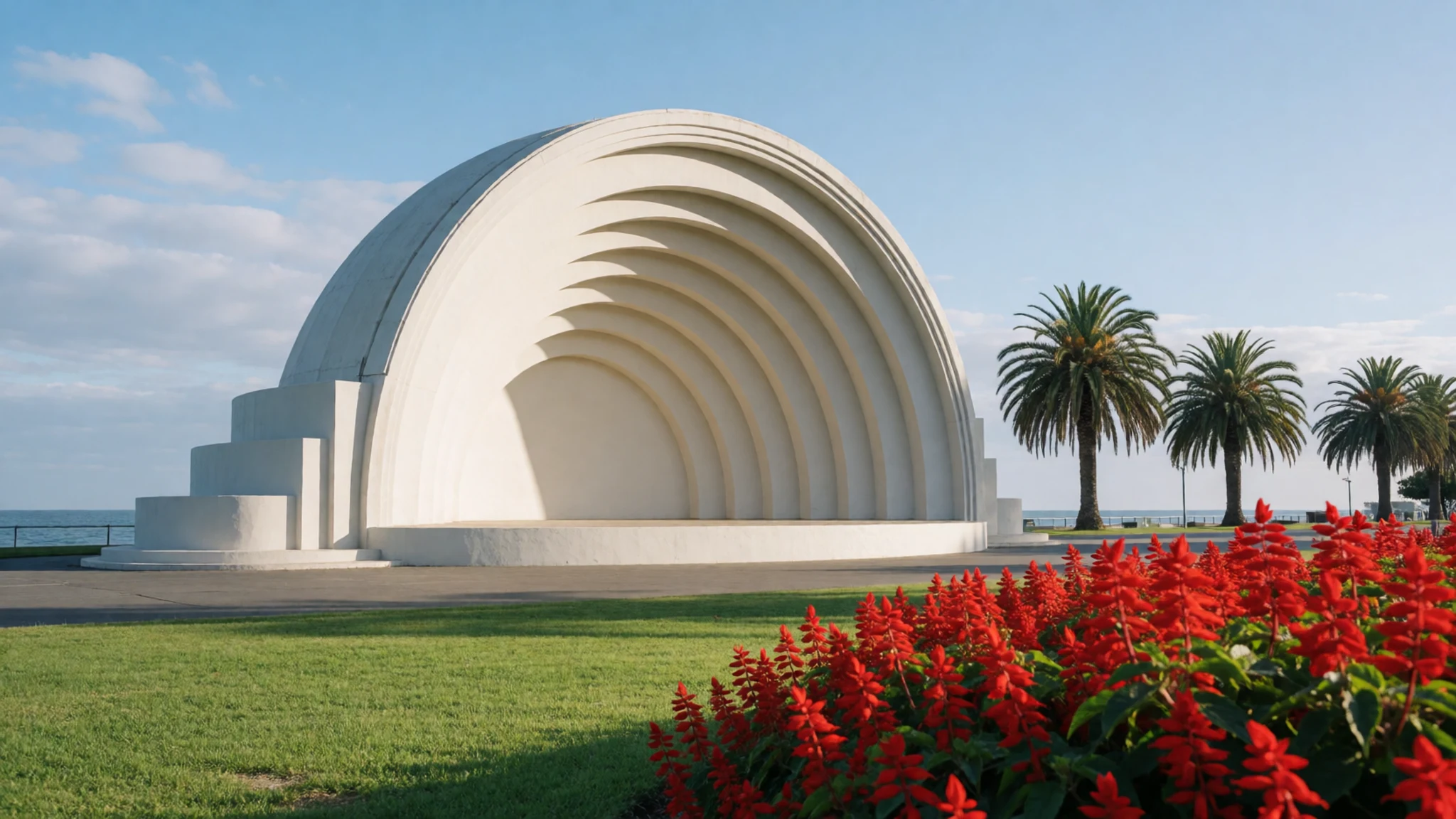
Culture
The identity of Napier is deeply intertwined with its coastal geography, indigenous heritage, and agricultural bounty. As part of the traditional territory of Ngāti Kahungunu, local cultural life honours long-standing tribal connections to the land and sea, while the annual calendar swells with festivals celebrating the interwar architectural heritage. Beyond the built environment, the surrounding district serves as a major agricultural engine, producing vast quantities of pip fruit, stone fruit, and wine grapes that supply both domestic markets and international trade partners via the local export port. Visitors interacting with community spaces will find a welcoming, relaxed atmosphere grounded in outdoor recreation and regional hospitality. When visiting marae or participating in formal indigenous cultural gatherings, always follow local protocol and wait for a formal welcome before entering meeting houses.
What to wear
Everyday attire in Napier is casual and practical, reflecting the sunny coastal climate and outdoor lifestyle. Locals typically wear lightweight shirts, denim, shorts, and comfortable walking shoes for navigating the flat downtown grid and waterfront paths. During the warm months, sun protection essentials such as hats and sunglasses are standard daily wear. For special events, particularly the annual heritage celebrations, residents and visitors often embrace vintage 1930s fashion, donning fedoras, pleated skirts, linen suits, and period accessories to match the city's architectural backdrop. When dining out in the evening or visiting upscale winery restaurants in the wider region, smart-casual dress is customary, while travellers exploring coastal tracks should pack a light windproof layer against breezes coming off the Pacific.
What to eat
- Local Orchard Fruit — Hawke's Bay orchards and local markets
Sample fresh apples, pears, and stone fruit harvested directly from the fertile orchards covering the surrounding plains, easily found at roadside stalls and town markets. - Regional Hawke's Bay Wine — Winery cellar doors across the region
Taste estate-bottled wines produced by the numerous vineyards dotting the hinterland, renowned particularly for robust reds and crisp whites. - Pub Fare and Live Music — Ahuriri historic port district
Enjoy hearty comfort dishes and casual meals at historic neighborhood taverns that have served as local social hubs for decades. - Artisan Bakery Pastries — Emerson Street and downtown cafes
Savour freshly baked goods, savoury pies, and continental treats from independent cafes dotted along the main commercial avenues. - Coastal Seafood — Port Ahuriri eateries
Try fresh catches from local waters, including classic fish and chips enjoyed overlooking the Pacific shoreline.
Plan it
Best time. Summer and early autumn offer the warmest weather and vibrant vineyard harvests.
How long. 2–3
Getting there. Accessible via State Highway 2 and State Highway 5, with regular intercity bus connections linking major North Island towns.
Budget. mid
Tips
- Wear comfortable footwear to explore the flat Art Deco streetscape on foot.
- Book heritage tours in advance during peak festival periods.
- Carry sun protection as the coastal UV levels can be high.
- Allow extra travel time if driving across the inland mountain passes.
Etiquette
- Respect local Māori heritage sites and follow guidance on marae grounds.
- Queue politely in shops and cafes.
Nearby
Sources
- Wikidata Q203380 (CC0)
- Wikipedia (rev 1382507862) (CC BY-SA 4.0)
- Wikivoyage (rev 5412273) (CC BY-SA 4.0)