Naoshima
Naoshima, Japan
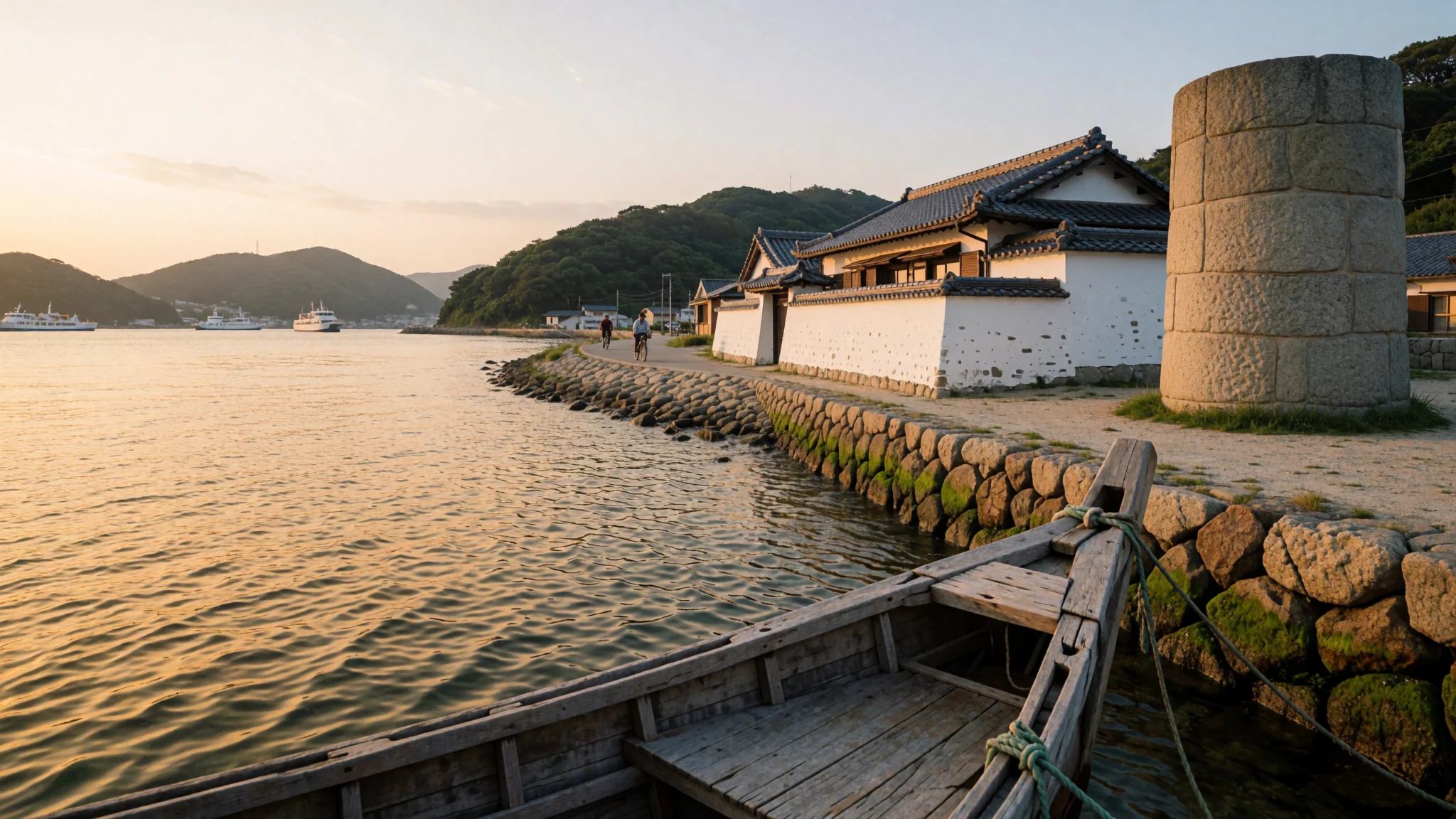
Go for contemporary art set into a quiet island in the Seto Inland Sea, where museums, beaches and slow cycling make a relaxed day or two.
The place
Naoshima sits in the Seto Inland Sea, part of Kagawa Prefecture, and is close enough to Honshu that the crossing is a short ferry ride. The town administers the main island and several smaller islands nearby, and the population is around three thousand, so daily life moves at a village pace. What has changed the island's profile is art. Over recent decades it has filled with museums, outdoor sculpture and converted houses, drawing visitors who would never otherwise find a fishing port on the Inland Sea.
The landscape is the first thing to notice. Roads wind over low hills, the coast is broken by small beaches, and from many points you can watch ferries crossing the water. Walking or cycling is the sensible way to get around, because the distances are short but the slopes are not flat. Most of the main art sites lie in the south and west of the island, while the older settlements sit along the north coast.
Industry has always mattered here too. A large refinery run by Mitsubishi Materials still shapes the island's economy, and it sits alongside tourism rather than hiding behind it. Visitors notice the industrial edge at the port and along the shore, which gives the island a working character that the galleries do not erase.
Facilities are modest. Many small eateries keep irregular hours and serve Japanese food only, and accommodation ranges from guesthouses and traditional lodges to the art hotel. The island rewards a slow pace: a couple of museums, a long lunch, and time on the sand in the afternoon.
Its story
Naoshima's story begins with small fishing settlements, long before the island became known for art. The first community grew at Tsumuura, a fishing port on the southeastern tip that is now much smaller than it once was. The island's most prominent village, Honmura, developed later around a base set up as a castle town in medieval times, and its streets still show the shape of that older settlement. Industry arrived in the early twentieth century, when Mitsubishi Materials began refining metal here. That refinery has shaped the island's economy ever since, a reminder that Naoshima has always had a working side alongside its visitors.
The town was formally established in 1954. Before the art era, life revolved around fishing and the refinery's shifts. The change came from the late 1980s, when Benesse, an education company based in Okayama, began directing the creation and running of museums and projects on the island. Its first museum, Benesse House, also took guests overnight, and it set the pattern for what followed: new buildings by the architect Tadao Ando, set into hillsides and beside the sea.
The Art House Project followed in 1998, when Tatsuo Miyajima's Kadoya turned a vacant house into an artwork. Other empty houses in the village were converted in the same way, keeping traces of the families who had once lived in them. The aim was to bring the village back to life without erasing its history.
Today the island balances two identities. Tourism brings visitors and money into small eateries and guesthouses, while the refinery still defines much of the island's industry. Those who come for the museums find the island works best when they also walk the village lanes and the shoreline.
What to see
- Chichu Art Museum — Central hill, south of the ferry port
Designed by Tadao Ando and built largely underground, the Chichu Art Museum blends art and architecture, with its spaces arranged to take advantage of the view from one of the island's higher points. Inside you will find a small number of works, including paintings by Claude Monet and site-specific installations by James Turrell and Walter De Maria. Check the official site for tickets and opening days before you go.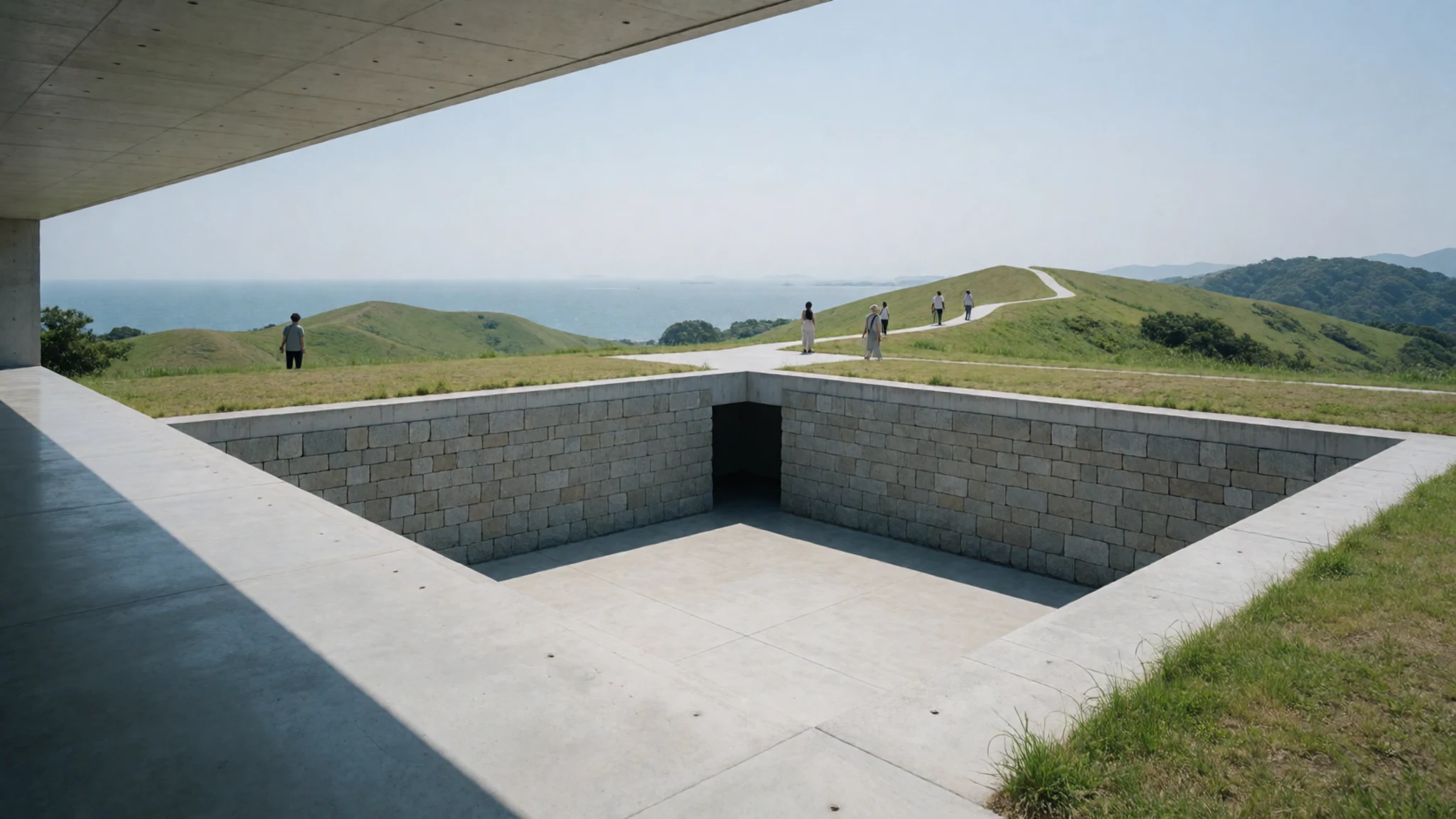
- Benesse House Museum — Southern shore, by the sea
The island's first contemporary art museum, Benesse House also works as a hotel, so you can stay the night among the works. The collection includes pieces by Andy Warhol, Richard Long and Bruce Nauman, displayed in a setting that joins nature, art and architecture. The beach nearby is a pleasant place to finish the afternoon.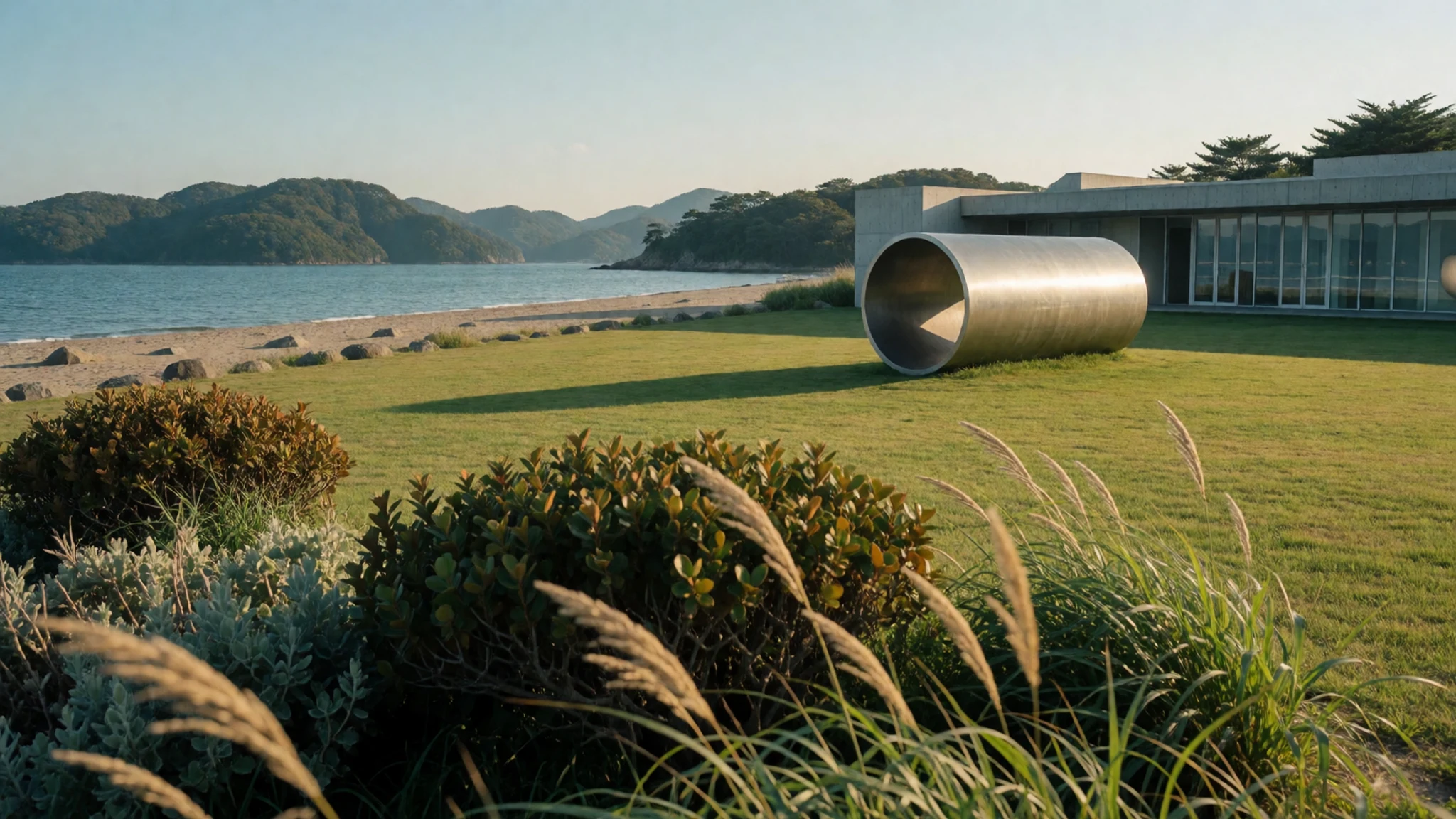
- Lee Ufan Museum — Southern part of the island
Also designed by Tadao Ando, this museum is devoted entirely to the work of the artist Lee Ufan. Its spare concrete rooms give each piece space to hold the eye, and the restraint of the building suits the calm of the work. It is a good stop between the larger museums, since it takes less time than the others.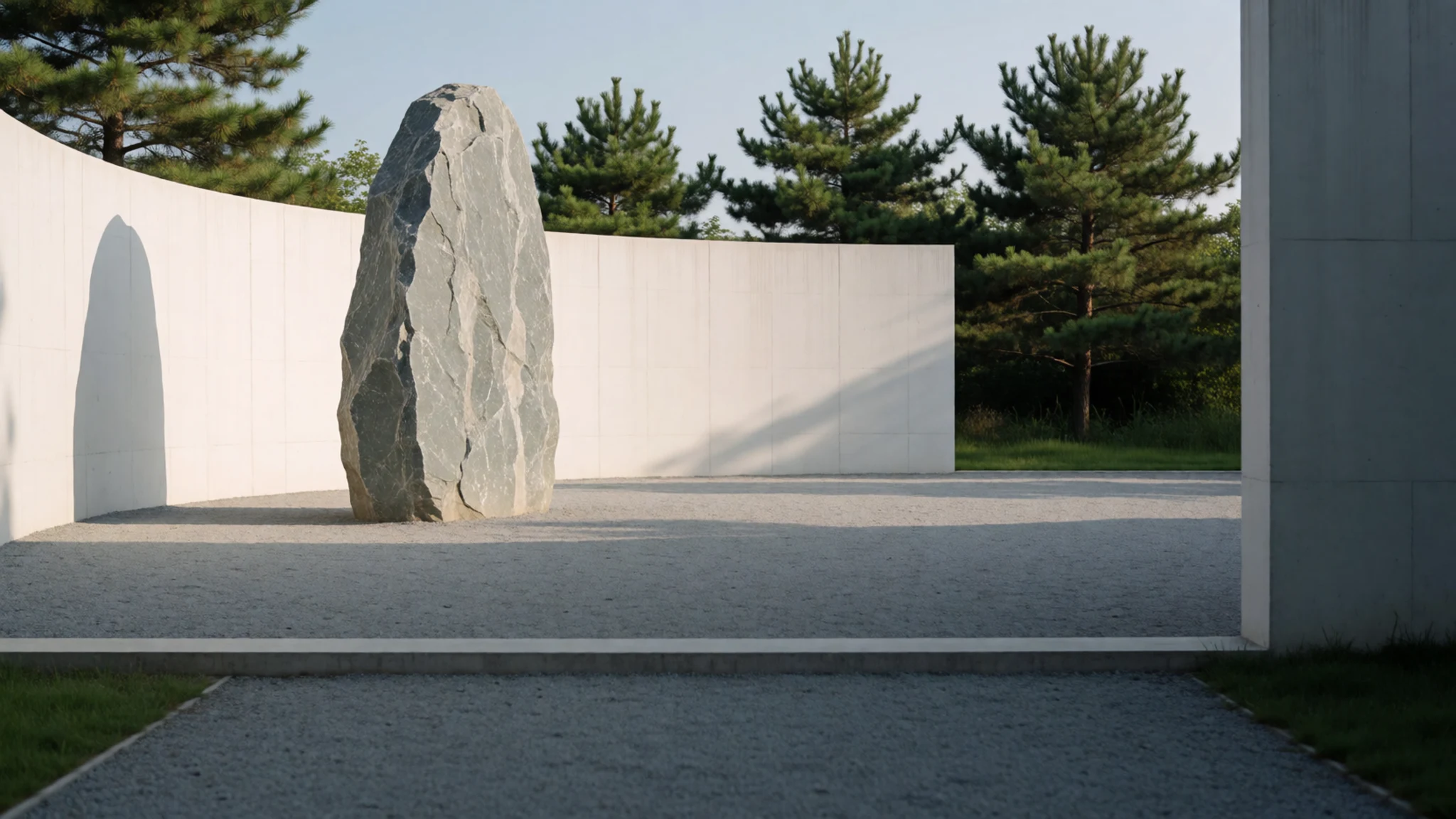
- Minamidera — Village area, north-west coast
This is James Turrell's Backside of the Moon, housed in a Tadao Ando building. You walk into complete darkness and wait while your eyes adjust, then the lights come up very slowly. The experience depends on patience, so do not rush through it or step out too early.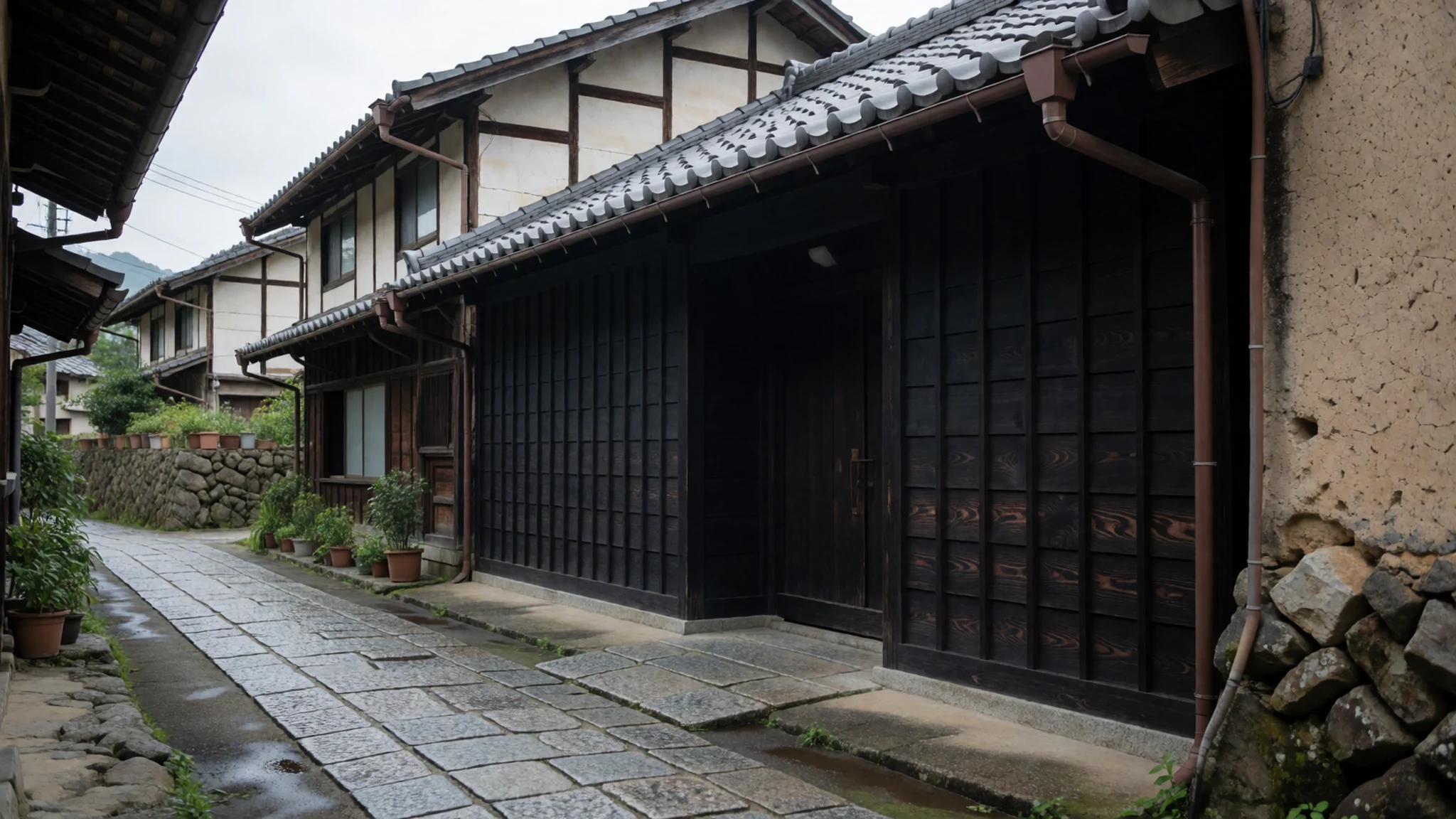
- Go'o Shrine — Village area, by the shoreline
Hiroshi Sugimoto's Appropriate Proportion sits inside this small shrine, and it is one of the island's quietly striking pieces. Reach it by the narrow path on the right, which follows the shoreline. Visit in the morning or late afternoon, when the light on the water is at its best and fewer visitors are around.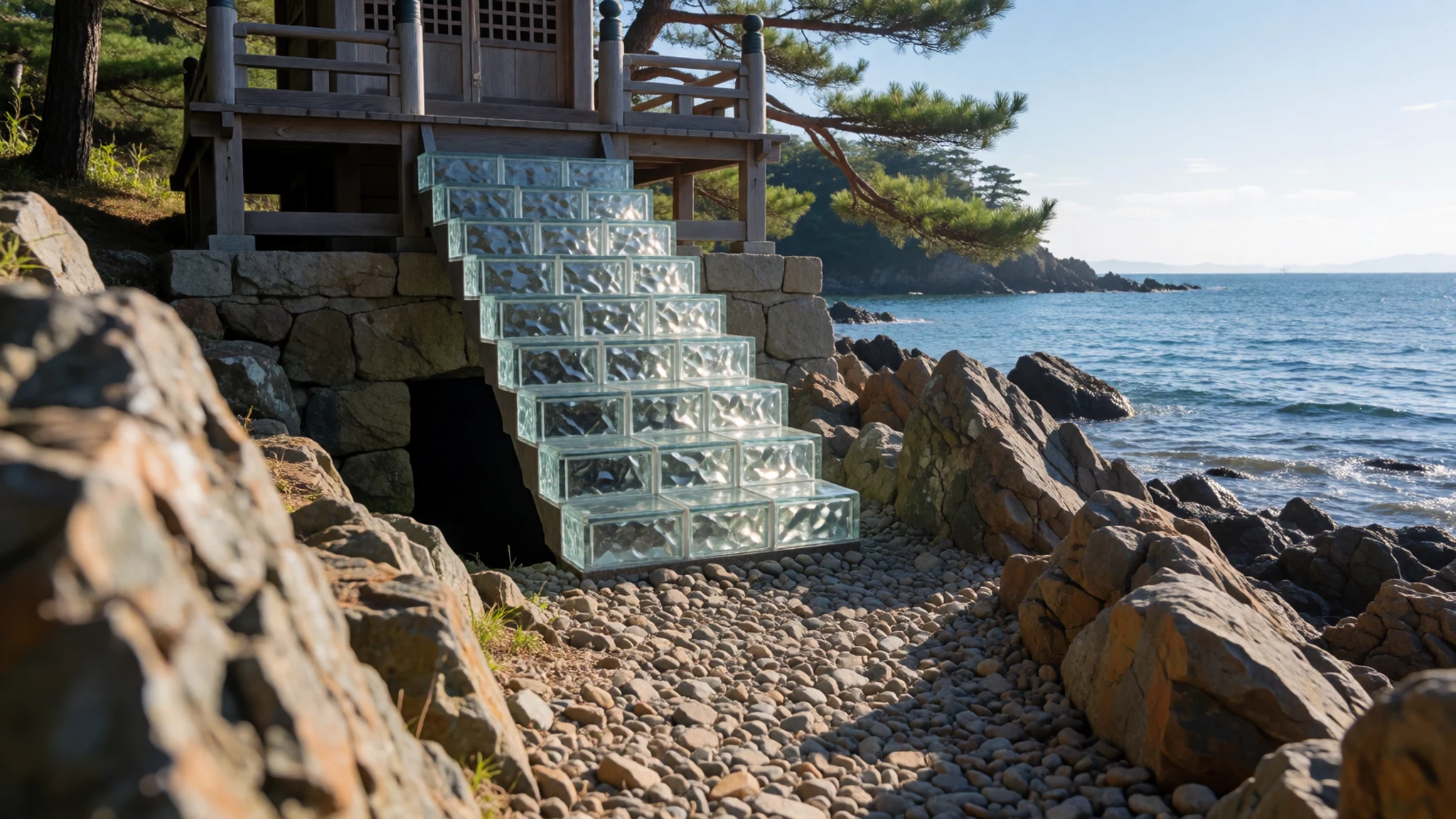
- Kadoya, Art House Project — Village lanes
Tatsuo Miyajima's Sea of Time '98 fills this converted house with LED numbers counting up and down, a shifting sea of figures. It was the first house in the Art House Project, which began in 1998 and turned several vacant village houses into artworks. Look at the building as a home as well as a piece of art.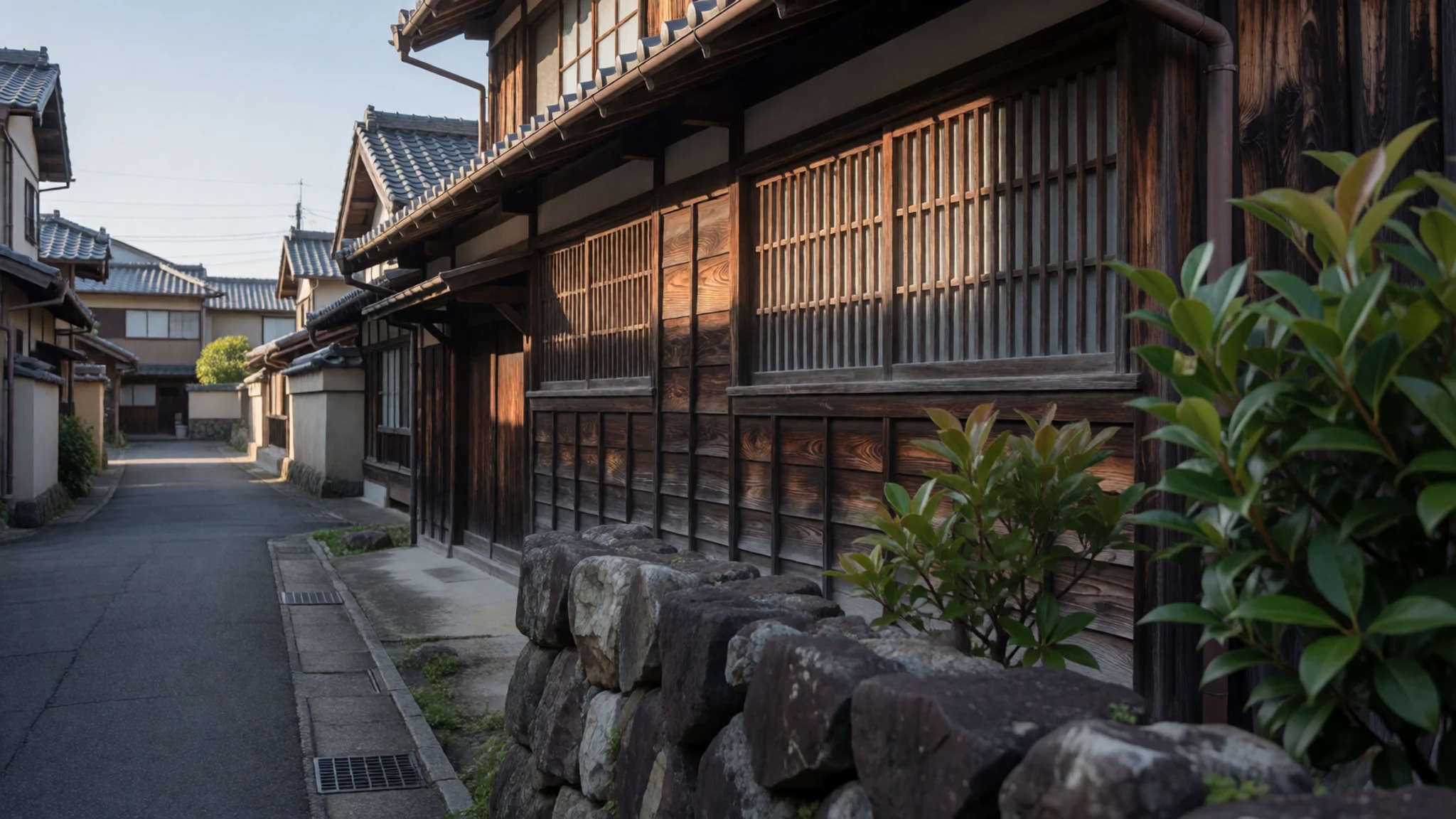
Culture
Naoshima is a working island of around three thousand residents, and the art sits among ordinary houses, fishing boats and a large refinery. Local people go about daily life around the museums, so the visitor's job is to be unobtrusive. Benesse House and the Chichu Art Museum have their own rules on photography and entry, so read the signs at each door before you take a picture. Many of the galleries are quiet, partly because the buildings are designed to slow you down: footsteps and whispers carry in concrete rooms. Dress is relaxed, but lightweight layers help, since museum interiors can feel cool even on a hot day. Eating in the island's small eateries is part of the visit, but many have irregular hours and limited English, so be patient and friendly with staff. The Art House Project houses are private homes first, so look through their windows only where a sign invites you to, and keep out of their gardens.
What to wear
Naoshima has no dress code of its own, but its traditional clothing follows mainland Japan. Kimono, the formal garment of silk layered and tied with a sash, is worn for ceremonies and special occasions. The yukata, a lighter cotton robe, is the summer version and appears at festivals and in hot-weather evenings. Indigo-dyed cotton and silk are the classic textiles, and you may see them in workshops and craft shops across Kagawa. Day to day, islanders wear ordinary Japanese clothes: trousers, shirts, and practical layers for the sea wind. A visitor should dress for walking and cycling, with comfortable shoes that are easy to take off, since you may need to remove them at some buildings. Light, breathable clothing suits the summer heat and humidity, while a jacket or jumper helps in the cooler months. Modest dress is wise at the shrine, and a sun hat and water bottle will serve you well on the hills.
What to eat
- Udon noodles — The café inside the ferry terminal
Standard udon in a broth, served with a tempura or egg topping, is the easiest meal to find on the island. Café Ougiya, inside the ferry terminal, serves udon alongside curry rice in a railway-style room. It is a practical stop before or after the crossing, and the simple menu suits a short break between sights.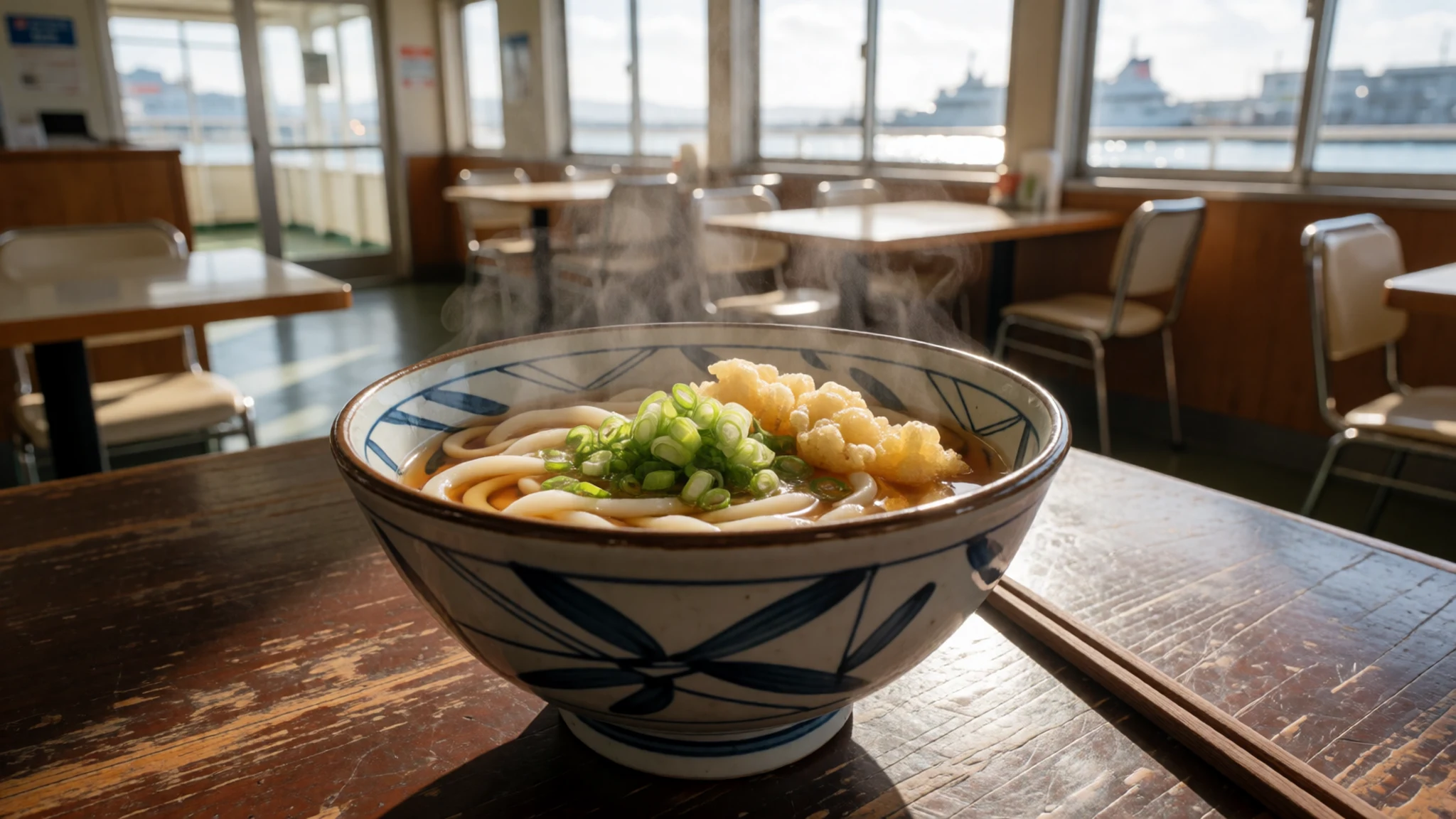
- Curry rice — The café inside the ferry terminal
Japanese curry rice, mild and thick with vegetables, is a reliable lunch on the island. The same café at the ferry terminal serves it, so you can eat quickly and catch a boat without a long wait. It is an affordable and filling option when you are between museums.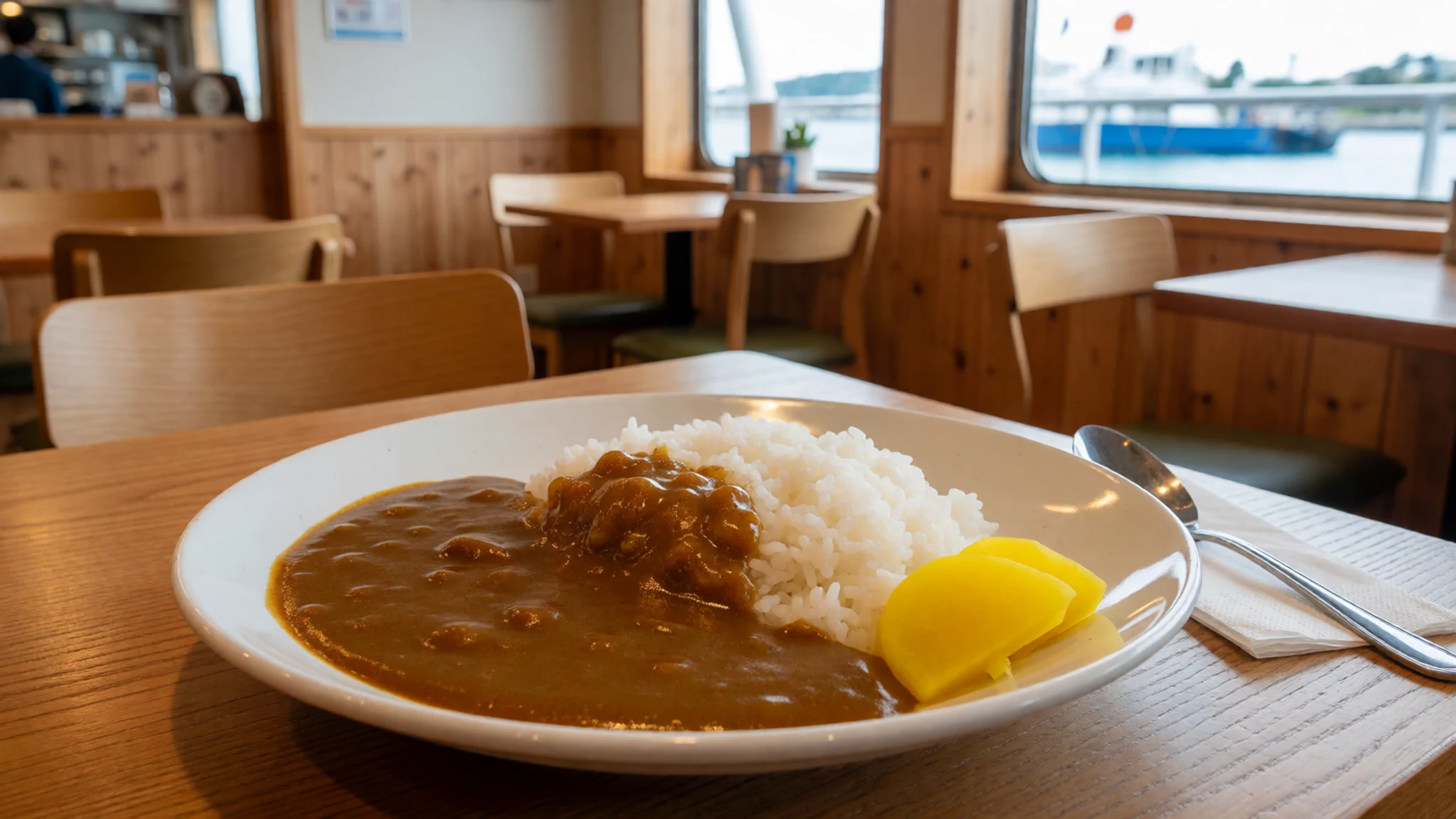
- Vegetarian brown rice set meal — A small vegetarian eatery on the island
Aisunao's name means a hearty eatery built around brown rice, and its meals are vegetarian. Expect whole grains, pulses and seasonal vegetables arranged as a set. It suits visitors who want something light, and it is a good choice for anyone who avoids meat or fish. - Set lunch at the community centre — Canteen in the community welfare centre
Nagomi serves table d'hôte set meals, including udon, in the welfare centre complex. The room is simple and local, and the meal comes as a complete tray. Check the hours on arrival, since many eateries here close early in the day. - Coffee and cake by the sea — Seaside café, nearest the water
The Tsutsuji-so Café sits closest to the water on the island, so it is the place to stop for coffee and something sweet after a walk along the shore. Choose a table by the window for the view. It is a relaxed spot for the late afternoon, when the light softens over the Inland Sea.
Plan it
Best time. Spring and autumn are the most comfortable seasons, with March–April and October–November the usual choices for milder weather. Summer is hot and humid, which makes cycling and gallery queues harder work, and the rainy season can disrupt plans.
How long. 2–3
Getting there. Okayama is the rail hub from Honshu. Take a local train to Uno Station in Tamano, then a ferry from the port beside it. Ferries also run from Takamatsu on Shikoku and from the nearby island of Inujima.
Budget. mid
Tips
- Book your stay early, especially at weekends, since many places take bookings only by phone or email.
- Check opening days before you travel, because many museums close on Mondays.
- Ferry timetables are limited, so check the schedule online and plan your return crossing first.
- Rent a bicycle at the port to cover the hills, and carry some cash for small eateries.
Etiquette
- Keep your voice low inside the museums and in the village lanes.
- Do not photograph inside galleries where signs forbid it.
- Take your rubbish with you, since public bins are scarce.
Nearby
Sources
- Wikidata Q1350060 (CC0)
- Wikipedia, Naoshima (rev 1376918555) (CC BY-SA 4.0)
- Wikivoyage, Naoshima (rev 5412266) (CC BY-SA 4.0)
- Photo: 直島町 役場, Bakkai (CC BY 3.0)
- Photo: Beachside Torii, Naoshima, Japanexperterna.se (CC BY 3.0)
- Photo: Benesse House Museum, 663highland (CC BY 3.0)
- Photo: Benesse House beach, Joi Ito (CC BY 2.5)
- Photo: Naoshima Breakfast, Ms. President (CC BY-SA 2.0)
- Photo: 屏風島南側を撮影, ブルーノ・プラス (CC BY-SA 4.0)
- Photo: 喜兵衛島側から見た屏風島, ブルーノ・プラス (CC BY-SA 4.0)
- Photo: From the ferry to Naoshima, KimonBerlin (CC BY-SA 2.0)


