Nanjing
Nanjing, People's Republic of China
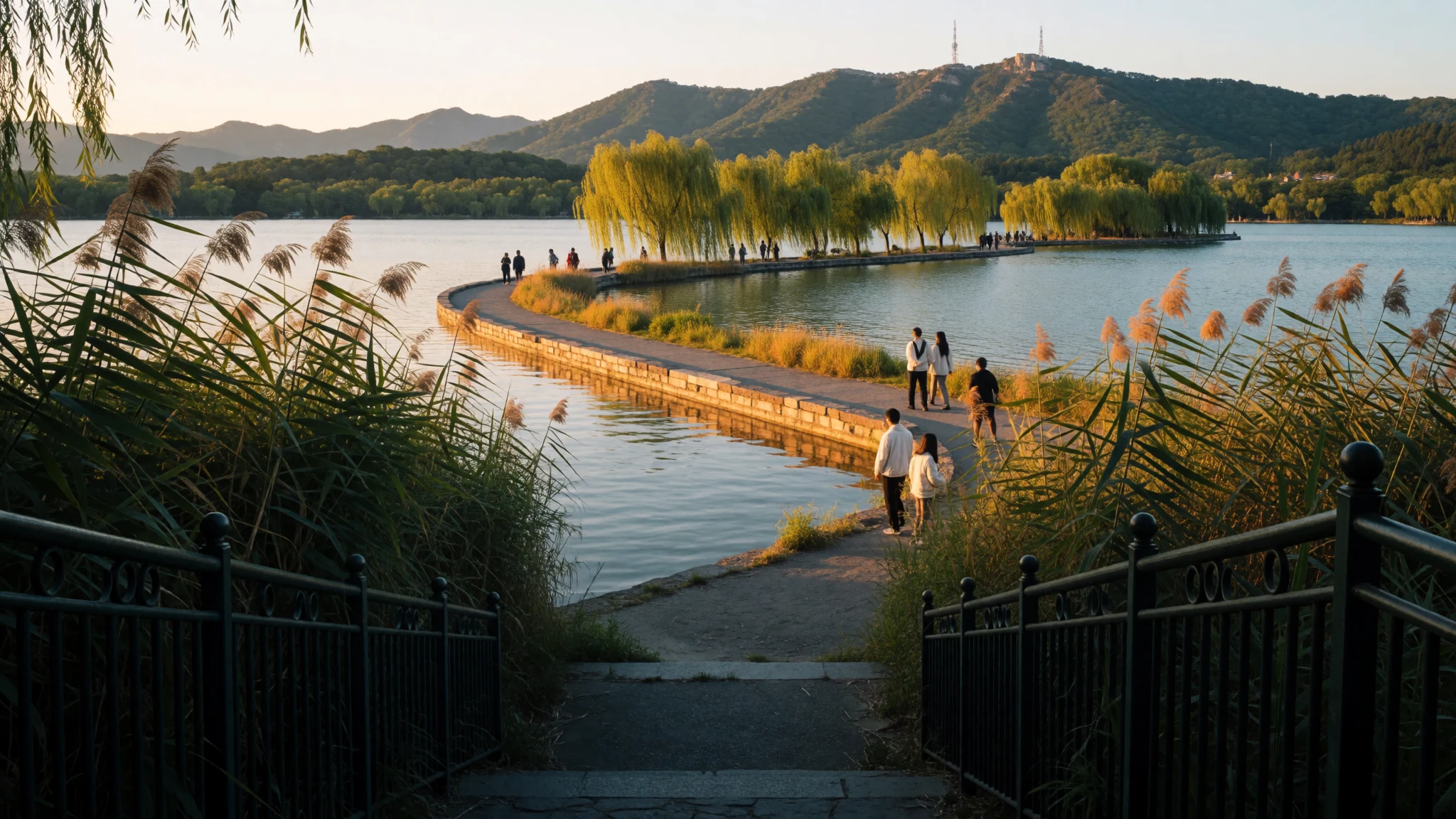
Nanjing, a former imperial and republican capital on the Yangtze, pairs old city walls, lakes and Purple Mountain tombs with a busy modern core.
The place
Nanjing sits on the lower Yangtze in eastern China. It is the capital of Jiangsu province and home to about 9.3 million people. The ground is flat river plain, about 15 metres above sea level, yet the skyline is broken by Purple Mountain to the east and by lakes around which the old city grew. Two waters shaped the place: the Yangtze, which brought trade and a busy inland port, and its tributary the Qinhuai, which threads through the old southern quarter where lanterns and boat landings cluster. Nanjing is counted among China's four ancient capitals, and it served as the seat of dynasties, kingdoms and republican governments from the third century until 1949. That history is not shut away in museums. It shows in surviving stretches of city wall, in tree-lined avenues from the Republican period, in imperial tombs on the hills and in a student population that keeps cafés and bookshops busy. The modern city is large and fast. Towers fill the central business district, the subway is the easiest way to get about, and high-speed trains reach Shanghai in little over an hour. Distances between sights are real, so a day works best when planned by area: lakeside and Purple Mountain in one, the Qinhuai and Confucius Temple district in another. Summers are hot and humid, winters damp and cold, and spring and autumn are the kindest seasons. Crowds build at the mausoleum, around Confucius Temple in the evening and everywhere during national holidays.
Its story
Nanjing's past runs well back beyond the city's recorded name. Neolithic communities lived here, and a cemetery at the Beiyinyangying site, close to today's urban core, held polished stone tools, jade and agate, hinting at contact with the Lake Tai region. In the second millennium BCE the Hushu culture marked the Nanjing–Zhenjiang corridor, and at Xijie, on the south bank of the Qinhuai, archaeologists uncovered a fortified settlement ringed by ditches. The city's founding is dated to 495 BCE. From the third century onward a succession of dynasties and kingdoms ruled from here, and poets of the Tang and Song periods came to write elegies for the courts that had gone before. Under the Ming dynasty Nanjing was an imperial capital again, and the great city wall and the Jiangnan examination hall, where candidates gathered from across the region, belong to that world. In the early republican era the city became the capital of the Republic of China, which gave it Sun Yat-sen's mausoleum on Purple Mountain and the Presidential Palace. It also suffered terribly under Japanese occupation in the war years, and a memorial hall records those events; visitors who go tend to leave quietly. After 1949 Nanjing became a provincial capital, an industrial centre and a university city, and it grew into the metropolis of today.
What to see
- Xuanwu Lake — Xuanwu District
Xuanwu Lake lies just outside the old city wall, and its three islands are joined by causeways. Locals come to walk, cycle and fish, and families head for the small amusement park and zoo. The best part is the view back towards the towers with Purple Mountain behind. Go early, since weekends fill up.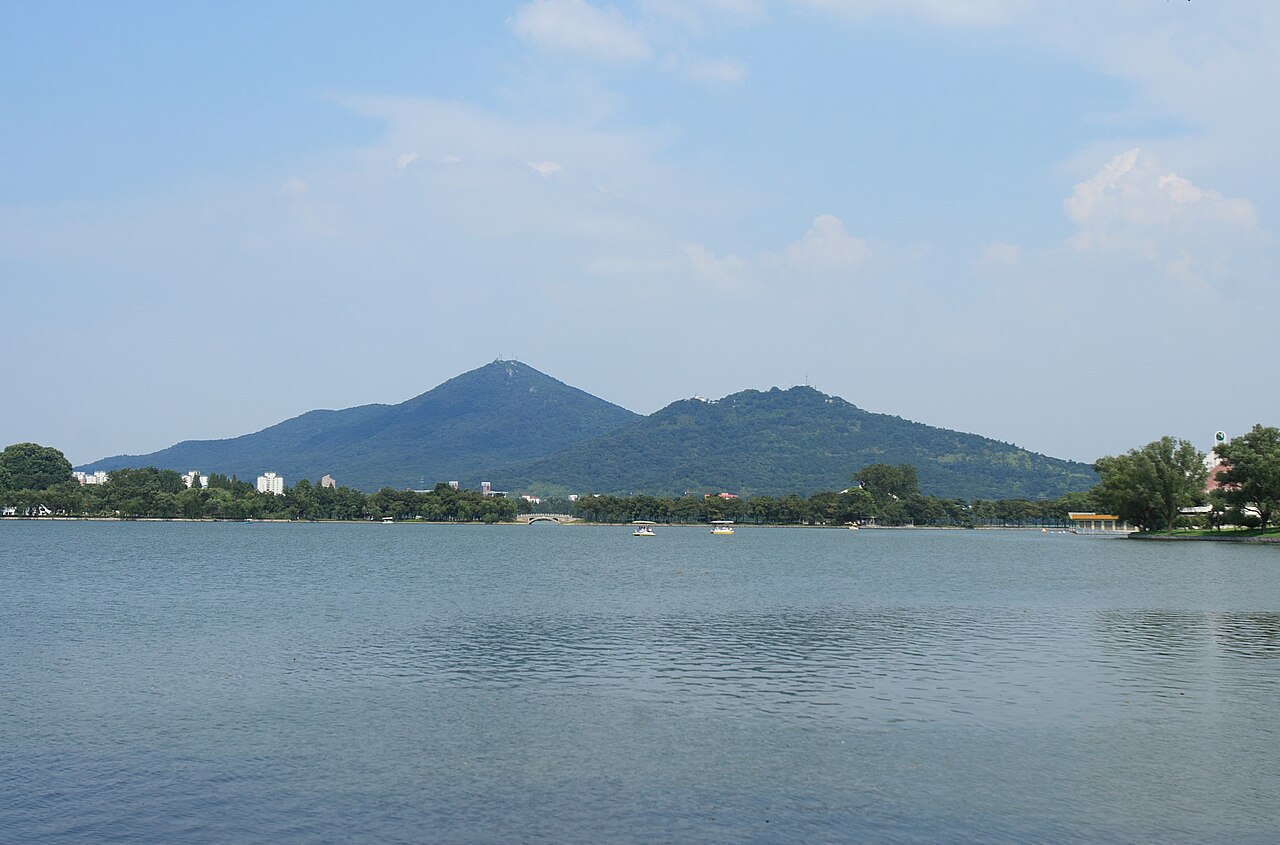
- Sun Yat-sen Mausoleum and Purple Mountain — Purple Mountain, east Nanjing
The mausoleum of Sun Yat-sen stands on the slopes of Purple Mountain, reached by a long flight of steps through woodland. At the top, a sacrificial hall holds a seated statue. Plenty of shade makes this a good hot-weather outing, but check the official site for booking and entry rules before going.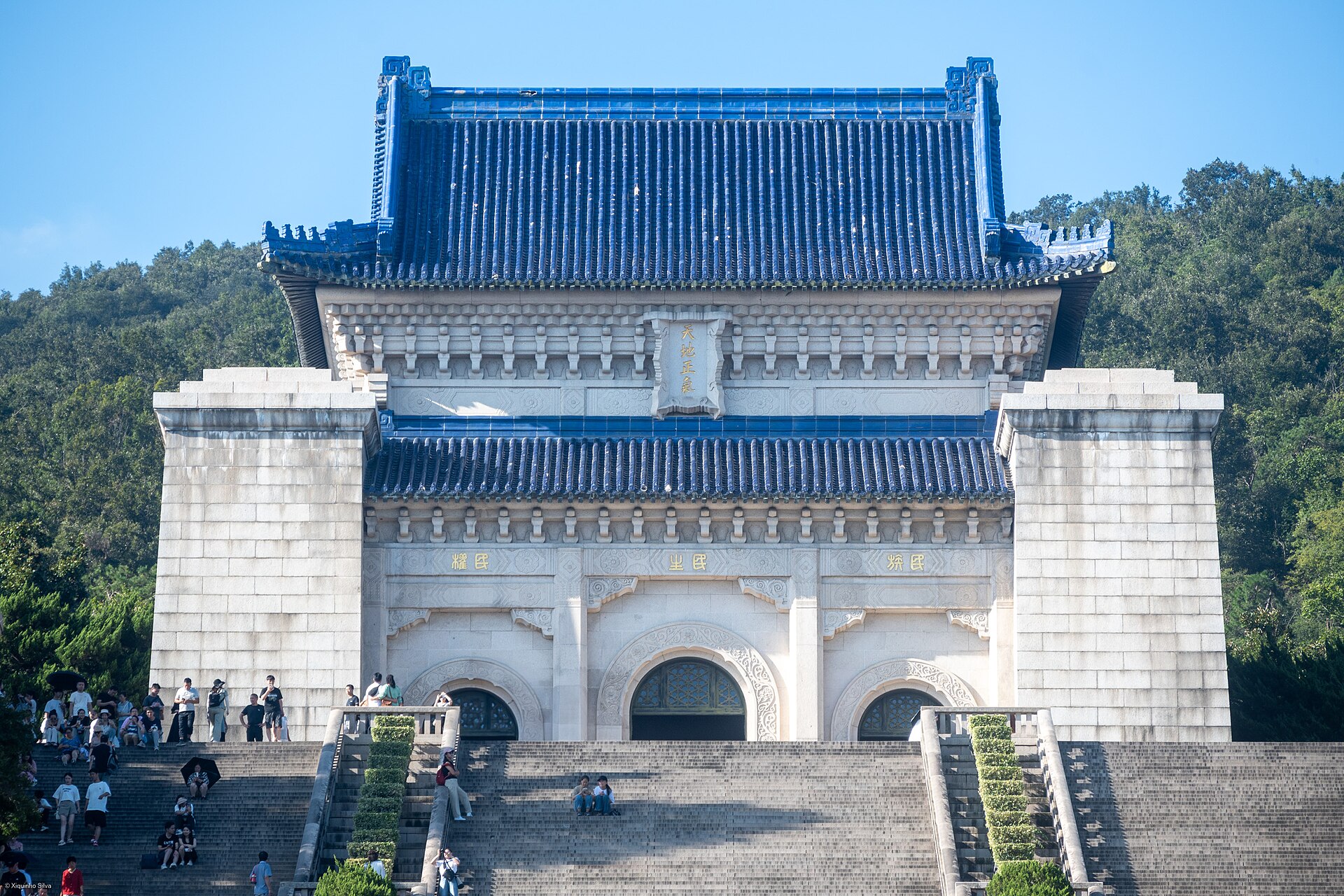
- Presidential Palace — Xuanwu District
This complex of courtyards, halls and gardens served as an official seat during the Republican period, and earlier buildings stand on the same ground. Exhibitions explain the politics, but the architecture is the pleasure: grey brick, carved timber and quiet garden corners. Allow a couple of unhurried hours.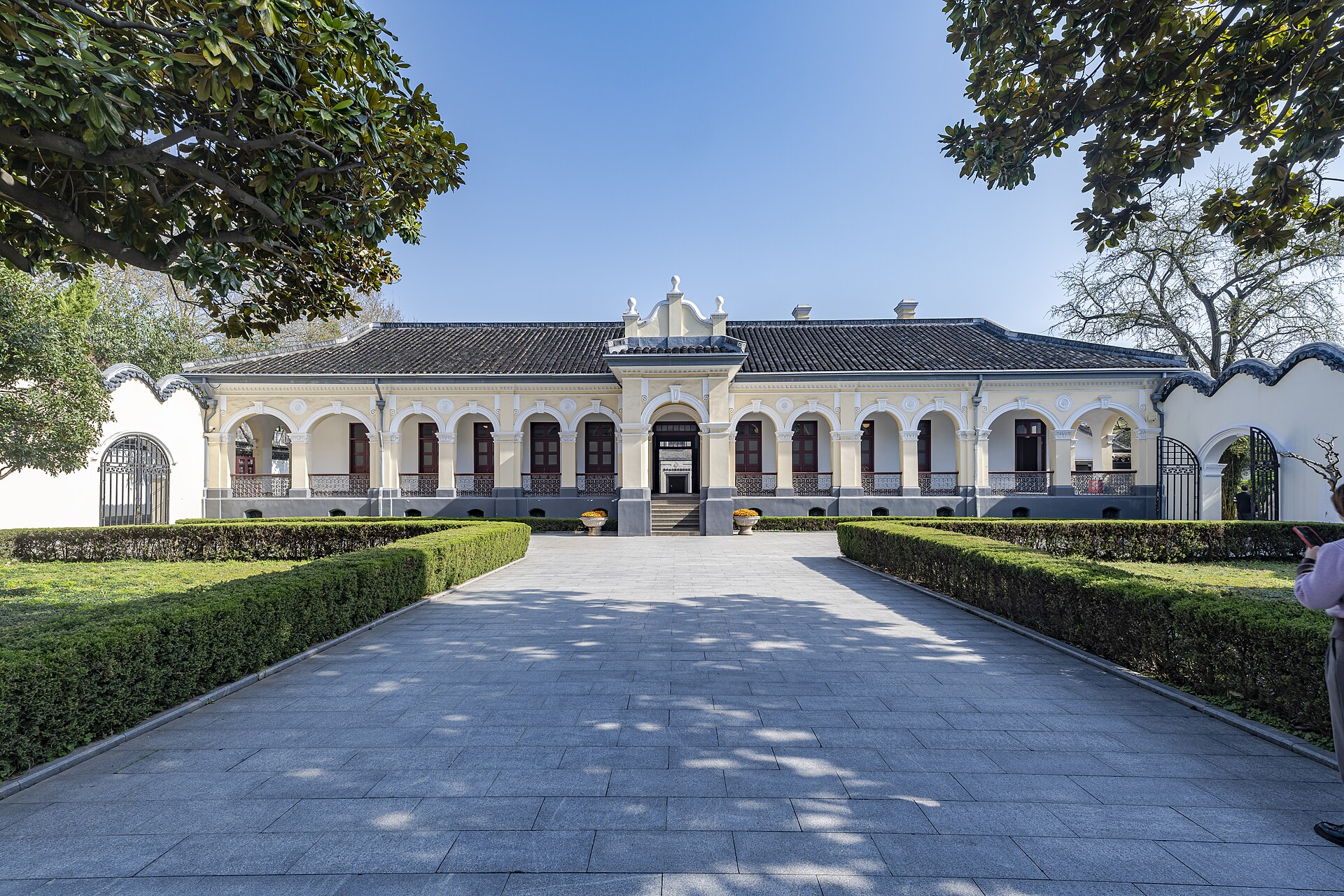
- Qinhuai River and Confucius Temple — Qinhuai District
The Qinhuai area around Fuzimiao is the most atmospheric corner of the old south city. Boats ply the river, lantern-hung lanes sell snacks, and the temple precinct glows after dark. It is crowded and commercial, especially at weekends, but the evening light on the water repays the jostling.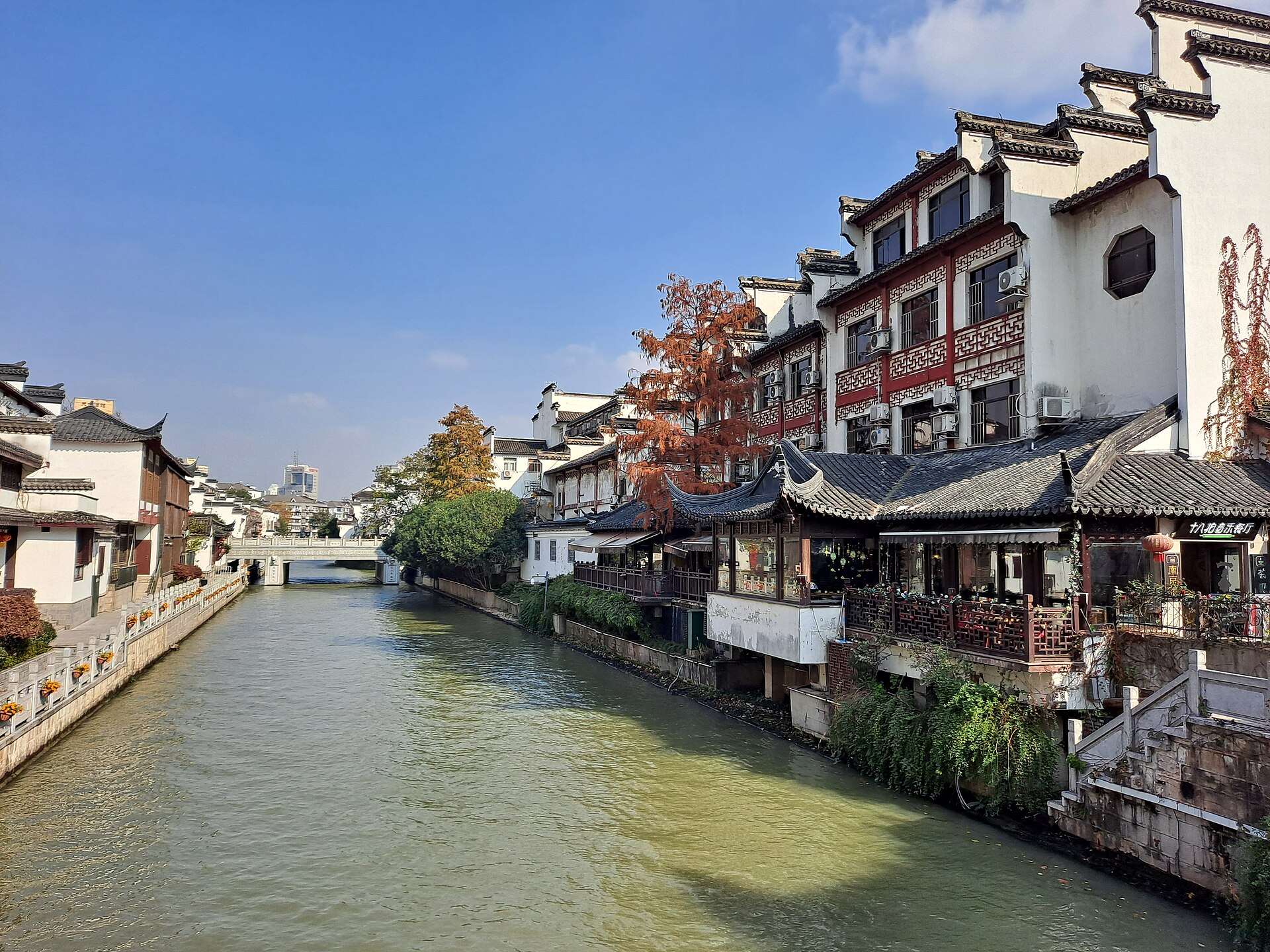
- Jiming Temple — Xuanwu District
Jiming Temple is a working Buddhist temple on a small rise near the city wall, with yellow walls, a pagoda and incense drifting through the courtyards. In spring the cherry trees on the approach draw crowds. Outside blossom time it is calm, and a short climb gives views over Xuanwu Lake.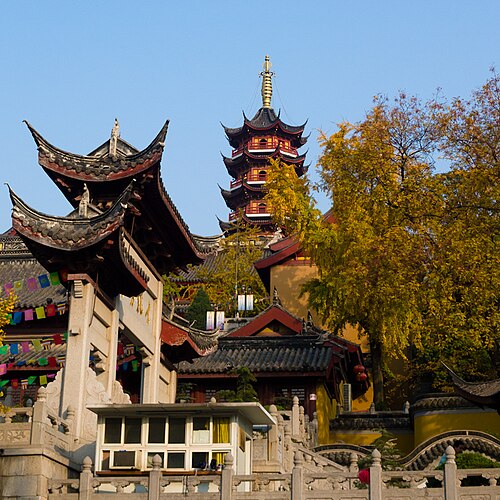
- Yuhuatai Scenic Area — Yuhuatai District, south Nanjing
Yuhuatai is a large park on a low ridge south of the centre. Its best-known site is the Martyrs' Cemetery, which commemorates soldiers of the Red Army who fought in the Chinese Civil War. The grounds are wide and green, so paths take time to cover on foot.
Culture
Nanjing has long drawn writers, scholars and officials, and that shows in how the city thinks of itself. Poets gathered here in the Tang and Song periods to reflect on earlier courts, and in the Ming and Qing eras Nanjing hosted the imperial examination for the Jiangnan region, so candidates and ideas arrived from across the lower Yangtze. Today the universities keep that tradition alive, and the city has a noticeable café, gallery and bookshop scene. Performing arts are strong too, with dance companies, a Peking opera institute and the Nanjing Xiaohonghua troupe all based here. Contemporary art has a home at the Art Museum of Nanjing University of the Arts, where exhibitions sit alongside academic research. Daily life has a river-city rhythm: older residents play cards and exercise in the parks at dawn, families stroll the lake edge at weekends, and the Qinhuai district comes alive at night. Nanjing's modern history, particularly the Republican period and the war years, is treated seriously by locals, and memorials are places of real feeling rather than simple attractions. Conversation tends to be warm once started, and a few words of Mandarin go a long way, because English is patchy outside the main hotels and tourist sites. Dress modestly and keep your voice low at Jiming Temple and the memorial sites, and do not photograph worshippers or mourners at close range without asking.
What to wear
Nanjing's traditional textile is yunjin, or cloud brocade, a heavy silk woven with gold and coloured threads that once made robes for the imperial court. It is still made by specialist weavers and seen in museum displays, scarves and formal gifts. The qipao, a close-fitting silk or cotton dress, is linked to the Republican era in the city and appears at weddings and photo shoots. Around Confucius Temple, young people often hire Hanfu-style costume for the day, which gives the lanes a theatrical look at weekends. Everyday dress is much plainer: students and office workers favour jeans, trainers, light jackets and padded coats in winter, with umbrellas ready for sudden showers. Smart casual is normal for restaurants. Visitors should dress for the climate first. Summer is hot and humid, so light, breathable cotton or linen and a hat suit best, while winter needs proper layers, since the damp cold feels sharper than the temperature suggests. Spring and autumn call for a light jacket. Comfortable, closed shoes matter because the mausoleum steps, the city wall and the park paths all involve long walking. At Buddhist temples and memorials, cover shoulders and knees and avoid loud slogans on clothing. A compact umbrella is useful in every season.
What to eat
- Jinling roast duck — Old-style Nanjing restaurants around the Confucius Temple area
Nanjing is known for duck, and roast duck with crisp skin is a local classic. It is served in old-style Nanjing restaurants, often as a platter with pancakes or sauce. Order it at a long-established local restaurant rather than a tourist stall. - Salted duck — Delicatessen counters and traditional restaurants across the city
Salted duck is cured, boiled and served cold in pale slices, with a delicate savoury taste that suits the warm months. It is sold by weight at counters and as a starter in sit-down restaurants. - Duck blood and vermicelli soup — Small noodle and soup shops, especially in the older neighbourhoods
This is a clear, peppery soup of glass noodles, duck blood curd, liver and gizzard, often with a few shreds of duck meat. It is a breakfast or lunch comfort food and a good test of how adventurous you are. - Soup dumplings and small snacks — Snack lanes around Fuzimiao and the Qinhuai River
The lanes by the Qinhuai are lined with stalls selling steamed dumplings, sesame cakes, sweet rice treats and other small bites. Quality varies, so choose busy stalls with a quick turnover and eat standing. - Pineapple pork and group Chinese dishes — Mid-range Chinese restaurants in the central districts
Ordinary Chinese restaurants with English menus are easiest for visitors, and eating in a group of four or more lets you try many dishes. Sweet-and-sour pineapple pork is a popular order.
Plan it
Best time. March–April and October–November, when the air is mild and the lakes and Purple Mountain are at their best. Cherry blossom around Jiming Temple draws spring crowds. Summer is hot and humid, and winter is damp and cold.
How long. 2–3
Getting there. Fly to Nanjing's airport, then take the S1 subway line to Nanjing South Railway Station (about half an hour), or an airport express bus towards the North or South Railway Station. From Shanghai, a high-speed G train from Hongqiao station takes about 75 minutes.
Budget. mid
Tips
- Plan by area: lake and Purple Mountain one day, Qinhuai and the old south city another
- Carry your passport and a phone with mobile payment set up, as many places prefer it to cash
- Go to the mausoleum and Jiming Temple early to beat crowds, and check official sites for booking rules
- Allow extra time at the South Railway Station interchange between subway lines
- City information is at https://www.nanjing.gov.cn/ — check it for current opening arrangements
Etiquette
- Dress modestly and keep your voice low at temples and memorial sites
- Ask before photographing worshippers, mourners or elderly residents
- Queue at ticket gates and subway entrances, and let passengers off before boarding
Nearby
Sources
- Wikidata Q16666 (CC0)
- Wikipedia: Nanjing (rev 1384516124) (CC BY-SA 4.0)
- Wikivoyage: Nanjing (rev 5427209) (CC BY-SA 4.0)
- Nanjing CBD from City Wall — xiquinhosilva (CC BY 2.5)
- Presidential Palace, Nanjing — ScareCriterion12 (CC0 1.0)
- Jiming Temple — Quentin Scouflaire (CC BY 2.5)
- Sacrificial Hall, Sun Yat-sen Mausoleum — xiquinhosilva (CC BY 2.5)
- Qinhuai River in Fuzi Miao — 钉钉 (CC BY-SA 4.0)
- Night Confucius Temple in Nanjing — 蘇一品 (CC BY-SA 2.5)
- Purple Mountain — Farm (CC BY-SA 2.5)
- Winged lion, Xiao Xiu Mausoleum — Victor Segalen (Public domain)


