Namib-Naukluft National Park
Namib-Naukluft National Park, Namibia
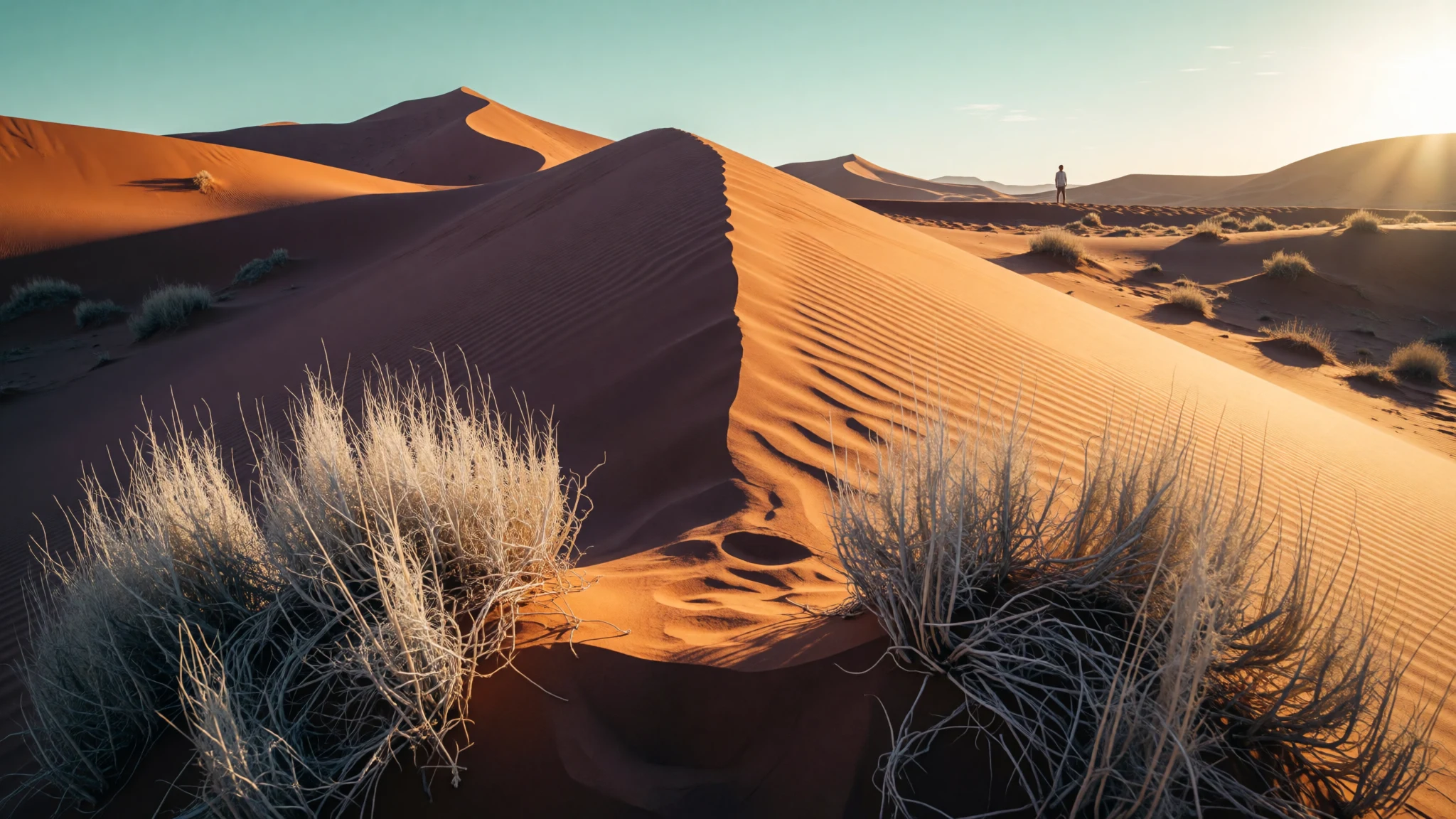
Namib-Naukluft National Park delivers huge desert scenery, dramatic dune-and-canyon walks, and wildlife sightings in a place that rewards slow travel.
The place
Namib-Naukluft National Park sits in western Namibia, tucked between the Atlantic coast and the edge of the Great Escarpment. It’s a big, varied stretch of protected land: part of the Namib Desert, the Naukluft mountain range, and the lagoon area at Sandwich Harbour. The park’s best-known visitor magnets are Sossusvlei—an iconic clay pan surrounded by dunes—and Sesriem Canyon, a narrower, more accessible cut in the landscape.
The terrain is what really gets under the skin. Morning light turns the sand into layers of colour, while the rocky bits around the canyon feel tougher and cooler. In some areas, roads are absent and access is restricted, so the park can feel both open and unreachable at the same time. That mismatch is part of the appeal: some drives are straightforward enough, but other routes are all about planning, tyre care, and patience.
Practical reality check: this is remote desert travel. Heat and sun can be relentless, distances between points add up, and the gravel roads can be unforgiving if you rush them. Wildlife is there, but you often notice it indirectly—through footprints, birds lifting off, or a sudden glimpse when the wind shifts.
If the goal is photographs and big vistas, there’s plenty to chase. If the goal is to understand how deserts work—water after rains, pans that change, dunes that keep moving—then Namib-Naukluft is one of those places where a day can feel both long and strangely short.
Its story
Namib-Naukluft National Park’s story starts in German South West Africa. In 1907, the German Colonial Administration proclaimed three nature reserves, with Namib-Naukluft being set up as a “game reserve” in its early days. The borders were defined around river lines, including the Swakop River and the Kuiseb River, shaping what would later become the park’s core.
After the First World War, South African administration continued the protection arrangement. Later, areas such as Sandwich Harbour were added, expanding the park’s mix of desert, mountains, and coastal lagoon landscapes. Over time, the protected area was reshaped again—an evolution that reflects how governments re-tuned conservation priorities to match changing knowledge and pressures.
A major waypoint came in 1966, when “Game Reserve No. 3” was deproclaimed and the Namib Desert Park was created. The focus then widened to include more desert research and landscapes such as the Moon Landscape east of Swakopmund, as well as other sections where plants like Welwitschia could survive. Much later, the park grew further in 1979, incorporating larger areas that brought the Naukluft mountains and zebra protection into the wider conservation picture.
Today’s visitor experience—long drives, restricted zones, and the pull of Sossusvlei—still carries the fingerprints of that history: it’s a park that was built to protect wide, dynamic desert systems, not just viewpoints.
What to see
- Sossusvlei — Sossusvlei & Sesriem area
Sossusvlei is a clay pan shaped by deposits from the Tsauchab River. In good rainy seasons the pan can hold water, which changes how the area feels on a walk. Dead Vlei sits within walking distance and is reached along routes from the dunes region.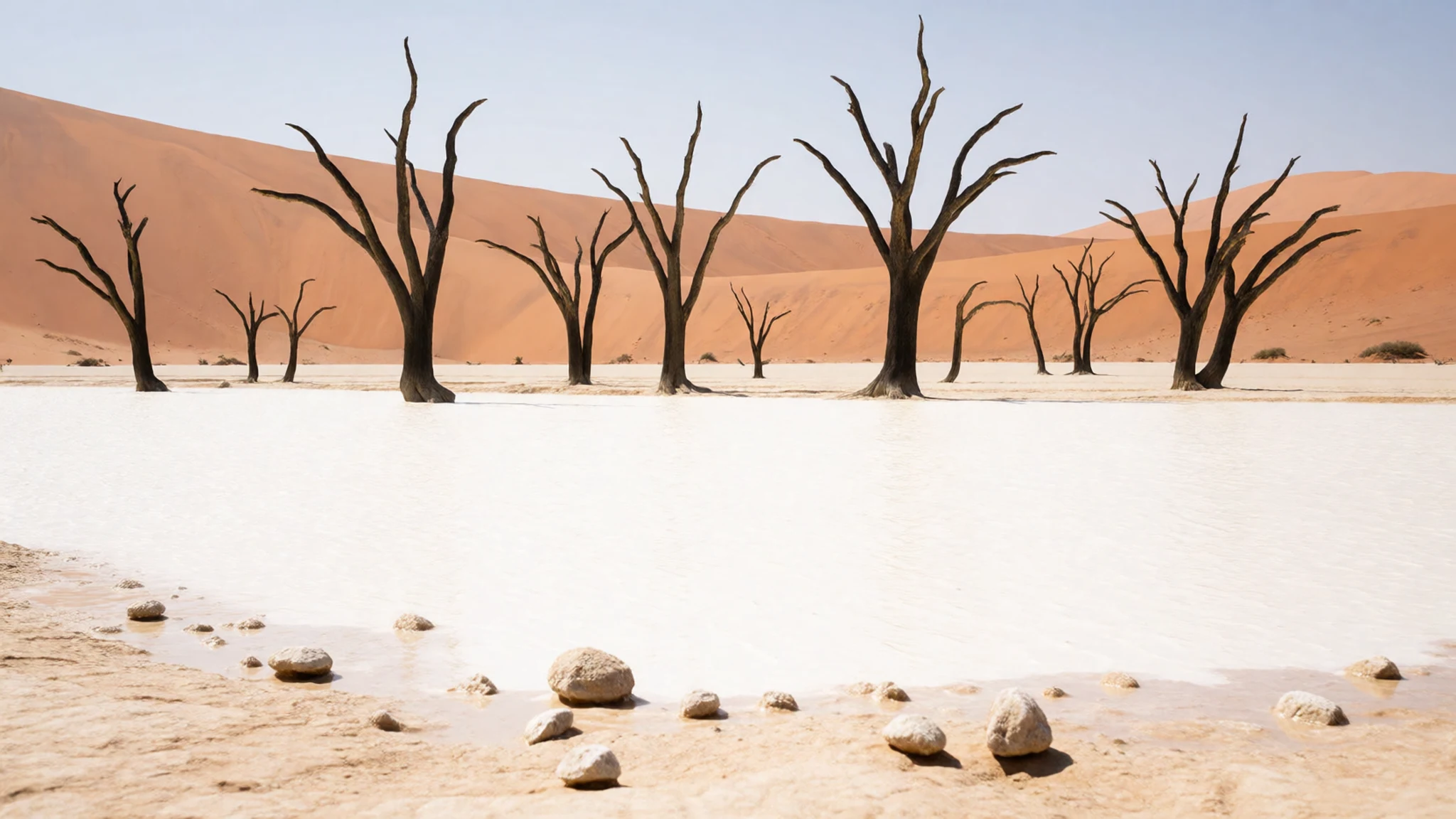
- Dune 45 — On the road from Sesriem towards Sossusvlei
Dune 45 is a star dune close to Sesriem, known as a steep climb that rewards early starts. Its number comes from Namibia’s dune numbering system rather than any “forty-five” theme. The view and the challenge are the draw, especially when light rakes across the sand.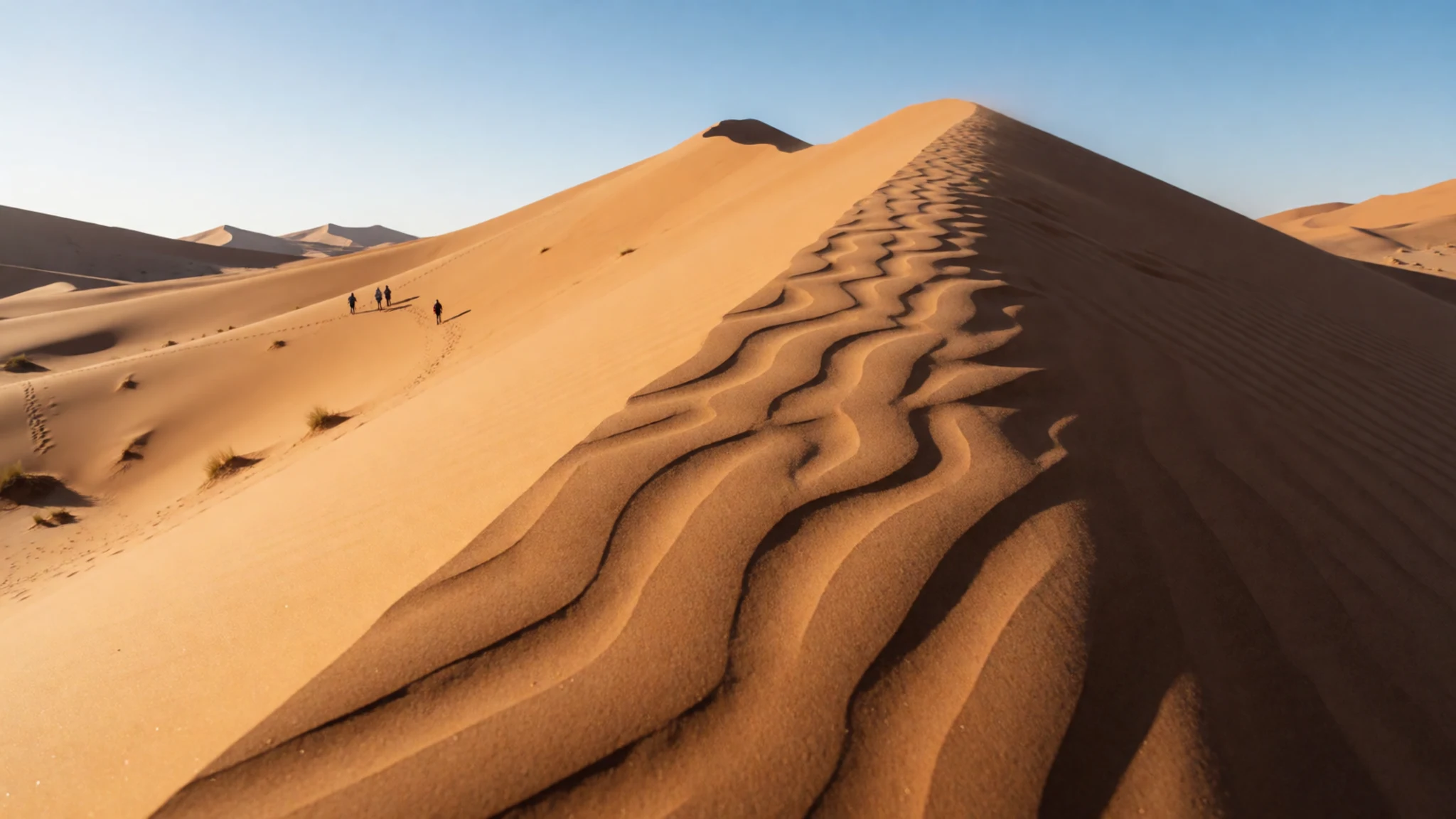
- Sesriem Canyon — Sesriem
Sesriem Canyon is a smaller cut in the land compared with grand canyons elsewhere, but it works because it’s walkable and part of the same visitor circuit as Sossusvlei. It’s a good place to slow down, notice rock layers, and get a break from pure dune travel.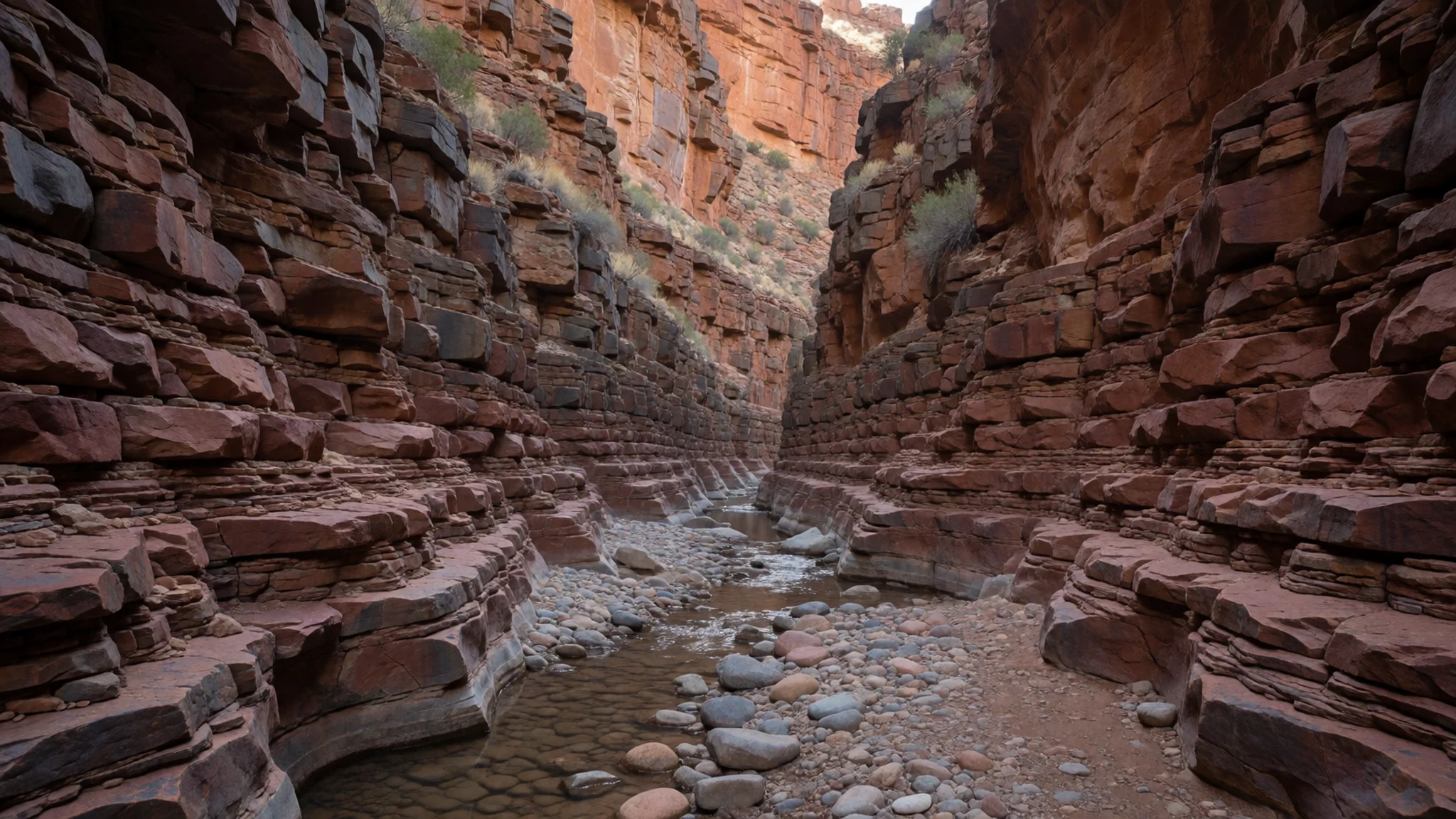
- Sandwich Harbour — Sandwich Harbour (near Walvis Bay)
Sandwich Harbour is a bay and lagoon area south of Walvis Bay where birds gather in big numbers, with flamingoes among the most famous sightings. Tracks start from Walvis Bay, and tours are often handled from Swakopmund. The shoreline approach can be narrow near Sandwich Bay, which makes local guidance valuable.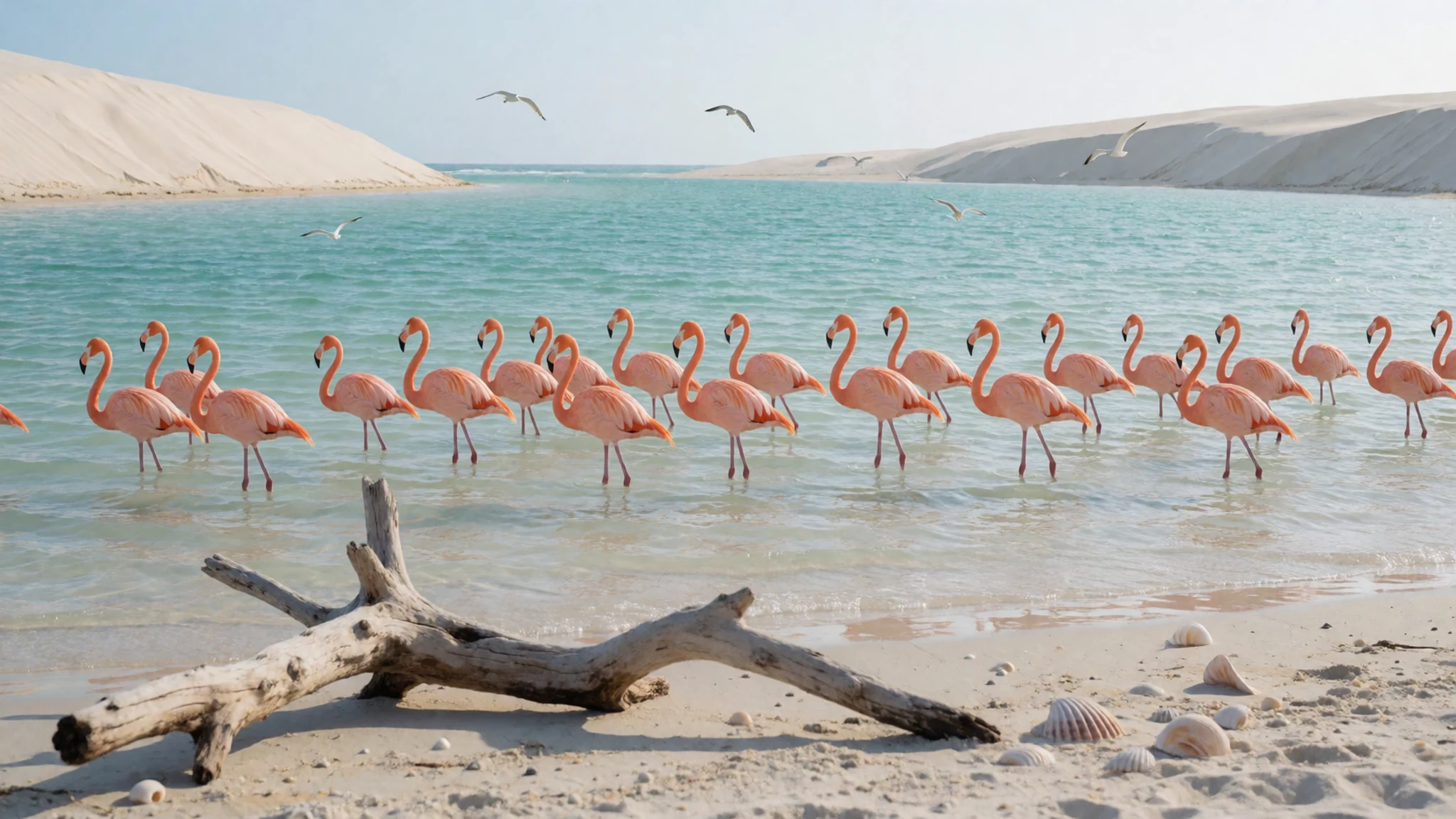
- Gobabeb — Within the park (Gobabeb area)
Gobabeb is an environmental research station inside the park, focused on desert conditions. The station sometimes opens for an annual open day, and if that timing doesn’t match a trip, contacting them is a reasonable option to ask about visiting. It’s a different way to connect with the desert, more “science and fieldwork” than viewpoints.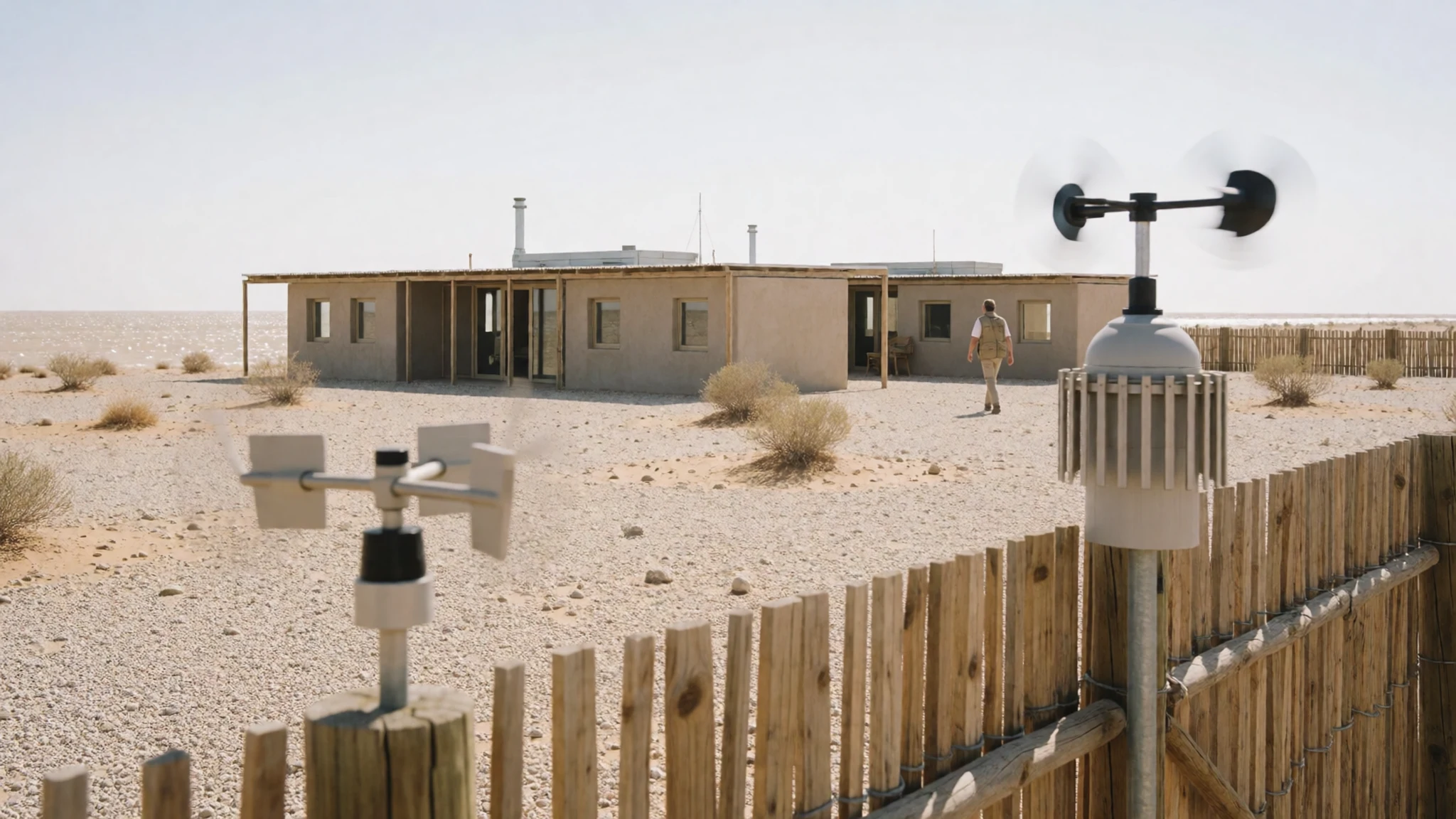
Culture
Namib-Naukluft National Park doesn’t have villages to “visit”, but it does have a human culture built around desert travel. The biggest shared norm here is respecting access rules: some parts are inaccessible to humans because there are no roads, and in other places entry may be forbidden. That isn’t bureaucracy for its own sake—it’s how fragile desert environments survive.
Another cultural piece is driving behaviour. The park’s reputation for car accidents is tied to speed on gravel, burst tyres, and the temptation to push when a road looks open. Most safe trips look boring on purpose: slower speeds, careful loading, and tyre checks before leaving a town. In practice, that means planning routes around daylight and not treating the desert like an interstate.
Wildlife and birdlife also shape local etiquette. When flamingoes or other birds are the target at Sandwich Harbour, staying on appropriate tracks and giving animals space makes a big difference. Photography should be steady and quiet rather than chaotic.
Visitor etiquette: drive within speed limits on gravel, keep a safe distance from wildlife, and follow signage exactly—don’t wander into restricted areas just because the landscape looks empty.
What to wear
In Namib-Naukluft National Park, “what to wear” is mainly about sun, sand and temperature swings—not fashion trends. There isn’t a single national traditional outfit that visitors need to mirror in the park, but the practical desert rule is to dress in layers. Daytime sun can be harsh, while mornings and evenings can feel cooler, especially when walking near canyon edges or in open sand.
For traditional textiles, the broader regional style across Namibia often includes patterned fabrics and warm, sturdy garments suited to dry climates. Visitors don’t need to wear traditional dress to be respectful here, but if attending any cultural stop outside the park, choose breathable cotton or lightweight wraps rather than heavy synthetics.
What people actually wear now around Namibia’s tourist towns is mostly outdoor clothing: T-shirts, long-sleeve sun tops, light trousers, and practical hats. For a visitor, the key items are a wide-brim hat, sunglasses, a sun layer with sleeves, and closed shoes with grip for gravel and dune paths. In very sandy areas, socks that can handle grit and lightweight gaiters can be more comfortable than bare sneakers. Carry a warm layer for early starts, and consider gloves for sand handling or gear adjustments.
What to eat
- Farm bread with a hearty main — Helmeringhausen Hotel area
In the Namib region around Helmeringhausen, meals often lean into countryside comfort. Look for a dish that features farm bread alongside vegetables and a proper filling main, with some menus offering vegetarian or vegan options too.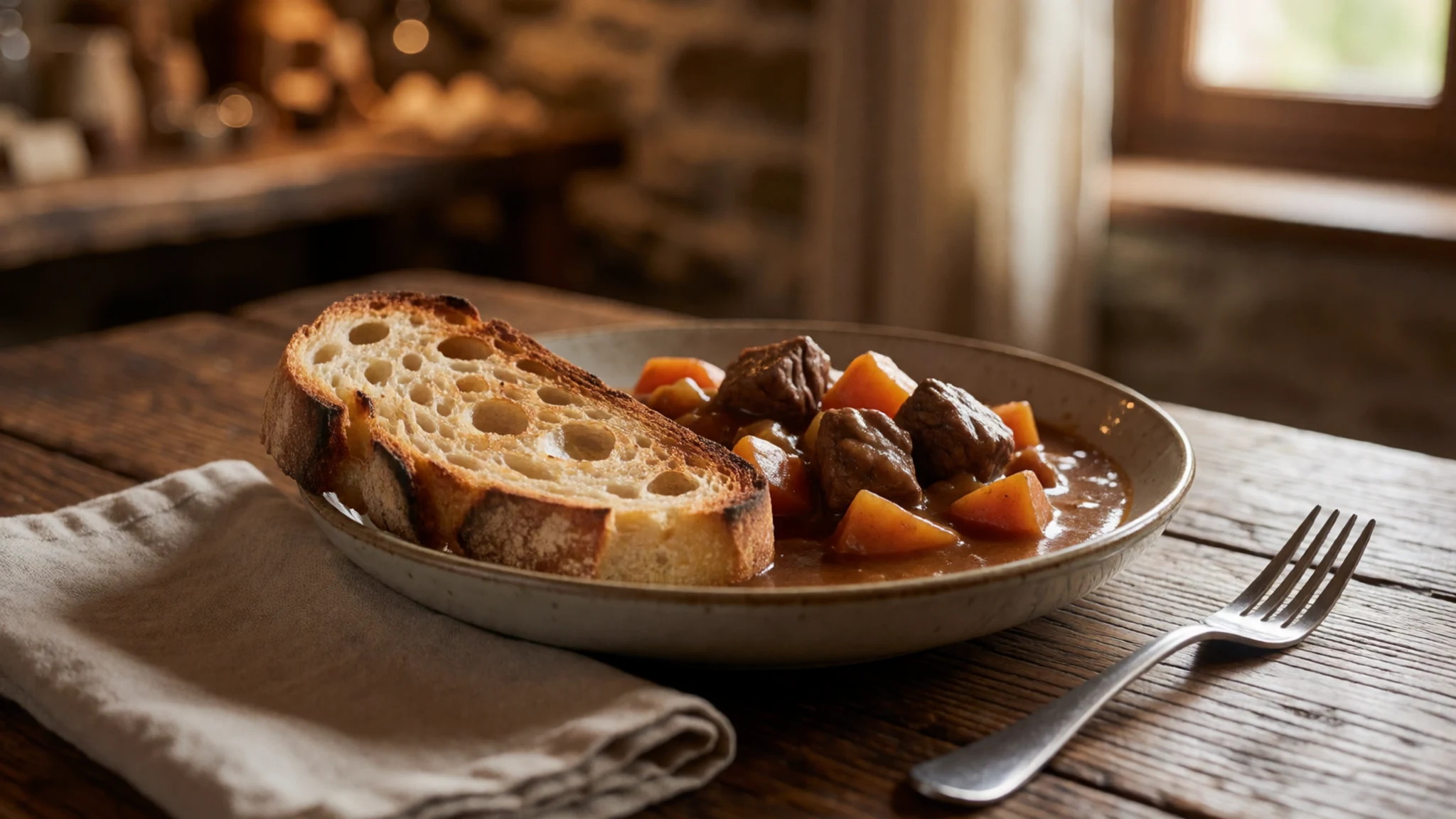
- Vegetarian and vegan hotel dishes — Countryside restaurants near park gateways
Remote Namibia sometimes means fewer choices, but some countryside restaurants still keep at least one vegetarian and one vegan entry. It’s usually easiest to ask for what’s available that day rather than expecting a huge menu.
- Desert-friendly salads and roasted veg — Restaurants in Walvis Bay / Swakopmund / Sesriem stopovers
When travelling between long stretches of gravel, lighter plates can help in the heat. Keep an eye out for salads and roasted vegetable sides at lodges and hotel restaurants on the routes leading into the park. - Bread-and-savoury starters — Hotel restaurants at park-adjacent towns
Because supplies can be limited in remote areas, simple starters—bread with spreads or savoury sides—show up more often than elaborate appetisers. They’re also handy when timing drives and walks around daylight.
Plan it
Best time. March–April and October–November are good bets for comfortable desert temperatures, with daytime highs in the high 30s to low 40s and still enough daylight for dune walks. Rain is heaviest in February and April (mostly as brief downpours and fog moisture), with very low rainfall from May through September. August is warmer than June–July, with typical daytime highs around the mid-30s, so plan for heat while still packing for cooler mornings and evenings.
How long. 3–4
Getting there. From Walvis Bay, drive on the C26 towards Windhoek; along this route you can cross the park. From Lüderitz, drive the B4 inland and turn northwards at Aus, then connect towards the park areas you’re targeting.
Budget. mid
Tips
- Plan drives for daylight and keep expectations realistic on gravel roads.
- Don’t overload the car; check suspension components so the vehicle sits correctly.
- Reduce tyre pressure so tyres get better traction on gravel and the ride is less punishing.
- Start key dune or canyon areas early to avoid the harshest sun and the busiest mid-morning crush.
- If camping inside the park, double-check permits needed for both access and overnight stays.
Etiquette
- Stick to permitted tracks and routes; some parts are inaccessible and some areas are forbidden.
- Drive calmly and give yourself tyre-check time; don’t rush just because the landscape looks empty.
- Keep to guidance around Sandwich Harbour, especially when tracks narrow near Sandwich Bay.
Nearby
Sources
- Wikidata Q1773441 (CC0)
- Wikipedia (Namib-Naukluft National Park) (CC BY-SA 4.0)
- Wikivoyage (Namib-Naukluft National Park) (CC BY-SA 4.0)
- Photo photos/01-namibnaukluftparkdunes.jpg (CC BY-SA 1.0)
