Nachi Falls
Nachi Falls, Japan
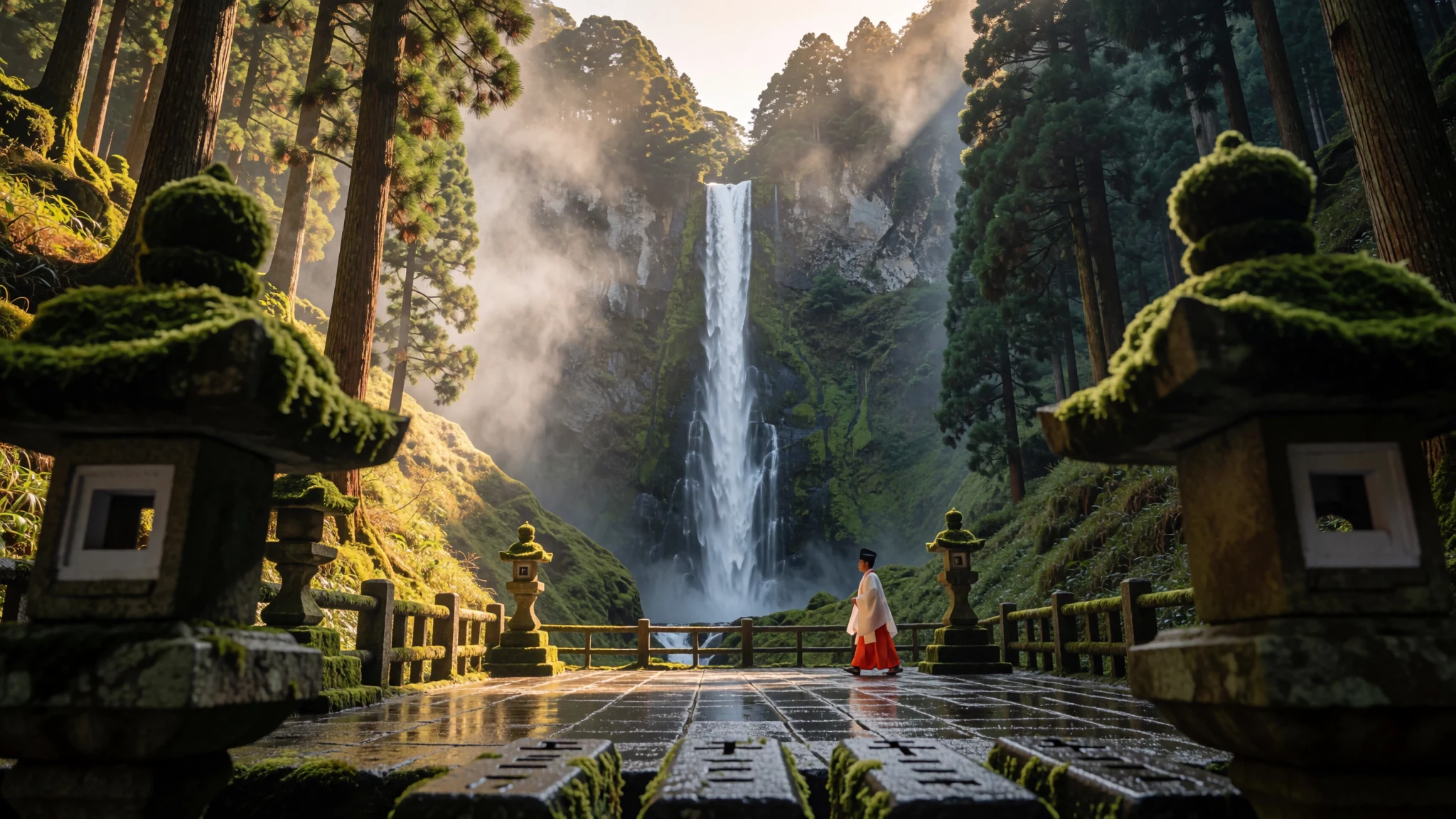
Come for the single tall drop of Nachi Falls, and stay for the shrine and pilgrimage paths that surround it.
The place
Nachi Falls, called Nachi no Taki (那智滝) in Japanese, is located in Nachikatsuura in Wakayama Prefecture and ranks among the most famous cascades in the country. Its water falls 133 metres in one uninterrupted drop, and the fall is about 13 metres wide. That makes it the tallest single-drop waterfall in the country, though the taller multi-stage cascades elsewhere in Japan are a different category. Standing at the base, the scale is hard to judge until you spot the people on the path beside it.
The falls are more than scenery. Two rocks at the top of the cataract are regarded as its guardian kami, and the waterfall is treated as sacred ground in its own right. Shinto priests carry out a ritual offering to the water early each morning, so an early arrival gives you the best chance of seeing something quiet and unhurried. A Buddhist temple once stood here as well, but it did not survive the upheaval of the Meiji period.
The practical side takes some thought. The falls sit close to Kumano Nachi Taisha, and the area is threaded with old pilgrimage paths, so expect steps, slopes and a good deal of walking between the shrine, the viewpoints and the lower temple. The site belongs to the Sacred Sites and Pilgrimage Routes in the Kii Mountain Range, a World Heritage listing, which is one reason the surroundings are so carefully kept.
Its story
The story of Nachi Falls is tangled up with faith long before it became a sightseeing stop. Believers have long treated the fall as the home of a kami, and the shrine above it, Kumano Nachi Taisha, is associated with the deity Hiryū Gongen. For centuries, the waterfall has been part of the mountain religion practised by shugenja, the ascetic practitioners who travelled these hills in search of spiritual power.
Some of the stories are darker. Accounts describe shugenja and couples in hopeless love who leaped from the top of the falls, believing that the fall would carry them into the paradise of Kannon. Such tales tell you how powerful the place felt to the people who lived with it, even if the practice itself is not something visitors should dwell on.
The ground beneath the falls also holds a buried history. In 1918, excavators working at the base uncovered a sutra mound containing statues, mirrors, altar fittings and sutra cylinders. Priests had often buried sacred objects like these in times of war, and many items were hidden this way because people feared the end of the world was approaching. Today the finds are displayed in the Ryuhoden, the Treasure Hall, which stands beside the three-storey Sanjūdō pagoda.
What to see
- Nachi Falls itself — Nachikatsuura, Wakayama Prefecture
The falls are the reason most people come. From the viewing area the water drops in a single white column down the dark rock face, and the sound is constant. Go in the morning if you can, when the light falls better on the cliff and the crowds have not yet built up. Allow time to simply stand and watch, because the scale is easy to underestimate from a photograph.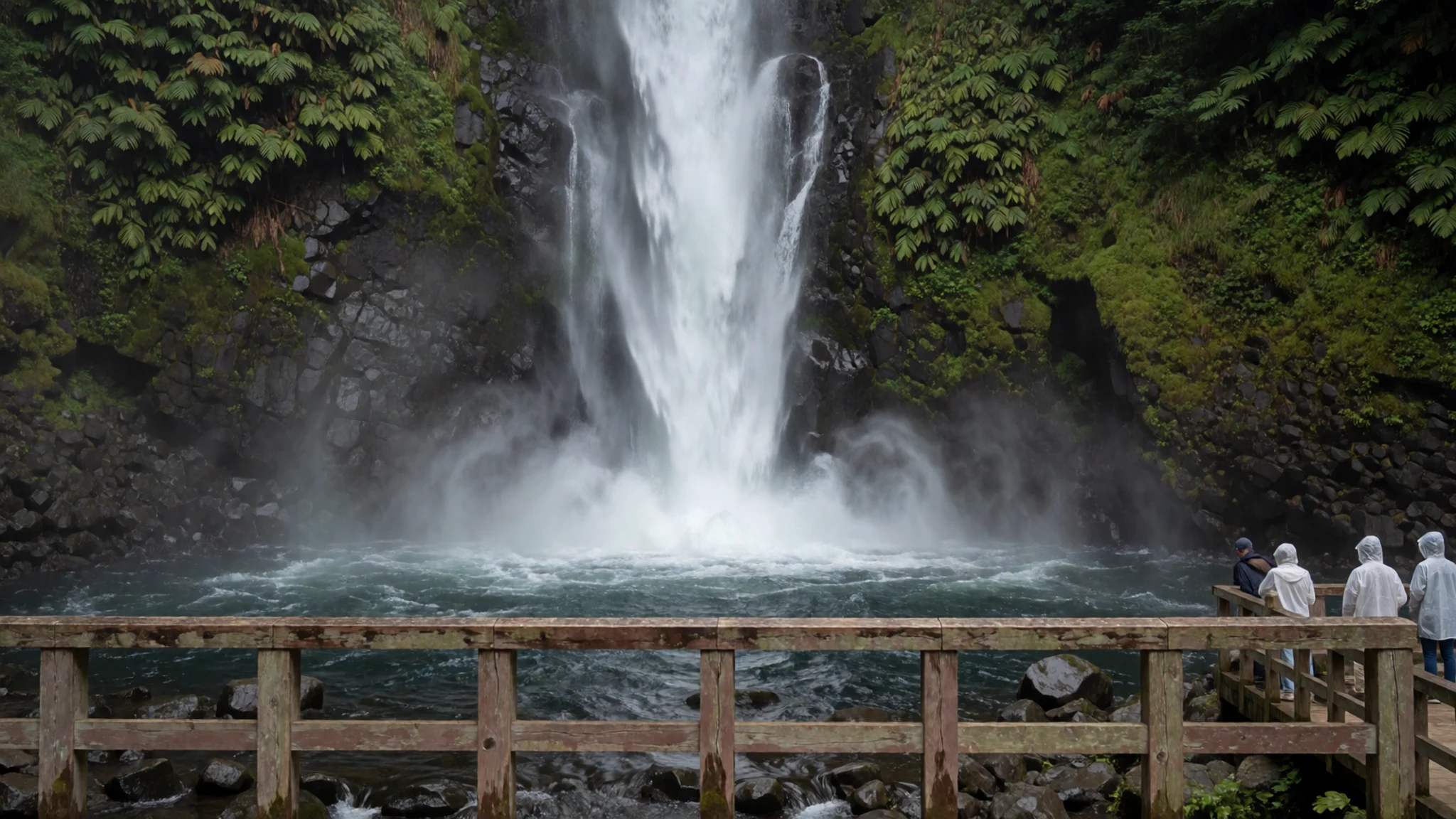
- Kumano Nachi Taisha — Above the falls, Nachikatsuura
This Shinto shrine is the spiritual centre of the falls and is part of the World Heritage listing for the Kii Mountain Range. Its buildings are set on the hillside above the cataract, and the approach is a steady climb rather than a flat stroll. Take your time, dress for walking, and keep in mind that this is an active place of worship as well as a visitor site.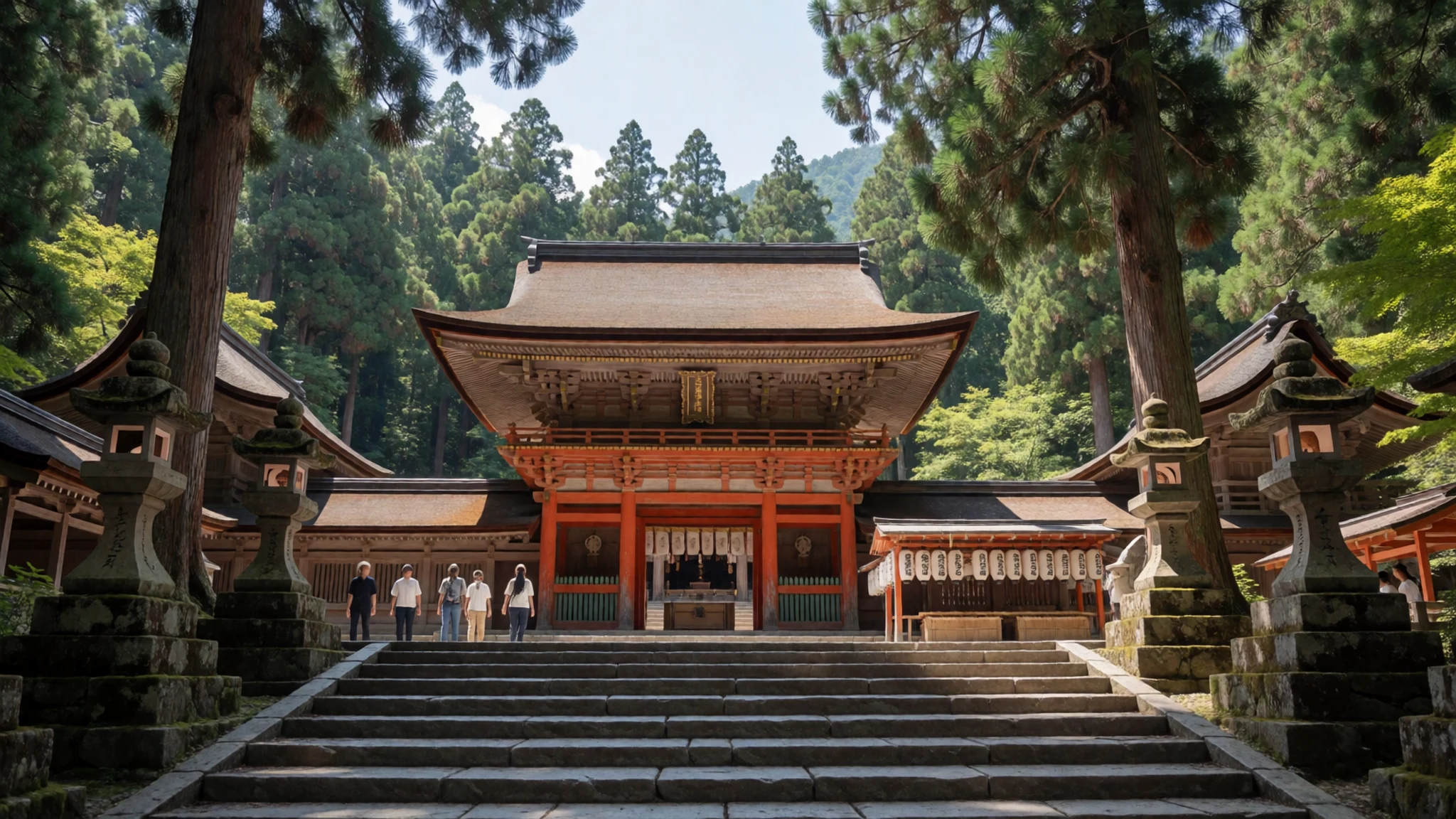
- Seiganto-ji and the Sanjūdō pagoda — Next to the falls, on the pilgrimage route
Seiganto-ji is a Buddhist temple near the falls, and its three-storey Sanjūdō pagoda is the building most visitors photograph. The temple sits beside the Kumano Kodo route, so it is often the first place pilgrims stop. The pagoda is worth a slow look from several angles before you move on to the treasure hall.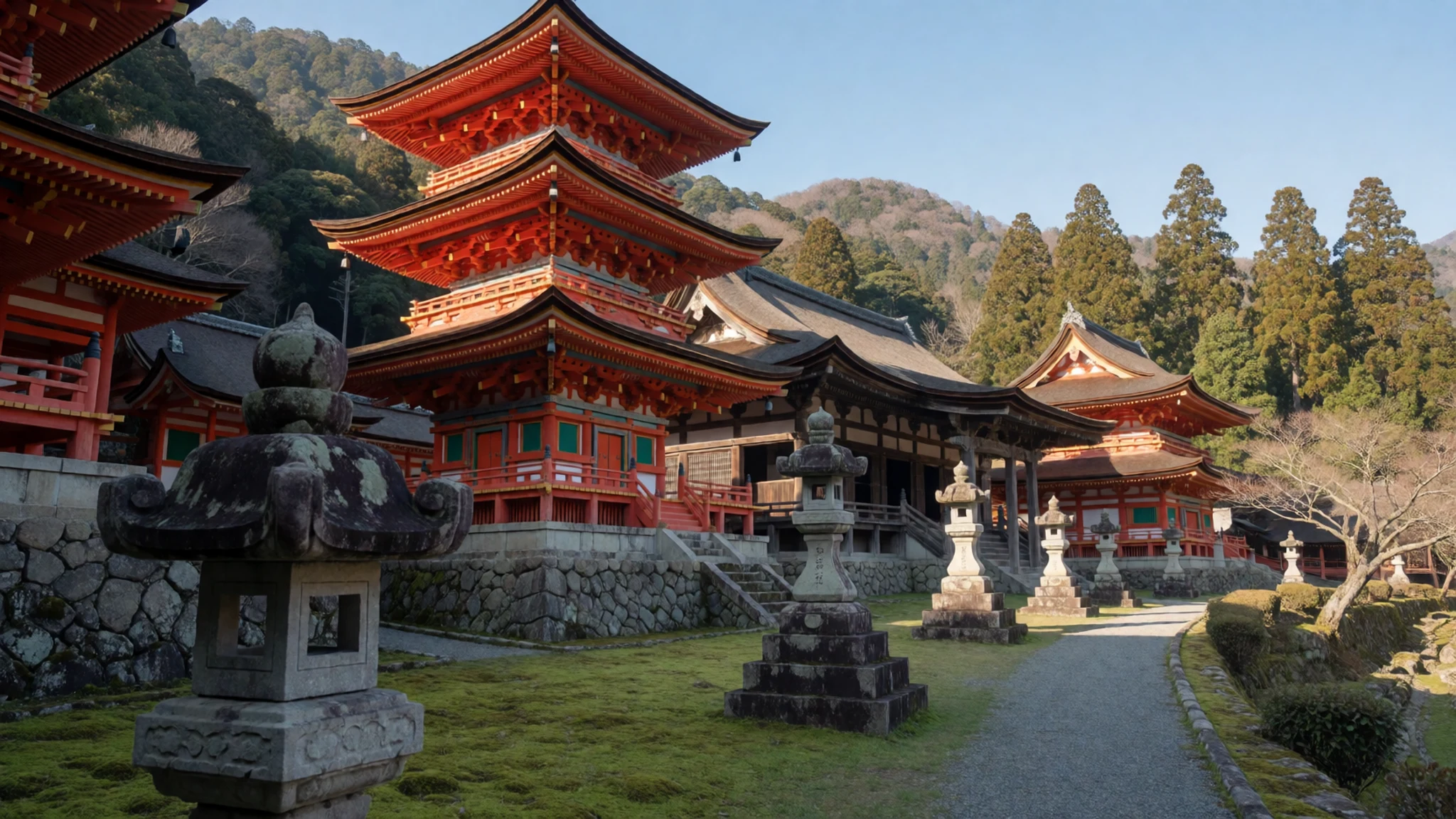
- Ryuhoden Treasure Hall — Beside the Sanjūdō pagoda, near the falls
The Ryuhoden stands beside the pagoda and holds the objects recovered from the sutra mound at the base of the falls. The collection includes statues, mirrors, altar fittings and sutra cylinders. It gives useful context for the falls, because you see the sacred objects that were once hidden in the ground beneath the water.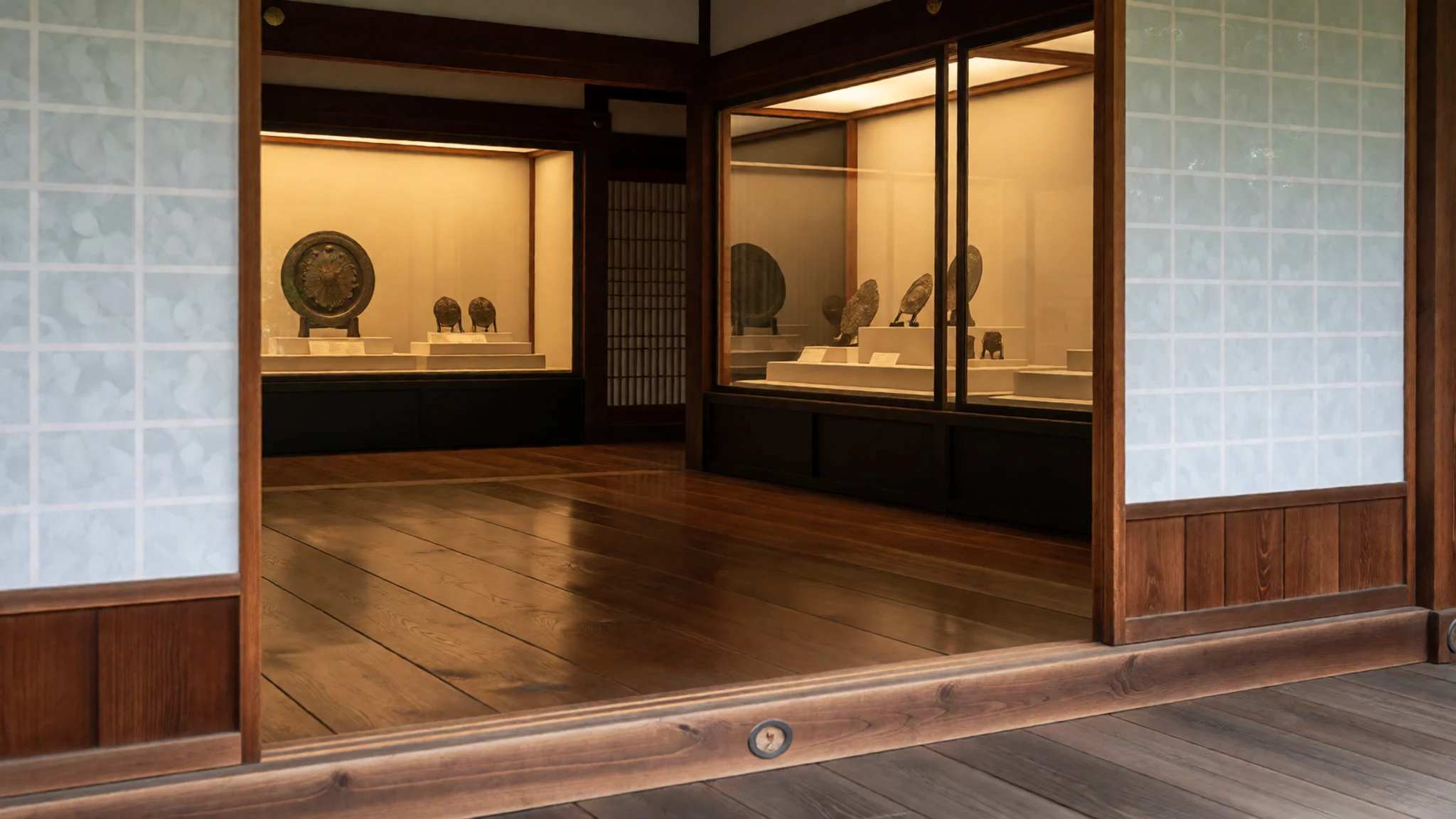
- The approach on the Kumano Kodo — Daimonzaka and the old pilgrimage paths
The stone-paved path leading up to the falls and shrine is part of the old pilgrimage network. Its steps are uneven and can be slippery after rain, so sturdy shoes matter more than fashion. Walking the final stretch slowly lets you feel why pilgrims once made this journey on foot.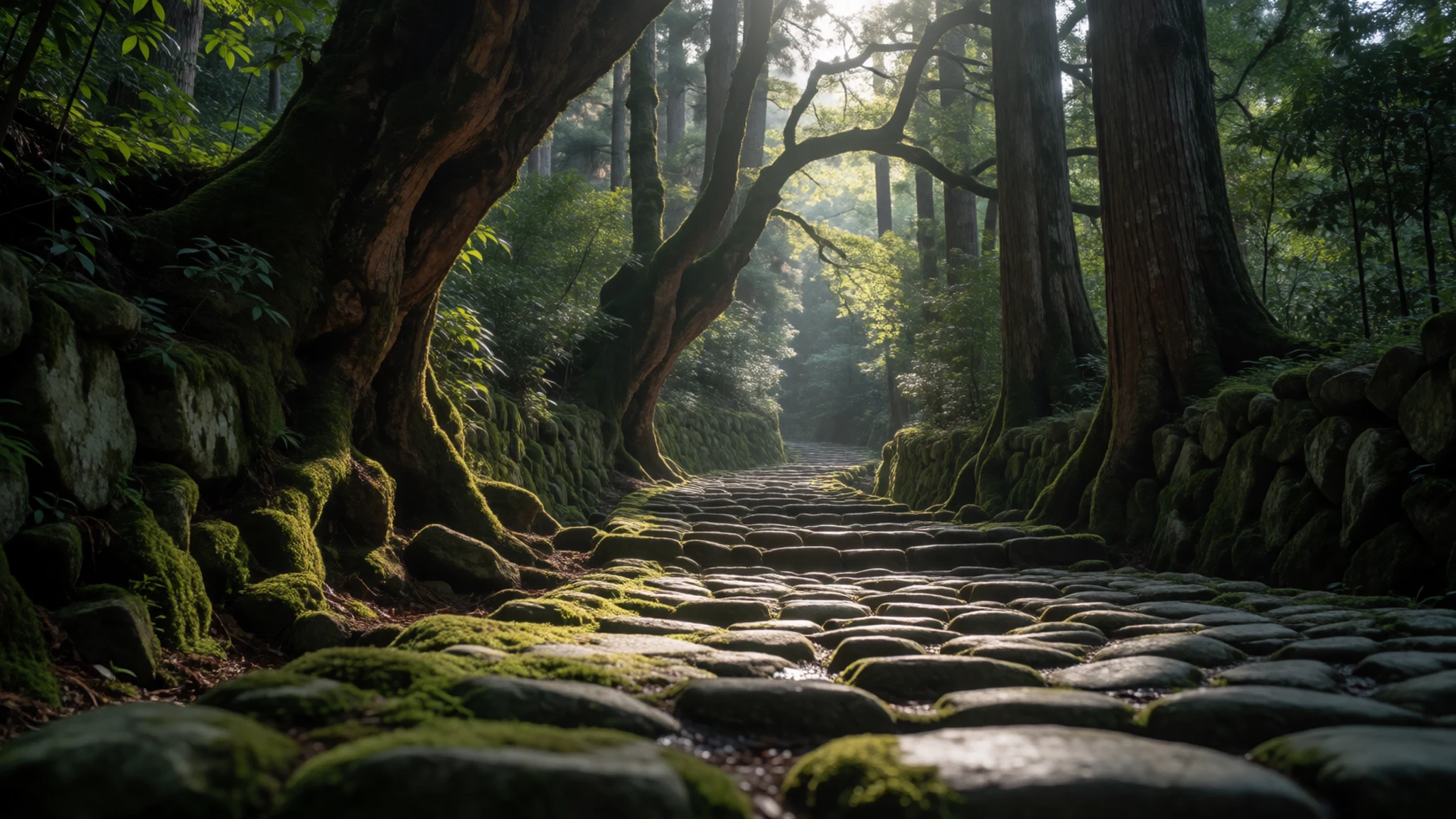
Culture
Nachi Falls is a sacred site as much as a viewpoint, and the people who visit it come for worship, pilgrimage and quiet reflection alongside the scenery. The falls are regarded as the home of a kami, so the atmosphere around the shrine and the pagoda calls for a little restraint. Pilgrims walk the old routes with real intent, and many are older people who have been walking these paths for years. Expect to share narrow steps and viewing spaces with them.
Shinto and Buddhist customs both shape the behaviour you will see. Visitors usually purify their hands at the water basin before approaching a shrine, and bowing lightly before a torii gate is a courtesy many Japanese visitors observe. Speaking softly, keeping phone sounds off and avoiding loud conversation near the water all help the place feel as it should. Tripods, drones and large bags can be a problem on narrow paths, so keep them tidy.
Photography is generally fine in outdoor areas, but avoid photographing people who are praying or performing rituals, and ask before you photograph any priest or pilgrim up close. Inside the treasure hall, follow the posted rules on cameras. Where signs or staff ask you to stay behind a rope or to keep moving, do so, because the fall is best enjoyed by everyone when people keep the flow orderly. Please leave the viewing area as you found it and carry out all of your litter.
What to wear
Nachi Falls is a sacred place, so the traditional dress you will see around it reflects religious life more than fashion. Pilgrims and priests wear the simple garments associated with Shinto and Buddhist practice, and the Kumano Kodo routes have long been walked in plain cotton and hemp-style clothing suited to hard going. You are unlikely to see anything ornate, and that simplicity is part of the setting.
What people wear now is practical and everyday. Japanese visitors dress for a day on foot, usually in comfortable trousers or skirts, light layers and walking shoes, with the occasional smart outfit at the shrine. Japanese shrine visitors tend to look neat rather than showy, and a visitor who does the same will fit in easily.
For your own outfit, think about the climate, the terrain and modesty. In warm months the air around the falls can feel humid, so choose breathable fabrics and carry a light layer for the spray and shade. Cover shoulders and knees at the shrine and temple. Footwear matters most: wear closed shoes with good grip for stone steps that can be wet and uneven, and avoid sandals with thin soles on the pilgrimage paths.
What to eat
- Fresh tuna and donburi — The harbour area and the morning fish market in Katsuura
Nachikatsuura is a fishing town, so tuna served fresh is a sensible thing to seek out. Look for a rice bowl topped with sliced raw tuna, or simple sashimi, at a fish-focused eatery near the harbour. Ask what is landed that day, because the catch changes with the season and the boats.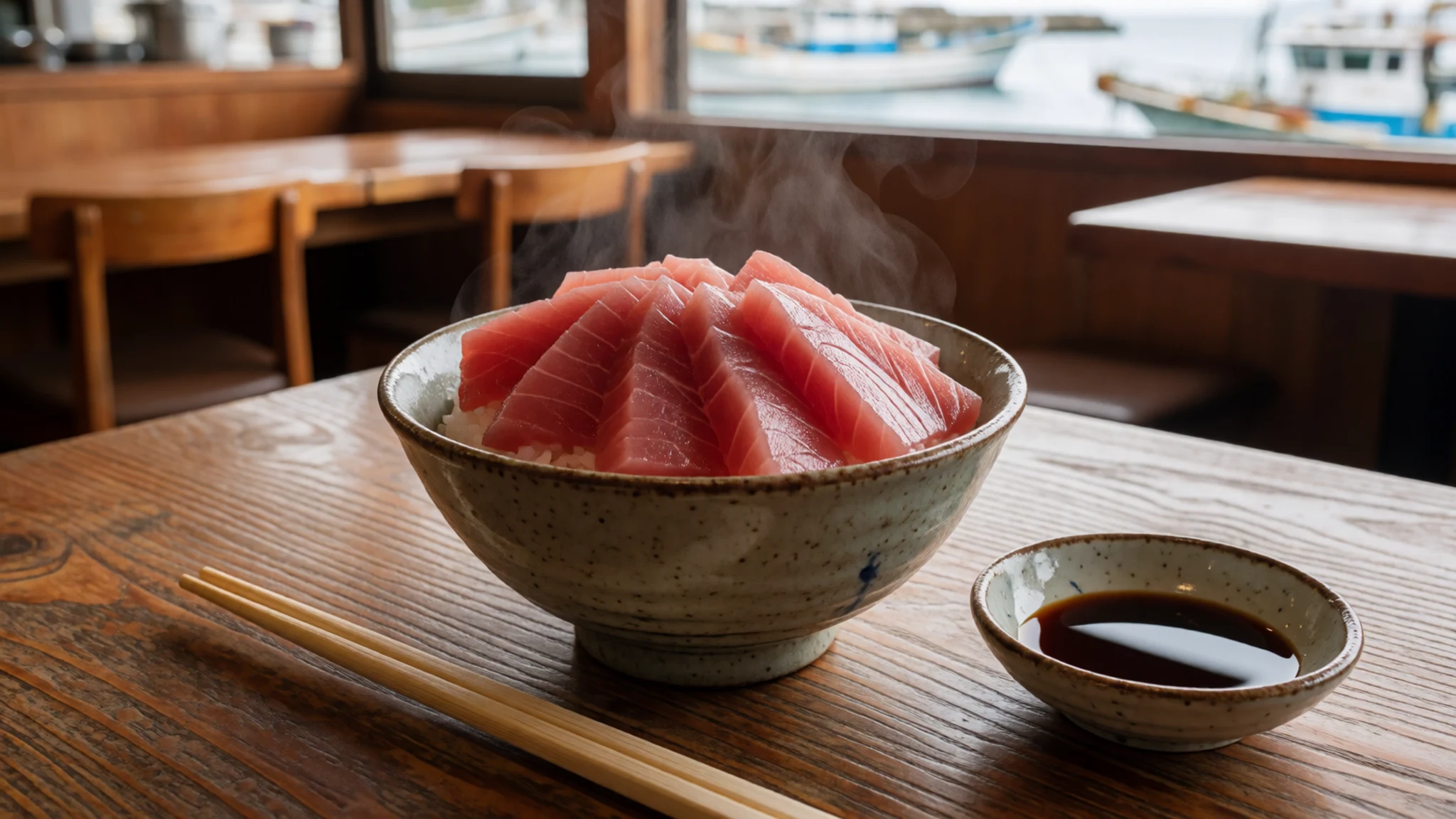
- Wakayama-style ramen — Noodle shops in the town centre near Kii-Katsuura Station
Wakayama has its own ramen style, usually a soy-based broth with a clear, savoury character and thin noodles. It is a quick, filling meal that suits a walk-heavy day. Small noodle counters in the town are the easiest places to find it, and many are open at lunchtime.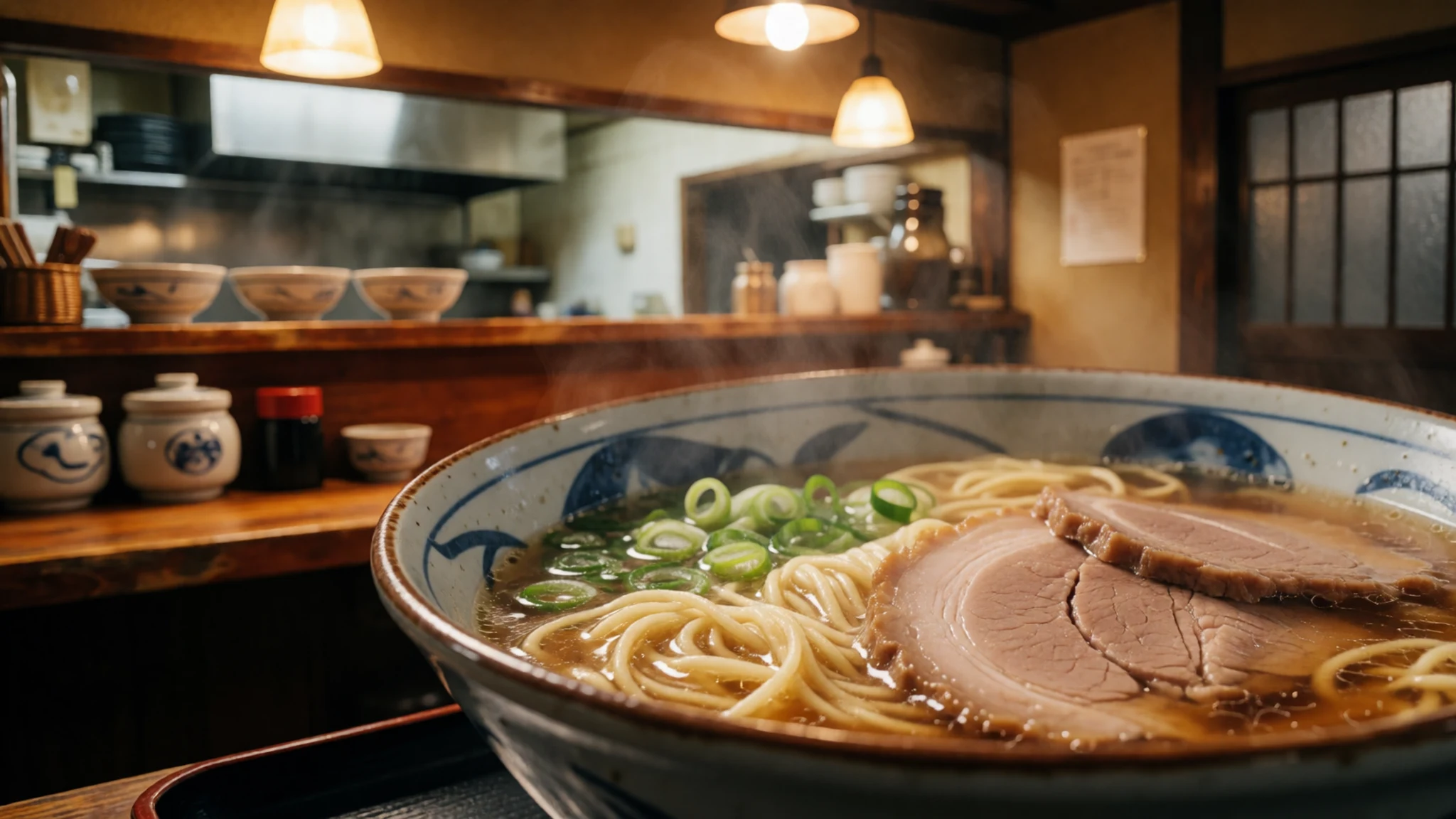
- Ume plum dishes — Local food shops and roadside produce stalls
Japanese plum, or ume, appears in many local preparations, from pickles to sweets and drinks. The sour, salty flavour is a regional favourite. Sample it in a shop selling local preserves or in a small eatery serving seasonal plates, and try a plum-flavoured sweet to take away. - Mikan citrus — Roadside produce stalls and fruit shops in the area
Mikan, the small seedless mandarin, is grown widely in Wakayama and sold fresh in season. Buying a bag from a roadside stall or a fruit shop makes a refreshing snack after the climb. It is a simple, cheap way to taste the region. - Local sweets and tea — Shops and tea stands near the shrine approach
Small confectionery shops near the shrine sell traditional sweets, often made with rice flour, beans or local fruit. Pairing them with green tea at a plain counter is a good way to rest before the descent. Expect modest prices and simple, honest flavours.
Plan it
Best time. Spring, roughly April and May, and autumn, October and November, are the most comfortable months for walking the paths and enjoying the falls. Late summer brings heat, humidity and a real chance of typhoon weather, and the wet season can make the stone steps slippery. Check the forecast before you go, since heavy rain can affect both the paths and the flow of the falls.
How long. 1–2
Getting there. The nearest large airport is Kansai International. From Osaka, take the JR Hanwa line and the JR Kise Line to Kii-Katsuura Station, starting from Shin-Osaka. From Nagoya, take the JR Kansai line and then the Kise Line to the same station. From Kii-Katsuura, use a local bus or taxi to reach the falls, and check current timetables before you set out.
Budget. low
Tips
- Arrive early in the morning, when the crowds are thinner and the priest's morning ritual may be visible
- Check bus times from Kii-Katsuura in advance, because services are infrequent outside the busy periods
- Carry cash for small shops, tea stands and temple offerings, since smaller places may not take cards
- Bring water and a light rain layer, particularly in summer, as the walk is steep in places
- Wear closed shoes with grip for stone steps that can be wet and uneven
- Check the official site for current opening times and fees before you visit
Etiquette
- Keep your voice low and phone sounds off near the shrine and the falls
- Ask before photographing priests or pilgrims, and avoid photographing anyone during prayer
- Follow posted signs and staff directions at the treasure hall and on narrow paths
Nearby
Sources
- Wikidata Q1365882 (CC0)
- Wikipedia: Nachi Falls (rev 1366155523) (CC BY-SA 4.0)
- Wikivoyage: Nachikatsuura (rev 5027446) (CC BY-SA 4.0)
- Photo: Nachi falls in Nachikatsuura, 2025 (Alpsdake, via Wikimedia Commons) (CC0)
- Photo: Kumano Kodo World heritage Nachi-no-taki 10 (Nekosuki, via Wikimedia Commons) (CC BY-SA 4.0)
- Photo: Kumano Kodo pilgrimage route Seiganto-ji 05 (Nekosuki, via Wikimedia Commons) (CC BY-SA 4.0)
- Photo: Daimonzaka (Jnn, via Wikimedia Commons) (CC BY 3.0)
- Photo: Kumano Kodo World heritage Nachi-no-taki 13 (Nekosuki, via Wikimedia Commons) (CC BY-SA 4.0)
- Photo: Kumano Kodo World heritage Nachi-no-taki 14 (Nekosuki, via Wikimedia Commons) (CC BY-SA 4.0)
- Photo: Nachi Falls (Raita Futo, via Wikimedia Commons) (CC BY 2.5)
- Photo: Nachi Falls, August 2019 (Suikotei, via Wikimedia Commons) (CC BY-SA 4.0)


