Mystras
Mystras, Greece
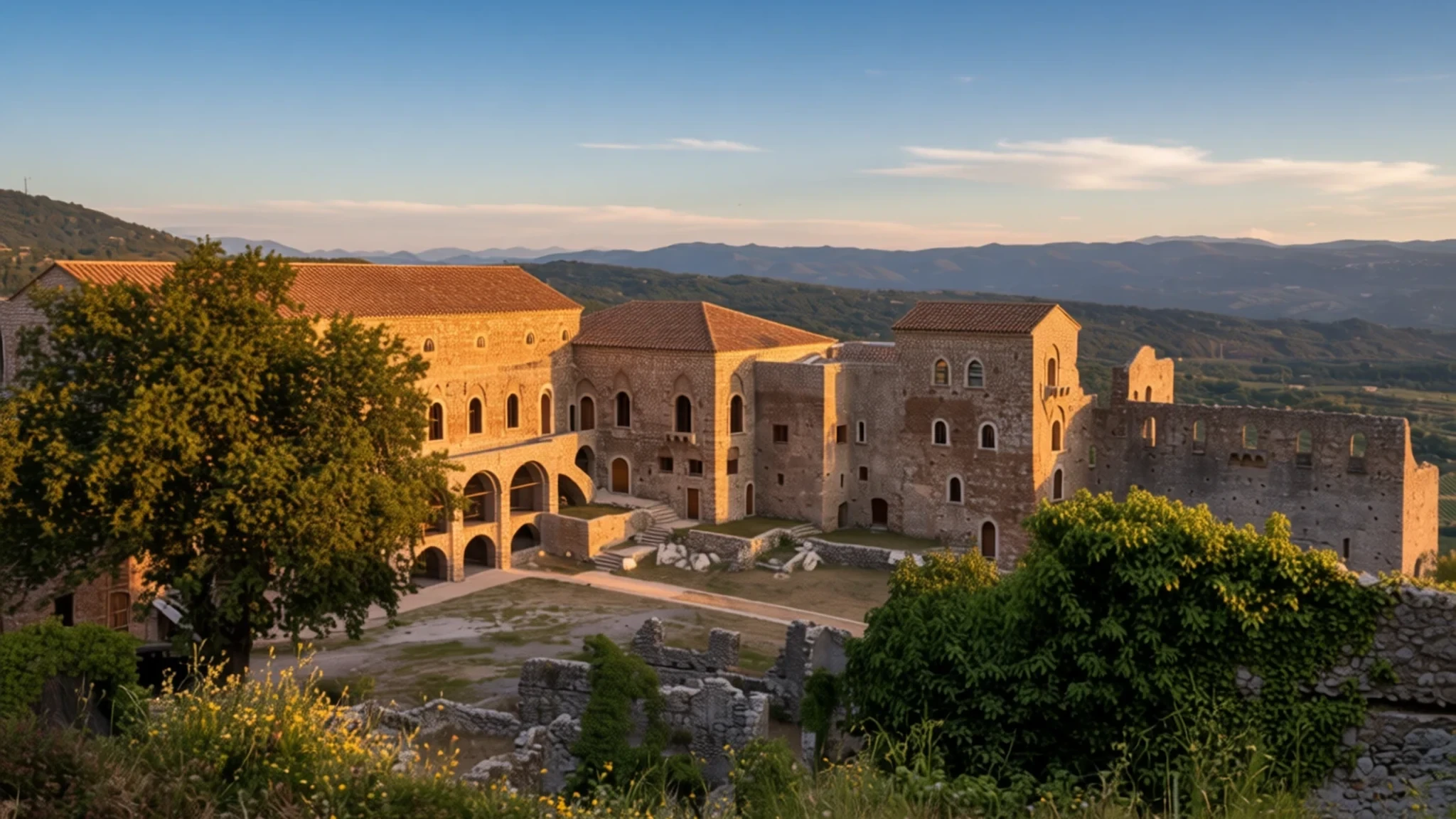
Mystras is a Byzantine city clinging to a Taygetos slope above Sparta, where frescoed churches and Frankish ruins make a slow, rewarding day.
The place
Mystras sits on a spur of the Taygetos mountains, a few kilometres above the modern city of Sparta. The archaeological site is a fortified town of stone houses, churches and palace buildings stacked up a steep hillside, with a castle on the summit. During the late medieval centuries it was the capital of the Byzantine Despotate of the Morea, and scholars and artists gathered here during a late flowering of Byzantine culture. The last Byzantine emperor, Constantine XI, ruled it as despot before he took the throne in Constantinople.
The town was never empty for long. It stayed lived in through the Ottoman period, when travellers often assumed they were looking at ancient Sparta and sketched it accordingly. By the 1830s the population had moved down the hill to a new Sparta, and the upper streets were left to the churches and the weather.
What you see today is the layered result. The lower, middle and upper city follow the slope, and most streets are footpaths because wheeled carts could not manage the gradient. Pines and cypresses cover the surrounding hills, with small rivers and lakes nearby. The site feels more like a set of connected courtyards than a single monument, so expect to climb a lot and to stop often. The main use of the terraces was for the palace, and the markets seem to have sat outside the walls.
Its story
The Frankish prince William II of Villehardouin, ruler of the Principality of Achaea, pushed into Laconia after the Fourth Crusade had opened the Morea to conquest. In late 1248 he took Monemvasia, the last Byzantine outpost on the peninsula, and the surrounding peoples soon submitted. Over the winter he toured the region choosing sites for new fortresses. Near his residence at ancient Sparta, on a spur of Taygetos, he built the castle that became known as Mystras.
Fortune turned in 1259 at the Battle of Pelagonia, where the Nicaean emperor Michael VIII Palaiologos captured William and many of his nobles. The price of freedom was an oath of loyalty and the handover of Monemvasia, Grand Magne and Mystras, completed in 1262. From then on Mystras housed the Byzantine governor of the Morea. That governor was at first changed every year, and later appointed for longer terms. William broke his oath almost as soon as he got home, and fighting between Byzantines and Franks resumed.
Those Byzantine decades gave the town its wealth and its churches. The city grew down the slope, and its buildings mix local design with the architecture of Constantinople. Its greatest period came when it was the despots' capital. The Ottomans kept it inhabited, though its importance faded. In the 1830s people left the hill for a new Sparta, and the old town became a ruin that visitors came to study. It was inscribed on the UNESCO World Heritage List in 1989.
What to see
- Mitropolis — Upper town
The main church of the town, and the seat of the metropolitan bishop when the despotate was at its height. Its walls and domes explain how the builders of Mystras worked with brick and stone, and the interior is one of the best places to understand the local style. Go early, when the church is quiet and the light falls well on the painted surfaces.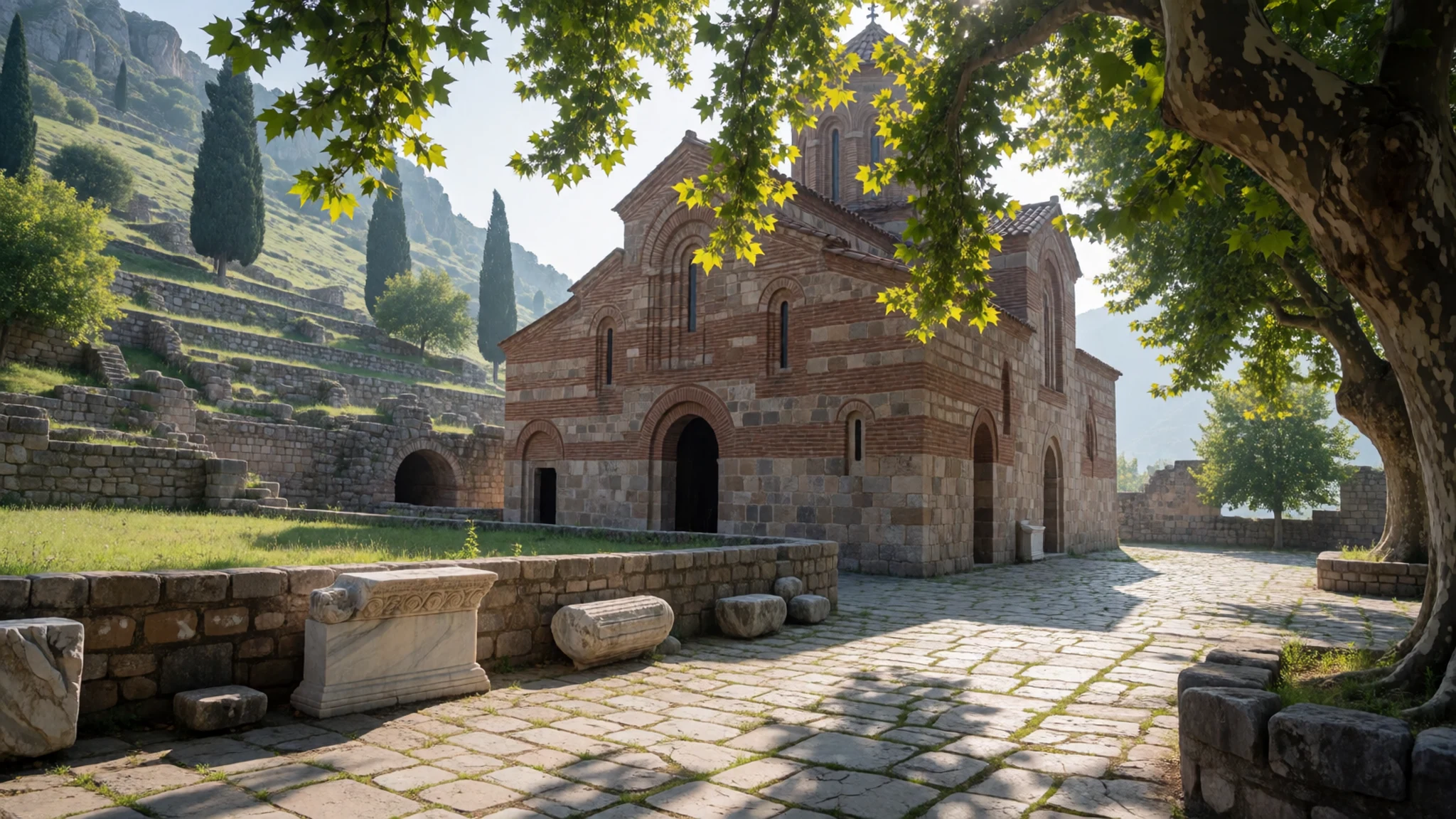
- Pantanassa Convent — Middle town
The best-preserved monastery on the site, and still an active community. Its church is topped by a cluster of domes, and the richly decorated exterior apse mixes late Byzantine forms with Western Gothic touches. Walk slowly around the outside before going in, and keep your voice down, because people still live and pray here.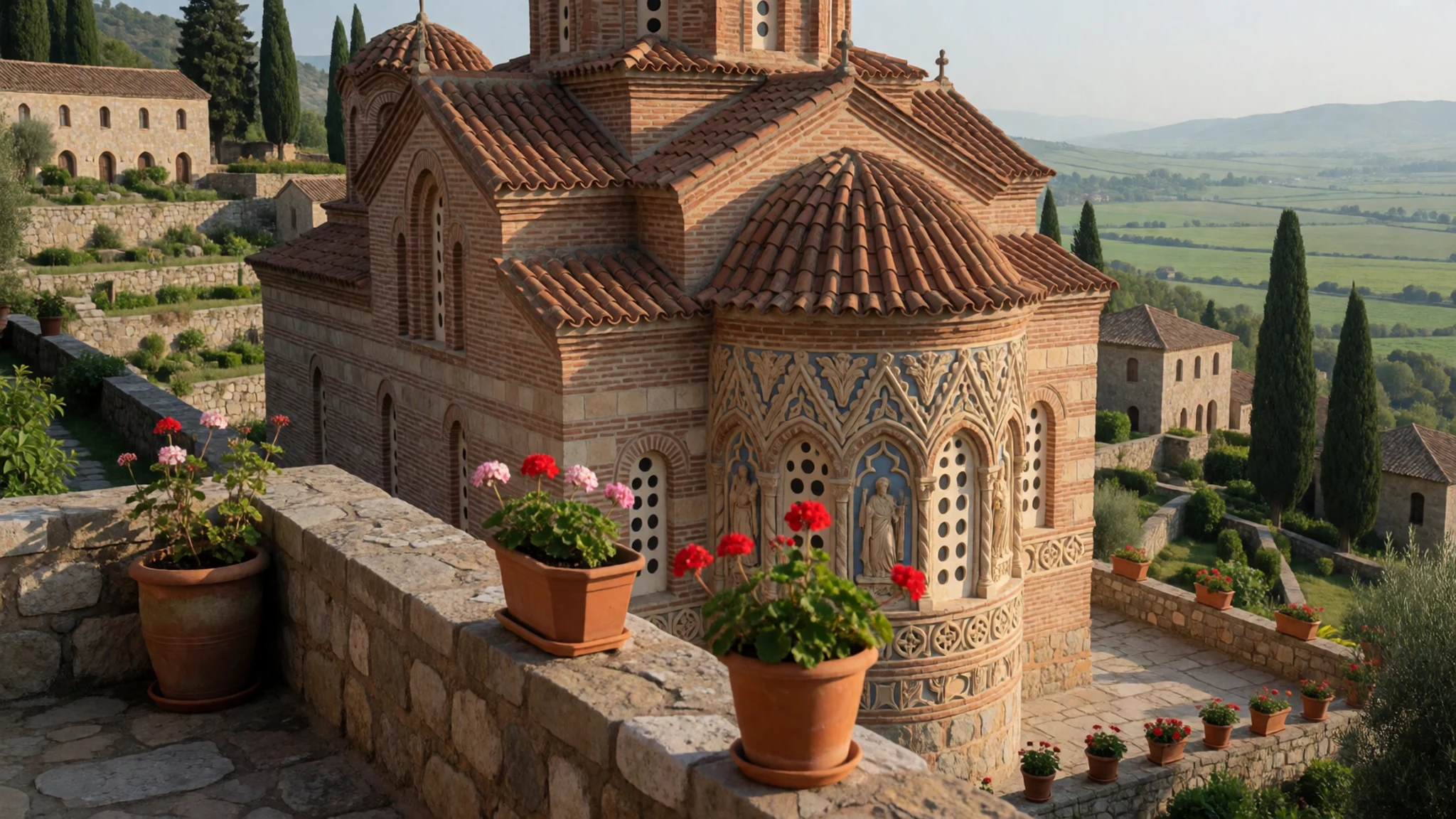
- Perivleptos Monastery — Upper town
Built into the rock face, this monastery has an irregular layout that follows the cliff. Its inside walls carry some of the finest painted scenes on the site, and the colours are still vivid in places. Bring a torch or a phone light if the interior is dim, and allow time, since the frescoes reward patient looking rather than a quick pass.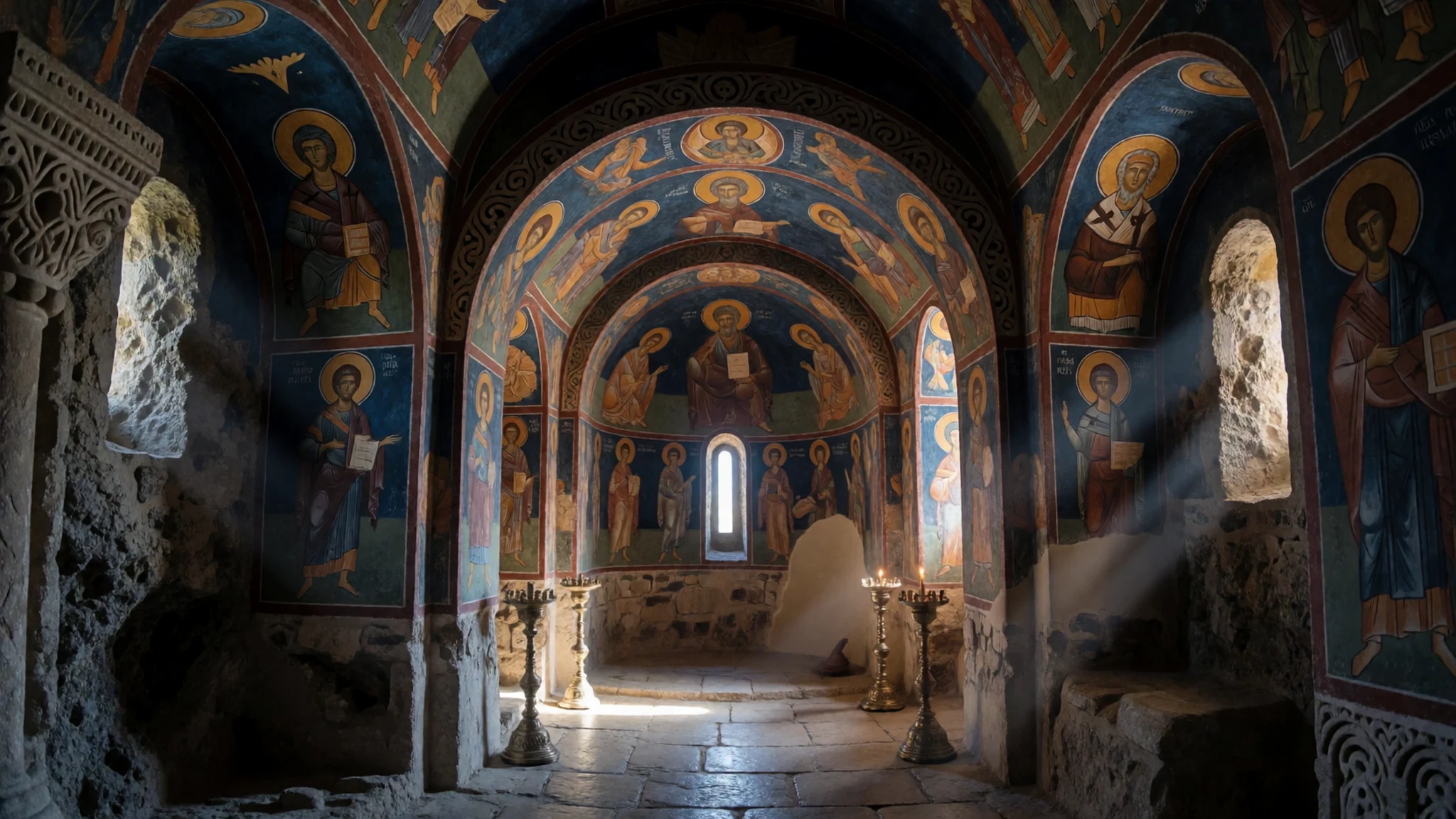
- Hodegetria Church — Middle town
The most architecturally advanced church on the site, taller and more complex than the earlier buildings. It combines a basilica-style plan with several domes, which makes the interior feel brighter and more spacious than many Byzantine churches. Look up at the domes, then compare the light with the darker chapels nearby.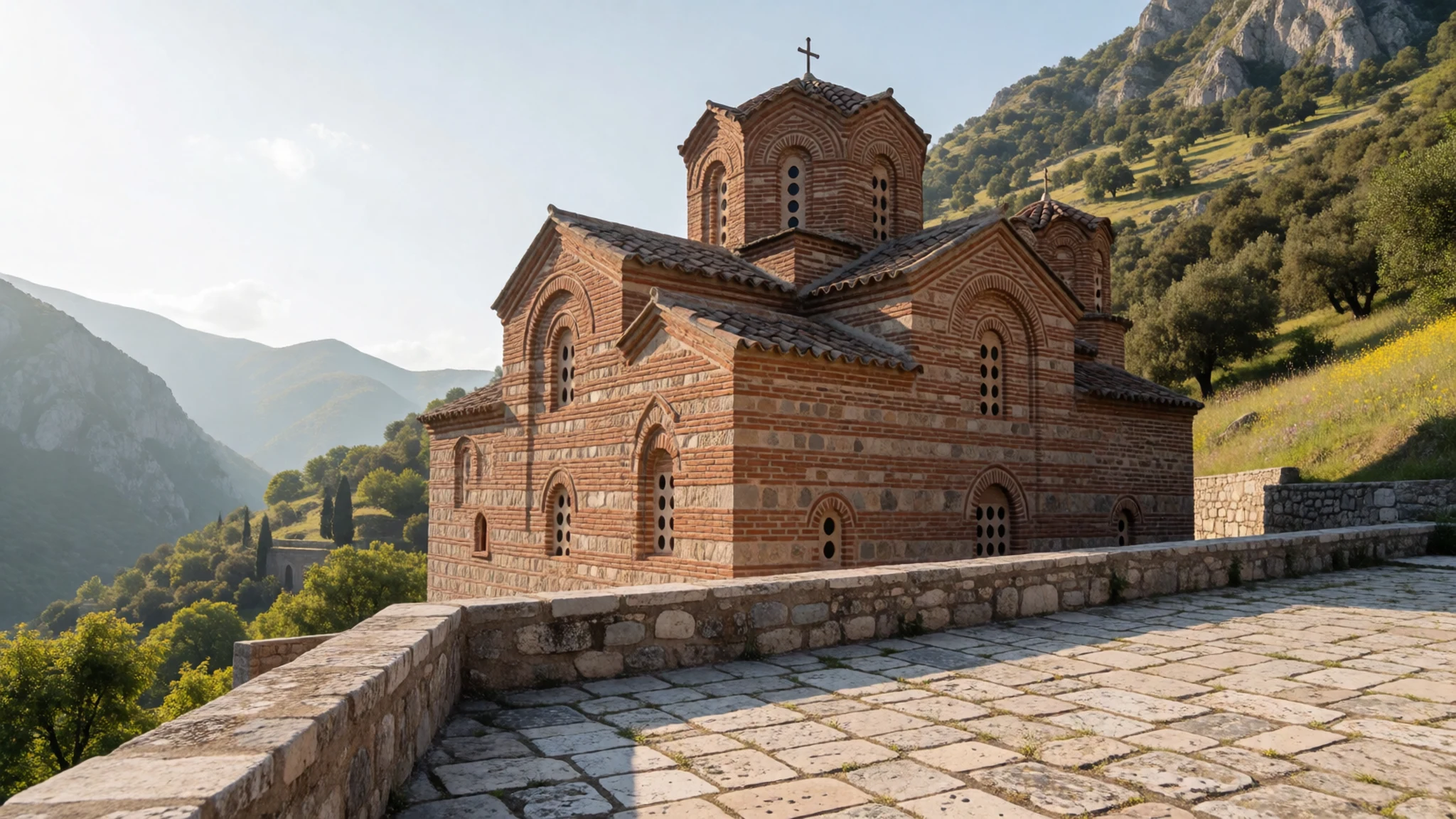
- Agia Sofia — Lower town
Probably the palace church of the despots, this building stands close to the palace complex. It was built for court ceremony rather than monastic life, so it feels different from the monasteries around it. Pair it with a walk through the palace ruins, which give a sense of the scale of what the despots once controlled.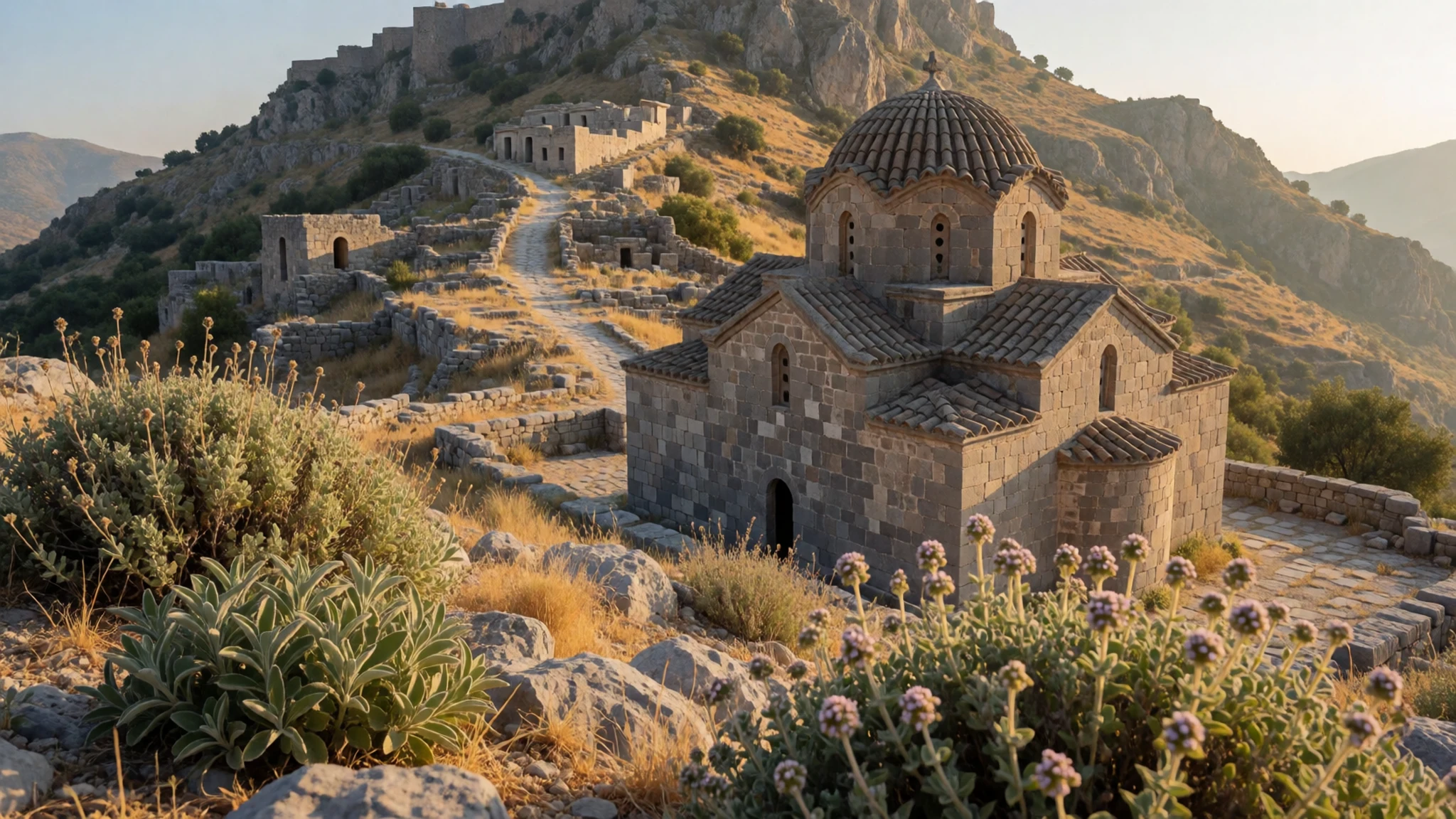
Culture
Mystras is a working religious landscape as well as a ruin, and several of its churches are still used for worship by a small monastic community. Greek Orthodox practice shapes much of what happens inside. Visitors notice icons, candles and the smell of incense, and people often stop to kiss an icon or light a candle. Treat these as acts of devotion rather than sights. The wider culture is also one of coffee and conversation. Village kafeneia are places where older men sit for hours over small cups, and you are welcome to join them without any pressure to order quickly. Greek hospitality means a glass of water or a small sweet may appear without being asked. People in Sparta and the villages are used to visitors, but a greeting in Greek, such as kalimera in the morning, is always appreciated. Dress modestly with shoulders and knees covered, and step back quietly during a service rather than wandering across the nave.
What to wear
Traditional dress in the Peloponnese is known mainly from festivals and museum collections rather than daily life. Village women once wore wool and linen, with embroidered blouses, aprons and woven belts, while men wore wool trousers, waistcoats and, in some regions, the fustanella, a pleated kilt. Embroidery, dark wool and handwoven cloth are the textiles most associated with the region. Today most people in Sparta and the villages dress much as people do across Greece, in jeans, linen shirts and light summer clothes. Smarter dark or dressy outfits appear at church services, weddings and name-day celebrations.
For your own visit, the main concerns are sun, stone and churches. Paths are uneven and sometimes slippery, so pack walking shoes with grip rather than thin-soled sandals. Light cotton or linen in pale colours keeps the heat off on a summer day, and a wide hat helps because there is little shade on the upper paths. Bring a light long-sleeved layer, since mountain air can turn cool in the evening. For the churches, cover your shoulders and knees, and carry a shawl or scarf so you can cover your hair or shoulders quickly if asked. Skip very short shorts and bare backs; a scarf draped over a sundress solves most problems.
What to eat
- Horiatiki (village salad) — Any taverna in the lower town of Sparta
A village salad of ripe tomato, cucumber, onion, green pepper and olives, with a slab of feta on top and a drizzle of local olive oil. Laconia grows plenty of olives, so the oil is often peppery and fresh. Share it as a side, since portions are generous.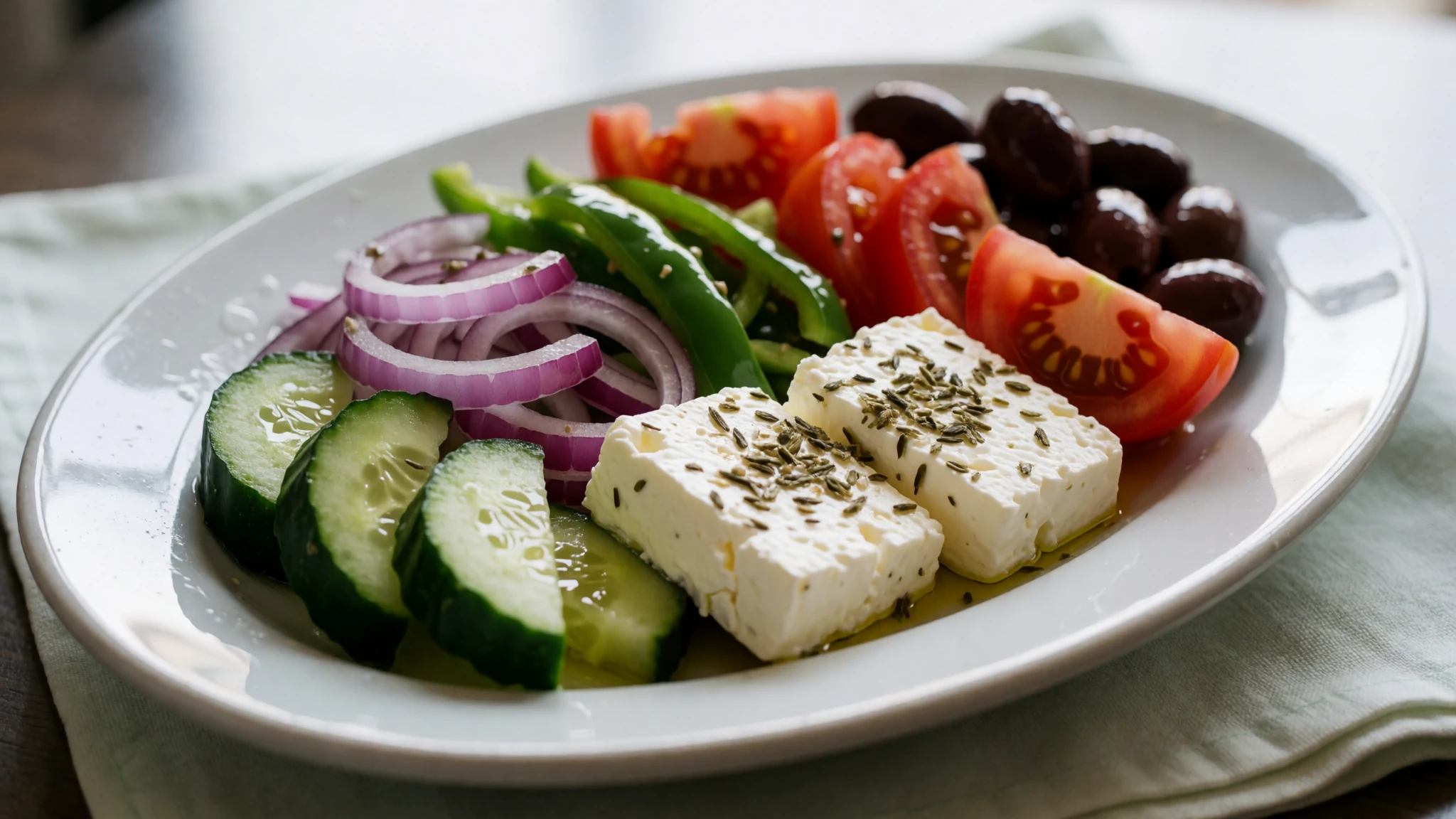
- Spanakopita (spinach and feta pie) — Bakeries on the central streets of Sparta, especially in the morning
Layers of thin filo wrapped around spinach, leek and feta, baked until the pastry crackles. Bakeries sell it by the slice, and it makes a good snack for the walk up the hill. Look for a freshly baked tray, since the pastry loses its crunch quickly.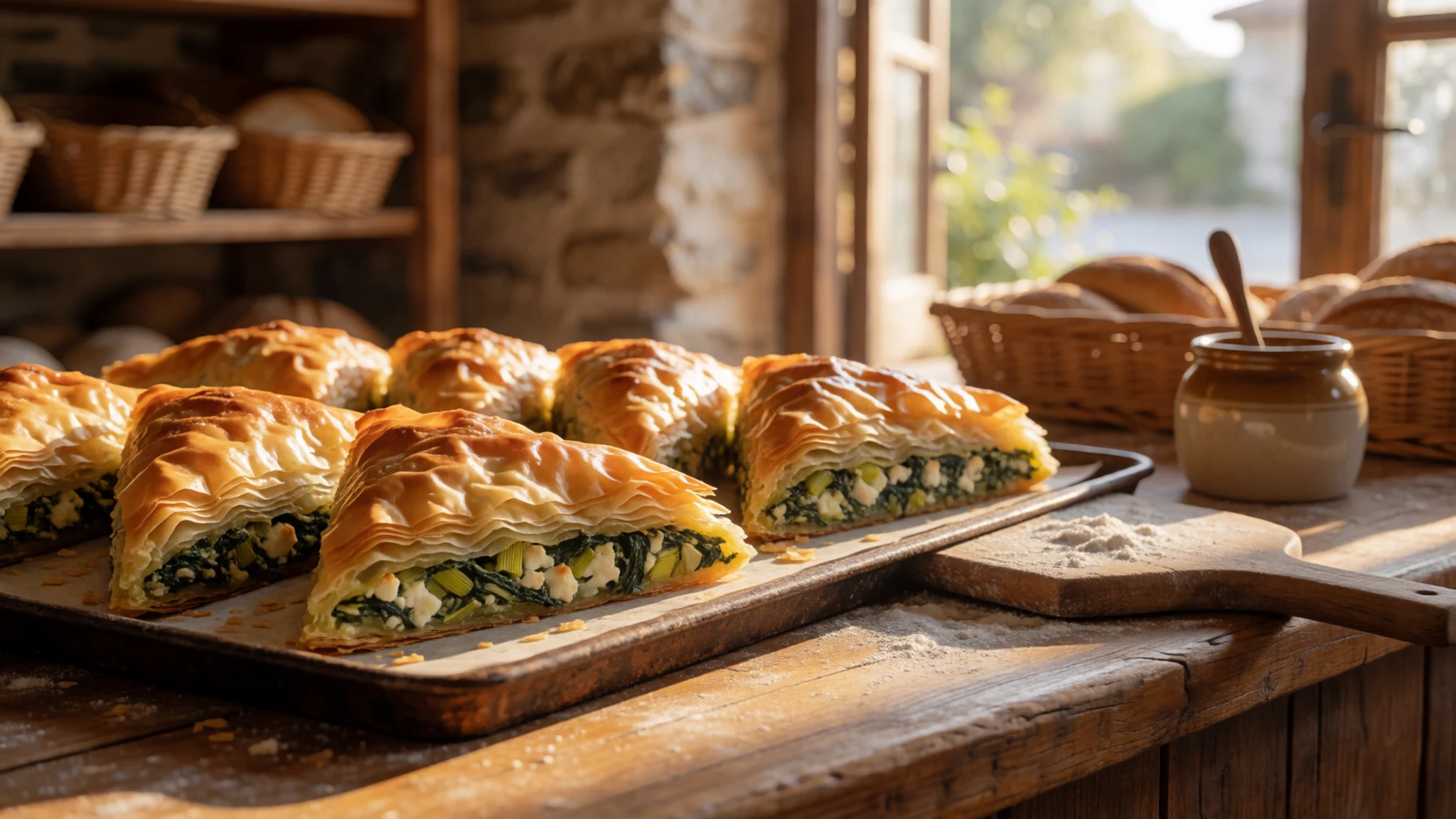
- Souvlaki in pitta — Grill houses (psistaria) in the lower town of Sparta
Pork or chicken skewers, grilled over charcoal and served in pitta with tomato, onion and a little yoghurt sauce. Grill houses, called psistaria, are a dependable lunch in the region. Order a plate with bread, and eat early. - Coffee and mezedes at a kafeneio — Village kafeneia near the ruins and in older streets of Sparta
Greek coffee, thick and unfiltered, served with a glass of water, and small plates of olives, cheese or cured meat called mezedes. A kafeneio is a neighbourhood café where men of the village spend long afternoons. Order a coffee and a plate to share; nobody will rush you. - Thyme honey and walnuts — Grocers and farm shops along the road into Sparta
Thyme honey from the mountain slopes, sold in glass jars with pine honey and local walnuts. Grocers and farm shops along the road into Sparta stock jars, and a small jar makes a good gift to take home. Ask whether it is pure, and taste before you buy.
Plan it
Best time. March brings green hillsides and the mildest walking weather, and November is comfortable too, while June to August are the hottest months. July and August are very hot on the open upper paths, and the stone holds heat well into the evening.
How long. 2
Getting there. Fly into Athens or Kalamata, then hire a car or take a bus to Sparta. The ruins are about seven kilometres west of Sparta along the EO84 national road. Local buses leave from in front of the Archaeological Museum in Sparta, but they are infrequent, so confirm the last return bus with the tourism office there.
Budget. low
Tips
- Go early, before the tour groups arrive and before the heat builds on the upper paths
- Wear proper walking shoes, since the paths are steep, uneven and sometimes slippery
- Carry water and a hat, because shade is limited higher up
- Pick up a site map at the entrance, as the ruins are spread across the hillside
- Check the bus timetable before you travel, and plan around the last return bus
- Carry some cash for buses, small cafés and the village kafeneia
Etiquette
- Dress modestly for the churches, with shoulders and knees covered
- Ask before photographing people, especially worshippers and the monastic community
- Keep voices low inside the churches and during services
- Stay on the paths and do not touch frescoes or fragile stone walls
Nearby
Sources
- Wikidata Q19053 (CC0)
- Wikipedia (Mystras, rev 1378945152) (CC BY-SA 4.0)
- Wikivoyage (Mystras, rev 5304950) (CC BY-SA 4.0)
- Palace at Mystras by Joy of Museums (CC BY-SA 4.0)
- Mystras (Apaleutos25) (CC BY-SA 4.0)
- Despot's Palace (2026) (CC BY-SA 4.0)
- View of Mistra by Coronelli (Public domain)
- Monastery of Pantanassa - Mystras (CC BY-SA 4.0)
- Photo of the palace in Mistra (CC BY 4.0)
- Hill of Mystras with Villehardouin's Castle (2017) (CC BY-SA 4.0)
- Byzantine city of Mystras, church of Saint Demetrios (CC BY 3.0)


