Mount Roraima
Mount Roraima, Venezuela
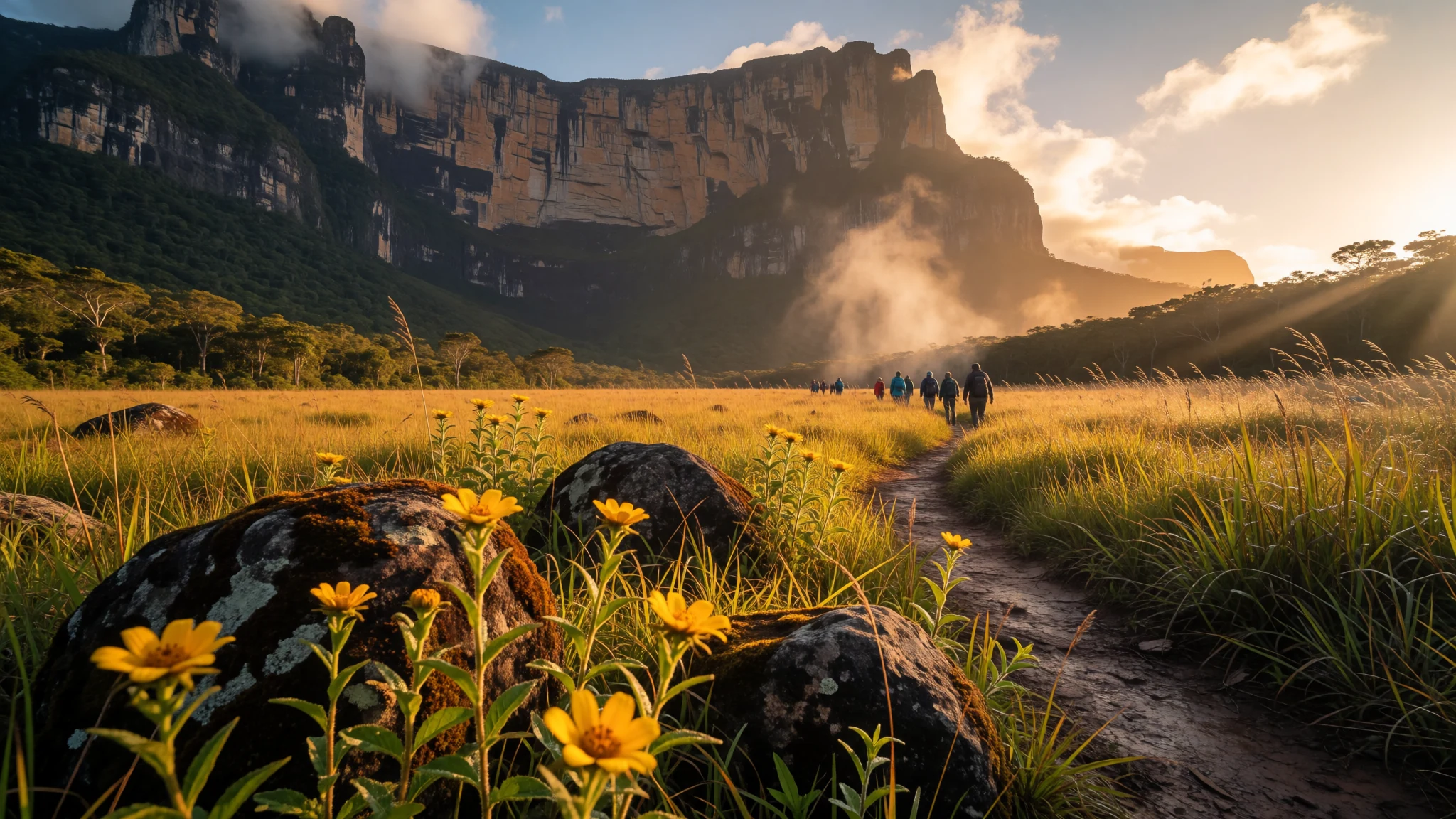
A vast, fog-shrouded sandstone tabletop rising above ancient South American rainforests, Mount Roraima offers one of Earth's most otherworldly wilderness treks.
The place
Mount Roraima stands as a massive sandstone tabletop plateau emerging from the high grasslands and rainforests of northern South America. Situated in the Guiana Highlands, Mount Roraima forms a tripoint where the borders of Venezuela, Brazil, and Guyana meet. Rising to an elevation of 2,810 metres above sea level at its highest point, the mountain is defined by sheer vertical rock cliffs that drop up to hundreds of metres into thick cloud forests below. The vast summit covers a flat expanse shaped by millions of years of wind, relentless tropical rain, and chemical weathering.
The geological isolation of Mount Roraima has created a unique, surreal landscape unlike anywhere else on earth. Rainwater has carved deep fissures, labyrinths, natural stone arches, and deep sinkholes directly into the dark sandstone bedrock. Because nutrient-rich soil cannot easily accumulate on the windswept rock, much of the flora and small wildlife found on the summit are strictly endemic species adapted to nutrient-poor conditions, including carnivorous pitcher plants and tiny black frogs. Clouds regularly billow over the plateau edge, enveloping the rocky surface in dense mist and dramatic squalls. Exploring Mount Roraima requires multi-day trekking across open savannah and through dense jungle trails before ascending a steep, rock-strewn ramp along the southern cliff face.
Its story
Mount Roraima holds profound cultural and spiritual significance for the Indigenous Pemon people, who have inhabited the Gran Sabana surrounding the plateau for generations. In Pemon mythology, the mountain represents the stump of a mythical tree that once held all the fruits and cultivated plants of the world. According to legend, a trickster deity felled the tree, unleashing a colossal deluge of water that formed the rivers and waterfalls of the region, leaving behind the solitary flat topped cliff that stands today. The name itself derives from Pemon words meaning 'great blue-green mountain', referencing the perpetual shroud of mist that surrounds its ancient sandstone precipices.
For centuries, European mapmakers and explorers viewed the remote plateau from afar, deeming its sheer wall faces completely impregnable. It was not until 1884 that a British expedition led by Everard im Thurn discovered a viable climbing route along a natural forested ledge on the Venezuelan side. The expedition's vivid descriptions of a lost world on the summit—a barren, fog drenched landscape populated by strange plants and unusual creatures—inspired Sir Arthur Conan Doyle's famous 1912 adventure novel The Lost World. While scientific expeditions over the subsequent century demystified many aspects of Mount Roraima, its isolation and challenging access preserved the site as an enduring icon of South American wilderness exploration, revered by local communities and outdoor travellers alike.
What to see
- Triple Point — Northern summit plateau
Located on the high rocky surface of Mount Roraima, the Triple Point is marked by a small tri-sided concrete pyramid where the international boundaries of Venezuela, Brazil, and Guyana converge. Reaching this remote landmark involves a three-hour hike across sculptured sandstone terraces from the main ascent trail head on the summit, crossing shallow pools and black rock fields under shifting mountain mists.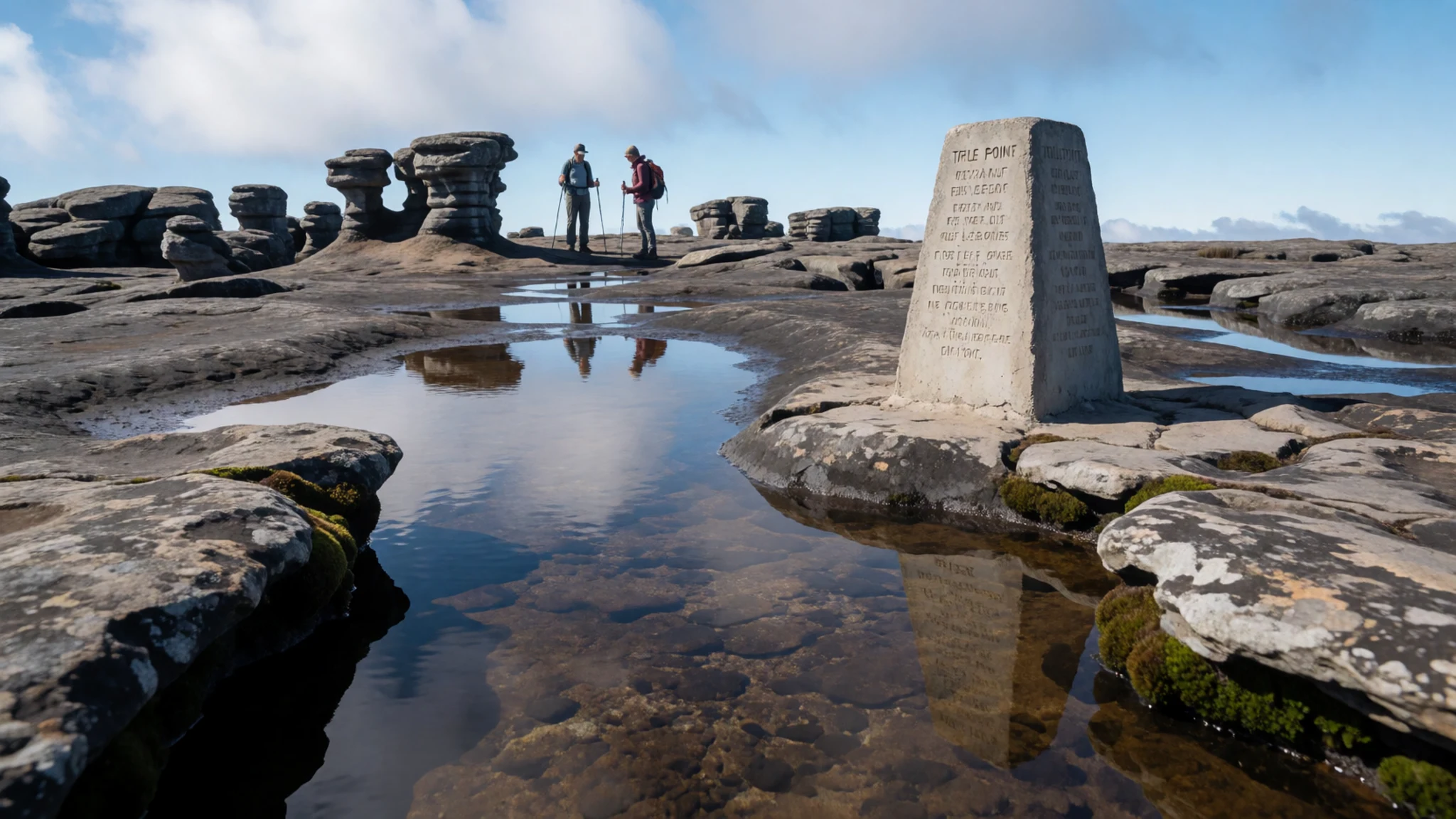
- El Foso — Central plateau
Carved into the dark sandstone of Mount Roraima, El Foso is a deep circular sinkhole measuring roughly ten metres across. Formed over thousands of years by unrelenting tropical rainfall, the pit plummets into an underground cavern with a subterranean water pool. Adventurous trekkers can scramble down slippery rock ledges to explore the shadowy interior where torrential rains drain deep into the mountain bedrock.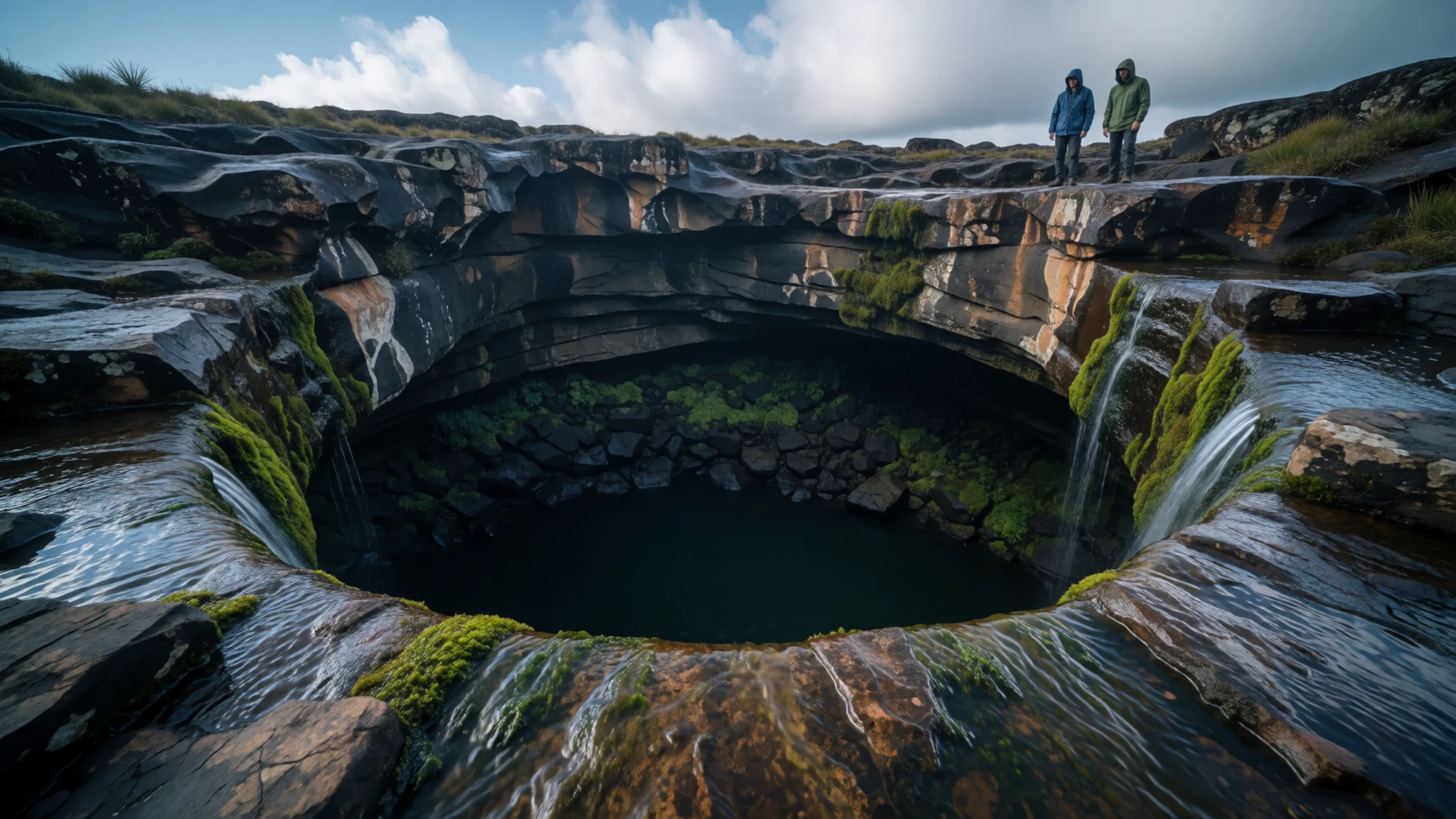
- Valley of Crystals — Eastern summit plateau
Stretching across an exposed rock basin on Mount Roraima, the Valley of Crystals is blanketed in millions of loose quartz crystals shining against dark grey sandstone bedrock. Water streams over the quartz field, creating glistening reflections across the plateau floor. Due to strict park preservation regulations, visitors must strictly refrain from taking or disturbing any crystal specimens from this delicate geographical formation.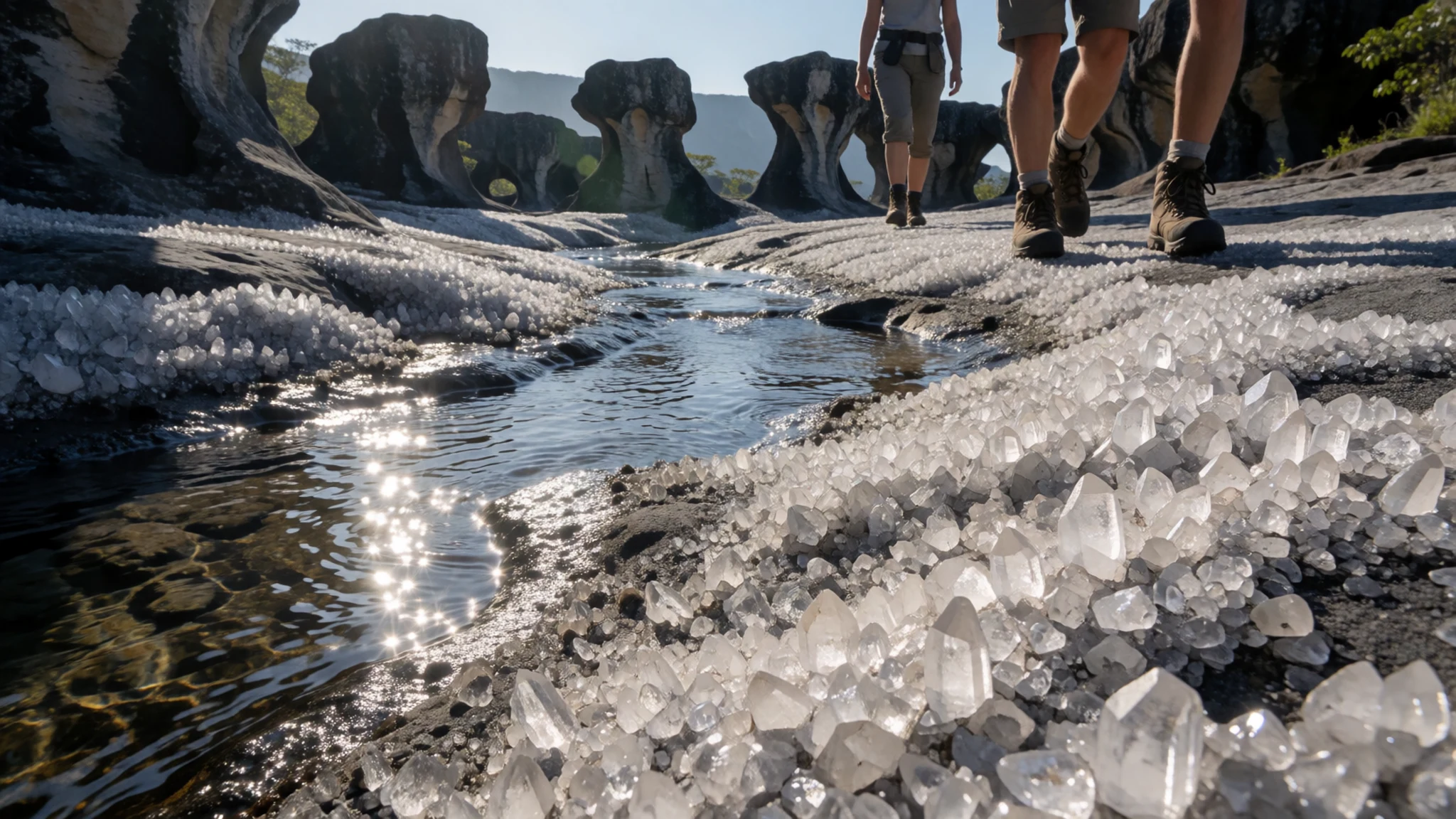
- The Jacuzzis — Southern summit plateau
Situated along the natural stream passages near the southern edge of Mount Roraima, the Jacuzzis are natural circular rock basins filled with crystal-clear water. Yellow and pink quartz gravel lining the basin floors gives the frigid water a colourful glow. Hikers often stop here during sunny intervals to wash away dust from the trail in these invigorating, ice-cold mountain pools.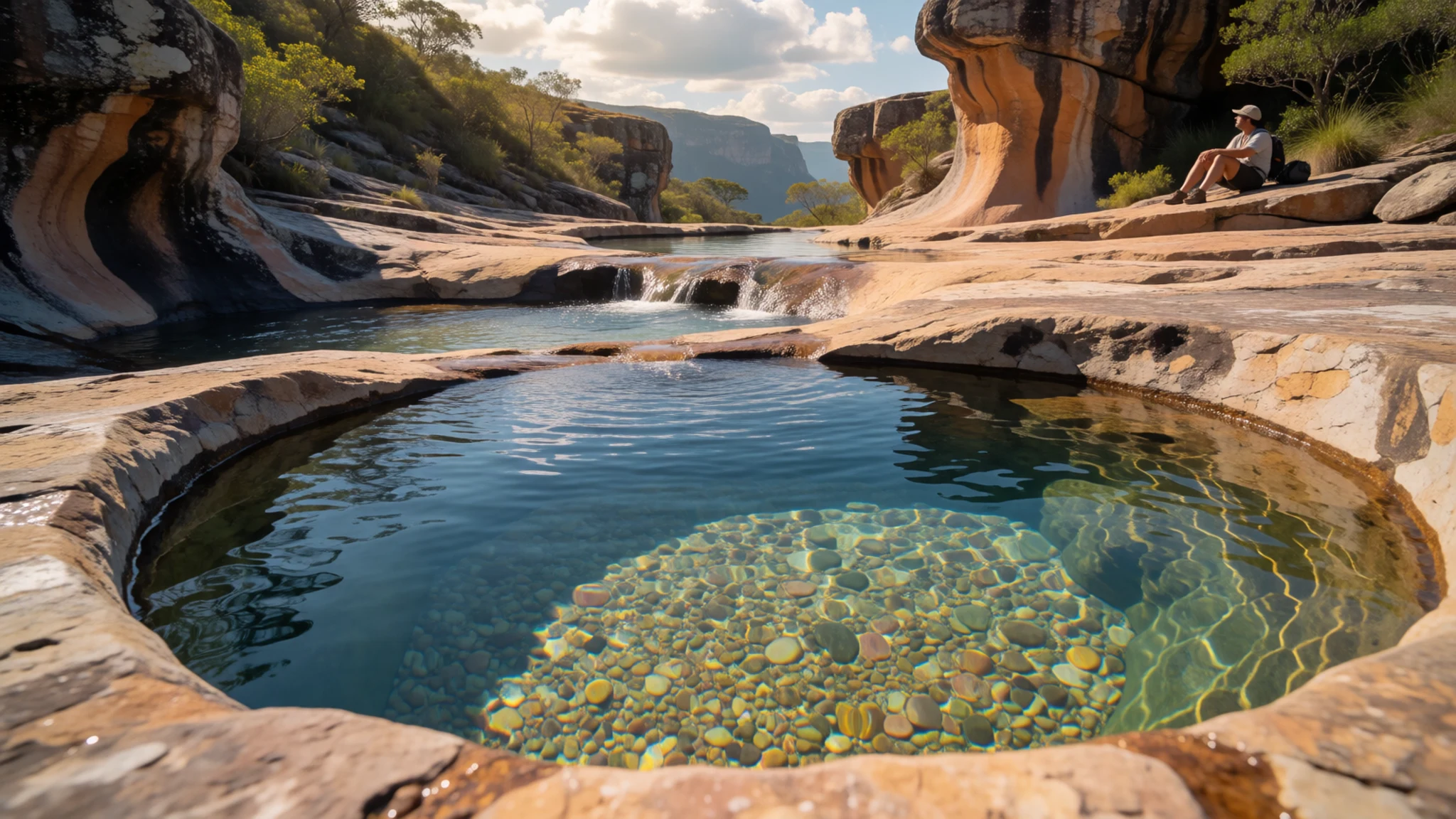
- Guácharos Crack — South-western plateau edge
Positioned near the edge of Mount Roraima's western cliff face, Guácharos Crack is an immense fissure cleaving deep into the stone plateau. Named after the nocturnal oilbirds that nest within its shadowy vertical clefts, the chasm offers dramatic views down sheer vertical drop-offs into the dense cloud forests below, where fog continually rolls up from the valley floor.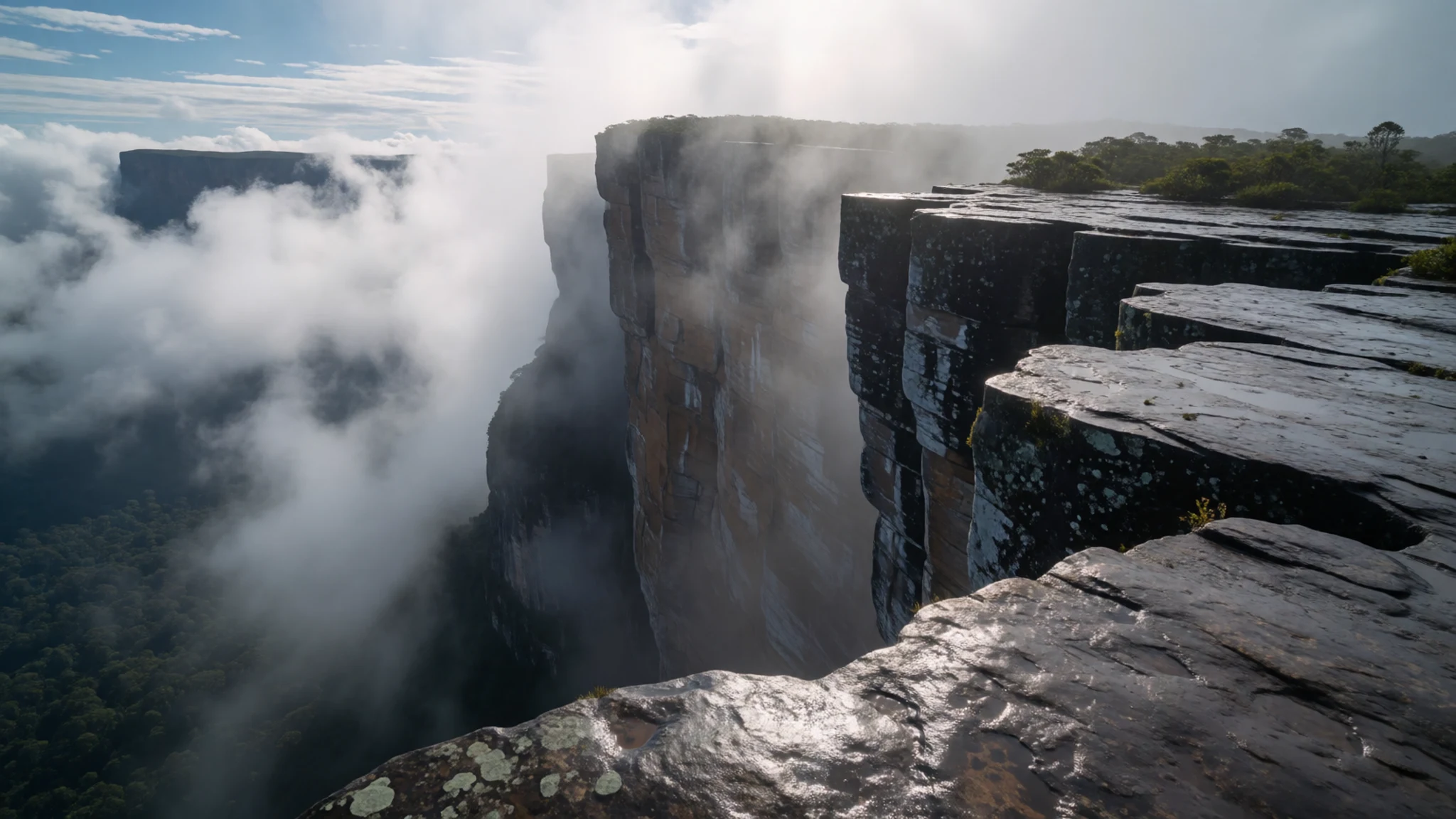
Culture
Mount Roraima holds deep cultural resonance for the Indigenous Pemon people of the Gran Sabana region, who serve as essential guides, porters, and stewards for expeditions visiting the plateau. Traditionally, the Pemon regard the mountain with intense spiritual reverence, viewing its towering rock precipices as a sacred realm that demands care and humility. Local customs and folklore are woven into daily life in Paraitepuy, the Pemon village located at the trailhead where treks begin. Community members maintain a communal approach to managing expedition logistics, working to share economic benefits evenly while protecting their ancestral territory from ecological damage caused by irresponsible tourism.
Visitors trekking up the mountain are expected to treat local Pemon traditions, guides, and natural sites with genuine respect. Stories passed down through generations caution against making excessive noise or acting disrespectfully on the plateau, as local beliefs hold that loud shouts can anger atmospheric spirits and bring sudden torrential rain squalls down upon the summit. Hikers should listen closely to guide instructions and ensure all trash is carried off the mountain. Always ask for clear permission before taking photographs of local Pemon guides and community members.
What to wear
Traditional attire among the Pemon people of the Gran Sabana near Mount Roraima was historically crafted from natural plant fibres and hand-woven cotton textiles, often accented with red annatto body paint and seed bead ornaments for ceremonial gatherings. Today, Pemon villagers and expedition porters wear functional modern western clothing suitable for outdoor work in the humid tropical climate, including lightweight cotton shirts, durable shorts, trousers, and rubber boots or sturdy trainers for navigating muddy river valleys and rough trails.
Visitors attempting the multi-day trek up Mount Roraima must prepare for extreme variations in temperature and weather. While lower savannah sections can be hot and sun-drenched, the summit plateau is notorious for cold winds, sudden downpours, and dropping nighttime temperatures. Essential gear includes a waterproof thermal jacket, quick-drying moisture-wicking synthetic base layers, fleece mid-layers, and sturdy waterproof hiking boots with excellent ankle support and traction for slippery rock scrambles. Warm sleeping gear, thick wool socks, and dry clothes stored in waterproof bags are critical for staying comfortable in mist-drenched cliff camps.
What to eat
- Pabellón Criollo — Eateries in Santa Elena de Uairén
Venezuela's traditional national dish features shredded stewed beef served alongside black beans, white rice, and fried sweet plantain slices. Served in local eateries across trail gateway towns, it offers a hearty, filling meal before setting out on the long trek across the Gran Sabana.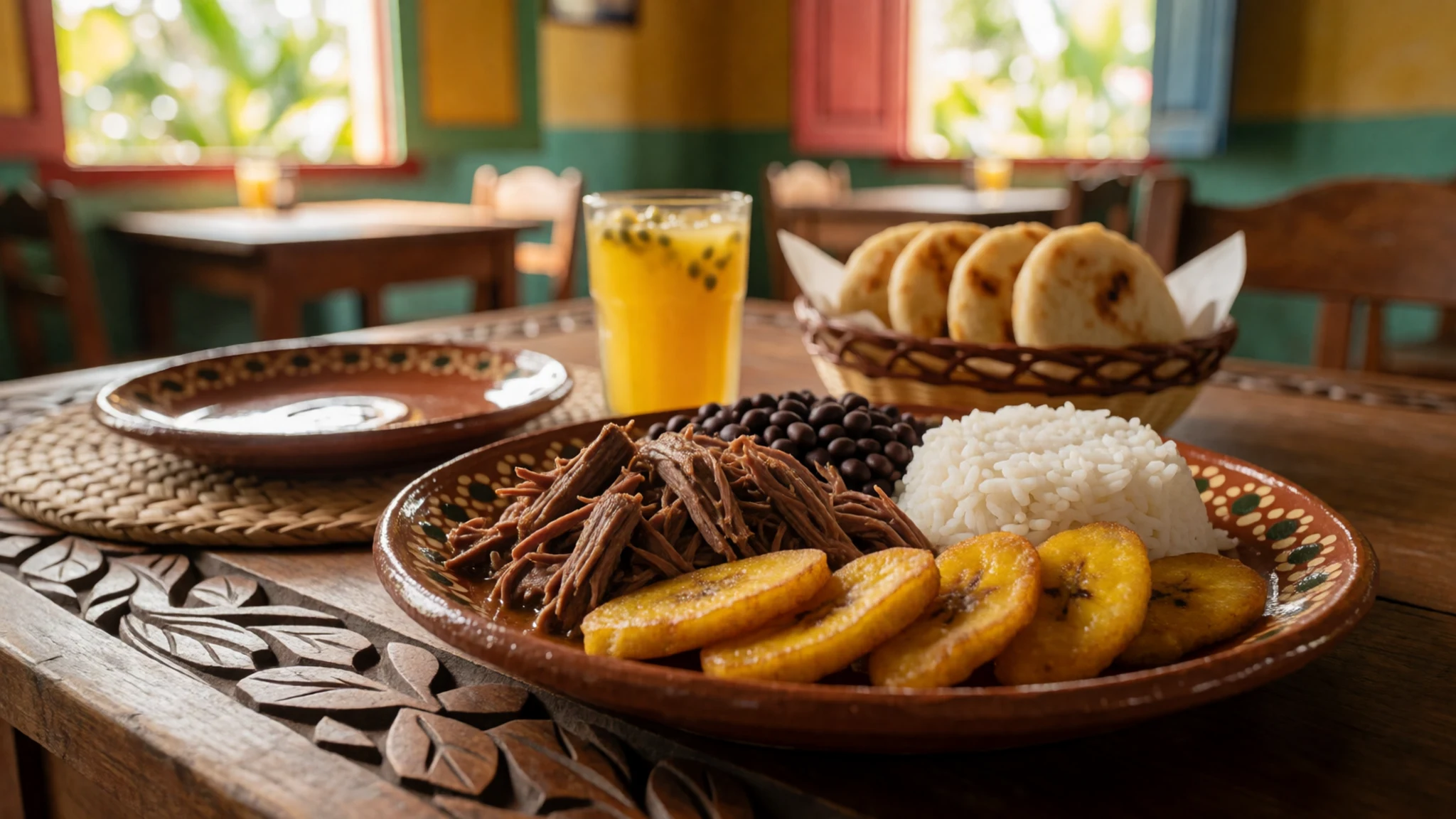
- Casabe — Village food stalls in Paraitepuy
Casabe is a crisp, flat unleavened bread made from grated bitter cassava root that has been squeezed dry and baked on flat clay griddles. Sold in Indigenous village stalls, this durable staple keeps well on multi-day mountain treks and is eaten dipped in broth or spread with garlic butter.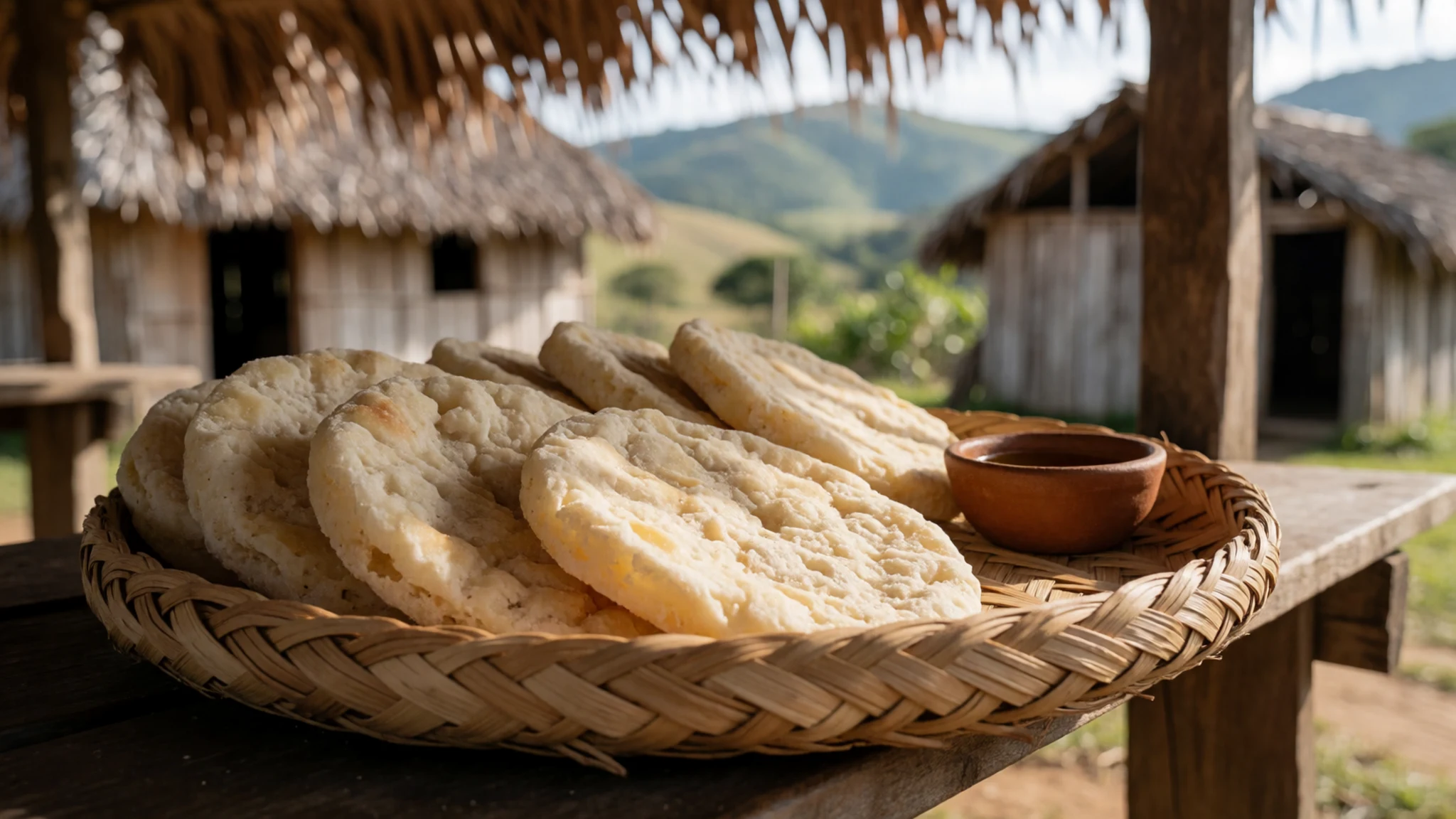
- Arepas — Roadside cafes in Santa Elena de Uairén
Thick, ground maize patties grilled until crispy on the outside and soft within, filled with shredded chicken, white cheese, or avocado. Available at roadside cafes near the border, these warm corn cakes are a ubiquitous daily breakfast item for locals and visiting trekkers alike. - Tumá — Camp kitchens along the trek route
A spicy traditional Pemon soup cooked over open campfires, made with boiled fish or chicken, wild jungle peppers, and cassava leaf greens. Prepared by local guides in trekking camps, this warming broth provides essential comfort after long rainy days of hiking. - Cachapas — Roadside food stalls along the Gran Sabana highway
Sweet yellow corn pancakes folded over thick slabs of fresh soft cheese and brushed with melted butter. Sold at humble roadside stalls along the regional highway, these rich pancakes are cooked fresh on hot metal griddles and served steaming warm.
Plan it
Best time. December to April offers the driest weather for trekking and clearer mountain views, though rain can occur year-round; May to November brings heavier rainfall and fuller waterfalls.
How long. 6–8
Getting there. Fly or take a long-distance bus to Santa Elena de Uairén near the Brazilian border, then arrange 4x4 transport to the Pemon community of Paraitepuy, where the trail begins.
Budget. mid
Tips
- Book a registered local tour company with licensed Pemon guides well in advance
- Pack all gear in heavy-duty waterproof dry bags inside your backpack
- Bring extra cash in small bills as credit cards and ATMs are rarely available
- Treat all water from streams on the approach trek using purification tablets
Etiquette
- Carry every scrap of waste off the plateau, including food scraps and paper
- Do not collect or remove quartz crystals, rocks, or native plants from the summit
- Treat local Indigenous Pemon guides and porters with respect and courtesy
Nearby
Sources
- Wikidata Q4777 (CC0)
- Wikipedia (rev 1374333031) (CC BY-SA 4.0)
- Wikivoyage (rev 5244562) (CC BY-SA 4.0)
- Photo photos/01-roraima3-79.jpg (CC BY 3.0)
- Photo photos/02-abismo-com-fim.jpg (CC BY-SA 4.0)
- Photo photos/03-triple-point-mount-roraima.jpg (CC BY 3.0)
- Photo photos/04-mount-roraima-venezuela-12371474504.jpg (CC BY-SA 2.0)
- Photo photos/05-panor-mica-del-tepuy-roraima.jpg (CC BY 3.0)
- Photo photos/06-schomburgk-twelve-views-roraima.jpg (Public domain)
- Photo photos/07-britgy-p149-roraima.jpg (Public domain)
- Photo photos/08-amanecer-en-campamento-rio-tek-trekking-al-tepuy-roraima-can.jpg (CC BY-SA 4.0)


