Mount Rainier National Park
Mount Rainier National Park, United States
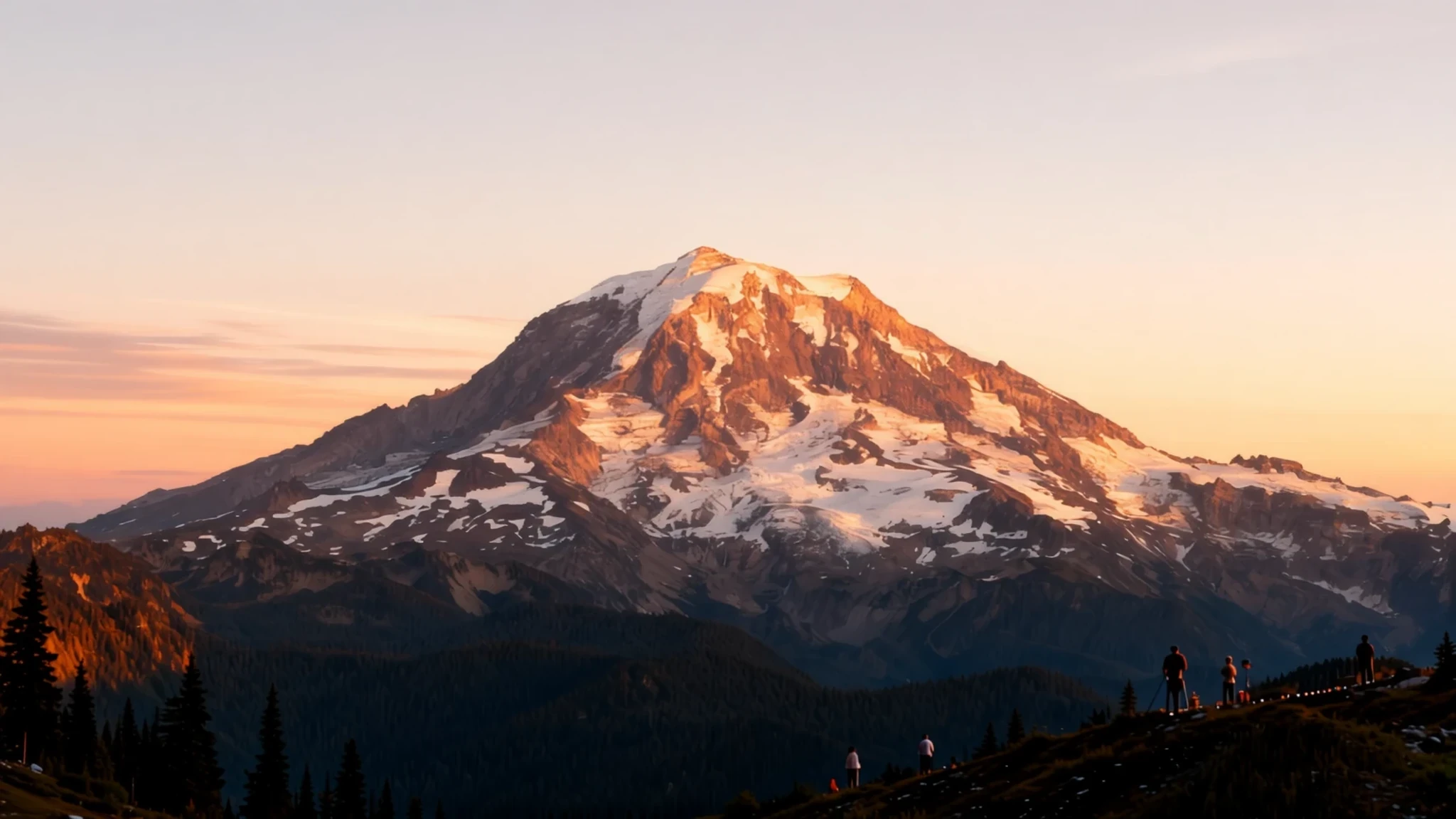
A volcano that brews its own clouds, with wildflower meadows in summer and some of the heaviest snowfall on record in winter.
The place
Mount Rainier National Park wraps around a single stratovolcano in the Cascade Range of Washington State, in the north-west of the United States. The park spans southeast Pierce County and northeast Lewis County, and the mountain climbs so steeply from the surrounding land that the lowland valleys and the summit seem to belong to different worlds. It is the highest point in the range. Inside the boundary are river valleys, waterfalls, subalpine meadows and extensive old-growth forest. Dozens of glaciers run down the flanks of the volcano, and clouds gather around the peak often enough that rain and snow are a constant part of the picture. Access is organised around three general areas, each with its own entrances: Paradise, the Carbon River and Mowich Lake country, and Sunrise on the eastern side. Paradise draws the most people, and it is where most first visits begin. The Wonderland Trail circles the whole mountain, and glaciers and snowfields cover a large share of the summit. Mountaineering is popular, with thousands of attempts a year, and roughly half of those climbers reach the top. Changeable weather is the norm, so the mountain rewards careful planning far more than bold plans.
Its story
The mountain has had many names. Lushootseed and Cowlitz speakers commonly used Tahoma, a phrase usually rendered as snow-covered mountain, and the Lushootseed word Tacoma is the same as that of a nearby city in the Puget Sound region. People have been in the area for a very long time. A stone projectile point turned up along the opening stretch of the Snow Lake Trail, and a rock shelter by Fryingpan Creek holds hunting artifacts left by Columbia Plateau peoples over several centuries. The shelter was not used all year round, which suggests seasonal visits to the high country. The modern park was created to keep the volcano and its surroundings intact. Its boundaries are drawn around the mountain itself, and most of the land has since been designated wilderness, with neighbouring wilderness areas touching its edges. Through the 1920s and 1930s, the National Park Service built lodges and visitor facilities in a rustic style, and the Sunrise Lodge remains one of the clearest examples. The park's historic architecture was later recognised as a National Historic Landmark, so the buildings count as part of the story as much as the scenery. The volcano's shape records its eruptions and the ice that has worked on its flanks since. Carbon Glacier holds the largest volume of ice of any glacier in the contiguous United States, while Emmons Glacier covers the greatest area. The park's ice is far more than a backdrop, and the summer meadows exist because snowmelt spreads across the slopes each year.
What to see
- Longmire — South-west, Nisqually entrance
Longmire, in the south-west, is the historic park headquarters and the site of James Longmire's old homestead and mineral springs. Its historic buildings sit at a lower elevation than the high meadows, so it is a sensible first stop when you arrive. The Nisqually entrance here is open every day of the year, which makes it a dependable base in the park.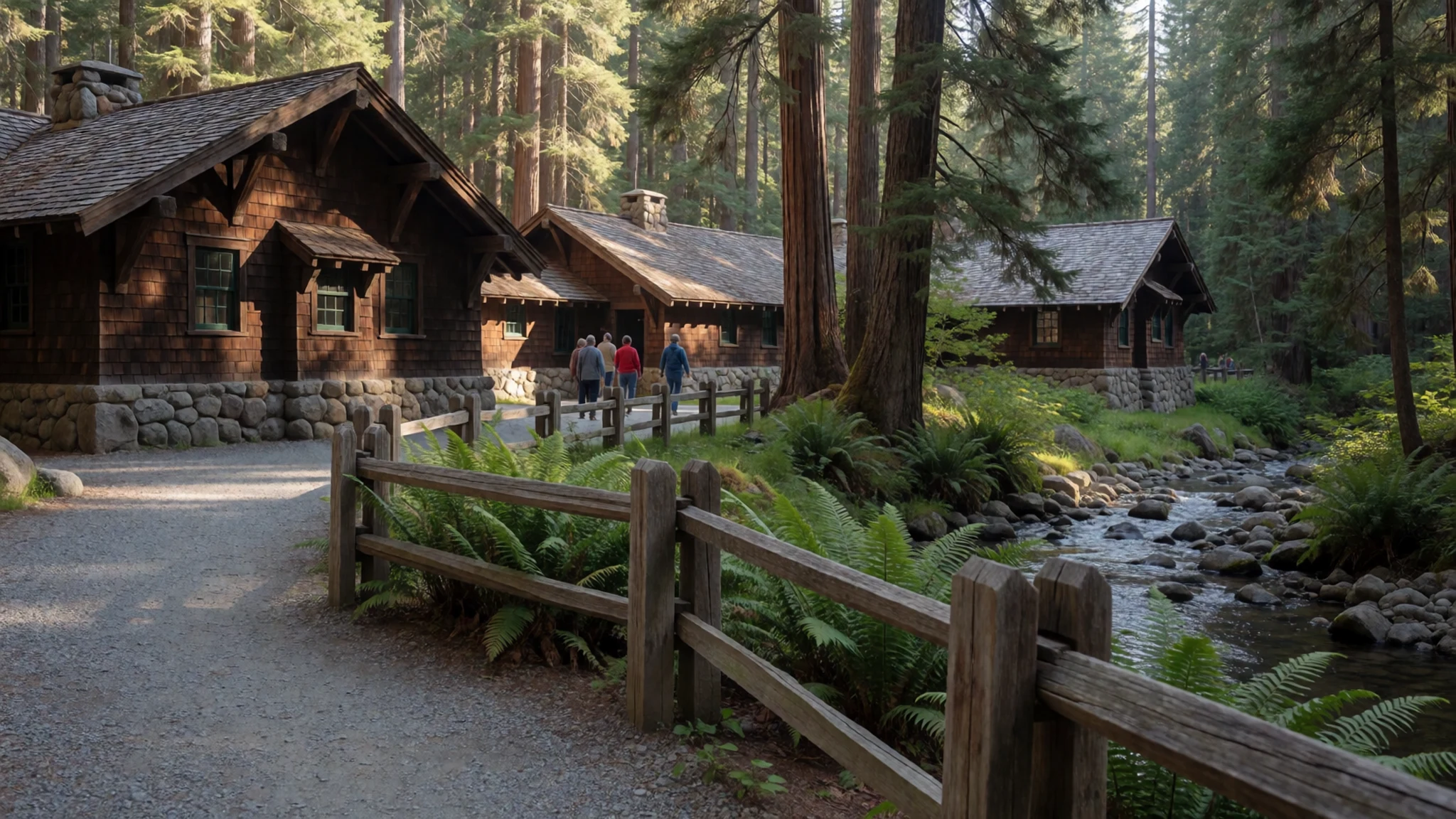
- Paradise — Southern side of the park
Paradise is the park's busiest destination, known for its views and its wildflower meadows in summer. Winter brings some of the heaviest snowfall on record, and the Paradise Inn sits in the middle of it all. Expect crowds on summer weekends and arrive early for parking. The Skyline Trail starts here and climbs into the meadows, where the south face of the mountain fills the view.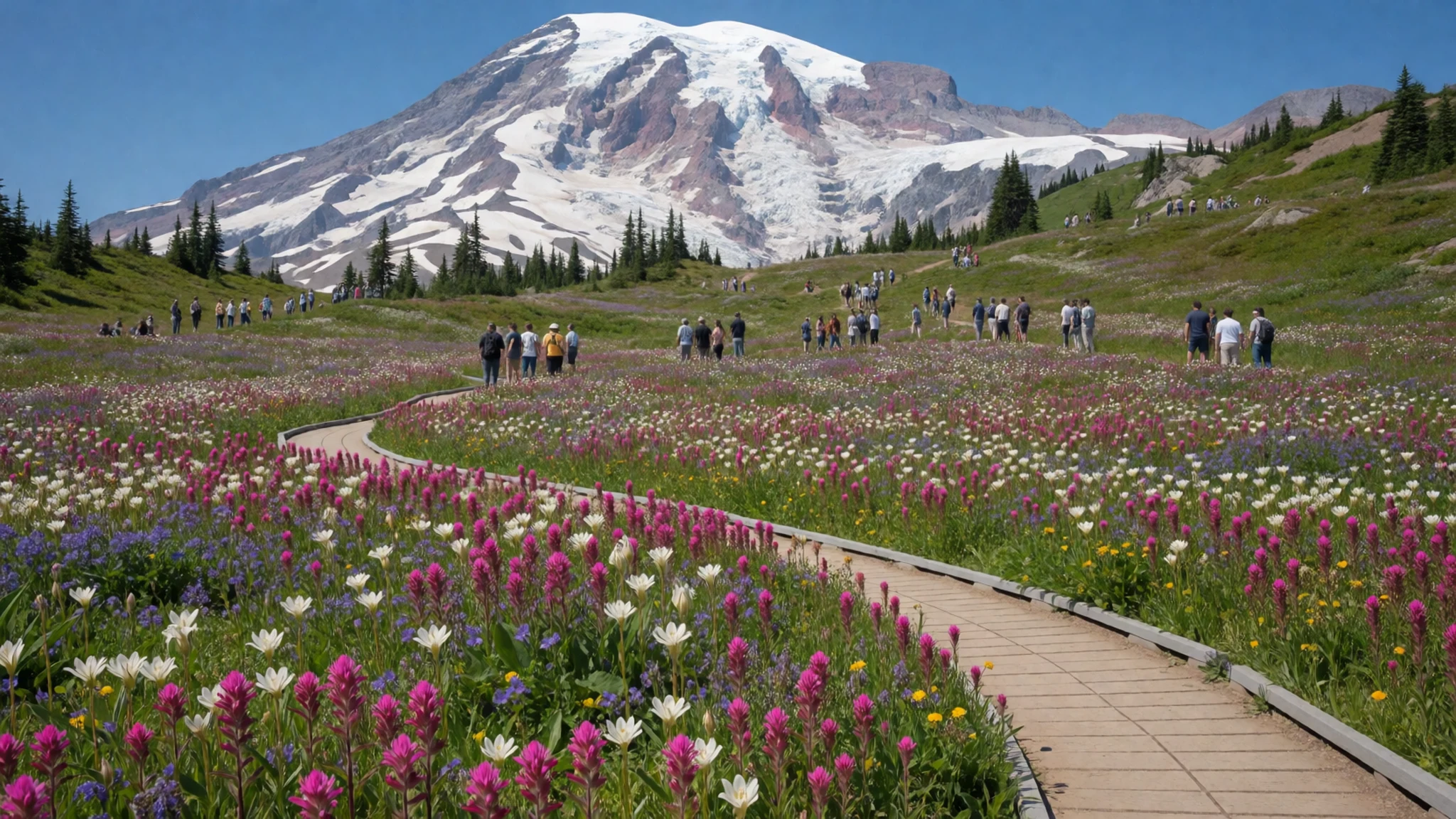
- Ohanapecosh — South-east corner, near the eastern routes
Ohanapecosh sits in the south-east corner of the park, among Douglas firs and other conifers beside the river. The name comes from a Taidnapam (Upper Cowlitz) habitation site, and it is thought to suggest a place at the margins. The trails here are shadier and quieter than the high meadows, which makes this a good area for a cooler afternoon under big trees, especially when the upper slopes are busy.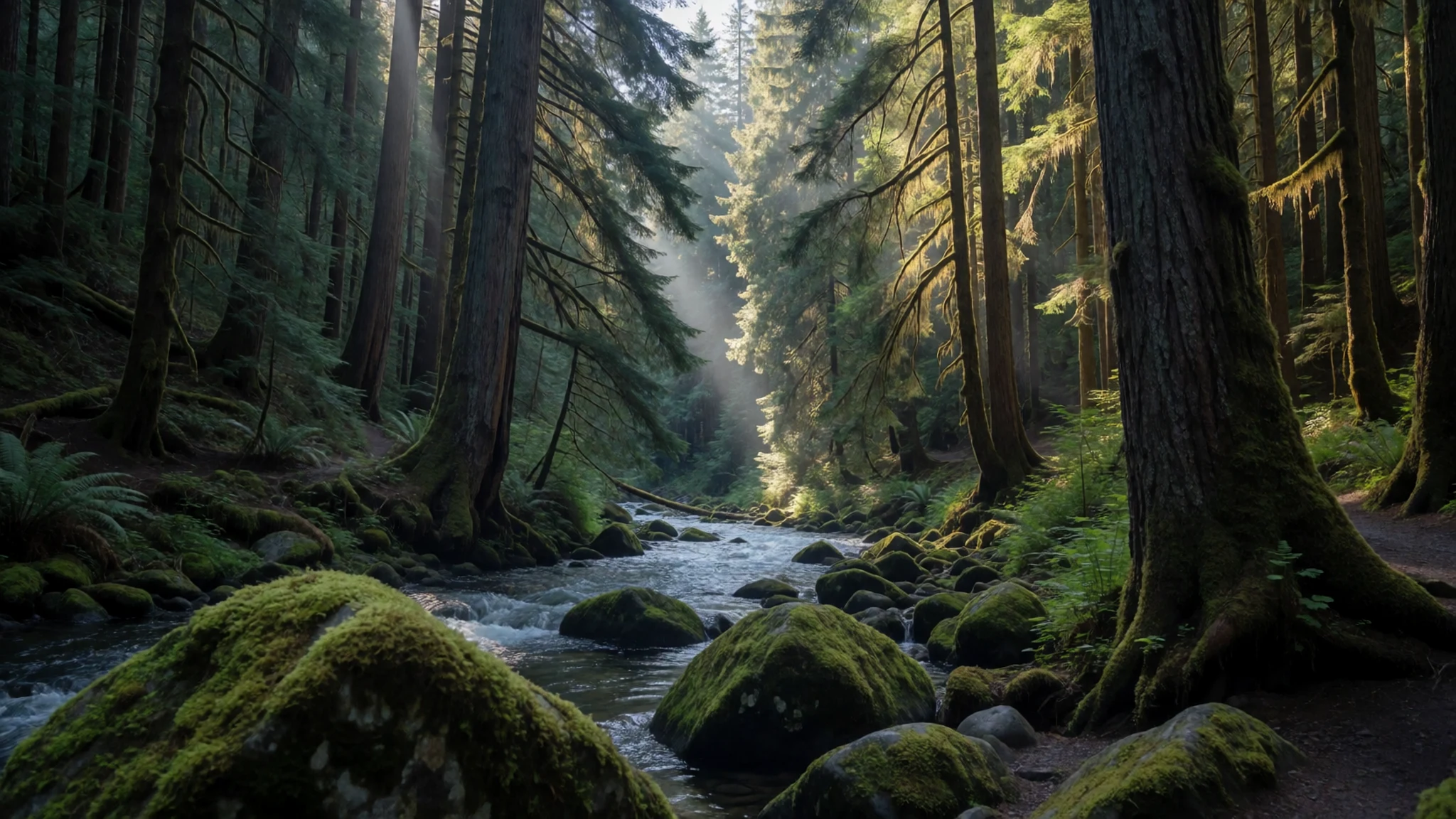
- Sunrise — Eastern side of the park
Sunrise is the highest point in the park that can be reached by car, but only in summer. Its mountain meadows fill with wildflowers in the warmer months, and the views open wide across the eastern country. The Sunrise Lodge usually does not open until July, so the season is short. Because the site sits high, the weather can change quickly, so bring layers.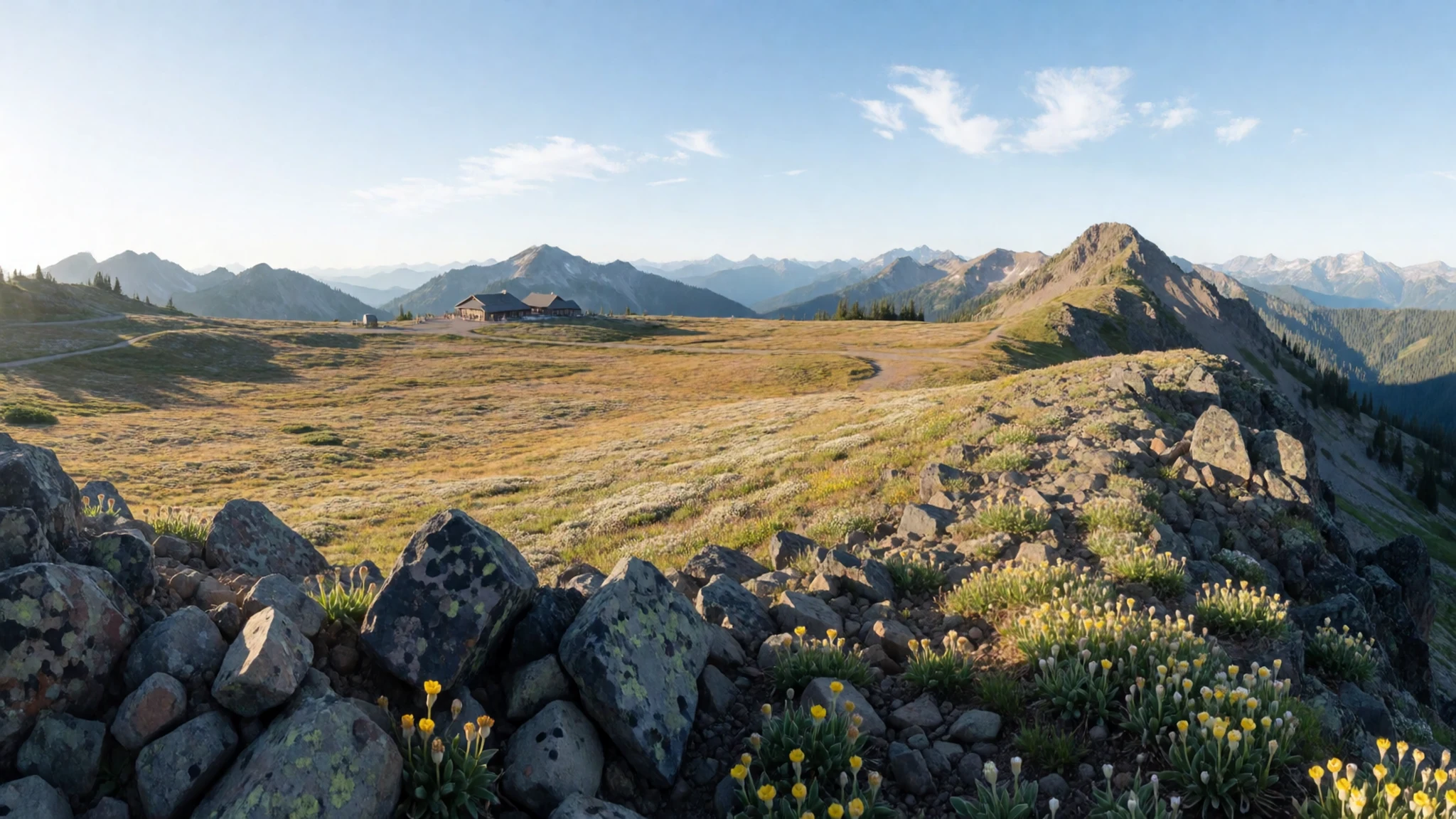
- Emerald Ridge Trail — Trailhead near the Nisqually entrance
The Emerald Ridge Trail starts at the Puyallup River trailhead near the Nisqually entrance and climbs to a ridge named for its emerald green subalpine meadows. It is a long day out, with a steady climb and wide views once you are above the trees. Start early, carry plenty of water and check the forecast before leaving the valley.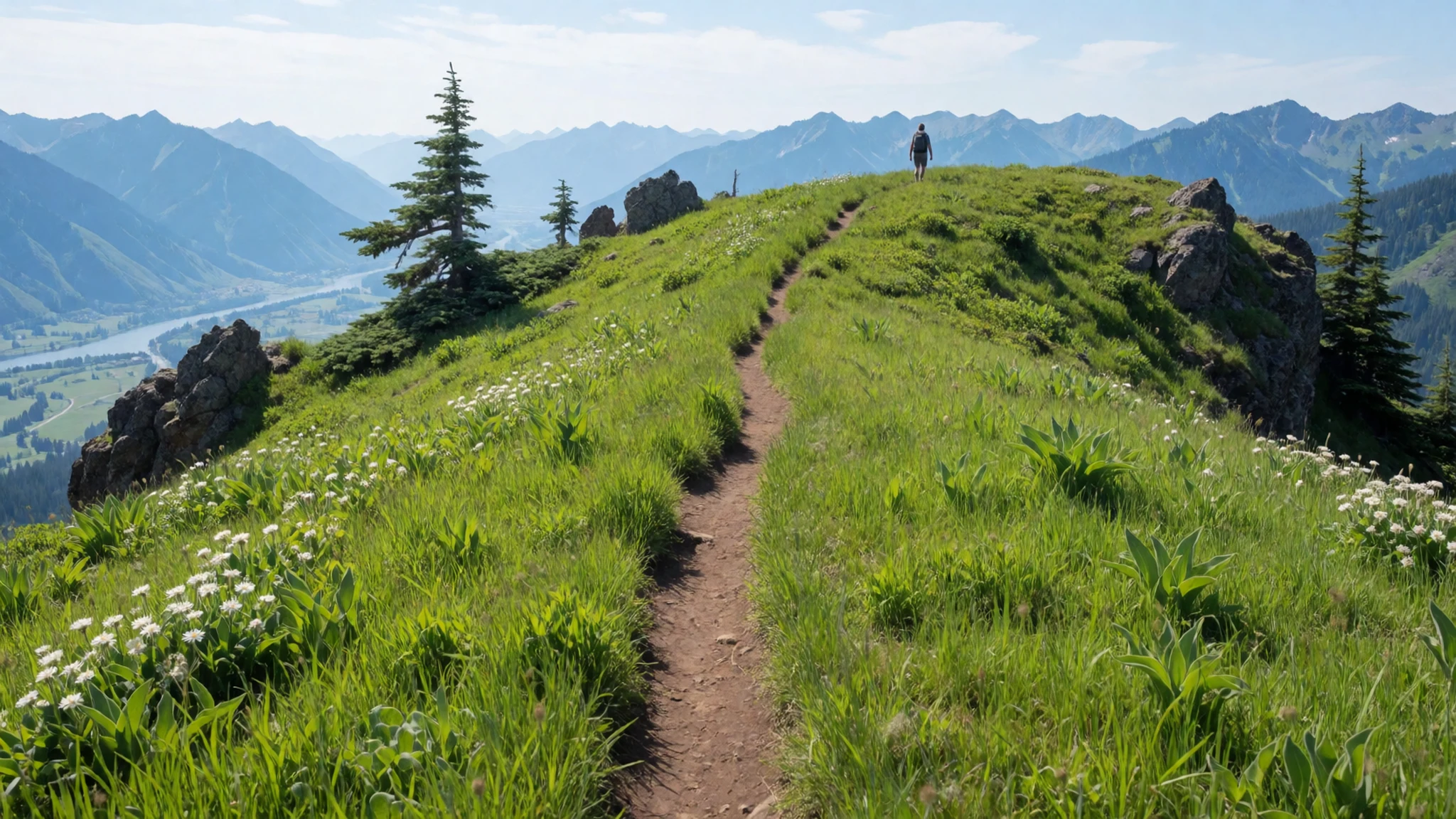
Culture
Mount Rainier National Park sits on land with much older meanings than its park status. The Lushootseed and Cowlitz speakers who knew the mountain called it Tahoma, and that older relationship with the land is still part of how the place is understood today. The park is run by the National Park Service, and much of it is designated wilderness, so the mood on the trails is calm rather than festive. People tend to keep their voices down near the viewpoints and wait for the view to clear before taking photographs, and walkers heading uphill are usually given room to pass. Groups should stay together on the Wonderland Trail, which circles the whole mountain and is used by walkers of every kind. Stay on marked routes and keep well back from wildlife, because the meadows are fragile and slow to recover from trampling.
What to wear
Clothing for Mount Rainier National Park is primarily functional. What people wear here now is practical outdoor clothing: waterproof shells, fleece and wool base layers, sturdy boots and a sun hat for the open meadows. Hikers at Paradise often carry gloves and a warm hat even in summer, because the air cools quickly once cloud covers the sun. There is no formal dress code at the park, and no sacred site requires covered shoulders. What suits a visit is a layered system: a light base layer, an insulating middle layer and a waterproof outer one, since the mountain can bring rain and snow in any month. Choose boots with good grip for wet rock and snow patches, and keep trail shoes for the lower valleys. Avoid cotton on the upper trails, because it holds water and chills the body.
What to eat
- Dinner in the Paradise Inn dining room — The Paradise Inn restaurant, at Paradise
The Paradise Inn has an upscale dining room that serves breakfast, lunch and dinner during the season. It suits a slower meal after a morning in the meadows. The room is more formal than the visitor centre counters, so check the official site for current opening arrangements before you plan an evening there.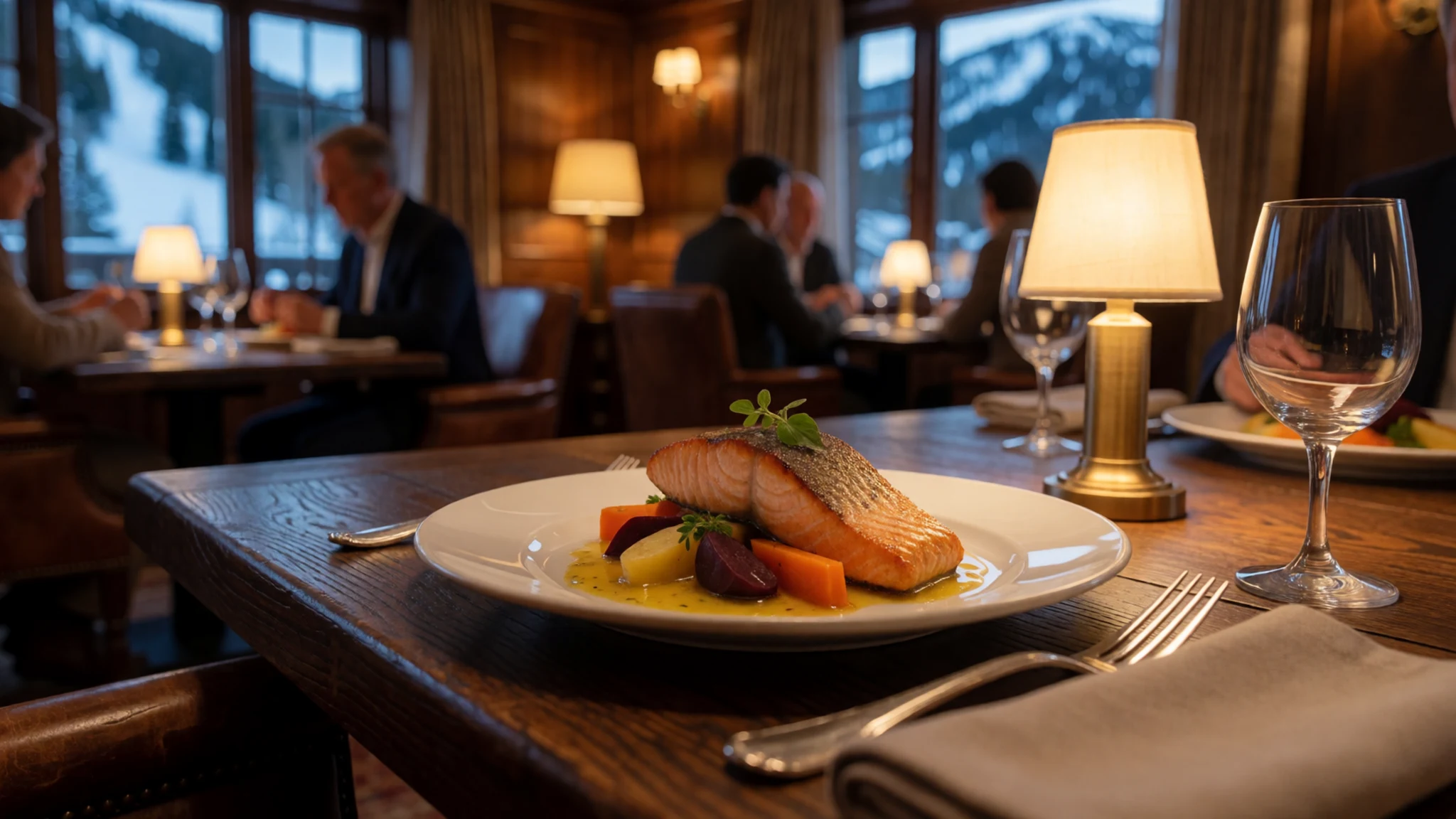
- Quick hot food at the visitor centre — The Jackson Visitor Center grill, at Paradise
The grill in the Jackson Visitor Center serves simple fast food between walks, such as burgers, soup and sandwiches. It runs every day in summer but only on weekends and holidays in winter, so check the schedule if you are planning a late lunch. The counter is the easiest refuel near the Paradise trailheads.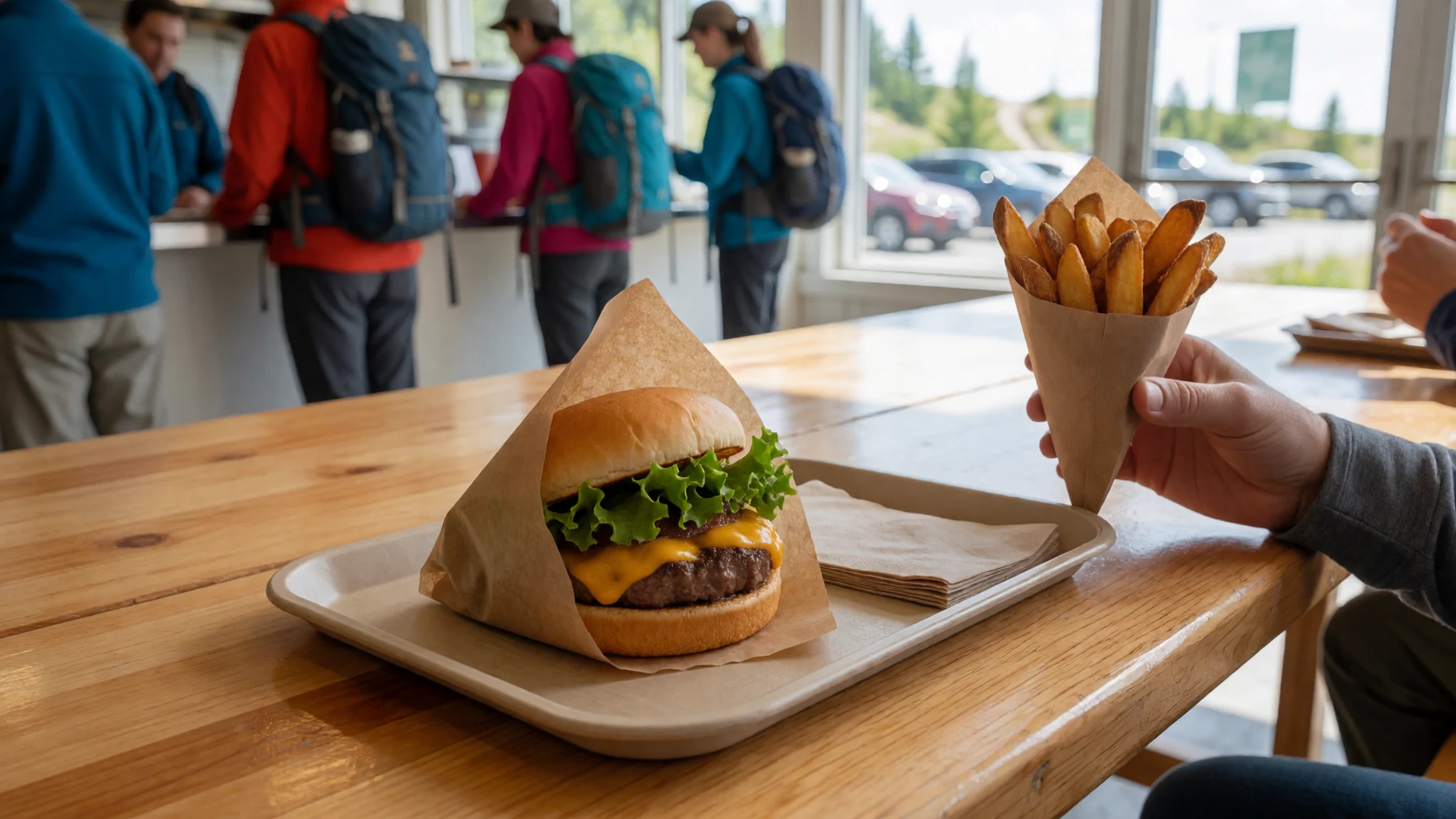
- Family-style meal at the National Park Inn — The National Park Inn restaurant, at Longmire
The restaurant in the National Park Inn is open year-round and serves breakfast, lunch and dinner in a family-style setting. In the cooler months, a hot meal here is a good end to a short walk from Longmire. Check the official site for current dining times before you go. - Cafeteria plate at Sunrise — Sunrise Lodge, on the eastern side
The Sunrise Lodge serves cafeteria-style food, but only during the summer, and it usually does not open until July. The site is high, so the weather can turn quickly. A warm drink and a plate from the lodge make a welcome stop after a walk into the eastern meadows. - Packed lunch from Ashford — Ashford, the town beside the Nisqually entrance
Stock up in Ashford before you enter the park. The town is the only place with services close to the Nisqually entrance, and the choice inside the park is limited. A packed lunch bought here, with extra water, is the most practical way to fuel a long walk on the southern trails.
Plan it
Best time. July to September for wildflower meadows and open roads; Sunrise opens only in summer. Winter brings heavy snow at Paradise, and the Nisqually entrance and Longmire facilities stay open all year. July is the hottest and driest month, while November through January bring the most rain, so the summit stays cold even in summer.
How long. 2–3
Getting there. Fly into Seattle–Tacoma International Airport, then drive to the Nisqually entrance near Ashford, the closest entrance to Seattle and the main route to Paradise. The eastern entrances suit visitors arriving from Yakima and eastern Washington.
Budget. mid
Tips
- Check the official National Park Service site for current road and facility status before you set out
- Arrive early for parking at Paradise on summer weekends
- Carry layers and water, since conditions on the upper slopes change quickly
- Plan Sunrise for summer only, when the road and lodge are open
- Expect limited food inside the park and fill up in Ashford first
Etiquette
- Stay on marked trails and off fragile meadows
- Keep a safe distance from wildlife, and never approach snow or ice slopes without proper training
- Take all litter out with you
Nearby
Sources
- Wikidata Q944329 (CC0)
- Wikipedia: Mount Rainier National Park (rev 1377548606) (CC BY-SA 4.0)
- Wikivoyage: Mount Rainier National Park (rev 5395807) (CC BY-SA 4.0)
- Photo: Tolmie Peak, Ricardo Martins (CC BY 2.5)
- Photo: Mount Rainier from above Myrtle Falls in August, Samuel Kerr (CC BY 3.0)
- Photo: Ohanapecosh Glacier, Walter Siegmund (CC BY 3.0)
- Photo: Mt Rainier from trail in park, Aaronyoung777 (CC BY 4.0)
- Photo: Mt Rainier panorama from the south, Dllu (CC BY-SA 4.0)
- Photo: Longmire Administration Building (2015), Steven Pavlov (CC BY-SA 4.0)
- Photo: Mount Rainier 6909h, Walter Siegmund (CC BY-SA 1.0)
- Photo: Christine Falls Bridge, Joe Mabel (CC BY-SA 4.0)


