Mount Meru
Mount Meru, Tanzania
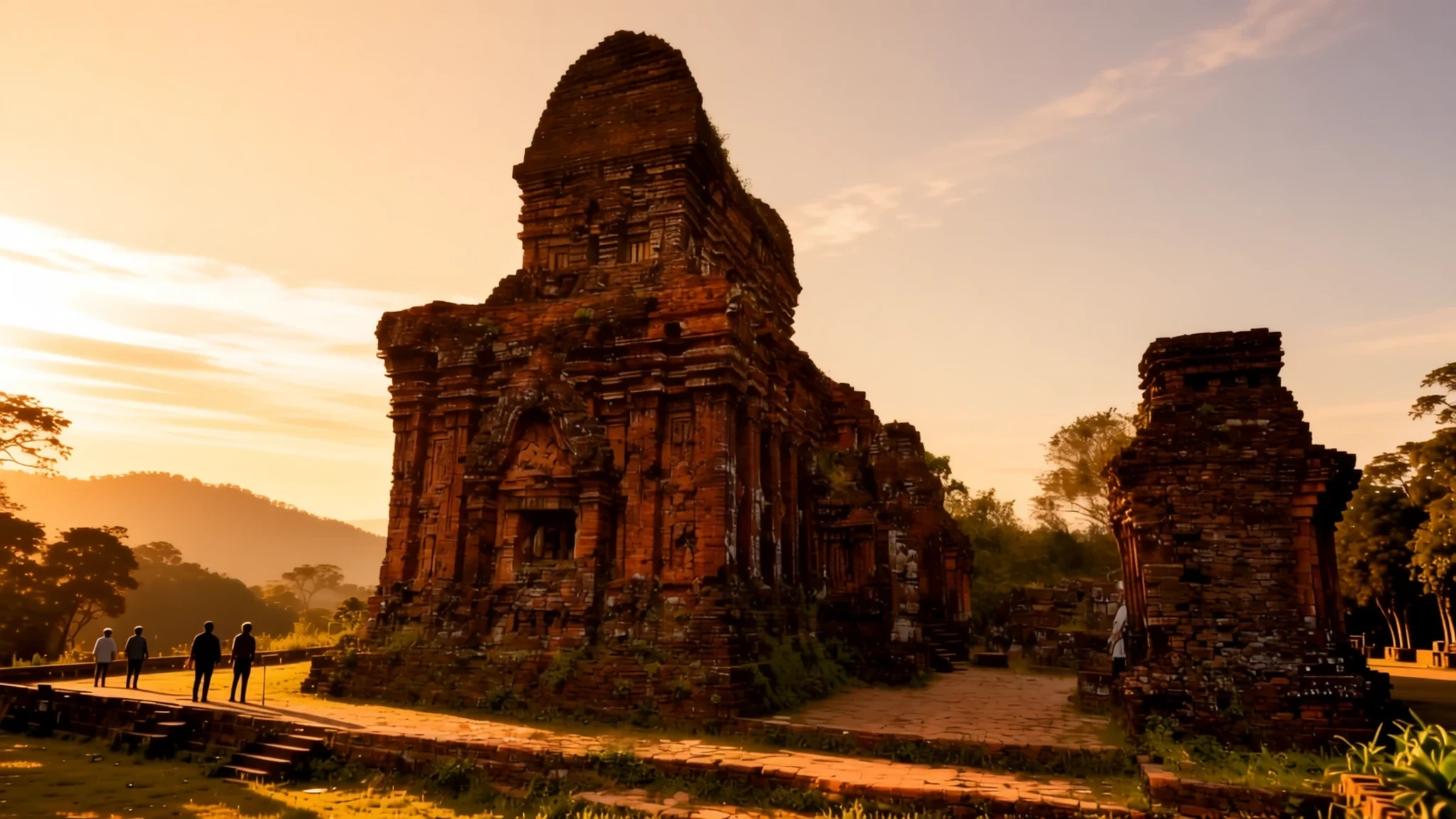
A dormant volcano above Arusha, Mount Meru offers a forested climb, a broad caldera and, on clear days, a view across to Kilimanjaro.
The place
Mount Meru is a dormant stratovolcano in the Arusha Region of northern Tanzania, standing just north of the city of Arusha. At about 4,562 metres it is the second-highest mountain in the country after Kilimanjaro, and on a clear day the two peaks can be seen together, roughly 70 kilometres apart. The mountain forms the centre of Arusha National Park. Its fertile flanks climb out of open savanna into forest, and that forest supports monkeys, leopards and close to 400 bird species.
The summit is a broad rim around a caldera about 3.5 kilometres across. Several smaller cones and craters on the lower slopes record repeated volcanic activity over a long period. Much of the original height was lost in a summit collapse some 7,800 years ago. The most recent recorded eruption was a minor one in 1910, and a plume seen on satellite images in 2015 was later traced to a wildfire rather than volcanic activity. The lavas are alkaline, and nephelinite is among the rock types found on the mountain.
The climb is the main reason most visitors come. The Momella route, which begins at the Momella gate on the eastern side, is the usual way to the top, and the summit is often called Socialist Peak. Days on the mountain move from warm forest to cold, bare ground, so the walk is as much about changing weather as about height. Arusha works well as a base, with the mountain sitting at the edge of town rather than far off in the distance.
Its story
Mount Meru's slopes have seen conflict as well as volcanic activity. In 1896 the Sack of Meru took place on the mountain, a series of fights that pitted the German Empire and Chagga states against the Meru and Warusha peoples who lived there. The episode belongs to the wider years of German expansion in the region, and it is one reason the mountain carries a history that goes well beyond its geology.
Later the foothills found a place on screen. The film Hatari! was shot at the foot of Mount Meru, and its open landscapes of grass and volcanic peaks helped give the film its look. For many years the mountain was known to outsiders mainly through that kind of image, a backdrop rather than a place with its own people and rules.
The mountain's natural record is still being read. Geologists have traced the summit collapse, the small cones and the caldera, and they continue to watch the volcano. On 20 September 2015, satellite imagery showed a plume rising on the north flank, which was first feared to be an eruption but was later found to come from a wildfire. Today the mountain is best understood as a working landscape. Its forests, farms and trails shape daily life around Arusha, and its history shapes the way people there tell the story of the land.
What to see
- Momella route and gate — Eastern side, Arusha National Park
The Momella route is the most common way to the summit. It begins at the Momella gate, located on the mountain's eastern side, and climbs through forest before reaching open ground higher up. Walks are usually organised through registered operators, and a local guide keeps the group together and manages the pace. The gate is the place to confirm permits, so arrive with time to spare.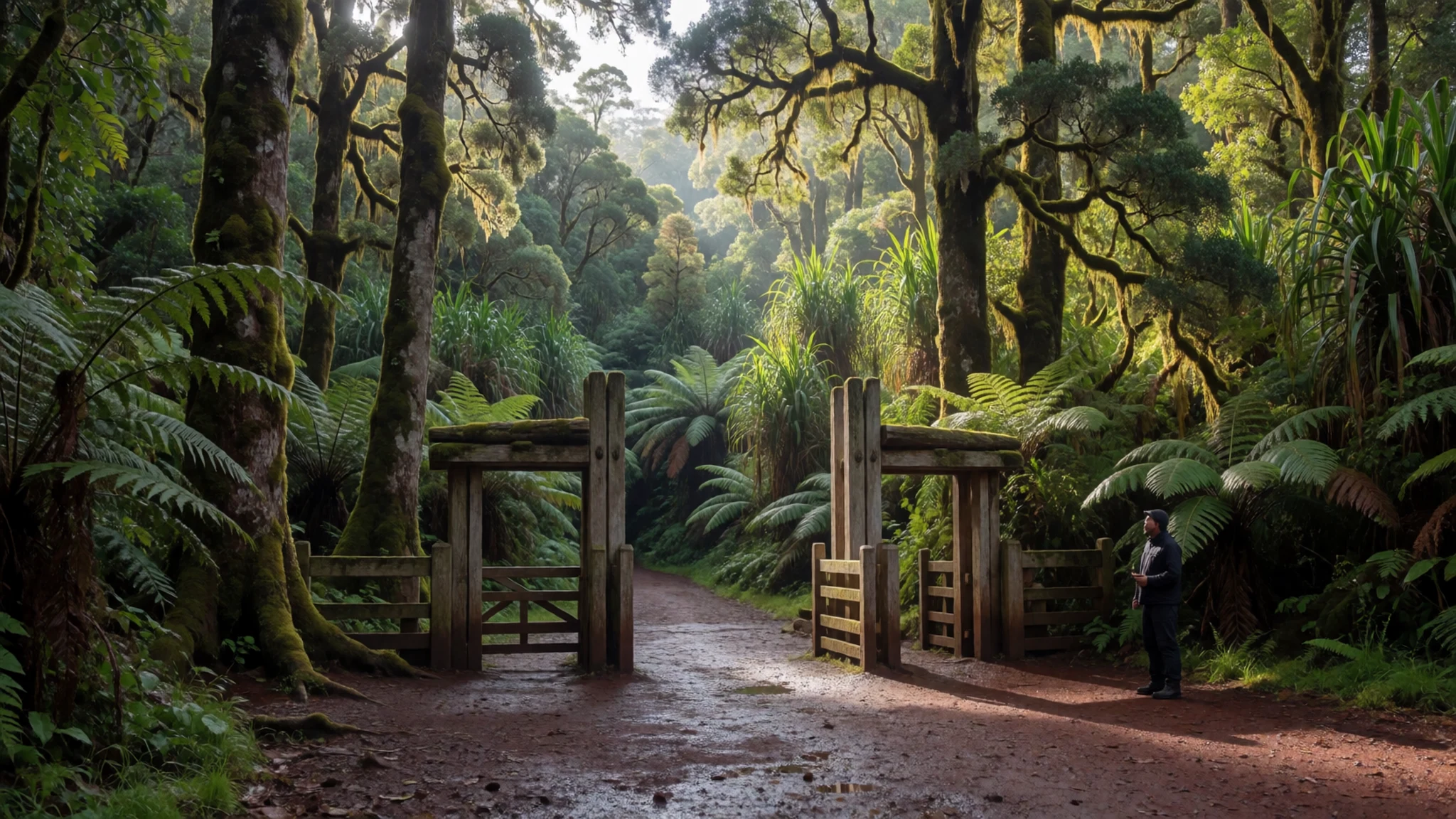
- The summit and Socialist Peak — Summit rim above the caldera
The top of Mount Meru is known as Socialist Peak. Reaching it means crossing the rim of the caldera, which is about 3.5 kilometres wide. Clear mornings give the best views, with the crater floor and the surrounding cones laid out below. Cloud often gathers by early afternoon, so plan the summit push for the first part of the day.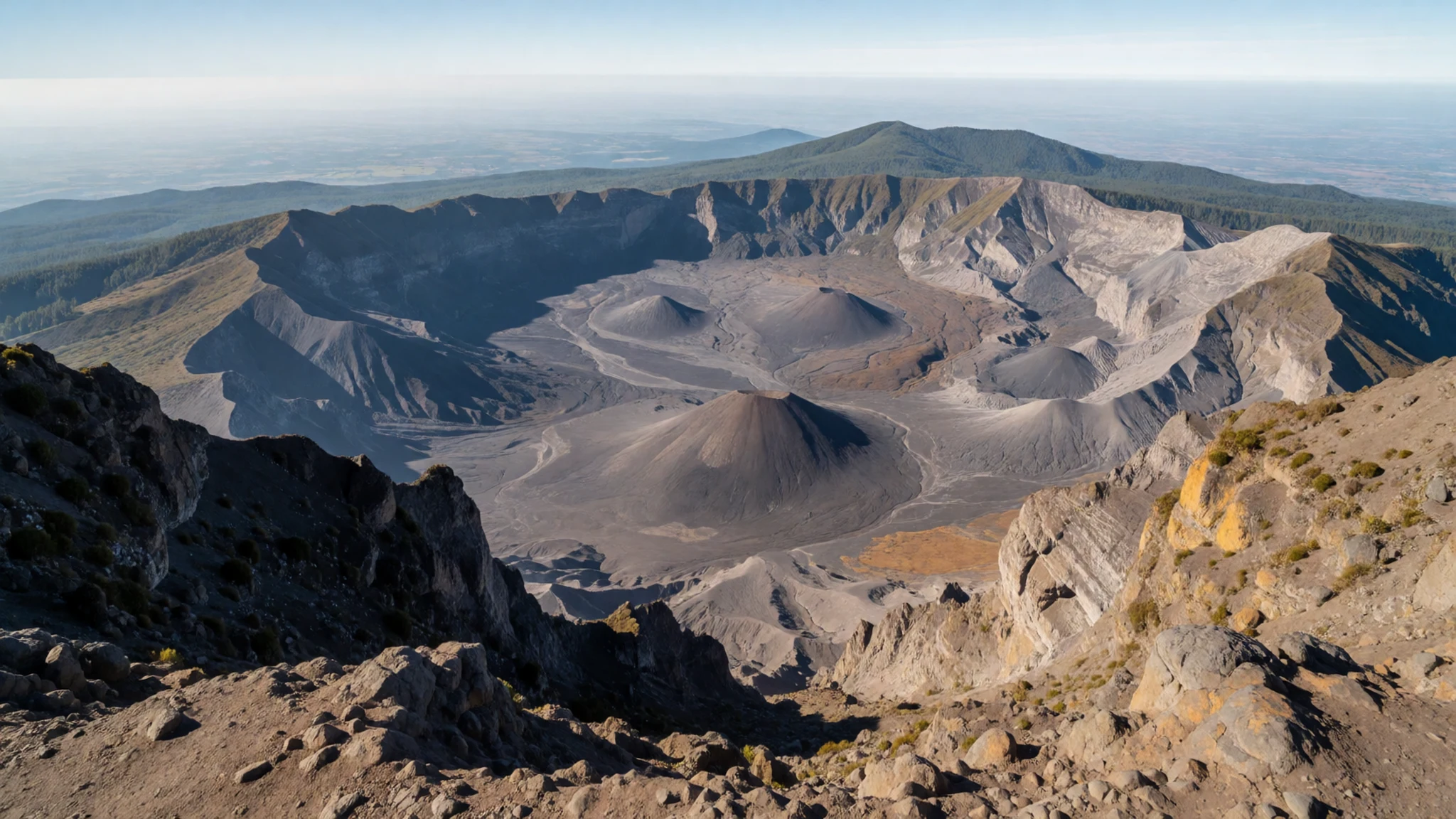
- Ngurdoto Crater — Arusha National Park
Ngurdoto Crater lies within Arusha National Park and is one of the park's distinctive features. Its steep walls and the wetter ground at the base support a mix of grazing animals and birds. A short visit makes a good contrast with the high, bare slopes of the mountain itself, and it suits visitors who want wildlife without a long walk.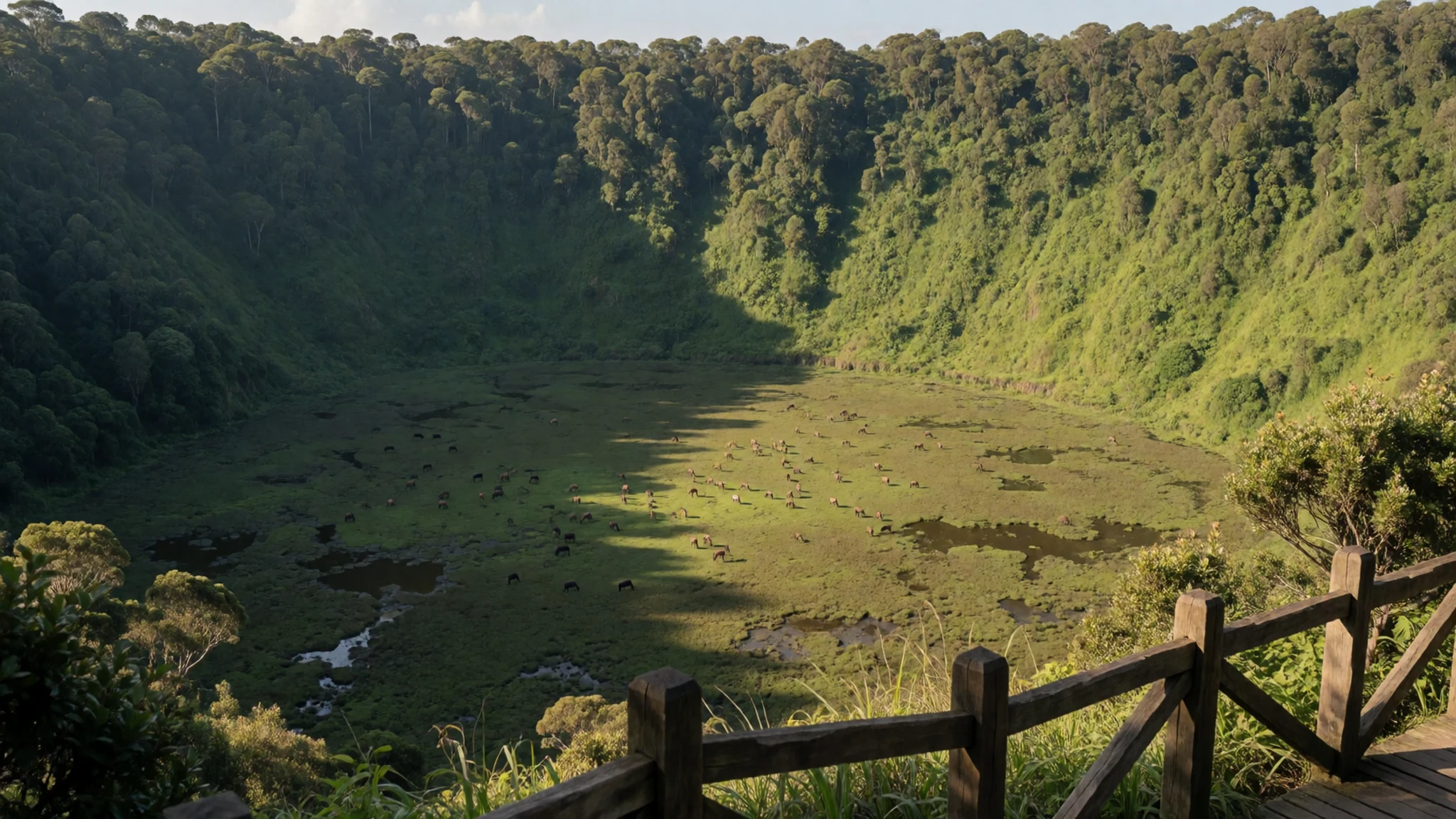
- Forest slopes of the mountain — Middle slopes, Arusha National Park
The middle slopes of Mount Meru are covered in forest that rises out of the surrounding savanna. This is the habitat for the monkeys, leopards and many birds that make the park notable. Walking here is cooler and quieter than the open plains below, and the trees give shade on the way up. Keep an eye out for birdsong at dawn.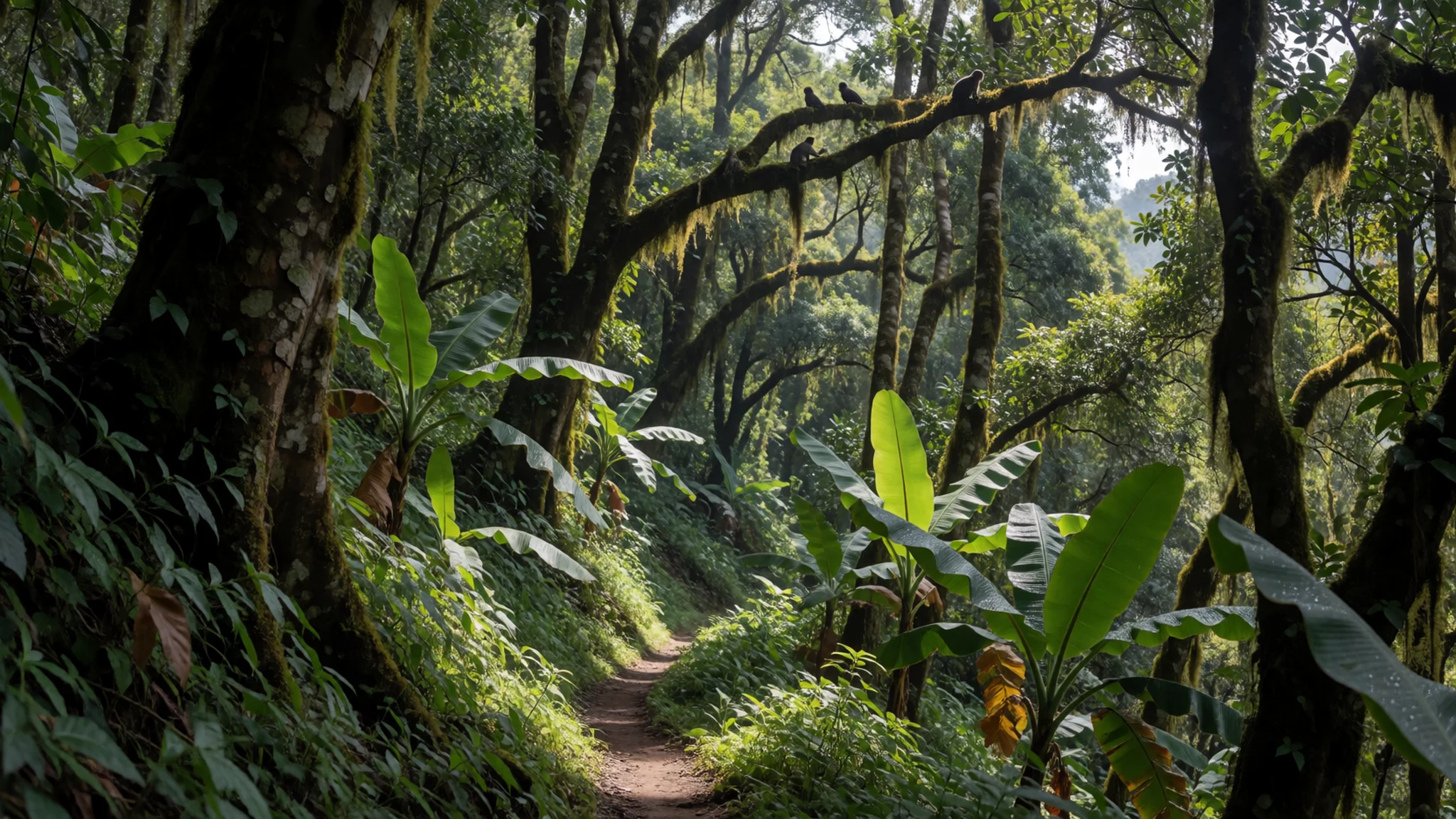
- Arusha town and its views — Arusha town
Arusha is the main base for climbs and safaris, and the mountain is visible from many parts of town. Roof terraces and higher streets give some of the clearest views of the peak. Arusha is busy and some areas see petty theft, so keep valuables close and use reputable transport.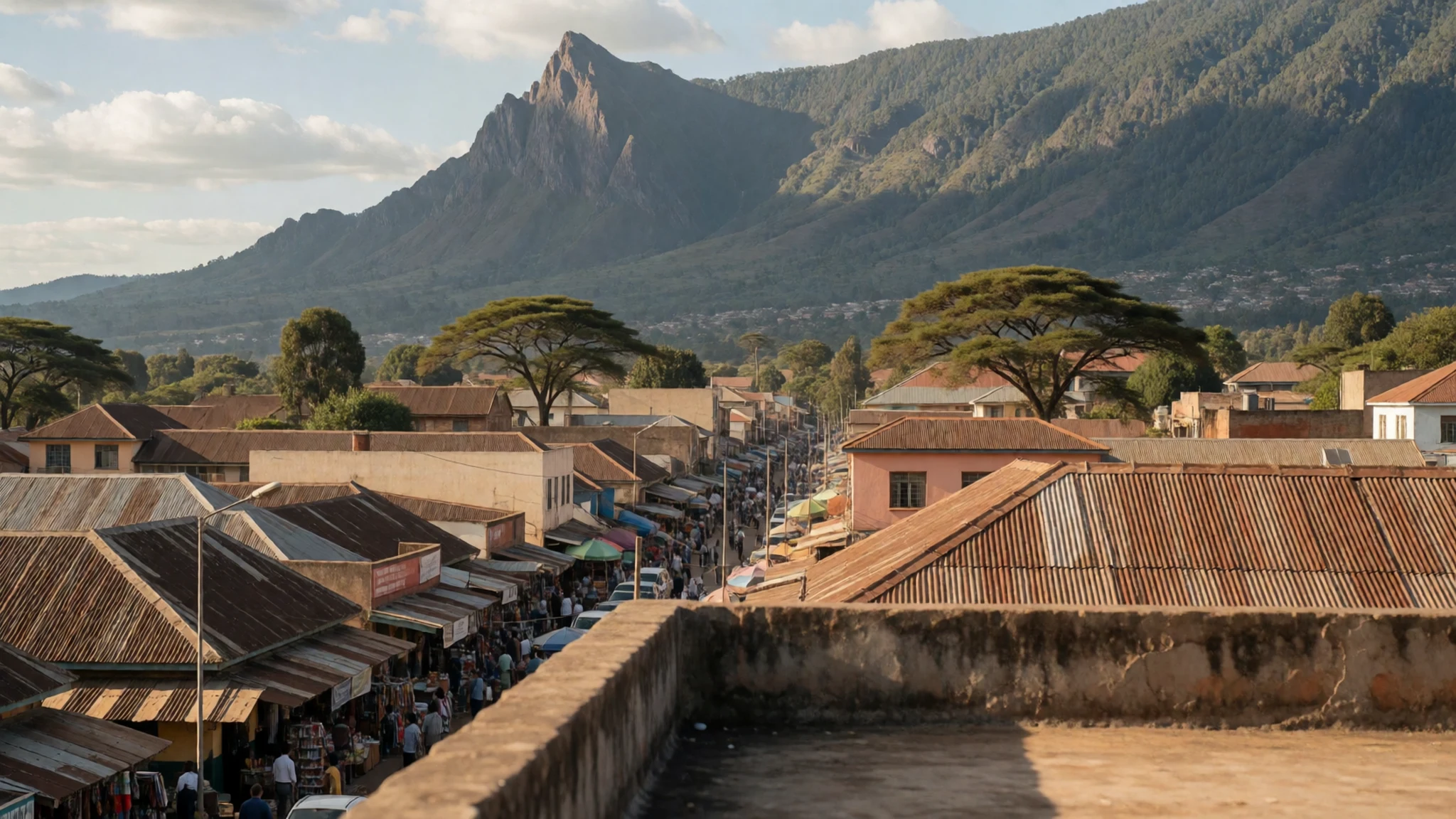
Culture
Mount Meru sits in a region where modest dress matters, especially away from the mountain's tourist routes. Arusha is used to foreign visitors, but in villages and on conservative streets shoulders and knees are best covered. Women in particular should avoid clothing that shows a great deal of skin. A kanga, the brightly printed wrap-around cloth sold in markets across the country, makes a practical cover-up that is easy to carry. Zanzibar, which is a conservative Muslim society, calls for the same care.
Greetings count for a great deal. Swahili speakers commonly say "shikamoo" when greeting an elder or someone senior, which literally means "I hold your feet", and the elder usually replies "marahaba". Adding a title helps, so "shikamoo bwana" is used for a man and "shikamoo mama" for a woman. In Zanzibar the equivalent is "chei chei". If you are seen working while others rest, people may call out "pole na kazi", a kind way of acknowledging the effort.
The Maasai, whose bright clothing makes them a magnet for cameras, expect to be paid for photographs. Ask before you take a picture of anyone, and agree any payment before the shutter clicks.
What to wear
Mount Meru's region has two clothing traditions that visitors will see daily. The kanga is a rectangle of cotton printed with bold patterns and Swahili sayings, worn wrapped at the waist or over the shoulders, and sold in markets across Tanzania. Women often wear kangas as everyday dress, and they are also used as headwraps, baby carriers and shawls. The Maasai, whose wardrobes are famous for bright reds and blues, traditionally wear wrapped cloth and beadwork, and they wear these pieces for ceremonies as well as everyday life.
What people wear now is a mix. In Arusha you will see office clothes, school uniforms, football shirts and dress that follows the same modest norms as the rest of the country. Kangas remain common, and many people wear them with Western tops or jackets. Traditional beadwork appears most often on Maasai people working in tourism or at markets.
For visitors, the aim is light, covered clothing that suits the heat at the base and the cold near the summit. Lightweight long trousers and loose long-sleeved shirts protect against sun and insects. A warm fleece and waterproof layer are essential for the upper slopes, where the air can be cold even on a clear day. Carry a kanga if you want an easy cover for visits to villages or religious sites, and wear sturdy walking boots with good grip for the forest and the rocky ground above the tree line.
What to eat
- Ugali — Family-run eateries and the morning market in Arusha
Ugali is the national staple, made from maize flour cooked into a firm, polenta-like mass. It is eaten with the hands, pinched off and used to scoop up stews and cooked meat. Recipes differ from village to village, so each household has its own way. Many visitors find it plain at first, but it is a good way to understand everyday eating.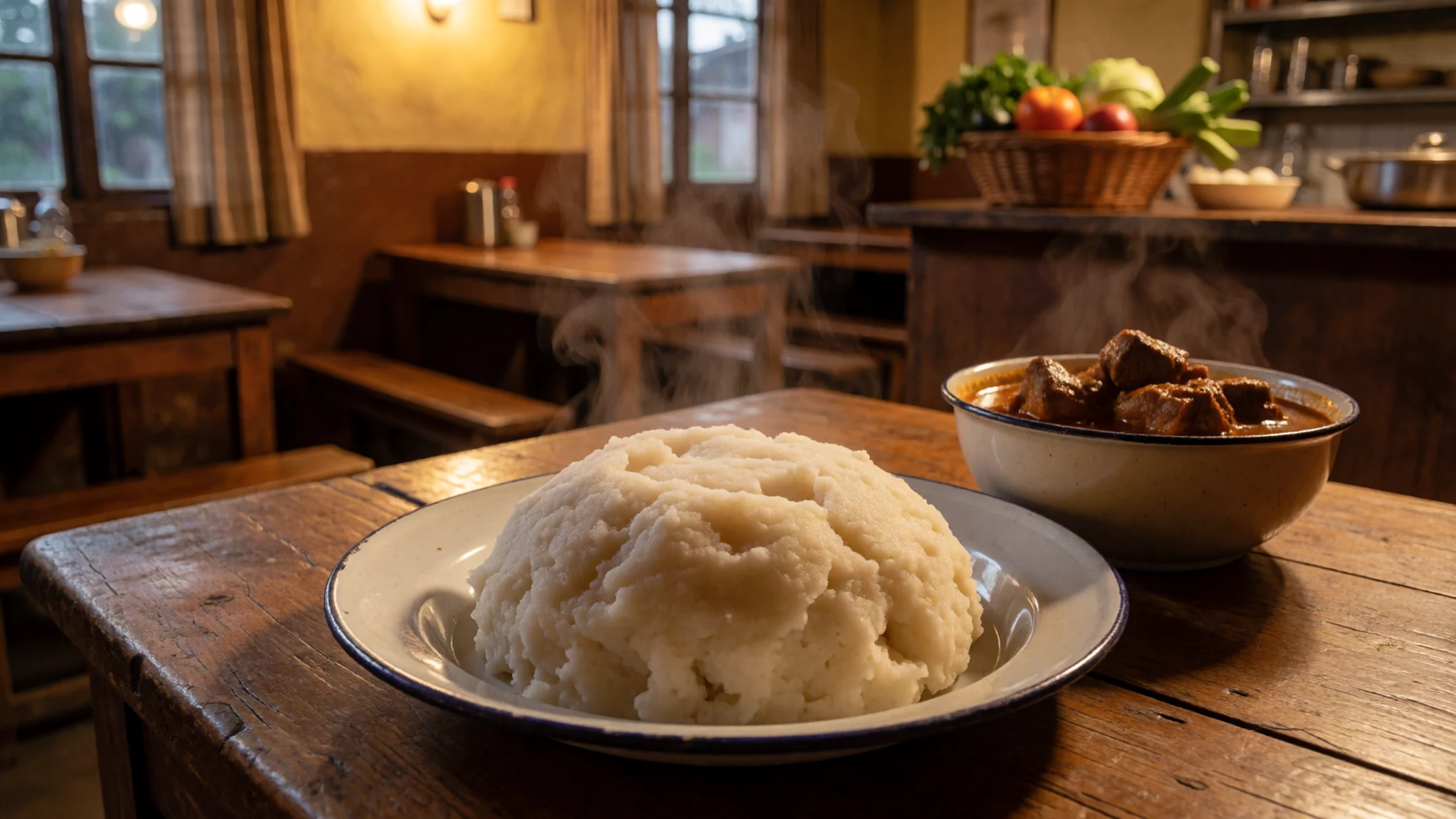
- Mtori — Local eateries in Arusha and the villages on the lower slopes
Mtori is a stew of beef cooked with green bananas, which soften into the sauce and give it a mild, earthy flavour. It is a comforting meal that suits the cooler evenings around the mountain. Look for it in local eateries that serve home-style cooking rather than in larger hotels.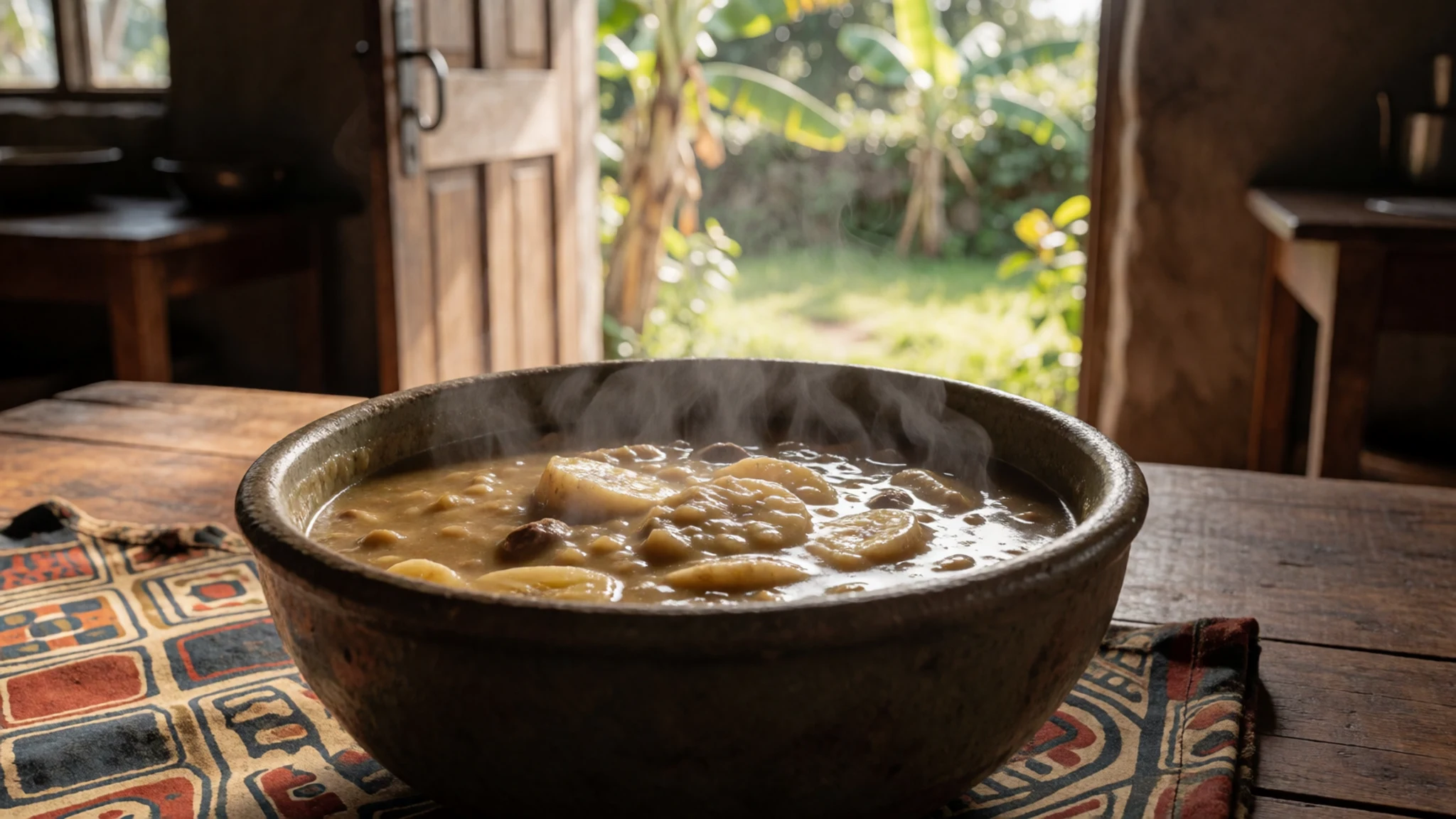
- Mchicha — Neighbourhood eateries and the market stalls in Arusha
Mchicha is a leafy vegetable stew, cooked with meat or fish and often served alongside ugali. The greens are simmered until tender and seasoned simply, so the dish is hearty without being heavy. It is a good choice for those who want vegetables with their meal. - Roasted corn and chips — Street corners and the roadside stalls near Arusha bus stations
Street vendors sell corn on the cob grilled over open charcoal fires, and potato chips cooked in a roaring fire. Both are cheap and filling, and the smoky flavour is the main draw. Choose a stall where the fire looks busy and the food is cooked to order. - Mandazi — Morning markets and tea stalls in Arusha
Mandazi is a sweet, doughnut-like snack that is usually made fresh each morning. It is fried until golden and tastes lightly of sugar and spice. It makes a good breakfast or mid-morning snack, often eaten with tea.
Plan it
Best time. June to September is the main dry season around Mount Meru, which gives clearer skies for the climb and better views of the summit. The months after the rains are usually the most reliable for walking. The wetter months bring cloud, mud on the trails and slower progress, so expect a harder climb at those times.
How long. 3–4
Getting there. Kilimanjaro International Airport is the nearest major airport, and the drive into Arusha is short. Small aircraft also use Arusha Airport. Taxis and pre-arranged transfers are the usual last leg to Arusha, and the trailhead is reached by road from town.
Budget. mid
Tips
- Book a registered operator and guide before you arrive, since the climb is organised through them
- Start early to catch clear skies at the summit, which often clouds over by the afternoon
- Carry enough water and treat or filter it, as tap water is not safe to drink
- Pack warm layers for the upper slopes, where temperatures drop sharply
- Keep valuables close in Arusha and use trusted transport, as theft occurs in tourist areas
- Check entry rules and visa requirements well before travel, including any new insurance requirement
Etiquette
- Ask before photographing people, and agree any payment first
- Dress modestly in towns and villages, covering shoulders and knees
- Greet elders with shikamoo and use a title where you can
Nearby
Sources
- Wikidata Q309098 (CC0)
- Wikipedia: Mount Meru (Tanzania) (CC BY-SA 4.0)
- Wikivoyage: Tanzania (CC BY-SA 4.0)
- Photo: Mount Meru, Tanzania (Toksave) (CC BY 3.0)
- Photo: Mount Meru with snow (Khalidsalewa) (CC BY-SA 4.0)
- Photo: Conducive mountainous climate of Meru (Joseph mzumbwe) (CC BY-SA 4.0)
- Photo: Afternoon view of Mount Meru in Arusha (KaizaDee) (CC BY-SA 4.0)
- Photo: Arusha Airport with Mount Meru background (Mchome) (CC BY-SA 4.0)
- Photo: Arusha banner Mt. Meru (Jjtkk) (CC BY 3.0)
- Photo: Ngurdoto Crater, Arusha National Park (ProfessorX) (Public domain)
- Photo: Caldera of Mount Meru (AmyAbroad) (CC BY-SA 4.0)


