Mount Emei
Mount Emei, People's Republic of China
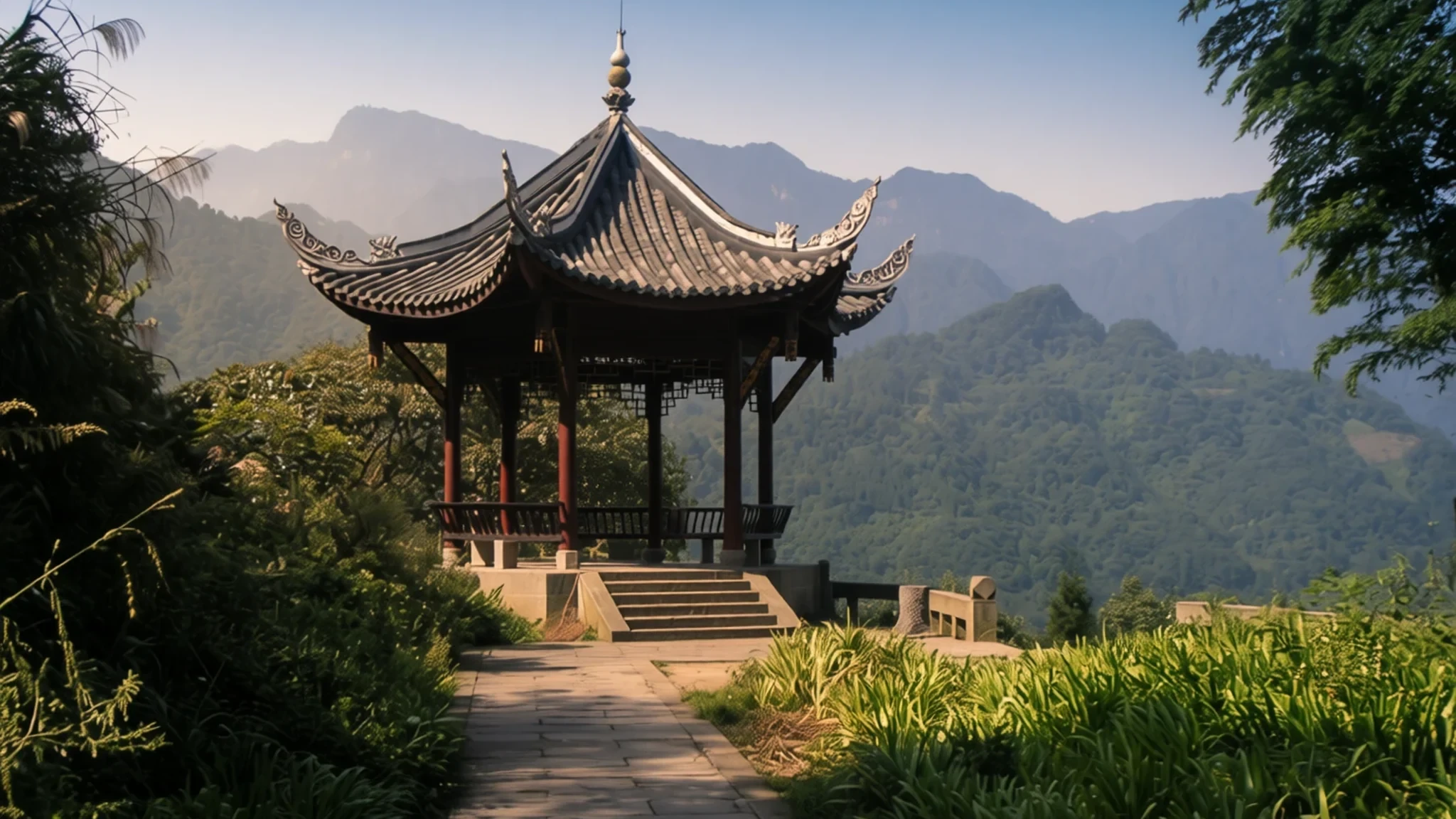
Mount Emei is the highest of China's Four Sacred Buddhist Mountains, and its summit is reached by a long walk through temples and cloud.
The place
Mount Emei (峨眉山) rises to 3,099 metres in Sichuan Province, on the western edge of the Sichuan Basin, and it is the tallest of the four mountains China's Buddhists regard as sacred. The peak is linked with Puxian Bodhisattva, who stands for great practice and great virtue, and the mountainside holds more than one hundred temples and monasteries built up over centuries of pilgrimage. Administratively the mountain sits near Emeishan City, which belongs to the larger prefecture of Leshan. UNESCO listed it as a World Heritage Site in 1996, and the national park covering the slopes now shapes much of how the mountain is run.
Expect a working tourist landscape rather than wilderness. Roads climb much of the lower mountain, and guesthouses, shops and restaurants line the main routes. The hiking trails are the real draw: they wind through forest, pass shrines tucked into hollows, and climb to viewpoints where the cloud below can look like a sea. In busy seasons the paths and the main temples fill with coach parties, so the quieter stretches tend to be the early morning ones and the trails away from the main routes.
Two styles of visit are common. Some people take buses or cable cars to the upper temples and spend a day near the top. Others walk from the foot of the mountain, staying a night or two in temple guesthouses or in the small towns below. The full walk is long, and the lower stages are gentler than the upper ones, where stone steps run for long stretches without a break.
Its story
The religious story of Mount Emei begins with the arrival of Buddhism in China, after which the mountain became a place of refuge for monks, hermits and pilgrims. Its association with Puxian Bodhisattva, known in Sanskrit as Samantabhadra, gave it a particular identity. The bodhisattva embodies practice and compassion, and many believers come to the mountain to honour that figure rather than any single founder. Over generations, temples were established in the folds of the slopes, and the monastic community grew into a network reaching from the foothills to the summit.
Taoist traditions also shaped the landscape. Caves and hollows on the flanks were used for meditation and offerings, and some remain sites where visitors burn incense. This layering of faiths is one reason the mountain feels busy with ritual rather than with a single narrative. Different halls on the same route can belong to different traditions, and the architecture ranges from older timber buildings to newer constructions that are plainer and more recent.
Modern history has brought roads, hotels and a national park administration. Recognition as a World Heritage Site helped protect the forest and the temples, while also drawing larger crowds. The tension between devotion and tourism runs through daily life on the mountain. Monks lead services at dawn, and by midday the same halls are full of visitors with cameras. Many of the people who come now are pilgrims, many are hikers, and a good number are both.
What to see
- Golden Summit — Summit
The summit is the highest point of the mountain and the place most visitors aim for. A large, many-faced statue of Samantabhadra rises above the platform, and on clear mornings the cloud sea spreads out in every direction. The final approach is steep, and the top can be crowded through the middle of the day. Arriving early gives the best chance of views without the crowds.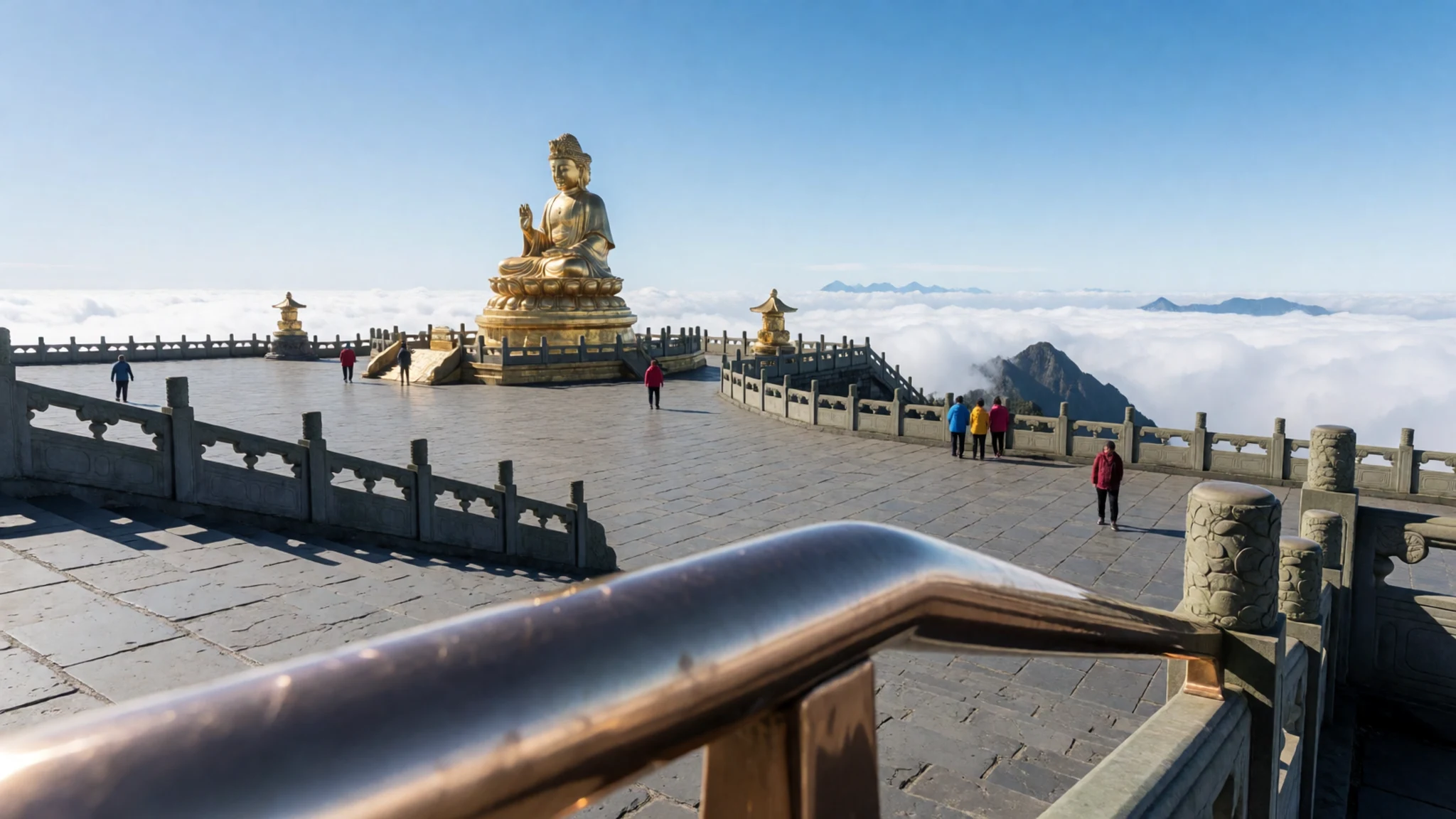
- Huazang Temple — Near the summit
Huazang Temple sits close to the Golden Summit and is worth a visit for its terrace, which gives a fine outlook over the surrounding ridges. It is a quieter stop than the summit itself and makes a sensible place to pause before or after the final climb. Allow time to walk the terrace slowly, since the light and cloud change quickly on the mountain.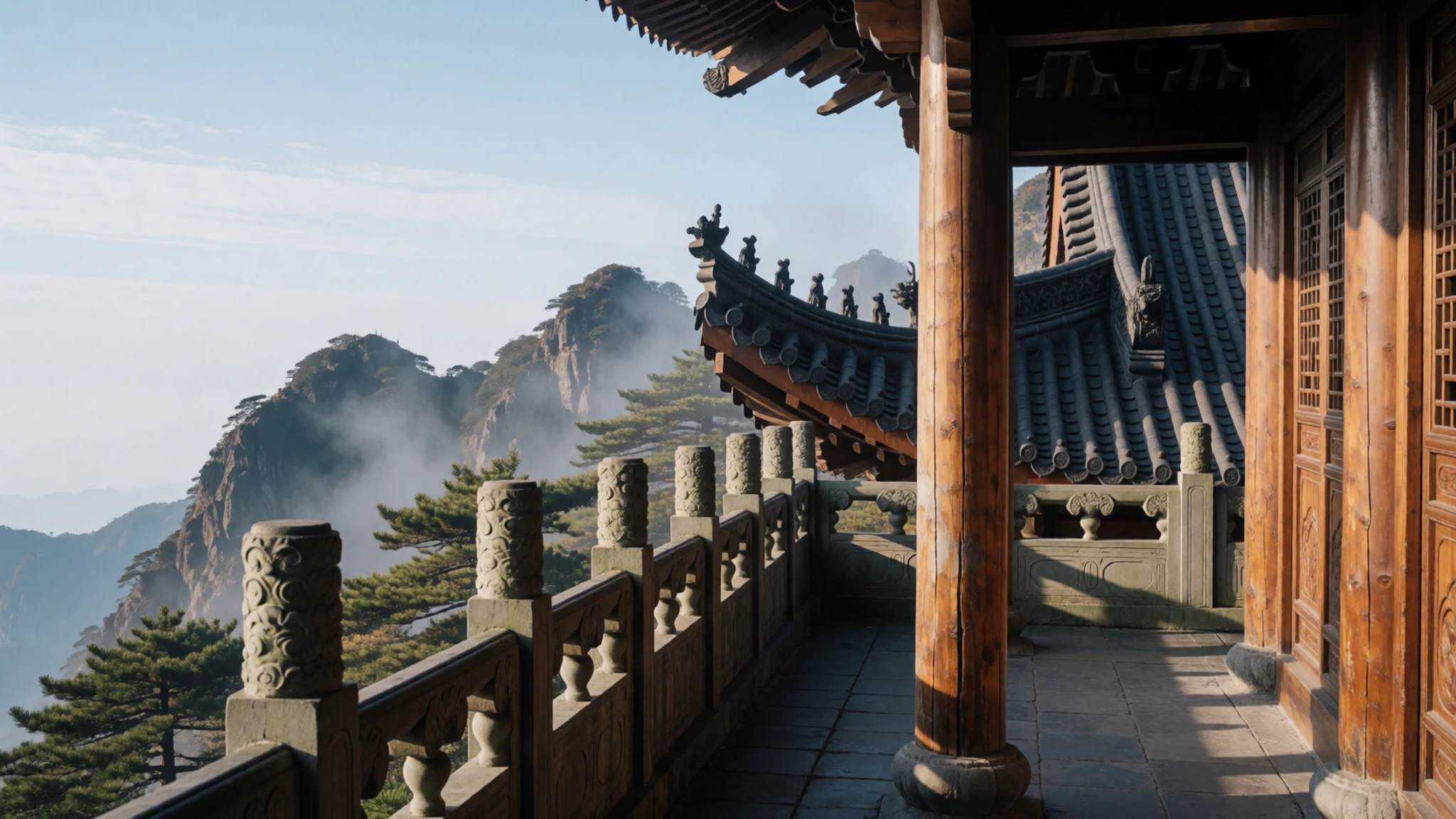
- Wannian Monastery — Upper mountain
Wannian Monastery is a large monastery known for its statue of Puxian Bodhisattva, shown riding a white elephant. The monks here are welcoming, and the community adds a sense of ordinary devotion to the grounds. Give yourself an hour or more to see the main halls and the statue, and dress modestly for the worship spaces.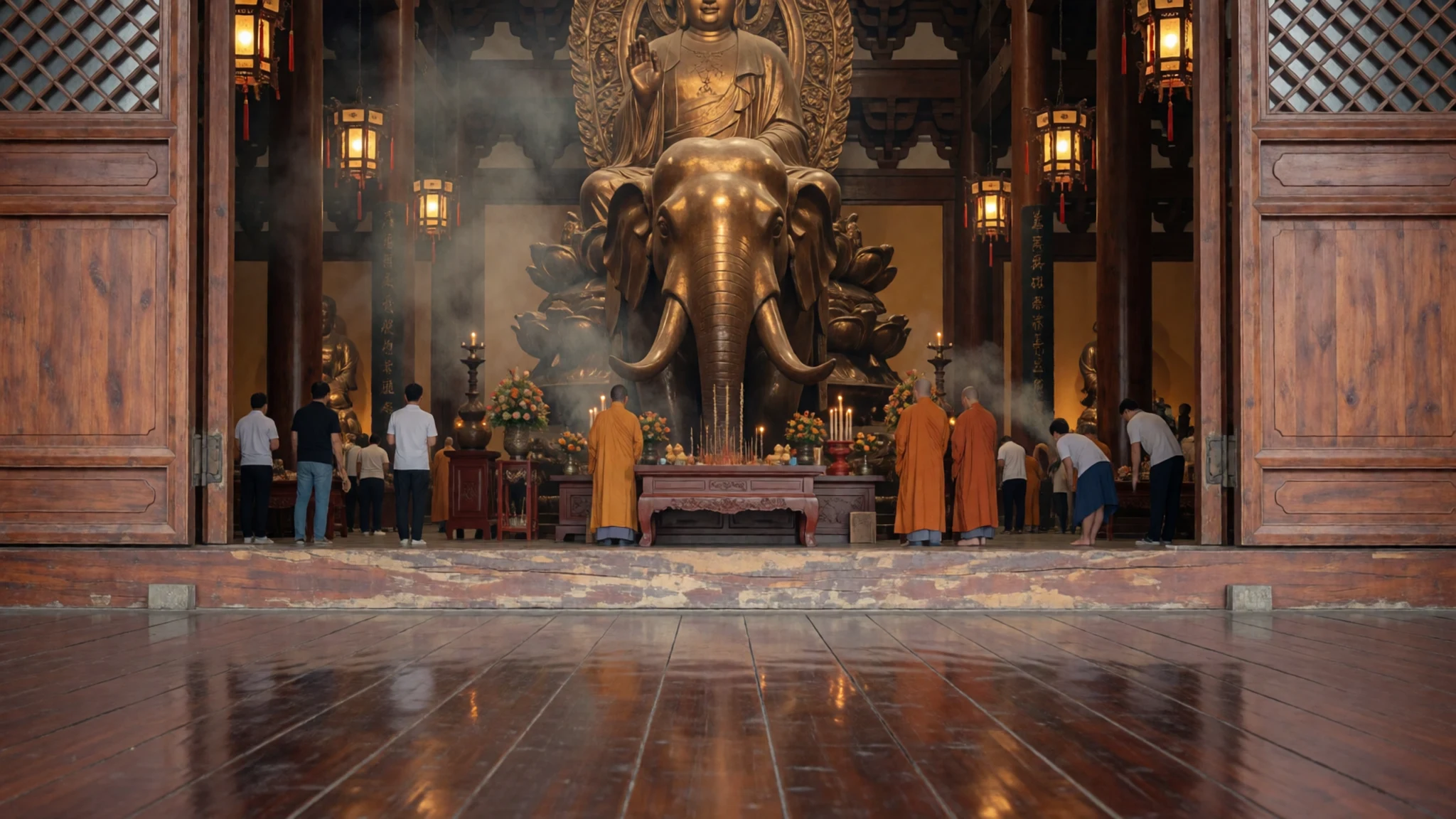
- Leiyin Monastery — Lower mountain, on the trail from Baoguo
Leiyin Monastery lies on the trail route from the foot of the mountain, and the complex is worth exploring. Several smaller temples are tucked into the seams of the slopes nearby. Many of the newer buildings are plainer than the older halls, so spend your time on the places that feel most lived in.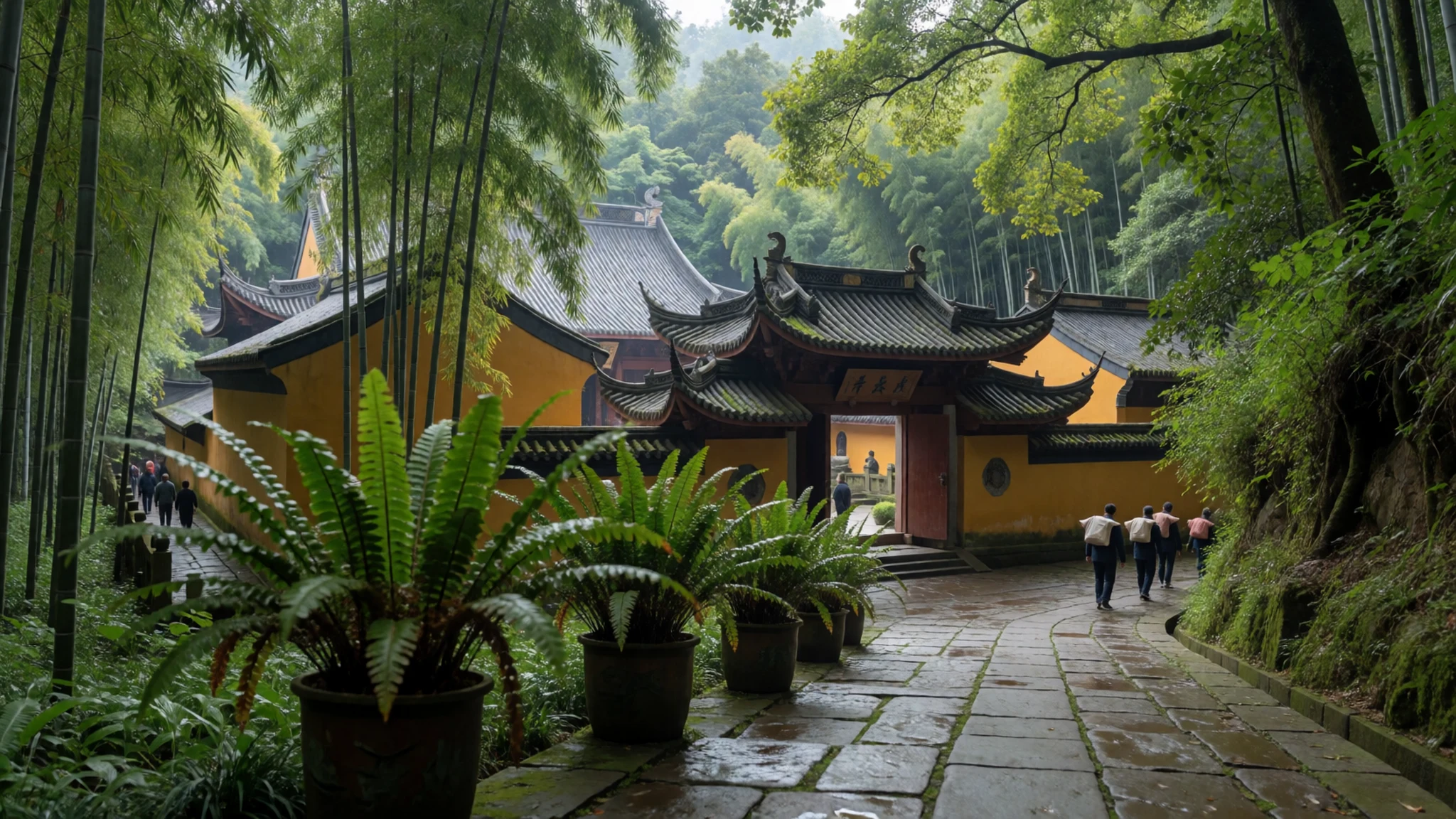
- Baoguo Temple — Foot of the mountain, Baoguo
Baoguo Temple is the usual starting point for the full walk and sits near the foot of the mountain. It holds a massive bronze bell, said to carry a long way when it is rung. The temple is reasonably well signposted, and its grounds make a good first stop before the climb. Leave heavy luggage in town before setting out.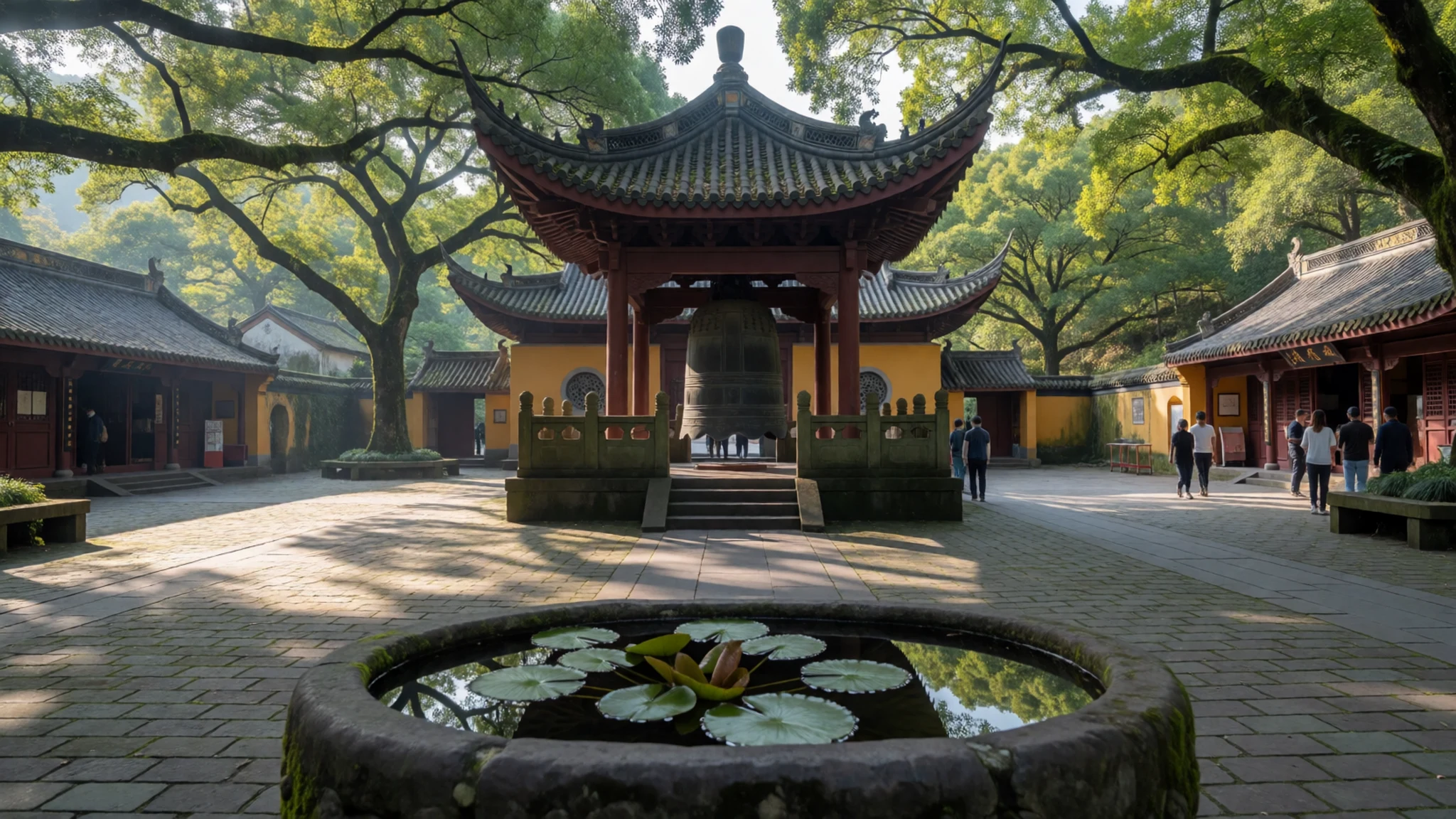
- Jiulao Cave — Middle mountain, near Xianfeng Temple
Jiulao Cave lies close to Xianfeng Temple and is a deep Taoist cave where pilgrims burn incense. The route is not advised in winter unless you are well prepared, so check conditions locally before setting out. Bring a light, and treat the cave as a serious destination rather than a casual detour.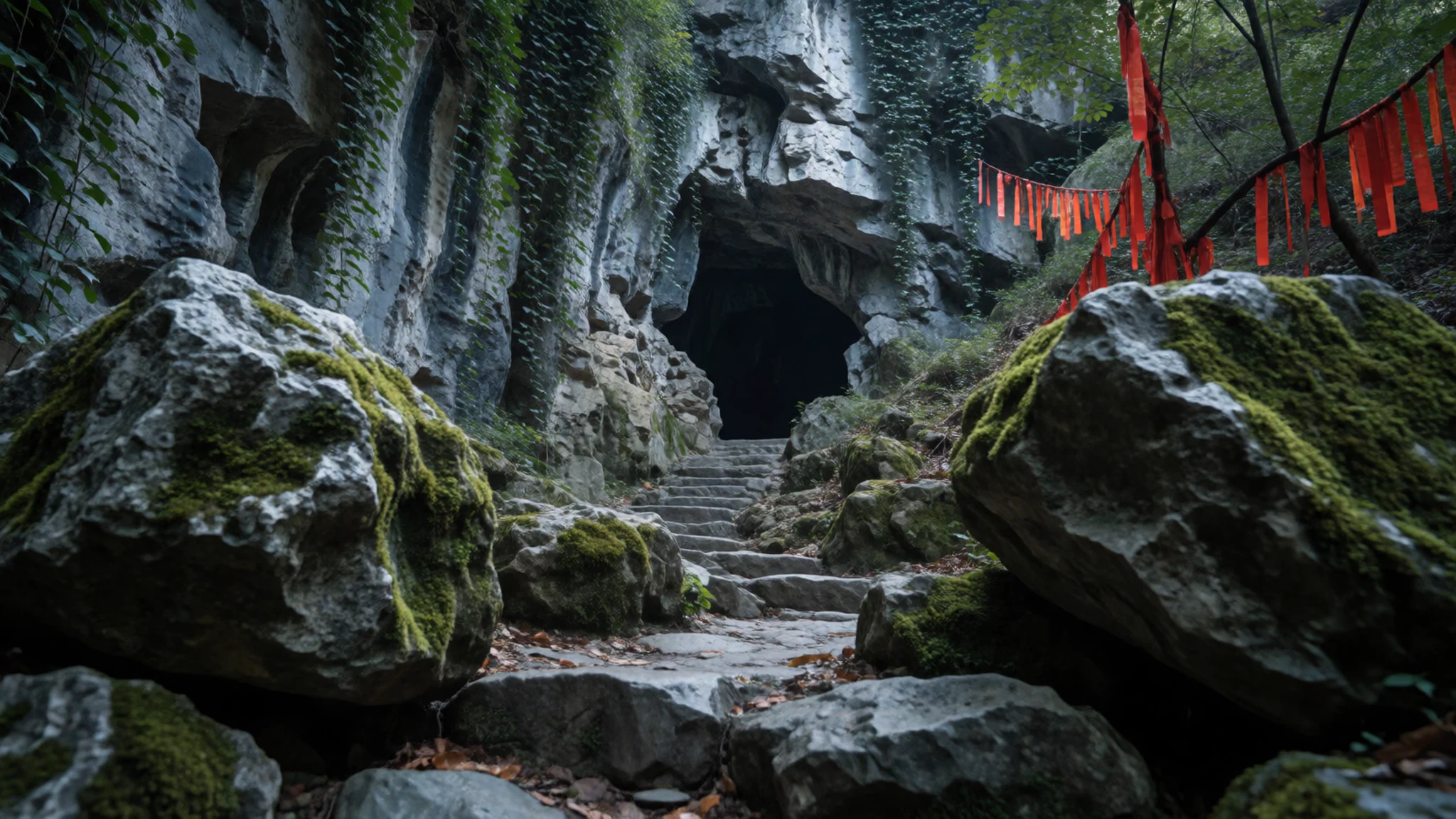
Culture
Mount Emei is a working sacred mountain as well as a national park, and its temples expect a degree of respect. Monks keep daily routines of chanting, meals and prayer, and visitors share those spaces. Inside the halls, people bow, light incense and make offerings in front of the statues, which are objects of worship rather than backdrops. Many monasteries serve vegetarian food, and the dining halls keep their own timetables, so arrive when meals are served rather than expecting a casual lunch. Incense smoke can be heavy in enclosed spaces, so check the ventilation before lingering. Photography is generally fine in courtyards and outdoor areas, but photographing people at prayer needs their consent, and flash should never be used near the statues. Pilgrims often walk slowly past the main altars with prayer beads and small offerings, so keep to the side of the route and avoid blocking the paths. The mountain streams are not safe to drink from, so bring bottled water and take your rubbish back down the mountain. Remove your hat, keep your voice low inside the halls, and ask before photographing anyone who is praying.
What to wear
The traditional dress associated with Emei is the robe of Buddhist monks, cut loose from heavy cloth in deep maroon and saffron-toned shades, with wide sleeves and layers suited to long hours of ceremony. Lay pilgrims and farmers in the surrounding hills traditionally wore cotton and hemp jackets and trousers suited to rough work, and dyed or handwoven cloth still turns up in some local craft stalls. Textiles in the temples, such as hangings and offering cloths, are a separate tradition that most visitors see only from the doorway.
Today most people on the mountain dress for walking. Hikers wear synthetic layers, waterproof jackets and trainers or hiking boots, while pilgrims often pair a modern jacket with prayer beads or a simple hat. Monks wear robes for daily life and ceremony alike, and the contrast between their clothing and the hiking gear around them is part of the mountain's character.
For a visit, plan for cold, wet and changeable weather. The summit can be far colder than the towns below, and rain is frequent through summer, so pack a windproof, waterproof layer and a warm top even in warmer months. Grippy footwear matters more than fashion, as the stone steps are long, uneven and often wet. Modest dress is expected in temples, so cover shoulders and knees inside halls, and avoid loud or revealing clothing near shrines. A hat and sunglasses are useful on exposed ridges.
What to eat
- Monastery vegetarian meal — Dining halls at the main monasteries
Many monasteries on the mountain serve vegetarian meals to visitors, usually greens, tofu and rice in a plain Sichuan style. The dining is simple and often communal, and the food is inexpensive by mountain standards. Breakfast is typically basic, with rice, a steamed bun or a side dish. Eat when the kitchen serves, since the schedule is set by the temple.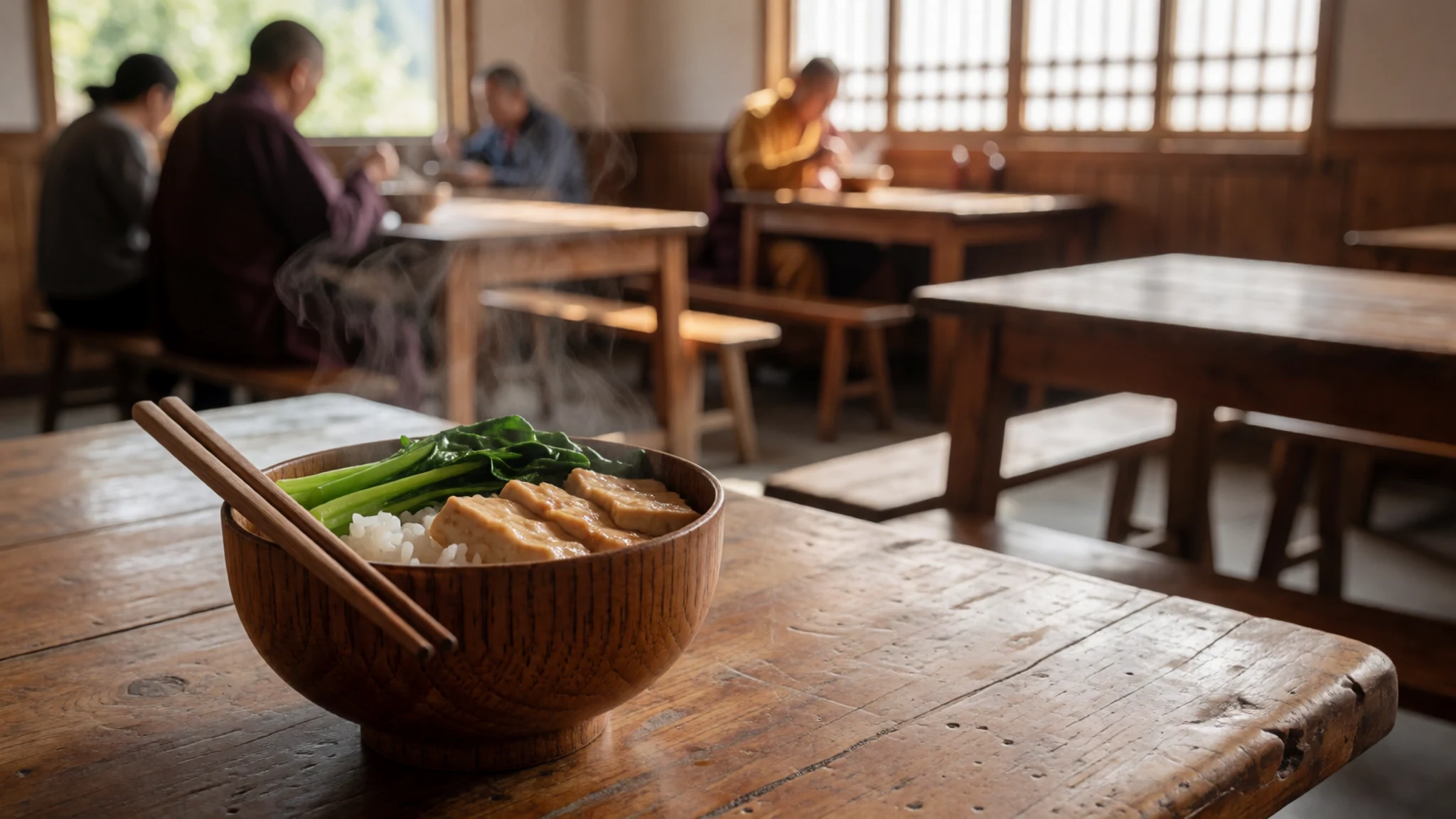
- Steamed buns from trailside stalls — Trailside stalls and pit stops
Steamed buns, called mantou, are sold from small stalls and shacks along the mountain paths and at the pit stops between temples. They are plain, filling and easy to carry, which makes them a sensible snack for the climb. Buy a few before the steepest stretches, because the food gets pricier higher up the mountain.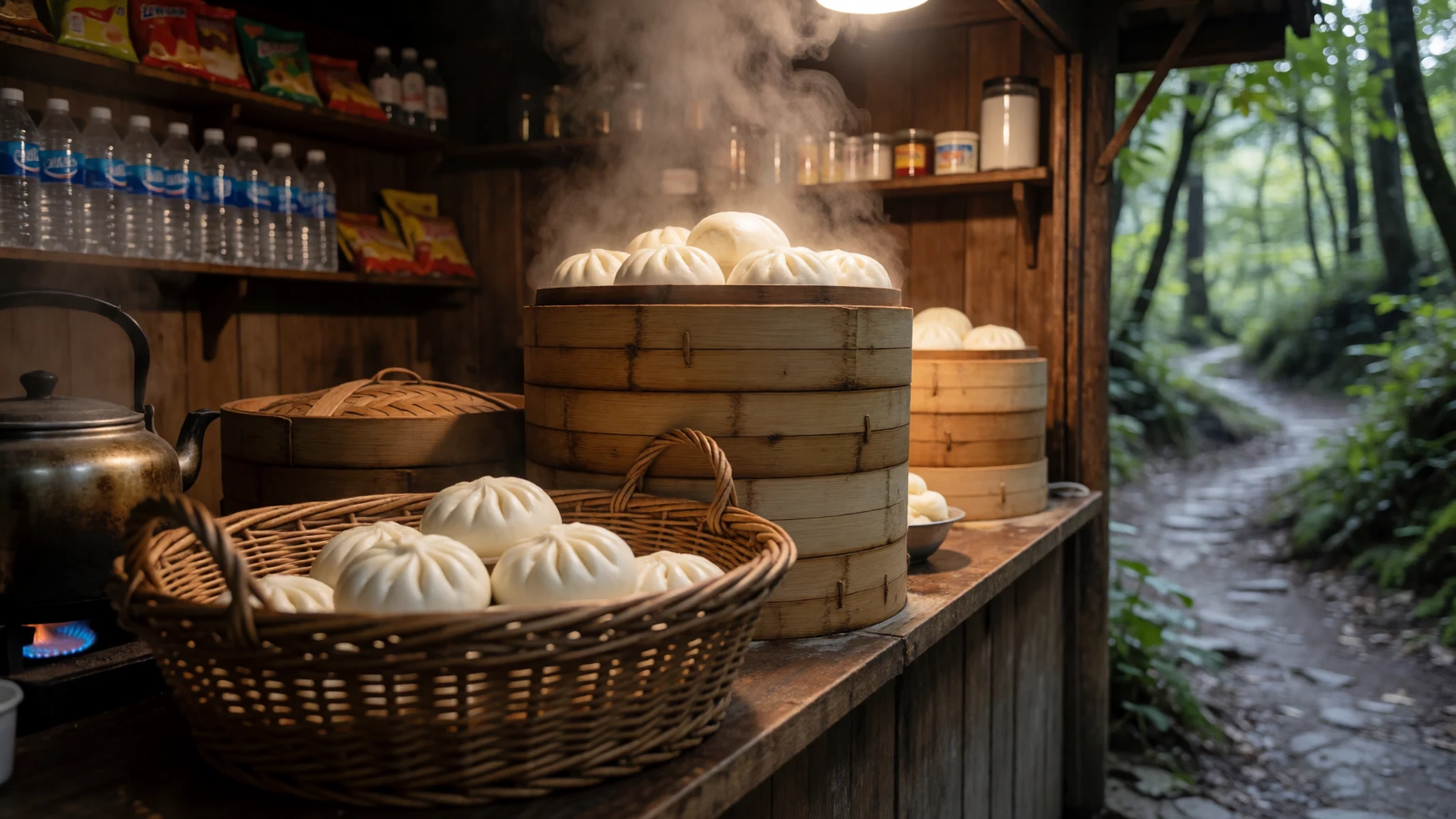
- Regional Sichuan cooking off Jinqu Road — Local eateries on the streets north-east of Jinqu Road
Local restaurants a short walk from the park entrance serve regional Sichuan dishes in simple dining rooms. The main tourist strip nearer the gate is pricier and the quality varies, so the side streets offer better value and more authentic cooking. Look for busy, unfussy places with mostly local diners. - Instant noodles at the pit stops — Trailside shops and pit stops
Cups of instant noodles are sold at trailside shops and mountain restaurants, and they are a reliable budget option when kitchens are slow. Hot water is usually available at the counters. Eat them at a table rather than on the path, and carry your own packaging back down.
Plan it
Best time. March to April brings mild weather and blossom in the lower forest, and October to November is drier with better visibility. June to September is the monsoon season, when most of the year's rain falls and the upper mountain is often hidden in cloud. Winters are cold at the top, and the upper trails can be slippery.
How long. 3–4
Getting there. Fly into Chengdu Shuangliu International Airport, then take a high-speed train to Emeishan via Leshan from one of Chengdu's stations. Buses also run from Chengdu. From the station, local buses reach Baoguo Temple at the foot of the walk.
Budget. low
Tips
- Check the official site for current ticket prices and opening arrangements before you travel
- Start the main temples early, before the coach parties arrive
- Carry cash for small shrines, markets and roadside stalls, as cards are not always accepted
- Bring plenty of water, since bottled water is sold along the route and mountain streams are not for drinking
- Pack warm and waterproof layers, because the summit is much colder and wetter than the towns
- Leave heavy luggage in Baoguo or Emeishan town while you walk the mountain
Etiquette
- Dress modestly inside temples and remove hats in the halls
- Ask before photographing monks or pilgrims at prayer
- Keep voices low and do not block paths used during ritual processions
Nearby
Sources
- Wikidata Q134927 (CC0)
- Wikipedia: Mount Emei (rev 1374489224) (CC BY-SA 4.0)
- Wikivoyage: Emeishan National Park (rev 5401679) (CC BY-SA 4.0)
- Photo: Wanfoding, George N (CC BY 2.5)
- Photo: Shi DeRu and Shi DeYang, Shi DeRu (CC BY 3.0)
- Photo: Golden Top of Mount Emei, Zhou Yuji1028 (CC BY-SA 4.0)
- Photo: Jinding, Zhou Yuji1028 (CC BY-SA 4.0)
- Photo: Wanfoding, George N (CC BY 2.5)
- Photo: The Mount Emei, pookieevans (CC BY-SA 2.0)
- Photo: Massive golden buddha on the sumit of Eimei Shan, Staceynyx (CC BY 3.0)
- Photo: Baoguosi, Gisling (CC BY 3.0)


