Monument Valley
Monument Valley, United States
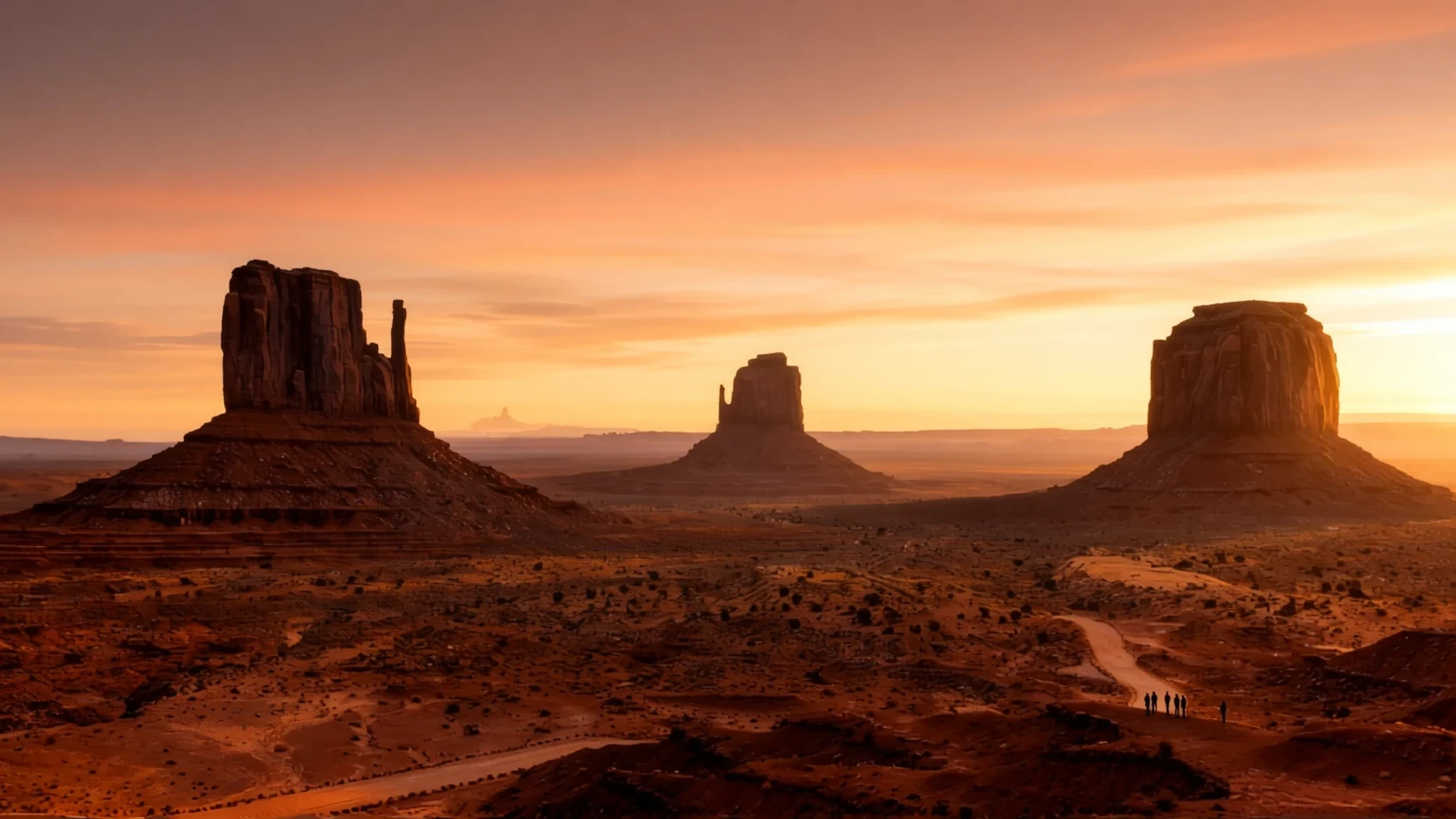
Witness monumental red sandstone towers rising from the silent desert floor in the heart of the American West.
The place
Monument Valley sits across the border between Arizona and Utah as a structural basin forming part of the vast Colorado Plateau. The landscape is defined by towering sandstone buttes and mesas that project dramatically upward from a flat, dusty floor composed largely of siltstone and wind-derived sands. These distinct geological formations reveal clear strata, featuring layers of reddish siltstone, pale sandstone, and capped formations of conglomerate rock. The rich red hues of the cliffs stem from weathered iron oxide, whilst darker blue-gray tones are created by deposits of manganese oxide. Ancient meandering rivers slowly carved this basin over immense spans of geological time, leaving behind freestanding monoliths, spires, and deep canyons that stretch across the arid plateau under wide blue skies.
Its story
Monument Valley holds deep spiritual significance for the Indigenous people who call this dramatic landscape home. Within the boundaries of their reservation, the local community regards these towering geological pillars and sacred spaces with profound respect and cultural continuity. For generations, families have lived among the windswept plains, maintaining traditional ways of life that harmonise with the harsh desert environment. Beyond its indigenous heritage, the valley achieved global fame through the silver screen, becoming an enduring visual symbol of the American frontier for generations of international film audiences. Famed motion picture directors utilised the striking silhouettes of the red rock buttes to frame epic narratives, permanently etching the stark beauty of these sandstone monuments into the global imagination and transforming a remote desert basin into a universally recognized icon of cinematic history.
What to see
- Big Hogan Arch — Central valley interior
Big Hogan Arch is a remarkable natural sandstone alcove located deep within the park's interior terrain. Its name derives from a distinct resemblance to traditional round dwellings built by local residents across the reservation. Visitors scrambling up the short sandy track find themselves enclosed within a vast, cathedral-like stone dome illuminated by natural light.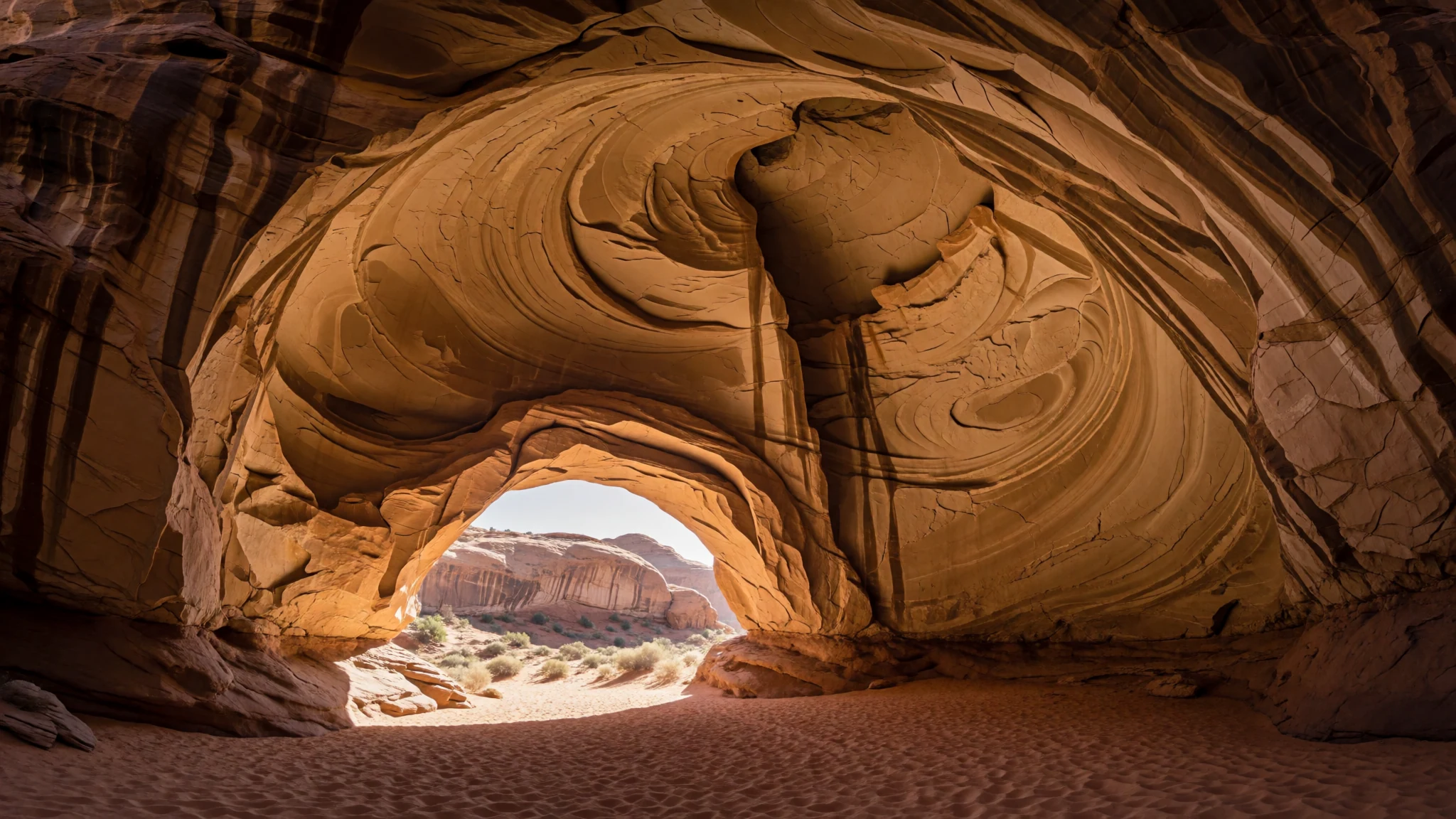
- Sun's Eye — Southern basin sector
Sun's Eye is a fascinating aperture eroded high into a curved sandstone wall, offering a striking perspective of the desert sky. Observers positioned at the base can look upward to see the circular opening frame the bright sunlight like an unblinking eye carved directly into the ancient, weathered strata of the cliffside.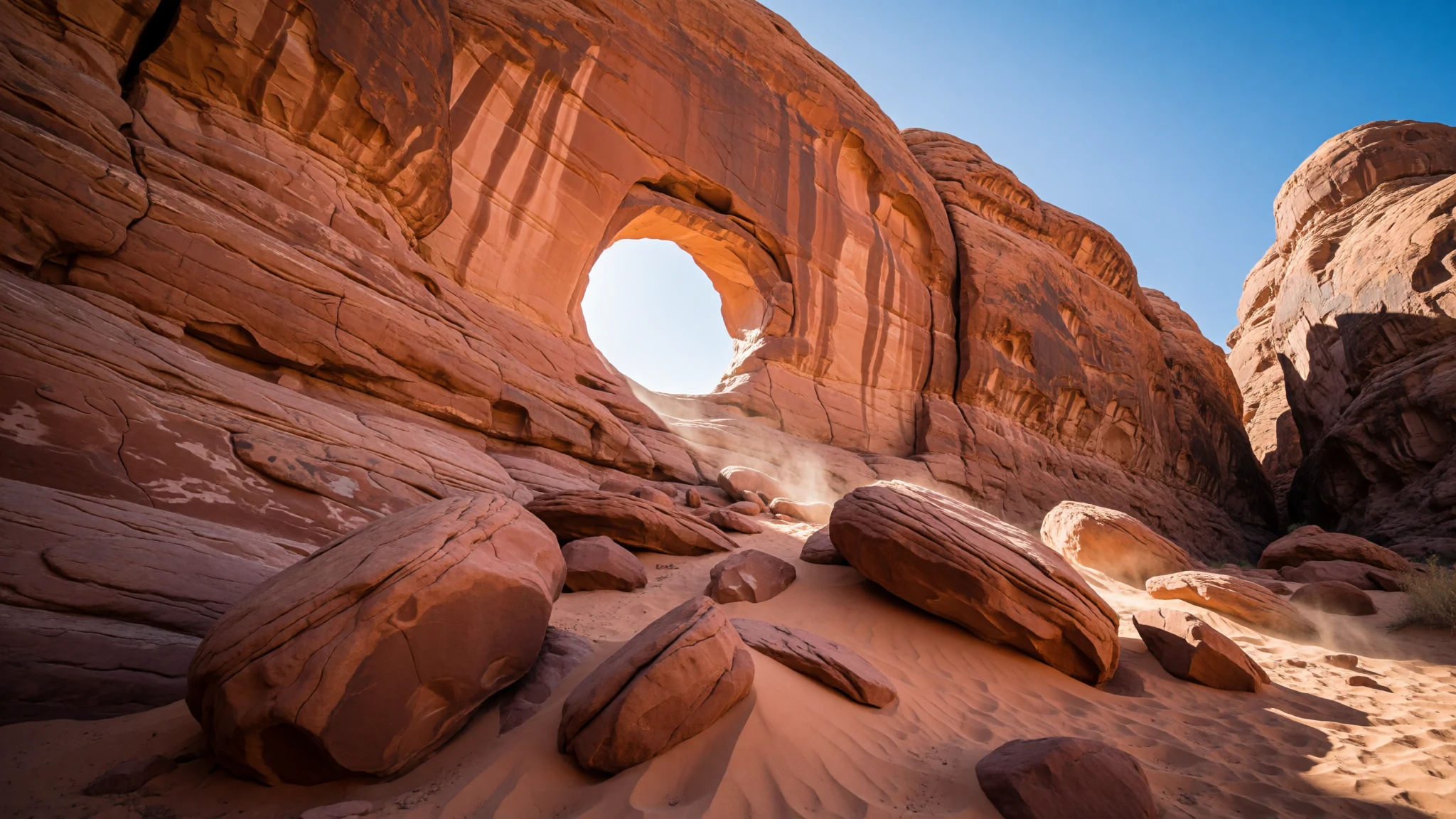
- Elephant Butte — Eastern valley route
Elephant Butte stands as one of the most massive and visually commanding stone masses situated northeast of the principal viewing areas. Characterised by its bulky silhouette and heavy overhangs, the formation commands attention from surrounding dirt tracks and provides a dramatic sense of scale against the flat, arid plains stretching below.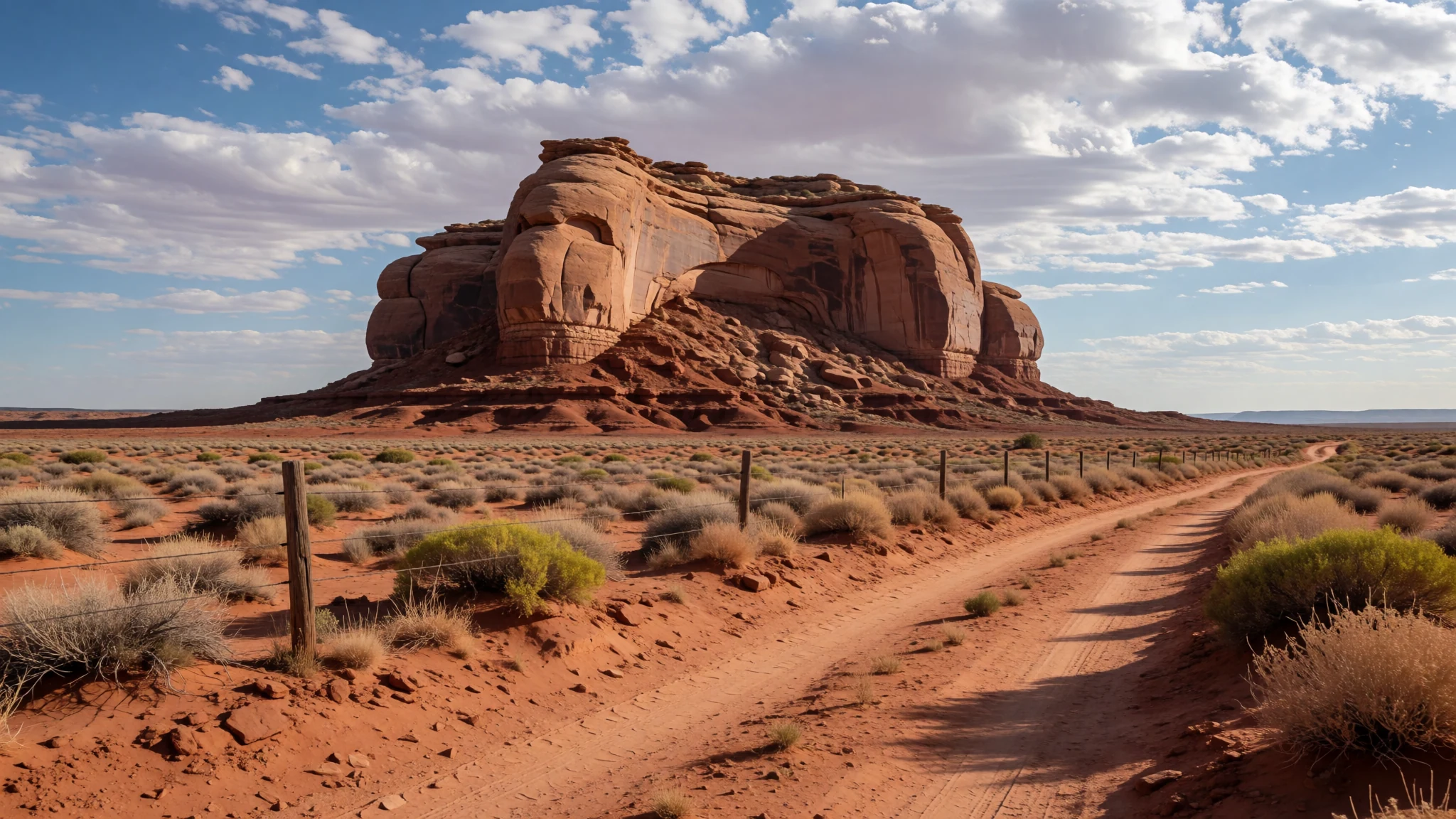
- Brigham's Tomb Butte — Northern valley boundary
Brigham's Tomb Butte rises prominently near the northern boundary of the park close to major overland routes passing through the region. This isolated monolith displays striking vertical banding and stands as a sentinel guarding the upper reaches of the valley, easily spotted by travellers journeying along the paved highway network.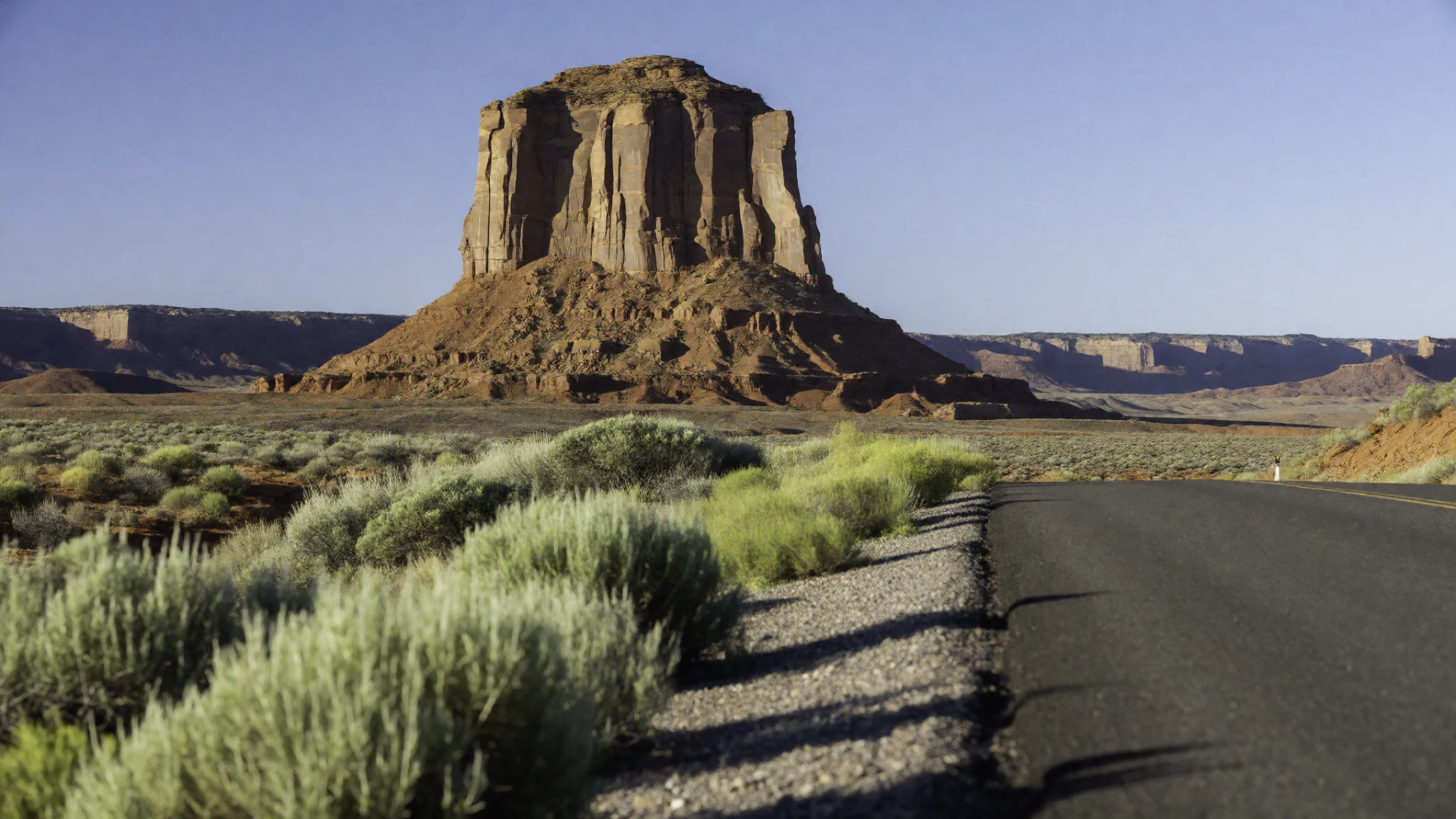
- Camel Butte — Central scenic loop
Camel Butte is a distinctive geological feature positioned near popular scenic overlooks in the heart of the valley. Flanked by dusty tracks used by guided vehicles, the formation presents an intriguing profile reminiscent of a resting desert animal, perfectly capturing the rugged and sculptural character of the surrounding terrain.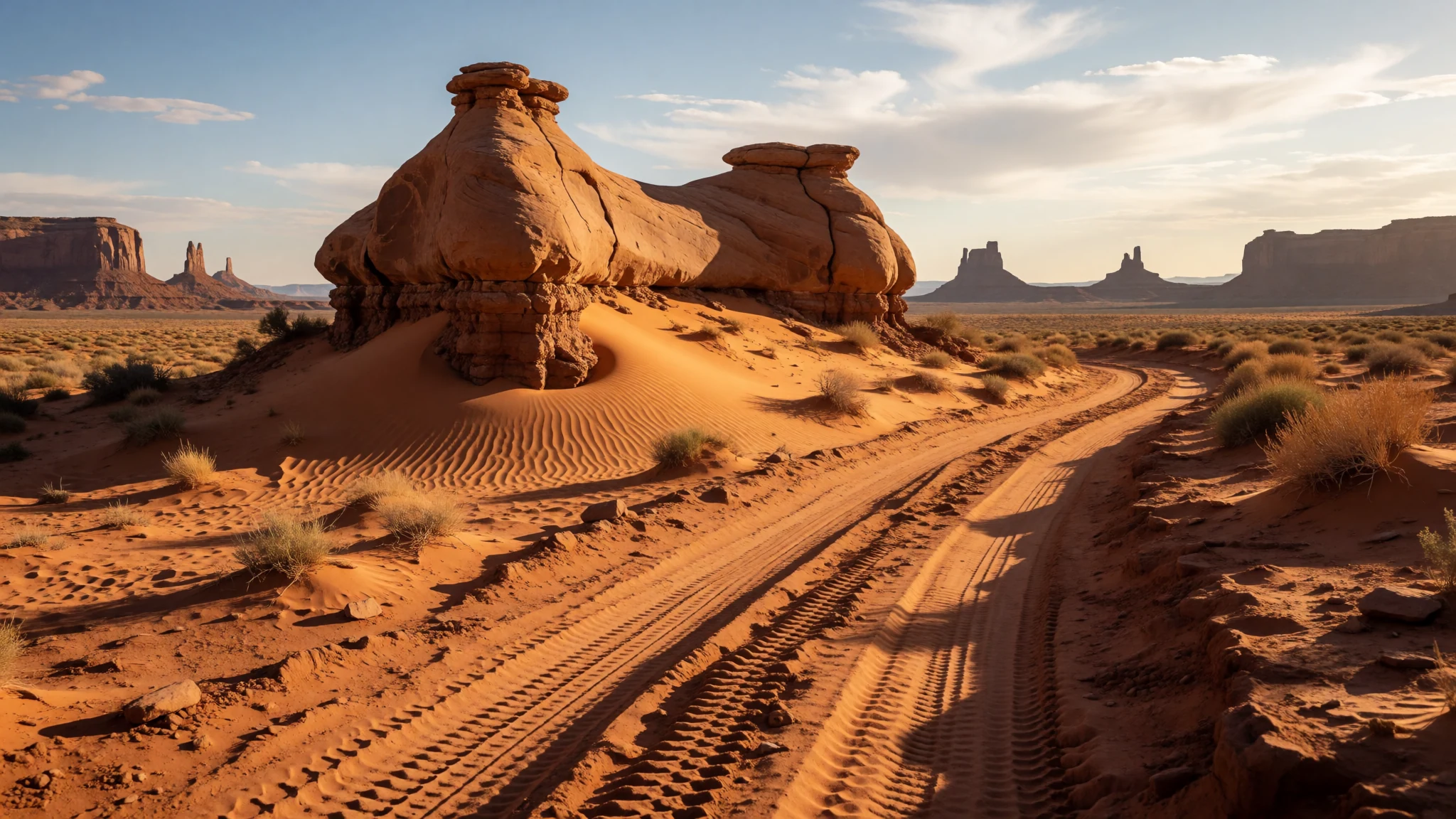
Culture
Monument Valley is situated entirely within the sovereign lands of the Navajo Nation, making local culture inseparable from the surrounding landscape. Residents maintain a deep spiritual connection to the terrain, viewing the towering sandstone structures as living entities and sacred entities deserving of utmost reverence. Traditional practices, weaving, and livestock herding remain central to community life, while oral histories preserve the deep bond between the people and the desert. Visitors encounter a culture rooted in resilience, hospitality, and stewardship of the earth. When travelling through Monument Valley, always respect local tribal sovereignty and local customs by asking permission before photographing residents or their private homes.
What to wear
Monument Valley traditional dress reflects the practical needs of desert life and rich artistic heritage, featuring woven wool textiles, silver jewellery set with turquoise, and handcrafted leather moccasins that have been passed down through generations. Modern inhabitants wear practical, contemporary western clothing suited for daily work and the elements, including denim jeans, durable shirts, and sturdy boots. Visitors exploring Monument Valley should prioritise practical, weather-appropriate attire: lightweight, breathable layers for intense daytime sun, sturdy walking shoes or boots for uneven sandy trails, and warm fleece or jackets for surprisingly brisk desert nights. Hats and sunglasses are essential gear for navigating the exposed valley floor under high solar radiation.
What to eat
- Navajo Frybread — Roadside stands throughout Monument Valley
Navajo Frybread is a golden, puffy flatbread fried until crisp on the outside and soft inside, traditionally enjoyed plain or topped with honey and powdered sugar.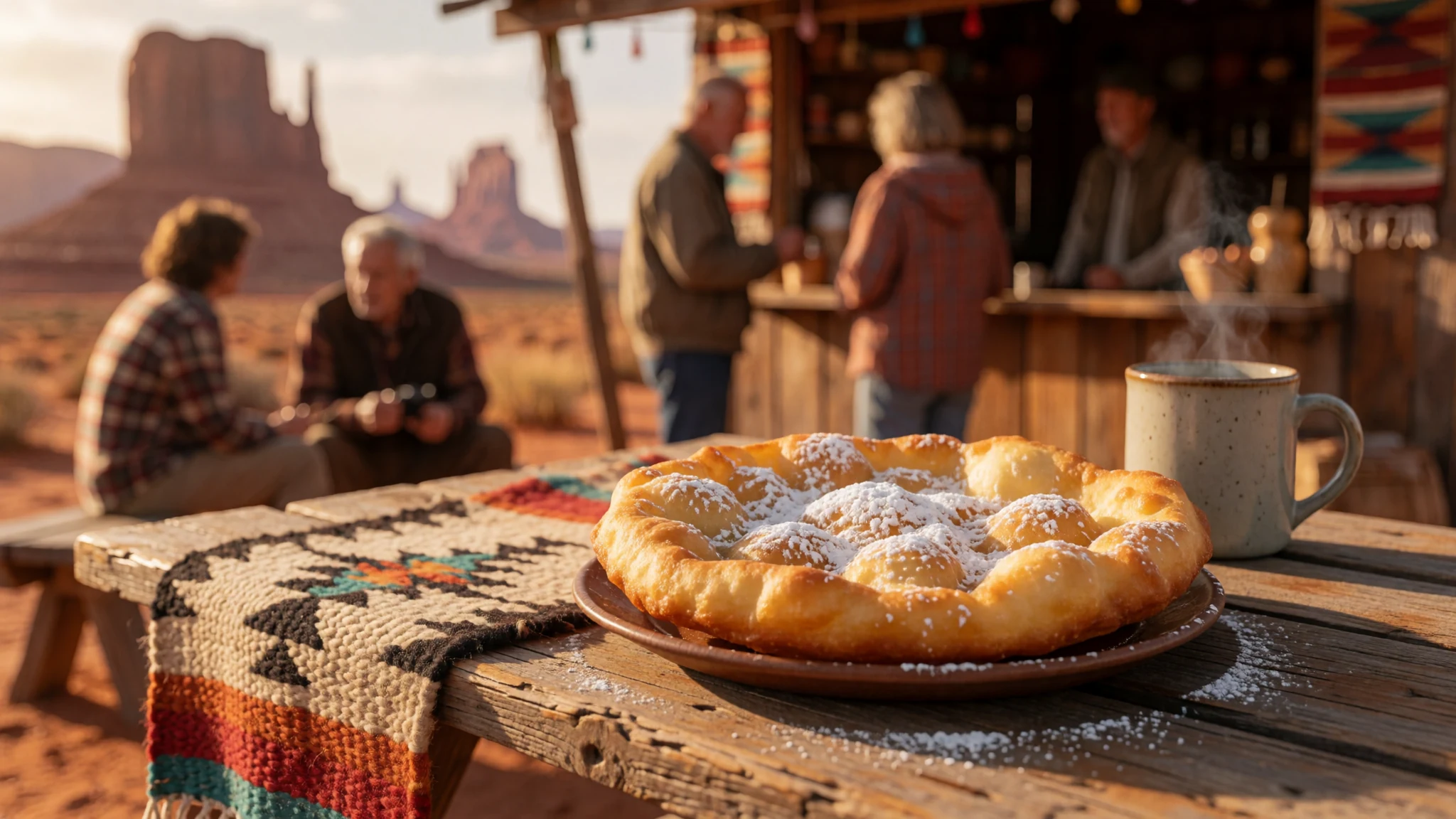
- Navajo Taco — Local park eateries and reservation diners
Navajo Taco takes freshly fried bread as a hearty base, piled high with savoury seasoned beef, beans, lettuce, cheese, and tomatoes for a filling meal.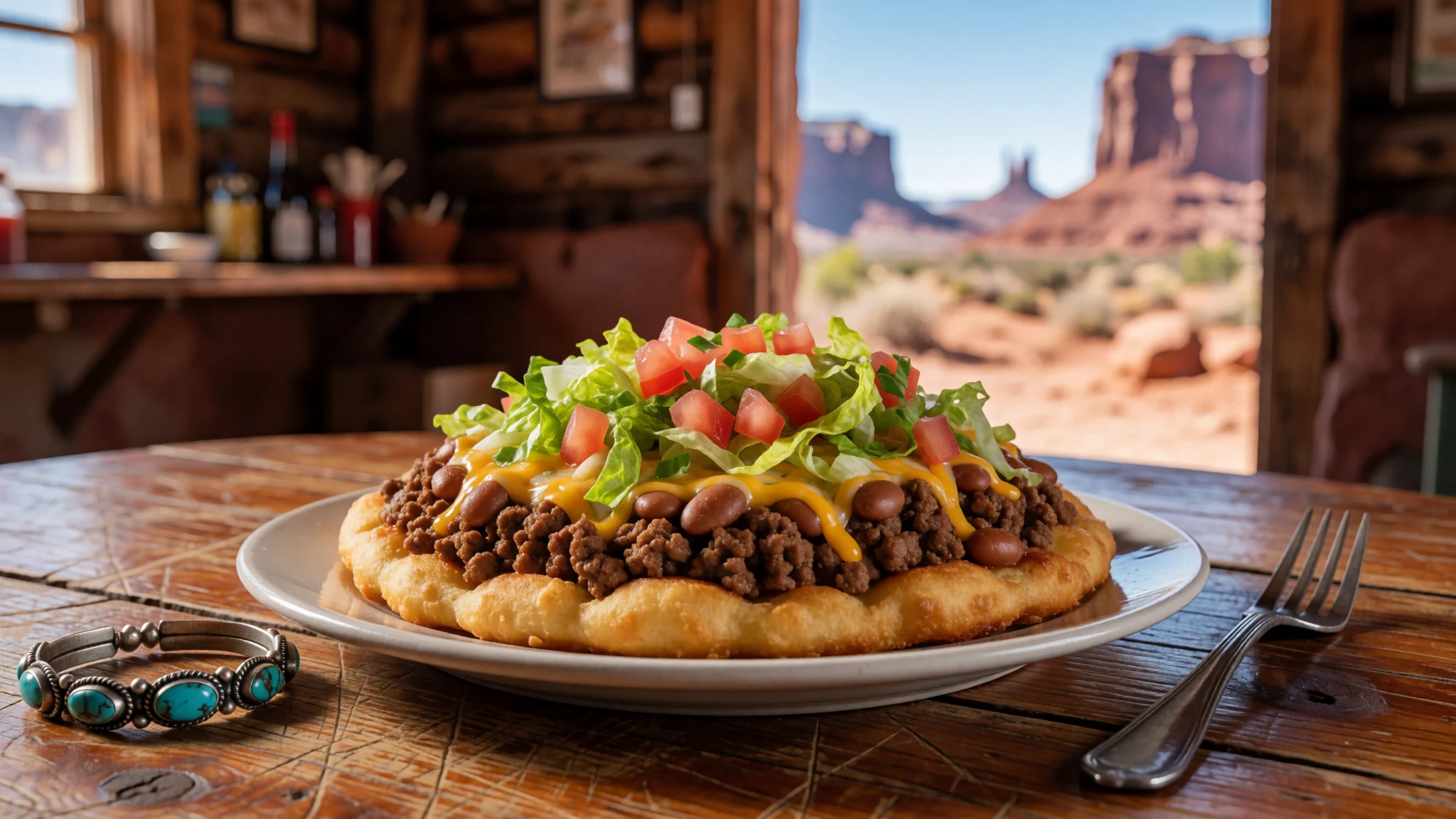
- Traditional Stew — Regional cafes in the surrounding towns
Traditional Stew is a comforting, slow-simmered meat and vegetable broth often served alongside warm bread to stave off chilly desert evenings. - Southwestern Burger — Park visitor centre restaurant and lodge dining rooms
Southwestern Burger features flame-grilled beef topped with green chillies and local cheese, blending American diner staples with regional southwestern flavours.
Plan it
Best time. Spring and autumn offer comfortable daytime temperatures for exploring the valley floor, whilst summers bring intense heat and winters turn cold.
How long. 2–3
Getting there. Arrive by car via the main regional highway network connecting from neighbouring states; minor unpaved tracks require careful driving.
Budget. mid
Tips
- Start your valley drive early in the morning to beat the midday heat and tourist crowds
- Carry plenty of drinking water as desert air accelerates dehydration quickly
- Stick to main paved and well-graded roads to avoid getting stranded in deep sand
- Bring cash for purchases at small artisan stalls and roadside frybread stands
- Respect all tribal regulations and restricted areas across the reservation
Etiquette
- Ask permission before taking photographs of local residents or their personal property
- Do not climb on fragile archaeological sites or sacred geological monuments
Nearby
Sources
- Wikidata Q192017 (CC0)
- Wikipedia (CC BY-SA 4.0)
- Wikivoyage (CC BY-SA 4.0)