Monticello
Monticello, United States
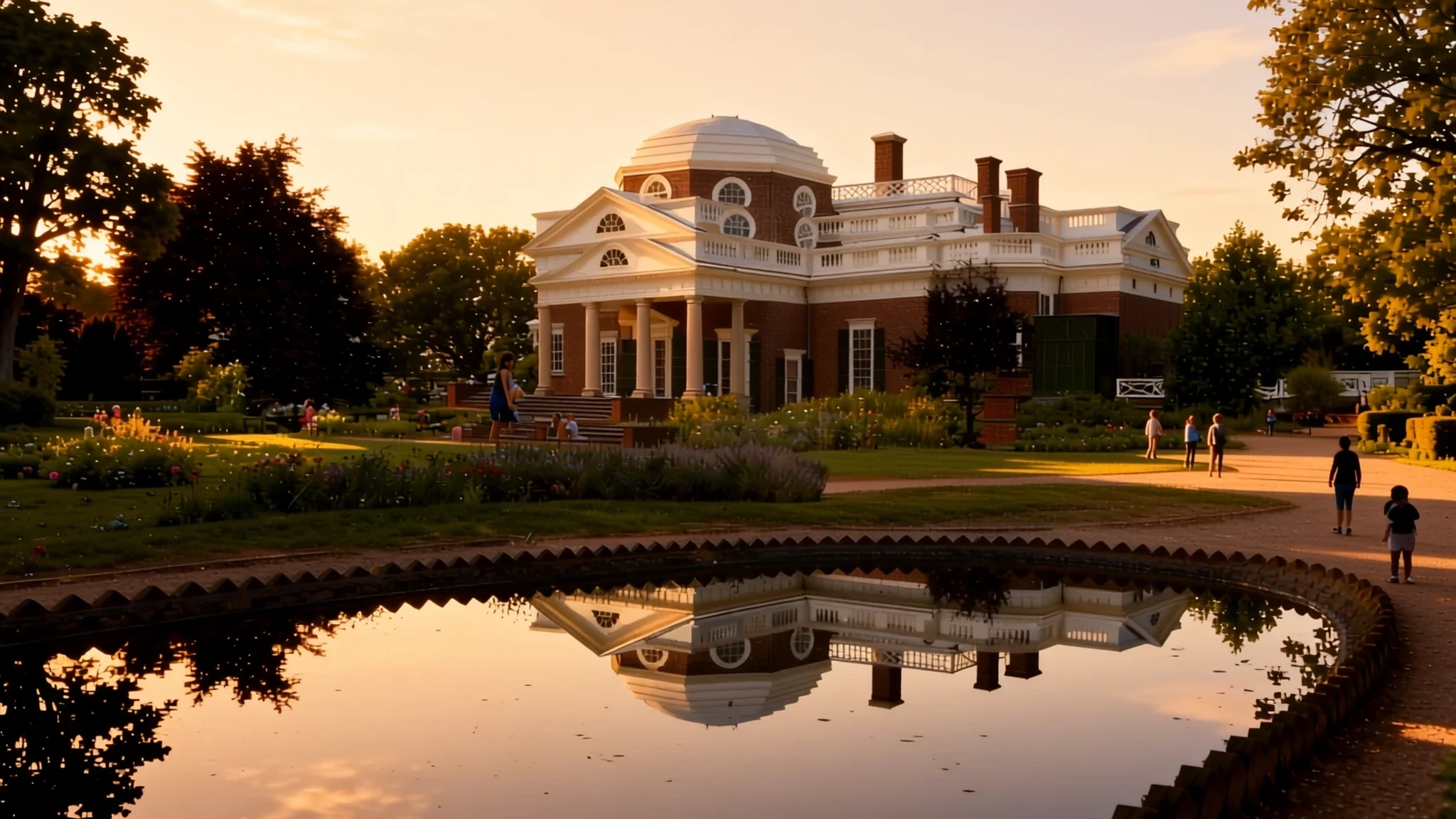
Monticello is Thomas Jefferson's hilltop home and plantation near Charlottesville, a rare chance to walk through the mind of an American founder.
The place
Monticello is the house and plantation that Thomas Jefferson built on a wooded summit just outside Charlottesville, Virginia. It was his main home for most of his adult life, and he kept reworking it for decades. The name is Italian for little mountain, and the hill rises in the Southwest Mountains above the Piedmont countryside, where the estate once ran to several thousand acres of farmland.
Jefferson drew on the neoclassical ideas of the Italian architect Andrea Palladio, but he adapted them freely. He added fashionable touches from late eighteenth-century Europe and plenty of his own inventions, so the house reads as a personal argument about how a home should look and work. The rooms display his collections and gadgets, and the domed front is the view most visitors remember.
Beyond the house, a lane called Mulberry Row once ran with workshops, a nailery, kitchens and quarters for the enslaved people who kept the household running. Gardens, orchards and experimental plant beds spread across the hilltop, and the outbuildings were arranged by function rather than appearance. The site is now a National Historic Landmark. Together with the University of Virginia, which Jefferson also designed, it forms a UNESCO World Heritage Site designated in 1987. Jefferson is buried in the family cemetery on the grounds, and the official website is the place to check tour options and current arrangements.
Its story
The story of Monticello starts with a young landowner sketching a house on a hill. Thomas Jefferson began planning it early, and he treated the building as a lifelong project rather than something finished in one go. Over the decades he added rooms, reshaped the front and tried out ideas he had seen in books and abroad, so the house records the changing tastes of a man who never stopped revising it.
The money behind the estate came from tobacco grown with enslaved labour. Jefferson ran the farm as a business, keeping accounts and planning crops, and the house sat at the centre of that operation. Mulberry Row was where many of the workers lived and laboured close to the family, among nailers, carpenters and household servants. As the soil wore out and prices shifted, the fields turned increasingly to wheat and mixed crops.
Jefferson was also a keen experimenter with plants. His gardens tested seeds, vegetables and fruit, and he recorded his observations for years. His own life carried stark contradictions. He wrote that all men are created equal while holding people in bondage, and the estate's prosperity rested on that bondage.
After his death the estate was sold, and the house fell into disrepair before a later preservation effort restored it. Today the tours try to tell the story from several angles, and the archaeology along Mulberry Row has helped give the enslaved community a fuller and more honest place in the account.
What to see
- Monticello house and gardens — Monticello grounds, near Charlottesville
Jefferson's home stands on a summit a short drive from central Charlottesville, and the house is the reason most people come. Its domed front and balanced wings show the Palladian ideas Jefferson adapted, while the interior rooms reveal his collecting and his inventions. Gardens and orchards surround the house, where he tested plants. Book a guided tour and allow time to walk the lawns.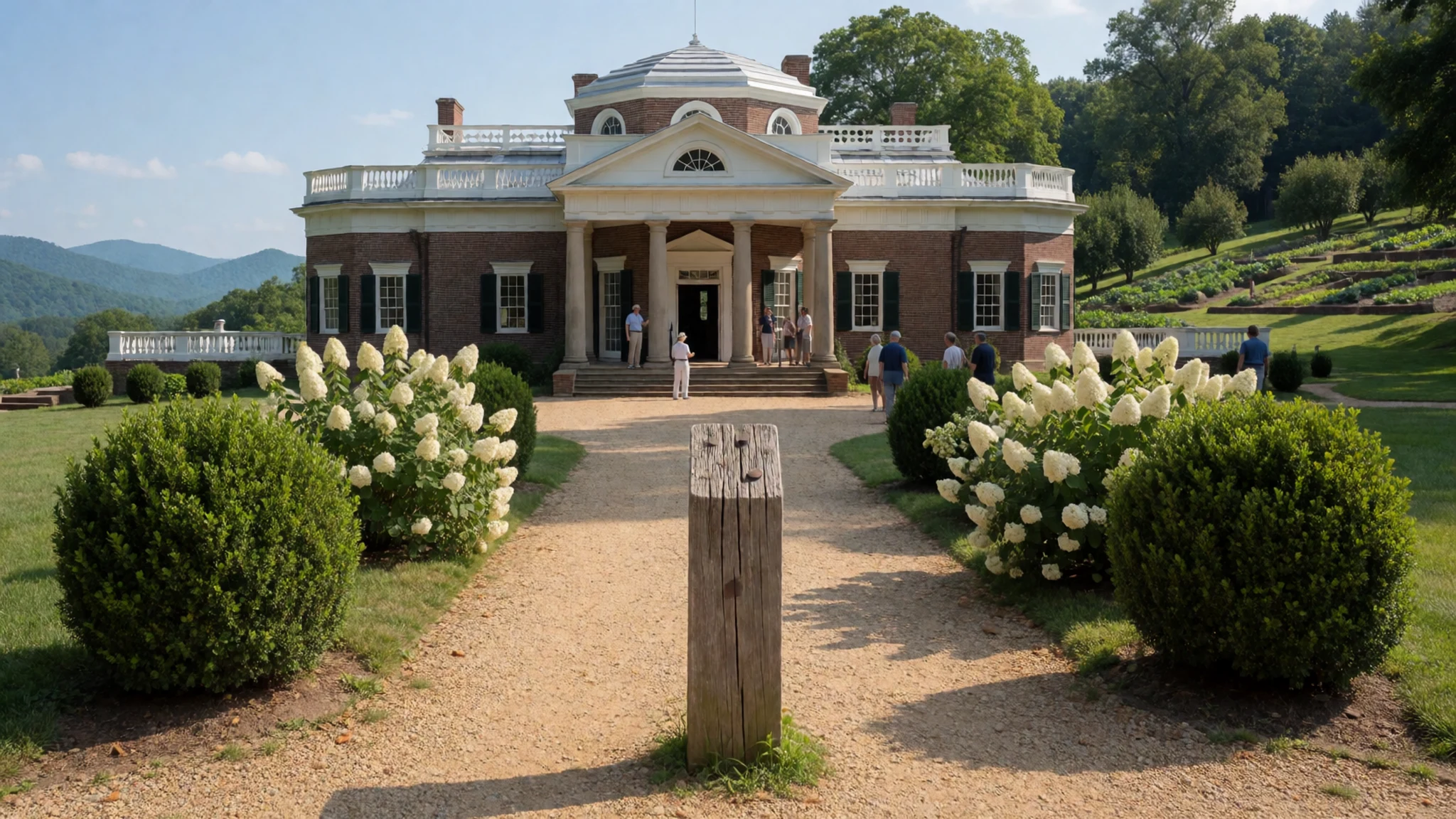
- Mulberry Row — Monticello grounds, along the lane below the house
A lane running past the house, Mulberry Row once held workshops, storehouses and a nailery, along with quarters for enslaved workers who served the household. Excavations here have uncovered foundations and everyday objects, giving a fuller picture of the people whose labour sustained the estate. It is best approached slowly, with the interpretive markers read in order.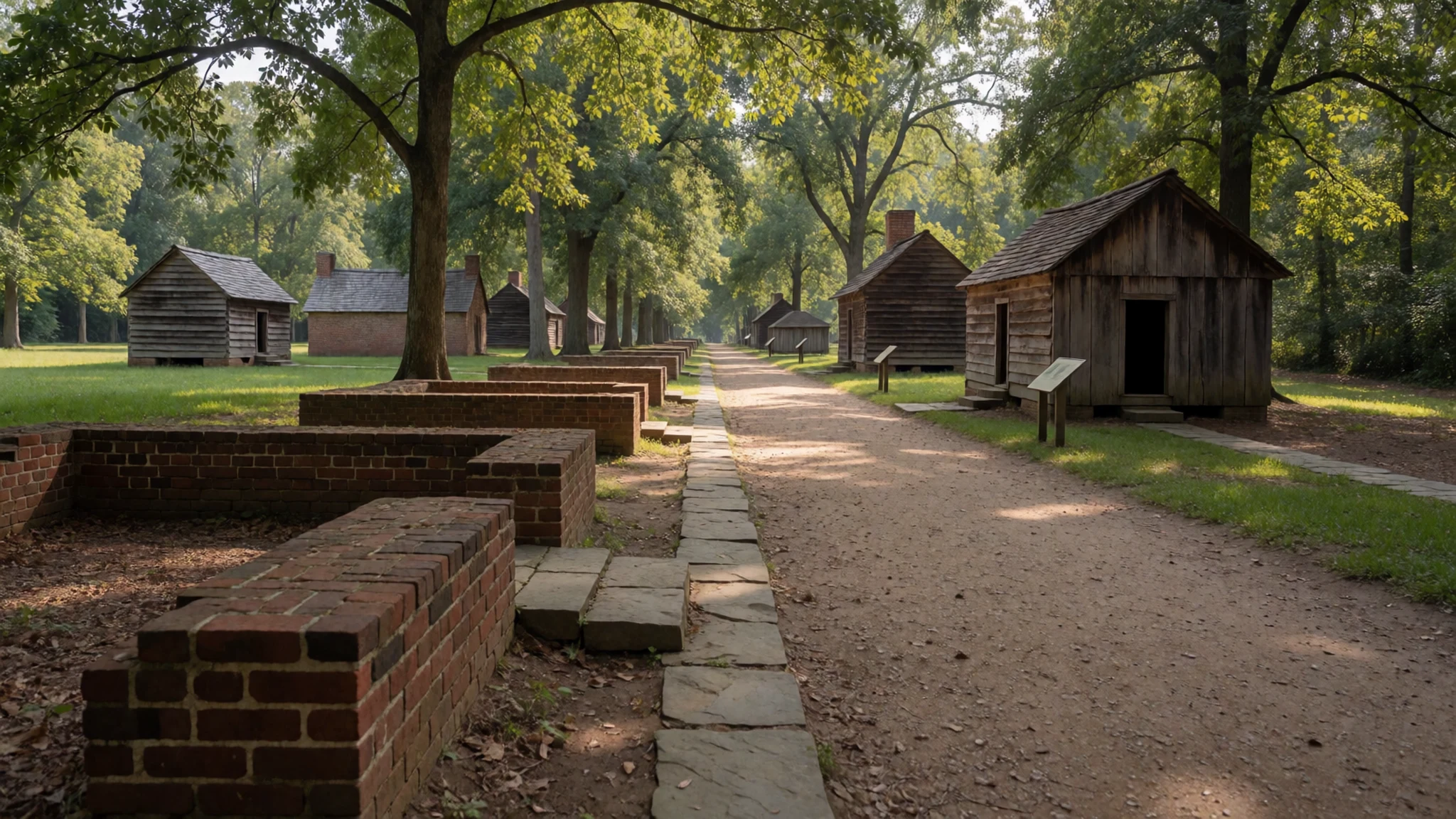
- Poplar Forest — A separate Jefferson estate outside Charlottesville
Jefferson's second retreat, Poplar Forest, was an octagonal house he designed as a quieter place away from the main estate. It offers a different experience from Monticello, with a smaller building and a clearer view of his architecture before later changes. Visits are usually calmer. Plan a separate trip and check the official site for opening times and tour booking.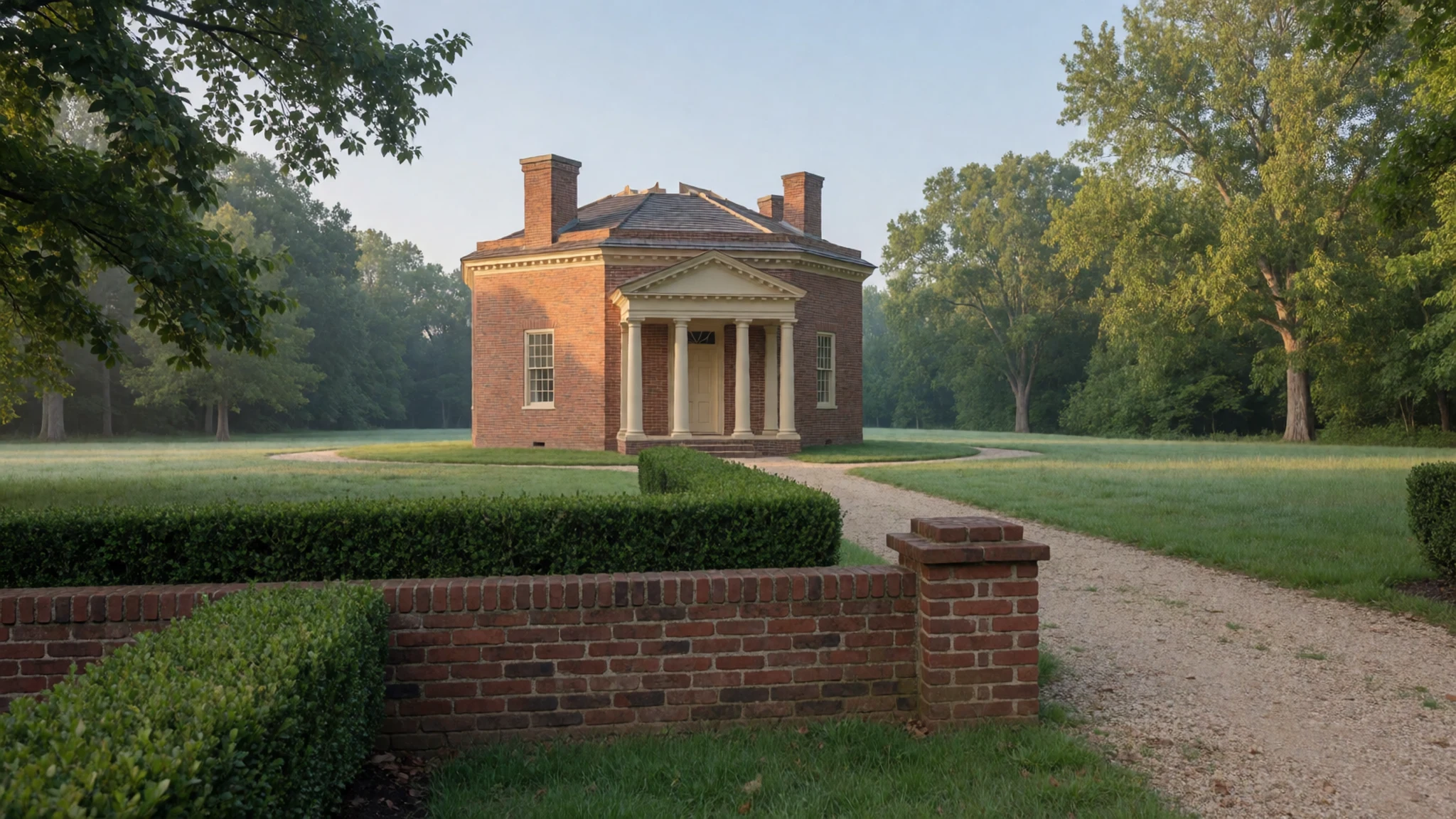
- University of Virginia — University campus, in the centre of Charlottesville
Jefferson founded and designed the University of Virginia, and its Academical Village of pavilions, lawns and colonnades lies a short walk from downtown Charlottesville. It shares its UNESCO listing with Monticello and rewards an unhurried walk. Students make the grounds lively during term, while summer is quieter and hotter. Step inside the rotunda only where signs permit.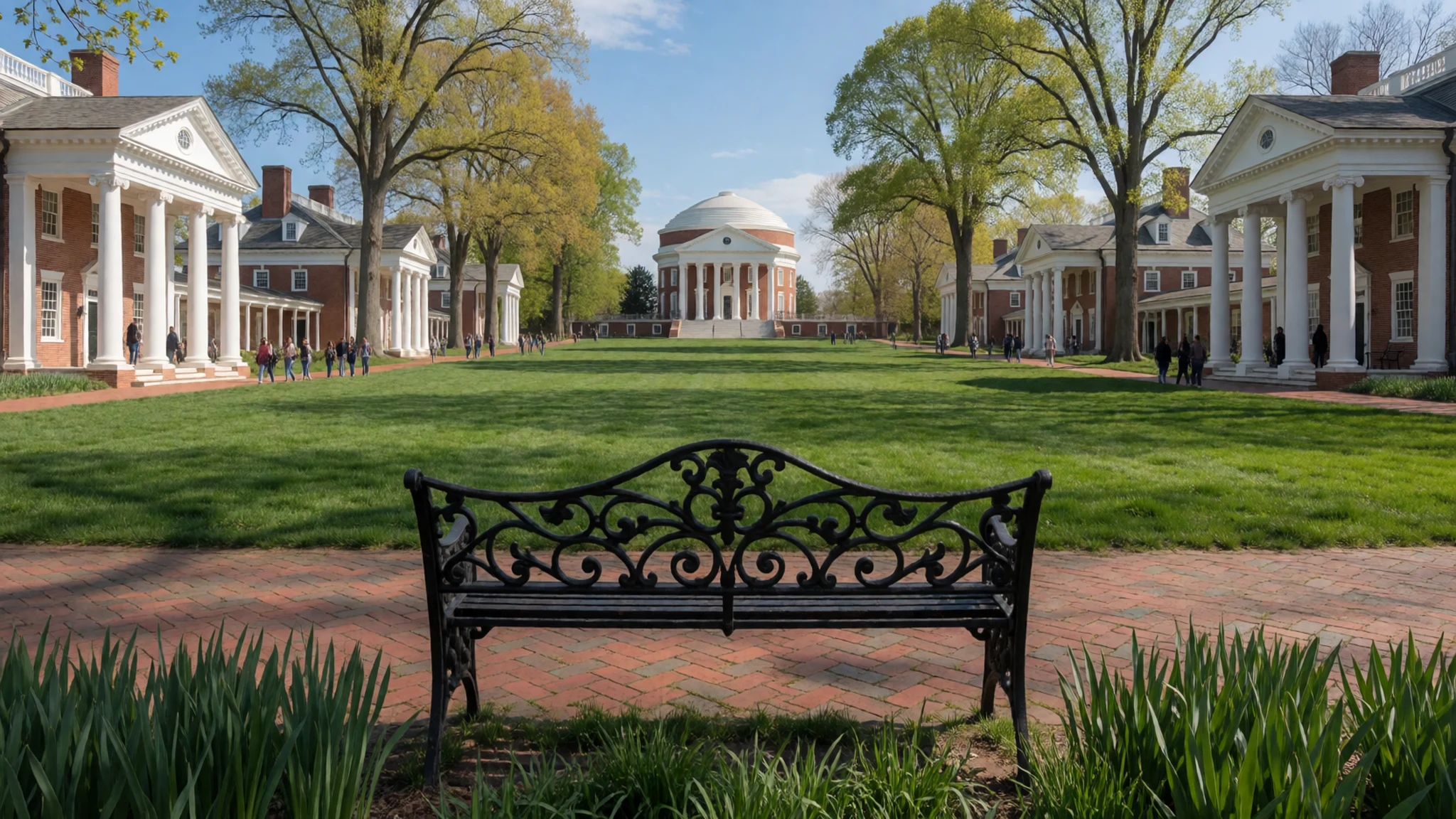
- Berkeley Plantation — James River plantation country, east of Charlottesville
Berkeley Plantation sits on the James River, a different sort of Virginia estate with a grand brick house and a long history of planter families. It makes a useful comparison with Monticello, since both reflect how wealthy households were built on farms worked by enslaved people. The grounds are open and gently rolling, suited to a relaxed half day by the river.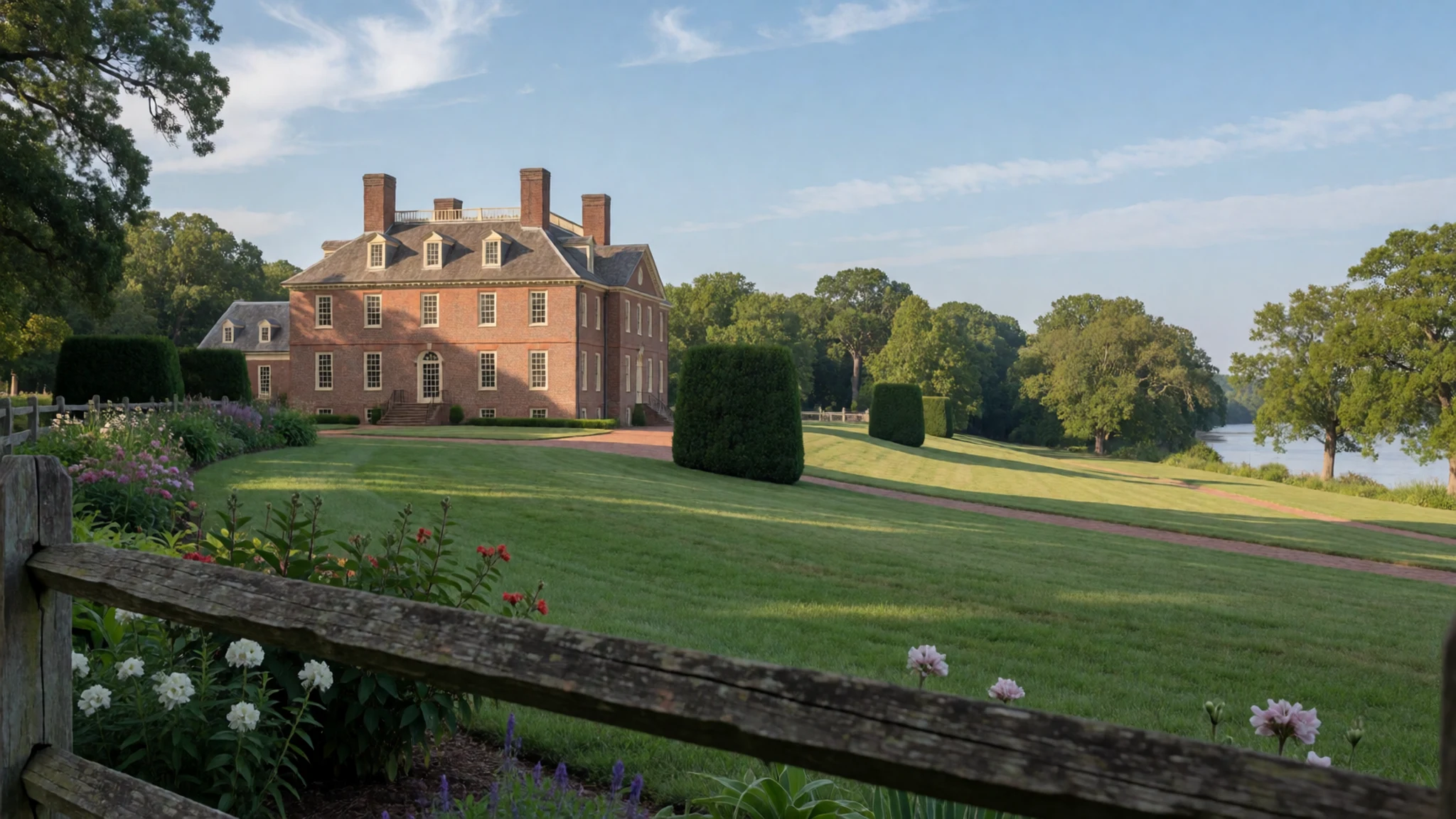
Culture
Monticello is a house, a working farm and a family burial ground, and visitors are expected to behave accordingly. Tours move through the rooms in small groups, so keeping pace with the group and avoiding crowded doorways helps everyone. The grounds include graves, and the family cemetery is treated with quiet respect, so loud conversation and laughter are out of place there. Guides explain the contrast between the grand rooms and the workplaces along Mulberry Row, and that story forms part of the visit rather than a footnote. Rules on photography, bags and timed entry change, so the official website is the reliable source before arrival. Follow posted signs about touching furnishings, food and drink, and leaving the marked paths. The local atmosphere is relaxed and friendly, with a university-town feel in Charlottesville itself. Keep voices low near the family cemetery and stay on the marked paths.
What to wear
Monticello's own clothing story belongs to the eighteenth century, when a Virginia gentleman's wardrobe was built from linen, wool and silk, some imported and some made at home. Wealthy planters wore fitted coats, waistcoats and breeches in these fabrics, while the people who worked the estate wore coarse, homespun cloth cut for hard labour, and the textiles marked status at a glance. Virginia does not have a single traditional regional costume to point to. What people wear now is practical and casual: jeans, cotton shirts, summer dresses and walking shoes. In Charlottesville the university sets a relaxed tone, and most visitors come to the house in everyday clothes. For a visit, dress for the climate and the terrain. Summers are hot and humid, so breathable cotton, a hat and sunscreen help. The grounds are hilly, with gravel paths and some steep stretches, so comfortable closed shoes matter more than style. Spring and autumn mornings can be cool, which makes layers worth packing. Dress modestly and quietly when walking through the family cemetery.
What to eat
- Cured country ham — Country breakfast counters and holiday tables, with producers around Surry County and Smithfield
Cured country ham is Virginia's signature meat, salty and dense, sliced thin for breakfast or holiday tables. The big producers cluster around Surry County and Smithfield, so try it at a country breakfast counter in that part of the state.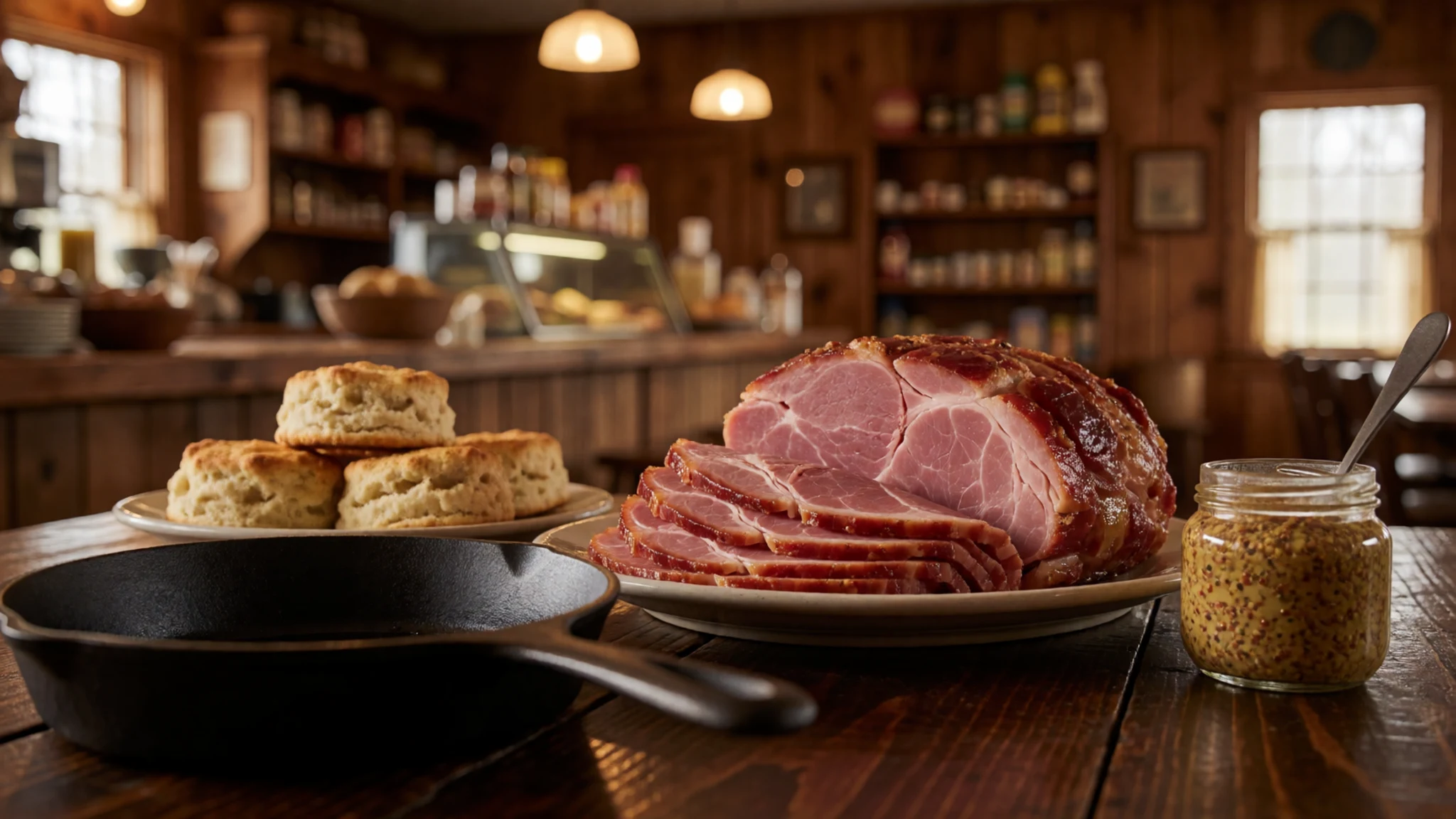
- Brunswick stew — Church suppers and community festivals in Brunswick County
Brunswick stew is a slow-simmered mix of meat, tomatoes, corn and beans, and several towns claim its origins. Brunswick County is one of them. Look for it at church suppers, fundraisers and community festivals, where it is ladled from big pots.
- Maple doughnuts and pancakes — The Highland County Maple Festival and eateries in the Blue Ridge
Highland County's maple festival celebrates producers high in the Blue Ridge. The queues for the Ruritan pancake breakfasts are long but friendly. Maple doughnuts flavoured with nutmeg are a local favourite. Area restaurants and inns offer a calmer alternative. - Chesapeake crab and oysters — Waterfront seafood houses and fish counters in Chesapeake Bay towns
The Chesapeake Bay region is known for crab and oysters, prepared simply: steamed, fried or stewed. Seek them at waterfront seafood houses and fish counters in the bay towns. Freshness is the point, so eat them close to where the catch comes in. - Virginia wine — Tasting rooms in the Charlottesville countryside and state wine festivals
Virginia's wineries sit in hills and valleys across the state, and the Charlottesville countryside has many tasting rooms. Wine festivals run through the year, and the state's grower directory lists producers. Tastings usually make a relaxed afternoon, with a driver or a booked tour arranged in advance.
Plan it
Best time. Spring from April to May and October into November suit a visit best, with mild temperatures and the gardens in flower or turning colour. High summer is hot and humid, and winter can be grey and damp.
How long. 2–3
Getting there. Charlottesville–Albemarle Airport (CHO) is closest, with regional service to East Coast hubs. Larger options are Dulles (IAD) and Reagan National (DCA) near Washington. The last leg is by car or taxi, as Monticello sits just outside Charlottesville.
Budget. mid
Tips
- Book house tours through the official website before you travel, as timed entry can fill up in peak season
- Arrive early in the morning, when the hilltop is quieter and cooler
- Pair the house with the University of Virginia, a short walk from downtown Charlottesville
- Carry water and a hat, since the grounds are open and hilly
- Carry some cash for small vendors, though cards work at most places
- The legal drinking age is 21, so plan any wine stop around that rule
Etiquette
- Stay on marked paths and keep off the garden beds
- Keep voices low near the family cemetery
- Ask before photographing staff or other visitors
Nearby
Sources
- Wikidata Q199618 (CC0)
- Wikipedia (rev 1383178166) (CC BY-SA 4.0)
- Wikivoyage (rev 5372253) (CC BY-SA 4.0)
- Monticello from the west lawn (YF12s) (CC BY 3.0)
- Thomas Jefferson's Monticello (Martin Falbisoner) (CC BY 3.0)
- Monticello reflected (Moofpocket) (CC BY 3.0)
- Outside Monticello (Billy Hathorn) (CC BY 3.0)
- Under the dome at Monticello (Steven C. Price) (CC BY-SA 4.0)
- The Bloom of Monticello frontispiece (Elizabeth Hatcher Sadler) (Public domain)
- Littleton, Mrs. Martin Wiley, with Monticello petitions (Harris & Ewing) (Public domain)
- US Series 1953 $2 reverse (unknown author) (Public domain)


