Monterrey
Monterrey, Mexico
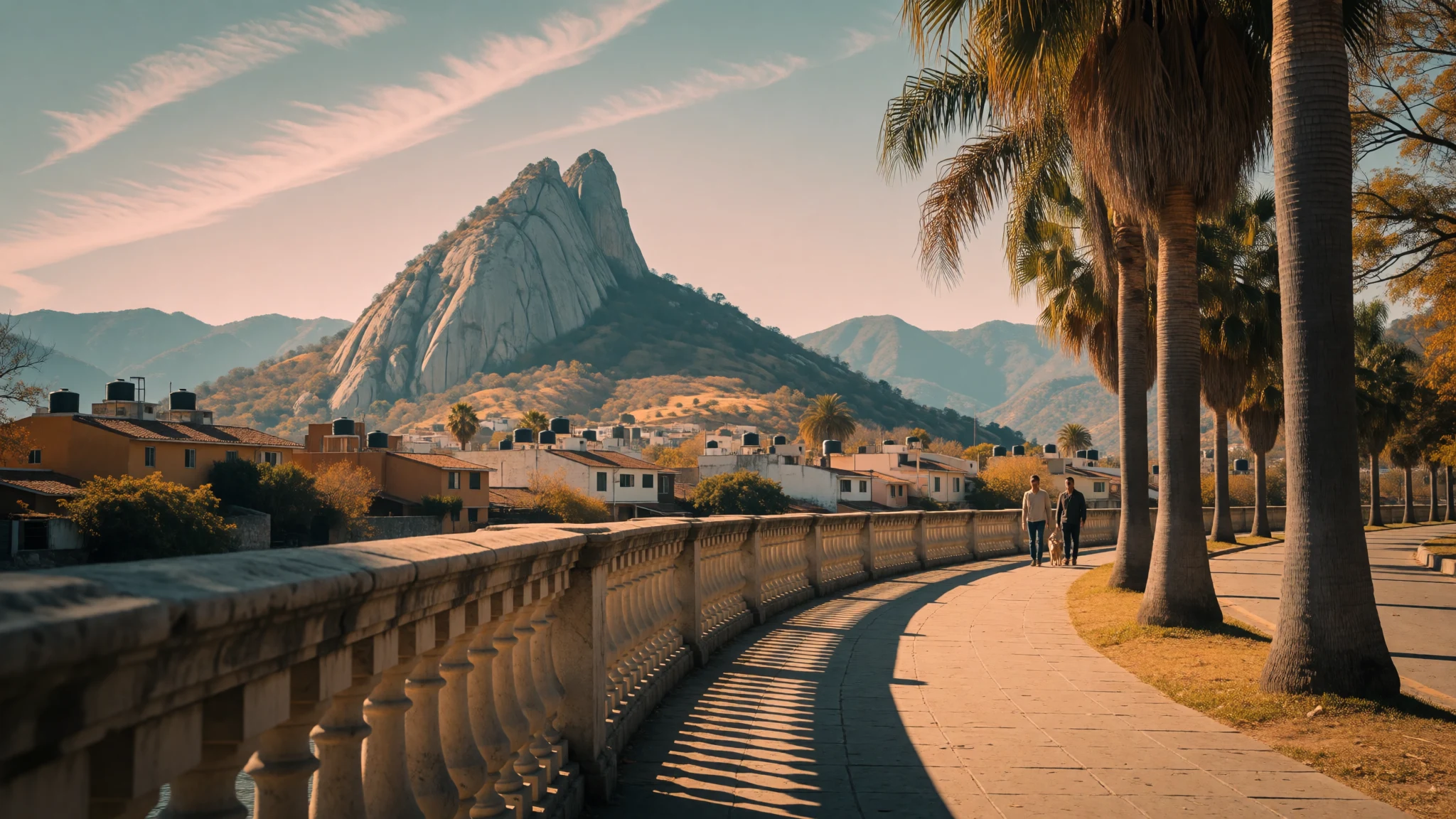
Monterrey is a hard-working northern Mexican city hemmed in by mountains, worth a few days for its peaks, its museums and its wood-fired meat.
The place
Monterrey is the capital of Nuevo León, in north-eastern Mexico, and sits about 546 m above sea level in a valley that the Sierra Madre Oriental closes off on almost every side. About 1.1 million people live in the city proper, and several million more spread through the neighbouring municipalities that have grown into it. The mountains are not distant scenery here. They appear at the end of ordinary streets, and the saddle-shaped Cerro de la Silla is the outline locals use as shorthand for home.
This is a working city rather than a colonial postcard. Steel, cement, glass and brewing built its wealth, and the evidence is in the corporate towers, the university campuses and the converted factory grounds that now serve as parkland. Old churches and a few historic lanes survive, but the character is modern, ordered and northern, with a reputation for punctuality and business.
The climate shapes daily life. Summers are punishingly hot, so people shift errands to early morning or evening and spend the afternoons in air-conditioned malls and cars. Winters are mild by day with chilly nights, and they are the easiest season for walking. Distances are large and the car dominates, though the metro covers a few useful lines. Next to Mexico City, Monterrey feels calmer and less layered with ruins. It suits a short stay built around mountain views, museums and long meals, rather than a checklist of monuments.
Its story
Monterrey's recorded history begins with a run of failed starts. Before Europeans arrived, the valley was home to mobile indigenous groups rather than a single state. Rock carvings and cave paintings in the surrounding hills let historians name four peoples: the Azalapas, Huachichiles, Coahuiltecos and Borrados.
In the 16th century Spanish authorities knew the area as the Extremadura Valley, and it stayed largely unexplored. Alberto del Canto made early attempts to settle it and called the place Santa Lucía, but local resistance drove the colonists out. Luis Carvajal y de la Cueva then struck a deal with the Spanish crown for a northern province, to be called Nuevo León, the New Kingdom of León. He arrived in 1580 and by 1582 had planted a settlement named San Luis Rey de Francia, though it did not last.
The settlement that did last dates from 1596, when Diego de Montemayor founded Monterrey. For centuries it stayed a modest northern town. After Mexican independence it grew into a trading centre, helped by its position between the interior and the northern frontier.
The great change came in 1900 with the opening of the Monterrey Foundry. Steel brought workers, capital and more factories, and the city became known for cement, glass, auto parts and beer. Some local customs, such as unleavened bread and the scarcity of pork dishes, are thought by some to echo the hidden Jewish ancestry of founding families.
What to see
- Cerro de la Silla — East of the city, towards Guadalupe
The saddle-shaped mountain east of the centre is the city's best-known landmark. A steep trail leads up from the base, and a climb of about half an hour already gives open views over the rooftops. Go early and carry plenty of water, because the rock radiates heat by midday.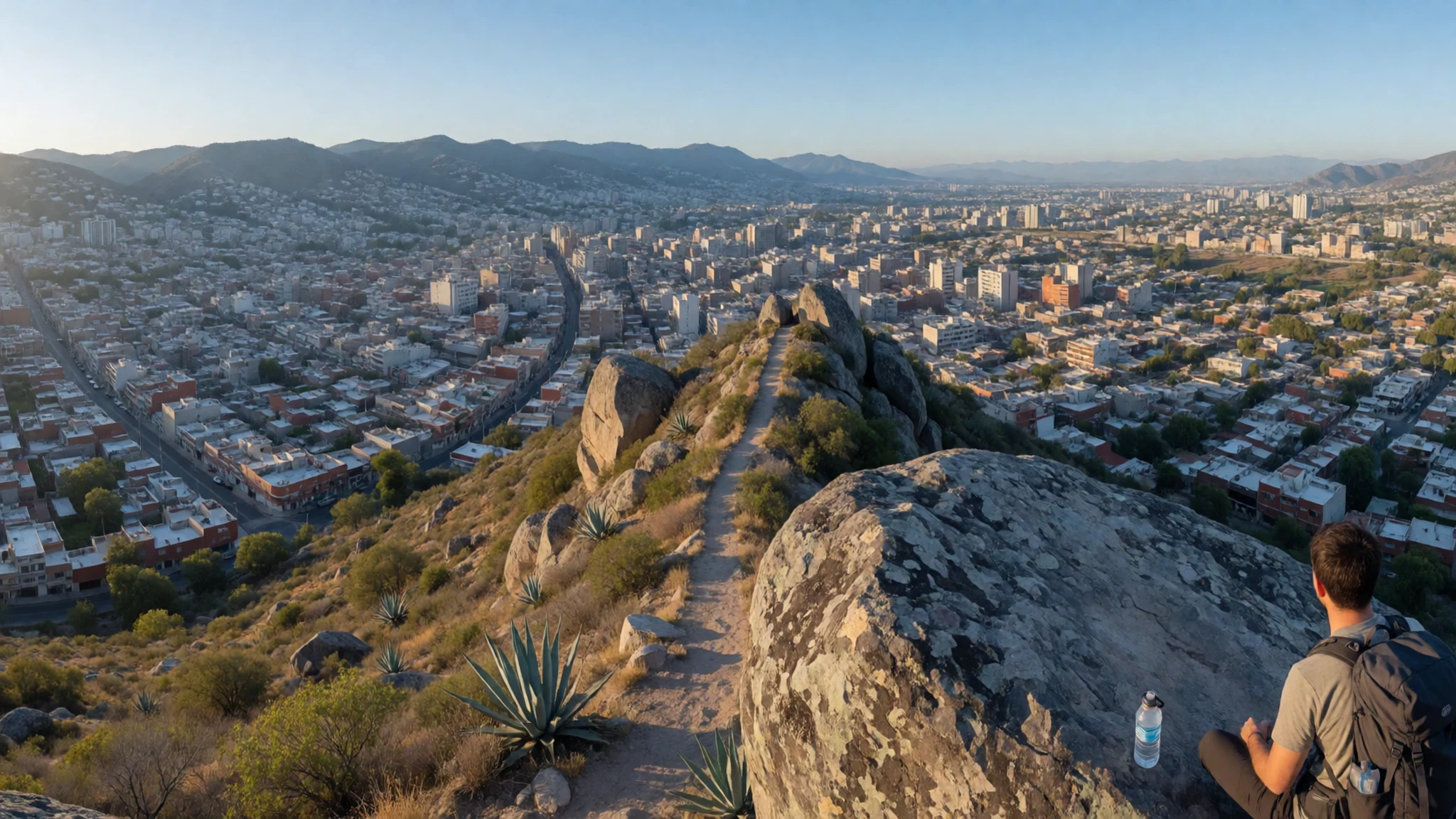
- Macroplaza — Centro and the Zona Rosa edge
This long green axis cuts through the old centre, strung with fountains, statues, gardens and civic buildings. It is a good first walk to get your bearings, with the cathedral and the red Faro del Comercio beacon close by. Evenings are pleasanter than the shadeless afternoons.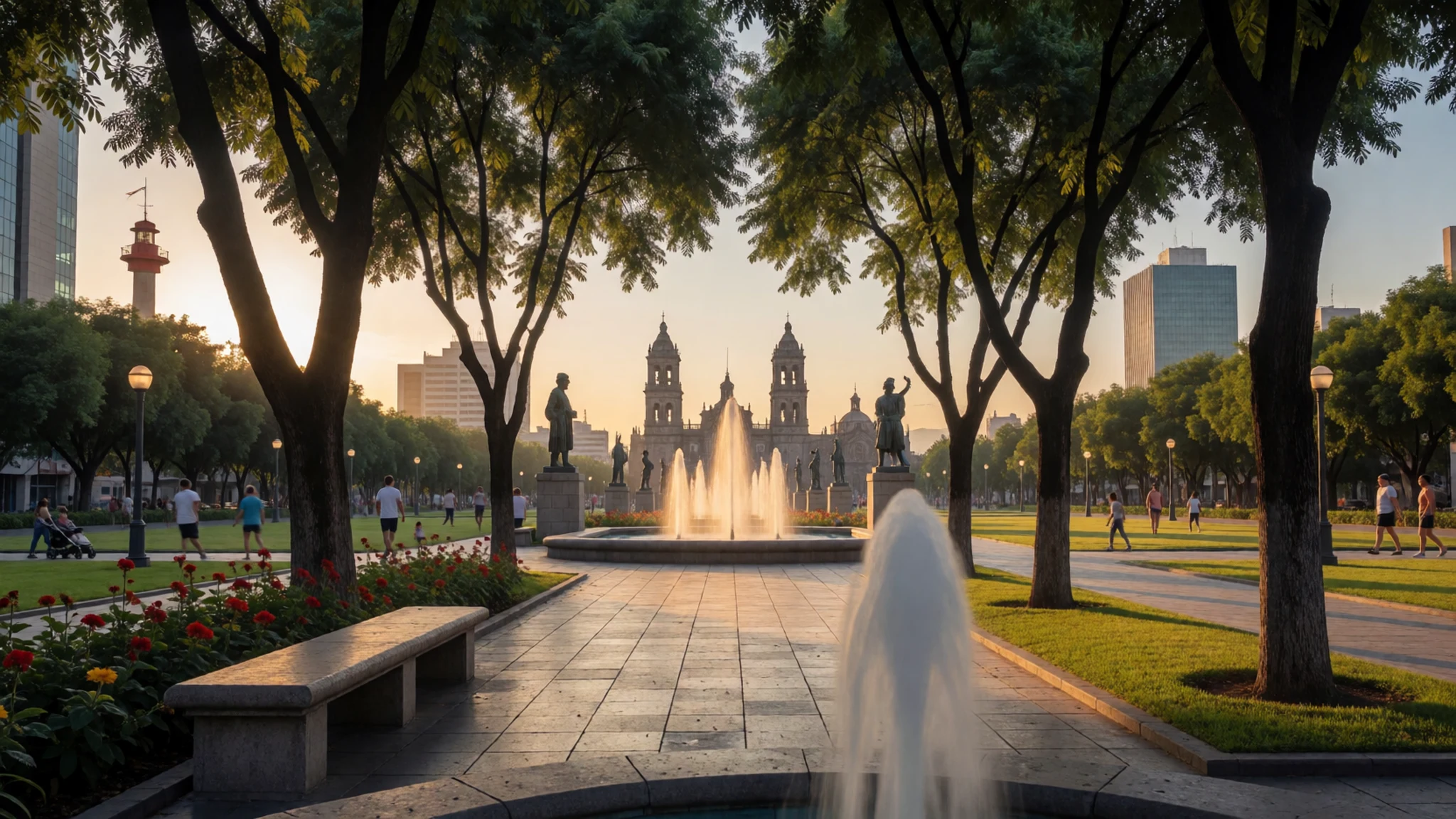
- Parque Fundidora and the Museo del Acero — Fundidora, east of the centre
The old foundry grounds have become a broad park, with a steel museum set inside a former blast-furnace complex. The rusting machinery is the draw: it explains how the city's wealth was made. Families cycle and picnic here, and it is easy to spend half a day.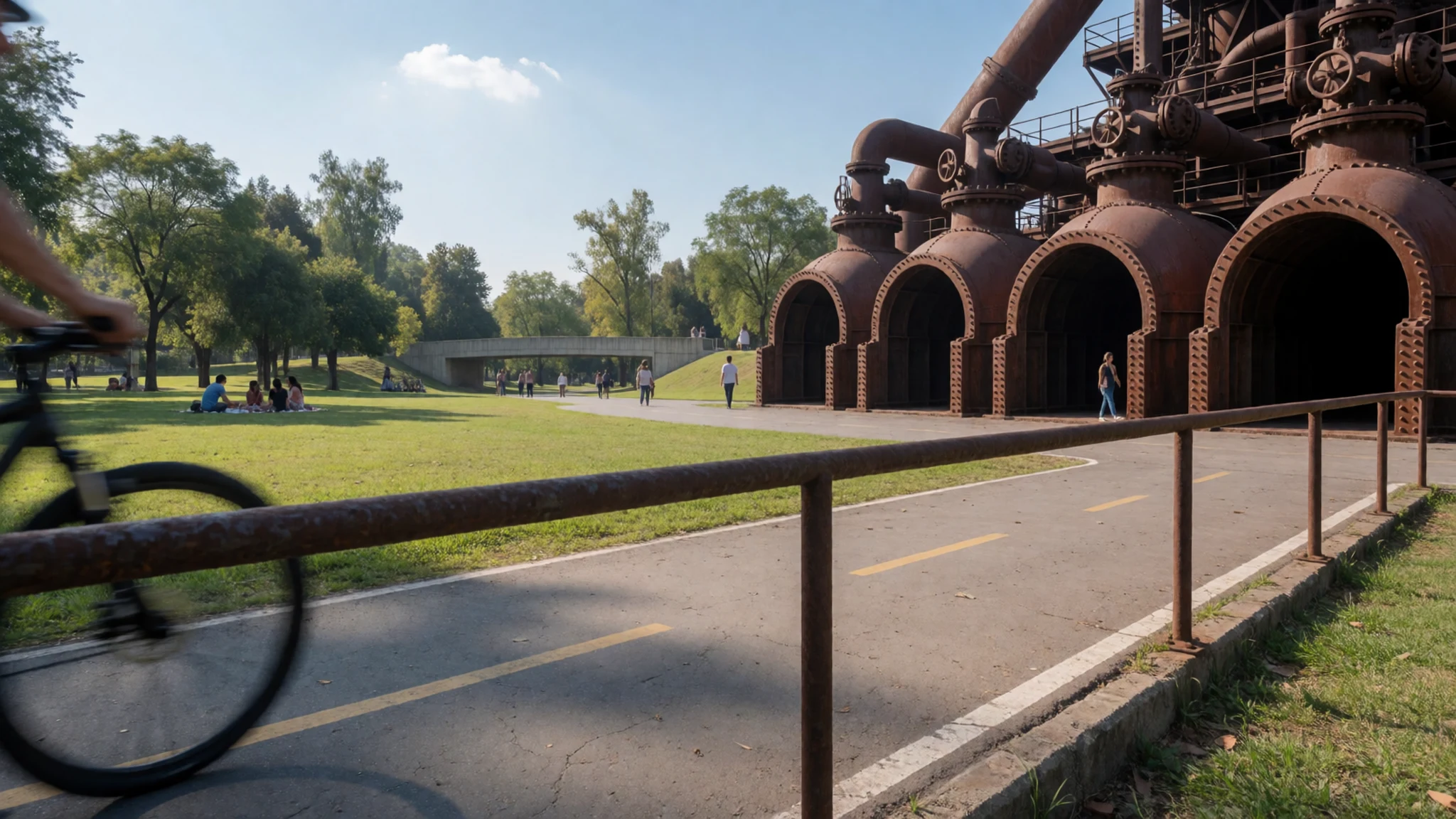
- Barrio Antiguo — Centro, beside the Macroplaza
The oldest streets of the centre hold low houses, galleries, small bars and cafés. It is quiet by day and lively on weekend nights, so choose the hour to match your mood. A wander here gives a gentler, more human-scale view of the city than the towers.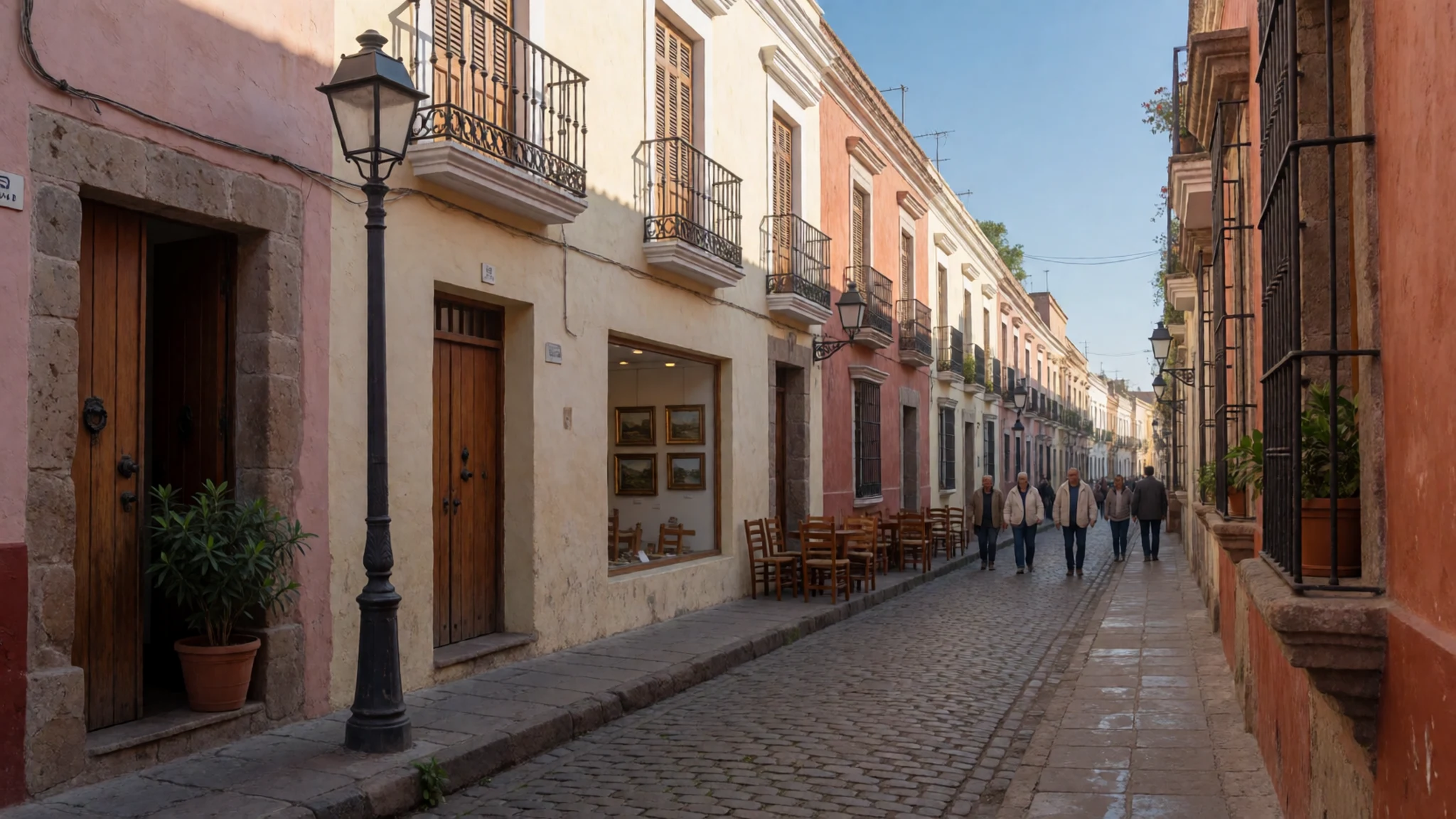
- Cervecería Cuauhtémoc — North of the centre
The brewery behind several well-known Mexican beers offers tours with tastings, tying neatly into the city's industrial story. Check opening arrangements and booking on the official sites before going. Pair it with a meal nearby, since beer and grilled meat are close companions in local habit.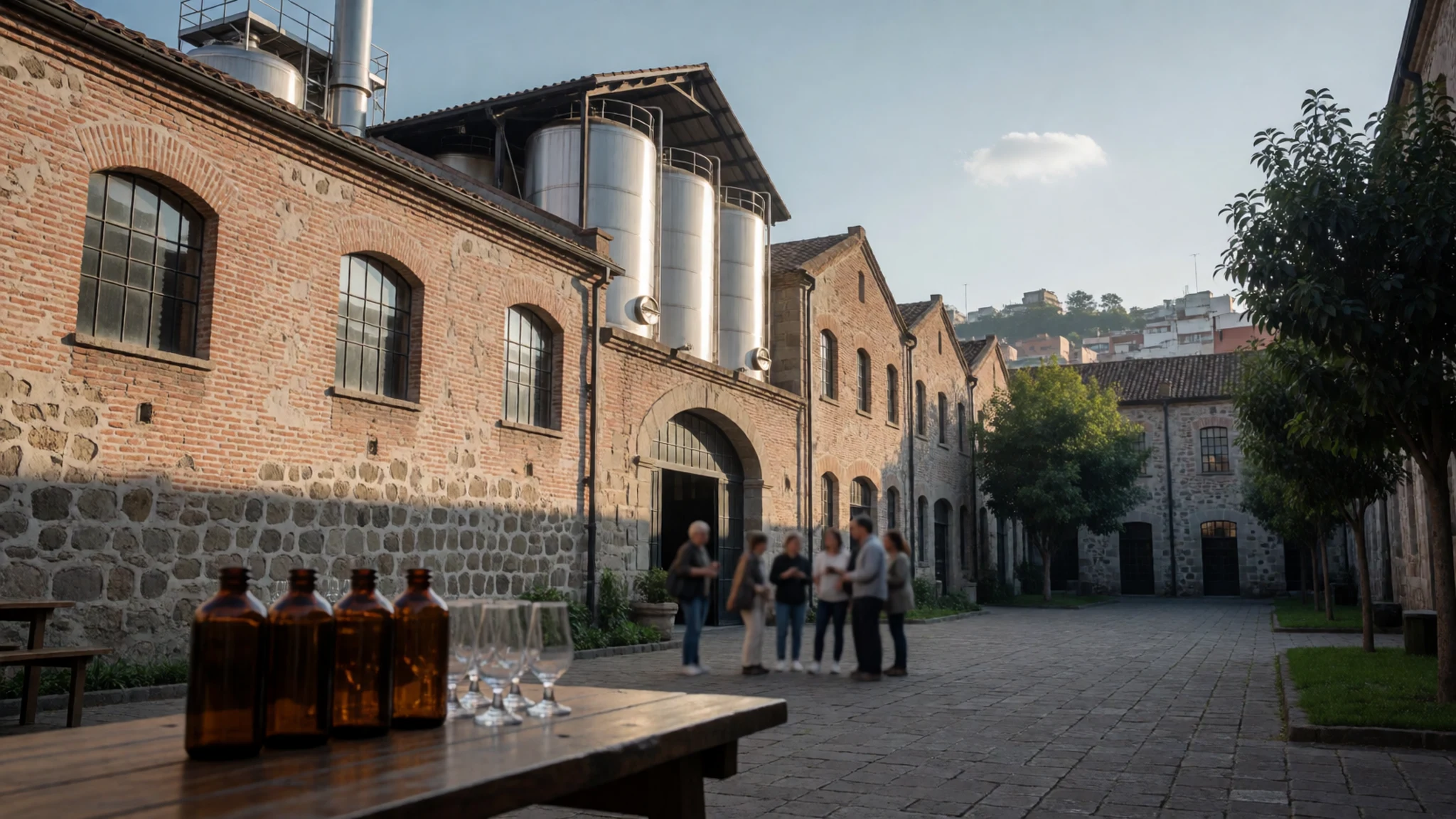
Culture
Monterrey's culture is shaped by industry, family and the ranching traditions of the north. The city has long prided itself on enterprise, and that shows in a brisk, direct manner that visitors from the south sometimes read as reserved. Warmth arrives quickly once a conversation starts, and hospitality at home is generous.
Food is the clearest expression of local identity. Weekend carne asada is a ritual: families gather around a grill, with cold local beer or cola, and the afternoon stretches on. Kid goat, or cabrito, cooked over embers, is the signature dish for celebrations. Some local habits, such as unleavened semita bread and the thin presence of pork, are linked by historians to the hidden Jewish ancestry of early settlers.
The city also invests in culture. In 2007 it hosted the Universal Forum of Cultures, and the museums, concert venues and parks left from that period still shape the calendar. Lucha libre, Mexican wrestling, draws noisy, good-humoured crowds, and football is followed with real passion by supporters of both of the city's big clubs.
Catholic tradition remains strong, and the cathedral by the Macroplaza hosts regular services alongside visitors. Family comes first, so shops and restaurants are busiest at Sunday lunch, and plans made for that day tend to revolve around the table.
When entering a church, keep your voice low, take off your hat, and ask before photographing worshippers during a service.
What to wear
Monterrey has no single regional costume that people wear day to day, and the northern states are more associated with ranching dress than with the embroidered garments of southern Mexico. The traditional northern look draws on cattle country: felt or straw cowboy hats, leather boots, belts with decorated buckles, and denim or cotton shirts. Leather and wool from the ranching economy feature in saddlery, jackets and the woven sarape blanket. These pieces appear most at fairs, country events, weddings in rural areas and dance performances.
In the city itself, daily dress is practical and fairly smart. Business culture is strong, so office workers in the centre and in the wealthier suburbs wear tailored clothes, and many people dress up for restaurants and evenings out. Football shirts are common on match days, and jeans with boots or trainers are normal on weekends.
For visitors, the main issue is heat. From late spring to early autumn, light cotton or linen, a hat, sunglasses and sunscreen are essential, and a thin layer helps against fierce air-conditioning indoors. Winter evenings can turn cool, so bring a jacket. Sturdy closed shoes with good grip are needed for Cerro de la Silla and other rocky trails, while comfortable walking sandals or trainers suit the flat Macroplaza and park paths. Churches expect covered shoulders and knees, which is easy to manage with a light scarf or shirt in the bag.
What to eat
- Cabrito — Traditional northern grill restaurants (cabrito houses) across the centre and suburbs
Kid goat splayed over embers and roasted slowly for hours, then carved at the table and eaten in warm tortillas with onion and salsa. It is the city's celebration dish, rich and smoky, and best shared with company.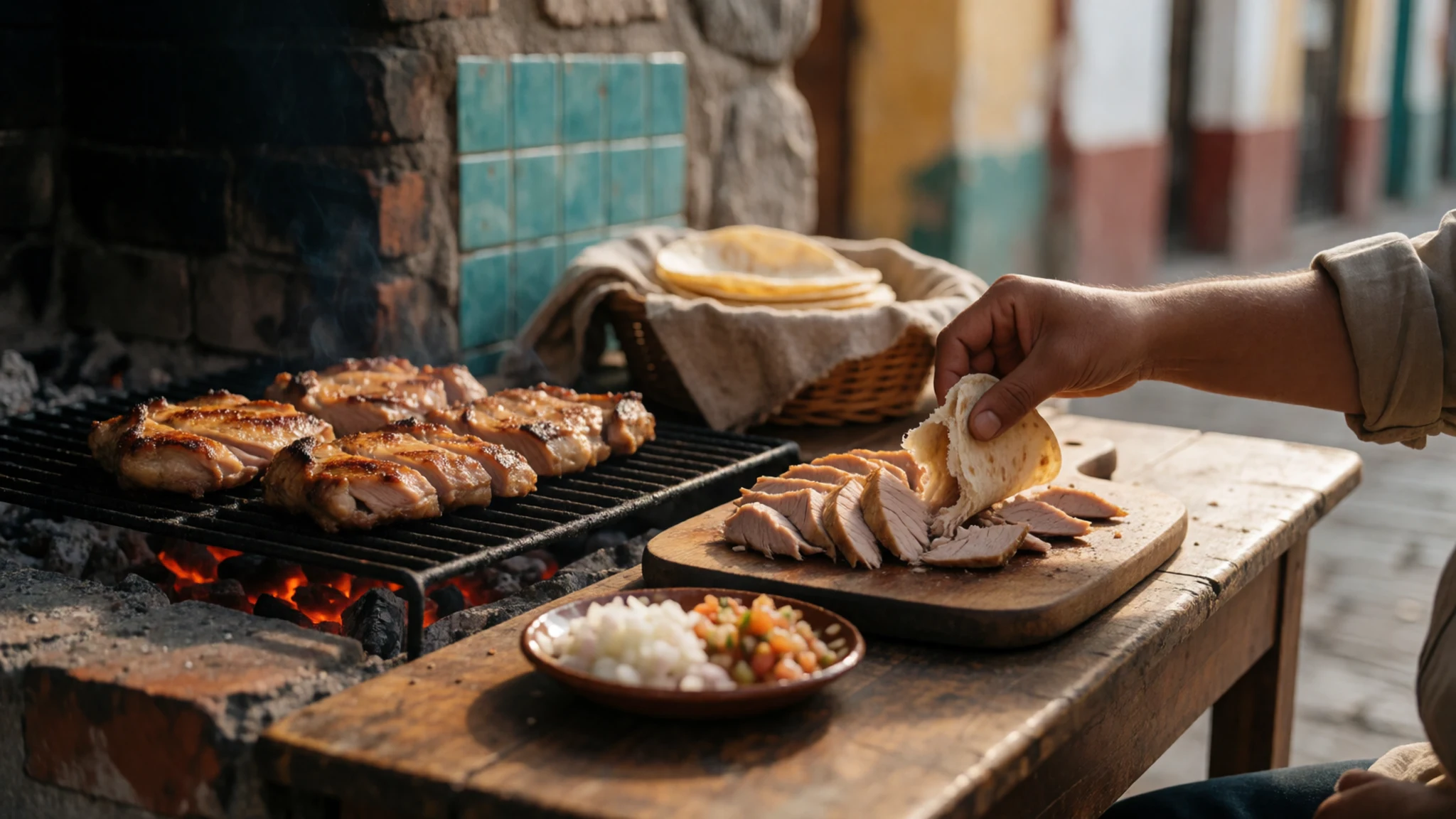
- Machacado con huevo — Family breakfast eateries and local lunch counters
Dried, salted beef is shredded and softened in a pan, then scrambled with eggs. Served with tortillas and salsa, it is a filling breakfast with a savoury, chewy character that goes well with strong coffee.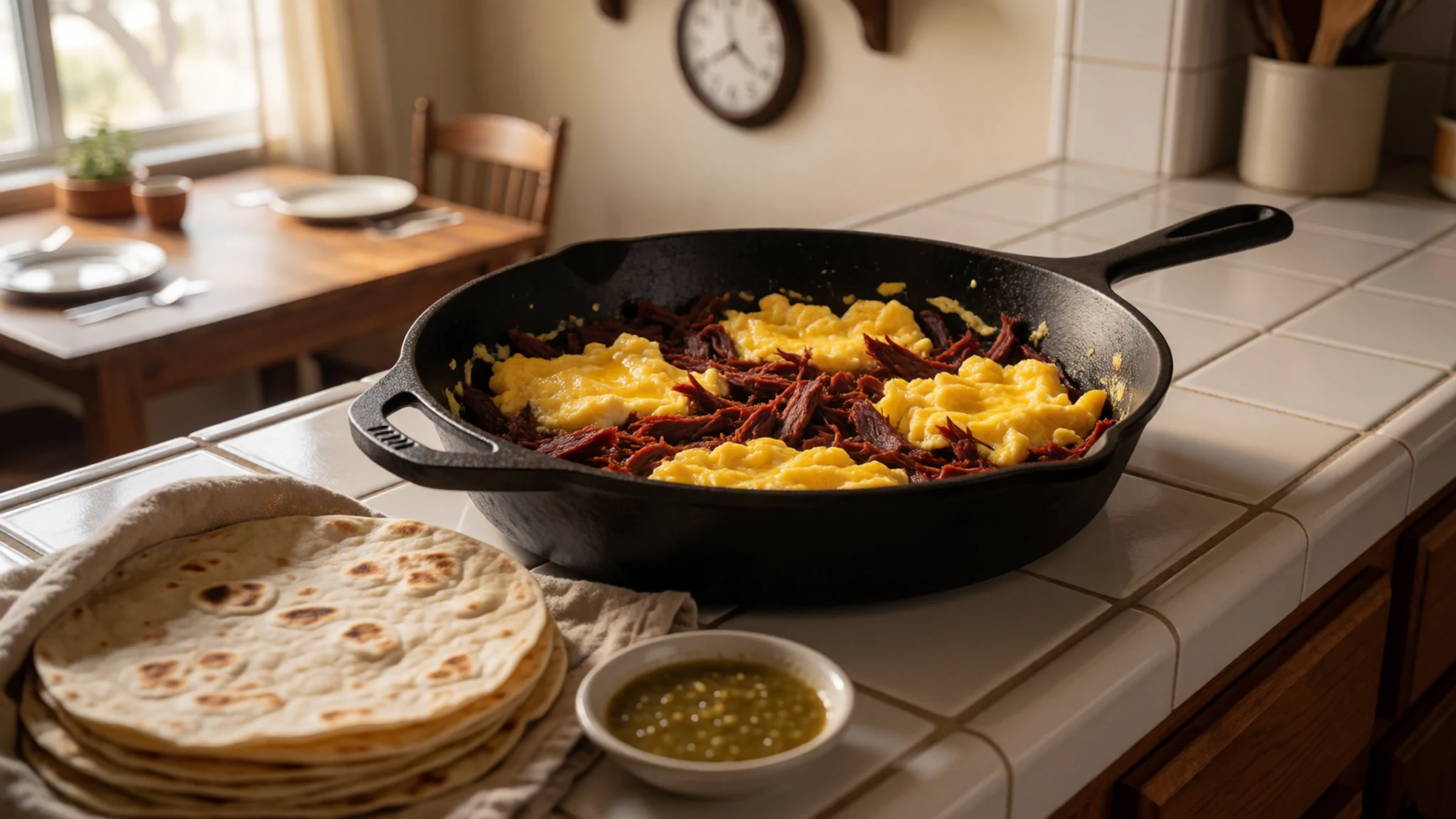
- Tacos mañaneros — Street stalls and taco counters early in the morning
Small morning tacos filled with stewed meats, kept warm in trays or pots and sold by the handful. They are cheap, quick and a good way to taste several fillings before the day gets hot. - Carne asada — Grill restaurants and family gatherings on Saturdays and Sundays
Beef grilled over charcoal or wood, served with grilled onions, potatoes and sausages, or chopped into tacos. It is the weekend meal of Monterrey families, and restaurants serve it in the same spirit, with beer or cola. - Capirotada — Home-style bakeries and traditional restaurants, especially around Lent
A bread dessert baked with cheese, raisins, peanuts and sugarcane syrup, sweet and salty at once. It is often tied to the season of Lent, and offers a taste of the city's older kitchen habits.
Plan it
Best time. December to February is the most comfortable window, with days around 30 °C, chilly nights that often dip below freezing and the least rain of the year. Summer is very hot, and winter brings mild days with occasional cold snaps.
How long. 2–3
Getting there. Fly to General Mariano Escobedo International Airport (MTY), about 30 minutes from downtown in Apodaca, with flights from major Mexican cities and a range of international routes; then taxi or ride-hailing to the centre. Long-distance buses also serve the city.
Budget. mid
Tips
- Climb Cerro de la Silla early, before the heat builds, and carry plenty of water
- Plan outdoor sights for mornings and evenings in summer, and keep afternoons for museums
- Use ride-hailing or taxis for longer distances, as the city is spread out and built around cars
- Carry some cash for street food and small eateries, though cards work in larger places
- Check the official city site, https://www.monterrey.gob.mx/, and individual venues for opening details and tour booking
Etiquette
- Greet staff and neighbours with a polite buenos días or buenas tardes before asking for anything
- Ask before photographing people, especially at church services
- Accept a host's invitation to eat, and keep conversation relaxed at the table
Nearby
Sources
- Wikidata Q81033 (CC0)
- Wikipedia: Monterrey (rev 1384579438) (CC BY-SA 4.0)
- Wikivoyage: Monterrey (rev 5411389) (CC BY-SA 4.0)
- Cerro de la Silla, Nathaniel C. Sheetz (CC BY-SA 2.5)
- Skyline de Monterrey, Daniel Escobedo (CC BY-SA 4.0)
- View of Monterrey 2015, Rick González (CC BY 2.5)
- Catedral de la Inmaculada Concepción, Peter Potrowl (CC BY-SA 4.0)
- Faro del Comercio, CONARTE / LABNL (CC BY-SA 2.0)
- Monterrey HDR, Rick González (CC BY 2.5)
- Barrio Antiguo de Monterrey en 2017, Distrito Medico Monterrey (CC BY 2.5)
- Pabellón Sopladores, Museo del Acero, Rick González (CC BY 2.5)


