Monastery of Saint John the Theologian
Monastery of Saint John the Theologian, Greece
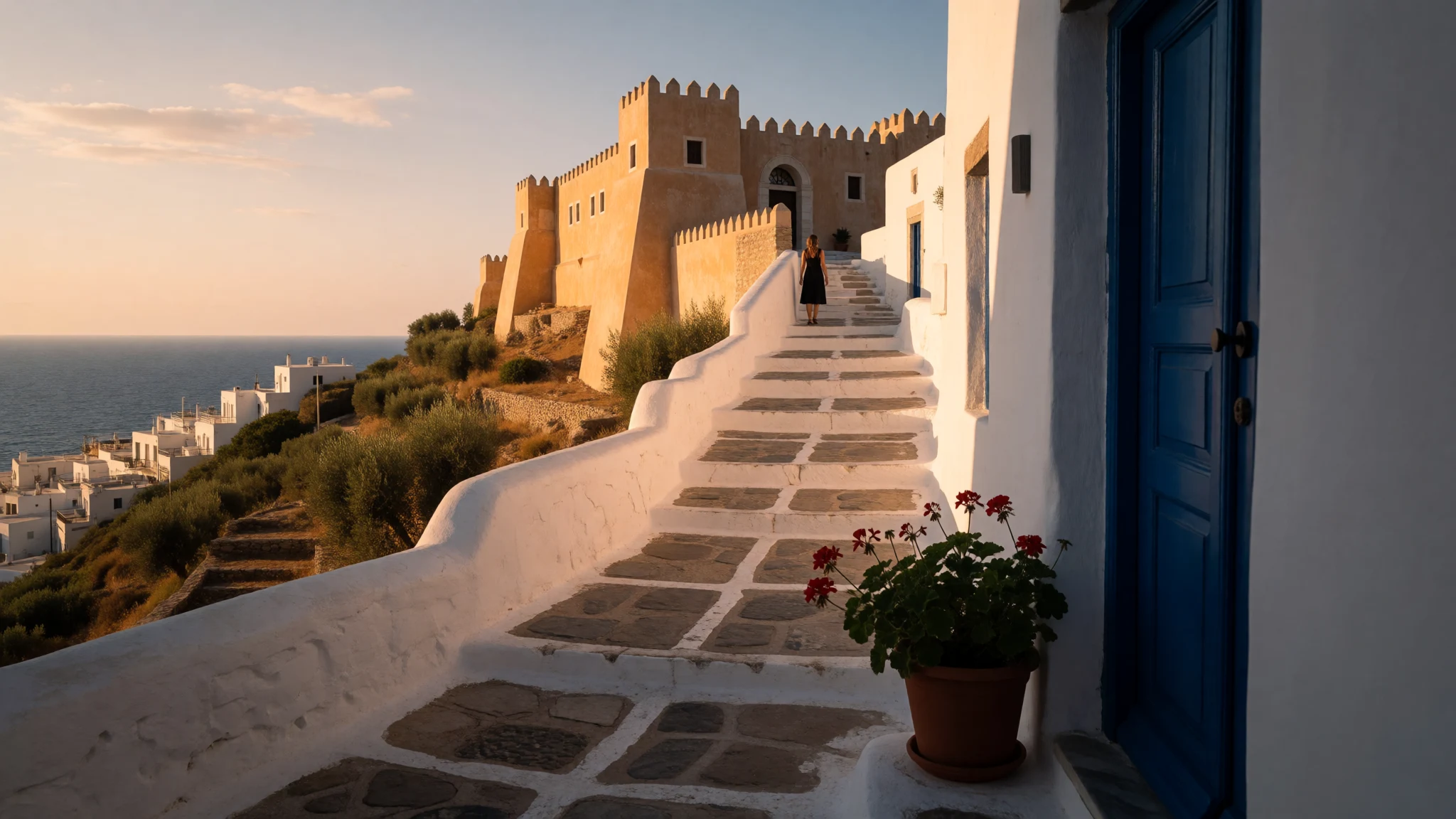
Monastery of Saint John the Theologian is a working Orthodox monastery on Patmos, walled like a fortress, with a whitewashed hill town gathered around it.
The place
The Monastery of Saint John the Theologian stands on a hilltop in Chora, the main hill town of Patmos, a small Aegean island in Greece. From a distance it looks more like a fortress than a religious house: heavy walls, buttresses and battlements rise above a tumble of whitewashed houses that cluster against its flanks. That arrangement is deliberate. The town grew up under the monastery's protection, and the two have been woven together ever since, so a walk through Chora's lanes ends, sooner or later, at the monastery gate. The monastery is Greek Orthodox and carries the name of John of Patmos, the figure tradition identifies with the author of the Book of Revelation, who is said to have received his visions on the island. Pilgrims have been coming for centuries, and it remains a community of monks with a daily round of services as well as a place people visit. Its setting adds to the effect. Chora sits high above the harbour at Skala, the wind is often strong, and on clear days neighbouring islands lie scattered across the sea. Inside, the layout is a puzzle of courtyards, chapels, stairways and low passages added over many centuries rather than planned at once. The monastery is a UNESCO World Heritage Site, listed together with Chora and the nearby Cave of the Apocalypse, where the visions are said to have happened. Summer brings ferry-day crowds and strong sun on the stone approach; early and late in the day the mood is quieter and more devout.
Its story
The Monastery of Saint John the Theologian owes its existence to a grant from the Byzantine emperor Alexios I Komnenos, who handed the island of Patmos to a monk named Christodoulos in the late eleventh century. What Christodoulos built was a stronghold as much as a monastery. Pirates raided the Aegean and Seljuk Turks were a threat from the east, so the outer walls went up high and thick, and most of the main complex was finished within a few years. The earliest surviving parts are the Katholikón, the main church, and the refectory. The church follows the usual Byzantine plan of a cross set inside a square under a dome, and its floor is made of cut marble pieces fitted into patterns. Medieval wall paintings survive in places. Later centuries added chapels, more fresco, and a two-storey arcade on the south side in the late seventeenth century. The library grew into a serious collection, with hundreds of manuscripts, most of them on parchment, including copies of New Testament texts that scholars still consult. Relics are kept here too, and the monastery's tradition counts among them the skull of Saint Thomas the Apostle. A modest community of monks still lives inside, and ceremonies with roots in early Christian practice continue within the walls. The fortifications built against raiders now shelter the same daily worship that began behind them, and the houses of Chora still lean against the stone.
What to see
- Entrance and fortified walls — Chora
The approach to the Monastery of Saint John the Theologian is worth slowing down for. A low, heavily buttressed gateway opens through walls built to resist raiders, and the battlements above still look ready for a siege. The thickness of the stone at the gate tells the story of why this was built as a refuge.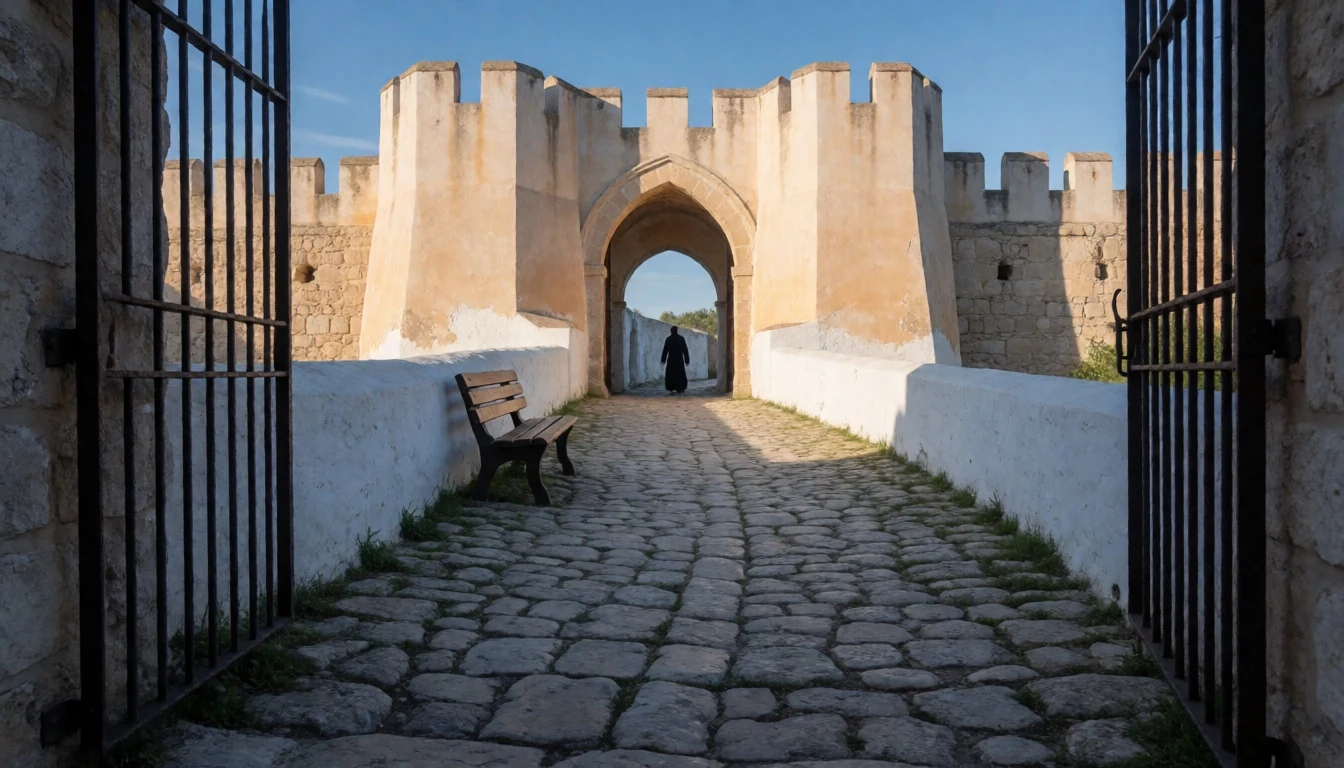
- Main courtyard — Inside the monastery
Inside the Monastery of Saint John the Theologian, the main courtyard is the first calm space after the gate. Arcades, stairways and whitewashed walls open onto chapels at different levels, and pale stone throws bright light into shaded corners. It is a good spot to pause, get your bearings and watch the monks cross to services.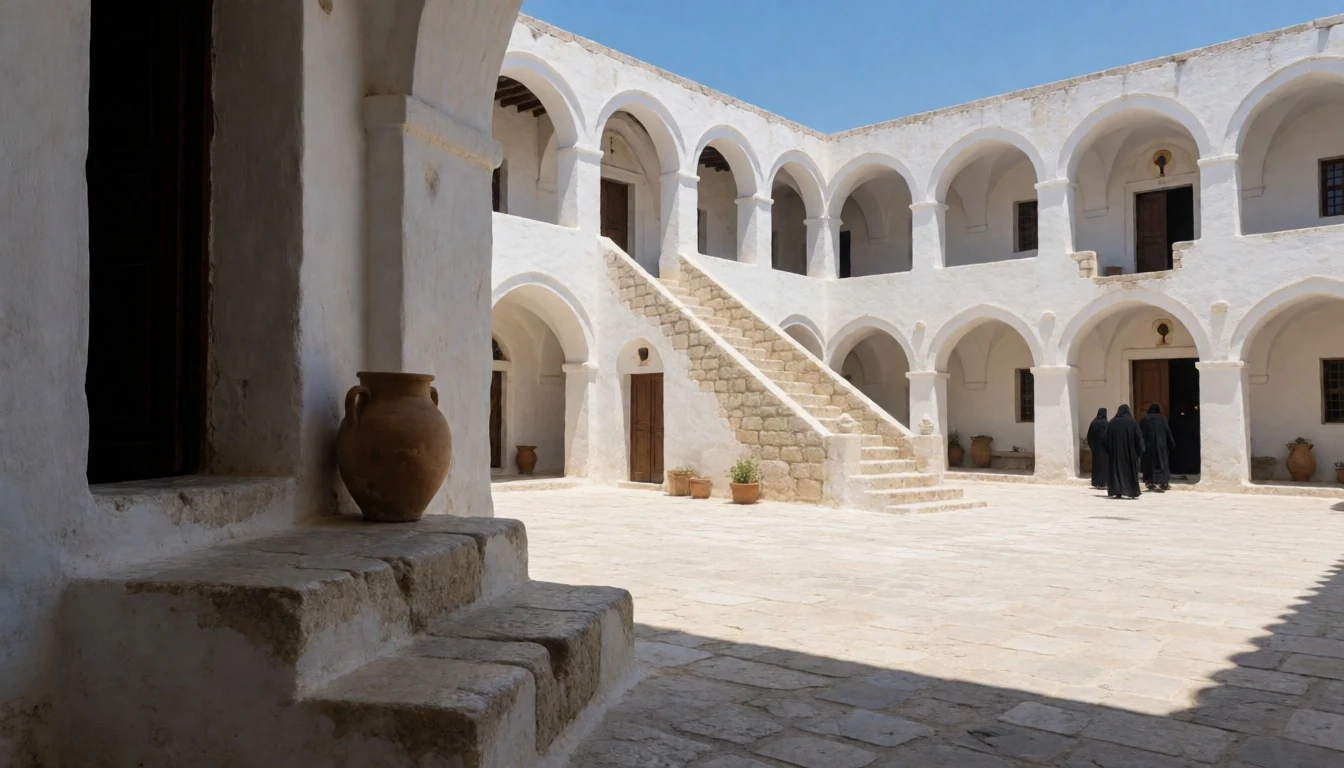
- The Katholikón — Inside the monastery
The Katholikón is the monastery's main church and dates from its founding period. Its domed cross-in-square plan is classic Byzantine, the marble floor is laid in cut-stone patterns, and the walls carry frescoes from different centuries. Light is low and candles do much of the work, so give your eyes a minute to adjust.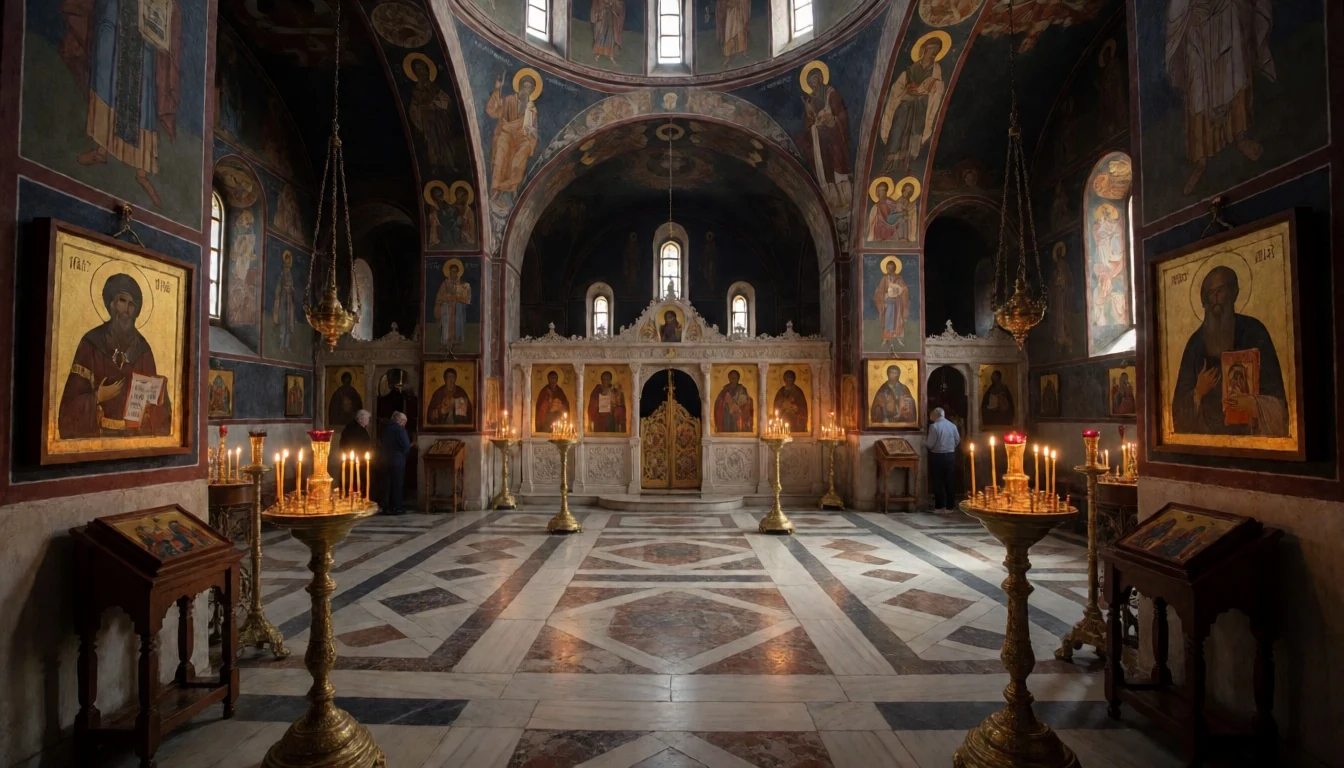
- Library and treasury — Inside the monastery
The monastery's library holds hundreds of manuscripts, most on parchment, including early New Testament texts. Whether manuscripts or treasury objects can be seen depends on current arrangements, so check with the monastery before building a plan around them. Where displays are open, icons and liturgical objects show centuries of scholarship and gift-giving.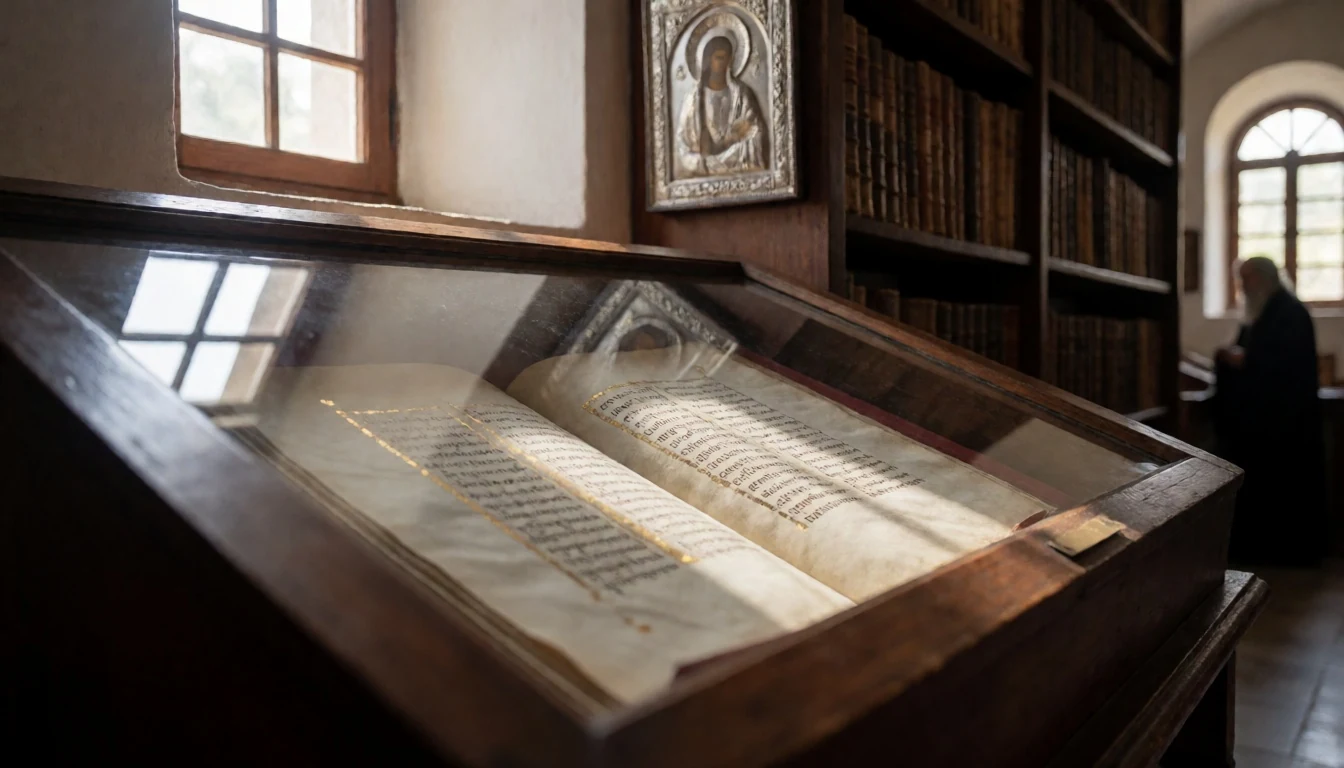
- The lanes of Chora — Chora
Chora, the whitewashed town built against the monastery's walls, rewards an hour of aimless walking. Lanes twist between old mansions, small chapels and painted doors, and the monastery wall reappears at odd angles above the rooftops. Go early or late, once day-trip groups have gone back down to the harbour.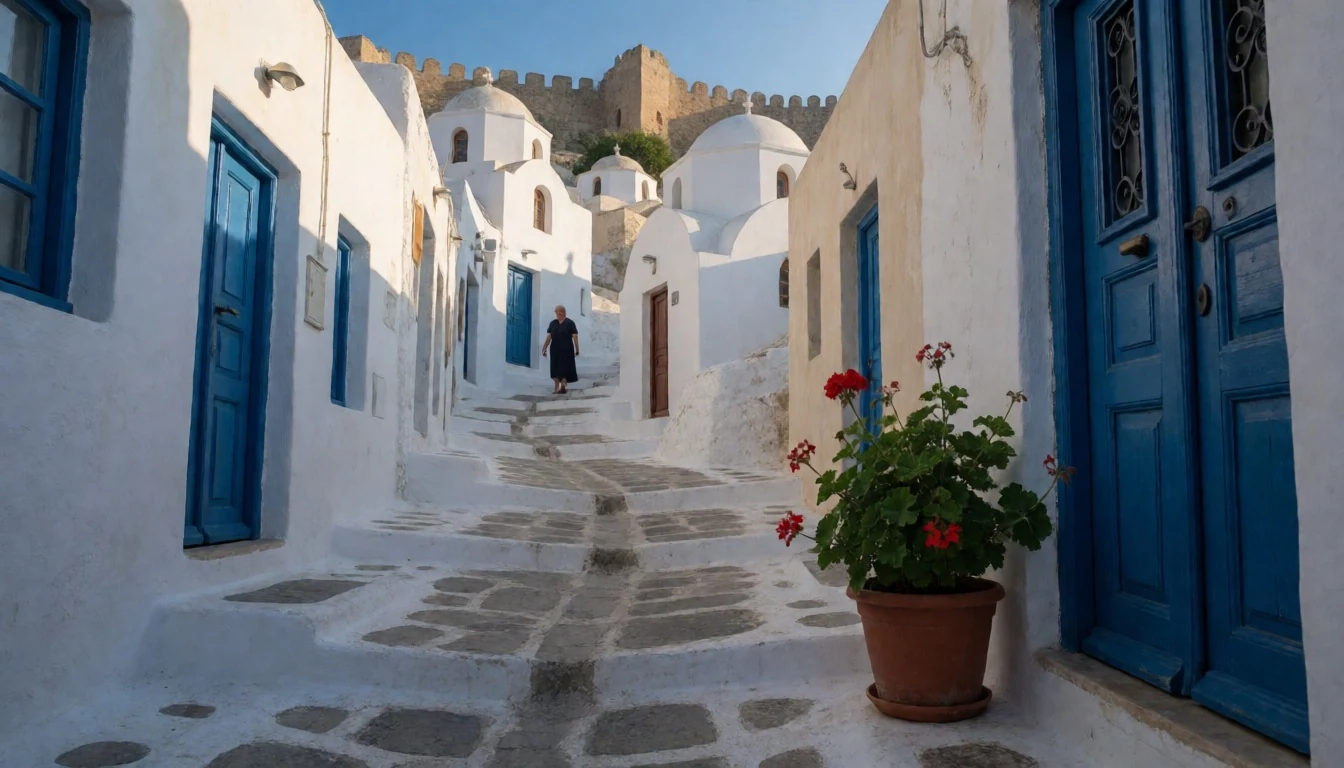
- Cave of the Apocalypse — Below Chora
The Cave of the Apocalypse lies on the slope below Chora and is listed with the monastery as part of the same World Heritage site. Tradition says John received his visions here. It is a small, dim chapel built around the rock, so expect queues in high season and a short, quiet visit.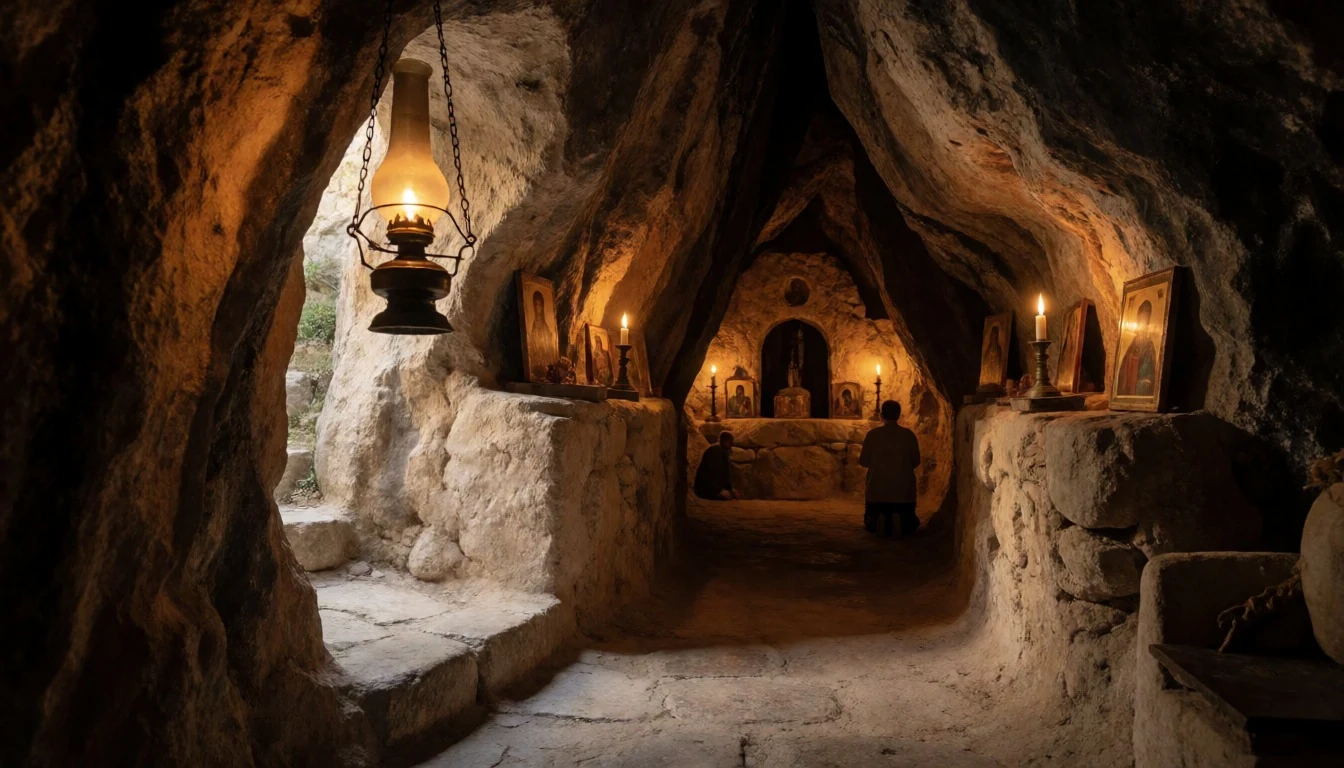
Culture
The Monastery of Saint John the Theologian is a living Greek Orthodox house, and its rhythm is set by services rather than visitors. Monks gather for worship in the Katholikón at hours that begin well before most tourists are up, and chanting, incense and candlelight are part of the daily routine. Orthodox practice here is physical and visual: worshippers light thin candles, cross themselves and kiss icons as a sign of respect, and an icon stands in front of nearly every doorway or niche. Easter is the great occasion on Patmos, with processions and ceremonies that draw islanders and pilgrims into the monastery. The monastery has also long been a place of learning, copying and keeping books, and that scholarly side still shapes how the community sees itself. Chora grew around the walls, so the town shares the monastery's calendar: shops close for feast days, bells carry across the lanes, and conversation drops near the gate. Patmos is also tied to the Book of Revelation, so many visitors arrive as pilgrims rather than sightseers, from Greece and from further afield. Treat the place as you would a church during a service, because that is often what it is. When you enter the Katholikón, keep your voice low, dress to cover shoulders and knees, and do not photograph monks, worshippers or the interior unless a sign or a monk clearly says it is allowed.
What to wear
Around the Monastery of Saint John the Theologian, the clothing that matters most is clerical. The monks wear long black robes and a tall cylindrical black hat, a look that has changed little over generations and is the one most visitors will remember. Traditional island dress across the Aegean was made of homespun cotton, linen and wool, with embroidered blouses and layered skirts for women and baggy breeches called vraka for men. On Patmos such costume now appears mainly at feast days, weddings and folk events, and details vary from island to island, so local museums and festival days are the best place to see it. Day to day, people on Patmos dress simply: linen shirts, light cotton dresses, shorts in the harbour, and a jumper once the evening wind picks up. Visitors to the monastery should dress as for any Orthodox church. Cover shoulders and knees, with long trousers or a skirt below the knee, and carry a light scarf or shirt to put on at the door, since loan wraps may not be on offer. The climb through Chora is over steep, polished stone, so wear flat shoes with grip rather than smooth-soled sandals. A hat and sunscreen are sensible for the exposed approach in summer, and a thin windproof layer helps in spring and autumn.
What to eat
- Grilled fish or octopus — Harbour tavernas in Skala
Fish from the Aegean, grilled over charcoal with olive oil and lemon, is the standard order on Patmos, and octopus is often hung to dry and grilled. Ask what came in that day and eat it plainly, with bread and a green salad.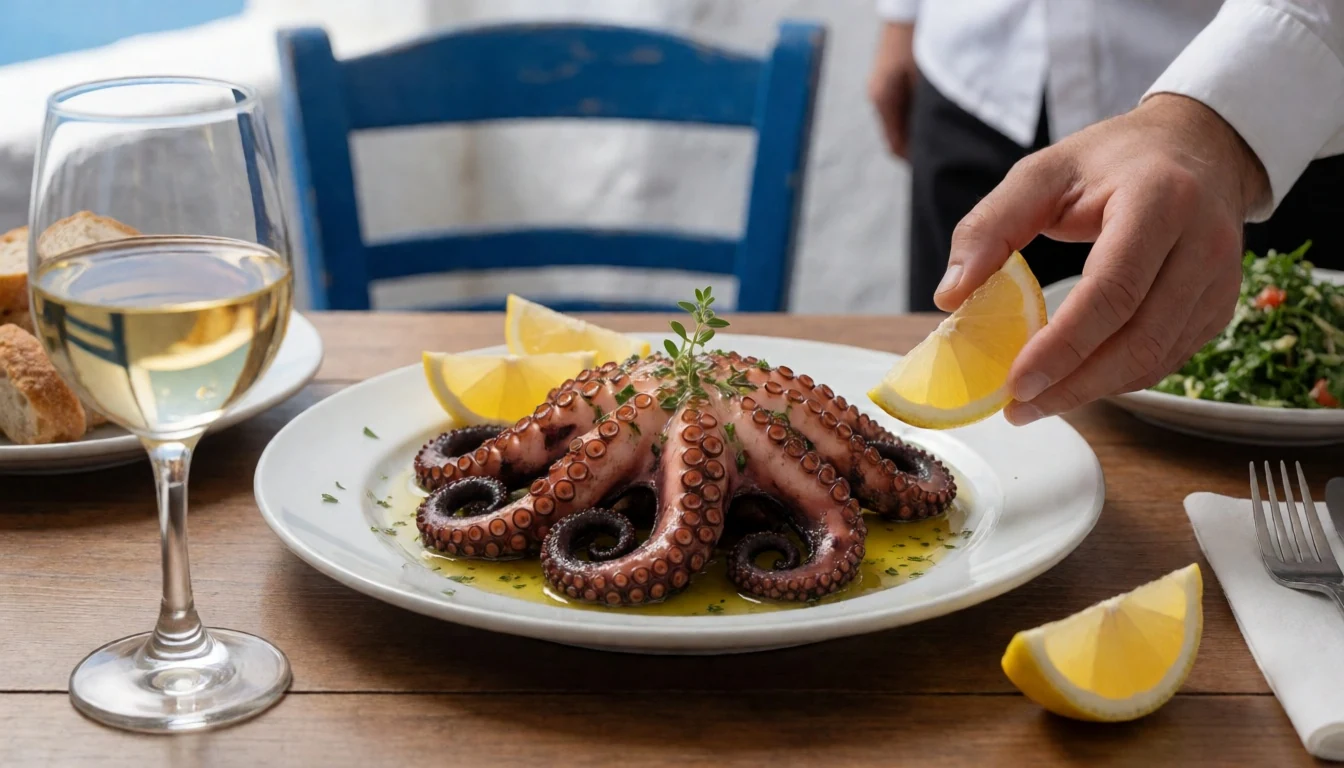
- Greek salad with local cheese — Tavernas and cafés in Chora
Tomatoes, cucumber, onion, olives and a slab of white cheese under oregano and olive oil. In summer it is the sensible lunch after the climb to the monastery, and ripe island tomatoes make a real difference.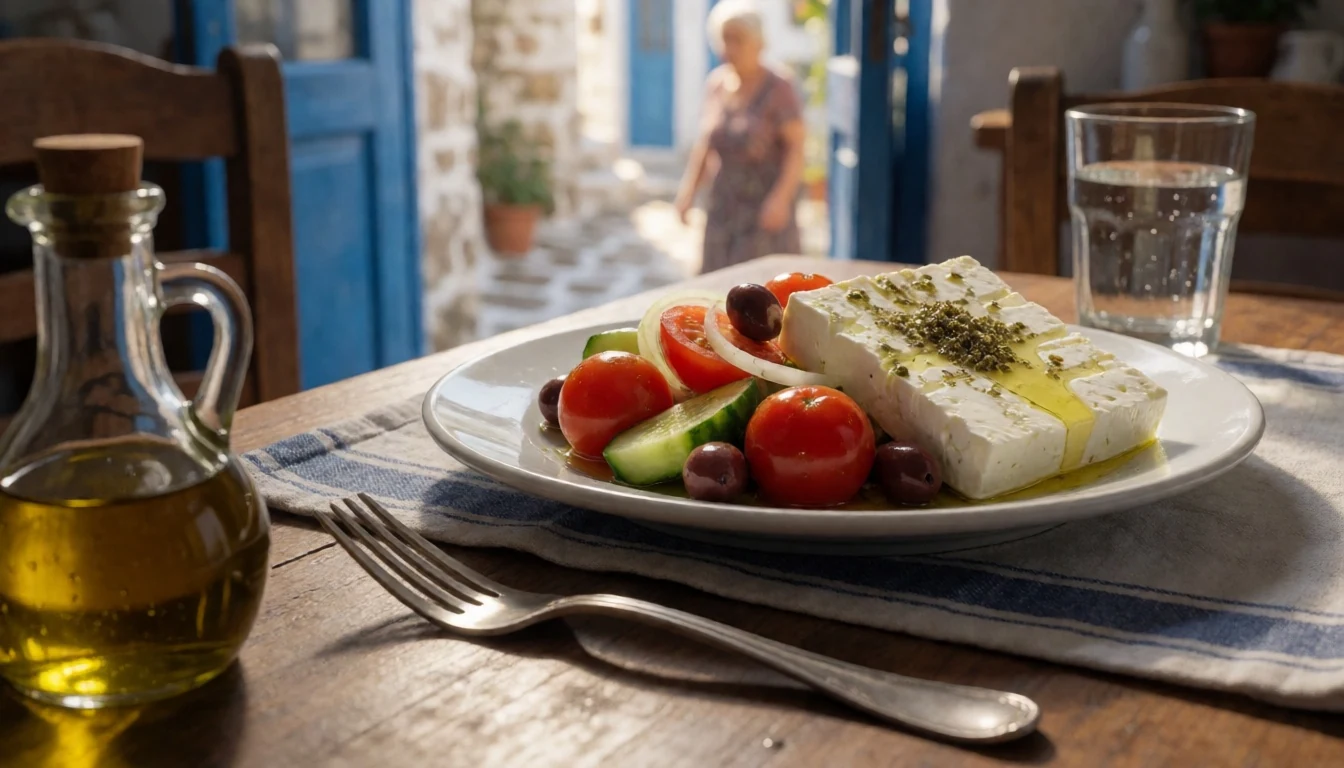
- Lamb or goat with lemon potatoes — Family-run tavernas away from the harbour front
Slow-baked lamb or goat with potatoes roasted in lemon and oil is a Sunday and feast-day dish across the Greek islands. Portions are generous, so it suits a shared table and an unhurried evening. - Almond sweets and spoon sweets — Bakeries and sweet shops in Chora
Small almond biscuits dusted with sugar and preserved fruit served on a spoon with a glass of water are the classic Greek welcome. Both are very sweet, and a little goes a long way after a heavy meal. - Greek coffee and loukoumades — Traditional coffee houses and cafés in Chora and Skala
Strong coffee boiled in a small pot, sipped slowly until the grounds settle, pairs well with loukoumades, fried dough balls soaked in honey. It is an easy way to spend half an hour after the monastery.
Plan it
Best time. April–June and September–October. Spring and early autumn are warm rather than hot, and ferries and sightseeing are easier. July and August bring strong sun, wind and ferry-day crowds; winter is quiet, but boat services thin out and some businesses close.
How long. 2–3
Getting there. Patmos is reached by ferry. Fly to Athens, or to Kos or Samos, and take a ferry to Skala, the island's port; check current timetables before booking. From Skala, a local bus or taxi runs up to Chora, or you can walk uphill in warm weather.
Budget. mid
Tips
- Check visiting hours and any access limits on the monastery's official channels before you go, as times can change around services and feast days
- Arrive early or late in the day to avoid ferry-day groups at the gate and in the narrow lanes
- Carry some cash for small shops, cafés and taxis, as card acceptance can be patchy
- Bring water and a hat; the walk up through Chora is exposed and the stone reflects heat
- Book ferries and accommodation well ahead for Easter and high summer
Etiquette
- Cover shoulders and knees before entering the monastery and its chapels
- Keep your voice low and do not photograph worshippers or monks without permission
- Do not walk through or interrupt a service in progress
Nearby
Sources
- Wikidata Q1982506 (CC0)
- Wikipedia: Monastery of Saint John the Theologian (rev 1380368380) (CC BY-SA 4.0)
- Wikivoyage: South Aegean Islands (rev 4586123) (CC BY-SA 4.0)
- Valeria Casali, Chora di Patmos con il Monastero di San Giovanni il teologo (CC BY 3.0)
- Thanasis Christodoulou, Patmos Monastery main courtyard (CC BY-SA 4.0)
- Jakobthurn, Men at Monastery of Saint John's during Easter Celebrations (CC BY-SA 4.0)
- Jakobthurn, Orthodox Priests enter the Monastery of Saint Johns (CC BY-SA 4.0)
- Jakobthurn, Girls lighting Candles at Monastery of Saint Johns (CC BY-SA 4.0)
- Jakobthurn, Greek orthodox Priests at Monastery of Saint John's 1 (CC BY-SA 4.0)
- simonjenkins' photos, Arch and cross (8694714919) (CC BY-SA 2.0)
- Glorious 93, Entrée du Monastère Saint-Jean-le-Théologien de Patmos (CC BY-SA 4.0)


