Mogao Caves
Mogao Caves, People's Republic of China
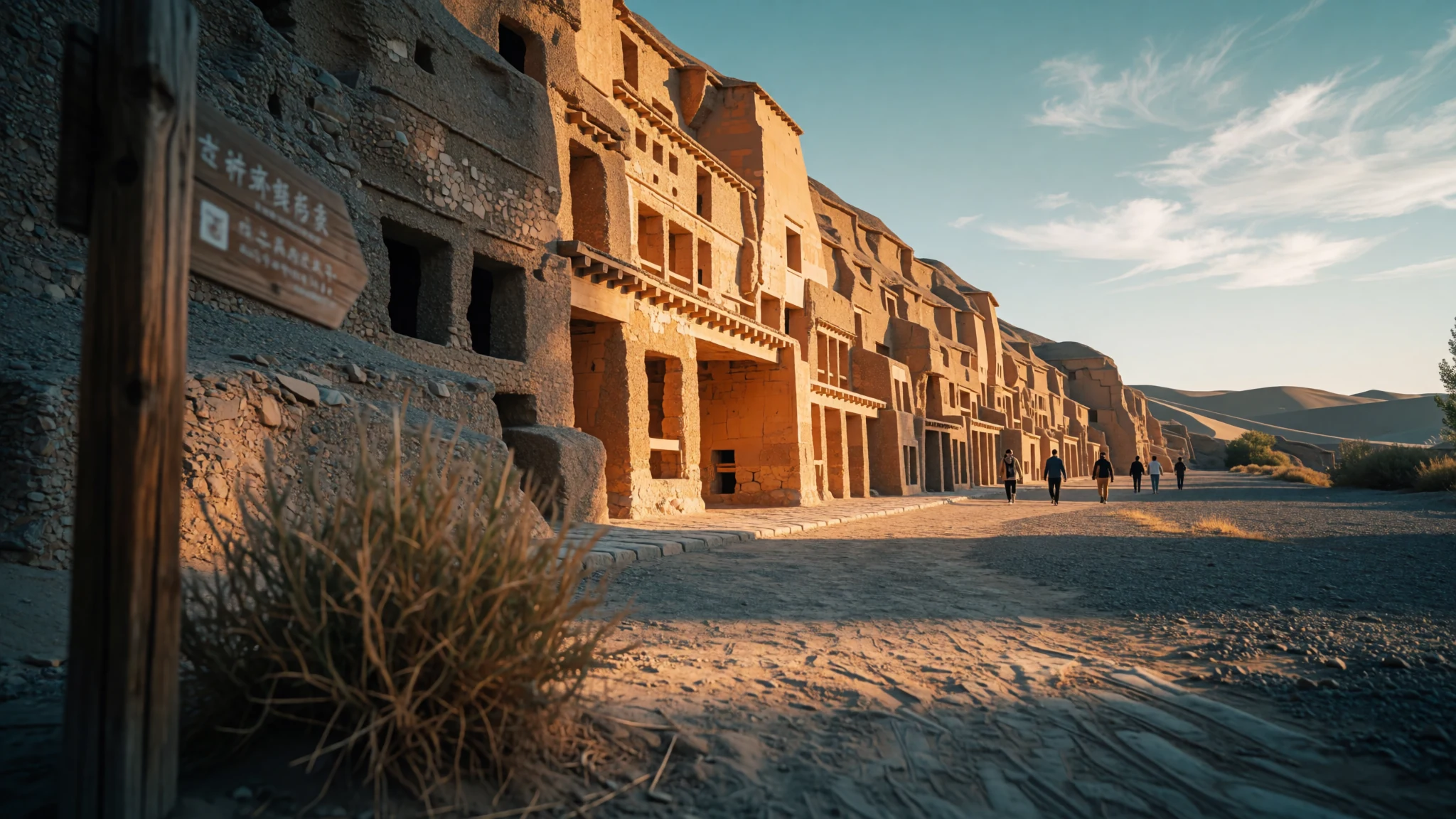
Mogao Caves near Dunhuang hold a thousand years of Buddhist painting and sculpture, cut into a desert cliff on the old Silk Road.
The place
The Mogao Caves lie about 25 km southeast of the centre of Dunhuang, an oasis in Gansu province that grew up at a crossroads of Silk Road routes, trade and faiths. The site is described as a system of some 500 temples cut into a cliff above a dry river valley, so the path along the cliff base runs past a long line of openings, some small and some several storeys tall. Inside, painted walls and clay sculpture cover roughly a thousand years of Buddhist art, and the variety of styles is what keeps visitors absorbed. Changes in robes, halos and landscapes can be followed from one period to the next.
Most of the attention goes to the murals. Scenes from Buddhist stories run across walls and ceilings, with flying figures, musicians and donors painted around the edges. Many of the colours have faded, but the drawing and gilding still carry weight. The larger halls hold sculptures modelled in clay, some of them life-size, made for pilgrims who came to worship.
The grottoes are now a popular destination, and visitor numbers are capped to protect the paintings. Visits are usually guided and taken in groups, and only a selection of caves is open on any one circuit. The site sits in open desert, so afternoon sun, wind and fine sand are part of the day. Mornings are the most comfortable time, and a scarf over the face helps on the windy stretches.
Its story
The Mogao Caves began in the fourth century CE, when Dunhuang was under the control of the Former Liang dynasty. A monk named Le Zun is traditionally credited with the first cave, after a vision of a thousand golden Buddhas at the cliff in 366 CE. Other monks joined him, and by the Northern Liang period a small community had settled there. The earliest caves were places for hermit monks to meditate, but as nearby monasteries grew, the site became a focus for worship and pilgrimage. New caves were cut there until the fourteenth century.
Dunhuang's own history is older. The Han emperor Wudi set up a frontier garrison here in 111 BC to guard against the Xiongnu, and the oasis became a gateway to the west, a trading town on the Silk Road where merchants, envoys and monks passed through. That mix of people shows on the walls, where the painters drew on several artistic traditions, and the imagery shifts as the ruling powers changed.
The early twentieth century brought a turn that scholars still discuss. In 1900 a sealed chamber, known as the Library Cave, was opened. It had been walled up around the eleventh century and was packed with manuscripts in many languages. In the years that followed, the documents were dispersed around the world, and today the largest collections are in Beijing, London, Paris and Berlin. The International Dunhuang Programme exists to bring scholars together to study those texts and the wider site.
What to see
- The cave galleries — The main cliff, about 25 km southeast of Dunhuang
The main cliff is a long line of cave openings, and the galleries are the reason to come. Paintings cover walls and ceilings with Buddhist scenes, sculptures sit in niches, and the rough cliff face lies behind them. Visits are limited and guided, so pace your time: the early work near the cliff base tends to be the most rewarding, and the later galleries show how the style changed.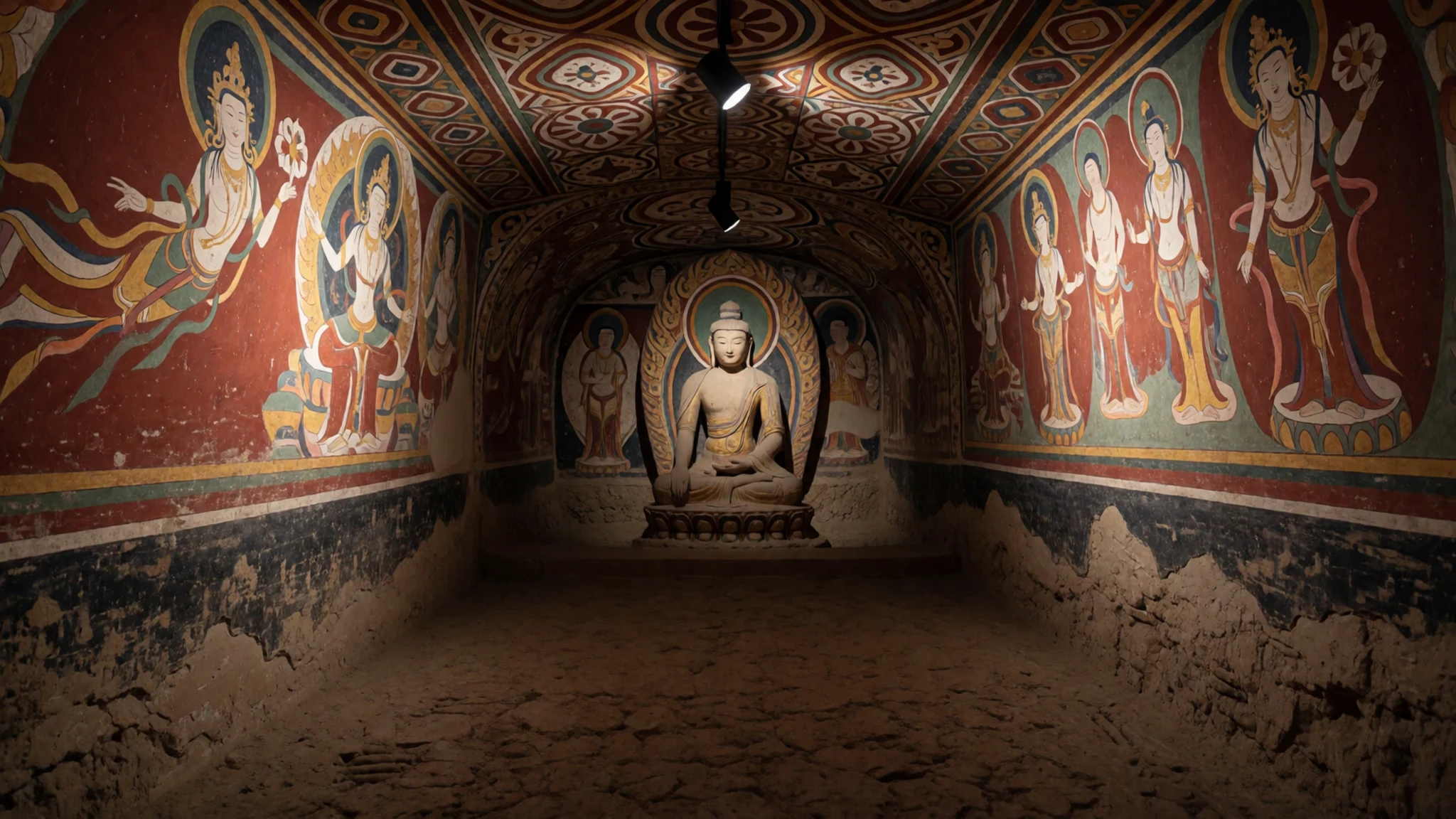
- The multi-storey eaves — Central section of the cliff
A tall wooden eaves structure rises in front of one of the larger cave openings on the cliff. It shelters a large seated Buddha and is the view most people photograph from the valley floor. Its height stands out against the bare cliff, so it makes a useful landmark for working out where you are on the site.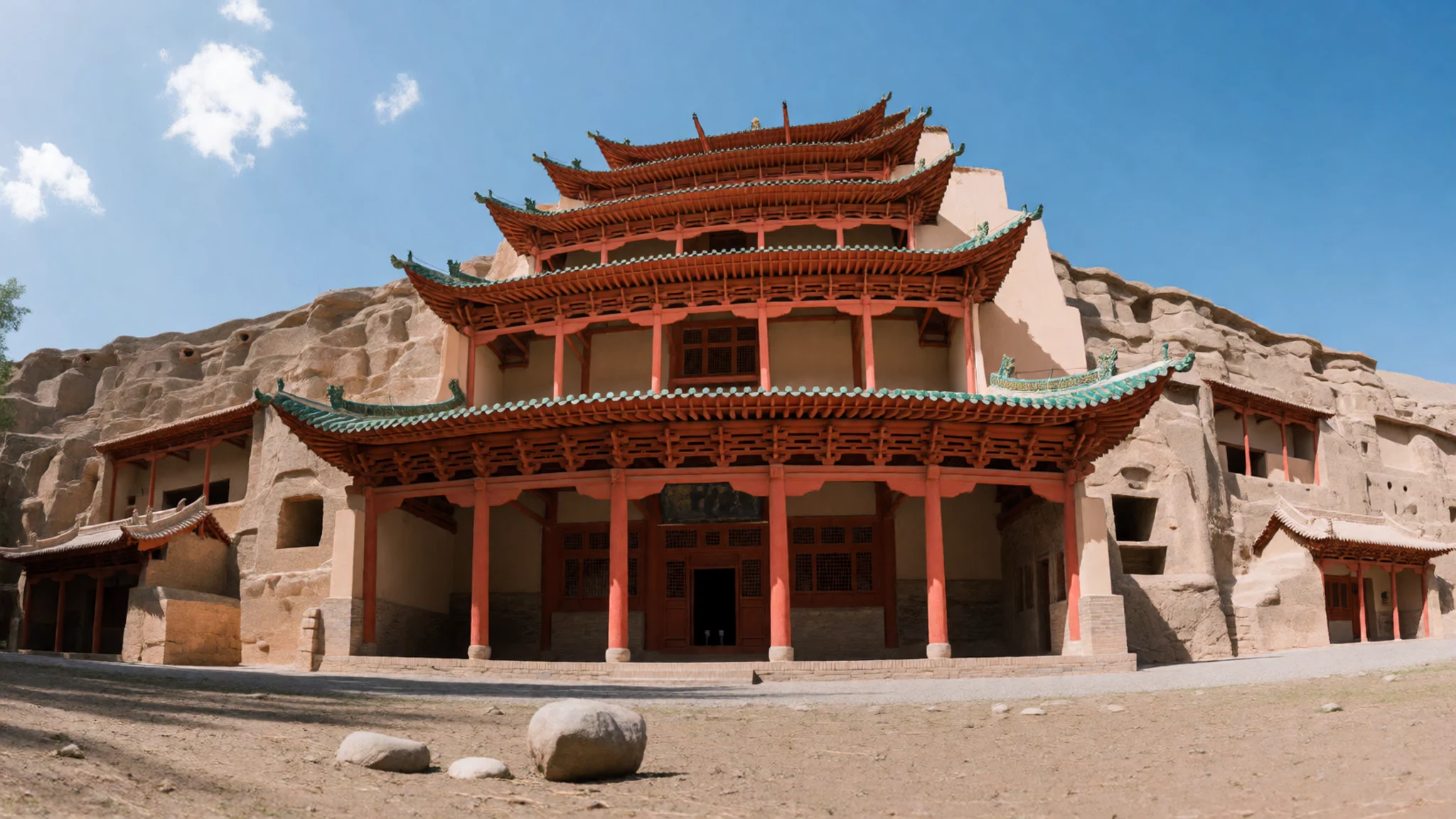
- The Library Cave — Cliff site, near the guided route
The Library Cave is the most famous chamber in the history of the site. It was sealed for centuries and opened in 1900, and it held manuscripts and printed texts in several languages. Most of what survives is now in museums and libraries abroad, as well as in Beijing. Ask at the ticket office or your guide which parts of the story are on display during your visit.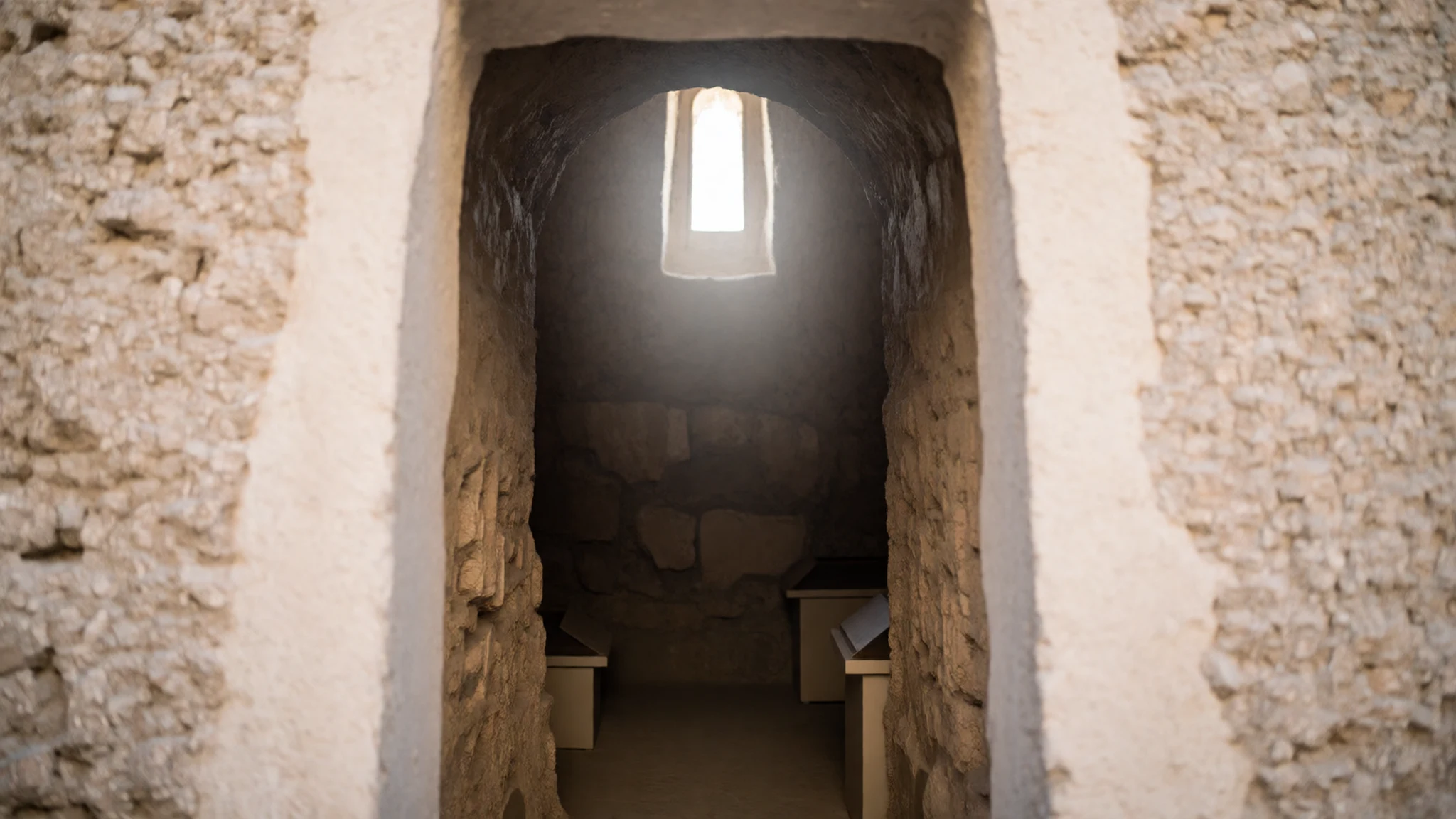
- Yulin Caves
The Yulin Caves lie further away, in a more remote part of Guazhou County, and many visitors reach them on an organised tour from Dunhuang. They hold Buddhist wall paintings and polychrome statues dating from the seventh to the fourteenth centuries. The site is smaller and quieter than Mogao, so it suits anyone who wants a second cave complex. Check the official site for opening details before you go.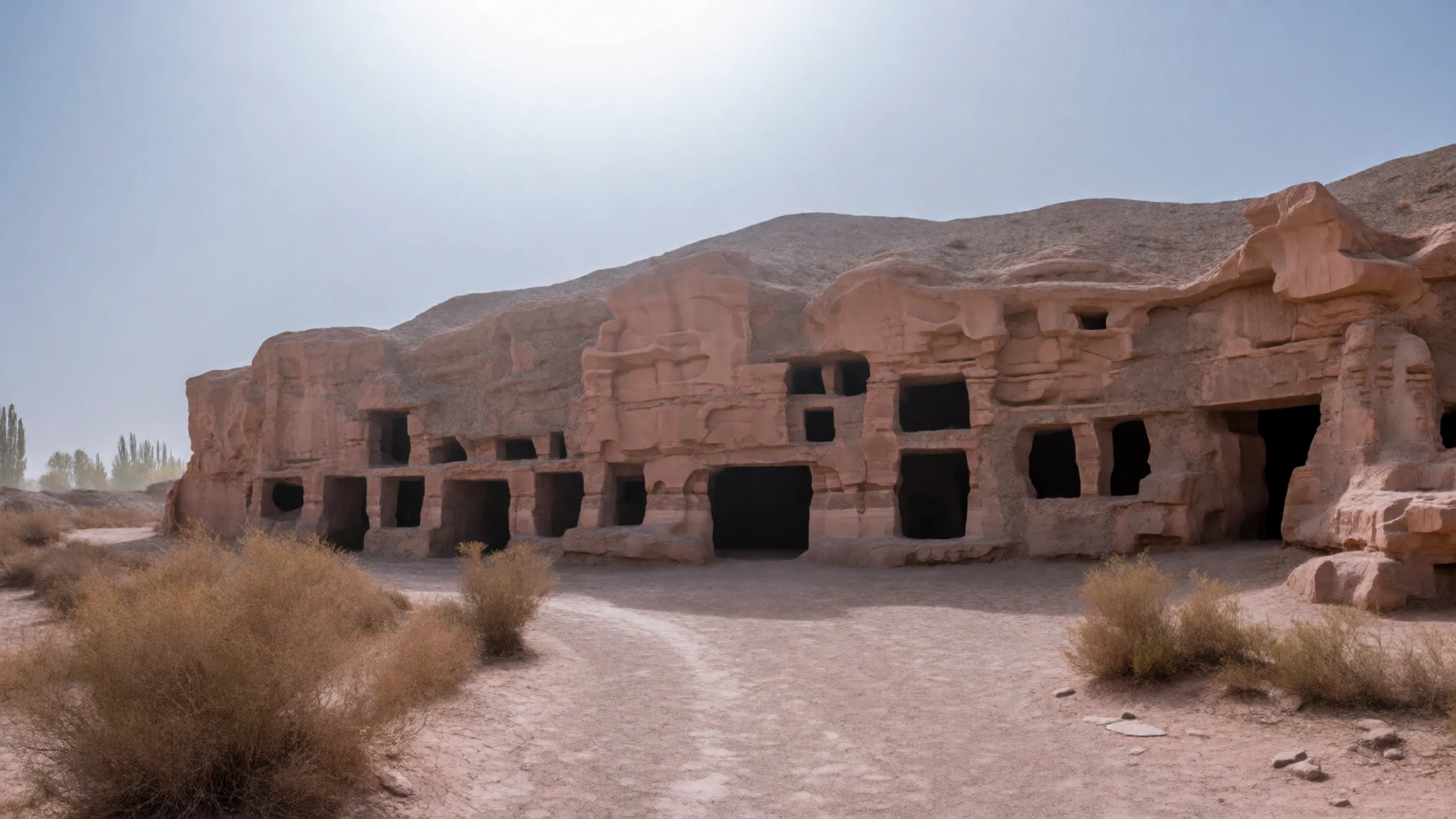
Culture
The Mogao Caves are a place of Buddhist worship as well as a heritage site, and the paintings and sculptures are fragile. Visits are normally guided, and the guide controls the pace and the lighting in each gallery, so follow their lead. Photography inside the caves is restricted and the rules can change, so ask before you lift a camera rather than assuming. Monks and pilgrims visit the area, so keep voices low near shrines. People in Dunhuang are used to visitors from across China and abroad, and a friendly greeting goes a long way in the restaurants and markets of the town. Entry arrangements and any limits on numbers are set through official channels, so check the official site before you travel. Do not touch any painted surface or sculpture, and keep bags and camera gear away from the walls as you move through the galleries.
What to wear
Traditional dress around Dunhuang is best read from the caves themselves, because the murals show the robes of the period. They depict layered silk garments, wide sleeves and sashes, and hats and boots borrowed from Central Asian travellers who passed through the oasis. Silk, hemp and wool were the main textiles of the trade routes. Today, people in the town dress much as they would in any Chinese city, with light jackets, jeans and trainers, and a practical hat or scarf in summer. For a visit, wear long sleeves or a light shirt that covers the shoulders, since the sun is strong and the wind carries sand. Choose closed, sturdy shoes with good grip, because the paths and steps are uneven and sandy. Pack a warm layer for the evenings, as desert nights turn cold quickly, and a hat with a brim for the walk along the cliff.
What to eat
- Hand-pulled noodles — Noodle shops in the old town and around the main street
Lamian, stretched by hand and served in a broth with chilli oil, lamb or vegetables, is the everyday meal in Dunhuang. The noodles are chewy and filling, which suits a day in the sun. Ask for the broth to be mild if you prefer it that way, as the spice can be strong.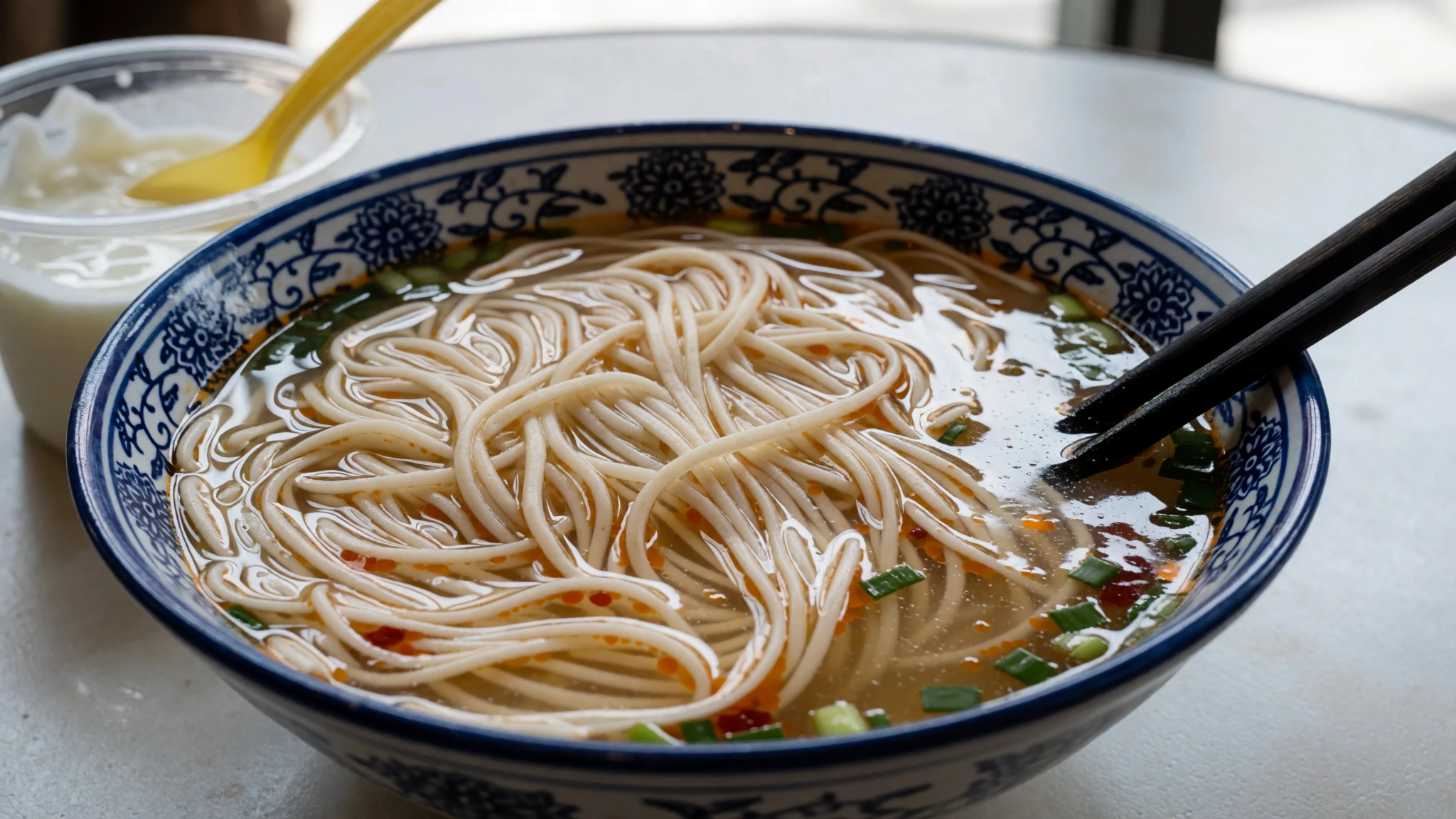
- Lamb skewers — The night food street near the town centre
Grilled lamb skewers dusted with cumin and chilli are a staple of evening eating across Gansu and Xinjiang. They are cooked over charcoal on the spot and eaten standing or at a plastic table. They are popular with locals and make a cheap, filling supper.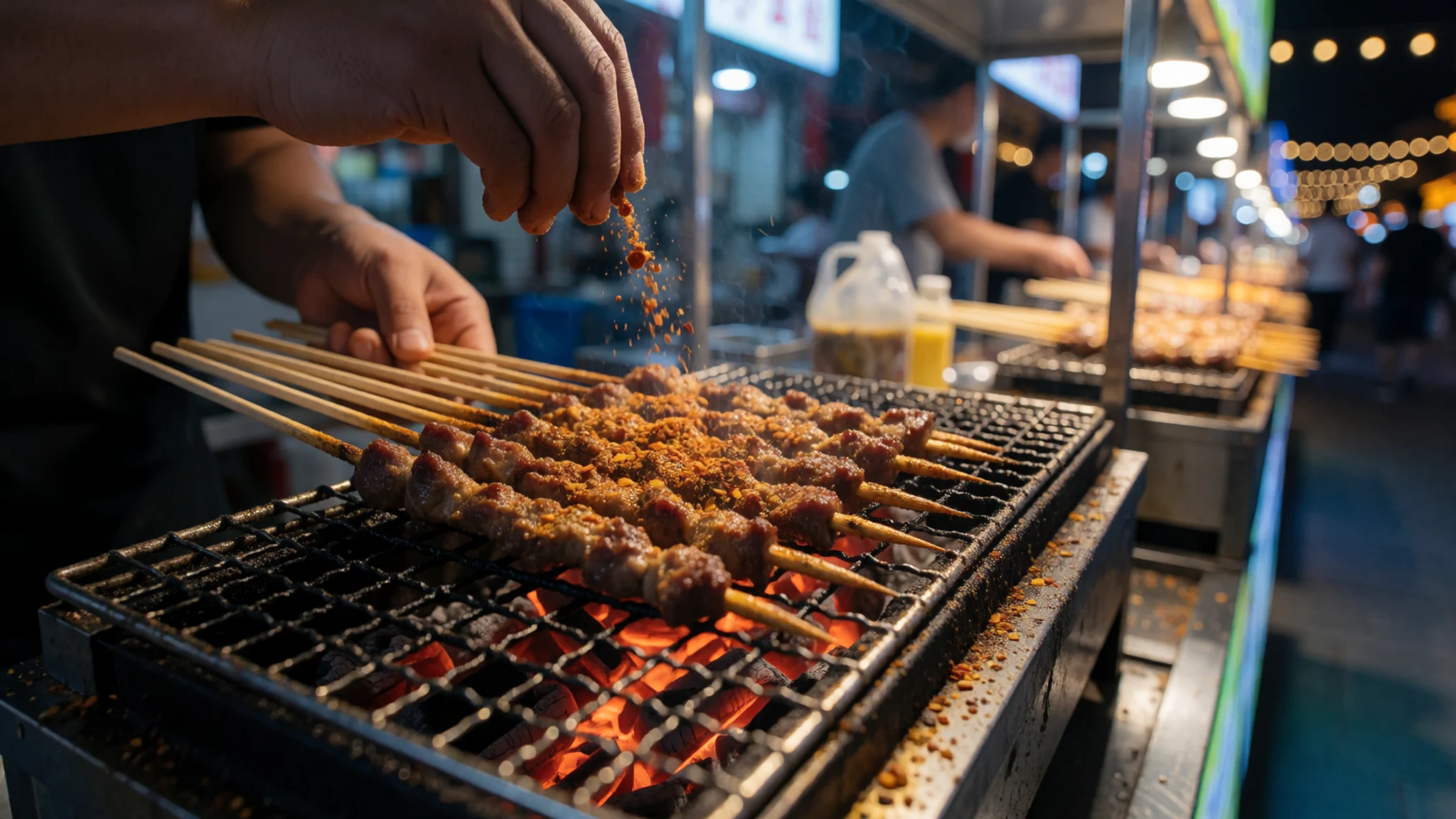
- Flatbread from the bakeries — Bakeries near the bus station and the old town
Sesame and plain flatbreads are baked in clay ovens and sold warm by the piece. They make a good snack for the bus to the caves, since they keep well and fill you up. Buy a few in the morning and carry them in a bag with water. - Mutton stew — Family-run eateries in the side streets of the old town
A slow-cooked mutton stew with potatoes, onion and warming spices is a common winter dish and works well after a cold day in the desert. It is usually served in a deep bowl with flatbread on the side. Smaller family-run eateries often make the best version. - Melons from the market — The morning fruit market in the town
In late summer the fruit stalls fill with sweet melons grown in the surrounding oases, which are eaten cold and in slices. They are an easy way to rehydrate after a hot morning at the caves. Choose ripe ones with a sweet smell and buy them whole or cut from the stall.
Plan it
Best time. October is the most comfortable month to visit, while April, May and September can be very hot and July is the hottest of the year. October days are mild with little rain, the desert wind is less fierce than in summer, and the cliff paths are easier to walk. Summer afternoons are hot and winters are cold, so check the forecast before you travel.
How long. 2–3
Getting there. Dunhuang Airport is the nearest airport, and the caves are about 25 km southeast of the town, reached by taxi or organised tour. Travellers arriving from Xinjiang by train should get off at Liuyuan or Liuyuan South railway station and continue by bus or taxi.
Budget. mid
Tips
- Check the official site for tickets and any entry limits before you travel, since visitor numbers are capped
- Go early in the day, when it is cooler and before the afternoon wind picks up
- Bring water, a hat and sunscreen, as there is little shade between the caves
- Carry cash for small purchases in town and check whether cards are accepted before you arrive
- Allow a half day for the Yulin Caves if you plan to visit them as well
Etiquette
- Follow your guide inside the caves and keep to the marked route
- Do not touch the murals or sculptures, and ask before photographing monks or pilgrims
- Keep your voice low near shrines
Nearby
Sources
- Wikidata Q43286 (CC0)
- Wikipedia: Mogao Caves (rev 1382820474) (CC BY-SA 4.0)
- Wikivoyage: Guazhou (rev 5203189) (CC BY-SA 4.0)
- Dunhuang Mogao Ku, Zhangzhugang (CC BY-SA 2.5)
- Jiucenglou of Mogao Caves, 慕尼黑啤酒 (CC BY 3.0)
- Mogao Caves (54376977152), xiquinhosilva (CC BY 2.5)
- Mogao Caves (54378083103), xiquinhosilva (CC BY 2.5)
- Mogao Caves (54378048664), xiquinhosilva (CC BY 2.5)
- Mogao Caves (54377844096), xiquinhosilva (CC BY 2.5)
- Bodhisattva Leading the Way, anonymous (Public domain)
- Wang Yuanlu, Aurel Stein (Public domain)


