Mitla
Mitla, Mexico
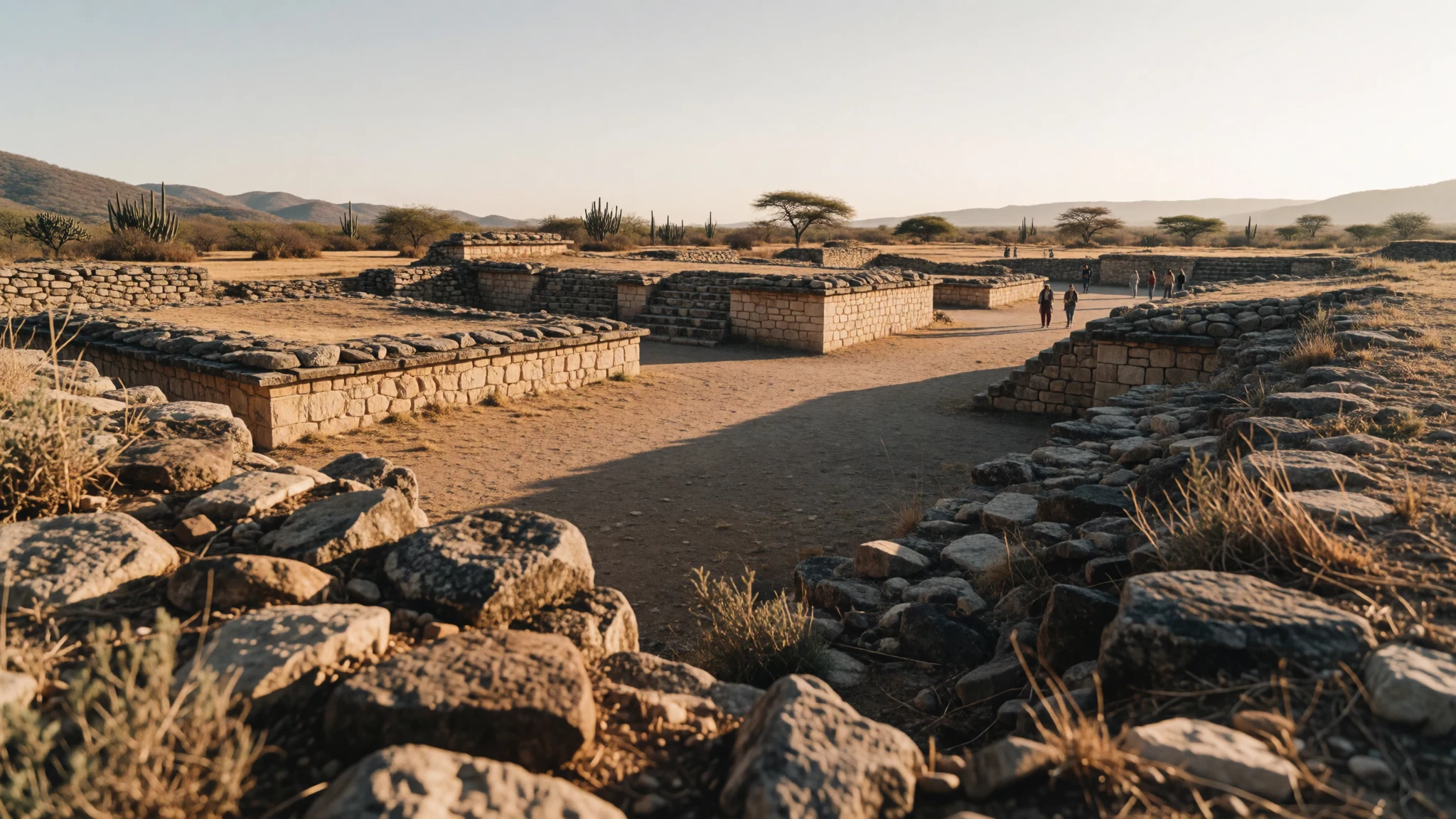
Mitla offers an astonishing architectural contrast to other Mesoamerican ruins through its world-renowned, mortarless geometric stone mosaics.
The place
Mitla sits within the cold, high terrain of the Central Valleys Region in the state of Oaxaca, tucked against the mountains of the Sierra Madre del Sur. While neighbouring Monte Albán held political supremacy during the zenith of the Zapotec civilisation, Mitla evolved into the premier religious sanctuary of the region during a later period shaped by Mixtec influence. Its name translates from Nahuatl as the place of the dead, or the underworld, while its traditional Zapotec designation signifies a resting place. Unlike major ceremonial complexes perched dramatically on high mountain ridges, Mitla sprawls directly across the valley floor. Visitors wandering through the complex encounter courtyards and quadrangles enclosed by extraordinary masonry rather than monumental pyramids. The overriding architectural signature of Mitla is its incredible mosaic fretwork. Thousands of precisely shaped, polished stone fragments lock together entirely without mortar to form complex geometric patterns across tombs, friezes, and complete interior walls. This singular decorative style distinguishes the site from all other ancient settlements in the country, creating a visual rhythm of light and shadow across the limestone blocks. The surrounding valley climate remains remarkably dry and crisp, preserving not only the archaeological ruins themselves but also nearby ancient cave shelters that contain thousands of years of human habitation history.
Its story
Mitla possesses a remarkably long chronicle of human settlement stretching back centuries before the common era. The fertile high valley was initially farmed and inhabited by early Zapotec groups who gradually established a stratified society governed by powerful elites. Throughout the Classic Period and subsequent centuries, these communities developed advanced agricultural systems reliant on maize, beans, squash, and chili peppers, sustained by hillside terracing and engineered irrigation channels across the valley floor. As regional dynamics shifted, the Mixtec migrated into the territory, eventually assuming control around the turn of the second millennium while coexisting with the established Zapotec population. This cultural convergence enriched local artistic and architectural traditions, combining Zapotec sacred traditions with Mixtec design elements. When Spanish chroniclers and conquerors arrived in the sixteenth century, the combined indigenous population of the valley numbered in the hundreds of thousands, possessing sophisticated writing systems, accurate calendars, and monumental urban centres. Following the colonial conquest, Spanish authorities repurposed parts of the sacred landscape, notably constructing colonial places of worship directly above ancient Zapotec foundations and crypts. Over subsequent centuries, the combination of environmental weathering and historical repurposing prompted various preservation efforts. Modern conservation initiatives now work to protect the delicate stone grecas and stabilise remaining structures against wind and rain while making the heritage landscape accessible to travellers.
What to see
- Mitla Archaeological Zone — Columns Group, archaeological zone
The Mitla Archaeological Zone serves as the primary gateway to the ancient ruins, featuring the renowned Columns Group. Visitors can walk through sprawling courtyards framed by low stone structures and examine the magnificent geometric grecas up close under protective traditional-style palapa roofs.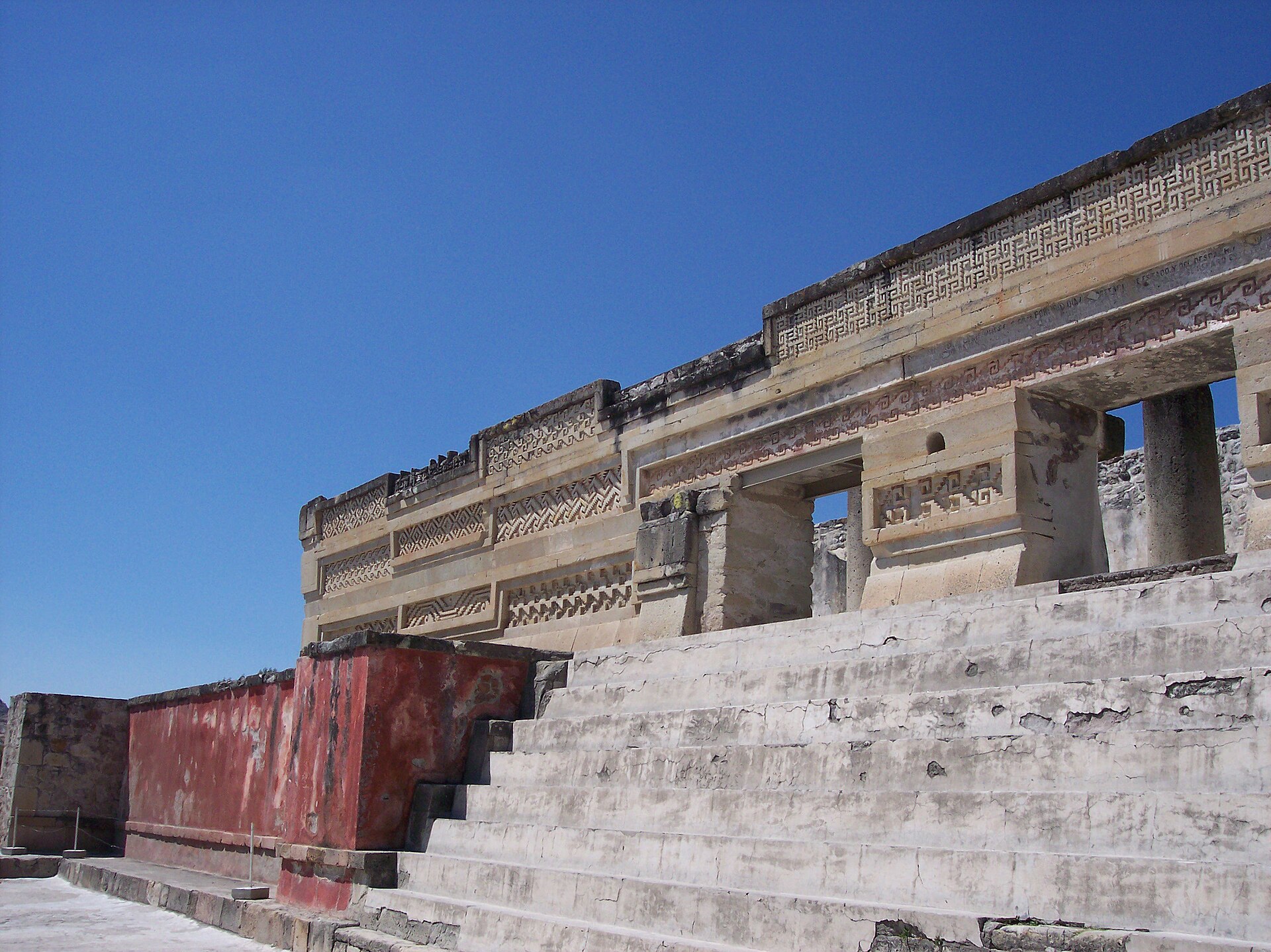
- Templo de San Pablo — Church Group area
The Templo de San Pablo is an eighteenth-century colonial church built directly over ancient Zapotec temple foundations and underground crypts. Featuring a striking single-nave design beneath three domes, the church illustrates the complex layering of religious history in the valley.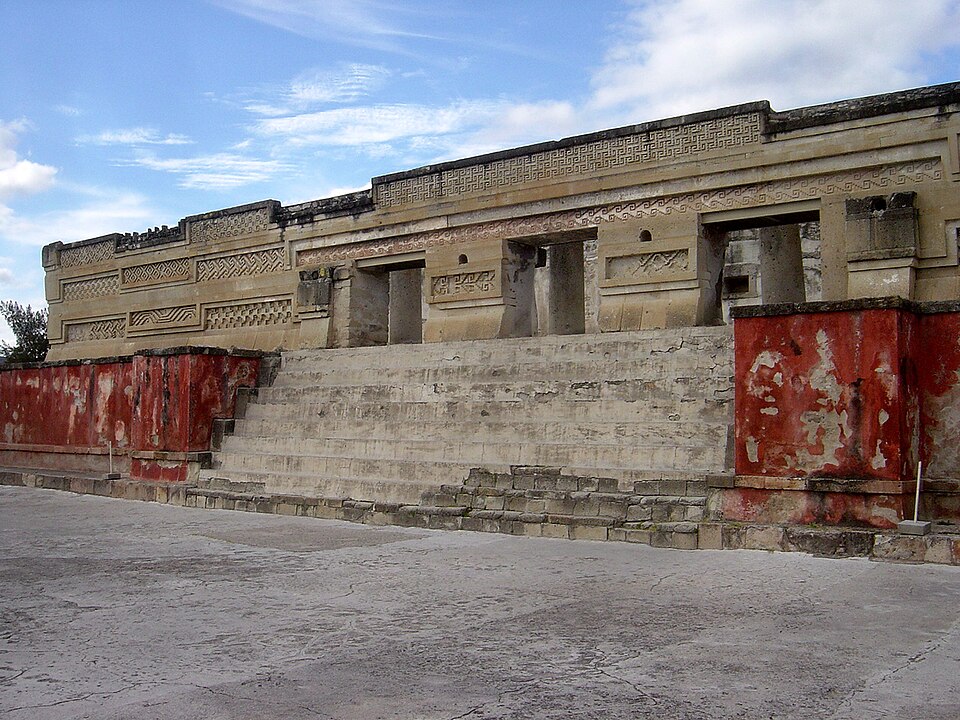
- Palace Structure and Friezes — Main Palace complex
The palace structure displays the finest surviving examples of mortarless stone mosaic work in Mesoamerica. Thousands of hand-cut volcanic and limestone pieces fit together in interlocking geometric patterns that cover entire walls and interior friezes.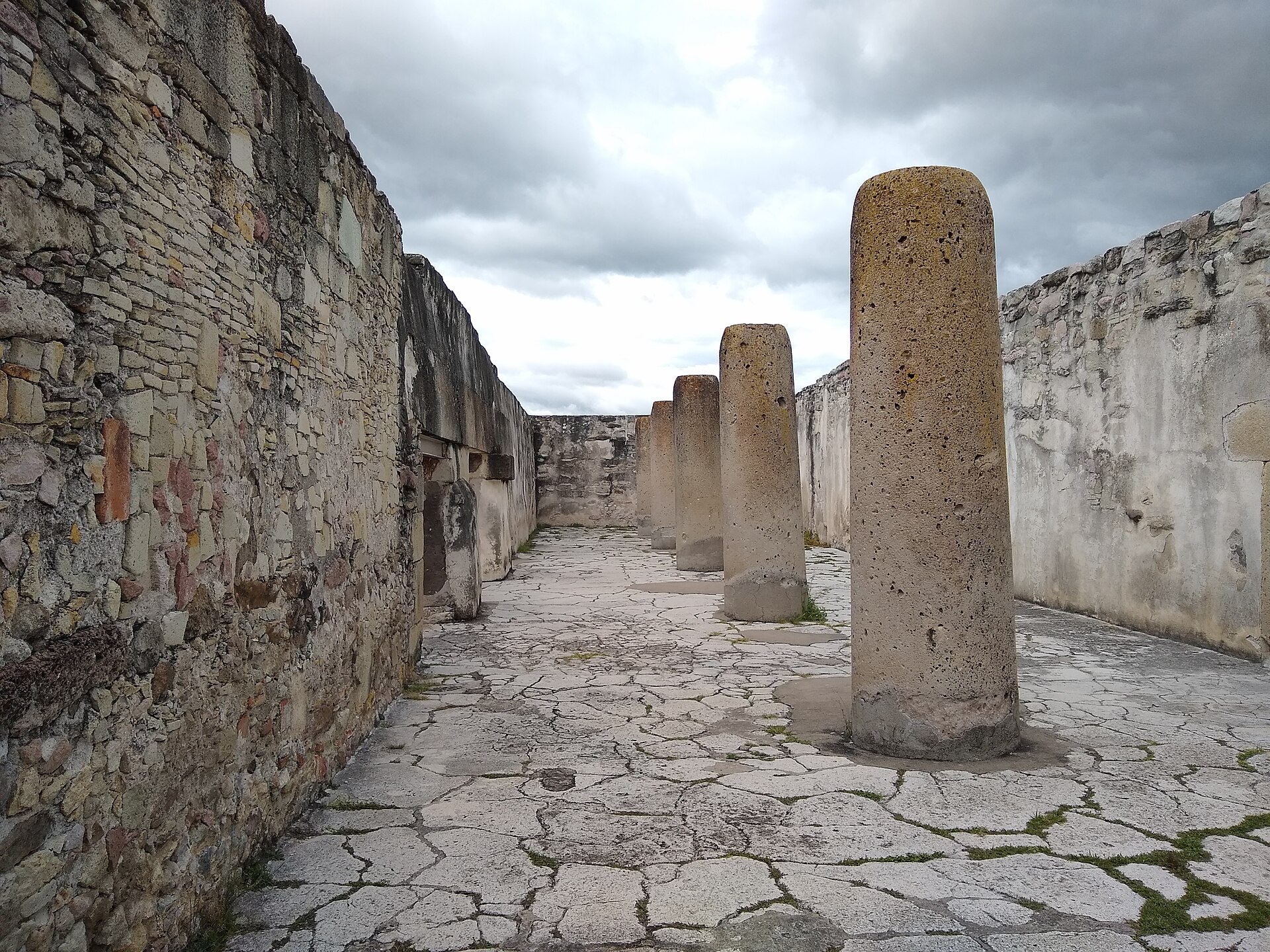
- Caves at Mitla and Yagul — Surrounding valley hillsides
The Caves at Mitla and Yagul form part of a protected landscape showcasing prehistoric rock art and ancient domestic debris left by early hunter-gatherers. These high-altitude arid shelters preserve evidence of some of the earliest domesticated plant use in the Americas.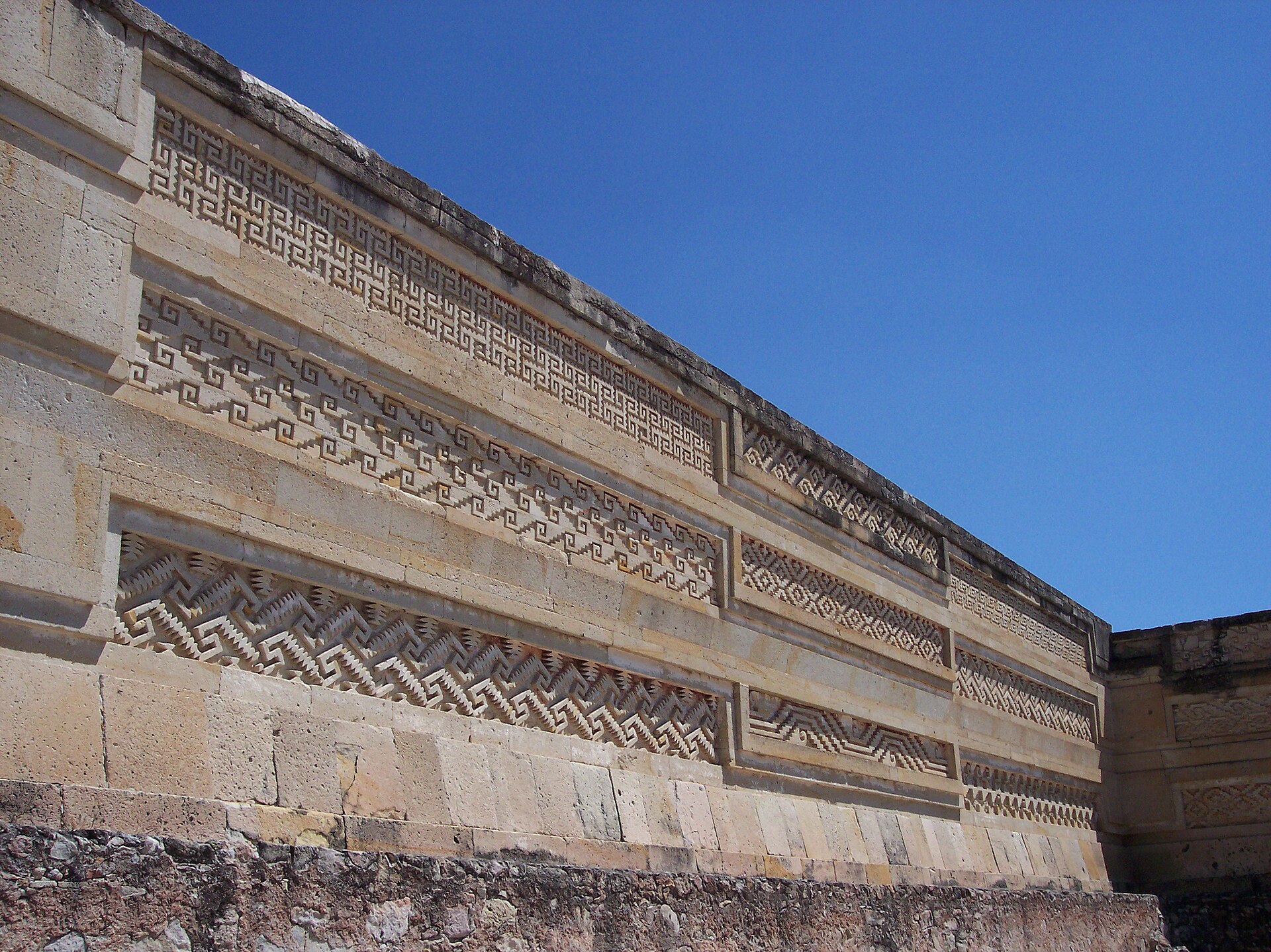
Culture
Mitla is deeply rooted in contemporary Zapotec culture, where community life, traditional textiles, and artisanal crafts remain central to daily routines. Local residents maintain strong linguistic and cultural ties to their heritage, alongside generations of craftsmanship centred around weaving and distillation. Throughout the town and surrounding valleys, traditional celebrations and religious festivals blend indigenous customs with Catholic traditions, accompanied by traditional music and regional dancing. Artisans sell hand-woven wool rugs and garments created on traditional wooden floor looms using natural dyes derived from cochineal, indigo, and local plants. Visitors should always greet local shopkeepers and artisans politely in Spanish before inquiring about crafts, and ask permission before photographing residents or traditional ceremonies.
What to wear
Mitla residents often wear practical everyday attire suited to the dry highland climate, while older generations and artisans frequently incorporate traditional textiles. Traditional garments include embroidered blouses and dresses for women, while hand-woven wool wraps and shawls provide warmth during cool mountain evenings. Today, most townspeople wear standard casual clothing such as jeans, cotton shirts, and sturdy footwear for navigating dusty streets and unpaved paths. Travellers visiting Mitla should dress in breathable layers to manage shifting daytime temperatures, opting for lightweight shirts, comfortable trousers or skirts, and sturdy walking shoes or trainers suitable for exploring uneven archaeological terrain. Modest clothing that covers the shoulders and knees is appreciated when visiting local churches or residential neighbourhoods.
What to eat
- Regional Moles — Casual restaurants near the archaeological zone
Complex, rich sauces prepared from ground chillies, seeds, chocolate, and spices, served over chicken or pork. Sample various shades of mole at casual eateries around the archaeological zone. - Tlayudas — Local eateries and evening food stalls in town
Large, slightly crispy corn tortillas spread with savoury refried bean paste, asiento pork lard, shredded cabbage, and quesillo cheese, often grilled over open coals and folded in half. - Mezcal Artesanal — Independent palenques and shops near the ruins
Smoky, artisanal agave spirit produced in family-run palenques using traditional roasting pits and stone crushers. Tastings and bottles are available directly from local producers and independent makers in town. - Tepache — Markets and street food stalls
Refreshing, mildly fermented traditional beverage brewed from pineapple rinds and sweetened with raw unrefined piloncillo sugar, offering a sweet and tangy flavour profile.
Plan it
Best time. March to April and October to November offer pleasant, dry weather ideal for exploring archaeological sites without excessive heat or heavy rain.
How long. 1–2
Getting there. Take a second-class bus or shared colectivo from Oaxaca city, which departs frequently throughout the day from the Central de Abastos or along the eastern highway.
Budget. mid
Tips
- Arrive early in the morning to explore the ruins before tour groups arrive from the city.
- Carry sufficient cash, as smaller shops, local markets, and family-run mezcal producers rarely accept cards.
- Bring a hat, sunglasses, and plenty of drinking water to counter the strong high-altitude sun.
- Hire a local guide at the entrance to fully appreciate the architectural details of the mosaic fretwork.
Etiquette
- Always ask permission before photographing local artisans or residents.
- Never touch or lean against the ancient stone mosaic walls within the archaeological zone.
- Dress respectfully with covered shoulders and knees when visiting local churches and community spaces.
Nearby
Sources
- Wikidata Q1366027 (CC0)
- Wikipedia (rev 1378698528) (CC BY-SA 4.0)
- Wikivoyage (rev 5426460) (CC BY-SA 4.0)
- Photo 01 (CC BY-SA 2.0)
- Photo 02 (CC BY 2.5)

