Mission San Xavier del Bac
Mission San Xavier del Bac, United States
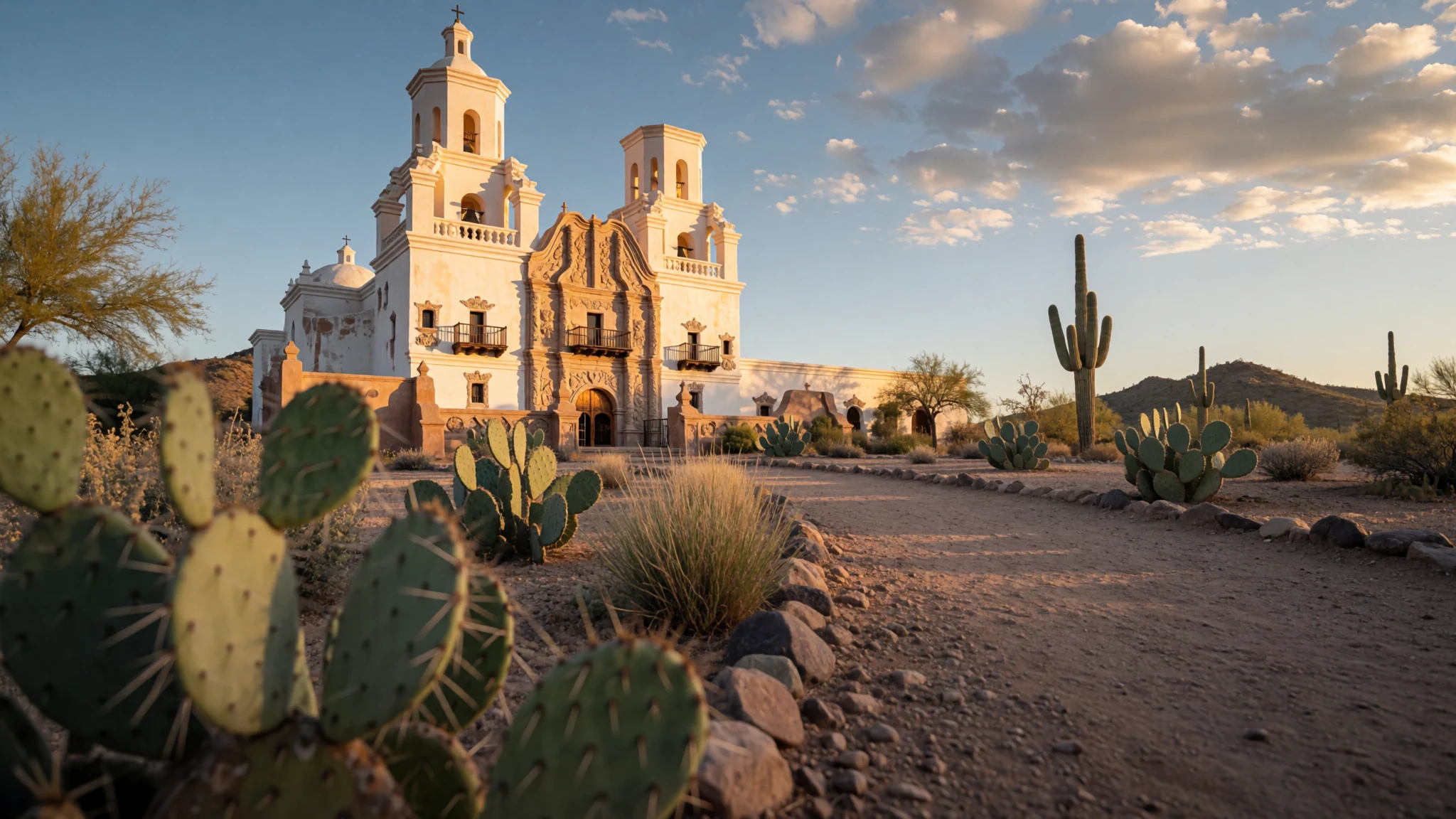
Mission San Xavier del Bac stands as a magnificent masterpiece of Spanish colonial architecture in the Sonoran Desert.
The place
Mission San Xavier del Bac sits in the Sonoran Desert landscape, rising from the dry earth on the Tohono O'odham Nation San Xavier Indian Reservation. Often called the White Dove of the Desert, the structure presents a striking silhouette of white plaster, carved stone portals, and twin bell towers against the wide Arizona horizon. Local people have known this place as Wa:k, meaning water place, referring to the historical springs that once watered the banks of the Santa Cruz River. Labourers built the present church using local materials, shaping adobe brick, stone, and lime plaster into compound curves and neoclassical details that fuse European design traditions with indigenous craftsmanship. Inside, vaulted ceilings arch above elaborate wooden retablos, painted statuary, and intricate frescoes that cover nearly every surface with rich patterns and devotional iconography. Thousands of visitors arrive each year, coming down the desert road to walk across the sunlit courtyards and enter the cool, candlelit interior. The surrounding reservation land remains quiet and expansive, maintaining a deep sense of isolation from nearby urban expansion. Sunlight washes over the pale walls throughout the day, shifting from harsh midday glare to soft amber tones as the sun dips toward the mountain ranges framing the desert valley.
Its story
Mission San Xavier del Bac carries a history tied to the Spanish exploration of the Pimería Alta territory within the Viceroyalty of New Spain. Eusebio Francisco Kino, an Italian Jesuit missionary, established the initial mission station on the site, laying groundwork among the local Sobaipuri O'odham population. Decades of frontier instability and conflict with Apache groups left the early settlement vulnerable, leading to attacks that destroyed initial structures. Construction of the current building began under Franciscan supervision, relying entirely on the engineering knowledge and manual labour of the indigenous O'odham communities. Artisans and builders hauled tezontle stone from nearby hills and mixed traditional mortars to raise the massive walls and vaulted chambers. Master carvers and painters adorned the interior spaces, creating an artistic synthesis that reflected both European religious devotion and native expression. Over subsequent centuries, control of the region shifted from the Spanish Empire to the Mexican republic and eventually to the United States. Despite political upheavals, secularisation laws, and structural deterioration from weather and time, the mission remained a focal point for local communities and annual pilgrimages. Restoration projects carried out by conservation teams and local artisans have worked continuously to preserve the fragile plaster and historic artwork from environmental decay.
What to see
- The Main Altar — Main Chapel Sanctuary
The main altar at Mission San Xavier del Bac rises toward the vaulted ceiling with gilded wood carvings, ornate columns, and complex polychrome statues of saints that display centuries of Spanish colonial artistry and devotional craftsmanship.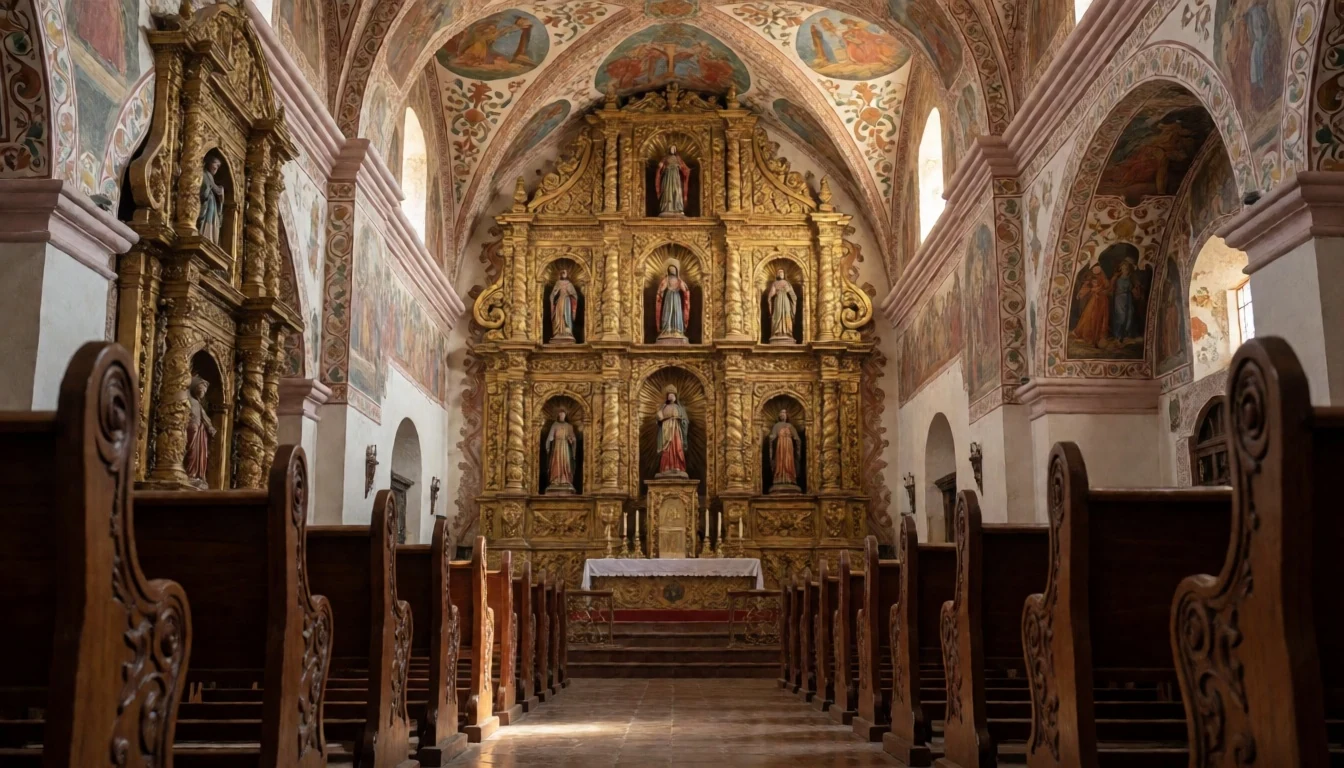
- The Twin Bell Towers — Front Façade
The twin bell towers frame the main entrance of Mission San Xavier del Bac, featuring distinct architectural asymmetry where the eastern tower was left deliberately uncompleted while the western tower houses historic bells.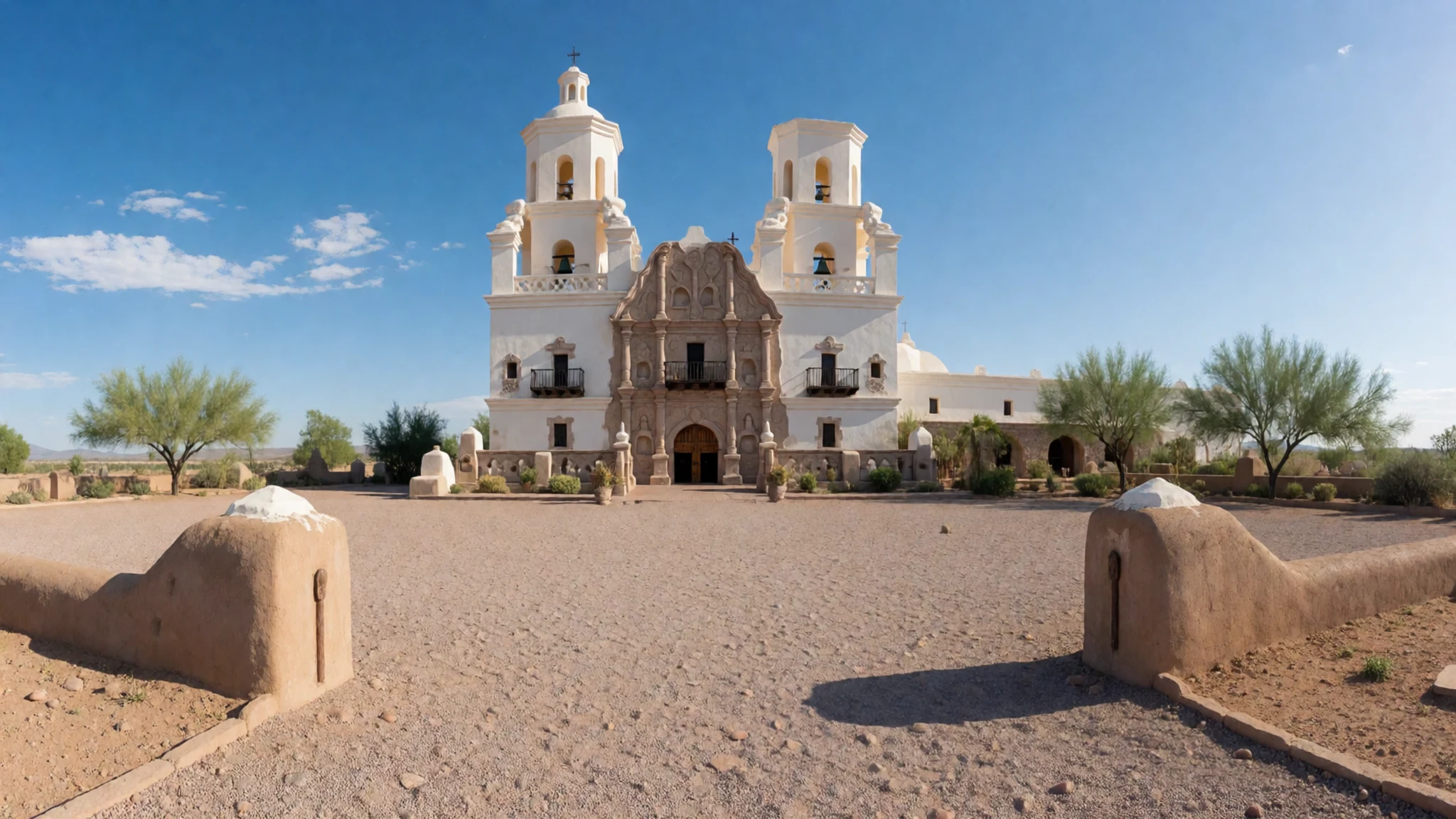
- Chapel Statuary and Niches — Side Chapels
Chapel statuary and side niches throughout Mission San Xavier del Bac contain figures draped in embroidered vestments, votive offerings, and milagros left by pilgrims seeking healing, protection, and spiritual comfort.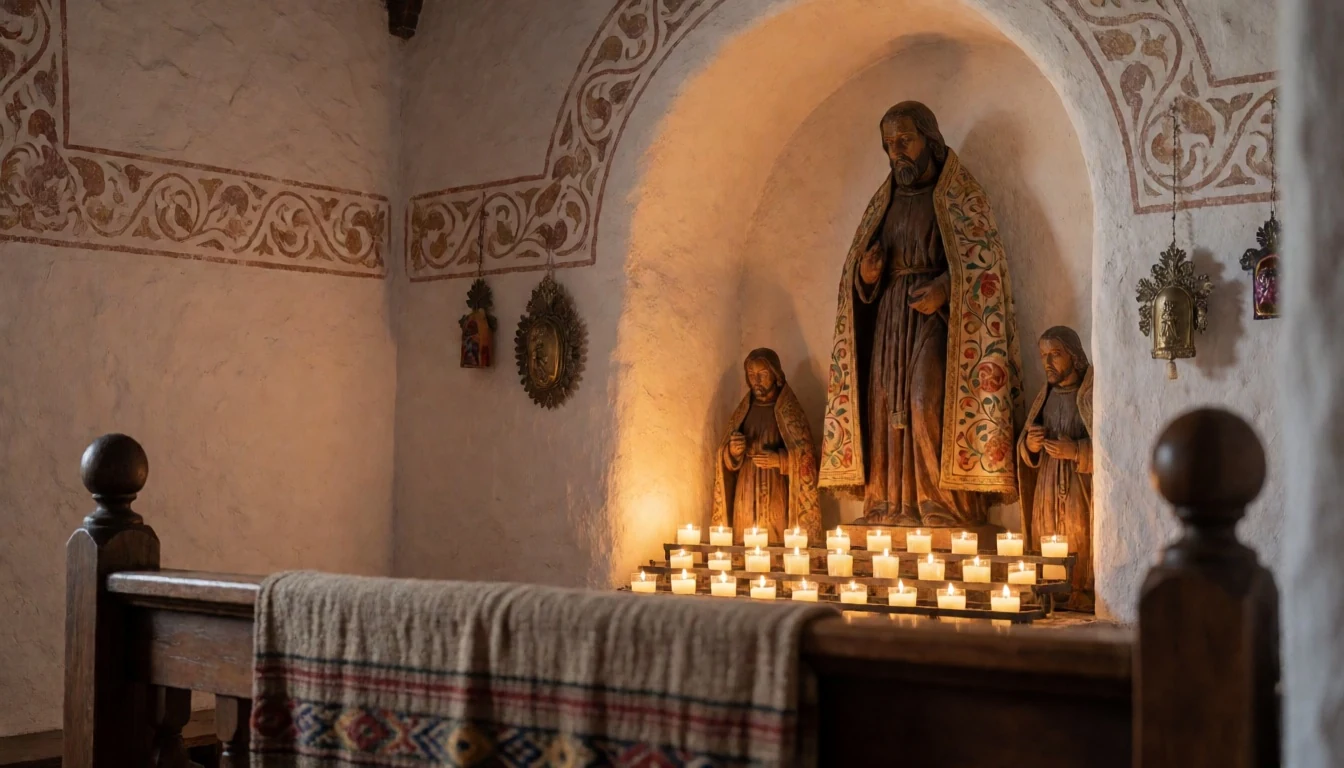
- The North Court and Gardens — Exterior Courtyard
The North Court and surrounding courtyards at Mission San Xavier del Bac offer quiet spaces enclosed by historic adobe walls, where visitors can observe native desert plants, shaded porticoes, and weathered exterior architectural details.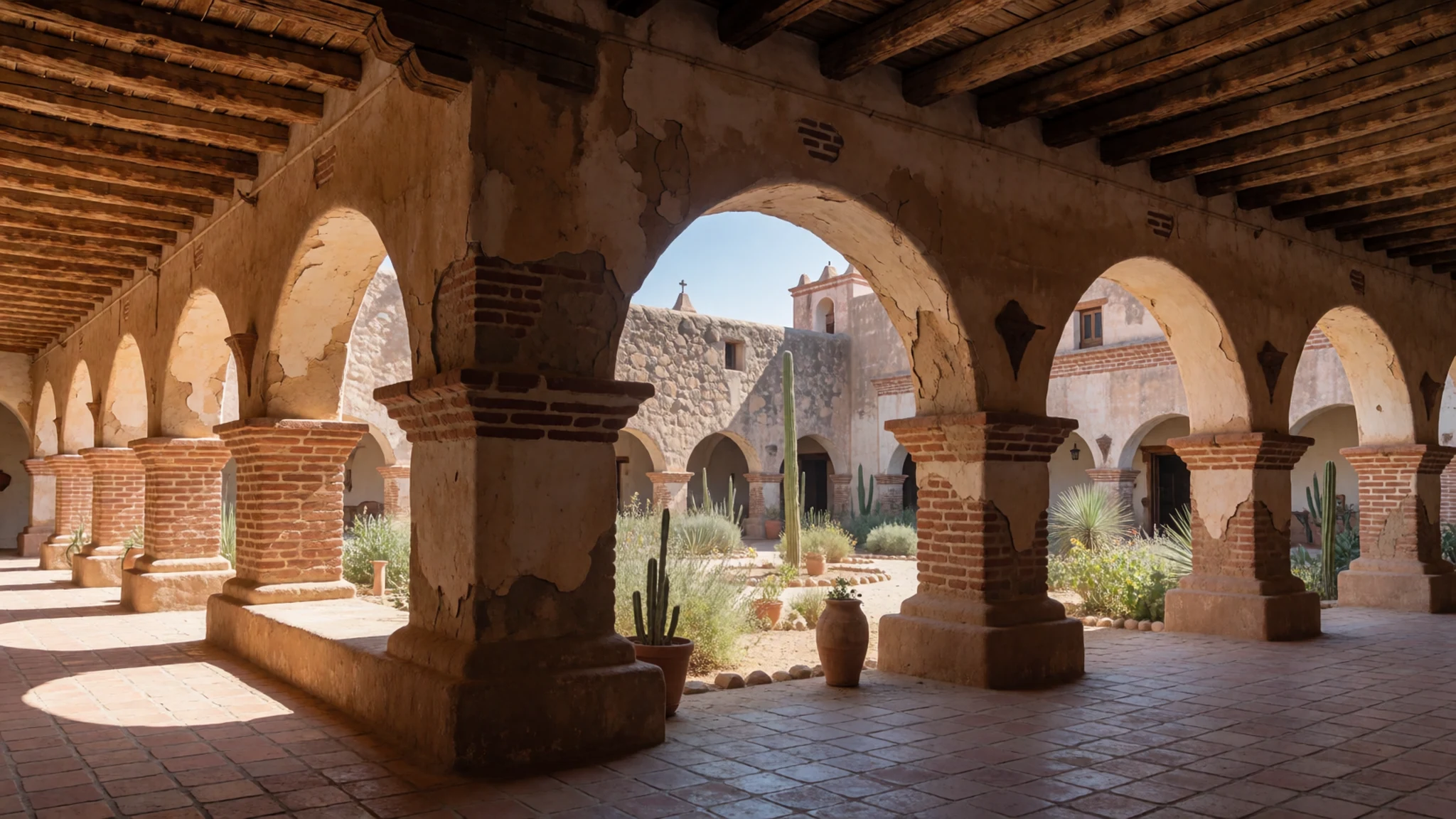
- Mortuary Chapel — Western Grounds
The small mortuary chapel located to the west of the main church at Mission San Xavier del Bac features weathered stucco walls, a domed roof, and a walled cemetery area reflecting historical burial customs.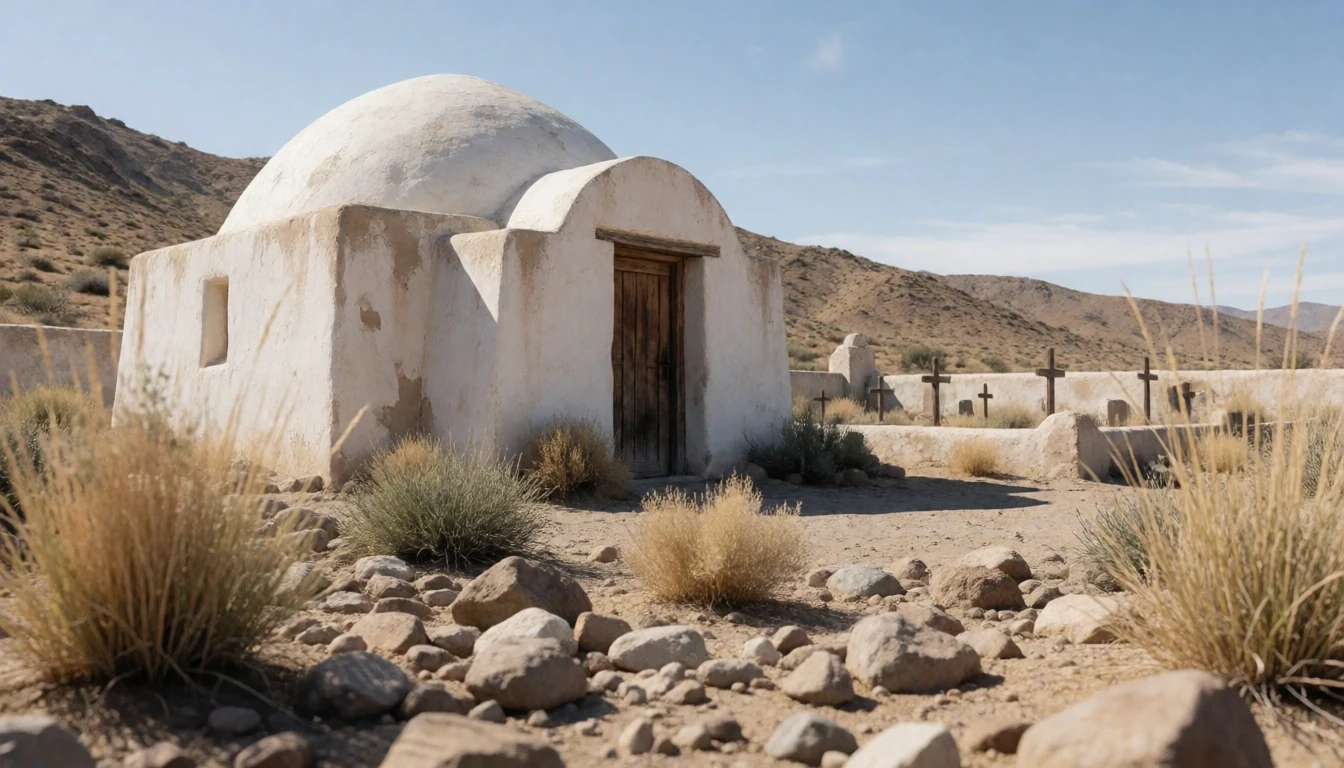
Culture
Mission San Xavier del Bac remains an active spiritual centre for the Tohono O'odham Nation and the wider regional community, hosting regular religious services, feast days, and traditional gatherings. Cultural life here is deeply intertwined with Catholic traditions and indigenous O'odham heritage, visible during annual pilgrimages when devotion fills the courtyards. Visitors encounter a sacred space where prayer, song, and quiet reflection take precedence over standard sightseeing. Social etiquette at the site requires modest attire, respectful silence inside the church, and strict adherence to photography restrictions within the sanctuary to protect sacred art and maintain a reverent atmosphere for worshippers and pilgrims alike. Please remove hats and maintain quiet voices when entering the interior chapel.
What to wear
Traditional clothing in the surrounding region draws heavily from indigenous O'odham and Sonoran Mexican heritage, featuring hand-woven textiles, embroidered cotton blouses, and durable garments suited for desert heat. Locals today generally wear practical, casual clothing such as denim jeans, breathable cotton shirts, and sturdy footwear designed for dusty paths and uneven cobblestones. Visitors exploring Mission San Xavier del Bac should dress modestly out of respect for the active religious site, choosing lightweight, loose-fitting clothes that cover shoulders and knees to stay comfortable under the intense desert sun while observing local customs.
What to eat
- Sonoran Burritos — Local roadside food stands
Sonoran burritos feature large, exceptionally thin flour tortillas wrapped around simple fillings such as shredded beef, beans, or green chile, traditionally purchased from family-run roadside stands across southern Arizona.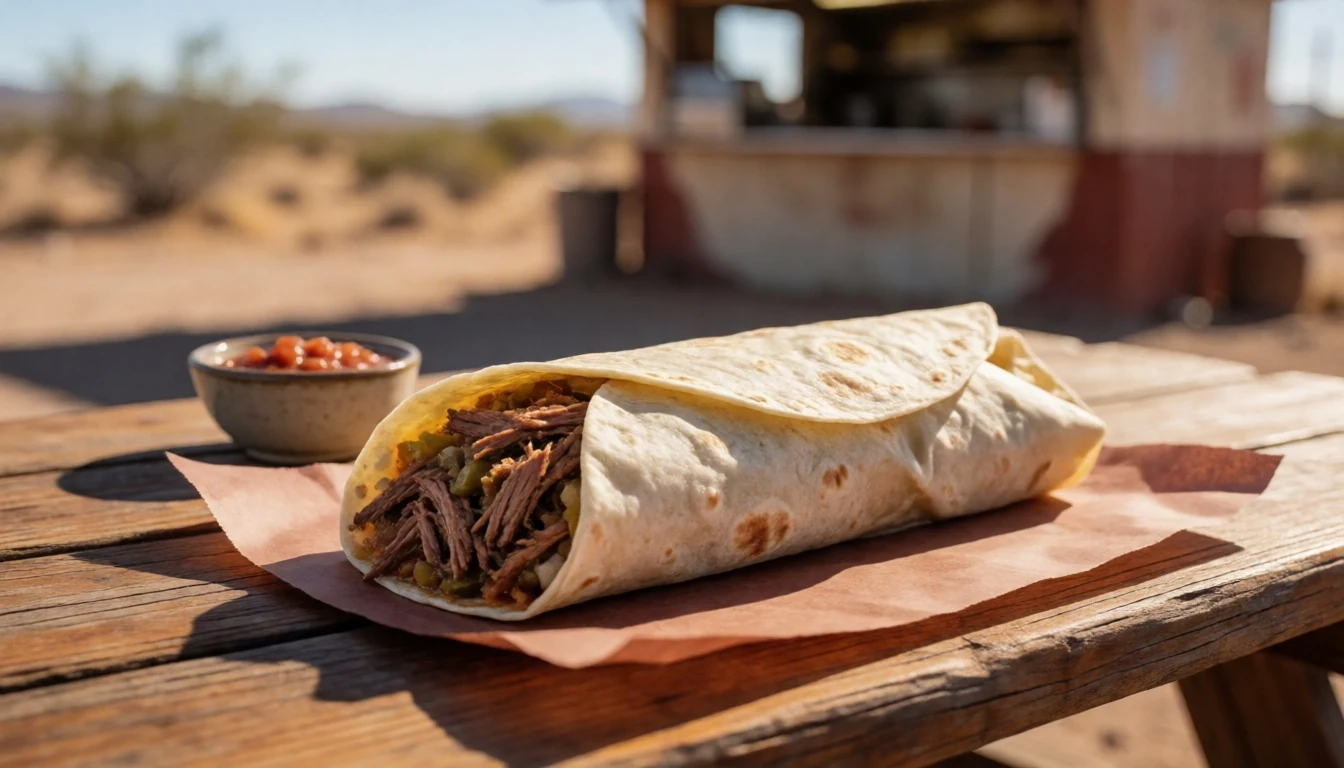
- Chimichangas — Regional Mexican restaurants
Chimichangas are deep-fried burritos originating from the region, offering a crisp, golden exterior encasing spiced meat and cheese, commonly served with salsa, guacamole, and sour cream at casual eateries.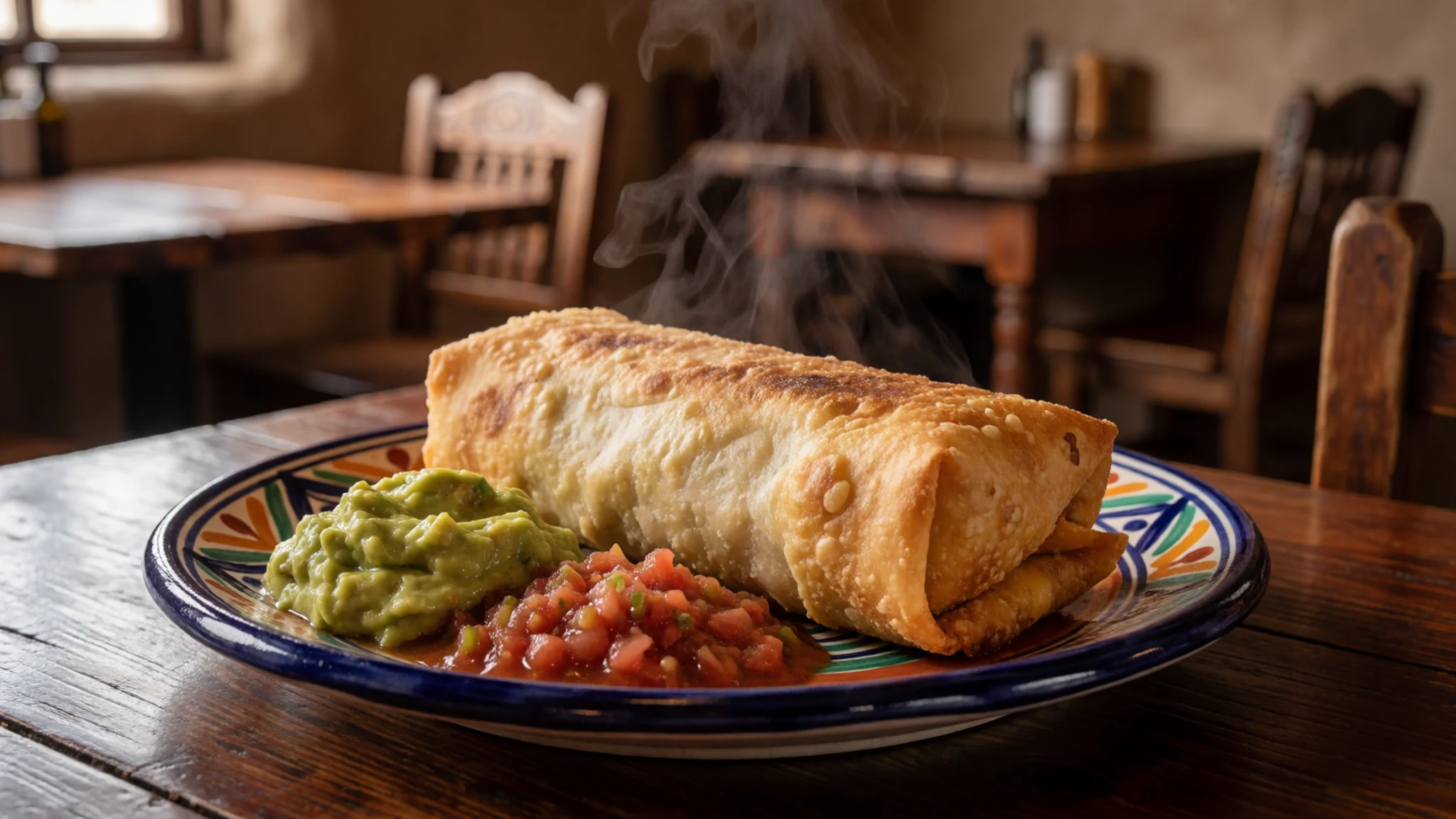
- Prickly Pear Cactus Delicacies — Speciality desert markets
Prickly pear cactus pads and bright magenta fruit juices are incorporated into salads, jams, and refreshing beverages, offering a tart, earthy flavour rooted in centuries of Sonoran Desert culinary traditions. - Sonoran Hot Dogs — Street-side food carts
Sonoran hot dogs consist of bacon-wrapped frankfurters tucked into soft bolillo rolls, layered with pinto beans, onions, tomatoes, mustard, and jalapeño salsa from street cart vendors throughout the valley. - Carne Asada — Traditional local grills
Carne asada features thin strips of beef marinated in citrus and garlic before being grilled over mesquite wood, served alongside warm tortillas, grilled green onions, and fresh lime.
Plan it
Best time. November through March offers pleasant daytime temperatures and comfortable weather for outdoor exploration, whereas summer afternoons experience extreme heat.
How long. 1–2
Getting there. Fly into Tucson International Airport, then rent a car or take a taxi south toward the Tohono O'odham Nation reservation along Interstate 19.
Budget. low
Tips
- Arrive early in the morning to beat the desert heat and heavy crowds
- Carry plenty of drinking water during warmer months
- Check the official website for unexpected closures during religious services
- Bring cash for donations and local artisan crafts sold on site
- Wear comfortable walking shoes suitable for dusty gravel paths
Etiquette
- Maintain absolute silence inside the main chapel during prayer times
- Ask permission before photographing local indigenous residents or pilgrims
- Observe all signs prohibiting photography of interior wall paintings
Nearby
Sources
- Wikidata Q489984 (CC0)
- Wikipedia (CC BY-SA 4.0)
- Wikivoyage (CC BY-SA 4.0)