Mirissa
Mirissa, Sri Lanka
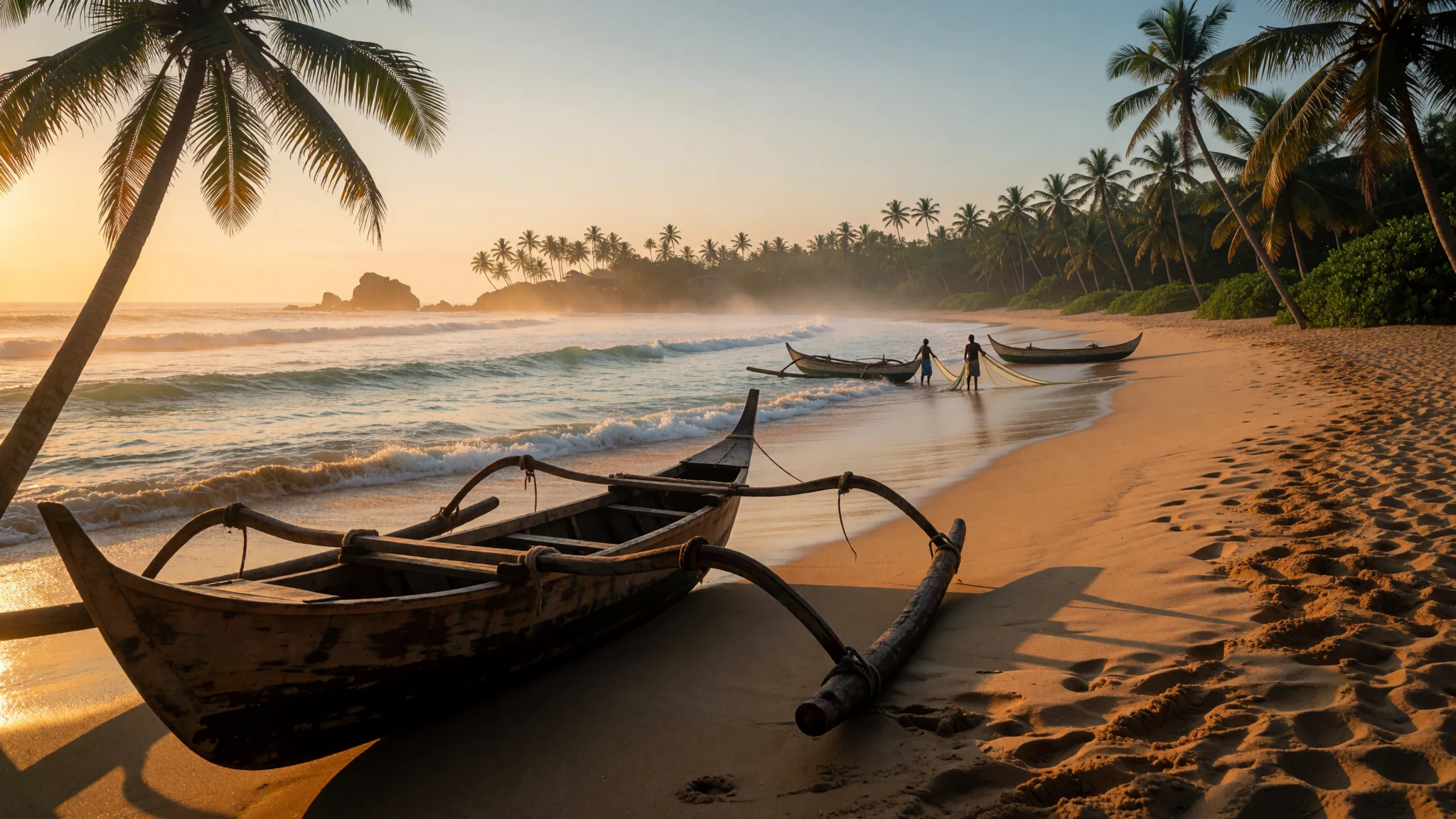
Come to Mirissa for golden sand, excellent surfing waves, and calm coastal waters that serve as a primary launching point for whale watching.
The place
Mirissa is a coastal settlement situated on the southern shores of Sri Lanka within the Matara District of the Southern Province. Positioned close to sea level, this active coastal town has evolved from a traditional fishing port into a favourite destination for travellers seeking sun, sea, and marine wildlife. The town stretches along a crescent-shaped bay characterised by fine golden sand and warm tropical waters that lap gently against the shore. Palm trees fringe much of the coastline, creating quiet shaded spots away from the midday heat. While tourism has brought guesthouses, small cafes, and surf schools along the beachfront, the community retains much of its maritime character. Fishing boats still head out into the Indian Ocean daily, returning with catches that supply local kitchens and roadside eateries. Two distinct surfing zones draw boardriders of varying skill levels, offering dependable breaks without the overwhelming crowds found on larger resort strips elsewhere on the island. Inland from the sand, narrow roads lined with modest houses and greenery wind through the settlement, where daily life follows a relaxed rhythm governed by the tropical climate and the tides of the southern coast.
Its story
Historically, Mirissa operated primarily as a maritime hub and the largest fishing port along the southern coast of the island, supplying regional markets with tuna, snapper, mullet, and butterfish. For generations, the economy depended almost entirely on the ocean harvest and small-scale agriculture, with wooden outrigger canoes and larger vessels anchoring in the sheltered harbour. The landscape of local tourism shifted in 1980 when the first accommodation welcoming travellers was constructed along the shore. Throughout the following decade, visitor numbers grew steadily, and by the mid-1990s, the pace of tourism development accelerated significantly as word spread about the rich marine life inhabiting the coastal waters, particularly the large pods of blue whales and dolphins cruising offshore. Like much of the southern coastal belt, Mirissa suffered severe devastation during the tsunami triggered by the Indian Ocean earthquake in 2004. Numerous residential homes, small guesthouses, local shops, educational buildings, and places of worship were destroyed or heavily damaged, and fourteen community members lost their lives. In the years following the disaster, the town rebuilt its infrastructure patiently, restoring the damaged buildings and reviving its fishing and tourism sectors while keeping its distinct coastal character intact.
What to see
- Mirissa Beach — Main coastal strip
Mirissa Beach forms the scenic heart of the town, offering a broad expanse of golden sand curving along the Indian Ocean. Visitors gather here to swim in the warm shallow water, sunbathe beneath the shade of leaning palms, or watch the dramatic tropical sunsets that paint the evening sky in shades of amber and violet.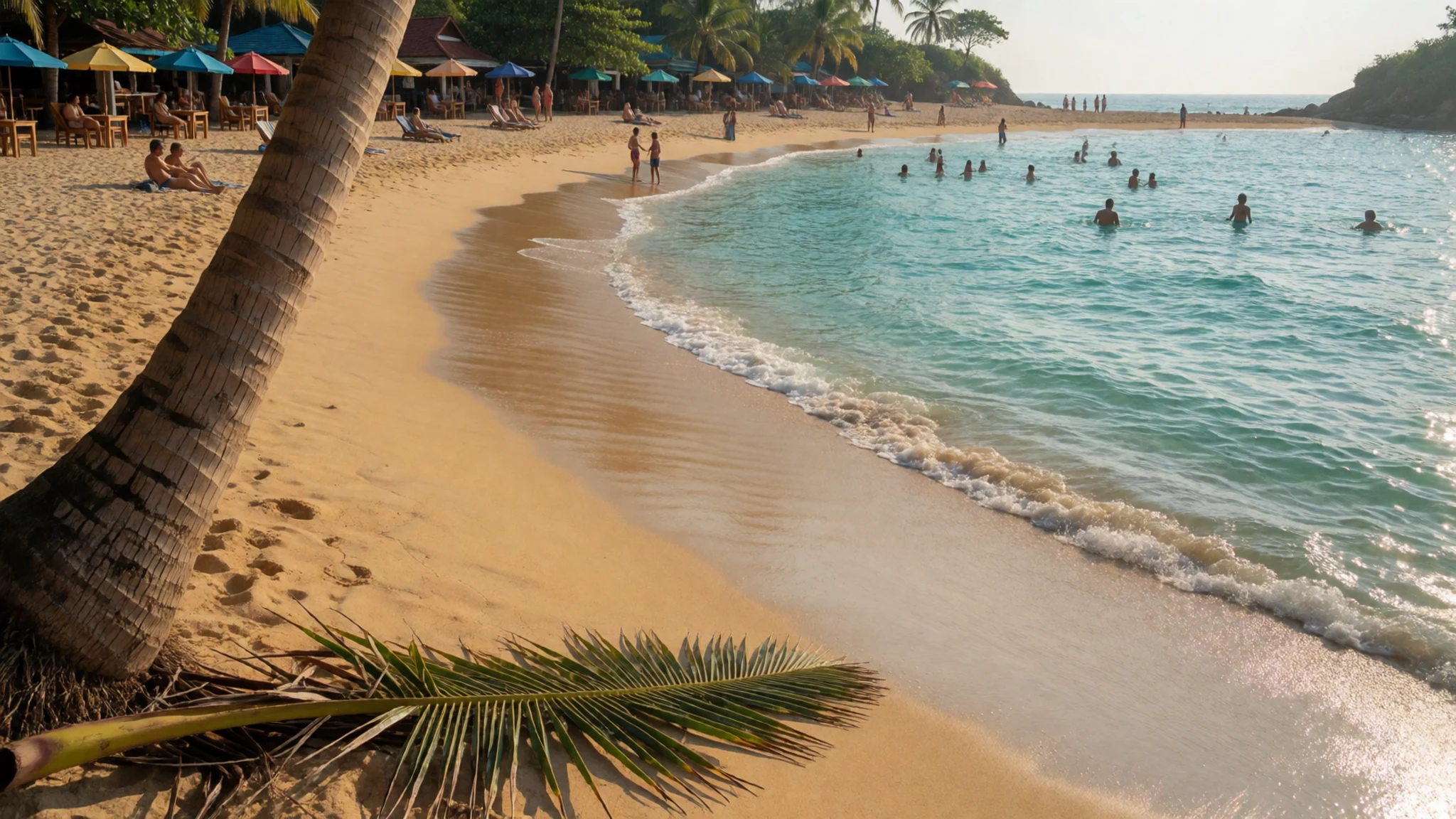
- Coconut Tree Hill — Eastern headland
Coconut Tree Hill is a prominent grassy headland jutting directly into the ocean, densely populated by tall coconut palms that sway in the sea breeze. It has become one of the most photographed vantage points on the southern coast, providing sweeping panoramic views of the waves crashing against the rocky shoreline below.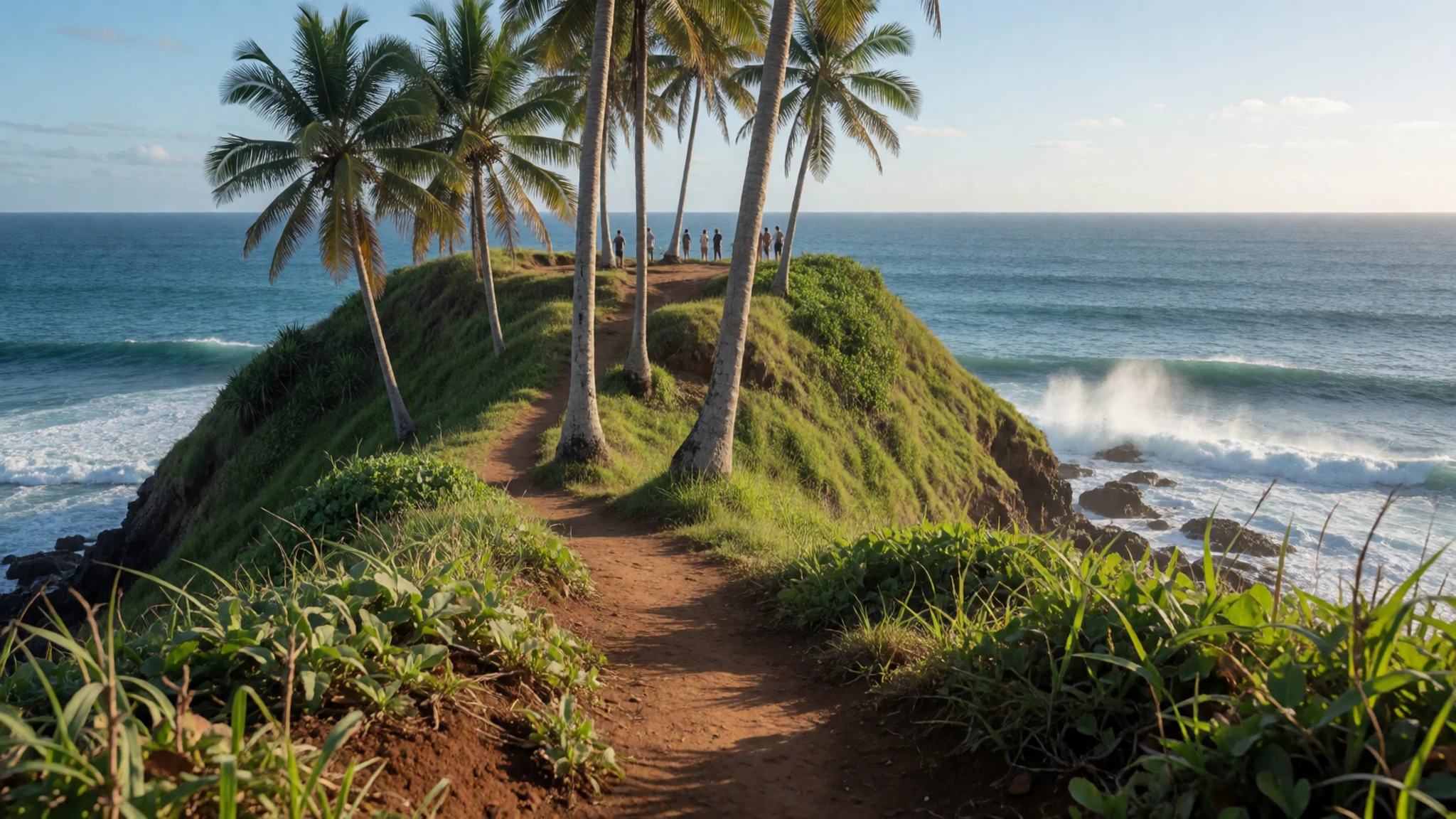
- Turtle Bay — Protected cove area
Turtle Bay provides a sheltered cove with calmer waters that make it an ideal spot for swimming and snorkelling close to the shore. Although parts of the coral reef have suffered significant damage over time, the protected bay still hosts plenty of colourful reef fish and the occasional sea turtle feeding on the seagrass.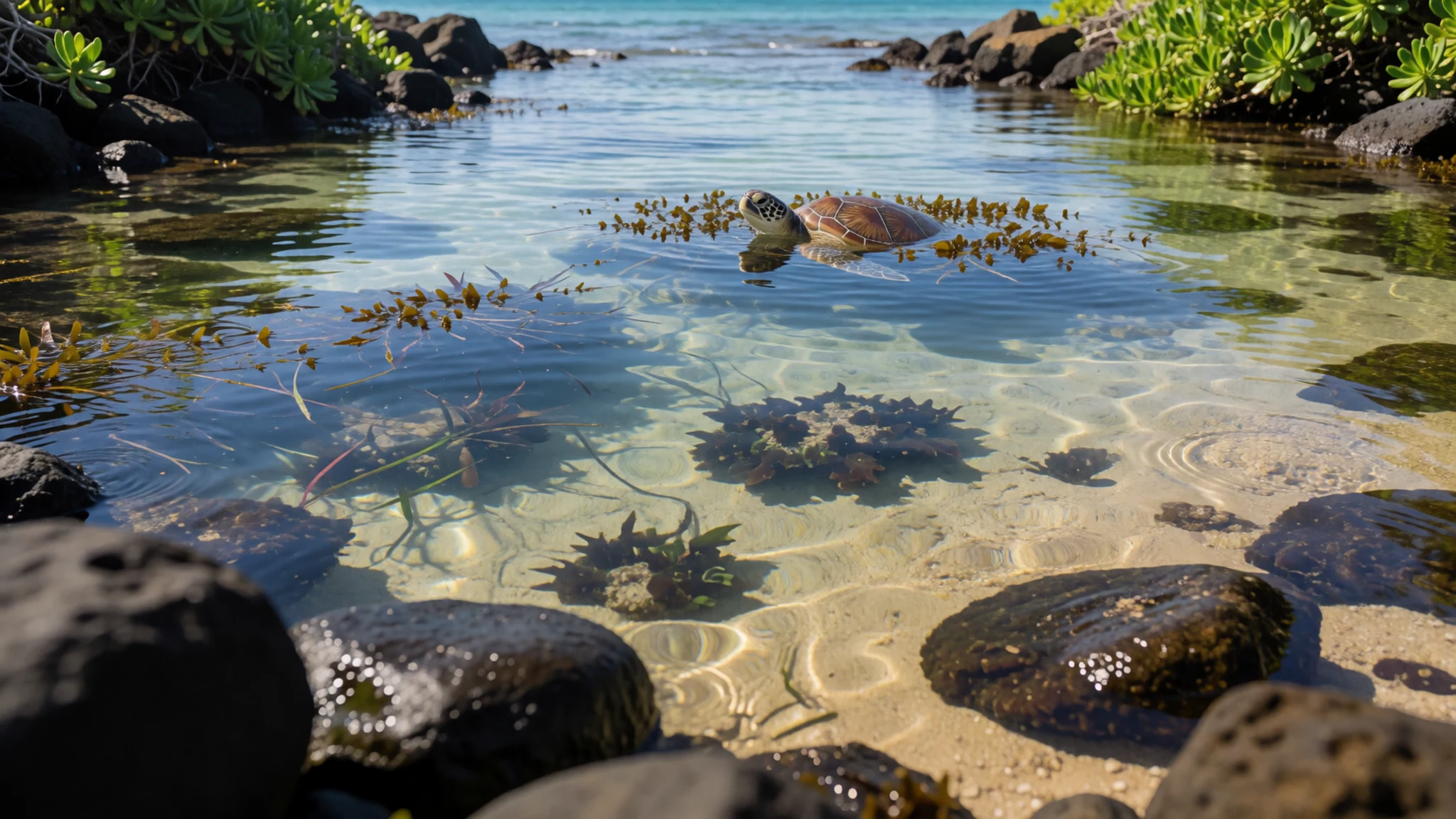
- Fisherman Harbour — Harbour district
Fisherman Harbour remains the bustling operational hub for the town's traditional fishing fleet, where colourful wooden boats dock after hauling in catches of tuna and butterfish. Visiting the harbour early in the morning offers an authentic glimpse into the daily maritime labour that sustained Mirissa long before the arrival of modern tourism.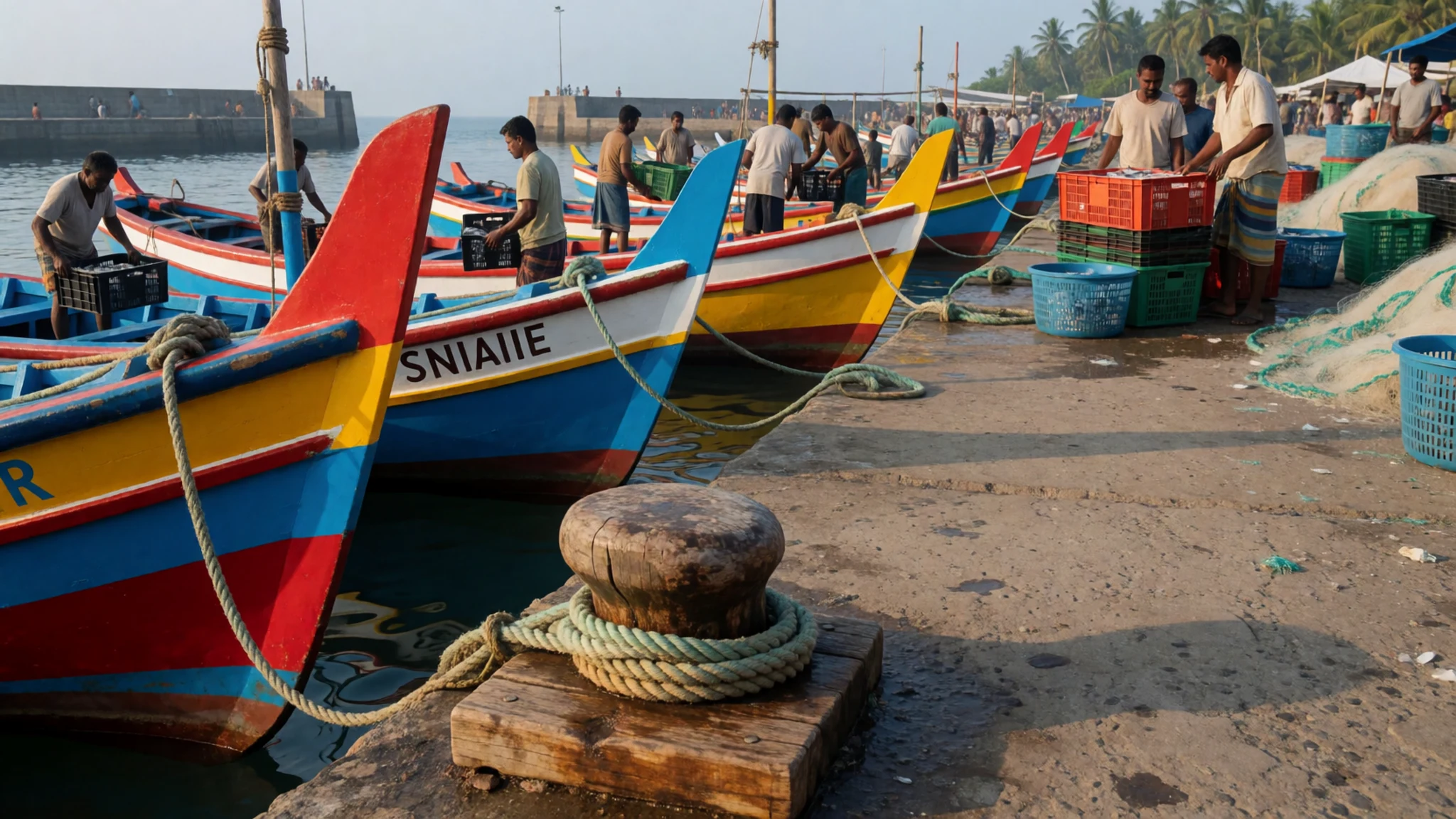
- Parrot Rock — Offshore from main beach
Parrot Rock is a small rocky islet situated just off the main shoreline, accessible via a narrow wooden staircase when the tide permits. Climbing to the top rewards visitors with an elevated perspective over the entire crescent bay, making it a popular vantage point to survey the surf breaks and coastal scenery.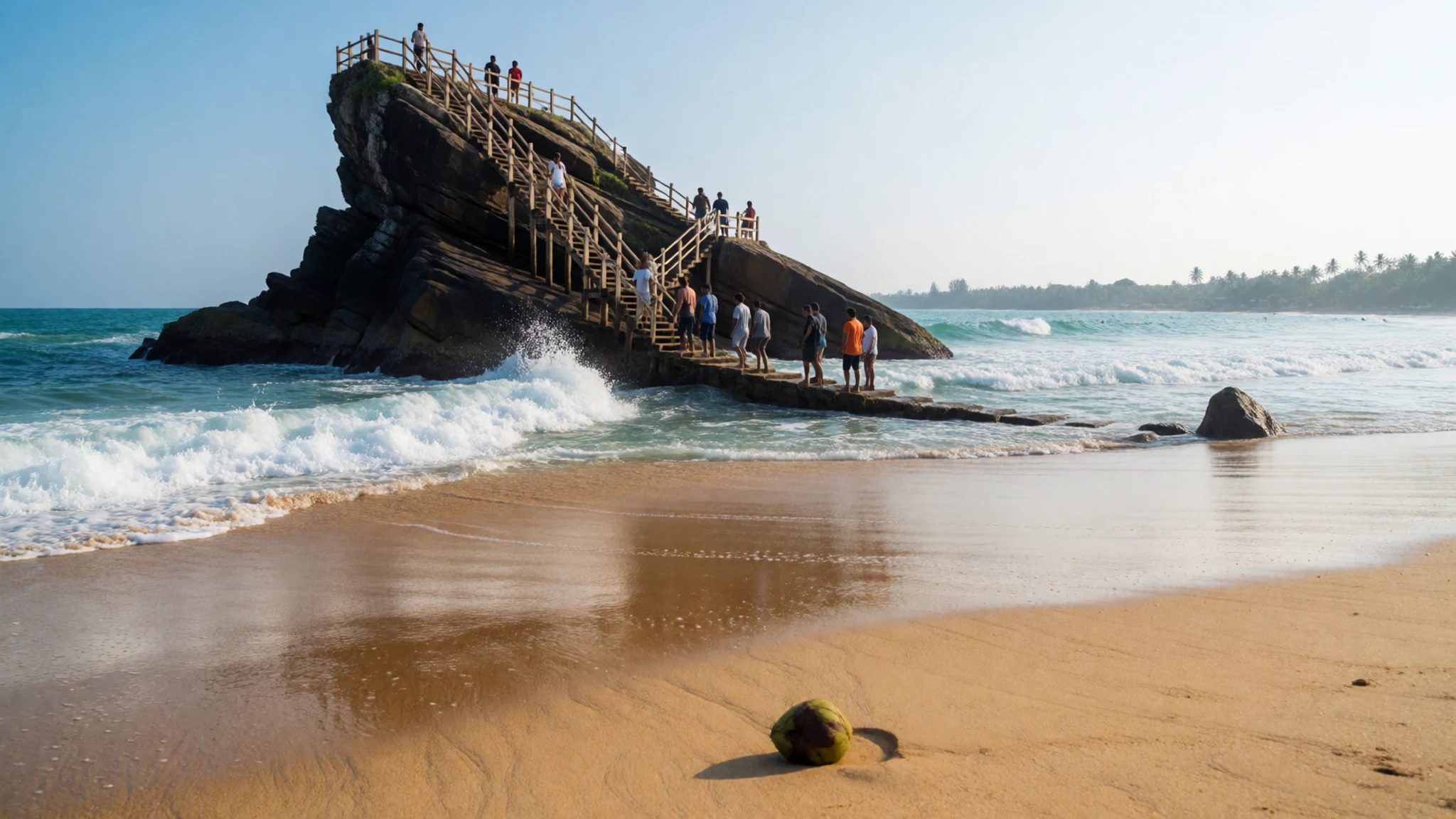
Culture
Mirissa reflects the gentle, hospitable culture of southern Sri Lanka, where daily interactions are accompanied by warm smiles and courteous greetings. Buddhism plays a central role in community life, evidenced by local temples where monks in saffron robes perform daily rituals and village festivals draw families together. Traditional customs blend harmoniously with a laid-back beach lifestyle influenced by surfers and travellers from around the world. Community gatherings often centre around family celebrations, religious observances at the local temple, and the rhythmic flow of the fishing fleet returning to the harbour. Hospitality is offered sincerely, and visitors will find that patience and polite conversation open many doors. When entering Buddhist temples or sacred areas around Mirissa, always remove your shoes and hat, and ensure your shoulders and knees are fully covered as a sign of respect.
What to wear
Traditional dress in Mirissa and the broader Southern Province reflects both practical needs in a tropical climate and cultural modesty. Older generations and villagers often wear the traditional sarong, a length of cotton fabric wrapped around the waist, paired with loose short-sleeved shirts for men, while women traditionally wear simple cotton sarees or comfortable skirts and blouses. Natural, breathable fabrics like lightweight cotton and linen dominate local attire to cope with the high humidity and warm coastal temperatures. For everyday wear around the town now, younger residents and workers favour modern casual clothing such as T-shirts, shorts, and sandals. Visitors should dress comfortably for hot weather, choosing light, breathable clothing made from natural fibres. When walking away from the immediate beach zones into town, markets, or residential streets, both men and women should cover up swimwear with shorts and a shirt or sarong. Revealing attire should be strictly reserved for the sand and surfboards.
What to eat
- Vegetable and Egg Roti — Inland roti shops throughout town
Crispy flatbread folded around fillings of spiced vegetables, cheese, or eggs, cooked on a hot griddle. These are served fresh at modest family-run roadside eateries tucked away from the main beachfront.
- Fresh Seafood Curry — Beachfront restaurants and local dining spots
Tuna, snapper, or butterfish caught by local fishermen and simmered in a fragrant coconut milk broth spiced with curry leaves, fenugreek, and roasted chillies, served alongside steaming rice.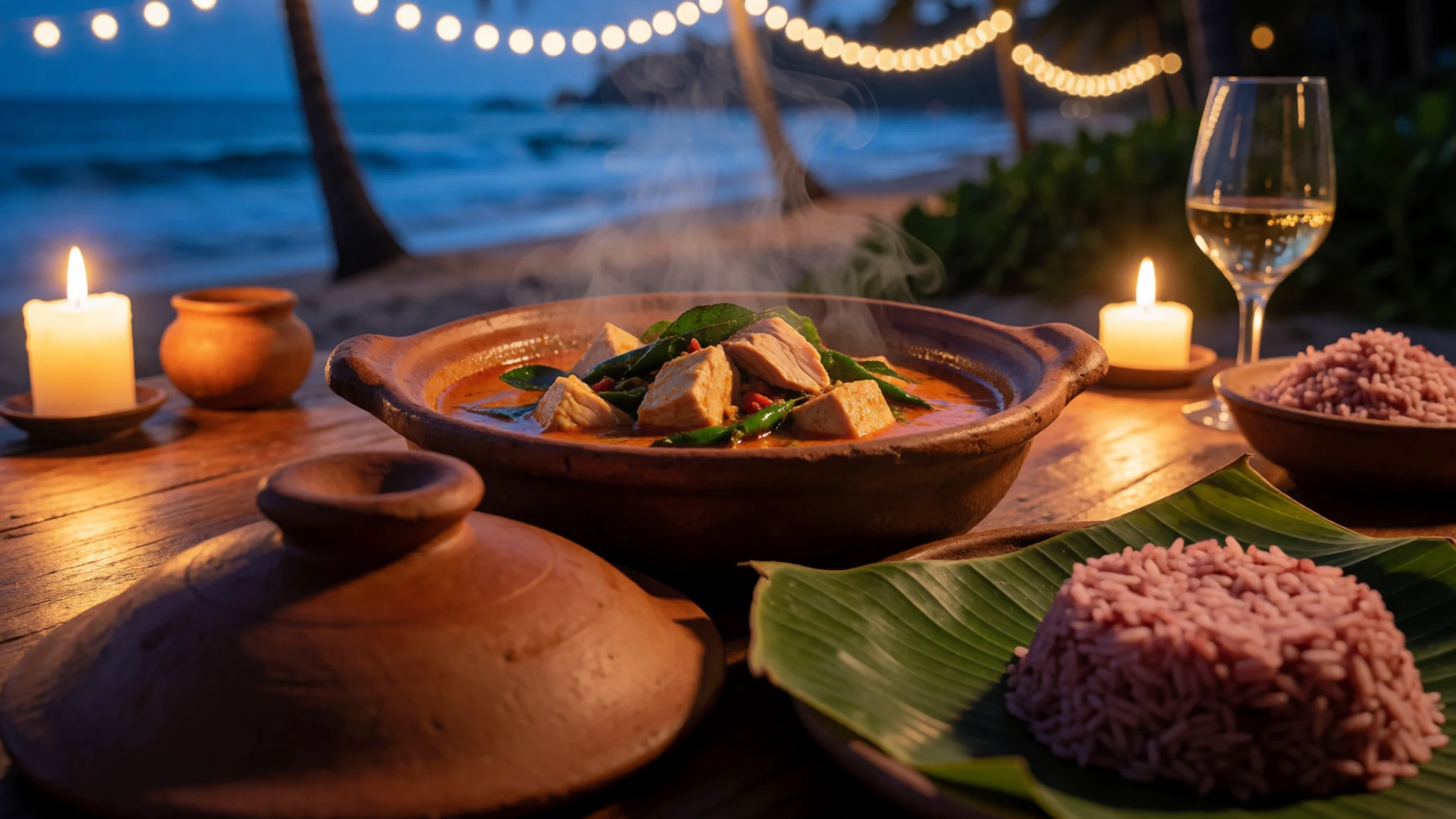
- Lion Beer — Beach bars across the main bay
The iconic Sri Lankan lager, brewed locally and served ice-cold in large bottles during long evening happy hours at relaxed bars lining the sandy shore. - Fresh Tropical Fruit Juices — Beach cafes and organic juice bars
Chilled beverages blended from ripe island fruits including mango, papaya, pineapple, and passion fruit, prepared without artificial additives to combat the tropical heat.
Plan it
Best time. January to March and June to July bring the driest weather along the south coast, with February the driest month, while October and November bring the heaviest rain. Whales often come close to shore in winter, so that is a good time for boat trips.
How long. 2–3
Getting there. Take an air-conditioned highway bus from Colombo Fort to Matara (about two to two and a half hours), then catch a short local bus or tuk-tuk to Mirissa. Alternatively, take the train from Colombo Fort to Weligama and complete the final seven kilometres by tuk-tuk.
Budget. mid
Tips
- Book whale-watching excursions with reputable operators who maintain a respectful distance from marine mammals.
- Carry sea-sickness medication if you plan to join a boat tour, as the ocean swells can be unpredictable.
- Keep cash in local currency handy for smaller roadside shops and family-run eateries that do not accept cards.
- Drink plenty of bottled or filtered water to stay hydrated in the humid coastal climate.
Etiquette
- Remove your shoes and headwear before entering any Buddhist temple or sacred shrine.
- Cover swimwear with a shirt or sarong when walking through local residential streets and town areas.
Nearby
Sources
- Wikidata Q1345652 (CC0)
- Wikipedia (CC BY-SA 4.0)
- Wikivoyage (CC BY-SA 4.0)