Mindanao
Mindanao, Philippines
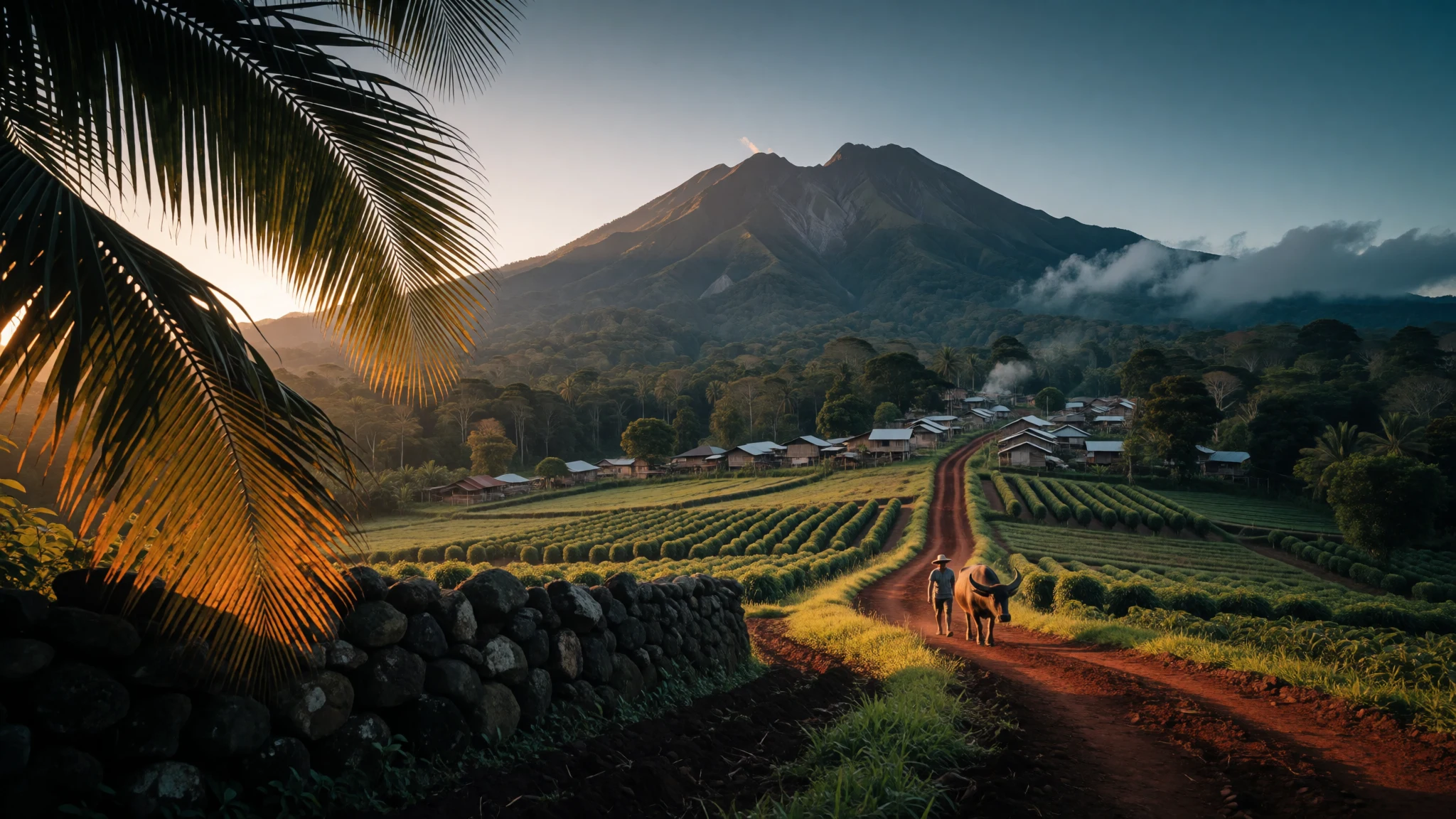
Mindanao rewards slow travellers with waterfalls, volcano slopes, river rapids and some of the Philippines' most layered cultures, far from the usual island-hopping circuit.
The place
Mindanao is the big southern island of the Philippines, lying below the Visayas and Luzon, and with its neighbouring islands it holds about 27 million people. Administratively, the island is split into six distinct areas: Northern Mindanao, the Zamboanga Peninsula, the Davao region, Caraga, Soccsksargen, and the Bangsamoro autonomous region. Each has its own character. Davao City is the main hub of the south-east and the principal international gateway by air. Cagayan de Oro anchors the north coast, Zamboanga City faces the Sulu Sea, General Santos is a fishing port on the far south, and Butuan sits near the river mouth in the north-east.
Roughly two thirds of residents are Christian. Muslims form a substantial minority across the island and the great majority in the Bangsamoro region. Alongside them live many Indigenous peoples, among them the Subanon and the Bagobo, so a single bus journey can pass through several cultures in a day.
The economy runs on the land and the sea. Pineapples and bananas leave the island by ship in bulk, with mangoes, papayas, flowers and fish following. Visitors see it in the plantations beside the highways and in the roadside fruit stalls.
Travel here rewards patience. Distances are long, roads can be slow, and getting around means vans, buses, tricycles and the occasional ferry. The pull is waterfalls, highland viewpoints, rivers and history rather than resort beaches. One honest caution: some areas, including parts of the Sulu islands and the Bangsamoro region, carry government travel advisories, so read current guidance before settling on a route.
Its story
Mindanao's human story starts long before any written record. Stone tools and burial jars from caves on the Zamboanga Peninsula show people living there in the Neolithic, and the Subanon are thought to descend from those early settlers. Austronesian-speaking peoples later spread across the archipelago, bringing the languages and seafaring skills that still shape life on the coast.
Trade came early. Caves in Zamboanga del Norte have yielded Chinese celadon, glazed and unglazed pottery, gold ornaments, beads and bracelets, pointing to exchange between the Subanon and Chinese merchants that lasted for centuries.
From about the 10th century, Hindu and Buddhist ideas reached the coasts by way of Java and the wider Malay world. Butuan, on the north-eastern shore, was a Hinduised kingdom that Chinese records list as sending tribute. Its goldwork survives: a golden kinnara, a figure some read as the goddess Tara, and a Ganesha pendant. Contact also carried the malong, the pudong turban, ikat and batik dyeing, and Indic scripts, which then travelled north into the Visayas and Luzon. Inland communities blended these ideas with older spirit beliefs.
Later chapters redrew the map. Islam arrived by sea and sultanates formed in the south, the Moro sultanates whose reach is mapped in the late nineteenth century. The Spanish landed in the 16th century, and much of the older Hindu-Buddhist heritage was lost or heavily altered. That layering explains why Mindanao feels so mixed today, and why its past is something people live with rather than only visit in museums.
What to see
- Asik-Asik Falls — Alamada, Cotabato Province
Asik-Asik Falls, in Alamada, Cotabato Province, pours out of a cliff face as a curtain of thin streams rather than dropping from a river above. The walk down from the road is on steps, and the climb back up is hot work. Go early, carry water and swim only where local guides say it is safe.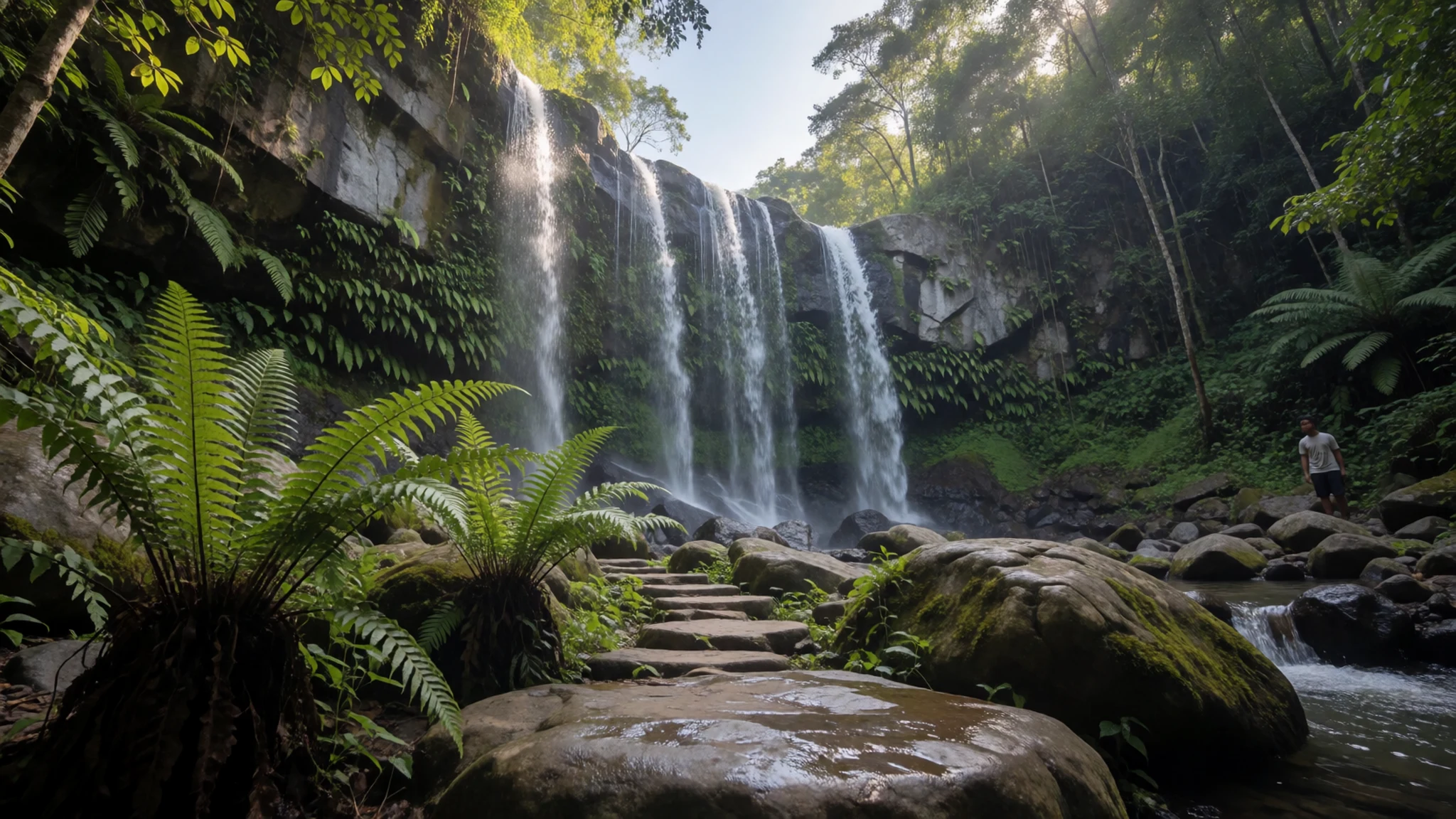
- UK Peak — Aleosan, Cotabato Province
UK Peak, near Aleosan in Cotabato Province, is a hill viewpoint reached on foot, popular for wide views over farmland and, on clear mornings, mist lying in the valleys. Ask in the nearby town for current guides and the best approach. Choose dry weather, start before the heat builds and wear shoes with proper grip.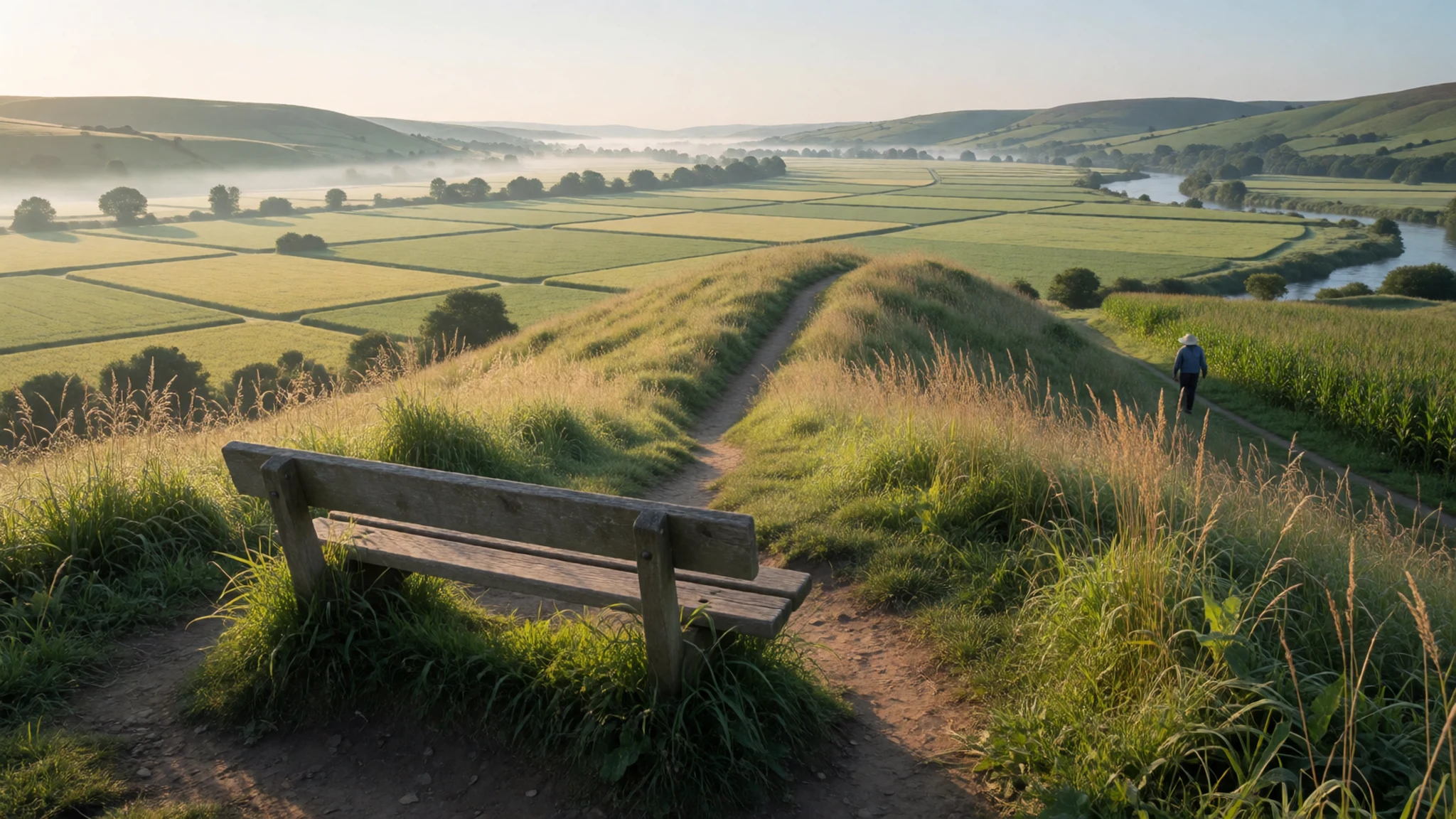
- Mount Apo — Davao region
Mount Apo is a volcano rising south-west of Davao City and the usual goal for serious hikers in the region. Ascents take several days, with permits and licensed guides arranged through local offices, and the weather on the upper slopes turns quickly. Walkers not climbing can still enjoy its foothills through fruit farms and highland villages.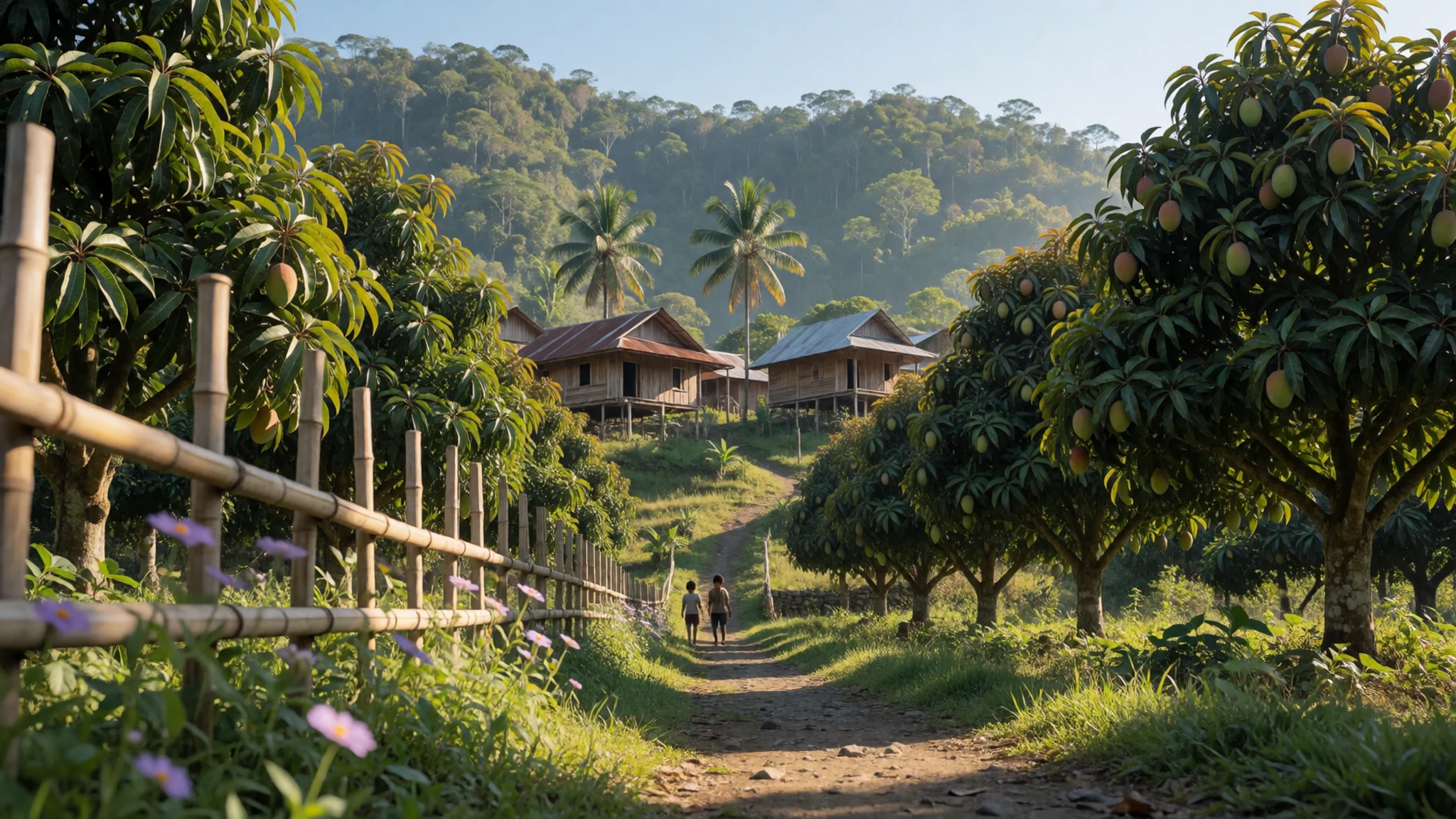
- Cagayan de Oro — Northern Mindanao
Cagayan de Oro, on the north coast, is the base for rivers and rapids across Northern Mindanao. The city itself is a working port with a skyline of malls and towers, so most visitors pass through towards rafting outfitters and highland trips. Allow half a day for the riverside and the markets before moving on.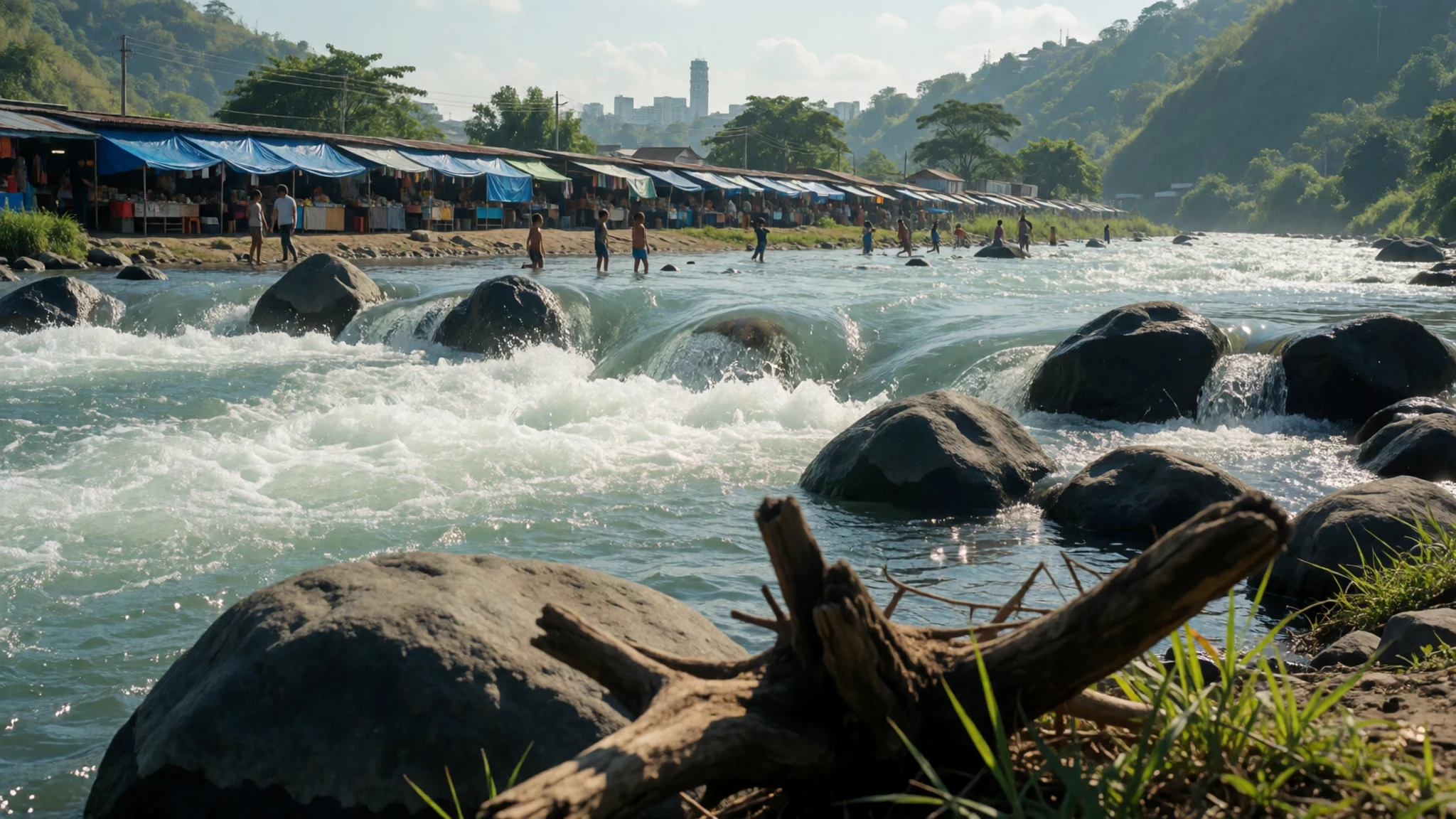
- Butuan and the Agusan gold — Caraga region
Butuan, in the Caraga region, was the seat of an early trading kingdom. Gold images from the Agusan area, including a small Hindu-Buddhist figure now held in Chicago, show how wealthy and connected it was. Come for history rather than beaches, and ask at the local museum which excavation sites can be visited.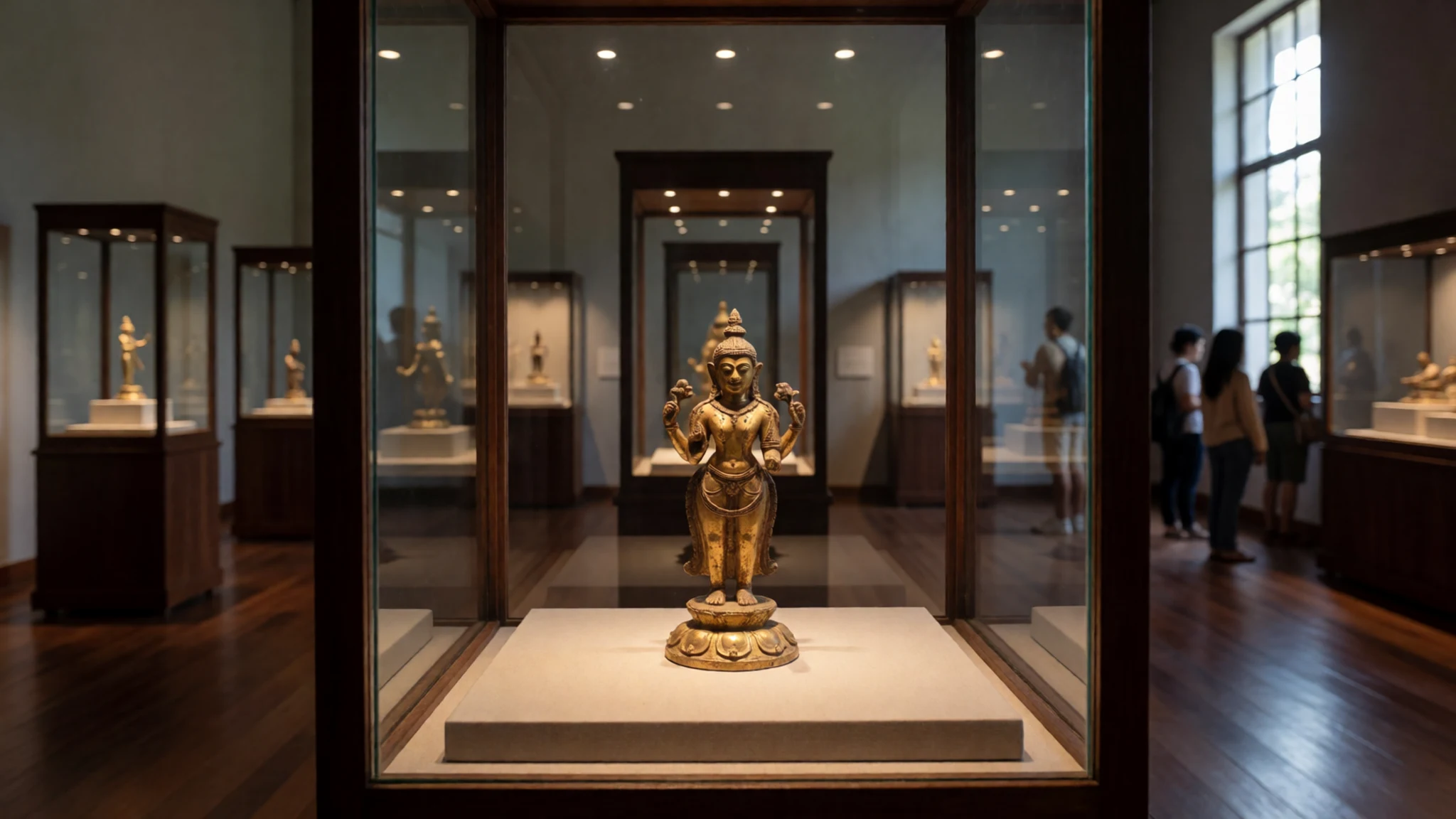
Culture
Mindanao is not one culture but many, and that is the point of coming. Christian communities dominate much of the island, while the Bangsamoro region is overwhelmingly Muslim, and between them live Indigenous groups such as the Subanon, Bagobo and T'boli, each with their own music, weaving and ritual. Mosques, churches and older spirit traditions sit within a few hours of one another.
The Indigenous and Muslim crafts here carry a long memory of trade and contact. Brass gongs and kulintang ensembles, woven mats, carved okir patterns and intricately dyed cloth all point to links with the wider Malay world and with China. Festivals tied to harvests and to town patron saints bring music, street dancing and long shared meals, and visitors are often invited to join in.
It also helps to know that Mindanao is a place where identity and history are sensitive subjects. Religious and ethnic relations have been strained in the past, and the people most affected are usually glad to talk about food, weaving, family and place long before politics. Listen first, ask before photographing, and let local hosts set the tone.
On arrival in a Muslim community or at a mosque, dress modestly, remove your shoes at the door, and ask permission before taking photographs of people or prayer.
What to wear
Mindanao's traditional dress is told in cloth. The malong, a tubular sarong, is the island's signature garment, worn by women and men across Muslim and Indigenous communities and used as a skirt, shawl, bed cover or sling for a baby. Makers work in cotton, silk and abaca, with ikat and batik dyeing and bold geometric bands. The T'boli of the Lake Sebu area weave t'nalak from abaca fibre, dyed in earthy browns, reds and blacks, while Yakan weavers produce dense, brightly patterned cloth. Men's pudong turbans and beaded, embroidered jackets, like those worn by Bagobo warriors in old photographs, appear at weddings, festivals and ceremonies.
Day to day, people wear what the heat demands: T-shirts, light shirts, jeans or shorts, flip-flops and rubber sandals. In Muslim areas many women wear a hijab and loose long clothing, and men often wear a cap or skullcap on Fridays. Towns like Davao and Cagayan de Oro look much like any modern Philippine city.
Visitors should pack light, breathable cotton or linen, a hat and sun protection, and a thin rain jacket. Shoes with grip matter for waterfall steps and hill paths. For mosques and in conservative towns, bring long trousers or a long skirt and a scarf or shawl for covering shoulders or hair.
What to eat
- Durian — Fruit stalls and markets around Davao City
Durian is the fruit Davao is known for. The flesh is creamy and sweet, with a smell that divides rooms. Try it fresh in season, or as ice cream, candy or pastry, and note that many hotels and buses will not let it inside.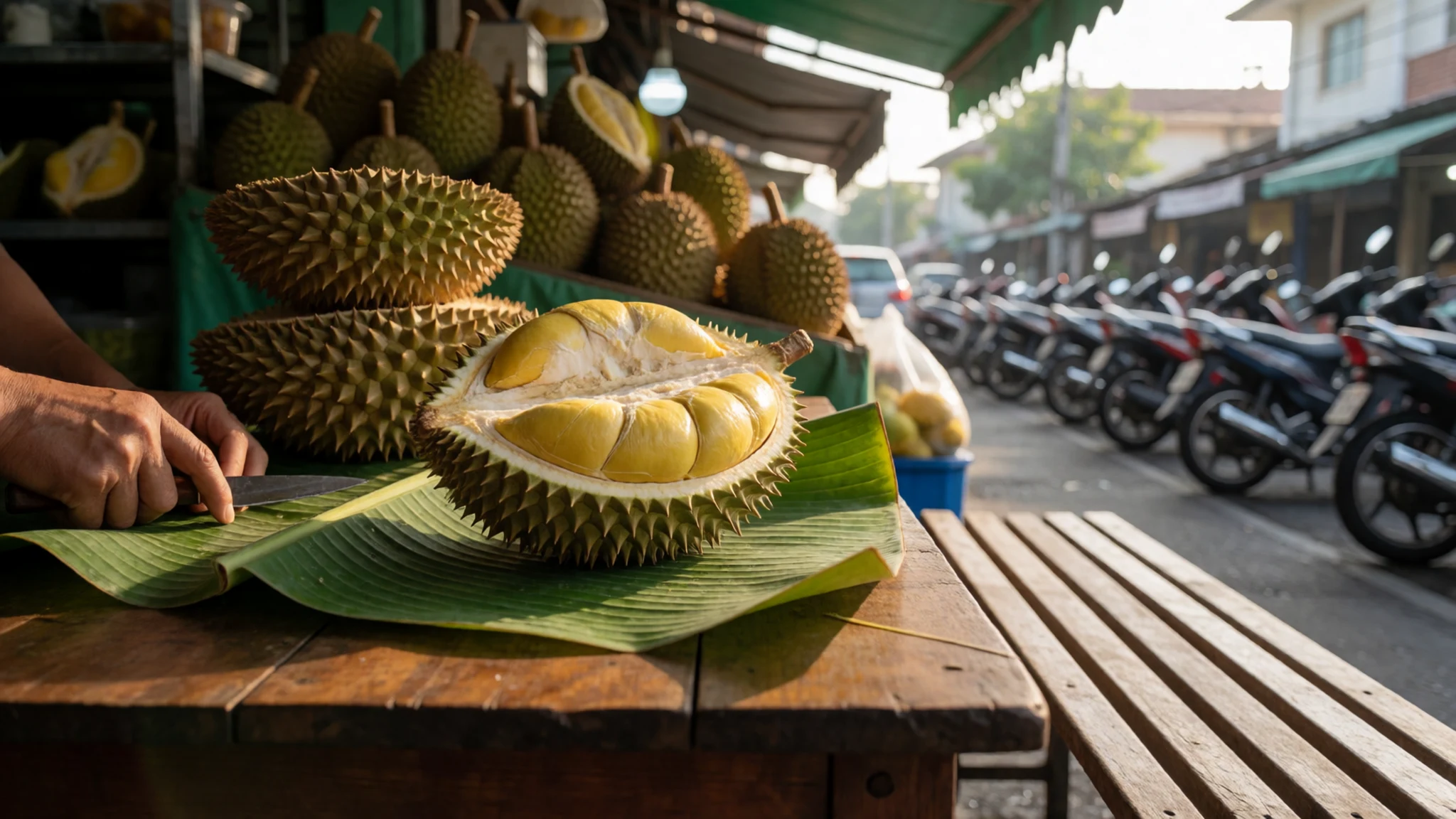
- Satti — Breakfast stalls and eateries around Zamboanga City
Satti is a Zamboanga breakfast of small grilled skewers of marinated meat, served with a spicy-sweet sauce and rice cooked in banana leaf or coconut leaf pouches. Usually eaten early, it makes a light, savoury start before the day gets hot.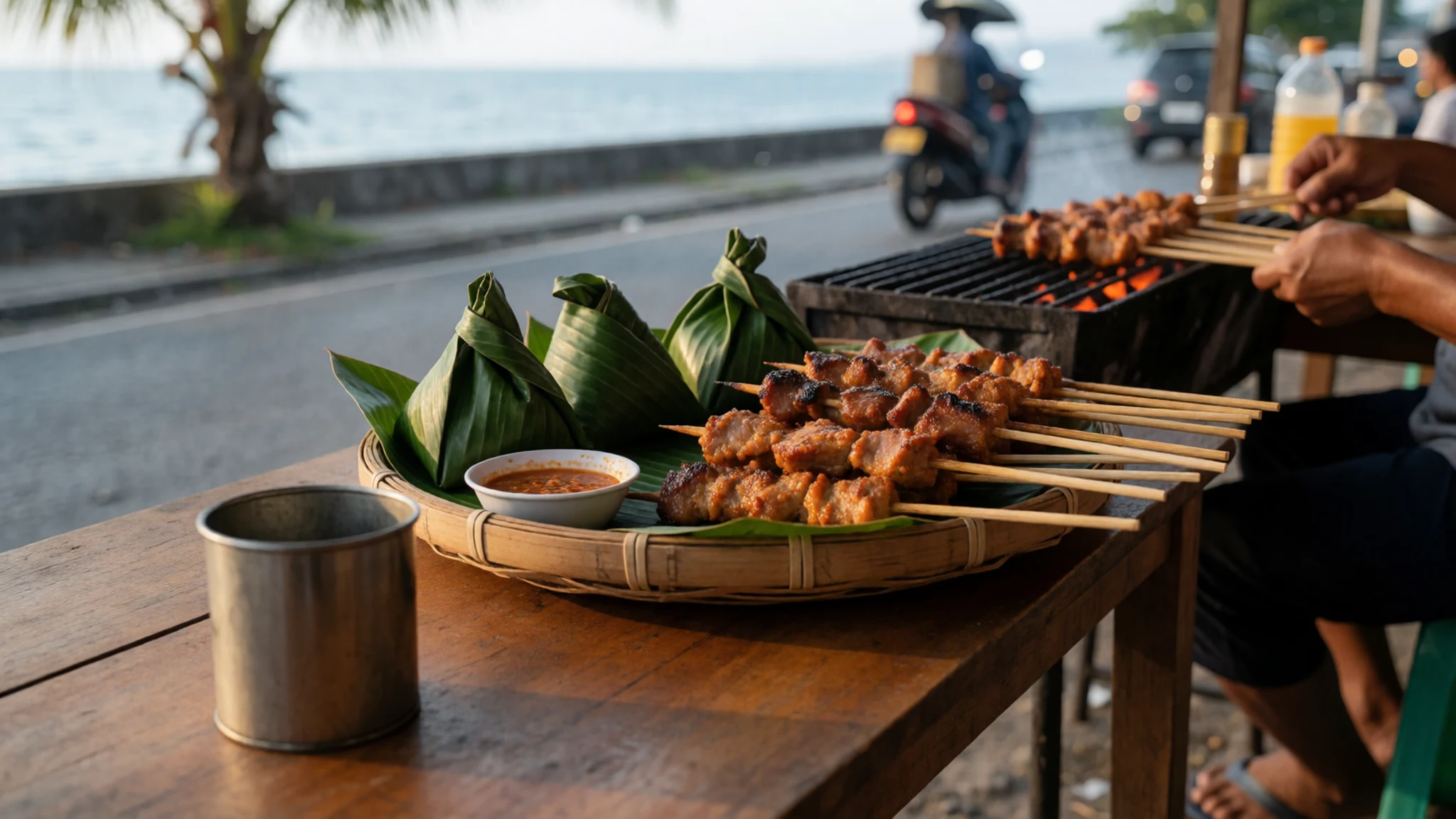
- Tuna kinilaw and grilled tuna — Fish port and seafood eateries in General Santos
General Santos is a tuna town, and the fish comes in very fresh. Kinilaw is raw tuna cured in vinegar and calamansi with ginger and chilli, while the grilled collar and belly are served with rice. Eat close to the harbour for the best catch. - Pastil — Market stalls and roadside vendors in Cotabato City
Pastil is a Maguindanao snack of rice topped with seasoned shredded chicken or beef, wrapped tightly in banana leaf. It is cheap, filling and portable, which makes it ideal for long road journeys, and it is often sold in bundles by street sellers. - Curacha — Seafood restaurants in Zamboanga City
Curacha is a spanner crab found around Zamboanga, usually cooked in a rich coconut-and-spice sauce or steamed with butter. It is messy, sweet and worth the effort. Ask the restaurant how it is cooked and whether it is in season.
Plan it
Best time. January to April is usually the more comfortable stretch, with less rain on the roads and trails, though it grows hotter towards April. Rain can fall in any month, so pack a jacket, and hike or raft with local advice on river and trail conditions.
How long. 4–6
Getting there. Francisco Bangoy International Airport in Davao City is the main international entry, with flights from Singapore, Doha, Quanzhou and Manado. Laguindingan Airport near Cagayan de Oro takes domestic flights only. Other airports serve Zamboanga, Dipolog, Pagadian, Ozamiz, Cotabato and General Santos, mostly from Manila and Cebu. From each, the last leg is a van, bus or taxi.
Budget. low
Tips
- Allow generous travel time: distances are long and road conditions vary
- Start waterfall and hill visits early, before the heat and afternoon rain
- Carry cash for small towns, markets and tricycles, as cards are not widely accepted outside cities
- Check current government travel advisories before choosing routes, especially for Sulu and Bangsamoro areas
- Hire licensed local guides for Mount Apo and for river activities, and confirm permits with local offices
Etiquette
- Dress modestly and remove shoes at mosques and in private homes
- Ask before photographing people, prayer or ceremonies
- Avoid raising sensitive political or religious topics unless a local host brings them up
Nearby
Sources
- Wikidata Q124873 (CC0)
- Wikipedia: Mindanao (rev 1382027221) (CC BY-SA 4.0)
- Wikivoyage: Mindanao (rev 5384751) (CC BY-SA 4.0)
- Photo 01: Agusan gold figure, Sailko (CC BY 3.0)
- Photo 02: Krieger 1926, Philippine ethnic weapons plate 20 (Public domain)
- Photo 03: Moro Sultanates map, User:Hellerick (CC BY-SA 4.0)
- Photo 04: Cagayan de Oro skyline, Chicco111 (CC BY-SA 4.0)
- Photo 05: Zamboanga Peninsula location map, Roel Balingit (CC BY 3.0)
- Photo 06: Northern Mindanao location map, Roel Balingit (CC BY 3.0)
- Photo 07: Davao region location map, Roel Balingit (CC BY 3.0)
- Photo 08: SOCCSKSARGEN location map, Roel Balingit (CC BY 3.0)


