Middle Rhine
Middle Rhine, Germany
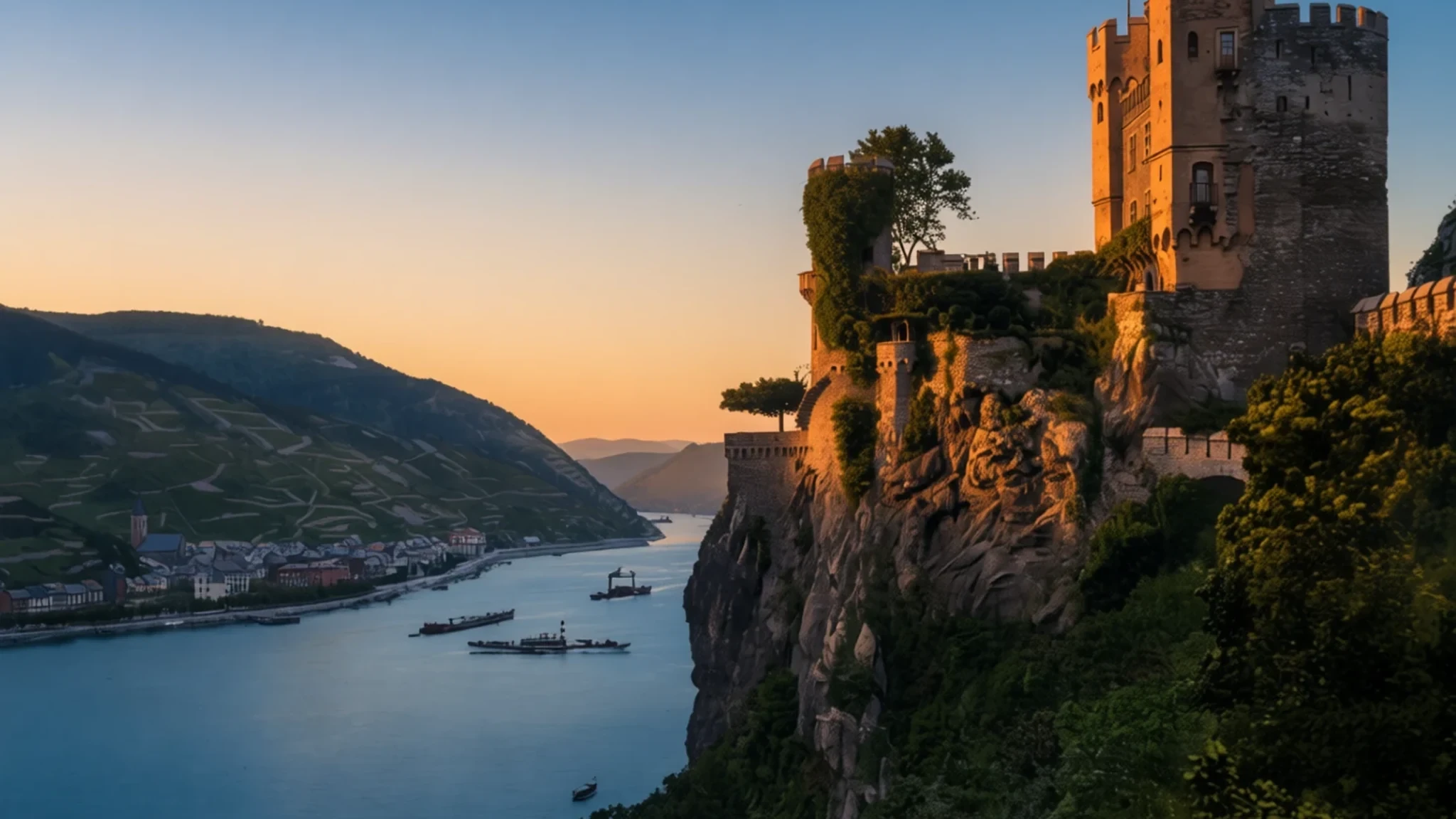
A slow stretch of the Rhine where castles crown every crag, vineyards climb the slopes, and a river cruise is as good as a walk.
The place
The Middle Rhine is the stretch of the Rhine between Bingen and Bonn in western Germany, where the river runs through a deep gorge it has carved over a very long time. Erosion kept pace with the uplift of the land around it, so the river stayed close to its old level while the ground on either side rose. The result is a narrow valley of slate slopes, with walls of rock about 130 metres from the top down to the water. The river bends hard here, and nearly every bend seems to have a castle on its ridge.
The upper part of the gorge, from Bingen to Koblenz, is a UNESCO World Heritage Site. More than 40 medieval castles and fortresses stand on crags and hills, and the steep slopes behind them are planted in terraced vineyards that look as though they were stacked by hand. Wine villages cling to the banks, many with half-timbered houses and lanes that fill with coaches in summer.
Further north, below Koblenz, the valley opens towards Bonn and the old volcanic hills of the Siebengebirge, where the Drachenfels rises above the river.
The valley has drawn visitors since the 19th century, when travellers arrived by steamer and wrote it up as a scenic ideal. The reputation has held up, but it comes with a cost. Cruise boats crowd the riverbanks, and in midsummer the best-known viewpoints fill by late morning. Arriving early, or visiting in the shoulder months, makes the valley feel far less like a postcard.
Its story
People have lived on the terraces of the Middle Rhine since the early Iron Age. Burial mounds in the forests above Boppard and the ring walls on the hills around Koblenz and St. Goarshausen are among the traces they left. On the western edge of the region, remains of a Celtic settlement have been found, and by the fourth century BCE the area was linked to Mediterranean influence. The north-south route between the mouth of the Nahe and the Moselle was already in use before the Romans arrived, and a modern motorway still follows parts of it.
The Romans held the area from the mid-first century BC for several centuries. Their main road ran along the left bank, inside the empire, because the Rhine itself formed the frontier. Forts were built at Bingen and Koblenz, and a posting station at Oberwesel. Traces of substantial road building near Stahleck Castle at Bacharach show how much effort went into keeping the route open.
In the centuries that followed, the gorge became a corridor for trade, and a place where tolls could be collected from boats and goods. Castles multiplied on the crags, and the river was at once a border and a bridge between cultures. Many of those castles were later damaged in conflicts, and some were rebuilt much later, when the valley began to draw visitors in the 19th century.
The landscape gives the story its shape. The gorge was cut by erosion that kept pace with uplift, so the river never sank far below its old course while the land around it rose. Legend adds another layer: the rock of the Loreley above St. Goarshausen is said to have lured boatmen with song, a tale that poets and painters later fixed in the popular imagination.
What to see
- Loreley — St. Goarshausen, Upper Middle Rhine
The Loreley is a rocky outcrop on a bend of the river near St. Goarshausen, and from its top the valley opens out in both directions. Cruise boats pass slowly beneath it, so the rock is as much a sight from the water as from the path. Come in the morning or late in the afternoon for quieter paths and softer light on the river. The climb is short, but the ground can be slippery after rain.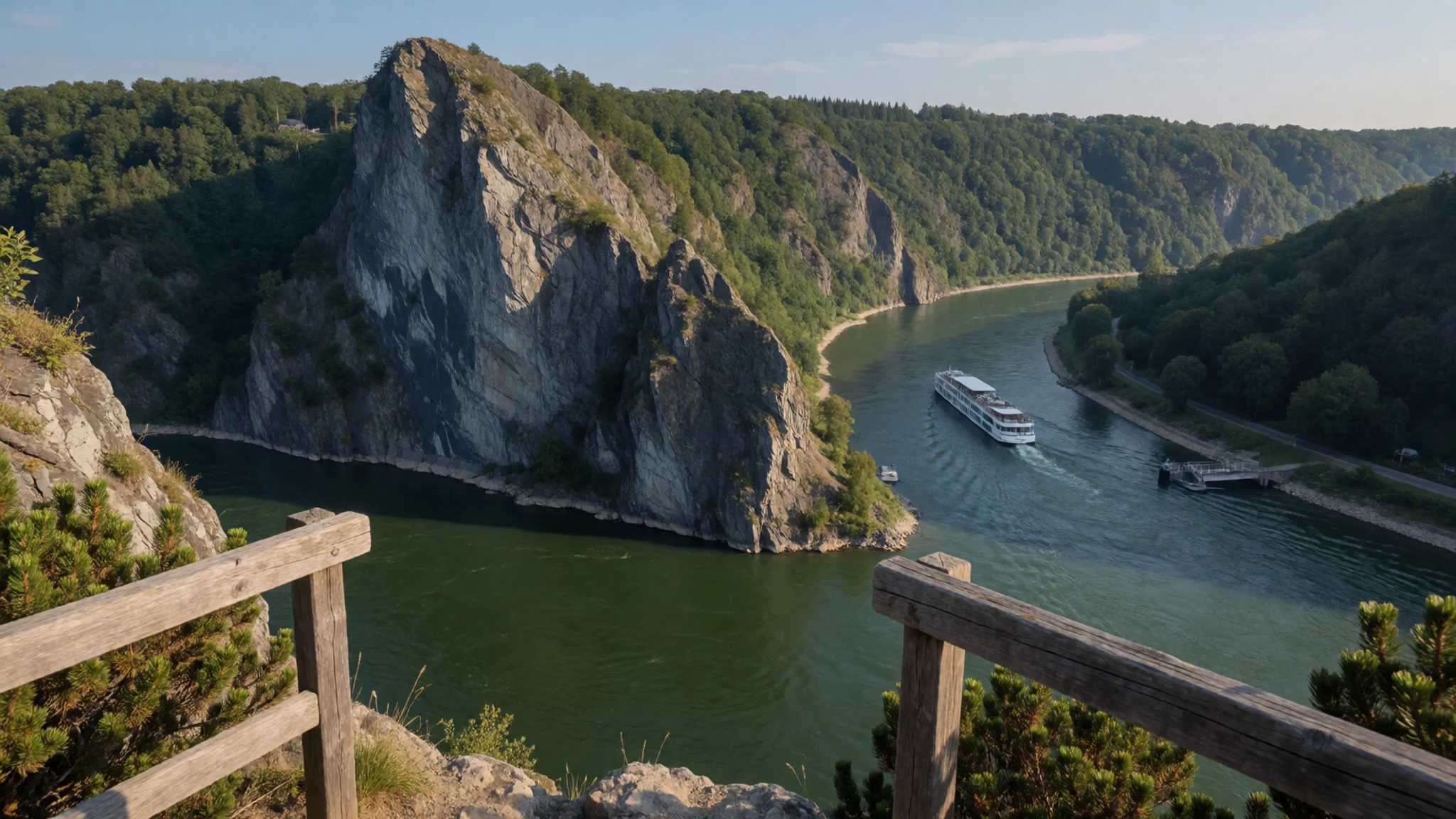
- Burg Katz — Above St. Goarshausen, near the Loreley
Burg Katz is a castle above St. Goarshausen, set close to the Loreley so the two are often photographed together. The classic view is from Patersberg, where the castle, the river and the wooded slopes sit in one frame. Check the official site before you go, as opening arrangements for castle interiors can change. The walk up is steep, so good shoes make a difference.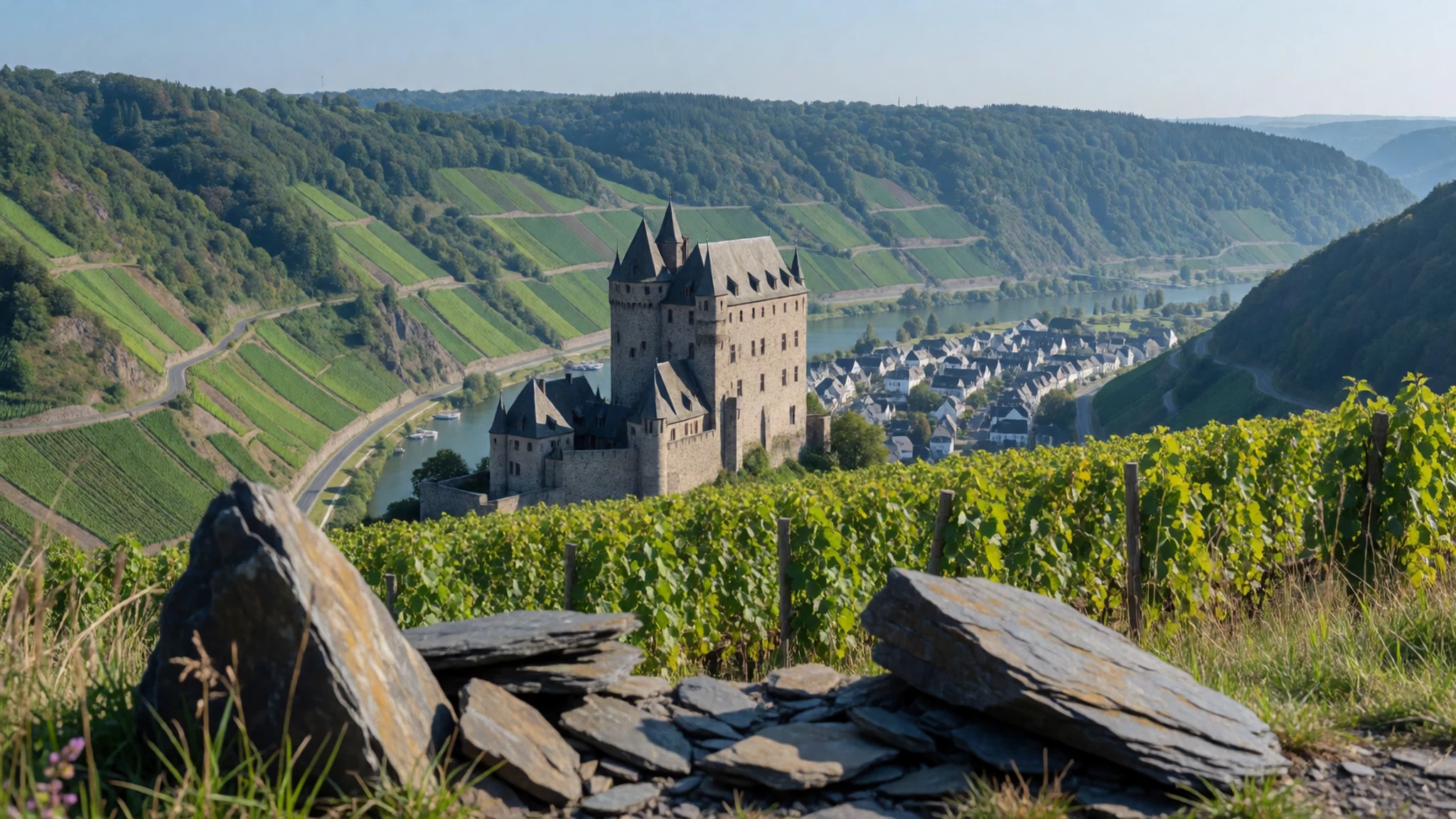
- Rheinfels — Above St. Goar, Upper Middle Rhine
Rheinfels is a large fortress above St. Goar, valued for its size and for the chance to explore its underground areas. Take a torch, because the passages are dark and the floors uneven. Expect steep stairs and walks along narrow high ramparts, which can be a little unnerving with small children. Allow a few hours to see both the courtyard and the lower rooms.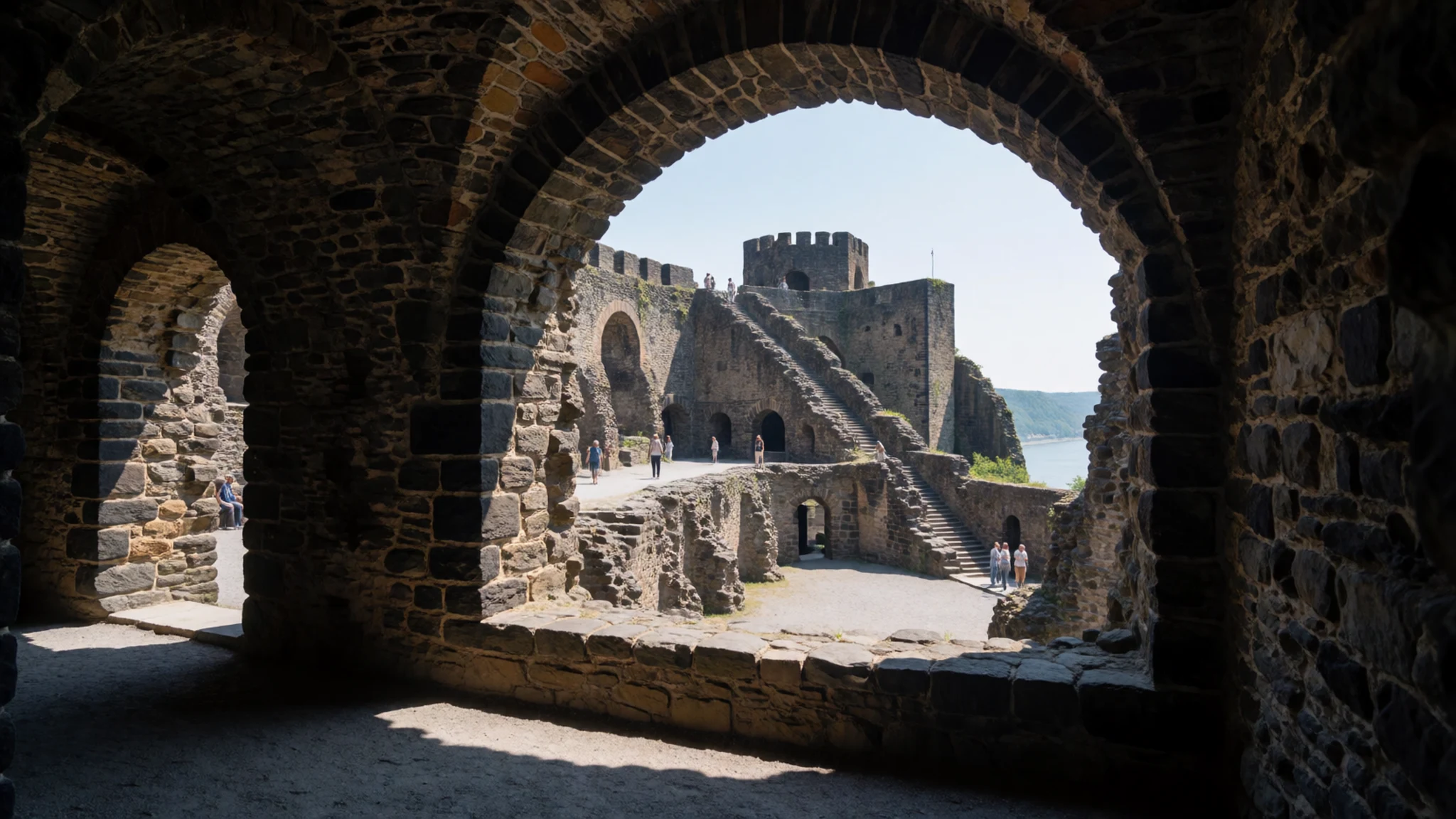
- Rheinstein Castle — Trechtingshausen, near Bingen
Rheinstein sits above Trechtingshausen and is valued for both its position and its restored structure. Because it has been restored rather than left in ruin, the rooms and towers give a clear sense of how a medieval residence was arranged. It suits visitors who want a castle that looks finished rather than fragmentary. Check the official site for opening arrangements before you climb the hill.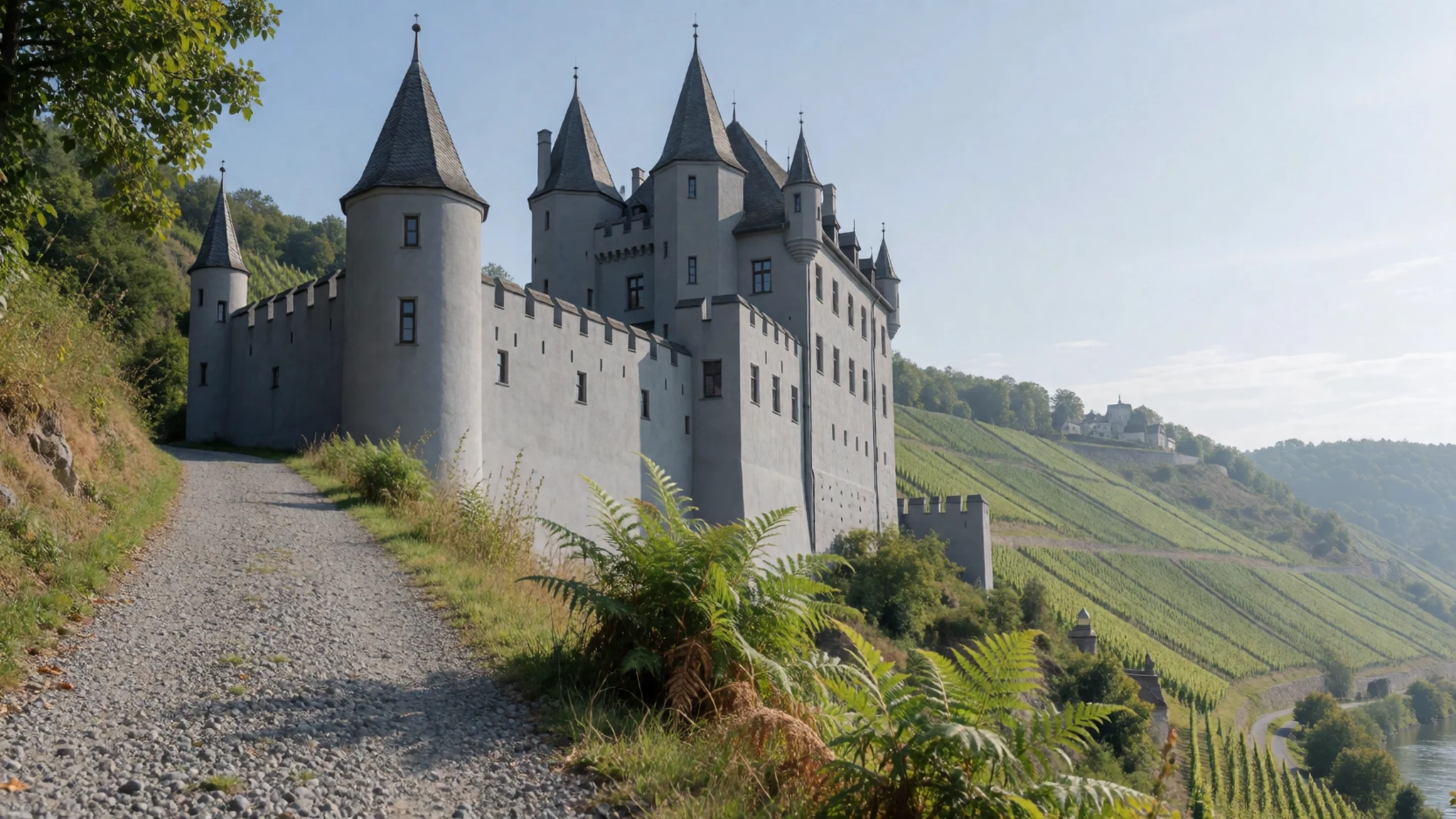
- Deutsches Eck — Koblenz, at the confluence of the Moselle and Rhine
The Deutsches Eck is the point in Koblenz where the Moselle joins the Rhine, marked by a large monument on the tip of land between the two rivers. It is a short walk from the old town and makes a sensible first stop on a river day. Benches and open space mean it fills on sunny afternoons, so an early or late visit suits photographers. It is also a good place to watch river traffic on both waters.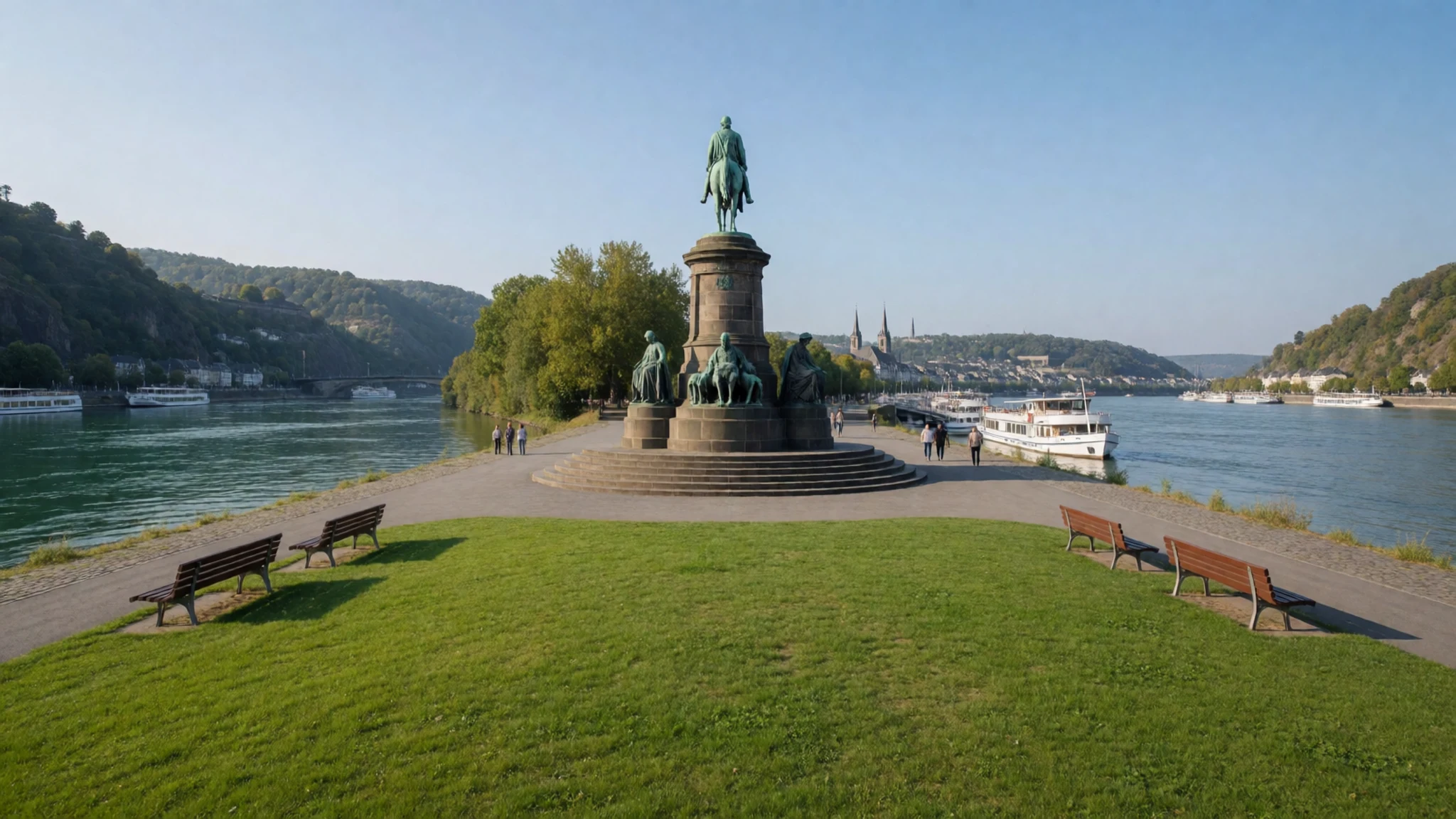
Culture
The Middle Rhine is a working wine landscape as much as a scenic one, and the vineyards on the steep slopes are tended by hand in many places. Wine taverns along the riverside serve food with a glass, and locals tend to linger over a table rather than rush. Festivals, choirs and river processions mark the seasons, and many villages keep their own customs around the harvest. Sunday is a quiet day across much of Germany, so shops may be closed, and it is wise to check before you plan a shopping stop. Castle interiors and churches have their own rules on photography and behaviour, so read the signs and follow staff instructions. In wine villages, park considerately and keep narrow lanes clear for residents and delivery vans. Stay on the marked paths through the vineyards, which are working land, and do not walk between the vines.
What to wear
In the Middle Rhine, traditional dress is seen mostly at festivals and processions rather than in everyday life. The region's textiles are practical rather than decorative: wool, linen and cotton, with leather for boots and belts. Carnival in the Rhineland brings its own costumes, from uniforms of local carnival clubs to feathered hats and painted masks. The dirndl and lederhosen belong more to Bavaria and Austria, though you may see them at beer festivals in towns along the river. Most people dress in plain, practical clothes such as jeans, jackets, knitwear and trainers. Smart casual is normal in wine taverns, and nobody expects formal dress. For a visit, pack layers, because the river breeze can feel cool even in summer. Choose shoes with good grip for steep castle stairs, cobbled lanes and vineyard paths. Carry a light scarf or cardigan for churches, where covered shoulders are a sensible courtesy.
What to eat
- Mittelrhein Riesling — Wine taverns and Weinstuben in Bacharach, Boppard and Oberwesel
The Mittelrhein wine region is almost entirely Riesling, grown on slate slopes from Koblenz towards Bingen and along parts of the right bank. Drink it in a wine tavern in Bacharach, Boppard or Oberwesel, where a glass is often poured straight from the cellar.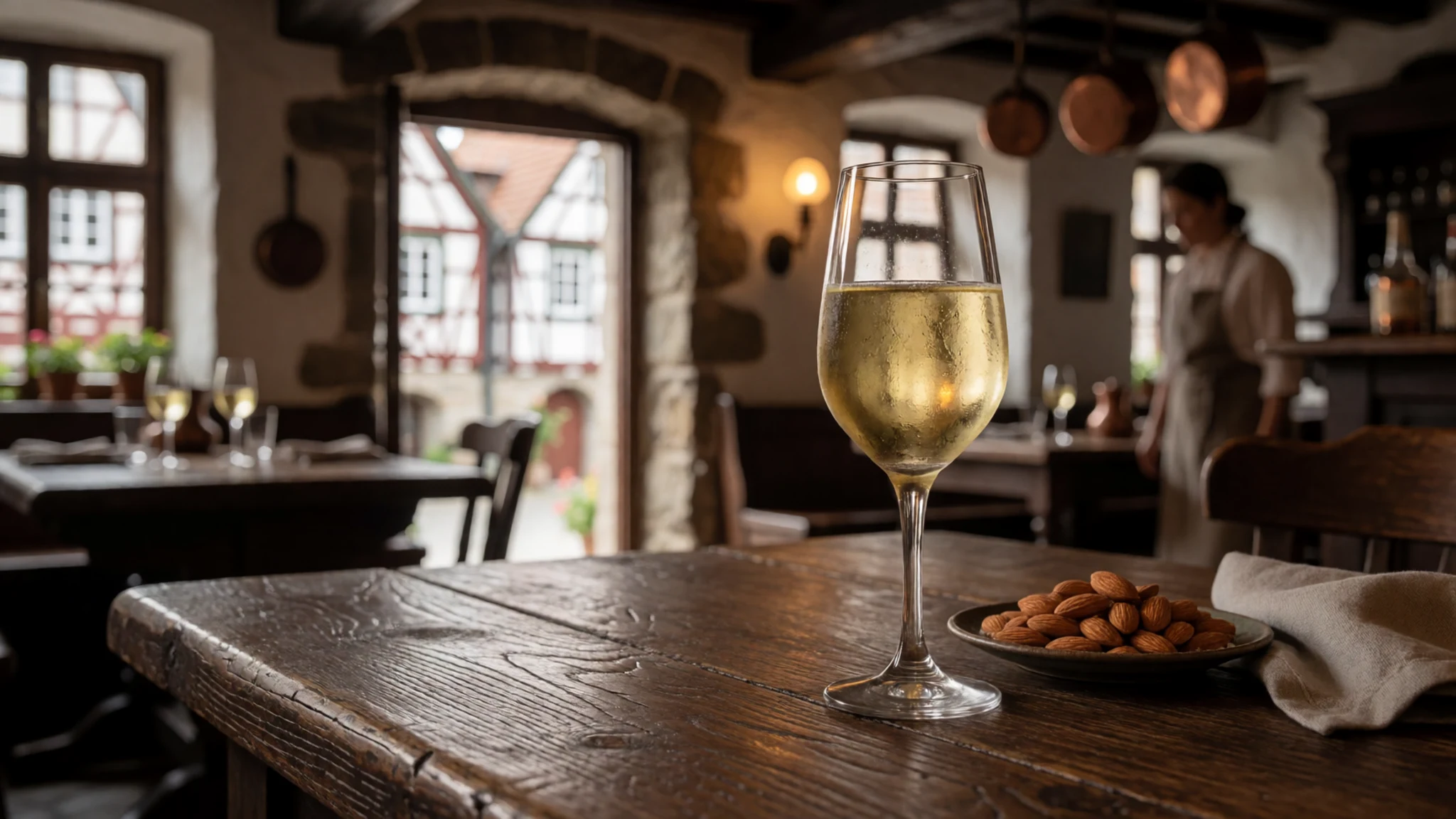
- Assmannshausen Spätburgunder — A Weinstube in Assmannshausen, across the river from the Rheingau slopes
Assmannshausen, on the right bank in the Rheingau, is known for its red Spätburgunder, the German name for Pinot Noir. Order a glass in a village Weinstube, which is a good way to try a red that many visitors do not expect from Germany.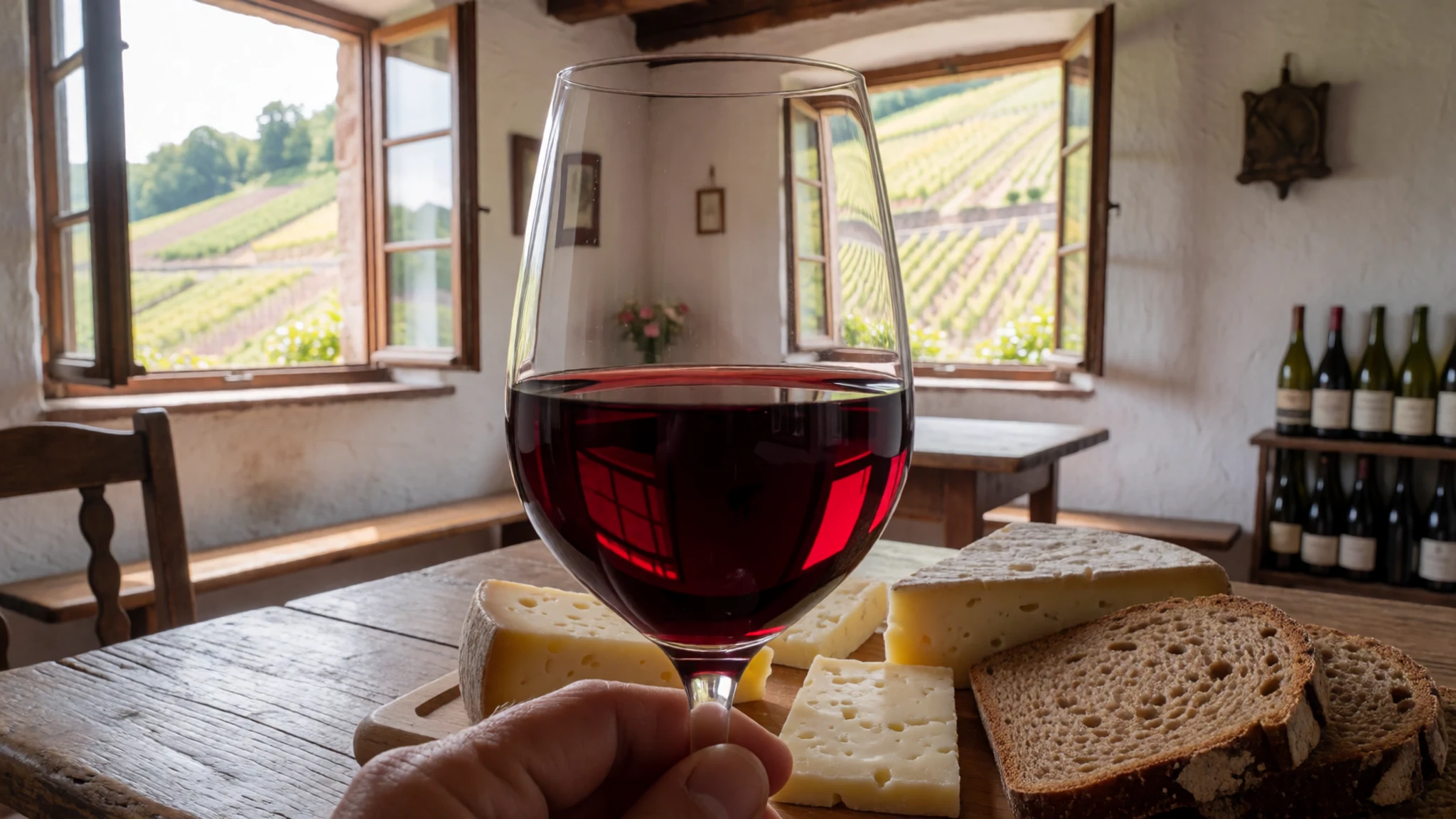
- Sauerbraten — Traditional restaurants in Koblenz and the wine villages
Sauerbraten is a Rhineland pot roast of beef marinated for days in vinegar, wine and spices, then braised slowly until tender. It usually comes with red cabbage and potatoes or dumplings, and it is a reliable choice at a traditional restaurant.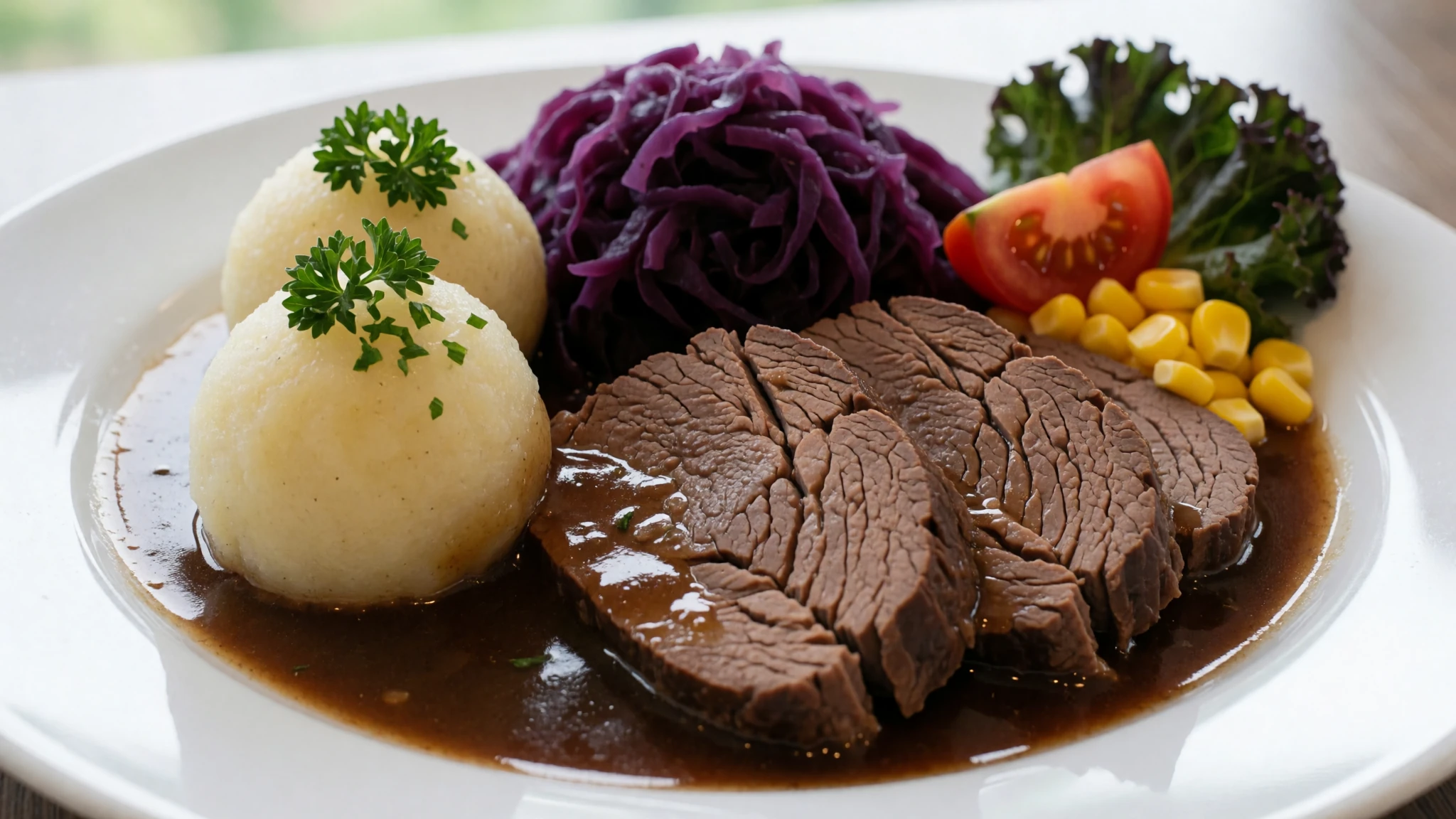
- Reibekuchen — A Frittenbude or market stall in the old streets of Koblenz
Reibekuchen are crisp, grated potato fritters, fried until golden and served with apple sauce or sugar. They are a cheap, filling snack that suits a day of castle climbing. - White asparagus in spring — Seasonal menus in Koblenz restaurants and village Gasthäuser in spring
White asparagus, or Spargel, is a spring obsession in Germany, grown in sandy soil on the lowlands near the river. It is served with boiled potatoes, ham or hollandaise, and it appears on menus only for a short season.
Plan it
Best time. Late spring, when the vines are green and the riverside is quieter than midsummer, and early autumn, from September into October, when the light is good and crowds thin. Midsummer is busy and warm, and a wet spell can arrive at any time of year.
How long. 2–3
Getting there. Frankfurt airport (FRA) is the main international gateway, with a long-distance rail station, and Cologne/Bonn (CGN) is an alternative. Trains run from Bingen and Koblenz, the largest stations in the valley, and the last leg is by regional train or river boat.
Budget. mid
Tips
- Book cruise seats and castle tours ahead in summer, when boats and walks fill quickly
- Start the walks early, because the Loreley and Deutsches Eck are busiest by late morning
- Carry cash for small wine taverns and village stalls, as cards are not always accepted
- Bring water and sturdy shoes, because the vineyard paths and castle stairs are steep
- Take a torch for the underground areas at Rheinfels
Etiquette
- Stay on marked paths through the vineyards, which are working land
- Ask before photographing people in taverns or festival costumes
- Follow the signs inside castles and churches, and keep voices low in churches
- Do not climb over barriers on the ramparts, where the drops are real
Nearby
Sources
- Wikidata Q571607 (CC0)
- Wikipedia: Middle Rhine (rev 1367945599) (CC BY-SA 4.0)
- Wikivoyage: Middle Rhine Valley (rev 5411148) (CC BY-SA 4.0)
- Photo: Mittelrhein Burg Katz (Felix Koenig) (CC BY 3.0)
- Photo: Aerial image of the Upper Middle Rhine Valley (Carsten Steger) (CC BY-SA 4.0)
- Map: Rhine sections and affluents (Ulamm) (CC BY 3.0)
- Photo: St. Goarshausen Loreley Burg Katz (Alexander Hoernigk) (CC BY 3.0)
- Photo: Geysir Andernach 2009 (Holger Weinandt) (CC BY-SA 3.0 de)
- Photo: Deutsches Eck, Koblenz (Holger Weinandt) (CC BY-SA 3.0 de)
- Photo: Burg Stahleck (unknown author) (Public domain)
- Photo: Burg Pfalzgrafenstein, Kaub (Holger Weinandt) (CC BY 3.0)


