Meteora
Meteora, Greece
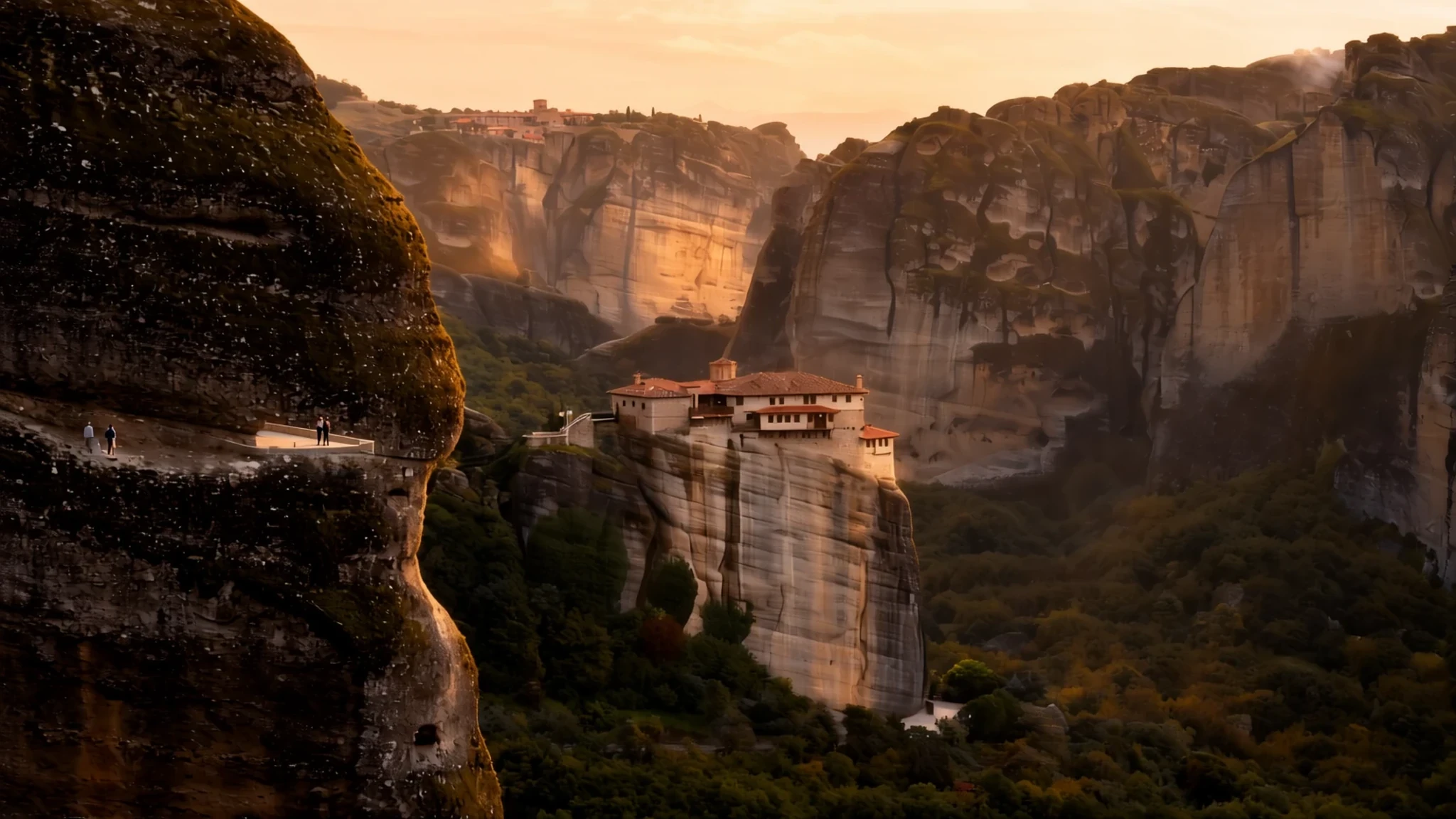
Monasteries perched on towering rock pillars in central Greece make Meteora one of Europe's most unlikely skylines.
The place
Meteora is a rock formation in the Trikala regional unit of Thessaly, in northwestern Greece, and it is famous for the Eastern Orthodox monasteries built on top of it. The landscape is a cluster of tall pillars and rounded boulders that rise abruptly from the northwestern edge of the Plain of Thessaly, close to the Pineios river and the Pindus Mountains. The town of Kalambaka and the village of Kastraki sit at its foot, and the rocks dominate both.
Twenty-four monasteries were once established on these summits, most of them in the latter half of the fourteenth century. Today six survive as a complex. Four are working monasteries, managed by monks or nuns, and open to visitors: Great Meteoron, Varlaam, Holy Trinity and St Stephen. Two other former monasteries, St Nicholas Anapausas and Rousanou, still stand but no longer serve as monasteries. Locally, the complex is viewed as second in importance only to Mount Athos.
The name is usually translated as "lofty" or "elevated", and it shares a root with the word meteor, which suits a place where the rocks seem to hover above the valley. The complex was added to the UNESCO World Heritage List for its architecture and setting, combined with its religious and cultural significance. Crowds gather at the sunset viewpoints in summer, and the morning light is usually calmer.
Its story
Meteora's human history begins well before the monasteries, in the caves around its pillars. Theopetra Cave, a short drive from Kalambaka, stands out because a single site documents two major transitions: Neanderthals giving way to modern humans, and afterwards a switch from foraging and gathering to agriculture following the end of the last Ice Age. Its large rectangular chamber sits at the foot of a limestone hill, with a wide entrance and the small Lithaios River running past the door, which meant residents had clean water close at hand.
The oldest built feature is a stone wall that blocked much of the cave mouth, probably a windbreak put up when the climate was far colder than today. Excavations have recovered many Palaeolithic and Neolithic tools and other traces of occupation, and caves in the wider area were used across a very long stretch of prehistory.
Ancient literature has little to say about the rocks. Meteora does not appear in classical Greek myths or in the surviving texts of ancient Greek writers, so the sacred reputation of the pillars is a later, medieval development.
That changed around the ninth century, when hermits first began climbing the pillars and settling on their tops, and monks later filled the caverns. Tradition credits a monk named Varlaam with scaling the rocks and starting construction, and the work took place under the local rule of Simeon Uroš, who styled himself emperor of Serbs, Greeks and Albanians. Early access relied on ropes, ladders and hauled baskets, which gives a sense of how remote the summits once felt.
The monasteries outlasted their peak, and several were abandoned over the centuries. The six that survive reflect a long period of rebuilding and adaptation, and their survival is part of why the complex is now valued as a whole.
What to see
- St Nikolaos Anapafsas — Kastraki, above the main road
The Holy Monastery of Saint Nikolas of Anapafsas was founded at the end of the fourteenth century and no longer functions as a monastery. The climb takes about ten minutes on a stone path from the parking area by the main road, and the reward is a quieter, more intimate ruin with long views over the valley and the nearby pillars.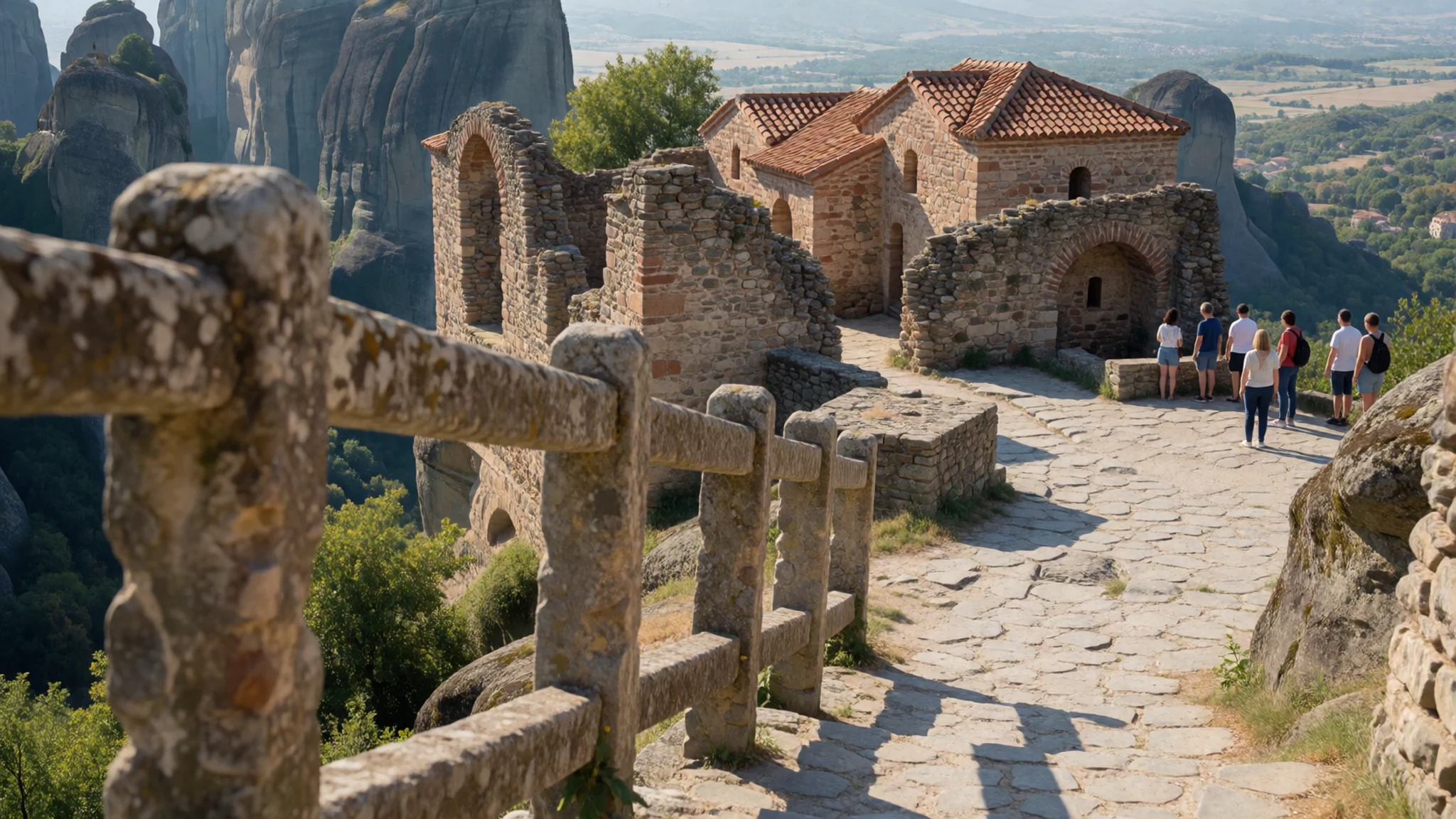
- Roussanou (St Barbara) — Between Kastraki and Kalambaka
The former Holy Monastery of Roussanou takes its name from the first probable hermit to settle on the rock. Its main cathedral honours Saint Barbara and dates from the end of the sixteenth century. The buildings sit on a narrow pillar, and the road from Kastraki offers a clear view of its clifftop setting.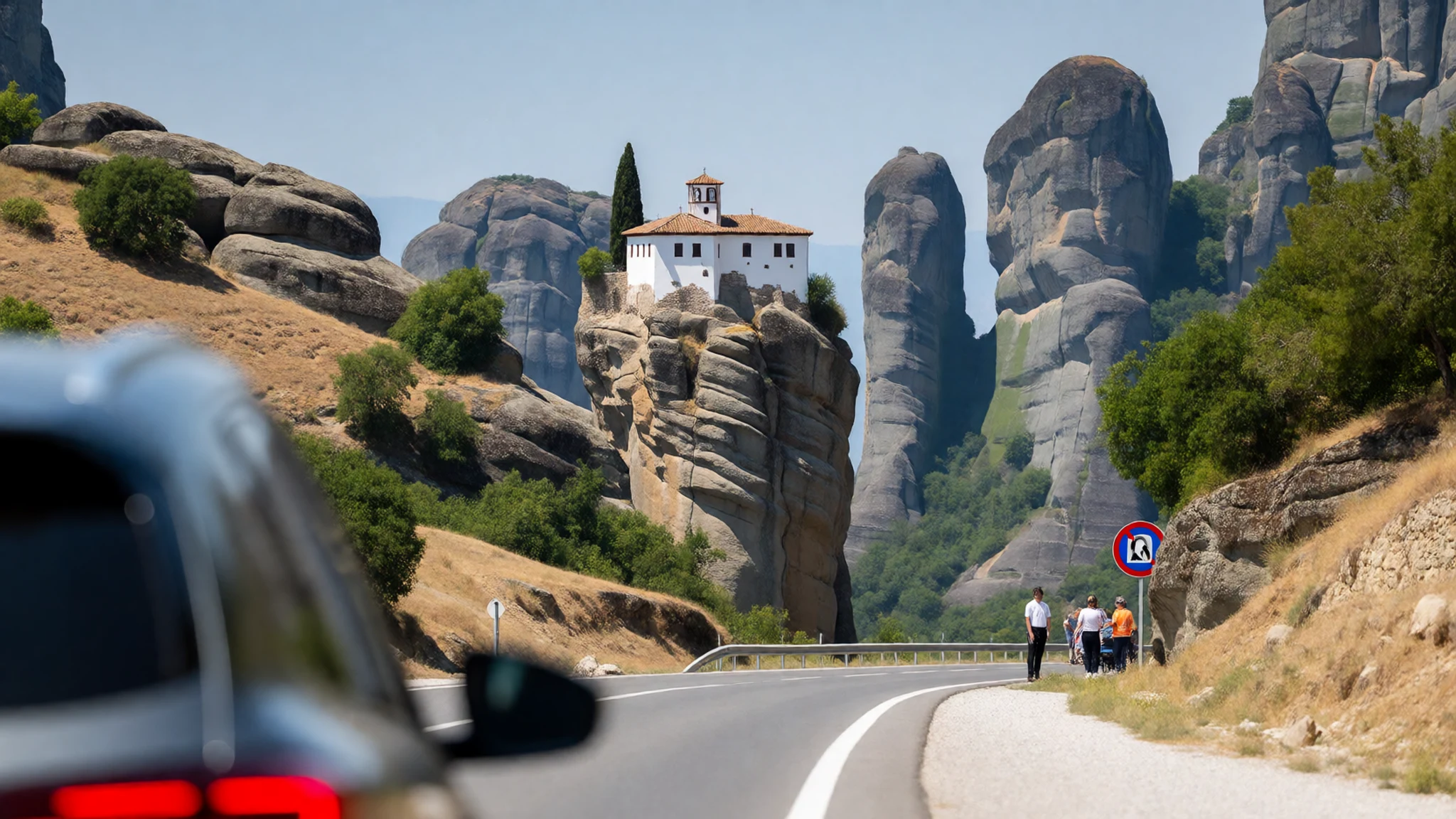
- Varlaam — Central rock group, near Kalambaka
The Monastery of Varlaam is the second largest of the Meteora monasteries. It is named after a monk who climbed the rocks and began building there in the mid-fourteenth century. It is one of the four working monasteries open to visitors. The approach is by steps cut into the rock, and the courtyard view covers much of the complex.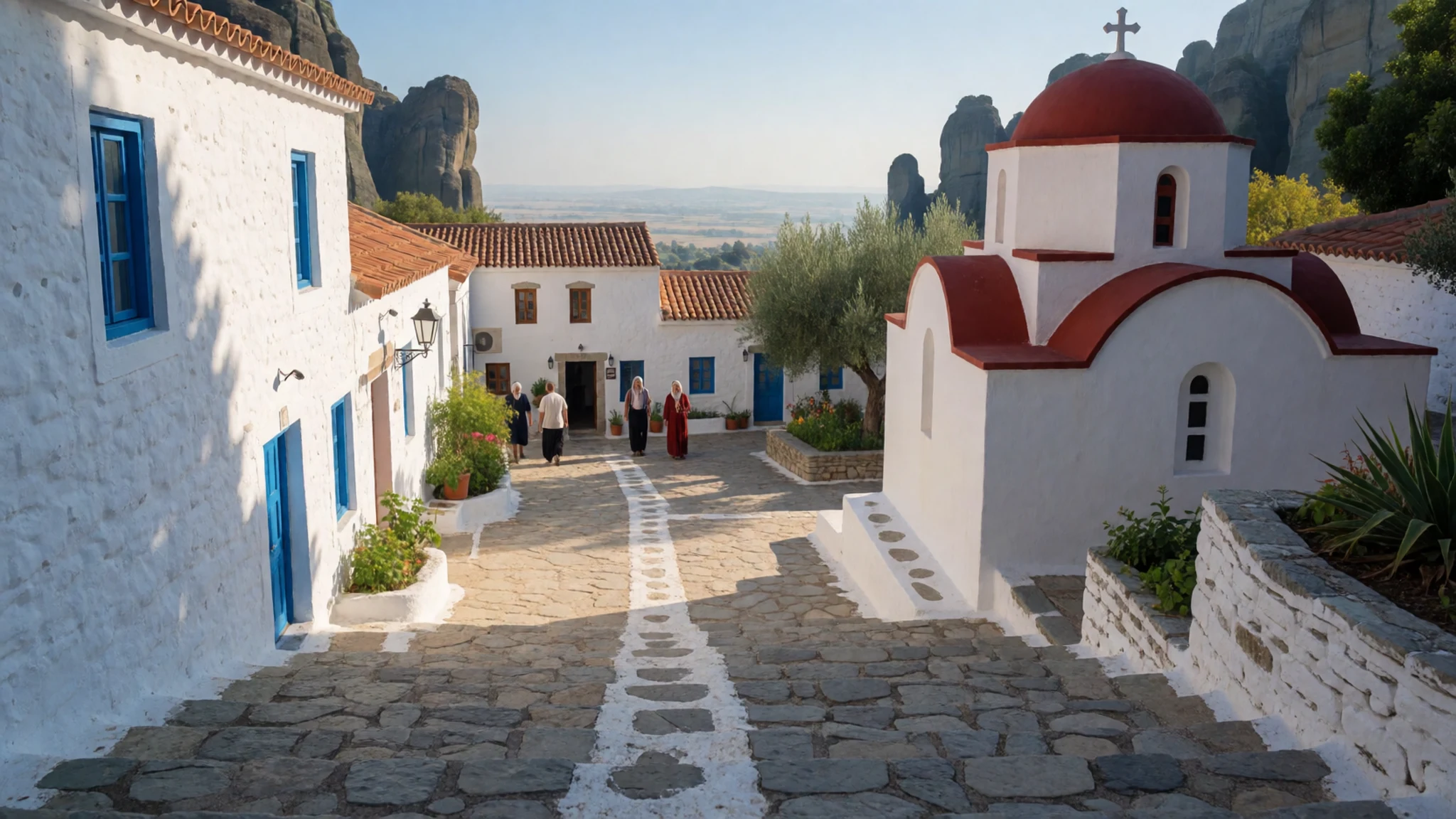
- Great Meteoron — Central rock group, main monastic site
The Holy Monastery of Great Meteoron is the oldest and largest of the monasteries here, believed to have been founded just before the mid-fourteenth century by a monk from Mount Athos. Its parking area has a few snack vendors, the only places to eat within the monasteries themselves.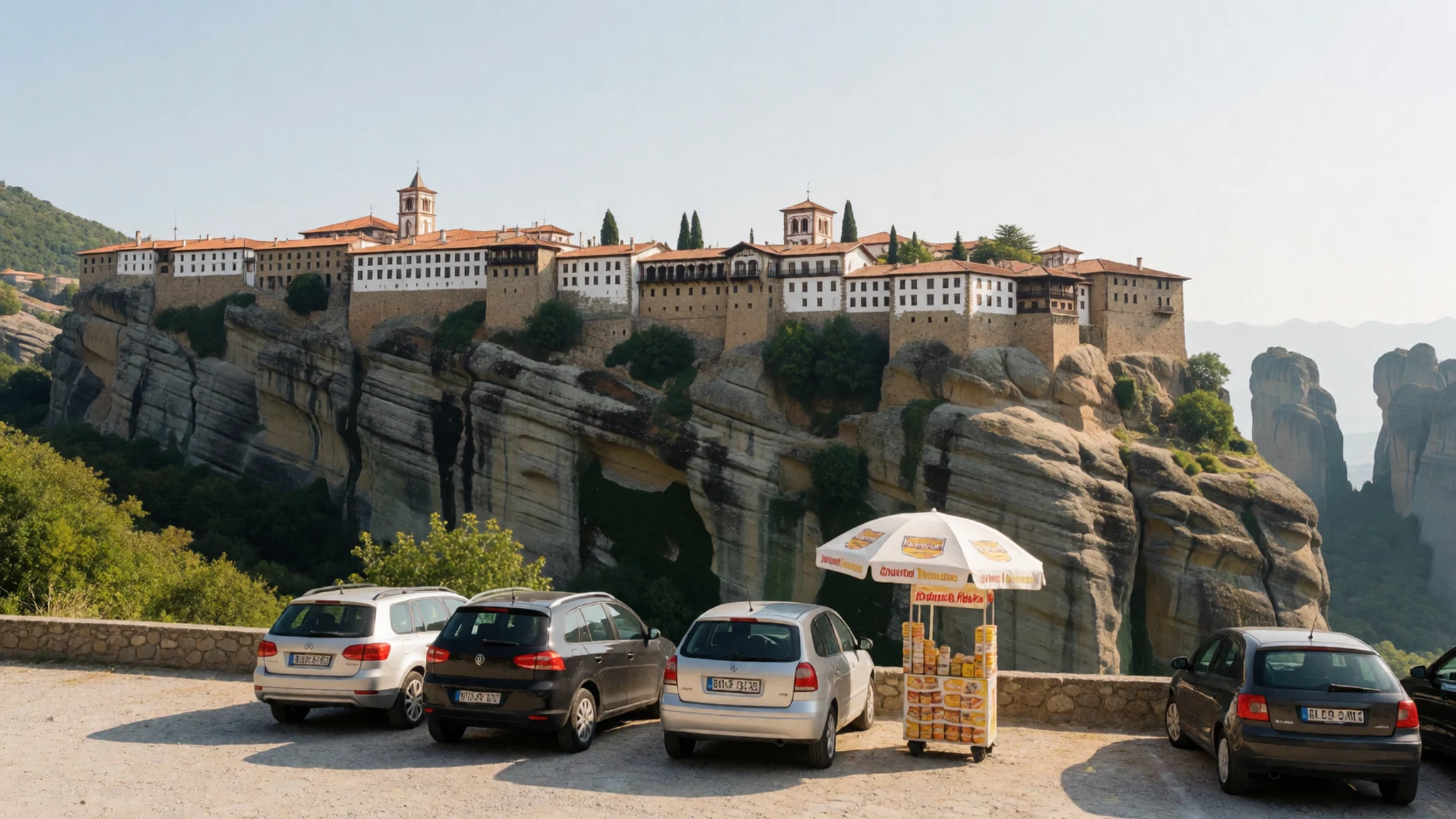
- Holy Trinity — Western rock group, above Kalambaka
The Monastery of Holy Trinity is the most difficult to reach, so allow extra time for the climb. Visitors who reach the top are rewarded with a panoramic view across the surrounding pillars and the plain of Thessaly. Steep steps are the norm, so go early before midday heat.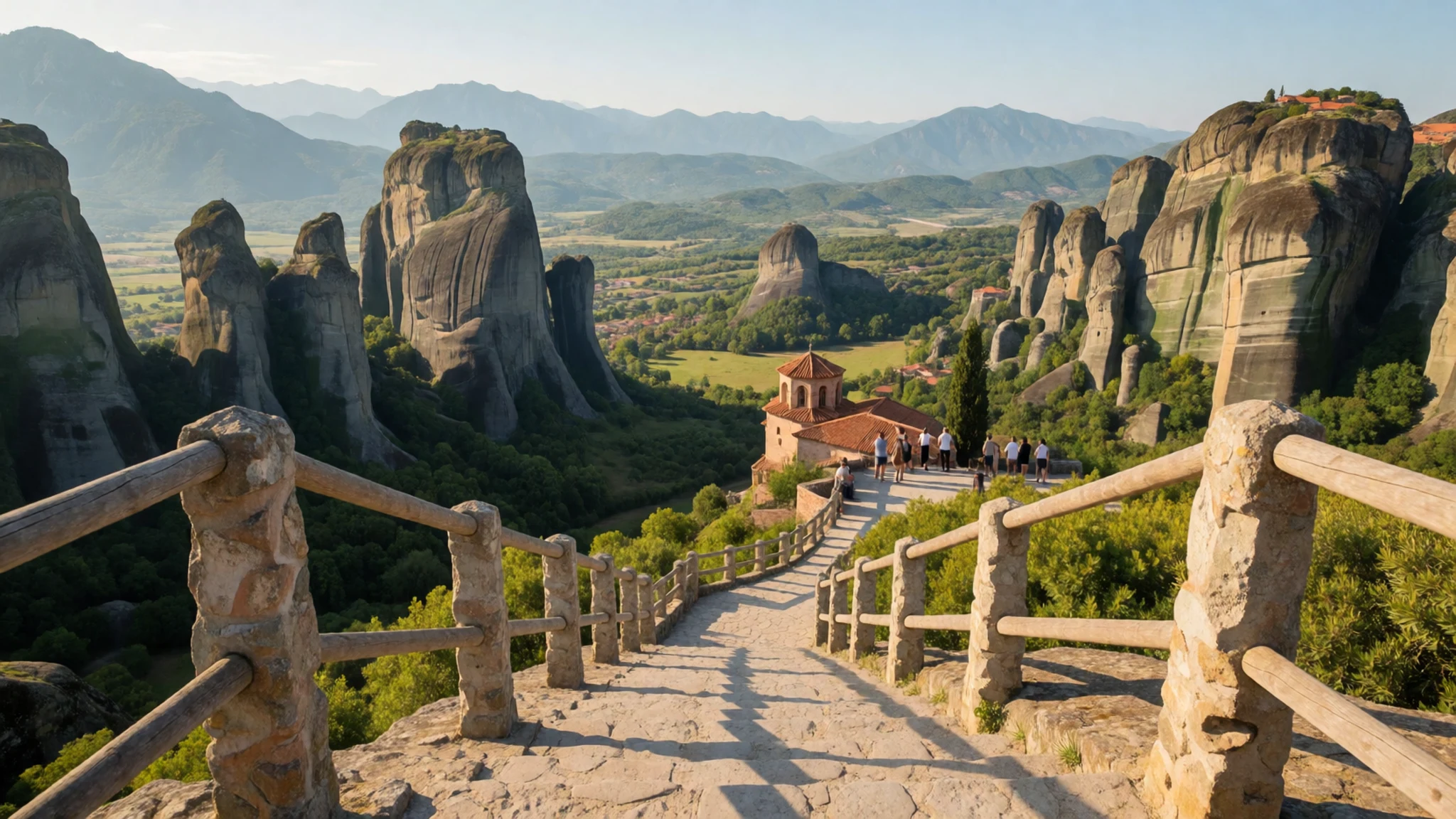
- St Stephen — Near Kalambaka, the nearest rock to the town
This is the most accessible of the monasteries, reached by a small bridge rather than a long run of steps. St Stephen became a convent run by nuns in the mid-twentieth century, and it is a sensible first stop for a short morning. Its courtyard and church are small enough to see in a single visit.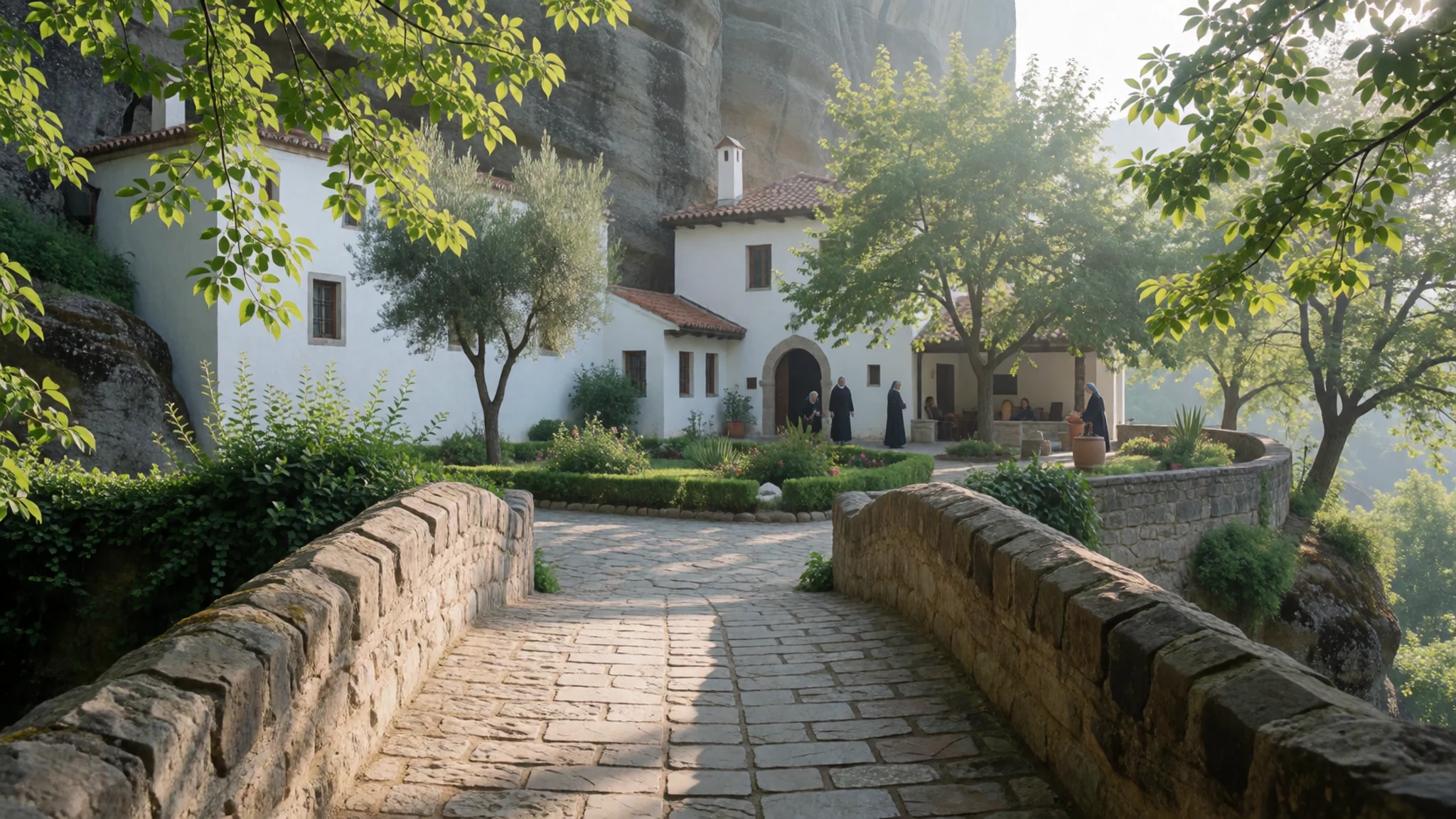
Culture
Meteora's monasteries are working religious communities rather than museums, so the first rule is to treat them as such. Services are held in the churches, and monks and nuns go about their daily work in the same courtyards that visitors cross. Dress modestly on arrival: shoulders and knees should be covered, and some monasteries lend wraps at the entrance for those who arrive underdressed. Inside the churches, keep voices low and take off hats. Many courtyards allow photography, but check the signs and ask before photographing a monk or nun. Flash is a poor idea inside churches, where the icons and wall paintings are old and fragile. Some of the buildings have narrow doorways and tight stairs, so move slowly and give way to people on the steps. Keep your voice low and your phone on silent once you step inside any church.
What to wear
Traditional dress in the villages of Thessaly was built from wool and linen, usually woven at home and decorated with embroidery on sleeves, aprons and waistcoats. These costumes were worn mainly at festivals, weddings and church feasts, and today they survive largely in museums and at local celebrations. Everyday clothing in Kalambaka and Kastraki looks much like anywhere in Greece: jeans, t-shirts, sundresses and light jackets, with sandals in summer. Within the monasteries the expectations are different. Monks wear black cassocks and tall black headgear, and women visitors are expected to cover their shoulders and knees. For a visit, women should pack a long skirt or sarong, since trousers are not allowed, plus light layers for shoulders, because the sun is strong on the bare rock and the wind can be cool on the summits. Choose shoes with a good grip, since the stone steps and paths are uneven and slippery when dusty or wet. A sun hat and a light scarf to cover your shoulders in churches are both useful.
What to eat
- Souvlaki — Grill houses on the main road through Kalambaka
Grilled pork or chicken on skewers, often wrapped in pitta with tomato, onion and tzatziki. It is quick, filling and eaten standing or on a plate with chips. Grill houses along the main road through Kalambaka are the usual place to find it, especially at lunchtime.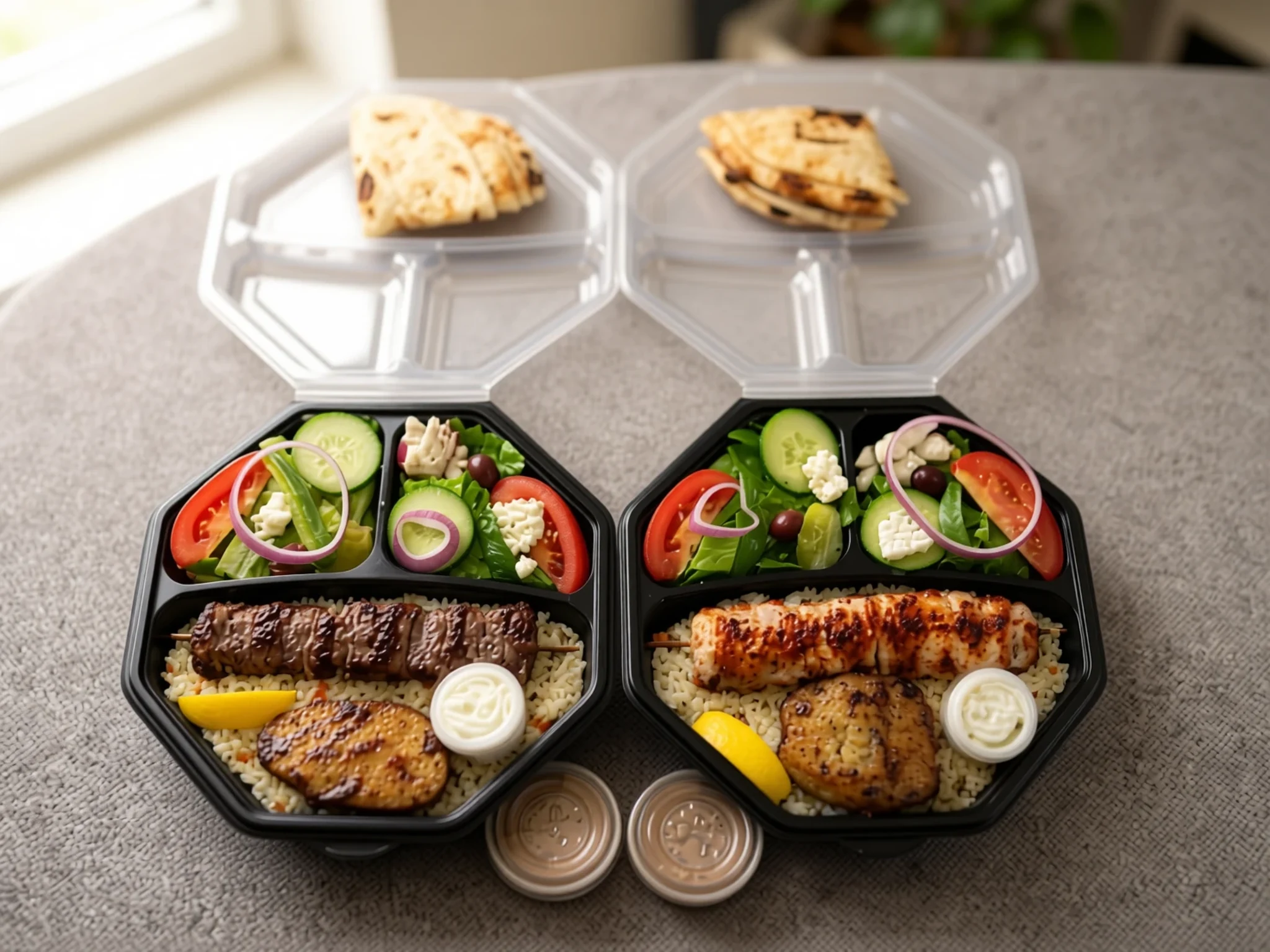
- Moussaka — Family tavernas in Kastraki
Layers of aubergine, spiced minced meat and a thick white béchamel, baked until golden. It is a slow dish suited to a long lunch. Family tavernas in Kastraki usually make it in batches, so it is best eaten warm from the oven.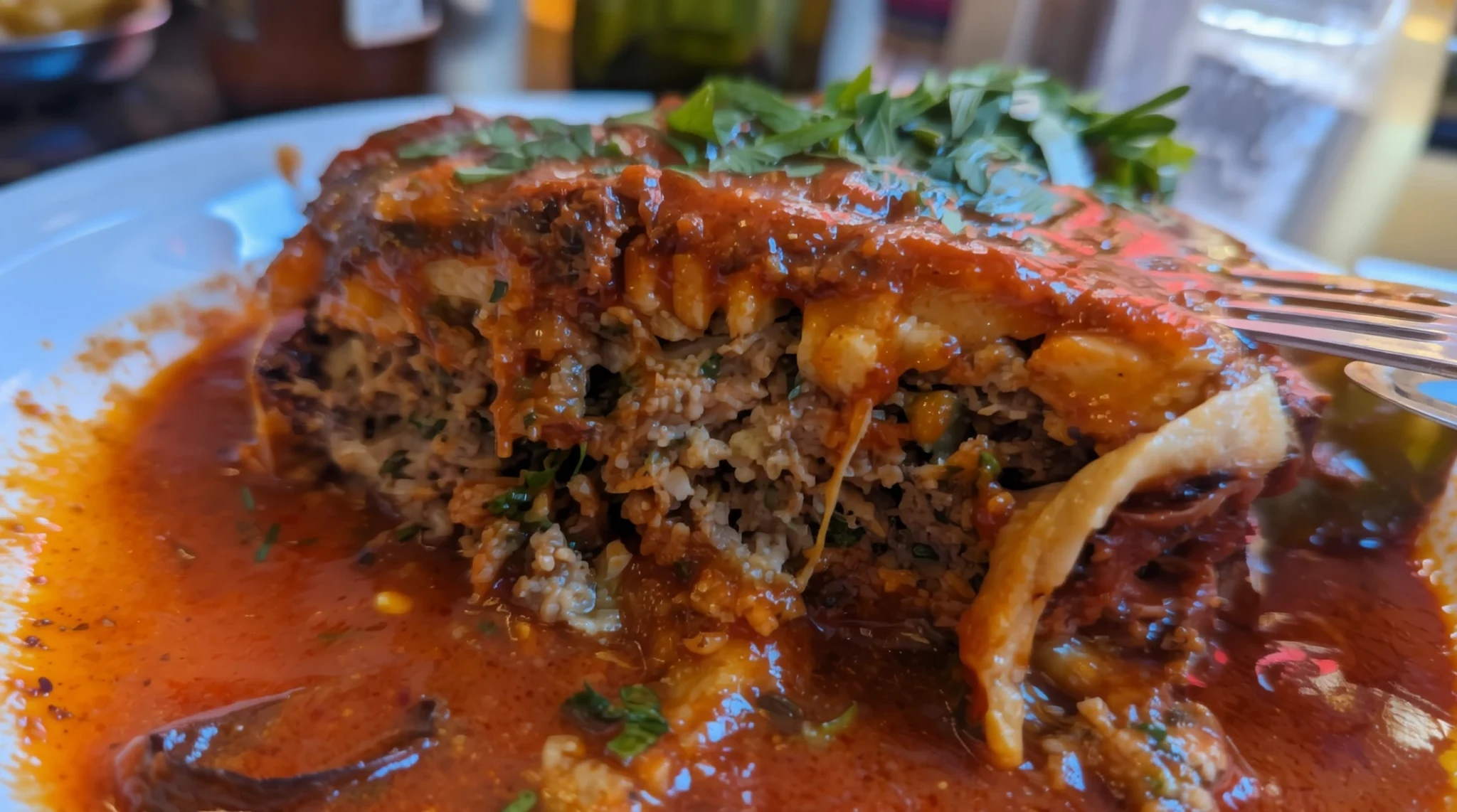
- Freshwater fish — Riverside tavernas near the Pineios
Trout from mountain streams and fish from the Pineios river turn up on menus across the plain. They are usually grilled whole with lemon and olive oil. Riverside tavernas near the Pineios and the restaurants along the valley road are good places to look.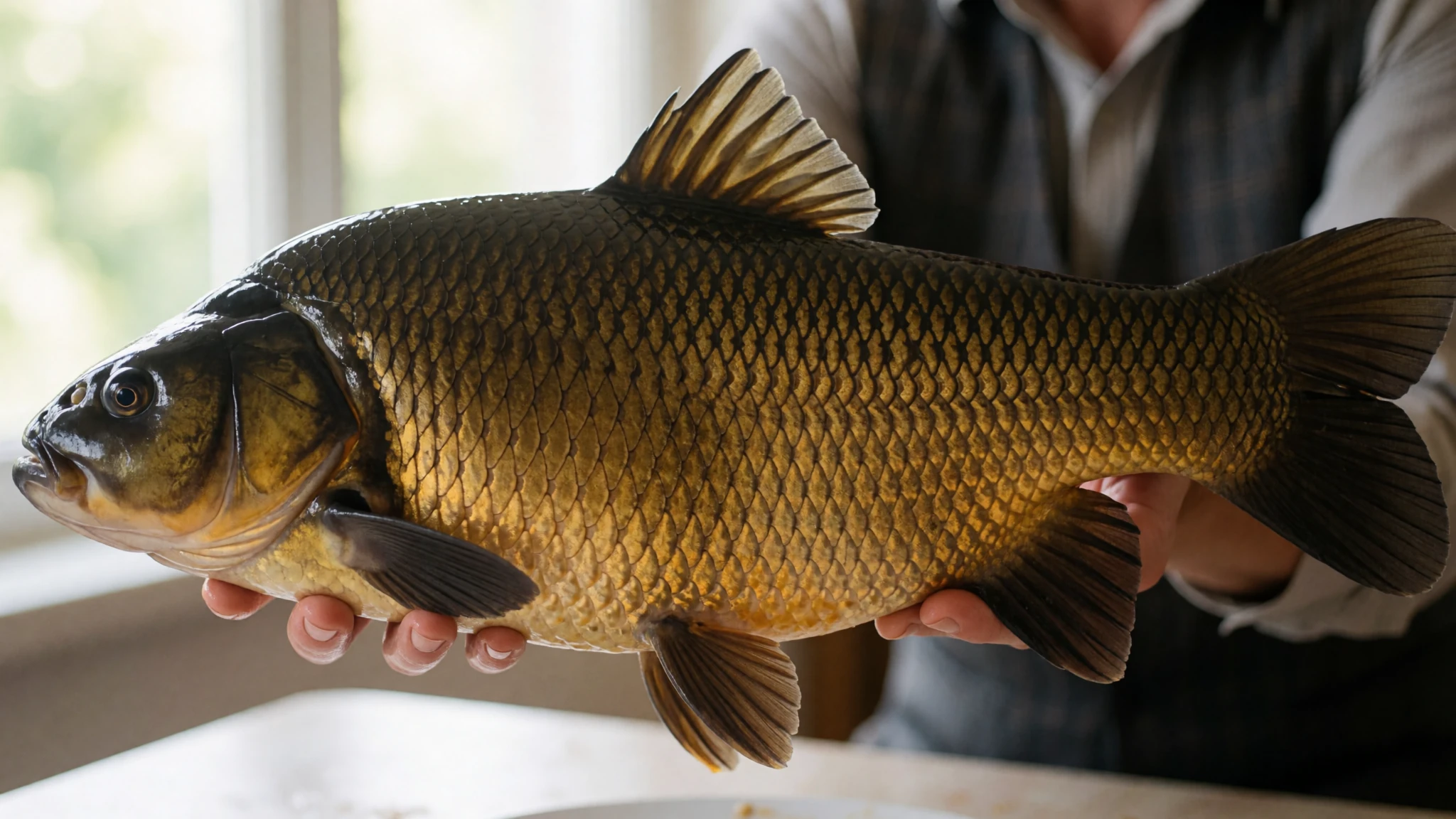
- Koulouri — Bakeries and street carts in central Kalambaka
A sesame-crusted bread ring sold from carts and bakeries across Greece. It is good warm for breakfast or as a snack on the walk back from the monasteries. Bakeries in the centre of Kalambaka bake through the early morning, so the batches are freshest before mid-morning. - Horta — Village tavernas in Kastraki
Boiled wild greens dressed with olive oil and lemon, served warm or at room temperature as a side dish. It is a simple, healthy plate that appears on most mezedes menus. Village tavernas in Kastraki serve it with grilled meat or fish.
Plan it
Best time. April and September to October suit walking and photography, with mild days and fewer coaches than midsummer. June, July and August are the hottest months and busy, and winter is cold and quieter, with some monasteries closed on certain days, so check the official site before you go.
How long. 2
Getting there. Fly into Athens or Thessaloniki, then take an intercity KTEL bus to Trikala Bus Station and transfer to the local Trikala–Kalambaka bus, which takes about an hour. Driving from Athens is a long but direct option, and Volos airport is a shorter drive for those flying from Central Europe.
Budget. mid
Tips
- Book KTEL bus tickets early, since reservations open several weeks ahead
- Start at the monasteries early in the morning, before tour coaches arrive
- Carry water and a sun hat, because the rock offers little shade
- Carry cash for small shops, snack stalls and parking
- Stay in Kastraki for village atmosphere and views of the pillars, or Kalambaka for transport and amenities
Etiquette
- Dress with covered shoulders and knees before entering
- Keep voices low and phones silent inside churches
- Ask before photographing monks or nuns
Nearby
Sources
- Wikidata Q3125051 (CC0)
- Wikipedia: Meteora (rev 1382069917) (CC BY-SA 4.0)
- Wikivoyage: Meteora (rev 5411070) (CC BY-SA 4.0)
- Photo: Kloster Agía Triáda, W. Bulach (CC BY-SA 4.0)
- Photo: Meteora's monastery 2, Stathis Floros (CC BY-SA 4.0)
- Photo: Meteora by night, Argiriskaramouzas (CC BY-SA 4.0)
- Photo: Lageskizze Klöster Meteora, Bgabel (CC BY-SA 2.5)
- Photo: Great Meteoron Monastery, Bernard Gagnon (CC BY-SA 4.0)
- Photo: Megalo Meteoro panorama, Janmad (CC BY-SA 2.0)
- Photo: Varlaam Monastery, Bernard Gagnon (CC BY-SA 1.0)
- Photo: Rousanou Monastery, Ava babili (CC BY-SA 4.0)


