Menorca
Menorca, Spain
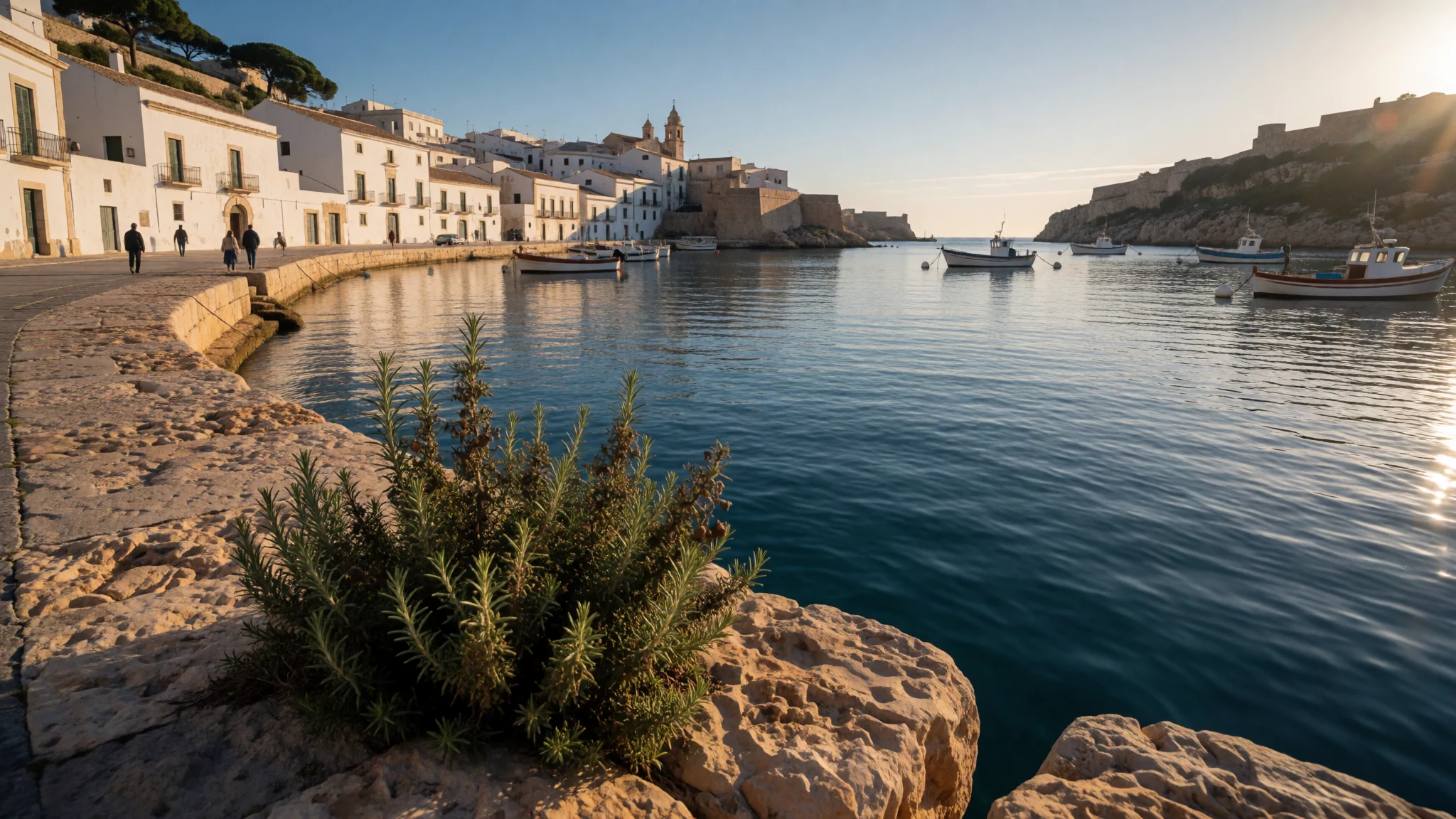
Menorca offers a calmer Balearic tempo, defined by pine-fringed coves, ancient stone monuments, turquoise waters, and historic harbour towns.
The place
Menorca sits in the western Mediterranean, the northernmost and second largest of Spain's Balearic Islands. Smaller and gentler than neighbouring Majorca, the land balances low rolling hills, rocky coves, and dry stone walls that partition green fields. The island's atmosphere remains distinctly calmer than its southern neighbours, shaped by a commitment to environmental conservation and low-density development.
The landscape divides into two characterful zones: the northern coast features red-sand bays, weathered slate cliffs, and scrubby hillsides exposed to northern winds, while the south reveals sheltered limestone coves filled with pale sand and clear turquoise water. Between these shores lie quiet farming villages and two main urban anchors at opposite ends of the island. Mahón, the capital on the eastern shore, wraps around a vast natural deep-water harbour lined with historic fortifications, Georgian mansions, and bustling waterfront dining. On the western coast, Ciutadella preserves a noble Mediterranean feel, its tight cobblestone lanes framing grand palacetes, shady plazas, and a narrow harbour crowded with wooden fishing vessels.
Throughout the interior, rural life proceeds at a deliberate pace. Holm-oak woodlands, olive groves, and dairy pastures frame quiet country tracks where horses graze behind stone fences. In peak summer, coastal car parks fill quickly and main beaches draw steady crowds, yet turning inland or walking along coastal paths soon restores the island's peaceful, wind-brushed rhythm.
Its story
Menorca possesses a rich archaeological heritage shaped by its strategic position along Mediterranean sea routes. Human settlement began in prehistoric times, leaving behind remarkable megalithic stone architecture unique to the archipelago. Mysterious T-shaped stone structures known as taulas, boat-shaped burial chambers called navetes, and circular defensive towers named talaiots dot the countryside. Early island builders absorbed ideas from distant cultures across the sea, including architectural details influenced by Minoan Crete.
During the era of the Punic Wars, maritime trade expanded across the western Mediterranean. Independent sea raiders exploited the island's sheltered coves to launch attacks against Roman vessels. To protect vital merchant shipping between Italy and Hispania, Roman forces launched a military campaign to secure the territory. By 123 BC, the island fell completely under Roman control. Later reorganisations under Emperor Augustus transformed the ancient Carthaginian settlement of Mago into a flourishing Roman city, establishing the urban foundations of modern Mahón.
Over subsequent centuries, control of the island shifted between foreign powers, including Byzantines, Moorish rulers, the Crown of Aragon, Great Britain, and France. British naval presence during the eighteenth century left a lasting architectural imprint, visible in sash windows and military garrisons around Mahón harbour, alongside a local fondness for gin. Reintegrated into Spain in the early nineteenth century, the island preserved its distinct maritime identity, balancing its complex military past with an enduring agricultural tradition.
What to see
- Cala Pregonda — North coast
Located on the northern shoreline, this distinctive bay stands out for its reddish sand and jagged rocky islets sheltering the water. A scenic walk along a coastal track leads to clear, calm seas ideal for swimming. Lacking commercial beach bars, the cove retains a wild, undeveloped setting that contrasts sharply with the southern coast.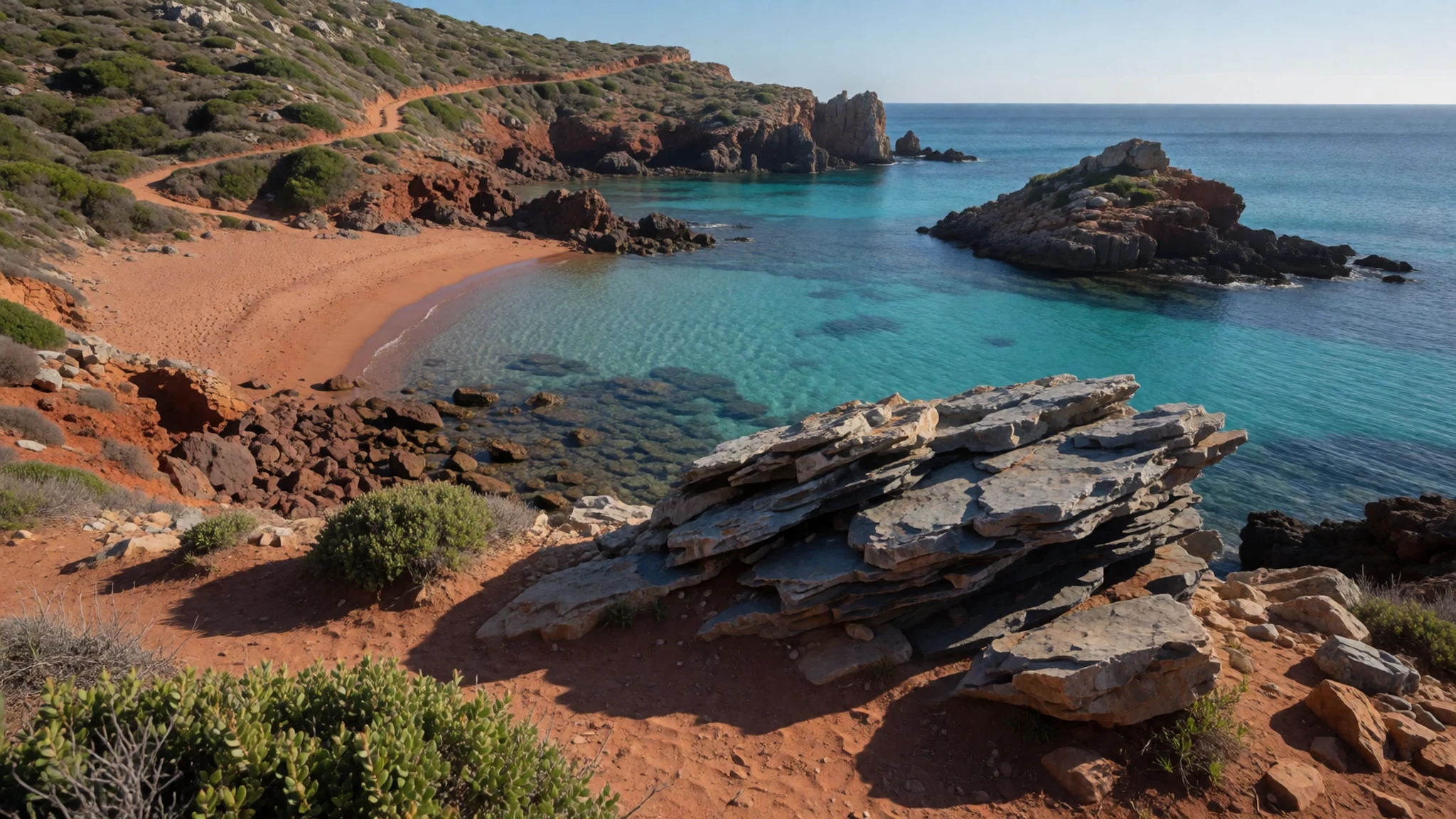
- Cala en Porter — South coast
Set deep within a dramatic limestone gorge, this south-coast bay offers fine white sand and shallow, gentle waters. Well-equipped with amenities, play areas, and nearby eateries, it provides an accessible beach day for families. High cliffs flank the cove, creating natural shelter from open-sea winds and framing sunsets over the Mediterranean.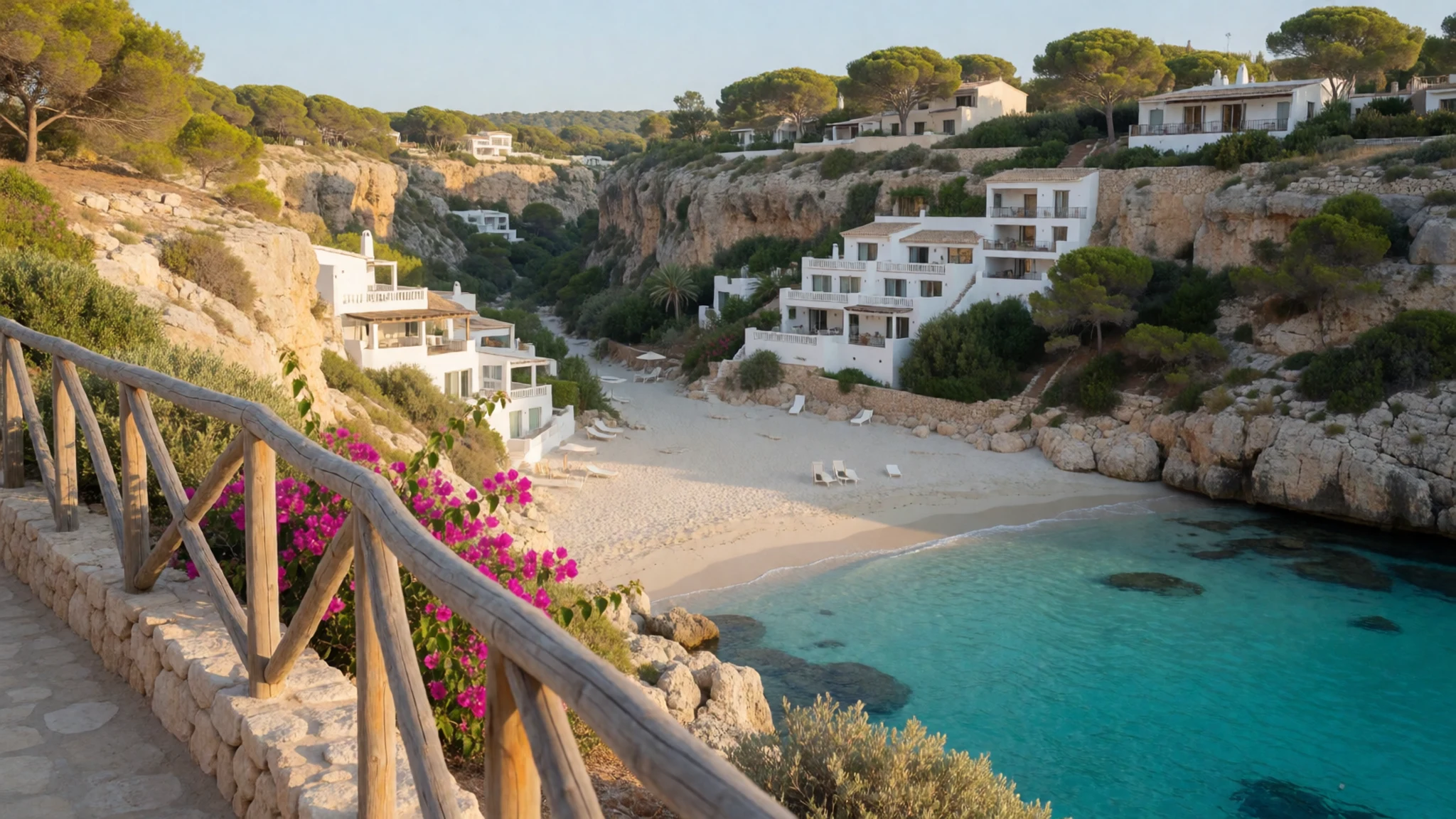
- Talatí de Dalt — Near Mahón
This prehistoric Talaiotic site reveals Menorca's ancient stone monuments set among wild olive trees. Visitors can examine a remarkably preserved T-shaped taula, stone houses, and burial caves dating back thousands of years. The quiet rural site offers an intimate look at early island engineering away from coastal resort crowds.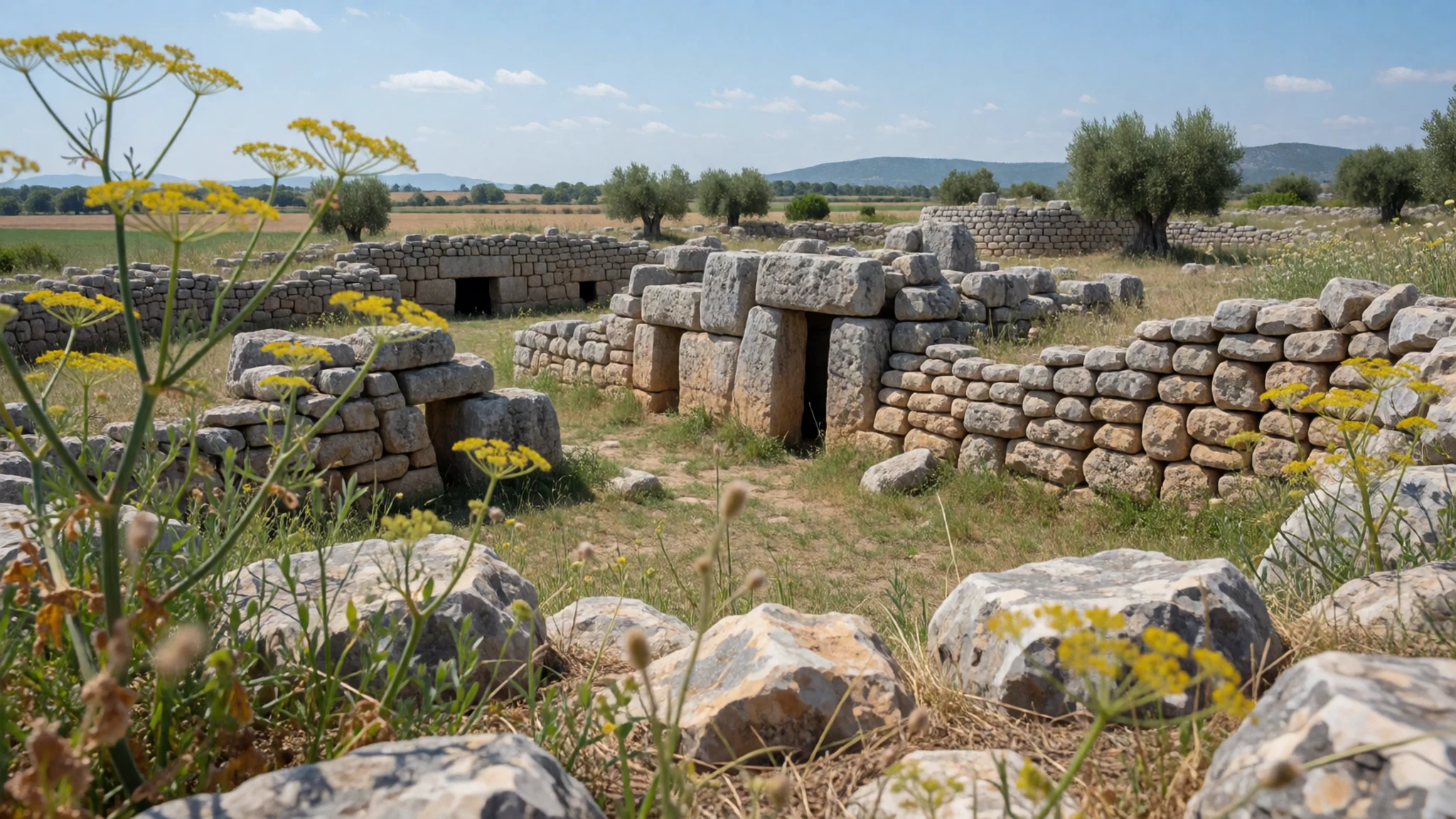
- El Toro — Central Menorca
Rising near the central village of Es Mercadal, this solitary hill forms the highest point on the island. A winding road leads to the summit, where a hilltop sanctuary and viewing terrace offer sweeping panoramic views across the entire Menorcan countryside to the surrounding sea. On clear days, the entire coastline unfolds below.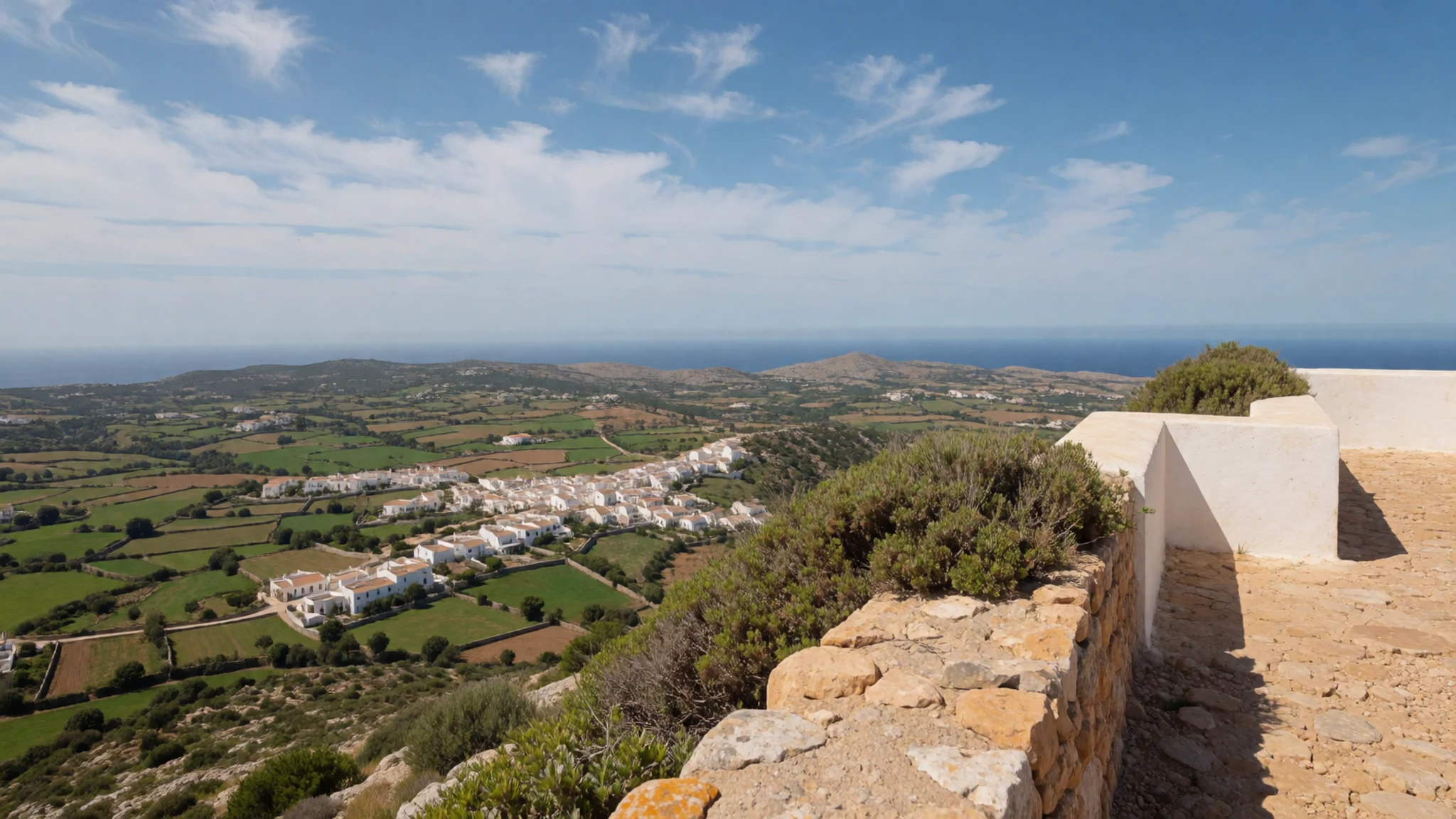
- Xoriguer Gin Distillery — Mahón harbour
Situated along the water's edge in Mahón, this historic distillery continues Menorca's eighteenth-century copper-pot gin tradition. Visitors can watch traditional copper stills produce aromatic juniper spirit, sample local liqueurs, and purchase bottles of gin crafted using recipes introduced during the period of British administration.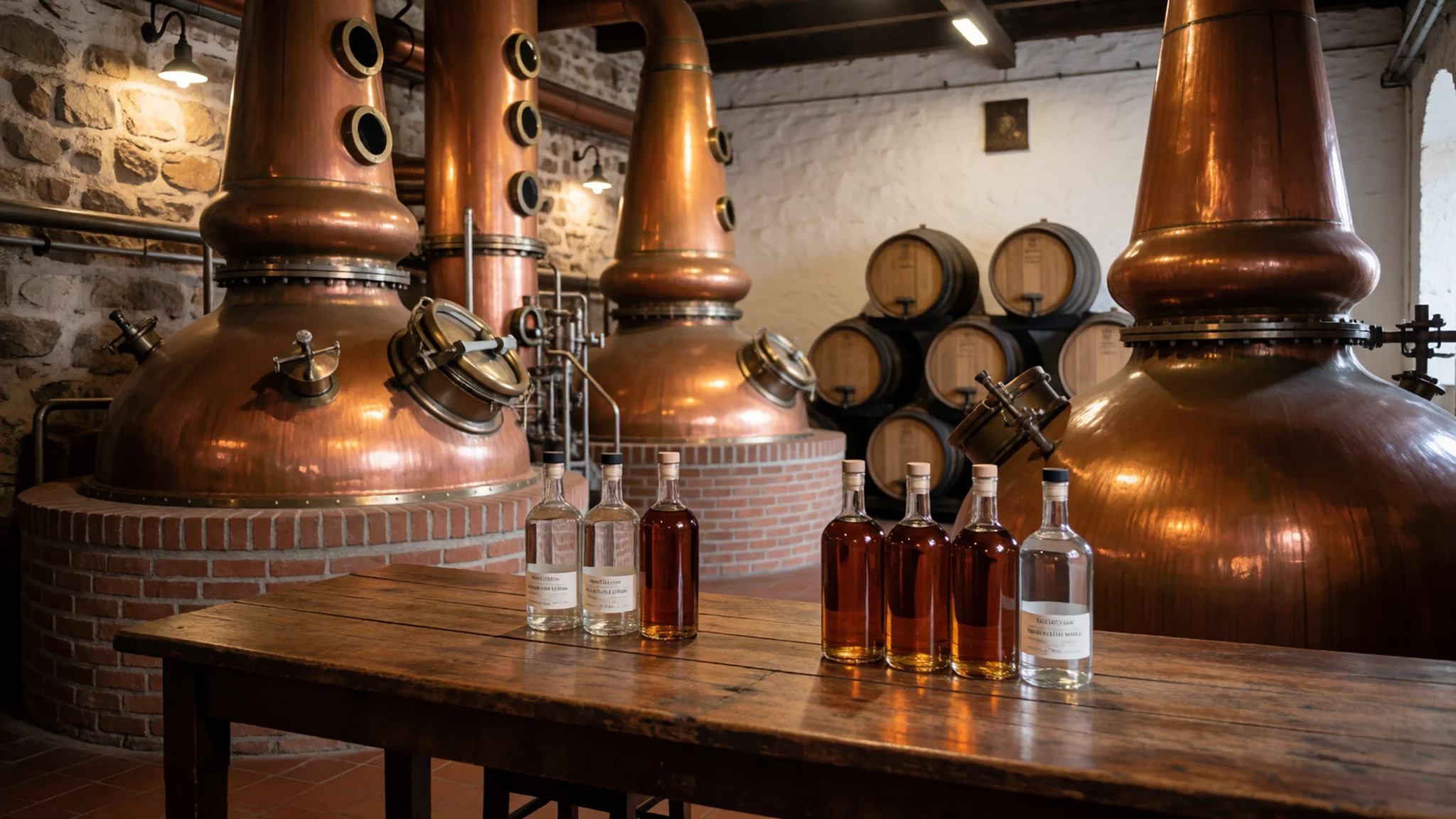
Culture
Menorca's culture reflects a harmonious blend of Mediterranean island heritage and historical colonial influences. Life revolves around family gatherings, maritime traditions, and seasonal agricultural rhythms. Summer brings colourful outdoor festivals known as festes to communities across the island, where native Menorcan horses take centre stage in spirited street celebrations. Music plays an active role in local life, highlighted by summer classical concerts, organ recitals, and opera performances in historic venues.
Architecture across the island displays a unique aesthetic fusion. White-washed village houses and traditional stone farmsteads sit alongside British colonial elements, such as red-painted sash windows and Georgian balconies lining urban streets in Mahón. Dining is unhurried, with locals gathering over long meals centred around fresh regional produce and seafood. While modern tourism is vital to the economy, residents retain a deep pride in their land and language, maintaining Catalan dialects and traditional crafts.
When attending summer festes, give horses and riders plenty of space in crowded streets, and avoid attempting to touch the animals during traditional processions.
What to wear
Traditional Menorcan attire reflects the island's rural farming history and equestrian festivals. For celebrations, men wear dark trousers, white shirts, and tailored waistcoats, while women wear layered full skirts crafted from cotton or linen, fitted corsets, and embroidered headscarves called caputxes. A signature piece of island footwear is the avarca, a durable leather sandal originally handmade by farmers using recycled rubber tyres for soles, which remains an emblem of local craftsmanship.
Today, residents dress in casual, polished Mediterranean style. Lightweight cotton shirts, linen trousers, simple dresses, and avarcas form the everyday summer wardrobe, while winter calls for light wool knitwear and wind-resistant jackets to counter damp sea breezes.
Visitors should pack breathable natural fabrics like linen and cotton for warm summer days, along with sun protection including hats and sunglasses. Sturdy walking shoes or secure sandals with grip are essential for negotiating rocky coastal tracks and uneven cobblestones in town centres. When visiting churches or historic monuments, choose respectful clothing that covers shoulders and knees.
What to eat
- Caldereta de Langosta — Seafood eateries in coastal harbours
This rich lobster stew is Menorca's iconic dish, cooked in an earthenware pot with tomatoes, garlic, onions, and local olive oil. It is traditionally served with thin slices of dried bread to soak up the aromatic broth.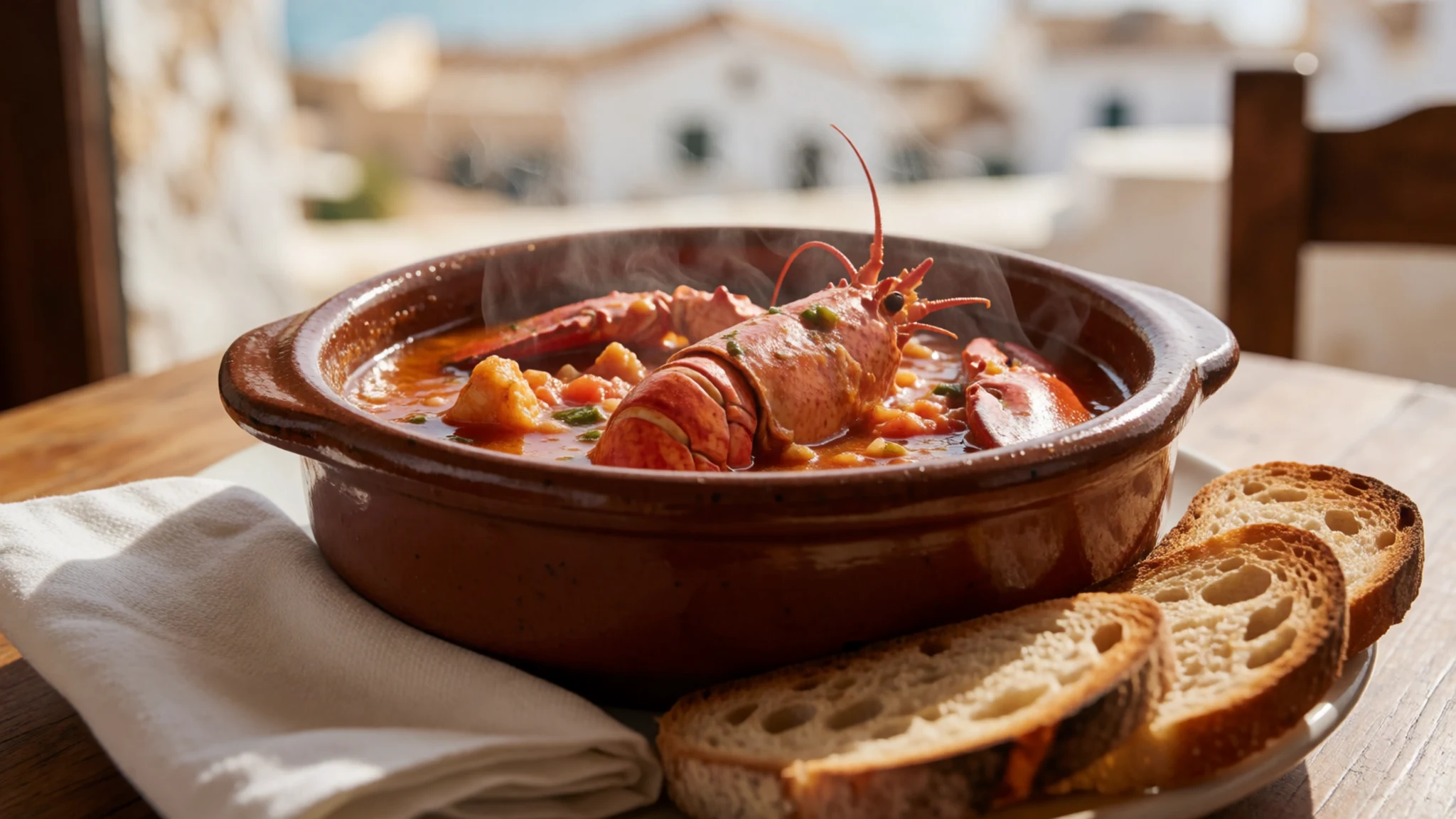
- Mahón Cheese (Formatge de Maó) — Island cheese shops and morning markets
Made from cow's milk, this firm cheese ranges from mild and buttery when young to sharp and crumbly when aged. Farmers rub the rind with olive oil and paprika during curing, giving it a distinctive orange hue.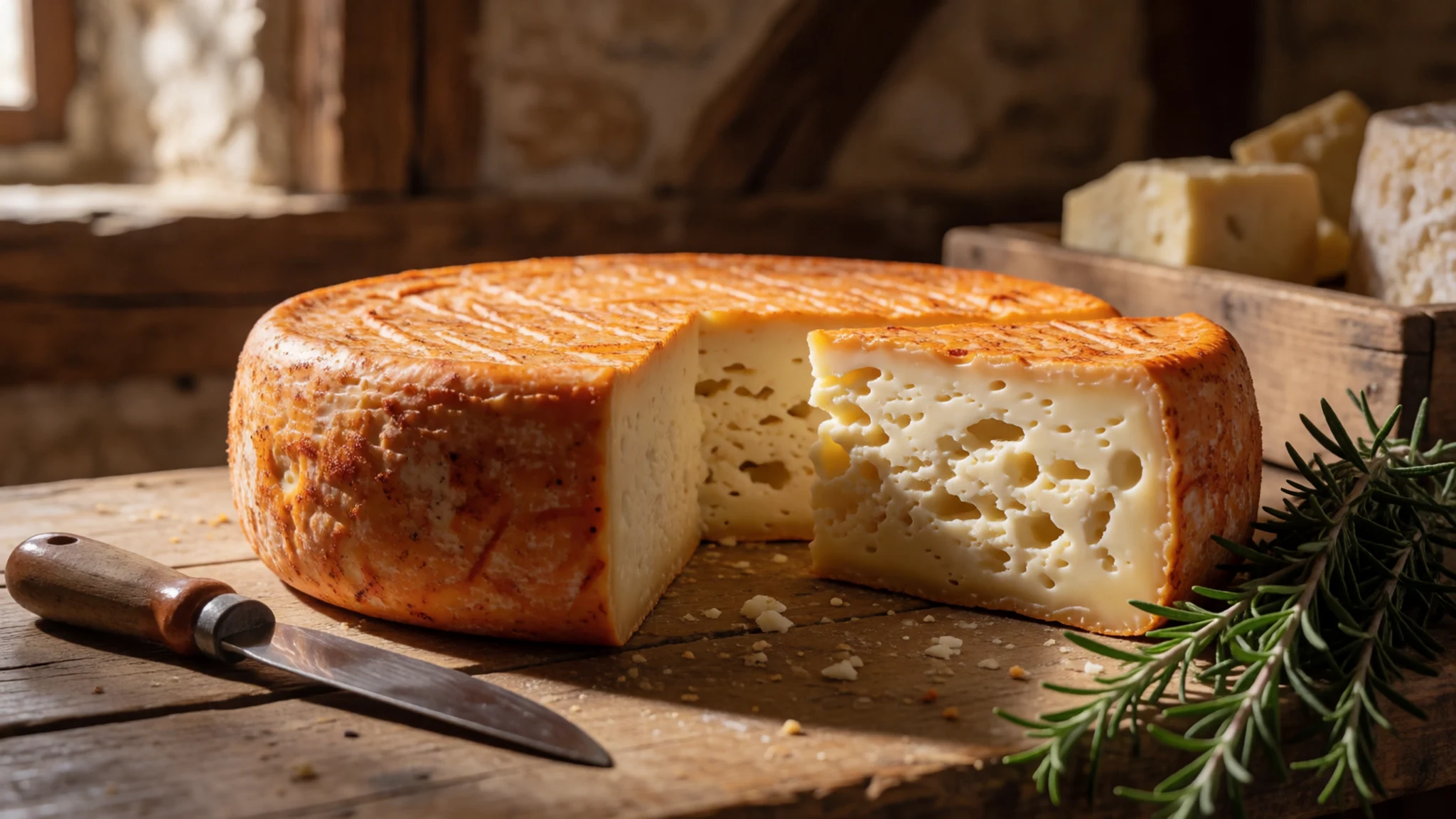
- Sobrassada — Village butcher shops and bakery counters
A cured raw pork sausage seasoned heavily with sweet paprika, garlic, and sea salt. Soft and spreadable, it is commonly enjoyed smeared over crusty country bread or baked into savoury pastries across the island. - Pomada — Waterfront bars and festival stalls
The ultimate Menorcan summer refreshment, this drink blends local Xoriguer gin with cloudy lemonade over ice. Served widely during summer festivals and harbour gatherings, it delivers a crisp, tart citrus flavour. - Ensaimada — Traditional bakeries in town centres
A spiral-shaped, flaky pastry dusted generously with powdered sugar. Eaten for breakfast or afternoon tea, bakeries craft plain versions as well as varieties filled with pumpkin jam or sweet cream.
Plan it
Best time. May–June and September–October offer warm swimming temperatures, comfortable hiking weather, and manageable crowds; July–August brings peak heat and busy beaches.
How long. 3–4
Getting there. Menorca Airport near Mahón handles direct flights from mainland Spain and European cities; passenger ferries also connect Mahón and Ciutadella with Majorca and Barcelona.
Budget. mid
Tips
- Reserve rental cars months in advance for summer travel
- Arrive at popular beach parking areas before 9 am
- Pack reusable water bottles and sun shades for unserviced coves
- Book harbour restaurant tables ahead during peak summer months
Etiquette
- Give horses and riders a clear berth during summer town festivals
- Cover shoulders and knees when entering village churches
- Take all rubbish with you when leaving wild coastal beaches
Nearby
Sources
- Wikidata Q52636 (CC0)
- Wikipedia (rev 1378296224) (CC BY-SA 4.0)
- Wikivoyage (rev 5353637) (CC BY-SA 4.0)
- Photo photos/01-menorca-spain-4-may-2023-52948884259.jpg (CC BY 2.5)
- Photo photos/02-prise-port-mahon-minorque-20-mai-1756.jpg (Public domain)
- Photo photos/03-john-thomas-serres-port-mahon-minorca-with-british-men-of-wa.jpg (Public domain)
- Photo photos/04-mahon-hafen.jpg (CC BY 3.0)
- Photo photos/05-gin-xoriguer.jpg (CC BY 3.0)
- Photo photos/06-cleopatra-butterfly-menorca.jpg (CC BY 3.0)
- Photo photos/07-menorca2021osm.png (CC BY-SA 4.0)
- Photo photos/08-taula-menorca.jpg (Public domain)


