Melk Abbey
Melk Abbey, Austria
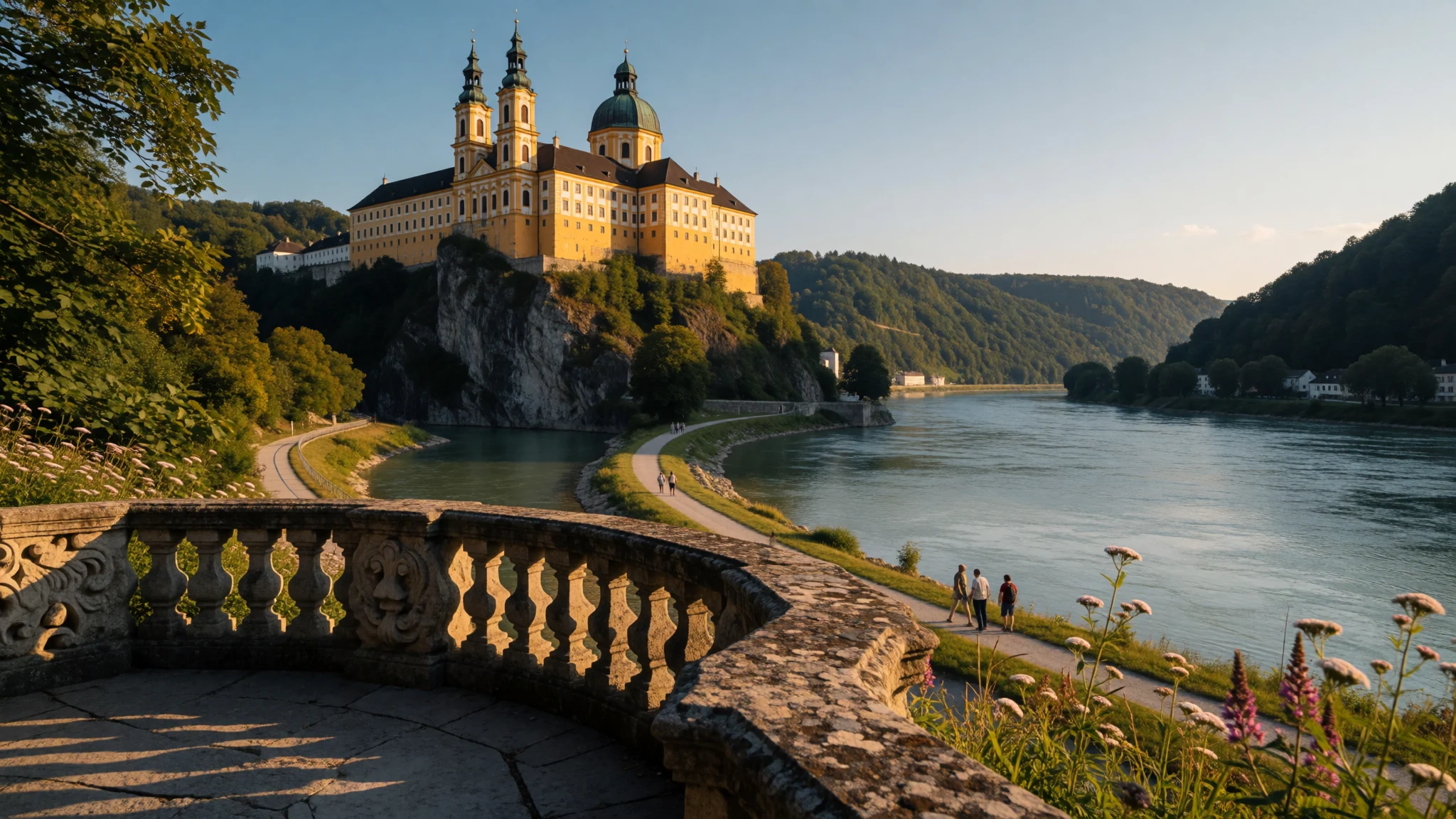
A working Benedictine monastery in Baroque dress, perched on a rock above the Danube at the gateway to the Wachau valley.
The place
Melk Abbey (German: Stift Melk) sits on a rocky bluff above the Danube in Lower Austria, just where the river enters the Wachau valley. From the water its ochre walls and green copper domes look more like a palace than a monastery, but monks still live here and a school still runs in its wings. The abbey belongs to the Austrian Congregation of the Benedictines.
The bluff gives the site its character. To the north the Danube bends past, and the little Melk river joins it below the walls. To the south the old town of Melk spreads out at the foot of the rock, a short, steep walk from the abbey gate. Seen from the opposite bank near Emmersdorf, the whole complex rises over the confluence as one long, rhythmic façade, and that is the view most photographs use.
Inside the walls the abbey holds the tomb of Saint Coloman of Stockerau and the remains of several members of the Babenberg family, the first ruling dynasty of Austria. Behind the main buildings lies a park, laid out in the Baroque period and later reshaped as a landscape garden, with a small pavilion at its heart.
Melk is a long-standing stop for river cruises and for cyclists following the Danube path, so the abbey is busiest at midday in the warm months. The surrounding Wachau Cultural Landscape is a World Heritage Site, and Melk makes a natural start or finish for a journey through its vineyards and apricot orchards. The abbey's own website, http://www.stiftmelk.at, is the place to check opening arrangements.
Its story
Melk Abbey dates its foundation to 1089, when the Babenberg ruler Leopold II donated a fortress on the rock to Benedictine monks from Lambach Abbey. The fortress became a monastery, and in the twelfth century a school grew up beside it, the ancestor of the grammar school that still occupies part of the complex. The library gained a name for copying and collecting manuscripts, many of them with music.
In the fifteenth century Melk became the heart of a reform movement that set out to renew monastic discipline across Austria and southern Germany. That reputation for learning later served the abbey well.
The buildings visitors see today are largely the work of the early eighteenth century, when the architect Jakob Prandtauer rebuilt the whole abbey as a Baroque showpiece. Johann Michael Rottmayr and Paul Troger painted the frescoes in the church. Later in the same century the community became a meeting place for Enlightenment ideas, and some of its monks were Freemasons, with a lodge of their own.
The abbey's standing protected it when Emperor Joseph II closed many Austrian monasteries in the 1780s. It also came through the Napoleonic Wars. In the Nazi period after the Anschluss, the state confiscated the school and much of the abbey, and both were handed back after the Second World War. The school now teaches girls and boys alike.
Literature has kept the name alive. Umberto Eco called a young monk in The Name of the Rose Adso of Melk, and Patrick Leigh Fermor treated his arrival at Melk as a high point of his walk across Europe in A Time of Gifts.
What to see
- Melk Abbey — The rock above Melk
The abbey is the reason for the trip: a long Baroque complex of courtyards, state rooms, a library and a domed church with ceiling frescoes by Rottmayr and Troger. Allow a slow half-day, and check the official site for tour options and the opening pattern through the year.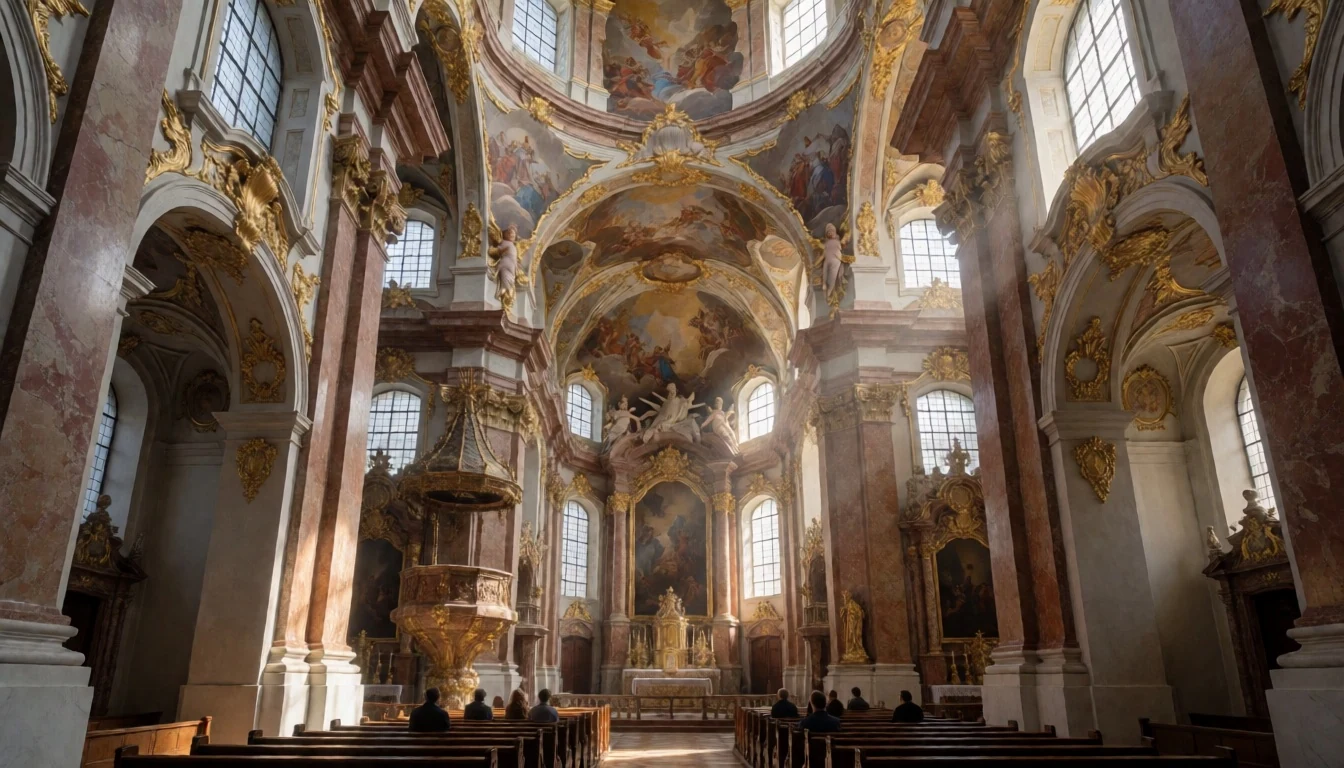
- Abbey Park and Baroque Garden Pavilion — East of the abbey
Behind the abbey, the park began as a Baroque garden and was later replanted in the English landscape style. It is a calm place to sit after the crowded interiors, with shade, lawns and a small pavilion, and the aerial photograph shows how neatly it fits behind the main building.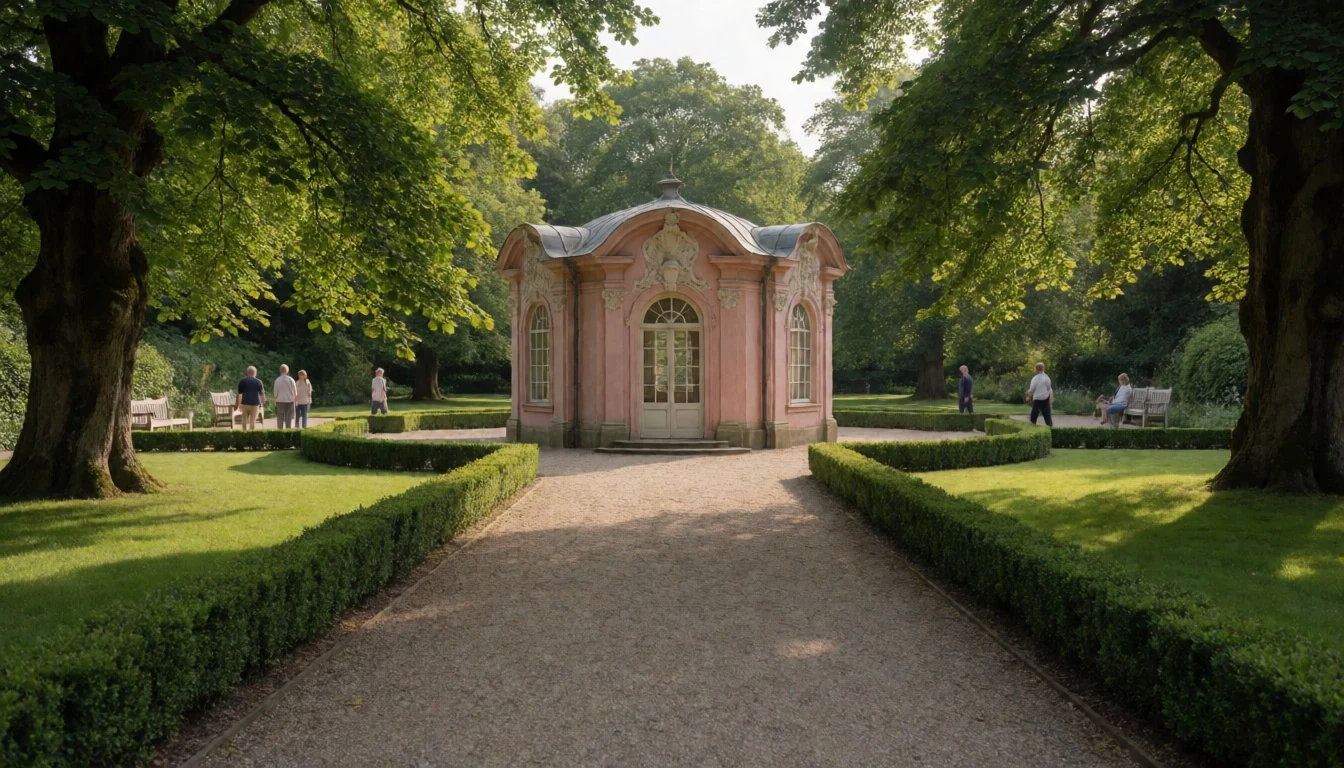
- Old town: Town Hall and Haus am Stein — Melk old town
Below the rock, Melk's small centre is worth an hour. The Town Hall dates from the sixteenth century, and Haus am Stein, a fifteenth-century private house, is the oldest building in town; it is seen from outside only. A few cafés and shops line the lanes between them.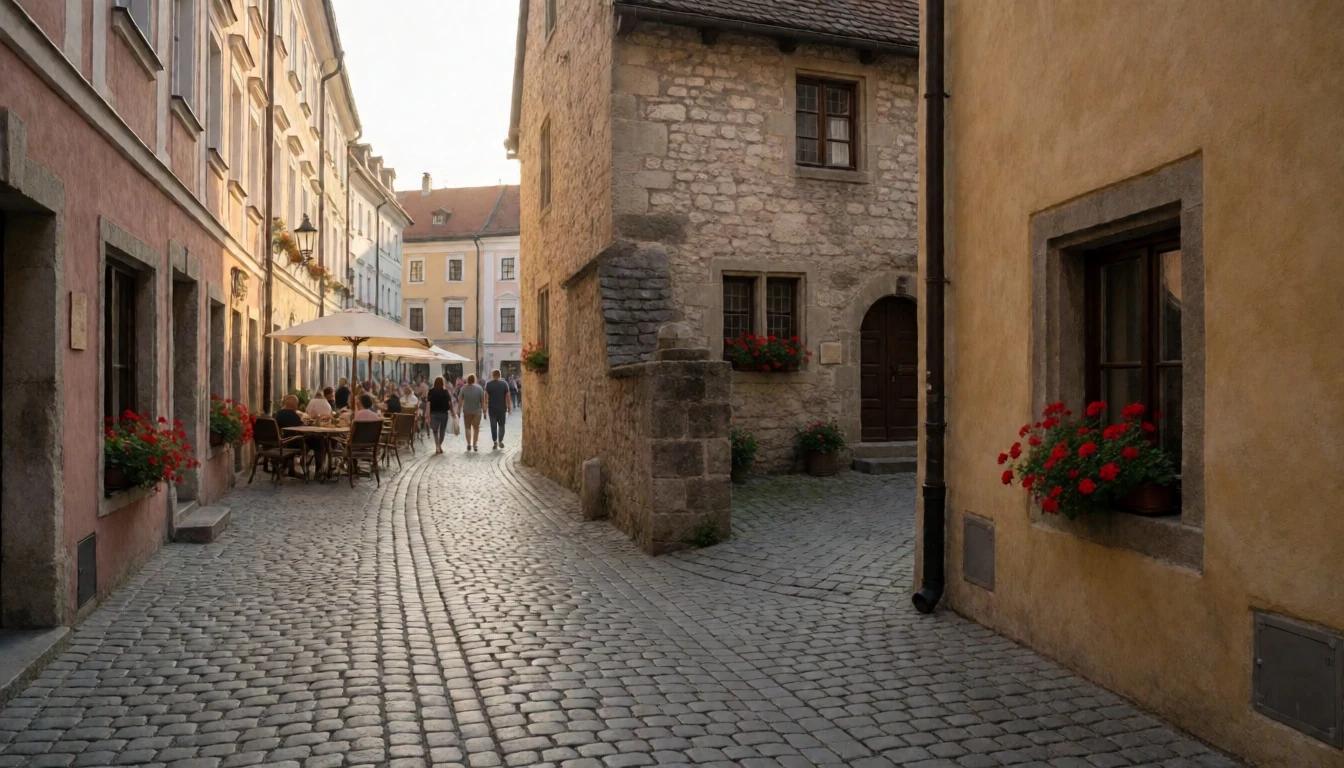
- KZ-Gedenkstätte Melk — Southern edge of Melk
On the edge of town, this memorial marks a former concentration camp, a branch of Mauthausen, which operated in the last year of the Second World War. Thousands of prisoners died here. It is a sober counterpoint to the abbey, and visitors should allow quiet time and read the site's information carefully.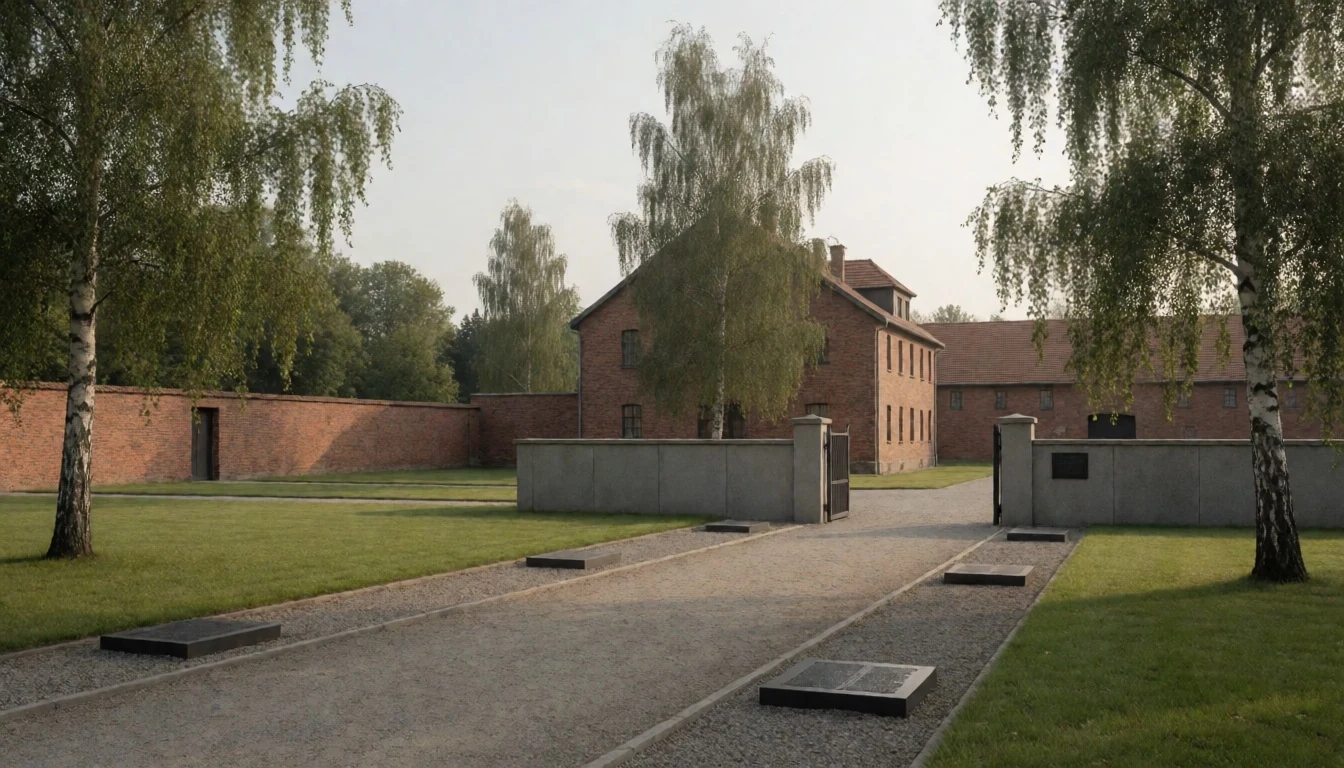
- Schallaburg Castle — South of Melk
A short trip south of Melk, Schallaburg is a well-preserved Renaissance castle on a site occupied since Roman times, with Romanesque foundations. It hosts changing exhibitions, so check what is on before going. It is a good option for a second half-day if the weather turns.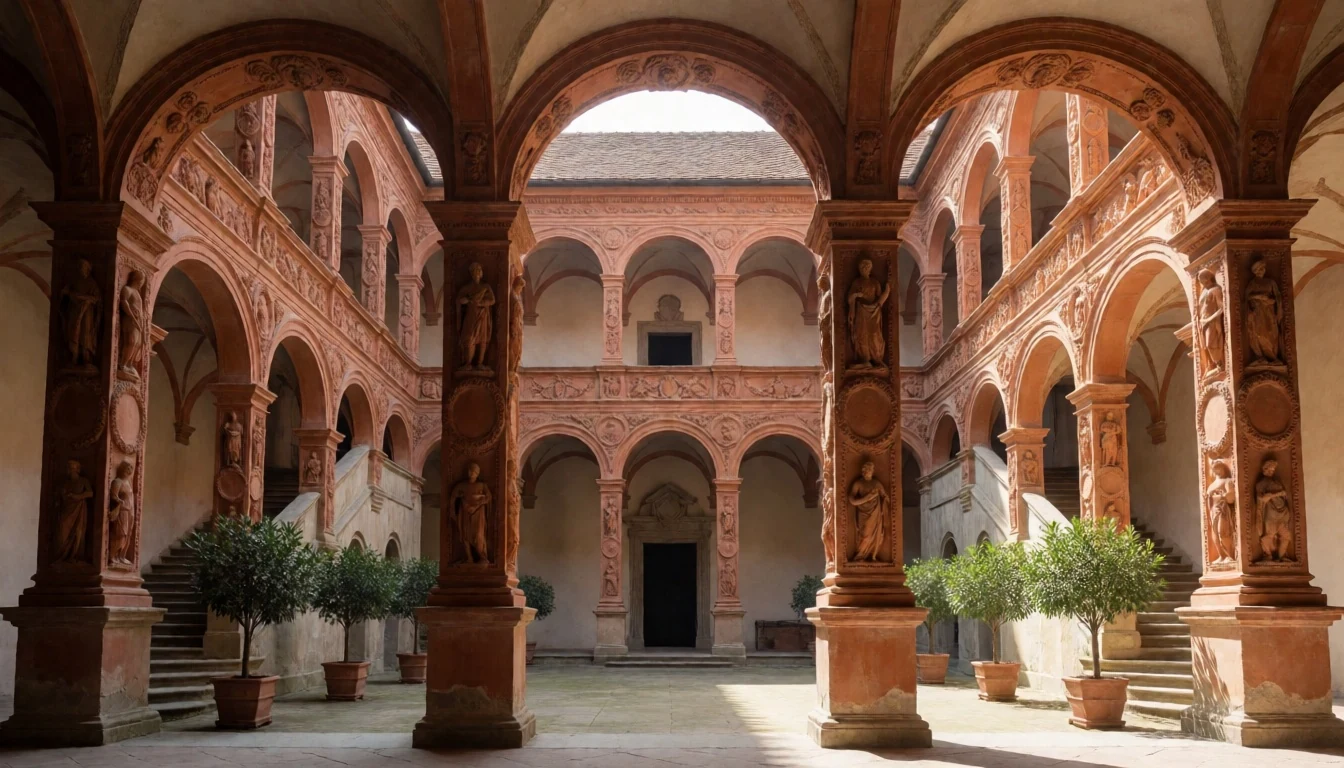
Culture
Melk Abbey is first of all a monastery, and that shapes the atmosphere. Benedictine monks have lived on this rock since 1089, following a rule built around prayer, study and hospitality. The school in the abbey's wings, the library and the church all grew out of that routine, and the Baroque grandeur serves it rather than replacing it.
Catholicism is the cultural backdrop in Lower Austria, and feast days, church bells and processions still mark the calendar in the towns along the Danube. The abbey church is used for worship, and the tomb of Saint Coloman, an early saint linked with the region, is a point of real devotion as well as a sight.
The Enlightenment left its mark too. In the eighteenth century the community was more interested in science, books and open debate than its fortress-like setting suggests, and its learned reputation helped it survive the age of monastery closures. Today it combines tourism with teaching, music and some quiet monastic life.
Austrian visitors tend to treat sights like this with a calm, low-key courtesy: they queue patiently, speak softly indoors and expect the same of others. Guided groups arrive in waves from river cruises around midday, so the rhythm of the day is noticeable.
In the abbey church, keep your voice low, cover bare shoulders, and do not photograph anywhere that a sign or a guide asks you not to.
What to wear
Melk and the Wachau sit in a region with a strong Tracht tradition, the folk dress of the Austrian countryside. The women's version is the dirndl, a fitted bodice and full skirt worn with a blouse and an apron, usually in cotton, linen or wool, with silk for finer pieces. Men wear Lederhosen or wool trousers with a loden jacket, a felted wool cloth that sheds rain. The Wachau is also known for the Goldhaube, an embroidered gold-thread bonnet worn by women on festive and church occasions, alongside regional dress.
In daily life in Melk, people dress plainly and practically. Jeans, fleeces and walking shoes are normal, and cyclists in sports gear are everywhere along the river. Tracht appears at weddings, festivals, harvest events and Sunday outings, and many locals own a good piece even if they rarely wear it.
A visitor should dress for walking and for a working church. The abbey stands on a hill with cobbled and stone surfaces, so comfortable closed shoes with grip are wise. Summer can be hot and the interiors cool, so carry a light layer, and bring a rain jacket outside high summer. Shoulders and knees should be covered inside the abbey church; a light scarf or shirt in the bag solves that. In cooler months, add a warm hat and gloves for the exposed riverside paths and the walk up from town.
What to eat
- Marillenknödel — Traditional inns and restaurants in Melk and the Wachau, especially in apricot season
Apricot dumplings made with a whole Wachau apricot inside a potato or curd dough, rolled in buttered breadcrumbs and sugar. They are a summer speciality of the valley, and they turn up on dessert menus in town and at village inns.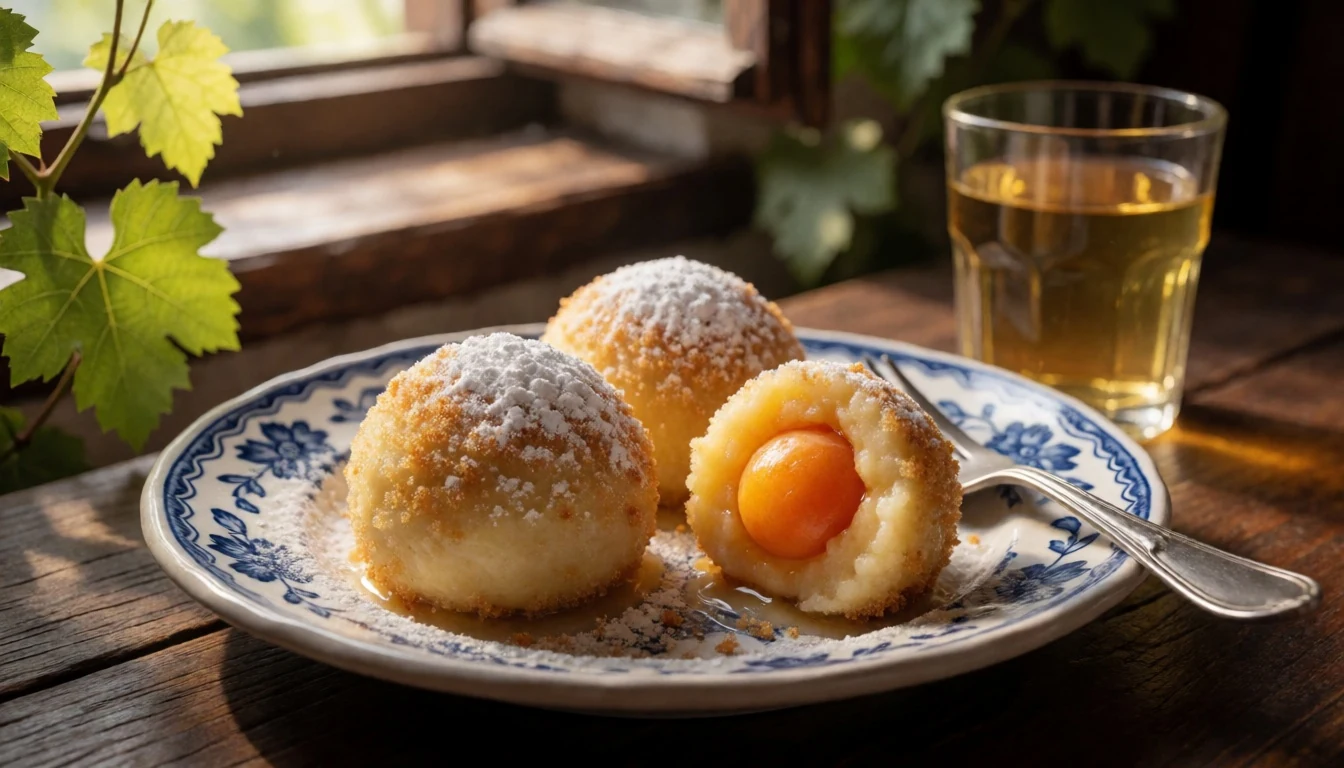
- Wachau wine — Wine taverns and family wineries in the Wachau villages along the Danube
The valley's terraced vineyards produce crisp white wines, especially Grüner Veltliner and Riesling. A glass with lunch is the easy introduction, and a tasting at a winery on a cycling day is a common way to spend an afternoon.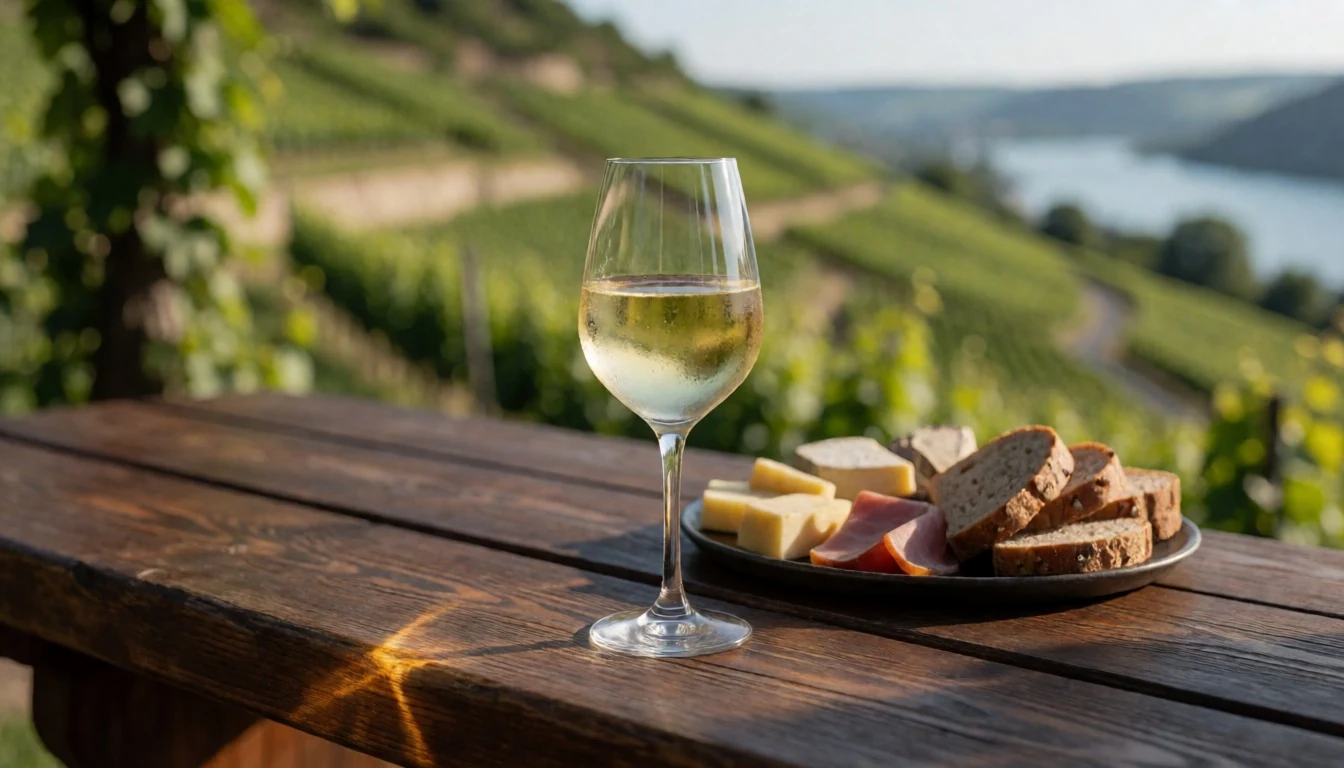
- Wiener Schnitzel — Traditional restaurants in Melk's old town
A thin veal cutlet in breadcrumbs, fried until golden and served with lemon, potato salad or parsley potatoes. It is Austria's everyday celebration dish, and Melk's restaurants serve it plain and unfussy; ask for the veal version if you want the classic. - Danube fish — Inns and riverside restaurants in the Wachau
Trout and other river and pond fish are cooked simply, pan-fried or baked with herbs and butter, and often served with boiled potatoes. Menus along the valley mention local fish when it is in stock, so ask what has come in that day. - Apfelstrudel — Cafés in Melk's old town and the abbey's own restaurant
Thin pastry rolled around spiced apples, raisins and breadcrumbs, baked and dusted with sugar. It is easy to find and best warm with coffee after a morning at the abbey, sometimes with vanilla sauce or whipped cream.
Plan it
Best time. Late April to June and September to October. Spring and early autumn are mild enough for walking and cycling, and river boats run from mid-April through October. Midsummer is warm and busiest at midday; winter is cold and quiet, with fewer boats.
How long. 1–2
Getting there. Fly to Vienna International Airport, then take a train from Vienna towards Melk; check the national rail timetable for the current service. From the station it is a short, uphill walk to the abbey. By car, take the A1 Westautobahn and leave at the Melk exit; Vienna is about 85 km away. From mid-April to October, river boats link Melk with Krems along the Wachau.
Budget. mid
Tips
- Arrive early or late in the day to avoid the river-cruise groups at midday
- Check the official site, http://www.stiftmelk.at, for opening hours, tours and tickets before you go
- Wear grippy closed shoes, as the old town and abbey approaches are steep and cobbled
- Combine Melk with a Wachau boat trip or a bike ride, about 40 km downstream to Krems
- Carry some cash for small cafés and wine taverns, and refill water bottles in town
Etiquette
- Keep your voice low and cover shoulders and knees in the abbey church
- Follow photography signs and do not use flash on frescoes or in the library
- Treat the memorial site with quiet respect
Nearby
Sources
- Wikidata Q660082 (CC0)
- Wikipedia: Melk Abbey (rev 1364852991) (CC BY-SA 4.0)
- Wikivoyage: Melk (rev 5410975) (CC BY-SA 4.0)
- Thomas Ledl, Stift Melk, Westansicht (CC BY-SA 4.0)
- Carsten Steger, Aerial image of Melk Abbey (CC BY-SA 4.0)
- Walter7575, Jesus of Nazareth on the Cross, Stift Melk (CC BY-SA 4.0)
- C.Stadler/Bwag, West view of Melk Abbey (CC BY-SA 4.0)
- Uoaei1, Stift Melk Nordseite (CC BY-SA 4.0)
- C.Stadler/Bwag, Melk Stift (south view) (CC BY-SA 4.0)
- Aconcagua, Stift Melk main entrance (CC BY 3.0)
- Matt Joseph, Melk Abbey main entrance (CC BY-SA 4.0)


