Medellín
Medellín, Colombia
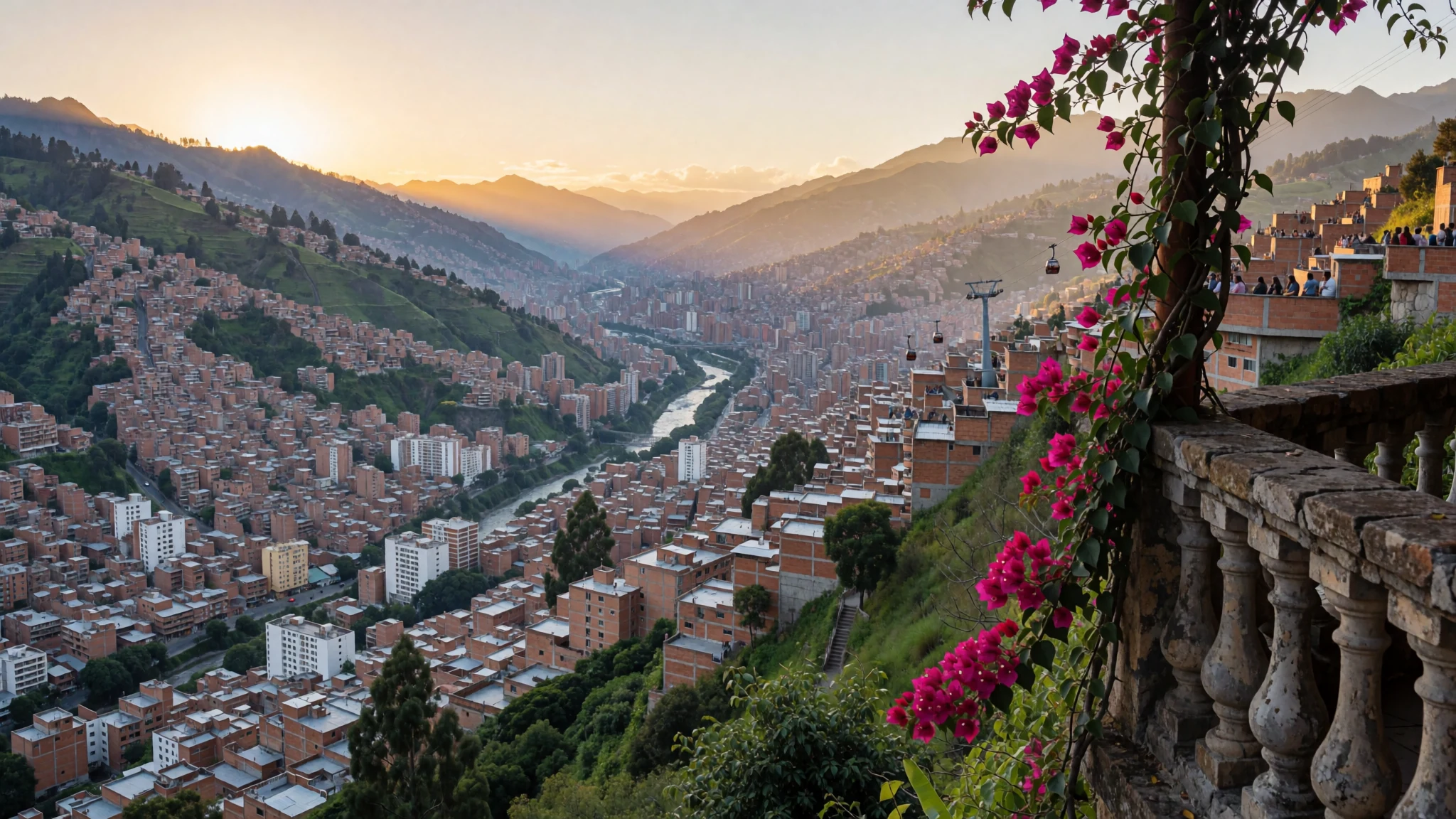
Medellín sits high in the Andes at about 1,500 m, with a metro, a Botero square and a paisa culture worth an unhurried visit.
The place
Medellín lies in the Aburrá Valley, a long trough in the central Andes at about 1,500 m above sea level. It is the capital of the department of Antioquia and has roughly 2.5 million residents, so it feels substantial without the sprawl of some Latin American capitals. Neighbourhoods climb the hillsides in tiers, and the air is noticeably cooler than the valley floor suggests, which is why walking here tends to take longer than planned.
Life in the valley follows the river and the metro line. The Metro runs along the valley floor, and cable cars carry passengers up to hillside barrios, making it the easiest way to get an overview of the city. A long ride on it is a practical orientation for a first day.
The city's identity is tied to a regional culture called paisa, known for its accent, its hearty food and its welcome. Art is part of ordinary street life: bronze sculptures by Fernando Botero stand in public squares, and museums, parks, theatres and libraries are used by residents as much as visitors. Catholic churches and religious processions remain a steady part of the calendar in many districts.
Rather than a single old core, Medellín is a set of districts. The Centro, El Poblado, Laureles and Aranjuez each have their own pace, and moving between them by metro is straightforward.
Its story
Medellín began as a crossing point in a valley that Spanish explorers first reached in 1541. A scout sent by Marshal Jorge Robledo walked onto the valley floor during a night in August, and the Spanish briefly called it the Valley of Saint Bartholomew. The native name, Aburrá, which some sources connect with the painted textile patterns worn by local rulers, soon replaced it.
Early colonial life revolved around land and herding. In 1616, a colonial visitor founded a settlement of around 80 Indigenous people on the southern edge of the valley, a place now known as El Poblado. Colonial rules of the period sought to keep Indigenous people, mestizos and people of mixed African descent apart, and the towns that grew up reflected those divisions.
The main town was founded in 1675, when Queen Mariana of Austria authorised a settlement in the Aná area, close to the present-day city centre. Its church of Candelaria still gives the older part of town its focus, and the nearby park carries a name from the same period of Spanish administration.
In 1826, the national congress of the young Republic of Gran Colombia named Medellín the capital of Antioquia. Through the nineteenth century the town grew around trade, mining and textile workshops, and its industrial character deepened after the railways arrived.
The late twentieth century was a hard period for the city. Its recovery since then has been built on public transport, public libraries, parks and the cultural programmes that now define its reputation.
What to see
- Museo de Antioquia — Centro
The city's main art museum holds a large collection of modern and contemporary work, with many paintings and sculptures by Fernando Botero, the Medellín-born artist. It is a good starting point for understanding the paisa tradition in painting. Allow a couple of hours, and check the official site for current opening times before you go.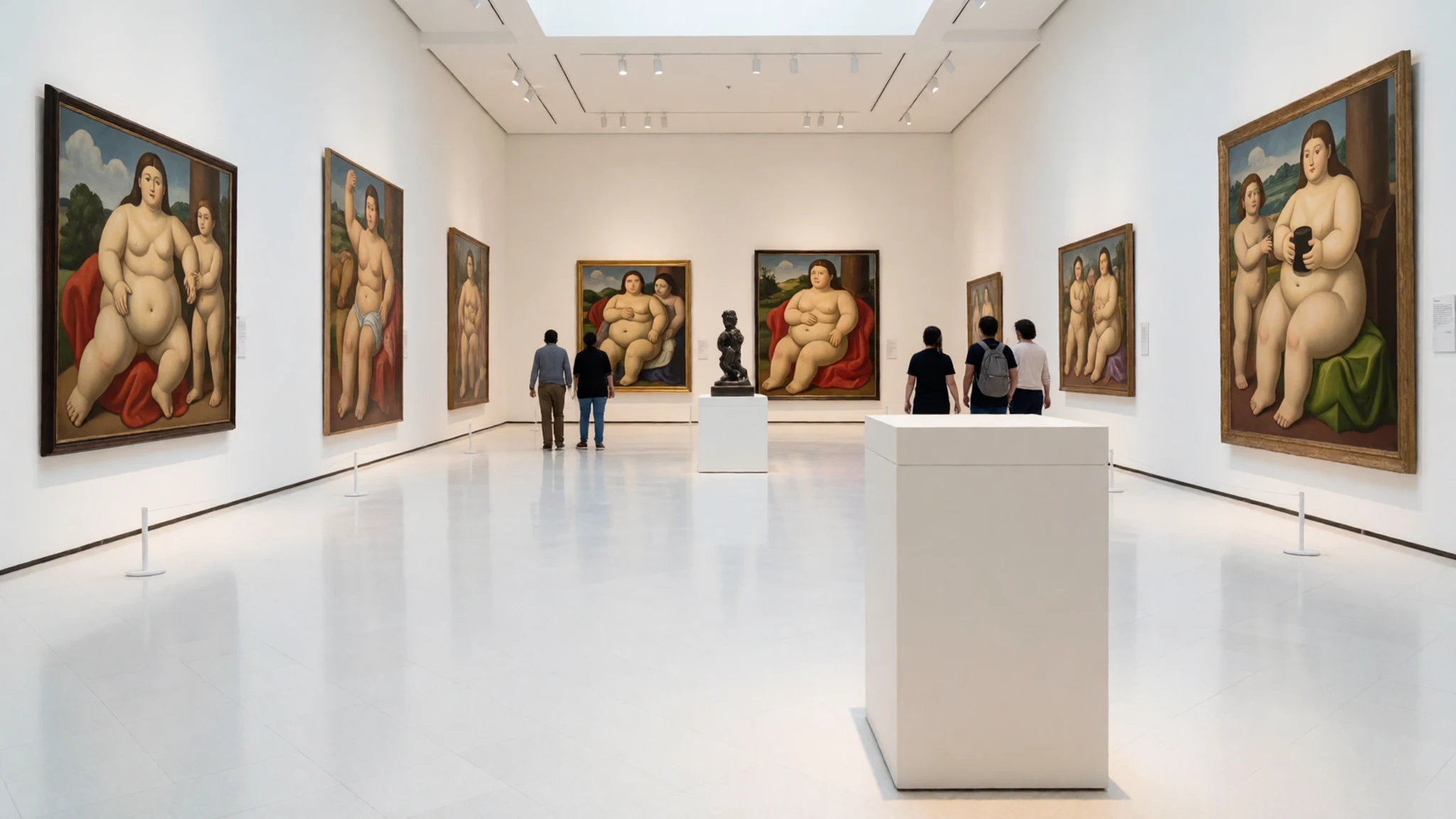
- Plaza Botero — Centro
An open square near the museum where a series of Botero's bronze figures, rounded and monumental, stand among pedestrians and office workers. It is one of the easiest places in the city to see his work for free, and it is busiest in the late afternoon.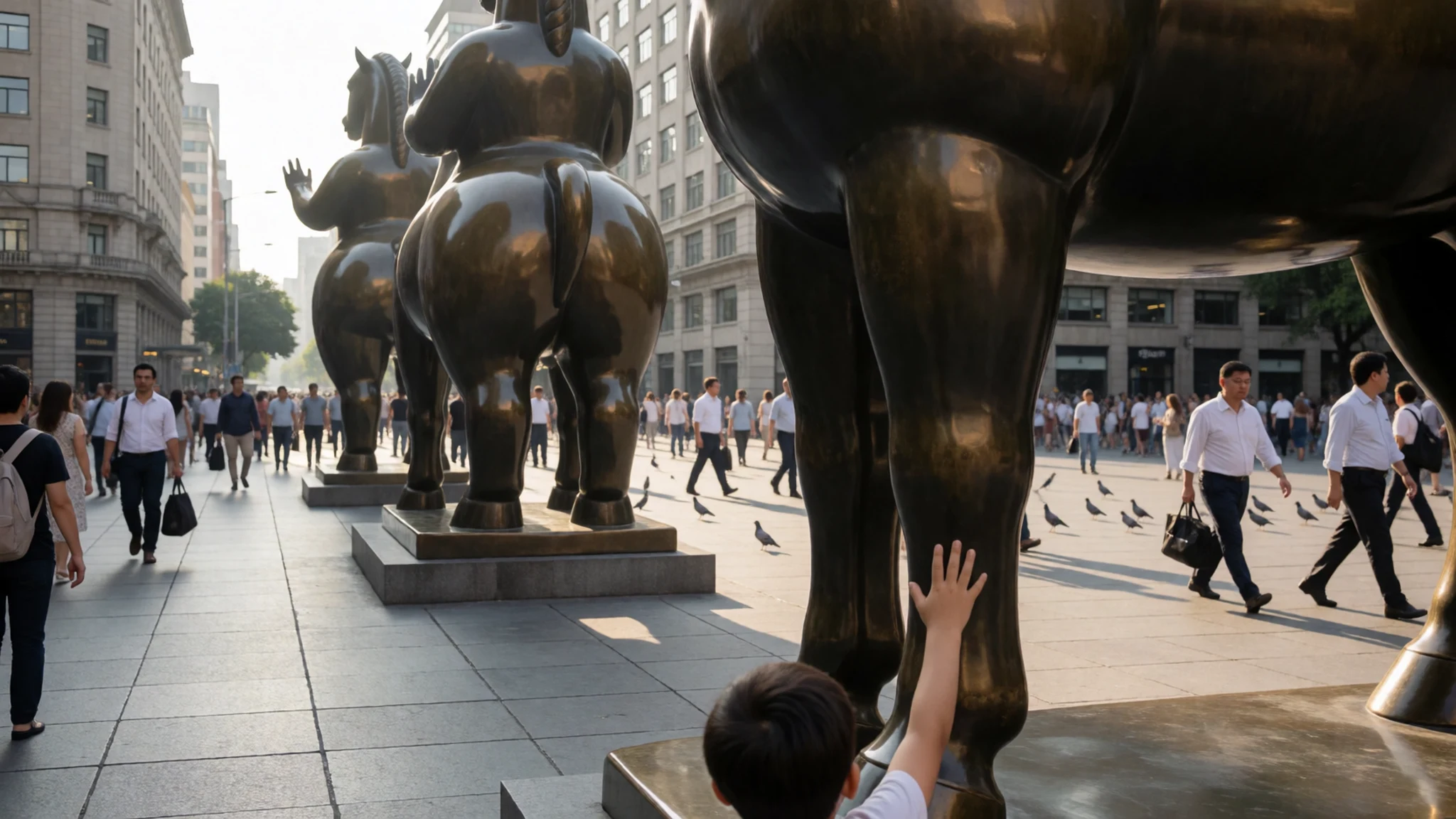
- Biblioteca Temática EPM — Centro
A modern public library on the Plaza de Cisneros, designed with open reading spaces and views over the square. It shows how the city has used civic buildings to bring residents into the centre, and it is a calm place to sit for a while.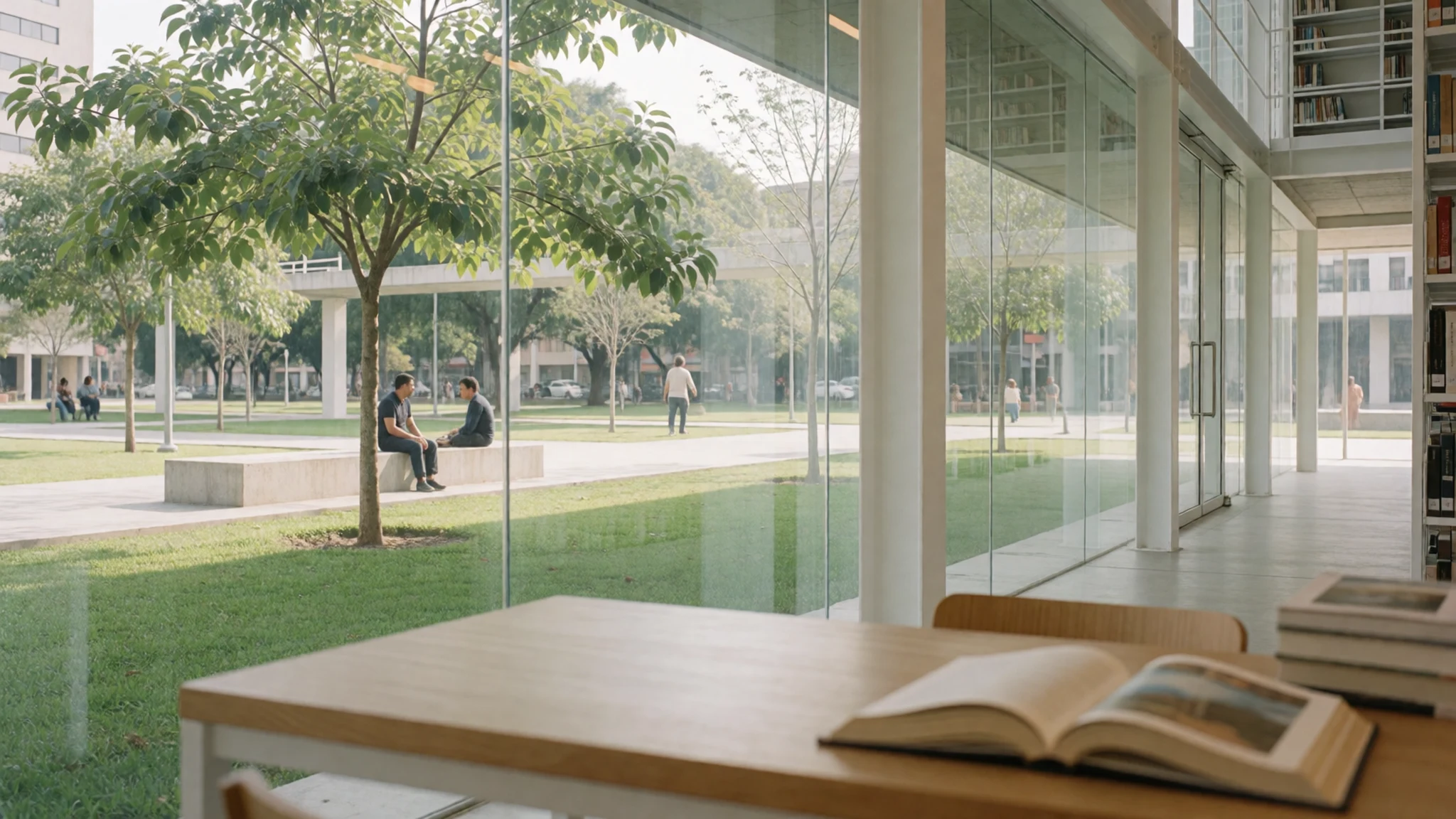
- Metropolitan Cathedral — Centro
The cathedral is built entirely of baked brick, and it is often described as the largest cathedral of its kind in the world. Its scale is best appreciated from the square outside. Go during a quiet hour if you want to see the interior without crowds.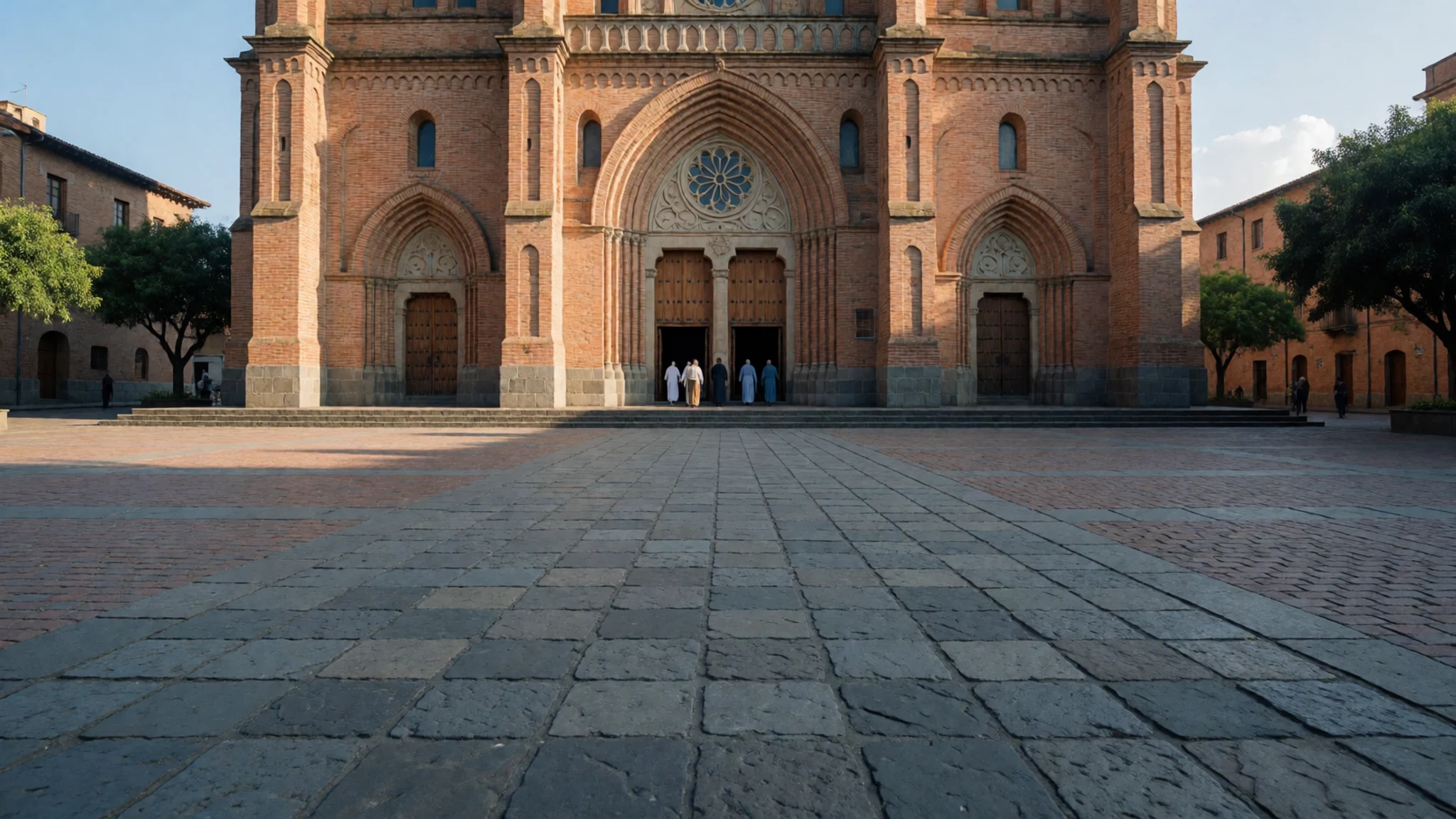
Culture
Medellín's identity is shaped by a regional paisa culture, with its own accent, cooking and a strong sense of hospitality that visitors often notice on their first day. The city has a dense cultural life for its size: many museums, parks, theatres and public libraries serve local people as well as visitors. Several of its buildings carry national monument status, and the city holds the UNESCO Design City recognition, which reflects its public design and urban projects.
Most residents are Catholic, and churches are part of daily life in many neighbourhoods. The Metropolitan Cathedral and smaller parish churches hold services through the week, and people often come in straight from work. Keep your voice low, dress modestly and avoid photographing people at prayer without asking first.
What to wear
Medellín's traditional dress belongs to the wider paisa region of Antioquia rather than to the city alone. The most recognisable garments are the ruana, a thick woollen cape worn over the shoulders in the cooler Andean towns, and the sombrero aguadeño, a straw hat from the town of Aguadas that is still worn for farm work and celebrations. Textile decoration has a long history in the valley, which some sources link to the painted patterns of its early rulers.
Day to day, people in Medellín dress much as they would in any modern Colombian city. Office workers wear smart casual clothes, students favour jeans and trainers, and the fashion scene in the El Poblado and Laureles districts is fairly sophisticated. Traditional costume appears mainly at festivals and in folk performances.
For a visit, dress in layers. Days can be warm, but evenings in the hills are cooler, and afternoon showers are common. Wear comfortable shoes with decent grip for the steep, sometimes uneven pavements, and cover shoulders and knees when entering churches.
What to eat
- Bandeja paisa — traditional lunch restaurants in the Centro
The regional platter, usually served with rice, beans, minced meat, chorizo, fried egg, plantain and avocado. It is a big midday meal, and it is best eaten at a traditional lunch restaurant, where the set lunch of the day is often the cheapest way to try it.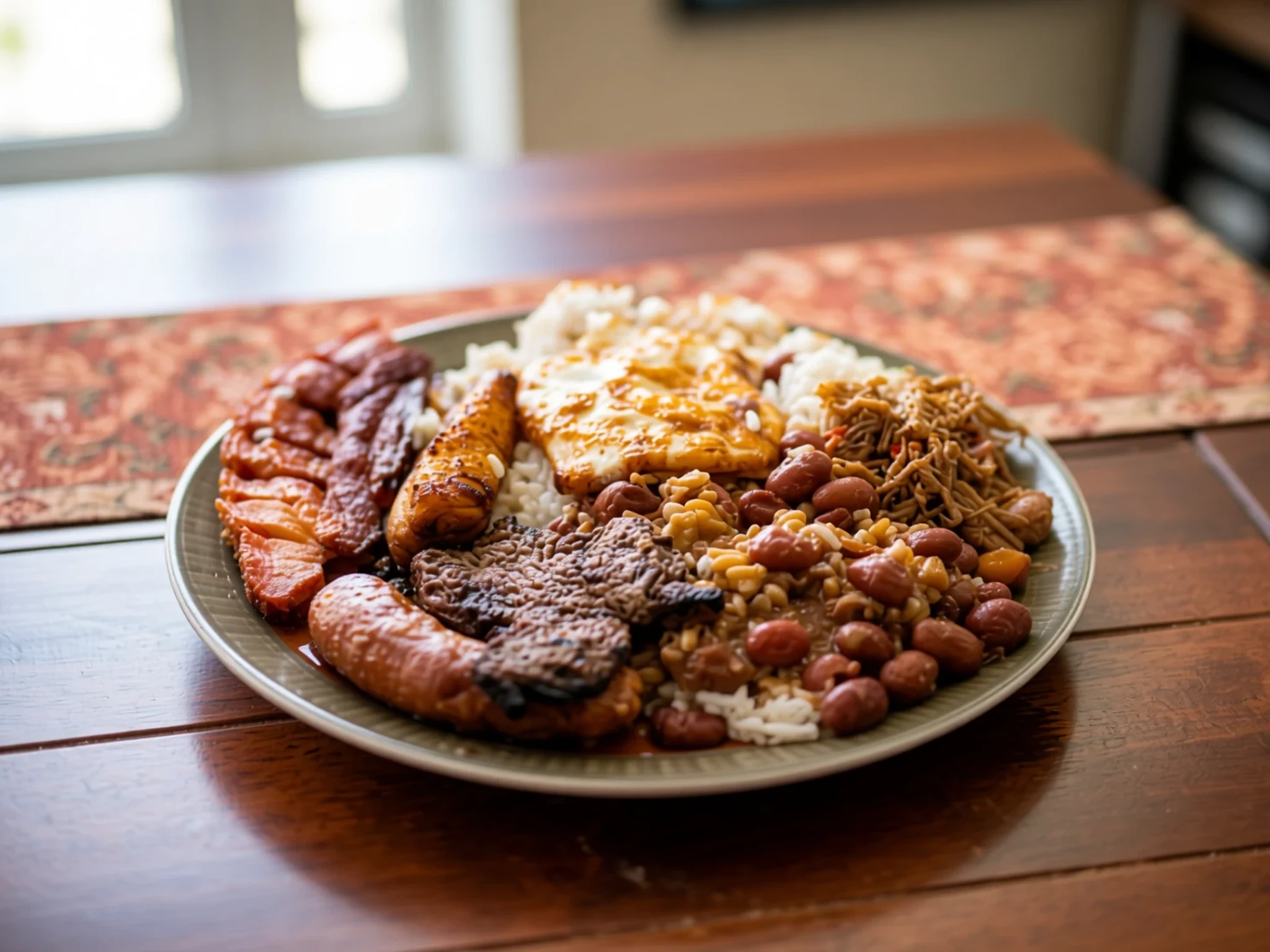
- Sancocho — family-run eateries near the markets
A slow-cooked soup of chicken or beef with potato, yuca, corn on the cob and plantain. Local families often eat it on Sundays. It is widely available at family-run eateries, especially in the areas around the older markets.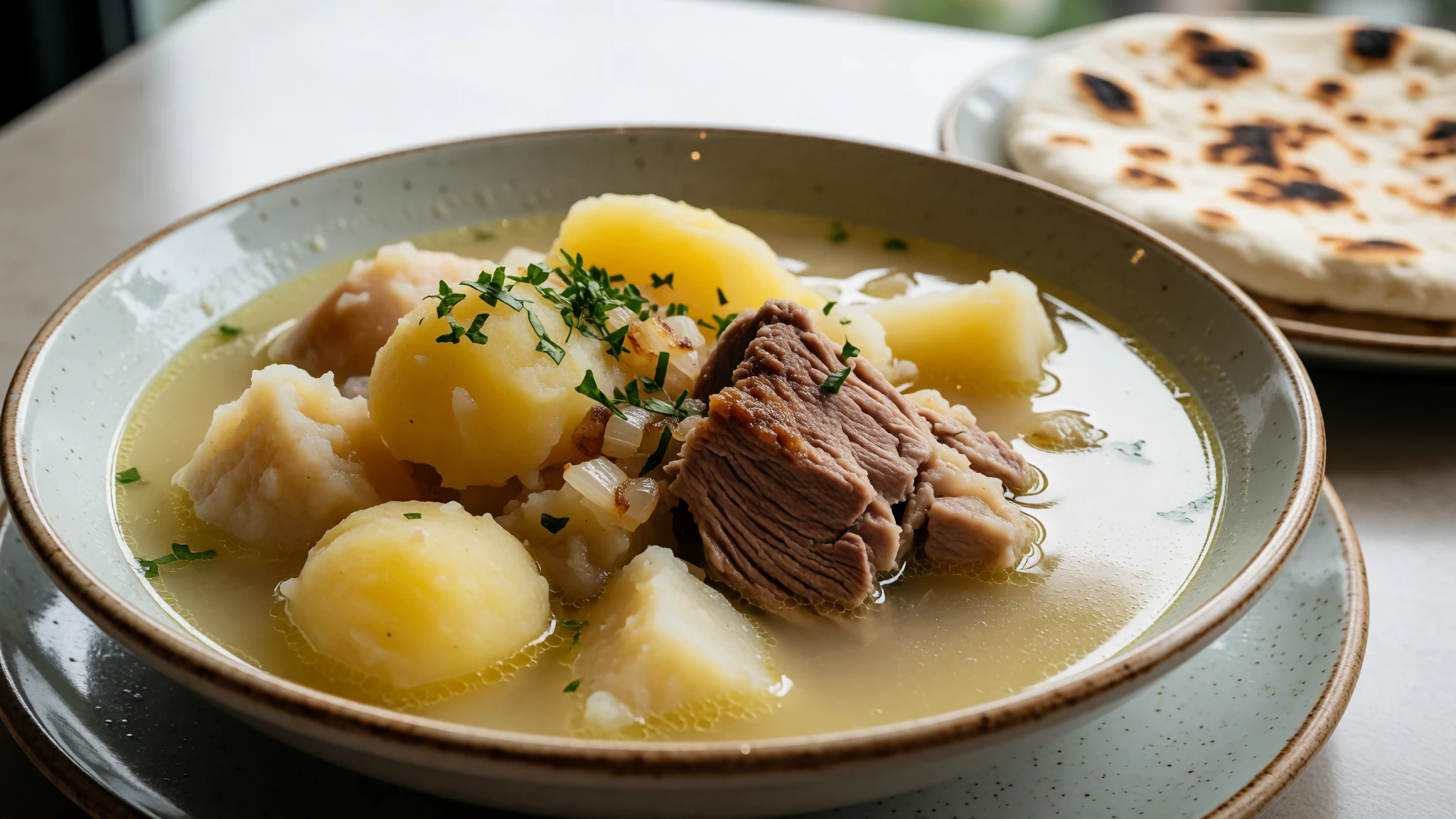
- Arepa de choclo — street carts in the Centro and near the metro stations
A sweet corn cake, grilled or fried and often topped with a slice of salty cheese. It works well as a snack between museum visits, and street carts sell it through the day.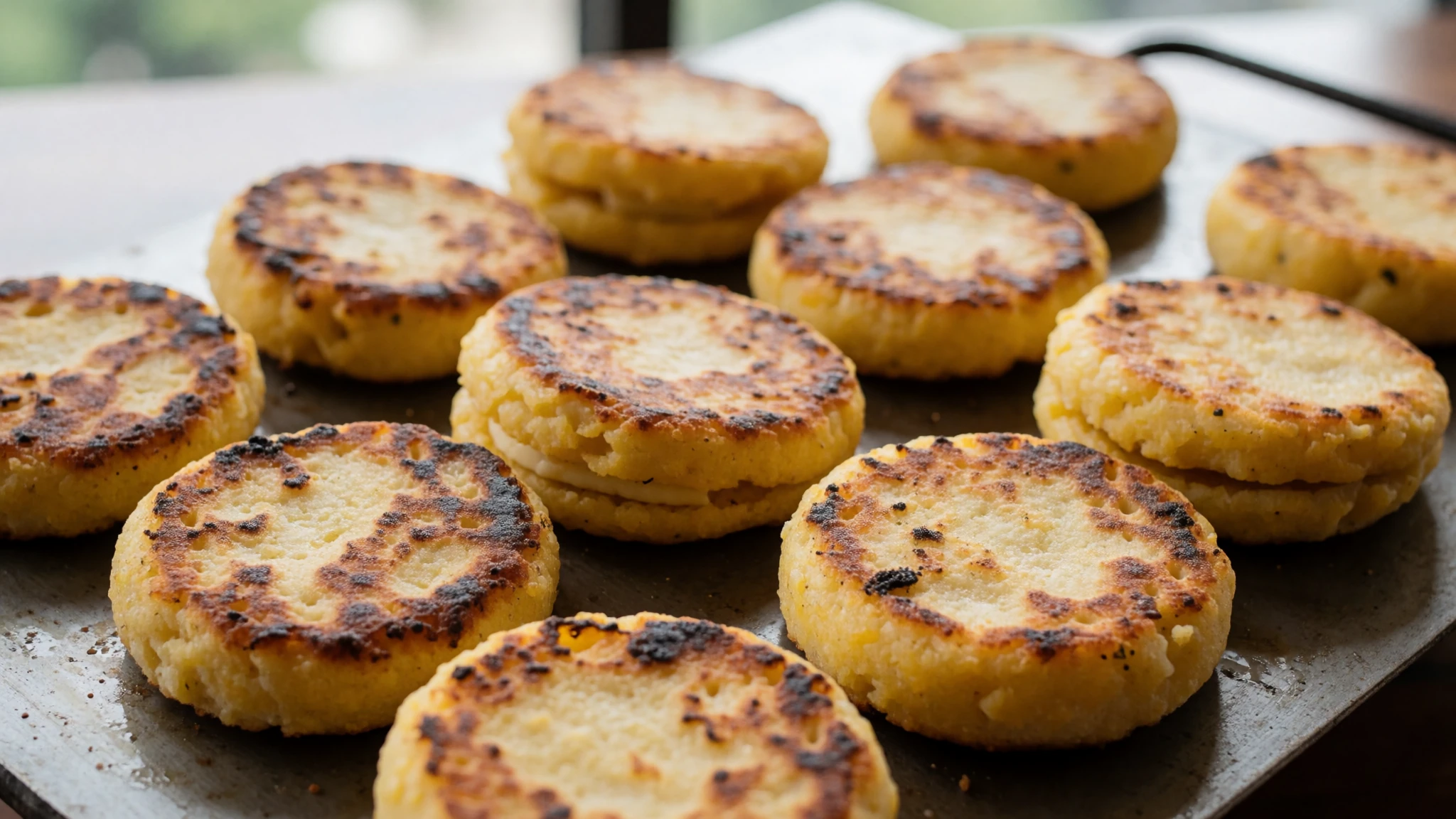
- Empanadas — bakeries and street counters across the city
Small fried or baked pastries filled with potato, meat or cheese and served with a spicy sauce. They are sold at bakeries and street counters across the city, and they make a cheap, filling option between meals.
Plan it
Best time. Medellín sits at about 1,500 m, so its climate is mild rather than hot, and the temperature changes little through the year. The drier stretch runs from about December to March, with January and February the driest months, while May is the wettest and April and October are close behind. Expect showers at most times of year, and check the forecast before planning outdoor walks.
How long. 3
Getting there. Medellín's MDE airport is the nearest airport. Airport buses run to the city, and the last leg is usually the metro from the Exposiciones station. Taxis from the airport have a set fare, so confirm it before getting in. Check the official site for current bus and transport details.
Budget. mid
Tips
- Visit the Botero museum and square in the morning, when the Centro is quieter
- Carry some cash for small eateries and buses, and use cards at larger shops
- Walk slowly on the first day, because the city's altitude makes steep streets tiring
- Plan metro trips in advance and allow extra time at rush hour
- Check medellin.gov.co for current transport and museum opening hours
Etiquette
- Ask before photographing people at work or at religious processions
- Keep your voice low inside churches during services
- Let passengers off the metro before boarding
Nearby
Sources
- Wikidata Q48278 (CC0)
- Wikipedia (rev 1381984111) (CC BY-SA 4.0)
- Wikivoyage (rev 5410892) (CC BY-SA 4.0)
- Photo 01 Panorámica desde el Cerro El Picacho, Luis90f (CC BY-SA 4.0)
- Photo 02 Centro de Medellín en dron, Juan Gómez (CC BY 2.5)
- Photo 03 Tren CAF del Metro, Daniel Angulo Ibarbo (CC BY-SA 4.0)
- Photo 04 Museo El Castillo, Weimargomez (CC BY-SA 4.0)
- Photo 05 Hombre a Caballo, José Luiz (CC BY-SA 4.0)
- Photo 06 Biblioteca Temática EPM, Jorge Gómez (CC BY 3.0)
- Photo 07 Pueblito Paisa, RH Ruggles (CC BY-SA 4.0)
- Photo 08 Plaza de la Libertad, einalem (CC BY-SA 2.0)


