Mayapan
Mayapan, Mexico
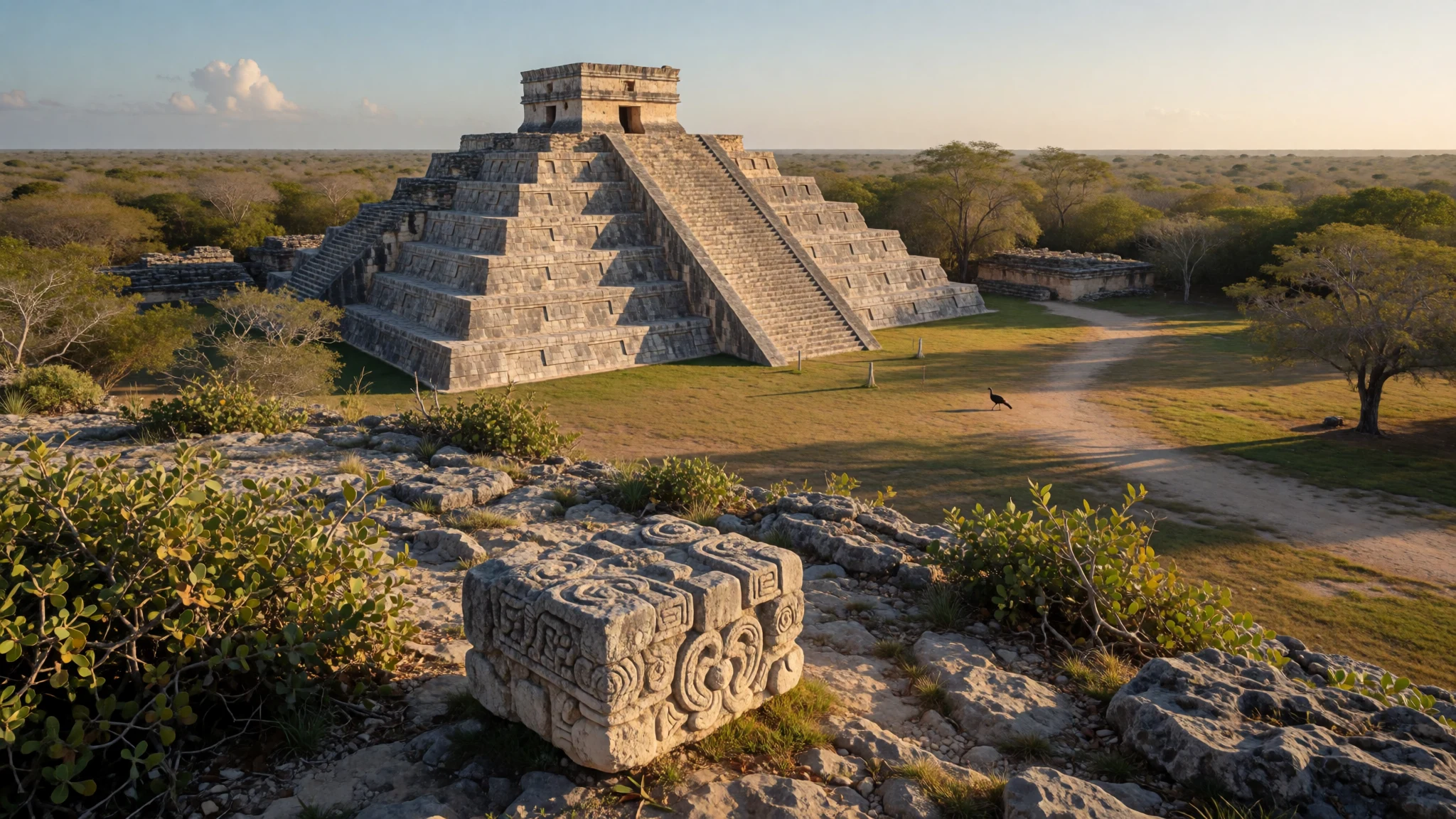
Explore Mayapan to discover the last great political capital of the ancient Maya civilization without the overwhelming crowds found at neighbouring sites.
The place
Mayapan stands as a remarkable pre-Columbian archaeological zone situated in the state of Yucatan, Mexico. Located south of the village of Telchaquillo, the ancient settlement covers a wide expanse of scrub-covered limestone terrain that once served as the primary political and cultural powerhouse of the region. Unlike other monumental ruins that sit in isolation, Mayapan offers a remarkably intact sense of an ancient urban landscape, enclosed by defensive stone perimeters that once guarded thousands of residential structures, sacred plazas, and civic platforms. Visitors walk among remnants of columns, altars, and temples that reflect the ambition of a society in its final flourishing chapters. The site remains remarkably tranquil, allowing travellers to hear the calls of local birds echoing across stone terraces rather than the constant murmur of tour groups. Sunlight beats down intensely across the open plazas, making early morning arrivals essential for anyone hoping to wander the pathways in comfortable conditions. The surrounding countryside retains a quiet rural rhythm, dotted with traditional villages where Spanish and Maya are spoken in equal measure, setting a deeply authentic stage for exploring the deep history of the peninsula. Every corner of the archaeological zone reveals fragments of carved stucco and weathered stone, bearing silent witness to centuries of human habitation, ambition, and adaptation in a challenging tropical environment.
Its story
The historical narrative of Mayapan is preserved through both archaeological investigation and colonial-era accounts compiled from native sources. According to traditional records, the settlement came into existence after the decline of Chichen Itza, when regional lords sought to re-establish a centralised administration under the leadership of a new capital. Kukulcan, a revered figure associated with leadership and governance, is traditionally credited with convening the noble families to lay out the city within protective boundaries. For generations, the ruling elites of various allied towns maintained a delicate balance of power by sending family representatives to reside within the capital. This political experiment endured for over two centuries, during which time art, architecture, and religious traditions flourished under a unified regional authority. Architectural styles throughout the urban centre borrowed heavily from earlier traditions, creating a deliberate visual connection to the golden age of the lowlands. Eventually, internal strife, shifting alliances, and social tensions strained the fragile coalition holding the city together. Archaeological excavations and historical chronicles indicate that the capital ultimately fell amid internal revolts and political fracturing, leading to the abandonment of the urban centre long before European ships arrived on the shores of the Yucatan. The stone plazas gradually surrendered to the creeping roots of the dry forest, remaining dormant until modern researchers began the patient work of mapping and excavating the ruined city.
What to see
- Pyramid of Kukulcan — Central Archaeological Zone
Rising above the main plaza, this structure echoes the famous architectural style seen at larger regional sites. Visitors can climb the stone steps for sweeping panoramic views across the entire archaeological zone and the surrounding flat jungle canopy. A small chamber near the summit preserves traces of ancient murals. - Observatory El Caracol — Northern Sector
This rounded stone structure reflects the deep interest that Mayapan astronomers held in tracking celestial movements and planetary cycles. Builders designed the placement of openings and walls to align with significant astronomical events, connecting earthly rulers with the heavenly spirits of the gods. - Temple of Painted Niches — Inner Plaza Area
This sacred building contains several preserved wall paintings depicting ritual doorways and symbolic shrines. The artistry inside provides a vivid window into the religious iconography and aesthetic sensibilities upheld by the inhabitants during the late period of occupation. - Cenote Telchaquillo — Village of Telchaquillo
Tucked away near the nearby village, this subterranean sinkhole features shallow, crystal-clear water used by local residents for daily bathing and cooling off. Travellers who visit in the afternoon often find the peaceful subterranean pool entirely to themselves.
Culture
Mayapan sits within a region deeply shaped by Mayan heritage, where contemporary communities maintain traditions, agricultural rhythms, and linguistic ties passed down through generations. Traditional social life in the surrounding villages revolves around community celebrations, family ties, and a profound respect for the land and local cenotes. Visitors to Mayapan and its surrounding settlements will encounter a welcoming local population, many of whom speak Yucatec Maya alongside Spanish. Cultural etiquette here calls for a gentle, polite demeanour; greeting shopkeepers and local residents with a polite 'Buenos días' or 'Buenos tardes' opens doors and establishes immediate warmth. When exploring the archaeological zone, treat the ancient stones with reverence, avoiding climbing on restricted walls or disturbing delicate stucco reliefs. Dress modestly when visiting community spaces outside the ruins, covering shoulders and knees to respect local conservative values. Always ask for permission before photographing local residents or traditional artisans engaged in their daily routines.
What to wear
Traditional dress across the rural Yucatan region reflects both practicality in a hot climate and rich indigenous textile heritage. For generations, women have worn the 'huipil', a traditionally square-cut white cotton dress beautifully embroidered around the neckline and hem with colourful floral motifs in cross-stitch or geometric patterns. Men traditionally wear lightweight white cotton shirts and trousers, perfectly suited for working outdoors under the tropical sun. In modern daily life around Mayapan and Telchaquillo, residents dress casually and practically, with younger generations favouring contemporary western clothes like denim jeans, t-shirts, and trainers while maintaining traditional garments for festivals and ceremonies. For travellers exploring Mayapan, comfort and sun protection are essential. Lightweight, breathable linen or cotton clothing in light colours helps deflect the intense heat of the midday sun. Sturdy walking shoes or trainers are crucial because the paths across the archaeological ruins are uneven, rocky, and dusty. A wide-brimmed hat, UV-blocking sunglasses, and a reliable supply of sunscreen are indispensable items for anyone planning to spend hours walking among exposed stone pyramids and sun-baked plazas.
What to eat
- Yucatecan Regional Lunch — Cocina Ancona in Telchaquillo village
Sample traditional local specialities such as slow-roasted citrus-marinated meats wrapped in banana leaves, served alongside warm corn tortillas and freshly ground habanero salsa at the village eatery in Telchaquillo. - Local Street Pizza — Telchaquillo village centre
On weekend evenings, small family-run wood-fired pizzerias open their doors near the village square, offering casual dining options for visitors staying late or passing through the area. - Fresh Regional Citrus Drinks — Local markets and roadside stalls
Cool down with refreshing local beverages made from fresh limes, sour oranges, or local tropical fruits harvested from orchards across the surrounding Yucatan countryside.
Plan it
Best time. November to April offers the most pleasant weather, avoiding the heavy summer rains and extreme heat of May and June.
How long. 1–2
Getting there. Take a first-class or second-class bus from Mérida to Telchaquillo, or hire a taxi or private shuttle from the nearby Teya Mérida train station.
Budget. low
Tips
- Arrive early in the morning before the tropical heat peaks across the exposed stone plazas.
- Double-check navigation apps to ensure you are heading to the archaeological site rather than the distant town of the same name.
- Carry sufficient cash for bus fares, entrance fees, and small village eateries.
- Bring plenty of drinking water, as there are no shops or vendors inside the archaeological zone.
Etiquette
- Greet local residents politely in Spanish before asking for directions or ordering food.
- Ask for permission before photographing people in nearby villages.
- Respect all rope barriers and signage within the ruins to protect fragile stone structures.
Nearby
Sources
- Wikidata Q567966 (CC0)
- Wikipedia Mayapan (CC BY-SA 4.0)
- Wikivoyage Mayapan (CC BY-SA 4.0)