Maui
Maui, United States
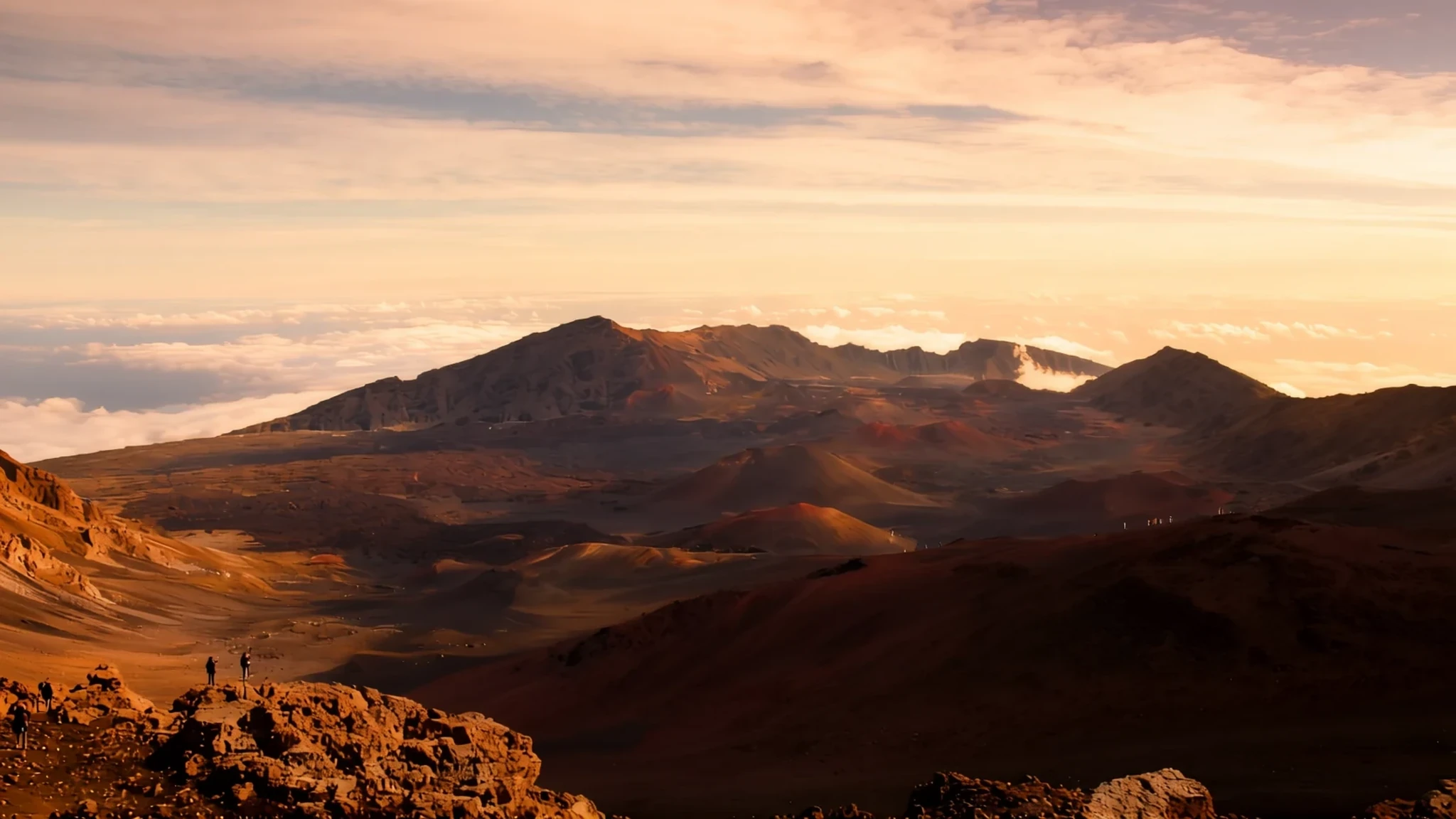
Maui gives you volcanic crater views, black-sand coves and whale-watching winters, with a slower pace than the busier Hawaiian islands.
The place
Maui is the second-largest of the Hawaiian Islands, a volcanic island in the middle of the chain. It belongs to Maui County, which also includes Molokaʻi, Lānaʻi and Kahoʻolawe. The island is built around two volcanic mountains: Haleakalā fills the southeast, and the West Maui Mountains rise in the northwest. A low isthmus joins them, and that narrow waist of land is why the island is nicknamed the Valley Isle.
The population is about 144,000. Kahului, on the north coast, is the commercial and financial centre and home to the main airport. Wailuku, beside it, is the county seat and has an older, quieter feel. Along the drier leeward coasts, resort areas run from Lahaina and Kāʻanapali down to Kīhei, Wailea and Makena. Upcountry towns such as Makawao, Pukalani and Kula sit on the slopes of Haleakalā, where the air is cooler and farms are common.
Tourism is the main industry, and the crowds are real. Beaches on the resort coasts fill quickly in the high season, and parking at popular trailheads and the sunrise road is tight. Lahaina, once the kingdom's capital, was largely destroyed by fire in 2023. Check current access and accommodation there before planning around it, because rebuilding is ongoing.
Weather varies sharply from one side of the island to the other. Trade winds drop rain on the wetter windward slopes, while the leeward shores are often sunny and dry. Temperatures stay warm through the year, with the high mountain areas noticeably cooler.
Its story
Maui's position near the middle of the Hawaiian chain has placed it at the centre of the islands' history. The first people to settle here came from Tahiti. They brought a system of sacred restrictions called kapu, which set rules for nearly every part of daily life, from food to rank. Kapu shaped the social order and remains central to how Hawaiian culture is understood today.
The island's political story changed in the 1790s. Kamehameha I, who ruled from the Big Island, invaded Maui in 1790. His forces fought the battle of Kepaniwai, which did not settle the contest. He returned home to deal with a rival and came back a few years later, bringing the island under his control.
European contact came slowly. Captain James Cook sighted Maui in 1778 but could not find a safe place to land, so he never stepped ashore. The first European to land was the French navigator Lapérouse, who came ashore in 1786 at the bay that now carries his name on the island's south-east coast. Traders, whalers and loggers followed, cutting sandalwood, and missionaries arrived from New England in 1823.
The missionaries settled in Lahaina, then the kingdom's capital. They worked out a written form of the Hawaiian language, ran a printing press and began writing down a history that had until then been carried by speech alone. Their work changed much of the traditional culture, yet it also preserved the language and the stories that might otherwise have been lost.
What to see
- Molokini Crater — Offshore, south-west of Maui
Molokini is a crescent-shaped islet about three miles off Maui's south-western coast, the remnant of a crater whose open side lets the sea inside. Access is by boat only, and charter boats leave from Lahaina, Maʻalaea Harbor and Kīhei. Snorkelling in the clear, calm water is the reason most people go, and the morning trips tend to be less crowded.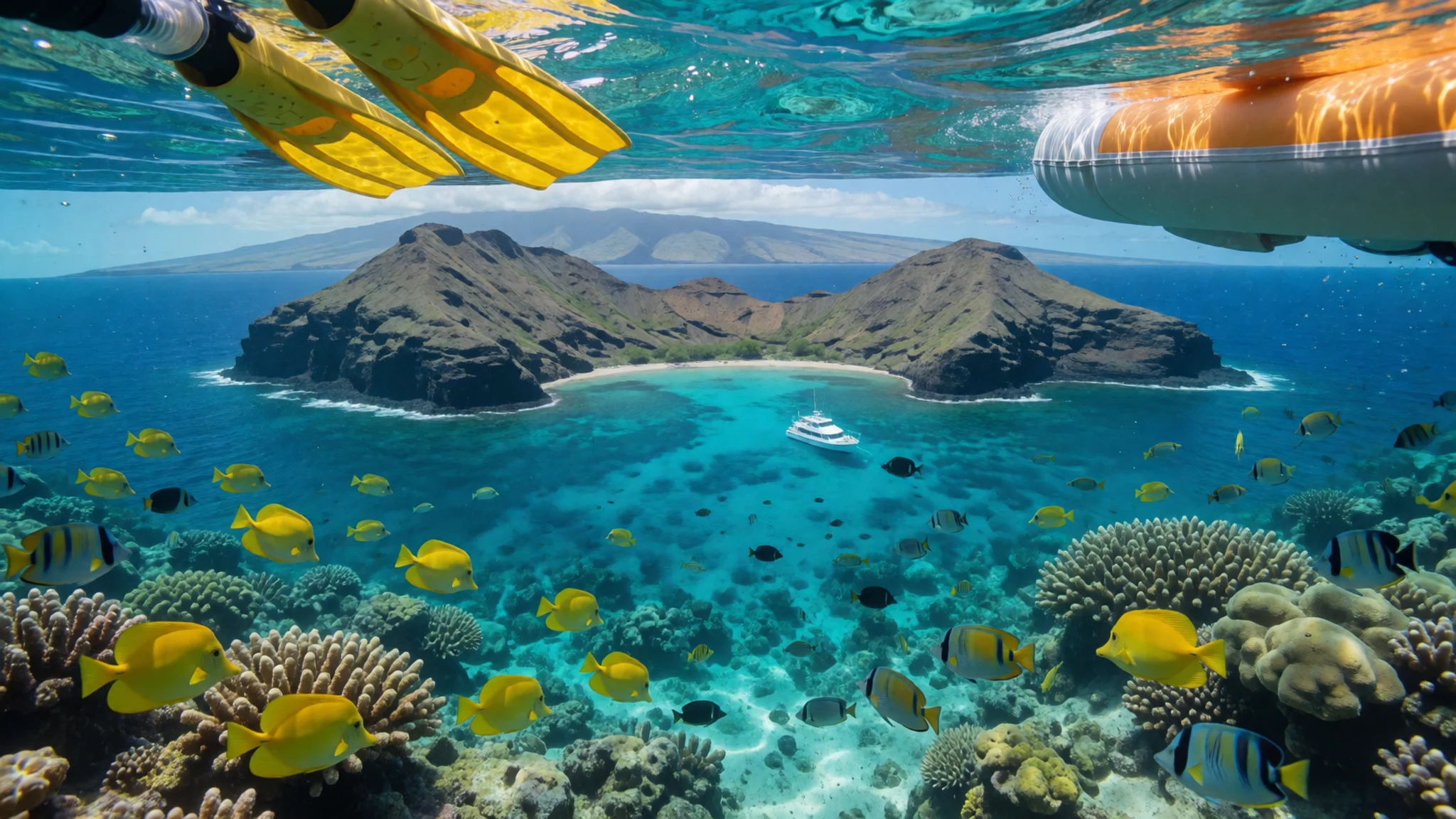
- Whale watching in winter — Lahaina and the west coast
Thousands of humpback whales migrate to Hawaiian waters each winter, and most of them gather off Maui's coasts. Pacific Whale Foundation runs boat trips that focus on research and conservation as well as viewing. Trips run from the western resort coast, and sightings are common from November to April, though the sea can be rough, so a motion-sickness remedy helps.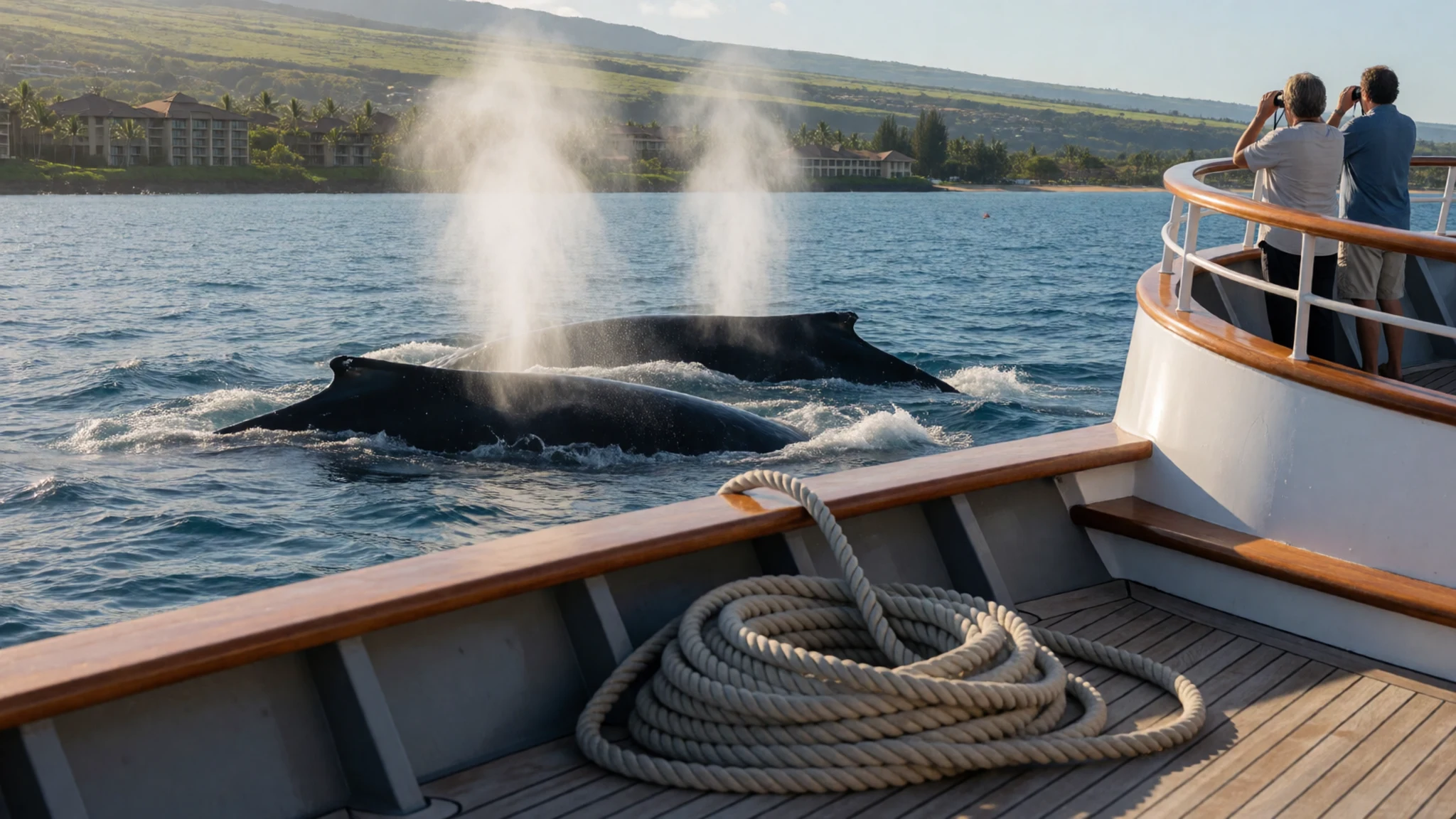
- Haleakalā National Park — Upcountry, south-east Maui
Haleakalā National Park protects a huge volcanic crater and alpine landscapes at the top of the mountain. The summit is reached by road, and many visitors arrive before dawn to watch the sunrise over the clouds. Two entrances serve different parts of the park, so plan which one fits your route. The air is thin and cold at the top, so bring warm layers.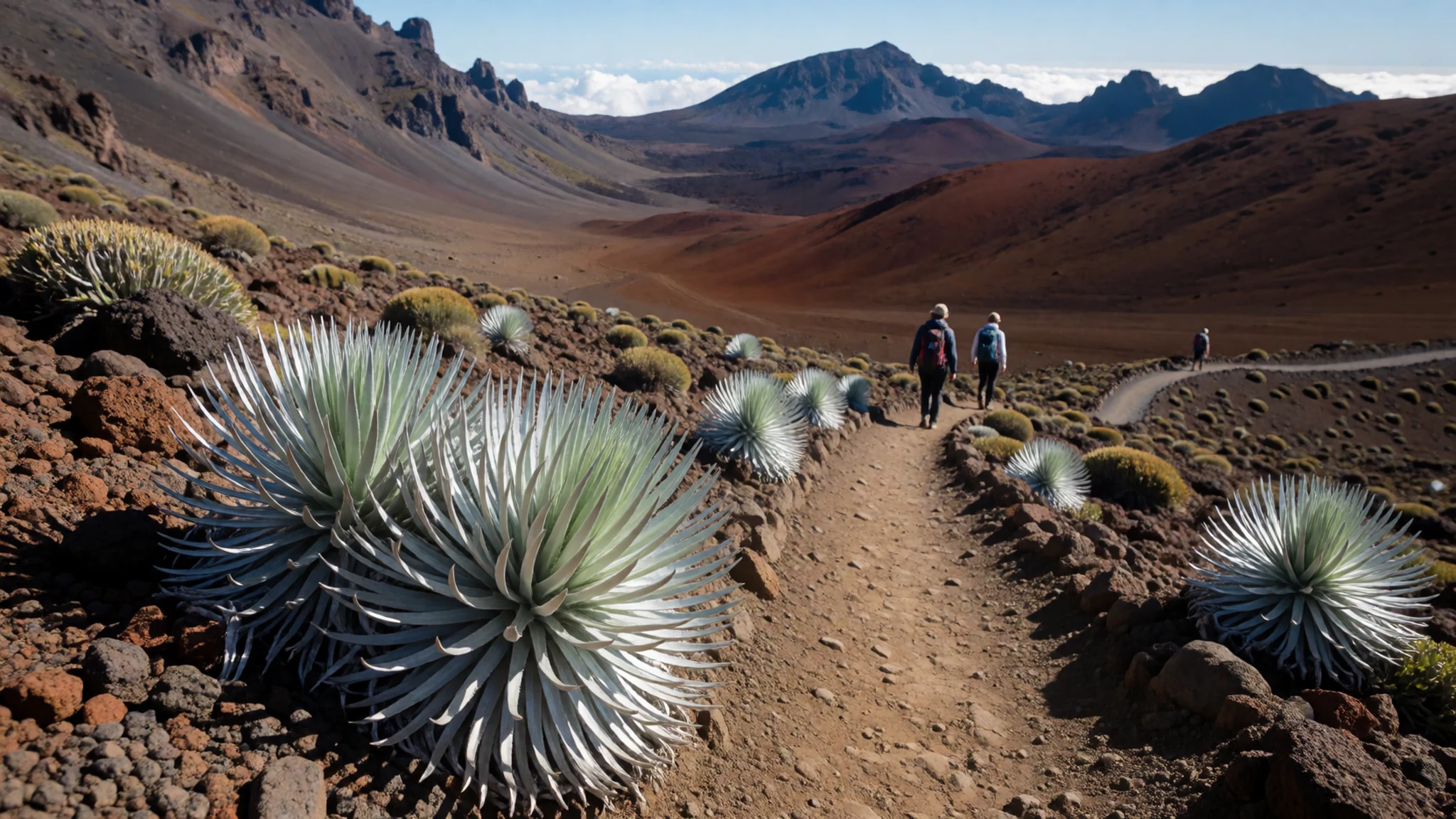
- Wai'anapanapa State Park — Hana, east Maui
Wai'anapanapa State Park lies at the end of the Hana road and is known for its black volcanic sand beach, a sea arch, sea caves and a small blowhole. Paths lead along the coast, and the rock formations are striking in the late afternoon light. The drive from Kahului takes around three hours, so combine it with a stop at the roadside fruit stands on the way.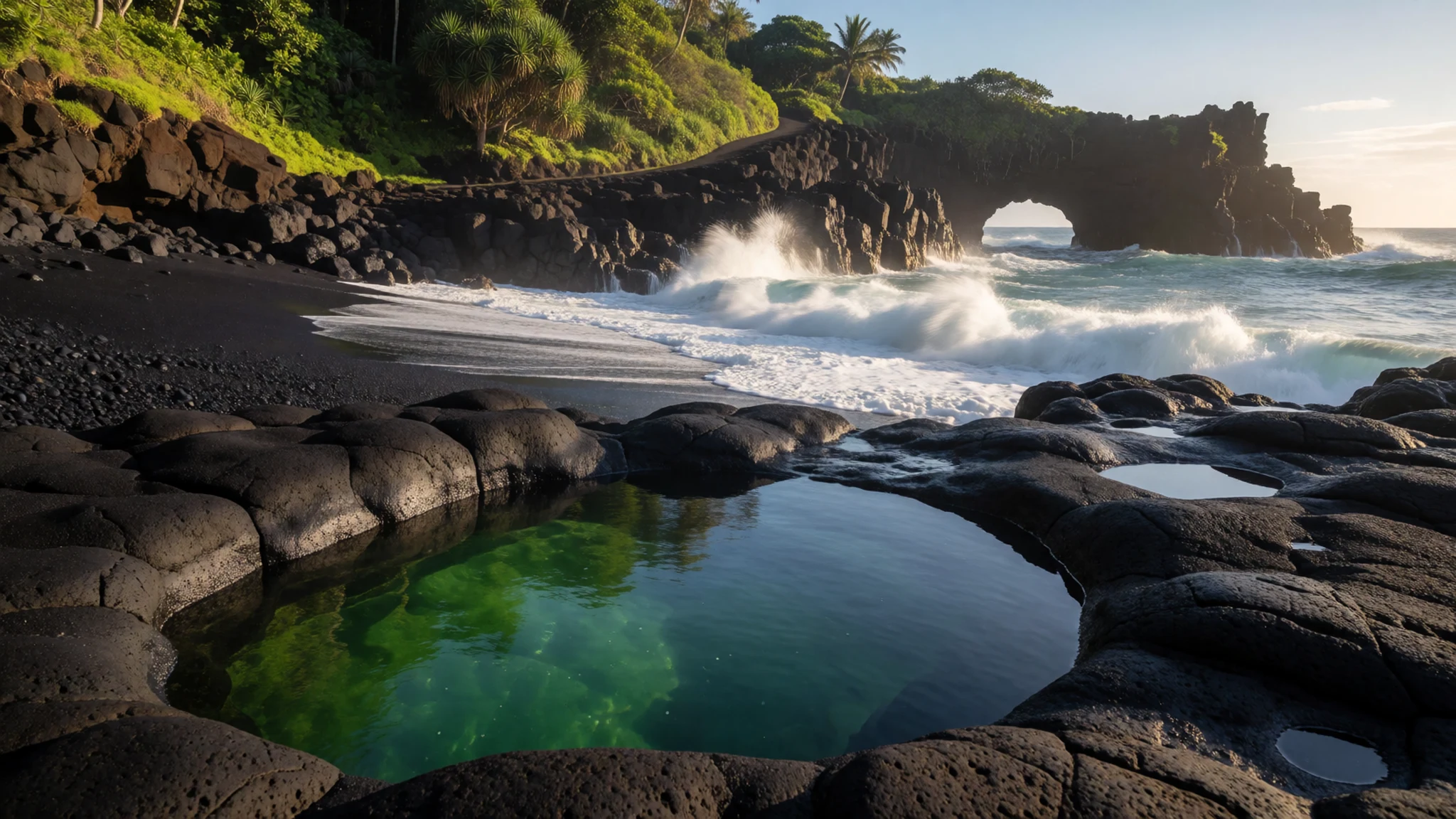
- ʻĪao Valley State Monument — Wailuku, central Maui
ʻĪao Valley State Monument is a deep green valley cut into the West Maui Mountains, close to Wailuku. A paved path climbs a short distance to a viewpoint of the Iao Needle, a sharp volcanic peak rising from the valley floor. Lower down, a garden and stream make a shady place to spend an hour, and the valley is one of the best easy walks on the island.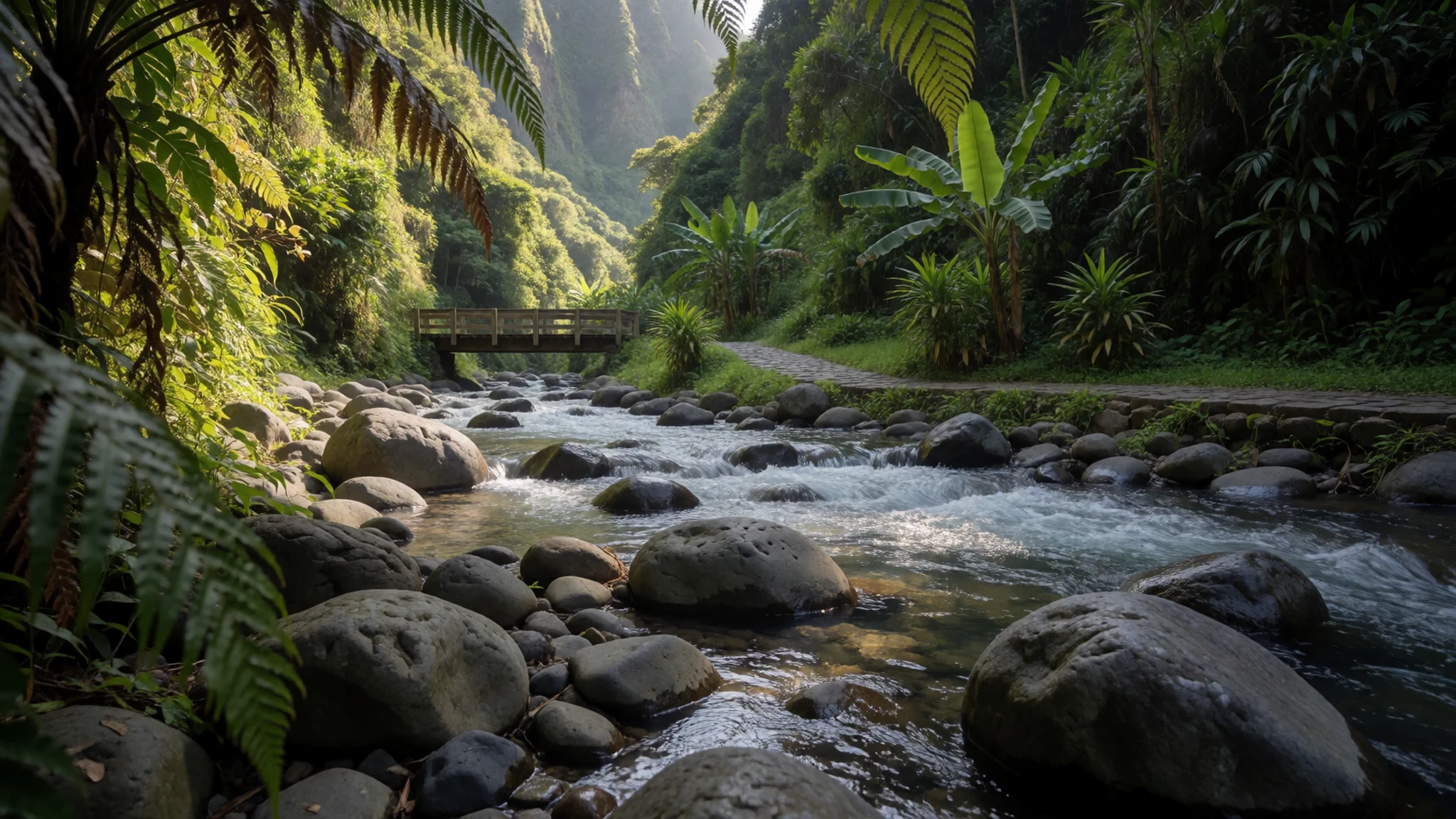
- Makena Beach — Makena, south Maui
Makena Beach is a wide stretch of golden sand on the south coast, backed by a grassy bluff and fringed by lava rock at either end. It is popular for swimming and sunbathing, but the beach has no shade, and the surf can be strong in some seasons. Parking is limited, so arriving early in the morning is the easiest way to find a space.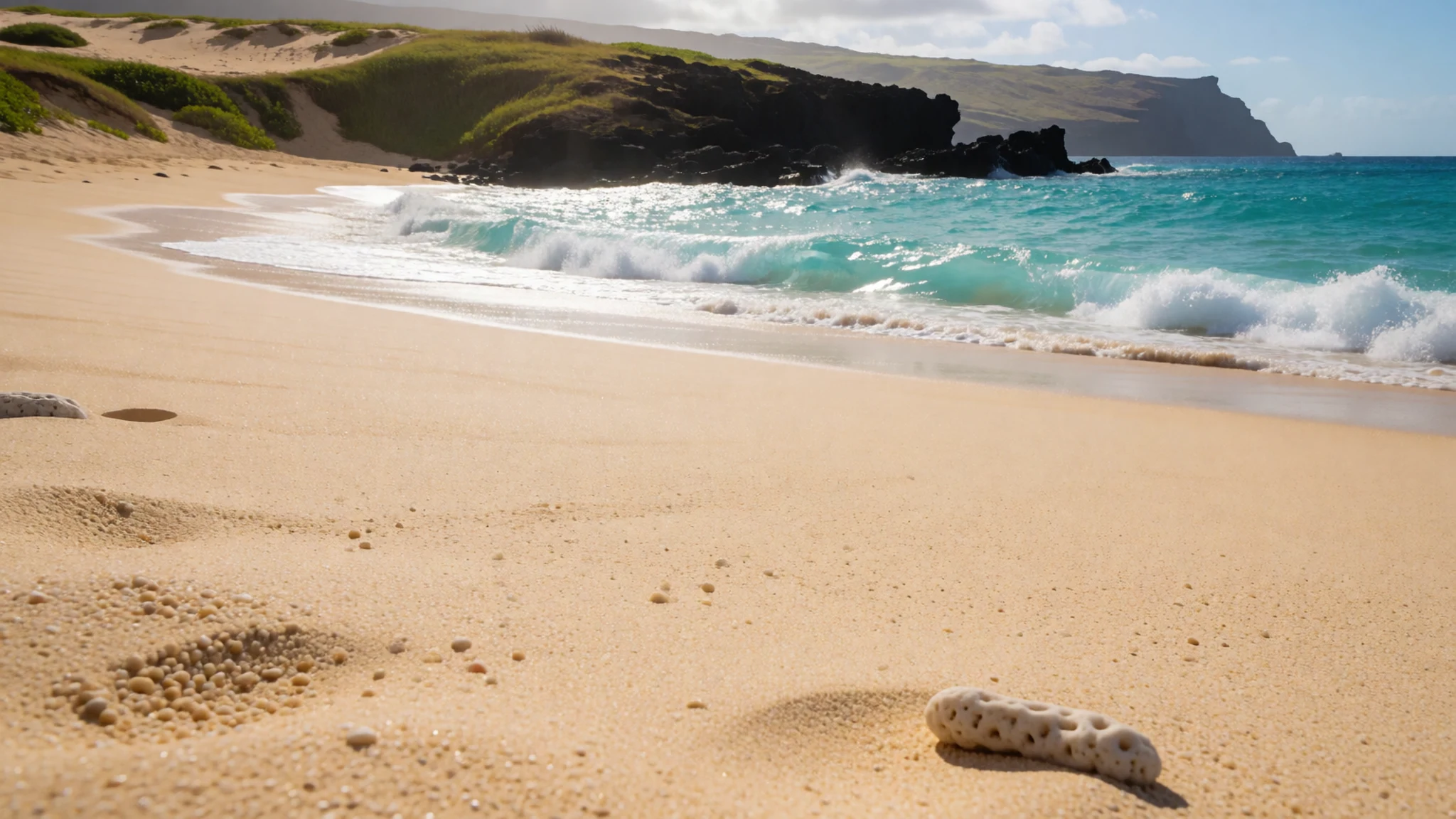
Culture
Maui's culture is Hawaiian first, and much of it is still lived in everyday language and custom. The word aloha is used as a greeting, a farewell and a way of expressing goodwill. Many place names come from the Hawaiian language, and signs often show both English and Hawaiian. Hula is performed at festivals and in many restaurants, and it is a form of storytelling with its own history and meaning, not simply a show.
The island's landscape holds deep significance. The land, which Hawaiians call ʻāina, is considered a living relationship, and many sites hold ancestral and sacred value. Heiau are ancient stone temples and shrines, and some of them lie on private land or in protected areas. Lei are garlands of flowers or shells given as gifts and blessings, and they are usually received with respect. Some sacred practices, including the old kapu customs, still shape how many local families regard their places.
At beaches and trails, you will meet locals who care about the land and the sea. Keep to marked paths, avoid walking over fragile dunes, and follow any closure notices. Do not take lava rock or sand from the island, since many people believe this brings bad luck and it is discouraged by park rangers. Leave shells and stones where you find them, and ask before photographing people at ceremonies or cultural events.
What to wear
The traditional clothing of Maui and the wider islands was built from natural materials. Kapa, a cloth beaten from the inner bark of the wauke plant, was used for garments and wrappings. Lauhala, woven from pandanus leaves, made mats, hats and bags. The muumuu, a loose, straight-cut dress, came later through missionary influence, and it is still worn for celebrations and formal occasions.
Today the island's most recognisable clothing is the aloha shirt, a short-sleeved shirt printed with bold tropical patterns. Locals wear it to work, to weddings and to festivals, and it is worn both casually and dressed up. Many people wear flip-flops, board shorts and sundresses in everyday life, and lei are worn at graduations, weddings and when welcoming visitors.
For a visit to Maui, pack light cottons or linen, a light rain jacket for the mountains and a hat for the sun. Swimwear is fine at beaches, but cover up when you walk through towns, restaurants and shops. At heiau and other sacred sites, dress modestly and wear covered shoes. Good sandals are fine for the coast, while closed shoes with grip suit the volcanic trails and the cold summit at Haleakalā.
What to eat
- Poke — Fish counters and markets in Kahului and Kīhei
Poke is a bowl of raw fish, usually tuna, cut into cubes and seasoned with soy sauce, sesame oil, seaweed and sometimes chilli. It is a staple of local eating, and small markets and fish counters sell it fresh. Choose a counter that gets through its stock quickly, because freshness matters most with raw fish.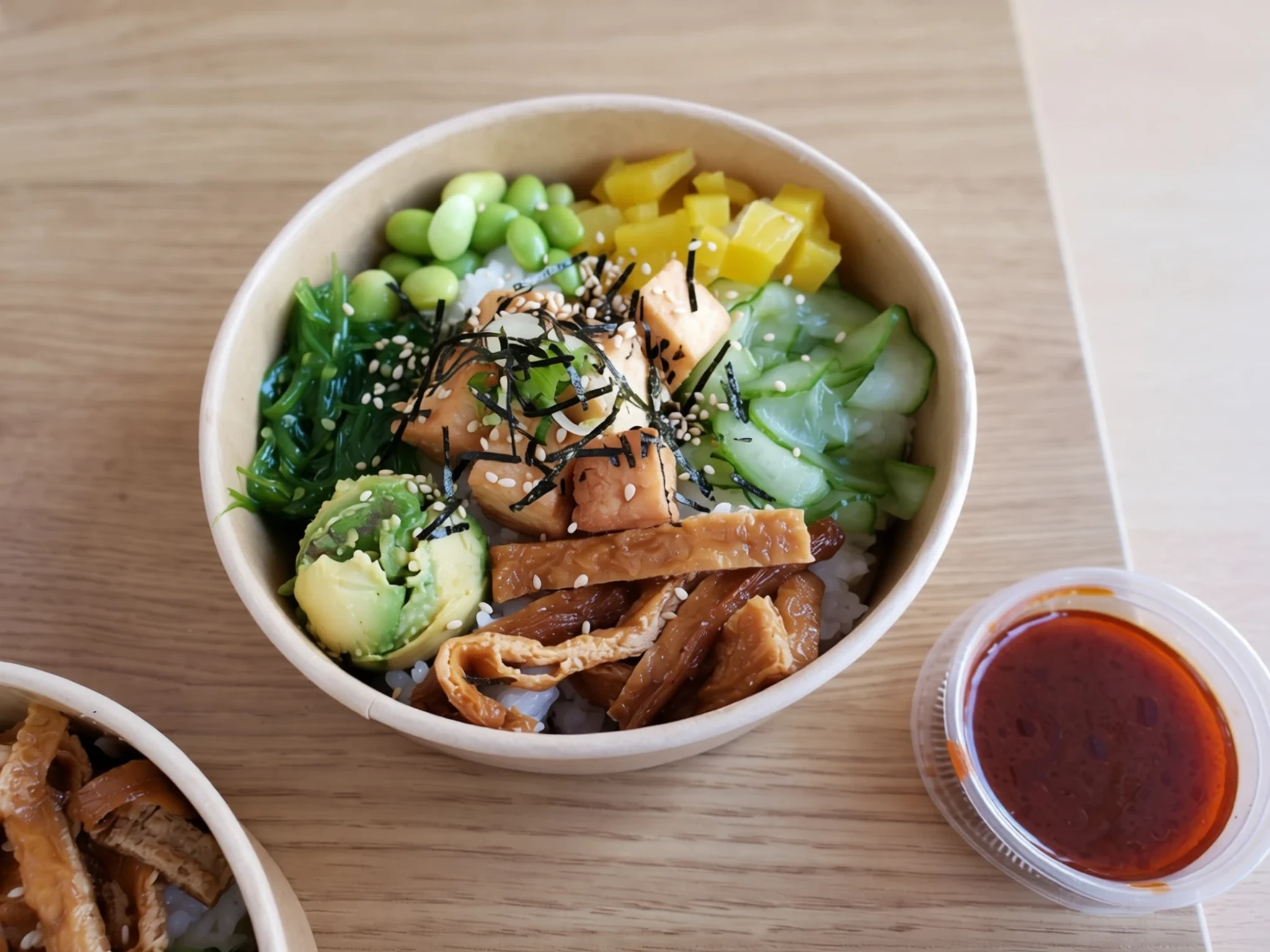
- Plate lunch — Lunch counters in Wailuku and Kahului
The plate lunch is a generous meal of meat, rice and macaroni salad, often with a Japanese, Filipino or Hawaiian influence. It is a local favourite at lunch and reflects the island's mixed heritage. Simple lunch counters in Wailuku and Kahului serve it at low cost and keep long hours.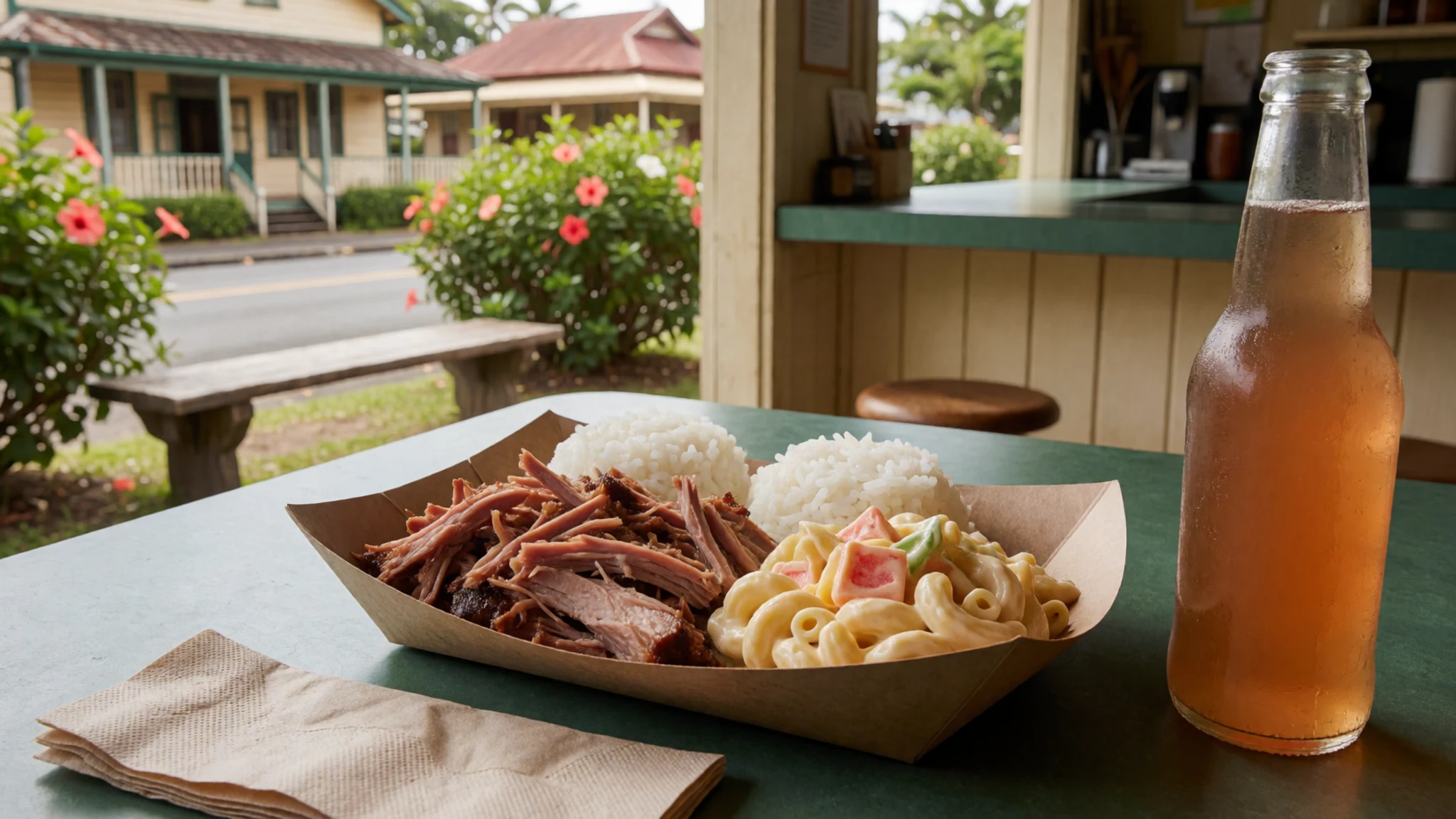
- Fresh fruit and banana bread — Farmers' markets and roadside stands on the Hana road and Upcountry
Fresh produce is widely sold at farmers' markets and roadside stands. Banana bread, coconut candy and seasonal fruit such as papaya, mango and pineapple are all good choices for a drive. Stands along the Hana road and the Upcountry farms are good places to try them. - Kalua pig at a luau — Resort luaus on the west coast
Kalua pig is pork cooked slowly in an underground oven, traditionally wrapped in leaves, and shredded for serving. It is the centrepiece of a luau, a feast with music and dancing. Luaus are held at many resort hotels on the west coast, and they vary widely in quality and price. - Malasadas — Bakeries in Wailuku and Kahului
Malasadas are sugar-dusted Portuguese doughnuts, fried fresh and often filled with custard or fruit. They are sold at bakeries across the island, and the morning batches sell out first. Arriving early is the easiest way to get a warm one.
Plan it
Best time. April to June and September to November suit most visitors, with calmer seas and drier spells on the leeward coasts. November to April brings humpback whales and wetter weather, with March the wettest month, especially on the windward side. Summer is hot and sunny, and the mountain summit can be cold at any time of year.
How long. 3–4
Getting there. Fly into Kahului Airport (OGG), which has direct flights from many mainland US cities and interisland flights from Honolulu. From the airport, the drive to Lahaina and Kāʻanapali follows Kuihelani Highway and then Honoapiʻilani Highway, while Kīhei and Wailea are reached by Mokulele Highway.
Budget. high
Tips
- Book Haleakalā sunrise tickets and entry slots well ahead, as they sell out in busy months
- Start the Hana road early, since the winding drive takes much longer than the map suggests
- Carry cash for small roadside stands, which may not take cards
- Bring water and sun protection for beach and trail days, as shade is limited
- Check current access to Lahaina before you book, given the ongoing rebuilding after the 2023 fire
Etiquette
- Leave lava rock and sand where you find them
- Ask before photographing people at ceremonies or cultural events
- Use reef-safe sunscreen to protect the marine life around the coast
Nearby
Sources
- Wikidata Q188705 (CC0)
- Wikipedia, Maui (rev 1372762996) (CC BY-SA 4.0)
- Wikivoyage, Maui (rev 5310522) (CC BY-SA 4.0)
- Maui panorama (CC BY 3.0)
- Map of Maui Island (Public domain)
- ISS-38 Hawaiian Island chain (Public domain)
- Maui2022OSM map (CC BY-SA 4.0)
- Mount Haleakala Crater Maui Hawaii (CC BY 2.5)
- Maui, Hawaii beach (CC BY 3.0)
- Westküste Maui Hawaii (CC BY 2.5)
- Makena Beach, Maui Hawaii (CC BY 2.5)


