Matera
Matera, Italy
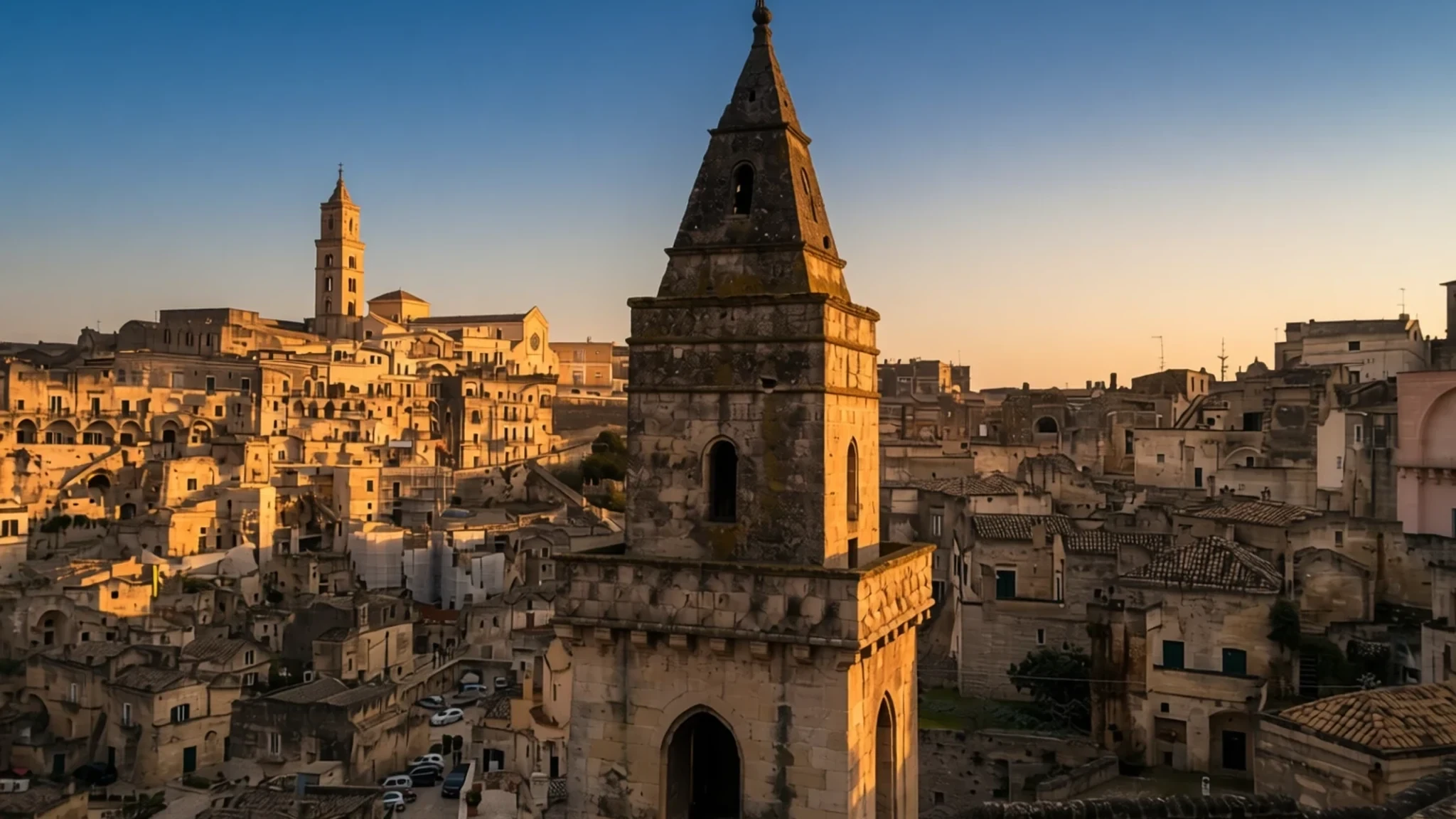
Matera is a limestone city of cave homes and churches cut into a deep gorge, and it rewards slow walking and early starts.
The place
Matera is a city of 59,685 people on the right bank of the Gravina, a deep ravine in the region of Basilicata in southern Italy. The town stands at 401 metres above sea level, on a limestone shelf where the ground drops steeply into the gorge. Its old core, the Sassi, is cut into the rock: two neighbourhoods, Sasso Caveoso and Sasso Barisano, that climb and tumble down the opposite faces of the canyon. Many of the lower homes started as caves dug from the softer stone, then extended with masonry walls, vaults and small courtyards, so the streets and the cliffs read as one piece.
Above them rises Civita, the higher ground where the cathedral and older civic buildings sit. From across the gorge the scene is striking: pale stone stepping down in terraces, church domes and bell towers, and dark cave openings in the shadows. The modern city spreads across the plateau beyond, and a short walk from the edge of the old town reaches the ravine's rim and the open Murgia uplands.
Matera is a working town, not a museum piece. Families still live and shop here, and the old quarters now mix restored cave homes, B&Bs, hotels, workshops and bars. Rock churches are scattered through the ravines, and the paths between them are good for walking in cooler months. The landscape is dry and open, with limestone underfoot and little shade on the plateau, so the gorge is best approached early or late in the day.
Its story
Matera's history stretches back further than most visitors expect. Scholars still debate when people first settled in the caves and whether occupation was continuous, but the area is thought to have been inhabited since the Palaeolithic, which would place it among the oldest continuously inhabited settlements in the world. One scholar, Anne Toxey, argues for at least three millennia of occupation, a claim that remains open.
The early town grew over an older prehistoric village, and its Greek links are likely. In the era of Magna Graecia it traded with the Greek cities along the southern coast, and under Rome it became a route for goods moving between the coasts. The Roman Lucius Caecilius Metellus is credited with founding the town in 251 BC, when it was called Matheola.
Later rulers followed in succession. In 664 the Lombards took the town and placed it within the Duchy of Benevento. In the seventh and eighth centuries, Benedictine and Basilian monks settled the nearby caves and carved churches and refuges from the stone. After the Arab conquest of Bari in 840, Islamic rule reached Matera. Over the centuries the town passed to Byzantine Greeks, Swabians, Angevins, Aragonese and Bourbons before joining the modern Italian state.
The cave dwellings explain much of this. The rock offered shelter, cool interiors and a defensible site above the streams that cut the gorge, so each new ruling power built on what earlier people had dug. The result is a townscape in layers, where monastic churches, medieval houses and later repairs share the same cliff.
What to see
- Church of San Pietro Barisano — Sasso Barisano, western face of the ravine
Set on the Sasso Barisano slope, this church is one of the older rock-built places of worship in the old town, with stone walls that continue into the hillside. The lanes around it are steep and stepped, so the climb up from the valley is the real effort. Visiting in the morning, when light falls across the front and the streets are quieter, works best.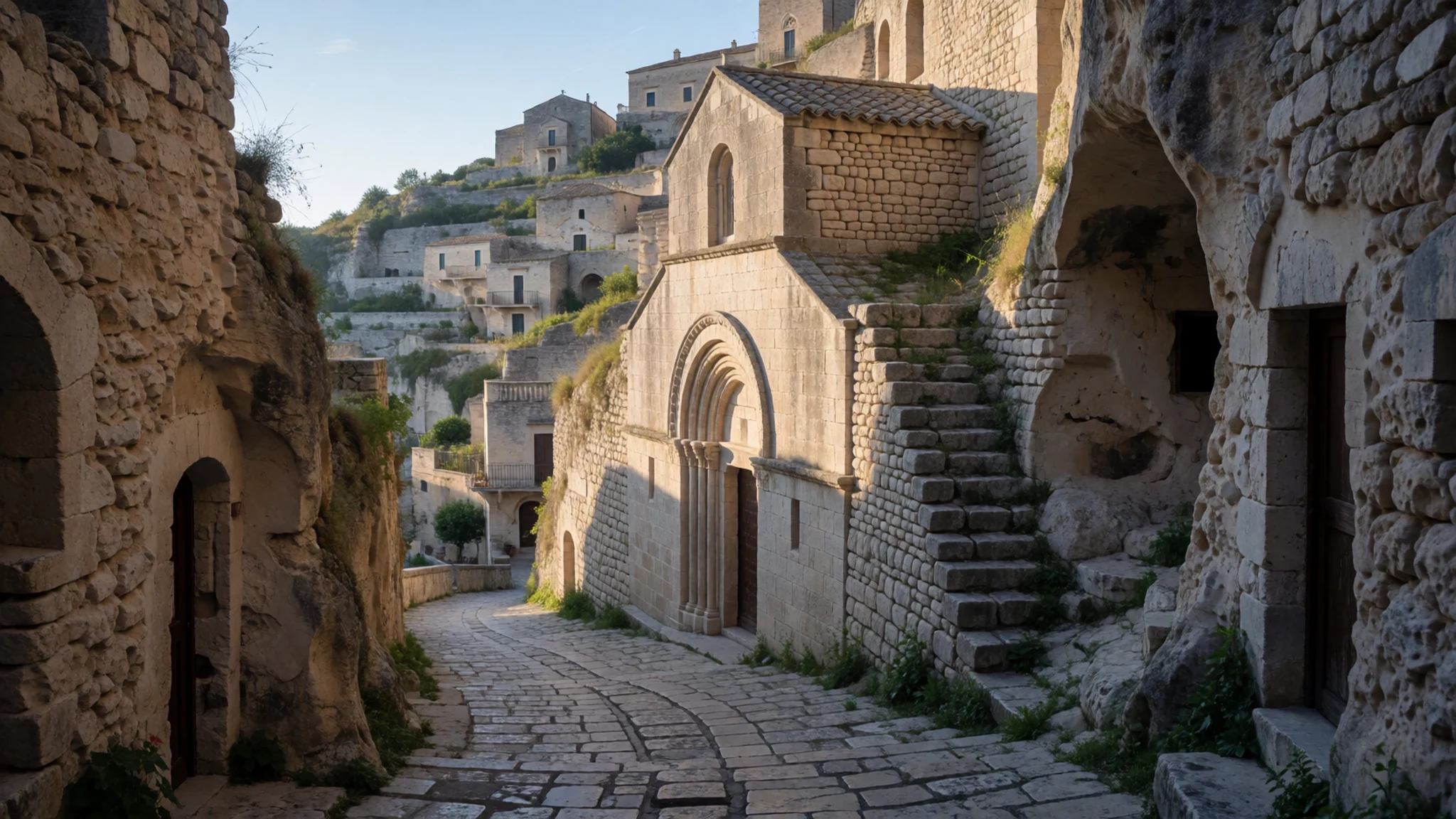
- Matera Cathedral — Civita, the upper town
The cathedral stands on Civita, the high ground above the Sassi, and its 90-metre spire is the landmark most visible from across the gorge. It anchors the upper town and the piazza in front of it, where the view down into the ravine is the main reason to climb up. Late afternoon suits the stone best, when the façade warms and the crowds thin.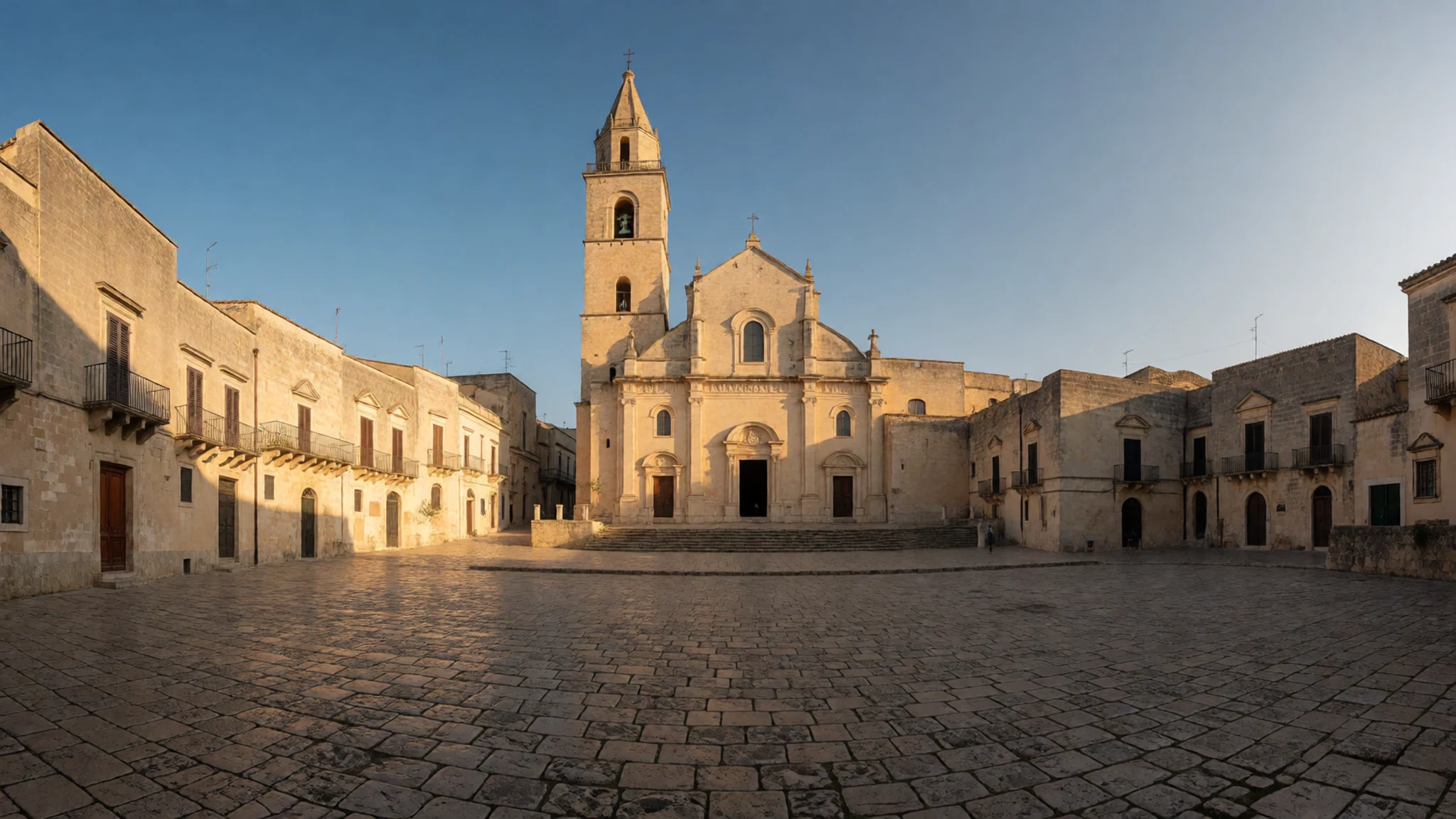
- San Pietro Caveoso — Sasso Caveoso
San Pietro Caveoso is a church on a small piazza at the edge of the Sasso Caveoso, the southern neighbourhood of the Sassi. The square is a good place to sit, with views across the ravine and the cave houses that step down the slope. Many nearby sights are reached from here, and the cafés along its edges make a natural pause in a day of walking.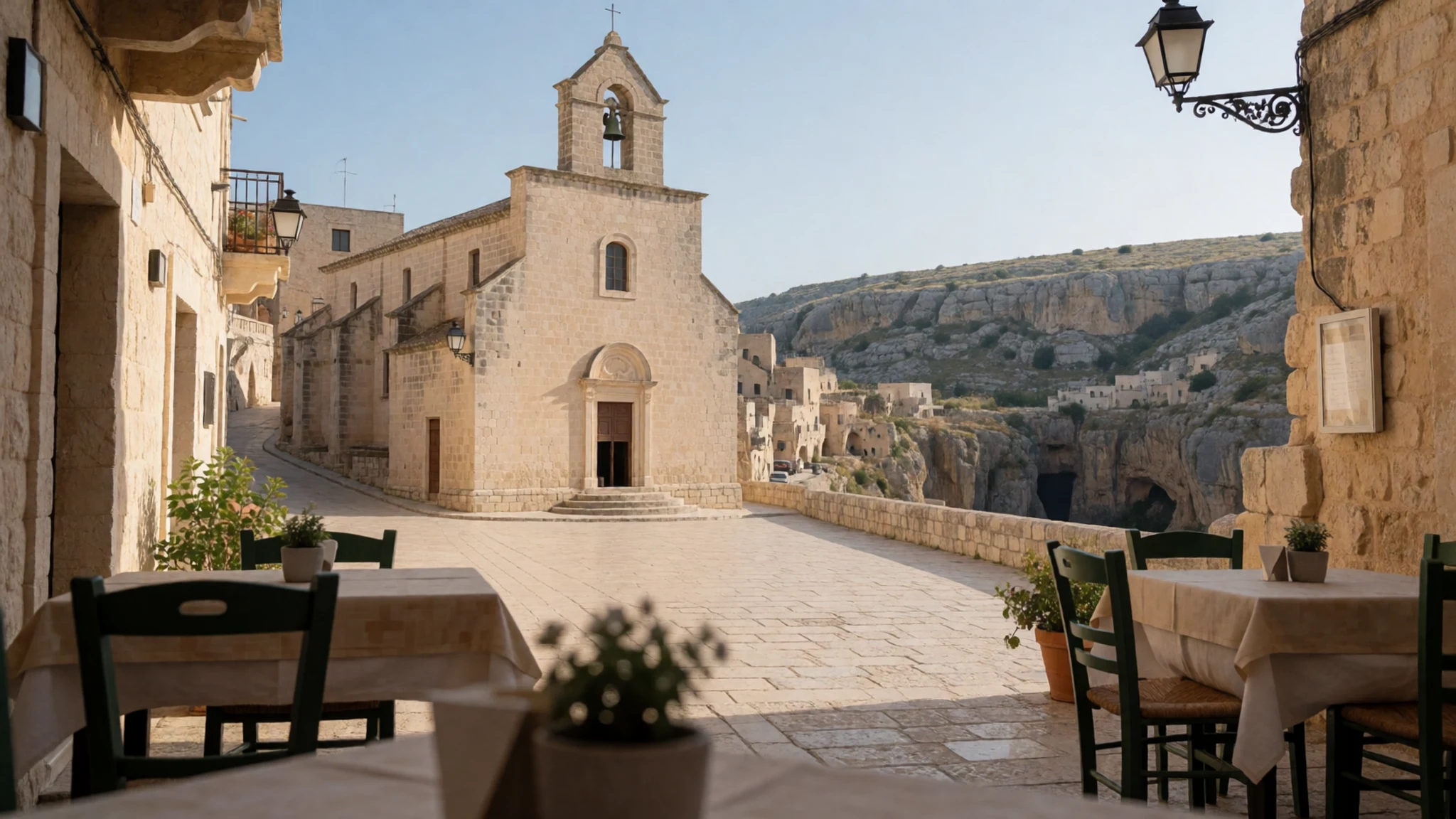
- Church of Santa Lucia — Sasso Caveoso
Church of Santa Lucia is one of the cave churches of the Sasso Caveoso, reached by lanes that drop steeply towards the gorge. Its rock-hewn interior keeps the original cave form, with simple walls and niches cut from the stone. Visits are short and quiet, so keep the pace slow. Check the official site for opening times before going, since small churches keep their own hours.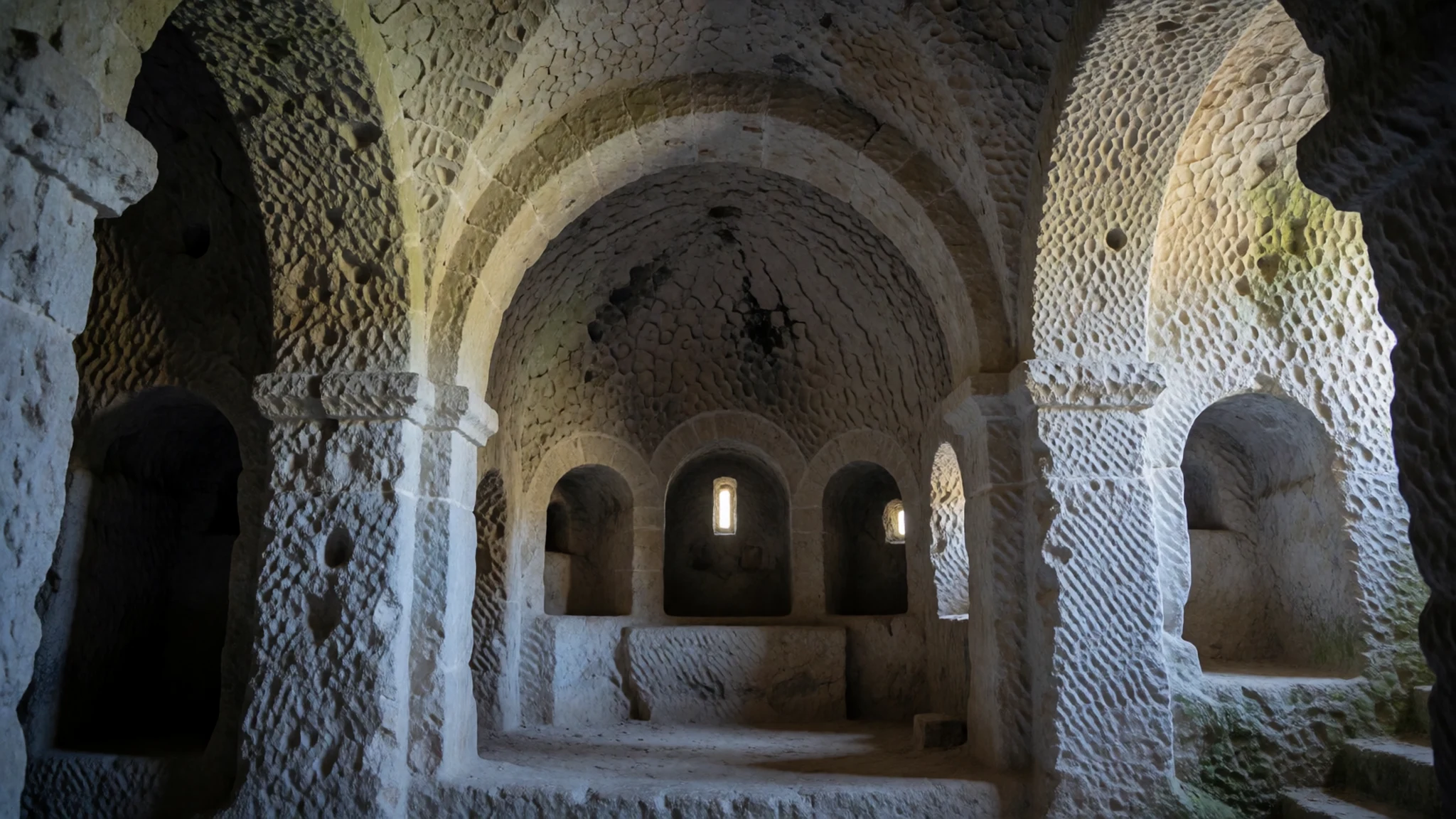
- Church of San Giovanni Battista — Sasso Barisano
Church of San Giovanni Battista lies in the Sasso Barisano, close to the top of the western ravine. It makes a useful stop on a loop through the Barisano lanes, which curve between houses cut into the rock. Expect steps and uneven stone underfoot, and choose shoes with good grip for the walk.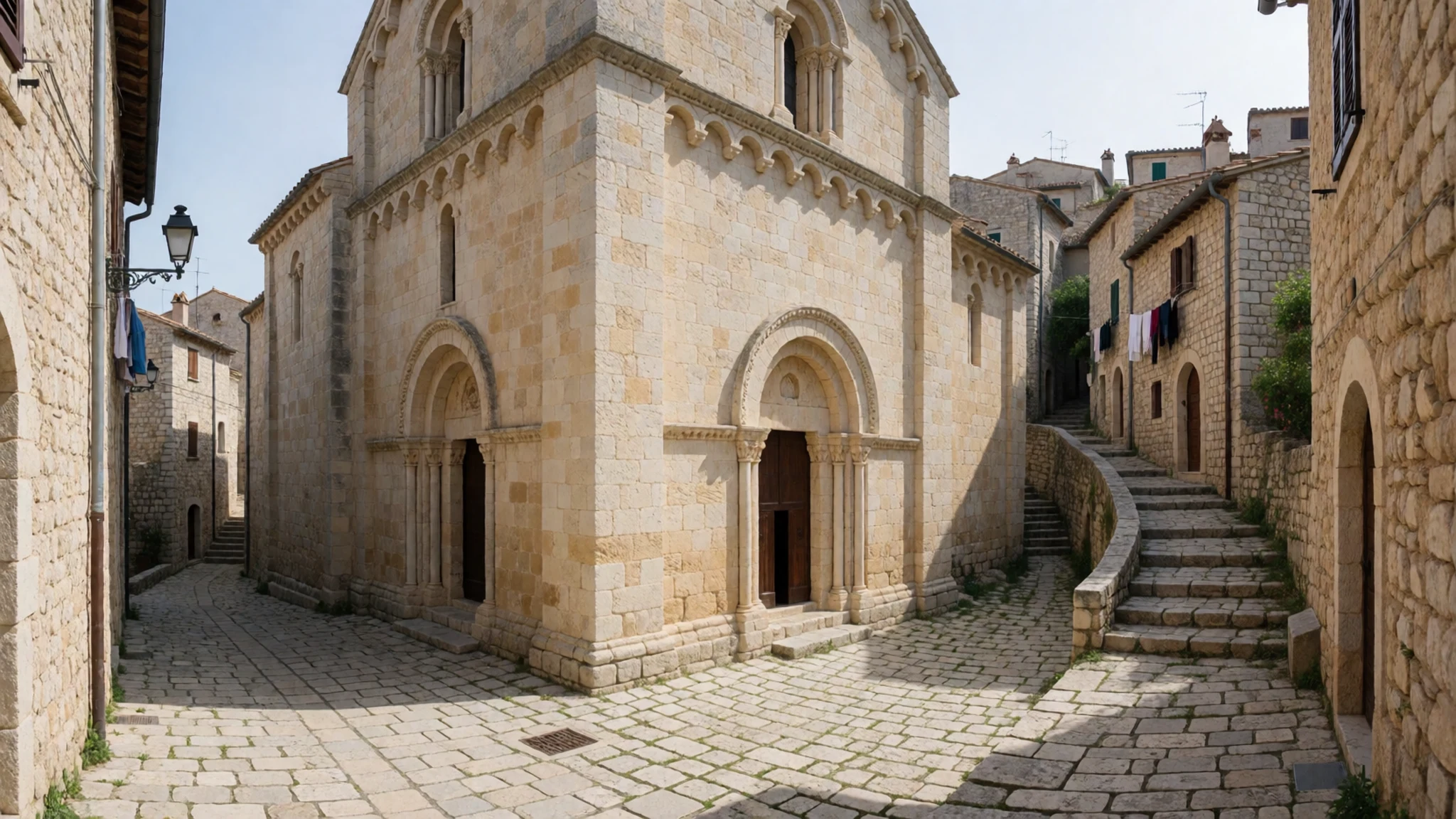
Culture
Matera's identity rests on its stone and on a long memory of living inside it. The city was named European Capital of Culture for 2019, sharing the title with Plovdiv in Bulgaria, and that year brought new cultural programming, restoration projects and visitors to the Sassi. Local life still runs on close neighbours, family meals and church bells, and many residents are proud of the cave homes that have been brought back as hotels and B&Bs.
Food follows the same frugal roots. The cooking is cucina povera, or peasant cuisine, blending the traditions of Basilicata with neighbouring Apulia, and its bread, dried peppers and legume soups were made to last. Religious life has been tied to the caves for centuries: monks cut chapels into the rock, and many of the rock churches remain places of worship. Many lanes are residential, and an open door usually signals a family at home rather than a shop.
Keep your voice low in the churches, and ask before photographing residents or their homes, especially when a doorway frames a family at work.
What to wear
The traditional dress of the Materan countryside was practical and built from local cloth. Working clothes were usually linen or cotton for summer and thick wool for winter, often in dark colours, with embroidered or woven details on aprons and shawls. Women's dress commonly included full skirts, bodices and headscarves, and black was worn for mourning, a custom common across southern Italy. Surviving costume is more often seen in museums and at festivals than in daily life, so treat the specific details here as general and check local collections for confirmation.
Today people in Matera dress much as Italians do elsewhere: neat casual clothes, dark jackets in cooler months, and linen or cotton in summer. Walking shoes with grip are common, since the old town is cobbled and stepped. Smart but practical is the local norm, and formal dress is rare in the lanes.
A visitor should pack for heat and stone. In summer, light, breathable fabrics help, and a thin layer suits the cooler interiors of churches and cave homes. Cover shoulders and knees for churches, and bring shoes with good soles for steep steps and uneven limestone. A light scarf doubles as a shawl for visits to the rock churches.
What to eat
- Pane di Matera — Bakeries in the Sassi lanes and the morning market
The town's bread is a large loaf with a conical shape, a dense crumb and an intense flavour, and it carries a protected geographical indication. Bakeries in the old town sell it by weight or by the piece. Because it keeps well for several days, it was a staple of rural households and still makes a sturdy base for simple toppings.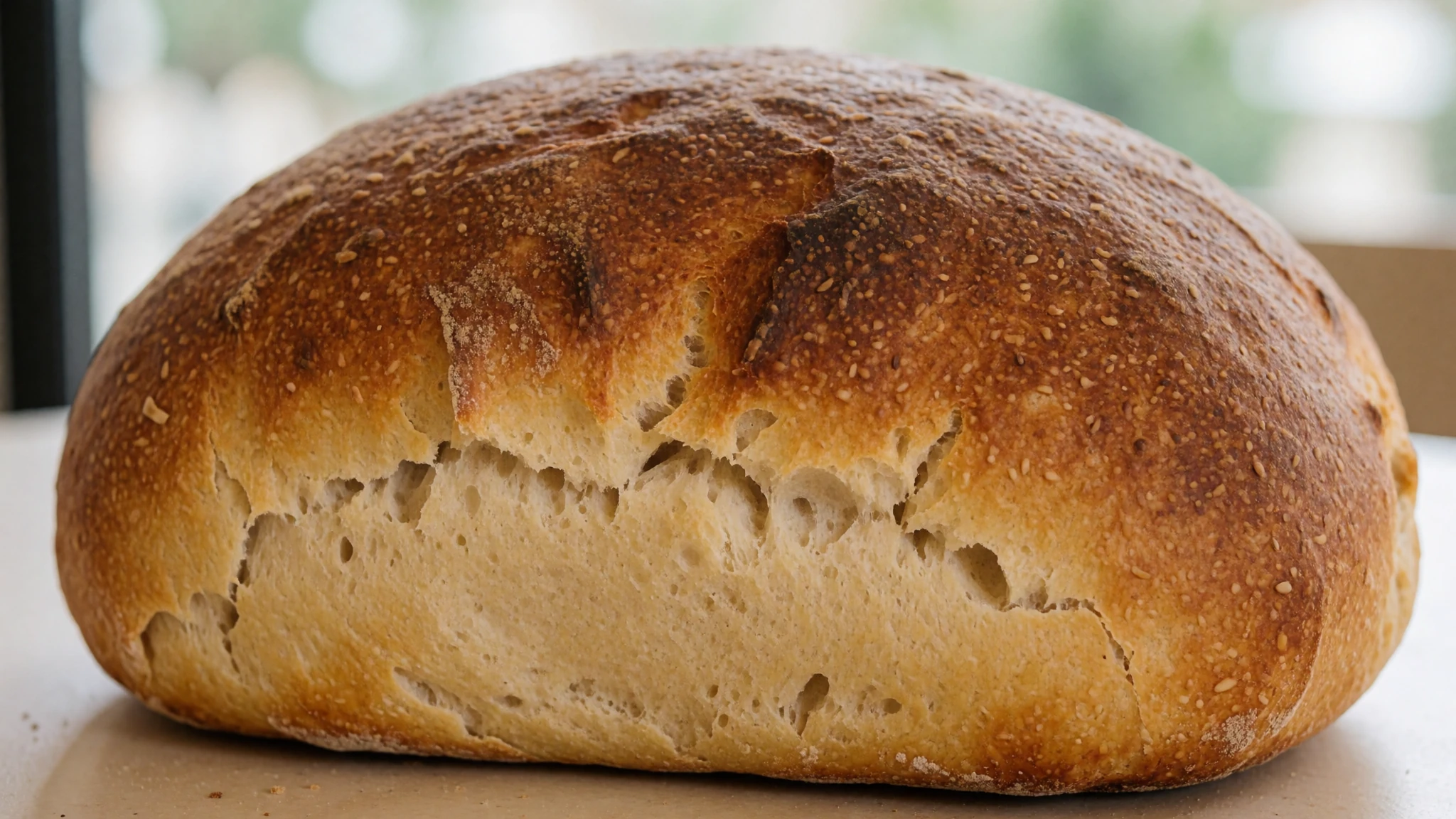
- Peperoni cruschi — Delis and food shops near the Civita end of town
These sweet peppers are dried until they turn crisp and are often fried briefly before eating. They work as a crunchy snack or a topping on bread and pasta. They are a speciality of Basilicata and appear across the region's food shops, so buy a packet to take home.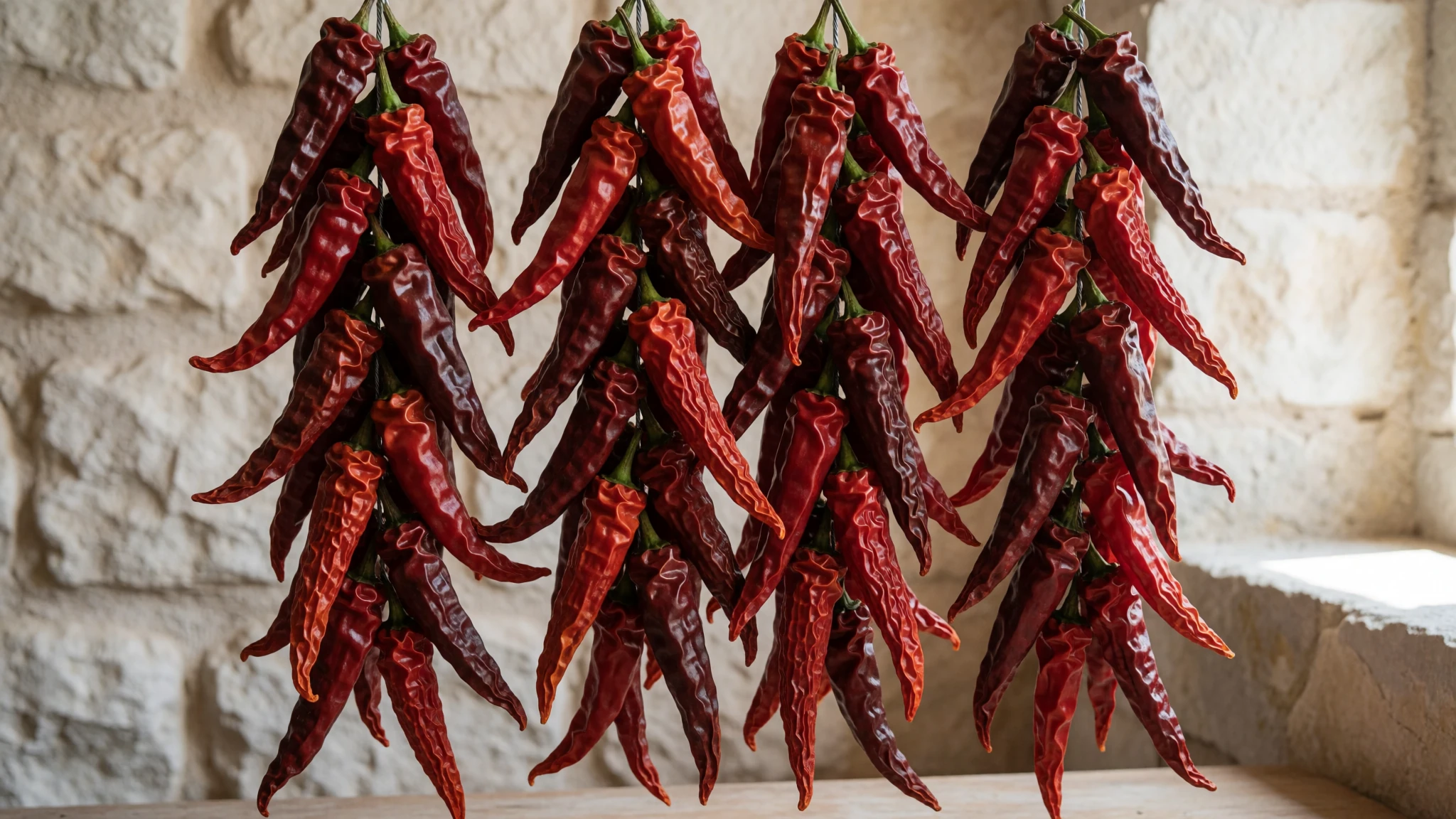
- Crapiata — Trattorie on the Sasso Caveoso, especially on winter menus
This peasant soup combines chickpeas, beans, broad beans, wheat, lentils and cicerchie, cooked slowly into a thick, hearty pot. It is a clear example of the cucina povera roots of the local kitchen and suits the cooler months. Order it when a trattoria lists it as a daily dish. - Matera DOC wine — Wine bars and enoteche in the old town
The area produces its own wine under a controlled designation, and local bars pour it alongside simple dishes. Ask for a regional red or white and compare it with wines from neighbouring Apulia. A glass in the early evening pairs well with bread and cheese.
Plan it
Best time. April and October bring mild days for walking the gorge and cool evenings in the stone houses. Midsummer is hot and bright, with little shade on the plateau, and winter brings damp, cold air to the ravine.
How long. 2–3
Getting there. Fly into Bari, then take the direct bus from the airport to Matera, about an hour and a quarter, or the Ferrovie Appulo Lucane train from Bari station, about an hour and a half, sometimes with a change at Altamura. The train does not run on Sundays, and a substitute bus takes its place.
Budget. mid
Tips
- Book a cave-house B&B in the old town early for peak season, as the best rooms fill first
- Walk the Sassi in the early morning, before day visitors arrive
- Carry cash for small cafés and churches, and check card acceptance before ordering
- Bring water and a hat for the stone steps and the open plateau in summer
- Walk down from the station by Via Roma and the stairs at Piazza Veneto to reach the old city on foot
Etiquette
- Cover shoulders and knees when entering churches
- Ask before photographing residents, especially in doorways of cave homes
- Keep noise down in the lanes at night, since many people live here
Nearby
Sources
- Wikidata Q13616 (CC0)
- Wikipedia (rev 1378594922) (CC BY-SA 4.0)
- Wikivoyage (rev 5410832) (CC BY-SA 4.0)
- Matera - View from Sant'Agostino (Benjamin Smith) (CC BY-SA 1.0)
- Matera - View from trail 406 - 01 (Benjamin Smith) (CC BY-SA 1.0)
- Panorama of the two Sassi of Matera (Tinss) (CC BY-SA 4.0)
- Matera - View from Belvedere Murgia Timone - 01 (Benjamin Smith) (CC BY-SA 1.0)
- Aerial image of Matera (view from the west) (Carsten Steger) (CC BY-SA 4.0)
- Matera maisons sassi (Velvet) (CC BY-SA 4.0)
- Cave house in Sasso Caveoso (Matera) (Bernard Gagnon) (CC BY 4.0)
- Matera - Sasso Barisano at blue hour (Benjamin Smith) (CC BY-SA 1.0)


