Mardin
Mardin, Turkey
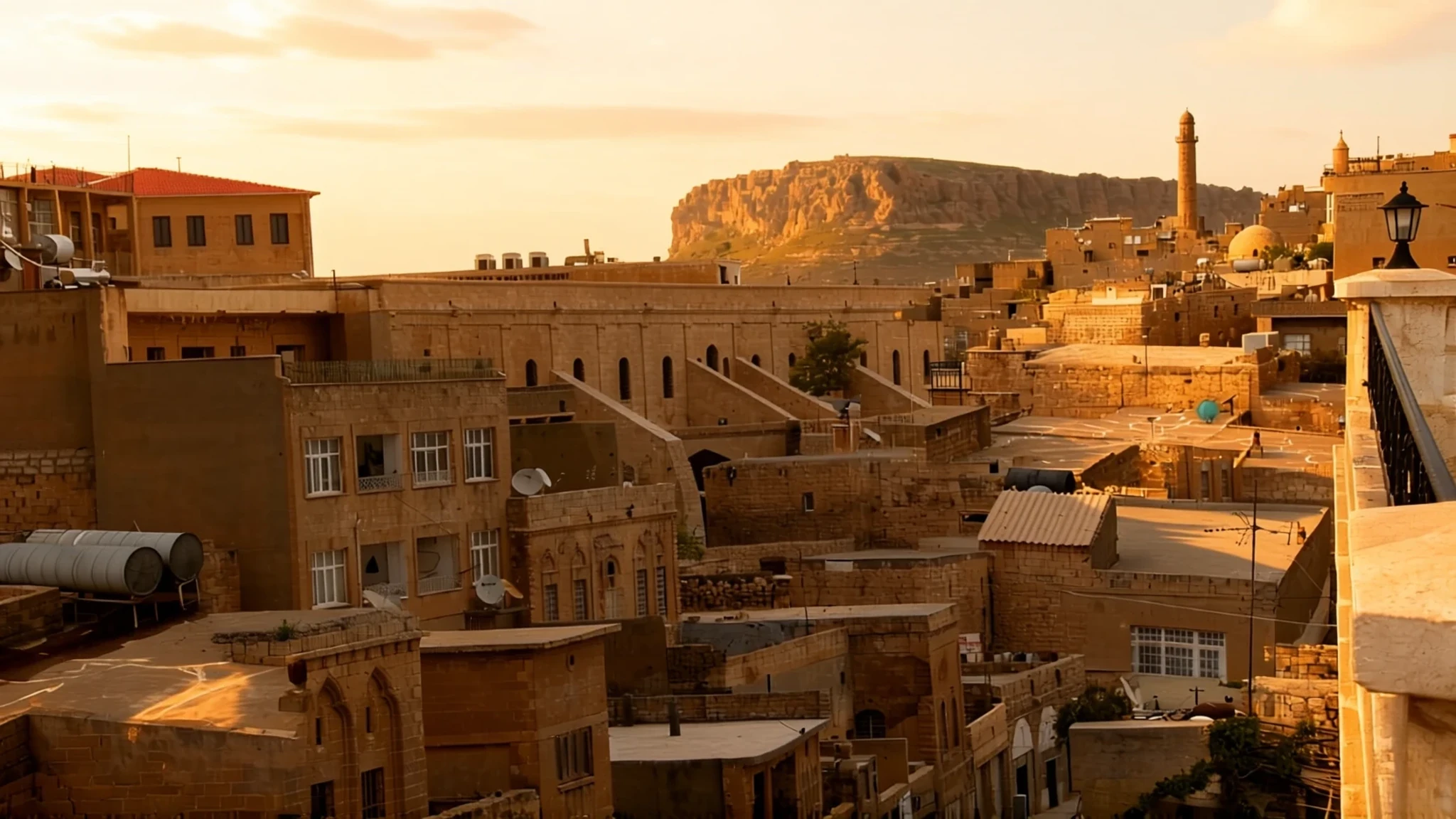
Mardin is a stone-built hill town near the Syrian border, its Artuqid streets climbing to a citadel over the plains; best in spring or autumn.
The place
Mardin is a city of about 130,000 people in south-east Turkey, close to the Syrian border, and the seat of the Artuklu District in Mardin Province. It sits at 1083 m above sea level on the southern flank of a long ridge, so the old town steps down the hill towards the flat Mesopotamian plain below. The top of the ridge is taken up by the citadel, which is closed to visitors because it now houses a military radar base. Down in the lanes, pale stone houses, carved doorways and rooftop terraces make walking the main pleasure. Most visitors come for the Artuqid-era madrasahs and mosques, which give the old town its character. Mardin is also a mixed place: Kurds, Arabs, Mhallami and Assyrians all live here, and mosques, churches and monasteries share the same streets. The newer districts lie on lower ground to the north-west and look much like any other Turkish city, with modern shops and services. Most sights sit within easy reach of the central plaza, though the hill makes every climb feel longer than the map suggests. The climate is hot and dry in summer, cold and sometimes snowy in winter, and very sunny, with more than 3000 hours of sun a year. Tap water is not safe to drink, so buy bottled water from the start.
Its story
The name Mardin has a long pedigree. A legal document from the Neo-Assyrian period refers to a road to Mardiānê, a name commonly identified with the present town, so the place was already known in that era. Assyrian campaigns passed just south of the city, and local Arameans resisted hard. As Aramean settlement grew around the ridge, the older Akkadian name fell out of use and the Aramaic form Mardin took its place. Under Syriac Christianity the name lived on in the hill of Mount Izla, where a monastery was known for its community of monks. Later Romans called the town Marida, a word linked to the Syriac for fortress, which suits a site so easy to defend. For a time it belonged to Osroene, a kingdom ruled by the Abgarid dynasty. Early Muslim forces took the Byzantine city in the seventh century under the commander Iyad ibn Ghanm. Control then changed hands many times, passing between the Hamdanids, the Marwanids and the Uqaylids, and later Ottoman and Safavid Iranian powers both claimed the region at different moments. The Artuqid builders left the stone madrasahs and mosques that define the old town today.
What to see
- Sakıp Sabancı Mardin Kent Müzesi — Yenişehir, the newer district below the old town
An old military barracks now holds the city's main museum, set up through the Sabancı family's foundation. Its galleries present the long history of the region, from the early periods through to the Islamic centuries, and the building makes a useful first stop before you climb into the old town. Allow a relaxed visit, go in the morning when the building is cooler, and check the official site for current opening times before you set out.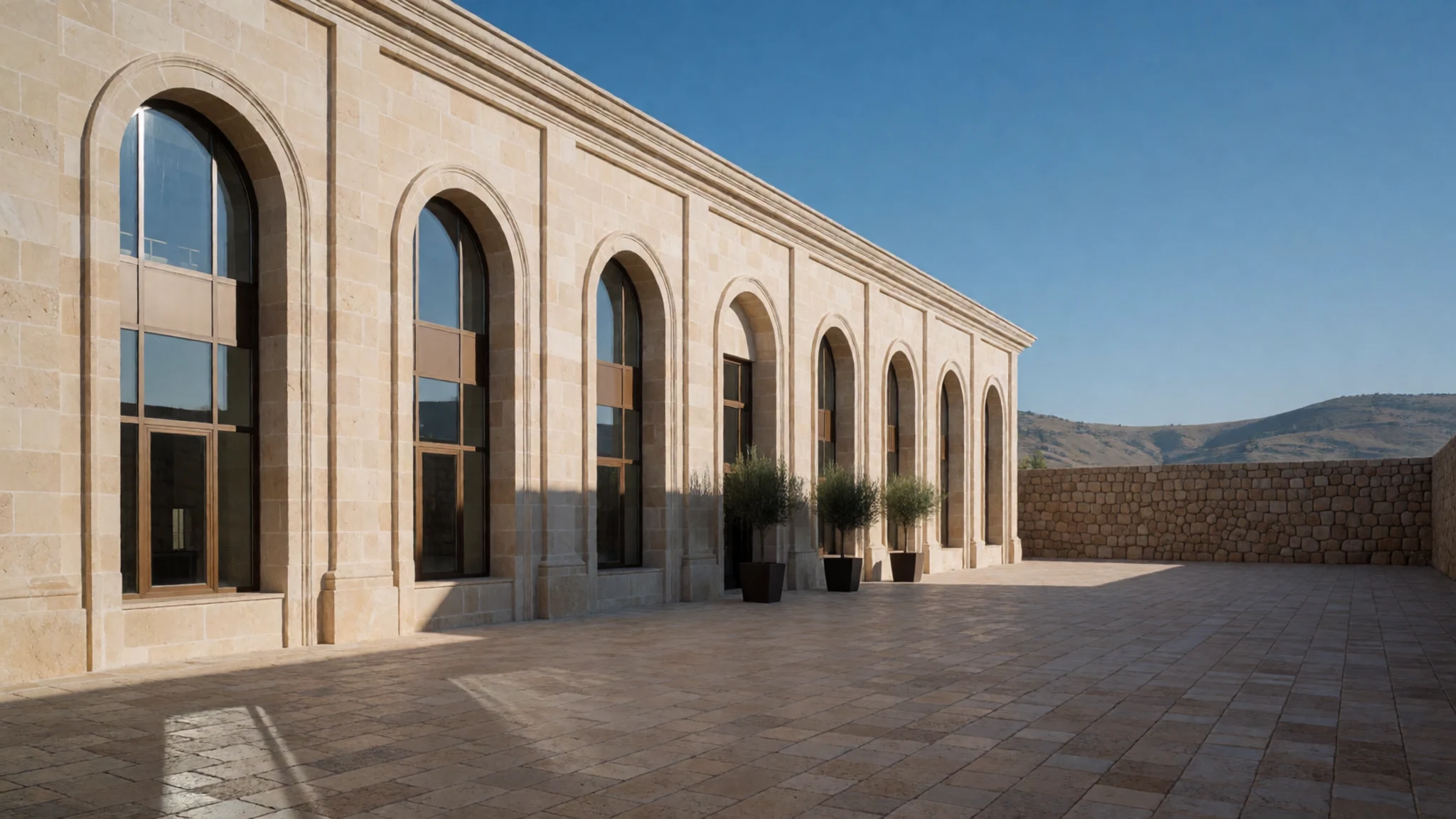
- Sultan Isa Madrasah — Old town, near the central plaza
The domes of this madrasah are the classic image of Mardin, and the building was completed in 1385 as part of a larger religious complex. It is a favourite spot for couples posing for wedding photographs, especially at weekends, so arrive early or in the late afternoon if you want the courtyard and domes without a queue. The carved stone is best appreciated from the lanes just below, where the light falls across the façade.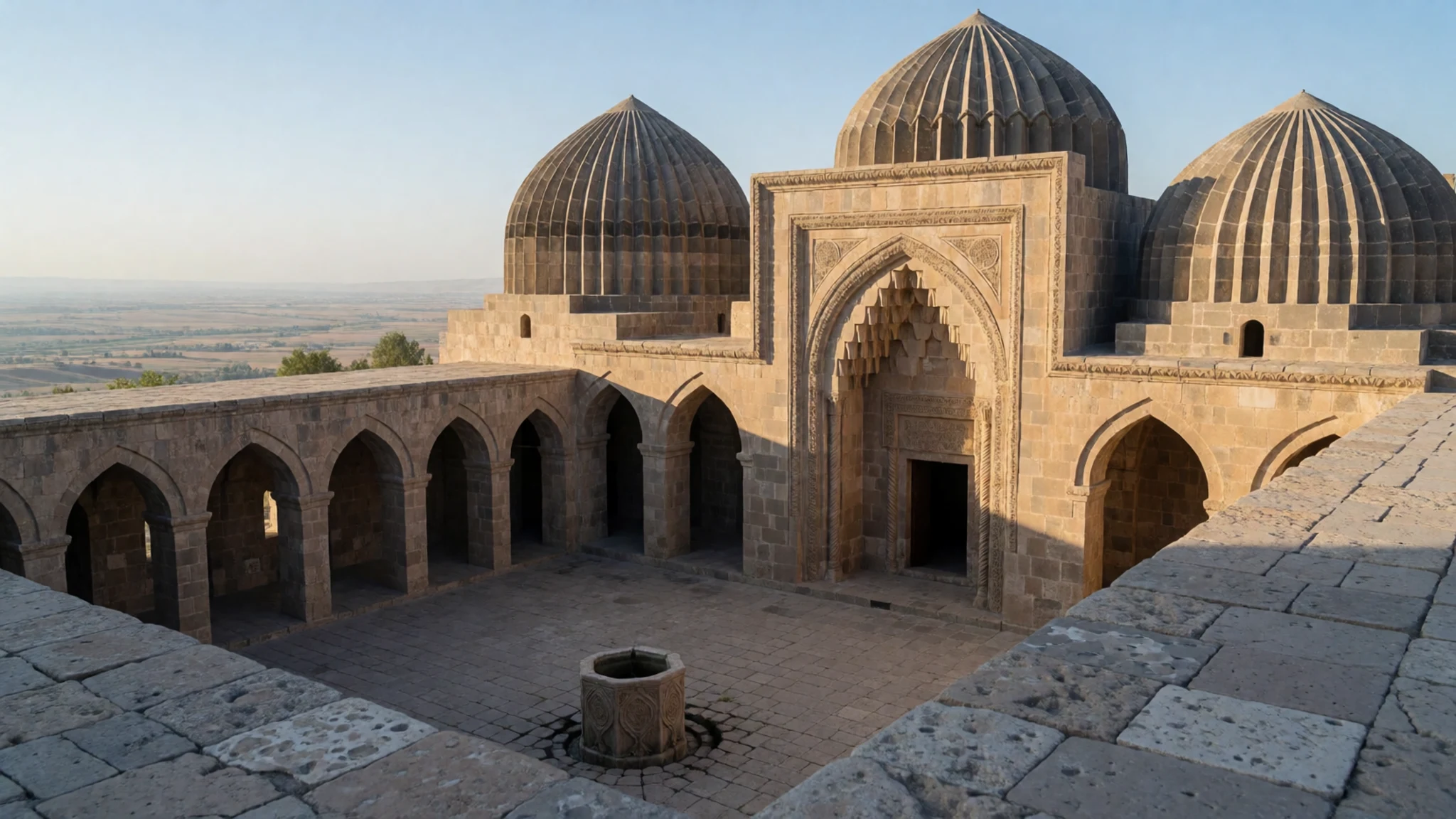
- Kasımiye Madrasah — Above the old town, on the slope facing the plain
Completed in 1445 by Kasım ibn Cihangir, this grand madrasah stands on the slope above the plain. The elephant clock on its front is a modern reproduction of an earlier mechanism, so do not expect a working antique. Look at the carved entrance and then walk a few steps along the slope for wide views west over the plains, which are especially good in the softer light of early evening.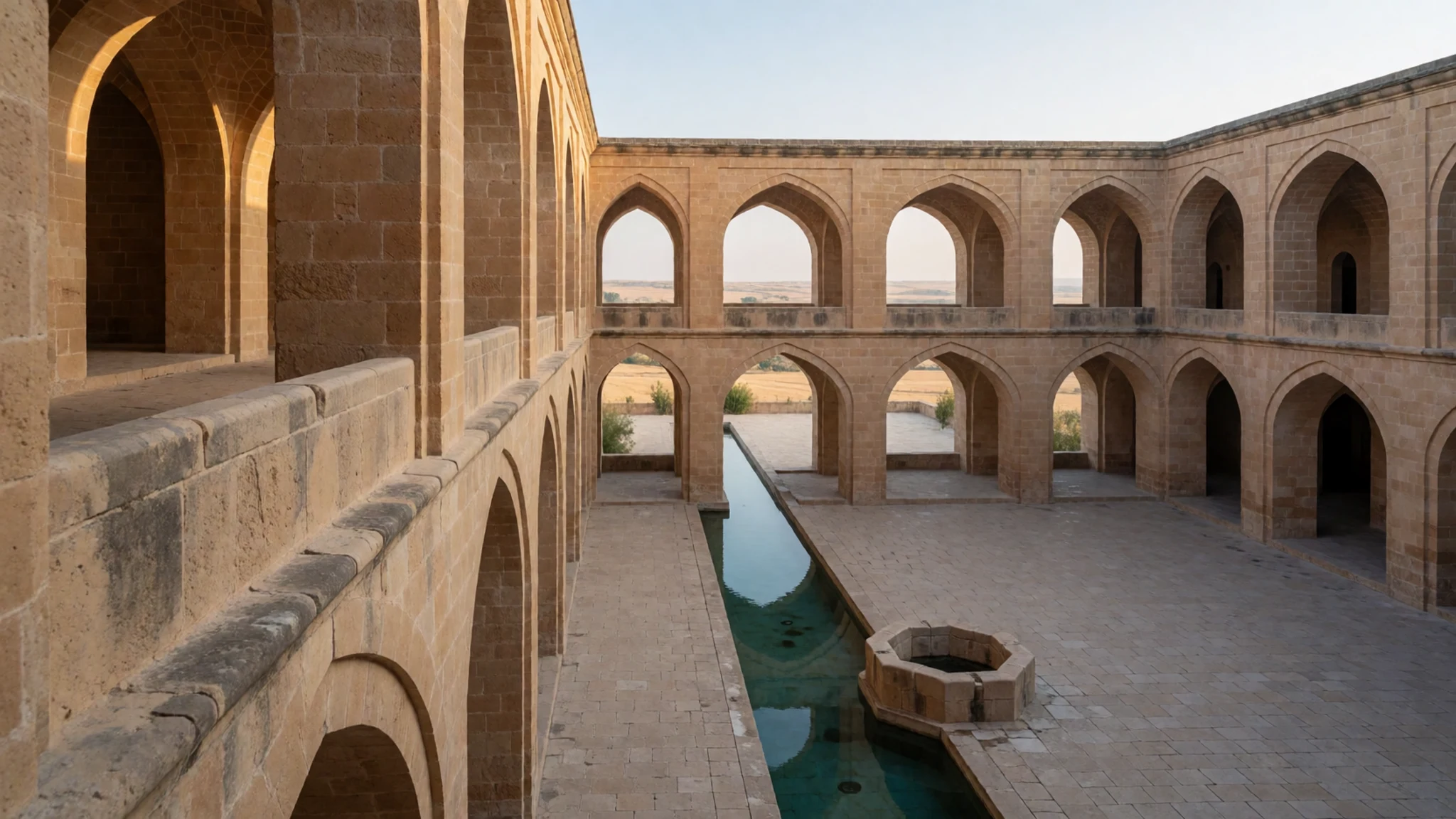
- Deyrulzafarân Monastery — A little way outside the town, on the plain
This Syriac Orthodox monastery is still in use. Its names include Saint Ananias and Dayro d-Mor Hananyo, but many people simply call it Deyrulzafarân, a reference to saffron and the warm tint of its walls. It lies a little way out of town, so arrange a taxi or join a local tour. Dress modestly, keep your voice low inside the church, and ask before photographing monks or services.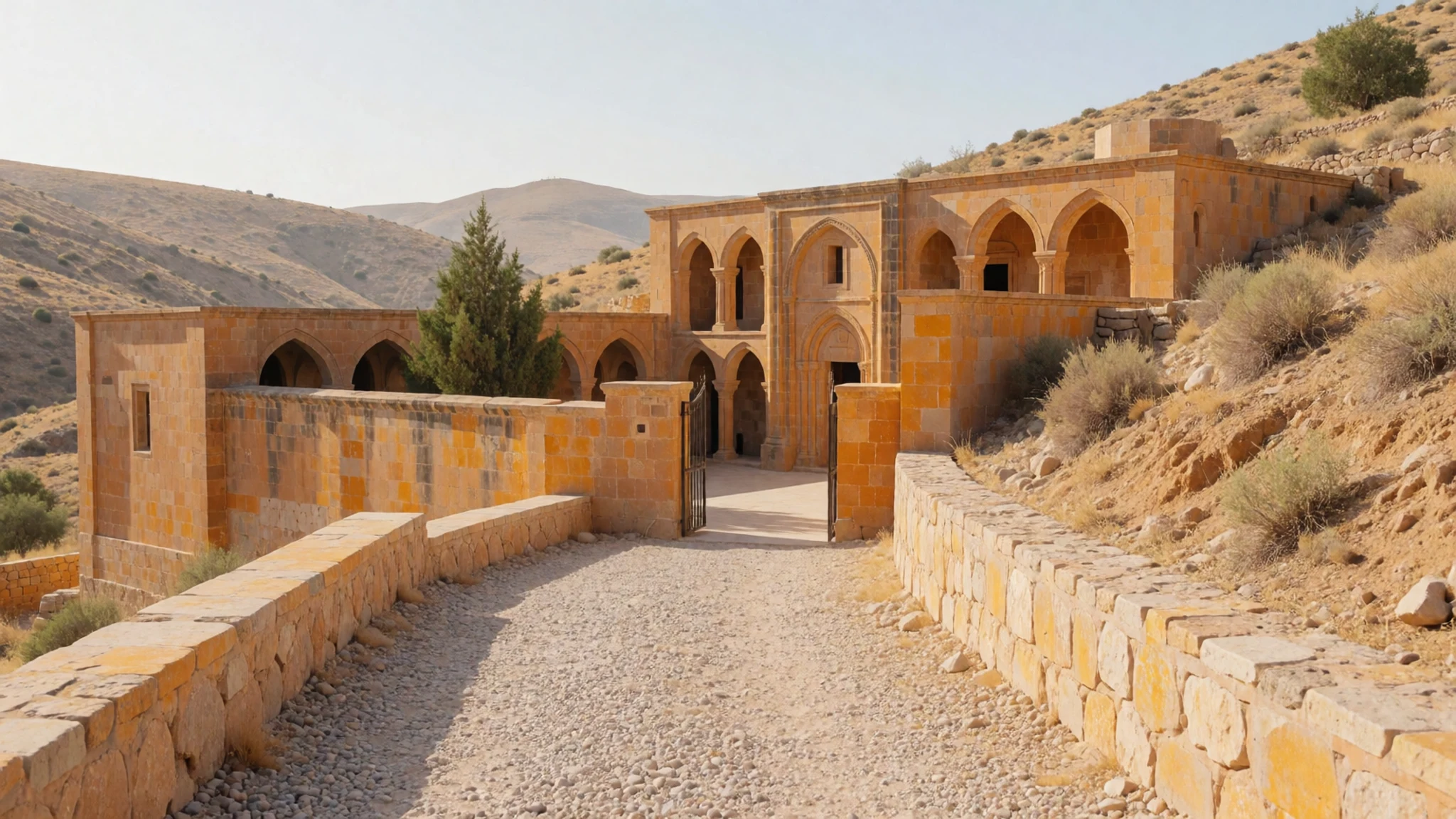
- Grand Mosque — Old town, a short walk from the plaza
The city's main mosque was damaged in battles during the nineteenth century and then rebuilt to follow its original plan. It remains the focal point for Friday prayers, so the quieter hours are the easiest time to look inside. Visitors should dress modestly, cover their shoulders and knees, and remove their shoes before entering the prayer hall. Keep your visit brief if a service is taking place.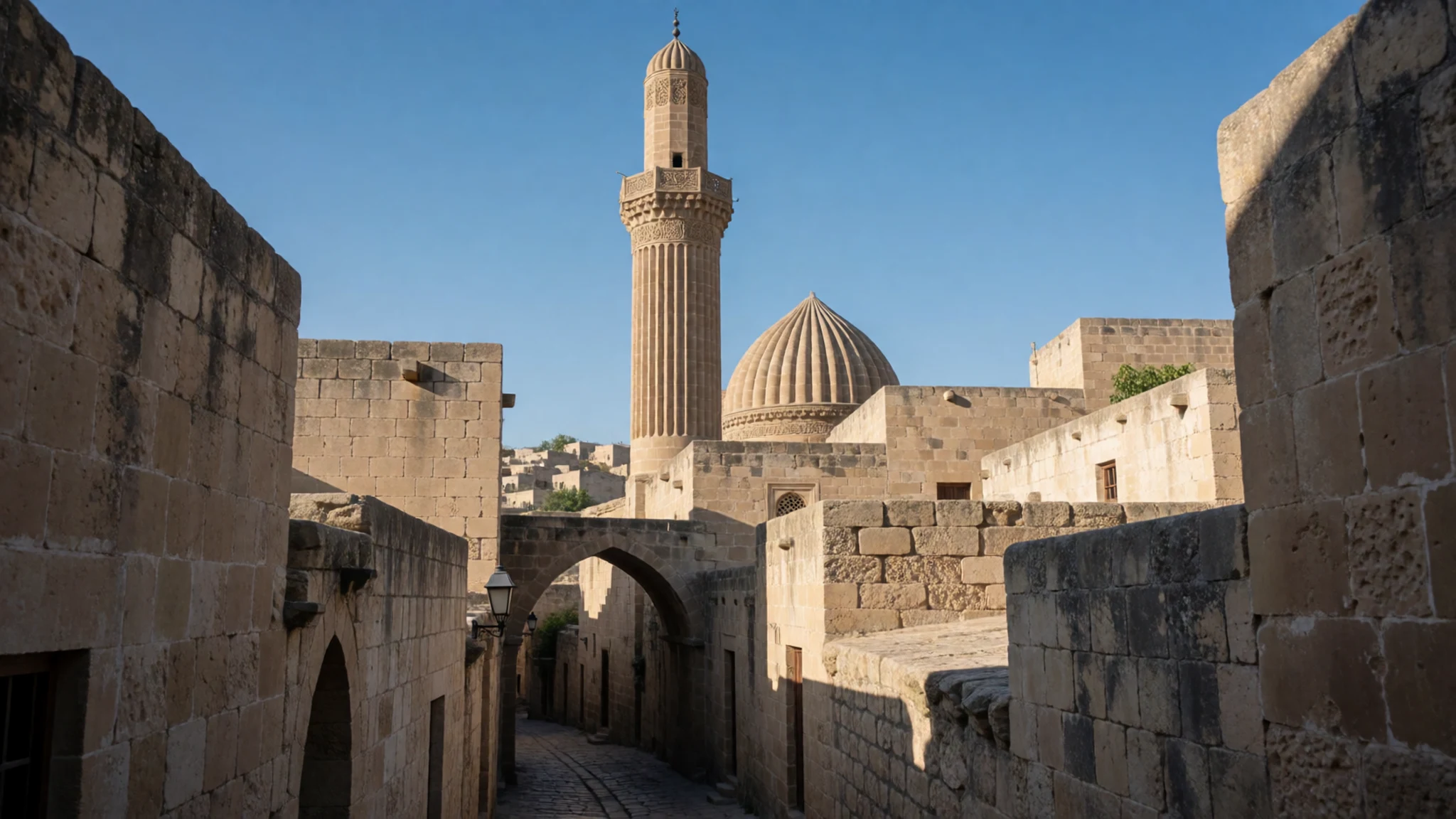
Culture
Mardin's identity rests on its layered history of communities living side by side. Muslim, Syriac Christian and Armenian heritage shows in the mosques, churches and monasteries, and the city's people speak several languages in everyday life. Hospitality is a strong habit: shopkeepers and families often invite visitors to sit for tea, and a short conversation is a normal part of a visit. Life in the old town follows a gentle rhythm, with the streets quietening in the afternoon heat and filling again in the evening. Religious life is central for many residents, so noise and crowding around active places of worship matter. At the monastery and the mosques, cover your shoulders and knees, take off your shoes where asked, and ask before photographing anyone at prayer.
What to wear
Mardin's traditional dress belongs to the wider south-east, where loose trousers, embroidered waistcoats and long layered dresses were common. Hand-woven cotton and wool textiles, along with silk and printed cloth, appear in older households and at weddings. Older women often wear headscarves, and some still choose regional dress for special occasions. Day to day, most people in the city dress much as they would anywhere in urban Turkey, in shirts, jeans, dresses and modest jackets. Headscarves are common in the old town, and modest clothing is the norm at churches and mosques. For a visit, pack light cotton or linen for summer heat, a warm layer for cold winter evenings, and comfortable flat shoes with good grip for cobbled lanes and steep stairs. Carry a scarf so you can cover your shoulders at religious sites.
What to eat
- Süryani şarabı — Restaurants and terraces on the main plaza and in the old town lanes
This local red wine takes its name from the Syriac Christian community and is the drink to try with a meal in Mardin. Most restaurants serve alcohol, so you can order a glass or a bottle to share. Ask the server which producer they recommend, since choices vary from one place to another.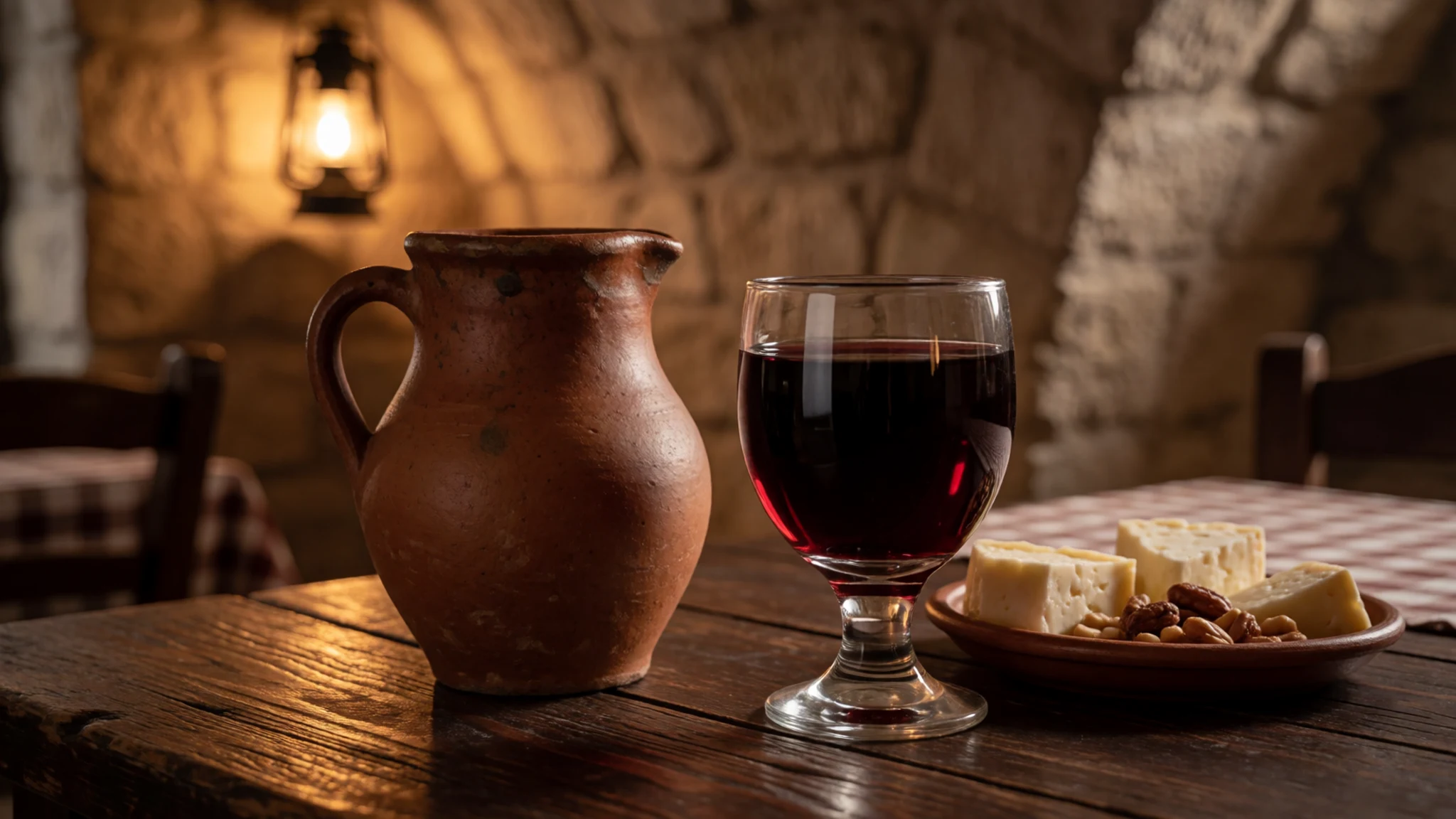
- Kibbeh — Family-run eateries in the old town and around the central plaza
Kibbeh is a bulgur and minced meat dish shaped into ovals or patties, with a flavour that reflects the Arab communities of the region. It is often served as part of a mezze spread, with yoghurt and herbs on the side. Order a plate to share so you can taste several variations.
- Lahmacun — Bakeries and simple eateries in the newer district of Yenişehir
A thin flatbread topped with spiced minced meat, herbs and tomato, lahmacun is a quick lunch that suits the hot middays of summer. It is often rolled with a squeeze of lemon and parsley. Eat it fresh from the oven when you can.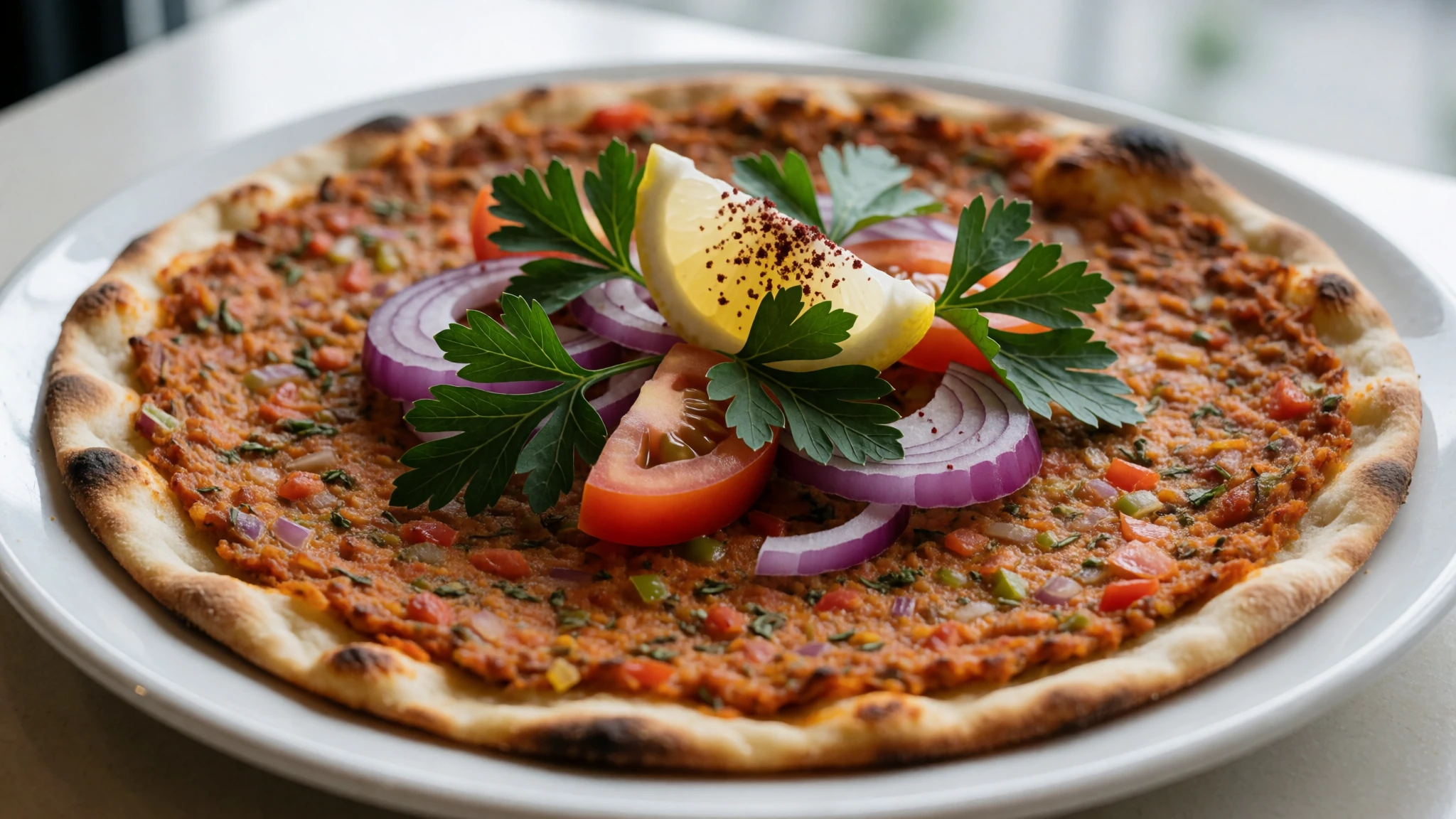
- Bulgur pilaf with lamb or chicken — Traditional restaurants in restored houses in the old town
A plate of fluffy bulgur served with meat and a spiced sauce is a staple across the region. Family restaurants often serve it as a main course on a set menu, and it is filling after a long day of walking. Ask for it with yoghurt salad on the side.
Plan it
Best time. March and November are the most comfortable months, with highs of about 27 °C and 25 °C, while July and August are the hottest and driest, with highs near 45 °C. July and August are very hot and dry, while winters are cold and sometimes snowy.
How long. 2–3
Getting there. Mardin Airport lies about 20 km from the old town, with daily flights from Istanbul, Ankara and Izmir. A Havaş bus runs into town several times a day, or take a taxi. Diyarbakır, about 95 km north-west, is the nearest railway station, and buses from there take roughly an hour and a half.
Budget. low
Tips
- Start the old town walk early, when the lanes are cooler and quieter
- Carry bottled water, since the tap water is not safe to drink
- Carry cash for small eateries and market stalls, and use cards at larger restaurants and hotels
- Book a room in the old town well ahead for summer weekends, when small hotels fill up
- The citadel is closed as a military site, so choose another viewpoint for sunset
Etiquette
- Dress modestly at churches and mosques, with shoulders and knees covered
- Ask before photographing people, especially at religious services
- Take off your shoes before entering a prayer hall
Nearby
Sources
- Wikidata Q188022 (CC0)
- Wikipedia: Mardin (rev 1382658707) (CC BY-SA 4.0)
- Wikivoyage: Mardin (rev 5410591) (CC BY-SA 4.0)
- Photo: Mardin, Mardin Merkez/Mardin, Turkey (Ben Bender) (CC BY 3.0)
- Photo: Dayro d-Mor Hananyo (Izabela Miszczak) (CC BY-SA 4.0)
- Photo: Domes of Sultan İsa Medresesi (Doron) (CC BY 3.0)
- Photo: Mardin P1040555 (Nevit Dilmen) (CC BY 3.0)
- Photo: Kasimiye, Mardin P1050254 (Nevit Dilmen) (CC BY 3.0)
- Photo: Ancient Syrian Orthodox Church, Mardin P1030555 (Nevit Dilmen) (CC BY 3.0)
- Photo: Mardin Teras (Engin Tavlı) (CC BY-SA 4.0)
- Photo: Mardin, Peeters Jacob 1690 (Jacob Peeters) (Public domain)


