Mandalay
Mandalay, Myanmar
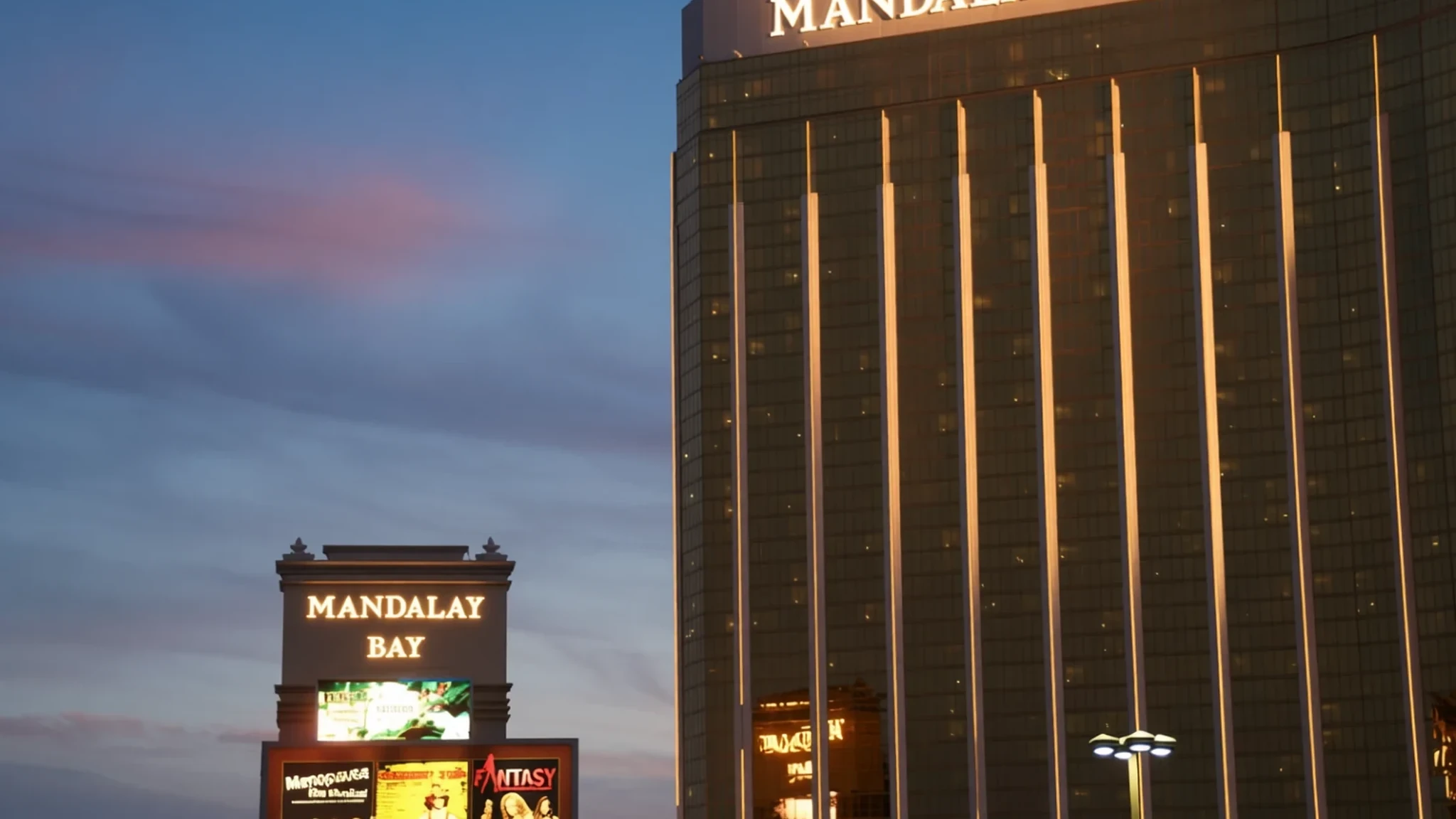
Mandalay is Myanmar's former royal capital and a lively base for monasteries, pagodas and river life in the Upper Myanmar region.
The place
Mandalay sits on the east bank of the Irrawaddy River, about 631 km north of Yangon. It is the second-largest city in Myanmar, home to roughly 1.2 million people, and it serves as the commercial, educational and health centre of Upper Myanmar. Many Burmese regard it as the heart of their culture, and Buddhist life is visible everywhere, from monasteries and pagodas to the early-morning monks walking the streets.
The city lies in the central Dry Zone, where the rain shadow of the Arakan Mountains keeps things dry for much of the year. The wet season runs from May through October, and the remaining months are dry, with a wide gap between cool nights and hot days. Since the late twentieth century, irregular migrants from Yunnan in China have arrived in growing numbers, changing the ethnic mix of the population and boosting trade across the border.
Geology is never far away. Mandalay lies along the Sagaing Fault, where the Indian and Sunda tectonic plates meet, so earthquakes are a serious hazard here; a magnitude 7.7 quake in March 2025 killed more than 3,300 people in the city and surrounding townships. The river and its sandbars shape the edges of town, while the city's wide roads spread out from the old palace enclosure towards markets and temples.
Practically, Mandalay works best as a base of three or four days rather than a stop for a single afternoon. Its pagodas are spread across several districts, traffic in the centre can be heavy, and the pace is slower than in Yangon. Midday is hard going from March to May, when the heat is at its worst.
Its story
Mandalay was founded by royal decree. On 13 February 1857, King Mindon laid out a new capital at the foot of Mandalay Hill, moving the court away from Amarapura. Mindon was a devout Buddhist, and the move was presented as the fulfilment of a prophecy about a great Buddhist city rising on that very spot. As with most Burmese capitals, the choice of site and the layout reflected the wishes of the ruler of the day.
The plan was ambitious. The site covered about 66 km², and the walled citadel took up roughly 413 hectares. Its grid was built around 144 blocks, with a royal palace compound at the centre. Four long walls ringed the citadel, each with three gates, and a wide moat crossed by five bridges ran around it. Watch turrets with gold-topped spires stood along the walls, a striking detail for a city built to declare its faith.
Mandalay was the last royal capital of Burma before the kingdom fell under British control in 1885. Even after Yangon became the administrative capital of British Burma, Mandalay stayed commercially and culturally important. The Second World War brought serious destruction during the Japanese conquest, and much of the palace was lost. In 1948, Mandalay joined the Union of Burma, which had only recently gained independence. Today the palace on view is a reconstruction, and parts of the old walled area are used by the military, which visitors should keep in mind when walking around the moat.
What to see
- Kuthodaw Paya — Foot of Mandalay Hill
Kuthodaw Paya stands at the foot of Mandalay Hill and is often described as the world's largest book. Built under King Mindon in the 1800s, its complex holds 729 white stupas, each sheltering a stone slab inscribed with the Pali Canon. Walking the rows takes time, and the quiet is the reason to come. Visit early in the morning, before the midday heat builds.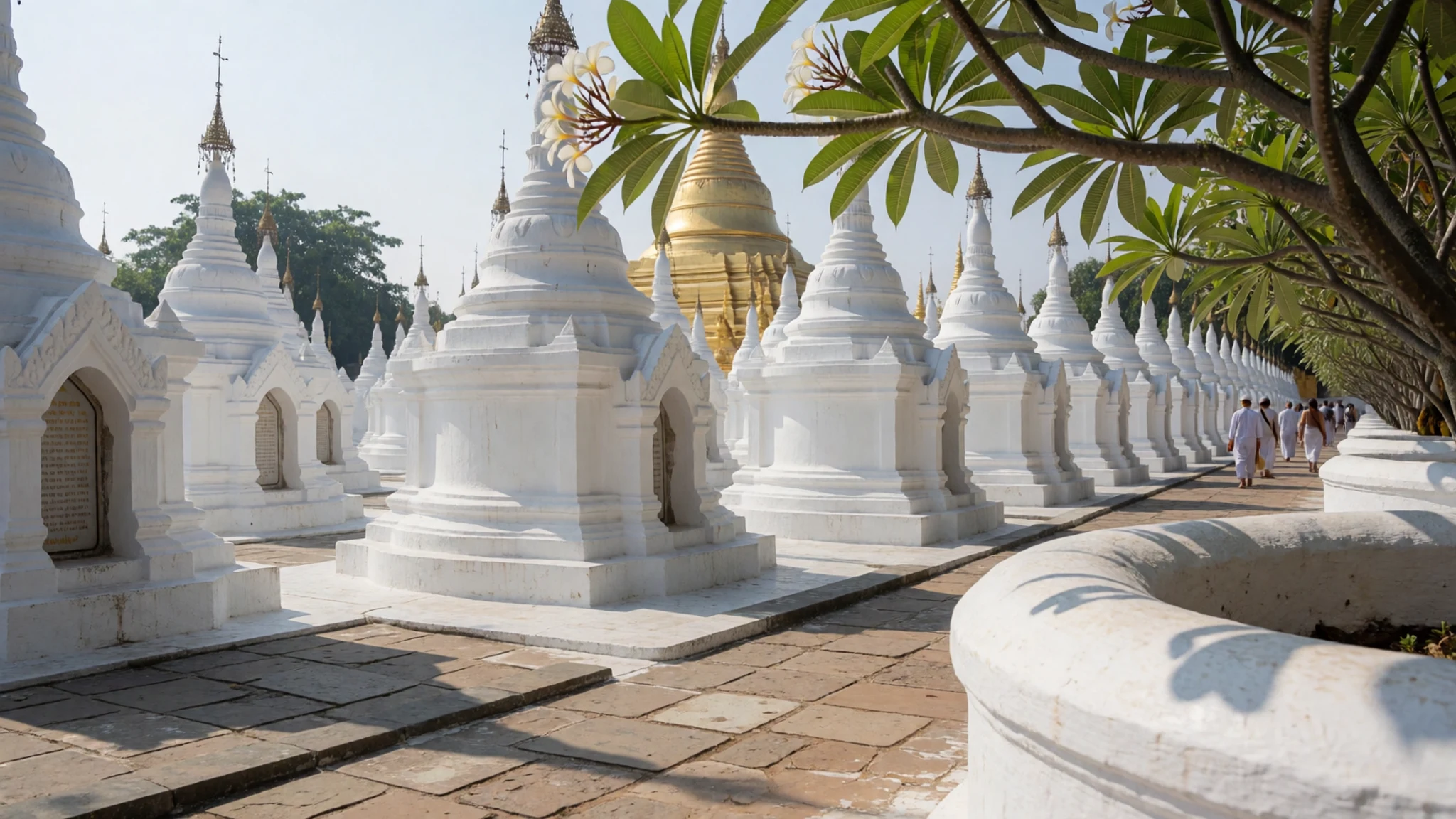
- Sandamuni Paya — Beside Kuthodaw Paya, north of the hill
Sandamuni Paya lies right beside Kuthodaw and shares its layout of white stupas, each one holding a slab of the Tripitaka. The main draw is a massive iron Buddha image, which is said to be the world's largest. Give it time, because the scale rewards a slow walk around the figure, and the stupas are worth a look too. Expect to remove your shoes at the entrance, so pack socks.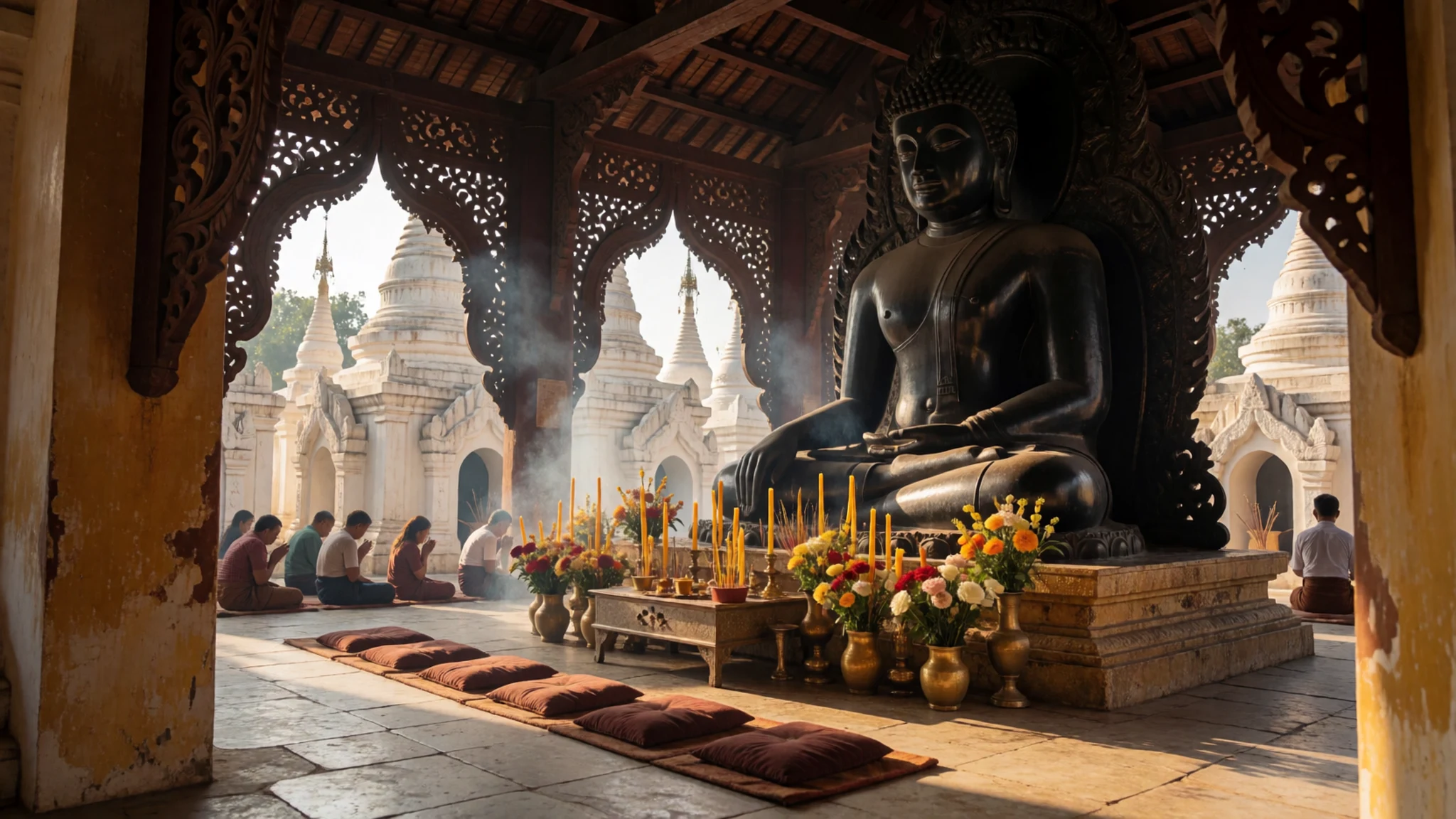
- Maha Myat Muni Paya — South-west Mandalay
Maha Myat Muni Paya lies at the south-western end of the city, well away from the sights clustered around Mandalay Hill. Devotees treat it as Myanmar's second most sacred pilgrimage place, so expect people at prayer rather than a quiet museum. Go by taxi or motorbike taxi, allow extra time for traffic, and dress modestly to enter the main hall.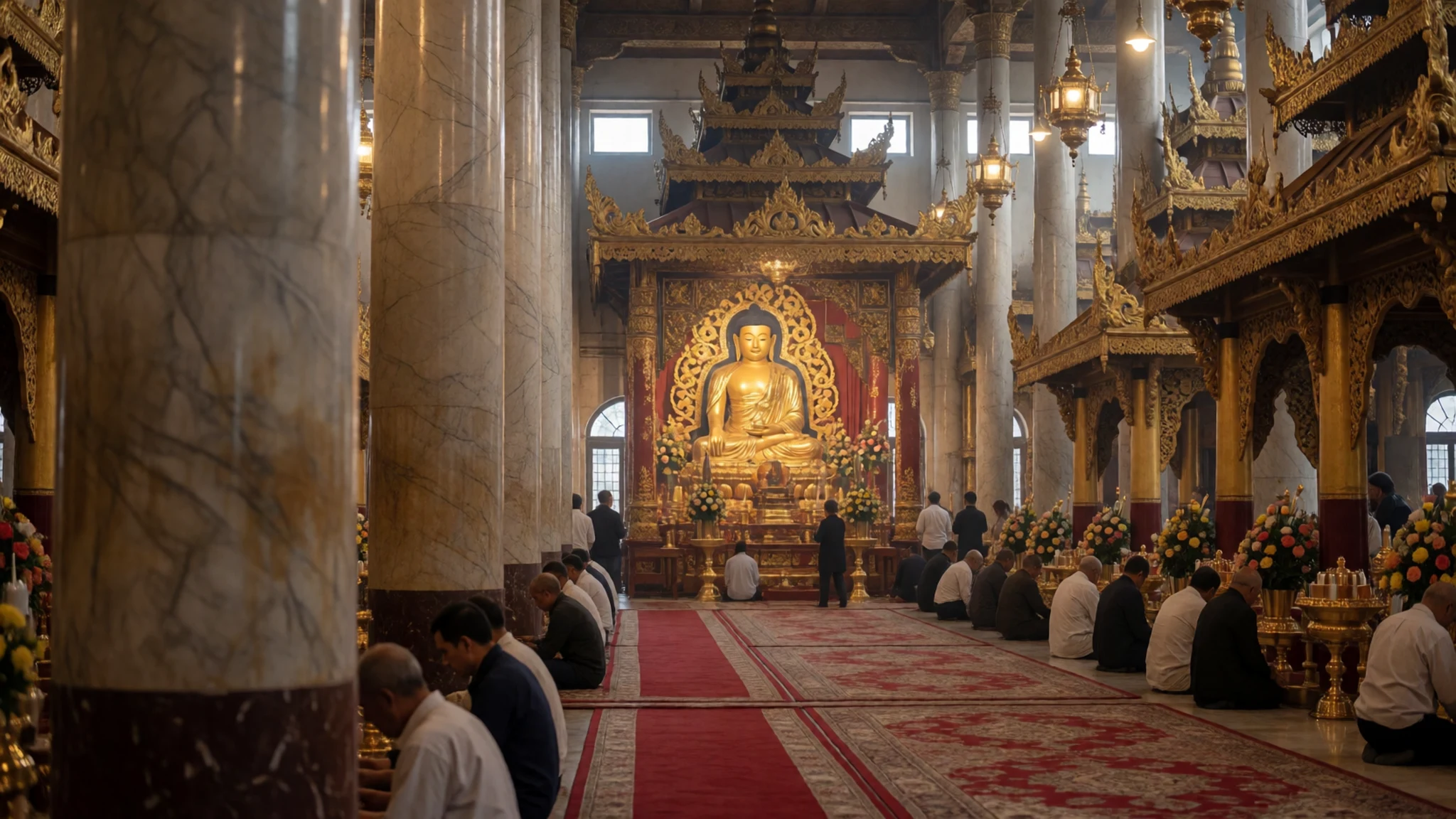
- Jade Market — South of the centre
The Jade Market is the place to watch Mandalay's jade trade in action. Raw stones are cut, polished and sold, and some sellers even show their stock over a smartphone screen. Browsing is free, but only bargain if you are ready to buy. Go in the morning, when the trading is at its liveliest.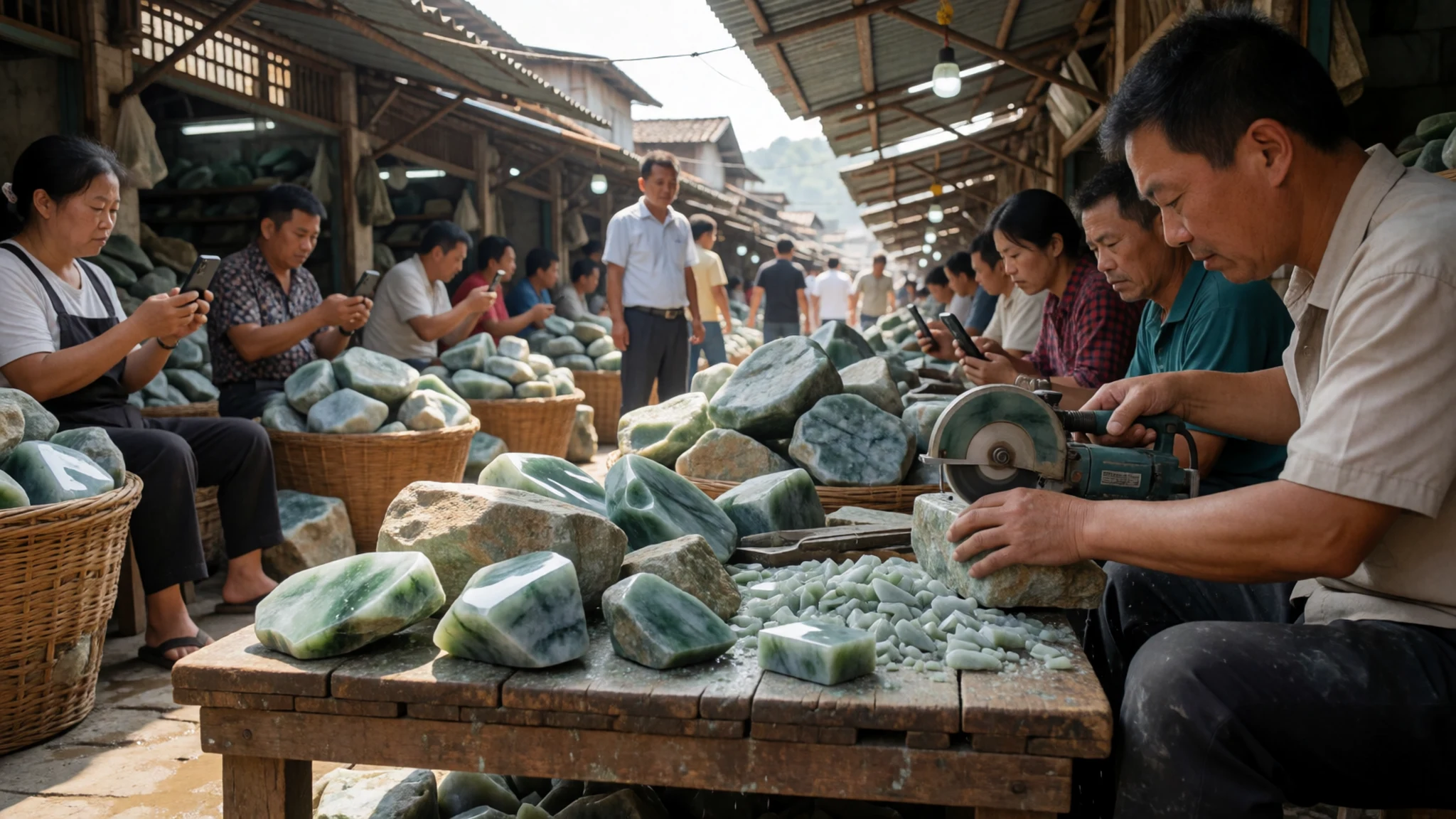
- Flower Market — Central Mandalay
The Flower Market is small, with dozens of vendors selling flowers and greenery. Buy offerings here if you want to join devotees at the pagodas. The larger market to the north is where vegetables, fish, meat and fruit are sold and repacked for the day's trade. Arrive early for the best of the morning activity.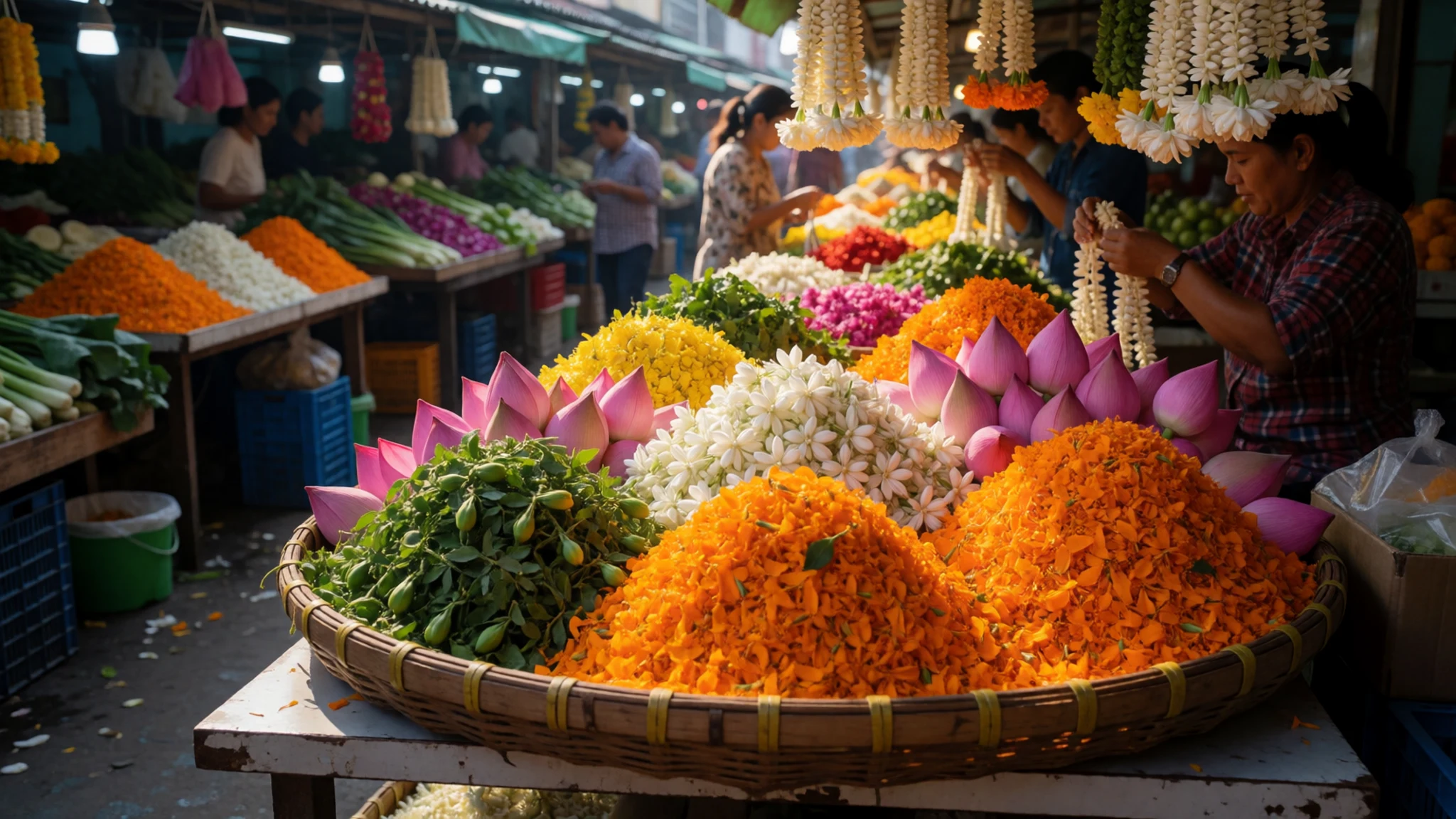
Culture
Mandalay is a centre of Burmese Buddhism, with more than 700 pagodas and many monasteries spread across the city. Its religious art is closely tied to King Mindon, a devout Buddhist who filled the city with Buddha images, and the local styles are regarded as a core part of the country's artistic tradition. Religious life runs through daily routines: monks walk the streets in the early morning, and families make offerings at the pagodas before work. Parts of the walled palace area are still used by the military, so photography there should follow posted signs. Most media in the city is supplied from Yangon, but conversation in Mandalay tends to be lively and direct. At pagodas, remove your shoes before stepping onto the platform, cover your shoulders and knees, and never point your feet at a Buddha image.
What to wear
Traditional dress in Mandalay is the longyi, a wraparound tube of cloth worn by women and men alike. Women often pair it with a fitted blouse and a htamein, a longer woven wrap, while men wear a jacket and sometimes a gaung baung, a folded head cloth. Cotton and silk are the usual materials, with checked and striped weaves common in everyday longyi and richer patterns kept for festivals and religious occasions. People in Mandalay now wear a mix of longyi at home and in the markets, and Western-style clothes at offices and schools. Young people often choose jeans or T-shirts, though many still wear the longyi on the way to the pagoda. For visitors the rule is simple: cover shoulders and knees at religious sites, carry a light shawl, and buy a longyi locally if you want to join in. Loose cotton or linen suits the heat from March to May, and a light rain layer is useful in the wet season. Choose shoes that slip off easily, since you will take them off often, and pick socks that are comfortable on hot stone.
What to eat
- Htou mont — Specialist snack shops across the city
Htou mont is a local snack, and Mandalay has some of the best-known shops for it. Shops will normally let you try the different types, and you can buy mixed boxes. Ask for a taste before choosing, since the varieties differ. Eat them within four to seven days, depending on type.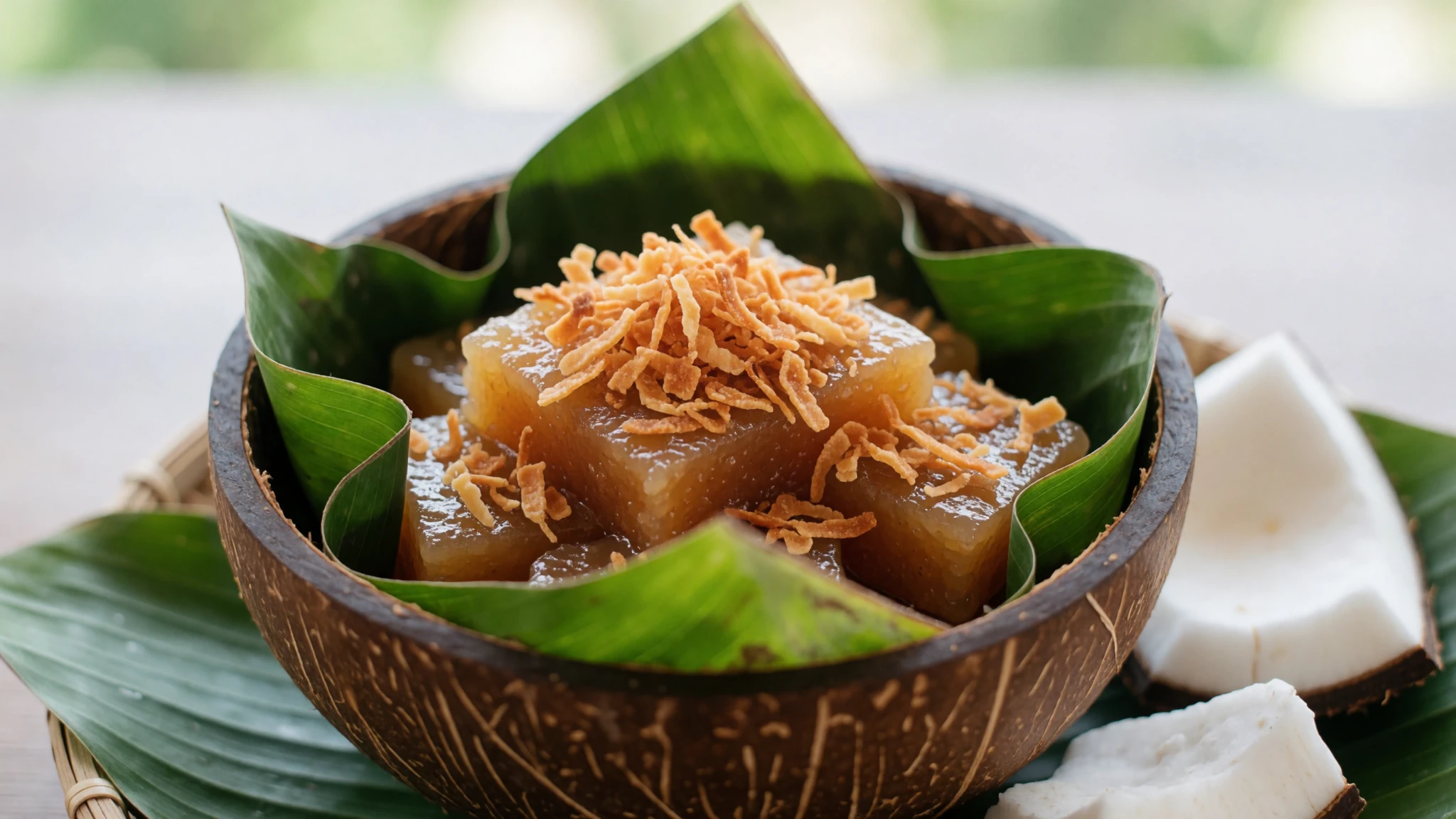
- Street pancakes — A residential street, afternoons only
In the afternoons, a cook sets up a cast iron frying pan in front of her house and makes savoury and sweet pancakes. Stand a while and watch the batter go into the pan, then choose whichever you prefer. It is a simple, inexpensive snack, best eaten warm straight from the pan.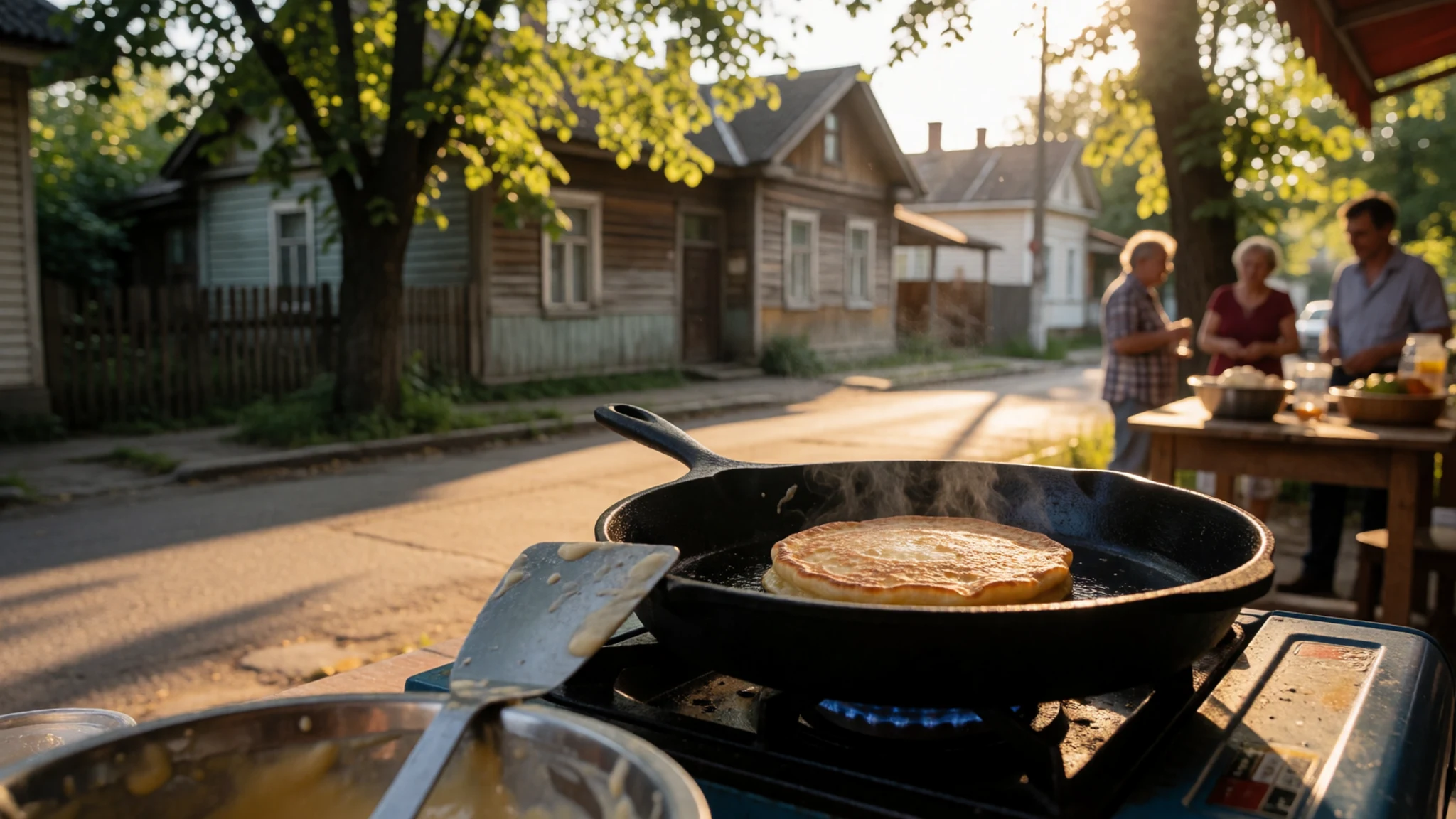
- Barbecued seafood — Double-storey seafood restaurants, southern Mandalay
Double-storey restaurants in the southern part of the city grill fish and shellfish over a barbecue, a good meal to share with friends. Ask what the day's catch is and check the price before ordering. Groups tend to order several dishes to pass around the table. - Burmese home cooking — Burmese restaurants near the centre
Mandalay's Burmese restaurants serve a broad range of local dishes, often as several small plates shared at the table. This is the easiest way to taste many things in one meal. Some menus are quite inventive, so ask the staff to recommend a few dishes you would not find elsewhere.
Plan it
Best time. November to February, when the dry season keeps rain away and days are cooler; January averages about 22 °C. April averages about 31 °C and often passes 37 °C, so avoid April and May for long days of sightseeing. The wet season runs from May to October.
How long. 2–3
Getting there. Fly into Mandalay International Airport, then take a taxi into the city; agree the fare before you set off. Long overland journeys from Yangon exist but take much longer than the flight.
Budget. low
Tips
- Start at Mandalay Hill or the big pagodas before 8 am, when it is cooler and quieter
- Carry water and a hat, because midday heat is intense from March to May
- Carry small notes for markets and small shrines
- Allow extra time for traffic when crossing town by taxi
- Book flights and rooms ahead for the November to February peak, and check the official city site, mandalaycity.net, for current information
Etiquette
- Remove shoes before entering pagoda platforms and halls
- Cover shoulders and knees at religious sites
- Ask before photographing monks or people at prayer
Nearby
Sources
- Wikidata Q185518 (CC0)
- Wikipedia: Mandalay (rev 1380694672) (CC BY-SA 4.0)
- Wikivoyage: Mandalay (rev 5410385) (CC BY-SA 4.0)
- Photo: Mandalay, Myanmar (Vyacheslav Argenberg) (CC BY 4.0)
- Photo: The worship of Buddha (MarenHumburg) (CC BY-SA 4.0)
- Photo: Ku Tho Taw Pagoda & Sandar Muni Pagoda (Heinz_Htetz) (CC BY-SA 4.0)
- Photo: U Bein Bridge, Mandalay (Heinz_Htetz) (CC BY-SA 4.0)
- Photo: Zay-Cho Time Tower (Mayor mt) (CC BY-SA 4.0)
- Photo: Mandalar Thiri Sport Ground (Mayor mt) (CC BY-SA 4.0)
- Photo: Mandalay Palace walls and moat (LBM1948) (CC BY-SA 4.0)
- Photo: King Mindon (Yarzaryeni) (CC BY 3.0)


