Manali, Himachal Pradesh
Manali, Himachal Pradesh, India
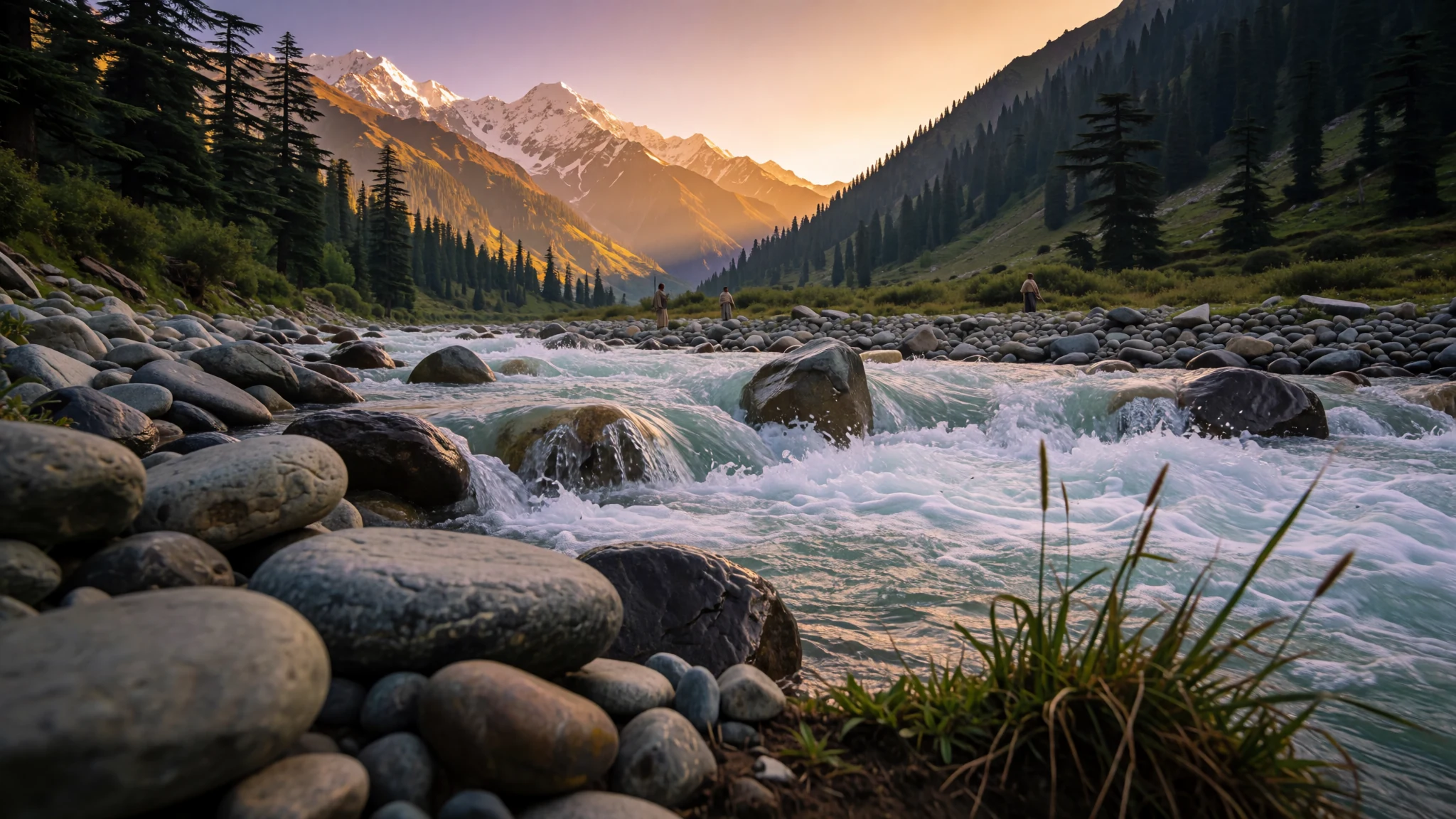
Manali sits at the top of the Kullu Valley, a practical base for Himalayan passes, cedar forest walks and cooler summers than the plains.
The place
Manali is a hill town in the Kullu district of Himachal Pradesh, where the Beas River has cut a broad valley between steep, forested slopes. It lies at about 2,050 metres, so the air is noticeably thinner than in Delhi and the nights stay cool even in midsummer. The town itself is compact: a commercial core of guesthouses, outfitters and cafés, and a pedestrian stretch called Mall Road that fills with visitors from late morning. Older lanes lead toward Old Manali, a quieter village across the river known for apple orchards and wooden guesthouses. Beyond the town the valley opens toward Rohtang Pass, Solang and the high ground that leads on to Lahaul and Ladakh, so many people treat Manali as a starting point rather than a destination.
The climate shapes everything. Winters bring snow to the surrounding slopes and temperatures can fall well below freezing at night. The monsoon arrives in summer and peaks around August, when rain is heaviest and some roads become difficult. Spring and early autumn are the easiest seasons for walking and sightseeing, though the town is busiest at weekends, and on the roads leading in and out, traffic slows to a crawl.
Expect a mix of Hindu shrines, Buddhist monasteries and new hotels built into the hillsides. The atmosphere is relaxed rather than polished. Most visitors spend a few days here adjusting to the altitude, eating well and making day trips by taxi or bus.
Its story
Manali's name is usually linked to Manu, the sage who in local belief settled people here after a great flood. The Sanskrit phrase often given for it, Manu-Alaya, means something like the dwelling place of Manu, and the legend is still told in Old Manali, where a temple is dedicated to him. Historically the valley belonged to the wider Kullu principality, a set of local rulers who worshipped their own goddesses. The Hidimba Devi Temple, a 16th-century shrine set among cedars, is the clearest survivor of that period and remains a working place of worship.
Under British rule in the nineteenth and early twentieth centuries, the valley began to attract officers and visitors escaping the heat of the plains. They brought roads, houses and a new crop. Two early orchardists, Captain A. Banon and J.S. Mackay, are recorded as planting apples here, and orchards soon became central to the local economy. Apple trees still cover the slopes around Old Manali, and fruit growing remains part of daily life in the villages.
After independence the town grew steadily as a holiday centre. Better road links from the plains shortened the journey, and hotels, cafés and leisure services followed. That growth has put pressure on water, parking and the old wooden houses, and many residents now balance tourism with farming and the seasonal work of guiding and transport.
What to see
- Hidimba Devi Temple — Cedar forest at the edge of town
Hidimba Devi Temple is an old cave shrine dedicated to Hidimbi Devi, a character from the Mahabharata epic. It stands in a cedar forest at the foot of the Himalayas, and the shade keeps the path cool even at midday. Mornings are quieter than the afternoon, when day-trip groups arrive. Shoes come off at the shrine, and visitors should dress modestly and keep voices low.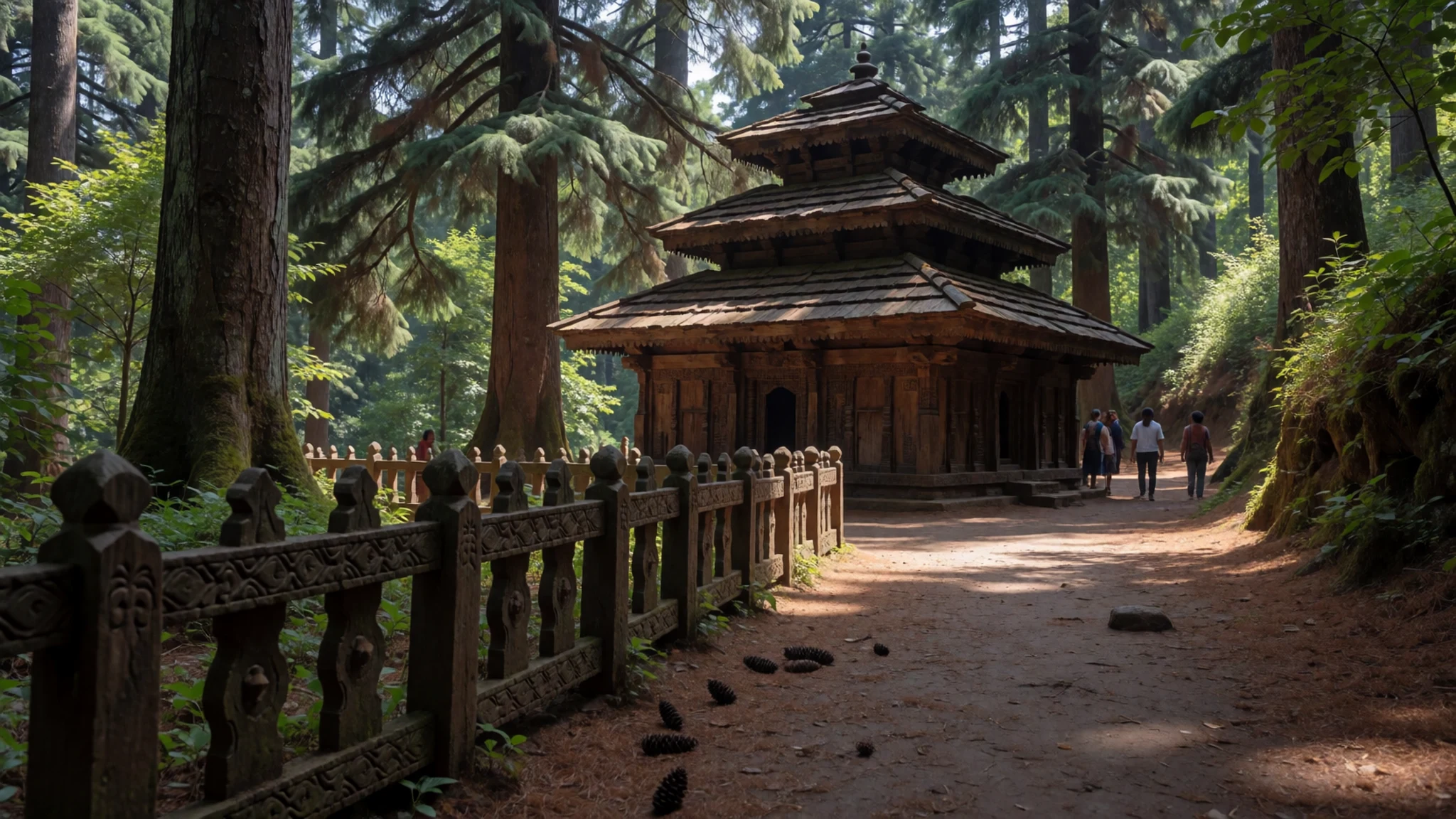
- Old Manali — Village about 3 km northwest of the town centre
Old Manali is a village about 3 km northwest of the town centre, known for its orchards and old guesthouses. Nearby stand the ruins of Manaligarh, a fort, and the Manu Maharishi Temple honours the sage linked to the town's name. The lanes are steep and narrow, with cafés on the riverbank and terraces facing the valley. It suits a relaxed half-day.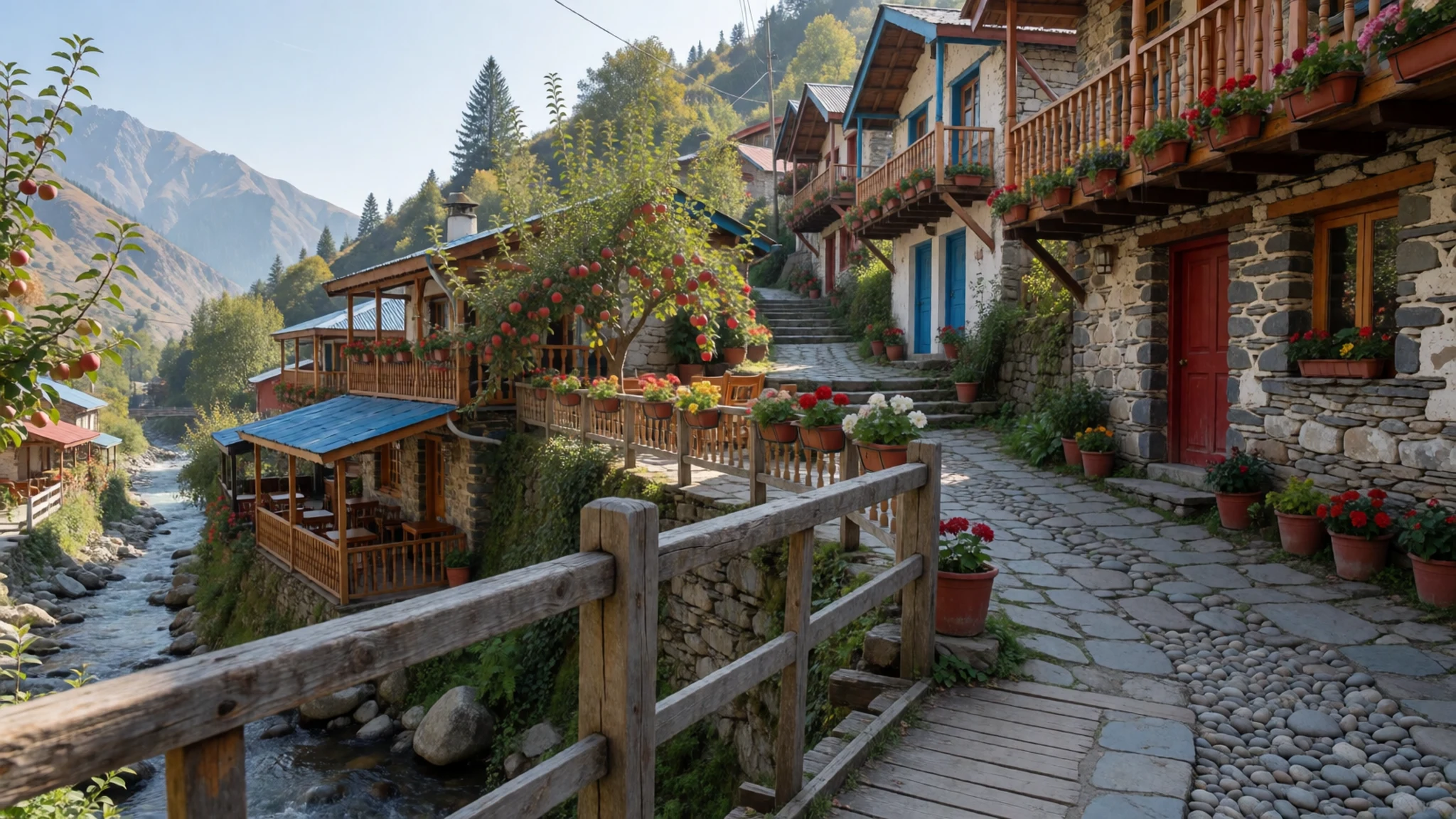
- Solang Valley — About 13 km northwest of Manali
Solang Valley lies about 13 km northwest of Manali and is popular as a snow spot in winter, when skiing and snowboarding take place on its slopes. A chairlift runs for roughly 300 metres from the valley floor, so the views open quickly. Check lift details locally, as they change by season and weekend crowds build up.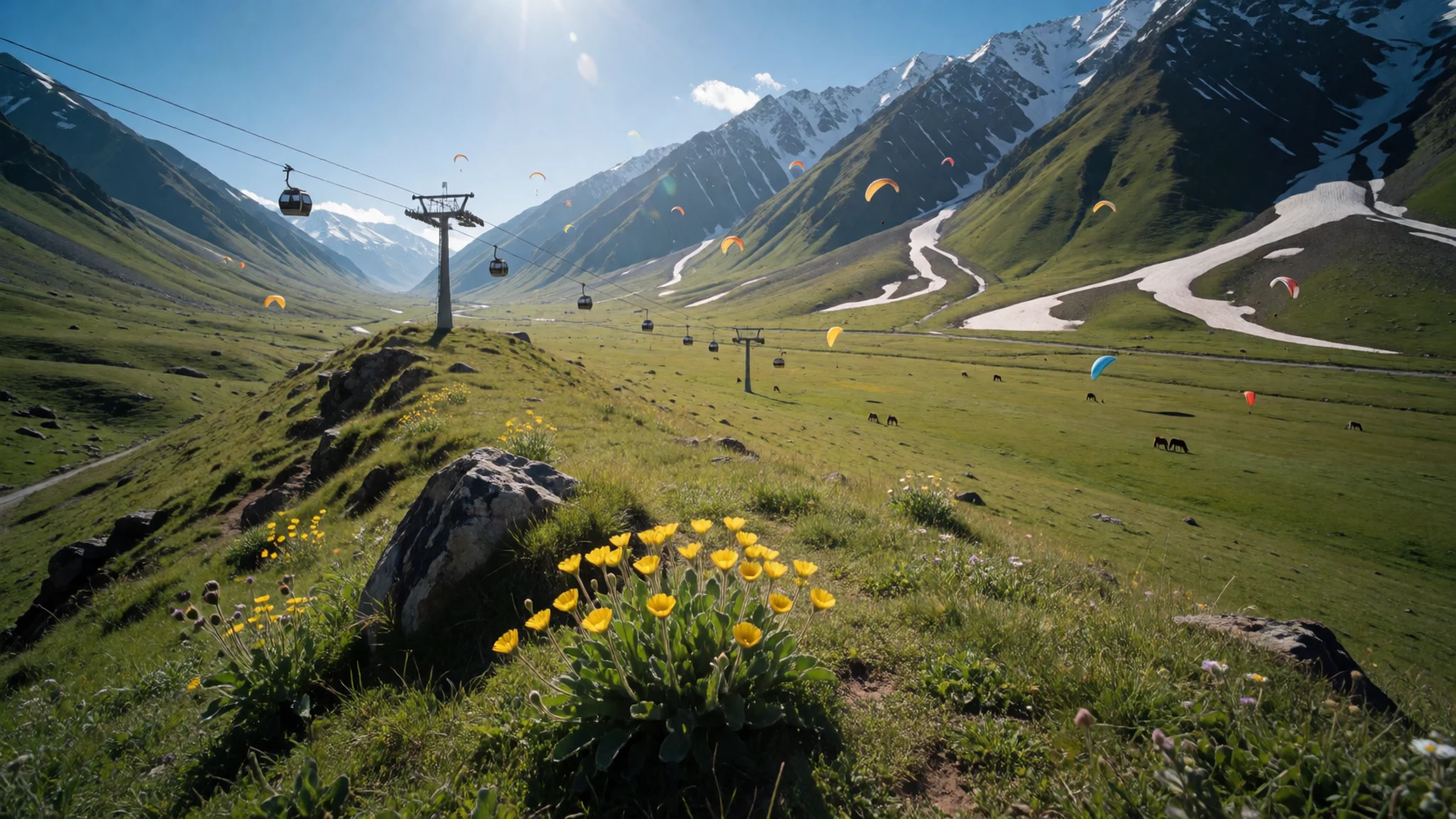
- Rohtang Pass — Road north-east from Manali
Rohtang Pass sits at 3,979 metres on the road north-east from Manali, and it can feel cold even on a summer day. The road is closed for much of winter, and access depends on weather and permits, so check before you set out. Many people go for the views and the snow fields rather than the summit itself. Pack warm layers, water and sun protection.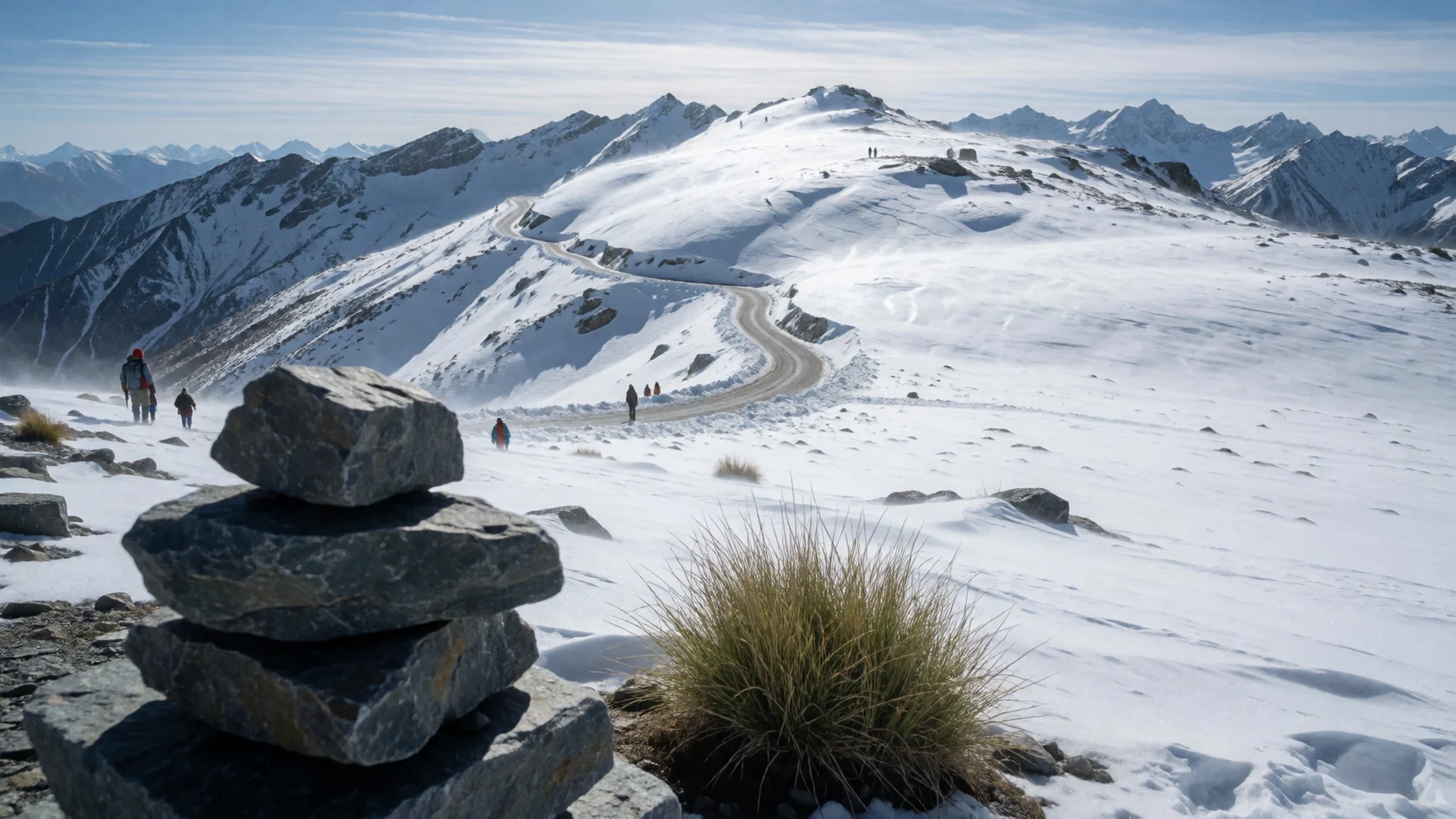
Culture
Manali's culture is shaped by the Kullu valley's Hindu traditions and by Tibetan Buddhism, brought by communities who settled in the area and by the monasteries that still stand on the hillsides. Local deities are worshipped in temples and shrines, and festivals in the valley bring music, dance and processions, often with people in traditional dress. Hindu shrines such as Hidimba Devi Temple are working places of prayer, so people come to pray, not only to look. Monasteries are kept going by donations and by the sale of hand-woven carpets made in workshops attached to the temples. Hospitality matters, and many guesthouse owners are local families who take pride in their town. In the high season, residents can grow tired of crowds and noise, especially late at night. Remove your shoes before entering any shrine or monastery prayer hall, and ask before photographing people or ritual moments.
What to wear
Manali's traditional dress belongs to the wider Kullu valley. Men have long worn a woollen cap, often called the Kullu topi, with a long woollen coat or heavy trousers, depending on the season. Women traditionally wore a long woollen dress or tunic with a shawl, and silver jewellery at the neck and ears. The valley is known for its woven wool, particularly the Kullu shawl, a striped or checked wrap made on hand looms, and the pattu, a thick woollen cloth used for coats and blankets. Today most people in town wear jeans, jackets and fleece, with the traditional cap and shawl seen mainly at festivals, weddings and temples. Visitors should dress for altitude and sun: layers, a warm jacket for evenings, a hat and sunglasses, and sturdy shoes for uneven paths. Covering shoulders and knees is the easy default at temples such as Hidimba, and loose trousers suit cold mornings and dusty roads. Sandals work in town but not on the trekking routes.
What to eat
- Siddu — Small home-style eateries on the lanes of the old town
Siddu is a steamed bread of wheat dough wrapped around a filling of poppy seed, walnut or sometimes spiced lentils, and it is served with ghee. It is a Himachali staple, often eaten for breakfast or at festivals.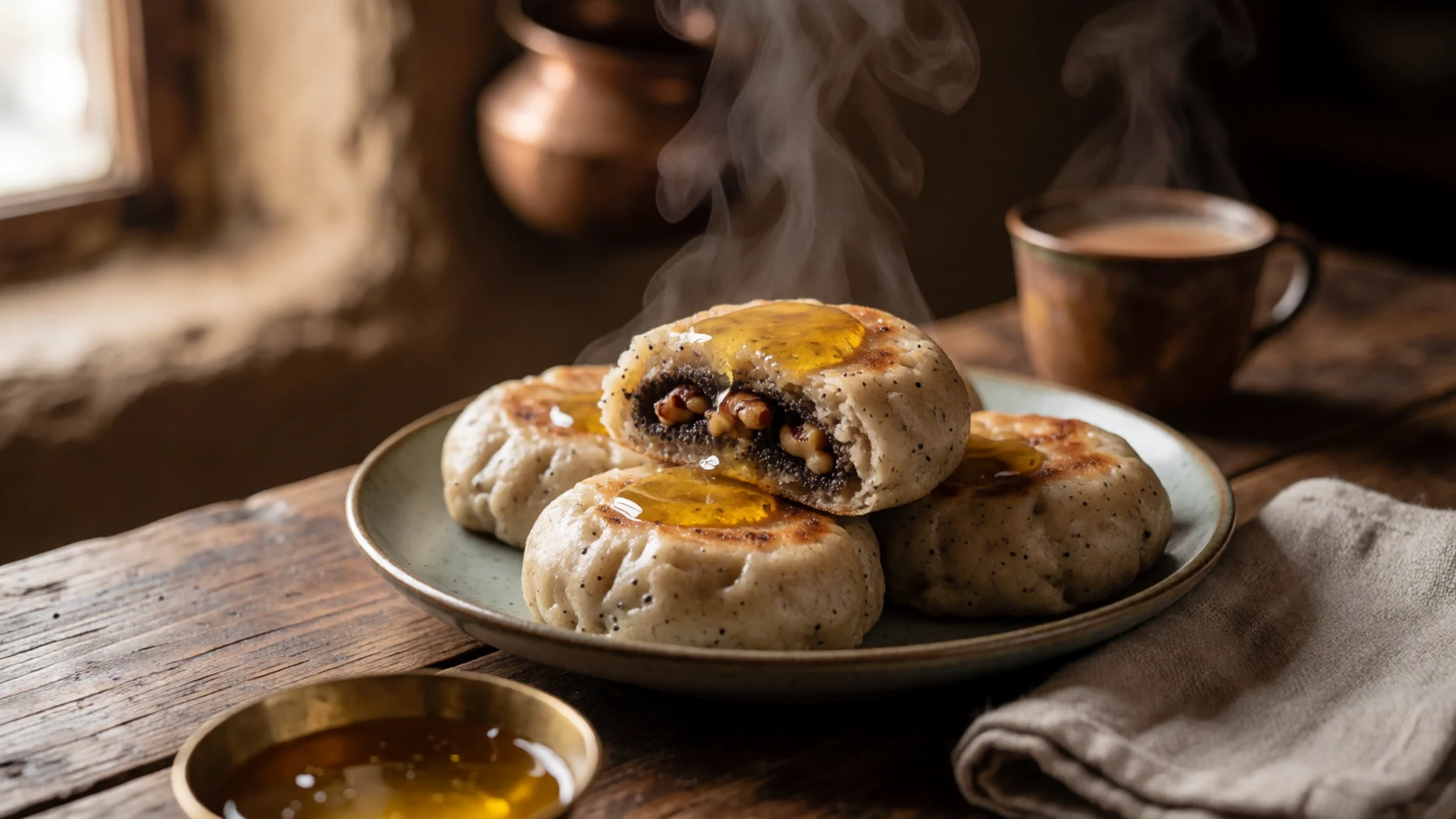
- Momos and thukpa — Stalls and small eateries along Mall Road and the lanes behind it
Momos are steamed dumplings filled with minced vegetables, chicken or buff, and thukpa is a noodle soup with vegetables and meat in a broth. Both reflect the Tibetan community that settled in the area, and both are cheap, filling and common. Order them hot with a chilli dip.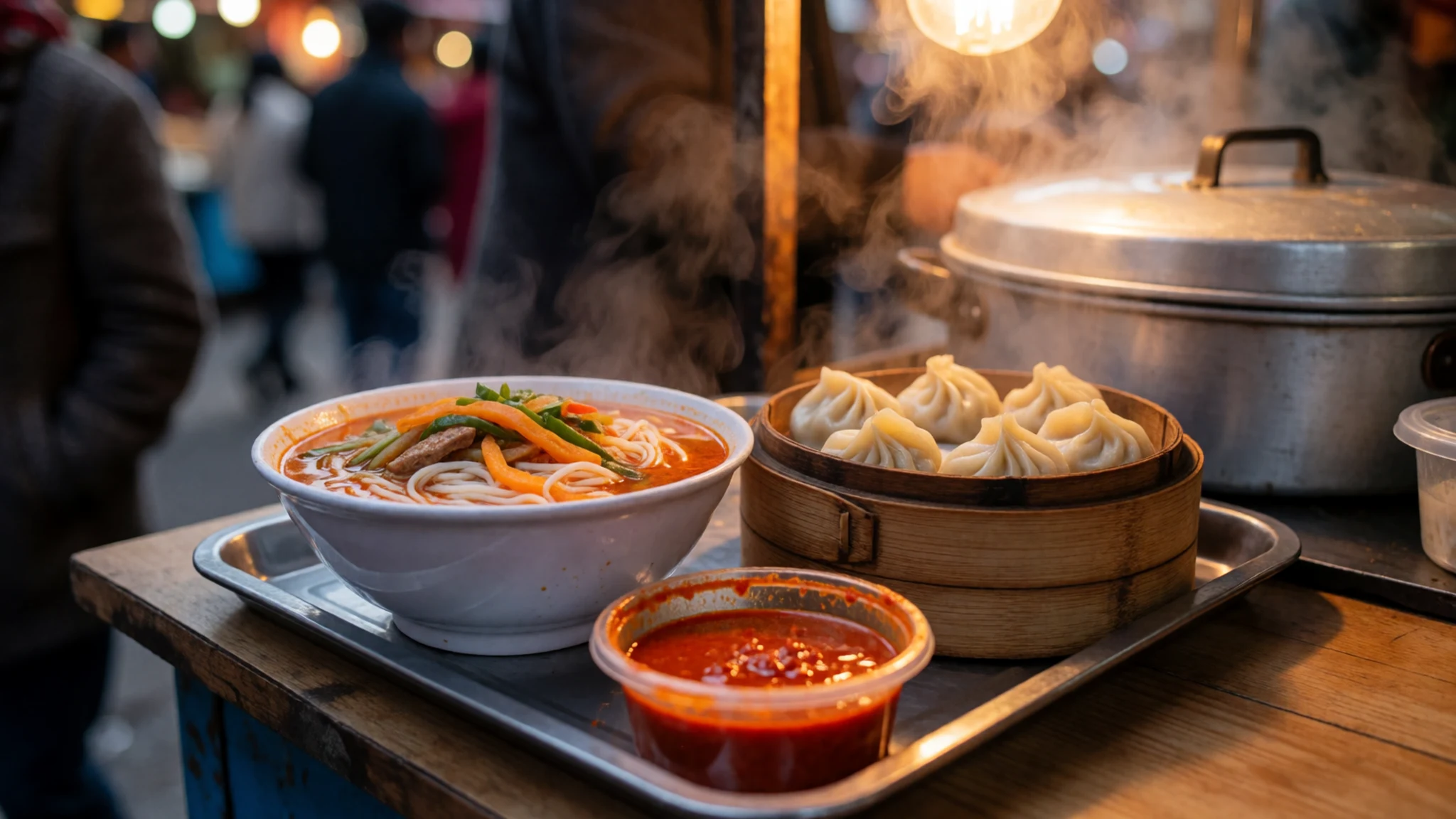
- Trout from the Beas — Riverside eateries near the bridge over the Beas
Trout from the river is grilled, fried or cooked in a masala, usually served with rice or bread and a green chutney. Menus change with the season, so ask what is fresh that day and where it came from. - Dham — Festival events, weddings and family gatherings; guesthouse hosts can point you to one
Dham is a festival meal served on large leaf plates, usually at weddings, temple events and community gatherings. It typically includes rice, several dals and a sour yogurt-based curry, eaten in a set order. Ask a guesthouse host whether one is being prepared during your stay. - Café breakfasts and pizza — Cafés in Old Manali and the lanes near the river
Old Manali and the lanes near the river have small cafés serving wood-fired pizza, pasta, bakes and cooked breakfasts, often with a view of the water. Many are small and family-run, and some have a few rooms upstairs.
Plan it
Best time. April to June for clear days and walking, and September to November for crisp air after the monsoon. December to February brings snow and cold, and July to August is the monsoon, with the heaviest rain.
How long. 3–4
Getting there. Fly into Bhuntar airport for Kullu-Manali, then take a taxi up the valley, or take an overnight Volvo bus from Delhi, which takes about 14 hours.
Budget. mid
Tips
- Book overnight Volvo buses from Delhi in advance; private operators are often cheaper than the state-run ones
- Hire a taxi with a driver who knows the hill roads, and confirm whether air-conditioning is included before you book
- Start day trips early, since the roads to Solang and Rohtang fill up by late morning
- Rest for a day after arriving before going to the high passes
- Carry cash for small eateries and local taxis, and bring water and warm layers
Etiquette
- Dress modestly at temples and carry a shawl to cover your shoulders
- Ask before photographing people, especially at temples and festivals
- Keep noise down in the evening, especially near guesthouses by the river
Nearby
Sources
- Wikidata Q83443 (CC0)
- Wikipedia, Manali, Himachal Pradesh (rev 1376405006) (CC BY-SA 4.0)
- Wikivoyage, Manali (rev 5410330) (CC BY-SA 4.0)
- Photo 01 Hadimba Devi Mandir, Rishabh gaur (CC BY-SA 4.0)
- Photo 02 Manali City, Neerajsinghazm (CC BY-SA 4.0)
- Photo 03 Mall Road, Manali, Ivishalbhutani (CC BY-SA 4.0)
- Photo 04 Dhauladhar view on the way to Solang Valley, Gayatri Priyadarshini (CC BY-SA 4.0)
- Photo 05 Beautiful River valley, Sheetal Goel (CC BY-SA 4.0)
- Photo 06 Mountains, Manali, Himachal Pradesh, Shameer Thajudeen (CC BY-SA 4.0)
- Photo 07 Manali in winters, Hritik412000 (CC BY-SA 4.0)
- Photo 08 Manali Jan, Blvo (CC BY-SA 4.0)


