Maligne Lake
Maligne Lake, Canada
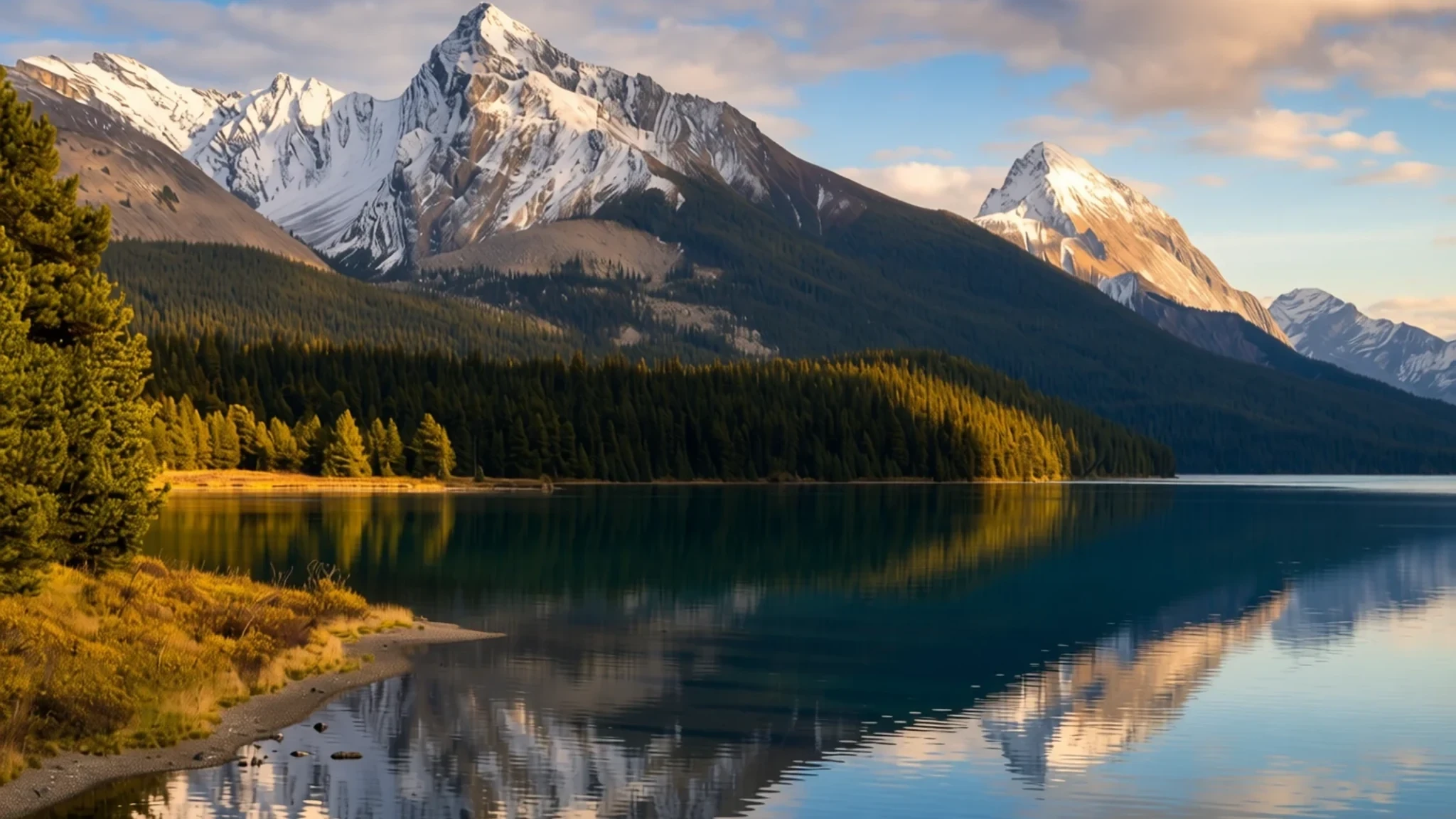
Go for a mountain lake of startling blue-green water, with glaciers in view and a boat trip out to Spirit Island.
The place
Maligne Lake sits in Jasper National Park in Alberta, about 44 km south of Jasper town. Most visitors notice the water first: a clear, intense blue that shifts with the light and the season. Around it stands a ring of peaks, including Leah and Samson Peaks and Mount Paul to the east, and Mounts Charlton, Unwin and Mary Vaux to the south and west. Three glaciers can be seen from the shore, which gives the view a sense of scale that is hard to grasp until you are standing there.
The lake is long, and at about 1,670 m above sea level the air feels thin on a cold morning. The Maligne River feeds it from the south and carries water out again to the north. The deepest water lies near the southern end. An introduced population of trout has become self-sustaining, so anglers come for the fishing, while paddlers use the water for kayaking and canoeing. Parks Canada keeps a few backcountry campsites on the shore, reachable only by canoe.
Access is the main thing to plan around. Private vehicles can drive the road, but shuttle buses also run from Jasper, and the lake is a base for day hikes such as the Opal Hills and Bald Hills loops. The long Skyline Trail starts here as well. Summer is the busy season, and the car park and lodge area fill up through the middle of the day.
Its story
Maligne Lake was known to the First Nations of the area long before European visitors arrived. Samson Beaver, a local man, called it Chaba Imne, or Beaver Lake, and knew the mountain routes well. In 1907 he drew a map of the lake and the way to it for Mary Schäffer, an explorer and artist working in the Rocky Mountains. She is credited with being the first non-native visitor to reach it, and she gave the lake the name Maligne Lake.
The first European known to have seen the lake was Henry McLeod, who was scouting routes for the Canadian Pacific Railway in 1875. He glimpsed the water from high ground but never went down to it or worked out how to reach it, so his sighting left the route unclear.
In June 1908 Schäffer set out from Lake Louise with her companion Mollie Adams and two guides, Billy Warren and Sid Unwin, using Beaver's map to find the way. On arrival they explored the lake by raft, which they nicknamed HMS Chaba. Canada's government enlisted her again in 1911 to take a closer look at the lake, and she bestowed names on several of the mountains that ring it. Her books about the area drew American tourists, which helped the lake become known to travellers beyond the mountains.
Later the shore gained buildings of its own. In 1927 Colonel Fred Brewster built a chalet, a guest house, a washhouse and a cache as part of his Rocky Mountain Camps. Two of these buildings are registered as historic in Alberta. For a time the chalet was the largest and most luxurious place to stay in Jasper National Park, a reminder of early mountain tourism.
What to see
- Spirit Island — Maligne Lake, Jasper National Park
Spirit Island is a small islet a short boat ride from the shore, and it is the view nearly everyone comes for. Most photographs of the lake are taken from the same angle, with the island in the foreground and the peaks behind. Boat tours run from spring to autumn; check the official site for current sailings.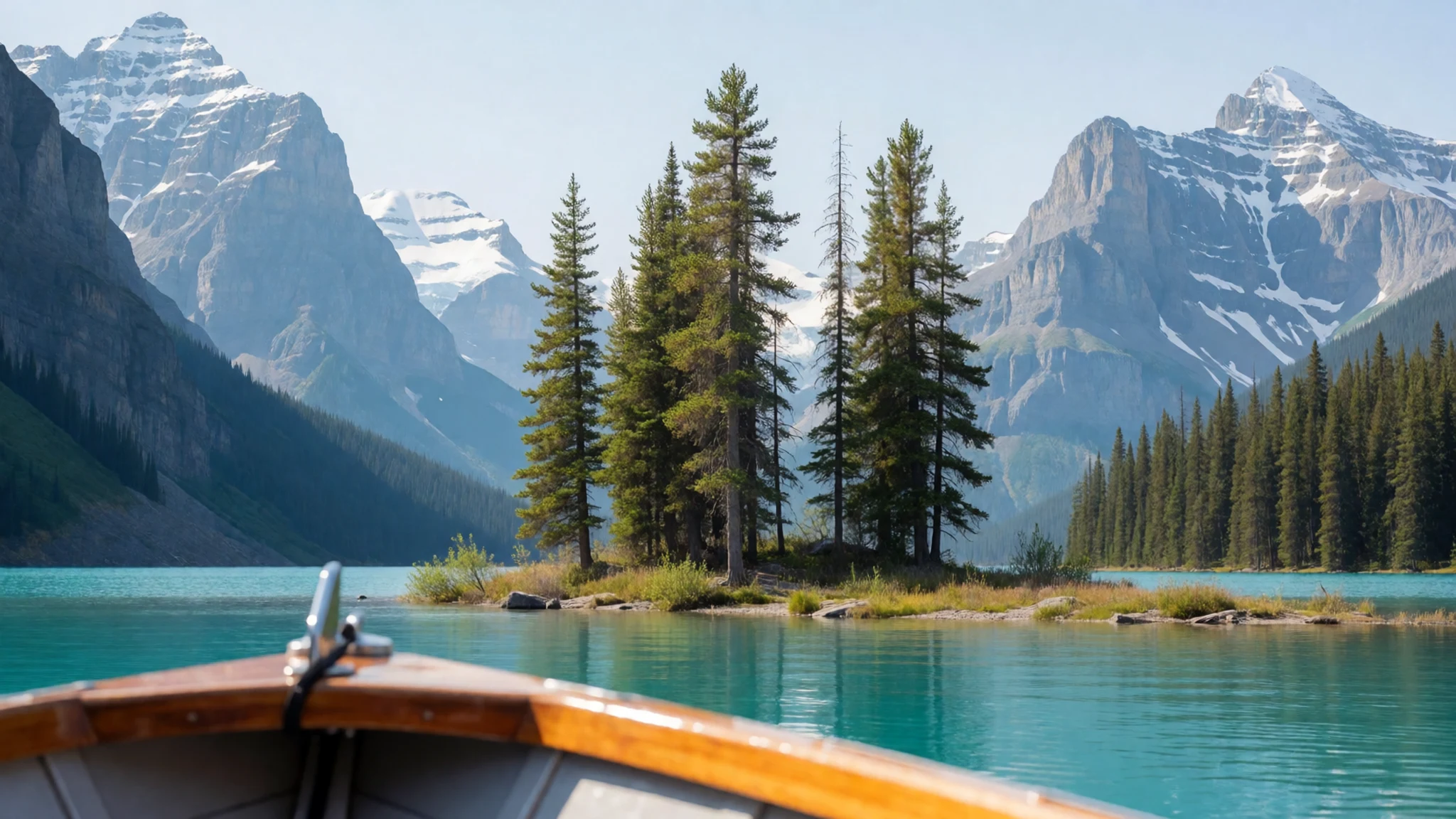
- Shore by the day lodge — Maligne Lake day lodge area
The shore near the Maligne Lake day lodge is where most people start, with the water spread out in front and the peaks along the far side. It is the easiest place to get a sense of the lake's size and to spot the glaciers on a clear day. A short walk along the shore gives the view without any climbing. Expect it to be busy from late morning, when the tour traffic arrives.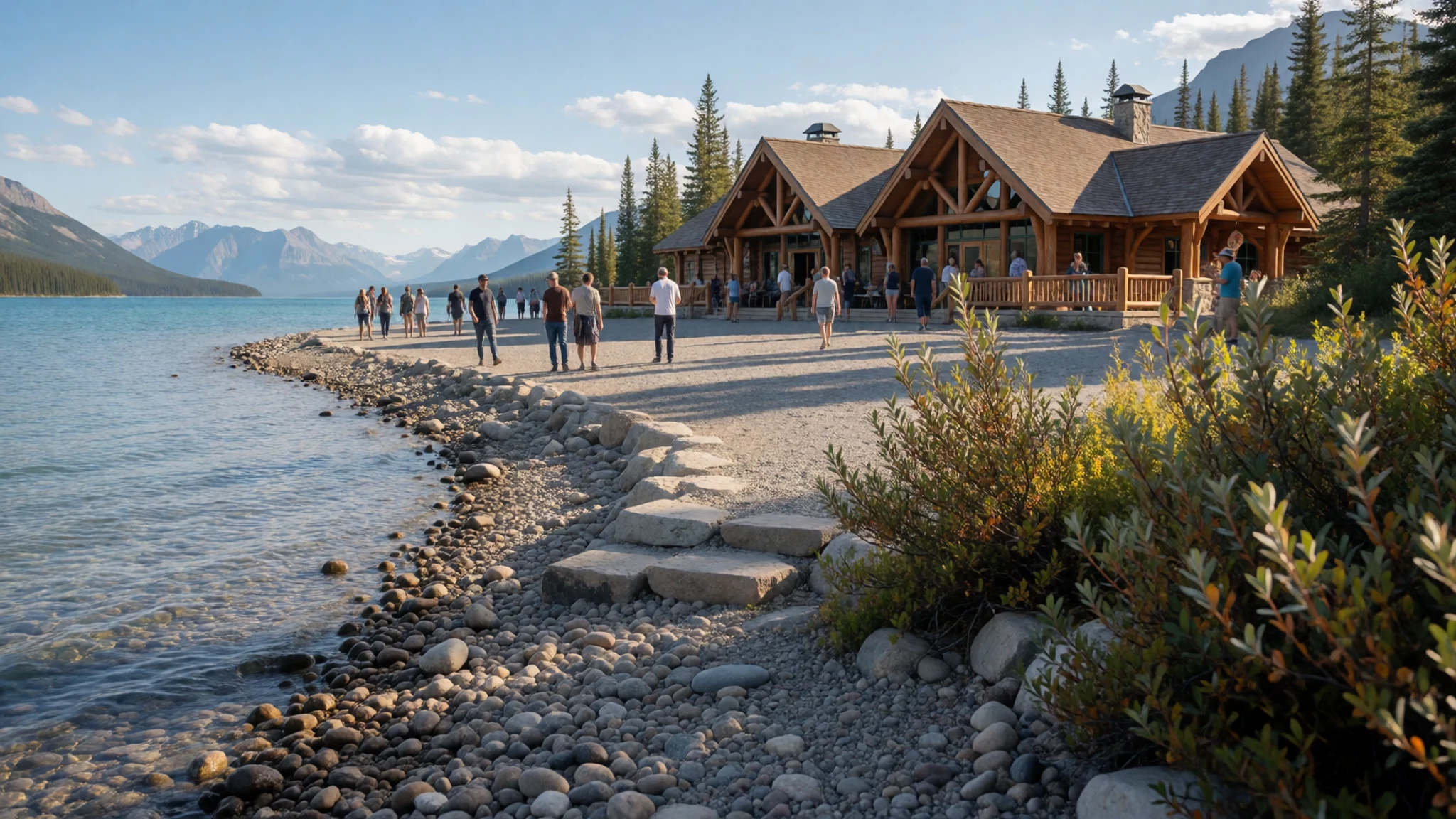
- Bald Hills loop — Jasper National Park, near the lake
The Bald Hills loop is one of the popular day hikes in the area, climbing onto open slopes that give a wider view over the water and the surrounding summits. Expect a steady uphill section, and carry layers, because wind on exposed ground can feel cold even in summer. Check trail conditions with Parks Canada before you set off.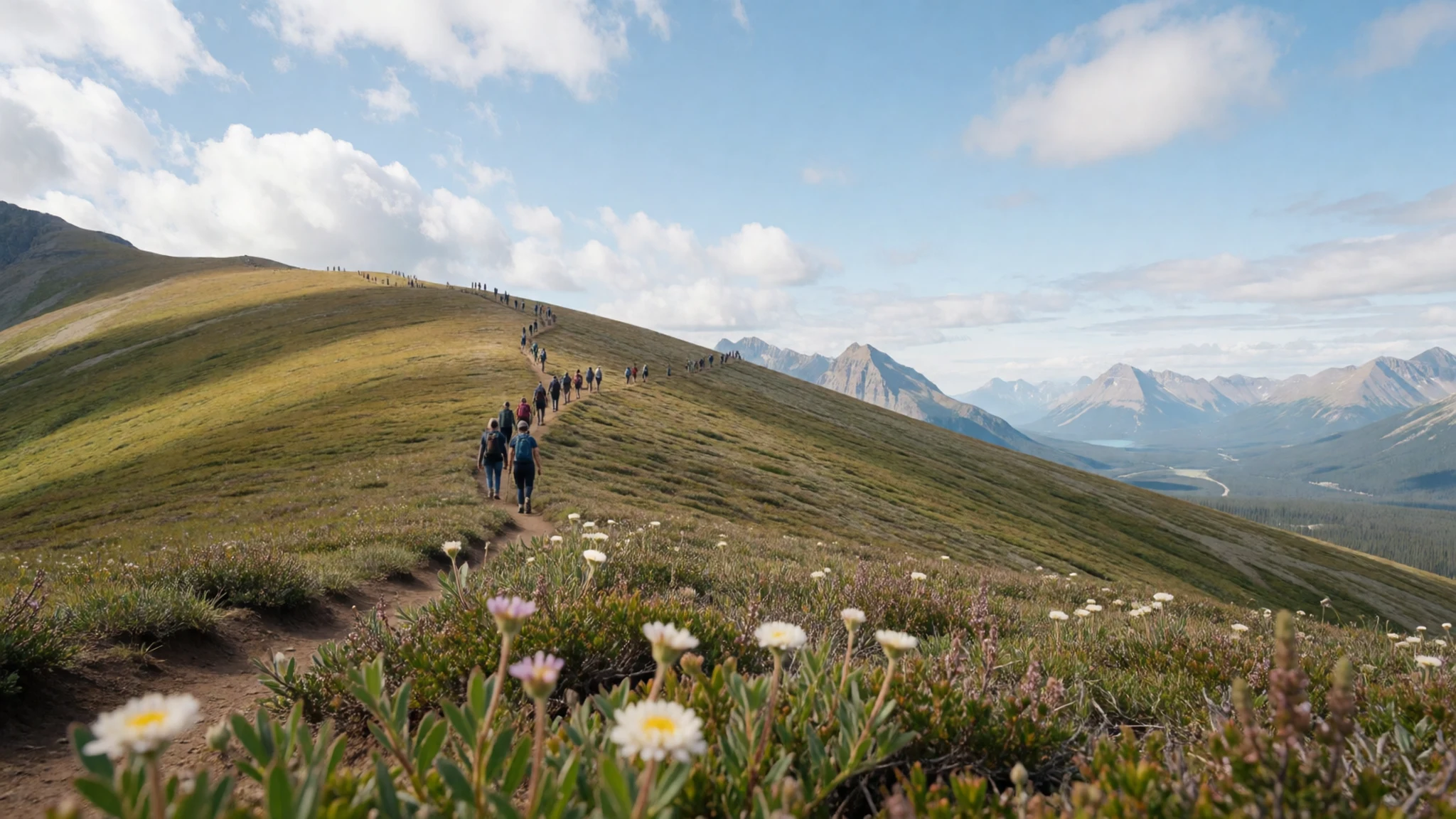
- Skyline Trail — From Maligne Lake to Jasper town
The Skyline Trail is the long multi-day route that begins at the lake and finishes near Jasper town. It is the park's most popular high-country hike and runs largely above the treeline. Plan it as a serious multi-day commitment, and check the official site for permit rules before you set out.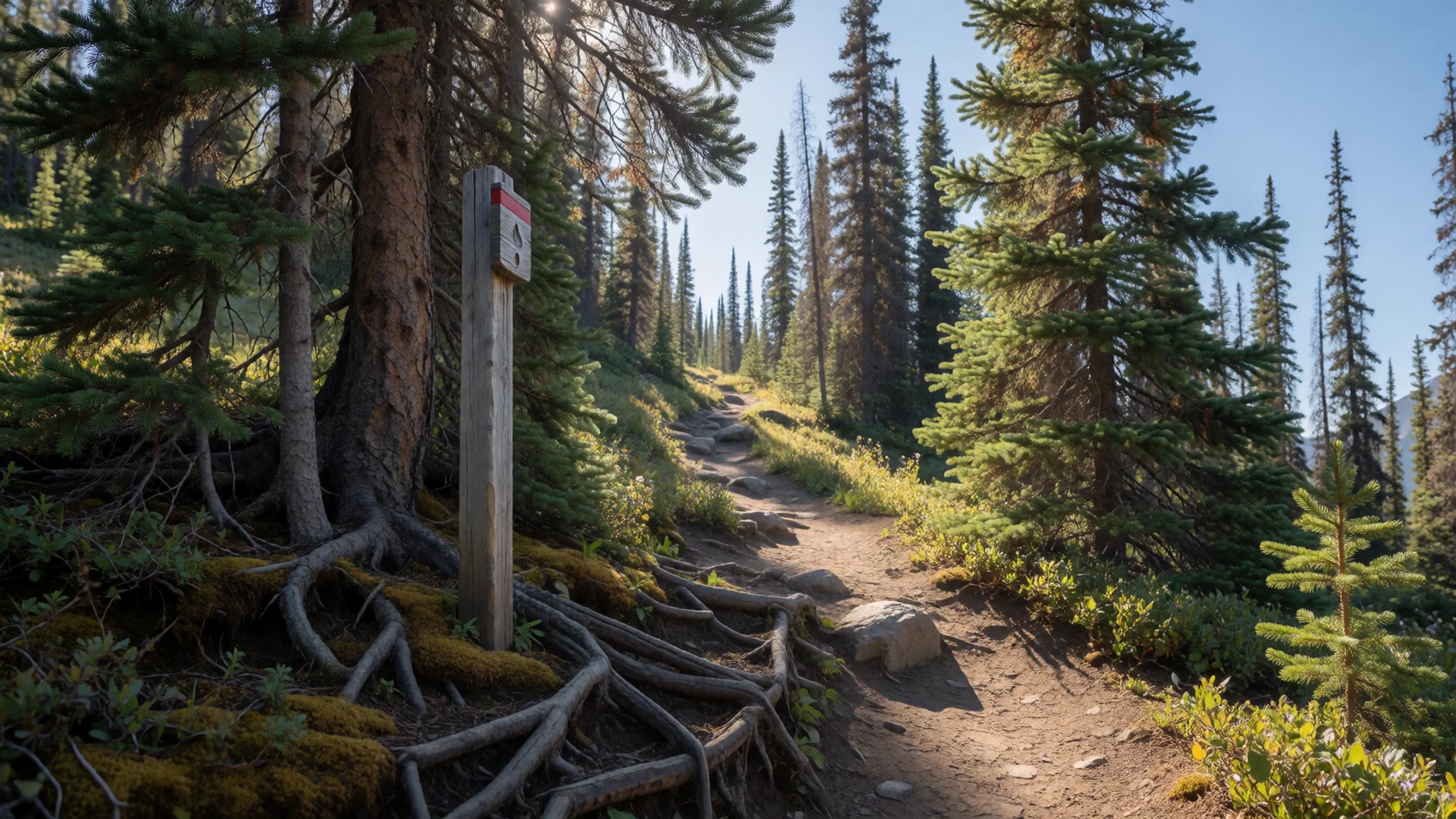
- Backcountry campsites — Shoreline of Maligne Lake
The three Parks Canada campsites on the lake are reached only by canoe, at Hidden Cove, Fisherman's Bay and Coronet Creek. Paddling in is the only way to stay on the shore. Bring your own canoe, and check the official site for booking and bear advice before you go.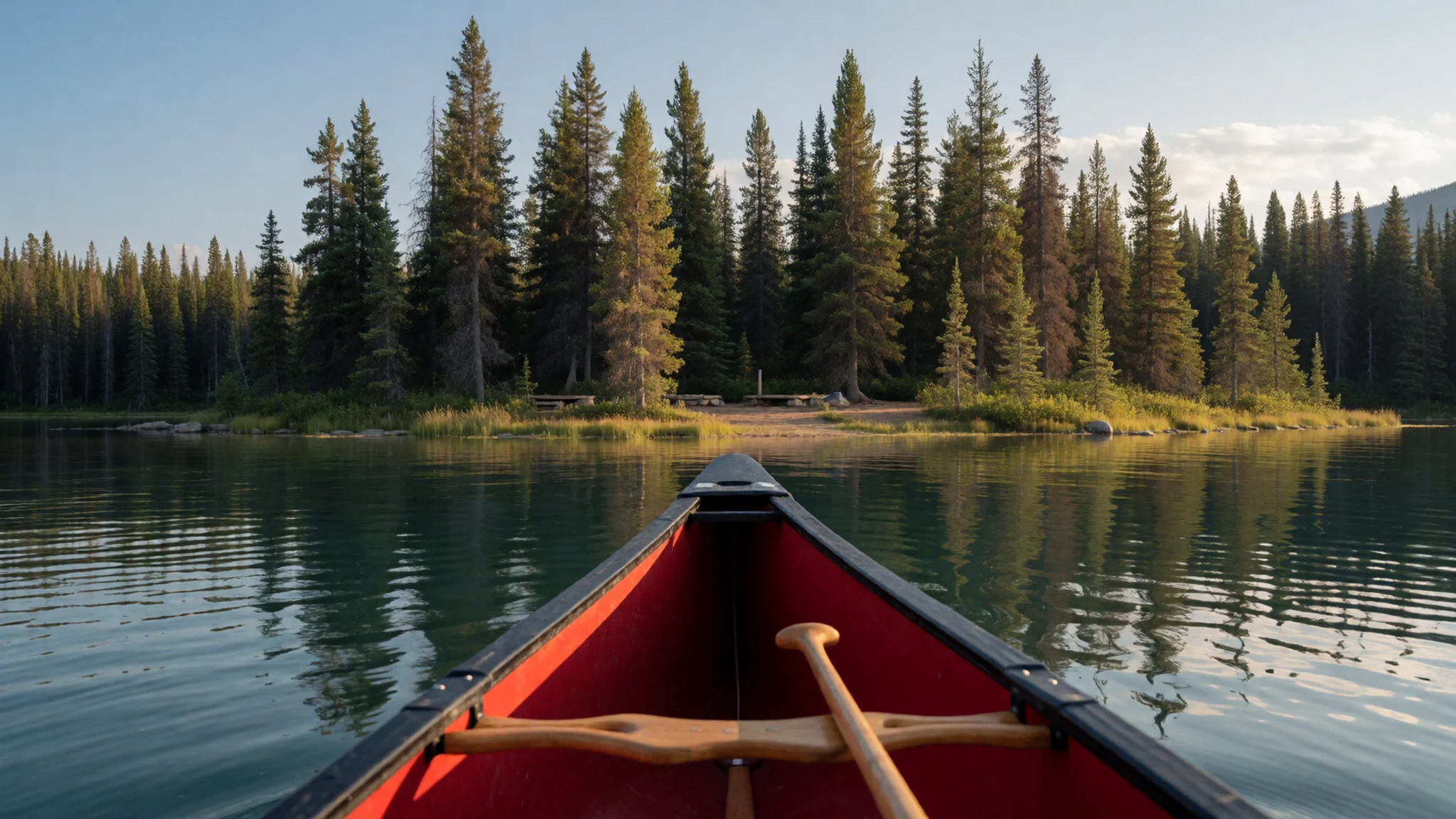
Culture
Maligne Lake sits inside Jasper National Park, so the way people behave here is shaped by the park's rules and by a human history that predates any visitor. The First Nations of the area knew the lake well before Mary Schäffer's expeditions, and Samson Beaver's map is part of that heritage, so listen when guides or signs use older names. Parks Canada manages the shore, the trails and the backcountry campsites, and its guidance on bears, fires and camping is the one to follow. The lodge and boat area can be lively in summer, with coaches arriving, people queuing for seats and small crowds gathering at the same vantage point. Take turns at the best viewpoints, wait your turn to board, and avoid blocking paths while you take a photograph. Respect the signs at the trailheads, which often explain why certain routes are closed to protect wildlife and fragile alpine ground. The lake is at its best when people speak softly, so keep conversations low on the water. Give wildlife plenty of room, never feed it, and keep your voice down near the shore so that others can enjoy the scene.
What to wear
The Maligne Lake area has no single traditional costume that visitors will see today, and the brief for this place does not describe local textiles, so this section sticks to what is observable. The First Nations of the region have their own dress traditions, worn mainly at ceremonies, dances and gatherings rather than on trails or boats. If you attend a public event, treat that clothing as ceremonial, and do not wear it yourself or buy it as a costume. Most people on the lake wear what they would wear on any mountain day: layered fleece, a windproof shell, lightweight trousers or leggings, and a warm hat and gloves for boat rides. Visitors should plan for cold water, cold air and quick weather changes even in summer, so pack a warm layer and waterproofs. Footwear matters more than fashion here. The shore and trails can be stony, wet and uneven, so choose closed hiking shoes with grip rather than sandals or smooth-soled trainers. The sun is strong at altitude, so bring sunglasses and a hat. Dress for the mountains rather than for the city.
What to eat
- Alberta beef — Steakhouses and diners in Jasper town
Alberta beef is the regional staple. Cattle here graze on grass and are fattened on locally grown barley, which gives the meat a deep, rounded flavour. Steaks and burgers appear on most menus, and a medium-rare steak is a good reward after a day on the trail.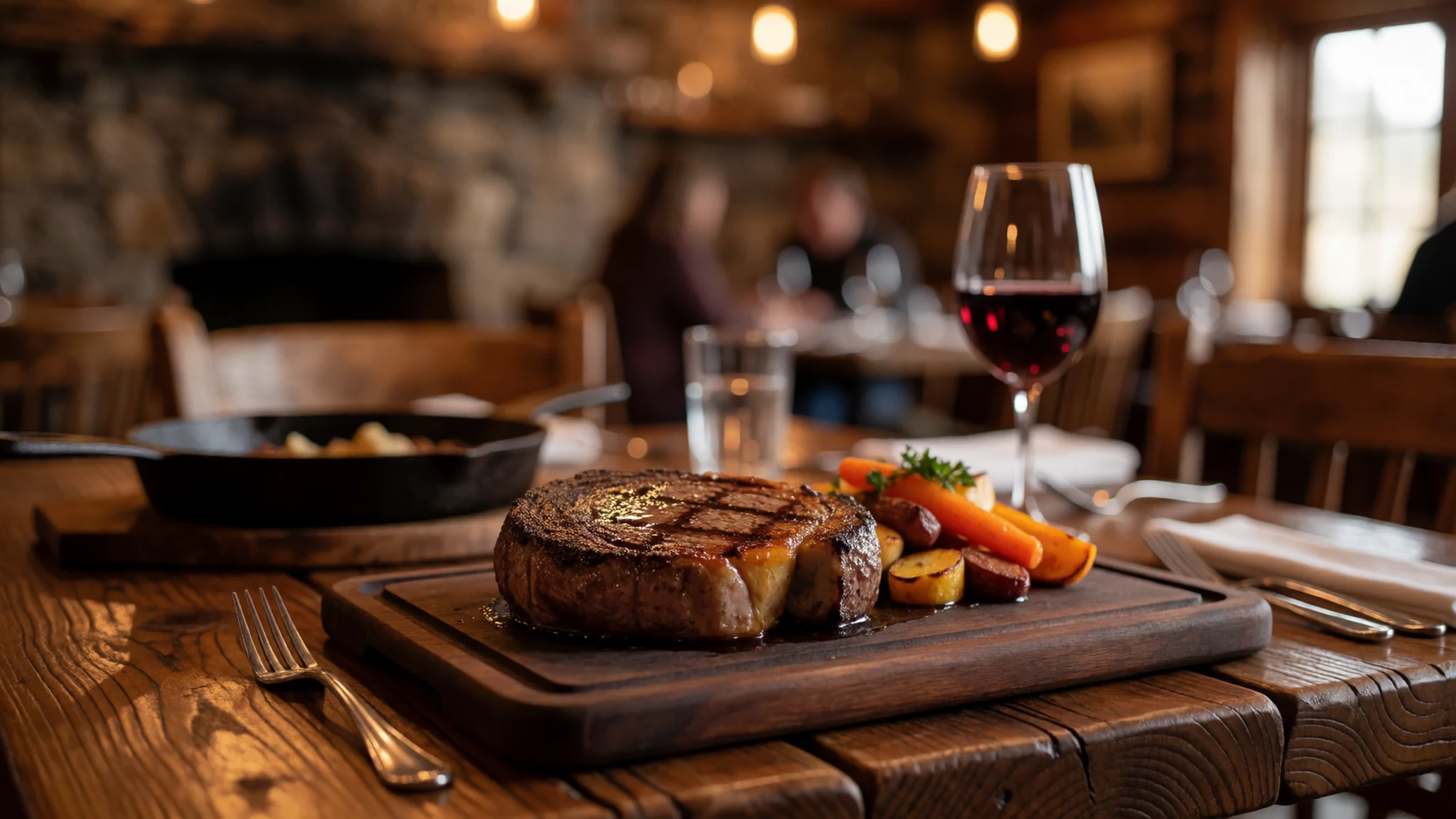
- Bison — Restaurants in Jasper town and the larger Alberta cities
Bison is the other local meat to try. It is leaner and a little sweeter than beef, and it turns up as burgers, steaks and sausages. It is a good choice if you want something different from the usual menu.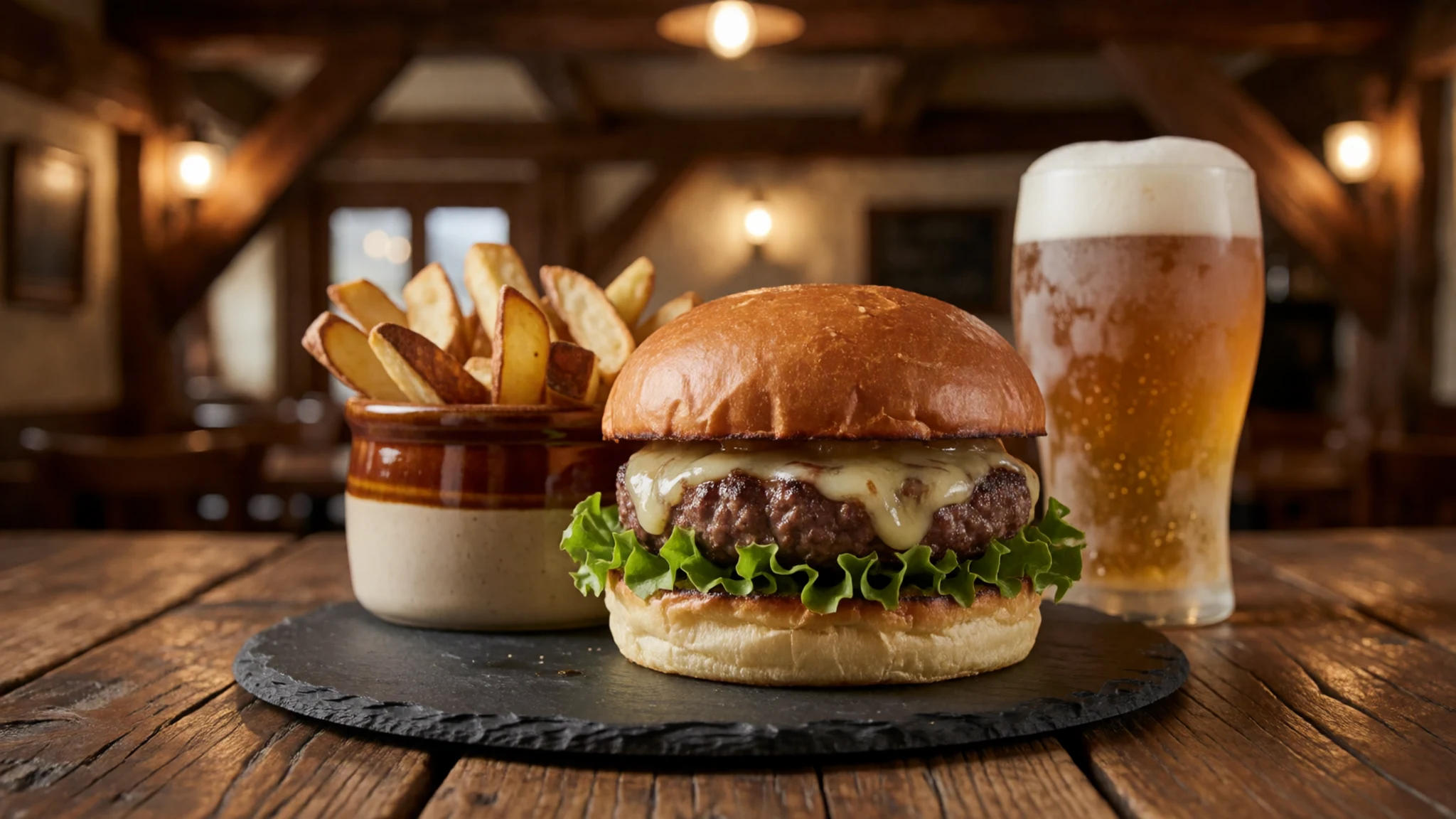
- Chinese café fare — Small-town cafés along the highway into the park
Even the smallest towns on the way in often have a Chinese café, serving spring rolls, won ton soup and burgers side by side. The tradition goes back to cooks from Fujian who worked in railway-building camps. It makes a quick, filling stop after a long drive. - Perogies — Family-run cafés and church suppers in small towns
Perogies, Ukrainian dumplings usually filled with potato and cheese, are a staple of Alberta's small-town kitchens. Ask for them fried with onions and served with sour cream. They are often served at family-run cafés and at church suppers. - Poutine — Any café or diner, including many roadside Chinese cafés
Poutine, chips topped with cheese curds and gravy, appears on café menus across the province and makes a hearty lunch after a hike. It is a dish to eat sitting down, while the boots dry out.
Plan it
Best time. Late June to September suits hiking and boat tours, when the trails are clear of snow and the lake is open to boats. Shoulder seasons bring cold, changeable weather and fewer services. Winter is quiet, and the main activities become cross-country skiing and snowboarding.
How long. 2–3
Getting there. Fly into Calgary or Edmonton, both of which have international airports, then travel to Jasper by road or rail. The Canadian train stops at Jasper. The last leg to the lake is a drive or a shuttle bus from Jasper, as the lake lies about 44 km south of the town.
Budget. mid
Tips
- In summer, book boat tour seats ahead and check the official site for current sailings
- Go early in the day for quieter water and easier parking
- Pack layers and waterproofs, because mountain weather changes quickly even in summer
- Carry water and food for hikes, since facilities are limited once you leave the lodge area
- If you pass through Calgary, avoid walking alone at night in the East Village, Victoria Park and along the Bow River Pathway between Eau Claire Market and the Calgary Zoo
Etiquette
- Stay on marked trails and keep a respectful distance from wildlife
- Follow the canoe and campsite rules set by Parks Canada
- Keep noise low on the water and at the viewpoints
Nearby
Sources
- Wikidata Q429646 (CC0)
- Wikipedia, Maligne Lake (rev 1378908704) (CC BY-SA 4.0)
- Wikivoyage, Alberta (rev 5393505) (CC BY-SA 4.0)
- Spirit Island, Maligne Lake, Jasper NP (photo 01) (CC BY-SA 2.0)
- Maligne Lake Bald Hills (photo 02) (Public domain)
- Sunrise at Maligne lake (photo 03) (CC BY-SA 4.0)
- Sunrise at Maligne lake 3 (photo 04) (CC BY-SA 4.0)
- Backcountry canoe trip on Malign Lake (photo 05) (CC BY-SA 4.0)
- Canada Boat House am Maligne Lake (photo 06) (CC BY 3.0)
- Spirit Island on Maligne Lake (photo 07) (CC BY 2.5)
- 20130701 33 Maligne Lake (photo 08) (CC BY 2.5)


