Mahabalipuram
Mahabalipuram, India
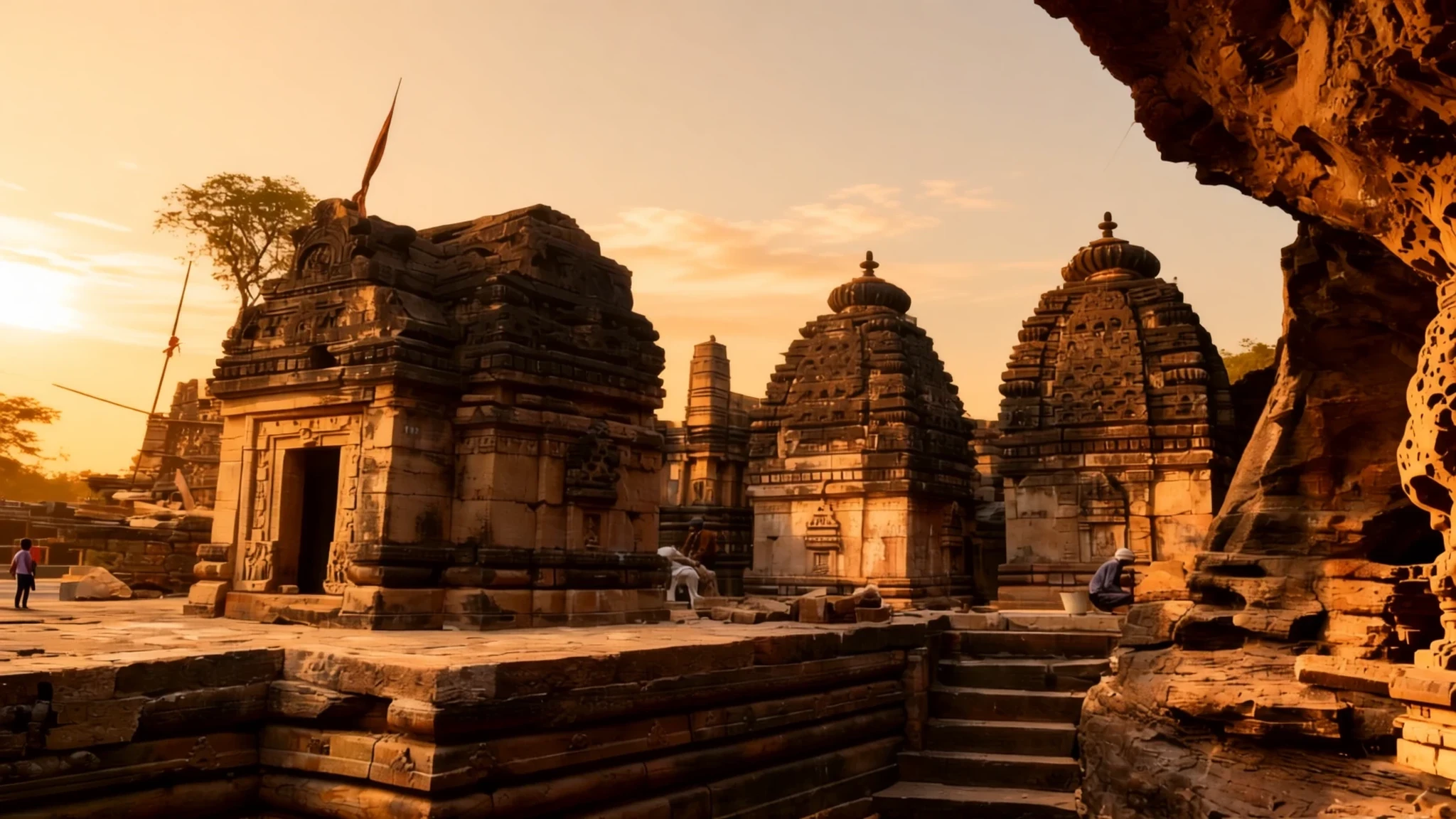
Go for the seventh- and eighth-century rock-cut and stone temples carved beside the Bay of Bengal, an easy day out from Chennai.
The place
Mahabalipuram, also spelled Mamallapuram, is a small town in Chengalpattu district on the Coromandel coast of Tamil Nadu. It sits barely 12 metres above sea level and has about 15,000 residents, so it feels more like a seaside village than a city. Chennai is roughly an hour away by the East Coast Road, which is why day trips from the city are so common.
The town itself has changed a great deal. The main street and the coastal road are lined with guesthouses, resorts, restaurants and souvenir stalls, and on busy days the traffic and litter can take the shine off the approach. Most visitors come for the monuments scattered across the town and the low granite outcrops around it. Wander away from the main road in the early morning and you will find quieter lanes, fishing boats drawn up on the sand, and the sound of the sea in place of engines.
What makes the place unusual is its material. Much of the sculpture was not assembled from blocks but cut out of living granite, so some shrines are essentially single pieces of the hillside. Weathering has softened parts of the reliefs, yet the detail remains sharp enough to read at close range. Give yourself time to walk slowly between the sites. The distances are short, but the heat and the crowds can make a rushed visit tiring.
Its story
Mahabalipuram has a history much older than its carvings. Burial urns and stone circles from the 1st century BCE have turned up nearby, and Sangam-age Tamil poetry names a port here that scholars connect with the present town. Chinese coins and Roman coins from a 4th-century emperor's reign show that ships from far away once called at the coast, making it a busy hub of trade in the late classical period.
From the 3rd century to the 9th, the Pallava dynasty ruled from its inland capital at Kanchipuram and used this coast as one of its two major ports. Ships left from here on trade and diplomatic missions to Sri Lanka and Southeast Asia. Wealth brought patronage, and in the 7th century King Narasimhavarman I, also called Mamalla, set masons to work on the rock. The town took its name from him.
His successor Rajasimhavarman continued the programme, and the work moved from cutting shrines out of hillsides towards building with stone blocks. Many of the reliefs draw on episodes from the Mahabharata. In the 8th century, the Tamil poet Thirumangai Alvar praised the harbour as a place where ships rode low with riches. The British laid out the modern town plan in 1827.
What to see
- Shore Temple — Mahabalipuram town, by the sea
The Shore Temple is the monument most visitors picture first: a granite shrine dedicated to Shiva, set close to the water at the edge of town. Built of blocks rather than carved from one outcrop, it shows the shift from rock-cut work toward structural building. Come early, when the light is soft, and walk the outer enclosure for the carved figures against the sea.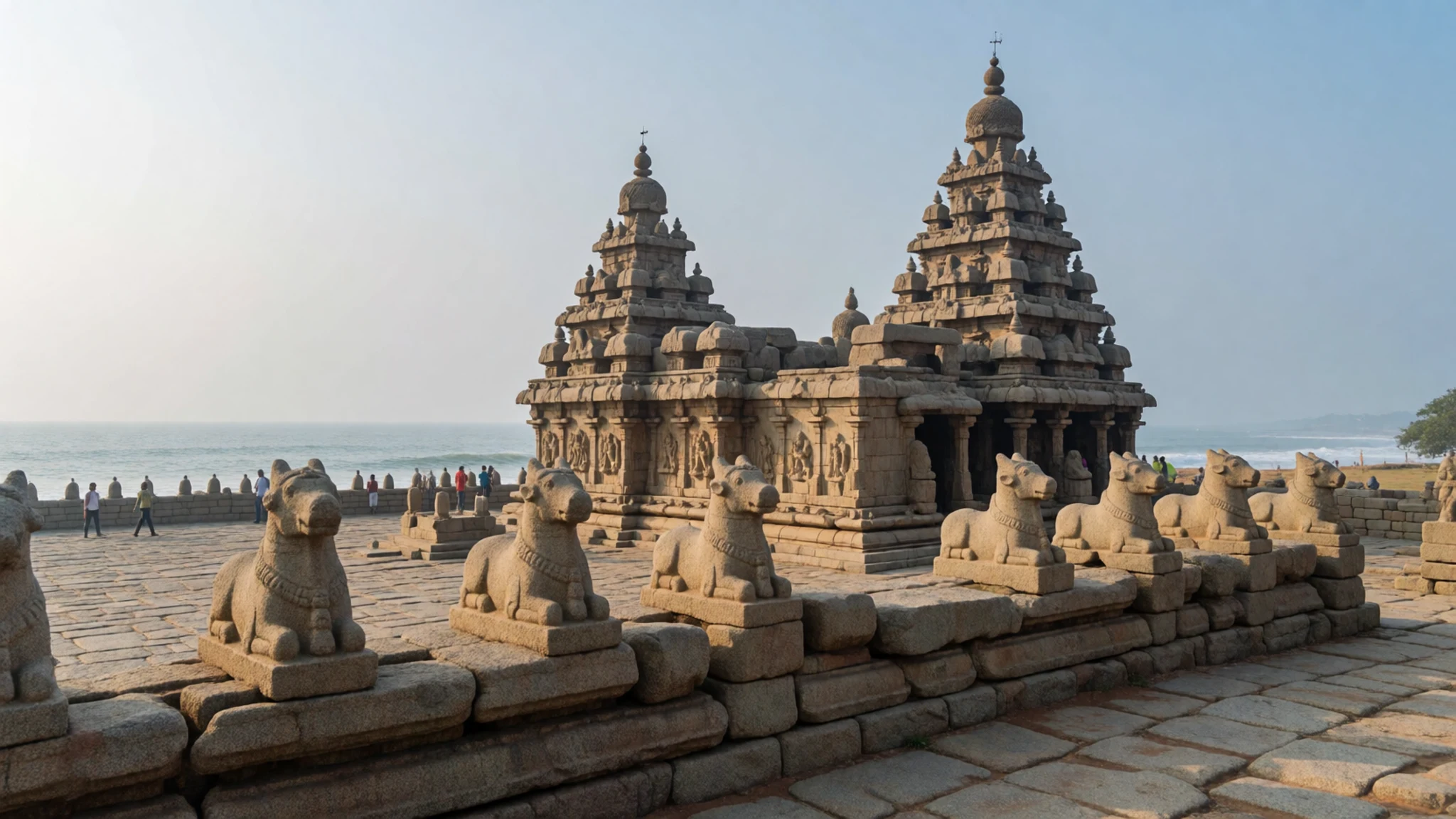
- Five Rathas — Mahabalipuram town, near the coast road
The Five Rathas, literally chariots, are shrines carved from single pieces of granite on a sandy site near the coast road. They date from the 7th century, and each takes a different form, from a thatched-roof hut to a square-topped shrine. Large stone animals, including an elephant, stand among them.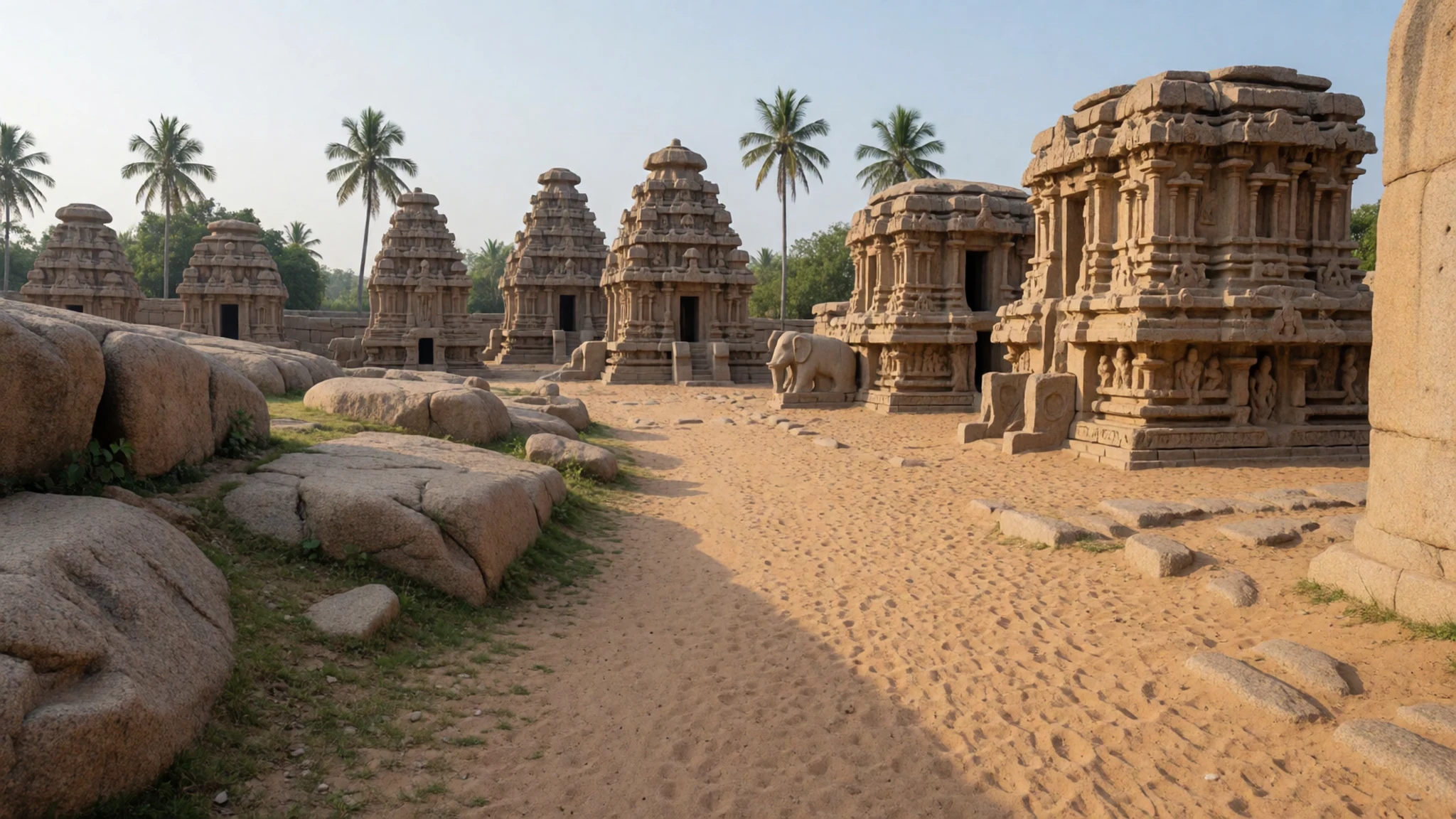
- Ganesha Ratha — Mahabalipuram town
Ganesha Ratha is a small shrine, and unlike most of the monuments around it, it is still in use. Inside stands a statue of Ganesha that people worship today, so the carvings belong to a living place. Take off your shoes where required, speak quietly, and expect flowers or lamps left by devotees.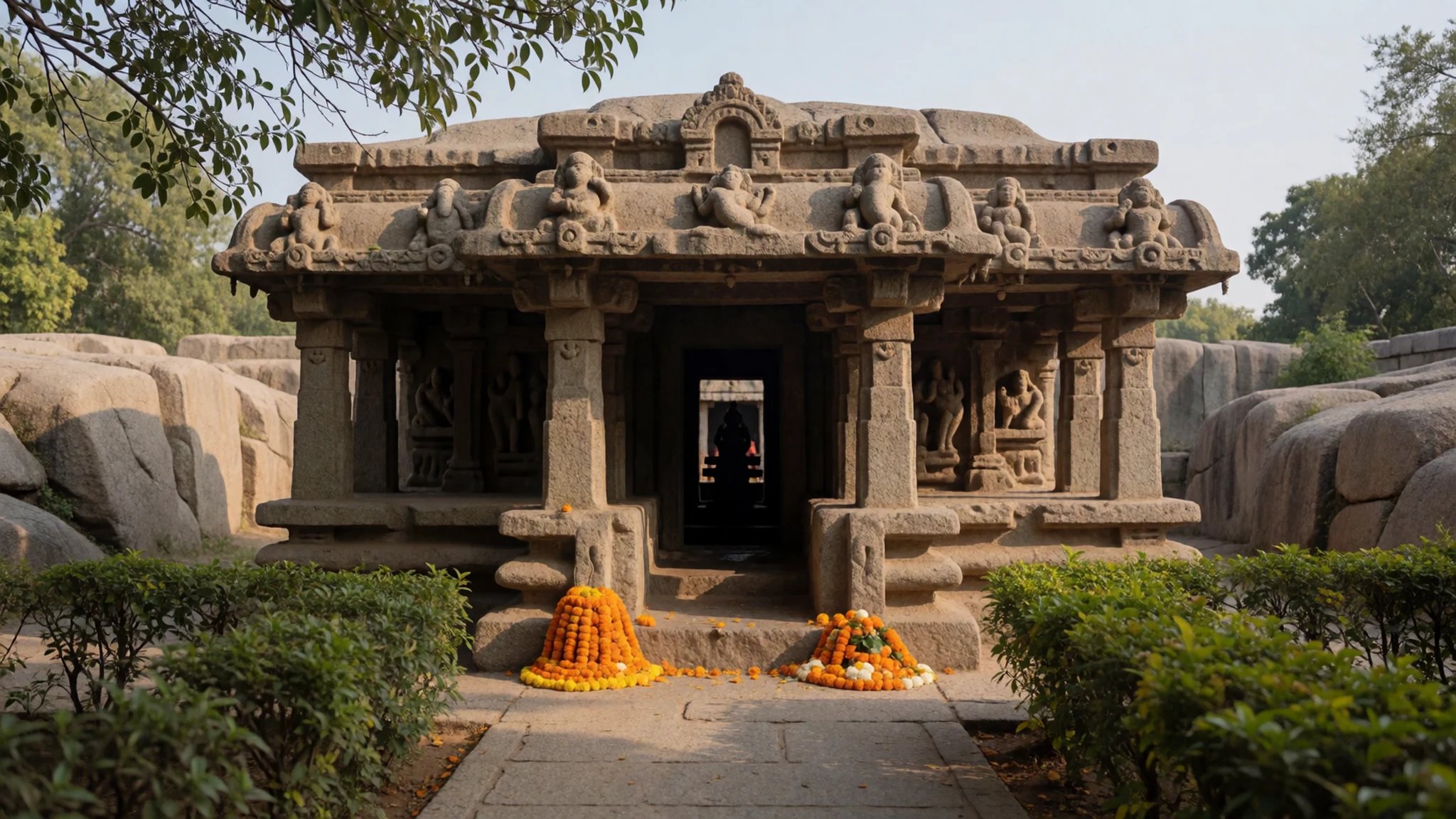
- Mahishamardini Cave — Mahabalipuram town
The Mahishamardini Cave takes its name from Durga in her buffalo-slaying form, though its central carving shows Shiva, Parvati and Murugan together. It is a short rock-cut hall, small enough to take in within minutes. The light inside is dim, so the doorway is often the best place to study the figures.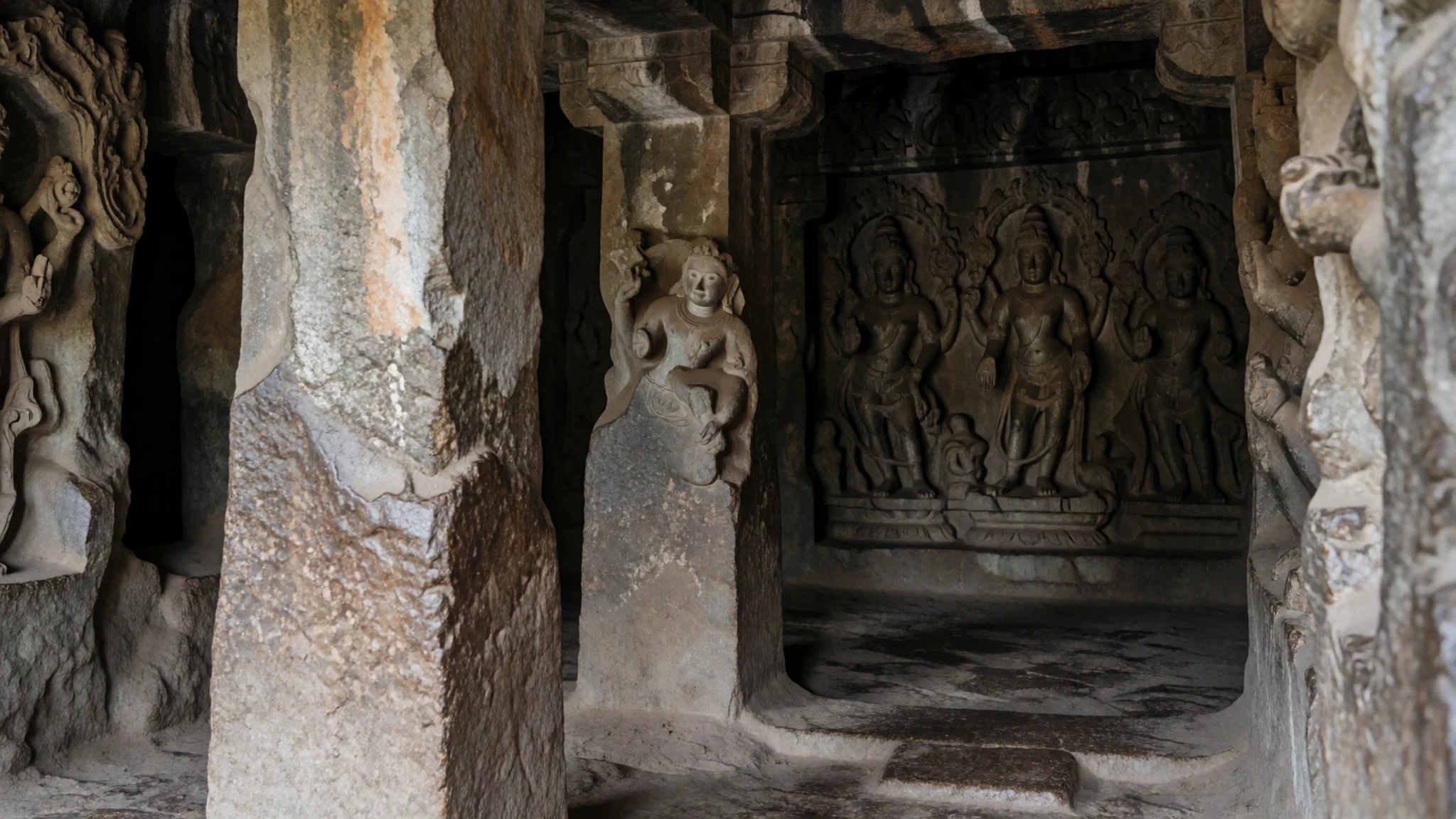
- Varaha Cave — Mahabalipuram town
Varaha Cave is named after Varaha, the boar form of Vishnu, and holds four carvings of Vishnu, Gajalakshmi, Trivikrama and Durga. The figures are cut into the rock of a compact hall, so you can examine each one closely without a crowd. Bring a little patience, as the lighting is poor and the details are easy to miss at first.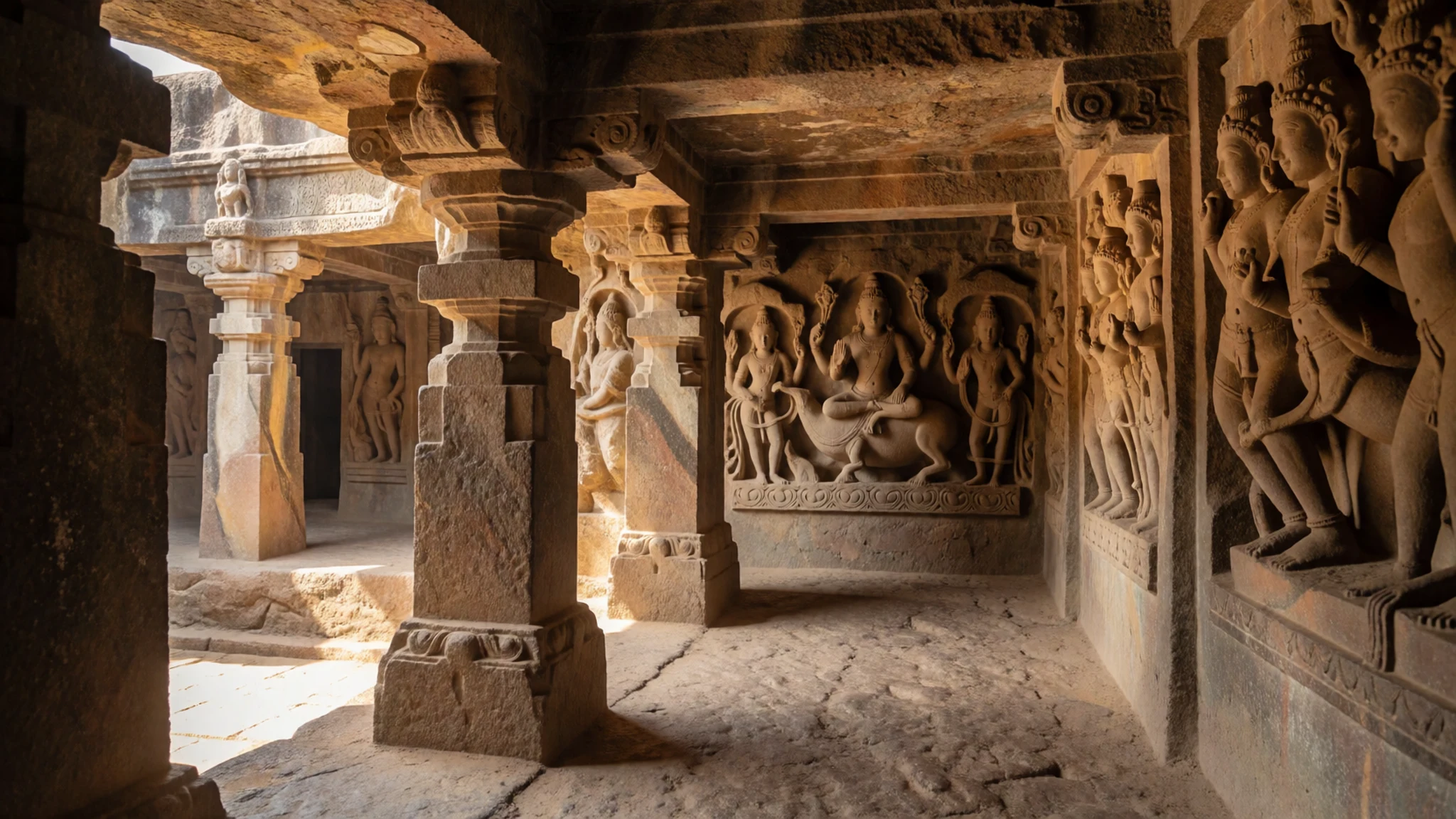
Culture
Mahabalipuram is a sacred landscape as well as a tourist site, and some of its shrines are still used by worshippers alongside the visitors. The Ganesha Ratha is the clearest example, so the mood can shift from sightseeing to devotion within a few steps. The monuments are spread over open ground and rock faces that hold heat well into the afternoon, so carry water and plan your walking for the cooler hours.
Vendors work the beach road and the approaches to the sites. A polite, firm refusal usually ends the matter, and a long negotiation rarely pays off. Local people are generally relaxed about visitors, but questions about photographing worshippers or women are best answered with a pause and a request for permission. Keep to the marked paths, because the stone is old and fragile. Take your shoes off before entering any shrine or cave that has a threshold, and never climb on or lean against the carvings.
What to wear
Traditional dress in Mahabalipuram follows the wider Tamil world. Women traditionally wear the sari, often in cotton for everyday use and silk for festivals and weddings. Kanchipuram, a short distance inland, is known for its silk saris, and many families still buy them there. Men traditionally wear the veshti, a cloth wrapped around the waist and legs, usually with a shirt on top.
What people wear now is a mix. Many women wear sarees on festival days and salwar-kameez at other times, while younger men and women in the town often wear jeans and shirts. Temple visitors and local worshippers tend to dress more formally, and the colours of the festival crowd, including reds and golds, are worth noticing.
For a visitor, the practical choice is loose, light cotton that covers the shoulders and knees, especially at the shrines and caves. Carry a scarf or shawl you can drape over your shoulders for temple entry. The sites involve granite steps, rough ground and sand, so wear closed shoes or sandals with straps, and bring a wide-brimmed hat for the open sites.
What to eat
- Vegetarian thali — any simple vegetarian eatery in the town centre
A vegetarian thali is the best-value meal in town: a steel plate with rice, roti, several vegetable and lentil curries, and often a sweet. Refills are usually offered until you stop. Order at a simple eatery and eat with your right hand if you are comfortable doing so.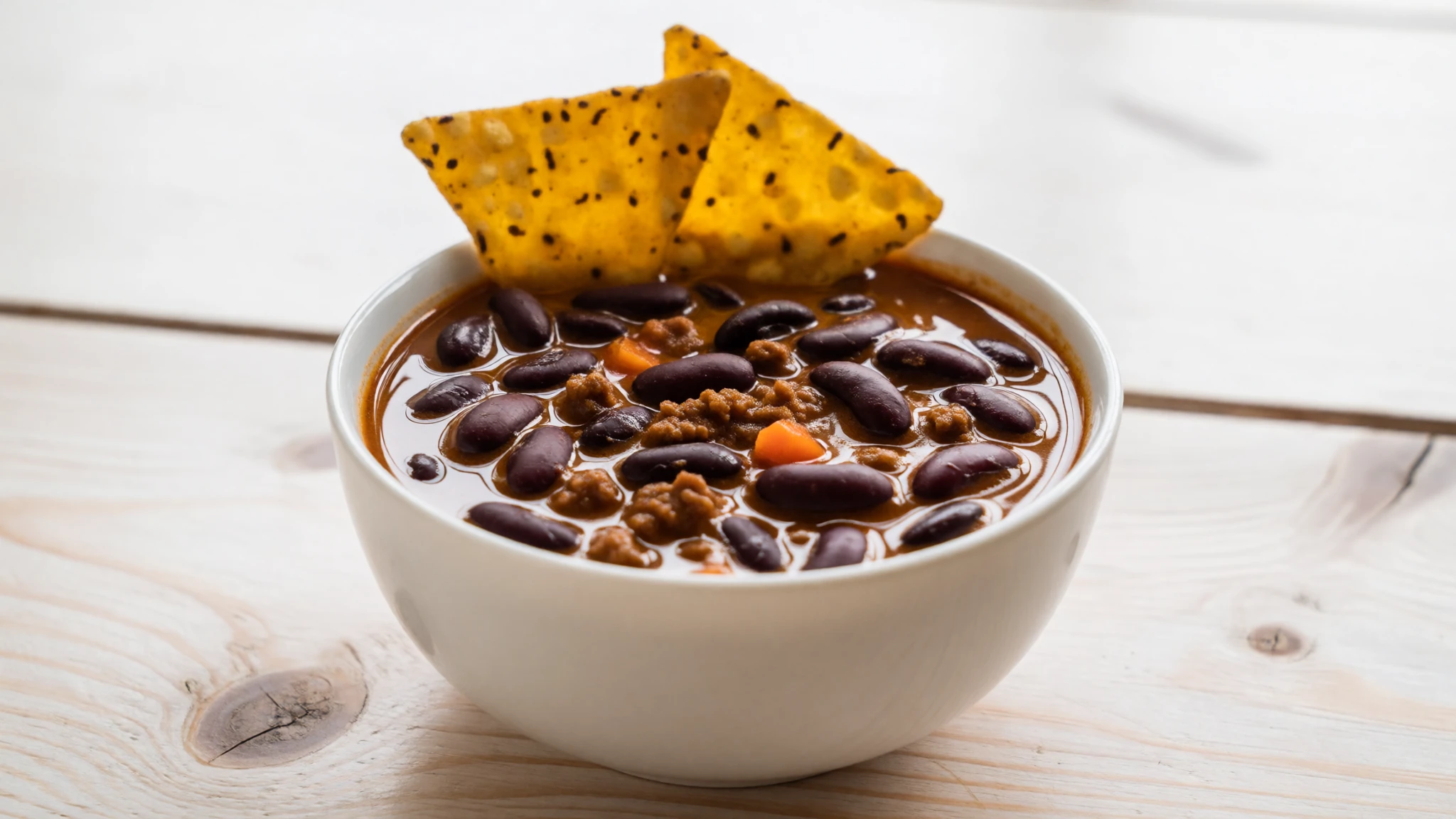
- Filter coffee and snacks — tea stalls along the main street
Filter coffee, strong and milky, is the everyday drink here, served in a steel tumbler. Pair it with a vada or a sweet from a roadside stall. Expect the coffee to be poured from a height to cool it, which is part of the show.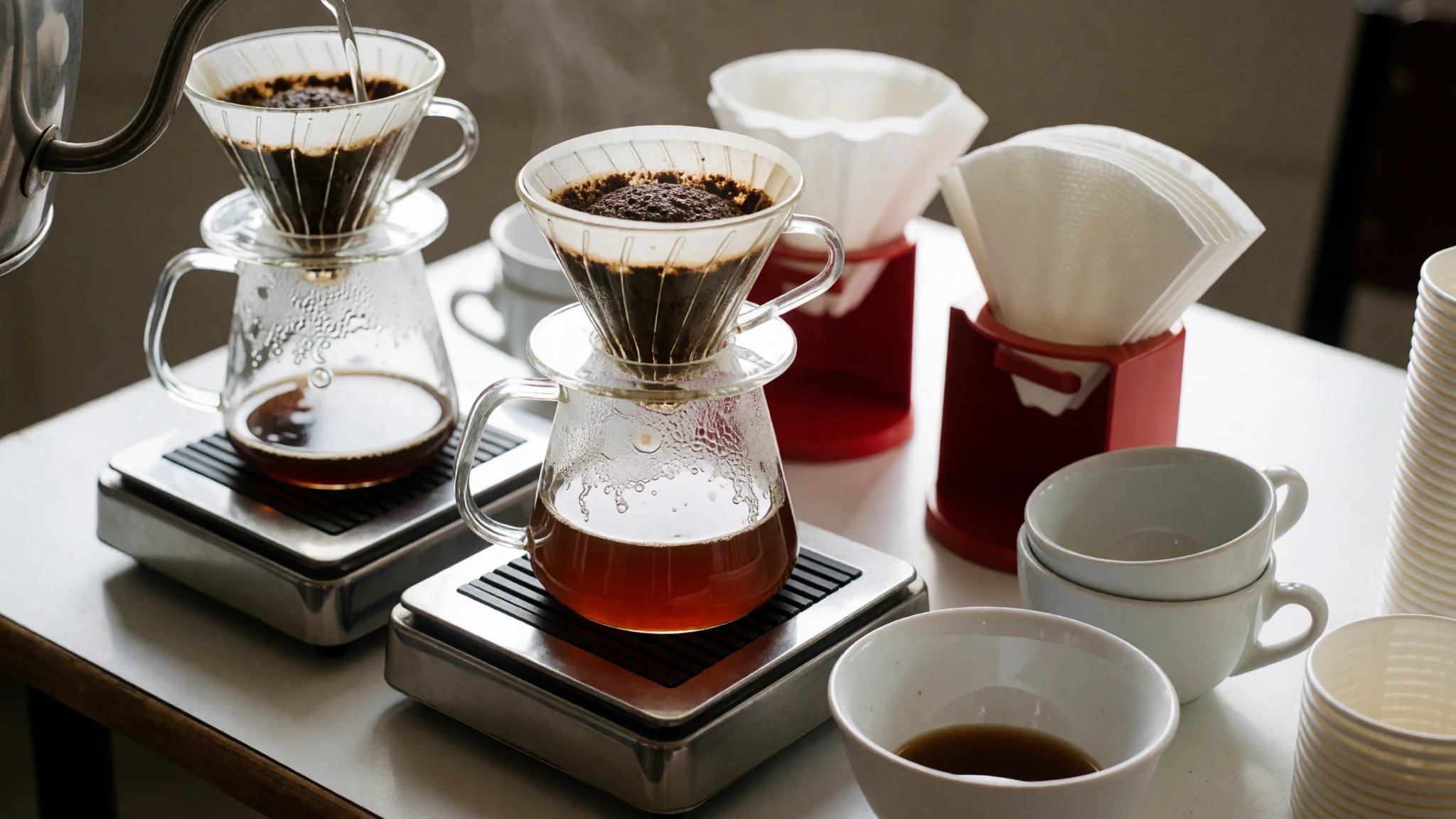
- Fresh seafood — a family-run cafe with a lake view
Grilled or fried fish and prawns, cooked to order, are the reason many people eat out here. Look for small family-run cafes that serve the catch of the day and have a lake view. The menu usually includes vegetarian dishes too, which helps mixed groups. - Idli and dosa breakfast — vegetarian restaurants near the main road
Breakfast usually means idli, dosa and pongal, served with coconut chutney and sambar. Vegetarian restaurants near the main road cater to visitors heading out early. Breakfast buffets can be mixed value, so compare what is on offer before paying and ask for a dosa made fresh. - Evening meal by the beach road — courtyard restaurants along the beach road
Most evening meals are eaten in restaurants with courtyard gardens along the beach road. Order freshly cooked dishes and ask about spice levels before sitting down. The garden courtyards are a pleasant place to linger after sunset, especially on a warm evening.
Plan it
Best time. January and February, when temperatures are at their most comfortable and the rain is lightest. May is the hottest month at about 32.6 °C, and October and November bring the heaviest rain, so avoid those months if you can.
How long. 2–3
Getting there. Fly into Chennai, then take a taxi or a bus marked ECR from the city's bus stands along the East Coast Road, about an hour to the town. ECR buses often drop you a short way out, where rickshaws wait.
Budget. mid
Tips
- Purchase your tickets via the internet or by using the QR code at the entrance, and check the official site for current hours and fees.
- Start at the Shore Temple and the Five Rathas before 8 am, when the stone is cooler and the crowds are thinner.
- Carry water and a hat, because the open sites hold heat well into the afternoon.
- Carry cash for small stalls and rickshaws, and agree fares before you ride.
- Give the caves and the Ganesha Ratha their own slow half-day rather than rushing everything at once.
Etiquette
- Remove your shoes before stepping into any shrine or cave with a threshold.
- Ask before photographing worshippers or anyone at prayer.
- Do not climb on or lean against the carvings.
Nearby
Sources
- Wikidata Q208000 (CC0)
- Wikipedia: Mamallapuram (rev 1378774037) (CC BY-SA 4.0)
- Wikivoyage: Mamallapuram (rev 5410314) (CC BY-SA 4.0)
- Photo: The Shore Temple, Mamallapuram (Vyacheslav Argenberg) (CC BY 4.0)
- Photo: A collage of Mamallapuram town (Ms Sarah Welch) (CC BY-SA 4.0)
- Photo: Pancha Ratha Panorama (Ssriram mt) (CC BY-SA 4.0)
- Photo: Mamallapuram, Shore Temple (Vyacheslav Argenberg) (CC BY 4.0)
- Photo: Ganesha Ratha, Mamallapuram (Shivashanky) (CC BY-SA 4.0)
- Photo: Ramanuja Mandapam (Shivashanky) (CC BY-SA 4.0)
- Photo: Mahabalipuram panoramic (Ssriram mt) (CC BY 3.0)
- Photo: Replica of a couple on a lotus pedestal (Oleg Yunakov) (CC BY-SA 4.0)


