Macau
Macau, People's Republic of China
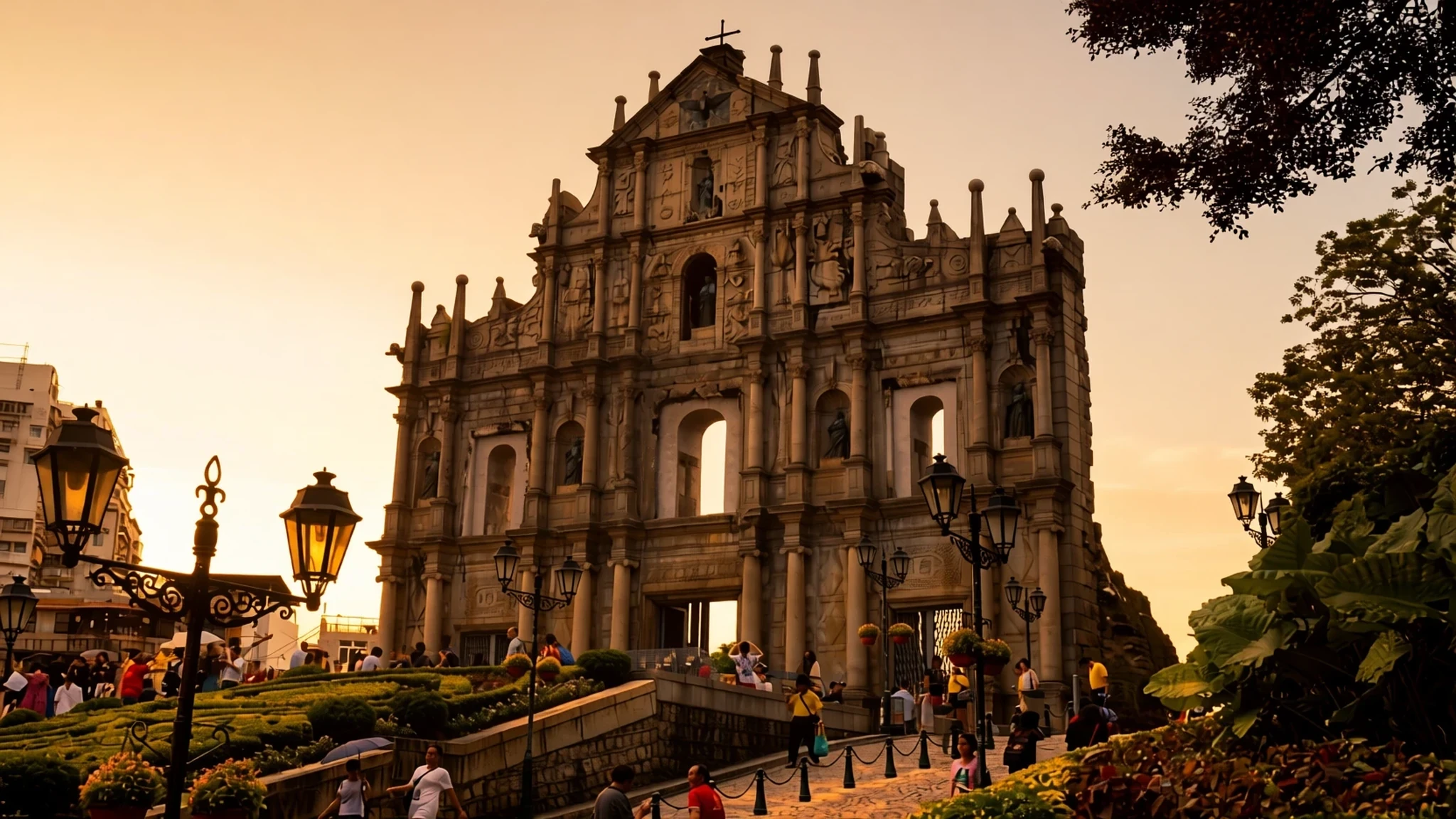
Come for a walk where Portuguese façades and Chinese temples share the same narrow lanes, then decide how much casino time you want.
The place
Macau sits on the western side of the Pearl River estuary, close to Hong Kong, and is a special administrative region of China with its own immigration system. The territory is made up of the Macau Peninsula, the islands of Taipa and Coloane, the Cotai reclamation zone that joins those islands, and several smaller islets. Its land borders run to Zhuhai in the north and west.
About 680,000 people live on a small footprint, so the streets feel dense and busy in a way that surprises many first-time visitors. The city sits only about 22 metres above sea level, which keeps the terrain gentle. The peninsula is mostly walkable, with small hills and parks threaded between the older districts.
Two layers sit side by side. The old peninsula holds churches, temples, fortresses and houses that mix Portuguese and Chinese styling, and that historic core was recognised by UNESCO as a World Heritage Site in 2005. The newer districts on Taipa and Cotai are dominated by hotels, convention halls and the large casinos the city is best known for. Gambling drives much of the economy, and the big resorts can feel like cities of their own.
The result is a place where a morning in narrow lanes can be followed by an evening on a casino floor, though the two rarely feel alike. Public holidays and weekends bring the heaviest crowds to the peninsula's central streets, so the old town is best covered early or late in the day.
Its story
The land that is now Macau was part of southern China's administrative map long before any European ship appeared. Back in the Qin dynasty, the area was administered as part of Panyu County. The earliest documented habitation there dates to the Han dynasty. Over the centuries it passed between neighbouring county and prefecture authorities. In the Song era, the area was placed under the newly established Xiangshan County. In 1277, roughly 50,000 people escaping the Mongol takeover of China arrived and made their homes along the shoreline.
European contact began in the early sixteenth century. The explorer Jorge Álvares, a Portuguese, became the first European known to reach China by sea, arriving in 1513. Portuguese merchants then set up a trading base at Tamão, in Hong Kong waters. Ming forces expelled those traders in 1521, and the battle that followed cost the Portuguese two ships. Trade bans did not stop merchants from trying the estuary again, and they eventually settled on the peninsula that became Macau.
The arrangement that followed was unusual. The Ming dynasty leased the trading post to Portugal in 1557, and Portugal paid an annual rent while Chinese sovereignty remained in place. The Sino-Portuguese Treaty of Peking in 1887 gave Portugal perpetual colonial rights, and the territory stayed under Portuguese rule until the handover to China in 1999. Since then Macau has run under the principle of one country, two systems, keeping its own government and economic arrangements.
That layered past is still most visible in the streets, where Portuguese and Chinese building styles stand close together and show how long the two worlds have shared this small piece of coast.
What to see
- Ruins of St. Paul's — Historic centre, Macau Peninsula
The remaining stone front wall of a former church stands alone above a flight of steps, all that survived a fire that destroyed the rest of the building. Its carved details are worth a slow look, and the small museum beside it explains the Jesuit mission behind the church. Go in the morning, when the steps are shaded and the hill-side crowds are thinner.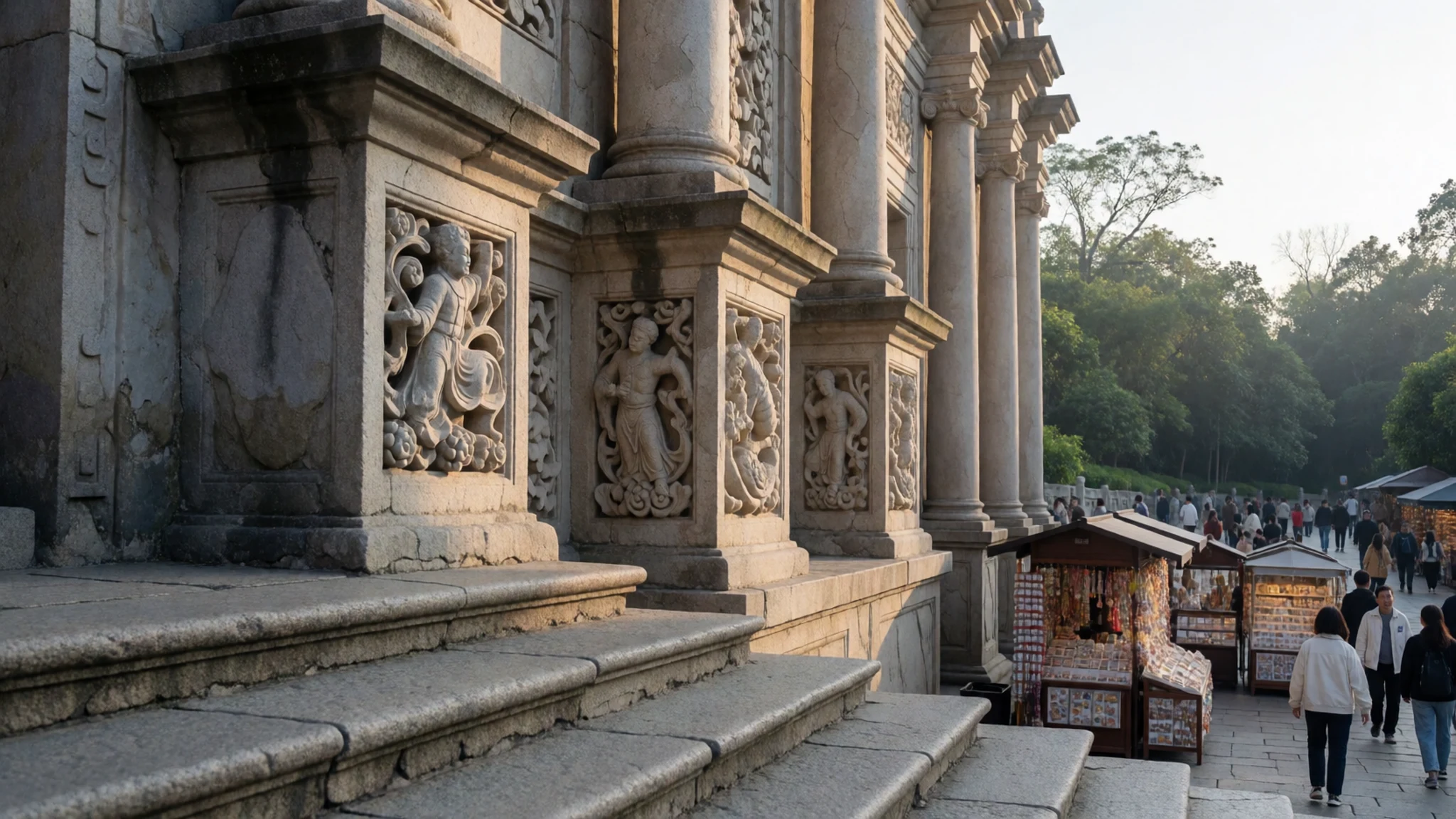
- Senado Square — Historic centre, Macau Peninsula
A paved square of wave-patterned stones is lined with pastel colonial buildings, cafés and shopfronts. It is the easiest place to start a walk through the old peninsula, and the surrounding lanes branch off in every direction. Expect it to be busy in the afternoons, when tour groups gather, and quieter before about nine in the morning.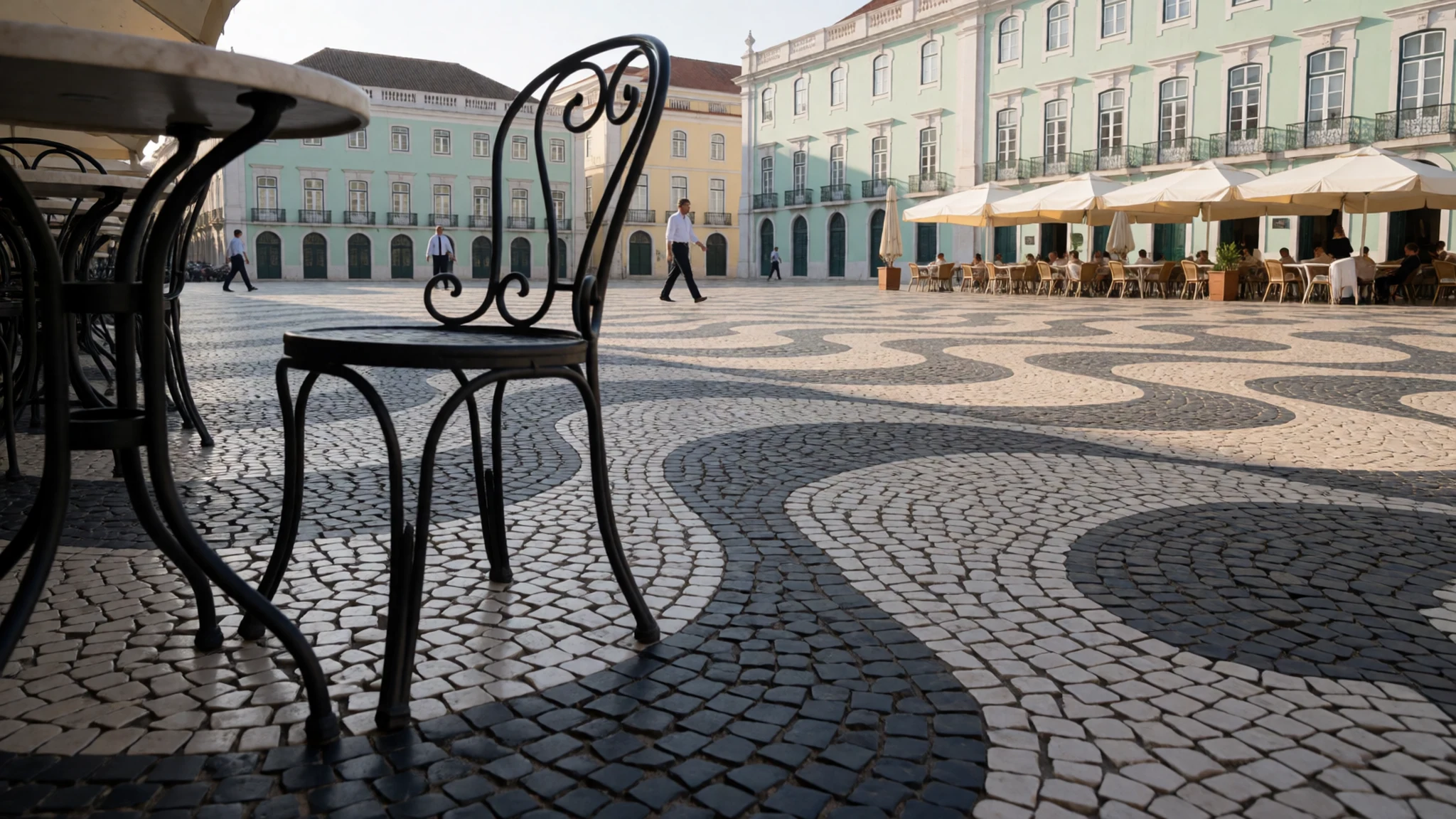
- A-Ma Temple — Barra, south of the Peninsula's historic core
A hillside temple dedicated to A-Ma, a goddess associated with seafarers, sits among rocks above the harbour. Its halls are crowded with incense, lanterns and worshippers, especially around festivals. The climb is short but steep in the humidity, so take water and allow time to wander the shrines before the ferry or bus back down.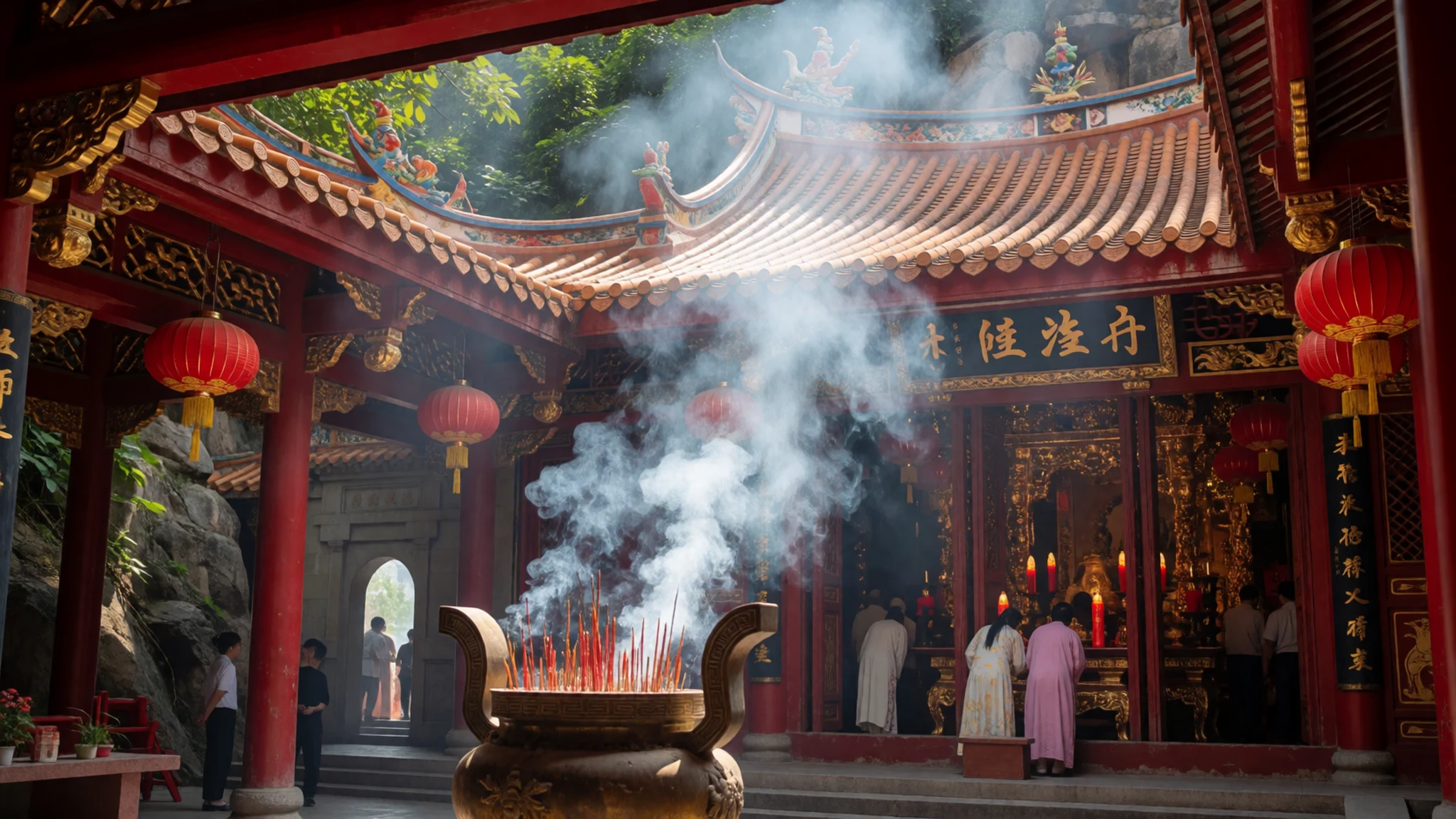
- Guia Fortress and Lighthouse — Guia Hill, north-east of the historic core
A hilltop fort with a small chapel and an old lighthouse gives one of the best wide views over the peninsula, the harbour and the towers beyond. The climb is on foot or by a short lift and steps, so wear sensible shoes. It is most pleasant in the late afternoon, when the light softens over the city.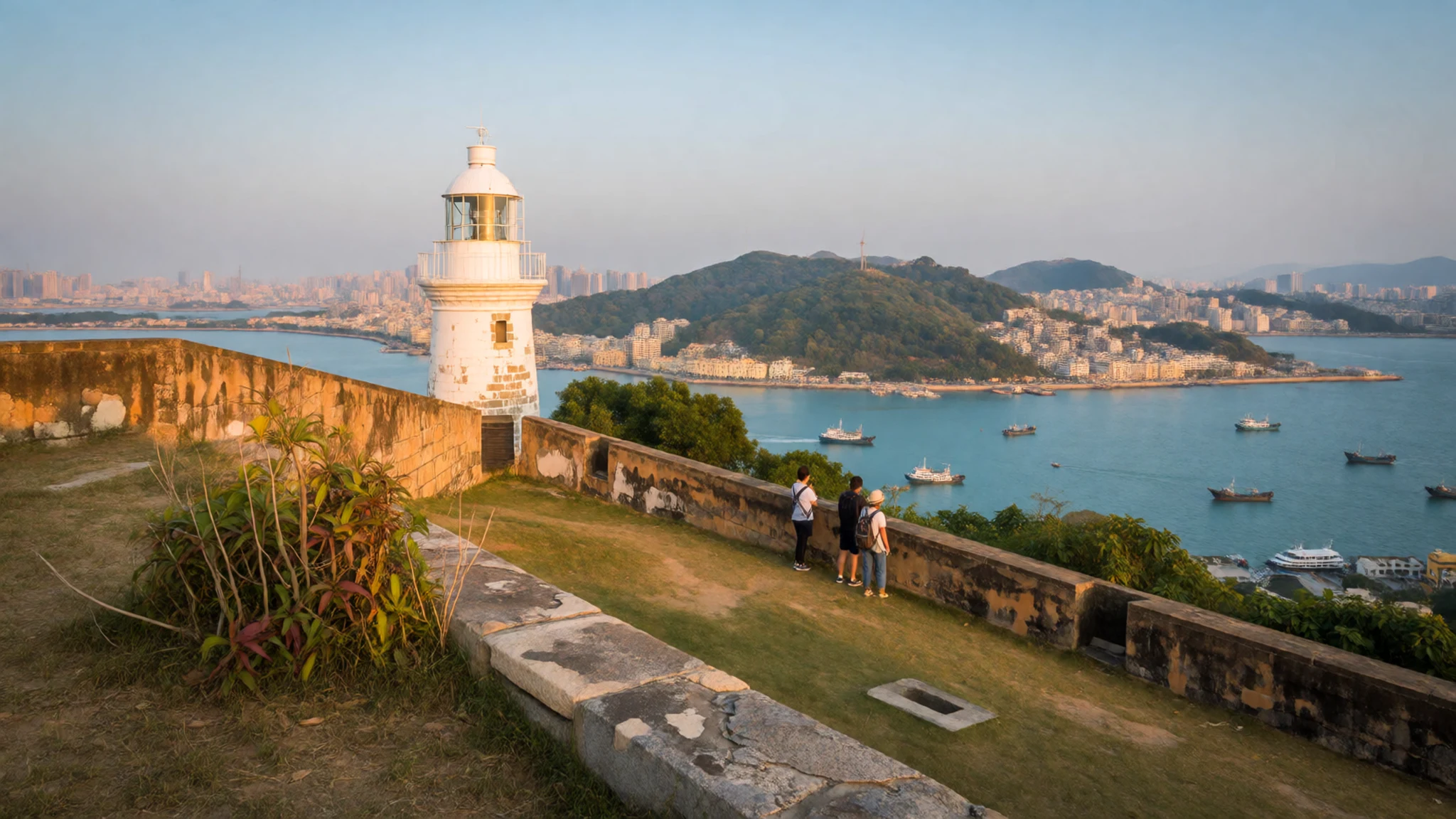
- Guanyin statue by the sea — Dr Carlos d'Assumpção Park, Nam Van area
A large statue of Avalokitesvara, known in Cantonese as Kwoon Yam, stands near the water at the end of Dr Carlos d'Assumpção Park, within sight of the big casino resorts. The contrast between the calm figure and the glittering hotels next to it captures much of the city in one view. It is a short stroll from the park's gardens, which offer shade in the heat of the day.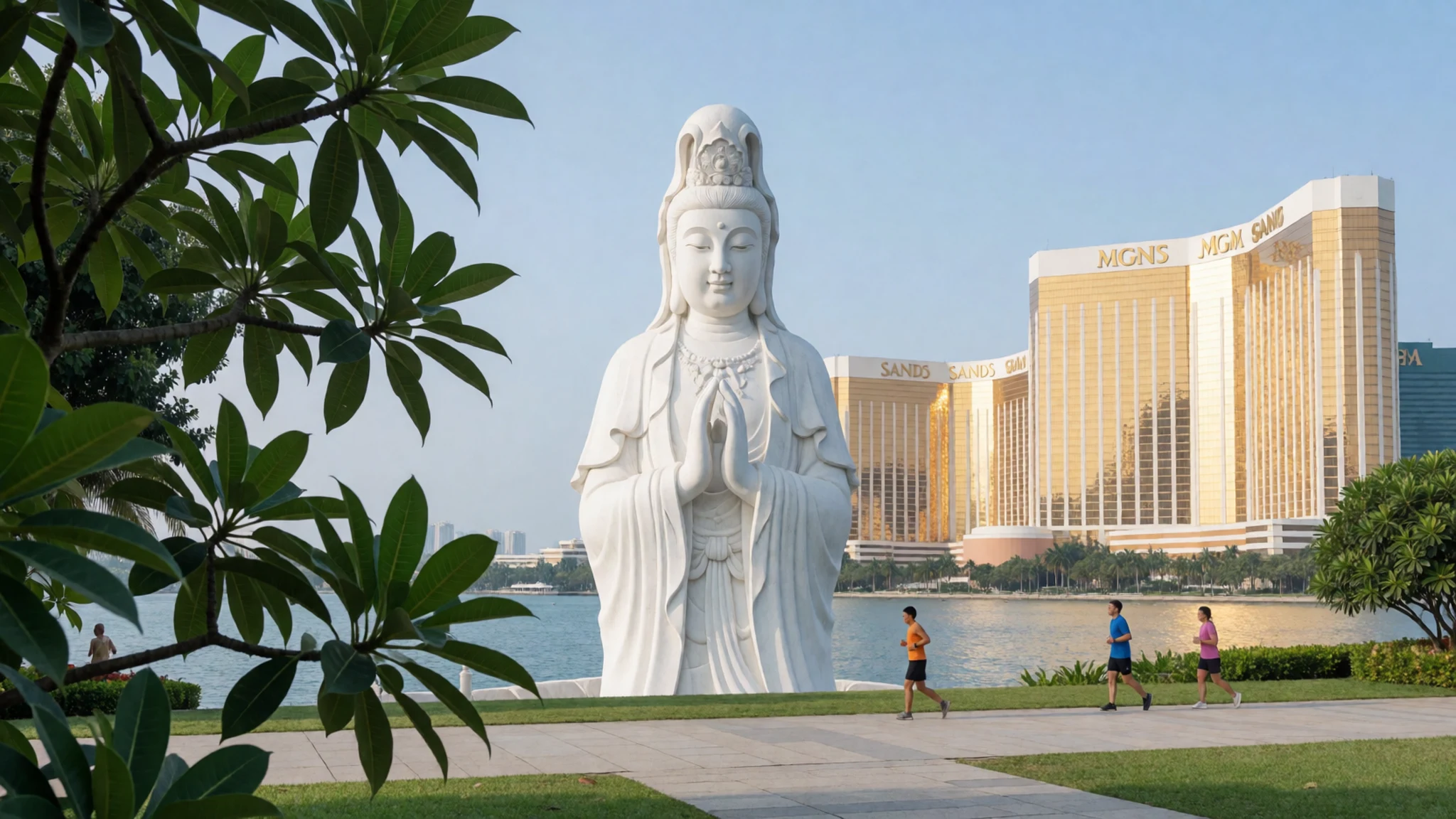
Culture
Macau has carried Chinese and Portuguese traditions side by side for more than four centuries, and that mix shows in its calendar. Lunar New Year is the most significant traditional festival, typically landing in late January or early February. In February the Pou Tai Un Temple in Taipa holds the Feast of Tou Tei, honouring the Earth god. Other fixtures include the Macau Arts Festival in March, the International Fireworks Display Contest in September, the International Music Festival in October or November, and the Macau Grand Prix each November, when the peninsula's main streets become a racetrack. The Macau International Marathon takes place in December.
Daily life follows a quieter rhythm than the casinos suggest. Many residents speak Cantonese, and Portuguese is still heard in some parts of the city, so a few words of either go a long way. Shop owners and older residents respond warmly to visitors who make an effort. Temples are places of worship and remain active during festivals, so visitors should keep voices low inside halls, avoid stepping on offerings and follow the signs about where photographs are allowed. At temples, ask before photographing worshippers at close range, and never touch the incense or offerings unless you know the ritual.
What to wear
Macau's traditional dress reflects its two cultures. Chinese clothing from the Cantonese region includes the samfu, a loose two-piece outfit traditionally made in cotton for working days, and the cheongsam, a close-fitting dress usually in silk or brocade that became a symbol of formal Chinese style. Portuguese and Macanese formal wear, seen at weddings and church occasions, favours lace, embroidery and fine cotton or linen. Silk and cotton are the core materials, while lace and brocade mark the more formal pieces. These garments are now worn mostly for ceremonies, festivals and family events rather than daily life.
What people wear now is cosmopolitan. In the streets you will see office clothes, sportswear and fashion from Hong Kong and mainland China, with no single local style dominating. Many residents dress up for dinner and for shopping in the casino resorts, and smart dress is often expected in the more formal restaurants and gaming halls, so check the house rules before you go.
For a visit, pack light, breathable fabrics such as cotton and linen, since summer is hot and humid. Comfortable closed shoes with good grip suit the cobbled squares and the steps of the hills. Cover shoulders and knees when you visit temples and the more traditional churches. A light layer helps in the air-conditioned casinos and malls, which can be cold.
What to eat
- Pastéis de nata — Neighbourhood bakeries in the old peninsula, especially near the historic centre
These custard tarts, with a crisp pastry shell and a caramelised top, are the sweet emblem of Portuguese baking in Macau. Bakeries in the old peninsula sell them warm from the oven, often in the morning. Buy a few to eat on the move, and you will find them repeated across cafés throughout the day.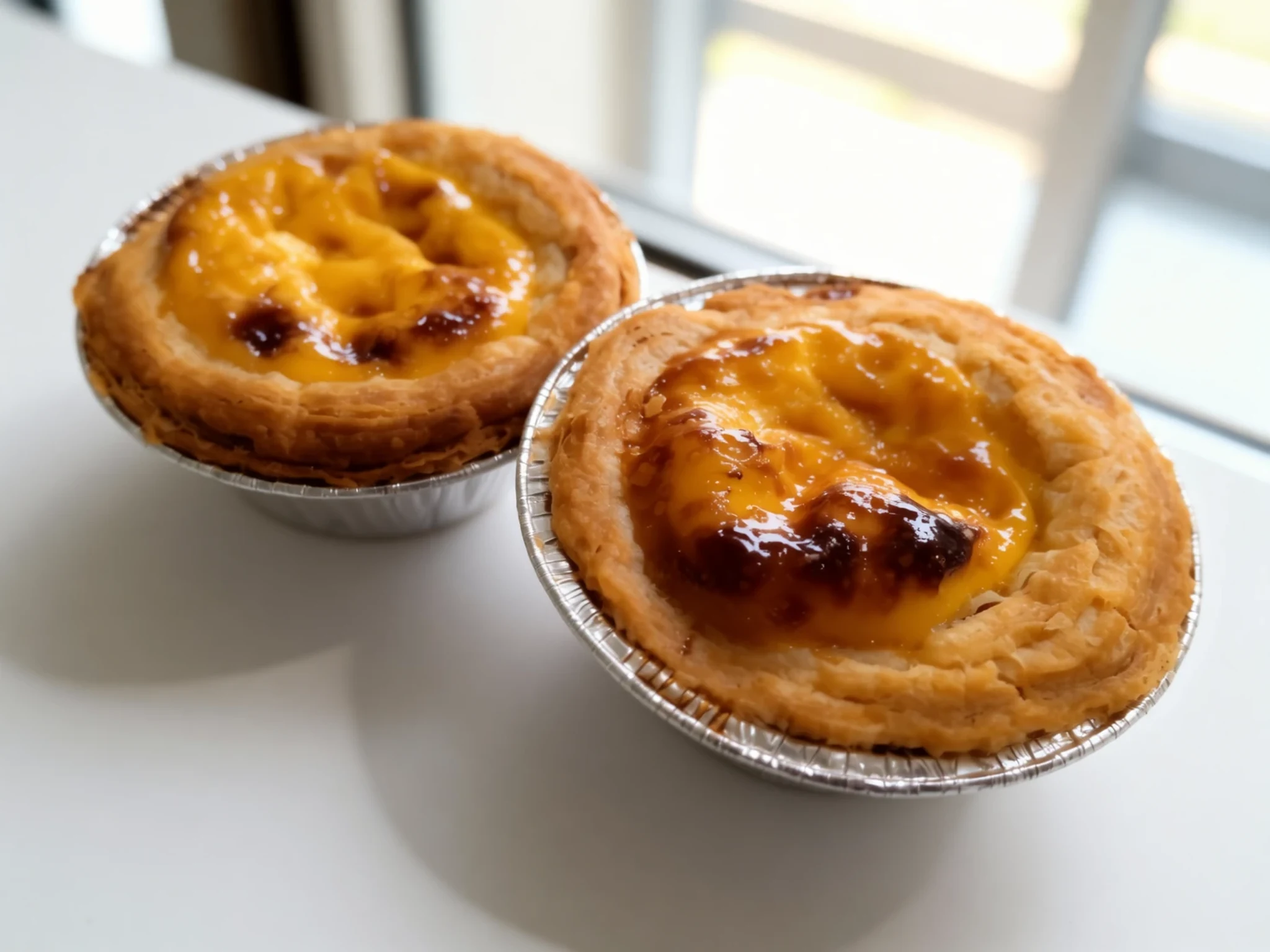
- Galinha à africana — Portuguese and Macanese restaurants, particularly those grouped at the peninsula's southwestern end
African chicken is a Macanese dish of chicken simmered in a spiced coconut and peanut sauce, with chilli and a warm, slightly sweet finish. It is a signature of the city's fusion cooking, and you will see it on menus across the older Portuguese-style restaurants. Order it with rice to soak up the sauce.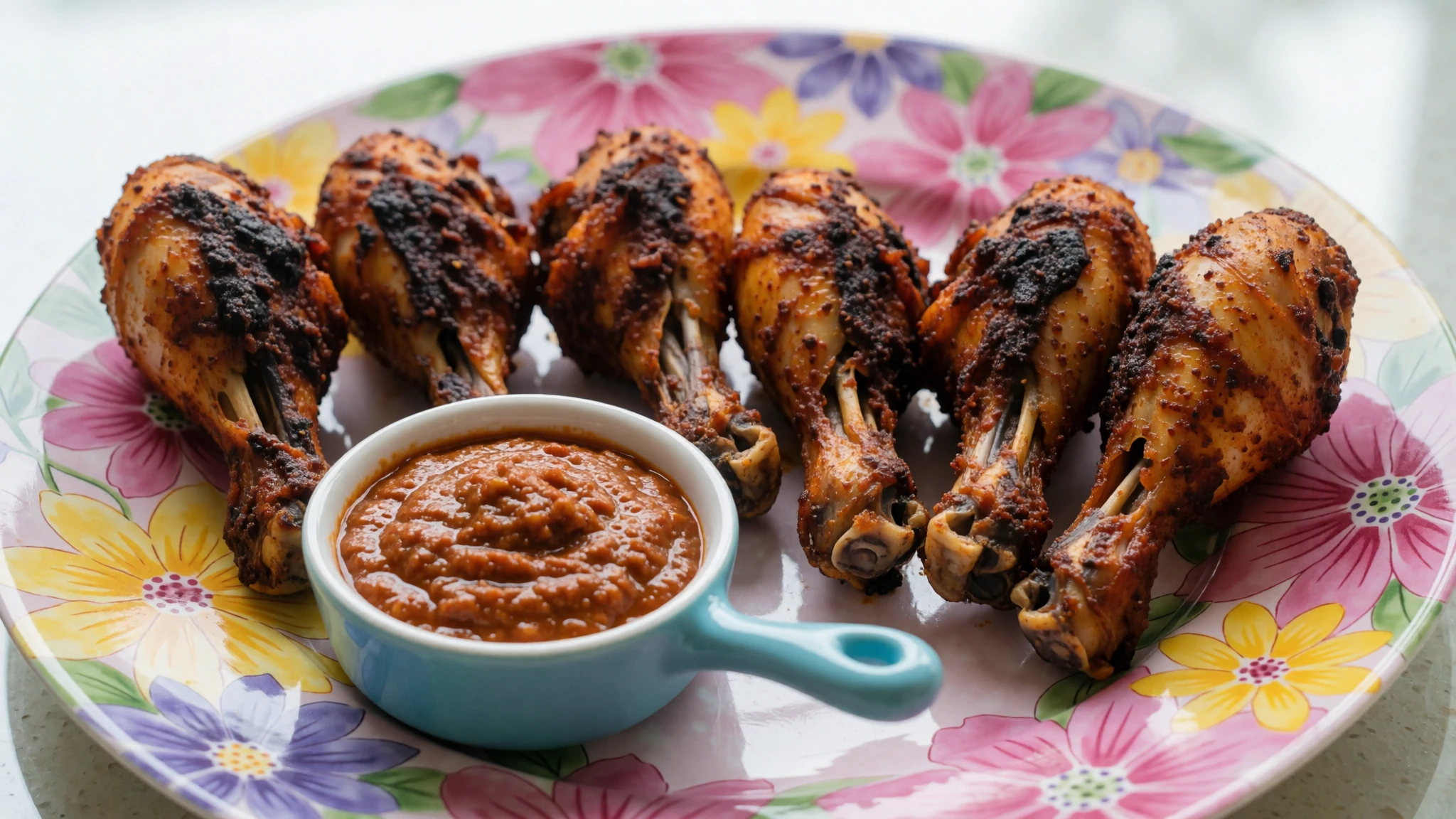
- Minchi — Small family-run Macanese eateries in the old lanes
Minchi is a home-style Macanese dish of minced pork or beef cooked with potato, onion and soy, often topped with a fried egg. It is hearty and straightforward, the kind of meal that tells you more about everyday Macanese cooking than any fine-dining menu. Look for it in small, family-run eateries rather than hotel restaurants.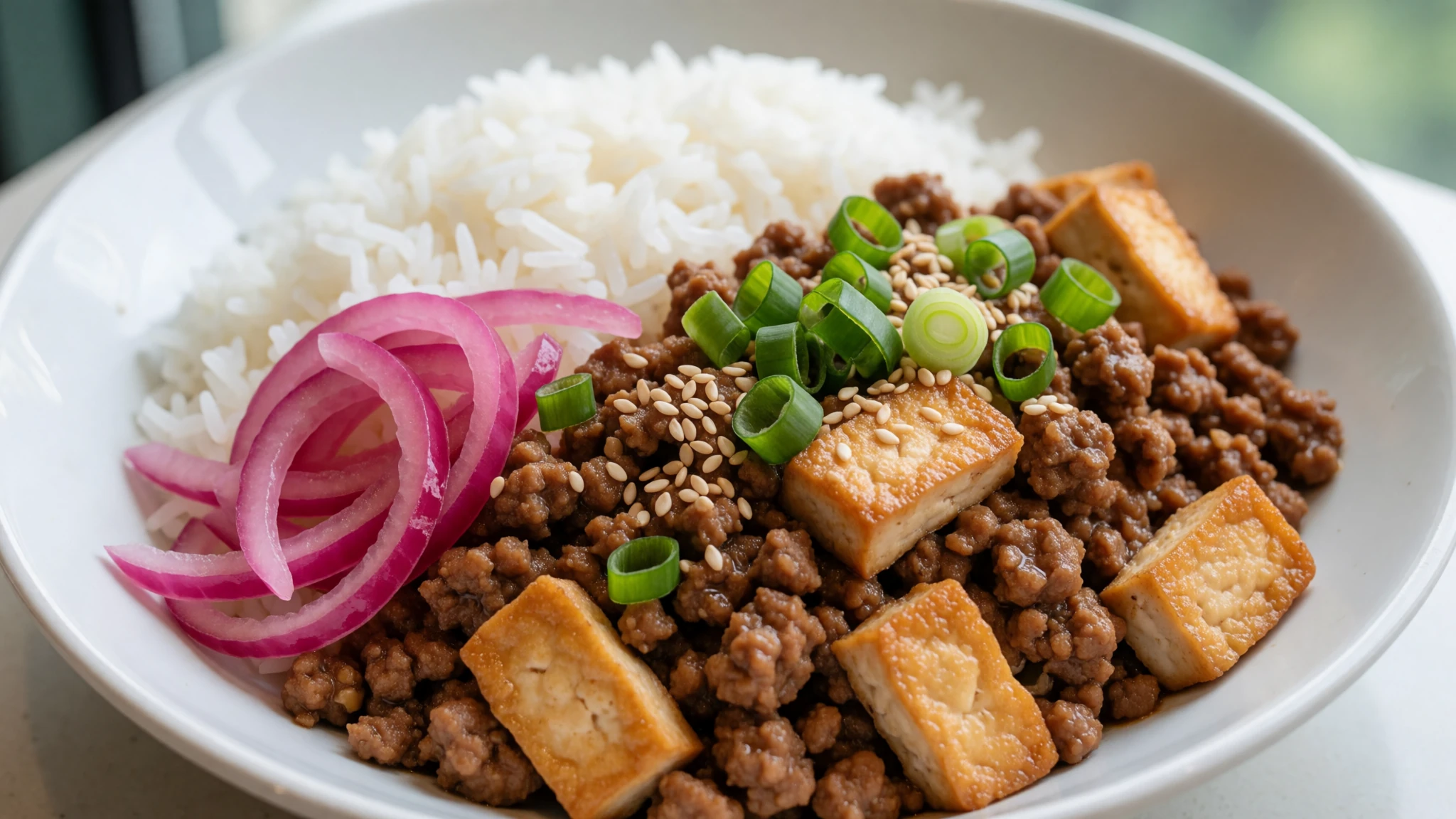
- Pork chop bun — Street-side counters and bakery stalls in the historic peninsula
A crusty bun split and filled with a thin, fried pork chop seasoned with soy and spices is a cheap and filling snack in Macau. The best ones are made to order at street-side counters, and the bread is often lightly toasted. It makes a practical lunch while you walk the lanes. - Macanese curry crab — Macanese restaurants on the peninsula and in the older districts
Crab cooked in a rich, aromatic curry, with spices from the Portuguese trading routes and a thick, savoury sauce, is one of the signature dishes of the city. It is messy to eat, so bring a few napkins and take your time. Eat it at a Macanese restaurant, where the sauce is served with bread or rice.
Plan it
Best time. Roughly November to February is the most comfortable window, with cooler, drier air that suits long walks in the old town. Summer is hot and humid, and the rainy months bring heavy showers that can disrupt plans.
How long. 2–3
Getting there. Fly into Macau International Airport, which handles a growing number of low-cost carriers, or take a ferry from Hong Kong, which is the traditional route. The last leg is by taxi, bus or on foot from the ferry terminal or airport into the peninsula.
Budget. mid
Tips
- Start the old peninsula before about nine in the morning, before tour groups arrive
- Carry some cash for bakeries, market stalls and small eateries, though hotels and larger shops take cards
- Check entry rules before you travel, since Macau has its own immigration regime separate from mainland China
- Give the Taipa and Coloane islands a half day for quieter streets and village architecture
- Drink water regularly in summer, as the humidity makes the hills and steps hard work
Etiquette
- Keep voices low inside temples and ask before photographing people at worship
- Queue in turn for ferries, buses and the lift to the fortress
Nearby
Sources
- Wikidata Q14773 (CC0)
- Wikipedia: Macau (rev 1382435968) (CC BY-SA 4.0)
- Wikivoyage: Macau (rev 5384938) (CC BY-SA 4.0)
- Panorama of Macau Peninsula, Charlie fong (CC BY-SA 4.0)
