Lund
Lund, Sweden
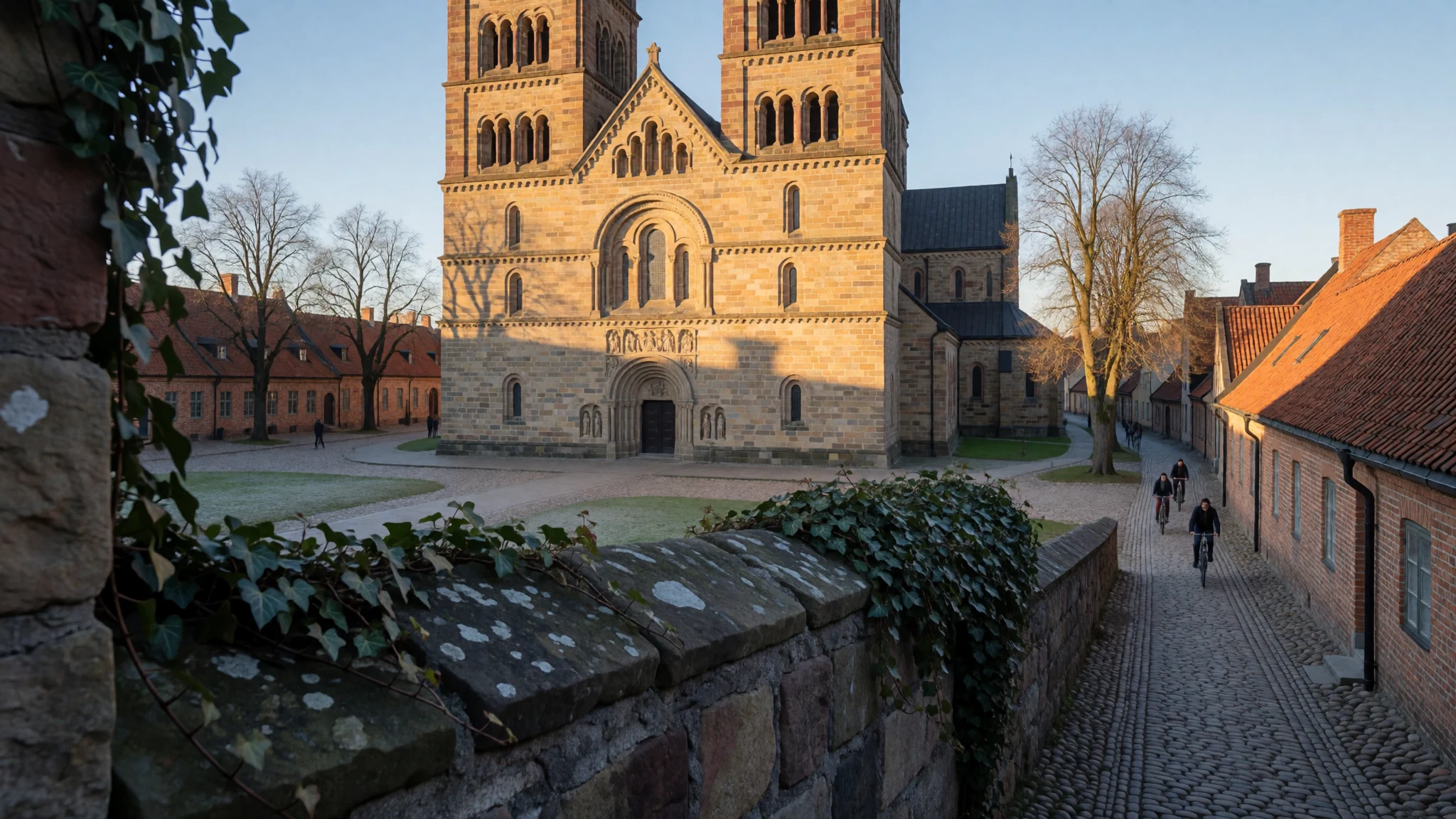
Lund pairs ancient medieval towers and cobbled alleys with a vibrant academic energy shaped by one of Scandinavia's oldest universities.
The place
Lund sits in the southern Swedish province of Scania, anchoring a fertile agricultural district just inland from the Öresund Strait. The urban area supports a population of nearly one hundred thousand residents, anchored by a municipality home to more than one hundred thirty thousand people within the wider Öresund region. The land climbs gently northward from the Höje River, which runs low on the southern side, to slopes of modest height. This topography places the town within easy reach of both rural fields and the coastal waters separating Sweden from Denmark. The town plan is defined by medieval street patterns, where cycling commuters share narrow cobbled lanes with academic staff and students. Brick architecture dominates the core, giving way to leafy squares and quiet courtyards tucked behind historic academic halls. Unlike larger metropolitan centres, Lund retains a compact pedestrian scale that allows visitors to traverse the historic districts entirely on foot or by bicycle. The atmosphere shifts across the calendar, feeling serene during university breaks and remarkably animated when autumn terms commence. Visitors wandering through the central quarters will notice how modern research facilities sit comfortably alongside centuries-old ecclesiastical foundations, creating a seamless urban landscape that bridges medieval heritage with contemporary Scandinavian life.
Its story
Lund ranks among the oldest cities in present-day Sweden, with origins stretching back to around the year one thousand when the region formed part of the kingdom of Denmark. Archaeological excavations indicate that early settlement activity occurred nearby before King Sweyn Forkbeard relocated the main town to the present elevated site for strategic defensive advantages. The location offered security across local river crossings and a commanding view of the surrounding plains. By the eleventh century, the settlement had emerged as an important ecclesiastical centre. It became the seat of a major diocese and later served as the seat of the Catholic Archdiocese of Lund, governing ecclesiastical provinces across Scandinavia and distant northern outposts. The towering Romanesque cathedral took shape during this period of religious prominence, serving as a powerful symbol of royal and papal authority in the north. Following centuries of Danish governance, the town changed hands when Denmark ceded Scania to Sweden through the Treaty of Roskilde in the seventeenth century. To secure Swedish influence in the newly acquired territories, Lund University was established soon after, fundamentally altering the character of the settlement. Over subsequent centuries, the institution grew into a major engine for education and scientific research, eventually transforming the former religious stronghold into a modern hub for technology and higher learning.
What to see
- Lund Cathedral — Central Lund
Lund Cathedral stands at the historic heart of the city as a monumental Romanesque sandstone edifice erected in the medieval era. Inside, visitors can examine the intricate twelfth-century crypt and an elaborate astronomical clock that animates daily with mechanical figures and choral music. - Kulturen — Central Lund
Kulturen operates as an expansive open-air museum encompassing two entire blocks of central Lund. Traditional timber houses, farmsteads, and period workshops have been relocated here from across the southern provinces, offering visitors a walk-through chronicle of Swedish social history. - University Hall — University campus
University Hall serves as the ceremonial anchor for the academic community with its grand classicist architecture and majestic columns. Inaugurated in the late nineteenth century, the building reflects the enduring classical ambitions of Swedish higher education. - The Historical Museum — Academic district
The Historical Museum houses an extensive collection of archaeological treasures managed by the university. Its exhibition galleries display rare ecclesiastical artefacts alongside remarkable metalwork and domestic items excavated from nearby prehistoric settlements. - Lunds Konsthall — Stortorget area
Lunds Konsthall presents a rotating programme of contemporary art exhibitions within a clean, minimalist gallery space. The venue showcases works by both prominent international artists and emerging Scandinavian creators, contributing a vital modern cultural pulse to the historic town.
Culture
Lund maintains a distinctive cultural identity shaped entirely by its academic heritage and large student population, which includes a substantial proportion of international scholars. Traditional student life revolves around historic social organisations known as nations, which organise theatrical productions, musical performances, and social gatherings. Literary traditions run deep here, influenced by generations of writers, poets, and playwrights who lived and worked within the academic sphere. While the town embraces modern international arts through local theatres and independent galleries, the atmosphere remains distinctly scholarly and understated. Residents value punctuality, quiet public spaces, and environmental sustainability, making cycling the primary mode of transport regardless of the weather. Religious life persists through the historic cathedral, which remains an active seat of the Church of Sweden while welcoming thousands of visitors daily. Visitors should remember to keep voices low and show respectful silence when entering the cathedral while services or musical performances are underway.
What to wear
Lund residents dress in typical contemporary Scandinavian style, favouring minimalist, functional attire with an emphasis on comfort and durability. Practical garments such as weatherproof jackets, sturdy footwear for cycling on cobblestones, and neutral-toned layers dominate everyday wardrobes across the academic quarters. Traditional folk dress, known as folkdräkt, is rarely seen in daily life but appears during national celebrations, midsummer festivities, and university ceremonies. Visitors exploring Lund should pack versatile layers suited to shifting weather conditions, including a windproof coat and comfortable walking shoes. Modesty standards are relaxed, and casual attire is acceptable in most restaurants, cafes, and university buildings. When visiting religious sites or formal university events, dress neatly and avoid overly beach-oriented clothing to blend in comfortably with locals.
What to eat
- Persian Grilled Chicken at Cyrus — Near the central square
This long-standing local eatery serves tender, marinated grilled chicken dishes known locally as juje kebab alongside simple rice and flatbread, offering comforting flavours in an unpretentious setting. - Vegetarian Lunch Buffets at Govindas — Central Lund streets
Run by the local Hare Krishna community, this dining room offers hearty, wholesome vegetarian and vegan lunches featuring spiced lentil stews, rice, and fresh salads. - Artisanal Sandwiches at Mondo — Near the historic center
A cosy neighbourhood cafe preparing hearty daytime fare, including thick-cut artisanal sandwiches, warming vegetable soups, and traditional Swedish pies at accessible prices. - Neapolitan Pizzas at Bellini Pizzeria — Getingevägen near campus
A popular neighbourhood pizzeria situated near the university campus, serving classic thin-crust Italian pies with fresh toppings to hungry students and locals. - Falafel Wraps at Lundafalafel — Central pedestrian lanes
A compact hole-in-the-wall takeaway counter serving crisp, freshly fried falafel wrapped in flatbread with crisp vegetables and garlic sauce for a quick bite.
Plan it
Best time. May to September offers the warmest weather and vibrant green public gardens, while autumn brings atmospheric student term openings.
How long. 2–3
Getting there. Fly into Copenhagen Airport, then take the direct Öresundtåg train across the strait directly to Lund Central Station in less than an hour.
Budget. mid
Tips
- Rent a bicycle to navigate the historic street grid like a local student
- Book cathedral tower tours in advance during peak summer months
- Carry a contactless card, as cash is rarely accepted across shops and cafes
- Explore the university library and surrounding parks during early morning hours
Etiquette
- Keep cycle lanes clear and yield to cyclists when walking on shared paths
- Observe quiet hours in residential apartment buildings after late evening
- Remove hats when entering indoor dining rooms and historic sanctuaries
Nearby
Sources
- Wikidata Q2167 (CC0)
- Wikipedia (CC-BY-SA 4.0)
- Wikivoyage (CC-BY-SA 4.0)
- Photo 1 (CC BY 3.0)
