Lucknow
Lucknow, India
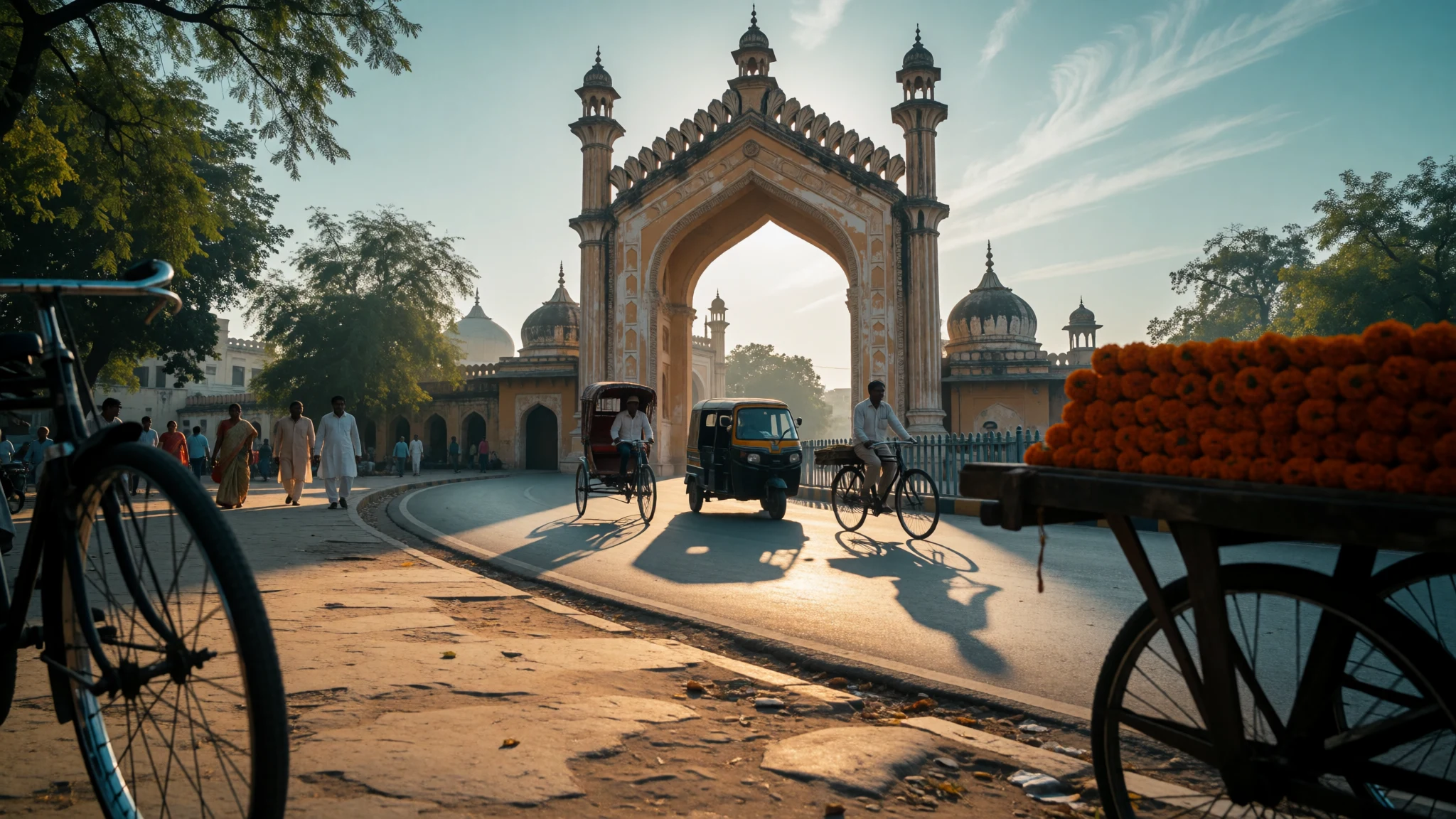
Lucknow is the city of the Nawabs, where courtly manners, slow-cooked kebabs, fine embroidery and domed old-city monuments still shape everyday life.
The place
Lucknow is the capital of Uttar Pradesh, a city of about 3.4 million people on a flat plain 123 m above sea level, with the Gomti river curving through it. The map splits it in two without much fuss. Old Lucknow, on the western side, is a tangle of lanes, domed tombs, mosques, bazaars and kebab counters. Across the river, newer Lucknow is wide avenues, parks, university campuses, glass offices and a metro that runs on elevated track. Charbagh station, with its domes and small kiosks on the roofline, is where most rail travellers arrive, and it is often their first landmark.
The city's reputation rests on manners, food, language and craft rather than on a single monument. Lucknow is known for its courteous, Urdu-inflected speech, for kebabs and slow-cooked meat, for chikankari embroidery, and for a long tradition of poetry, music and classical dance. It also holds colonial-era churches and schools, and a good deal of recent civic ambition, including large memorial parks and an international cricket stadium. Together with Agra and Varanasi it forms the Uttar Pradesh Heritage Arc, a circuit that state tourism promotes.
Pace matters here. Lucknow is not a city for ticking off sights at speed. It rewards slow mornings in the old quarter, long lunches and evenings by the river. Traffic is heavy, summers are punishing and the old lanes are crowded, but the tone is calmer than in many northern cities, and strangers are quick to give directions.
Its story
Lucknow sits in the region of Awadh, and its story is one of changing overlords before it became a court city. In the ancient period the area belonged to the kingdom of Kosala. Later centuries brought the Delhi Sultanate, then the Sharqi rulers of Jaunpur, then the Mughals, whose emperor Humayun folded Awadh into the empire. Under Mughal rule a favoured noble, Sheikh Abdul Rahim, received an estate from Jahangir and built Machchi Bhawan on it. His descendants, the Sheikhzadas, governed the area locally from there.
The decisive change came with the Nawabs of Awadh, governors who drifted towards independence as Mughal power faded. Once Lucknow became their capital, they gave it its character. Their court was known for refined and sometimes extravagant living, and the nawabs paid for poets, musicians, dancers, cooks and builders. Music and dance flourished, and monuments went up, among them the Bara Imambara, the Chota Imambara and the Rumi Darwaza, which still anchor the old city.
That world ended when the East India Company, claiming the kingdom was badly governed, annexed Awadh and placed it under a chief commissioner. Resentment spread, and Lucknow became one of the main centres of the 1857 uprising, which is called by different names in India and in older British accounts. The city later took an active part in the independence movement, and today it is the seat of the state government.
What to see
- Bara Imambara — Old Lucknow
Bara Imambara is the great congregation hall complex of the Nawabs, built as a Shia religious space and closely tied to Muharram observances. Its scale is the point: vaulted halls, courtyards and gateways that make the surrounding lanes feel suddenly formal. Guides are available near the entrance. Check the official tourism pages for current timings and ticketing before going.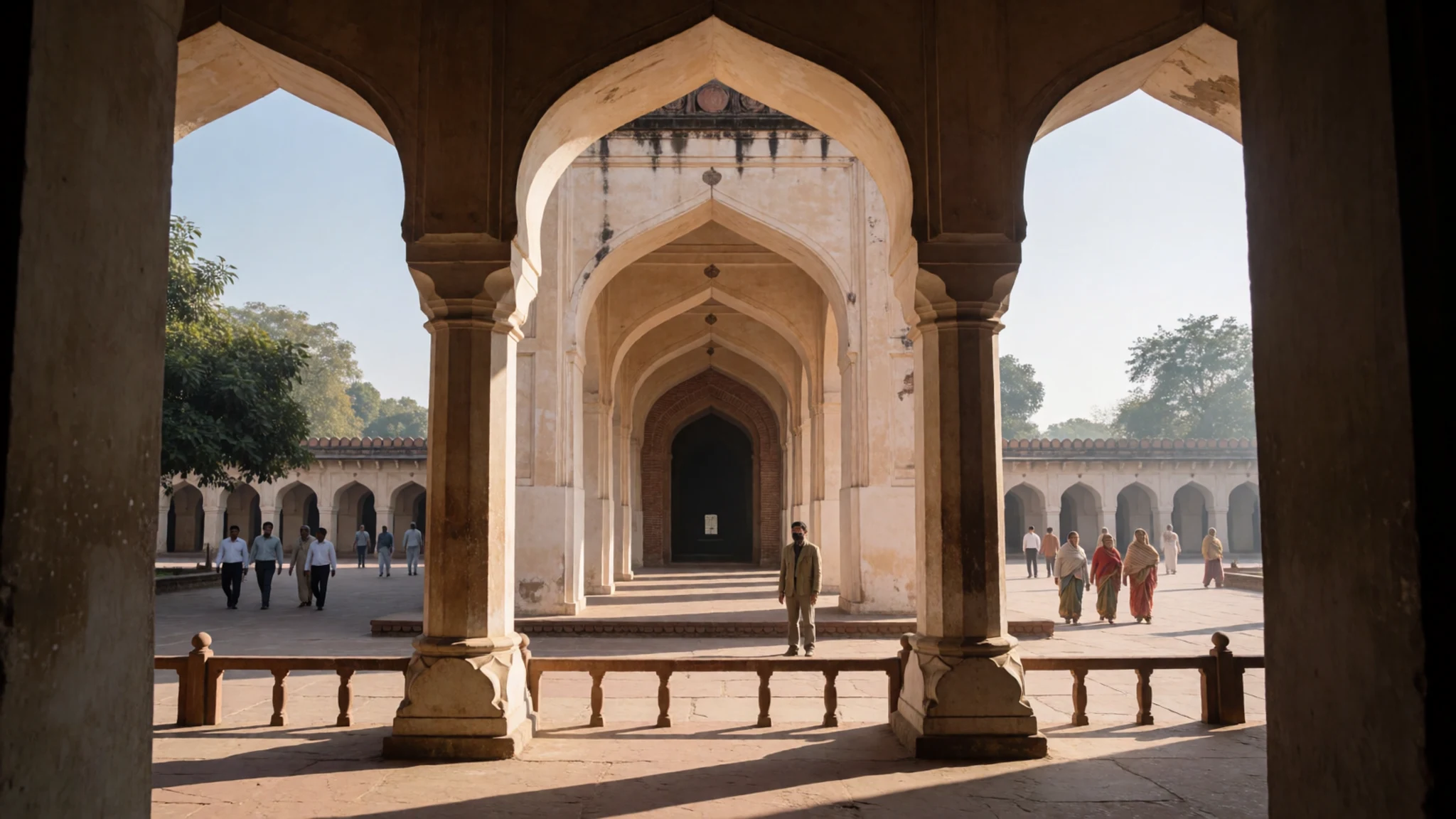
- Rumi Darwaza — Old Lucknow
Rumi Darwaza is a tall ceremonial gateway near the imambaras, often used as a symbol of the city. Its arch frames rickshaws, traffic and street sellers, so it is best seen on foot in early light, when the road is quieter. Photograph it from a little distance and watch for vehicles; the road beneath it is still in daily use.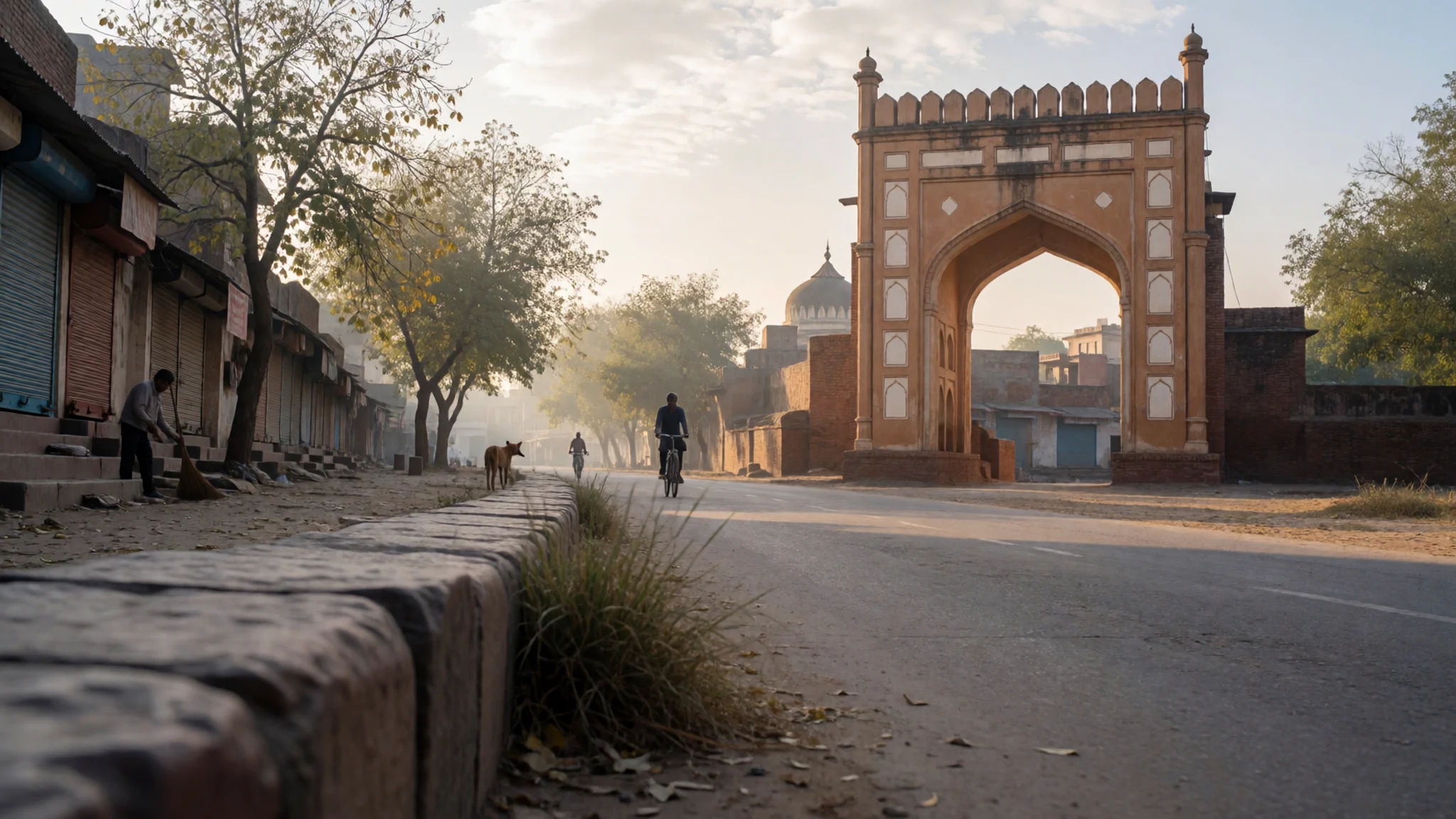
- Dilkusha Kothi — Southern Lucknow
Dilkusha Kothi is the ruined remains of a country house built in the English baroque style, a reminder that the nawabs borrowed European fashions as well as Persian ones. Only shell-like walls and towers survive, set in lawns on the southern side of the city. It suits an unhurried hour. Check the official site for access.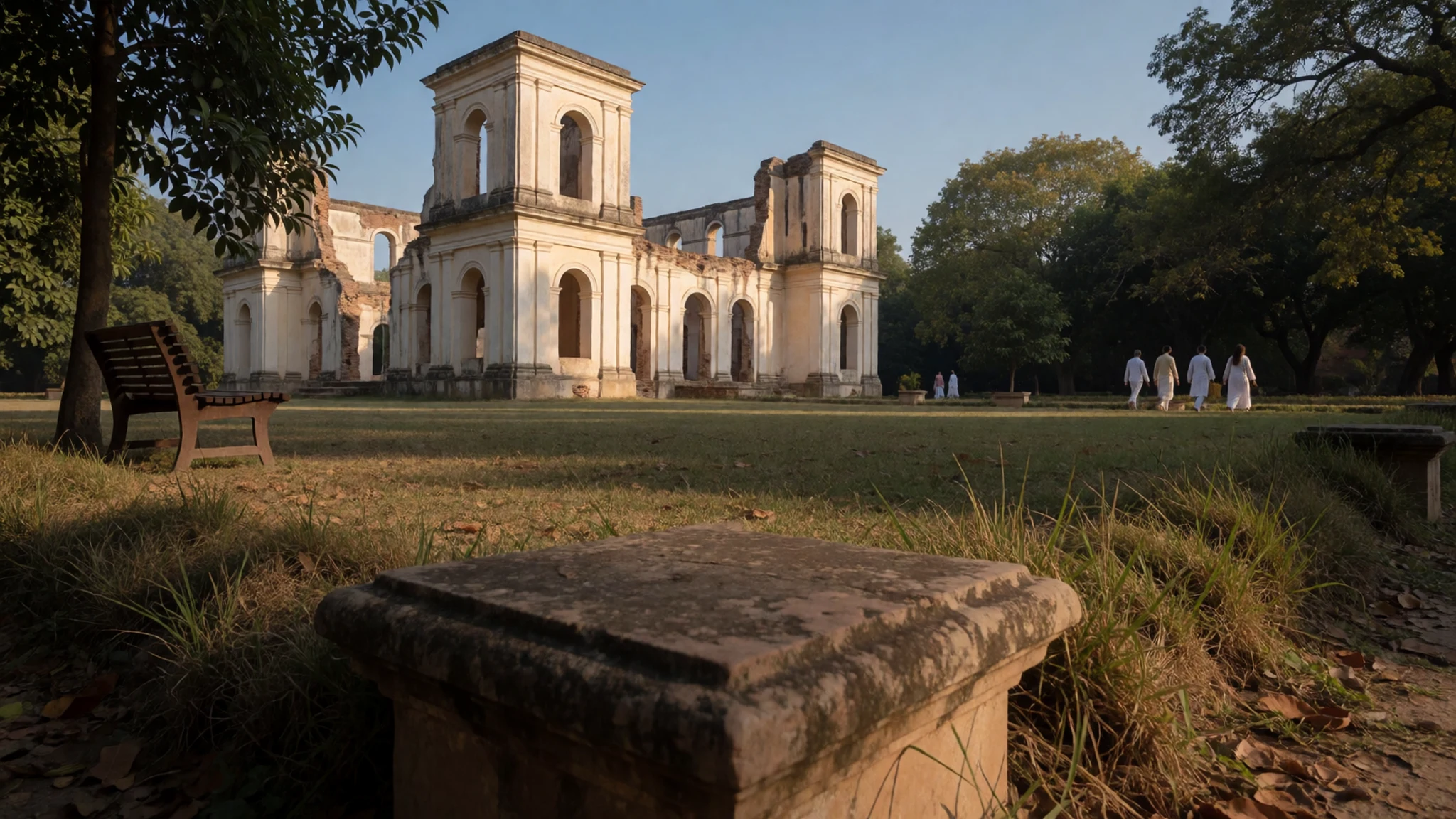
- Colvin Taluqdars' College — Central Lucknow
Colvin Taluqdars' College is a colonial-era institution named after a British administrator, Sir Auckland Colvin. It is worth a look for its architecture rather than for any formal tour. Working schools and colleges often restrict access, so treat it as an exterior stop and ask politely at the gate if you hope to go in.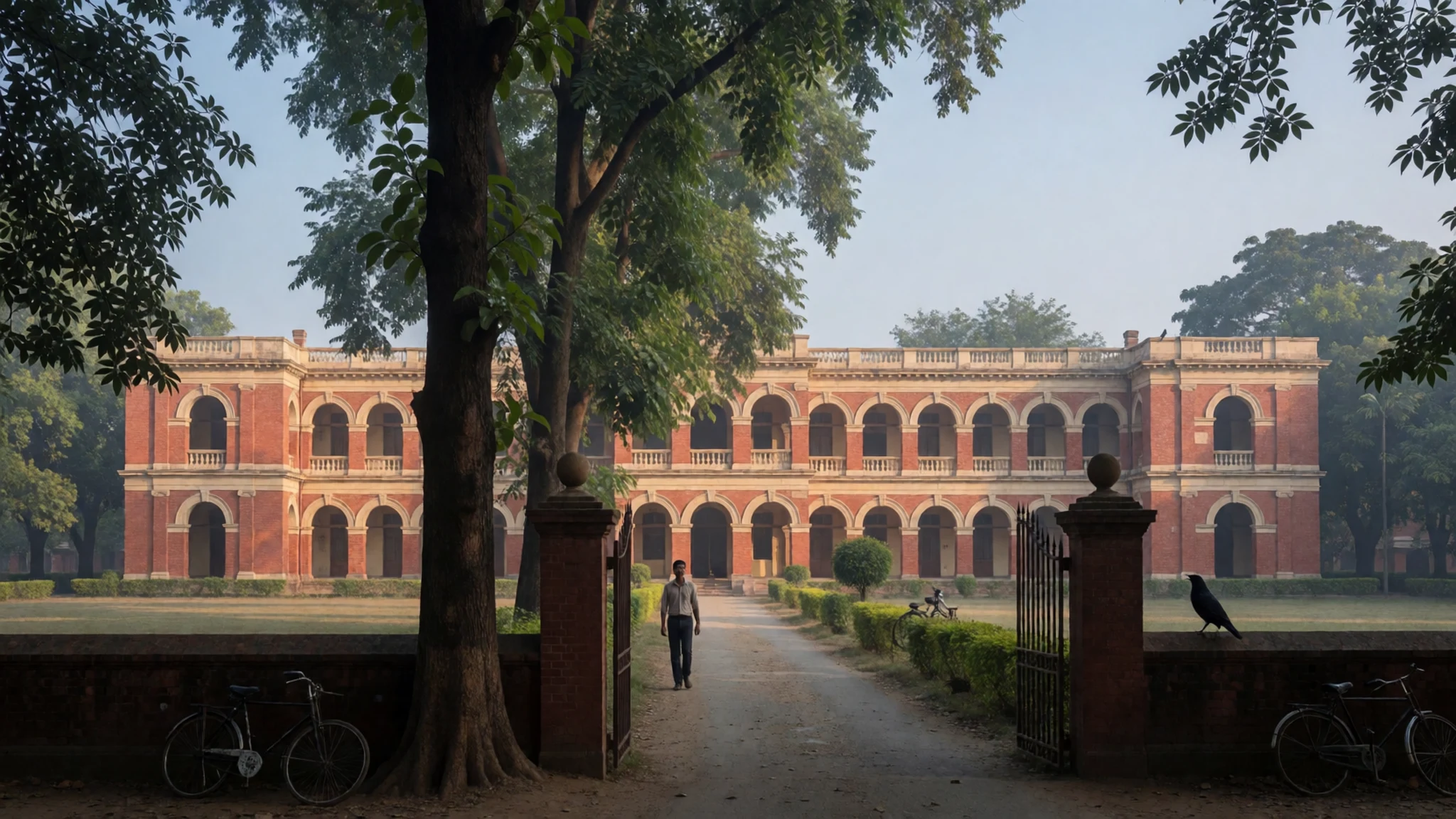
- Gomti riverside — Along the Gomti river
The Gomti riverside, often called Marine Drive, is where the modern city comes out at dusk. Walkers, families and couples line the embankment, and late afternoon into sunset is the usual time to go. The view takes in new towers and bridges across the water, a calm pause after the crowded old-city lanes.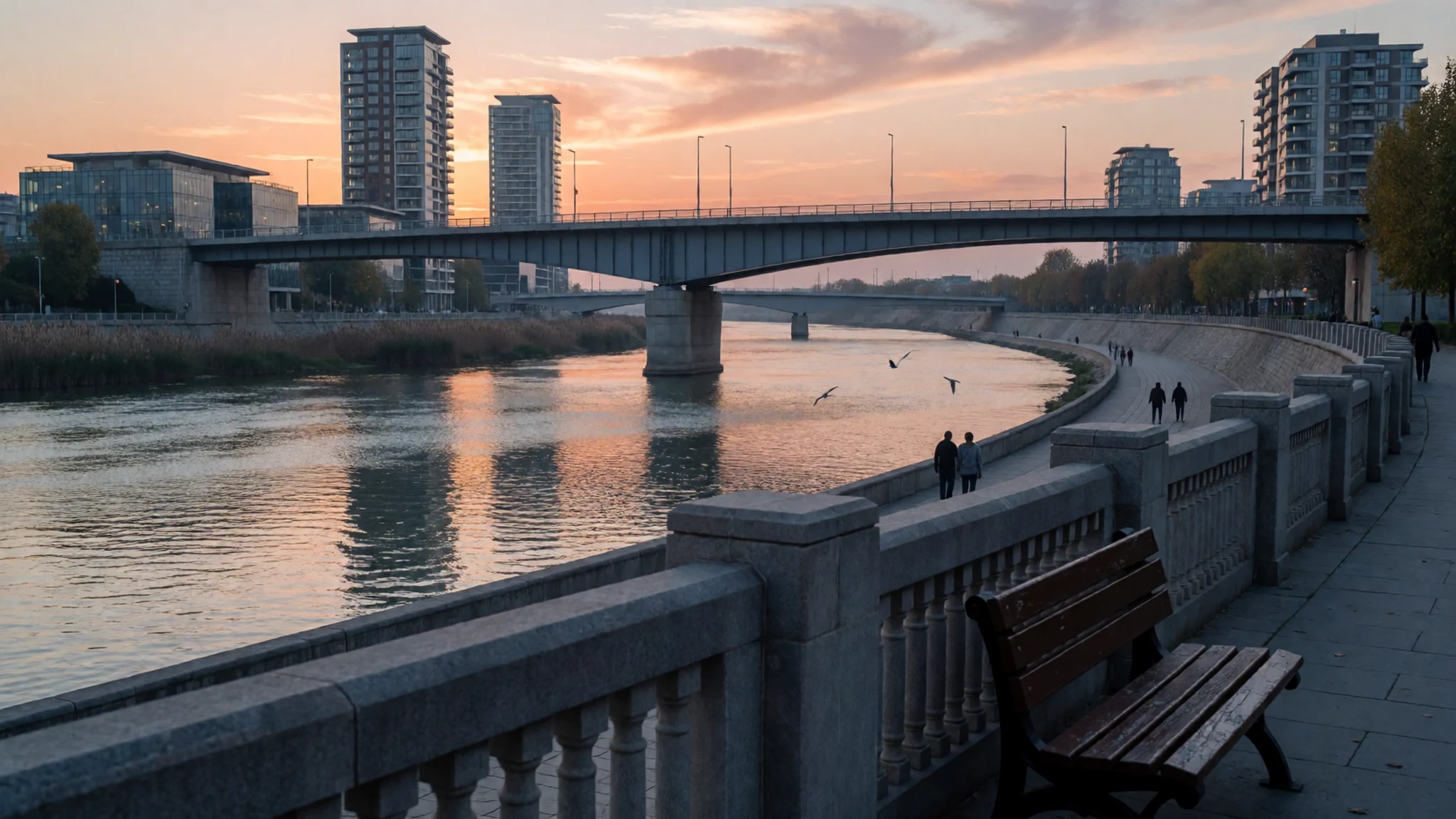
- Kukrail Reserve Forest — Northern Lucknow
Kukrail Reserve Forest, on the northern edge of the city, is a forest reserve that includes a crocodilian breeding centre, with the slender-snouted freshwater gharial among its residents. It makes a change from monuments, especially on a cool morning. Check the official site or the forest department for opening days, since facilities vary.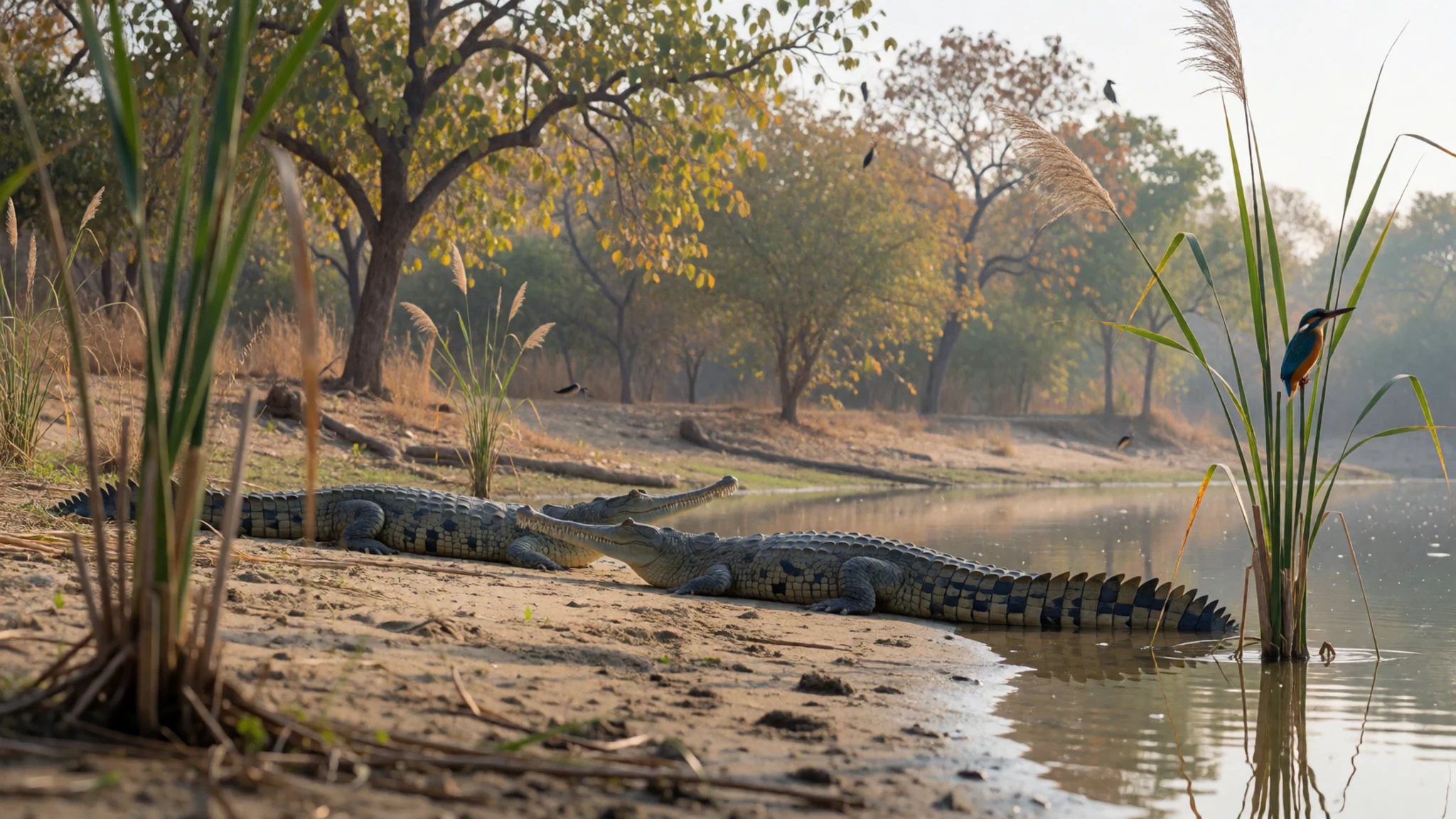
Culture
Lucknow's culture is the product of Hindu and Muslim traditions blending at a royal court. The Nawabs of Awadh encouraged this mixing in poetry, music, cooking, dress and daily etiquette, and the result is often called Ganga-Jamuni tehzeeb, a shared courtly civility. Residents call themselves Lucknowites or Lakhnavi, and visitors regularly remark on the polite, polished way people speak, with Urdu words and gracious forms of address worked into Hindi.
The arts here were court arts. Classical dance, light-classical singing, Urdu verse and the recitation of elegies all grew under royal patronage, and poetry gatherings known as mushairas are still held. The Shia community is large and visible, and Muharram brings processions, mourning gatherings and special food, centred on the imambaras. Christmas draws crowds to the city's churches, and festivals of all faiths are public events.
Daily life is courteous but busy. Bargaining in bazaars is normal and usually good-humoured, and offers of tea or help are generally sincere. The lanes of the old city can feel crowded and loud, yet people will often stop to explain what a building is or point out a shortcut.
At the imambaras and mosques, remove your shoes where indicated, cover your shoulders and knees, and ask before photographing anyone at prayer or during Muharram gatherings.
What to wear
Lucknow's best-known textile craft is chikankari, white-thread embroidery worked by hand on fine cotton, muslin, georgette and other light cloths. Its shadow work and tiny stitches are associated with the city and are used on kurtas, saris, dupattas and shirts. Court dress of the Nawabs included the angarkha, a long wrap-over coat, along with churidar trousers, the gharara and sharara for women, and the embroidered cap sometimes called the Lucknowi topi. These forms still appear at weddings and on festival days, especially during Eid.
What people wear day to day is mostly practical. Men wear shirts and trousers, or kurta-pyjama in the cooler months and on Fridays and festivals. Women wear salwar suits, saris and, increasingly, jeans or western tops, particularly around universities and new commercial districts. Chikankari kurtas are everyday wear as well as gifts, and they suit the heat.
Visitors should dress for the climate and the sites. Light cotton and linen in loose cuts work from spring to autumn, with a shawl or jacket for winter mornings and evenings. At imambaras, mosques and shrines, cover shoulders and knees, and women may need a scarf for the head. Wear slip-on shoes, since they come off often, and sturdy sandals or trainers for uneven lanes. A hat and sunglasses help in summer. Chikankari is sold in the old-city bazaars; look closely at the stitching before buying.
What to eat
- Galawati kebab — Old Lucknow kebab counters
Galawati kebab is a minced-meat patty cooked until it is meltingly soft, a style tied to the nawabs' kitchens. It is eaten with flaky paratha or bread. Look for it at the old kebab counters of Old Lucknow, where it is cooked fresh on large griddles.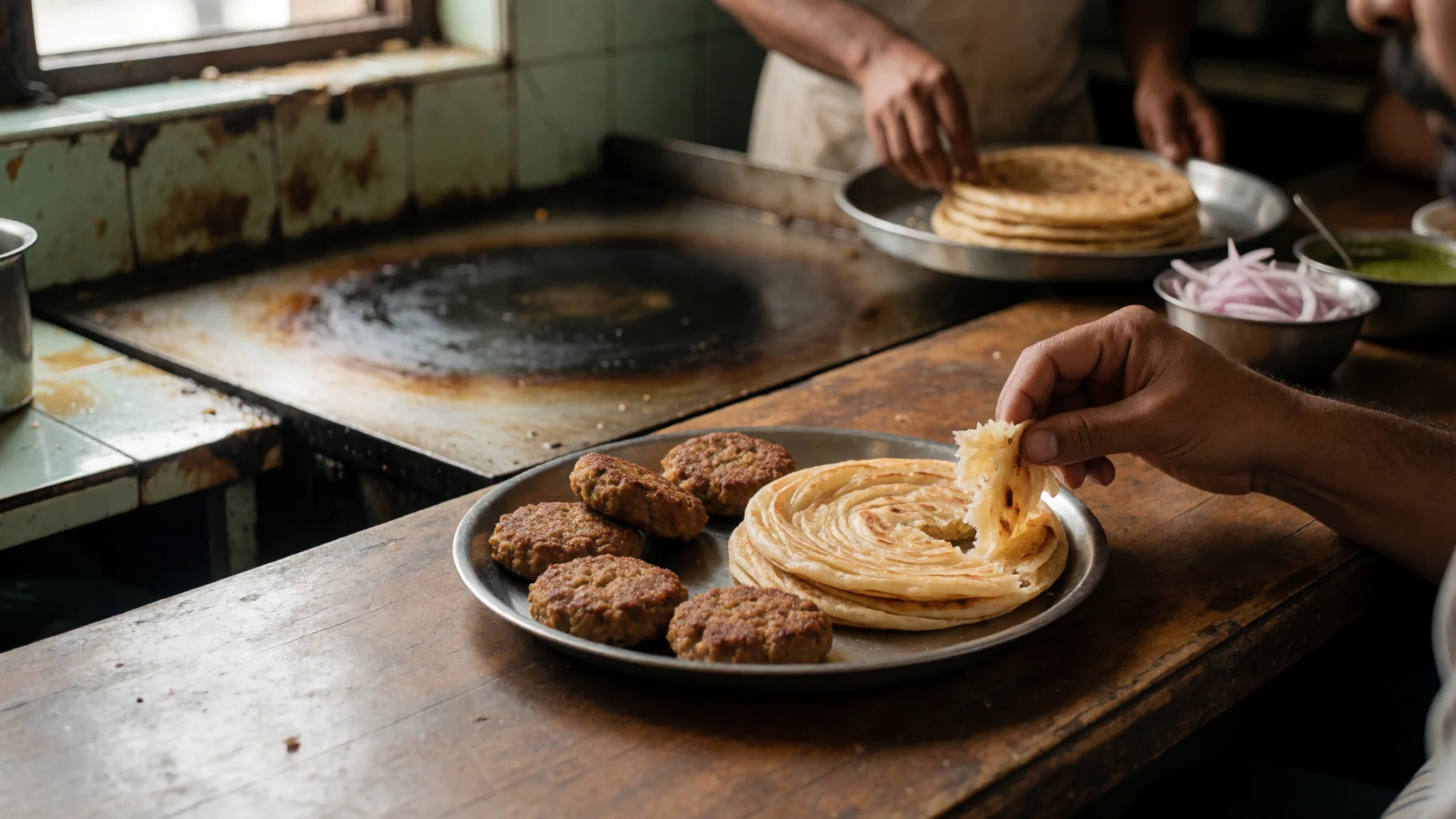
- Nihari and kulcha — Eateries in Old Lucknow's lanes
Nihari is lamb shank slow-cooked into a rich gravy, usually served with kulcha, a soft traditional bread. It is a breakfast or early-lunch dish and sells out. Look for it at the long-established eateries in the heart of Old Lucknow.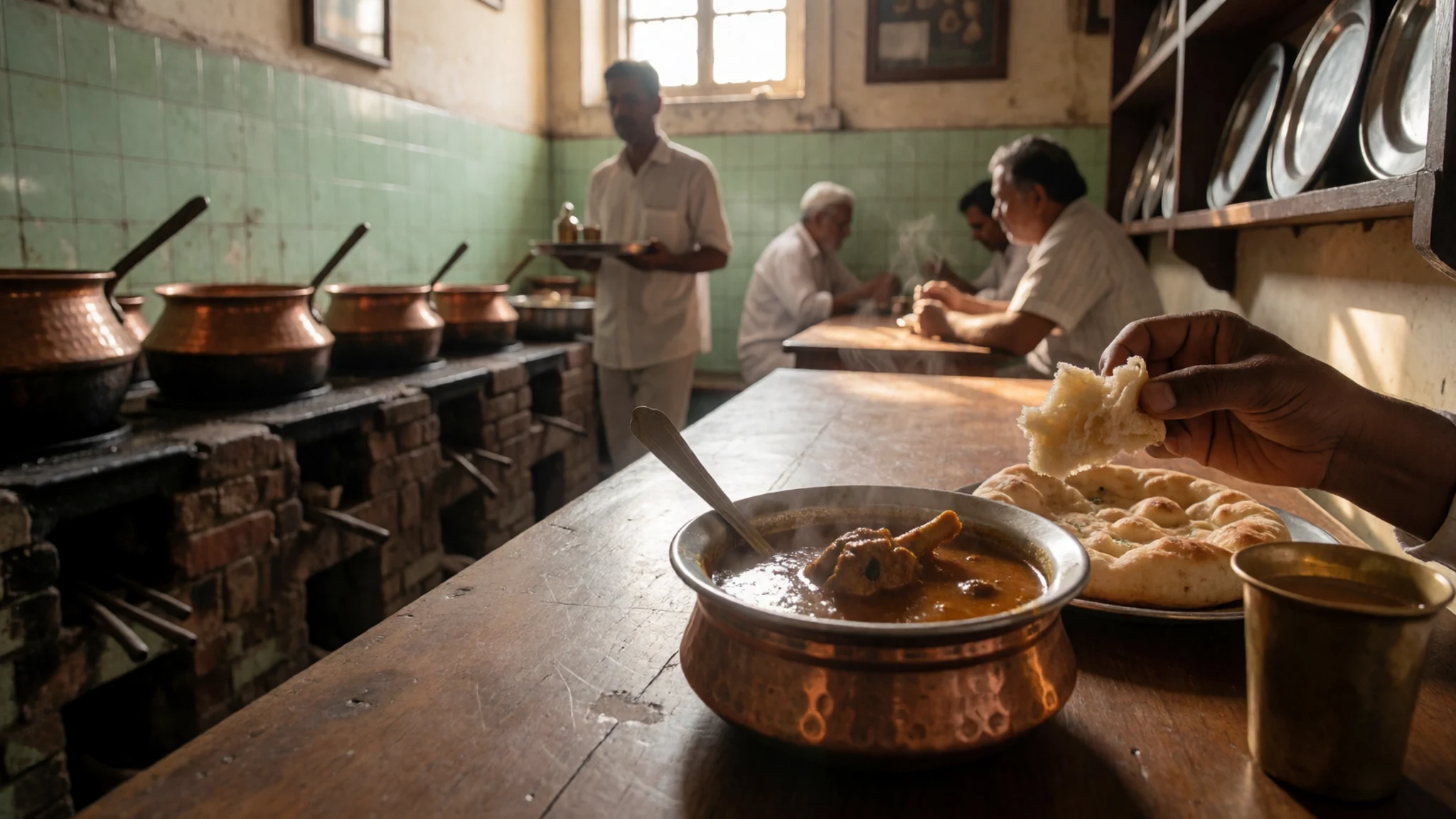
- Kebab and paratha — Old kebab shops near the main bazaar
Lucknow's tikkas and kebabs are Mughal-era dishes, usually grilled or griddled and wrapped in flaky paratha. Eateries that have served them for generations are a point of local pride, and queues at dinner are normal. Go slightly early. - Biryani — Kebab shops and Old Lucknow restaurants
Lucknow biryani is typically a gentler, fragrant dish than the heavily spiced southern versions, with rice and meat cooked together slowly. Many kebab shops sell it alongside their grills, and it makes a good second plate after kebabs. - Faloodah kulfi — Kulfi shops in the older commercial areas
Faloodah kulfi is dense, slow-frozen milk ice cream served with rose-flavoured vermicelli strands and syrup. It is a favourite after dinner. Look for kulfi sellers in the older commercial areas, where cartloads and small shops stay busy in the evening. - Namkeen and dalmoth — Neighbourhood sweet and snack shops
Namkeen, the savoury fried snacks, and dalmoth, a crisp lentil mix, are standard take-home items alongside traditional sweets. Neighbourhood sweet shops sell them by weight, and they travel well. Try a small packet before buying more.
Plan it
Best time. October to March is the comfortable season, with warm days and cool evenings; December and January can bring foggy mornings that delay trains. Summers are very hot and the monsoon brings humid, wet weather, so February–March and October–November are the easiest months.
How long. 2–3
Getting there. Chaudhary Charan Singh International Airport is the main airport, with taxis and app cabs for the last leg. Rail is the usual way in: Charbagh station is on the Delhi–Gorakhpur line and has Rajdhani, Shatabdi, Tejas, Vande Bharat and mail services from Delhi and beyond. Bus stations are at Alambagh and Kaisar Bagh, and the metro links parts of the city.
Budget. mid
Tips
- Visit the old city in the morning, when lanes are quieter and the light is better
- Book trains well ahead, especially around festivals and winter fog periods
- Carry some cash for bazaars and small eateries, though cards work in larger shops
- Drink bottled or filtered water and eat where food is cooked fresh and busy
- Check the official site, lucknow.nic.in, for current opening hours and ticketing at monuments
Etiquette
- Remove shoes and cover shoulders and knees at imambaras and mosques
- Ask before photographing people, especially during religious gatherings
- Bargain politely in bazaars and accept a refusal gracefully
Nearby
Sources
- Wikidata Q47916 (CC0)
- Wikipedia: Lucknow (rev 1384382112) (CC BY-SA 4.0)
- Wikivoyage: Lucknow (rev 5409864) (CC BY-SA 4.0)
- Downtown New Lucknow with Gomti River in the Middle — Timestance (CC BY-SA 4.0)
- Charbagh Lucknow Railway Station — Azharkhan077 (CC BY 3.0)
- Harzratganj Market — Mohit (CC BY-SA 4.0)
- King George Medical University, Lucknow — Bhanu Chaudhary (CC BY-SA 4.0)
- Ambedkar Memorial Park, Lucknow — Rajeeb Dutta (CC BY-SA 4.0)
- La Martiniere, Lucknow — Khanshahab06 (CC BY-SA 4.0)
- Ekana Cricket Stadium — Escpl (CC BY-SA 4.0)
- Lucknow Metro under operation — Wikiboy2364 (CC BY-SA 4.0)


