Lucerne
Lucerne, Switzerland
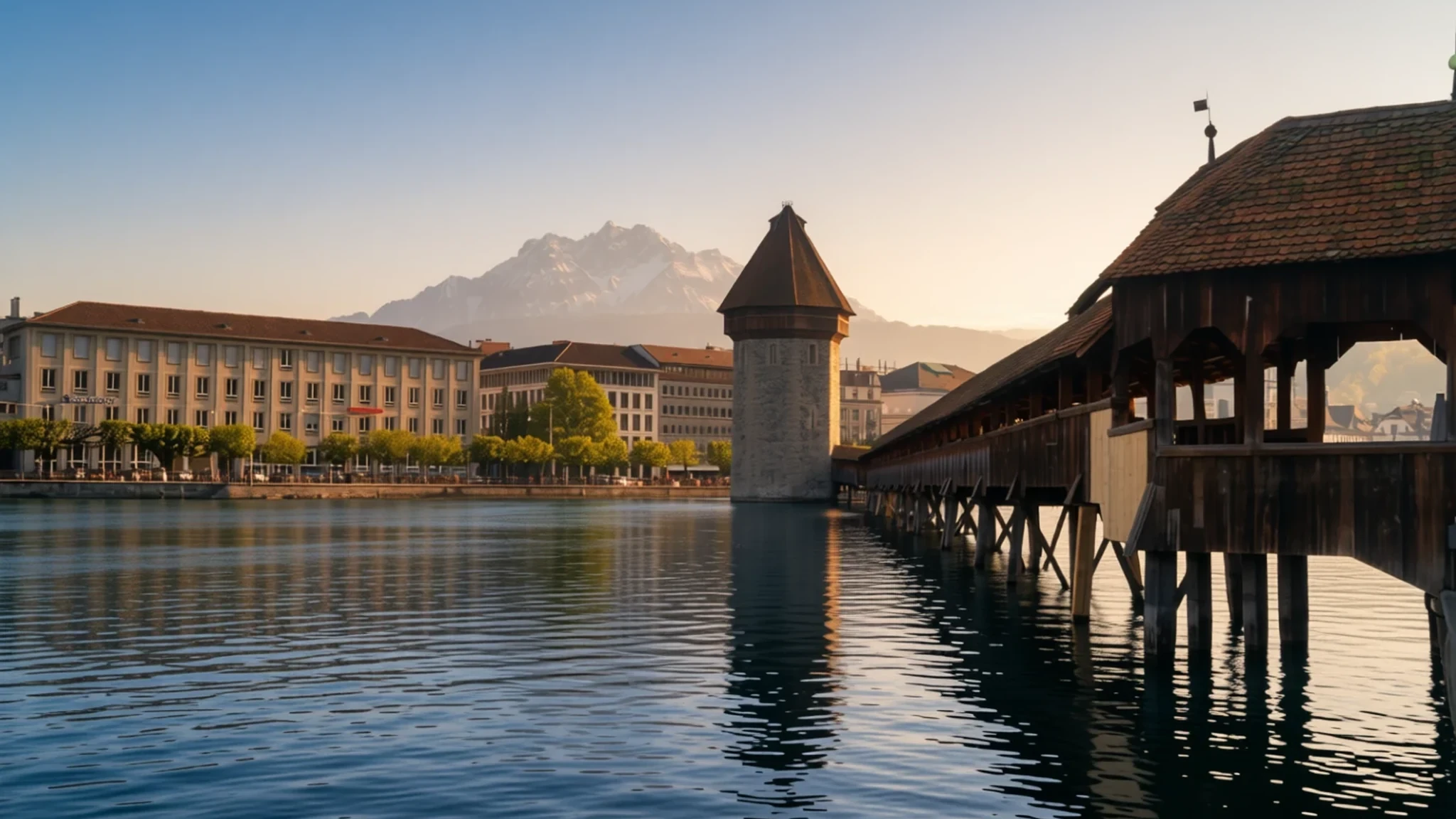
Lucerne combines a medieval old town with alpine vistas and a serene lake, making it the ideal Swiss gateway.
The place
Lucerne is a refined city in central Switzerland, perched where the river Reuss flows out of Lake Lucerne. It serves as a regional hub for transport and culture, though it retains the feel of a lakeside village in its historic core. The urban landscape is defined by the contrast between the sleek architecture of the modern waterfront and the narrow, cobbled streets of the old town. To the south and east, the city is framed by the dramatic peaks of Mount Pilatus and Mount Rigi, which dominate the skyline and draw visitors upward via cable cars and cogwheel trains. The city centre straddles the river, with the water acting as a mirror for the surrounding mountains and the traditional painted facades of the townhouses. Life here moves at a measured pace, focused on the rhythms of the lake and the river. While the city attracts many international visitors, the local atmosphere is rooted in the German-speaking traditions of the region, with the specific Lucerne dialect heard in the cafes and markets. Walking through the city, one finds a seamless blend of natural beauty and urban planning, where the greenery of the parks meets the precision of Swiss infrastructure. It is a place where the air feels crisp, the water is exceptionally clear, and the mountains provide a permanent, towering backdrop to everyday city life.
Its story
The story of Lucerne begins in the early Middle Ages, when Alemannic peoples settled the region following the decline of Roman influence. Around 750, the Benedictine Monastery of St. Leodegar was established, anchoring the area's spiritual and social life. By the 9th century, the settlement was known as Luciaria. There is a gentle debate over the name's origin; some suggest it comes from the Latin word for pike, referring to the fish found in the river Reuss, while others recall a popular belief linking it to the Latin word for lantern. Lucerne stepped into its own in 1178, gaining independence from Murbach Abbey and establishing itself as a proper city. This independence allowed it to capitalise on its strategic location. As a gateway for the Gotthard trade route, Lucerne became a vital commercial nexus, linking northern Europe with the Italian peninsula. By 1290, it had grown into a self-sufficient town of about 3,000 people. The city's growth was mirrored by its fortifications, including the construction of the rampart walls in 1386 to protect against external threats. Over the centuries, Lucerne evolved from a fortress of trade and faith into a cosmopolitan centre of tourism, yet it has carefully preserved the wooden bridges and stone walls that tell the story of its medieval origins and its role as a guardian of the Alps.
What to see
- The Chapel Bridge — Old Town riverside
This 14th-century wooden footbridge is the city's most iconic landmark. Originally built for city protection, it features a covered walkway and interior paintings. It remains one of the oldest wooden bridges in Europe, offering a scenic route across the river Reuss.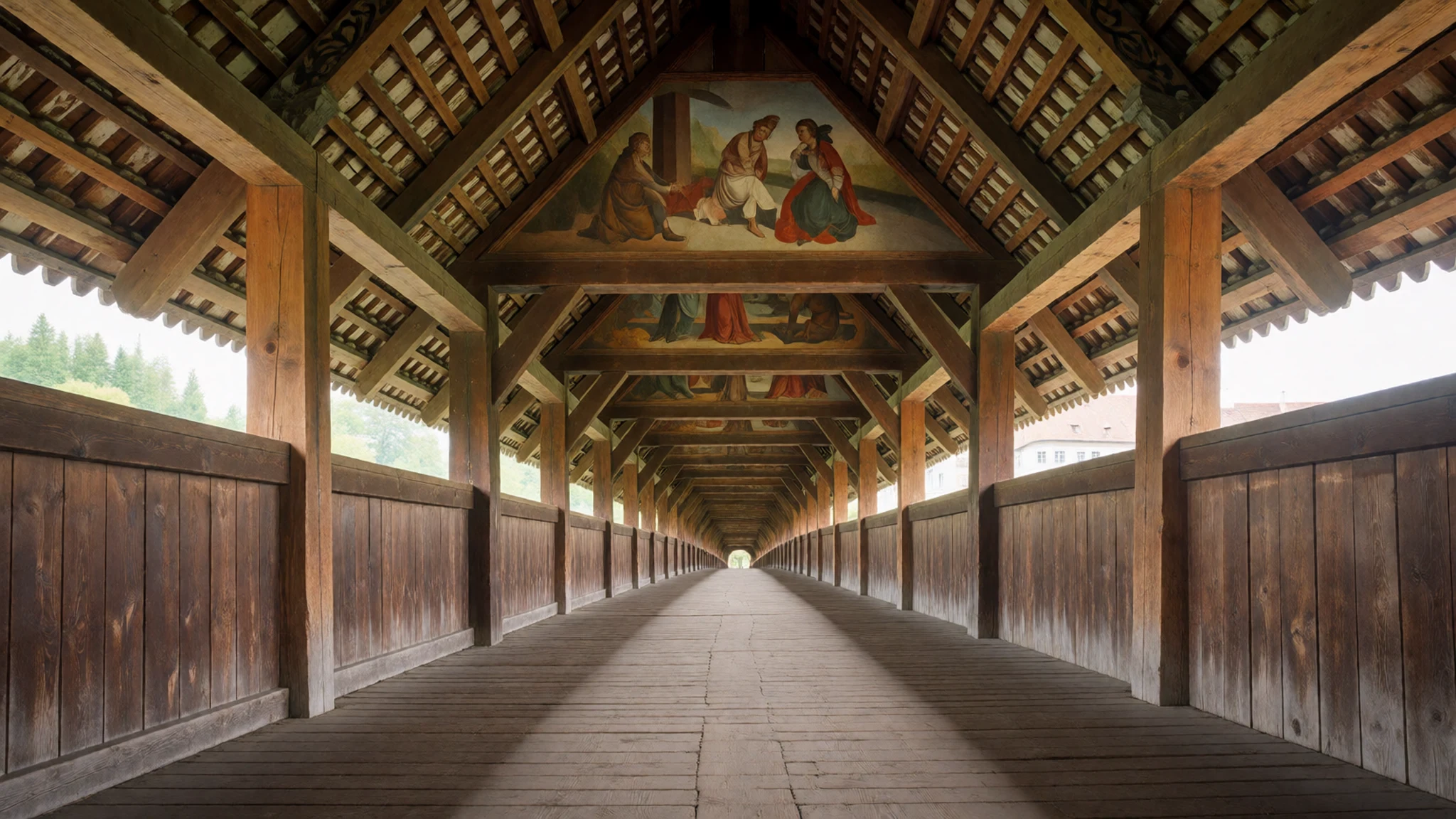
- The Spreuer Bridge — Old Town riverside
A quieter alternative to the Chapel Bridge, this wooden structure dates from 1408, and its small central chapel was added in 1568. It is famous for its series of paintings depicting the Dance of Death, providing a somber but fascinating contrast to the city's bright lakeside vistas.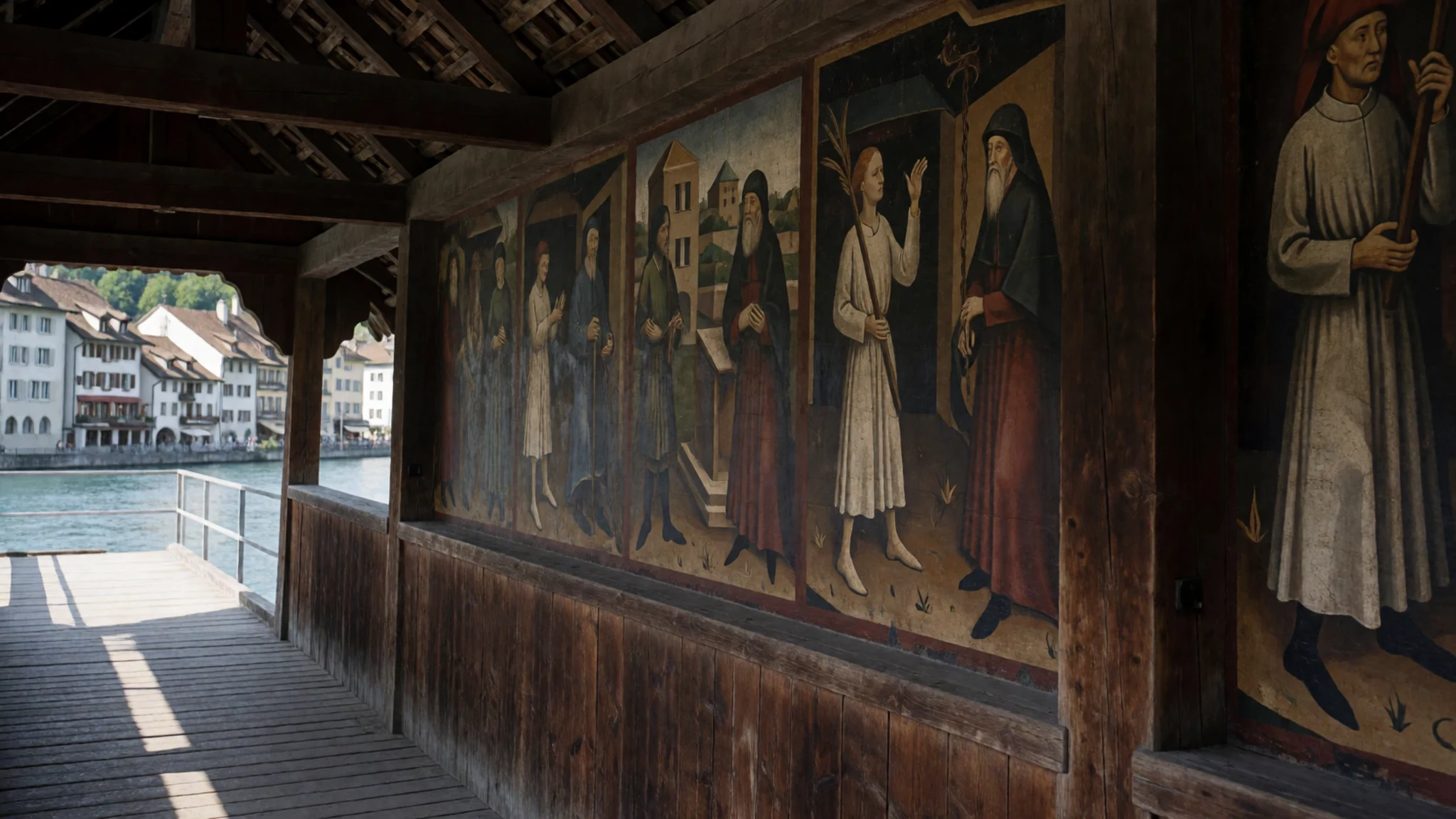
- The Lion Monument — Near the city centre
Carved into a sandstone cliff, this emotive sculpture depicts a dying lion. It commemorates the Swiss Guards who perished during the French Revolution in 1792, serving as a poignant memorial to loyalty and sacrifice in a tranquil woodland setting.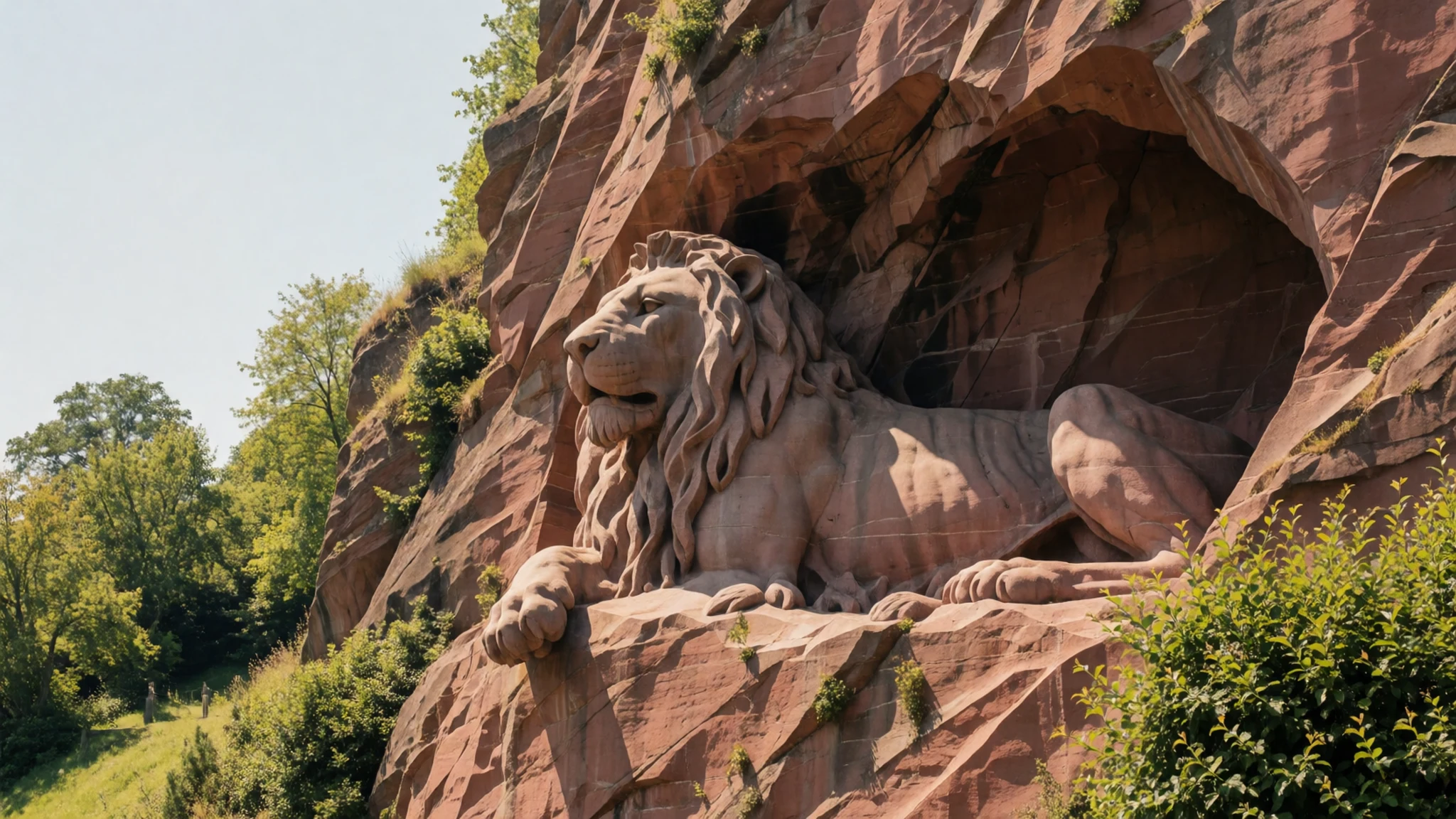
- The Old City Wall — Museggmauer
Built in 1386, these ramparts provide a physical timeline of the city's defences. Visitors can walk along a preserved section of the wall and climb the towers for an elevated view of the rooftops and the surrounding lake.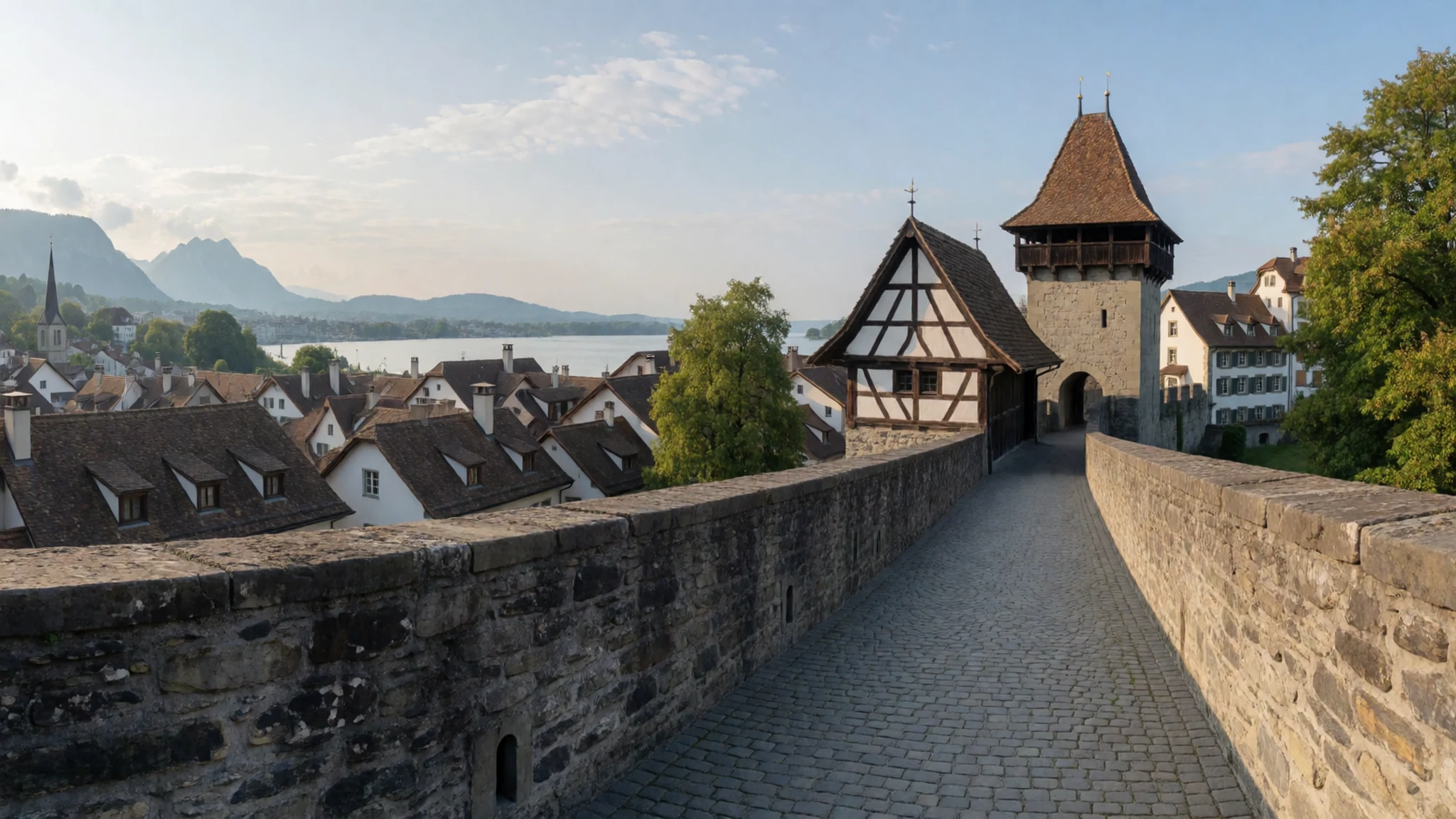
- KKL Lucerne — Waterfront
The Lucerne Culture and Congress Centre is a masterpiece of modern architecture. It houses a world-class concert hall and the Museum of Art Lucerne, representing the city's commitment to high art and contemporary cultural exchange.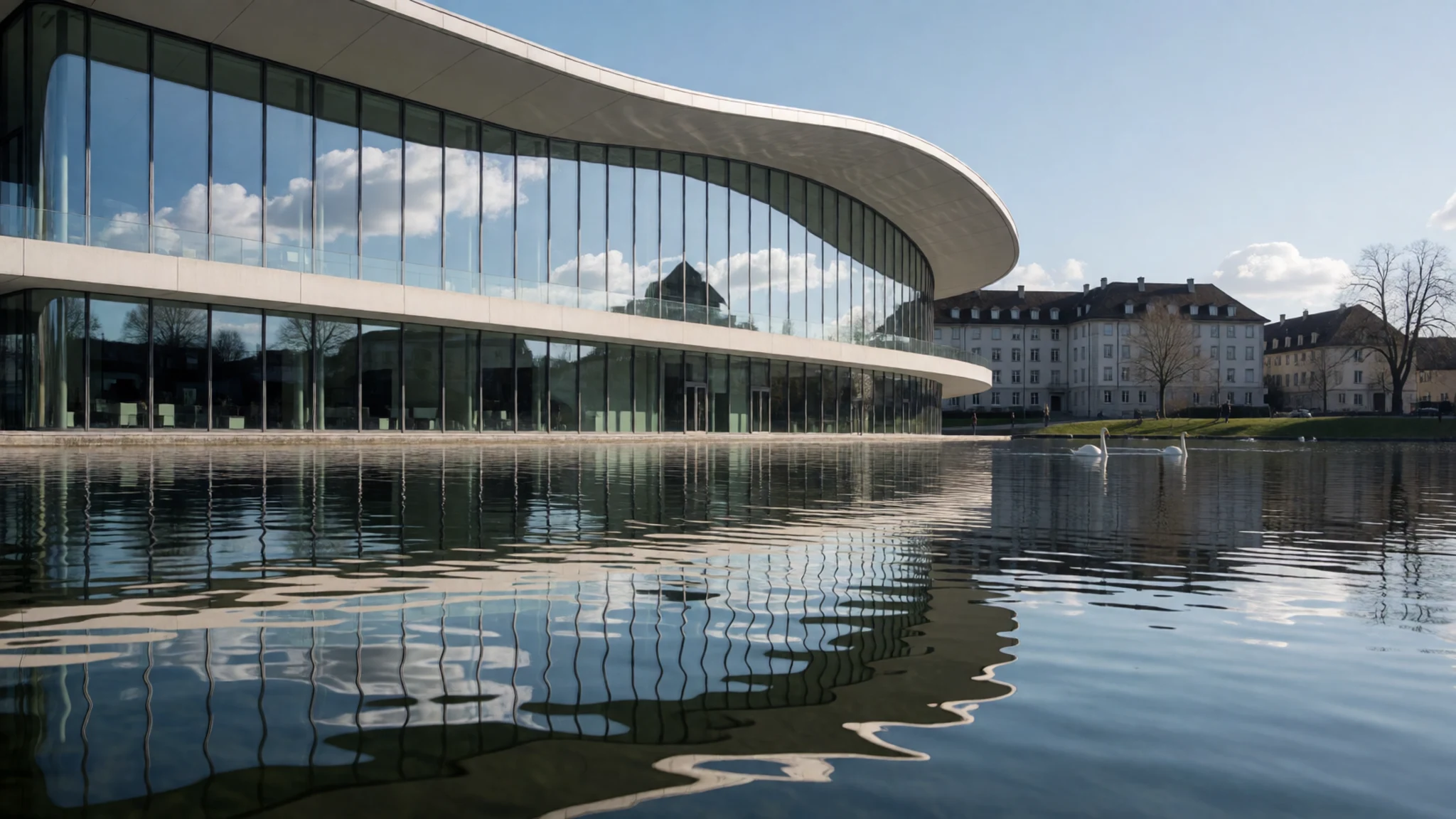
Culture
Lucerne manages a delicate harmony between its high-culture institutions and its gritty, alternative roots. On one side, the city celebrates the established arts through the KKL concert hall and the city theatre, providing a venue for classical music and professional drama. On the other side, the city has a history of 'alternative culture', once centred in the Boa, a former tube factory. This spirit of independence survives in various inner-city spaces where local artists and musicians gather. The city's identity is further shaped by its relationship with the outdoors; there is a deep-seated respect for the lake and the mountains that borders on the spiritual. This duality—the formal and the experimental, the urban and the wild—defines the local temperament. You will find residents who are as comfortable in a tuxedo at the opera as they are in hiking boots on the slopes of Pilatus. Please keep noise levels low in residential areas and avoid loud conversations on public transport.
What to wear
Traditional dress in Lucerne is rooted in the rural alpine customs of central Switzerland. This often involves heavy wool fabrics, embroidered vests, and sturdy leather shoes, worn primarily during regional festivals or folklore events. In everyday life, the style is quintessentially Swiss: understated, high-quality, and practical. You will see a preference for neutral colours—greys, navys, and blacks—with a focus on tailored fits and durable materials like linen in summer and cashmere in winter. For visitors, the key is layering. Because the city sits at the base of the Alps, temperatures can shift rapidly between the sunny lakeside and the shaded alleyways. Comfortable, closed-toe walking shoes are essential for the cobbled streets of the old town. When visiting churches or the KKL for a performance, smart-casual attire is appropriate. If you plan to take a boat or head up the mountains, a windproof jacket and sturdy trainers or boots are necessary to handle the erratic mountain weather.
What to eat
- Cordon Bleu — Doorzögli neighbourhood
A breaded meat fillet wrapped around melted cheese and ham, fried until golden. It is a hearty Swiss favourite, best enjoyed in the traditional cafes near the Doorzögli area.
- Schnitzel — City centre eateries
Thinly pounded, breaded, and fried meat served with lemon. This classic Central European dish is available in various styles, including cosy city-centre eateries and restaurant-cafeterias.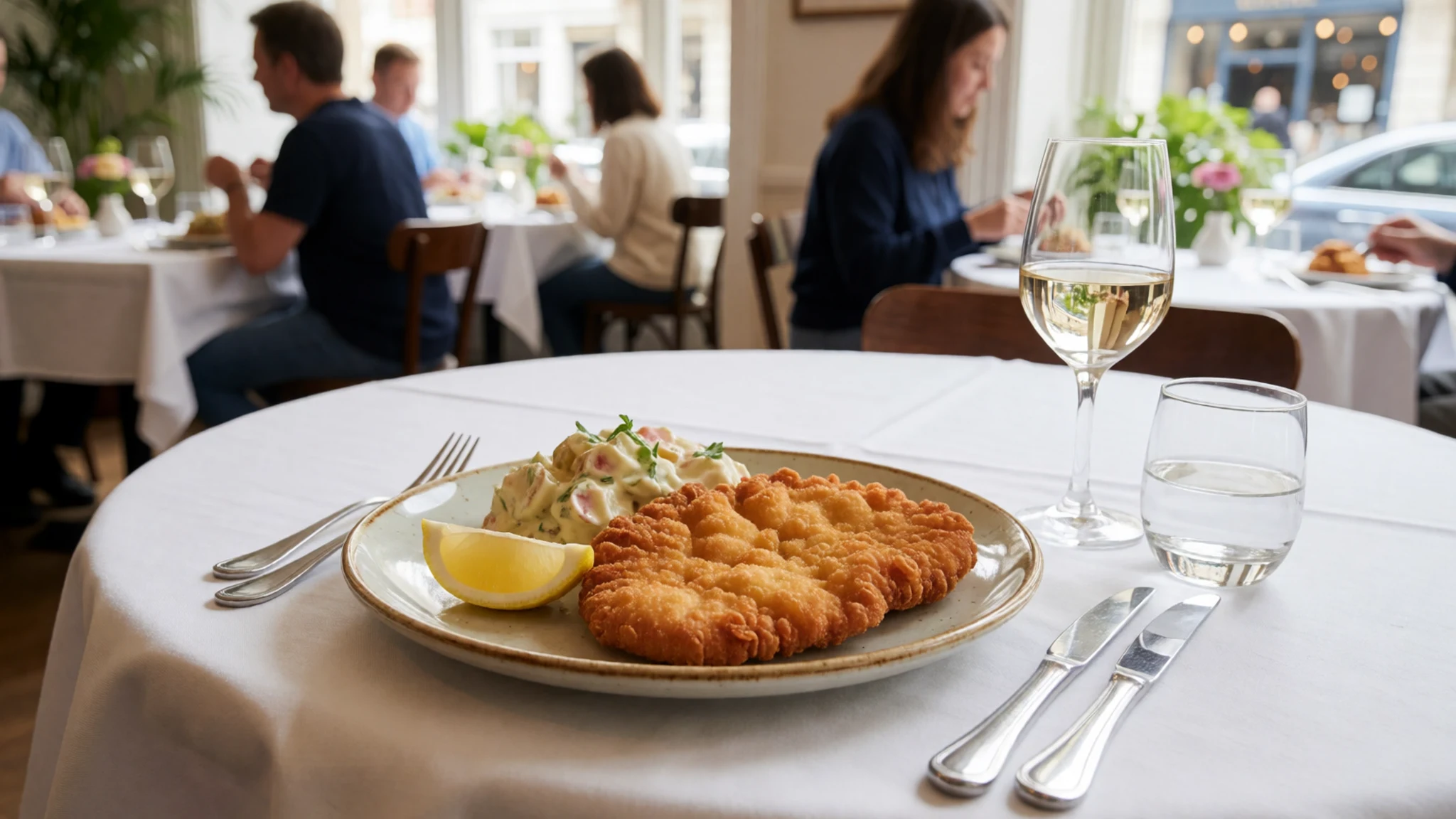
- Vegan Schnitzel — Central sandwich shops
A plant-based take on the traditional fried cutlet, often served with a side of salad or potatoes. It is a popular modern choice found at specialized sandwich stations. - Kebabs — Near the transport hubs
Spiced meat wraps with fresh vegetables and garlic sauce. While not traditional Swiss fare, these are the go-to quick meal for locals and students looking for something affordable. - Daily Menu Specials — Local neighbourhood bistros
Rotating seasonal dishes that often feature local lake fish or mountain cheeses, served as part of a fixed-price lunch menu in friendly neighbourhood bistros.
Plan it
Best time. June to September for lake activities and hiking, or December for the festive Christmas markets and winter scenery.
How long. 2–3
Getting there. Lucerne railway station (Bahnhof Luzern) is the primary gateway, with frequent direct trains from Zurich, Bern, and Olten.
Budget. high
Tips
- Use the Swiss Travel Pass for seamless boat and train journeys
- Visit the Chapel Bridge early in the morning to avoid the heaviest tourist crowds
- Check the official city website for event calendars
- Carry a reusable water bottle to fill up at the city's many fountains
- Book mountain excursions in advance during peak summer months
Etiquette
- Queue patiently for cable cars and boats
- Tip modestly; service is usually included but small rounded-up amounts are appreciated
- Respect the silence of the lakeside residential zones
Nearby
Sources
- Wikidata Q4191 (CC0)
- Wikipedia (CC BY-SA 4.0)
- Wikivoyage (CC BY-SA 4.0)