Lucca
Lucca, Italy
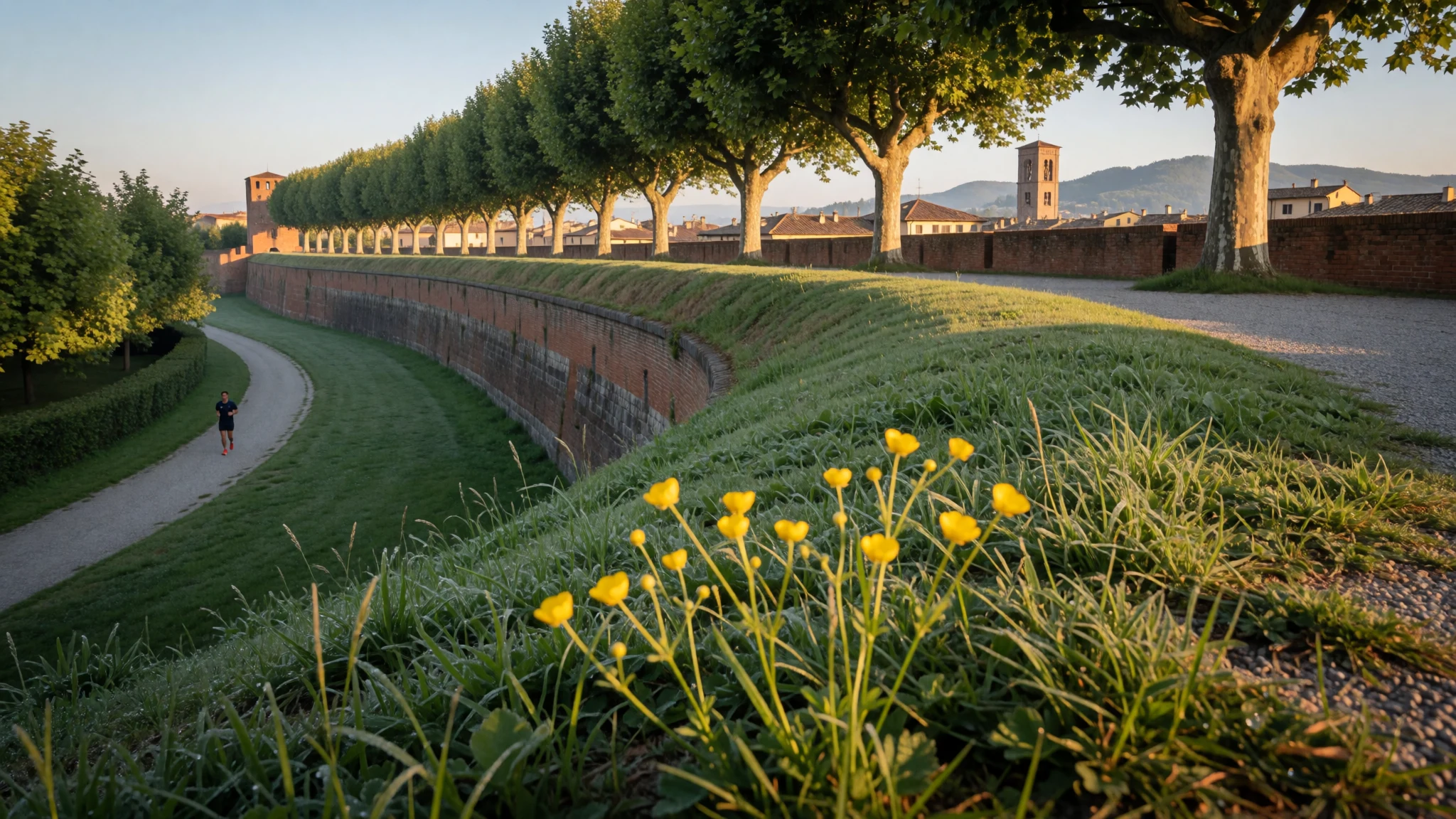
Step inside completely intact Renaissance walls to discover a quiet Tuscan city defined by medieval towers, Roman plazas, and operatic heritage.
The place
Lucca rests in a fertile flat basin beside the Serchio River in Central Italy, positioned within the rolling hills of Tuscany. The municipality maintains a population nearing ninety thousand residents across its urban territory. Known widely as a city of art, Lucca preserves its defensive ramparts in nearly pristine condition, creating an elevated ring park above the surrounding streets. Within these barriers, the historical centre retains its ancient Roman grid layout, where narrow cobblestone lanes intersect around quiet neighborhood squares and stone palazzos.
Unlike several of its larger Tuscan neighbors, Lucca encourages unhurried exploration on foot or by bicycle. The absence of heavy vehicular traffic inside the ramparts allows the sounds of daily life—conversations outside corner coffee bars, church bells marking the hours, and bicycle tyres rolling over ancient flagstones—to define the atmosphere. Chestnut trees and plane trees shade the elevated pathways along the brick fortifications, offering wide perspectives over terracotta rooftops towards the distant Apuan Alps. The local climate brings mild, humid winters and warm summers influenced by the nearby Tyrrhenian Sea, making spring and autumn ideal seasons for wandering through the shaded squares and alleyways without encountering heavy crowds.
Its story
The territory around Lucca bears deep roots stretching back to ancient Etruscan settlements and earlier Ligurian communities who farmed the marshy plains near the river. Roman influence expanded rapidly after the area achieved colony status in the second century BC, establishing the rectangular street grid that still shapes navigation through the historic centre today. During the final decades of the Republic, Lucca served as the political venue for a major conference where Julius Caesar, Pompey, and Crassus renewed their powerful political pact known as the First Triumvirate.
Following the fall of Rome, the settlement endured invasions and sieges by Germanic rulers, eventually becoming the capital of the Duchy of Tuscia under Lombard rule when the local administration minted its own regional coinage. Through subsequent centuries, the community evolved into an independent republic governed by merchant dynasties and noble families who funded the construction of grand Romanesque churches and tall defensive keeps. The city successfully defended its political autonomy against larger regional rivals for generations, maintaining its republican independence until the modern unification of Italy, which left behind a rich architectural tapestry spanning from classical foundations through medieval stone towers and graceful Renaissance facades.
What to see
- City Walls — Historic perimeter
Circumscribing the historic centre, these wide defensive walls feature a continuous four-kilometre ring path planted with mature trees. Walking or cycling along the top provides an excellent orientation to the urban layout below, though visitor traffic increases significantly during warm weekend afternoons.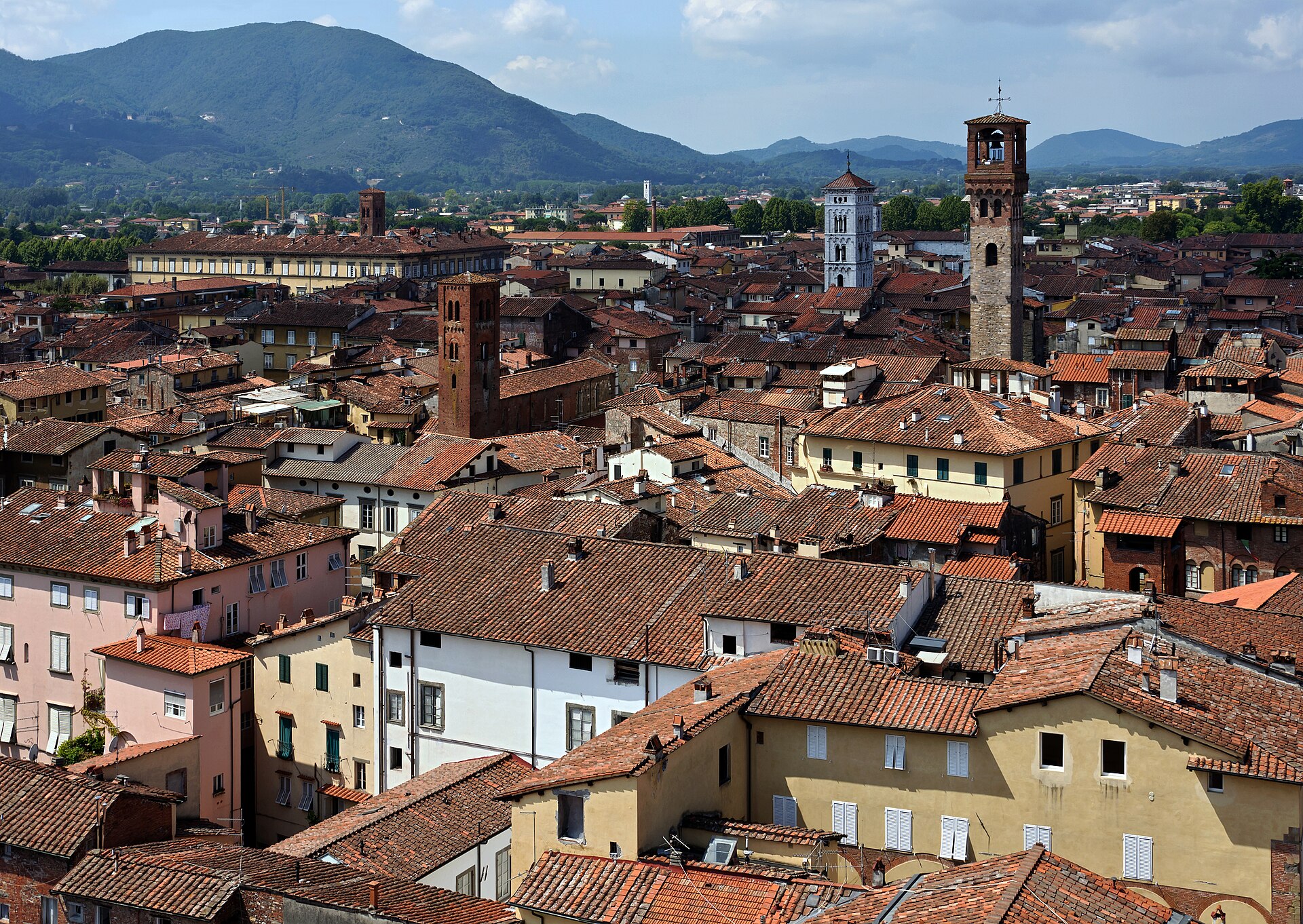
- Piazza dell'Anfiteatro — Northern historic centre
This enclosed public square traces the precise oval footprint of a first-century Roman amphitheatre. While the original stone tier seating has vanished, medieval houses now encircle the open plaza, creating a unique public courtyard filled with outdoor dining tables and local market stalls.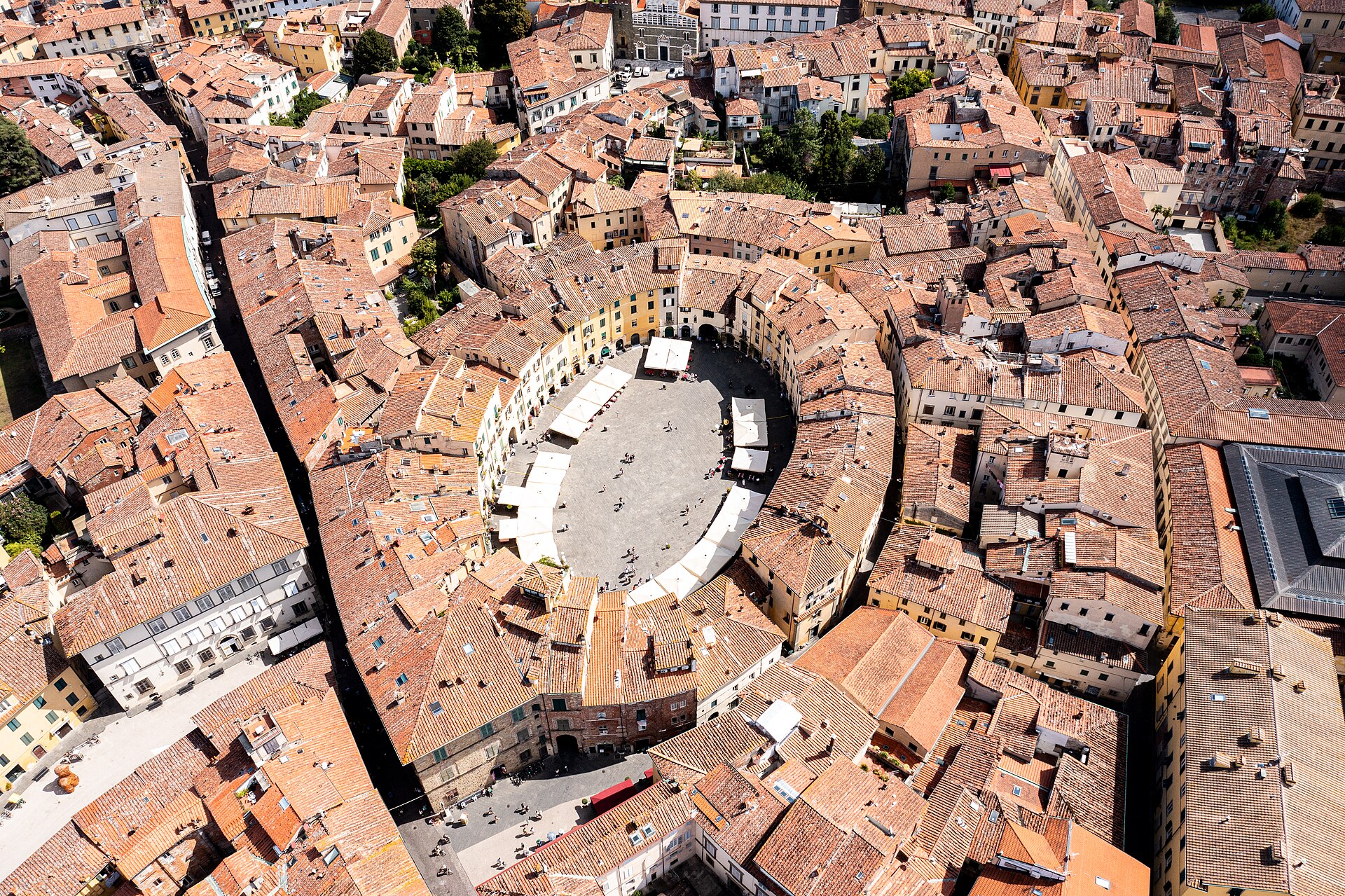
- Duomo di San Martino — Southern cathedral square
Constructed in the Romanesque style during the fourteenth century, the cathedral houses revered religious relics alongside notable sculptural masterworks. Visitors frequently queue to examine the intricate marble facade carvings and the detailed stone sarcophagus sculpted by Jacopo della Quercia inside.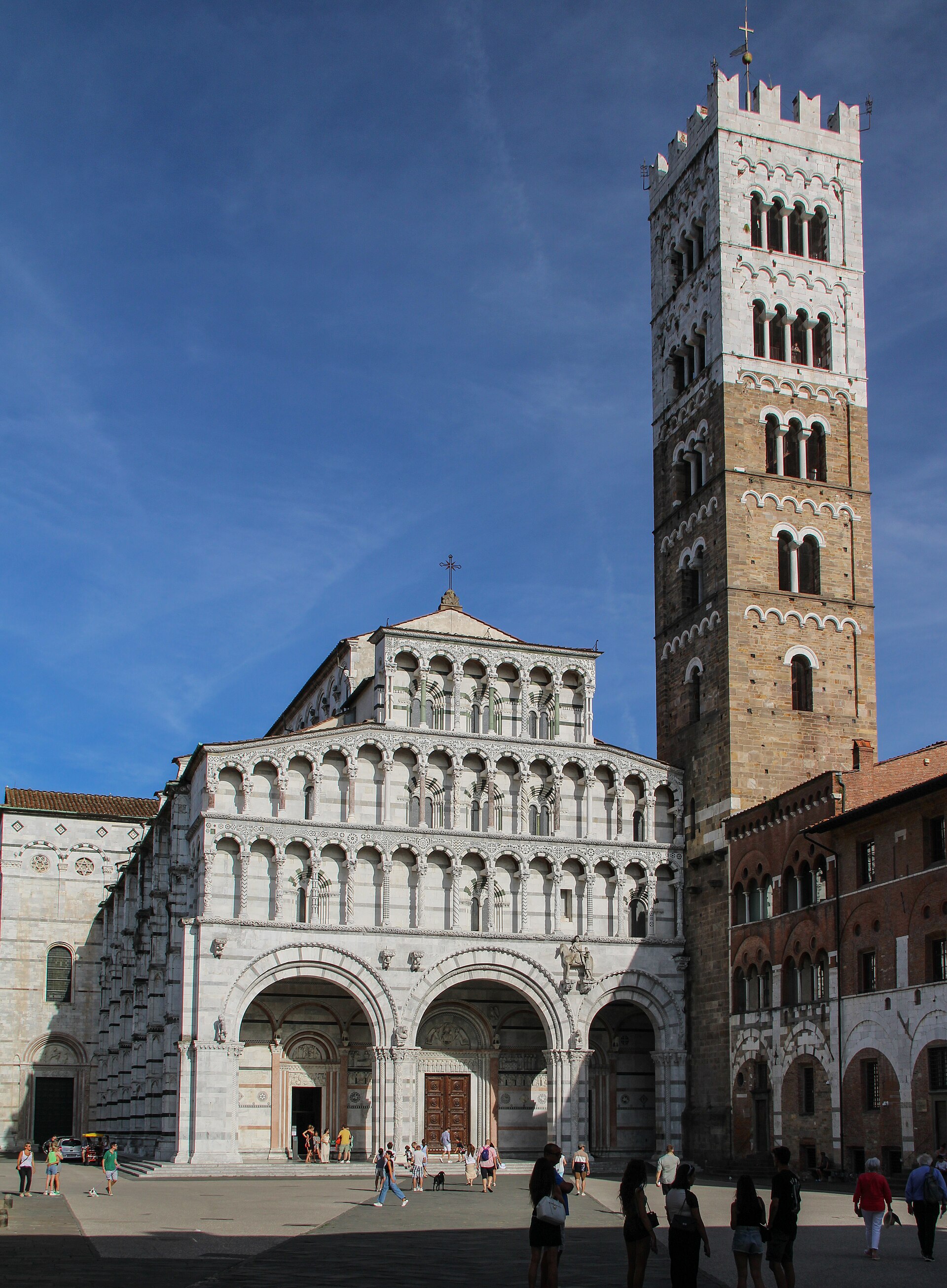
- Torre Guinigi — Via Sant'Andrea district
Rising forty-five metres above the medieval streetscape, this fourteenth-century brick tower features several mature holm oak trees rooted in a walled garden on its summit. Climbing the interior staircase rewards visitors with panoramic views across terracotta rooftops toward the surrounding hills.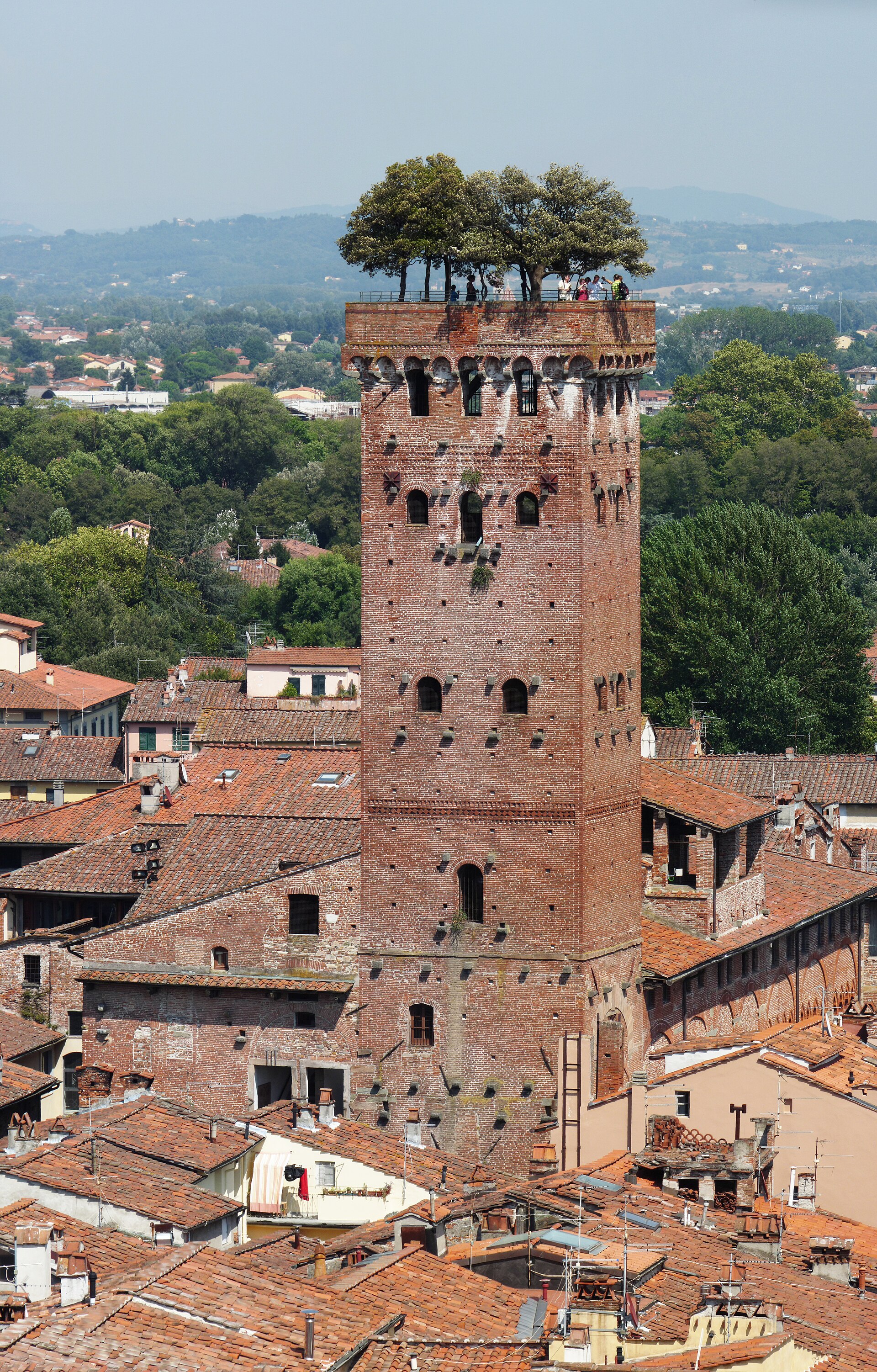
- Torre delle Ore — Central Fillungo district
Dating back to medieval times, this historic clock tower preserves its original mechanical clockwork mechanism in working order. Visitors willing to climb the internal wooden stairs gain a striking perspective over the linear course of Fillungo street and the surrounding civic squares.
Culture
Lucca holds a distinguished place in European musical history as the birthplace of legendary opera composer Giacomo Puccini, alongside other notable classical musicians including Luigi Boccherini and Alfredo Catalani. The municipality celebrates this creative legacy through annual summer concerts and festivals that attract international performers and audiences to open-air venues like Piazza Napoleone. Beyond musical arts, the community maintains traditional craft workshops, artisan bakeries, and neighbourhood gatherings that reflect generations of Tuscan heritage. Academic life thrives as well through modern research institutions and selective graduate schools located within the historic quarters. When entering churches or sacred monuments, visitors should ensure shoulders and knees are covered as a sign of respect.
What to wear
In Lucca, traditional historic costume survives mainly in historical pageantry and regional festivals rather than everyday attire. Residents dress with a smart, understated elegance typical of Central Italy, favouring tailored wool coats in winter, lightweight linen trousers in summer, and well-maintained leather footwear suitable for navigating uneven stone flags and brick pavements. Visitors should pack comfortable walking shoes with supportive soles, as cobblestone streets and medieval tower staircases punish delicate footwear. Layered clothing works best for variable spring and autumn weather, while modest attire including covered shoulders and knees is essential when entering churches and religious sanctuaries.
What to eat
- Tuscan Trattoria Fare — Traditional trattorias across the historic centre
Hearty regional pasta dishes and traditional soups seasoned with local ingredients like pine nuts and herbs are served in family-run eateries tucked along narrow side streets. - Wood-Fired Pizza — Local pizzerias throughout the municipality
Classic Neapolitan-style pizzas baked in wood-fired ovens are available at rustic neighbourhood pizzerias located both within the ramparts and just outside the gates. - Fresh Bakery Snacks — Traditional bakehouses near Torre Guinigi
Flaky pastries, savoury flatbreads, and traditional local baked goods fill small historic bakeries, releasing rich aromas into the surrounding medieval alleys. - Regional Gastronomy — Concealed alleyway taverns off Via San Giorgio
Time-tested local recipes featuring seasonal vegetables, cured meats, and olive oils highlight authentic Tuscan culinary traditions in intimate dining rooms.
Plan it
Best time. April to May and September to October offer pleasant mild weather for walking and cycling, avoiding the humid summer heat of July and August.
How long. 2–3
Getting there. Fly into Pisa International Airport, then take the direct regional train or bus to Lucca station, located just outside the eastern defensive walls.
Budget. mid
Tips
- Rent a bicycle near the station to explore the top of the defensive walls like a local resident
- Carry some cash for small bakeries, parish churches, and independent artisan shops
- Arrive early in the morning to climb Torre Guinigi before the midday tour groups assemble
- Wear flat footwear with good grip for walking across ancient cobblestones and stone steps
Etiquette
- Dress modestly with covered shoulders and knees when visiting churches and religious monuments
- Greet shopkeepers politely with a friendly buongiorno when entering small local businesses
Nearby
Sources
- Wikidata Q13373 (CC0)
- Wikipedia (CC BY-SA 4.0)
- Wikivoyage (CC BY-SA 4.0)