Lübeck
Lübeck, Germany
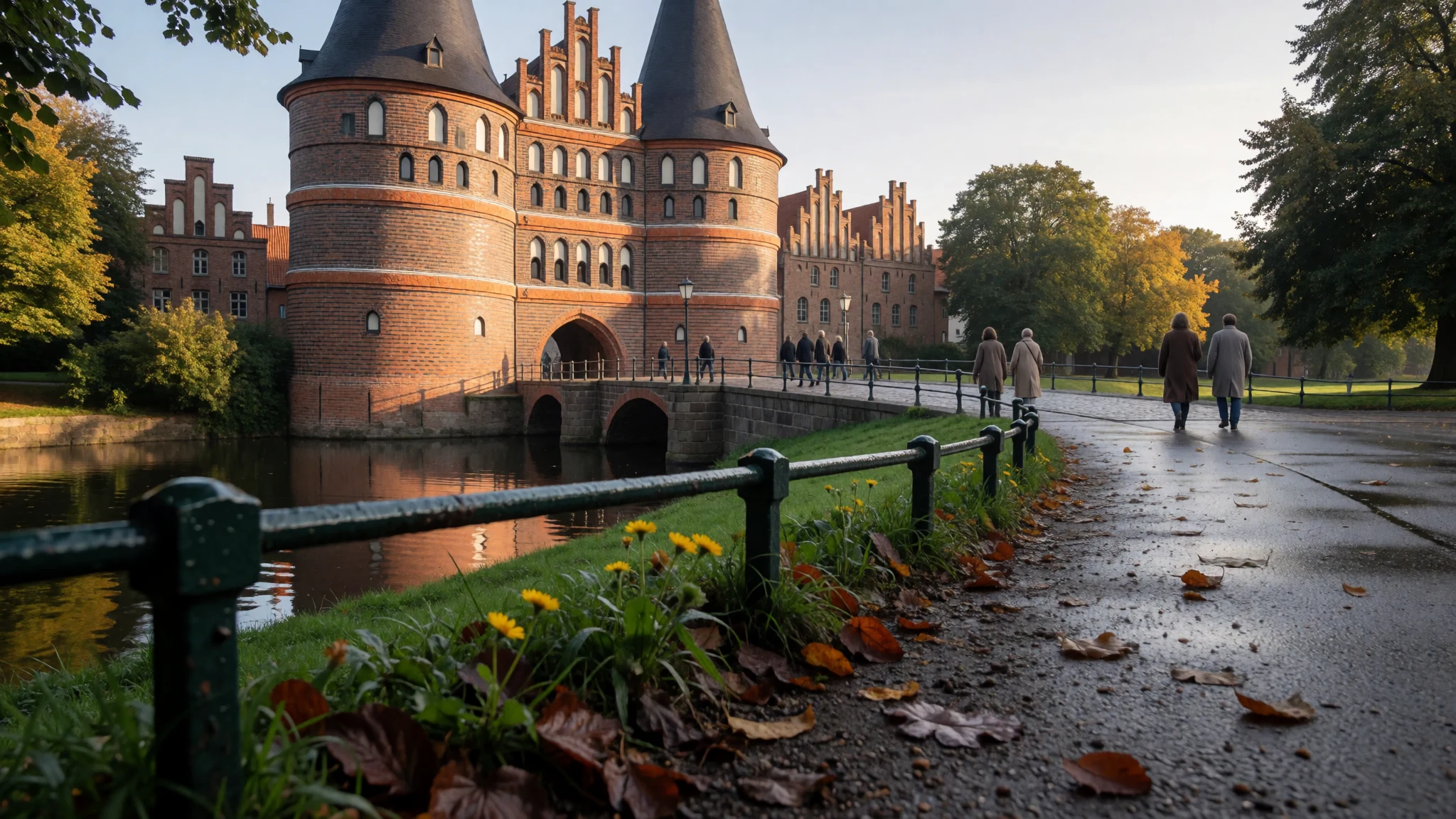
Lübeck entices visitors with its water-girdled medieval core, soaring red-brick spires, merchant history and legendary marzipan along peaceful Baltic waterways.
The place
Lübeck rests on a natural river island formed by the Trave and Wakenitz rivers in northern Germany, standardly accessed just inland from the Baltic shore. This historic urban centre grew as a dominant maritime trading hub, shaping merchant networks across northern Europe throughout medieval centuries. Today, the water-encircled old quarter retains its historic footprint, surrounded by canal loops and shaded riverside paths.
Red-brick architecture defines the urban skyline, where soaring church spires rise above steep gabled townhouses, historic salt warehouses, and defensive gate towers. The atmosphere along the riverbanks is calm and relaxed, with wooden barges moored along stone quaysides and quiet residential lanes tucked away behind ornate archways. Cobbled passages lead off main streets into hidden residential courtyards where historic cottages cluster around shared gardens.
Settled since early medieval times, the modern city functions as an active port and cultural hub within Schleswig-Holstein. A steady coastal breeze sweeps across the low-lying terrain, bringing fresh marine air even during warm summer days. Walking remains the finest way to navigate the historic island, where stone bridges connect historic merchant quarters with leafy canal banks. Small ferries link the old town to outer neighbourhoods, while quiet waterside paths invite slow afternoon walks.
Its story
Lübeck developed from an early Slavic stronghold known as Liubice, positioned at the confluence of the Schwartau and Trave rivers. By the ninth century, this riverine settlement served as a major regional stronghold for local Slavic tribes before undergoing a series of conflicts and eventual destruction in the early twelfth century.
Reconstruction took place nearby under Count Adolf of Schauenburg, who selected an elevated island site surrounded by protective river channels. Following a devastating fire, Duke Henry the Lion took ownership of the settlement, rebuilding its layout and relocating the episcopal seat to the rising merchant centre. Imperial recognition followed when Emperor Frederick Barbarossa granted special trading privileges, establishing a legal framework that would eventually be adopted by dozens of commercial settlements around the Baltic basin.
During the thirteenth century, Emperor Frederick II designated the city an independent imperial entity, answering directly to the crown. Positioned strategically between North Sea trade routes and eastern maritime markets, the island city became the leading powerhouse of the Hanseatic League. Ships laden with Scandinavian herring, salt from inland mines, Russian furs, and Flemish textiles crowded the harbour basins. Even after maritime trade routes shifted toward transatlantic destinations in later centuries, the city preserved its medieval municipal structure, civic independence, and distinct architectural heritage intact.
What to see
- St. Marien
St. Marien stands at the highest point of the old town island, serving as a masterwork of brick Gothic construction. Built during the thirteenth and fourteenth centuries, its dramatic nave features impressive brick vaulting. Inside, visitors find quiet side chapels, historic pipe organs, and tall stained-glass windows that cast colourful light across the vaulted brickwork. - The Dom
The Dom was founded under Henry the Lion as the city's initial major brick cathedral along the Baltic coast. Situated in a peaceful southern corner of the island near quiet water meadows, this ancient cathedral holds historic wooden sculptures, grand archways, and a tranquil atmosphere away from the busier commercial streets. - St. Petri
St. Petri offers panoramic vistas across the entire historic island and the surrounding northern waterways. An elevator takes visitors up to the open tower observation platform, providing clear views over red-tile rooftops, winding river channels, and surrounding green landscapes extending toward the Baltic coast on crisp clear days. - St. Jakobi
St. Jakobi historically served as the primary church for mariners, fishermen, and seafaring guilds. Having survived regional conflicts with its historic interior intact, the sanctuary houses historic pipe organs and a poignant memorial chapel dedicated to sailors lost at sea, preserving a deep connection to northern maritime traditions. - St. Aegidien
St. Aegidien is the smallest of the medieval parish churches tucked into the eastern quarter of the island. The intimate interior displays colourful wall frescoes alongside an elaborate Renaissance choir loft and an ornate Baroque altar, offering a quieter space to appreciate historic craftsmanship away from main tourist thoroughfares.
Culture
Lübeck maintains a distinct maritime identity deeply tied to its Hanseatic trading heritage and Baltic geography. Local life revolves around the water, with residents making full use of riverfront promenades, canal-side parks, and rowing paths along the Trave. Architectural pride runs deep, as locals actively preserve historic brick townhouses and courtyard passages that have sheltered merchant families for generations.
During December, traditional winter markets illuminate the old town square, featuring local craft stalls inside historic halls such as the Hospital of the Holy Spirit. Marzipan holds a legendary position in regional craft, prepared according to refined recipes introduced by historic trade networks and savoured in traditional coffee houses throughout the year. The atmosphere is generally quiet and ordered, with a strong emphasis on outdoor recreation, community festivals, and civic pride.
When visiting active places of worship or quiet residential alleys, maintain low noise levels and respect the privacy of residents living in historic courtyard cottages.
What to wear
In Lübeck, traditional attire historically reflected maritime trades and Hanseatic merchant wealth, featuring heavy woolen coats, linen shirts, and sturdy dark trousers designed to withstand damp Baltic winds. Fishermen and sailors wore thick indigo-dyed jackets and knitted wool caps, while wealthy merchant families favoured fine imported fabrics, silk trimmings, and tailored wool coats for civic ceremonies. Today, traditional garments are primarily seen during historical pageants, maritime festivals, and seasonal folklore celebrations.
Everyday dress in the modern city is understated, practical, and well suited to maritime weather. Local residents favour functional layers, dark denim, sturdy rain jackets, and comfortable leather footwear that handles damp cobblestones easily. During summer, lightweight casual clothes appear on warm days, though a light sweater or windbreaker remains essential for cool evenings along the water.
Visitors should pack for variable coastal weather by bringing waterproof outerwear, breathable layers, and comfortable walking shoes with good grip for cobbled lanes and church steps. A smart casual outfit works well for dining out in traditional eateries or attending evening concerts.
What to eat
- Lübecker Marzipan — traditional coffee houses around the market square
This world-famous confection made from ground almonds and sugar is shaped into delicate figures or coated in dark chocolate. You can sample freshly prepared marzipan treats in traditional coffee houses around the central market square. - Kartoffelspeisen — subterranean cellar eateries near the harbour
Hearty potato specialties include golden pan-fried potatoes, creamy soups, and baked stuffed potatoes served alongside smoked fish or regional meats. Traditional subterranean cellar eateries near the old harbour specialize in these comforting dishes. - Hausmannskost — family-run taverns in the old town quarter
Classic regional home cooking features hearty meat stews, pan-roasted fish fillets, and cabbage dishes served with apples and bacon. Long-standing family-run taverns in the southern old town quarter serve these traditional platters in historic surroundings. - Flammkuchen — specialty bakeries around the old town island
This crisp, thin-crust baked flatbread is topped with creme fraiche, sliced onions, and smoky lardons or seasonal vegetables. Casual specialty bakeries and taverns around the old town island serve them hot straight from wood-fired ovens. - Espresso and Italian Pastries — Italian cafes along narrow historic alleys
Rich espresso drinks and delicate pastries offer a popular afternoon pause along quiet historic lanes. Small Italian-style cafes tucked into narrow alleys in the old town provide warm indoor seating and sunny pavement tables during summer.
Plan it
Best time. May to September brings mild weather, sunshine, and pleasant river walking; December is ideal for festive winter markets.
How long. 2–3
Getting there. Frequent regional express trains link Hamburg Central Station to Lübeck Hauptbahnhof, with journeys taking under an hour; regional buses connect nearby Baltic coastal towns.
Budget. mid
Tips
- Explore the quiet residential courtyard lanes (Gänge) off main streets on foot
- Carry euro cash as smaller bakeries and historic cafes do not always accept cards
- Book accommodation well ahead for December winter markets and peak summer weekends
- Rent a bicycle or take a harbour boat tour for unique views of the brick skyline
Etiquette
- Lower your voice inside historical churches and quiet residential courtyards
- Return glassware or ceramic mugs to market stalls to collect your deposit (Pfand)
- Always keep to the right on shared pedestrian and cycling paths along the river
Nearby
Sources
- Wikidata Q2843 (CC0)
- Wikipedia (rev 1377623059) (CC BY-SA 4.0)
- Wikivoyage (rev 5420203) (CC BY-SA 4.0)
- Photo photos/01-holstentor-in-l-beck-frontseite-zuschnitt.jpg (CC BY-SA 3.0 de)
- Photo photos/02-l-beck-panoramio.jpg (CC BY 3.0)
- Photo photos/03-l-beck-holstentor-2017-0305.jpg (CC BY-SA 4.0)
- Photo photos/04-l-beck-l-becker-rathaus-50228526292.jpg (CC BY 2.5)
- Photo photos/05-l-beck-dom-von-westen-070311.jpg (CC BY 3.0)
- Photo photos/06-l-beck-an-der-obertrave-14-baudenkmal-1.jpg (CC BY 3.0)
- Photo photos/07-aerial-image-of-l-beck-view-from-the-southwest.jpg (CC BY-SA 4.0)
- Photo photos/08-nuremberg-chronicles-f-265-66-lubeca.jpg (Public domain)


