Los Angeles
Los Angeles, United States
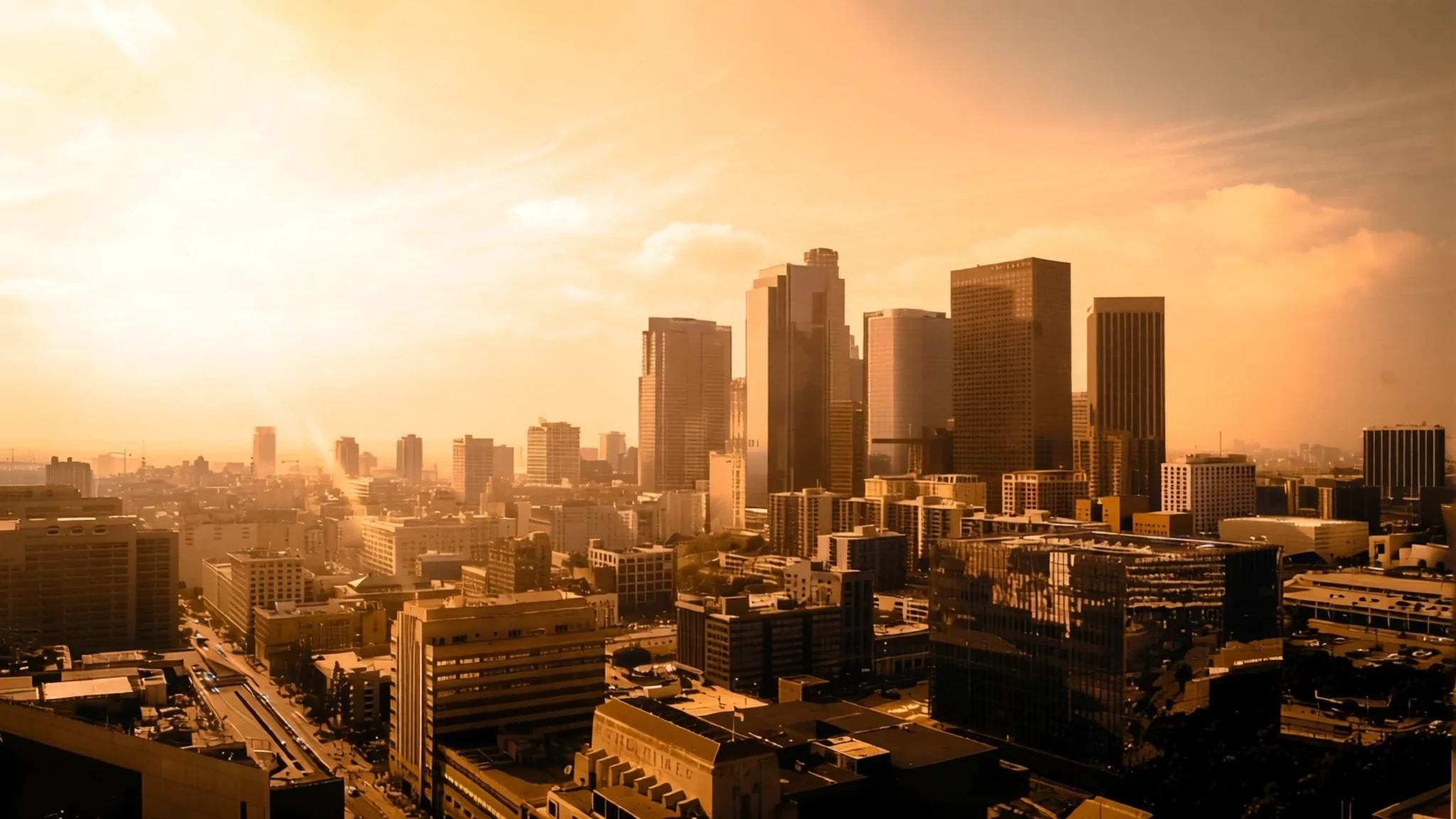
Los Angeles is California's largest city, where film, food and a deep Mexican-American heritage sit side by side, and it rewards a car, a plan and a willingness to travel between areas.
The place
Los Angeles, often shortened to LA, is the largest city in California and the commercial and cultural centre of Southern California. Its population is a little under 3.9 million, but the city proper is only part of the story, because the wider metropolitan area spreads across the basin and well beyond. The city sits on a broad plain running down to the Pacific, with the Santa Monica Mountains cutting through its western side and the San Fernando Valley opening out to the north. Neighbourhoods are spread wide rather than packed tight, so the city feels less like one place than a set of towns joined by freeways.
Hollywood is the name most people arrive with, but the film and television industry has spread well beyond it. Major studios now operate across the San Fernando Valley, in Burbank, Culver City and Century City. The Hollywood district itself is better understood as a stage set of theatres, memorabilia and pavement stars than as a working studio quarter.
The city is also layered. Mexican-American life shapes its food, music and public art, and murals across the city form a visible record of that history. Its architecture reflects Spanish, Mexican and American roots side by side, from old adobe-era churches to mid-century houses and glass towers downtown. The elevation is modest, about 106 metres above sea level, so the city is not a hill station, although the hills around it offer wide views. Summers are hot and dry inland, while the coast stays cooler because of the sea air. Distances are the real challenge, and most people do better planning each day around one or two areas.
Its story
The Los Angeles Basin was home to Tongva people long before Spanish explorers arrived. Their main settlement in the area was Yaanga, a name often translated as "place of the poison oak", and it stood on the ground where the Spanish later founded their pueblo. Some translators also render the name as "the valley of smoke", a reminder that the landscape was shaped by fire and seasonal burning as well as by people. The Tongva are also known as the Gabrieleño, a name that dates from the Spanish mission period.
In 1542, the maritime explorer Juan Rodríguez Cabrillo claimed the coast of present-day southern California for the Spanish Empire during a northward voyage along the Pacific. Later expeditions, led by Gaspar de Portolà and the Franciscan missionary Juan Crespí, reached the site in 1769. Two years later, in 1771, the Franciscan friar Junípero Serra directed the building of Mission San Gabriel Arcángel, the first mission in the area.
The town itself dates from 1781. On 4 September that year, 44 settlers established the community now known as El Pueblo de Nuestra Señora la Reina de los Ángeles, which translates to the Town of Our Lady the Queen of the Angels. The settlement later passed through Mexican and then American control, and its character changed with each wave of arrivals. In the twentieth century, the arrival of railways, oil, agriculture and above all the film industry turned a small pueblo into a sprawling metropolis, while the Tongva history that began the story remained in place names and in the wider region.
What to see
- Hollywood Boulevard and the Walk of Fame — Hollywood
Grauman's Chinese Theater and the Hollywood Walk of Fame sit along the same stretch of Hollywood Boulevard, and the pavement stars and forecourt handprints are easy to see on foot. Go in the morning, before the boulevard fills with tour groups and street performers, and expect to take your time along a busy pavement.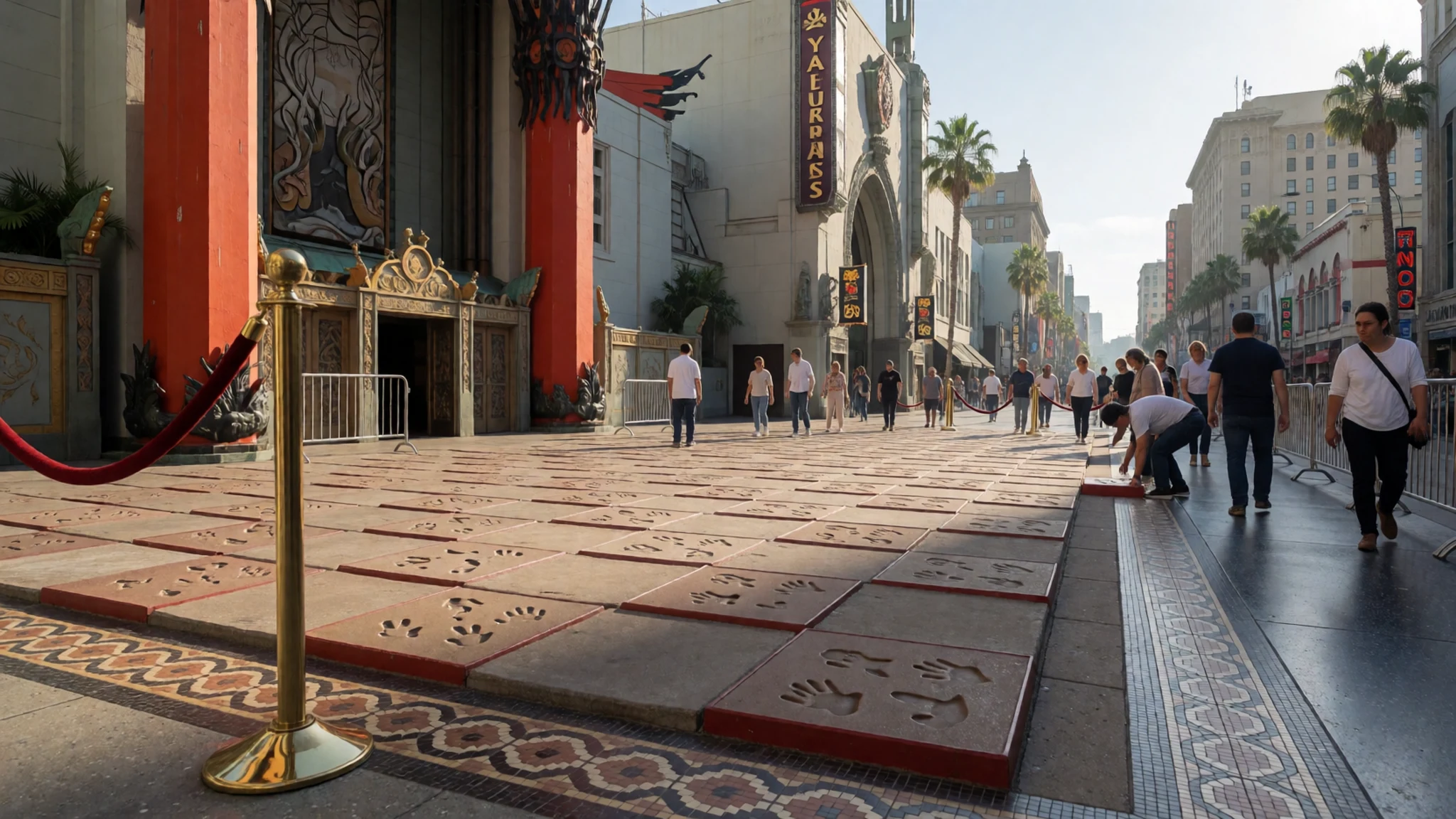
- Olvera Street — Downtown, Los Angeles Plaza
Olvera Street runs through the Los Angeles Plaza Historic District, lined with market stalls, restaurants and mural-covered walls that reflect the city's Mexican roots. It is at its liveliest on weekends and during festivals, so arrive early on a weekday if you want quieter stalls and an easier look at the older buildings nearby.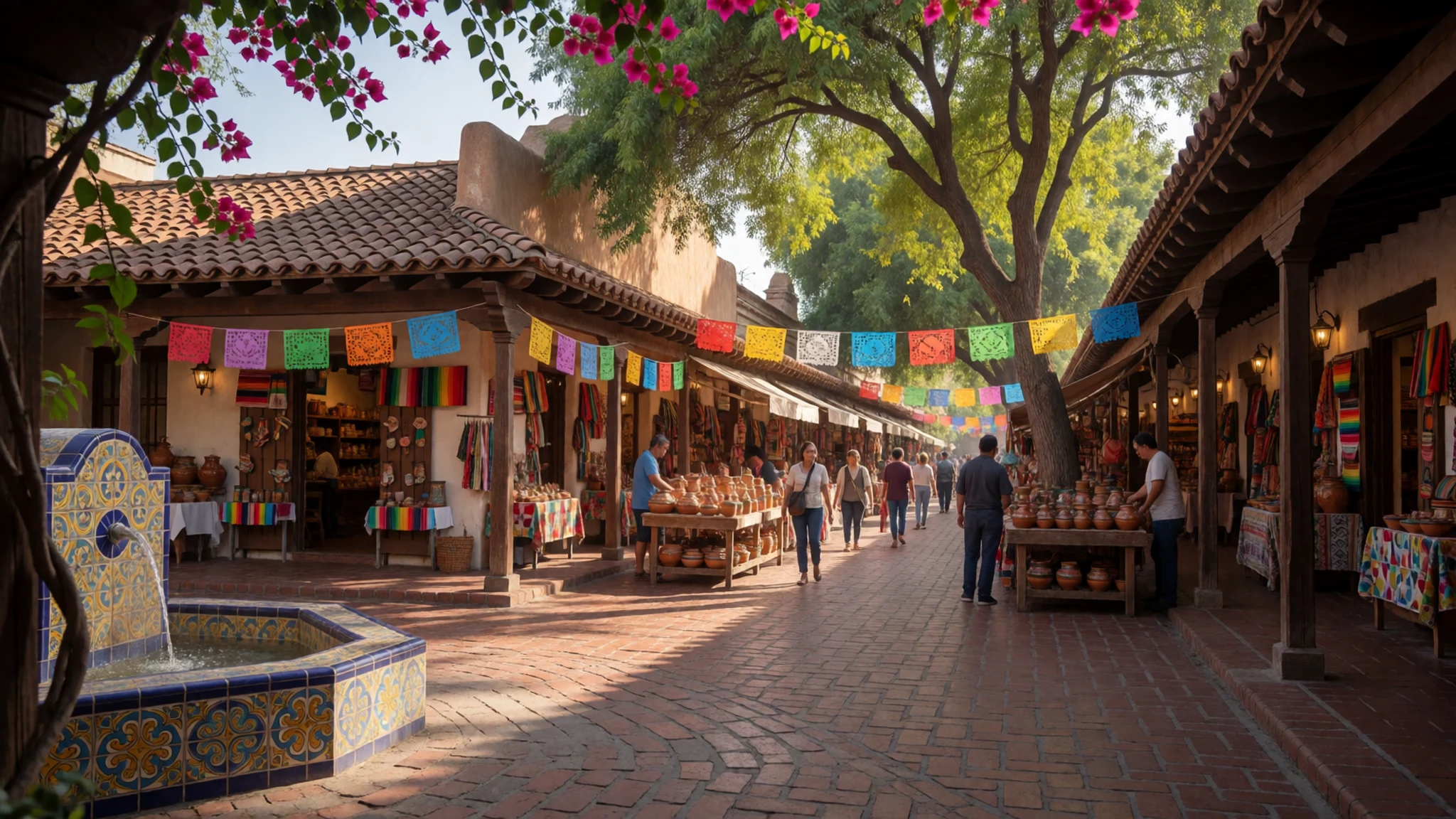
- Griffith Observatory — Griffith Park, above Hollywood
Griffith Observatory sits above Hollywood in Griffith Park, and its front terrace gives one of the classic views over the basin. The climb from the parking areas is short but steep, so bring water, wear proper shoes, and allow time for the exhibits as well as the view, which is best in the late afternoon and after dark.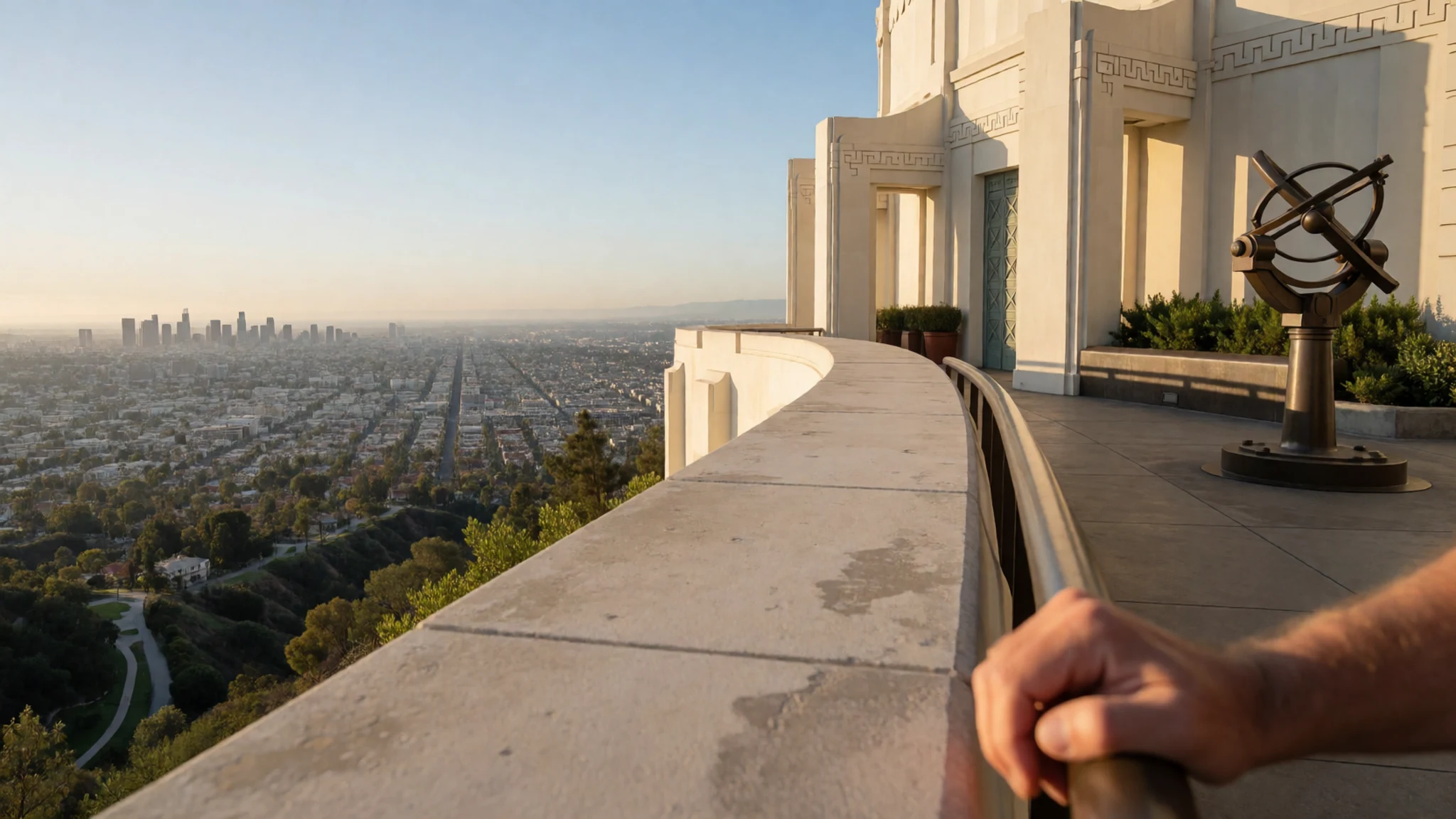
- Venice Beach — Venice, on the Westside
Venice Beach is a long, busy stretch of sand and boardwalk where street performers, muscle gyms, skaters and stalls share the path with cyclists and walkers. The area is lively most afternoons and at weekends, and the walk along the Ocean Front is best done slowly, with a stop for a drink on the sand before the sun drops.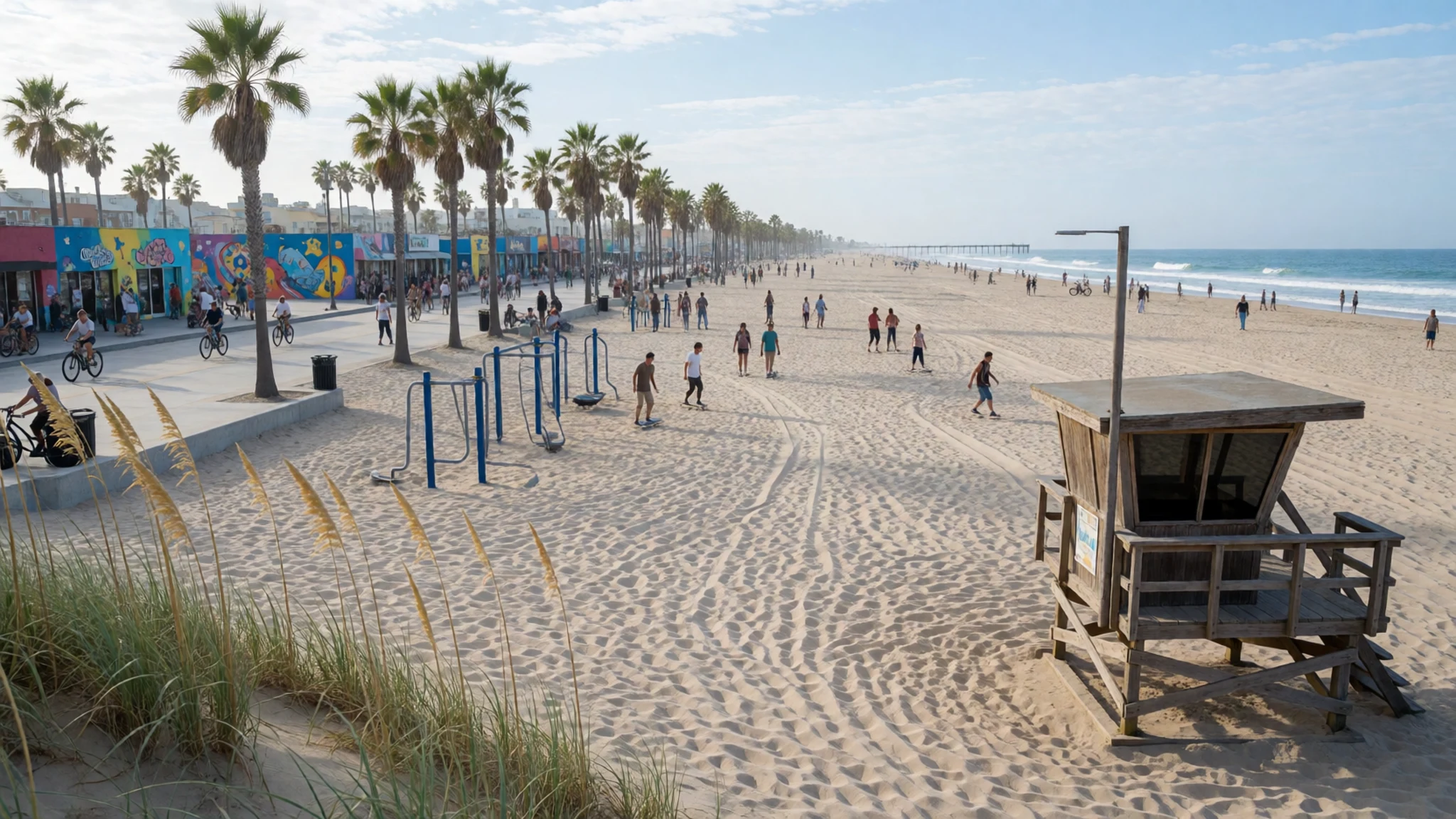
- Mission San Fernando Rey de España — Mission Hills, San Fernando Valley
Mission San Fernando Rey de España is one of the Franciscan missions founded in the region, set in the San Fernando Valley and surrounded by suburban streets. Its quiet courtyards and church give a sense of the mission era that shaped the area, and it is a good half-day trip from central Los Angeles by car.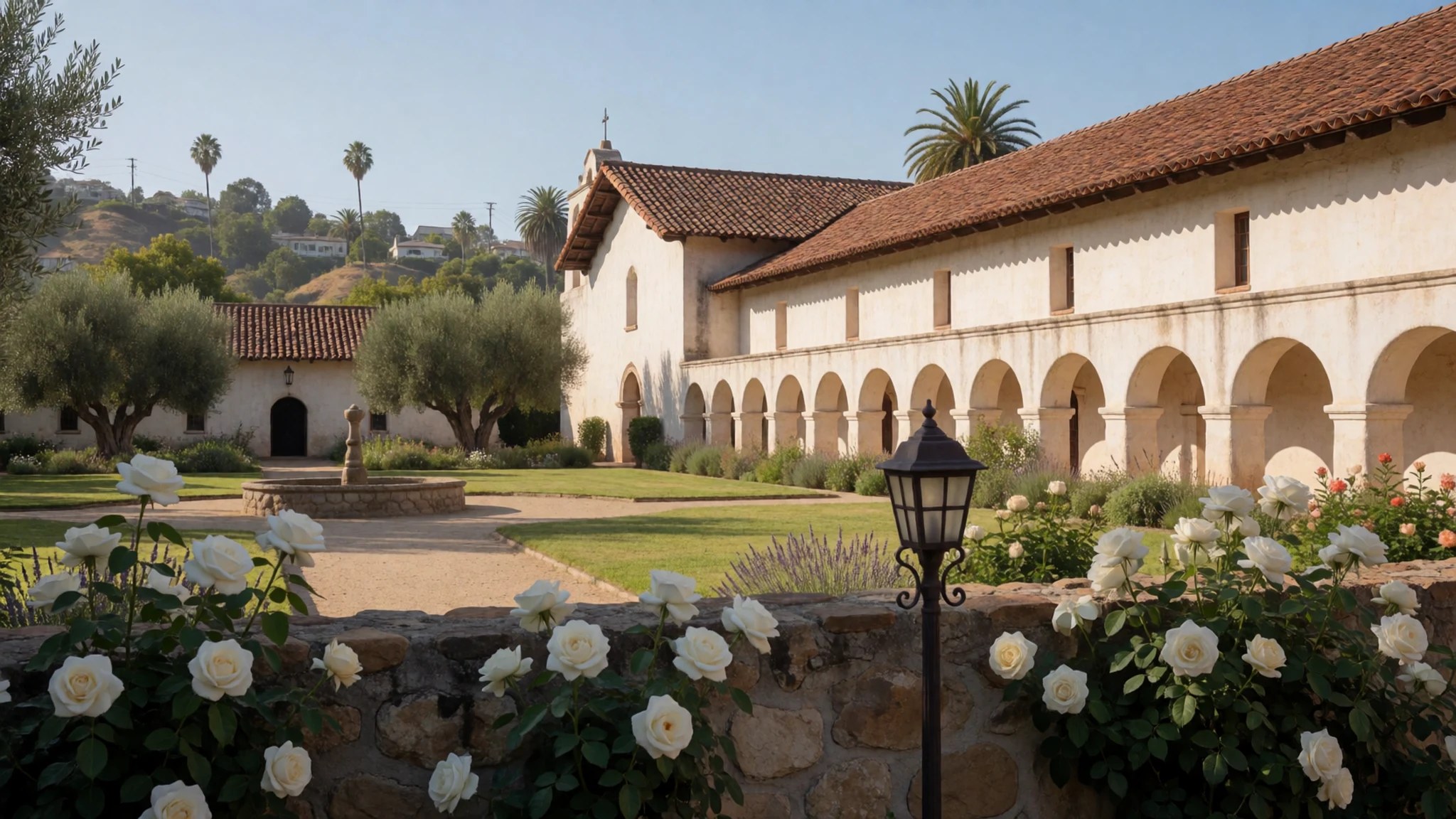
Culture
The city earns its global creative capital status because of its people. A large share of residents work in creative industries, from film and television to music, design and visual art, and the city has drawn artists, writers and performers from across the country and abroad for generations. That mix means there is no single local routine: a studio assistant, a nurse and a surf instructor may live within a few miles of each other and keep very different hours.
Mexican-American culture runs deep here. California was once part of Mexico, and Spanish-speaking communities have shaped the city's religious life, its food and much of its public art. Murals are a visible part of that story, painted on freeway walls, shopfronts and community centres, and they are worth stopping for rather than photographing from a moving car.
Religious life is strong as well. The Roman Catholic archdiocese here is the largest in the United States, so churches, processions and feast days are part of the ordinary calendar in many neighbourhoods. At mission churches and parish services, keep your voice low, dress modestly and ask before photographing people, especially at street markets and community events.
What to wear
Los Angeles has no single traditional dress, but its older look comes from the Spanish and Mexican communities that shaped the city. The most visible traditional clothing is the charro suit, a fitted outfit of embroidered jacket, trousers and wide-brimmed hat, worn at rodeos and national celebrations. The folklórico dress, with its full, layered skirt and bright embroidery, appears at dance performances and festivals, and the rebozo, a long fringed shawl, is worn at weddings and religious occasions. Many of these garments are made from cotton, wool and silk, and the embroidery is often hand-worked.
Today most Angelenos dress for the weather and for their area rather than for one style. Denim, sneakers and athleisure are everywhere. Downtown's garment district, the Arts District and the shops along Melrose show the city's fashion side, where designers mix vintage pieces with contemporary tailoring. At the beach, swimwear and flip-flops are normal, and many people carry a light layer for the evening.
For a visit, pack for warm days and cooler nights, since the coast can feel chilly after dark. Comfortable walking shoes matter more than fashion, because neighbourhoods are spread out and many sights involve hills or stairs. Bring a light jacket for Griffith Park, which sits high above the city. Cover shoulders and knees for cathedral and mission church services, and use sun protection year round.
What to eat
- Tacos al pastor and carne asada — Taco trucks in neighbourhoods across the city, especially on the eastside
Tacos al pastor, marinated pork shaved from a rotating spit, and carne asada, grilled beef, are the staples of the city's taco trucks. Look for a truck with a long queue of locals, and order a few tacos to share so you can compare the marinades and salsas.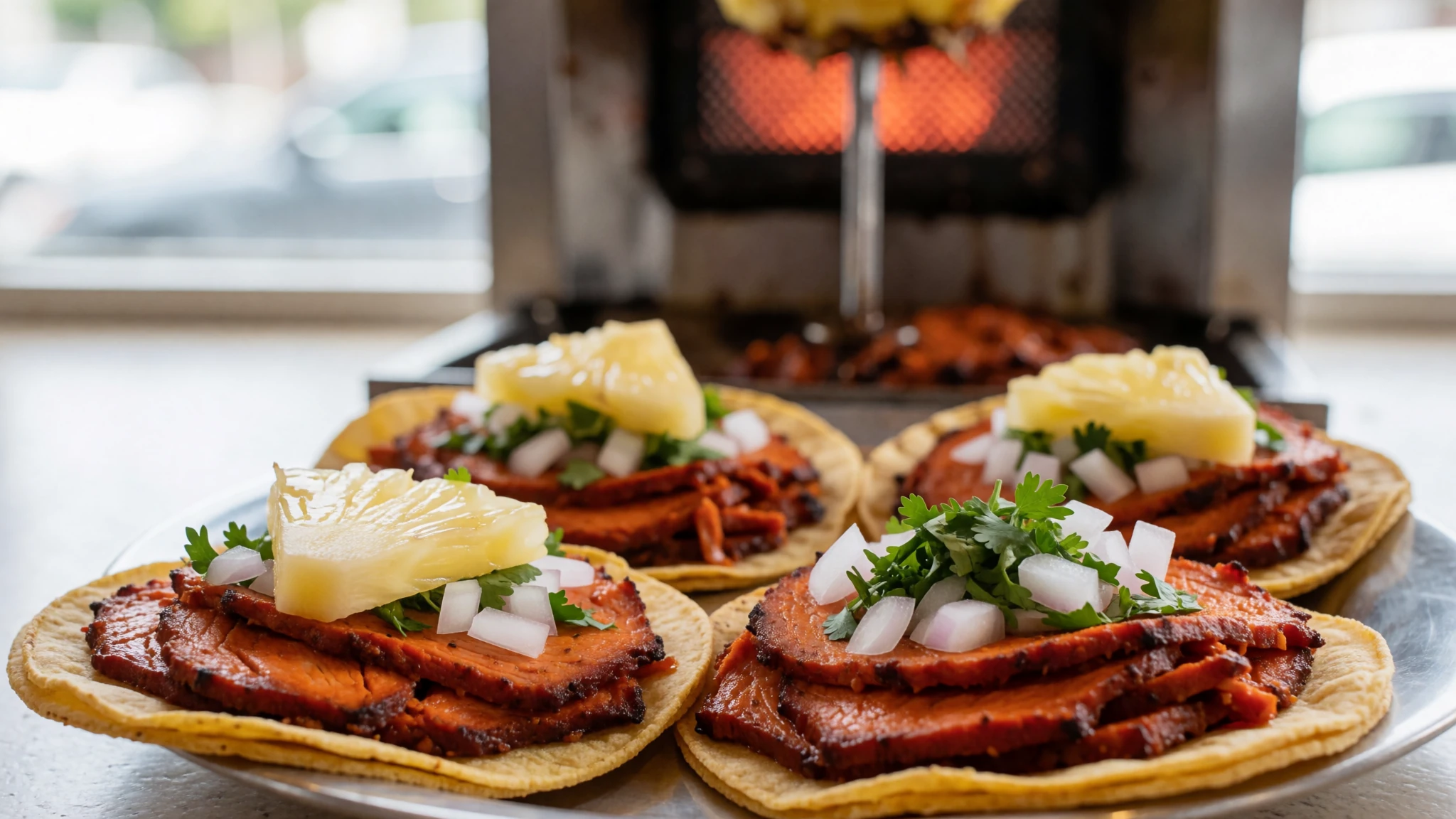
- Mexican breakfast — Family-run cafés in the eastside neighbourhoods and the San Fernando Valley
Chilaquiles, tortilla pieces simmered in salsa and topped with cheese and egg, and fresh pan dulce are typical of a Mexican breakfast. Breakfast cafés serve these in busy family-run rooms, often with a counter of sweet breads and a pot of coffee.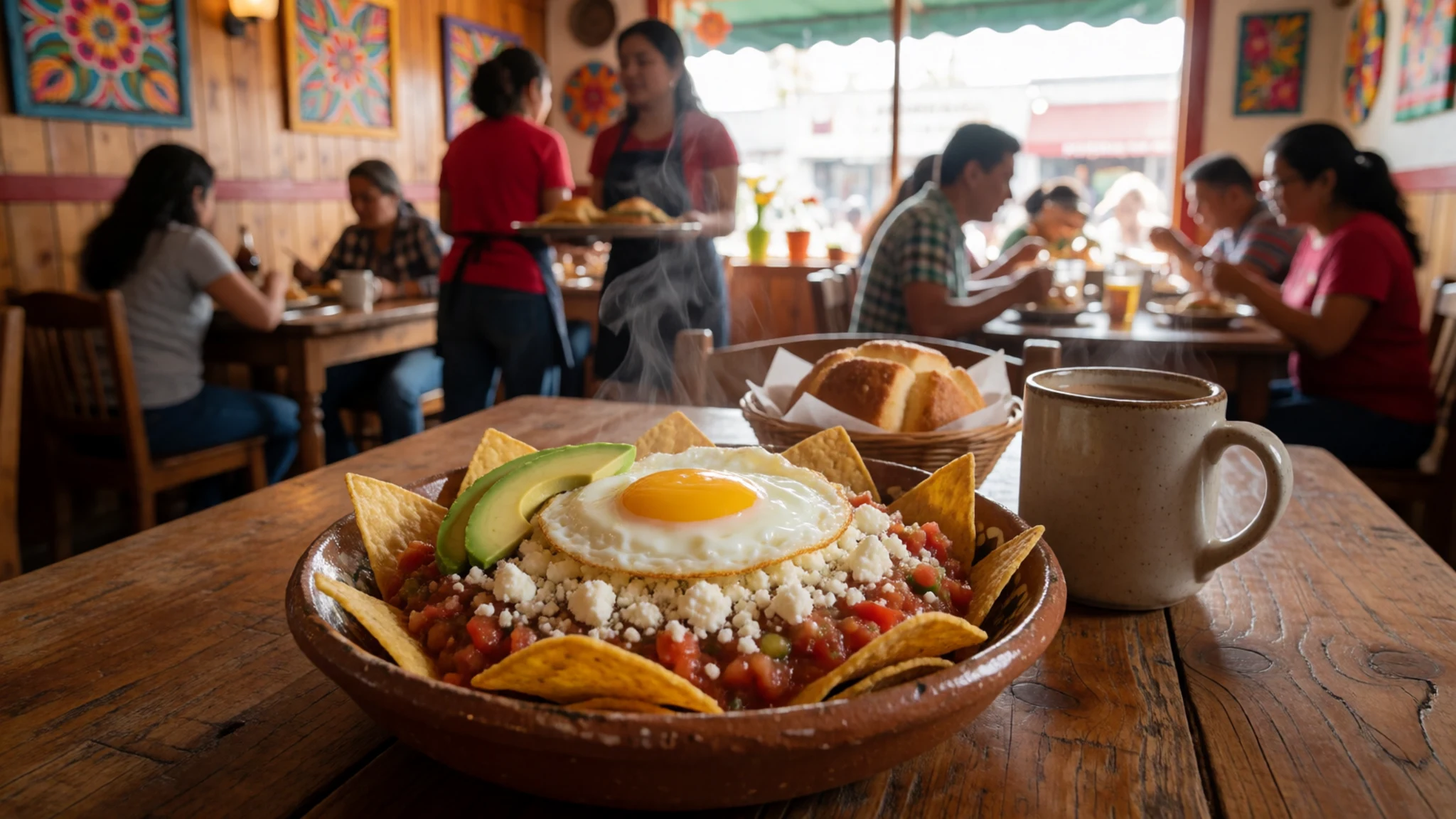
- Market stalls on Olvera Street — Olvera Street and the Los Angeles Plaza Historic District
Tamales, churros and aguas frescas are sold from stalls along Olvera Street and its surrounding plaza. Tamales are wrapped in corn husk and filled with pork, chicken or chile, and they make an easy, cheap snack while you walk the historic district. - American diner classics — Diners along Sunset Boulevard and in West Hollywood
A burger, fries and a thick milkshake are the classic diner order, and Mel's Drive-In in West Hollywood is a well-known example of the style. Expect a retro setting, a long menu and a lively atmosphere. - Korean barbecue — Koreatown, along Wilshire Boulevard
Korean barbecue, with thin slices of marinated beef or pork grilled at your table and served with banchan side dishes, is a major part of the city's food scene. It is best shared with several people, and the restaurants in this area often stay busy late into the evening.
Plan it
Best time. Spring, roughly March to May, is the most comfortable time, with warm days and mild evenings; summer is hot and dry inland, autumn heat often lingers into September and October, and winter, from December to February, is the wet season, with cooler days.
How long. 3–4
Getting there. Fly into Los Angeles International Airport (LAX), then take a rental car or the connecting bus routes into the city; Hollywood Burbank Airport (BUR) is closer to Hollywood and downtown, with a free shuttle to the North Hollywood Red Line subway station.
Budget. mid
Tips
- Book a rental car or plan your transit routes in advance, because distances are long and traffic can be heavy at rush hour
- Group sights by area: Hollywood and Griffith Park in one day, downtown and Olvera Street in another, the beaches on a third
- Start popular sights such as Hollywood Boulevard in the morning, before the crowds and heat build
- Check the official site for Griffith Observatory and studio tours before you go, as opening times and tickets change
- Carry water, a sun hat and comfortable shoes for hills and long walks
Etiquette
- Ask before photographing people, especially at markets, church events and community gatherings
- Keep your voice low inside churches and during services
- Dress modestly for cathedrals and mission churches
- Tip table service staff as is customary in US restaurants
Nearby
Sources
- Wikidata Q65 (CC0)
- Wikipedia (rev 1382772540) (CC BY-SA 4.0)
- Wikivoyage (rev 5409748) (CC BY-SA 4.0)
- Photo: Los Angeles with Mount Baldy, Alek Leckszas (CC BY-SA 4.0)
- Photo: Hollywood sign, Gnaphron (CC BY-SA 2.0)
- Photo: Olvera Street, Visitor7 (CC BY 3.0)
- Photo: Los Angeles City Hall, Visitor7 (CC BY 3.0)
- Photo: Griffith Observatory, Matthew Field (CC BY 3.0)
- Photo: Venice Beach, Blake Everett (CC0 1.0)
- Photo: Mission San Fernando Rey de España, Oriana Day (Public domain)
- Photo: Treaty of Cahuenga, Hugo Ballin (Public domain)


