Longmen Grottoes
Longmen Grottoes, People's Republic of China
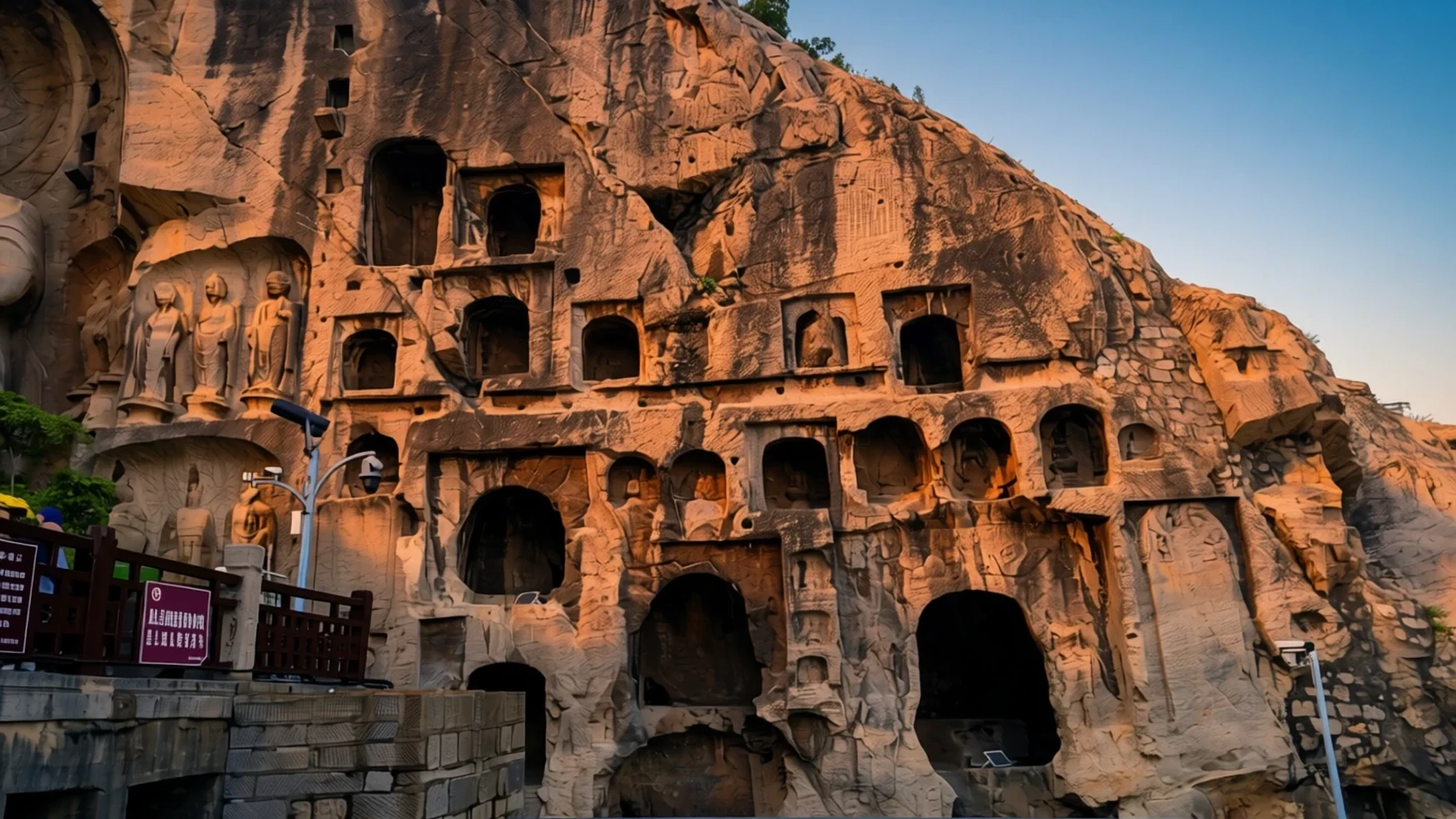
Longmen Grottoes, south of Luoyang, hold tens of thousands of Buddhist carvings cut into a riverside limestone cliff over several centuries.
The place
The Longmen Grottoes sit about 12 kilometres south of the present-day city of Luoyang, in Henan province in central China. The name means Dragon's Gate. It comes from the two hills that pinch the Yi River as it flows northward between them. From a distance they look like the gate towers that once marked the southern approach to Luoyang.
The carvings fill a stretch of cliff about 1 kilometre long on both banks of the river. There are 2,345 caves, which hold as many as 100,000 statues of Shakyamuni Buddha, his disciples, bodhisattvas and guardian figures. The largest figure stands about 17 metres tall, while the smallest are barely the length of a finger. Alongside them are nearly 2,500 stone stelae and inscriptions, which is why the area is also called the Forest of Ancient Stelae. There are also more than sixty Buddhist pagodas.
Around 30% of the caves date from the Northern Wei dynasty and about 60% from the Tang dynasty. Many statues were once painted, and traces of colour survive in some niches. Most surfaces are now bare stone, worn by weather and time.
The cliffs open onto the water, and the hillside and stone sit together in one view. This makes the carvings feel part of the landscape rather than a separate monument. The site is a UNESCO World Heritage Site.
Its story
The carving began in the Northern Wei period, after the court moved its capital to Luoyang. The choice mattered. The city had already served as the capital for many dynasties, and the Northern Wei rulers wanted a Buddhist landmark to match their new seat of power. Work continued in phases over several centuries.
Historians usually divide the cutting into four periods. The first belongs to the Northern Wei, when the earliest major caves were excavated. Warfare in the region slowed progress during the Sui and early Tang periods. The third phase, under the Tang, was the busiest. Chinese Buddhism flourished then, and caves and carvings multiplied. The last phase ran into the Northern Song period, when work declined and eventually stopped, disrupted by the wars between the Jin and Song dynasties.
The first cave temple is credited to Emperor Xiaowen. Emperor Xuanwu, who came to the throne after him, excavated three further caves: a pair commemorating his father and a single one commemorating his mother. Known as the Three Binyang Caves, they took about 24 years to complete and remain among the most elaborate in the complex. Roughly 30% of the caves visible today come from this period.
In 527 the Huangfugong grotto, a large cave, was completed. It is still one of the major caves to see.
The rock is limestone. It carves well but weathers over time, so the surfaces that survive are the product of centuries of wear and later conservation work.
What to see
- Binyang San Dong (Three Binyang Caves) — West Hill, southern bank
The Three Binyang Caves, cut under Emperor Xuanwu, are the cluster many visitors start with. The walls are covered in relief carving, and the central cave holds a large seated Buddha flanked by attendant figures. The interiors are dim, so a small torch or a phone light helps, where permitted. Allow an hour or more to take in the detail.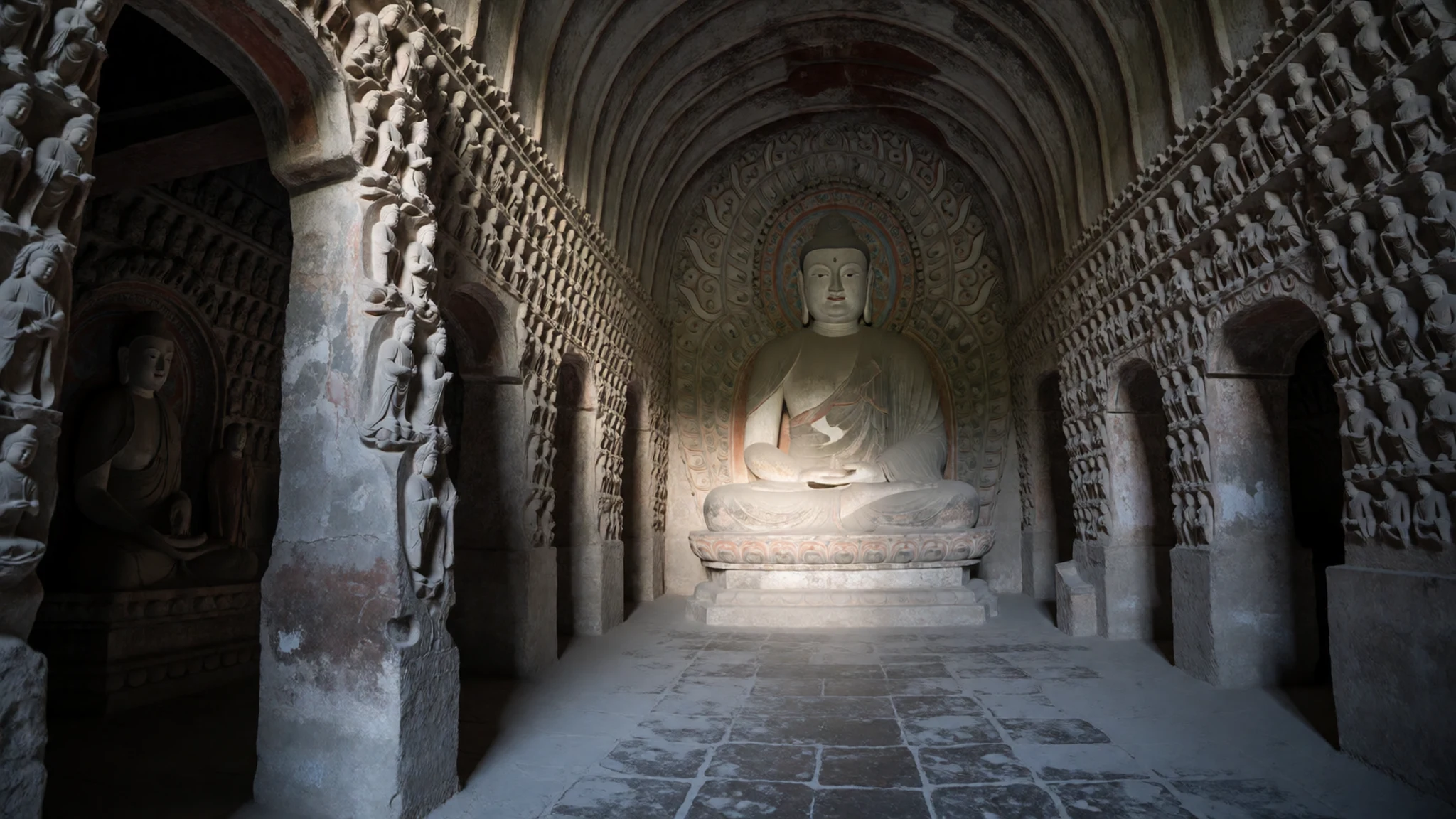
- Fengxian Xi (Fengxian Temple) — East Hill, eastern bank
Fengxian Temple, the Ancestor Worshipping Temple, holds the large Vairocana Buddha, one of the best-known figures at Longmen. The main image is seated and carved on a monumental scale, with attendants and guardians around it. The room shows how the carvers worked the cliff to create a single, unified space. It is one of the busiest spots, so arrive early for a clearer view.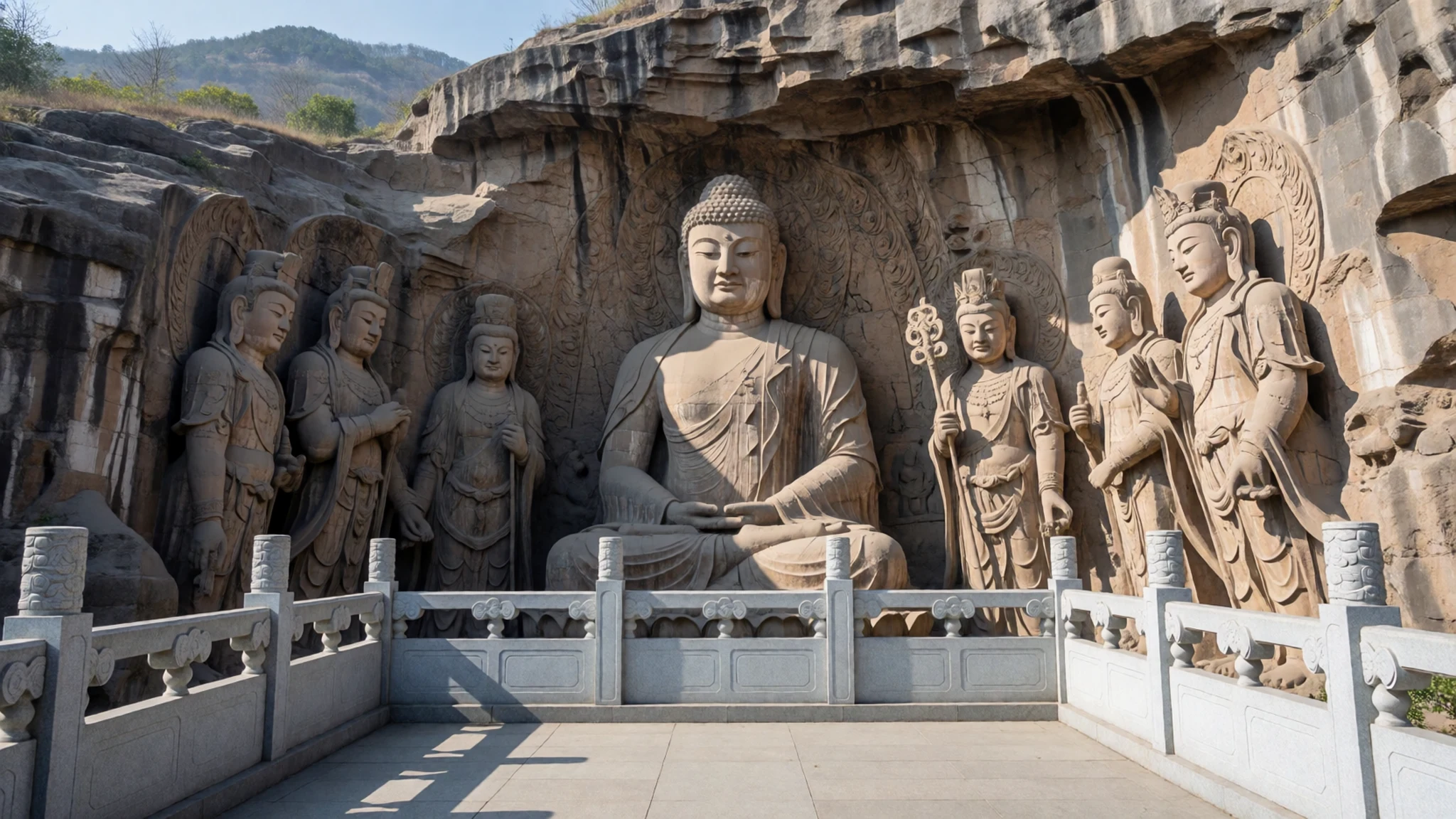
- Wanfo Dong (Ten Thousand Buddha Cave) — West Hill, southern bank
The Ten Thousand Buddha Cave is named for the small seated Buddhas that cover its walls in rows. The carvings are small and repetitive, so the pleasure lies in looking closely rather than rushing. It is quieter than the larger caves, and the detail is easiest to see with a torch. Many of the figures are worn, so take the time to move around the room.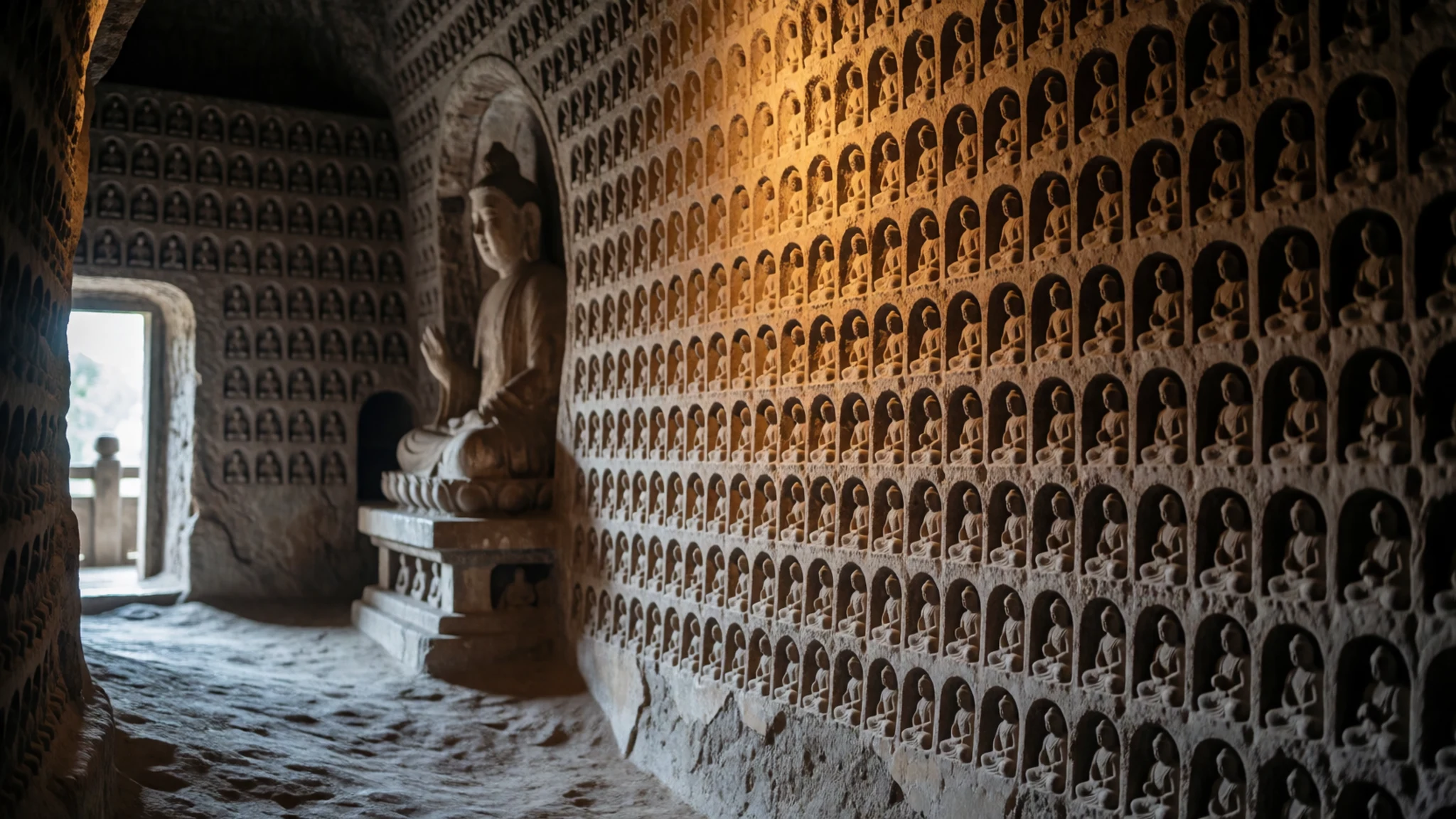
- Lianhua Dong (Lotus Flower Cave) — West Hill, southern bank
The Lotus Flower Cave takes its name from the carved lotus blossom on its ceiling, the centrepiece of the chamber. In Buddhist art the lotus stands for purity and rebirth. Figures of Buddhas and attendants line the walls, and the low light makes the ceiling carving easier to see than the walls below it.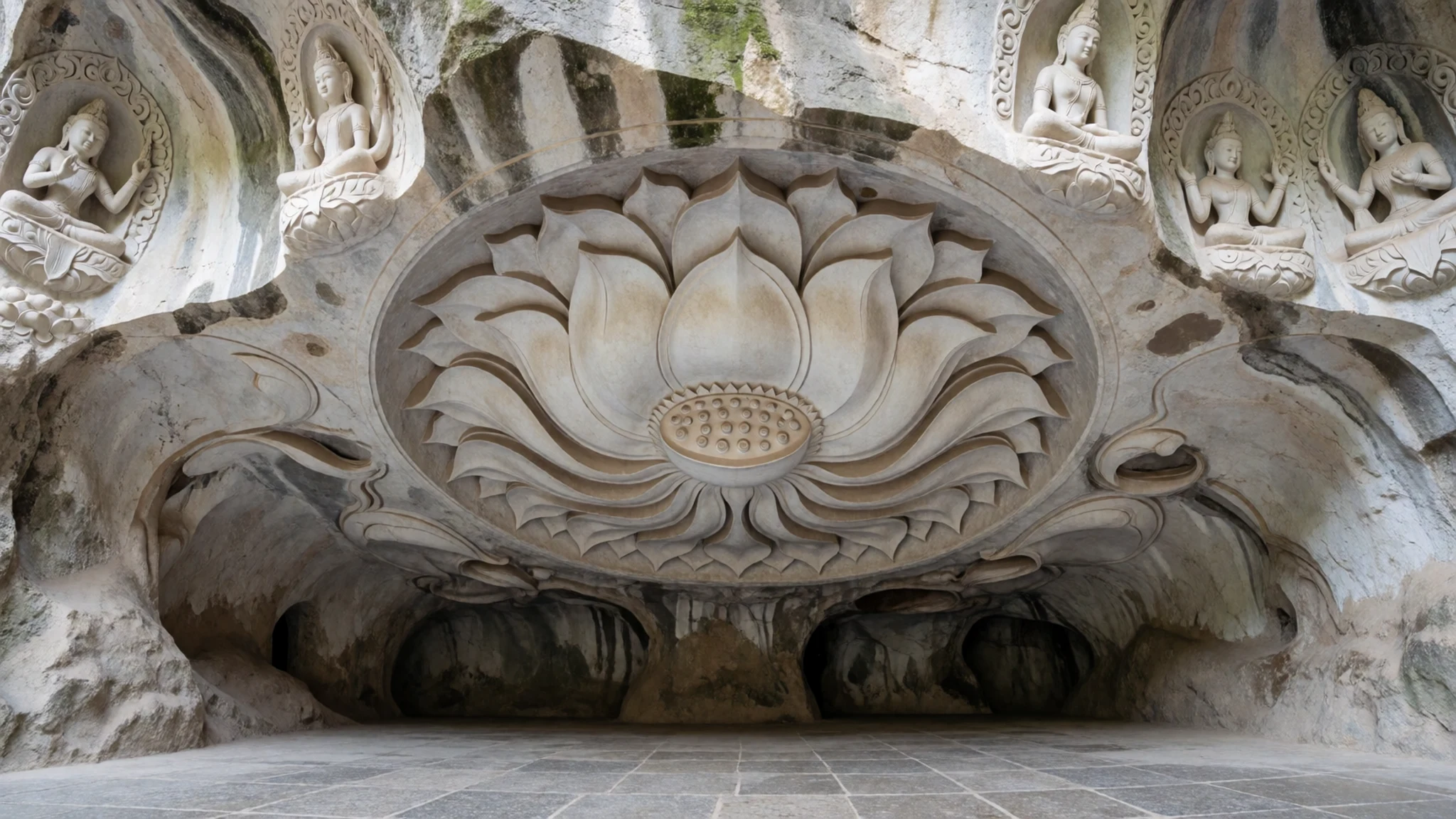
- Yaofang Dong (Medical Prescription Cave)
The Medical Prescription Cave is known for the inscriptions on its walls, which record remedies and prescriptions. It shows that the cave served a practical purpose as well as a devotional one, and reflects the links between Buddhist temples and healing. Give the inscriptions a few minutes, and look at them at an angle to the light, since many are worn.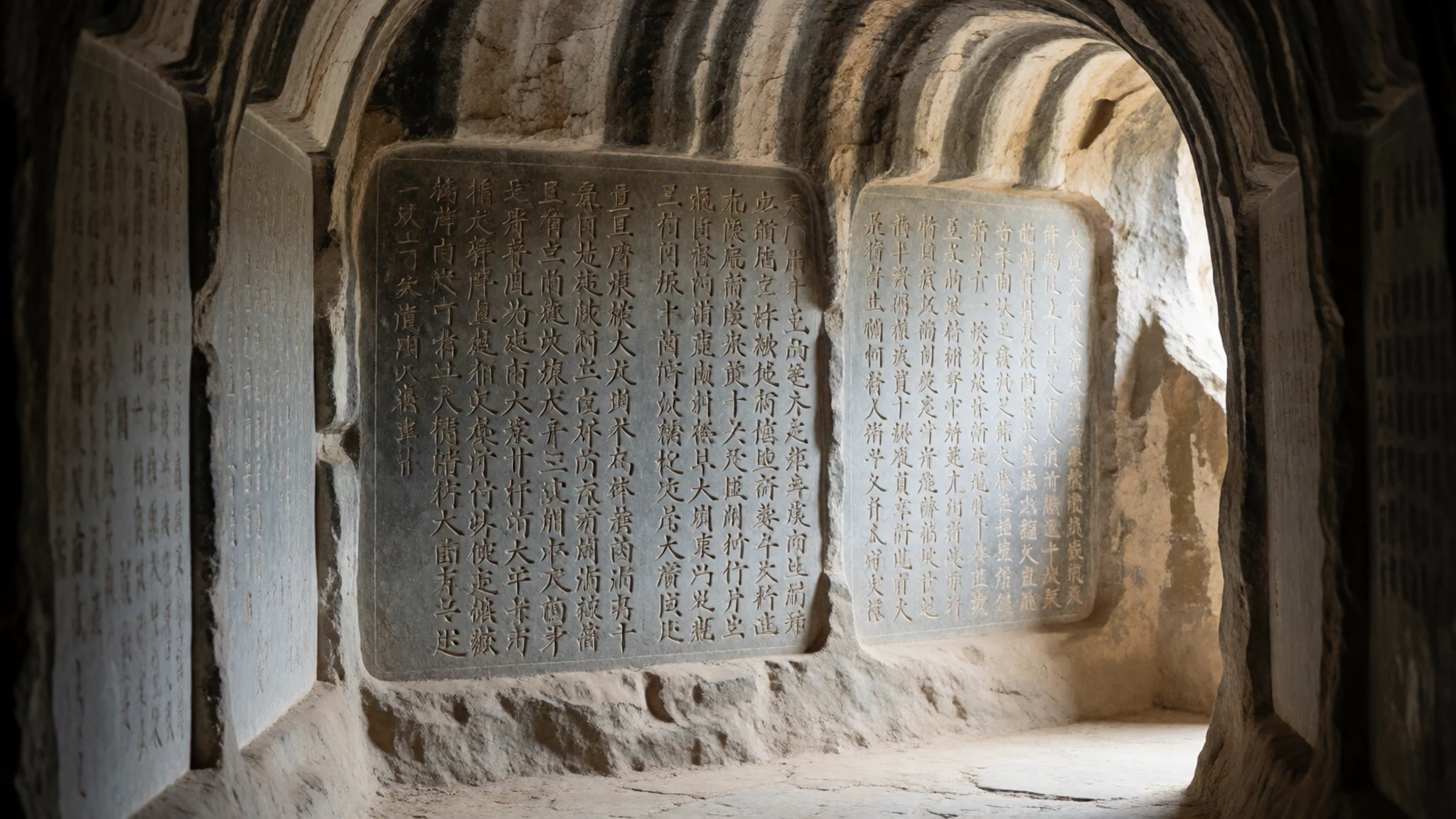
Culture
Longmen is a working religious site as well as a heritage park, and many of the figures are still treated as objects of devotion. Local people come to light incense and pray at the niches, and this should be respected. The Buddhist tradition behind the carvings has long valued quiet, and voices carry in the caves, so keeping them low is part of the experience.
Photography is generally allowed in the open areas. Flash is often restricted inside the caves to protect the surfaces and the paint that survives, so check the notices at each entrance, as rules can differ between cave groups.
Modest dress is appropriate, with shoulders and knees covered when entering temple halls. Shoes with good grip suit the uneven stone and steps, and a light layer helps in the caves, which stay cool even on warm days.
Keep your voice low inside the caves and never touch the carvings, since skin oils wear the stone.
What to wear
Visitors to the Longmen Grottoes see a mix of traditional and everyday dress, and the carvings themselves show what clothing looked like in the Northern Wei and Tang periods. Many figures wear long robes with flowing sleeves, layered garments and folded drapery, in a style linked to the courtly fashions of the time. Silk and hemp were the main textiles of the period, and robes of this kind signalled rank.
Today, people in Luoyang dress much like people in any Chinese city: jeans, T-shirts, lightweight jackets and trainers for walking. Traditional dress, most often the hanfu, is worn at festivals, cultural events and photo sessions, and some younger visitors wear it on the site for photographs. Nobody needs ceremonial clothes to see the caves.
For a visit, choose modest, comfortable clothing. Cover shoulders for temple halls and wear flat shoes with grip for uneven stone and steps. In summer a hat and a light, breathable layer help, and in spring and autumn a warm jacket is useful, since the mornings can be cool. Bright, revealing outfits sit poorly with the shrines, so keep to muted, practical clothes.
What to eat
- Luoyang water banquet (shui xi) — older restaurants in the centre of Luoyang
A long, multi-course banquet built around clear, light broths and a sequence of small dishes. It is traditionally served at family occasions and in older restaurants that keep the old recipes. The meal moves slowly, which suits an afternoon after the caves. Book ahead for a set banquet.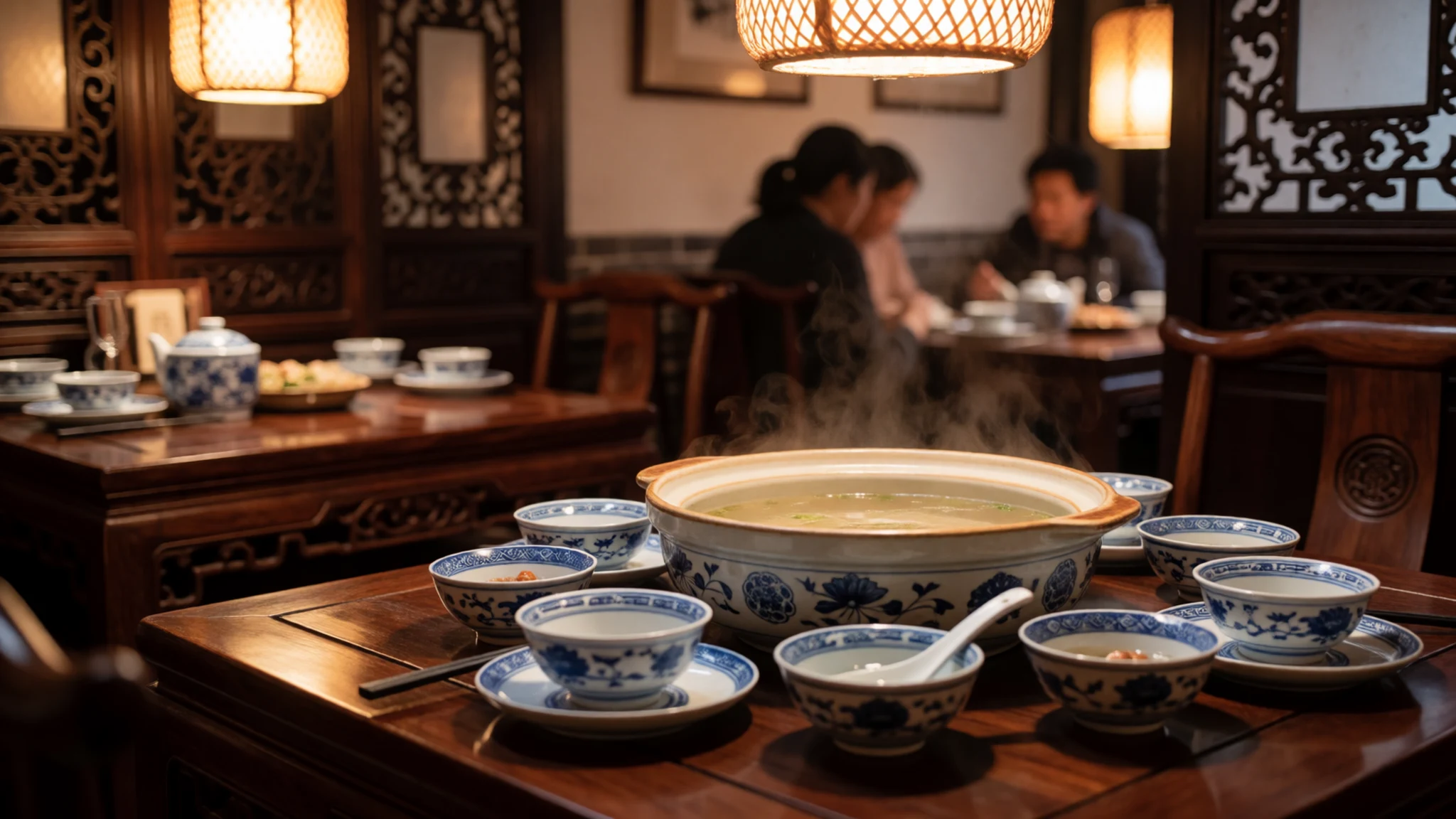
- Steamed stuffed buns (baozi) — breakfast stalls and steamers near the bus stops and the city centre
Soft steamed buns with savoury fillings, often pork and cabbage or vegetables. They are a common breakfast, eaten hot from bamboo steamers. The stalls open early, so a bun and a cup of soy milk make a quick start before the buses to the grottoes.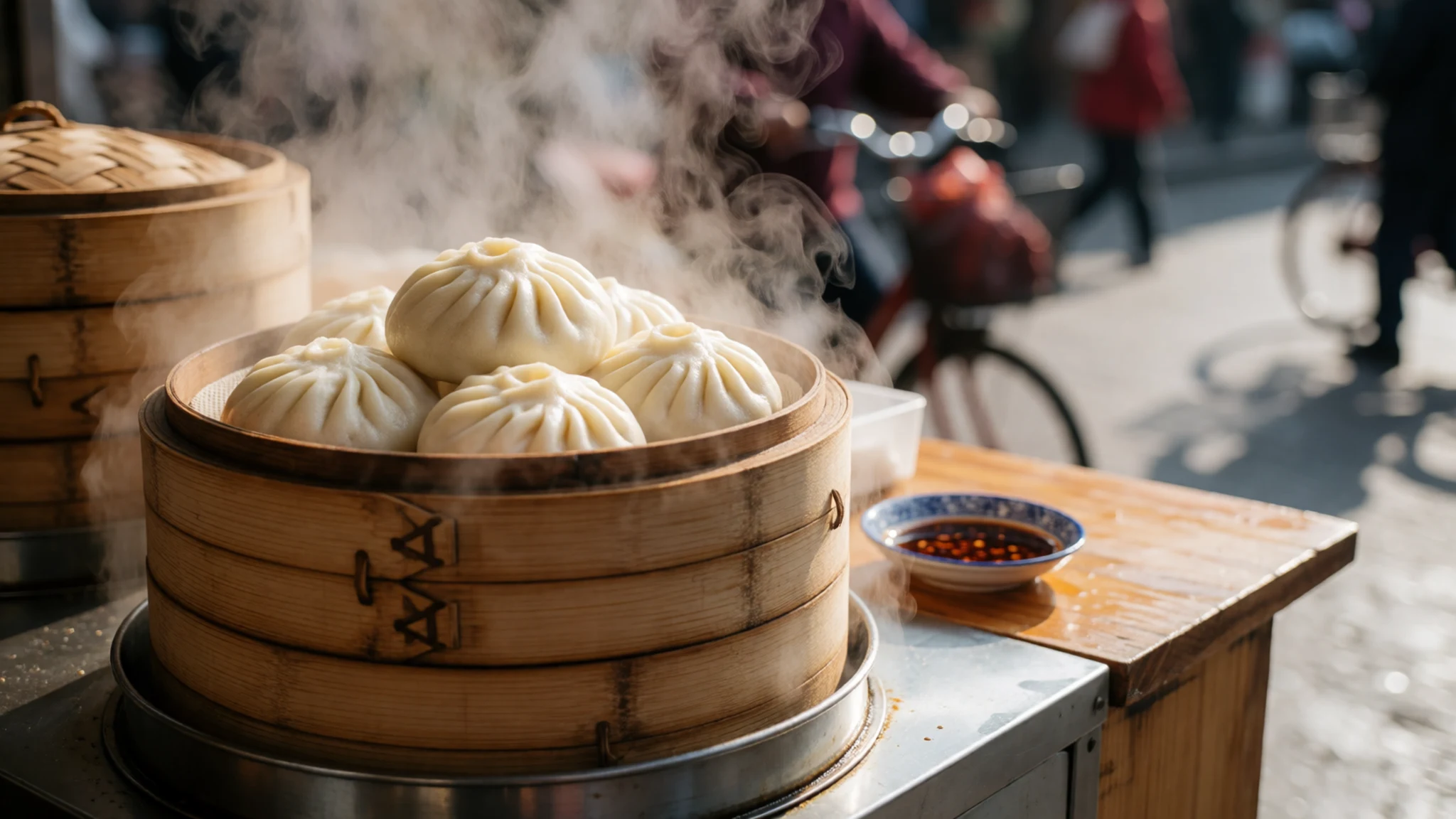
- Hand-pulled noodles in broth — noodle shops on the main streets around the city centre
Dough is stretched and folded by hand into long noodles, then served in a hot, savoury broth with beef or vegetables. The texture is chewy and the broth is the centre of the dish. It is a reliable, filling lunch that costs little. - Boiled dumplings (jiaozi) — dumpling houses in residential neighbourhoods
Thin-skinned dumplings filled with minced meat and vegetables, boiled and often served with a vinegar and chilli dip. They are a staple of neighbourhood eateries, where they are made to order in batches. Ordering a plate to share is an easy way to try several fillings. - Sweet fried dough — night markets and street stalls in the evening
Strips or twists of dough fried until crisp and golden, sometimes dusted with sugar. It is a simple evening snack, and the crunch makes a good companion for a walk along the river. Stalls cluster where people gather in the evening.
Plan it
Best time. Late spring (May) and autumn (September and October) suit walking the riverside and the caves most comfortably. Summer can be hot and humid, and winter is cold, so check the forecast before you go.
How long. 1–2
Getting there. Fly or take the train to Luoyang. From the east side of Luoyang train station, take the local bus to the grottoes, a journey of about 50 minutes. A taxi is the easier option with luggage or a group.
Budget. low
Tips
- Check the official site for current opening hours, which change between summer and winter
- Go early in the day to see the Binyang Caves before the tour groups arrive
- Carry some cash in case small stalls do not take cards
- Bring water and a hat, since much of the site is open to the sun
- Confirm the return bus time on arrival and plan to leave well before it
Etiquette
- Keep voices low inside the caves
- Do not touch the carvings
- Check photography rules at each entrance before using flash
Nearby
Sources
- Wikidata Q273834 (CC0)
- Wikipedia: Longmen Grottoes (rev 1366154989) (CC BY-SA 4.0)
- Wikivoyage: Longmen National Park (rev 5409665) (CC BY-SA 4.0)
- Caves of Longmen, Rialfver (CC BY 3.0)
- Luoyang industrial city view, xiquinhosilva (CC BY 2.5)
- Longmen Grottoes in Luoyang, xiquinhosilva (CC BY 2.5)
- Panorama of Boddhisatvas in the main Longmen Grotto, WikiLaurent (CC BY 3.0)
- Longmen-binyang-middle-cave-wideshot, unknown author (CC BY 3.0)
- Vairocana, Fengxian Temple, Gary Todd (CC0 1.0)
- The Big Vairocana of Longmen, Mario Biondi (CC BY 3.0)
- Lotus Flower Cave, Rc4230 (CC BY-SA 4.0)


